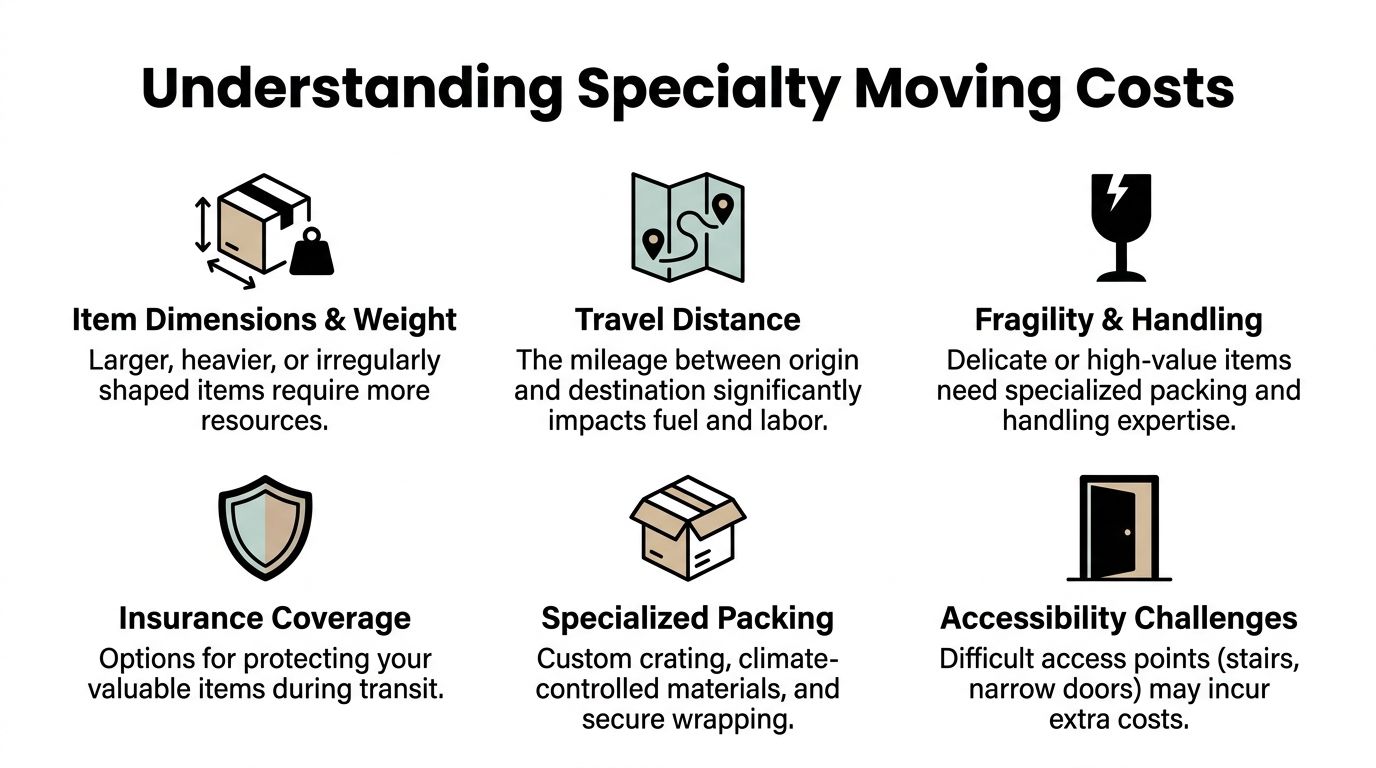
You're probably in the stage where the move feels real now. The boxes are piling up, the booking dates matter, and the things around your home don't look like “stuff” anymore. They look like your dining table, your laptop, your kids' bikes, your grandmother's cabinet, and the framed prints you don't want cracked in the back of a truck.
That's usually the moment people ask a very practical question. If something goes wrong on moving day, what protects my belongings?
A lot of customers in Melbourne assume the answer is simple. It often isn't. Goods in transit insurance is one of the least understood parts of moving, especially for personal house and apartment relocations. People hear terms like public liability, contents insurance, carrier cover, excess, and transit cover, and it all starts to blur together.
The easiest way to cut through that confusion is to treat this like a conversation with your removalist before the truck arrives. What does the policy cover, when does it apply, what doesn't it include, and what should you check before trusting that your move is protected?
Why Your Move Needs a Safety Net
Moving day always has a few pressure points. Tight lift bookings. Rain that wasn't in the forecast. A sofa that needs to turn through a narrow hallway. A longer drive than expected through Melbourne traffic. Even with careful handling, there's a stretch of time when your belongings are outside your control and on the road.
That's where goods in transit insurance comes in. Think of it as the safety net for the period between your old place and your new one. It's there for the belongings being moved, not just for the truck or the people doing the work.
One reason this matters is that gaps in cover are common. Industry data from Australia reveals that up to 62% of small-to-medium-sized enterprises, including those in logistics, fail to secure dedicated goods in transit insurance, which can leave both businesses and their clients exposed to financial loss during transport, according to Gallagher's guide to cover for goods in transit.
Why people get caught out
The confusion usually comes from assumptions:
They assume the mover's truck insurance covers the load: Truck cover and goods cover aren't the same thing.
They assume home insurance follows the furniture onto the road: Sometimes it doesn't, or it only does in a limited way.
They assume “careful handling” replaces proper cover: Care matters, but it doesn't stop every accident, storm event, or theft.
Practical rule: If your belongings are valuable enough to pack carefully, they're valuable enough to ask about insurance properly.
A better question to ask before moving day
Instead of asking, “Are you insured?”, ask, “What insurance applies to my belongings while they're being loaded, transported, and unloaded?”
That one question gives you a much clearer answer.
It also helps when you're choosing a mover. If you're still comparing providers, this guide on choosing the right removals firm for your move is a useful place to start because insurance should sit alongside pricing, handling standards, and communication, not as an afterthought.
What Goods in Transit Insurance Actually Covers
The simplest way to explain goods in transit insurance is this. It's travel insurance for your belongings. Your furniture and boxes are leaving one address, taking a journey, and arriving at another. The policy is designed to protect them during that journey.
In Australia, goods in transit insurance activates when goods are first moved for loading and terminates only upon completion of unloading at the final destination, covering accidental damage from events like collision, fire, flood, and theft, as outlined by NTI's inland transit insurance information.
What the policy is meant to respond to
While breakage is widely understood, the broader array of risks is often less clear. A transit policy is generally there for direct physical loss or damage that happens while the goods are in that moving window.
That can include:
Road incidents: A collision or vehicle overturning during transport.
Fire and flood: Damage caused by fire, storm conditions, or water events during the move.
Theft: Loss from theft in transit, subject to the policy wording and conditions.
Handling during the move: Damage that happens while items are being loaded or unloaded within the insured period.
What often causes confusion
The phrase “in transit” sounds narrower than it really is. People often think it only means “while the truck is driving”. In practice, the insured window can begin once items are being moved for loading and continue until unloading is completed at the destination.
That matters because many moving-day incidents happen at the edges of the job, not in the middle of the freeway.
Goods in transit cover is about the journey as a whole, not just the kilometres between addresses.
What may not be covered
This is the part customers should read slowly. Insurance isn't a blanket promise for every possible problem. Cover depends on the policy wording, the declared goods, and sometimes how the goods were packed.
Common trouble spots can include:
Poor self-packing: If fragile items weren't packed appropriately, a claim can become harder to prove.
Pre-existing damage: Insurance generally responds to transit-related loss or damage, not damage that was already there.
Excluded events: Some policies are broader than others. You need to check the wording, especially for high-value, fragile, or unusual items.
If you're packing glassware, artwork, TVs, or ceramics yourself, good packing isn't just about protection. It also makes any later claim easier to support. This practical guide on how to pack fragile items for moving helps reduce that risk before the truck even arrives.
Another detail worth understanding is the excess. If you've ever been unsure how an excess affects a payout, this plain-English explanation of how deductibles work in insurance is a helpful backgrounder.
Transit Insurance Versus Other Policies You Might Have
The most expensive insurance mistake in moving usually isn't buying the wrong policy. It's assuming one policy does the job of another.
A lot of Australians believe their home and contents insurance automatically protects them during a professional move. That belief can leave a serious gap. Many Australian households mistakenly believe their home contents insurance covers professional moves, but these policies often have narrow transit cover that may not extend to road accidents or theft during an interstate relocation, according to Compare the Market's explanation of goods in transit cover.
Insurance policy comparison for your move
Coverage Aspect
Goods in Transit Insurance
Public Liability Insurance
Home & Contents Insurance
Main purpose
Protects belongings while they're being moved
Protects against injury to other people or damage to third-party property
Protects household belongings and the home under the terms of the home policy
Who it primarily protects
The goods being transported and the party with an insurable interest in them
The mover or business against liability claims from third parties
The homeowner or renter, subject to policy wording
Applies during loading and unloading
Yes, if included within the transit period under the policy
Not for damage to your own goods as a transit cover
Sometimes limited or excluded
Responds to collision, fire, flood, theft during the move
Designed for this kind of risk
No, that's not its main job
May be narrow or not extend to the event
Useful for a house move
Yes, specifically for belongings in motion
Yes, but for a different reason
Sometimes, but you need to check transit terms carefully
The quick way to separate them
Use this test.
If the issue is your fridge, bed frame, dining table, boxes, or artwork getting damaged or lost during the move, that points to goods in transit insurance.
If the issue is a mover accidentally damaging a building wall, lift, driveway, or another person's property, that points more towards public liability.
If the issue is damage or loss inside the home under the normal terms of your household policy, that may involve home and contents insurance, but you can't assume it follows your belongings onto a professional relocation.
Why this matters for personal moves
House moves sit in an awkward space. They're personal, but they often involve professional transport. That's why generic assumptions cause trouble.
If you want a transport-industry explanation from the cargo side, this overview of cargo insurance essentials for trucking companies can help clarify why vehicle cover and load cover are treated as separate issues.
How Much Does Goods in Transit Insurance Cost
Cost is usually the next question, and rightly so. People want to protect the move, but they also want to know whether they're adding something expensive at an already busy time.
The encouraging part is that pricing is usually tied to the value and risk of what's being moved, not guessed out of thin air. In Australia, goods in transit insurance premiums typically range between 0.1% and 2.5% of the total cargo value, and a move with goods valued at $100,000 might cost between $300 and $800 for annual-style protection, based on National Cover's overview of marine and transit insurance in Australia.
What affects the premium
Insurers generally look at the practical risk profile of the move. That can include:
Declared value of the goods: More value usually means more exposure.
Type of items: A standard load of furniture is different from a move that includes antiques, artwork, or a piano.
Distance and route: A short suburban move isn't the same risk as a longer relocation.
Level of cover selected: Broader cover can cost more than a narrower policy.
Claims history or business profile: This matters more on business-style or annual policies.
How to think about the cost properly
The mistake people make is comparing the premium to “nothing happening”. A better comparison is the premium versus replacing or repairing the items that matter most.
For a Melbourne move, it helps to build insurance into the moving budget early instead of treating it like an optional extra at the end. In the same way people budget for pet transport by checking practical cost guides such as budgeting pet travel for owners, you'll get a clearer moving budget if you price transport risk upfront rather than hoping your existing policies cover it.
Cost check: The right premium should feel smaller than the financial shock of replacing what's in the truck.
For broader budgeting, this breakdown of moving company cost is useful because insurance sits alongside labour, truck size, access conditions, and any packing service you book.
Coverage for Local Melbourne vs Interstate Moves
A local move from Carlton to Bentleigh and an interstate move from Melbourne to Brisbane may both involve boxes, furniture, and a truck, but the risk profile isn't the same.
What matters here is continuity. For personal moves in Australia, goods in transit insurance can provide “point to point” cover, starting when items are picked up and ending when they're delivered to the final destination, which helps protect the loading, transport, and unloading phases of either a local or interstate relocation, according to Coverfreight's explanation of point-to-point transit cover.
Local Melbourne moves
A local move is usually simpler. The travel time is shorter, there are fewer hours on the road, and the number of handling stages is often lower.
That doesn't mean there's no risk. Apartment lifts, narrow stairwells, wet weather, laneway parking, and tight settlement windows can all add pressure. On a local run, customers often focus on the drive itself, but access issues at either property are just as important.
Interstate moves
Interstate relocations ask more of the process. The goods are in transit for longer, the route is longer, and there may be more than one handling stage depending on the logistics.
That's why point-to-point language matters. You want to know there isn't a protection gap between pickup in Melbourne and delivery at the final address.
A few questions become more important on a longer move:
Does the cover apply for the whole journey: Not just one leg of it.
Is the inventory detailed enough: Especially for higher-value or fragile items.
Are there any special conditions for packed boxes, electronics, artwork, or furniture requiring extra handling: These details matter more when the trip is longer.
For interstate moves, the policy wording matters more because the journey has more touchpoints and more chances for something unexpected to happen.
Most moves finish without a claims issue. But if something does arrive damaged, missing, or clearly affected by the trip, the best response is a calm, organised one.
Start with the evidence. Don't rush into unpacking everything and throwing away packing materials if you've just noticed a problem.
The first steps that matter most
Check the goods on arrival Look over furniture, cartons, and fragile items as they come off the truck or soon after placement.
Take clear photos straight away Capture the damage, the packaging, and the room context if it helps show what happened.
Notify the relevant party promptly Contact the mover or insurer as soon as you can. Delay makes everything harder to assess.
Here's a quick visual summary of what the process generally looks like:
What the insurer usually needs
Claims go more smoothly when you can provide a tidy file rather than a vague description. Gather:
Photos and videos: Wide shots and close-ups
Inventory or item list: Especially if the missing or damaged item was documented before the move
Receipts or proof of value: If available
Notes from the day: Timing, weather, access issues, or anything unusual
Police report: If theft is involved and the insurer asks for it
In Australia, after a goods in transit insurance claim is filed, the insurer generally has a standard response window of ten business days to assess the claim and either negotiate a settlement or provide a reason for denial, according to GSK Insurance's goods in transit claims information.
If the claim is questioned
Don't treat a request for more information as a rejection. Insurers often need clearer proof, better item details, or confirmation of how the goods were packed and moved.
Keep damaged items, original packaging, and paperwork until the claim is resolved. Throwing things out too early can weaken your position.
If a claim is denied, ask for the reason in writing and compare it carefully against the policy wording.
Your Checklist for a Fully Protected Move in Melbourne
By the time you're booking a move, you don't need more jargon. You need a shortlist of checks that tell you whether your belongings are properly protected or whether you're relying on assumptions.
The easiest way to do that is to ask direct questions before moving day, then keep the answers with your booking confirmation.
Questions to ask your removalist
What insurance applies to my belongings while they're being loaded, transported, and unloaded?
Is the cover goods in transit insurance, public liability, or both?
What events are typically covered during the move?
Are there any limits or exclusions for fragile, valuable, or self-packed items?
What documents should I keep before moving day in case I need to make a claim?
Who do I contact first if I notice damage or loss on delivery?
Checks to do yourself before the truck arrives
Prepare a clear inventory: Even a room-by-room list helps.
Photograph valuable items before the move: This gives you a record of condition.
Label fragile cartons properly: Clear labels help handling and later assessment.
Ask about packing standards: Especially for glass, artwork, electronics, and mirrors.
Read the policy wording or summary: Don't rely on a verbal “you're covered”.
What a professional setup should include
A mover should be able to explain insurance in plain language, not hide behind vague phrases. If they can't clearly tell you what protects the goods, when cover starts, and what the claims process looks like, that's a warning sign.
For customers planning a local or interstate relocation, Get n Go Removals Melbourne states that it provides public liability and transit insurance as part of its service profile, alongside residential and commercial moving, packing, storage, and specialist item handling. That's the sort of detail you want confirmed in writing before the move proceeds.
One more practical tool helps tie all of this together. A written moving plan reduces rushed decisions, missing paperwork, and last-minute assumptions. This moving house checklist Australia is a helpful reference if you want to organise the booking, packing, access, utilities, and insurance questions in one place.
The safest move isn't the one where nothing can go wrong. It's the one where you know exactly what protection is in place if something does.
If you want a mover that can explain the practical side of relocation clearly, from packing and access planning to what cover applies on moving day, speak with Get n Go Removals Melbourne before you book. A short conversation now can save a lot of confusion later.
You're probably here because your move has got messy in a very normal Melbourne way. Settlement dates don't line up. The new place isn't ready. You're renovating, downsizing, heading interstate, or clearing a spare room that somehow turned into a storage cave. Now you're staring at a timber dining table from your grandparents, a TV you don't want to replace, a few framed prints, maybe a box of paperwork, and wondering whether a basic storage unit is enough.
That question matters more in Melbourne than many people realise. Our weather can feel mild day to day, but the swings in moisture and temperature can still be hard on stored belongings. That's one reason the Australian self-storage market reached USD 1,260.9 million in 2025 and is projected to reach USD 1,899.0 million by 2034, with demand growing for specialised options such as climate controlled storage that protects sensitive items in varied Australian conditions, according to IMARC's Australia self-storage market outlook.
A lock keeps people out. It doesn't stop wood from warping, metal from corroding, paper from absorbing moisture, or electronics from sitting in damp air for weeks. That's where climate controlled storage earns its keep.
Why Your Valuables Need More Than Just a Lock and Key
A family in Melbourne's east packs up for a short move while waiting for their new home to settle. The obvious things go first. Sofa, bed, boxes of clothes. Then the harder items appear. A polished wooden sideboard. A record collection. Two laptops kept for work backup. Wedding albums. A painting wrapped in blankets. At that point, a standard unit can start to feel like a gamble.
The problem isn't only theft or dust. It's environmental damage. A storage unit can be perfectly secure and still be the wrong place for valuables if the air inside shifts with the season. Melbourne is famous for quick weather changes, and your belongings feel those changes too. Wood expands and contracts. Leather dries out or goes musty. Electronics don't like moisture sitting on internal components. Paper and photographs can curl, stick, and stain.
The damage people often don't see coming
Individuals often consider only visible heat. They imagine a scorching summer day and a stuffy metal unit. But many storage problems build slowly.
Wooden furniture: Timber can twist, swell, or crack when moisture levels change.
Electronics: Damp air can encourage corrosion on internal parts and connectors.
Artwork and framed pieces: Canvas, paper, adhesives, and timber frames all react differently to changing conditions.
Documents and keepsakes: Files, books, certificates, and old photos can absorb moisture long before mould is obvious.
Practical rule: If you wouldn't leave the item in a garage for weeks without worrying about it, it probably deserves more protection in storage too.
That's why climate controlled storage isn't just for collectors or businesses. For many households, it's the sensible choice when the stored items are difficult, expensive, or impossible to replace.
Good packing still matters as much as the unit itself. If you're boxing up glassware, artwork, monitors, or sentimental items before they go into storage, this guide on how to pack fragile items for moving will help you avoid damage before the storage door even shuts.
Why this matters during a move
Moving days create rushed decisions. People choose whatever unit is available, load it quickly, and promise themselves it's only temporary. But temporary storage has a way of stretching out. One month becomes three. A renovation runs late. Settlement gets pushed. Office fit-outs take longer than expected.
That's usually when people stop asking, “Is the unit secure?” and start asking, “What's happening to my things while they sit there?” Climate controlled storage answers that second question.
What Is Climate Controlled Storage Really
The term “climate controlled” often brings to mind only “air-conditioned.” That's only part of it. True climate controlled storage manages two things at the same time: temperature and humidity.
A good way to think about it is this. It should work more like a museum archive or a wine cellar than a room with a split system on the wall. The goal isn't just making the space feel cooler for people walking in. The goal is keeping the environment steady enough that stored materials don't deteriorate.
The two parts that matter
According to this guide to climate-controlled storage standards, climate-controlled units are engineered to maintain a temperature range between 12°C and 27°C and a relative humidity level of 45% or below. That humidity target matters because mould and corrosion grow exponentially once humidity rises above 50 to 55%.
In plain terms:
Control area
What it does
Why it matters
Temperature management
Prevents extreme heat and cold
Helps protect wood, electronics, artwork, and finishes from cracking, warping, or stress
Humidity management
Reduces excess moisture in the air
Helps prevent mould, mildew, rust, corrosion, and paper damage
If you've ever looked into evaluating humidifiers for your home, you'll know indoor air isn't only about comfort. Moisture levels change how materials behave. The same principle applies in storage, except the stakes are often higher because the unit stays closed for long periods.
Why air conditioning alone isn't enough
A unit can feel cool and still be too damp. That's the bit many people miss.
Cooling the air doesn't automatically mean the facility is actively regulating humidity every hour of the day. A proper climate controlled storage setup uses HVAC and dehumidification together, plus air circulation, so the conditions remain stable rather than drifting with the weather or daily traffic through the facility.
Here's a quick visual explainer before we go further:
What to ask when a provider says “climate controlled”
Don't stop at the label. Ask direct questions.
What temperature range do the units maintain? You want a clear operating range, not a vague promise that the site is “cooler.”
Is humidity actively controlled? If the answer only mentions air conditioning, keep asking.
How is the environment monitored? Consistency matters more than marketing language.
Are the units internal or drive-up? Indoor, enclosed spaces usually offer more stable conditions.
If you're comparing options, this page on storage units and prices near me is a useful starting point for understanding what features are being offered, not just what size you're paying for.
Standard Storage vs Climate Control The Melbourne Difference
In many cities, people can get away with generic storage advice copied from overseas websites. Melbourne needs a more local lens. The main issue isn't just heat. It's moisture.
According to this Melbourne-focused climate control discussion, most guides miss the difference between “air-conditioned” and true “humidity-regulated” control. It notes that Melbourne's relative humidity swings between 40% and 90%, and moisture is involved in 42% of storage-related damage claims in the city. That's the critical distinction.
How a standard unit behaves
A standard unit usually does the basic job well. It gives you enclosed space, physical security, and easy access. For hardy items, that can be enough. Think outdoor gear, tools, sealed plastic tubs, or things you'd comfortably leave in a garage.
But the internal environment tends to follow the broader weather pattern. The structure warms up, cools down, and absorbs ambient moisture. That's where trouble starts for sensitive goods.
Moisture odours: Upholstery, mattresses, and soft furnishings can smell stale even when they look fine.
Surface deterioration: Metal fixtures, screws, and appliance parts can pick up rust or corrosion.
Paper and media damage: Files, books, photographs, and records can curl or stick.
How climate controlled storage changes the risk
A climate controlled unit is built to reduce those environmental swings. Instead of reacting to outdoor conditions, it aims to keep the interior more stable. That stability is what protects delicate materials over time.
A cool room isn't automatically a safe room. If the air stays damp, the risk to your belongings remains.
This matters a lot in Melbourne suburbs near the bay, in older buildings, and during long stretches of wet weather when the air outside feels heavy for days. A unit that only cools the air can still allow moisture damage if it doesn't actively dehumidify.
A side-by-side way to think about it
Feature
Standard storage
Climate controlled storage
Air conditions
Largely follows outside weather
Managed for consistency
Best for
Durable goods and lower-risk items
Sensitive, valuable, or sentimental belongings
Main local risk
Humidity and temperature fluctuation
Reduced exposure to those fluctuations
Typical feel
More like a garage or shed
More like an indoor managed environment
For Melbourne households, the smarter question isn't “Do I want a premium unit?” It's “What happens to these items if they sit in damp air for longer than planned?”
If you're weighing those options suburb by suburb, storage solutions in Melbourne can help you compare practical access needs with the level of protection your items require.
A Practical Checklist for Items Needing Protection
Some belongings clearly need climate controlled storage. Others sit in the grey area. The easiest way to decide is to sort items by material, not by room. Materials tell you how they'll react.
According to facility planning guidance for climate-controlled storage, specialty items need precise conditions. Wine is best stored at 12.8°C, art at 21 to 24°C, and paper documents at 18 to 22°C. Those conditions are especially relevant in Melbourne when you're storing furniture, cosmetics, medical supplies, heirlooms, and other moisture-sensitive goods.
Furniture and soft furnishings
Start with timber, leather, and upholstered pieces.
Wooden furniture: Dining tables, bed frames, cabinets, and antique pieces can react badly to fluctuating moisture. Solid timber can swell or shrink. Veneer can lift.
Leather items: Leather lounges, chairs, and ottomans don't enjoy damp storage. Moisture can lead to odours and surface changes.
Upholstered furniture: Fabric absorbs surrounding air conditions. If the unit feels musty, the couch often will too.
A good test is sentimental value. If it's the one item in the house you'd hate to replace, don't treat it like a folding chair.
Electronics, media, and office contents
These items often look tough because they're boxed in plastic or metal. Internally, they're not.
Electronics: TVs, desktop computers, monitors, speakers, printers, and gaming gear all benefit from stable conditions.
Appliances with electronics: Coffee machines, microwaves, and similar items can be affected by damp air during long storage.
Media collections: Vinyl records, tapes, old discs, and photo negatives all dislike moisture.
Pack smarter: Use clean, dry boxes, keep cables bagged and labelled, and don't wrap electronics in plastic so tightly that trapped moisture has nowhere to go.
Artwork, paper, rugs, and special pieces
At this point, climate control usually moves from “nice to have” to “worth it.”
Artwork and framed prints: Canvas, paper, adhesives, timber frames, and glass all respond differently to changing conditions.
Documents and photographs: Certificates, legal files, books, albums, and archived business records are highly vulnerable to moisture.
Rugs and textiles: Natural fibres need careful preparation before storage. If you're storing wool or delicate floor coverings, this guide on proper storage for oriental rugs is a handy reference for cleaning, rolling, and wrapping them correctly.
Musical instruments, wine, cosmetics, medical supplies, heirlooms: These items are often more sensitive than people expect.
A simple way to decide is to ask two questions: Does this item react to moisture? Would replacing it be expensive or upsetting? If the answer is yes to either, climate controlled storage makes sense.
Understanding the Cost of Climate Controlled Storage
Storage pricing can feel confusing because people compare the monthly rent without comparing the environment, access, or risk. A basic drive-up unit and a properly controlled indoor unit don't offer the same level of protection, so they shouldn't be judged on price alone.
As of 2025, the average monthly rate for self-storage in Australia was AUD 266 per square metre, and the industry is projected to reach $2.5 billion in revenue in 2026, reflecting strong ongoing demand for secure storage options, according to StorTrack's Australia and New Zealand self-storage update.
What usually changes the price
Even before climate control enters the picture, storage costs move around based on a few practical factors.
Factor
Why it affects price
Unit size
Larger spaces cost more because they hold more volume
Location
Inner and high-demand areas often carry higher rates
Access type
Indoor managed facilities may price differently from drive-up sites
Length of stay
Short and long bookings can come with different terms
Facility features
Security systems, monitoring, and specialised climate systems add operating cost
Climate controlled storage also costs more to run. The provider isn't just renting out a room. They're maintaining HVAC systems, dehumidification, monitoring, insulation, and a more controlled building envelope.
Why the cost question should be framed differently
A lot of people ask, “Is climate controlled storage worth the extra money?” I'd frame it another way. “What would it cost me if these items came back damaged?”
That's usually where the answer becomes clearer.
Sentimental belongings: Family furniture, albums, or inherited pieces can't really be priced once they're damaged.
Business records and equipment: Replacing stock or reconstructing files creates stress and downtime.
Large furniture items: One damaged table, cabinet, or lounge can wipe out any saving you made on a cheaper unit.
The cheapest unit is only cheap if your things come out in the same condition they went in.
If you're budgeting for an upcoming move, comparing Melbourne storage prices side by side can help you weigh cost against the level of protection you need. For some items, standard storage is fine. For others, climate control works like practical insurance.
Your Checklist for Choosing a Melbourne Storage Provider
Once you've decided you need more than a basic unit, the next step is choosing the right provider. Many people get tripped up at this stage. They compare size and price, but forget to verify how the facility operates.
The questions worth asking before you book
Use this as a practical shortlist when you call or inspect a site.
Climate details: Ask whether the unit controls both temperature and humidity. If staff only mention cooling, ask again more directly.
Security setup: Look for CCTV, gated entry, alarm systems, and clear access procedures.
Cleanliness: A tidy, dry, organised facility usually tells you a lot about how the site is managed.
Access hours: Make sure the site fits your real schedule, not your ideal one.
Insurance: Ask what's covered, what isn't, and whether there are limits for high-value items.
Loading conditions: Check whether there are lifts, trolleys, undercover loading zones, or narrow access points.
Signs the provider understands sensitive storage
You can usually tell within a few minutes whether a provider understands climate controlled storage or uses the term in marketing.
Good signs include:
What they say
What it usually means
They explain humidity control clearly
They likely understand the real risk to stored goods
They discuss item suitability
They're thinking beyond unit size
They can describe monitoring systems
The environment is likely managed, not guessed
They ask what you're storing
They're matching the unit to your needs
Some movers prefer using one company for both transport and storage because it reduces handovers and keeps responsibility clearer. For example, Get n Go Removals Melbourne's furniture removal and storage service combines moving and secure storage in one workflow, which can be useful when access windows, settlement dates, or office relocation timing are tight.
“Ask the provider to describe the unit as if they were storing their own timber furniture, electronics, and paperwork in it. The quality of that answer tells you a lot.”
The simple test before you commit
Before signing anything, ask yourself:
Do they explain protection in practical terms?
Do they make access and pricing clear?
Would you feel comfortable leaving irreplaceable items there?
If the answer to any of those is no, keep looking.
Melbourne Climate Control FAQs
Do I need climate controlled storage for a short-term move?
Sometimes yes, sometimes no. It depends more on what you're storing than on the calendar alone. If the unit will hold timber furniture, electronics, artwork, documents, leather, rugs, or sentimental items, climate control is a sensible option even for a shorter stay. If you're storing durable tools, outdoor items, or sealed plastic tubs of low-risk household goods, a standard unit may be enough.
Can I store business records in a climate controlled unit?
Yes, and it's often a smart move. Paper, folders, archived files, brochures, and boxed records all react poorly to damp conditions. If those documents matter for compliance, accounting, contracts, or client history, a stable environment helps protect them from moisture-related deterioration.
Is climate controlled storage only about temperature?
No. That's the most common misunderstanding. Proper climate controlled storage also manages humidity. In Melbourne, that's often the more important part because moisture can damage belongings even when the temperature doesn't seem extreme.
Can I store a vehicle in climate controlled storage?
That depends on the facility and the type of vehicle. Some providers have specialised indoor storage arrangements, while others only offer units for household or business goods. Always ask about ventilation, access, battery considerations, and any rules around fuel and registration before booking.
What's the best way to pack for a humidity-controlled unit?
Pack clean, dry items only. Use sturdy boxes, label them clearly, and avoid trapping moisture inside with damp linen, recently cleaned rugs that haven't fully dried, or sealed plastic around items that need to breathe. Leave a little space around furniture where possible so air can circulate.
If you're moving house, relocating an office, or need secure short or long term storage in Melbourne, Get n Go Removals Melbourne can help you organise the move and storage side together so your items spend less time in transit and more time protected in the right environment.
If you're reading this with half-packed cupboards, a growing stack of boxes in the hallway, and a phone full of things you still need to organise, you're in the same spot many people hit before moving day. The job looks simple from a distance. Then the details arrive all at once. Fragile kitchenware, awkward furniture, lift bookings, parking, labels, kids, pets, settlement times, and the question everyone asks too late: who's managing this move?
That's where professional packing and moving services change the experience. Done properly, they're not just extra hands for heavy lifting. They're a practical way to plan, protect, sequence, transport, and settle a move with fewer surprises, less damage risk, and far less stress.
In Melbourne, that matters even more. A move from a house in the suburbs works very differently from an apartment relocation in Carlton, Southbank, or St Kilda where access, loading zones, laneways, and building rules can slow everything down. A well-run moving team doesn't just turn up with a truck. They coordinate the work like a project.
What Are Professional Packing and Moving Services
A DIY move usually starts with good intentions. You collect boxes, borrow a ute, ask friends for help, and plan to “just get through it” over a weekend. Then the weak cartons split, the sofa won't fit the stairwell angle, nobody knows which box has the kettle, and the day runs longer than expected.
That's the gap professional packing and moving services are built to fill.
More than transport
A professional service covers the full chain of the move. That can include planning access, supplying materials, wrapping furniture, packing fragile items, disassembling selected pieces, loading the truck properly, transporting everything securely, unloading in room order, and in some jobs, unpacking and reassembly.
The big difference is coordination. Instead of treating the move as a collection of chores, a professional team treats it as a managed operation with an order of work.
A few things separate a genuine service from casual labour:
Packing knowledge: Teams know how to wrap glassware, protect timber finishes, and stabilise mixed loads.
Specialised equipment: Trolleys, straps, blankets, floor protection, and proper trucks make a visible difference.
Accountability: You're dealing with a business that should be able to explain its processes, coverage, and handling standards.
Time control: Work moves faster when each stage is sequenced properly.
Practical rule: If your move involves fragile items, difficult access, tight timing, or furniture you'd hate to damage, you're no longer comparing “help” versus “no help”. You're comparing unmanaged risk versus managed risk.
Decoding Your Moving Service Options
Not every move needs the same level of support. Some people want a truck and a crew. Others want someone else to take over the entire process from packing tape to final furniture placement. The right choice depends on time, budget, access, and how much complexity sits behind the move.
Transport and loading only
This is the most basic option. You pack your own boxes, prepare the furniture, and the movers handle loading, transport, and unloading.
This works well when you're organised, your items are straightforward, and you don't mind the prep work. It works poorly when clients underestimate how long self-packing takes or use mixed, low-quality boxes that crush under load.
Labour only
Some customers already have a vehicle, portable storage unit, or their own transport plan. In that case, labour-only support can help with heavy lifting, truck loading, and unloading.
The catch is that labour-only jobs still need planning. If access is poor, furniture isn't prepared, or fragile items aren't packed correctly, the time pressure doesn't disappear. It just shifts onto the loading window.
Partial packing
This is one of the most practical middle-ground options. You pack clothes, books, and everyday items, while the moving team handles breakables, artwork, mirrors, kitchenware, electronics, or other high-risk belongings.
For many households, this is the sweet spot. It keeps costs under control while taking the most damage-prone tasks off your plate. If you're comparing service levels in Melbourne, a page like movers and packers in Melbourne helps clarify what can be included.
Full packing and moving
A full-service move usually includes materials, complete packing, furniture protection, loading, transport, unloading, and often unpacking by arrangement. This is ideal when the timeline is tight, the house is large, or the move has too many moving parts to manage casually.
Office relocations often need this level of structure too, especially when desks, devices, monitors, and staff downtime all need coordination. If your workplace move also involves systems and equipment cutover, it helps to ensure a smooth office IT transition alongside the physical move so the business isn't chasing avoidable disruptions later.
White-glove and valet services
At the premium end, valet or white-glove services cover nearly everything. Items are packed room by room, labelled carefully, protected for transit, delivered, unpacked, and positioned where they belong. Furniture may be reassembled, and packing debris is usually removed at the end.
This is especially useful for:
Busy families: When there's no spare week to pack properly.
High-value interiors: When finishes, artwork, and delicate pieces need extra care.
Downsizers and retirees: When physical strain or decision fatigue is a real concern.
Complex office moves: When downtime and disorder cost more than the service itself.
You can also add specialist handling for pianos, pool tables, oversized furniture, storage, or difficult access jobs. The best packages aren't the biggest ones. They're the ones matched to the move you have.
The Real Value Beyond Just Lifting Boxes
People often focus on the obvious part of moving. Trucks, boxes, stairs, heavy furniture. The true value usually sits in the things that don't go wrong.
Safety and handling standards
A trained crew lifts differently, stacks differently, and protects surfaces before damage starts. That matters with marble tops, soft timber edges, mirrors, white walls, and narrow stairwells. It also matters for your own back, shoulders, and hands. Many DIY injuries happen before the truck even leaves the driveway.
Packing materials matter too. Good wrapping isn't random. It's chosen for the item. For example, some operations use layered protection and commercial wrap systems similar to Crayex shrink film products for secure containment in broader transport settings, although household removals still need item-specific padding rather than one material for everything.
Efficiency in the truck and at the property
Experienced movers don't just work faster. They work in the right order. They know what gets loaded first, what must stay upright, what needs edge protection, and what shouldn't be buried under a mixed load.
That's why a professional move often feels calmer on site. There's less rehandling, less confusion at the truck, and fewer moments where someone realises the bed frame should've been dismantled earlier.
Good moving crews save time before they save minutes. They remove avoidable delays.
Insurance and accountability
This is one area people should ask about directly, not assume. A professional mover should be able to explain what cover applies, what doesn't, and how packed-by-owner items may be treated differently from items packed by the crew. Clear answers matter more than vague reassurance.
If a company can't explain responsibility in plain English, keep asking questions. A useful companion read is why hiring removal services is the smart way to move, especially if you're weighing risk against upfront cost.
The mental load is part of the job
Moving stress isn't only physical. It's the constant need to decide, sort, coordinate, and remember. Once a professional team takes ownership of the workflow, most clients feel the difference quickly. They're not chasing every detail alone.
That peace of mind is often the primary reason people book packing help after trying to do everything themselves once.
How to Choose the Right Melbourne Moving Company
Plenty of moving businesses sound similar at quote stage. The differences usually appear in documentation, communication, crew quality, and how clearly they answer practical questions. If you want a smoother move, vet the operator before you compare price alone.
Check business basics first
Start with the fundamentals. A legitimate mover should have an ABN, clear contact details, written terms, and a quoting process that reflects the actual scope of your move. If they're vague early, they'll usually stay vague later.
Ask whether the crew are employees or subcontractors. Neither model is automatically wrong, but you should know who is turning up and who is accountable for training, handling standards, and conduct on site.
Also ask for proof of current insurance documentation. You don't need marketing language. You need clear confirmation of what cover exists.
Ask questions that expose hidden gaps
Many people protect themselves by asking detailed questions. A decent mover won't be annoyed by detailed questions. In fact, good operators usually welcome them because detailed planning prevents delays.
Category
Question to Ask
Quoting
Is this an hourly rate, a fixed price, or an estimate based on assumed access and volume?
Access
Have you allowed for stairs, lift bookings, long carries, laneway access, or limited parking?
Crew
Who will be on the job, and are they experienced in house, apartment, or office relocations like mine?
Truck
What truck size are you proposing, and what happens if the load doesn't fit in one trip?
Packing
Are packing materials included, supplied separately, or only included with certain service levels?
Furniture
Will you disassemble and reassemble beds, dining tables, desks, or modular furniture if needed?
Protection
What do you use to protect floors, door frames, furniture surfaces, and soft furnishings?
Timing
What arrival window should I expect, and how do you handle delays from access or settlement changes?
Insurance
What cover applies in transit and on site, and are there exclusions for owner-packed items?
Fees
Are there extra charges for difficult access, waiting time, weekend work, storage, or specialist items?
Understand quote style before you book
An hourly rate can work well when the scope is clear, access is easy, and the move is relatively standard. It can become stressful when clients haven't prepared the property, parking is poor, or there are delays outside the crew's control.
A fixed price gives more certainty, but only if the mover has accurate information. If you leave out key details, the number may not hold or the service may not match what the move needs.
What to watch for: A cheap quote with broad assumptions often ends up more expensive than a realistic quote based on a proper inspection or detailed inventory.
Look for Melbourne-specific awareness
A company that knows Melbourne will ask smarter questions. They'll ask about tram-side loading, clearways, apartment booking windows, basement access height, heritage stairs, and whether your street needs a parking plan. Those aren't small details. They shape the whole day.
One example in this market is Get n Go Removals Melbourne, which offers residential, office, storage, packing, and interstate services with company-owned trucks and full-time staff. The important point isn't the brand name. It's the model. When one business handles planning, packing, transport, and communication under one process, the move is usually easier to control.
Navigating Local Melbourne and Interstate Moves
A move within Melbourne and a move out of Melbourne are completely different jobs, even if the furniture list looks similar. The route might change. The planning definitely does.
Local Melbourne moves
Local jobs often look simple on paper. In practice, Melbourne adds access issues quickly. Inner-city terraces can have narrow entries, steep stairs, or no easy truck position. Apartment buildings may require lift reservations, loading dock rules, and strict time windows. Some streets need careful parking coordination to avoid delays.
Common friction points include:
Laneways and tight streets: Truck access can be limited, especially in older suburbs.
Building rules: Some apartment managers require bookings and protective coverings.
Traffic timing: School runs, peak traffic, and event days can affect arrival and loading.
Tram corridors and clearways: These can restrict where and when a truck can stop.
A local mover who plans these details properly can often prevent the sort of delays clients assume are just “part of moving”.
Interstate moves
Interstate work brings a different layer of complexity. The main issue isn't just distance. It's control over handling, timing, and custody of your goods across a longer route.
One key trade-off is backloading versus dedicated service. Backloading can suit some budgets, but it often gives the operator less control over timing and handling sequence because your goods share a route with other loads. A dedicated service usually offers a more predictable chain of custody and clearer communication around delivery.
If you're preparing for a longer relocation, this guide for long-distance relocation gives useful context on what to organise before the truck leaves Melbourne.
Why fleet ownership and route consistency matter
For interstate jobs, consistency matters. A company-owned fleet and established east coast routes often make scheduling easier to manage than ad hoc transport arrangements. That applies whether you're moving a household, a compact office, or staged storage items.
On long-distance moves, reliability usually comes from process discipline, not promises.
If your move involves Melbourne to Sydney, Brisbane, or another east coast destination, ask exactly how the goods travel, whether they stay on one vehicle, where handovers occur, and what communication you'll receive during transit.
Your Ultimate Pre-Move Preparation Checklist
The best moving crew in the world still loses time if the property isn't ready. Good preparation doesn't mean doing the movers' job for them. It means removing avoidable obstacles so they can start work immediately and move safely.
A simple planning visual helps keep these jobs in order.
What to handle before the truck arrives
Confirm booking details: Recheck arrival time, addresses, access notes, and your main contact person.
Reserve parking or loading access: If the truck has nowhere practical to stop, the whole job slows down.
Secure lift access: In apartments, confirm booking windows and key collection with building management.
Prepare appliances: Defrost fridges, disconnect washing machines, and empty anything that can leak.
Set aside essentials: Keep medication, chargers, keys, wallets, documents, and basic toiletries with you.
Clear internal pathways: Remove trip hazards, rugs, and loose items from hallways and entrances.
Arrange care for pets and children: A busy loading zone isn't safe or calm for either.
Do a final discard pass: The fewer unwanted items in the house, the cleaner the move.
A short walkthrough can also help you spot what people often miss before moving day:
The one box you should never load blindly
Keep one clearly labelled essentials box or overnight bag with you, not buried in the truck. Include anything you'll want access to before every other box is unpacked. That usually means chargers, toiletries, a change of clothes, kettle items, snacks, pet basics, and important paperwork.
This small step saves a surprising amount of frustration at the new place, especially if the move finishes late in the day.
Frequently Asked Questions About Professional Moving
A few questions come up on almost every booking. Here are the answers clients usually need before they lock things in.
How far in advance should I book movers?
Earlier is better, especially if you're moving on a weekend, around school holidays, at the end of a lease, or into a building that needs strict booking windows. Good operators can sometimes fit in short-notice work, but your options are usually wider when you book once your dates are reasonably firm.
Is tipping movers customary in Australia?
It isn't expected in the same way it may be in some other countries. If a crew has done a careful, difficult job and you want to show appreciation, some clients offer a tip, cold drinks, or lunch. Courtesy goes a long way, but there's no formal rule.
What won't movers usually transport?
Most professional movers will ask you to carry certain items yourself or dispose of them safely beforehand. That often includes flammable products, fuels, chemicals, some cleaning agents, certain batteries, perishables, live plants in some cases, cash, jewellery, and sensitive documents. If you're unsure, ask for the exclusion list before moving day.
What usually drives the final cost?
The main factors are:
Volume of goods: More items usually mean more labour, materials, and truck space.
Distance: Local and interstate jobs are priced differently because the logistics are different.
Access conditions: Stairs, long carries, poor parking, and lift restrictions all affect the workload.
Service level: Transport-only, partial packing, full packing, unpacking, storage, and specialist handling all change the scope.
Should I use storage during a move?
Storage can help when settlement dates don't line up, renovation work delays access, or you're downsizing and need time to sort properly. If you're trying to reduce that storage footprint first, this article on how to save on storage needs offers practical ways to decide what's worth keeping in paid space.
If your move feels complicated on paper, it will feel harder on the day unless someone owns the sequence, access plan, and handling standards.
If you want a moving team that can handle packing, transport, unpacking, storage, office relocations, and Melbourne-specific access planning under one clear process, Get n Go Removals Melbourne is a practical place to start. Reach out for an individualized quote, ask the detailed questions that matter, and get your move organised before the last-minute rush begins.
It usually takes 10 to 15 wheelbarrow trips to move one cubic metre, depending on the wheelbarrow size. The exact number depends on the wheelbarrow's capacity and the material being moved.
Most people ask this when they're standing in front of a pile that looked manageable until they started thinking about loading, pushing, unloading, and doing it all again. It might be soil from a garden strip-out, gravel for a path, firewood stacked near the fence, or leftover rubble from a renovation.
On paper, the answer sounds simple. In practice, it rarely is.
A cubic metre is a decent volume, and when you move it by wheelbarrow, small differences in barrow size, fill level, path conditions, and material weight start to matter fast. That's where online calculators often fall short. They give you the math, but they don't tell you what happens when the soil is damp, the concrete is heavier than expected, or the run to the skip bin includes a slope and a tight gate.
How Many Trips to Clear That Pile
A common scenario goes like this. You've cleaned out one side of the yard, dug up a garden bed, or pulled apart part of a shed fit-out, and now there's a mound sitting there that needs to go. You're asking one practical question. How many wheelbarrows in a cubic meter?
For most household and light site jobs, the working range is 10 to 15 trips. That's the number people usually need to plan around when they're using a common builder's or commercial wheelbarrow and moving loose material by hand.
What catches people out is that the trip count isn't the whole job. If you've got a narrow side path, uneven pavers, soft ground, or a long push to the trailer, each load gets slower and harder. The pile doesn't just take trips. It takes effort, time, and room to manoeuvre.
Where the simple estimate helps
The rough estimate is still useful when you're planning:
Garden clean-outs: Soil, mulch, or old gravel often falls into the usual wheelbarrow range.
Move-related rubbish runs: Broken shelving, bagged debris, and loose materials add up quickly.
Small landscaping works: You can get a realistic sense of whether the job fits into a spare afternoon or whether it's likely to drag on.
Practical rule: If you're already dreading the third trip before you start, the pile is probably larger than it looks.
That's the core value in the calculation. It gives you a starting point. From there, you still need to judge the material, the access, and whether the job is worth doing by hand at all.
The Core Calculation A Simple Formula
The cleanest way to work it out is to convert everything to litres, then divide by the size of your wheelbarrow.
Start with the volume
One cubic metre equals 1000 litres.
That's the key conversion. If you treat a cubic metre as a box of space, you're asking how many wheelbarrow loads it takes to carry 1000 litres from one place to another.
Use the formula
The formula is straightforward:
1000 ÷ wheelbarrow capacity in litres = number of trips
If your barrow holds less, you'll do more trips. If it holds more, you'll do fewer. That part is simple enough.
Here's the practical version:
Check your barrow size: Look for the stated litre capacity if you know it.
Convert the cubic metre mentally into litres: Think of the whole job as 1000 litres to move.
Divide and round sensibly: You can't do part of a trip in real life, so you round up.
Australian wheelbarrow examples
For common Australian construction and landscaping use, a typical builder's wheelbarrow with a capacity of 65 litres needs approximately 15 loads to move 1 cubic metre of soil or gravel, while a 100-litre commercial wheelbarrow needs 10 loads for the same volume, according to Plateau Landscape Supplies' guide to cubic metres and loads.
That's why the broad answer lands at 10 to 15 trips so often. It reflects the most common wheelbarrow sizes people use.
Why the formula is only step one
The formula gives you a planning number, not a guarantee. A wheelbarrow might be rated for a certain capacity, but that doesn't mean every load should be filled to the brim. If you're trying to budget for a landscaping clear-out or a move-related clean-up, it helps to check volume first and then compare it with a broader cubic metre calculator from Get n Go Removals.
Think of the maths as the container size. The hard part is what happens when a person has to push that container over real ground with real weight in it.
That's the point where the textbook answer becomes a site decision.
Common Wheelbarrow Sizes and Trip Counts
If you know your wheelbarrow size, you can get close to the right number quickly. This is the easiest way to turn the formula into something useful on the ground.
Quick reference table
Wheelbarrow size
Typical use
Trips for 1 cubic metre
65 litres
Standard builder's wheelbarrow
About 15
85 litres
Mid-size builder's wheelbarrow
About 12
100 litres
Commercial wheelbarrow
About 10
For a standard builder's wheelbarrow with an 85-litre capacity, approximately 12 wheelbarrow loads are needed to move one cubic metre of soil or firewood, based on dividing 1 m³ by 0.085 m³, as shown in this 85-litre wheelbarrow calculation.
The difference between rated capacity and usable capacity
Many people get tripped up: a wheelbarrow can have a listed capacity, but your usable load depends on how you fill it.
A level load is what sits inside the tray without mounding up. A heaped load pushes above the rim. That extra heap might look efficient, but if the material shifts or spills, you lose time and control.
Loose light material: You can often heap it a bit, but it may fall off on turns.
Dense material: Even a level load can be plenty to handle safely.
Uneven paths: A heaped barrow becomes much harder to steer.
What works better on real jobs
When clients are trying to estimate labour, I usually tell them to ignore the hero version of the job. Don't base your plan on the one perfect load you could manage once. Base it on the load you can repeat without straining, tipping, or cleaning up spills every second run.
That's also why planning labour matters as much as planning volume. If you're trying to trim the overall cost of a larger move or clean-out, practical choices about handling and staging make a big difference. A good starting point is this guide on tips to keep your moving costs down, especially when the wheelbarrow work is only one part of the day.
A barrow that's too full doesn't save effort. It usually creates rework.
Why Moving Soil Is Not Like Moving Concrete
Not all cubic metres behave the same. That's the main thing online calculators miss.
A cubic metre is a measure of volume, not effort. You can have the same volume of two materials and end up with completely different workloads. Soil, gravel, sand, rubble, mulch, and concrete all sit differently in a barrow. Some settle. Some spread. Some feel manageable until you hit a corner or a bump.
Soil and loose garden materials
Soil is often forgiving when it's dry and broken up. It settles into the tray well, and you can usually move it in a stable load if the path is smooth. Once it's moist, everything changes. The load feels heavier, the wheel sinks more easily, and what looked like a neat barrow full can become hard work before you've crossed the yard.
The same goes for sand and gravel. They're compact and stable, but they don't give you much room to overfill safely. A little extra volume can mean a lot more strain in your hands and back.
Concrete is its own problem
Concrete is where the difference becomes obvious. In the Australian market, approximately 15 wheelbarrows are needed to unload 1 cubic metre of concrete, based on a standard 60 to 70 litre wheelbarrow loaded to near capacity, according to Mini-Crete's practical guide to hand-unloading concrete.
That figure matters because it reflects what crews can practically work with, not just what the tray might hold in theory.
Why material changes the job
A few real-world differences matter straight away:
Weight concentration: Dense material puts more pressure on the wheel and your grip.
Movement inside the tray: Wet concrete and damp soil can shift late in the push, which throws balance off.
Cleanup factor: Loose bark or soil can be swept. Spilled concrete is a different headache entirely.
What people underestimate
People often assume the hard part is the number of trips. It usually isn't. The hard part is repeating those trips with a load that punishes small mistakes.
If the material is heavy, the path is narrow, or the unload point is awkward, the sensible load gets smaller. That means the practical trip count goes up even if the cubic metre stays the same.
If you can move the first few loads but you can't maintain the pace safely, your estimate was too optimistic.
That's why experienced crews think in terms of material behaviour, not just container size. The number on the wheelbarrow matters, but what's inside it matters more.
Beyond the Math Real World Planning Factors
A clean formula assumes every load is full, every trip is smooth, and every person pushing the barrow is fresh. That's not how these jobs unfold.
The biggest adjustment on a real job is usually fill level. Even if a wheelbarrow can take a full load, that doesn't mean it should. Once the material starts sloshing, shifting, or piling high enough to block your forward view, you're no longer working efficiently.
Fill level changes the count
For concrete, approximately 20 wheelbarrow loads per cubic metre are required when using a standard wheelbarrow loaded to 80% capacity, based on Tarmac's guide to concrete wheelbarrow loads.
That's a good example of how the neat answer changes once safety and control come into it. A slightly lighter load often moves faster overall because you waste less effort correcting wobble, dealing with spills, or recovering from fatigue.
The factors calculators ignore
Here's what usually stretches the job:
Path quality: Soft lawn, gravel driveways, and uneven pavers slow every trip.
Turning space: Tight corners near fences or side gates force you to take smaller, steadier loads.
Moisture in the material: Damp soil and wet sand don't just weigh more in practice. They handle worse.
Your own pace: The first run and the tenth run don't feel the same.
Why lighter can be faster
A lot of DIY jobs stall because someone tries to maximise every load. It feels efficient to heap the barrow. In reality, the smarter move is often to back it off and keep moving steadily.
A realistic budget for labour or removal support should factor in that difference. If the job is part of a wider clear-out, renovation, or move, it helps to compare your own time against the broader Get n Go Removals pricing information and decide whether hand-moving debris is really where you want the day to go.
On-site reality: A controllable load beats an oversized load nearly every time.
What doesn't work
What usually doesn't work is planning from the absolute best-case number. That approach assumes dry weather, short distances, level access, no fatigue, and no wasted motion. Most sites give you at least one problem. Many give you three or four.
That's why the maths is only the opening estimate. The actual plan starts when you look at the route, the material, and the person doing the pushing.
Planning Your Project Time Effort and Safety
Once you've got a trip estimate, the next question is whether the job fits your day, your body, and your site. That's where smart planning matters more than raw effort.
A wheelbarrow job has four parts every single run. You load it, push it, unload it, and return for the next one. If any one of those stages is awkward, the entire project drags out.
Build the plan around the route
Before you start, walk the full path with an empty wheelbarrow. That quick test tells you more than any calculator.
Check for:
Gate width: If the barrow clips the posts empty, it won't improve when loaded.
Unload position: You need enough room to tip cleanly without twisting your back.
Return path: The way back matters too, especially if other materials or tools are in the way.
If the project is tied to a garden redesign, it can help to sketch the new layout before you start shifting material. A simple planning tool like ai landscape design can help you decide what stays, what goes, and where new materials need to land so you don't move the same pile twice.
Safety matters more than speed
Most wheelbarrow injuries don't come from one dramatic mistake. They come from repetition, awkward footing, and trying to save time with a load that's too ambitious.
A few habits make a real difference:
Keep the load low enough to see ahead.
Use gloves and solid boots.
Lift with the handles close to your body rather than reaching.
Clear the path before the first trip, not after a spill.
A clear route is part of the job. It isn't prep you can skip.
Know when the work overlaps with moving work
This is especially relevant during house and office moves. People often combine clean-outs with furniture shifting, old item disposal, and yard or garage debris removal. That's when hand-moving bulk material can become the part that burns the most time and energy before the actual move even starts.
If heavy items are also involved, this guide on how to move heavy furniture is worth reading before you try to cram everything into one weekend.
A practical way to judge the job
Ask yourself three things:
Can I repeat the trip safely for the whole pile?
Do I have enough room to move without damaging fences, walls, or paving?
Is this the best use of the day if there are other move or clean-out tasks waiting?
If the answer gets shaky on any of those, the calculation has done its job. It's shown you the scale of the work before you're halfway through it.
Is DIY Debris Removal Always the Best Choice?
DIY makes sense for some jobs. A small pile of dry soil, decent access, and a free afternoon can be manageable. The trouble starts when people assume every cubic metre is just a simple set of wheelbarrow trips.
By the time you factor in wheelbarrow size, material type, safe fill level, route conditions, and physical effort, the job can look very different from the number you started with. What seemed like “about a dozen runs” can turn into a long, messy day that cuts into the rest of your move, renovation, or landscaping plan.
The honest test
DIY usually works best when:
The material is light or loose
The access is short and clear
The pile is limited
You're not also trying to handle a broader move
It becomes less attractive when the material is dense, the site is awkward, or the job is only one part of a bigger relocation. That's especially true when there's furniture, storage items, office equipment, or general junk removal happening at the same time.
Why comparison shopping should include effort
A lot of people compare DIY against service pricing based only on direct spend. That misses the hidden cost of time, strain, delays, and cleanup. Even looking at related service benchmarks in other markets, such as this overview of Peoria AZ yard cleanup costs, can help frame the broader question properly. It's not just “Can I push a wheelbarrow?” It's “What does this job take from start to finish?”
Sometimes the smart call isn't doing it yourself cheaper. It's finishing the whole project with less disruption.
When professional help makes sense
Professional help is usually the better option when the debris removal sits inside a larger moving job, the access is difficult, or the timeline is tight. In those situations, paying for support isn't a shortcut. It's a way to keep the whole job organised, reduce manual strain, and avoid the common blowout where one bulky task derails everything else.
A cubic metre might only be a number on paper. On the ground, it's labour, coordination, and risk. That's the part worth respecting before you commit to doing every trip yourself.
If your project has gone beyond “just a few barrow loads” and started looking like a full clear-out, house move, office relocation, or heavy-lifting day, Get n Go Removals Melbourne is a practical team to call. They can help take the pressure off bulky, time-consuming jobs so you're not burning a weekend on repeated heavy trips, awkward access, and cleanup that keeps growing as you go.
You've probably got one item that's keeping you up at night.
It might be an upright piano that's followed your family through three homes. It might be a pool table that won't fit through the front door without careful dismantling. It might be an antique cabinet, a sculpture, or a piece of framed art that can't easily be wrapped in a blanket and loaded with the dining chairs.
That's where specialty item moving stops being a luxury and becomes the sensible option. A standard move is built around cartons, furniture, and appliances. A specialty move is built around risk control. The item is heavier, more delicate, more awkward, more valuable, or all four at once. The wrong lift angle, the wrong trolley, or a rushed carry through a tight stairwell can turn a manageable move into an expensive mistake.
For people moving within Melbourne or heading up the East Coast, the challenge often isn't just transport. It's planning. Access. Protection. Timing. In some cases, it's also cleaning and documentation for items with timber or organic materials.
Moving More Than Just Boxes An Introduction
People often know when something feels too important for a general approach.
If you're standing in your lounge room looking at a piano, a marble-topped sideboard, a slate pool table, or a large artwork, your instinct is usually right. These items don't behave like ordinary household goods. They have uneven weight distribution, fragile finishes, internal components, and dimensions that punish guesswork.
A normal house move focuses on volume and efficiency. Specialty item moving focuses on control. The crew has to think about how an item will tilt, where stress points sit, whether it can be disassembled safely, and what happens when it meets stairs, narrow hallways, wet weather, or a long interstate run.
That's why customers often feel anxious before moving day. They're not worried about cardboard boxes. They're worried about the one item they can't replace, or don't want to.
Practical rule: If an item would be difficult to lift, awkward to turn, risky to dismantle, or painful to repair, treat it as a specialty move from the start.
The good news is that specialty moves become much less stressful when the process is broken into clear steps. First, identify whether the item needs specialist handling. Then work out access at both properties. After that, the right team can match the move with the right equipment, protection, crew size, and transport plan.
That sequence matters. Problems usually don't begin in the truck. They begin when someone underestimates the item, the access, or the preparation.
What Exactly Is Specialty Item Moving
Specialty item moving is the transport of items that need more than standard labour and standard packing. The difference isn't marketing language. It's in the equipment used, the materials selected, and the skill level required on the day.
For standard furniture, the usual kit might be moving blankets, straps, dollies, shrink wrap, and careful loading. For specialty pieces, that's often not enough. Pianos, antiques, and fine art require custom-built crating and temperature-conscious materials because standard padding and tape aren't sufficient for items with emotional or artistic value, and in Australia, timber and wooden specialty items must be empty and clean to reduce biosecurity risks according to guidance on specialty item protection and AU biocompliance.
The three pillars that make it specialist
The first pillar is bespoke equipment. That can include piano boards, hydraulic lifts, heavy-duty skates, lift-gate trucks, edge protectors, custom straps, and access gear for difficult entries.
The second is custom protection. A delicate oil painting, polished antique, or instrument finish can't be left to ordinary wrap and hope. Some items need custom-made crating. Others need stable materials that won't trap moisture or abrade the surface in transit.
The third is trained handling. A general crew may be excellent at moving houses. That doesn't automatically mean they should dismantle a pool table, remove piano legs, or manoeuvre a fragile cabinet around a half landing. It's a bit like the difference between a GP and a heart surgeon. Both are professionals. One handles a narrower problem set with deeper specialised practice.
Standard moving vs specialty item moving
Feature
Standard Moving
Specialty Item Moving
Typical items
Boxes, sofas, beds, whitegoods
Pianos, pool tables, antiques, fine art, safes
Equipment
Standard dollies, blankets, straps
Piano boards, hydraulic lifts, custom skates, lift-gate support
Detailed risk assessment, measurements, site review, handling sequence
Access challenges
Usually manageable with standard techniques
Often needs route planning for stairs, narrow turns, lifts, and delicate surfaces
Damage prevention
Focus on careful loading
Focus on structural, cosmetic, and handling-risk prevention
What does and doesn't work
What works is early identification. If the mover knows about the difficult item during quoting, the plan can be built around it.
What doesn't work is mentioning the piano on the morning of the move, guessing measurements, or assuming a heavy item is safe because it feels solid. A lot of specialty pieces look sturdy until weight shifts through an old joint, a slate seam, or a polished edge.
A specialty move isn't expensive because it's fancy. It costs more when the item needs more time, more people, more equipment, and less room for error.
Common Items That Require Specialist Movers
Some specialty items announce themselves immediately. Others catch people out because they look like ordinary furniture until the move starts. The safest way to judge them is by risk, not by appearance.
Pianos
Pianos are one of the clearest examples. They're heavy, but the primary concern is how they're heavy. Weight doesn't sit evenly, and the finish, legs, pedals, internal action, and cast components all need protection. A small bump can damage cabinetry. A poor carry angle can stress parts that were never meant to take that kind of load.
Even when a piano arrives without visible damage, rough handling can still leave you with sticking keys, alignment problems, or the need for post-move tuning. That's why experienced crews use piano boards, proper strapping, and a controlled path from room to truck.
If you're moving other living items along with delicate goods, this guide on how to move with plants safely is worth reading too. Plants and specialty items often compete for the same concerns, namely stability, timing, and temperature.
Pool tables
Pool tables are another item people underestimate until they try to move one. The felt, rails, frame, and slate all create different handling problems. The slate bed is especially unforgiving. It's heavy, brittle under stress, and must sit level again after reassembly if you want the table to play properly.
A rushed dismantle can strip fittings or mark timber finishes. A rushed reassembly can leave the table looking fine but playing badly. Specialist handling matters because the move isn't complete when the table reaches the new address. It's complete when the table is safely rebuilt and usable.
Antiques
Antiques are deceptive. They often look substantial, but age can make them structurally vulnerable. Veneers lift. Glue joints dry out. Decorative trims loosen. Drawer runners can shift. Glass panels and carved details don't tolerate pressure well.
An antique sideboard may survive decades in one room and still be damaged in a few seconds if someone lifts from the wrong point. Good movers treat antiques as conservation work in motion. The objective is not just to get them there, but to avoid introducing stress they've never had to absorb before.
Fine art and sculptures
Artwork creates a different set of risks. Frames can rack. Corners bruise. Glass can crack. Painted surfaces can react badly to abrasion, trapped moisture, and vibration. Sculptures add centre-of-gravity issues, especially when the base is smaller than the upper mass.
The mistake people make most often is thinking “fragile” only means breakable. In practice, fragile can also mean sensitive to rubbing, heat, pressure, tilt, or prolonged vibration over a long road trip.
Understanding the Costs of Specialty Moving
A quote for a marble table going from Melbourne to Brisbane is built very differently from a standard house move quote. The truck space is only one part of it. The main cost lies in handling time, access limits, protection, scheduling, and the risk of damage over a long run up the East Coast.
In major cities such as Melbourne and Sydney, specialty item handling often sits above standard removals rates. Australian moving cost guidance for specialty items notes hourly pricing for specialist handling, typical local move ranges, and higher interstate totals once distance and load complexity are added.
What usually drives the price up
Size and weight matter, but awkward shape often matters just as much. A tall sculpture, a wide stone top, or a piano with poor access can take longer than a heavier item that travels cleanly on skates and straps.
Access changes labour fast. Stairs, long carries, lift bookings, loading dock rules, and tight turns add time and can require extra hands. National Moving Authority cost factors for specialty moves notes that difficult access can increase labour costs, which lines up with what we see on apartment jobs in Melbourne and older terraces further north.
Packing and protection are another major part of the quote. Blanket wrapping may be enough for some items. Others need timber crating, edge protection, moisture control, or vibration-conscious loading because the item will be on the road for many hours.
Interstate work adds a layer many customers do not expect. Melbourne to Sydney, Canberra, or Brisbane moves often involve depot timing, delivery window coordination, and route planning around height limits, regional weather, and building booking rules. For some high-value pieces, a direct vehicle costs more but reduces handling points, and that trade-off is often worth it.
Insurance and declared value
Insurance needs clear paperwork. Full replacement cover for specialty items is often priced as a percentage of declared value, and specialty moving insurance guidance from Relocation Insurance Group explains why valuations, receipts, and condition records affect both cover and claims.
Declared value has to be realistic. If the amount is too low, the payout may not reflect the loss. If the amount is too high and there is no supporting paperwork, approval can slow down while the insurer asks questions.
A practical way to prepare is to gather valuations, receipts, model details, and condition photos before the quote is finalised. If you're costing an instrument move, this guide to piano moving prices in Melbourne gives a useful benchmark for likely inclusions.
How to read a quote properly
A good quote should spell out what is included and what could trigger extra charges on the day. Check these points carefully:
Crew allocation. The number of movers should match the item, the route, and the delivery conditions.
Equipment use. Piano boards, stair climbers, skates, tailgate loaders, and custom straps should be listed if the job needs them.
Access assumptions. Lift access, stairs, long walks from truck to door, and booking restrictions should be confirmed in writing.
Packing scope. There is a big difference between standard blanket wrap and purpose-built protection for stone, glass, art, or antiques.
Transit plan. Ask whether the item is going direct, transferred through a depot, or consolidated with other freight.
Insurance options. Check what the mover includes and what needs separate transit cover.
I tell customers to be cautious with very low quotes, especially for Melbourne-to-East-Coast jobs. Cheap pricing can mean fewer movers, less protection, or a depot transfer that has not been explained clearly.
Security at each end matters too, particularly if keys, garage remotes, or vacant periods are part of the move. This expert locksmith security advice is a sensible extra check before pickup or delivery day.
Your Step-by-Step Preparation Checklist
Preparation makes a specialty move smoother because it removes surprises before moving day. The best outcomes usually come from simple, disciplined steps done in advance.
Document the item before anyone touches it
Take clear photos from every angle. Capture corners, feet, handles, edges, existing marks, and close-ups of any fragile detail. For pianos and antiques, include serial plates, maker labels, and interior details where accessible.
This isn't about mistrust. It's about clarity. A proper visual record helps with condition reporting, insurance, and reassembly checks.
Gather any paperwork that helps the mover understand the item. That might include valuations, assembly instructions, prior repair notes, or purchase records.
Measure the route, not just the item
People often measure the item and forget the route. The route is what matters. Check door widths, hallway turns, stairwell landings, ceiling clearance, gate openings, lift dimensions, and the path to the truck.
If you're unsure whether a heavy piece can be shifted safely through a tight property, this guide on how to move heavy furniture is a useful starting point.
A few centimetres can change the whole plan. So can a single sharp turn at the top of a staircase.
Clean and inspect anything made from wood or used outdoors
When moving household items into Australia, musical instruments and wooden furniture should be inspected for insect infestation, and garden furniture and outdoor items must be completely free of soil and plant debris to meet biosecurity standards, according to Australian household item biosecurity guidance.
That matters for specialty pieces too. Antique timber items, stools, benches, carved frames, and outdoor decorative pieces can all attract closer scrutiny if they're dusty, dirty, or harbouring residue in joints and crevices.
Use a soft brush, vacuum attachments, and dry cloths where appropriate. Don't saturate old timber finishes or delicate art surfaces unless a conservator has advised it.
Make the site ready before the truck arrives
A clear path saves time and reduces handling risk. Remove hallway obstacles, rugs that slide, wall hangings along tight routes, and loose items around doorways.
For apartments and offices, confirm loading zones, lift access, building rules, and keys in advance. It's also smart to review expert locksmith security advice so your new place is secure from day one, especially if valuables will arrive before everything else is fully set up.
Use this quick checklist in the week before the move:
Photograph everything. Focus on condition, not just appearance.
Prepare documents. Keep valuations and instructions easy to access.
Confirm addresses and timing. Include booking windows, site contacts, and any building approvals.
Clear both ends. Leave enough room for safe set-down and positioning.
Check parking and access. The truck needs a workable loading point.
Remove contents where appropriate. Loose shelves, cues, music books, and detachable accessories should be packed separately if advised.
How to Choose the Right Specialist Mover in Melbourne
Not every mover who says “yes” to a piano, antique, or pool table is set up to handle it properly. The safest choice usually comes from the questions you ask before booking.
Questions worth asking directly
Start with the item itself. Ask whether the company has moved that exact type of item before. A yes to “specialty items” is too broad. A pool table isn't a piano. A framed print isn't a sculpture.
Ask what equipment they own and use. If the answer stays vague, that's a problem. A specialist should be able to talk clearly about piano boards, lift capability, protection systems, and how they handle difficult access.
Then ask about staffing. Full-time, police-checked staff are usually a better sign than unknown subcontract crews, especially when high-value or sentimental pieces are involved. Consistency matters in specialist work.
What a reliable quote should reveal
A proper quote should reflect planning. It should ask about stairs, corridors, lifts, long carries, floor type, truck access, and whether the item needs dismantling or crating.
It should also explain insurance, including the difference between public liability and transit-related protection. If the mover can't explain what is and isn't covered in plain language, keep looking.
For customers comparing service levels, this explanation from MoveJoy on white glove movers gives a helpful overview of the difference between basic transport and higher-touch handling. It's a useful lens when you're deciding how much support your move needs.
Red flags people often miss
A few warning signs come up again and again:
Vague pricing. If the quote ignores access and specialist handling, it may not hold on moving day.
No inspection questions. A mover who doesn't ask about dimensions or route constraints is guessing.
No clear insurance conversation. That usually becomes a problem only after damage occurs.
No business footprint. A physical base, established fleet, and traceable operations matter.
Overconfidence. “We move everything” isn't the same as proving how.
If your main concern is an instrument move, comparing a service that focuses on piano movers in Melbourne can help you spot the difference between a general promise and a specialised process.
The right specialist mover won't rush to reassure you. They'll slow down, ask better questions, and build the move around the item.
Interstate Moves Melbourne to the East Coast
A piano leaving a ground-floor home in Melbourne for a terrace in Sydney or an apartment in Brisbane needs a different plan from a local move across town. The distance changes the job. More road vibration, more time in the truck, tighter delivery windows, and more handover points all increase the chance of damage if the item is packed and loaded like ordinary furniture.
The Melbourne to East Coast corridor is busy year-round, which affects availability and timing. Crews that run these routes regularly tend to plan better because they already know the pinch points. Apartment booking rules, regional delivery delays, limited truck access, and overnight staging all need to be sorted before pickup day, not while the item is sitting on the tailgate.
Why East Coast routes need tighter planning
Distance exposes weak preparation fast.
On a local move, a crew can sometimes recover from a small mistake. On an interstate run, there is less room for that. If a marble top was not crated properly, if a piano trolley cannot clear the delivery path, or if the consignee building will not accept arrival after 3 pm, the fix is harder and usually more expensive.
Route familiarity matters for another reason too. East Coast jobs often involve mixed conditions across one trip. A pickup in suburban Melbourne might be straightforward, while delivery could mean a steep driveway on the NSW South Coast, a loading dock in inner Sydney, or a lift booking in Brisbane. Each leg changes how the item should be wrapped, braced, and scheduled.
For some customers, the biggest decision is whether the item should travel within a general household load or move under a tighter handling plan with dedicated protection, limited rehandling, and clearer chain of custody.
The regulatory detail many people miss
Domestic interstate moves do not face the same border process as international shipments, but that does not mean condition checks and contamination issues can be ignored. Used timber pieces, workshop equipment, garden statuary, and older specialty items often carry dust, soil, plant matter, mould, or pest activity that should be dealt with before loading.
The practical issue is simple. Dirt and residue do more than look untidy. They can stain wraps, transfer onto other goods in the truck, attract scrutiny at storage facilities, and hide damage or active deterioration in the item itself. That is why we tell customers to clean timber bases, castors, stools, stands, and undersides properly before the move, especially on longer Melbourne to East Coast runs where the item may be wrapped for an extended period.
This matters even more if temporary storage, depot handling, or multi-stop delivery is part of the job.
What usually works best on a Melbourne to East Coast move
The interstate specialty moves that go well usually have a few things in common:
A proper review at both ends. Measurements, stairs, driveways, lifts, and loading zones should be confirmed early.
A realistic transit plan. Fragile or high-value pieces should not be booked on a timetable that leaves no margin for delays.
Clear loading priorities. The item needs the right position in the truck, with restraint and protection based on weight, finish, and shape.
One contact person. It cuts down confusion around delivery windows, key access, and special handling notes.
Honest disclosure from the start. Weight, dimensions, detachable parts, and prior damage should be raised at quoting stage.
I have seen interstate jobs stay on track because the customer handled the small details early. They checked whether the lift needed a booking, told us the piano stool was travelling too, measured the front gate opening, and mentioned the antique cabinet had a loose leg before we arrived. Those details save time, prevent damage, and make the delivery far less stressful.
When you need careful handling for a piano, pool table, antique, artwork, or other difficult piece, Get n Go Removals Melbourne offers the kind of support that makes a high-stakes move feel manageable. With more than 10 years of experience, full-time police-checked staff, company-owned trucks, public liability and transit insurance, plus regular direct East Coast runs, the team can help you plan a move that protects the item, the property, and your peace of mind.
You're probably searching for household storage near me because your move has stopped being neat and theoretical. The boxes are stacked higher than planned, settlement dates don't line up, the spare room is gone, and someone has just said, “Can't we put some of this into storage for a bit?”
That's usually the point where people make rushed decisions. They grab the cheapest unit, underestimate the space, pack badly, and end up handling the same furniture twice. In Melbourne, the smoother moves happen when storage is treated as part of the move itself, not as a side errand.
Why You Might Need Household Storage in Melbourne
Storage isn't only for people with too much stuff. In Melbourne, it's often the pressure valve that keeps a move from turning into a logistical mess.
One common scenario is the settlement gap. You've sold one place, but the next property isn't ready. Another is apartment moving, where lift bookings, loading zones, body corporate rules, and narrow access mean everything has to happen on a tight schedule. Renovations create the same problem. So does downsizing, combining households, or clearing a property for sale photos.
Why storage has become more common
This isn't just a one-off moving issue. It reflects how people live now. The Australian home storage market is projected to grow from USD 494.0 million in 2026 to USD 1,079.8 million by 2034, with an 8.81% CAGR, with demand driven by shrinking living spaces and a rising population in urban centres such as Melbourne, according to IMARC's Australia home storage market analysis.
That matters because it explains why more Melbourne households use storage strategically. Smaller homes and apartments leave less margin for error. If you're trying to move, renovate, declutter for sale, or make space for family changes, storage often becomes part of the plan rather than a last resort.
Practical rule: If your move involves timing problems, access restrictions, or temporary loss of space, storage is usually cheaper than chaos.
When storage helps most
A few situations come up repeatedly:
Downsizing before a move: Store furniture you're not ready to part with while you work out what fits.
Preparing a home for sale: Remove bulky items so rooms photograph better and inspections feel less cramped.
Renovating while staying put: Keep dust, tradies, and paint away from furniture and fragile items.
Apartment relocations: Create breathing room when the loading window is short and every trip matters.
Family transitions: Merge households without forcing instant decisions on every possession.
A lot of people benefit from sorting before they store. If you're still deciding what should travel with you and what should stay out of the way for a while, this guide on how to declutter before you move is worth using before you book anything.
Storage works best when it solves a defined problem. If you can name that problem clearly, you're far less likely to overpay, overpack, or rent the wrong setup.
Decoding Your Storage Needs Size Type and Duration
The fastest way to waste money on storage is to book before you've worked out three things. How much space you need, what type of storage suits the job, and how long the items are likely to stay there.
Start with volume, not guesswork
People usually eyeball the job and get it wrong. A better method is to list the big items first. Beds, sofa, dining table, fridge, washing machine, bookcases, boxes, outdoor furniture. Once those are on paper, the full picture appears quickly.
If you're moving out of a South Yarra apartment and only storing overflow furniture, seasonal items, and boxed kitchenware, your needs are different from someone emptying a family garage in Essendon or storing the contents of a one-bedroom Fitzroy rental during an interstate move.
For many local household moves, the middle of the market is where people land. In Melbourne, the median price for a medium-sized storage unit (5–10 m²), the most popular size for apartment moves, is approximately USD $230/month across the city's 65+ facilities, according to Melbourne self-storage pricing data.
A sizing calculator helps before you start ringing around. If you want a practical estimate based on the furniture you own, use a cubic metre calculator.
Choose the type that matches how the move works
Not all storage setups solve the same problem. The right choice depends on labour, access, and how many times your goods need to be handled.
Storage type
Best for
Usually works well when
Usually works poorly when
Standard self-storage
People who want direct access to their goods
You're comfortable doing your own packing, loading, and drop-offs
You're already stretched by settlement dates or apartment access rules
Climate-controlled storage
Sensitive goods such as timber furniture, electronics, artwork, and selected soft furnishings
You need more stable storage conditions
You're storing only hard-wearing general household items
Mobile pod style options
Smaller staged projects and flexible loading
You want the container brought closer to you
Building access is awkward or the site has strict parking limits
Removalist-managed storage
Households that want the move and storage coordinated together
Timing is tight and you want fewer handling stages
You expect frequent personal access to the unit
For a broader comparison of secure storage options in Melbourne, this breakdown from Safe & Sound Storage and Removals is useful because it helps clarify when short-term and long-term storage needs differ in practice.
Get the duration right
People often book storage for “a few weeks” and then keep it far longer. Don't lock yourself into the wrong thinking. Separate the timeline into one of these categories:
Short-term storage: Good for settlement gaps, styling a property for sale, or getting through renovations.
Medium-term storage: Useful when you're travelling, relocating for work, or waiting for a lease or build timeline to settle.
Long-term storage: Better when you're storing selected furniture, archived household goods, or inherited items you can't sort immediately.
If you need regular access, convenience matters more than a cheap headline rate. If you won't need access often, smooth logistics on move day matter more.
The right answer to household storage near me isn't only “closest unit”. It's the setup that matches your move, your access needs, and the amount of lifting you want to do yourself.
Key Features to Vet in a Melbourne Storage Facility
Price gets attention first, but the contract and the facility setup determine whether the experience is easy or painful. A good storage site makes move day faster, protects your goods properly, and cuts the odds of avoidable problems later.
Security that means something
“Secure facility” is one of the most overused phrases in this industry. It only means something when the features are specific.
Top-tier Melbourne facilities offer 24/7 video surveillance and individual unit alarms as standard, and a key benchmark is confirming that staff are police-checked, a compliance requirement met by 76% of facilities, along with transparent public liability coverage, according to Wilson Storage's South Melbourne storage information.
When you inspect a site, ask direct questions:
Unit-level protection: Does the unit have its own alarm, or is security only at the front gate?
Recorded surveillance: Are cameras monitoring loading areas, corridors, and entry points?
Staff screening: Are staff police-checked?
Insurance clarity: Can they explain public liability coverage and what responsibility sits with you?
Good security isn't decorative. It should protect access points, individual units, and the handover process.
Access and loading practicalities
A facility can look polished online and still be awkward on the day you need it. Access matters most when trucks, lifts, and booking windows are involved.
Some Melbourne storage operators provide extended access hours from 6:00 am to 10:00 pm, with 24-hour access available at select certified locations for an additional fee, as noted in this facility access overview. For households dealing with settlement deadlines or office relocations, wider access hours can make a real difference.
Check these details before you commit:
Loading zone layout: Is there enough room for a truck to park and unload safely?
Lift and trolley access: Multi-level storage without reliable lift access turns a quick unload into a drawn-out job.
Door width and corridor clearance: Long sofas, fridges, and mattresses don't care what the brochure says.
Traffic conditions around the site: If getting in and out is fiddly, every visit takes longer.
When climate control is worth paying for
Not everything needs climate-controlled storage. A lot of general household goods do fine in a standard indoor unit when they're packed properly.
Climate-controlled interiors are commonly relevant for more sensitive items, particularly larger units and goods that react badly to heat, dampness, or fluctuations. That usually includes:
Timber furniture
Electronics
Artwork and framed pieces
Documents and books
Leather and delicate fabrics
If you're storing whitegoods, sealed tubs of kitchenware, durable furniture, and boxed non-sensitive items for a short period, standard storage is often enough. If you're storing pieces you'd be upset to replace, ask harder questions.
Red flags people ignore
A poor storage choice often shows up in small warning signs before move day:
Red flag
Why it matters
Vague answers on insurance
If terms aren't clear now, claims will be worse later
No clear process for after-hours issues
Access problems become your problem fast
Dirty corridors or strong odours
Housekeeping standards usually reflect broader management quality
Hard-sell pricing with little detail
The cheapest quote often hides the real friction points
Household storage near me should narrow the list geographically, but the final decision should come down to security, access, and whether the site works under real moving conditions.
Budgeting for Storage and Understanding the Real Costs
The advertised monthly rate is only useful if it reflects what you'll truly pay. Too many people budget for the sticker price and then discover the full total once paperwork, packing, access, and move-day logistics are added.
Look beyond the headline price
The monthly rent is one line item. Your full storage cost can also include packing materials, transport, labour, insurance-related requirements, locks, and the cost of taking extra time off work because the process wasn't organised properly.
That's why a cheap unit far from home can become expensive in practice. You spend more time collecting keys, making return trips, loading twice, and fixing mistakes that came from rushing the job.
A useful starting point is to compare the unit rate with the full move scenario you're trying to solve. If the arrangement creates extra handling, awkward access, or multiple bookings, that friction often costs more than people expect. If you want a grounded overview of what charges usually come up, this page on how much self-storage costs is a practical reference.
What a fair contract should look like
Reputable Australian providers operate on a zero hidden fees policy. That means no surprise charges for notices or cleaning, and full refunds for any unused rent if you move out early, according to Kennards Self Storage pricing principles.
That's the benchmark. If a provider won't explain fees clearly, move on.
Ask these questions before signing:
What exactly is included in the rent? Don't settle for “the usual”.
Are there cleaning charges? The better operators are clear on this upfront.
What happens if I vacate early? Refund terms should be explicit.
Are there notice requirements? You don't want to discover them at move-out.
How is insurance handled? Make sure responsibilities and options are written clearly.
A transparent storage quote should be boring. If it feels slippery, it probably is.
The cost trade-off that matters most
A lot of households focus on shaving a small amount off the unit rent while ignoring the bigger issue. How many times will these goods be handled, loaded, unloaded, and moved again?
That's where costs climb. Double handling increases labour, vehicle time, fatigue, and the chance of damage. For short-term storage tied to a move, the smartest budget often isn't the cheapest unit. It's the option that reduces repeat work and keeps the process controlled.
Packing Smart How to Prepare Your Items for Storage
Bad packing ruins good storage. The facility can be clean, secure, and easy to access, but if you box things carelessly, stack them badly, or store damp items, you're creating your own damage.
Use the right materials from the start
Start with sturdy cartons, quality packing tape, butchers paper, bubble wrap, furniture blankets, mattress bags, and labelled tubs where needed. Supermarket boxes are fine for lightweight temporary transport. They're usually a poor choice for stacked storage.
If you're trying to reduce waste while still packing properly, these sustainable storage solutions from Packaging Panda are a useful example of reusable box options and storage-friendly packaging.
The basics matter:
Use uniform box sizes where possible: They stack better and waste less vertical space.
Wrap fragile items individually: Plates, glassware, lamps, and décor should never rely on one outer box for protection.
Avoid overfilling: Heavy boxes split. Underfilled boxes crush.
Seal against dust, not moisture: Items need to be clean and dry before boxing up.
Prep furniture and appliances properly
Most bulky furniture should be disassembled where practical. Bed frames, dining tables, shelves, and modular lounges usually store better in parts than fully assembled.
Before anything goes into storage:
Clean and dry every item: Dust, moisture, food residue, and grime create long-term problems.
Empty appliances completely: Fridges, freezers, and washing machines must be dry before storage.
Protect corners and edges: Timber, stone, and laminate surfaces chip during handling, not while sitting still.
Store screws and fittings in labelled bags: Tape them securely to the relevant item or keep them in one marked hardware tub.
Here's a practical visual guide before you start boxing up:
Pack for retrieval, not just for fit
One of the biggest mistakes in household storage is packing the unit like a brick. Everything fits, but nothing is accessible.
A better setup includes:
A simple inventory list Keep a phone note, spreadsheet, or printed list of what's in storage. Group by box number or category.
Clear labels on multiple sides “Kitchen” isn't enough. Write “Kitchen. Plates”, “Kitchen. Pantry appliances”, or “Spare linen and doonas”.
A central access path Leave a narrow aisle if there's any chance you'll need to reach items before the final move-in.
Heavy items low, fragile items high Obvious, but often ignored once people get tired.
Front-load essentials Keep documents, toolkits, chargers, linen, and immediate-use items near the front.
Store your unit like you'll need one specific box in bad weather while in a hurry. Because that's usually when you need it.
Even a good storage setup can go wrong if the wrong items go in. Avoid storing anything perishable, damp, dirty, or likely to attract pests. Be cautious with irreplaceable valuables unless they're fully documented and appropriately protected. For important papers, jewellery, and sentimental items, many households are better off keeping those in personally controlled storage.
The Smart Move Integrating Storage with Your Removalist
The messiest moves usually follow the same pattern. One company handles the truck, another handles storage, the customer coordinates timing, and everyone assumes someone else is keeping track of the details.
That fragmented approach is where double handling, missed windows, and breakage tend to creep in.
Why separate bookings create more work
Storage and moving are often treated like unrelated services, but that isn't how people experience them. The core job is one chain of custody from home A to storage to home B, with as few failure points as possible.
That's why integrated service matters. A significant market gap exists, with 90% of storage guides ignoring the high demand for integrated services, while a survey of Melbourne movers found 68% are apartment dwellers with tight timelines who would benefit from a single provider offering packing, removal, and storage, based on the business context referenced here.
That lines up with what happens on real jobs. Apartment moves don't leave much room for miscommunication. If the truck booking, building access, packing standard, and storage intake are handled separately, errors multiply fast.
What an integrated move does better
A combined moving-and-storage setup usually improves the parts that matter most:
Less handling: Goods are packed, loaded, stored, and returned through one coordinated process.
Fewer scheduling conflicts: You're not chasing separate teams and trying to align access windows.
Clearer accountability: One provider can't blame another when something slips.
More consistent packing standards: That matters when furniture is going into storage, not just travelling across town.
For readers comparing approaches, Container Self Store's storage guide offers a useful outside perspective on moving-house storage solutions and the practical role storage plays between properties.
When integrated service is the better option
It tends to make the most sense when:
Situation
Why integration helps
Apartment move with lift booking
Timing is tight and delays affect the whole building schedule
Settlement gap between homes
You need controlled handover without scrambling for short-term fixes
Office relocation
Fewer handling stages reduce disruption and confusion
Packing plus storage
One standard of wrapping and labelling protects goods better
Interstate or staged move
Coordination matters more when goods won't go straight into the new property
If you're evaluating providers, this guide on choosing the right removals firm for your move helps sort serious operators from businesses that look fine online but create work for you later.
The best answer to household storage near me often isn't a standalone unit at all. It's a move plan where storage is built in from the start, the chain of handling stays tight, and you aren't left stitching the whole thing together yourself.
If you want one team to handle packing, moving, and secure storage without the usual handover problems, Get n Go Removals Melbourne offers a straightforward option. Their team manages house moves, apartment relocations, office moves, packing services, and short- or long-term storage across Melbourne, which makes life much easier when your move doesn't fit neatly into one day.
Moving day often ends the same way. The truck is loaded, the power is about to be cut, you are racing the clock, and the property still needs to meet inspection standard. That is when bond deductions happen. Usually not because the place is obviously dirty, but because grease is left on cupboard tops, soap scum is still sitting in grout lines, or the final check was done in poor light and a few agent-favourite problem spots were missed.
A bond clean works best as a plan, not a last-minute burst of effort. The goal is simple: finish the property to inspection standard, document the result properly, and avoid paying twice for the same job through re-cleans or bond deductions.
Industry guides from cleaning providers and tenancy resources consistently describe end-of-lease cleaning as a job that can take many hours, with professional pricing rising quickly based on property size, carpet requirements, and condition. That is why the DIY versus professional decision should be made early, not the night before handover. If the property is large, the oven is heavily soiled, the carpets need treatment, or you are already short on time, paying for targeted help can be cheaper than losing part of the bond.
Start two weeks out if possible. Strip the property back so cleaners can reach every surface. If cupboards, benches, and floors are still crowded with things you are sorting, cleaning takes longer and standards drop fast. A clear, practical guide to decluttering before you move helps cut wasted effort before the serious cleaning starts.
Then work to a sequence that matches how inspections happen. In the final week, handle the slow jobs first: kitchen buildup, bathrooms, walls, windows, and appliances. Leave floors, outdoor touch-ups, and final glass for moving day or the day after furniture is out. Finish with a daylight walkthrough.
Document everything as you go. Take wide photos of each room, then close shots of higher-risk areas such as the oven, range hood, shower screens, grout, inside cupboards, window tracks, and any existing wear. Time-stamped photos will not stop every dispute, but they give you a clean record if an agent claims work was missed or damage was caused after you left.
That is the strategy behind this checklist. It is a room-by-room cleaning plan, a timeline, and a way to decide where DIY makes sense and where paying a professional protects your bond better.
1. Kitchen Deep Clean and Degreasing
The kitchen is often the room that costs tenants part of the bond. It may look presentable under ceiling light, then fail the inspection the moment an agent opens the oven, runs a finger along a cabinet edge, or checks the range hood filter. Grease hides well. Agents know exactly where to look.
Clear the kitchen before you clean it. Food packets, spare containers, bench appliances, and half-packed drawers slow the job down and hide the mess that matters. If you are still sorting as you clean, standards slip fast. A practical guide on how to declutter before you move helps cut that wasted effort.
Clean in the order that saves rework
Start with dry dust and loose debris. Hit the tops of cupboards, exhaust covers, light fittings, and the outside of the range hood first. If you spray degreaser before removing dust, you create sludge and make every wipe harder.
Then move to the greasy work. Apply product and let it sit for a few minutes. That dwell time does more than hard scrubbing ever will, especially on splashbacks, cupboard fronts near the cooktop, and around handles where cooking residue and hand oils build up together.
Work through the kitchen in this sequence:
Range hood filters: Remove and soak them in hot water with degreaser at the start.
Cupboard fronts, handles, and edges: Focus on the doors closest to the stove.
Splashback and wall area behind the cooktop: Wipe until there is no tacky residue left.
Benchtops and sink: Clean corners, joins, and around tap bases.
Oven: Remove racks and trays, then clean rails, door glass, seals, and the lip around the opening.
Drawer runners and cupboard interiors: Vacuum crumbs first, then wipe.
Stainless steel surfaces: Finish these last so you do not smear grease under polish.
One simple test works every time. Wipe suspect areas with a clean white microfibre cloth. If it comes away yellow, grey, or sticky, keep going.
The spots that get missed
Agents rarely care that the kitchen smelled like lemon spray for ten minutes. They care whether the surfaces are free of grease, crumbs, and residue. The common misses are the underside of wall cupboards, the top edge of the splashback, control knobs, tray grooves in the oven, and the narrow gap beside the fridge or microwave if it is safe to access.
In Queensland, rental cleaning obligations are tied to returning the property in the same condition as the start of the tenancy, allowing for fair wear and tear, as outlined by the Residential Tenancies Authority. That standard is what matters in practice. A kitchen does not pass because the benches were wiped. It passes when the detail areas are clean too.
A common real-world scenario is tenants leaving the oven until the end of the day, getting tired, and giving it one quick pass. That is usually where the callback starts. Handle the oven early enough to check it again once it dries, because baked-on residue often shows up after the first clean.
There is also a clear DIY versus pro trade-off here. Benches, cupboard fronts, and sink areas are usually worth doing yourself. A heavily soiled oven, thick range hood buildup, or grease above cupboards can eat hours and still come up short if you do not have the right product and tools. If you are choosing where to spend money, kitchen grease removal is one of the jobs that can justify professional help.
Before you leave the room, take photos with the oven door open, the range hood filter clean, the sink empty, and the cupboard interiors visible. Keep a few close shots of the trouble spots. If a dispute comes up later, that record helps. For moisture issues elsewhere in the property, Restore Heroes offers mold prevention advice, but in the kitchen the main protection is proof that the grease and residue were properly removed.
2. Bathroom Sanitisation and Mould Prevention
A bathroom can look clean at first glance and still fail on inspection. The usual problem is detail buildup. Soap scum on the screen, scale around taps, mould in silicone, hair in the drawer runners, dust on the exhaust cover, and a damp smell from poor drying.
Treat this room as a two-stage job. First remove residue. Then sanitise and dry it fully. If you reverse that order, you often waste product and leave visible marks behind.
Timing matters here more than tenants expect. Clean the bathroom early enough that surfaces can dry, because water spots, missed mould staining, and lingering odour are easier to judge once the room has aired out. If you are still packing while cleaning, avoid the common moving-day packing mistakes that slow down final cleaning, because boxes, bath mats, and loose toiletries usually end up blocking the areas agents inspect closely.
What agents usually notice first
Shower glass is high on the list because it shows hard water and soap residue fast. Use a proper descaler or mineral remover, give it dwell time, then scrub with a non-scratch pad and rinse well. If the glass still looks cloudy after drying, the issue may be etching rather than dirt. Cleaning can fix buildup. It cannot reverse damaged glass.
Grout and silicone need a separate check. Surface mould on grout can often be cleaned with the right product and agitation from a stiff grout brush. Silicone is less forgiving. If mould has penetrated the seal or the sealant is split, stained, or lifting, a landlord may treat that as maintenance or damage depending on the condition and tenancy history. Cleaning helps when the growth is superficial. It does not restore failed sealant.
Restore Heroes offers mold prevention advice that is useful after the clean, especially for keeping moisture under control. For bond return purposes, though, the priority is simple. Remove visible mould where cleaning can remove it, reduce odour, and leave the room dry enough that marks do not return before inspection. Consumer guidance from CHOICE on removing mould safely at home is a better reference point here than a recycled bond-cleaning roundup, because it explains safe treatment limits and when replacement may be the only realistic fix.
Bathroom checklist that actually covers inspection points
Work top to bottom so you do not re-soil finished surfaces.
Remove everything that is not part of the property, including bins, bath mats, caddies, spare rolls, and toiletries.
Dust and wipe exhaust fan covers, light fittings, vents, and the tops of mirrors or cabinets.
Clean shower screens, tracks, tiles, taps, and the shower floor. Check corners where pink buildup and mould collect.
Scrub grout lines and inspect silicone around the shower base, screen edges, and bath.
Clean the vanity inside and out, including handles, hinges, shelf edges, and the underside of the basin.
Disinfect the toilet fully, including the base, behind the pan, the seat hinges, and the flush buttons.
Wipe skirting boards, door frames, switches, towel rails, and any shelving.
Finish mirrors last and polish taps once the room is dry.
One missed area causes a lot of re-cleans. Shower tracks. They trap hair, scale, black residue, and dirty water, and agents check them because they are easy to spot.
DIY or call a pro
Bathrooms are usually worth doing yourself if the issues are ordinary. That means soap scum, light scale, toilet sanitising, and cabinet cleaning. It becomes a cost-benefit call when you have thick calcium buildup, heavy mould staining, etched glass, or damaged silicone. Those jobs can take hours, and even a careful DIY result may still look patchy.
If you hire help anywhere in a bond clean, bathrooms are one of the better places to spend the money when mould or hard water staining is advanced. Professional cleaners often have stronger descaling products, better brushes, and more experience judging what will clean up and what needs repair instead.
Documentation matters just as much as scrubbing. Take clear photos after the room is dry. Get wide shots of the whole bathroom, then close shots of the shower screen, grout, silicone, toilet base, vanity interior, exhaust fan cover, and mirror. If there is pre-existing staining that did not come out, photograph that too. A dated set of images can save an argument later.
3. Carpet Cleaning and Stain Removal
You finish moving the furniture, the room looks empty, and the carpet suddenly shows everything. Traffic lanes near the door, a coffee spot by the bed, dust lines along the skirting, and one old stain that somehow looked smaller when the sofa was still there. That is the point where many bond cleans go off track.
Carpet needs a plan, not a quick pass with the vacuum. Agents and property managers notice three things fast. Visible staining, lingering odour, and patchy results where one area looks freshly cleaned but the rest still looks dull. If you want the best chance of a full bond refund, inspect first, choose the right method second, and document the result before keys are handed over.
Start with a proper inspection
Walk the room in daylight and check from more than one angle. Dark traffic areas, especially in bedrooms and hallways, often look worse side-on than from above. Lift blinds, open curtains, and look at the carpet near wardrobes, under beds, at room edges, and around door swings.
Then sort what you are seeing into the right category:
Loose soil and dust: Usually solved with slow, thorough vacuuming and edge work.
Fresh surface stains: Often respond well to prompt blotting and spot treatment.
Old set stains: Harder to shift and more likely to leave a shadow.
Odour: Usually needs extraction, not just spot cleaning.
Wear and shading: Cleaning may improve it, but it may not disappear because the fibre is physically worn.
That last point matters. Tenants often spend hours attacking wear marks that are not dirt. If the pile is crushed or the colour has faded from use, cleaning alone will not restore it. Photograph those areas clearly in case you need to show they fall under fair wear and tear.
DIY or hire a professional
DIY works best when the carpet is in reasonable condition and the problem is limited to light soil, a few isolated spots, or dust from moving furniture. It becomes a poor trade-off when you are dealing with pet odour, multiple stains, broad traffic lanes, or carpets that stay damp easily.
Rental machines can do a decent job, but they also create two common problems. Over-wetting, which can leave a musty smell or slow drying time, and detergent residue, which makes the carpet attract dirt again. Professional hot water extraction usually gives a better result on heavily used carpet because the equipment has stronger suction and better temperature control.
Cost matters here. If you are already paying for help with the rest of the bond clean, adding carpet cleaning can be cheaper than hiring a machine, buying stain products, spending half a day on the job, and still needing a second clean. The reverse is also true. For one small bedroom with a minor mark, DIY is often the sensible option.
If you are still boxing things up, avoid packing habits that make the floor dirtier right at the end. Common packing mistakes when moving home often lead to fresh carpet marks from dusty items, leaking bottles, or heavy boxes dragged across the floor.
How to handle stains without making them worse
Treat the stain you have, not the one you assume you have. Grease, wine, rust, makeup, pet urine, and ink all respond differently. Using one general spray on everything is how people bleach fibres, spread the stain, or lock it in.
Use this process:
Vacuum first. Dry soil turns into mud once moisture hits it.
Blot, do not scrub. Press with a clean cloth or paper towel to lift as much as possible.
Test the product in a hidden spot. Check for colour loss or texture change.
Apply lightly. More product does not mean a better result.
Give it dwell time. Let the cleaner sit briefly so it can break down the stain.
Blot again or extract. Work from the outside of the stain inward.
Dry the area properly. Use airflow, open windows, or fans where possible.
One sentence of hard-earned advice. Rubbing is what turns a small spot into a larger, fuzzier patch that still shows after it dries.
Areas that get missed during bond cleans
The centre of the room usually gets attention. The edges do not. Yet carpet along skirting boards often holds dark dust lines, especially in rooms that have had beds, cabinets, or desks in the same spot for a long time.
Check these points before you call the room finished:
Along skirting boards and in corners
Inside wardrobes
Behind doors
Around bed legs and side tables
At thresholds where carpet meets tile or timber
Under window lines where condensation or dust may have collected
These spots can decide whether the room looks fully cleaned or rushed.
Build carpet cleaning into your timeline
Do the carpet after dusting, wall spot cleaning, and furniture removal, but before your final photo set and handover. Cleaning it too early means fresh foot traffic, packaging debris, or dust from the rest of the job can undo your work.
A practical timeline looks like this:
1 to 2 days before handover: Inspect, vacuum thoroughly, identify stains, buy products or book a cleaner.
1 day before handover: Complete stain treatment or professional extraction.
After drying: Recheck in daylight for wicking, outlines, or odour.
Final day: Take photos and keep shoes off the cleaned areas as much as possible.
Wicking catches a lot of people out. A stain looks gone while wet, then creeps back to the surface as the carpet dries. Always do one last inspection after full drying, not straight after cleaning.
Photograph the result like you expect a dispute
Take wide shots of each carpeted room from the doorway and opposite corners. Then take close photos of any former stain area, heavy traffic lane, wardrobe carpet, and transitions between rooms. If a mark improved but did not come out fully, photograph it clearly and keep a note of what treatment you used.
If you hired a professional, keep the receipt. Some leases and agents ask for proof of carpet cleaning, especially if pets were involved. Even where it is not strictly required, a dated invoice and a clean photo set put you in a much stronger position if the agent later claims the carpet was left dirty.
A good carpet result is not just about cleanliness. It is about leaving no easy reason for the bond to be reduced.
4. Floor Cleaning and Polishing
Floors carry the final impression of the whole property. Even after a strong clean, streaks, scuffs, sticky patches, and dusty edges can make the place feel unfinished. They also reveal whether the job was done in the right order. If the floor is dirty after everything else is clean, someone worked backwards.
Different materials need different treatment. Timber and laminate hate excess water. Tile can handle more moisture but often hides grime in the grout. Vinyl shows residue quickly if the product mix is too strong. Concrete can hold fine dust that keeps lifting even after a pass with the mop.
Match the method to the floor
Vacuum or sweep thoroughly before any wet work. That sounds basic, but it's where many people create muddy streaks. Dry debris has to come off first, especially around skirting boards, under radiators, behind doors, and in corners.
For tile, scrub grout separately if needed. For timber and laminate, use a lightly damp microfibre mop with careful wringing. For adhesive marks left by furniture pads or taped floor protectors, apply the correct remover, wait, then lift gently rather than scraping hard.
Clean floors late, polish last, and keep traffic off them. A great floor clean gets ruined fast by one final trip in shoes carrying dust from the balcony or garage.
Inspection points people miss
The visible centre of the room is rarely the issue. Agents look at edges, transitions, and spots where floor type changes. Kitchen floor corners, around toilet bases, laundry thresholds, and entry strips often collect residue that a quick mop misses.
In practice, the problem isn't usually “dirty floor” as a broad category. It's things like hairs stuck to bathroom tiles, detergent haze on dark boards, a sticky patch under the fridge, or dust lodged where skirting meets carpet. These are small enough to overlook and obvious enough to trigger complaints.
Wet clean third: Use the right product and minimal water where needed.
Final polish last: Only after the rest of the room is done and dry.
One common scenario after a move is a polished floor that gets re-soiled by the removal process. If movers are still carrying items through, don't do the final floor finish yet. Time your last mop or polish after the furniture and boxes are gone, not before.
5. Wall Cleaning and Mark Removal
You finish moving the last box, step back, and the walls suddenly tell the true story of the tenancy. Scuffs behind the dining chairs, greasy fingerprints around light switches, tape residue near study desks, and dark rub marks along the hallway all become obvious once the rooms are empty. Wall cleaning matters because it sits right on the line between a routine clean and a damage claim. Handle it properly, and you reduce one of the most common sources of bond disputes.
Walls also punish aggressive cleaning. Scrub too hard and you can leave shiny spots, lift flat paint, or create a pale patch that looks worse than the original mark. Start with the least aggressive method and only step up if the mark remains.
Work in stages and document as you go
Treat wall cleaning as part of the handover plan, not a last-hour job. Check walls after furniture is out but before the final room clean, because that is when hidden marks show up. Take clear photos before you start, then again after each room is finished. If an agent later claims damage or missed cleaning, those photos give you a clean timeline of what was there and what you addressed.
A lot of these marks happen during the move itself. Bedheads rub against paint, boxes clip corners, and tape leaves residue where people create temporary hooks or labels. Good prep reduces that risk. A clear moving house checklist for Australia helps prevent avoidable wall damage before you are trying to clean it under time pressure.
Start at the top of the wall and work down. Remove cobwebs, dust cornices and ceiling lines, then wipe around switches, door frames, and other high-touch points. Apply product to the cloth, not straight to the wall. That gives you control and lowers the chance of streaking or soaking the paint.
Know what will clean off and what needs repair
Scuffs, light grime, and many adhesive marks will usually respond to a damp microfibre cloth and patient spot treatment. Magic erasers can help on stubborn marks, but they are abrasive. Use light pressure and test in an inconspicuous spot first.
Chips, dents, hook holes, torn plasterboard paper, and obvious paint mismatch are different. Those are repair issues, not cleaning issues. Tenants lose time trying to wash off defects that need patching, touch-up paint, or approval as fair wear and tear. Make that call early, because it affects whether you DIY, patch, or book a cleaner and handyman separately.
There is also a cost decision here. If the walls only have a handful of marks, DIY usually makes sense. If the property has multiple rooms with heavy scuffing, nicotine staining, greasy build-up, or high ceilings, professional help can be cheaper than risking paint damage and a return visit charge after inspection.
Focus your effort on the spots agents check closely:
Around light switches and door handles: hand oils build up fast
Behind beds, sofas, and desks: hidden rub marks appear after furniture is moved
Hallway corners and narrow access points: removal traffic leaves scuffs here
Hooks, stickers, and tape points: soften adhesive before wiping
Skirting-line edges: dust and dirty splash marks collect at eye level when rooms are empty
One practical rule matters. If a mark needs repeated hard scrubbing to budge, stop and reassess. The bond risk from a faint scuff is often lower than the bond risk from stripped paint.
If glass, mirrors, or nearby glossy surfaces get smeared while you work, use the same finishing standard professionals use to achieve streak-free windows. If your move is tightly scheduled and you want fewer last-minute wall knocks, organising boxes and access with professional packing services can also cut down on fresh marks during the final clean.
6. Window and Glass Surface Cleaning
Glass exposes rushed cleaning more than almost any other surface. Smears, lint, dried droplets, and missed corners become obvious the moment daylight hits. That's why tenants often think the windows are done at night, then fail inspection the next morning.
The method matters more than the product brand. Clean frames and tracks first. Then do the glass. If you reverse that order, loose dirt from the frame ends up back on the pane.
The trick is the final check
Use a squeegee with smooth top-to-bottom strokes, then buff edges with a dry microfibre cloth. Mirrors and internal glass panels usually need the same sequence. Tracks need detailing too. Dirt in the corners of a sliding window or black residue in the runners can make an otherwise clean window look neglected.
If you're outsourcing packing or staging your move tightly, this is one of the tasks worth scheduling carefully around access and ladders. Good logistics reduce rework, much like using professional packing services reduces accidental mess and breakage elsewhere in a move.
For practical technique, this guide on how to achieve streak-free windows aligns with what works on move-out jobs. But inspection success usually comes down to one extra habit many tenants skip.
Property managers often re-inspect with fresh eyes in bright daylight at least 24 hours later, specifically to catch streaks and residue that artificial light can hide, according to this bond cleaning advice covering the daylight re-inspection habit.
What to check beyond the glass
Don't stop at the pane. Window frames, flyscreens where accessible, tracks, latches, and nearby sills all affect the impression. Mirrors need edge checks. Shower glass needs angle checks. Glass splashbacks need grease checks.
A common real-world problem is internal condensation residue or dried cleaner left in the lower corners. Another is a perfect centre pane with filthy tracks. If an agent opens the window and sees black grit, they're not calling that a clean pass.
Try this approach:
Frames first: Dust and wipe before touching the glass.
Mineral spots next: Let remover sit before scrubbing.
Glass after that: Squeegee with controlled strokes.
Daylight audit last: Re-check once everything has dried.
If rain is due soon, leave exterior panes until conditions are stable. Otherwise you risk doing a correct job at the wrong time.
7. Appliance Cleaning and Decontamination
A rushed move-out often fails here. The rooms may look clean, but the agent opens the oven, checks the dishwasher filter, pulls out the fridge crisper, and finds the residue that leads to a re-clean request.
Appliances are inspection magnets because they hold the mess tenants stop noticing. Grease bakes onto oven panels. Food sludge sits under dishwasher filters. Washing machine seals trap mould and detergent paste. Dryers collect lint well beyond the visible screen. A clean surface means very little if the working parts still smell, stick, or show buildup.
Treat appliance cleaning as a separate job in your bond clean plan, not something to squeeze in at the end. If you are coordinating packing, removals, disconnection times, and final cleaning yourself, a practical moving home to-do list for timing each task helps prevent common mistakes like cleaning the fridge after the power is off or forgetting to leave drying time.
Clean inside, underneath, and in the contact points
Start by unplugging or isolating power where safe and allowed. Then remove everything designed to come out. Trays, shelves, racks, filters, detergent drawers, and lint screens need separate washing and full drying before they go back in.
The oven needs more than a quick wipe. Clean the cavity, inner door glass, seals, rack runners, and the lip around the opening where grease hardens. Fridges need shelves, crisper drawers, door seals, handles, and the drain area checked for spills or mould. In washing machines, pull back the rubber seal and clean the folds. In dryers, clear the screen and inspect the vent path and edges where lint collects.
Photos matter here. Take clear before-and-after shots of the oven interior, dishwasher filter, fridge shelves removed and cleaned, and washing machine seal. If a dispute starts later, those images are far more useful than a general photo of the kitchen. The same applies to receipts for any carpet cleaning, pest treatment, or appliance service you hired out.
DIY or hire a pro?
This is one of the easiest areas to assess by time, risk, and replacement cost.
DIY makes sense if the appliance is lightly soiled, fully functional, and you have enough time for soaking, scrubbing, drying, and a second pass. Hiring a professional is often the better call when the oven has heavy carbon buildup, the rangehood filters are saturated, the fridge has been left closed and smells, or mould in a washer seal keeps returning. The trade-off is simple. DIY saves money upfront, but a failed inspection can cost more once re-cleans, lost time, and delayed bond release are added.
The details agents keep checking
Inspection failures usually come from the small parts that prove whether the appliance was cleaned properly:
Dishwasher filter, spray arms, and door edges: trapped food causes odour fast
Oven knobs, control panel, and door seals: grease sits in the gaps
Fridge seals and drawer channels: crumbs, residue, and mildew hide in folds
Microwave ceiling and vent area: splatter dries overhead and gets missed
Washing machine detergent drawer and rubber seal: mould and sludge collect out of sight
Dryer lint screen housing: lint often stays around the frame after the screen is emptied
Timing matters too. Defrost the fridge early enough that meltwater does not run onto cleaned floors. Dry it fully, then leave the door ajar if the property will sit vacant. Run one final empty rinse on the dishwasher or washing machine only if there is time for the interior to dry again before handover.
Australian tenancy guidance from Consumer Affairs Victoria makes the standard plain. A renter must leave the property reasonably clean, and that includes fixtures and items supplied with it, which is why neglected appliances so often end up in exit condition disputes: Consumer Affairs Victoria guidance on ending a rental agreement and cleaning expectations.
8. Outdoor Areas and Entry Point Cleaning
Outdoor areas often decide the first and last impression of the property. A clean interior can still feel poorly handed over if the balcony has cobwebs, the front door is grimy, bins are dirty, weeds are pushing through edges, or the garage floor is scattered with dust and leaves.
This is also where tenants run short on time. By the final day, focus naturally shifts indoors, but entry points and external spaces are part of the inspection picture. If they look ignored, that undermines the whole handover.
Prioritise what gets seen and used
Start with dry debris. Sweep leaves, remove rubbish, clear cobwebs, and empty anything left behind. Then clean hard surfaces, doors, railings, light fittings, and visible hardware. If you use a pressure washer, keep the setting controlled so you don't damage paint, timber, grout, or soft joints.
Western Australia adds one non-cleaning detail that's easy to miss during the move. Tenants must provide a written forwarding address to the lessor so the Return of Rental Bond form can be processed correctly, and failing to do that can expose them to a $5,000 bond forfeiture fine, according to this WA end-of-lease bond clean checklist. Cleaning matters, but handover admin matters too.
Don't leave rubbish or forgotten items
Rubbish left behind is one of the most common reasons for bond deductions. That includes old pot plants, broken furniture on balconies, loose storage in sheds, food in outdoor cupboards, and random items sitting in the garage because “the rest of the place is done”.
Front entry: Wipe the door, handles, frame, and surrounding glass.
Balcony or patio: Sweep, wash, and clear corners and drains.
Garage and storage: Remove all belongings and dust the floor edges.
Bins and outdoor fixtures: Clean enough that they don't smell or look abandoned.
A spotless lounge room won't save a handover if the garage still has junk, the balcony has cobwebs, or the front door handle is sticky.
One practical example is the tenant who does a strong internal clean but leaves a few bags beside the bins for “later pickup”. At inspection, that still counts as left-behind rubbish. Finish external clearing completely before keys go back.
Bond Clean Checklist: 8-Point Comparison
Service
Implementation complexity 🔄
Resource requirements ⚡
Expected outcomes 📊⭐
Ideal use cases 💡
Key advantages ⭐
Kitchen Deep Clean and Degreasing
High 🔄🔄🔄, labour‑intensive, specialised techniques
High ⚡⚡⚡, heavy‑duty degreasers, PPE, optional steam
Very high 📊⭐, removes hardened grease, improves hygiene and bond recovery
Move‑out kitchens with heavy grease or built‑up residue
Prevents bond deductions; restores hygienic, move‑ready kitchen
Bathroom Sanitisation and Mould Prevention
Medium‑High 🔄🔄, careful mould treatment and ventilation needed
Medium ⚡⚡, disinfectants, mould removers, PPE, optional dehumidifier
High 📊⭐, eliminates mould/health hazards and reduces moisture risk
Bathrooms with mould, humidity issues or for bond inspections
Medium‑High 🔄🔄🔄, weather and safety considerations
Medium ⚡⚡, pressure washer, outdoor cleaners, ladders
High 📊⭐, strong first impression; reduces outdoor deductions
Patios, decks, entryways and gardens before inspection
Enhances curb appeal; demonstrates overall property care
Beyond the Clean: Final Steps for a Flawless Handover
It is 5:30 pm, the truck has left, the unit looks clean, and then the agent opens the oven, slides a finger along the window track, and checks the inside of the bathroom vanity. That is how bonds get chipped away. Final handover is less about how hard you worked and more about what can still be seen, photographed, and written into an exit report.
Treat the last stage as a handover plan, not a last-minute wipe-down. The usual deduction points are the small ones tenants rush past. Grease on the range hood filter, soap film on shower glass, lint in the dryer cavity, dust on exhaust covers, grime around tap bases, dirt in sliding door tracks, and rubbish left in outdoor bins all stand out during inspection because they suggest the clean was incomplete.
Follow a check sequence that matches the way property managers inspect. Start at the entry and do a standing-height scan of each room for obvious marks, smears, dust, and missed items. Then open everything. Cupboards, drawers, wardrobes, appliance doors, laundry cabinets, and windows. Finish low, with a torch if needed, checking skirtings, corners, under sinks, behind toilets, around fixed appliances, and along edges where dust collects.
If a room only looks clean from the doorway, it is not ready.
Photos matter because they shift a dispute from opinion to evidence. Take wide photos of every empty room in good light. Then take close shots of the areas that regularly cause arguments: the oven interior, cooktop, range hood filter, shower screen, toilet base, vanity storage, sink cabinets, window tracks, laundry tub, balcony, garage floor, and any outdoor area listed on the lease. On the phone I use, I keep location and time data switched on for move-out day, then back everything up immediately so nothing gets lost.
Keep every receipt in one place. Professional carpet cleaning, pest treatment, rubbish removal, repairs, and any specialist work should be saved as PDFs and emailed to yourself before key return. If the lease required a service, the invoice is what proves it was done. Verbal assurances do not help much once a claim is disputed.
Timing matters too. In New South Wales, tenants can apply for bond refund online through NSW Fair Trading, and the process sets a clear dispute window once a claim is lodged. Check the current steps on the official NSW Fair Trading rental bonds page. The practical point is simple. Know your state process, lodge promptly, and do not wait for the agent to do it first if your tenancy has ended and the property is ready.
This is also where the DIY versus pro decision becomes practical, not theoretical. If the place is in solid condition and you have the time, equipment, and patience for detail work, a DIY clean can save money. If there is heavy grease, mould staining, pet odour, flea treatment requirements, large carpet stains, or a tight handover deadline, paying for specialist help often costs less than a deduction plus the stress of a re-clean. The right choice depends on condition, lease terms, and how much risk you can afford.
Plan the last 48 hours properly. Move almost everything out before the final clean. Keep one kit behind: vacuum, mop, microfibre cloths, paper towels, bin liners, glass cleaner, all-purpose cleaner, and a charged phone for photos. Do the final pass in daylight if possible, because artificial light hides streaks, dust, and water marks that show up fast during an afternoon inspection.
Before returning the keys, make sure the property is empty, dry, odour-free, and documented. Check letterboxes, storage cages, balconies, garden areas, and bins. Return all keys, remotes, fobs, and access cards together. A clean property with poor paperwork or rushed handover still creates avoidable problems. A clean property with photos, receipts, and good timing gives you a much stronger position if any part of the bond is challenged.
If you want the move itself to run as smoothly as the clean, Get n Go Removals Melbourne is a strong choice for local and interstate relocations, packing, unpacking, furniture handling, and storage. A well-timed moving team makes bond cleaning easier because you're not working around delays, half-packed rooms, or last-minute transport problems.
Moving plans rarely line up neatly in Melbourne. Settlement gets pushed. The lease ends early. A renovation turns the house into a dust zone. An office fit-out runs over time and now desks, files, stock, and monitors need somewhere safe to sit for a few weeks or a few months.
That's when secure storage stops being a nice-to-have and becomes part of the move itself. If you choose well, storage gives you breathing room, protects your belongings, and keeps the whole relocation organised. If you choose poorly, you risk damage, confusion, and expensive mistakes that could've been avoided with a few better questions upfront.
Why You Might Need Secure Storage in Melbourne
A common Melbourne move looks like this. You've sold the family home in Bentleigh, the new place in Preston won't settle for another fortnight, and your garage is already full. Or you're in an apartment in Southbank, the body corporate has strict lift booking windows, and you need furniture out before painters come in. Storage isn't a last resort in those situations. It's the practical middle step that keeps the move under control.
Businesses run into the same problem. A retail operator may need room for seasonal stock. A medical or professional office might need temporary space during a refit. Event operators often need gear stored between bookings without cluttering a warehouse or paying for unnecessary floor space at the main premises.
The demand is real, and it isn't slowing down. In 2026, the Self-Storage Services industry in Australia has a market size of $2.5 billion, with a Compound Annual Growth Rate of 3.6% between 2021 and 2026, according to IBISWorld's Australia self-storage industry outlook. That tells you something simple. More households and businesses now rely on storage as part of everyday logistics.
The local pressure points
Melbourne creates its own storage triggers:
Settlement gaps: Property dates often don't align cleanly.
Apartment access limits: Loading dock bookings and lift windows force tighter timelines.
Renovation staging: Furniture has to come out if you want painters, floor sanders, or builders to work properly.
Downsizing: Spare rooms disappear fast when moving from a house into a townhouse or apartment.
Practical rule: If your move has more than one date, more than one address, or more than one contractor involved, storage should be considered early, not the night before the truck arrives.
That's the primary function of secure storage facilities. They don't just hold things. They remove pressure from the move and give you a controlled handover between one stage of life and the next.
What Makes a Storage Facility Truly Secure
A padlock on a roller door isn't security. It's one small part of a proper system.
Good secure storage facilities work like layered defences. One layer deters. Another detects. Another restricts access. Another records what happened if something goes wrong. If a site only talks about cameras and nothing else, keep looking.
Perimeter first
Start at the outside boundary. The perimeter tells you whether the operator takes risk seriously.
Look for:
Controlled entry points: Gates should restrict who comes in and when.
Strong fencing and lighting: Dark corners and easy side access are bad signs.
A site layout that exposes movement: Driveways, hallways, and loading areas should be visible, not hidden.
If the yard feels open, poorly lit, or easy to wander through, the facility is relying on luck.
Building-level protection
The second layer is the building itself. Regarding this layer, a lot of marketing falls apart.
According to Urban Self Storage's guide to storage security features, modern facilities must implement a multi-layered security architecture where high-definition CCTV surveillance is integrated with real-time access control and individually alarmed units, reducing breach success rates by over 85% compared to single-system setups. That's the difference between actual security design and a cheap camera bolted to a wall.
Ask direct questions:
What to ask
Why it matters
Are cameras monitored around the clock?
Recording after the fact isn't the same as active oversight.
Is access tied to unique user credentials?
Shared codes weaken accountability.
Are hallways and internal entries covered?
External cameras alone miss too much.
Security works when systems overlap. If one control fails, another one still catches the problem.
If you want a useful comparison from the container world, this guide on how to protect your shipping containers is worth reading. The principle is the same. Strong physical barriers work best when combined with access control and visible surveillance.
Unit-level security
This is the layer customers often forget to inspect. You're not renting the car park. You're renting the unit.
The better question is whether your specific space has its own protection. Individually alarmed units matter because they narrow the response to your unit, not just the building. Secure locking points matter because thin hardware fails fast. Staff procedures matter because casual key handling creates obvious problems.
Here's my view. If the operator can't clearly explain the security chain from gate to building to unit, they probably don't have one worth paying for.
For people comparing longer-term options, it helps to see how a removal-and-storage workflow fits together. This overview of long term storage in Melbourne gives a practical picture of how storage is used beyond a basic unit rental.
Beyond Security Essential Features to Evaluate
Theft is only one threat. Moisture, dust, pests, poor access, and sloppy maintenance ruin plenty of stored goods without any break-in at all.
That matters in Melbourne because many customers store timber furniture, electronics, books, artwork, archived files, and household goods for longer than they first planned. A short stopover can unexpectedly turn into several months. If the environment inside the unit is wrong, your belongings pay for it.
Moisture control isn't optional
A dry-looking unit isn't enough. You need conditions that actively protect what's inside.
According to Fairy Meadow Self Storage's feature guide, Australian secure storage facilities must be absolutely watertight with dehumidification systems maintaining relative humidity below 55% to prevent mould growth, and that setup reduces commodity degradation by 70% in Melbourne's humid climate. If you're storing timber, upholstered furniture, paper records, or electronics, that's a practical standard, not a fancy extra.
Pest control and cleanliness
Pest management isn't about appearances. It's about preventing permanent damage.
Watch for these signs during an inspection:
Clean corridors and unit thresholds: Dust, debris, and food remnants attract problems.
Tight seals and maintained doors: Gaps invite insects and rodents.
No stale or damp odour: Smell tells you a lot about hidden moisture and poor upkeep.
A neglected facility usually shows itself fast. Dirty corners, damaged doors, and old water marks aren't cosmetic issues. They're warnings.
Buyer's check: If you wouldn't store your own mattress or dining table there for six months, don't store your clients' stock, your office files, or your children's furniture there either.
Access and layout affect the experience
Security and environmental control matter most, but access still counts. A facility can be safe and still be inconvenient enough to create headaches every time you need something.
Think about:
How often you'll need entry: Archived household goods and active business inventory need different setups.
Loading conditions: Wide accessways, sensible parking, and easy trolley movement save time and reduce handling damage.
Unit size fit: Too small creates crushing and stacking mistakes. Too large wastes money.
If you're weighing the cost side of the decision, these Melbourne storage prices are useful for understanding how size, duration, and service levels affect what you pay.
Fire protection and disclosure
Many operators advertise security, but fewer clearly explain fire protection, environmental controls, or how suitable the unit is for sensitive items. That's a red flag. If you have art, instruments, business records, or electronics, you need straight answers before move-in day.
Ask for specifics. Don't settle for broad claims like “very secure” or “premium facility”. Those phrases mean nothing without details.
Navigating Insurance and Your Legal Responsibilities
This is where a lot of renters get caught out. They assume the facility's insurance covers their belongings. In most cases, it doesn't.
Under Australian self-storage laws explained by Fort Lytton Self Storage, customers are generally required to arrange their own insurance for goods kept in storage, and the facility is usually not liable for loss unless negligence is proven. That's the legal starting point. If you haven't organised cover yourself, you're exposed.
The most common misunderstanding
The risky assumption is simple. People hear that a storage company is insured and think their furniture, appliances, stock, or equipment are fully protected. That isn't how it works.
The verified data for Melbourne shows the gap clearly. 64% of renters assume their storage provider's liability policy covers full replacement value, but 41% of uninsured Australian renters face unrecoverable losses after minor incidents. That should change how you think about storage straight away.
Here's the distinction that matters:
Coverage type
What it usually means
Provider liability
Limited responsibility, often tied to negligence and specific contract terms
Your contents or storage insurance
Protection for your own belongings, subject to your policy terms and declared value
What you should do before move-in
Do these jobs before your goods go through the roller door:
Read the storage contract carefully. Don't skim the liability clauses.
Arrange your own policy. Make sure it covers storage, not just transit or home contents at your residential address.
Keep an inventory. List major items and photograph condition before storage.
Declare high-value items accurately. Underinsuring defeats the point of having cover.
Insurance is not an add-on for fussy people. It's part of storing responsibly.
If your move includes transport and storage together, it helps to understand how both parts fit into one service arrangement. This page on furniture removal and storage in Melbourne gives a useful overview of that combined setup.
Don't confuse secure with insured
A secure site lowers risk. It doesn't replace insurance. Good cameras, alarms, and access controls reduce the chance of theft or unauthorised entry. They do not automatically reimburse you if something is lost, damaged, or affected by an event outside the operator's liability.
That's why the smartest storage decision has two parts. Choose the right facility. Then insure the contents properly.
Preparing Your Belongings for Secure Storage
The facility matters, but your packing job matters just as much. Even excellent secure storage facilities can't protect items that were packed badly from the start.
Most storage damage comes from avoidable mistakes. Overfilled boxes split. Mattresses get stained because they weren't covered. Timber warps because it was wrapped in the wrong material. Cables vanish because nobody labelled anything.
Pack for time, not just transport
People often pack for the truck ride and forget they're also packing for weeks or months in storage.
Use these rules:
Choose sturdy cartons: Weak supermarket boxes collapse under stacking pressure.
Label by room and contents: “Kitchen” isn't enough. “Kitchen, glassware, top shelf first” is useful.
Build a simple inventory: A notes app, spreadsheet, or printed list is better than memory.
Leave walk-in access if possible: Don't bury important documents, tools, or seasonal items at the back.
Furniture, electronics, and documents
Different items fail in different ways. Pack them accordingly.
Furniture
Clean everything first. Dust and grime can set in during storage. Use proper moving blankets or breathable covers for timber and upholstered pieces. Don't wrap timber tightly in plastic for long periods if moisture could get trapped.
For beds and sofas, keep them off bare floors where possible. For tables, remove legs if practical and bag the screws clearly.
Electronics
Back up data before storage. Then pack electronics in original boxes if you still have them. If not, use double-walled cartons, anti-static wrapping where relevant, and padding that stops movement without crushing the item.
Store cords, remotes, and accessories in labelled bags taped to the outside of the carton or placed in one marked tech box.
Use sealed archival-style boxes or rigid plastic tubs for paperwork and sentimental items. Don't pack important documents loosely in grocery cartons or thin office boxes. Prioritize anything irreplaceable in your planning, not just in the stack.
A quick visual guide can help if you're organising a larger pack-up:
Know what you can't store
Some items are banned for obvious safety and legal reasons. According to Storageland's guide to prohibited items in Australian storage units, standard facilities prohibit petrol, diesel, gas bottles, paint, fireworks, food, animals, plants, and unlicensed firearms, along with other items that create fire risk, attract pests, or breach the law.
That list tells you how to sort before moving day:
Flammables stay out: Fuel, solvents, and fireworks don't belong in storage.
Anything perishable stays out: Food causes pest issues fast.
Living things stay out: Plants and animals aren't suitable for storage units.
Questionable items get checked first: If you're unsure, ask before loading.
One last packing rule
Heavy boxes go on the bottom. Fragile boxes go high but stable. Valuable items should be documented clearly. If you pack with retrieval in mind, storage stays manageable. If you pack like you're hiding everything from yourself, you'll regret it the first time you need one folder, one charger, or one kitchen appliance.
Your Melbourne Storage Checklist and The Get n Go Solution
Choosing among secure storage facilities gets easier when you stop thinking about “price first” and start using a practical checklist. The right question isn't only what the weekly rate is. The right question is whether the facility, the process, and the service setup fit your move.
A checklist that catches the real issues
Use this when you call, inspect, or compare options:
Security setup: Ask how entry is controlled, how units are monitored, and whether alarms are unit-specific.
Condition protection: Check for watertight construction, humidity management, cleanliness, and pest prevention.
Access practicality: Confirm hours, loading conditions, parking, and how easy it is to reach your unit.
Insurance clarity: Ask what the operator is liable for, then organise your own cover separately.
Packing readiness: Know whether your goods are packed for storage duration, not just for loading day.
Contract terms: Review notice periods, fees, and the process for retrieval or extension.
A good facility will answer those questions clearly. A weak one will hide behind vague language.
Why integrated moving and storage works better
The biggest avoidable problem in storage isn't always the unit. It's the handover between the move and the storage booking. One team loads. Another team unloads. Someone forgets the inventory. Something gets repacked badly. Access times don't align. You lose a day fixing admin that should've been sorted before the truck left.
That's why an integrated move-and-store setup often makes more sense than stitching together separate providers. One workflow means fewer handling points, clearer responsibility, and less chance of damage during transfer.
For customers who need that combined approach, Get n Go Removals Melbourne offers furniture storage and delivery as part of the broader moving process. That's useful when you need collection, storage, and redelivery coordinated rather than managed as three separate jobs.
When to choose storage immediately
You should lock in storage early if any of these apply:
Situation
Sensible move
Your settlement and move-in dates don't match
Reserve storage before removal day
Your renovation has dust, trades, or flooring work
Move furniture out before work starts
You're downsizing and still deciding what fits
Store first, sort later without pressure
Your business needs swing space during a refit
Use temporary storage to keep operations cleaner
The smoother move is usually the one with fewer last-minute decisions.
The simple standard to use
Here's the standard I'd apply. Choose storage that protects against intrusion, moisture, pests, confusion, and poor timing. If one of those is missing, the service is incomplete.
People often focus on the lock and forget the rest. But secure storage facilities should solve the whole problem. Safety. Condition. Access. Documentation. Insurance awareness. Clean handover from one stage of the move to the next.
If a provider can't support those basics, keep looking.
If you need a move and storage plan that's organised from pickup through redelivery, Get n Go Removals Melbourne can help you coordinate the timing, packing, transport, and secure storage side in one place. That makes life easier when dates shift, access is tight, or you want fewer moving parts to manage.
An office move can feel like a monumental task, but with a strategic plan, it's a manageable project that can usher in a new era of growth. This guide is more than just a simple to-do list. It's a complete chronological office moving list designed by relocation experts to guide you from the initial planning stages, 12 weeks out, to settling into your new space. We'll cover every critical step, with Melbourne-specific tips to help keep your transition smooth, on-budget, and focused on minimal disruption.
Relocations often begin in the same place. The lease clock is ticking, staff are asking where they'll sit, IT is warning about downtime, and building management wants lift booking forms before you've even finalised the floor plan. In Melbourne CBD buildings, that pressure builds fast because loading dock slots, goods lift access, after-hours permits, and concierge requirements can all affect the moving day sequence.
A strong office moving list fixes that by turning one overwhelming event into a series of controlled stages. The best moves don't happen because people work harder in the final week. They happen because decisions are made early, responsibilities are clear, and every supplier works from the same schedule.
Long-range planning matters more than most businesses expect. A thorough office move checklist should start 12 to 18 months before relocation if you want enough runway for feasibility, design, lease obligations, budgeting, communications, and vendor coordination, according to Axiom Workplaces' office move checklist. For teams already inside a shorter runway, a disciplined 12-week execution plan is still the difference between a tidy handover and a chaotic scramble.
1. Create a Comprehensive Office Inventory and Asset Register
The first real control point in an office move is the asset register. If the list is vague, every later decision gets harder. Teams over-order crates, move furniture they planned to discard, lose track of IT peripherals, and waste time arguing about where items came from and where they should go.
For a Melbourne office, this register needs to cover more than desks and task chairs. Include monitors, docks, spare keyboards, archived files, boardroom AV equipment, kitchen appliances, compactus units, artwork, reception furniture, storeroom stock, and the odd items that only surface during pack-down. Hybrid setups make this harder because equipment often sits across lockers, touchdown areas, meeting rooms, and staff home-office allocations.
Build one master register
Use one spreadsheet or one asset platform for the whole move. Separate departmental lists usually create duplicate item names, missing serial numbers, and different condition standards. By week four, nobody trusts the data.
A register works best when it records:
Asset description: Exact item name, brand, model, and quantity
Current location: Floor, room, workstation bank, or storage area
Destination: New office zone, room, or assigned staff member
Handling notes: Fragile, confidential, IT disconnect required, team lift required, or restricted-access item
Decision status: Move, store, donate, recycle, or dispose
That last field matters. I have seen businesses pay to relocate old pedestals, dead monitors, and surplus visitor chairs because nobody made a call early enough.
The register should also identify ownership and risk. A legal practice may need separate tags for boxed precedents, secure client records, and lockable filing systems. A tech team usually needs tighter detail on monitor arms, sit-stand desks, servers, network hardware, and bundled cables because those items affect how quickly people can log in on day one.
Use the same naming system on the register, labels, and floor plan. If workstation bank B-14 appears on the asset list but the crate label says "Sales corner," the crew loses time and your setup team starts guessing.
Practical rule: If losing it would trigger an insurance claim, a replacement purchase, a security issue, or an ownership dispute, record it.
Photograph high-value and fragile items before packing. Back up the register digitally and print a working copy for the move lead. Colour-coded labels help as well, especially for staged relocations, multi-floor moves, or partial decants.
If you want your mover involved early, share this register before the site walk with your commercial office removalists in Melbourne. A detailed asset list lets them flag access issues, crew requirements, protection materials, and items better handled in a separate IT or secure-records run.
2. Coordinate with Your Office Relocation Service Provider
A mover shouldn't be the last call you make. In a commercial relocation, the moving company needs to function like an operational partner, not just a truck and labour booking.
That starts with a proper site inspection. A good team will look at building access, loading dock rules, after-hours restrictions, workstation density, fragile items, disassembly requirements, and whether your new site is ready to receive furniture. In Melbourne CBD towers, lift bookings and dock windows can shape the whole run sheet, so those details need to be locked in early.
What to confirm before you sign
When you engage commercial office removalists in Melbourne, push beyond price. Scope clarity matters more than a cheap quote that excludes disconnects, reassembly, packing support, or waiting time caused by building delays.
Use this checklist in your selection call:
Employment model: Ask whether the crew is W2-employed or contracted labour, because that affects accountability, property protection, progress tracking, and technology disconnection and reconnection processes, as highlighted by Move Solutions' office move checklist.
Commercial experience: Confirm they regularly handle offices, not just house moves.
Move supervision: Ask who's running the job on site and who your single contact is.
Access planning: Confirm they'll coordinate dock access, lift times, and any stair carry issues.
Service inclusions: Check packing, crate hire, disassembly, reassembly, rubbish removal, and storage options.
One accounting firm moving a small team across multiple floors might prioritise staged relocation outside client-facing hours. A larger operation might need secure document handling, a weekend relocation window, and staff posted at both premises. The right provider adjusts the sequence to fit the business, not the other way around.
The best office moves are boring on the day because the hard decisions were made during the site visit.
3. Establish a Moving Timeline and Project Management Structure
A move without a timeline turns into a pile-up of partial decisions. Someone books the internet too late, another team starts packing files that still need daily access, and the landlord asks for handover requirements after your staff have already shifted focus to the new office.
Give one person real authority. That might be an operations manager, office manager, facilities lead, or a small relocation committee. What matters is that someone owns deadlines, follows up suppliers, and settles conflicts before they reach moving week.
Set milestones from the move date backwards
JLL advises offices to prepare for relocation up to 24 weeks in advance by defining scope, setting the budget, building a master schedule, and ordering long-lead items such as furniture and IT circuits, according to JLL's office moving checklist. If you're working inside a 12-week window, that schedule needs to be sharper, not looser.
Department contacts: Approve inventories, packing readiness, and special requirements.
IT lead: Controls cutover sequence, backups, hardware relocation, and user readiness.
Facilities contact: Handles building management, access, security, and old-site handover.
Comms owner: Manages staff notices, client messaging, and address updates.
A strong timeline doesn't just list tasks. It shows dependencies. New internet service must be active before phones and printers are tested. Floor plans should be final before workstation labels are printed. Staff pack dates must align with who still needs to work on-site.
For planning support, these office move tips are useful to pressure-test your schedule and catch sequencing problems early.
If your timeline doesn't identify who decides, who approves, and who executes, it isn't a project plan yet.
4. Notify All Stakeholders and Update Business Information
Silence creates confusion. Clients arrive at the wrong address, couriers deliver to the old reception, suppliers use outdated billing details, and staff keep forwarding visitors to a site you no longer occupy.
Build one notification list and sort it by urgency. Internal staff usually need operational updates first. Key clients, recurring visitors, suppliers, banks, insurers, regulators, software vendors, and Australia Post should follow on a staggered timeline based on how critical they are to business continuity.
Treat address changes as a controlled rollout
This step goes beyond one announcement email. Your office moving list should include website updates, Google Business Profile changes, invoice templates, email signatures, online directories, footers, social bios, service contracts, and any licence or registration tied to premises.
A broader household-style change process often misses commercial details, but a moving address change checklist is still a useful prompt for the core update points many teams forget under pressure.
In Australia, job change is a major relocation trigger, cited by over 35% of respondents in internal migration studies, according to the Australian internal migration report. That broader mobility pattern is one reason businesses need their communications tight. People, deliveries, and service relationships are already in motion.
A healthcare clinic might need to notify referral sources and update patient communications before changing signage. A legal practice may need to update trust account stationery, formal correspondence details, and secure courier instructions. A consulting firm may need to tell building security, parking providers, and regular visitors exactly how access works at the new site.
Use plain wording in every notice. State the old address, new address, effective date, any interruption window, and any action the recipient needs to take.
5. Organize Furniture Disassembly, Packing, and Protective Equipment Planning
Most office damage happens before the truck leaves. It happens when someone rushes a boardroom table through a doorway, drops hardware from a workstation frame into an unlabelled carton, or wraps polished joinery with the wrong material.
This stage needs a written handling plan. Identify what stays assembled, what must be broken down, what needs specialist wrapping, and what shouldn't be moved at all. Glass tops, compactus units, custom joinery, whiteboards, acoustic screens, and large meeting tables all behave differently in transit.
Before the crew starts, review what professional packing support changes. This short video gives a useful visual on handling and protection standards.
Pack for transport and for reassembly
A good packing plan reduces unpacking time. That sounds obvious, but many offices still pack by urgency rather than destination, which creates chaos in the new space.
Use this approach:
Photograph before disassembly: Capture cable paths, desk frame orientation, shelf positions, and accessory placement.
Bag and tag hardware: Attach screws, bolts, keys, and brackets to the matching item.
Protect finished surfaces: Use moving blankets, corner protection, and bubble wrap where appropriate.
Label by room and sequence: “Boardroom A”, “Reception”, or “Level 9 finance zone” is better than “miscellaneous”.
Separate confidential materials: Don't mix general office contents with secure records.
One of the easiest ways to reduce risk is to use professional packing services for vulnerable items and furniture systems that need fast reinstallation. That's especially useful for modular workstations, executive suites, and library shelving where missing hardware can stall a whole area.
Employees should also clear out what doesn't need to travel. Holloway Removals advises asking staff at least one week before the move to discard non-relevant company items and classify important documents into specific files, based on its office relocation checklist. That single step cuts clutter and stops the move team from transporting rubbish at commercial rates.
6. Arrange IT Infrastructure Migration and Technology Service Continuity
IT is where office moves either stay controlled or unravel. Desks can wait. Phones, internet, servers, access control, printers, meeting room screens, and user logins can't.
Too many checklists flatten IT into one line item called “notify provider” or “move computers.” That isn't enough. The main issue is overlap. Your old site may still need active services while the new site is being tested. If handover planning is weak, you can end up with dead phones, unstable connectivity, or gear arriving before racks, circuits, or security permissions are ready.
Run a staged cutover, not a blind switch
One documented gap in many Australian office move guides is dual IT and telecom coordination during the overlap period. Poor planning in that handover window has caused significant downtime in Melbourne businesses, as discussed in RingCentral's office move checklist article.
A practical sequence looks like this:
Audit every service: Internet, phones, Wi-Fi, firewall, printers, meeting rooms, alarms, CCTV, and access control.
Back up before physical movement: Complete verified backups before anything is unplugged.
Install new-site connectivity early: Test with real users and business-critical applications.
Label every cable and endpoint: Rack labels and desk labels save hours on reinstalls.
Keep fallback options ready: Temporary mobile connectivity or redirected call flows can protect essential operations.
If you're reviewing connectivity setups before the move, this overview of Australian business internet options is a useful starting point for discussing service type with your provider.
A financial services office will usually prioritise secure data access and authentication workflows. A creative agency may care more about fast file transfer, Wi-Fi density, and meeting room video setups. The sequence changes by business type, but the principle doesn't. Never disconnect the old environment until the new one has been proven fit for use.
7. Plan for Storage Solutions and Flexible Logistics During Transition
Transition logistics often decide whether an office move feels controlled or chaotic. I see this most often when the new tenancy is technically secured, but the fitout is still incomplete, the landlord restricts delivery windows, or the client wants archived files out of the old site before practical completion at the new one. In Melbourne, that problem gets sharper in CBD buildings where dock access and lift bookings can limit what can arrive, and when.
Storage needs to be planned as part of the move schedule, not treated as overflow after the trucks are booked. A staged approach gives you options. It keeps circulation areas clear, reduces double-handling, and stops low-priority items from landing on the floor just because there was nowhere else to put them.
Sort assets into three groups before packing starts: day-one operational items, delayed-deployment items, and exit-only items. That decision should be tied to your timeline, not guesswork.
Short-term storage usually makes sense for:
Archived records: Retained for compliance, but not needed for daily access.
Surplus furniture: Extra desks, chairs, pedestals, or shelving still under review.
Fitout-timed deliveries: Furniture or joinery components arriving before the site is ready.
Seasonal or event materials: Stock that takes space without supporting daily operations.
For businesses managing staggered possession dates or restricted building access, secure storage solutions in Melbourne can give the move enough breathing room to stay on schedule.
Retrieval is the ultimate test. If stored items are not logged clearly, the team wastes time chasing boxes, requesting urgent deliveries, and reopening packed areas. Ask your relocation partner how items are tagged, how partial retrievals are handled, what notice is required, and whether your inventory stays visible while goods are off-site.
Plan the return sequence at the same time as intake. Bring back files, spare furniture, and overflow stock in the order the new office can absorb them. That keeps the move aligned with business use, instead of turning storage into a holding area for decisions nobody has made.
8. Develop an Office Layout Plan and Furniture Placement Strategy
At this stage, the move stops being a freight exercise and becomes an operational setup job. A floor plan that looks fine on paper can still fail on day one if teams cannot work, meet, print, store files, or reach power where they need it.
Lock the layout before move week. In Melbourne CBD buildings, dock windows and lift bookings are often tight, so there is rarely time to “try a few options” once furniture arrives. If workstation runs, boardroom tables, storage units, and reception pieces are not mapped in advance, the crew either pauses for instructions or places items twice. Both cost time.
Design around work patterns and building constraints
Start with adjacency. Put teams that work together near each other. Keep quiet work zones away from kitchens, breakout areas, and main circulation paths. Check sightlines at reception, storage behind front-of-house areas, and whether meeting rooms have power, data, and screen locations that make sense for how the room will be used.
Then test the plan against the building, not just the fitout drawing. Confirm door widths, lift dimensions, fire egress, column positions, ceiling heights, and access to comms rooms, print points, and utility areas. I have seen perfectly good layouts fail because a credenza blocked a cupboard door, a workstation bank sat too close to a column, or lockers were placed where staff needed a clear path during peak entry times.
Hybrid work adds another layer. Shared desks, portable monitor setups, lockers, touchdown spaces, and team neighbourhoods all affect what gets delivered on day one and what can wait. A legal practice may still need enclosed offices and secure file storage near fee earners. A creative or consulting team may get better use from fewer fixed desks, more project tables, and bookable focus rooms.
Use a placement plan your movers can work from without guessing. That usually means:
room names or codes that match the floor plan
workstation numbers tied to staff or departments
furniture tags matched to the asset register
clear markings for items that need assembly before placement
separate instructions for IT benches, printers, and shared equipment
This is the point where a relocation partner earns their keep. A good provider will review your layout against truck sequencing, access restrictions, and install time, then flag practical issues before move day. That prevents the common first-week mess of desks being shifted, monitors unplugged, and teams trading rooms after the fact.
If you are building this into a 12-week office moving list, treat the final layout as an approved operational document, not a draft for later. Once labels are printed and truck runs are scheduled, late layout changes ripple through furniture placement, IT setup, staff seating, and induction on the new floor.
9. Execute Deep Cleaning and Handover Procedures at Old Location
At this point in the move, the pressure shifts to the new office. Staff want desks live, leadership wants operations stable, and the old site can start to feel like yesterday's problem. That is usually when handover costs rise.
The old office needs to be returned clean, empty, documented, and checked against the lease. If any of that is left vague, the landlord or building manager will make the call for you, usually in their favour.
Treat handover as a close-out project
Do a final inspection only after the last truck has cleared the site. In Melbourne buildings, I also check any booked loading dock area, basement cage, shared storage, and rubbish zone linked to the tenancy. Items left in those spaces still come back to your business.
A proper handover usually includes:
A room-by-room clearance check: Inspect drawers, lockers, kitchens, comms rooms, utility cupboards, shelving, and any storage outside the main floor.
A post-move photo set: Record floors, walls, ceilings, glazing, doors, workstations removed, and any existing wear before cleaners or trades arrive.
Cleaning booked in the right order: Schedule the clean after removals and minor patching work, not during load-out.
Make-good review: Compare the site against your entry condition report and lease terms so patching, cable removal, signage removal, and paint touch-ups are handled properly.
Final services and access return: Record meter readings if required, return keys and passes, and confirm alarm or after-hours procedures are closed off.
Written inspection notes: Walk the site with building management or the landlord's representative and get the outcome in writing.
Landlords are methodical about vacant space handovers, especially in multi-tenant office buildings with strict facilities processes. Your records need to be just as methodical. Photos, inspection notes, contractor invoices, and email approvals are what settle disputes, not memory.
This part also ties back to business continuity planning for SMBs. If the old site is not properly shut down, you can end up with live access cards, forgotten devices, exposed documents, or service accounts still linked to the previous premises.
My rule is simple. Leave the old office in a condition that can stand up to a lease audit. If there is a disagreement later, the business with the clearest records usually gets the faster resolution.
10. Prepare for Moving Day Operations, Business Continuity, and Post-Move Setup
Moving day should run like a live operations plan, not a general intention. Every hour needs a purpose. Who opens the old site, who meets the truck at the new site, who authorises placement changes, who handles staff questions, and who signs off IT readiness all need to be decided in advance.
For Melbourne offices, this also means confirming dock access times, street permits if required, after-hours concierge procedures, and lift protection rules. A single missed booking can throw off the entire run sheet.
Command the day, then stabilise the week
Create a moving day command structure with one lead at each end. The old site lead controls final checks, load sequencing, and release of goods. The new site lead controls placement, access, issue logging, and readiness for staff arrival.
These actions keep the day under control:
Issue an hour-by-hour run sheet: Include access times, department sequence, truck arrivals, and IT milestones.
Assign floor wardens or department leads: They answer questions and stop random last-minute packing.
Test before full occupancy: Verify network access, printing, meeting room tech, security, and kitchen basics.
Log problems immediately: Damage, missing cartons, wrong placement, and setup faults should be recorded as they happen.
For resilience thinking, this guide to business continuity planning for SMBs is useful alongside your moving schedule. Continuity planning matters because disruption isn't always dramatic. Sometimes it's a printer failure, a delayed internet activation, or a staff team unable to find essential documents for the first client meeting.
Australia remains highly mobile. Muval's Australian moving and migration statistics report that 43% of individuals aged 15 and over have moved within the last five years. The same source notes flexible office spaces are projected to grow from USD 1.19 billion in 2024 to USD 1.89 billion by 2030. That environment makes structured relocation capability more important for businesses that expect future reshuffles, consolidations, or growth moves.
In the first week after relocation, hold short daily check-ins. Confirm what's still missing, what isn't working, and what needs adjustment in the layout. A move is successful when people can work properly, not just when every box has arrived.
10-Point Office Move Comparison
Initiative
Implementation Complexity 🔄
Resources & Cost ⚡
Expected Outcomes 📊
Key Advantages ⭐
Ideal Use Cases & Tip 💡
Create a Comprehensive Office Inventory and Asset Register
High 🔄🔄🔄, detailed, cross-departmental work
Low–Moderate ⚡⚡, staff time, spreadsheet or AMS
Accurate tracking; fewer losses; smoother unpacking 📊 ⭐⭐⭐
Critical for business‑continuity moves; finalise plan 2–4 weeks prior and set a moving‑day command centre
Settle In and Power Up Your New Workspace
You've made it. The boxes are unpacked, the IT is online, and your team is ready to start working in a space that should support better flow, better service, and better day-to-day operations. A strong office moving list gets you here by reducing guesswork early, keeping decisions visible, and preventing the classic last-week pile-up that causes most relocation stress.
The businesses that handle moves well usually do a few things consistently. They inventory properly. They confirm access and supplier responsibilities early. They treat IT as a staged migration, not a same-day miracle. They communicate clearly with staff and clients. They also understand that the moving company has to do more than transport furniture. In a commercial relocation, the right team helps sequence work, protect assets, and keep the business functional while the move is happening.
That matters even more in Melbourne, where CBD logistics can be unforgiving. Lift windows, dock access, concierge rules, parking limitations, after-hours loading, and tenancy handover conditions all need active management. A move can look simple on paper and still go off track if those operational details aren't handled in the right order.
Once the office is live, keep the project open just a little longer. Gather feedback from staff about workstation setup, meeting room usability, storage access, wayfinding, and noise. Check whether departments that work closely together are positioned well. Confirm whether print points, shared supplies, lockers, and kitchen zones are where people need them. Small layout corrections in the first fortnight are normal and usually worth making quickly before bad habits settle in.
It's also worth reviewing your security and access setup after the move stabilises. If your new workspace includes revised entry points, shared tenancy areas, or updated staff movement patterns, a broader look at Perth commercial access control can help frame the questions to ask your own provider about permissions, monitoring, and visitor access design.
Keep your asset register updated with final locations, note any damaged items, and close out remaining supplier tasks in writing. Save handover records, invoices, access forms, and communications in one relocation file. The next move, internal shuffle, or office expansion gets easier when you don't have to rebuild those systems from scratch.
If you want this office moving list to keep working beyond this move, turn it into a reusable template for your business. Keep the timeline. Keep the labels. Keep the communication drafts. Keep the testing steps. A relocation shouldn't rely on memory.
And if you're still in the planning stage, don't wait until the final fortnight to ask for help. Moves run better when your removalist is involved early enough to spot access risks, staging issues, and packing gaps before they become expensive problems. That's where an experienced Melbourne team earns its place, not just by getting items from A to B, but by helping the whole project land cleanly.
If you want a smoother office relocation with less downtime, clearer coordination, and practical support from planning through setup, Get n Go Removals Melbourne is a reliable team to speak with. Whether you're moving a small office, a multi-floor workplace, or a business with storage, packing, and after-hours access requirements, they can help turn your office moving list into a workable plan.