Goods in Transit Insurance: A Melbourne Mover’s Guide
You're probably in the stage where the move feels real now. The boxes are piling up, the booking dates matter, and the things around your home don't look like “stuff” anymore. They look like your dining table, your laptop, your kids' bikes, your grandmother's cabinet, and the framed prints you don't want cracked in the back of a truck.
That's usually the moment people ask a very practical question. If something goes wrong on moving day, what protects my belongings?
A lot of customers in Melbourne assume the answer is simple. It often isn't. Goods in transit insurance is one of the least understood parts of moving, especially for personal house and apartment relocations. People hear terms like public liability, contents insurance, carrier cover, excess, and transit cover, and it all starts to blur together.
The easiest way to cut through that confusion is to treat this like a conversation with your removalist before the truck arrives. What does the policy cover, when does it apply, what doesn't it include, and what should you check before trusting that your move is protected?
Why Your Move Needs a Safety Net
Moving day always has a few pressure points. Tight lift bookings. Rain that wasn't in the forecast. A sofa that needs to turn through a narrow hallway. A longer drive than expected through Melbourne traffic. Even with careful handling, there's a stretch of time when your belongings are outside your control and on the road.
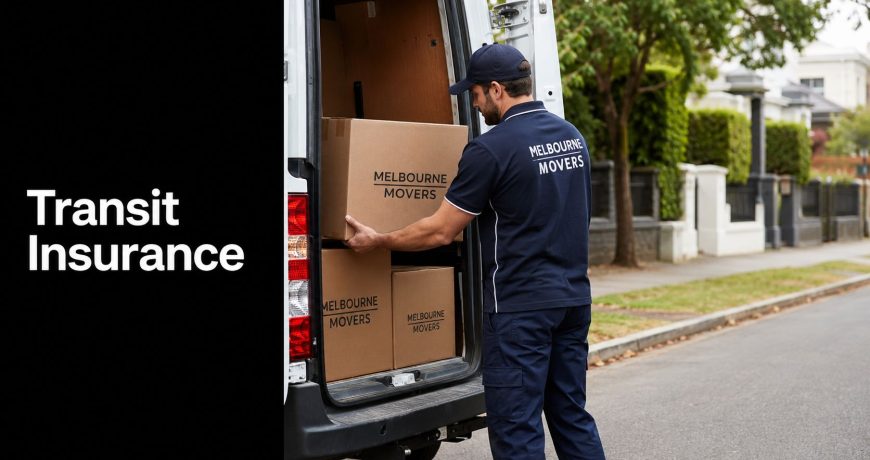
That's where goods in transit insurance comes in. Think of it as the safety net for the period between your old place and your new one. It's there for the belongings being moved, not just for the truck or the people doing the work.
One reason this matters is that gaps in cover are common. Industry data from Australia reveals that up to 62% of small-to-medium-sized enterprises, including those in logistics, fail to secure dedicated goods in transit insurance, which can leave both businesses and their clients exposed to financial loss during transport, according to Gallagher's guide to cover for goods in transit.
Why people get caught out
The confusion usually comes from assumptions:
- They assume the mover's truck insurance covers the load: Truck cover and goods cover aren't the same thing.
- They assume home insurance follows the furniture onto the road: Sometimes it doesn't, or it only does in a limited way.
- They assume “careful handling” replaces proper cover: Care matters, but it doesn't stop every accident, storm event, or theft.
Practical rule: If your belongings are valuable enough to pack carefully, they're valuable enough to ask about insurance properly.
A better question to ask before moving day
Instead of asking, “Are you insured?”, ask, “What insurance applies to my belongings while they're being loaded, transported, and unloaded?”
That one question gives you a much clearer answer.
It also helps when you're choosing a mover. If you're still comparing providers, this guide on choosing the right removals firm for your move is a useful place to start because insurance should sit alongside pricing, handling standards, and communication, not as an afterthought.
What Goods in Transit Insurance Actually Covers
The simplest way to explain goods in transit insurance is this. It's travel insurance for your belongings. Your furniture and boxes are leaving one address, taking a journey, and arriving at another. The policy is designed to protect them during that journey.
In Australia, goods in transit insurance activates when goods are first moved for loading and terminates only upon completion of unloading at the final destination, covering accidental damage from events like collision, fire, flood, and theft, as outlined by NTI's inland transit insurance information.

What the policy is meant to respond to
While breakage is widely understood, the broader array of risks is often less clear. A transit policy is generally there for direct physical loss or damage that happens while the goods are in that moving window.
That can include:
- Road incidents: A collision or vehicle overturning during transport.
- Fire and flood: Damage caused by fire, storm conditions, or water events during the move.
- Theft: Loss from theft in transit, subject to the policy wording and conditions.
- Handling during the move: Damage that happens while items are being loaded or unloaded within the insured period.
What often causes confusion
The phrase “in transit” sounds narrower than it really is. People often think it only means “while the truck is driving”. In practice, the insured window can begin once items are being moved for loading and continue until unloading is completed at the destination.
That matters because many moving-day incidents happen at the edges of the job, not in the middle of the freeway.
Goods in transit cover is about the journey as a whole, not just the kilometres between addresses.
What may not be covered
This is the part customers should read slowly. Insurance isn't a blanket promise for every possible problem. Cover depends on the policy wording, the declared goods, and sometimes how the goods were packed.
Common trouble spots can include:
- Poor self-packing: If fragile items weren't packed appropriately, a claim can become harder to prove.
- Pre-existing damage: Insurance generally responds to transit-related loss or damage, not damage that was already there.
- Excluded events: Some policies are broader than others. You need to check the wording, especially for high-value, fragile, or unusual items.
If you're packing glassware, artwork, TVs, or ceramics yourself, good packing isn't just about protection. It also makes any later claim easier to support. This practical guide on how to pack fragile items for moving helps reduce that risk before the truck even arrives.
Another detail worth understanding is the excess. If you've ever been unsure how an excess affects a payout, this plain-English explanation of how deductibles work in insurance is a helpful backgrounder.
Transit Insurance Versus Other Policies You Might Have
The most expensive insurance mistake in moving usually isn't buying the wrong policy. It's assuming one policy does the job of another.
A lot of Australians believe their home and contents insurance automatically protects them during a professional move. That belief can leave a serious gap. Many Australian households mistakenly believe their home contents insurance covers professional moves, but these policies often have narrow transit cover that may not extend to road accidents or theft during an interstate relocation, according to Compare the Market's explanation of goods in transit cover.
Insurance policy comparison for your move
| Coverage Aspect | Goods in Transit Insurance | Public Liability Insurance | Home & Contents Insurance |
|---|---|---|---|
| Main purpose | Protects belongings while they're being moved | Protects against injury to other people or damage to third-party property | Protects household belongings and the home under the terms of the home policy |
| Who it primarily protects | The goods being transported and the party with an insurable interest in them | The mover or business against liability claims from third parties | The homeowner or renter, subject to policy wording |
| Applies during loading and unloading | Yes, if included within the transit period under the policy | Not for damage to your own goods as a transit cover | Sometimes limited or excluded |
| Responds to collision, fire, flood, theft during the move | Designed for this kind of risk | No, that's not its main job | May be narrow or not extend to the event |
| Useful for a house move | Yes, specifically for belongings in motion | Yes, but for a different reason | Sometimes, but you need to check transit terms carefully |
The quick way to separate them
Use this test.
If the issue is your fridge, bed frame, dining table, boxes, or artwork getting damaged or lost during the move, that points to goods in transit insurance.
If the issue is a mover accidentally damaging a building wall, lift, driveway, or another person's property, that points more towards public liability.
If the issue is damage or loss inside the home under the normal terms of your household policy, that may involve home and contents insurance, but you can't assume it follows your belongings onto a professional relocation.
Why this matters for personal moves
House moves sit in an awkward space. They're personal, but they often involve professional transport. That's why generic assumptions cause trouble.
If you want a transport-industry explanation from the cargo side, this overview of cargo insurance essentials for trucking companies can help clarify why vehicle cover and load cover are treated as separate issues.
How Much Does Goods in Transit Insurance Cost
Cost is usually the next question, and rightly so. People want to protect the move, but they also want to know whether they're adding something expensive at an already busy time.
The encouraging part is that pricing is usually tied to the value and risk of what's being moved, not guessed out of thin air. In Australia, goods in transit insurance premiums typically range between 0.1% and 2.5% of the total cargo value, and a move with goods valued at $100,000 might cost between $300 and $800 for annual-style protection, based on National Cover's overview of marine and transit insurance in Australia.
What affects the premium
Insurers generally look at the practical risk profile of the move. That can include:
- Declared value of the goods: More value usually means more exposure.
- Type of items: A standard load of furniture is different from a move that includes antiques, artwork, or a piano.
- Distance and route: A short suburban move isn't the same risk as a longer relocation.
- Level of cover selected: Broader cover can cost more than a narrower policy.
- Claims history or business profile: This matters more on business-style or annual policies.
How to think about the cost properly
The mistake people make is comparing the premium to “nothing happening”. A better comparison is the premium versus replacing or repairing the items that matter most.
For a Melbourne move, it helps to build insurance into the moving budget early instead of treating it like an optional extra at the end. In the same way people budget for pet transport by checking practical cost guides such as budgeting pet travel for owners, you'll get a clearer moving budget if you price transport risk upfront rather than hoping your existing policies cover it.
Cost check: The right premium should feel smaller than the financial shock of replacing what's in the truck.
For broader budgeting, this breakdown of moving company cost is useful because insurance sits alongside labour, truck size, access conditions, and any packing service you book.
Coverage for Local Melbourne vs Interstate Moves
A local move from Carlton to Bentleigh and an interstate move from Melbourne to Brisbane may both involve boxes, furniture, and a truck, but the risk profile isn't the same.
What matters here is continuity. For personal moves in Australia, goods in transit insurance can provide “point to point” cover, starting when items are picked up and ending when they're delivered to the final destination, which helps protect the loading, transport, and unloading phases of either a local or interstate relocation, according to Coverfreight's explanation of point-to-point transit cover.

Local Melbourne moves
A local move is usually simpler. The travel time is shorter, there are fewer hours on the road, and the number of handling stages is often lower.
That doesn't mean there's no risk. Apartment lifts, narrow stairwells, wet weather, laneway parking, and tight settlement windows can all add pressure. On a local run, customers often focus on the drive itself, but access issues at either property are just as important.
Interstate moves
Interstate relocations ask more of the process. The goods are in transit for longer, the route is longer, and there may be more than one handling stage depending on the logistics.
That's why point-to-point language matters. You want to know there isn't a protection gap between pickup in Melbourne and delivery at the final address.
A few questions become more important on a longer move:
- Does the cover apply for the whole journey: Not just one leg of it.
- Is the inventory detailed enough: Especially for higher-value or fragile items.
- Are there any special conditions for packed boxes, electronics, artwork, or furniture requiring extra handling: These details matter more when the trip is longer.
For interstate moves, the policy wording matters more because the journey has more touchpoints and more chances for something unexpected to happen.
If you're weighing up providers for a longer relocation, this guide on how to choose the best interstate removalists is worth reviewing alongside the insurance details.
How to Navigate the Claims Process if Needed
Most moves finish without a claims issue. But if something does arrive damaged, missing, or clearly affected by the trip, the best response is a calm, organised one.
Start with the evidence. Don't rush into unpacking everything and throwing away packing materials if you've just noticed a problem.

The first steps that matter most
Check the goods on arrival
Look over furniture, cartons, and fragile items as they come off the truck or soon after placement.Take clear photos straight away
Capture the damage, the packaging, and the room context if it helps show what happened.Notify the relevant party promptly
Contact the mover or insurer as soon as you can. Delay makes everything harder to assess.
Here's a quick visual summary of what the process generally looks like:
What the insurer usually needs
Claims go more smoothly when you can provide a tidy file rather than a vague description. Gather:
- Photos and videos: Wide shots and close-ups
- Inventory or item list: Especially if the missing or damaged item was documented before the move
- Receipts or proof of value: If available
- Notes from the day: Timing, weather, access issues, or anything unusual
- Police report: If theft is involved and the insurer asks for it
In Australia, after a goods in transit insurance claim is filed, the insurer generally has a standard response window of ten business days to assess the claim and either negotiate a settlement or provide a reason for denial, according to GSK Insurance's goods in transit claims information.
If the claim is questioned
Don't treat a request for more information as a rejection. Insurers often need clearer proof, better item details, or confirmation of how the goods were packed and moved.
Keep damaged items, original packaging, and paperwork until the claim is resolved. Throwing things out too early can weaken your position.
If a claim is denied, ask for the reason in writing and compare it carefully against the policy wording.
Your Checklist for a Fully Protected Move in Melbourne
By the time you're booking a move, you don't need more jargon. You need a shortlist of checks that tell you whether your belongings are properly protected or whether you're relying on assumptions.
The easiest way to do that is to ask direct questions before moving day, then keep the answers with your booking confirmation.
Questions to ask your removalist
- What insurance applies to my belongings while they're being loaded, transported, and unloaded?
- Is the cover goods in transit insurance, public liability, or both?
- What events are typically covered during the move?
- Are there any limits or exclusions for fragile, valuable, or self-packed items?
- What documents should I keep before moving day in case I need to make a claim?
- Who do I contact first if I notice damage or loss on delivery?
Checks to do yourself before the truck arrives
- Prepare a clear inventory: Even a room-by-room list helps.
- Photograph valuable items before the move: This gives you a record of condition.
- Label fragile cartons properly: Clear labels help handling and later assessment.
- Ask about packing standards: Especially for glass, artwork, electronics, and mirrors.
- Read the policy wording or summary: Don't rely on a verbal “you're covered”.

What a professional setup should include
A mover should be able to explain insurance in plain language, not hide behind vague phrases. If they can't clearly tell you what protects the goods, when cover starts, and what the claims process looks like, that's a warning sign.
For customers planning a local or interstate relocation, Get n Go Removals Melbourne states that it provides public liability and transit insurance as part of its service profile, alongside residential and commercial moving, packing, storage, and specialist item handling. That's the sort of detail you want confirmed in writing before the move proceeds.
One more practical tool helps tie all of this together. A written moving plan reduces rushed decisions, missing paperwork, and last-minute assumptions. This moving house checklist Australia is a helpful reference if you want to organise the booking, packing, access, utilities, and insurance questions in one place.
The safest move isn't the one where nothing can go wrong. It's the one where you know exactly what protection is in place if something does.
If you want a mover that can explain the practical side of relocation clearly, from packing and access planning to what cover applies on moving day, speak with Get n Go Removals Melbourne before you book. A short conversation now can save a lot of confusion later.