
Adelaide to Warrnambool Move: Your 2026 Guide

You're probably looking at two things right now. A new place in Warrnambool that feels exciting, and a moving list that already feels longer than it should.

That's normal with an interstate move. Adelaide to Warrnambool isn't just a matter of loading boxes and driving off. You've got route choices, fuel costs, packing decisions, timing, and the bigger question that often arises early. Do you handle the move yourself, or do you hand the heavy work to professionals and protect your time and energy instead?

For families, renters, downsizers, and office managers alike, the pressure points are usually the same. You want a realistic idea of distance, a workable budget, and fewer surprises on moving day. If you're still building your timeline, a practical checklist for homeowners moving helps bring the process into the right order, and a solid moving home to do list can keep the whole job from turning into a last-minute scramble.

Planning Your Move from Adelaide to Warrnambool

A move like this usually starts with a deceptively simple question. How hard can it be?

Then the full list appears. Furniture, fragile items, keys, utility cutovers, cleaning, access times, pets, school schedules, work commitments, and the fact that an interstate run leaves less room for mistakes than a local move. If one piece of the plan slips, the rest can get messy fast.

Start with the non-negotiables

Before you compare trucks, cartons, or quotes, lock down the items that affect every other decision:

  • Your move date: Settlement dates, lease end dates, and building access windows shape everything else.
  • Your property access: Stairs, lifts, narrow driveways, and loading zones matter more than people expect.
  • Your inventory: You don't need a perfect spreadsheet, but you do need a clear view of what's moving.
  • Your tolerance for stress: Some people can pack and coordinate calmly. Others would rather pay to avoid the disruption.

A common mistake is treating the move as one big job. It works better when you split it into parts. Transport. Packing. Storage if needed. Timing. Risk management.

Practical rule: If you're moving interstate, decide early whether you're optimising for the lowest cash outlay or the smoothest overall outcome. Trying to do both usually creates the most stress.

Think about the move as a chain, not a single day

Most Adelaide to Warrnambool moves don't go wrong because of one dramatic problem. They go wrong because several small issues stack up. Boxes aren't labelled properly. Keys aren't ready. The truck size is wrong. Someone underestimates the physical effort. Access at the destination takes longer than expected.

That's why organised movers plan backward from arrival day. If you know when you need to be functional in Warrnambool, you can make better decisions about when to pack, when to clean, what to take yourself, and what should go straight onto the truck.

Mapping Your Journey Routes Distances and Travel Times

A route choice that looks minor on paper can change the whole moving day. Leave Adelaide late, hit slower sections than expected, and a straightforward unload in Warrnambool can turn into after-hours access issues, tired lifting, and extra accommodation or labour costs.

A travel comparison infographic showing two road trip routes from Adelaide to Warrnambool with distance and time.

The practical route most movers focus on

The direct route via the A8 and B140 is about 530 kilometres and takes roughly 6 hours and 45 minutes, according to this Adelaide to Warrnambool drive breakdown.

For an actual relocation, this is usually the route to price, schedule, and plan around first. It gives you a tighter day, fewer variables, and a better chance of arriving with enough energy left to unload properly. That matters whether you are driving a rental truck yourself or booking a crew to handle the run.

The trade-off is that a direct route leaves less room for casual stops. If you are managing the move yourself, build in breaks, fuel stops, and a realistic handover window at the destination. Good timing on interstate jobs comes from planning the day as a work run, not a road trip. If you want a better framework for that, this route planning guide explains how to map stops and buffers in a way that fits a longer drive.

The scenic route and when it makes sense

The same source notes that the Great Ocean Road route via the B100 extends the trip to about 800 kilometres and around 9 hours and 30 minutes of driving.

That option suits a staged move better than a standard household relocation. It can work if you are carrying personal items in a car, splitting the trip over more than one day, or turning the relocation into a gradual transition. It is harder to justify for a full furniture move where timing, access windows, and unloading capacity matter.

Longer distance changes more than fuel use. It increases fatigue, raises the chance of delays, and can create problems if your keys, cleaners, or building access are tied to a fixed arrival time.

A quick route comparison

Route Best for Distance and time
A8 and B140 Efficient moves, tighter booking windows, same-day delivery planning About 530 km and 6 hours 45 minutes
Great Ocean Road B100 Staged trips, lighter personal loads, relocation combined with travel About 800 km and 9 hours 30 minutes

For DIY movers, route choice affects your truck hire period, rest planning, and how much unloading you can safely do on arrival. For customers comparing removalists, it also affects quoting logic and scheduling. A provider that understands interstate timing will account for road hours, access at both ends, and contingency time. This guide on how to choose the best interstate removalists is useful if you want to compare operators on more than just headline price.

The better route for a move is the one that reduces fatigue, protects your timing, and keeps the job controllable from pickup to unload.

Self-Drive vs Professional Removalist Which Is Right For You

This is the decision that shapes the entire move. Not just cost, but effort, risk, timing, and how much of your week disappears into lifting, packing, and problem-solving.

A young woman sitting at a desk, weighing options between self-drive and professional moving services.

When self-drive works well

A DIY move usually suits people with a lighter inventory, flexible timing, and confidence with the physical side of moving. If you're taking mostly boxes, a few core furniture items, and you have reliable help at both ends, self-drive can be manageable.

The first obvious saving is control. You choose the pace, the departure time, and what goes where. If you want your kitchen packed a certain way or your electronics carried separately, no one else is making those calls.

The direct fuel cost is also easier to visualise. The estimated fuel cost for the most direct 530-kilometre route is about $81 AUD, based on the calculation shown in this Adelaide to Warrnambool travel cost guide.

But fuel is only one line item. DIY movers still have to deal with vehicle hire, packing materials, loading time, unloading time, and the fact that a long drive after a full day of lifting can be rough.

Where DIY tends to break down

The hard part isn't usually driving. It's everything around the drive.

Heavy items need proper handling. Fragile items need proper packing. Access issues at either property can turn an ordinary load into a difficult one. If your timeline is narrow, even a small delay can hurt.

DIY also puts all responsibility on you. If the truck size is wrong, if your helpers cancel, if the washing machine wasn't drained properly, if the couch won't fit through the second doorway, you're the operations manager and the labour force at the same time.

For people comparing providers, a guide on how to choose the best interstate removalists is worth reading before you commit either way.

When professional movers are the better call

Professional removalists make the most sense when the move includes larger furniture, tight timing, difficult access, or too much volume for a practical self-drive.

The main benefit isn't just convenience. It's reduced decision load. Experienced crews know how to load for transit, protect furniture, move efficiently through access constraints, and keep the day on schedule.

That matters more than people expect on an interstate run, because the move isn't only about transport. It's also about preserving your energy for settling in, handling keys, connecting services, and getting your household or office functioning again.

A short video can help frame the decision in practical terms:

A side-by-side decision view

  • Choose self-drive if you have a smaller load, capable help, flexible dates, and you're comfortable doing the lifting and coordination yourself.
  • Choose professional movers if you have substantial furniture, limited time, fragile items, difficult access, or you want the move handled with less physical and mental strain.
  • Pause and reassess if your original “simple DIY move” now includes storage, multiple properties, pets, or a rushed handover window. That's where DIY plans often stop being cheaper in any practical sense.

Estimating the Cost of Your Adelaide to Warrnambool Relocation

An early number is often desired. That's sensible, but the better approach is to build a cost range rather than hunt for one neat figure.

A move cost depends on volume first, then complexity. A lightly furnished unit and a full family home aren't in the same category, even if the origin and destination are identical. Access, packing scope, storage needs, and timing all influence the final spend.

How to budget a DIY move

For self-drive, start with the costs you can identify clearly and then add a buffer for the items people forget.

Use this sequence:

  1. Vehicle hire: Confirm the truck size you need, not the size you hope will be enough.
  2. Fuel: Add the direct driving cost from your route choice.
  3. Packing materials: Boxes, tape, wrap, mattress covers, and protective blankets add up quickly.
  4. Help and handling: If friends pull out, you may need paid labour at short notice.
  5. Accommodation or meals: If the move stretches longer than planned, extra travel costs appear fast.

The useful comparison point here is that many DIY budgets look lean at the start because people price only the truck and fuel. They leave out packing, time off work, replacement of damaged items, and the cost of doing a rushed second trip if the load doesn't fit.

How professional removal pricing is usually framed

For interstate moves in Australia, pricing is commonly based on volume in cubic metres, not just distance. That matters because a route may be fixed, but the amount being transported changes labour, truck space, and loading complexity.

According to this Australian interstate removalist cost guide, industry standard pricing for interstate moves under 1,000 km is $150 to $190 per cubic metre. The same source states that a typical 3-bedroom home averaging 30 to 45 m³ would cost between $4,500 and $8,550 for transport alone, while a 2-bedroom home averaging 15 to 25 m³ would typically fall between $2,500 and $5,500.

Those ranges are useful because they give you a framework before you even request a quote. They also explain why one household can move on a very different budget from another on the same corridor.

A simple budgeting table

Move type Typical volume Transport range
2-bedroom home 15 to 25 m³ $2,500 to $5,500
3-bedroom home 30 to 45 m³ $4,500 to $8,550

If you're trying to understand how transport pricing works across different sectors, this breakdown of transparent auto shipping prices is useful as a comparison model. Different service type, same principle. Clear pricing starts with knowing what is being moved, how far, and under what handling conditions.

For a more practical local view of moving price factors, this guide on decoding the cost of movers helps explain what tends to increase or reduce the final quote.

Don't compare moving quotes by headline price alone. Compare volume allowed, inclusions, handling scope, and whether the quote reflects the access conditions at both properties.

Essential Logistics Packing Insurance and Storage

The transport plan gets most of the attention, but logistics decide whether the move feels controlled or chaotic. Packing quality, cover for loss or damage, and storage planning all matter more on a longer interstate move because your belongings spend more time in transit and there are more handling stages to manage.

A checklist infographic titled Interstate Move Checklist illustrating logistics essentials for packing, insurance, and storage during moves.

Packing that actually protects your move

Good packing isn't about making boxes look neat. It's about reducing movement, crush risk, and confusion during unload.

Three habits make the biggest difference:

  • Pack by room, not by item type: Mixed boxes create mess at the destination and slow down unpacking.
  • Label for use, not memory: “Kitchen” isn't enough. “Kitchen, plates, mugs, daily use” is better.
  • Build one essentials group: Keep chargers, medicines, documents, toiletries, basic kitchen items, and first-night bedding immediately accessible.

If you're packing yourself, this guide on common packing mistakes when moving home is worth reviewing before tape goes on the first carton.

Insurance and what people often miss

Many movers assume all moving risk is covered automatically. That's not always how it works.

You need to check what protection applies during loading, transit, unloading, and storage if storage is part of the move. The practical question isn't “Is there insurance?” It's “What exactly is covered, and under what conditions?”

A careful mover reduces risk. Insurance manages the risk that remains.

For valuable items, take your own photos before the move and keep a simple item list. That creates a clean reference point if you ever need to discuss condition later.

Storage can solve timing problems cleanly

Storage is useful when your handover dates don't line up, when the destination isn't ready, or when you want to declutter before deciding what belongs in the new place.

Short-term storage helps bridge gaps. Longer-term storage helps if you're renovating, downsizing, or staging the move in phases. The key is to pack for storage differently from a standard quick unload. That means clearer labels, better furniture protection, and easy access to anything you might need during the storage period.

A simple way to think about it is this:

Need Best approach
Short handover gap Keep essentials separate and store the rest
Downsizing uncertainty Store selected furniture until the new layout is final
Renovation overlap Protect high-value items and avoid repeated handling

The Get n Go Removals Advantage for Your Interstate Move

When an interstate move runs well, it rarely looks dramatic. The truck arrives on time. The load plan makes sense. The crew knows what needs extra care. Access issues are handled calmly. The delivery lands where and when it should.

That outcome usually comes from systems, not luck.

Screenshot from https://www.getngoremovals.com.au

Why corridor knowledge matters

For this route, local moving knowledge isn't enough. Interstate planning requires a clear understanding of route efficiency, truck suitability, timing buffers, and how road choice affects labour and scheduling.

For removalists, the direct inland route from Adelaide to Warrnambool saves about 2.5 hours of transit time compared with the coastal alternative, according to this Adelaide to Warrnambool driving time reference. For a moving company, that difference matters because it affects daily scheduling, fatigue management, and overall efficiency.

That's the sort of route intelligence experienced interstate operators use in the background. Clients often see the result as a smoother day, but the true value comes from the planning decisions made earlier.

What experienced movers do differently

A well-run removal team brings more than muscle. It brings process.

  • They assess access properly: Stairs, lifts, and awkward entries are planned before the truck is loaded.
  • They protect furniture for transit: Wrapping, stacking, and tie-off decisions matter over a long road journey.
  • They manage sequence: Items needed first are positioned accordingly, rather than buried under the load.
  • They reduce handling mistakes: Fewer repositions usually means less risk.

Get n Go Removals Melbourne is a family-owned operator with company-owned trucks, full-time police-checked staff, packing support, storage options, and interstate moving capability built around reliability and care. For customers, that usually translates to one useful thing. Less uncertainty.

Your Smooth Move to Warrnambool Starts Here

A successful Adelaide to Warrnambool move comes down to a few sound decisions made early. Choose the route that suits the job. Be honest about whether DIY fits your time, energy, and load size. Budget by the full scope of the move, not just the obvious first costs. Pack with transit in mind, not just departure day.

That approach gives you more control, whichever path you choose.

If you'd rather hand the heavy lifting, transport planning, and timing management to a professional team, the next step is simple. Request a clear moving quote and compare the cost against the time, effort, and risk you'd be taking on yourself. For many households and businesses, that's the point where the decision becomes much clearer.


Get n Go Removals Melbourne helps make interstate moves feel manageable, not overwhelming. If you're relocating from Adelaide to Warrnambool and want experienced support with packing, transport, storage, or the full move from start to finish, contact Get n Go Removals Melbourne for a free, no-obligation quote.

READ MORE

The 9 Best Suburbs of Canberra to Call Home in 2026

Finding Your Capital Home: A Guide to Canberra's Top Suburbs

Planning a move to the nation's capital usually starts the same way. You open a few property tabs, compare commute times, wonder whether the Inner South is worth the premium, and try to work out if a newer suburb will suit your day-to-day life once the novelty wears off. Then the practical questions arrive. Will your truck fit the street? Do you need lift bookings? How much harder is an apartment move than a house move?

Canberra rewards people who choose their suburb carefully. It isn't one uniform city. It works more like a collection of distinct local centres, each with its own rhythm, housing style, and trade-offs. Some suburbs deliver established streets, older homes, and quick access to Civic. Others offer newer builds, family-friendly layouts, and easier parking, but a longer trip into the centre.

That's why the best suburbs of Canberra aren't just the most expensive or the most talked about. The right choice depends on how you live, where you work, whether you need schools or healthcare close by, and how complex your move is likely to be on settlement day.

This guide gets to the point. It profiles nine strong options for different kinds of movers, from premium Inner South addresses to practical family districts and fast-growing northern hubs. Along the way, it also tackles the part many suburb guides skip: how to move into each area smoothly, especially if you're relocating from Melbourne and need a realistic plan rather than a glossy sales pitch.

1. Forrest: Premium Inner South Living with Heritage Charm

Forrest suits movers who want old Canberra at its most refined. The streets are wide, the blocks are generous, and the housing stock has the kind of presence that makes arrival day feel like a genuine upgrade. If you're coming from a dense inner-city Melbourne pocket and want space without giving up proximity to central Canberra, Forrest is usually one of the first suburbs worth inspecting.

It works best for households who value calm, presentation, and a polished neighbourhood feel. Professionals like the convenience to central employment areas, while families tend to stay for the greenery, established homes, and the easier rhythm of everyday errands in the Inner South.

What works in Forrest

The appeal here isn't only prestige. It's how usable the suburb feels. Streets are easier to get around than high-density city precincts, and detached homes usually make unloading simpler than apartment-heavy suburbs.

That said, don't assume a premium suburb means an easy move. Larger homes often mean more furniture, more fragile items, and tighter expectations around timing and property care.

  • Best fit: Families with full-size furniture, professionals upgrading from apartment living, and movers who want heritage character.
  • Watch for access: Long driveways, mature gardens, and premium finishes mean the removal plan needs protection from the front gate to the final room.
  • Budget properly: If you're comparing premium suburbs, a clear breakdown of moving company costs helps you separate truck time, packing help, and special handling before you commit.

Practical rule: In suburbs like Forrest, the biggest moving mistakes usually come from underestimating volume, not distance.

A common scenario is a family moving from a Melbourne townhouse into a larger Canberra home and assuming the job will get easier because there are fewer stairs. In practice, the load often takes longer because there's more to place, more to protect, and more rooms to stage properly. Forrest rewards careful planning. It doesn't reward rushed unloading.

2. Belconnen: Family-Friendly Hub with Modern Amenities

A typical Belconnen day is practical from the start. School drop-off, a supermarket run, sport in the afternoon, dinner pick-up, and a short trip back home can all fit into a suburb choice that doesn't force long cross-city detours. For interstate movers, that matters. The easier the suburb is to live in, the easier it is to settle in after the truck leaves.

Belconnen earns its place on a Canberra shortlist because it solves several problems at once. It gives buyers and renters a wider range of housing than many tightly defined inner suburbs, and it pairs that with a major town centre, lake access, schools, retail, and public facilities. If you're relocating from Melbourne or Sydney and want Canberra to feel functional quickly, Belconnen usually makes that transition easier.

A man jogging on a path alongside a calm lake with modern apartment buildings in the background.

Where Belconnen works best

This district suits households that value coverage. Families can combine schools, shopping, medical appointments, and weekend sport without building every day around driving time. Professionals and renters get options too, especially if they want apartment living with services close by rather than a quieter suburb with fewer daily conveniences.

The trade-off is inconsistency between pockets. Belconnen includes established streets, townhouse areas, and newer apartment clusters, and those settings live very differently. One address may feel calm and spacious. Another may involve tighter parking, more traffic movement, or stricter building access.

That difference matters on moving day.

If you're heading into an apartment, confirm lift bookings, loading zones, truck height limits, and body corporate rules before you lock in dates. If you're moving into an older detached home, check driveway slope, front steps, and whether there is enough kerb space for a larger truck. In mixed-density districts like this, a little planning prevents expensive delays, which is why many interstate clients start by reading a guide on choosing the right removals firm for your move.

Belconnen is also a sensible option for movers trying to balance purchase price, rent, and moving costs rather than spending heavily on all three. That doesn't make it a compromise suburb. It makes it a suburb where practical households often get more usable value.

  • Best fit: Families, first-home buyers, renters, and interstate movers who want services close at hand.
  • Watch for access: Apartment complexes vary a lot. Some are easy to service, while others require tight booking windows and careful truck placement.
  • Plan the first week: Set up school routes, grocery options, and parking early. Belconnen works best when you choose the pocket that matches how your household moves day-to-day.

Belconnen doesn't sell a single lifestyle. It offers several, within one district. For movers who want a suburb that works on Monday as well as Saturday, that's a real advantage.

3. Dickson: Inner-North Charm with a Vibrant Village Heart

Dickson appeals to people who want movement around them, but not chaos. It has an established Inner North feel, strong local identity, and one of those shopping and dining precincts that residents use instead of merely mentioning in real estate listings. If you're the kind of mover who wants to walk to dinner, pick up groceries locally, and still feel like you live in a real neighbourhood, Dickson earns attention quickly.

Its strongest asset is rhythm. Mornings, weeknights, and weekends all make sense here. That matters more than first-time movers often realise.

People walking on a sidewalk next to an outdoor cafe with trees in a suburban street.

The trade-offs to understand

Dickson isn't just cafés and convenience. Some homes are older and charming. Others sit near busier roads or denser pockets. Before signing a lease or contract, test the street at different times of day and check whether parking pressure will affect visitors, tradies, or a moving truck.

This suburb also suits a specific type of mover especially well: couples or small families coming from Melbourne's inner north who don't want to swap walkability for suburban isolation. Dickson gives them a softer landing because the village feel remains intact.

Good Inner North suburbs don't just save commute time. They save decision time because daily errands stay local.

Moving into Dickson tends to be smoother when you declutter before departure. Older homes can have tighter hallways, smaller storage, and less forgiving entry points for oversized furniture. If you're bringing modular pieces, disassemble them in Melbourne rather than hoping to improvise kerbside on arrival. That one choice usually saves time, stress, and unnecessary damage risk.

4. Woden Valley: Established District with Excellent Schools

Woden Valley is a practical pick for families who want established infrastructure and a suburb choice that still feels grounded in daily life rather than hype. The district includes well-known residential areas such as Phillip, Lyons, and Curtin, and it works well for households that want schools, parks, shopping, and healthcare woven into one stable part of Canberra.

It also has long-term strategic appeal. According to ACT population projections reported by ABC News, Canberra's population is projected to rise from about 463,000 residents today to 784,000 by 2060, with a high projection of 817,000. That kind of growth keeps established family districts like Woden relevant because they already have the bones that many growing households need.

Why movers choose Woden Valley

Woden tends to attract people who want fewer unknowns. You can inspect a street and get a fairly clear read on how it lives. That's useful when you're moving interstate and don't have the luxury of months of local familiarity.

Families also benefit from the mix of housing types. Some streets offer classic detached homes with room to expand into. Others provide lower-maintenance options that still keep schools and amenities close.

  • Packing matters more here than people think: Established family homes often carry decades of stored items, garage overflow, and fragile keepsakes.
  • Do the prep before truck day: A structured guide on how to pack for moving house is worth following if you're relocating a full household rather than a simple apartment load.
  • Check access details: Corner blocks, sloped drives, and school-zone traffic can all affect arrival timing.

A realistic example is a family leaving Melbourne's eastern suburbs for Curtin or Lyons. They usually focus first on school access and commute patterns, then discover the move itself is won or lost in the packing stage. Woden Valley is forgiving as a place to live. It's much less forgiving if you've labelled boxes poorly and buried the essentials.

5. Ainslie: Leafy Inner-North Living near Mount Ainslie

You inspect a beautiful Ainslie cottage online, book it from interstate, and assume the hard part is choosing the suburb. Then moving day arrives and the truck is dealing with a narrow driveway, mature trees, and furniture that looked reasonable in your old place but does not fit the front entry. Ainslie is one of the Inner North's best lifestyle picks, but it rewards buyers and renters who plan the move as carefully as the postcode.

Ainslie appeals to people who want Canberra character rather than a newer estate feel. The suburb is established, green, and close to both Mount Ainslie and the city. That mix suits professionals who want a shorter commute, families who value older streets with shade and walking access, and downsizers who still want a house with presence.

Its biggest strength is also one of its practical trade-offs. Many homes have charm, but charm often comes with older floorplans, tighter storage, smaller bedrooms, uneven access, and car parking that is less straightforward than it looks in listing photos.

Inspect Ainslie as a mover, not only as a buyer or tenant.

Check the width of gates, front steps, hallway turns, and where a truck can legally and safely stop. If you're organising the relocation from Sydney, Melbourne, or further afield, use a detailed moving house checklist for Australia early so utilities, access notes, and packing priorities are sorted before the truck is booked.

Ainslie particularly suits people who will use what they are paying for. If daily walks, older homes, proximity to the Inner North, and a quieter residential feel matter, the premium makes sense. If you want modern open-plan layouts, generous built-in storage, and simpler moving access, newer suburbs may be easier to live in from day one.

One practical example comes up often. Interstate movers bring oversized modular lounges or king-bed ensembles into character homes without measuring entry points and internal turns first. In Ainslie, that can turn a straightforward unload into a costly delay, on-street reshuffling, or same-day storage. Planning fixes most of that.

6. Gungahlin: A Modern, Fast-Growing Northern Hub

If you want contemporary housing, newer streets, and a district built around growth, Gungahlin is the obvious northern contender. It attracts first-home buyers, young professionals, and families who prefer modern layouts and planned infrastructure over older charm. For movers from Melbourne growth corridors or newer townhouse estates, the transition can feel straightforward because the housing logic is familiar.

There's also a demographic clue behind its energy. Census analysis reported by ABC found that North Canberra suburbs such as Gungahlin and Braddon have a higher concentration of residents under age 25, with 87.4% accuracy in categorising suburbs based on youth population and birthplace demographics. That helps explain why the area often feels younger, busier, and more transitional than older southern suburbs.

Growth is an advantage, but it changes the move

In 2025, Palmerston, Gungahlin, and Molonglo Valley were identified as Canberra's fastest-growing suburbs by capital appreciation and rental demand. For movers, that usually means two things. Demand is strong, and timing matters. Properties turn over quickly, and booking windows can tighten around peak periods.

Gungahlin also comes with one of the most overlooked moving realities in Canberra. Many newer homes and apartments sit in areas where access is easier on paper than in practice. New estates may have straightforward roads but tight garage clearances, active construction nearby, or apartment rules that require exact timing.

  • Use a real plan: A detailed moving house checklist for Australia helps interstate movers line up utility transfers, access bookings, and settlement timing.
  • Expect mixed density: Some pockets are detached-home friendly. Others need apartment-style coordination.
  • Book early: Fast-moving districts punish late organisation.

Gungahlin is one of the best suburbs of Canberra if you want growth, newer housing, and family-oriented planning. It's not the suburb to approach casually on moving week.

7. Kingston: Lakeside Living and Cosmopolitan Lifestyle

A lot of interstate movers arrive in Canberra wanting two things at once. They want daily convenience, and they want a suburb that still feels like a place to go out, walk, and spend time. Kingston is one of the few areas that consistently delivers both.

The appeal is practical as much as aesthetic. Kingston puts you close to the lake, close to Parliamentary Triangle jobs, and close to cafés, restaurants, and local services that reduce the need to drive for every errand. Housing choice is broader than many buyers expect too, with older cottages, townhouses, and a large apartment market sitting side by side.

A modern urban street scene in Canberra featuring the Canberra Theatre Centre and contemporary residential buildings.

Lifestyle is the draw. Access planning is the real test.

Kingston suits professionals, downsizers, and couples who want an urban routine with less commuting friction. It also suits movers who are comfortable trading backyard space for walkability and better access to central Canberra. That trade-off is worth making for the right household, but it changes how you plan the move.

This is one of the suburbs where relocation logistics can catch people out. Foreshore apartments, underground parking, loading limits, concierge rules, and short lift booking windows all need to be confirmed before moving day. A truck that works perfectly for a suburban house move can become the wrong vehicle for a Kingston apartment building.

I regularly advise movers to treat Kingston as a building-access job first and a packing job second. Confirm truck height clearance, check whether the building allows weekend moves, ask where long vehicles can legally stop, and find out who holds lift keys or access fobs. Those details decide whether move-in day runs smoothly or turns into expensive waiting time.

Move-smart advice: In Kingston, confirm building rules before you lock in truck timing.

If you're relocating from Sydney or Melbourne into Kingston Foreshore or an older apartment block nearby, use a plan built for high-density access. This guide on how to reduce stress when moving home is a good place to start. Then line up key collection, loading access, insurance requirements, and elevator bookings well before settlement or lease commencement.

Kingston remains one of the best suburbs in Canberra for buyers and renters who want energy, convenience, and a genuine inner-Canberra lifestyle. It rewards organised movers more than casual ones.

8. Red Hill: Elevated Views and Established Family Living

You arrive in Canberra after an interstate move, collect the keys, and realise the new house sits above street level with a steep driveway, front steps, and a tighter turning area than the listing photos suggested. That is a realistic Red Hill move. The suburb offers space, privacy, and established homes, but access details matter more here than they do in flatter, simpler streets.

Red Hill appeals to buyers and renters who want an Inner South address with a quieter, more settled feel. Mature trees, larger homes, and higher-set streets give parts of the suburb a sense of separation without pushing you far from work, schools, or daily services. For families, that balance is hard to replace.

Long-term appeal comes from the housing stock as much as the location. Red Hill suits households that want proper storage, multiple living areas, a home office, or room for teenagers and guests. Interstate movers often value that flexibility because routines usually take a few months to settle, especially after a job change or school move.

The trade-off is practical. Red Hill is easier than an apartment-heavy suburb for truck access and unloading, but it is not always an easy house move. Sloped blocks, narrow driveways, retaining walls, stepped paths, and split-level layouts can slow the job and increase carrying distance.

I usually advise movers heading into Red Hill to book the property inspection with move day in mind, not just purchase or lease appeal. Check whether a large truck can reverse safely, whether there is room to stage items near the entry, and whether bulky furniture needs a balcony lift or extra hands. Those details affect crew size, truck choice, and timing.

A common example is a family moving from a compact Melbourne or Sydney home into a larger Red Hill property. More space sounds straightforward. On the day, the challenge becomes placing heavy furniture across several levels, protecting garden paths, and avoiding delays on a steep access point. In Red Hill, the suburb itself is stable and well established. The move still rewards careful planning.

For buyers and renters who want prestige, privacy, and family-friendly Inner South living, Red Hill remains one of Canberra's stronger choices. It suits people who plan the relocation with the block, the slope, and the house layout in mind.

9. Tuggeranong: Affordable Lakeside Living in the South

Tuggeranong makes sense for movers who value space, services, and a more accessible entry point into Canberra life. It won't suit everyone. If you need to be in the CBD every day, the southern distance will matter. But if your priority is family practicality, recreation, and better value than the inner districts, Tuggeranong deserves far more attention than it usually gets.

Its strengths are concrete rather than fashionable. You get a major southern hub, established neighbourhoods, and access to lake and outdoor spaces that support everyday family life.

Best for value-conscious movers

As of May 2026, Property Lookout identified Calwell, Kambah, Wanniassa, Chisholm, and Macgregor as Canberra's five best-performing suburbs for property metrics, all with typical house prices under $1 million, rental vacancy rates below 1%, and median sale times between 22 and 31 days. Several of those suburbs sit in Tuggeranong's orbit or align with the broader southern value story, which helps explain why budget-conscious buyers keep looking south.

That doesn't mean “cheap and cheerful”. It means practical. Tuggeranong suits first-home buyers, upsizers who need more rooms, and households that would rather own a bigger home farther out than stretch into a tighter inner suburb.

  • Good fit: Families with kids, pet owners, and buyers who want storage, backyard space, or multiple living areas.
  • Moving advantage: Detached homes usually simplify loading and unloading compared with apartment-heavy districts.
  • Main trade-off: Longer travel times for some workers, especially if your routine centres on the north.

Tuggeranong is one of the best suburbs of Canberra if your version of “best” includes room to breathe, room to park, and room to grow.

Top 9 Canberra Suburbs Comparison

Suburb 🔄 Relocation complexity ⚡ Resource requirements (moving) ⭐ Expected lifestyle quality 📊 Ideal use cases 💡 Key advantage / tip
Forrest High, heritage blocks, narrow tree‑lined streets may restrict truck access Specialist movers, smaller/ferry vehicles, possible temporary storage ⭐⭐⭐⭐⭐, premium, leafy lakeside living Established professionals, high‑income families seeking prestige Plan mid‑week moves; verify driveway/gate widths and use heritage‑experienced movers
Belconnen Medium, planned streets but high turnover periods (uni semesters) affect scheduling Standard truck; book early (especially mid‑year/semester) and confirm lift times for apartments ⭐⭐⭐⭐, modern, family‑friendly with strong amenities Families, students, first‑home buyers seeking value and convenience Book movers well in advance; confirm lift/parking rules for complexes
Dickson Medium‑High, village precinct with limited parking and tight streets Experienced crews for tight parking; early starts to avoid congestion ⭐⭐⭐⭐, walkable, vibrant village character with strong dining scene Young professionals, foodies, academics wanting walkable lifestyle Move off‑peak/early morning; coordinate neighbour parking and narrow access
Woden Valley Low, good street access and interchange at town centre; schools increase peak congestion Standard moving truck; avoid school peak times; book ahead for peak seasons ⭐⭐⭐⭐, established family living with excellent schools Families with school‑aged children, healthcare workers, public servants Schedule outside school hours/term dates; book for peak family move windows
Ainslie High, heritage homes, dense tree canopy, limited driveway widths Specialist movers familiar with heritage access and low‑hanging branches ⭐⭐⭐⭐, leafy, community‑focused close to nature Active professionals, families, nature lovers who value character Inspect access and tree canopy; use movers skilled with heritage properties
Gungahlin Low, modern wide streets and good access, but high booking demand Standard trucks; early booking recommended for high turnover; coordinate lifts ⭐⭐⭐, modern, growth‑focused with good facilities First‑home buyers, young families, professionals seeking growth potential Book moving date early; confirm lift access for new apartments
Kingston High, high‑density foreshore with limited truck parking and strict building rules Smaller vehicles/ferry from legal truck parking; coordinate loading docks and lift bookings ⭐⭐⭐⭐, cosmopolitan, lakeside urban living Young professionals, downsizers, culture enthusiasts preferring walkable amenities Arrange building management lift/loading dock bookings early; expect limited street parking
Red Hill Medium‑High, steep, winding streets and large landscaped gardens require care Movers with suitable vehicles and safety procedures for hilly terrain ⭐⭐⭐⭐, affluent, private family living with potential city views High‑income families, professionals, diplomats seeking privacy Notify movers of steep streets; plan mid‑week move to avoid lookout crowds
Tuggeranong Low, wide streets and ample parking make moves straightforward Standard moving truck; lift bookings for town‑centre apartments as needed ⭐⭐⭐, affordable lakeside suburban living with strong community facilities First‑home buyers, young families, those prioritising value and space Wide street access simplifies moving; confirm lift access for central apartments

Welcome to Your New Home in the Capital

Choosing where to live in Canberra isn't only about status, scenery, or which suburb appears most often in property ads. The better question is whether the suburb supports the life you will live once the boxes are unpacked. A premium Inner South address can be brilliant for one household and a poor fit for another. A newer northern district can be ideal if you want modern housing and growth, but frustrating if you're chasing heritage character or quieter established streets.

That's why the best suburbs of Canberra are best in different ways. Forrest offers prestige and polished Inner South living. Belconnen gives many movers a practical middle ground between value and convenience. Dickson and Ainslie suit people who want a stronger village feel and established neighbourhood identity. Woden Valley works for families who need schools, services, and long-term reliability. Gungahlin suits households who prefer newer homes and a district still expanding around them. Kingston delivers top-tier lifestyle if you're ready for denser urban living. Red Hill offers calm, established family appeal. Tuggeranong makes a strong case for value, space, and everyday usability.

The moving side matters just as much as the suburb choice. That's especially true for interstate relocations from Melbourne, where timing, settlement pressure, building access, and packing quality can make the difference between a clean handover and a stressful start. Apartment-heavy precincts such as Kingston often need lift coordination and tighter arrival windows. Older character suburbs may need more measuring, more furniture disassembly, and more care through narrow entries. Family homes in established districts often carry more volume than owners first estimate. Each suburb creates a different moving problem to solve.

For retirees, the right suburb calculation can shift again. The strongest options are usually the ones with direct bus connections to major centres such as Civic, Woden, or Belconnen, plus proximity to GP clinics and hospitals, with flat topography and established healthcare infrastructure supporting ageing in place, as outlined in this Canberra retirees suburb guide. For investors or growth-focused buyers, other pockets can stand out for different reasons. Domain data analysed in a 2026 guide found Franklin leading Canberra capital growth at 17.7%, followed by Forde at 9.5% and Throsby at 8.1%, which highlights how different suburb choices can serve very different goals.

The smart move is to shortlist suburbs using your real priorities, then build the relocation plan around the physical realities of that location. Confirm access. Measure large furniture. Book loading windows early. Keep essentials separate. Don't leave packing until the final weekend.

When the suburb and the move are planned together, Canberra becomes much easier to land in well.

Ready to make the move? Contact Get n Go Removals for an obligation-free quote for your interstate relocation.


If you're planning a move from Melbourne to Canberra, Get n Go Removals Melbourne can help make the process cleaner, faster, and far less stressful. Their team handles residential and commercial relocations, apartment access coordination, packing and unpacking, furniture disassembly and reassembly, and secure storage, with weekly interstate runs across key East Coast routes. For movers who want one reliable point of contact from the first booking through to final delivery, they offer the kind of practical support that makes a real difference on moving day.

READ MORE

Removalist Melbourne to Darwin: Your 2026 Moving Guide

You're probably juggling a lease end, settlement date, utility transfers, school or work timing, and a long list of things that suddenly feel fragile once they're going on a truck. A Melbourne to Darwin move does that. It takes a normal house move and stretches it across the continent.

The route is approximately 3,148 kilometres, which puts it among Australia's longest domestic relocations and makes it a very different job from a shorter corridor like Melbourne to Sydney at roughly 870 km, according to Muval's Melbourne to Darwin removals data. That distance changes everything. Scheduling gets tighter. Vehicle allocation matters more. Packing quality stops being a nice extra and becomes part of risk control.

A lot of online advice makes this route sound routine. It isn't. The Darwin corridor has two pressure points people often discover too late: backload uncertainty and Northern Territory biosecurity rules. Those are the details that decide whether your move runs smoothly or turns into a string of avoidable delays, re-packing, and extra holding time.

Embarking on Australia's Great Northern Move

Moving north from Melbourne to Darwin usually starts with a simple goal. Get the furniture there safely, keep the dates under control, and avoid paying for mistakes that could've been prevented in advance. What changes on this route is the scale of the coordination required.

Screenshot from https://www.getngoremovals.com.au

A standard metro move gives you more room to recover if something slips. A Darwin move doesn't. Once freight leaves Melbourne, every handover, loading decision, inventory note, wrapping choice, and delivery instruction has a longer consequence because the job is crossing multiple major legs before it reaches the Top End.

Why this route feels bigger than other interstate moves

Distance is only part of it. Darwin is a less frequent lane than the East Coast capitals, so your move sits inside a narrower transport window. That affects pickup planning, truck utilisation, communication expectations, and how carefully you need to prepare anything that could be questioned at inspection or damaged in long-haul transit.

People usually feel two things at once here. There's excitement about the change, and there's a quiet concern about losing control of the process. That concern is reasonable. The smartest approach is to treat the move like a logistics project, not just a booking.

Practical rule: If a company talks about Melbourne to Darwin as if it's no different from a suburban move, keep asking questions.

What works on long northern relocations

The moves that run cleanly usually share the same traits:

  • They're booked early. Long-haul scheduling rewards lead time.
  • The inventory is realistic. Understated volume causes quote disputes and truck space issues.
  • The packing plan matches the route. Heat, vibration, stacking pressure, and handling time all matter.
  • The customer has sorted risk items first. Plants, soil traces, pantry goods, and outdoor gear need special attention.

That's the difference between a hopeful move and an organised one. If you're searching for a removalist Melbourne to Darwin service, look past generic promises and focus on who understands the route mechanics that affect your delivery.

Decoding Transit Times and Routes for Your Darwin Move

The first question people ask is how long it takes. The honest answer is that this route has an expected window, but not every quote explains why that window can move.

The Melbourne to Darwin corridor spans approximately 3,148 kilometres according to route data for Melbourne to Darwin interstate removals. On paper, many providers describe it as a 5 to 10 business day move. The problem isn't the headline estimate. The problem is that many customers are never told what sits behind it.

Why quoted dates can shift

This lane relies heavily on fragmentary backloads, not the steady direct frequency that's common on major East Coast runs. That means delivery timing can remain fluid while operators line up the broader truck movement. The same source notes a potential 30 to 40% variance in actual delivery times compared to the initial quote on this corridor because direct backloads aren't consistently available.

That's the key operational difference. On a high-volume lane, trucks cycle through predictable demand. On the Darwin lane, timing often depends on how the broader load program comes together.

A timeline graphic showing the stages and estimated transit time for moving goods from Melbourne to Darwin.

A realistic way to read the timeline

The route usually unfolds in several legs rather than one simple straight-through run. That matters because each leg introduces handling, scheduling, and linehaul variables.

Journey stage What usually happens
Loading and prep Inventory check, wrapping, truck loading, paperwork review
Southern linehaul leg Freight begins the first major overland segment
Central corridor leg The longest sustained inland section, where schedule discipline matters
Final northern leg Darwin delivery scheduling and local access planning
Unload and placement Delivery, condition check, and placement into the property

If you need a broader planning framework before you lock in dates, this long-distance relocation guide is useful for mapping dependencies around access, timing, and inventory.

What customers should ask instead of “How many days?”

Ask better questions and you'll get better information:

  • Is my move going on a dedicated run or a backload arrangement?
  • What's the pickup window versus the delivery window?
  • At what point is the delivery date confirmed?
  • Will my goods stay on one vehicle or transfer between legs?
  • What causes the most common delay on this lane?

The best interstate timelines aren't the shortest ones. They're the ones explained clearly enough that you can plan around them.

A realistic schedule beats a comforting one every time. If your lease, settlement, or handover date is tight, build flexibility into the Darwin end rather than assuming the narrowest quoted transit window will hold.

Budgeting Realistically for Your Melbourne to Darwin Relocation

A quote can look sharp on paper and still blow out once the truck is booked. I see that happen when the allowance is too low, the access details are incomplete, or the customer locks in a backload without understanding how volatile that lane can be.

Melbourne to Darwin is a long-haul move with fewer service runs than eastern seaboard corridors. That affects price in two ways. Base transport costs are higher because of the distance, and backload availability can swing hard depending on season, freight mix, and how many trucks are returning north with usable space.

As noted earlier, current market pricing on this route shows a small interstate load sitting around the low-$3,000 range on average, while a full 3-bedroom home often lands much higher. Backloading can cut that figure materially, but only when your volume, suburb access, and timing fit a real return load. A cheap estimate based on "possible backload space" is not the same thing as confirmed capacity.

What the quote should cover

A proper Melbourne to Darwin quote usually includes several cost layers:

  • Linehaul freight for the full interstate run
  • Labour at both ends for loading and unloading
  • Volume allocation in cubic metres
  • Packing or protection materials if the removalist is supplying them
  • Access costs for stairs, long carries, lifts, or difficult truck positioning
  • Storage or holding fees if delivery timing shifts
  • Service model pricing based on dedicated space or backload availability

The expensive mistakes usually sit in the fine print. If the quoted volume is light, the price rises on pickup day. If Darwin delivery access turns out tighter than declared, extra labour or a smaller shuttle vehicle may be needed. If settlement dates move, short-term storage can wipe out the saving from a low initial quote.

Standard service vs backloading

The right option depends on what you are protecting.

Service model Usually suits Trade-off
Standard booked run Customers with firmer handover or occupancy dates Higher cost, but better schedule control
Backloading Customers with flexible pickup and delivery windows Lower cost, but less certainty if upstream loads change

Backloading on the Darwin route deserves a realistic warning. It works best when you can absorb date movement at the NT end. If a previous leg runs late, if another load changes size, or if the carrier restructures vehicle space, your delivery window can move with it. That does not mean backloading is poor value. It means the saving comes from accepting schedule risk.

A good pricing comparison looks past the headline number. This guide to moving company pricing is useful for checking what is included, and our breakdown of the cost of movers helps explain how removalists build interstate quotes in Australia.

Budget for Darwin-specific risk, not just the truck

This route has costs other interstate guides often gloss over.

Darwin moves can pick up extra expense if goods need to be held pending property access, if outdoor items require extra cleaning before NT inspection, or if you rely on a narrow delivery promise that was never realistic for a shared load. Quarantine issues are not just a packing problem. They can become a budget problem if goods need to be separated, cleaned, or delayed.

My advice is simple. Build your budget in three layers:

  1. Base move cost based on realistic cubic volume
  2. Access and handling allowances for both properties
  3. Contingency money for timing changes, storage, or quarantine-related delay

That last layer is what saves customers from expensive stress. On a 3,148km move, the cheapest quote is only cheap if the assumptions behind it hold. The better question is whether the price matches your actual volume, your property access, and the amount of delivery certainty you need.

Packing for the Tropics and Navigating NT Quarantine

Packing for Darwin isn't just about getting things onto a truck. You're sending household goods over a long inland route and into a tropical destination, so the packing standard needs to account for movement, heat exposure, and inspection risk.

A cardboard box filled with tropical vacation essentials like sunscreen, a sun hat, and lightweight clothing items.

A weak carton, loose fill, or half-empty box might survive a short local job. It won't always hold up well over this distance. Use double-walled cartons for heavy kitchenware and books, but don't overpack them. Wrap breakables individually. Seal every carton properly, and label boxes by room and contents so any inspection issue can be isolated fast.

Pack for the route, not just the room

A good packing plan protects against compression, rubbing, and repeated handling.

  • Books and dense items go in smaller cartons so they don't burst through the bottom.
  • Linen and clothing can cushion lighter household items, but don't use them to hide fragile pieces without inner wrapping.
  • Electronics should go in original boxes if you still have them. If not, use firm padding and keep cables bagged and labelled.
  • Outdoor items need cleaning before packing, especially anything that has been in contact with soil, grass, or plant matter.

If you're unsure about live greenery, this guide on how to move with plants helps frame the practical issues before you include them in your inventory.

NT quarantine catches people who think they're packed properly

The Northern Territory has strict biosecurity laws restricting soil, plants, and certain foods, and Find a Mover's Darwin-related guide notes that breaches are a leading cause of freight holds, with significant fines for non-compliance. It also points out that many guides don't explain the specific NT Agriculture declaration process needed for this corridor.

That's where household moves get caught. Not on obvious contraband, but on ordinary items packed without inspection thinking.

Common problem items include:

  • Garden tools with soil residue
  • Pot plants or plant cuttings
  • Outdoor furniture with embedded organic matter
  • Certain pantry items
  • Boots, sports gear, or camping equipment that hasn't been cleaned properly

If an item has touched soil, plant matter, or food residue, inspect it before it goes near the moving inventory.

What to do before loading day

Keep your quarantine-risk items separate and review them early. Don't bury them in mixed boxes. If something needs declaration, cleaning, disposal, or separate transport, sort it before the truck is booked to load.

The customers who avoid delays usually do one thing well. They treat quarantine screening as part of packing, not as a last-minute admin task.

A Complete 8-Week Melbourne to Darwin Moving Checklist

A long-haul move gets expensive when too many decisions are left for the final fortnight. The cleaner approach is to stage the work. That gives you time to reduce volume, lock in dates, separate risk items, and avoid rushed packing that creates breakage or inventory confusion.

A structured 8-week checklist for planning a move to Darwin, outlining tasks for a successful relocation process.

Weeks 8 to 5

The first month is about decisions that affect cost and logistics.

  • Week 8: Get quotes, compare inventory assumptions, and check whether the proposed service is a backload or a more fixed linehaul arrangement.
  • Week 7: Book your mover once the quote matches your actual volume and preferred dates. If your building has lift access or loading bay restrictions, secure those bookings early.
  • Week 6: Declutter hard. Every item you don't move reduces packing time, truck space, and unpacking effort at the Darwin end.
  • Week 5: Start address changes for banks, subscriptions, schools, payroll, licences, and regular deliveries.

If pets are coming with you, don't leave their planning late. For cat owners, this piece of expert advice for moving cats is a useful companion read because pet transport stress usually builds from rushed preparation, not the travel day itself.

Weeks 4 to 1

This is the operational half of the move. Everything should now be moving from planning into execution.

Week Priority action
4 Arrange pet transport, medical records, and any care planning for travel days
3 Book utility disconnections and connections, organise repairs, confirm access at both properties
2 Pack non-essentials, label cartons by room, and build an essentials kit for the first days in Darwin
1 Clean, defrost appliances if needed, confirm times, keep documents and valuables separate from the main load

The items people forget until it hurts

A long-distance move exposes small oversights fast. The common ones are predictable:

  • Essentials bag: Keep medications, chargers, paperwork, keys, and enough clothing out of the truck.
  • Spare hardware: Put screws, bolts, and fasteners from disassembled furniture in labelled zip bags taped securely to the item or packed in a clearly marked box.
  • Access notes: Tell your mover about narrow stairs, apartment rules, or difficult driveway access before moving day.
  • Fragile declarations: Don't assume labelled boxes explain themselves. Flag especially delicate pieces in writing.

A good checklist doesn't just reduce stress. It prevents avoidable labour, storage, and re-delivery problems.

For a fuller planning framework, this moving house checklist for Australia helps keep the admin side aligned with the physical move.

How to Choose a Reputable Removalist for the Darwin Route

Not every interstate operator is built for Darwin work. Some are fine on dense metro lanes and struggle once the route becomes longer, less frequent, and less forgiving on scheduling. In such circumstances, reputation has to mean more than a polished quote.

According to Zoom Removals' Darwin interstate pricing overview, interstate removals to Darwin generally cost between $2,000 and $4,000 because of high operational costs and limited carrier frequency. The same source notes that, unlike East Coast routes, this corridor often depends on specific backloading or dedicated long-haul services, which makes choosing an experienced carrier critical.

The signs of a serious operator

You want proof that the company can manage a long-haul lane properly, not just sell it.

  • Fleet control matters: Companies with their own trucks and clearer operational control usually give cleaner answers about timing and handling.
  • Insurance clarity matters: You should understand what transit cover applies and what packing conditions affect claims.
  • Communication matters: One point of contact beats being passed between sales, dispatch, and subcontractors without clear accountability.
  • Special-item competence matters: If you're moving a piano, pool table, office equipment, or delicate furniture, ask how they secure and handle those items over long distance.

It's also worth understanding the broader idea of contractor protection and verification. This explainer on HomeProBadge contractor verification is useful background when you're assessing insurance language and professionalism standards.

Questions worth asking before you book

Ask these directly and listen for precise answers:

  1. Who handles the move from pickup to delivery?
  2. Is the Darwin service dedicated, shared, or backloaded?
  3. Will my goods transfer between trucks or depots?
  4. What's excluded from the quote?
  5. How are delays communicated if timing shifts?
  6. What packing standard do you require for fragile items and claim validity?

Red flags are usually obvious once you know what to listen for. Vague cubic estimates. Unclear delivery windows. No straight answer on who holds the goods during transit. Prices that look low until you ask about access, waiting time, or bulky items.

For a practical framework to compare operators, this guide on how to choose the best interstate removalists gives a solid checklist for vetting.

Why Get n Go Removals Is Your Trusted Melbourne to Darwin Partner

For a route this demanding, trust comes from operating discipline. You need a mover that can handle long-haul planning, protect household goods properly, manage specialist items, and communicate clearly when timing shifts.

Get n Go Removals Melbourne fits that brief because the business is set up around the fundamentals that matter on a difficult interstate move. It's a family-owned Melbourne company with more than 10 years of experience, using full-time, police-checked staff, a company-owned fleet from 4.5 to 12 tonne trucks, and public liability plus transit insurance. Those details matter because they point to direct operational control, not a loose booking network.

The service offering also matches the specific demands of a Melbourne to Darwin move. That includes house and apartment relocations, office moves, professional packing and unpacking, furniture disassembly and reassembly, secure short- and long-term storage, and specialist handling for pianos and pool tables. Long-haul jobs often fail at the edges, not the middle. The more complete the service, the fewer handoff problems the customer has to manage.

What makes that valuable on this route

Darwin work rewards preparation and consistency.

  • Protective equipment and premium packing materials help reduce damage risk over a long linehaul journey.
  • Flexible scheduling supports settlement dates, building access, and time-sensitive moves.
  • Transparent pricing makes quote comparisons easier because the customer can see what they're paying for.
  • A single point of contact simplifies communication during a move where details can change fast.

That combination is what customers should look for in any long-distance mover. On a route with tighter carrier frequency and more moving parts, a trustworthy operator doesn't just load and drive. They control the move from the first inventory discussion to the final unload.

Frequently Asked Questions About Moving to Darwin

Can I move my car separately from my household goods

Yes, many people do. Vehicle transport is often arranged alongside the household move rather than inside the same service. The key is to line up handover timing so you're not left without transport at either end. Ask early whether your mover coordinates this directly or whether you'll need a separate transport booking.

Is moving with pets harder on this route

It can be, mostly because pet travel has its own timing, paperwork, and care needs. Pets don't suit last-minute planning. Book veterinary checks, transport, and arrival routines well ahead of the move, especially if your travel dates and your furniture delivery won't line up exactly.

Should I use storage before delivery in Darwin

Short-term storage can be the right solution if your home isn't ready, your lease dates don't match, or you want a cleaner handover. It's often better than forcing a rushed delivery into a property that isn't accessible or fully available yet.

What usually affects the final quote the most

For Darwin moves, the biggest drivers are distance and shipment volume. Sirelo's 2026 interstate moving cost overview states that interstate moving costs to Darwin range from $3,075 to $9,260 in 2026, with distance and shipment volume identified as the two biggest pricing factors.

Is office relocation to Darwin handled differently from a home move

Yes. Office moves usually need tighter sequencing, clearer inventory control, and better protection for IT, workstations, shelving, and time-sensitive equipment. They also require stricter coordination around downtime and access windows.

What's the best way to avoid expensive mistakes

Start earlier than you think you need to. Be accurate about volume. Separate quarantine-risk items before packing. Keep your dates flexible if you're choosing a backload. And make sure the removalist explains the service model clearly before you pay a deposit.


If you're planning a long-haul move north and want a team that understands the practical realities of this route, Get n Go Removals Melbourne can help with interstate moving, professional packing, storage, office relocations, and specialist item handling. Reach out early, get a clear quote, and build the move around real logistics rather than guesswork.

READ MORE

Transit Bolts for Washing Machine: 2026 Removal Guide

You've packed the kitchen, taped the book boxes, and worked out how the couch is getting through the front door. Then you walk into the laundry and hit the awkward item everyone leaves until last. The washing machine is heavy, hard to grip, still connected, and full of little risks often overlooked until something goes wrong.

That's usually when the question comes up. What about the transit bolts for a washing machine? If you've bought a new front-loader, recently unpacked one, or you're preparing for a move across Melbourne, those bolts are more important than often understood. They're small, easy to lose, and often ignored right up until moving day.

I've seen the same pattern plenty of times. Someone is organised with boxes, labels, keys, and utility transfers, but the washer is still sitting there with hoses attached and no idea where the original bolts went. Or worse, the machine was delivered, installed, and the bolts were never removed properly before first use. Both mistakes can become expensive.

For anyone planning a local shift, apartment move, or bigger relocation, this is one of those details worth getting right before the machine moves an inch. If the rest of your move is still taking shape, a good starting point is this guide to Melbourne movers for house and apartment relocations.

Your Pre-Move Washing Machine Puzzle

The laundry usually becomes the forgotten room in a move.

You've dealt with the obvious things first. Clothing is boxed, pantry items are sorted, the TV is wrapped, and the bed has been dismantled. Then you're left facing a white box in the corner that looks simple enough until you remember it holds water, has moving internal parts, and weighs enough to punish a rushed decision.

Why this catches people out

A washing machine doesn't look delicate from the outside. It looks solid. That's why plenty of people assume it can just be unplugged, wheeled out, and loaded like any other household appliance. The outside shell suggests strength. The inside tells a different story.

The vulnerable part is the drum assembly. It isn't meant to be rigid while the machine is operating. It's meant to move in a controlled way. That's great for washing clothes, but not great when the appliance is bouncing through driveways, thresholds, lifts, laneways, and stop-start traffic.

Practical rule: If you're asking whether the washer needs special prep, the answer is yes.

The most common moving-day misunderstanding

A lot of homeowners and renters have heard the term transit bolt before, but only vaguely. They know it has something to do with delivery or installation. They don't know whether it matters for a short move, whether every machine has them, or what to do if the bolts disappeared years ago.

That uncertainty creates delays. It also creates risky shortcuts.

Here are the situations that usually lead to trouble:

  • The machine was installed years ago: The original bag of bolts is gone, and nobody remembers where it was stored.
  • The washer was recently delivered: The bolts are still in, but the owner isn't sure whether they should remove them before running the first cycle.
  • The move is local: People assume a quick trip across town doesn't justify the hassle.
  • The laundry is tight: There's pressure to disconnect and move fast before access windows, lift bookings, or building rules become a headache.

What deserves attention first

Before you think about dollies, blankets, or truck loading, deal with the machine itself. A washing machine can survive a careful move well if it's prepared properly. It can also suffer internal damage even when the outside looks untouched.

That's why transit bolts sit high on the checklist. They're one of the smallest parts involved in moving a washer, but they influence whether the drum stays protected in transport and whether the machine is safe to use afterwards.

What Are Transit Bolts and Why Do They Matter

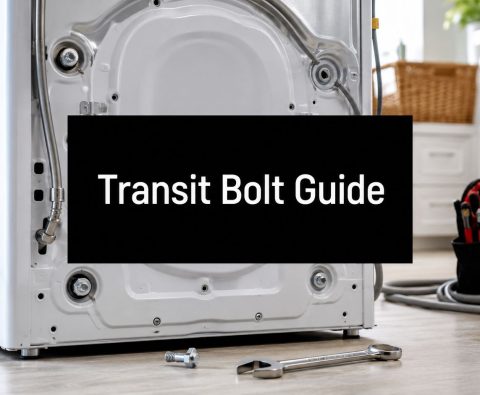
Transit bolts are the shipping locks fitted through the back of many front-loading washing machines. They hold the drum steady while the machine is being carried, tilted, loaded into a truck, and driven over rough roads.

That matters more than many Melbourne homeowners expect.

A washer drum is designed to move in a controlled way during a wash cycle. During a move, that same movement can become a problem. Every pothole, speed hump, tight apartment lift turn, and hard stop on city roads sends force through the cabinet. If the drum is left free, those shocks can strain the suspension, mounting points, and other internal parts.

An infographic explaining the importance of using transit bolts for safe washing machine transportation and installation.

In our line of work, this is one of the easiest mistakes to prevent and one of the more frustrating ones to see after the fact. The machine may look fine from the outside, then start shaking badly or sounding wrong once it is installed in the new place.

What the bolts actually protect

Transit bolts mainly protect the parts that support and control drum movement inside the cabinet.

Part During washing During transport
Drum Moves in a controlled way Needs to be held still
Suspension Absorbs spin movement Can be overloaded by jolts
Cabinet Supports the machine body Can be struck by internal movement

Short moves are not automatically low risk. A Brunswick-to-St Kilda move with narrow stairs, damp laneways, and repeated tilting can be harder on a washer than a longer, cleaner run on open roads. Melbourne weather adds another layer. On humid days, grips get slippery, concrete can sweat, and rushed handling becomes more likely.

The other mistake homeowners make

Transit bolts are only for transport. Once the machine is in place, they need to come out before the first wash.

Leave them fitted and the washer can vibrate violently because the drum is still locked. That is when owners start blaming the floor, the leveling, or the removalists, when the actual issue is still sitting in the back panel. As noted earlier, manufacturers warn against running the machine with the shipping bolts installed.

What works in practice

The safest approach is simple. Fit the transit bolts before the move, then remove them only after the washer is positioned, leveled, and ready for use.

What usually causes trouble is:

  • moving the machine without the bolts installed
  • running a wash cycle with the bolts still in
  • assuming a local move does not justify proper prep
  • ignoring sudden harsh vibration after installation

If you are moving more than one large appliance, use the same prep mindset across the board. The handling steps that protect a washer are similar to the care needed when moving a fridge safely in 8 steps. Small preparation jobs prevent expensive callouts later.

A transit bolt is a small part, but it controls whether the heaviest moving component inside the washer stays protected or gets knocked around all the way to the new address.

How to Safely Remove Transit Bolts Before First Use

You get the washer into place, connect the hoses, and feel ready to run a quick test load. Then the machine starts jumping across the laundry because the shipping hardware is still fitted. We see that after deliveries and house moves more often than people expect, especially when a washer has been unpacked in a hurry.

A six-step instructional infographic showing the process of removing transit bolts from a new washing machine.

A safe removal method

Remove the bolts only after the machine is in its final position and close to level. That saves you from dragging it out twice, and it reduces the chance of misplacing parts between unpacking and setup.

For most front-loaders, the process is straightforward:

  1. Pull the machine out enough to work comfortably at the back
    Good access matters. Tight corners lead to slipped tools and rounded bolt heads.

  2. Locate each transit bolt on the rear panel
    They are usually grouped clearly across the back. If the layout is unusual, check the user manual for your model.

  3. Use the correct tool size
    A socket wrench or spanner is usually the right choice. Many machines use a common metric size, but the manual should guide you before you start. If the tool feels loose on the head, stop and switch tools.

  4. Loosen each bolt with steady pressure
    Keep the tool square to the bolt. Slow, even force works better than sharp pulls.

  5. Remove the full assembly
    Some models include sleeves or spacers with the bolt. Take out every transport piece, not just the visible fastener.

  6. Fit the plastic caps or plugs supplied with the washer
    They close the rear openings and stop dust or moisture getting in.

  7. Store the bolts straight away
    Put them in a sealed bag and tape it to the back or keep them with the manual. That one habit saves a lot of frustration on moving day.

The same disciplined prep helps with other large appliances too. If you are organising the whole laundry and kitchen at once, this guide on how to move a fridge in 8 steps without damaging it is a useful companion.

When a bolt is stuck

Melbourne homes add a few real-world complications that manuals rarely mention. In bayside suburbs and older properties, damp laundries, salty air, and long periods of storage can leave fasteners tighter than expected. A bolt can also bind if the drum is resting with pressure against the transport mount.

An Australian whitegoods support case on JustAnswer about a transit bolt that would not come out after unpacking shows the kind of problem owners run into.

Trade tip: If the bolt feels wrong, stop. Stripping the head or cracking the plastic mount turns a simple setup job into a repair job.

What to try before calling for help

Work through these checks in order:

  • Reset your tool position. Keep it fully seated on the bolt head.
  • Take pressure off the drum. A small shift in the machine's position can help if the fastener is loaded awkwardly.
  • Use controlled force. Jerking the wrench is how heads get rounded.
  • Avoid poor-fitting adjustable tools. They can work, but only if they clamp tightly with no play.
  • Watch the back panel. If the casing starts flexing, stop and get model-specific advice.

If a bolt still will not move, professional support is cheaper than damaging the rear panel, the mounting point, or the tub assembly before the machine has even done its first wash.

Reinstalling Transit Bolts for Your Melbourne Move

A lot of moving damage starts before the appliance even leaves the laundry. The washer gets disconnected properly, the hoses are drained, and then the drum is left unsecured for the trip.

That's the step to fix before moving day.

A person using a metal wrench to reinstall transit bolts on the back of a white washing machine.

How to put them back in

If you still have the original bolts, reinstalling them is usually easier than removal.

  • Pull out the plastic plugs from the rear panel holes and keep them somewhere safe.
  • Line up each transit bolt with its original opening. Start by hand so you don't cross-thread it.
  • Tighten evenly with the correct tool. Firm is enough. You don't need to over-muscle it.
  • Check that each bolt is seated properly before the machine is moved.

If you're also arranging temporary storage during a move, this guide to furniture removal and storage in Melbourne helps with the broader planning side.

The short local move debate

Under Melbourne conditions, the conversation becomes more interesting.

Standard advice says remove transit bolts before use and reinstall them for transport. That part is clear. The grey area is whether a very short local move across Melbourne justifies the effort. There's underserved discussion around short trips under 50km, and a contrarian view suggests intentional retention of the bolts for those local moves may help protect the drum suspension from sudden braking and rough urban conditions, despite manufacturer warnings that they must be removed before use, as discussed in this Australian transit bolt article.

That nuance matters here because city moves aren't always gentle. A washer can face:

  • Stop-start traffic on busy Melbourne routes
  • Sharp braking in suburban traffic
  • Driveway lips and gutters
  • Lift thresholds and truck ramps

A short trip isn't always a soft trip.

The practical call

For transport, even short transport, reinstalling the bolts is the safer choice if you have them. The trip from one suburb to the next can still involve enough movement to stress an unsecured drum. The fact that the move is local doesn't remove the risk. It just changes where the jolts come from.

A visual walkthrough can help if you want to see the process in action:

The main rule is simple. Bolts in for transport. Bolts out before washing.

Lost Your Bolts How to Store and Replace Them

This is one of the most common problems with washing machine moves. The original bolts were removed years ago, put “somewhere safe”, and never seen again.

Once they're gone, people are tempted to improvise. That's where poor decisions start. Transit bolts are not a detail to fake with random hardware from a shed or toolbox.

The best storage method

As soon as the bolts come out after installation, put them in a sealed bag and attach that bag to the machine or tuck it with the manual in a place everyone in the household knows about. Good storage beats frantic searching every time.

What doesn't work well:

  • Loose bolts in a junk drawer
  • Bolts stored separately from the appliance paperwork
  • Mixing them with general screws and brackets from other furniture
  • Assuming replacements are universal

How to replace them properly

If the originals are missing, identify the exact brand and model of the machine first. That information is usually on a compliance or model label. Once you have that, look for a matching part rather than a “close enough” bolt.

There are real examples in the Australian market. Haier sells a replacement transit bolt, model H0020808355B, for approximately $7.95 per bolt, and Electrolux Australia offers a complete front-loader transit kit, part #4055550190, with a $14.95 shipping fee across the country, according to this Australian spare parts listing for transit bolts.

Why exact parts matter

Length, thread, seating, and fit all matter. A bolt that's too short may not secure the drum correctly. One that's too long or mismatched can create a different problem altogether.

A practical buying checklist helps:

Check Why it matters
Brand and model Transit bolts are model-specific
Part number Reduces the chance of ordering the wrong item
Original quantity needed Some machines use different sets
Condition of rear panel holes Helps confirm the machine can accept the replacements cleanly

If you're between homes and trying to keep appliance parts, cords, and manuals together, organised packing becomes much easier when storage is part of the plan. This guide to storage unit options and prices near you can help keep loose household essentials from disappearing during the move.

Your Expert Checklist for a Perfect Machine Move

A washing machine move goes smoothly when the prep is boring. That's a good thing. The fewer surprises you create in the laundry, the fewer problems you carry into the truck, the building corridor, and the new home.

The prep checklist that saves trouble

Use this as a final run-through before moving day:

  • Empty and dry the drum: Don't leave damp laundry, loose coins, or detergent residue inside.
  • Disconnect power safely: Unplug the machine and secure the lead so it won't drag.
  • Turn off the water supply: Shut the taps before touching the hoses.
  • Drain the hoses fully: Keep towels and a bucket handy so residual water doesn't end up on floors or in the truck.
  • Remove or reinstall the transit bolts at the right time: Out before use, back in before transport.
  • Secure hoses and cord to the rear: Loose lines catch on everything.
  • Protect the outside finish: Wrap the machine so door frames, walls, and the cabinet don't get scratched.
  • Keep the machine upright: Avoid unnecessary leaning and rough handling.
  • Check the path out: Doors, corners, lifts, steps, and parking access all matter more than people expect.

Final check: If the machine still contains water or the cord is dangling, it isn't ready to move.

A clean finish helps at both ends

If you're vacating a rental or setting up a home for handover, laundry prep usually sits alongside a bigger cleaning list. A detailed professional cleaning guide can help you avoid missing the small but important jobs around appliances, wet areas, and utility spaces.

For the wider move itself, a solid moving house checklist for Australia keeps the laundry item from becoming the thing you remember last.

What people regret most

It usually isn't the effort of doing this properly. It's skipping one small step because the move felt close, simple, or rushed.

The machine was “only going a few suburbs away”. The bolts were “probably not necessary”. The hoses were “mostly drained”. Those are the kinds of shortcuts that turn a routine move into a repair problem.

If you handle the washer with care, keep the drum secured for transport, and avoid using the machine until it's set up correctly again, you remove most of the preventable risk.


If you want your move handled by an experienced team, Get n Go Removals Melbourne can help with house moves, apartment relocations, office removals, packing, storage, and interstate transport across Victoria and the East Coast.

READ MORE

Shop Packing Supplies: A Melbourne Mover’s Guide for 2026

You're probably staring at a half-packed room right now. Wardrobes still full. Kitchen drawers still loaded. A pile of random bags on the floor. You know you need boxes, tape, wrap, labels, maybe a few specialty cartons, but the bigger problem is this: if you shop packing supplies in a rush, you usually buy the wrong things, pay more than expected, and still feel underprepared.

That's where most Melbourne moves start to wobble. Not on the truck. Not at the stairs. At the packing stage, when people underestimate how much material they need and overestimate how well cheap supplies will hold up.

A move runs smoother when the packing plan is settled early. That doesn't just protect your furniture and fragile items. It helps you control cost, avoid repeat trips to the shop, and keep moving day organised from the first box to the last.

Starting Your Melbourne Move Right

A common scene in our line of work is the customer who thought packing would take “one afternoon”. By that evening, they've filled three supermarket cartons, run out of tape, wrapped glasses in tea towels, and realised the garage still hasn't been touched. The stress doesn't come from owning too much. It comes from not having a system.

That matters because the supply side of moving is bigger than one might expect. The Australian packaging product market was valued at $467.5 million in 2022 and is projected to grow to $642.0 million by 2032, while the broader Packaging Services industry is forecast to reach $3.6 billion in revenue by 2024-25 according to Allied Market Research's Australian packaging market analysis. That scale tells you something simple. There are a lot of products available, and not all of them suit a house move.

What people usually get wrong

Most rushed movers make the same mistakes:

  • They buy by price first: Cheap boxes, discount tape, and thin wrap look fine on the shelf.
  • They pack by container, not by item: Heavy books go into large cartons. Fragile décor gets mixed with bulky linen.
  • They leave supply shopping too late: The final day becomes a scramble for fillers, labels, and extra boxes.

A good packing plan doesn't just save breakages. It saves decisions.

A proper move also depends on what happens after the truck leaves. If you're coordinating end-of-lease tasks alongside packing, outside resources can help. This guide to move out cleaning services in Portland is a useful example of how detailed checklists reduce last-minute moving pressure, even though the location is different.

Start with the move, not the materials

Before you buy anything, decide three things. Are you moving locally or interstate? Are you packing everything yourself or only selected rooms? Do you need standard cartons only, or are there specialty items like artwork, TVs, pianos, or office equipment involved?

Those answers shape everything that follows. If you need hands-on relocation support as well as supplies, it helps to look at how Melbourne movers typically structure packing, loading, and timing. The better your plan at the start, the less money and energy you burn later.

Your Essential Packing Supplies Checklist

When people shop packing supplies, they usually focus on boxes first. Boxes matter, but they're only one part of the system. Good packing works because each material has a job.

A checklist infographic illustrating seven essential supplies for packing household items when moving to a new home.

The core items every move needs

  • Moving boxes in several sizes
    Small cartons suit books, pantry goods, tools, and anything dense. Medium boxes handle toys, folded clothes, and kitchenware. Large cartons are for lighter, bulkier items like doonas, cushions, and lampshades.

  • Packing tape and a dispenser
    Cheap tape is one of the worst false economies in a move. It splits, lifts, and peels when boxes are under load. A proper dispenser also speeds up packing and gives cleaner seals.

  • Bubble wrap
    Best for glassware, framed items, electronics, ceramics, and decorative pieces with edges or corners that chip easily.

  • Packing paper or clean newsprint
    Think of this as the everyday workhorse. It's ideal for plates, bowls, mugs, ornaments, and filling small gaps inside cartons without scratching surfaces.

  • Markers
    Every box should show the destination room and a quick content summary. “Kitchen” isn't enough. “Kitchen. Plates and serving bowls. Fragile.” is much better.

  • Utility knife
    You need it for trimming wrap, cutting tape, and opening packed cartons cleanly at the other end.

  • Labels or coloured stickers
    These help when multiple people are carrying boxes into different rooms, especially in apartments or office moves.

What to choose if you want sustainable options

Australian buyers now have better access to recyclable and lower-impact packing materials than they used to. As of 2022-23, Australia is 86% of the way to its target of 100% reusable, recyclable, or compostable packaging, which has influenced what's available in the market, including many cardboard boxes and paper wraps sold in Melbourne, as outlined by the Australian Packaging Covenant Organisation national packaging targets.

That doesn't mean every green-looking product is automatically suitable for moving heavy household goods. It means you can usually find strong cardboard cartons, paper tape, and paper-based void fill without sacrificing practicality, as long as you still match the material to the item.

A practical shopping list by priority

Supply Buy first Why it matters
Small and medium boxes Yes Most household items fit these safely
Quality tape Yes Keeps box seams closed under weight
Packing paper Yes Protects everyday breakables
Bubble wrap Yes For higher-risk fragile items
Labels and markers Yes Prevents confusion at delivery
Specialty cartons If needed Useful for TVs, hanging clothes, artwork

If you want a more detailed walkthrough of room-by-room technique, this guide on how to pack for moving is a practical companion to your shopping list.

Why Quality Beats Price for Protecting Your Valuables

The biggest mistake people make when they shop packing supplies is treating all cardboard as equal. It isn't. A box isn't just a container. It's a load-bearing structure that has to survive lifting, stacking, vehicle movement, and unloading.

A close-up view of two stacks of double wall and single wall corrugated cardboard sheets.

What a stronger box actually does

Professional removalists use double-walled cardboard with a minimum Edge Crush Test rating of 32 ECT, and there's a practical reason for that. According to The Box Man's guide to shipping box sizes and strength, single-walled boxes can deform under loads as light as 12kg, leading to a 25% higher incidence of bottom-out failures during transit.

That failure is exactly what it sounds like. The base softens, bows, or gives way. Once that happens, the contents shift, corners take impact, and the item that looked “well packed” at home arrives damaged.

Cheap materials usually fail at the seams

A bargain carton often creates three problems:

  • The walls flex too much: Heavy items push outward and weaken the structure.
  • The base loses shape: Books, kitchen appliances, and files are common items that cause such issues.
  • The stack becomes unstable: One weak box can compromise the boxes above and beside it.

Practical rule: Put weight into strong small boxes, not weak large ones.

People who work in other packing-heavy industries already understand this. If you want a broader look at how material selection affects performance, this overview of packaging for e-commerce brands is useful because it shows the same principle in a different context. Stronger materials reduce risk during handling.

A quick visual on safe wrapping and boxing technique can help before you start on delicate items.

Where quality matters most

Some items punish weak materials fast:

  • Books and records: Dense, unforgiving, and hard on the bottom seam.
  • Kitchen cartons: Plates and pantry items create point pressure.
  • Electronics: They need a rigid outer shell, not just soft wrap.
  • Fragile décor: Impacts usually happen when the box twists, not only when it drops.

If you're packing breakables yourself, this guide on how to pack fragile items for moving covers the small handling details that make quality materials work properly.

How to Calculate Your Packing Supply Needs

Running out of boxes halfway through a move is frustrating because it creates a chain reaction. Packing slows down, room sorting gets messy, and you end up buying whatever is available instead of what's appropriate. The fix is simple. Estimate by room, then adjust by item type.

Start with a room-by-room count

Use each room as a packing zone and ask two questions. How many small dense items are in here? How many bulky but light items are in here? That gives you a better estimate than trying to count possessions one by one.

A practical method looks like this:

  1. Kitchen first
    Kitchens need more supplies than people expect. You'll usually need plenty of small and medium boxes because the room contains both fragile and heavy items.

  2. Bedrooms next
    Bedrooms are easier to underestimate if wardrobes, under-bed storage, and bedside drawers haven't been sorted yet. Clothes can fill fewer boxes than expected if folded tightly, but shoes, linen, books, and personal items add up quickly.

  3. Living areas and study
    These spaces often contain awkward items rather than high volume. Décor, electronics, lamps, cables, records, games, and bookshelves all need different carton sizes.

Leave yourself a small surplus. A few extra cartons are easier to manage than a late-night emergency supply run.

Adjust for high-density belongings

A standard room estimate only works if the contents are ordinary. If you have lots of books, archive files, gym gear, cookware, vinyl, tools, or ceramics, increase your count of small cartons and reduce your use of larger ones.

A wardrobe-heavy home needs a different adjustment. Hanging clothes, soft furnishings, and spare bedding don't usually need heavy-duty small cartons, but they do consume space quickly. That's where medium boxes, labels, and a clear room-by-room tally matter more than guesswork.

Use volume to check your estimate

Once you've made your room list, sense-check it against the overall load. If the total feels too low, it probably is. People often forget storage cages, laundries, hall cupboards, balconies, garden items, and office corners.

A volume tool helps avoid that blind spot. If you want a clearer view of your total move before buying materials, a cubic metre calculator can help you gauge how much space your packed goods are likely to occupy.

Don't shop as you go

Buying supplies in stages sounds sensible, but it often leads to mixed box sizes, inconsistent quality, and repeated delivery fees. One planned purchase is usually tidier and cheaper. It also means your labels, tape, paper, and cartons all work together from the start instead of becoming a patchwork of last-minute fixes.

Where to Shop for Packing Supplies in Melbourne

Where you buy your materials affects more than price. It affects consistency, convenience, and whether you end up with the right carton for the job or just the closest thing on the shelf.

An infographic detailing five different places to purchase moving and packing supplies in Melbourne, Victoria.

The main buying options

Supplier type Good for Watch out for
Hardware stores Basics, quick pickup, standard cartons Limited specialty range
Online retailers Convenience, broad selection Variable box quality
Specialty packing stores Niche items, packing knowledge Often higher pricing
Second-hand sources Budget-conscious moves Inconsistent condition
Removalist-supplied materials Convenience and move-specific items Best checked early, not at the last minute

Hardware and office-style stores

These are useful when you need standard boxes, tape, markers, and wrap without much delay. You can inspect the materials in person, compare sizes, and leave with supplies the same day. That works well for straightforward local moves.

The trade-off is range. Once you need port-a-robes, TV cartons, picture boxes, or stronger board grades, stock can become hit and miss.

Online and specialty packing suppliers

Online stores suit organised movers who know exactly what they need. Specialty suppliers are helpful when you're dealing with unusual items or want more guidance on board grades, wraps, and protection materials.

For a broader business-level perspective on heavier-duty materials and applications, this industrial packaging supplies guide is worth a look. It's not written specifically for house moves, but it highlights the same buying principle. Choose the material based on the handling conditions, not only the shelf price.

Second-hand boxes and free sources

These can work for low-risk items such as linen, toys, or light pantry overflow. They're less reliable for heavy contents, stacked transport, or anything fragile. Once a used box has softened corners, compressed walls, or old tape damage, its strength is no longer predictable.

Free boxes are only cheap if they still hold their shape when lifted, stacked, and carried.

Sourcing based on your move type

If your move is simple and you have time, retail shopping can be enough. If it's an apartment move with lift booking windows, a settlement-day handover, or a tight interstate schedule, convenience starts to matter just as much as the shelf price. That's usually when people realise buying supplies and managing the move separately isn't always the most efficient option.

The Smart Mover's Secret Sourcing Supplies from Your Removalist

Last-minute supply buying looks cheaper on paper than it often is in real life. You grab a few boxes, add emergency delivery, realise you forgot wrap, then place another order or drive across town after work. By the time everything arrives, the cost gap has narrowed or disappeared.

Screenshot from https://www.getngoremovals.com.au

The rush-moving cost paradox

This is the hidden problem many Melbourne renters and homeowners run into. Recent data from Melbourne's Inner-North shows 45% of last-minute packing supply purchases incur 35-50% higher prices due to emergency delivery fees. In contrast, professional packing services can offer 30% better overall value when including the cost of materials and protection insurance, according to Signet's published moving supply information.

That doesn't mean everyone needs a full packing service. It means panic buying usually distorts the comparison. Retail pricing, rushed delivery, duplicate purchases, fuel, time off work, and damaged items all add cost.

What changes when supplies come through the mover

The practical advantages are usually these:

  • The materials match the move: Strong cartons for heavy items, proper wrap for furniture, and specialty boxes where needed.
  • Delivery is coordinated: Supplies arrive when you need them instead of turning into another errand.
  • Packing and protection line up: If the same team supplies and packs, there's less mismatch between the box, the item, and the loading method.
  • Insurance conversations are clearer: Integrated packing services often make documentation and responsibility easier to follow than a mix of random retail materials and DIY methods.

A removalist-supplied option can make sense. For example, Get n Go Removals Melbourne's professional packing services combine materials with packing labour, which changes the value equation for high-pressure moves.

When this option makes the most sense

It's a strong fit when:

  • You're moving on short notice
  • You have fragile or oversized items
  • You're balancing work, settlement, and access windows
  • You want fewer moving parts to manage yourself

When time is tight, convenience isn't a luxury. It's part of cost control.

The mistake is comparing a neat retail shelf price with a full-service packing quote and assuming they're equivalent. They usually aren't. One gives you materials. The other can reduce shopping time, repacking, damage risk, and claims friction.

Pro Packing Tips to Maximise Your Materials

Even good supplies underperform when they're used badly. Most damage happens because the box was packed loose, overloaded, or sealed poorly. A few basic techniques make a big difference.

Pack for movement, not storage

A box can sit safely in your lounge room and still fail in transit. The truck introduces movement, vibration, braking, cornering, and stacking pressure. Pack with that in mind.

  • Use the H-tape method: Tape the centre seam and both edge seams on the top and bottom of every carton.
  • Cushion the base first: Add paper or padding before the first item goes in.
  • Fill empty space: If contents can rattle, they can chip, crack, or collapse inward.
  • Keep weight low and even: Heavy items at the bottom, lighter items above.

Wrap by surface type

Paper is better than bubble wrap for many everyday kitchen items because it moulds tightly and prevents surface rubbing. Bubble wrap is better for impact-sensitive pieces, corners, and fragile decorative items. Furniture needs a different approach again. Wrapping timber directly in the wrong material can trap grit against the finish and create scratches during handling.

Using industry-standard 80-gsm furniture blankets instead of thinner 60-gsm alternatives reduces vibration-induced impact transfer by 40%, directly leading to fewer damage claims for wooden furniture, according to TigerPak's furniture protection guidance. That's why blanket quality matters on polished timber, tables, buffets, and other finished surfaces.

Label for unloading, not just packing

The label should help the person carrying the box at the destination. Write the room, the contents, and whether it's fragile or heavy. Put the label on more than one side so it can be read when stacked.

Write labels for the person unloading in a hallway, not for yourself while standing over the box.

Keep specialty items separate

Don't mix cables with décor, hardware with cookware, or picture hooks with random drawer contents. Use small labelled bags or clearly marked cartons for assembly parts, remotes, fasteners, and anything that will be needed on the first night.

Good packing isn't complicated. It's consistent. When the right materials are matched with the right method, the whole move becomes easier to lift, load, track, and unpack.


If you'd like practical help with packing materials, careful handling, or a full house or office move, Get n Go Removals Melbourne can be part of your shortlist. The team handles local and interstate relocations, supplies packing materials, and offers packing and unpacking support when you want to reduce the stress of sourcing and organising everything yourself.

READ MORE

Your Ultimate Guide to Removalists Bendigo in 2026

Moving house around Bendigo often starts the same way. You're surrounded by half-packed boxes, your phone has too many tabs open, and every quote seems to tell a different story about what your move will cost.

That's usually the point where people realise a move isn't just about getting furniture from one address to another. It's about timing, access, protection, paperwork, settlement dates, utility cutovers, and making sure the day doesn't turn into a long list of expensive surprises. If you're comparing removalists in Bendigo, the smartest question isn't only “what's the hourly rate?” It's “what am I getting for that rate, and what problems am I avoiding?”

Your Stress-Free Bendigo Move Starts Here

A Bendigo move can feel exciting in the morning and overwhelming by lunch. One minute you're thinking about where the couch will go in the new lounge. The next, you're wondering who's disconnecting the washing machine, whether the truck can park close enough, and how you're meant to keep the whole day on schedule.

That reaction is normal. Moves create pressure because so many small decisions stack up at once. Families worry about school-week timing. Renters worry about key handover windows. Businesses worry about downtime and access. The good news is that a well-organised move usually feels calmer long before moving day arrives.

A woman stands in a room filled with cardboard moving boxes, looking thoughtful during a relocation.

A lot of people assume the removals industry is booming everywhere, so any operator will do. The broader picture is more mixed. Australia's Removal Services industry is projected to reach $2.6 billion in 2026, but it has also seen a marginal contraction in overall market value over the last five years, according to IBISWorld's industry overview. In a market like that, stability matters. You want a company that's organised, properly equipped, and used to handling the work every week, not one that disappears when communication gets hard.

What a calmer move usually looks like

When a move runs well, a few things are happening behind the scenes:

  • The scope is clear: the crew knows whether they're dealing with a unit, townhouse, office, or larger family home.
  • Access is planned: stairs, lifts, laneways, long driveways, and parking are discussed early.
  • Fragile items are identified: mirrors, artwork, stone tops, TVs, and sentimental pieces aren't treated like ordinary boxes.
  • The quote matches the job: you're not relying on vague assumptions that unravel on the day.

A smooth move starts before the truck arrives. Most problems come from missing details, not bad luck.

If you're trying to lower the stress level before anything is booked, a practical starting point is this guide on how to reduce stress when moving home. The biggest shift comes when you stop treating the move as one huge task and start treating it as a series of smaller decisions you can control.

That's where confidence comes from. Not from hoping everything works out, but from knowing what to ask, what to prepare, and what good service looks like.

Decoding Removalist Services for Your Bendigo Relocation

Not every move needs the same type of crew, truck, timing, or preparation. That's why broad quotes can miss the mark. The more precisely you define the job, the better the result tends to be.

House and apartment moves

A standard residential move might sound simple, but houses and apartments behave very differently on moving day. A house may have easier truck access but more outdoor items, sheds, or bulky furniture. An apartment often has tighter loading zones, booked lift windows, shared hallways, and strict body corporate rules.

For Bendigo homes, it helps to describe the move in practical terms:

  • Property type: house, unit, townhouse, or apartment
  • Access conditions: stairs, narrow hallways, gravel drives, lift access
  • Large pieces: fridges, dining suites, bed frames, gym gear
  • Fragile items: glass cabinets, wall art, computer monitors

A good quote improves when the operator knows what they're sending a crew into. That's one reason many customers benefit from reading a more detailed resource on choosing the right removals firm for your move.

Office and commercial relocations

Office relocations are less about muscle and more about sequencing. Desks, screens, filing systems, stock, and IT equipment all need to arrive in a usable order. The cost of a messy office move isn't just inconvenience. It's time lost while staff wait for workstations, cables, storage units, or customer-facing areas to be functional again.

A commercial move usually works best when it includes:

  1. A room-by-room plan so items land where they belong.
  2. Clear labelling for screens, cables, archives, and shared equipment.
  3. After-hours or tightly scheduled loading to reduce interruption.
  4. A realistic unpack priority instead of trying to do everything at once.

Specialist items and add-on services

Some jobs need more than a truck and a couple of strong backs. Pianos, pool tables, antiques, oversized dining tables, and awkward modular furniture call for a different level of handling. The same goes for white-glove packing, unpacking, and storage between properties.

Here are the common add-ons worth asking about:

  • Pre-packing: useful when time is short or fragile items need professional wrapping.
  • Unpacking: ideal after a long move when you need the home usable quickly.
  • Disassembly and reassembly: bed frames, dining tables, desks, shelving, and some lounges.
  • Short- or long-term storage: handy when settlement dates don't line up.

If you're packing heavy timber pieces or awkward lounge sections yourself first, this guide for safely moving furniture is a useful reference because it focuses on handling technique, not just lifting effort.

The main thing is to ask for a service that fits the move you're doing, not the move a generic website assumes you have.

Understanding Bendigo Removalist Costs and Quotes

The hourly rate is often the first number clients seek. That makes sense, but it only tells part of the story.

In Bendigo, the average cost for a professional removalist service is $140 per hour for two men and a truck, and recent local moving costs have increased by over 31% according to Find a Mover's Bendigo pricing page. That gives you a useful benchmark, but the actual value sits inside the quote details.

A graphic infographic showing the average hourly rate of $140 for removalists in Bendigo and key cost factors.

What changes the final cost

Two jobs can share the same hourly rate and still end up very different overall. That's because the total depends on how quickly and safely the crew can complete the move.

Cost factor Why it matters
Volume of belongings More furniture, more cartons, and more loose items extend loading and unloading time.
Access at both properties Stairs, long carries, small lifts, and poor parking slow the job and increase labour intensity.
Travel and distance Local moves and longer relocations are structured differently, especially when timing windows are tight.
Crew size Some homes run efficiently with two movers. Larger properties or heavier inventory may need a bigger team.
Packing status Loose items, unsealed boxes, and last-minute packing often create delays on the day.

A cheap-looking quote can become expensive when the move takes longer than expected because the access details weren't discussed upfront.

What should be in a proper quote

A strong quote isn't vague. It should make the scope clear enough that both sides know what's included.

Look for these details:

  • The crew structure: how many movers and what truck size is being allocated.
  • Time basis: hourly, fixed, or a clearly explained estimate.
  • Travel terms: whether depot-to-depot, one-way travel, or another arrangement applies.
  • Included services: furniture wrapping, disassembly, reassembly, trolley use, and protective materials.
  • Insurance information: what transit protection or liability cover applies.
  • GST clarity: whether pricing is shown clearly and consistently.

If you want a clearer sense of how movers usually price labour, travel, and job complexity, this breakdown of the cost of movers is worth reading before you compare quotes side by side.

Red flags people miss

The biggest quote mistakes usually happen when people focus only on the first number they see.

Watch for these warning signs:

  • Very little detail in writing: if the quote doesn't describe the job, it's easier for disagreements to appear later.
  • No questions about access or inventory: experienced operators ask because those details matter.
  • Cash-only pressure: professional businesses normally document payment terms clearly.
  • Unclear insurance language: if cover is mentioned loosely, ask exactly what that means.
  • No mention of delays or special handling: fragile or oversized items should never be treated as an afterthought.

Practical rule: The best quote is rarely the lowest one. It's the one that explains the work well enough that the move won't change shape halfway through the day.

That's the difference between shopping on rate and buying peace of mind.

Your Ultimate Bendigo Moving Checklist

Good moves don't rely on memory. They rely on sequence. If you space out the right jobs over a few weeks, the final days feel manageable instead of frantic.

A structured moving checklist for Bendigo residents showing tasks organized by timeline from four weeks out until moving day.

Four weeks out

This is when the move starts becoming real. It's also when the smartest admin gets done.

  • Declutter properly: donate, sell, recycle, or dump what you don't want to pay to move.
  • Book the removalist: secure your preferred date before your timeline tightens.
  • Order packing supplies: cartons, tape, butcher's paper, labels, and mattress protection.
  • Create a moving folder: keep lease papers, settlement details, quotes, and utility confirmations together.

A written list beats a mental one every time. For a fuller step-by-step planner, this moving house checklist for Australia is handy to keep open while you organise tasks.

Two weeks out

The second fortnight is about reducing moving day friction. That means fewer unknowns, fewer loose ends, and fewer essentials buried in random boxes.

Try this short action list:

  1. Redirect mail and update your address with banks, insurers, subscriptions, schools, and medical providers.
  2. Arrange utility transfers for electricity, gas, internet, and water.
  3. Confirm access details at both properties, including lifts, parking, and key pickup timing.
  4. Set aside important documents so passports, contracts, and prescriptions don't disappear into storage tubs.

If you're setting up a new place from scratch or replacing pieces after the move, this checklist of must-have home furniture items can help you work out what needs to be in the house first and what can wait.

Here's a useful visual guide to keep the timing in view while you pack:

One week out

Preparation starts paying off. By now, non-essential rooms should be mostly packed.

Focus on the practical stuff:

  • Pack an essentials bag: clothes, medications, chargers, toiletries, kettle, mugs, snacks.
  • Separate first-night basics: sheets, towels, toilet paper, cleaning items, pet supplies.
  • Label by room and priority: “Kitchen open first” is more useful than “Misc”.
  • Defrost and clean appliances: especially if the fridge is going on the truck.

Label for the destination room first, then add contents second. “Main bedroom, lamps and linen” is far easier to work with than “Box 14”.

Moving day

A calm moving day is mostly about being ready before the crew arrives.

Task Why it helps
Do a final walk-through Checks cupboards, garage shelves, and outdoor areas for forgotten items.
Keep pathways clear Reduces delays and lowers the risk of scuffs or trips.
Keep keys, phones, and paperwork on you These are the items people most often misplace under pressure.
Leave packed boxes sealed and labelled Loose last-minute packing slows the whole job down.
Check the new address details Gate codes, unit numbers, and contact names should be easy to access.

The move becomes much simpler when each stage has only a few clear jobs attached to it. That's how you keep the day organised without feeling consumed by it.

Navigating Interstate Moves From Bendigo

Interstate relocations catch people out because they look similar to local moves on paper. In practice, they're a different category of job.

The problem isn't only distance. It's pricing structure, loading windows, route planning, transit timing, and what happens when access conditions or fuel variables change after the quote is issued. That's why the cheapest interstate estimate is often the one people regret first.

Why some interstate quotes blow out

A local hourly move usually rises or falls on labour time. Interstate pricing has more moving parts, and some quotes leave too many of them open.

A 2025 survey found that 68% of users on some interstate routes reported hidden fees averaging $215 after the move, while only 12% of initial quotes included contingencies for fuel or access delays, according to Muval's Bendigo removalist page. That's a strong reminder to read the terms, not just the headline number.

What to question before you book:

  • Is the quote binding or estimated?
  • Are fuel, tolls, and access delays already addressed in writing?
  • Does the price change if settlement is pushed back?
  • Is storage part of the plan if dates move?
  • What happens if pickup or delivery access is worse than expected?

What matters more than the first price

For interstate moves from Bendigo, the strongest value usually comes from clarity. Customers want to know what's happening, when it's happening, and what the bill will look like if conditions change.

Here's the practical trade-off:

Quote style Typical risk
Loose estimate Lower upfront appeal, but more room for price movement later
Detailed all-inclusive quote Better budget control and fewer disputes if delays occur

Backloading can also suit some interstate customers, especially if your dates are flexible and your priority is value rather than strict delivery speed. But flexibility needs to be discussed openly. If you need tight timing around work, settlement, or school, that should drive the plan.

If you're comparing long-distance providers, this guide on how to choose the best interstate removalists is worth reviewing before you commit. Interstate work rewards detail. The more specific the agreement, the easier it is to trust the move.

The quote should explain what happens when the plan changes. Interstate moves rarely go wrong because of one big issue. They drift off course through small unstated assumptions.

Why Trust Get n Go as Your Bendigo Removalist

When people talk about a “professional” removalist, they often mean punctuality and a decent truck. That's only the surface. Real professionalism shows up in how a company staffs jobs, protects furniture, communicates under pressure, and handles the awkward parts of a move that customers can't always see.

An infographic showing four key reasons to trust Get n Go removalists for moving services in Bendigo.

Equipment is not a bonus

Protection starts with the right tools. Professional crews use heavy-duty trolleys and high-density moving blankets, and those tools are not optional. They are critical for reducing manual strain by over 60% and providing shock absorption to help prevent damage in transit, as outlined in this technical overview of removalist equipment in Australia.

That matters in real jobs. A fridge on a proper trolley moves differently from a fridge being awkwardly shuffled through a doorway. A dining table wrapped with dense blankets and secured correctly arrives differently from one protected with a thin throw and optimism.

What good operators do consistently

The best removalists tend to have the same habits:

  • They send trained staff, not guesswork.
  • They use purpose-built equipment on every job.
  • They protect floors, walls, and furniture before issues appear.
  • They keep communication simple when access or timing changes.

Those things sound basic, but they're exactly what prevent scratched timber, chipped edges, torn upholstery, and blown-out moving schedules.

Why process matters

A well-run moving company should also have systems behind the scenes. Full-time staff matter because consistency matters. Insurance matters because accidents, while uncommon, need a clear response. A company-owned and maintained fleet matters because truck reliability affects the whole day.

Get n Go stands out on those fundamentals. It's a family-owned business with more than 10 years of experience, full-time police-checked staff, public liability and transit insurance, company-owned trucks from 4.5 to 12 tonne, and services that cover house moves, apartments, offices, pianos, pool tables, packing, unpacking, and storage. Those details translate into something customers feel on the day. More order, less confusion.

The right removalist doesn't just lift well. They sequence the day well, protect the tricky items properly, and keep the customer out of preventable stress.

That's what trust looks like in practice. Not marketing language. Good systems, capable people, and careful handling from start to finish.

Your Bendigo Moving Questions Answered

A few moving questions tend to come up late, often after the booking is made and the reality of the day starts to sink in.

Do I need to arrange parking or access permissions?

Sometimes, yes. If you're in a tight street, apartment complex, or commercial site, parking and loading arrangements can make a major difference to timing. Check whether your building manager, landlord, or local authority needs advance notice for truck access, lift protection, or reserved loading space.

What's the difference between transit insurance and home contents cover?

They usually don't mean the same thing. Home contents policies may not cover goods while they're in transit or being handled during a move. Transit protection is designed around the movement itself. Always ask exactly what cover applies during loading, transport, unloading, and storage if storage is involved.

Can removalists disassemble and reassemble furniture?

In many cases, yes. Bed frames, dining tables, desks, and modular furniture are commonly dismantled and put back together when the service includes that scope. The key is to mention these items before the move so the crew arrives with the right time allowance and equipment.

What if settlement is delayed?

This is one of the most important questions to ask early. Delayed settlement can affect labour time, truck scheduling, and whether temporary storage is needed. The best approach is to ask how delays are handled before moving day, not during it.

Should I pack everything myself?

Not always. Self-packing saves money for organised households with enough lead time. Professional packing helps when you're short on time, moving fragile pieces, or trying to reduce the risk of breakage. A hybrid approach often works well. Pack books, clothes, and everyday items yourself, then leave glassware, artwork, electronics, and awkward pieces to the professionals.

A successful move in Bendigo comes down to preparation, honest quoting, and choosing a team that treats protection and planning as seriously as lifting. If you get those three things right, the whole move feels more predictable and far less stressful.


If you want experienced help with local, regional, or interstate relocations, Get n Go Removals Melbourne offers the kind of organised, insured, full-service support that makes moving day easier to manage from the first enquiry to the last item unloaded.

READ MORE

Window Cleaning Service Cost Melbourne: 2026 Price Guide

In Melbourne, a standard inside-and-out window clean for a small home or unit typically costs $200 to $300, while a double-storey or larger home usually ranges from $300 to $500. If you're moving, that's a useful budget line to set early, especially if a rental inspection, bond return, or pre-sale presentation is already on your calendar.

Packing boxes is one job. Getting a property ready to hand back or put on the market is another. Windows often become the last-minute problem because they affect how clean the whole place looks, and they're harder to fix quickly than dusty shelves or a missed cupboard.

For renters, clear glass can help a place present as properly finished rather than half-cleaned. For sellers, it changes first impressions from the street and from inside the home. During a move, that matters because every avoidable issue costs time, attention, and sometimes money.

Your Guide to Window Cleaning Costs When Moving in Melbourne

A move usually creates a tight sequence of deadlines. You're organising removals, utilities, key handover, and maybe cleaning at two properties at once. Window cleaning often gets pushed down the list until someone notices fingerprints, water spotting, cobwebs, or grime around tracks just before inspection day.

That's why it helps to work from a realistic Melbourne price range from the start. For movers in this city, small homes or units typically cost $200 to $300 for a standard inside-and-out window clean, while double-storey or larger homes range from $300 to $500 due to the need for ladder or pole access, based on Melbourne window cleaning cost considerations.

Why movers should budget for it early

If you're exiting a rental, window cleaning can sit inside the broader expectation that the property is returned in clean condition. If you're selling, it's one of those details that helps the home feel brighter and better maintained without changing the structure of the property.

A practical moving plan works better when this job is scheduled before the final clean becomes urgent. It also helps to line it up with the rest of your move-out checklist so you're not booking trades reactively. A solid moving into a new house checklist keeps these handover details from turning into last-week stress.

Practical rule: If the windows are visible in listing photos, on the final condition report, or from the front entry, treat professional cleaning as part of the move budget, not an optional extra.

What a good budget does for you

It removes guesswork. You can decide whether you need a basic inside-and-out clean, whether tracks and screens are worth adding, and whether a larger home needs more lead time because access is slower and more equipment-heavy.

That's the primary purpose here. Not just naming a price, but helping you budget for the job properly so there are no nasty surprises when the move is already busy enough.

Melbourne Window Cleaning Prices A Snapshot

Individuals inquiring about window cleaning service cost often seek one thing first: a reliable baseline. In Melbourne, the broadest residential benchmark is that the average labour cost for a residential window cleaning job ranges from $150 to $220, while one-storey houses typically cost $250 to $330, two-storey houses cost $330 to $400, and apartments cost $150 to $180 per job, according to Oneflare's Melbourne window cleaning cost guide.

A price list infographic for Melbourne window cleaning services showing hourly rates, per window, and package pricing.

How pricing is usually framed

In real quoting, cleaners tend to think in one of three ways:

Pricing approach Best for What it means in practice
Labour-based Variable jobs Useful when access, grime, and setup time matter more than raw window count
Property-based Standard homes and units Common for apartments, single-storey homes, and straightforward move-out cleans
Pane or feature-based Mixed window styles Helps when the job includes bay windows, large picture glass, or unusual layouts

That matters during a move because two homes with the same bedroom count can still attract different quotes. A compact apartment with easy access is a very different job from a townhouse with stacked windows, narrow side paths, and furnished rooms still being packed.

A practical Melbourne budget view

Here's a simple way to place your property into a likely category.

  • Apartment move-out: If you're in an apartment, the cited benchmark of $150 to $180 per job gives a useful starting point for a standard clean in a simpler layout.
  • One-storey family home: The common range of $250 to $330 suits many owners preparing for photography, inspections, or settlement presentation.
  • Two-storey house: Expect $330 to $400 where upper-level access increases labour and setup.
  • Labour component: If a quote is broken out differently, the labour portion commonly sits within $150 to $220 for a residential job.

A move gets expensive fast, so it helps to place this beside the rest of your relocation spending. If you're mapping the full relocation budget, this guide to moving house costs in Melbourne helps you see where cleaning fits among the other unavoidable line items.

Clean windows rarely win attention on their own. Dirty windows do. That's why this cost often pays for itself in reduced friction during handover or inspection.

Where people get tripped up

The mistake is assuming “standard clean” means the same thing everywhere. It doesn't. One quote may assume exterior glass only. Another may include inside glass but exclude tracks, frames, or screens. The headline number matters, but the inclusions matter more.

Key Factors That Influence Your Final Quote

The gap between a modest quote and a painful one usually comes down to complexity. Not hype. Not mystery. The cleaner is pricing time, difficulty, access, and the likelihood that the work will slow down once they're on site.

An infographic illustrating four key factors that influence the cost of professional window cleaning services.

Window type changes labour fast

Not all windows clean at the same speed. A standard sliding pane is relatively straightforward. A bay window with multiple sections, angles, and edges isn't. According to hipages window cleaning cost data, a standard sliding pane is about $5, while a tri-fold bay window can be up to $28, and tracks, frames, and screens can add $50 to $100 to the total quote.

That's one reason a home can “look average” from the street but still cost more than expected. Decorative windows, older fittings, and extra detailing create slower work.

Access is often the real cost driver

Access decides whether a job is routine or awkward. Upper-floor panes above a garage roof, narrow exterior paths, furniture packed against internal windows, and landscaping that blocks ladder placement all affect the final number.

A simple way to consider this:

  • Easy access: ground-floor glass, clear paths, no heavy obstructions
  • Moderate access: upper-level panes reachable by ladder or long pole
  • Difficult access: windows over roofs, tight side setbacks, awkward angles, or safety-sensitive areas

When you're comparing quotes, don't just compare totals. Compare assumptions. That's also why it helps to understand cleaning service pricing more broadly before you approve a move-related clean. The logic behind labour, access, and add-ons is similar across many service categories.

Scope matters more than people expect

The phrase “window cleaning” sounds simple, but providers may mean different things by it. Ask whether the quote includes:

  • Inside and outside glass
  • Tracks and frames
  • Flyscreens
  • Spot treatment for stubborn marks
  • A final wipe around sills and edges

If you're moving out, those extras can matter because agents and buyers don't inspect only the glass. They notice the dirt sitting in corners, the grime in tracks, and the residue around frames.

The cheapest quote often strips the job back to the visible glass only. That can be fine for maintenance. It's usually not fine for an end-of-lease standard.

Condition changes the pace of the job

Light dust is one thing. Built-up grime, salt residue, adhesive, and neglected tracks are another. Melbourne properties near the bay often need slower detailing because residue keeps clinging to the glass and frame edges.

If you're preparing a quote request, mention anything unusual upfront. That includes paint specks, renovation dust, hard-to-open windows, or security screens. It saves everyone time and reduces the chance of a low estimate being revised on the day.

For movers, hidden service extras don't stop at cleaning. This breakdown of hidden costs in moving house is worth a look because the same budgeting principle applies. Surprises usually come from details that weren't scoped early.

Worked Examples Real Melbourne Scenarios

Abstract pricing helps. Real scenarios help more. These examples show how window cleaning service cost can play out when someone's moving, without pretending every property is identical.

A modern luxury apartment building with curved balconies and large glass windows under a clear blue sky.

South Yarra renter chasing a smooth bond return

A renter in a two-bedroom apartment is three days from key return. The property is generally clean, but the windows have city dust on the outside, fingerprints inside, and dirty tracks in the living room sliders.

The likely pricing lens here is apartment-based. Earlier Melbourne benchmarks place apartments at $150 to $180 per job, but once the brief shifts to a fuller move-out standard with inside-and-out attention and likely detail work, many renters will see quotes that sit higher than the bare apartment baseline. The practical question isn't just “What's cheapest?” It's “Will this hold up under inspection?”

A sensible approach here is to ask for a written inclusion list. If the quote excludes tracks and screens, the price may look good but leave visible issues behind.

Essendon family preparing a one-storey home for sale

This home isn't vacant yet. Furniture is still in place, but photos and open homes are approaching. The sellers want brighter presentation from the street and more light in the main living areas.

For this type of property, a one-storey house in Melbourne typically sits at $250 to $330 per job, based on the Oneflare benchmark cited earlier. In a pre-sale setting, that often makes good sense because clean exterior glass changes curb appeal and interior natural light without requiring major prep works.

What usually works here is booking the clean after gardening and exterior tidying but before photography. If it's done too early, dust and weather can blunt the effect.

In a sale campaign, windows are part of presentation, not maintenance. Buyers read clear glass as a sign the property has been cared for.

Bayside owner with a larger double-storey home

This property has broad upper-level glass and sea-air residue that has been left too long. The owner is moving after settlement and wants the place looking sharp for final inspections and buyer handover.

For Melbourne double-storey or larger homes, the moving-related benchmark commonly sits at $300 to $500 for a standard inside-and-out clean where ladder or pole access is needed, as noted earlier in the Melbourne-specific cost guide. If the property also has larger panes, extra detailing, or stubborn residue, the quote can lean toward the upper end of that bracket.

Here's the trade-off in plain terms:

Choice What works What doesn't
Basic exterior-only clean Helps presentation if interior glass is already in good shape Misses smears, dust, and interior marks visible during inspections
Full move-out clean Better for handover, buyer impressions, and finishing standard Costs more upfront
Last-minute booking Can solve a visible problem quickly Leaves less room to correct missed details

These examples all point to the same practical lesson. During a move, the best quote isn't always the lowest one. It's the one that matches the property, the access conditions, and the standard you need.

How to Get and Compare Window Cleaning Quotes

Good quote comparisons start before you contact anyone. If you describe the job vaguely, you'll get vague pricing back. That's how people end up with quotes that look comparable on paper but cover very different scopes.

What to prepare before asking for prices

Send clear information. Cleaners can quote more accurately when they don't have to guess.

Use this shortlist:

  1. Property type. Apartment, one-storey house, or double-storey home.
  2. What you need cleaned. Exterior only, interior only, or both.
  3. Any difficult access. Upper windows, narrow side paths, awnings, or steep ground.
  4. Photos. Front, rear, and any awkward windows.
  5. Timing. End-of-lease, pre-sale, pre-settlement, or general maintenance.

This saves back-and-forth and reduces the chance of a surprise price jump on the day.

How to compare quotes properly

Don't compare only the total. Compare the job definition.

Ask these questions:

  • Are tracks, frames, and screens included?
  • Is the quote based on photos or subject to site inspection?
  • Are inside and outside glass both covered?
  • Will the cleaner bring ladders, poles, or other access equipment as needed?
  • What could change the quoted price once work starts?

A reliable quote usually feels specific. It describes the scope in plain language and flags any assumptions. A poor one is often too short, too vague, or suspiciously eager to lock you in without seeing enough detail.

Red flags that usually cost more later

Some cheap quotes are honest and efficient. Others are cheap because the scope is incomplete.

Watch for:

  • Very low headline pricing that doesn't describe inclusions
  • No mention of insurance or safety approach
  • No questions about access, despite upper-storey glass
  • Pressure to book immediately without clarifying the work

During a move, service quality matters because there's little room for rework. The same logic applies when choosing a removalist. If you're still lining up the broader relocation team, this guide on how to find the best house movers in Melbourne follows the same practical principle. Clear scope beats vague promises every time.

A quote is only useful if it tells you what will be cleaned, what won't be cleaned, and what could change the price.

Safety Insurance and Saving on Costs

Window cleaning looks simple from the ground. It stops being simple when workers are carrying equipment, navigating upper-storey access, or dealing with glass at height. For multi-level properties, safety isn't a nice extra. It's part of the job itself.

A safety, insurance, and cost-saving checklist infographic for hiring professional window cleaning and maintenance services.

For a useful look at safe access and work-at-height realities, this video gives good visual context:

Why insurance and safety checks matter

High-rise work is the clearest example of why proper systems matter. According to Airtasker's window cleaning cost guide, high-rise jobs start at $1,200 per job because abseil equipment and mandatory dual-person safety teams are required. That price isn't inflated for show. It reflects specialised risk controls.

Even if your property isn't high-rise, the lesson is the same. When work involves height, the cheaper operator isn't always the safer or smarter choice.

Ways to reduce the bill without lowering the standard

You can still save money, just do it in the right places.

  • Clear access first: Move pot plants, furniture, and packed boxes away from windows before the cleaner arrives.
  • Book sensible timing: If your moving schedule allows, ask about weekday availability instead of compressed last-minute timing.
  • Bundle related work: Some providers may price more efficiently when the scope is clear and all required windows are handled in one visit.
  • Be honest about condition: If there's residue, renovation dust, or neglected tracks, say so early. Accurate quoting saves friction later.

If you're trying to cut overall moving spend, focus on coordination rather than stripping out useful services. This guide on tips to keep your moving costs down follows that same logic. Good planning saves more than rushed compromises.

Paying for competent, insured work is usually cheaper than paying twice because the first job was incomplete, unsafe, or below inspection standard.

Melbourne Window Cleaning FAQ

Do I need to be there during the window clean

Not always. If access is straightforward and the scope is agreed in writing, many people arrange the job while they're handling packing, utility changes, or handover elsewhere. The key is giving accurate access information in advance and confirming whether inside access is needed for part or all of the job.

If the home is occupied, being present at the start can help. You can point out any stuck windows, delicate fittings, or rooms that are already packed.

Is interior window cleaning worth paying for before a rental inspection

Usually, yes, if you're trying to hand the property back in a polished condition. Exterior glass improves street-facing presentation, but inspectors and agents also look at what's visible from inside. Smudges, dust at edges, and dirty tracks can make an otherwise clean room feel unfinished.

For a move-out, this is one of those areas where half-measures often show.

How often should Melbourne homeowners clean windows

That depends on exposure. Homes near main roads, construction activity, trees, or coastal conditions usually need more attention than sheltered suburban properties. Sellers often book around campaign timing, and renters usually book around entry or exit dates.

A practical standard is to clean when the glass is visibly affecting light, presentation, or inspection readiness, rather than waiting until buildup becomes stubborn.

What about skylights or hard-to-reach roof glass

These need extra care because access and glass type can make the work less straightforward than standard windows. If your property includes skylights, it's worth reading practical guidance on how to safely clean your home's skylights so you understand where DIY ends and specialist access begins.

For moving-related prep, roof glass is usually worth handling professionally if it affects interior light or presentation.


If you're planning a move and want the whole process to run cleanly from start to finish, Get n Go Removals Melbourne can help you coordinate the bigger picture. From house and apartment moves to office relocations, packing, unpacking, storage, and careful transport across Melbourne and beyond, their team helps reduce the stress that builds when too many moving parts land at once.

READ MORE

Your Melbourne Furniture Assembly Service Guide for 2026

In Melbourne, a furniture assembly service usually costs $40 to $60 per hour, or $20 to $190 per item depending on size and complexity. If you're moving house or fitting out a new office, that price is often cheaper than losing half a day, damaging a wardrobe panel, or being left with a lounge room full of cardboard and loose fittings.

Individuals often seek assembly assistance when they're already under pressure. Keys were handed over late. The lift booking is tight. The new bed, desk, and drawers have arrived in flat boxes, and the old place still needs to be cleaned. That's exactly when cheap quotes can become expensive mistakes.

A good assembly job isn't just about tightening screws. It's about timing, access, liability, placement, and cleanup. The best result comes when assembly is treated as part of the move, not as a random add-on booked with whoever has the lowest hourly rate.

The Flat-Pack Challenge Why a Professional Touch Matters

Flat-pack furniture looks simple until box number three is open on the floor and the instructions stop making sense. A panel is upside down. The cam locks are in the wrong holes. One packet of hardware seems to be missing, but it later turns out to be stuck inside another carton. By then, the day is gone.

A frustrated man kneeling on the floor, struggling to read instructions while assembling new flat-pack furniture.

That frustration gets worse during a move because the room is still half full of boxes, access is awkward, and every delay affects something else. A bed frame assembled badly means nobody sleeps properly that night. A wardrobe assembled out of square often has to be partly undone and rebuilt before the doors will line up.

What goes wrong with DIY

The biggest issue with DIY assembly isn't effort. It's error stacking. One small mistake early in the job can force a full redo later.

According to industry data on ready-to-assemble furniture, DIY assembly errors can lead to up to 15% of furniture installation failures, while professional services achieve a 92 to 95% success rate when trained, insured teams handle the job. That gap matters most on larger items like wardrobes, bunks, entertainment units, and sit-stand desks.

Common failures include:

  • Incorrect bolt tightening: Too loose and the frame shifts. Too tight and chipboard can crack or fixings can strip.
  • Panel misalignment: This is common on tall units, especially when the carcass is assembled on an uneven floor.
  • Missing or mixed hardware: Installers who do this every day usually catch the issue early, before the wrong screws are forced into the wrong section.
  • Rushed final placement: Heavy furniture often gets dragged after assembly, which can mark floors or twist joints.

Practical rule: If the item has sliding doors, gas struts, adjustable feet, wall anchoring, or more than one carton, it usually pays to have it assembled properly the first time.

Why assembly works best when it is part of the move

The smoothest jobs happen when the same planning mindset covers delivery, room placement, assembly, and final setup. That reduces double-handling and avoids the classic problem where furniture gets built in the wrong room and then won't fit through the doorway fully assembled.

For people moving into tighter inner-city homes, layout planning matters as much as assembly itself. If you're trying to make a compact space work, these space-saving tips for small flats are useful before deciding what gets assembled, stored, or placed later.

It also helps to get the packing side right before assembly day. Good packing reduces missing hardware, damaged panels, and mixed-up fittings. A useful reference is this guide on the top benefits of using professional packing services, especially when small parts and boxed furniture are travelling together.

Decoding Assembly Services What Is and Is Not Included

“Assembly service” sounds straightforward, but in practice it can mean very different things. Some providers only turn up, build the item, and leave. Others handle disassembly at the old address, transport, reassembly at the new address, placement in the room, and removal of packing debris.

If you don't clarify the scope before booking, that's where stress starts.

What a standard assembly booking usually covers

A typical furniture assembly service often includes unpacking the item, checking the main components, assembling it according to the manufacturer's guide, and standing it in position. That's the basic version.

It may also include selected tasks such as:

  • Disassembly first: Useful when beds, desks, or modular shelving need to come apart before the move.
  • Reassembly after transport: Better than rebuilding from scratch if the item is designed for repeat assembly.
  • Basic adjustment: Levelling feet, aligning doors, tightening fixings, or checking drawer travel.
  • Room placement: Setting the item where it will be used, not just where there's temporary floor space.

What's often excluded is just as important. Wall anchoring, rubbish removal, moving old furniture out, and dealing with missing parts may all sit outside a basic quote unless you ask for them specifically.

Where standalone assemblers fall short

A lot of bookings fail because customers assume assembly and move-in setup are the same thing. They're not. A standalone assembler can be fine for one bookshelf in an empty room. It becomes far less efficient when the job involves lift times, parking limits, multiple rooms, or a mix of new and existing furniture.

The most overlooked problem is packaging.

A report discussing Australian outsourcing of flat-pack assembly notes a major stress point for renters and homeowners: the pile of cardboard, plastic, and polystyrene left after move-in, which many standalone assembly services don't treat as part of the job. That matters in Melbourne apartments, townhouses with limited bin space, and office buildings with strict waste rules.

Many bookings run smoothly until the last screw goes in. Then the customer realises the room is still full of cartons, straps, foam, and broken-down packaging with nowhere to go.

The better way to define scope before booking

Ask for the service in plain language. Don't just say “assemble my furniture”. Say what outcome you want.

A better brief looks like this:

Job element Ask this before booking
Delivery day timing Can the assembly be done on the same visit as the move-in?
Item handling Will large pieces be carried to the correct room before assembly starts?
Existing furniture Can old items be dismantled or repositioned if needed?
Waste removal Will cardboard, plastic, and polystyrene be removed immediately after assembly?
Finish standard Will doors, drawers, and adjustable parts be checked before sign-off?

That single-visit move, assemble, and clear approach saves more stress than shaving a small amount off the hourly rate. If the room is usable at the end, the service did its job. If the furniture is assembled but the space still looks like a loading dock, the job is only half done.

Finding and Vetting Your Melbourne Assembler

The cheapest quote is rarely the safest quote. That's especially true when the job involves expensive flat-pack systems, heavy timber pieces, or anything being assembled inside a building with shared lifts, narrow hallways, and fresh paint on the walls.

A proper vetting process doesn't need to be complicated. It just needs to focus on risk.

An infographic titled Vetting Your Melbourne Assembler offering six tips for hiring professional furniture assembly services.

Start with accountability, not price

A provider charging $40 to $60 per hour may sound competitive, and that's consistent with the pricing shown on Airtasker's Australian assembly services pages. But hourly pricing only tells you the labour rate. It doesn't tell you who carries liability if a panel splits, a floor gets marked, or a half-built wardrobe topples during setup.

That's why business structure matters. A legitimate operator should be able to explain who is attending, what insurance applies, and how damage claims are handled.

The insurance question most people ask too late

The most important question in this market is simple: who is insured if the furniture breaks during assembly?

On Airtasker's furniture assembly service pages, the broader trust issue is easy to see. Many gig-style platforms don't present clear, standardised public liability messaging for assembly errors, and that creates a gap between “someone can do the job” and “someone is clearly responsible if something goes wrong”.

Ask these questions before you lock in a booking:

  • What insurance applies to assembly damage: Don't settle for vague answers like “we're careful”.
  • Are staff police-checked or directly employed: This matters when people are entering your home or office during a move.
  • Who handles claims: A proper business should have a clear contact and process.
  • Do you assemble this brand or item type regularly: PAX wardrobes, sit-stand desks, bed frames with storage bases, and pool tables all have different handling risks.
  • Is the quote itemised: If not, extra charges can appear on the day.

What works: A provider who answers risk questions clearly, in writing, before arrival.
What doesn't: A low quote followed by uncertainty about access, time, staff, and liability.

Reviews matter, but read them properly

Don't just scan star ratings. Look for patterns in the written feedback. Specific comments about punctuality, care with walls and floors, communication during delays, and how issues were fixed tell you more than generic praise.

A useful way to shortlist is to compare:

  • Detail in the quote
  • Clarity about insurance
  • Experience with your item type
  • Responsiveness before booking
  • Whether the team can handle move-related access problems

If you're also weighing local moving support, this directory-style page for removalists near me is a practical reference for what a fully established operator usually explains upfront.

A simple buyer's checklist

Use this quick screen before booking any Melbourne assembler:

  1. Send photos and product links so the provider sees what they're quoting on.
  2. Disclose access conditions such as stairs, no lift access, loading dock rules, or paid parking.
  3. Ask for written confirmation of inclusions, exclusions, and cleanup responsibilities.
  4. Check whether tools and protective materials are supplied for delicate floors or walls.
  5. Confirm arrival window and contact details for the actual team on the day.

A trustworthy operator won't dodge those questions. If anything, they'll appreciate them because they reduce surprises for everyone.

Understanding the Costs How to Get an Accurate Quote

Pricing causes most of the friction in assembly bookings because customers and providers often talk about the job in different ways. The customer thinks in terms of furniture pieces. The assembler thinks in labour time, complexity, access, and risk.

That's why the same “three items” can be a quick booking in one home and a half-day problem in another.

An infographic detailing typical hourly rates and fixed pricing structures for furniture assembly services in Melbourne.

The two pricing models you'll see most

The first is hourly pricing. In Australia, flat-pack assembly typically sits at $40 to $60 per hour, according to this guide to flat-pack furniture assembly costs.

The second is per-item pricing. The same source shows fixed quotes generally falling between $20 and $190 per item, depending on the item's size and complexity.

A separate Australian cost guide on how much it costs to assemble furniture reflects the same broad range, with simpler jobs starting around $20 and more complex pieces, such as wardrobes, reaching $190 per item.

What changes the final price

A fair quote depends on the information you give. The following factors usually matter more than people expect:

  • Complexity of the item: A bedside table and a large wardrobe aren't in the same category, even if both arrive flat-packed.
  • Number of cartons: More boxes usually mean more hardware, more parts checking, and more floor space needed.
  • Assembly location: Tight stairwells, long carries from the truck, basement parking, and apartment lift bookings all slow the job.
  • Need for disassembly and reassembly: Existing furniture often needs to come apart before the new pieces go together.
  • Post-assembly work: Packaging removal, room placement, and final adjustments should be quoted, not assumed.

For a rough benchmark on named items, IKEA Australia lists assembly service pricing such as around $100 for a booth-bed assembly, about $120 for a double-door PAX wardrobe, and $60 for an adjustable sit/stand desk.

How to get a quote that doesn't blow out

The fastest way to avoid surprises is to send a complete brief the first time. Include:

  • Brand and model names
  • Product links or screenshots
  • How many boxes arrived
  • Photos of access points
  • Whether the item is being moved, disassembled, or assembled from new
  • Whether you want rubbish removed

The more accurate the brief, the more useful the quote. Vague bookings are where hidden time goes.

If you're trying to compare assembly with the broader moving budget, this overview of the cost of movers helps put labour, access, and truck time into perspective.

One final point. Cheap hourly quotes can become expensive if the provider hasn't allowed for traffic delays, parking, or difficult access. Fixed per-item pricing can be cleaner, but only if the item list and conditions are accurate from the start.

Preparing Your Home for a Smooth Assembly Day

A clean assembly run starts before the team arrives. Most delays come from preventable issues: boxes in the wrong room, missing hardware, blocked access, or not enough floor space to lay panels down safely.

As furniture designs get more involved, preparation matters more. The global furniture assembly services market was valued at USD 20.8 billion in 2025 and is projected to reach USD 35.0 billion by 2035, with a 5.4% CAGR, according to Wise Guy Reports on the Furniture Assembly Services Market. That projected growth reflects a simple reality. Many furniture pieces now take more planning, more care, and less improvising than people expect.

A modern living room with a grey sofa, wooden floor, open shelving unit, and a television set.

Set up the room before the first tool comes out

You don't need the home to be perfect. You do need it to be workable.

Do these jobs first:

  • Clear a build zone: Large panels need floor space. Leave enough room to rotate items upright after assembly.
  • Move each box to its final room: Carrying flat-pack cartons through the home after assembly starts wastes time and raises damage risk.
  • Check the labels: Make sure all boxes for the same item have arrived before the booking begins.
  • Protect the path: Remove loose rugs, trip hazards, and small décor items from hallways and door openings.

If you're unsure how much room furniture really needs once assembled, this guide for Orlando furniture placement is useful for measuring clearances, wall lengths, and circulation space before build day.

Special items need special handling

Some pieces shouldn't be treated like ordinary flat-pack jobs. Pool tables, pianos, antique wardrobes, oversized desks, and heavy boardroom tables all need a different approach. Weight distribution, floor protection, door clearances, and safe turning radius matter just as much as the assembly itself.

That's also true for tall furniture in apartments. A wardrobe that technically fits the room may still be difficult to stand upright if the ceiling height is tight or the light fitting hangs low.

A smart prep checklist for heavier items includes:

Item type Prep issue to check
Tall wardrobes Ceiling clearance for lifting upright
Sit-stand desks Power point location and cable route
Pool tables Floor protection and precise room position
Antique furniture Fragile joints, veneer, and handling points
Pianos Access path, thresholds, and weight-bearing surfaces

Small preparation steps that save big headaches

Keep hardware packs, manuals, and any Allen keys in one visible place. If you've opened boxes already, don't scatter parts between rooms.

It also helps to review safe handling basics if oversized pieces need repositioning before or after assembly. This guide on how to move heavy furniture covers the kind of practical issues that often slow down move-in day.

A room doesn't need to be unpacked before assembly. It needs to be accessible, safe, and organised enough for the item to be built without being twisted, dragged, or rushed.

The Final Check Your Pre and Post Service Checklist

A furniture assembly service should end with confidence, not guesswork. That means checking the job before the team leaves, not discovering later that a drawer catches, a door rubs, or a frame rocks on one corner.

The easiest way to stay on top of it is to run two short checklists.

Before the team arrives

Use this list on the morning of the booking:

  • Confirm the item list: Make sure the provider has the correct models and quantities.
  • Clear access paths: Front door, hallway, stairwell, and room entry should be free of obstacles.
  • Place boxes in the right rooms: Don't leave all cartons stacked in the garage or entry.
  • Keep manuals and fittings together: Opened hardware should be easy to locate.
  • State your priorities clearly: Tell the team what must be assembled first, especially beds, desks, and nursery items.

Before you sign off

Check the furniture with the team still present. A proper walkthrough takes minutes and can save a lot of frustration.

Inspect these points:

  • Stability: Push gently on the item from more than one side. It shouldn't wobble or rack.
  • Alignment: Doors should sit evenly. Drawers should open smoothly. Adjustable feet should be set properly.
  • Surface condition: Look for scuffs, chipped edges, crushed corners, or marks on nearby walls and floors.
  • Hardware completion: Ask whether any screws, anchors, caps, or spare fittings were left over, and why.
  • Packaging and cleanup: Confirm that agreed cardboard, plastic, and polystyrene have been removed or neatly consolidated.

If something feels off, raise it before the team leaves. Small adjustments are easy on site and annoying later.

For broader move-day planning, a full moving house checklist helps keep assembly, unpacking, utilities, and access arrangements organised in one place.

A good result is simple to recognise. The furniture is square, stable, and in the right room. Access ways are clear. The packaging is gone or dealt with. You can use the space straight away.


If you want the move, assembly, and cleanup handled by one insured team, Get n Go Removals Melbourne offers house moves, office relocations, furniture disassembly and reassembly, white-glove packing, specialist handling for heavy items, and practical support for tight access, lift bookings, and settlement-day timelines across Victoria and interstate.

READ MORE

Commercial Storage in Melbourne: A Business Guide for 2026

You know the moment. The office is still functioning, but only just. Archive boxes are stacked where staff should be walking. Promo stock for the next event is jammed into a meeting room. Someone's trying to plan an office move while the day-to-day work still has to happen, and every spare corner has become overflow space.

That's usually when business owners start looking at commercial storage. Not because they want “a unit”, but because the space they're paying for is no longer being used for the work that earns money. Desks become storerooms. Showrooms become packing zones. Access to equipment gets slower, not faster.

Used properly, commercial storage isn't a last-minute patch. It's an operational tool. It gives you breathing room during an office relocation, somewhere secure to stage stock before an event, or a practical buffer when your business is growing faster than your premises can handle. The businesses that get the most value from it don't treat storage as dead space. They treat it as part of logistics.

Is Your Business Outgrowing Its Space

A common scenario looks like this. A business signs a lease that suits the team they have today. A year or two later, they've added staff, bought more equipment, expanded product lines, or taken on larger projects. The floorplan hasn't changed, but the pressure on it has.

An office manager starts by moving a few cartons into a corner. Then excess chairs go into a spare room. Then seasonal stock ends up beside workstations. By the time a relocation is on the table, the move is harder than it should be because no one has separated what's active, what's archived, and what should be stored off-site.

The problem usually appears before the move

For businesses planning a relocation, the worst approach is waiting until moving week to sort storage. That creates rushed decisions, poor labelling, duplicate handling, and avoidable downtime. A cleaner approach is to stage the move in layers. Keep daily-use items close, move inactive stock out early, and create a temporary holding point for furniture, records, and equipment that don't need to land in the new premises on day one.

That's the same thinking behind a smooth office relocation. If you're planning one, these office move tips for a smoother transition are worth reading before the first box is packed.

Practical rule: If your team is spending time moving things around the office just to keep working, you already have a storage problem.

What commercial storage solves well

Commercial storage helps when the pressure isn't permanent but still needs a proper solution.

  • Office transitions: Furniture, archived files, and surplus fitout items can be staged off-site instead of cluttering the new premises.
  • Stock overflow: Retail, wholesale, and e-commerce businesses can separate active picking stock from slower-moving inventory.
  • Event logistics: Signage, stands, display stock, and equipment can be held securely between events instead of returning to the office each time.
  • Seasonal operations: Hospitality, education, and project-based businesses can cycle items in and out without expanding their permanent footprint.

The key shift is mindset. Extra storage isn't just “somewhere to put things”. It protects workflow, reduces disruption, and gives you options when your space, timing, or lease conditions don't line up neatly.

Understanding Your Commercial Storage Options

Not all commercial storage works the same way. Businesses often compare options on price alone, then realise too late that access, labour, inventory control, or handling requirements were the primary issue. The easiest way to think about it is this. You're choosing between a personal locker, a staffed cloakroom, or a full-service warehouse.

A comparison table outlining key differences between various commercial storage models including warehouse, self-storage, mobile, and records management.

Businesses comparing local options often start with storage solutions in Melbourne so they can narrow down service style before worrying about size.

Self-storage, managed storage, and specialist services

Self-storage suits businesses that want direct control. You load it, organise it, and access it yourself. It works best when stock is boxed, simple to handle, and needed on your schedule.

Managed storage adds a service layer. Goods are collected, itemised, stored, and brought back when needed. This is often better for office furniture, archived business contents, and staged relocations where repeated handling creates risk.

Warehouse-style storage suits larger commercial volumes or inventory that moves through a more structured process. It's useful when pallet space, delivery coordination, or more formal stock handling matters.

Records management is different again. It's built for document archiving, retrieval, and controlled destruction rather than general goods storage.

Match the model to the job

Here's the practical difference:

Storage model Best for What works What usually doesn't
Self-storage Small stock volumes, tools, boxed supplies Flexible access, simple setup Labour-heavy if your team is already stretched
Managed storage Office moves, furniture, archived contents Less handling by staff, better staging Not ideal if you need daily walk-in access
Warehouse storage Larger inventory flows, bulky commercial goods Better for scale and structured movement Can be too much service for light-use needs
Records management Files and regulated document retention Security and retrieval discipline Not suitable for mixed general storage

The wrong storage model creates hidden work. Someone has to drive there, unlock it, sort it, reload it, and repeat the process.

A few option-specific realities

  • If access is frequent, convenience matters more than headline price.
  • If items are bulky or fragile, labour and handling quality matter more than square metres.
  • If stock turns over slowly, managed or warehouse storage often keeps the office clearer and more organised.
  • If records are involved, retrieval process matters as much as physical space.

Most businesses don't need the biggest solution. They need the one that removes friction from the way they already operate.

Common Business Use Cases for Commercial Storage

Commercial storage becomes most useful during transition. That might be an office move, an event calendar getting busier, or a business carrying more stock than its premises can comfortably absorb. The strongest setups use storage as a working extension of operations, not a dumping ground.

Office moves with less downtime

A Richmond business moving between offices doesn't usually want everything delivered in one chaotic wave. The practical approach is staged. Archive files go first. Spare desks and surplus furniture go next. Daily-use equipment stays accessible until the final move window.

That kind of sequencing keeps teams productive for longer and stops the new site from becoming cluttered on day one. Businesses planning a longer holding period often look at long-term storage options when they know lease dates, fitout timing, and occupancy won't line up perfectly.

Inventory overflow without a warehouse lease

A growing online retailer in Melbourne may not need a full warehouse, but it may still need somewhere to hold slower-moving stock, packaging materials, or seasonal lines. That's where commercial storage works well as an inventory buffer.

The broader market is moving this way too. The Australian self-storage market is projected to grow at a 4.66% CAGR from 2026 to 2034, driven partly by SMBs using storage units as flexible inventory hubs instead of committing to expensive long-term warehouse leases, according to IMARC's Australia self-storage market outlook.

Event and trade show gear that's always ready

Event businesses run into a specific problem. Their equipment is bulky, valuable, and rarely needed all at once. Display walls, branded backdrops, lighting cases, plinths, and stock for activations can take over a workshop or office very quickly.

A well-run storage setup keeps those assets packed by event type, client, or kit list. That reduces loading errors and shortens bump-in preparation. It also stops staff wasting time hunting through mixed piles of old collateral, cables, and stands.

A storage room full of unlabelled event gear costs more in labour than most businesses realise.

Records, furniture, and project equipment

Some business storage needs aren't about growth. They're about keeping the workplace clear.

Consider these common examples:

  • Document archiving: Old files still need to be retained, but they don't need to live beside active staff.
  • Surplus furniture: After a fitout, spare workstations and chairs are often worth keeping, just not on-site.
  • Project equipment: Builders, stylists, and production teams often need temporary space between jobs.
  • Seasonal items: Hospitality venues may rotate furniture, signage, or decorative stock during the year.

The pattern is the same across all of them. Prime business space should support work, customer experience, or revenue. Once storage starts taking over those functions, commercial storage stops being optional and starts being operational.

Decoding Commercial Storage Pricing and Service Models

Most businesses ask the wrong first question. They ask, “What's the monthly rate?” The better question is, “What work is included, and what work lands back on my team?”

That's where commercial storage pricing becomes clearer. A lower monthly fee can still be the more expensive option if staff have to pack, transport, lift, reorganise, retrieve, and manage everything themselves.

A long indoor corridor with a row of blue storage units at a commercial storage facility.

If you're comparing local providers, it helps to review Melbourne storage pricing alongside the service inclusions, not in isolation.

What actually changes the price

Storage costs usually move according to a handful of practical factors.

  • Volume of goods: Some providers think in floor area, others in cubic volume, container capacity, pallet space, or item count.
  • Length of storage: Short holding periods for a move are priced differently from ongoing business storage.
  • Access frequency: Easy, frequent access tends to cost more than deep storage with planned retrieval.
  • Handling requirements: Heavy desks, shelving, fragile equipment, and awkward commercial items take more labour.
  • Location and convenience: Close access can save time, but it may not be the right fit if visits are rare.

Cheap storage often transfers labour to you

Here's where businesses get caught. A basic self-managed arrangement can look economical on paper, but the hidden costs appear in staff hours, vehicle use, repeated handling, and disruption to normal operations.

Compare the two approaches:

Model You handle Provider handles Best fit
Basic self-service Packing, transport, loading, retrieval, organisation Space only, with limited support Simple, boxed items with regular self-access
Managed commercial storage Less internal handling, fewer repeat moves Collection, storage, controlled return, often better item care Moves, fitouts, archives, bulky or sensitive business contents

On the ground: The more times a business touches the same item, the more likely it is to be delayed, misplaced, or damaged.

Value is operational, not just financial

A well-priced service doesn't just rent out space. It reduces friction. If one provider can coordinate collection during an office move, store selected items securely, and return them in stages, that often saves more than the difference in the monthly line item.

That matters even more when the goods aren't simple cartons. Office furniture, display stock, IT peripherals, packed archives, and event equipment all become harder to manage when they're split across multiple suppliers or moved in several unplanned trips.

Good pricing is transparent. Better pricing is transparent and aligned with the way your business works.

Security Insurance and Compliance You Cannot Ignore

Businesses sometimes focus so heavily on convenience that they miss the bigger risk. Storage is not just about where goods sit. It's about who can access them, how they're protected, what happens if there's an incident, and whether the items being stored are even suitable for that facility.

The first filter should be practical security. Not marketing language. Actual controls.

An infographic outlining essential security and compliance features for a commercial storage facility, including surveillance and alarms.

Security features worth checking

Look for the basics, then verify how they're applied on-site.

  • Access control: Who gets in, how entry is logged, and whether access is restricted to authorised people.
  • CCTV coverage: Cameras matter, but coverage gaps and poor monitoring reduce their value.
  • Alarm response: It's worth asking what happens after an alert, not just whether alarms exist.
  • Fire protection: Fire detection, suppression systems, and storage layout all matter.
  • Site supervision: A monitored site with clear procedures is very different from a lightly managed building.

For a useful benchmark on what robust facility protection can involve, Overton Security warehouse services offers a good example of the kinds of controls businesses should ask about when assessing warehouse security standards.

Insurance and responsibility

Insurance causes confusion because businesses often assume the provider's cover automatically protects the stored goods themselves. That isn't always how it works. Public liability and transit cover serve a different purpose from cover for the customer's own stored contents.

Ask direct questions. Is the storage provider's policy limited to certain events? Are exclusions listed for fragile goods, electronics, documents, or customer-packed items? Do you need separate contents cover for stock, furniture, or equipment while it remains in storage?

Here's a useful visual overview before you compare providers:

Compliance failures can become your problem

A non-specialist option presents real exposure concerns. Under Australian Standard AS 1940-2017, storing even small quantities of flammable liquids requires specific cabinet construction and strict segregation from other substances like oxidizers to prevent dangerous reactions, as outlined in this guide to hazardous substances storage under AS 1940-2017.

That matters because many businesses store more than boxes and desks. Cleaning chemicals, paints, fuels, aerosols, or workshop materials can't be treated as ordinary general storage items. Even if your facility is secure, it may still be the wrong environment for what you intend to keep there.

If a provider can't clearly explain what they will and won't store, that's a warning sign.

Your Commercial Storage Decision Checklist

A good storage decision starts with a blunt review of what your business is trying to solve. More space isn't always the answer. Sometimes the primary need is easier access, better staging for a move, less staff handling, or a safer way to store specific items.

A decision framework flow chart for businesses to determine their commercial storage needs, requirements, and budget.

Start with the items, not the facility

The first question is simple. What exactly are you storing?

Documents, office furniture, retail stock, event equipment, and project materials all behave differently in storage. Some need shelving or neat box indexing. Others need floor space, loading access, or more careful handling. A business storing archive cartons has a very different requirement from one storing modular exhibition stands or spare workstations.

Then ask what absolutely must stay accessible. If your team needs weekly access to a set of items, burying them behind long-term holdings is a bad setup from day one.

Ask operational questions in the right order

Use this shortlist before requesting quotes:

  1. What items are active and what items are dormant
    Separate goods you use regularly from goods you're keeping for later. Mixing them together creates retrieval problems.

  2. How much space do you need right now
    Don't estimate from memory. Count desks, chairs, cartons, shelving, equipment cases, and loose items. A photo inventory helps.

  3. How often will you need access
    Daily and occasional access suit different models. Be honest about this. Most businesses overestimate how often they'll visit.

  4. How long will the goods stay stored
    Short-term staging for a move needs a different plan from ongoing business storage.

  5. Who will do the lifting and transport
    If your staff are already busy, pushing the physical handling onto them usually slows down the rest of the business.

Check for restricted or sensitive contents

This question gets skipped too often. Are any of the stored items regulated, fragile, confidential, perishable, or difficult to handle?

Some examples need special care:

  • Food-related stock: Potentially hazardous food in Australia must be maintained at 5°C or colder to prevent bacterial growth, and raw and ready-to-eat foods must be stored separately in food-safe containers in clean, pest-free areas, according to this summary of commercial food storage requirements.
  • Diesel or fuel: In commercial settings, bunding must hold at least 110% of the capacity of the largest tank, and larger storage volumes can trigger notification or approval requirements, as explained in this guide to bulk diesel storage compliance in Australia.
  • Battery systems: Commercial battery energy storage systems in Australia typically range from 50kWh to 250kWh+ for business use, and best practice requires a dedicated, secure, fire-rated battery room or enclosure because of thermal runaway risk, as outlined in this overview of commercial battery storage systems.

The final test

If your storage need is tied to a move, a fitout, an event calendar, or stock growth, ask one final question. Do you want to rent space, or do you want the logistics problem solved?

That answer usually points you in the right direction faster than any price list.

Booking Your Melbourne Storage and Moving Solution

By the time you're ready to book, the decision shouldn't be about grabbing the nearest available unit. It should be about choosing a setup that fits your stock, access patterns, timing, and handling needs without creating extra work for your team.

That's why the most useful next step is a proper conversation with someone who understands both storage and movement. Businesses rarely need storage in isolation. They need it during an office relocation, while managing event freight, during a fitout, or while balancing stock overflow against limited premises.

If you're comparing your options against a pure DIY route, it can help to understand what self-directed vehicle hire involves. For example, this guide on how to rent uhaul shows the sort of planning burden that falls back on the customer when transport and logistics aren't managed as one service.

For businesses in Melbourne, the cleaner option is often to coordinate removal and storage together, especially when downtime matters. A provider experienced in commercial office removals in Melbourne can help map what moves immediately, what gets staged, and what should be stored securely until the new site is ready.

The businesses that handle transitions best usually do one thing right. They make a storage decision early, before clutter turns into operational drag and before moving week turns simple problems into expensive ones.


If you need a practical plan for moving, staging, and storing business contents without disrupting day-to-day operations, speak with Get n Go Removals Melbourne. Their team can help organise office relocations, event logistics, and secure short or long-term storage with one coordinated process.

READ MORE