Specialty Item Moving a Complete Guide for 2026
You've probably got one item that's keeping you up at night.
It might be an upright piano that's followed your family through three homes. It might be a pool table that won't fit through the front door without careful dismantling. It might be an antique cabinet, a sculpture, or a piece of framed art that can't easily be wrapped in a blanket and loaded with the dining chairs.
That's where specialty item moving stops being a luxury and becomes the sensible option. A standard move is built around cartons, furniture, and appliances. A specialty move is built around risk control. The item is heavier, more delicate, more awkward, more valuable, or all four at once. The wrong lift angle, the wrong trolley, or a rushed carry through a tight stairwell can turn a manageable move into an expensive mistake.
For people moving within Melbourne or heading up the East Coast, the challenge often isn't just transport. It's planning. Access. Protection. Timing. In some cases, it's also cleaning and documentation for items with timber or organic materials.
Moving More Than Just Boxes An Introduction
People often know when something feels too important for a general approach.
If you're standing in your lounge room looking at a piano, a marble-topped sideboard, a slate pool table, or a large artwork, your instinct is usually right. These items don't behave like ordinary household goods. They have uneven weight distribution, fragile finishes, internal components, and dimensions that punish guesswork.
A normal house move focuses on volume and efficiency. Specialty item moving focuses on control. The crew has to think about how an item will tilt, where stress points sit, whether it can be disassembled safely, and what happens when it meets stairs, narrow hallways, wet weather, or a long interstate run.
That's why customers often feel anxious before moving day. They're not worried about cardboard boxes. They're worried about the one item they can't replace, or don't want to.
Practical rule: If an item would be difficult to lift, awkward to turn, risky to dismantle, or painful to repair, treat it as a specialty move from the start.
The good news is that specialty moves become much less stressful when the process is broken into clear steps. First, identify whether the item needs specialist handling. Then work out access at both properties. After that, the right team can match the move with the right equipment, protection, crew size, and transport plan.
That sequence matters. Problems usually don't begin in the truck. They begin when someone underestimates the item, the access, or the preparation.
What Exactly Is Specialty Item Moving
Specialty item moving is the transport of items that need more than standard labour and standard packing. The difference isn't marketing language. It's in the equipment used, the materials selected, and the skill level required on the day.
For standard furniture, the usual kit might be moving blankets, straps, dollies, shrink wrap, and careful loading. For specialty pieces, that's often not enough. Pianos, antiques, and fine art require custom-built crating and temperature-conscious materials because standard padding and tape aren't sufficient for items with emotional or artistic value, and in Australia, timber and wooden specialty items must be empty and clean to reduce biosecurity risks according to guidance on specialty item protection and AU biocompliance.
The three pillars that make it specialist
The first pillar is bespoke equipment. That can include piano boards, hydraulic lifts, heavy-duty skates, lift-gate trucks, edge protectors, custom straps, and access gear for difficult entries.
The second is custom protection. A delicate oil painting, polished antique, or instrument finish can't be left to ordinary wrap and hope. Some items need custom-made crating. Others need stable materials that won't trap moisture or abrade the surface in transit.
The third is trained handling. A general crew may be excellent at moving houses. That doesn't automatically mean they should dismantle a pool table, remove piano legs, or manoeuvre a fragile cabinet around a half landing. It's a bit like the difference between a GP and a heart surgeon. Both are professionals. One handles a narrower problem set with deeper specialised practice.
Standard moving vs specialty item moving
| Feature | Standard Moving | Specialty Item Moving |
|---|---|---|
| Typical items | Boxes, sofas, beds, whitegoods | Pianos, pool tables, antiques, fine art, safes |
| Equipment | Standard dollies, blankets, straps | Piano boards, hydraulic lifts, custom skates, lift-gate support |
| Packing materials | Blankets, cartons, wrap | Custom-built crating, temperature-conscious materials, reinforced protection |
| Crew skill | General household moving | Item-specific handling and disassembly knowledge |
| Planning level | Basic inventory and access check | Detailed risk assessment, measurements, site review, handling sequence |
| Access challenges | Usually manageable with standard techniques | Often needs route planning for stairs, narrow turns, lifts, and delicate surfaces |
| Damage prevention | Focus on careful loading | Focus on structural, cosmetic, and handling-risk prevention |
What does and doesn't work
What works is early identification. If the mover knows about the difficult item during quoting, the plan can be built around it.
What doesn't work is mentioning the piano on the morning of the move, guessing measurements, or assuming a heavy item is safe because it feels solid. A lot of specialty pieces look sturdy until weight shifts through an old joint, a slate seam, or a polished edge.
A specialty move isn't expensive because it's fancy. It costs more when the item needs more time, more people, more equipment, and less room for error.
Common Items That Require Specialist Movers
Some specialty items announce themselves immediately. Others catch people out because they look like ordinary furniture until the move starts. The safest way to judge them is by risk, not by appearance.
Pianos
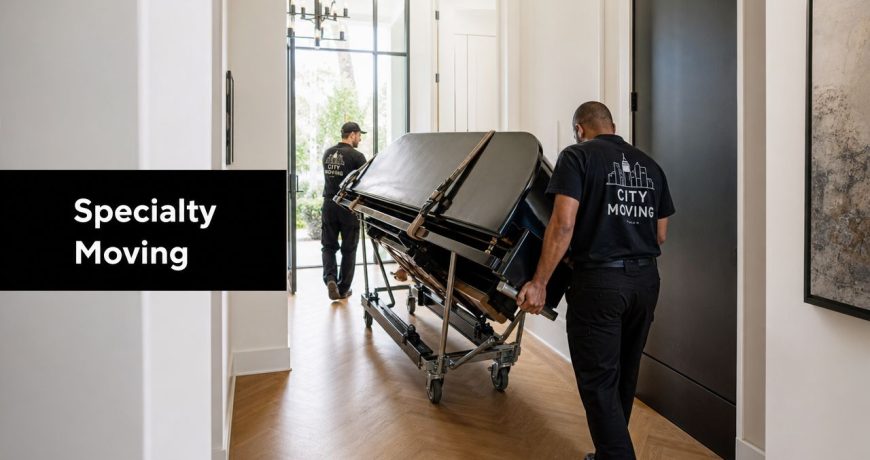
Pianos are one of the clearest examples. They're heavy, but the primary concern is how they're heavy. Weight doesn't sit evenly, and the finish, legs, pedals, internal action, and cast components all need protection. A small bump can damage cabinetry. A poor carry angle can stress parts that were never meant to take that kind of load.
Even when a piano arrives without visible damage, rough handling can still leave you with sticking keys, alignment problems, or the need for post-move tuning. That's why experienced crews use piano boards, proper strapping, and a controlled path from room to truck.
If you're moving other living items along with delicate goods, this guide on how to move with plants safely is worth reading too. Plants and specialty items often compete for the same concerns, namely stability, timing, and temperature.
Pool tables
Pool tables are another item people underestimate until they try to move one. The felt, rails, frame, and slate all create different handling problems. The slate bed is especially unforgiving. It's heavy, brittle under stress, and must sit level again after reassembly if you want the table to play properly.
A rushed dismantle can strip fittings or mark timber finishes. A rushed reassembly can leave the table looking fine but playing badly. Specialist handling matters because the move isn't complete when the table reaches the new address. It's complete when the table is safely rebuilt and usable.
Antiques
Antiques are deceptive. They often look substantial, but age can make them structurally vulnerable. Veneers lift. Glue joints dry out. Decorative trims loosen. Drawer runners can shift. Glass panels and carved details don't tolerate pressure well.
An antique sideboard may survive decades in one room and still be damaged in a few seconds if someone lifts from the wrong point. Good movers treat antiques as conservation work in motion. The objective is not just to get them there, but to avoid introducing stress they've never had to absorb before.
Fine art and sculptures
Artwork creates a different set of risks. Frames can rack. Corners bruise. Glass can crack. Painted surfaces can react badly to abrasion, trapped moisture, and vibration. Sculptures add centre-of-gravity issues, especially when the base is smaller than the upper mass.
The mistake people make most often is thinking “fragile” only means breakable. In practice, fragile can also mean sensitive to rubbing, heat, pressure, tilt, or prolonged vibration over a long road trip.
Understanding the Costs of Specialty Moving
A quote for a marble table going from Melbourne to Brisbane is built very differently from a standard house move quote. The truck space is only one part of it. The main cost lies in handling time, access limits, protection, scheduling, and the risk of damage over a long run up the East Coast.
In major cities such as Melbourne and Sydney, specialty item handling often sits above standard removals rates. Australian moving cost guidance for specialty items notes hourly pricing for specialist handling, typical local move ranges, and higher interstate totals once distance and load complexity are added.
What usually drives the price up
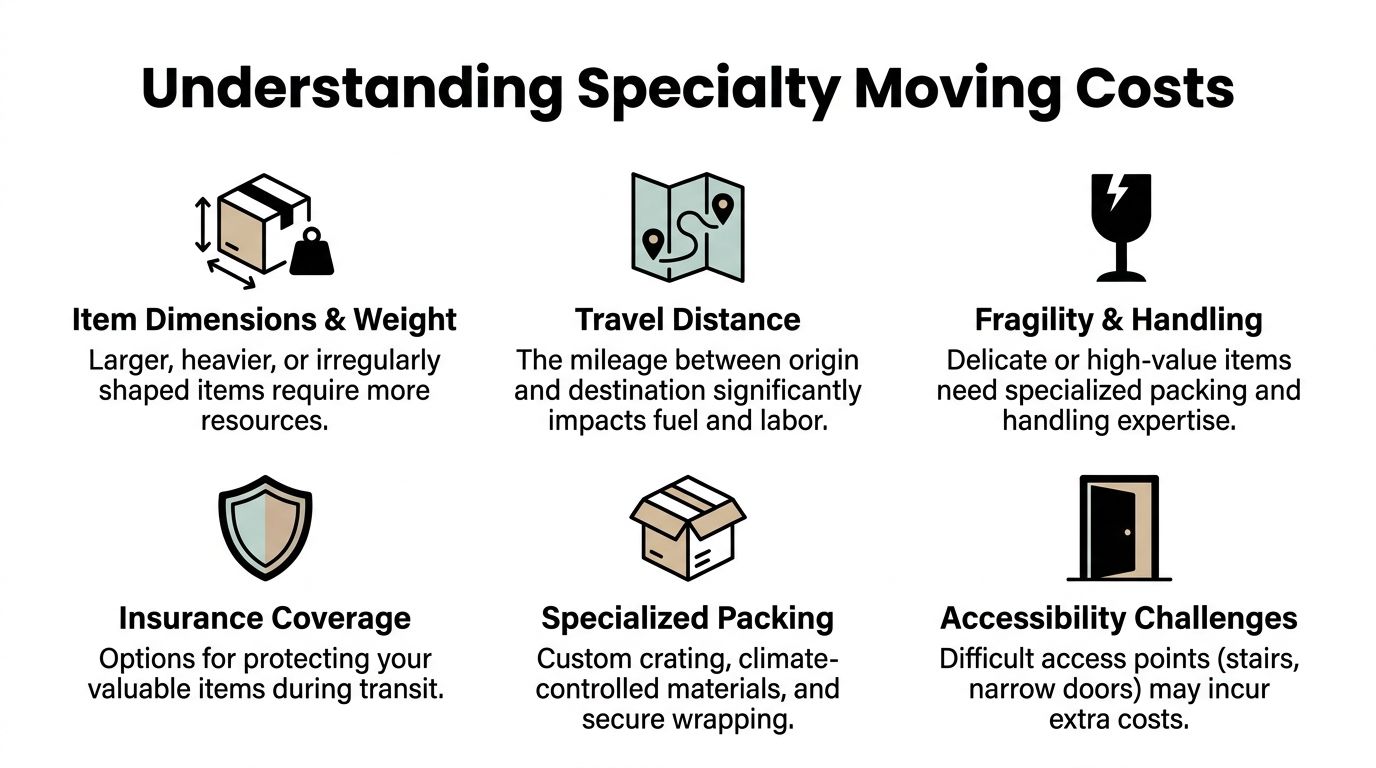
Size and weight matter, but awkward shape often matters just as much. A tall sculpture, a wide stone top, or a piano with poor access can take longer than a heavier item that travels cleanly on skates and straps.
Access changes labour fast. Stairs, long carries, lift bookings, loading dock rules, and tight turns add time and can require extra hands. National Moving Authority cost factors for specialty moves notes that difficult access can increase labour costs, which lines up with what we see on apartment jobs in Melbourne and older terraces further north.
Packing and protection are another major part of the quote. Blanket wrapping may be enough for some items. Others need timber crating, edge protection, moisture control, or vibration-conscious loading because the item will be on the road for many hours.
Interstate work adds a layer many customers do not expect. Melbourne to Sydney, Canberra, or Brisbane moves often involve depot timing, delivery window coordination, and route planning around height limits, regional weather, and building booking rules. For some high-value pieces, a direct vehicle costs more but reduces handling points, and that trade-off is often worth it.
Insurance and declared value
Insurance needs clear paperwork. Full replacement cover for specialty items is often priced as a percentage of declared value, and specialty moving insurance guidance from Relocation Insurance Group explains why valuations, receipts, and condition records affect both cover and claims.
Declared value has to be realistic. If the amount is too low, the payout may not reflect the loss. If the amount is too high and there is no supporting paperwork, approval can slow down while the insurer asks questions.
A practical way to prepare is to gather valuations, receipts, model details, and condition photos before the quote is finalised. If you're costing an instrument move, this guide to piano moving prices in Melbourne gives a useful benchmark for likely inclusions.
How to read a quote properly
A good quote should spell out what is included and what could trigger extra charges on the day. Check these points carefully:
- Crew allocation. The number of movers should match the item, the route, and the delivery conditions.
- Equipment use. Piano boards, stair climbers, skates, tailgate loaders, and custom straps should be listed if the job needs them.
- Access assumptions. Lift access, stairs, long walks from truck to door, and booking restrictions should be confirmed in writing.
- Packing scope. There is a big difference between standard blanket wrap and purpose-built protection for stone, glass, art, or antiques.
- Transit plan. Ask whether the item is going direct, transferred through a depot, or consolidated with other freight.
- Insurance options. Check what the mover includes and what needs separate transit cover.
I tell customers to be cautious with very low quotes, especially for Melbourne-to-East-Coast jobs. Cheap pricing can mean fewer movers, less protection, or a depot transfer that has not been explained clearly.
Security at each end matters too, particularly if keys, garage remotes, or vacant periods are part of the move. This expert locksmith security advice is a sensible extra check before pickup or delivery day.
Your Step-by-Step Preparation Checklist
Preparation makes a specialty move smoother because it removes surprises before moving day. The best outcomes usually come from simple, disciplined steps done in advance.

Document the item before anyone touches it
Take clear photos from every angle. Capture corners, feet, handles, edges, existing marks, and close-ups of any fragile detail. For pianos and antiques, include serial plates, maker labels, and interior details where accessible.
This isn't about mistrust. It's about clarity. A proper visual record helps with condition reporting, insurance, and reassembly checks.
Gather any paperwork that helps the mover understand the item. That might include valuations, assembly instructions, prior repair notes, or purchase records.
Measure the route, not just the item
People often measure the item and forget the route. The route is what matters. Check door widths, hallway turns, stairwell landings, ceiling clearance, gate openings, lift dimensions, and the path to the truck.
If you're unsure whether a heavy piece can be shifted safely through a tight property, this guide on how to move heavy furniture is a useful starting point.
A few centimetres can change the whole plan. So can a single sharp turn at the top of a staircase.
Clean and inspect anything made from wood or used outdoors
When moving household items into Australia, musical instruments and wooden furniture should be inspected for insect infestation, and garden furniture and outdoor items must be completely free of soil and plant debris to meet biosecurity standards, according to Australian household item biosecurity guidance.
That matters for specialty pieces too. Antique timber items, stools, benches, carved frames, and outdoor decorative pieces can all attract closer scrutiny if they're dusty, dirty, or harbouring residue in joints and crevices.
Use a soft brush, vacuum attachments, and dry cloths where appropriate. Don't saturate old timber finishes or delicate art surfaces unless a conservator has advised it.
Make the site ready before the truck arrives
A clear path saves time and reduces handling risk. Remove hallway obstacles, rugs that slide, wall hangings along tight routes, and loose items around doorways.
For apartments and offices, confirm loading zones, lift access, building rules, and keys in advance. It's also smart to review expert locksmith security advice so your new place is secure from day one, especially if valuables will arrive before everything else is fully set up.
Use this quick checklist in the week before the move:
- Photograph everything. Focus on condition, not just appearance.
- Prepare documents. Keep valuations and instructions easy to access.
- Confirm addresses and timing. Include booking windows, site contacts, and any building approvals.
- Clear both ends. Leave enough room for safe set-down and positioning.
- Check parking and access. The truck needs a workable loading point.
- Remove contents where appropriate. Loose shelves, cues, music books, and detachable accessories should be packed separately if advised.
How to Choose the Right Specialist Mover in Melbourne
Not every mover who says “yes” to a piano, antique, or pool table is set up to handle it properly. The safest choice usually comes from the questions you ask before booking.
Questions worth asking directly
Start with the item itself. Ask whether the company has moved that exact type of item before. A yes to “specialty items” is too broad. A pool table isn't a piano. A framed print isn't a sculpture.
Ask what equipment they own and use. If the answer stays vague, that's a problem. A specialist should be able to talk clearly about piano boards, lift capability, protection systems, and how they handle difficult access.
Then ask about staffing. Full-time, police-checked staff are usually a better sign than unknown subcontract crews, especially when high-value or sentimental pieces are involved. Consistency matters in specialist work.
What a reliable quote should reveal
A proper quote should reflect planning. It should ask about stairs, corridors, lifts, long carries, floor type, truck access, and whether the item needs dismantling or crating.
It should also explain insurance, including the difference between public liability and transit-related protection. If the mover can't explain what is and isn't covered in plain language, keep looking.
For customers comparing service levels, this explanation from MoveJoy on white glove movers gives a helpful overview of the difference between basic transport and higher-touch handling. It's a useful lens when you're deciding how much support your move needs.
Red flags people often miss
A few warning signs come up again and again:
- Vague pricing. If the quote ignores access and specialist handling, it may not hold on moving day.
- No inspection questions. A mover who doesn't ask about dimensions or route constraints is guessing.
- No clear insurance conversation. That usually becomes a problem only after damage occurs.
- No business footprint. A physical base, established fleet, and traceable operations matter.
- Overconfidence. “We move everything” isn't the same as proving how.
If your main concern is an instrument move, comparing a service that focuses on piano movers in Melbourne can help you spot the difference between a general promise and a specialised process.
The right specialist mover won't rush to reassure you. They'll slow down, ask better questions, and build the move around the item.
Interstate Moves Melbourne to the East Coast
A piano leaving a ground-floor home in Melbourne for a terrace in Sydney or an apartment in Brisbane needs a different plan from a local move across town. The distance changes the job. More road vibration, more time in the truck, tighter delivery windows, and more handover points all increase the chance of damage if the item is packed and loaded like ordinary furniture.
The Melbourne to East Coast corridor is busy year-round, which affects availability and timing. Crews that run these routes regularly tend to plan better because they already know the pinch points. Apartment booking rules, regional delivery delays, limited truck access, and overnight staging all need to be sorted before pickup day, not while the item is sitting on the tailgate.

Why East Coast routes need tighter planning
Distance exposes weak preparation fast.
On a local move, a crew can sometimes recover from a small mistake. On an interstate run, there is less room for that. If a marble top was not crated properly, if a piano trolley cannot clear the delivery path, or if the consignee building will not accept arrival after 3 pm, the fix is harder and usually more expensive.
Route familiarity matters for another reason too. East Coast jobs often involve mixed conditions across one trip. A pickup in suburban Melbourne might be straightforward, while delivery could mean a steep driveway on the NSW South Coast, a loading dock in inner Sydney, or a lift booking in Brisbane. Each leg changes how the item should be wrapped, braced, and scheduled.
For some customers, the biggest decision is whether the item should travel within a general household load or move under a tighter handling plan with dedicated protection, limited rehandling, and clearer chain of custody.
The regulatory detail many people miss
Domestic interstate moves do not face the same border process as international shipments, but that does not mean condition checks and contamination issues can be ignored. Used timber pieces, workshop equipment, garden statuary, and older specialty items often carry dust, soil, plant matter, mould, or pest activity that should be dealt with before loading.
The practical issue is simple. Dirt and residue do more than look untidy. They can stain wraps, transfer onto other goods in the truck, attract scrutiny at storage facilities, and hide damage or active deterioration in the item itself. That is why we tell customers to clean timber bases, castors, stools, stands, and undersides properly before the move, especially on longer Melbourne to East Coast runs where the item may be wrapped for an extended period.
This matters even more if temporary storage, depot handling, or multi-stop delivery is part of the job.
What usually works best on a Melbourne to East Coast move
The interstate specialty moves that go well usually have a few things in common:
- A proper review at both ends. Measurements, stairs, driveways, lifts, and loading zones should be confirmed early.
- A realistic transit plan. Fragile or high-value pieces should not be booked on a timetable that leaves no margin for delays.
- Clear loading priorities. The item needs the right position in the truck, with restraint and protection based on weight, finish, and shape.
- One contact person. It cuts down confusion around delivery windows, key access, and special handling notes.
- Honest disclosure from the start. Weight, dimensions, detachable parts, and prior damage should be raised at quoting stage.
If you are comparing options for a Sydney-bound move, our guide to the Melbourne to Sydney interstate removalist process shows how direct-route jobs are typically organised.
I have seen interstate jobs stay on track because the customer handled the small details early. They checked whether the lift needed a booking, told us the piano stool was travelling too, measured the front gate opening, and mentioned the antique cabinet had a loose leg before we arrived. Those details save time, prevent damage, and make the delivery far less stressful.
When you need careful handling for a piano, pool table, antique, artwork, or other difficult piece, Get n Go Removals Melbourne offers the kind of support that makes a high-stakes move feel manageable. With more than 10 years of experience, full-time police-checked staff, company-owned trucks, public liability and transit insurance, plus regular direct East Coast runs, the team can help you plan a move that protects the item, the property, and your peace of mind.