
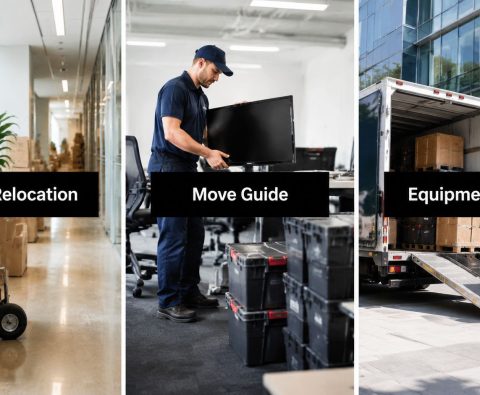
Office Equipment Relocation: A Complete Guide

Monday morning is where office equipment relocation either proves it was planned properly or exposes every shortcut. The phones ring, people are looking for docks and chargers, someone is standing beside a dead printer, and the server room is still half unpacked because the labels made sense in the old office but not in the new one. In Melbourne, that's usually when the cost shows up, not in the truck booking, but in the lost hours caused by poor cutover sequencing, missing access approvals, and equipment that arrived before the office was ready to receive it.

A serious office move is never just about carrying desks from one address to another. It's a service-continuity project that has to account for planning, inventory, handling, and cutover in the right order. That's also why loss-prevention discipline matters in a move, the same reason practical teams lean on resources like business loss prevention advice when they're thinking through risk, access control, and asset protection rather than just transport.

If you're trying to keep the business functioning while the premises change, the move has to be treated like an operational changeover, not a furniture day. For a broader moving checklist that sits well alongside this approach, these office move tips are a useful companion resource, but the core work starts with the sequence.

What an Office Equipment Relocation Really Involves

On a bad move, the office is open but not usable. Staff arrive, the desks are in place, yet monitors aren't seated, the network switch is still boxed, and the internet handover was left until the final fortnight, so no one can log in properly. That's the difference between moving furniture and completing an office equipment relocation.

The gear is only half the job

The load usually includes desks, screens, printers, cabling, servers, docking stations, archive boxes, and specialist items that can't be treated like general freight. In dense CBD buildings, you're also dealing with lift windows, loading docks, after-hours access, and building approvals, which means every delay ripples through the next task. The larger Australian office market, with about 13.5 million square metres of office stock nationally in 2024 according to Property Council of Australia data reported by the Office of the Valuer-General and related market summaries, helps explain why these moves are so common in active commercial centres, especially Melbourne and Sydney. That same market context is tied to the post-2020 acceleration in office reconfiguration, where businesses have often consolidated space rather than expanded it, and ABS working-from-home data showed 37% of employed people worked from home at least one hour in the 2021 Census reference week, up from 32% in 2016 as reported in the source brief.

The operational mistake is assuming the truck is the critical path. It isn't. The critical path is the order in which equipment is disconnected, labelled, transported, and brought back online, which is why a move that looks smooth at street level can still fail on Monday morning.

Practical rule: if the network, phones, and workstations aren't restored in dependency order, the office is only occupied, not operational.

That's the lens I use on every commercial move. If the move doesn't protect continuity, it's not finished, no matter how tidy the new floor looks.

Building a 12-Week Relocation Timeline

A 12-week runway gives you enough time to clear the bottlenecks that usually derail office moves. The biggest reason teams get burned is simple, they leave building access, lift bookings, and ISP coordination until the last fortnight, then discover every one of those tasks has its own lead time and its own failure point.

A 12-week infographic timeline detailing the strategic steps for an efficient and organized office relocation process.

Weeks 12 to 9 set the scope

At week 12, lock in site selection and lease milestones, because the office layout determines every downstream decision, from workstation counts to server placement. By week 11, shortlist vendors and issue the RFP, then use week 10 for space planning so the new floor fits the operating model instead of forcing one.

At week 9, review the budget with the project owner, the finance lead, and whoever's carrying the operational risk. That's the point where a move stops being an abstract plan and starts becoming a resourced programme with named owners.

Weeks 8 to 6 are where delays get real

Use week 8 for the inventory walkthrough, not later. The facility lead should own access to storage rooms, departments, and off-site cupboards, because missed assets turn into delayed go-lives and duplicate purchases.

By week 7, IT should have completed dependency mapping. The internal network lead or external IT partner needs to identify what must come back first, what can wait, and which devices need special handling. At week 6, book movers, finalise lift access, loading windows, and any building approvals, because the operational schedules are now tight enough that one missed slot can push everything into overtime.

Weeks 5 to 1 finish the move properly

At week 5, finalise the labelling system. At week 4, confirm utility transfers and vendor coordination. The office manager should own the communication schedule, while IT owns service continuity and the project lead keeps the critical path visible. The final two weeks should focus on packing supplies, final walkthroughs, and move-day readiness, not on discovering that the phone carrier still needs a few more days.

A good timeline is less about activity and more about removing surprises before trucks are involved.

For planning a realistic load size while you build this schedule, this cubic metre calculator is a practical fit alongside the timeline above.

Inventory, Labelling, and IT Dependency Mapping

A room-by-room inventory is where most commercial moves either get control or lose it. The aim isn't to count boxes, it's to know exactly what exists, where it sits now, where it's going, and what has to be reconnected first so the office can work.

A six-step infographic showing the process of conducting a room-by-room inventory, labeling, and IT dependency mapping.

Build the inventory before the first cable comes out

Walk every department, room, and storage area, then log each item by name, quantity, condition, and location. That walkthrough is especially useful for items that vanish in the shuffle, like spare monitors, label printers, dock stations, adapters, and archive boxes tucked into side rooms. A documented inventory should also record the current location, destination, and any special handling requirements, because reinstallation order matters as much as transport.

The move lead should then create a master list and tag each item with a unique code. That keeps the receiving team from unpacking by whatever box happens to be closest, and it reduces the chance of a workstation ending up on the wrong floor or in the wrong department.

Separate furniture labels from IT dependency mapping

Furniture can often be rebuilt by area or function, but IT equipment needs a dependency map. Photographs of cabling before disconnection are invaluable, because they let the rebuild team reverse the teardown instead of guessing at ports, adapters, and switch positions. The IT lead should identify the sequence for servers, NAS devices, network switches, monitors, docking stations, and VoIP handsets, then restore them in that order.

Most common mistake: people pack the desk first and shut down the server last. That's backwards, because the network backbone should be treated as the first system to stabilise and the last one to touch casually.

For secure and disciplined asset handling, IT asset management best practices are a sensible reference point when you're building your own control sheet. And for a practical packing workflow that supports the inventory process, professional packing services fit naturally into this stage when the internal team doesn't have time to wrap and label everything manually.

Packing and Specialist Handling for Different Office Sizes

A small studio, a mid-sized office, and a multi-floor tenant don't pack the same way. The right method depends on the number of workstations, the sensitivity of the IT stack, and whether the move includes items that can't safely ride on standard pallets or in generic cartons.

Small, medium, and large moves need different control

A small studio can often work from a tight packing kit, library boxes, Archive Cartons, anti-static bags, foam wrap, and a simple label set. A medium office usually needs a clearer separation between user equipment and shared infrastructure, especially if there are printers, conference room displays, or desktop docking stations that must be reinstalled in a specific order. A large multi-floor tenant needs crate hire, staging space, and a more formal disassembly plan, because lifts, loading bays, and floor access tend to become the primary constraint.

For technical rollout support, office network installation services are worth considering when the office has a structured cabling or switch refresh tied to the relocation. That matters because a move is often the cleanest time to correct old cabling mistakes rather than recreate them in the new building.

Specialist items need specific handling

Item Specialist Reason Recommended Approach
Server racks Weight, cabling complexity, and sequencing Power down in order, photograph connections, move on dedicated equipment
Large-format copiers Size, fragility, and service alignment Use trained handlers and proper transport protection
Safes Extreme weight and floor loading risk Use specialist equipment and approved access routes
Pianos Delicate internal components and awkward balance Move with purpose-built handling gear
Pool tables Heavy slate components and reassembly alignment Disassemble and transport as a specialist item

The most expensive DIY mistake is usually not the box itself, it's the assumption that sensitive equipment can be shut down and re-seated at the end of the day without a proper sequence.

For businesses that want a managed commercial option, Get n Go Removals Melbourne offers office relocation work across Melbourne and interstate, including packing and specialist handling, but the fit always depends on your own timeline, access constraints, and equipment mix.

Melbourne and Interstate Logistics

Melbourne CBD moves run on permissions as much as muscle. If the lift isn't booked, the dock window is wrong, or the building manager hasn't approved after-hours access, the truck can arrive on time and still do nothing useful.

A checklist for Melbourne and interstate logistics, highlighting key constraints for planning efficient and timely deliveries.

CBD rules are part of the move, not an afterthought

A clean Melbourne move usually starts with lift bookings, loading dock windows, and parking approvals. Rubber-wheeled trolleys matter in high-rise buildings because floor protection and noise control aren't optional in managed properties. After-hours access is often the safest way to reduce congestion and avoid clashing with staff, deliveries, and building operations.

These constraints are where office relocations go wrong. Teams focus on the boxes and forget the building, but the building controls the timing, the route, and sometimes even the method of entry.

Interstate relocations need staged control

Melbourne to Sydney is roughly 878 km by road, and Melbourne to Brisbane is about 1,676 km, so interstate office relocations usually need staged transport, overnight scheduling, and chain-of-custody controls for devices. That distance changes the job completely, because you're no longer planning a simple same-day shift, you're managing risk over a longer transit window with multiple handover points. Australia's e-waste burden also makes secure handling important beyond the truck run, because 539,000 tonnes of e-waste were generated in 2022, and the National Television and Computer Recycling Scheme has operated since 2012 to divert regulated IT equipment from landfill as reported in the source brief.

For broader interstate coordination, these interstate removalists are relevant when the move spans state lines and the project needs scheduled transport rather than a one-off pickup. Weekly direct runs to East Coast capitals are especially useful because they let the whole load travel in a single transit window instead of being broken across hub transfers.

Choosing the Right Mover and Asking the Right RFP Questions

A serious commercial mover is easy to spot once you ask the right questions. They answer clearly, name the person responsible for the project, and explain how they handle IT, access control, after-hours work, and storage without hand-waving.

Verify the people, insurance, and scope

Ask whether the crew is made up of full-time staff or day labour, and whether the team is police-checked. Ask for public liability and transit insurance details in writing, then confirm the scope of work covers disassembly, reassembly, packing, transport, and any storage you might need between sites. A single point of contact matters because office moves fall apart when quoting, dispatch, and on-site coordination live with three different people who don't talk to one another.

Be wary of subcontractors who appear late in the process without clear insurance coverage. Fuel levies, stairs, heavy-item charges, and waiting time can all inflate a cheap estimate, so the quote should spell out what's included and what triggers extra fees.

Use the RFP to separate commercial movers from residential-only firms

A residential-only operator may be excellent at houses and still be the wrong fit for an office relocation. The questions below expose the difference quickly:

  • Can you handle phased server moves? The answer should explain sequencing, not just “yes.”
  • How do you manage after-hours building access? Look for evidence of experience with CBD restrictions.
  • What storage options do you offer between sites? Short-term and long-term both matter depending on fit-out timing.
  • How do you price stairs, heavy items, and waiting time? You want transparency, not an after-the-fact surprise.
  • Who supervises the IT cutover? If the answer is vague, that's a risk, not a detail.

For smaller businesses comparing vendors, this guide to business moving companies is useful because it frames the search around commercial capability rather than just transport capacity. The right mover should be able to explain the written scope, transit cover, and sequence of work before the booking is confirmed.

Day of Move Run Sheet and Post Move Setup

The day-of run sheet is where the plan either becomes usable or becomes a mess. I've seen offices arrive at a new site with everything physically present, only to lose the afternoon because nobody owned the sequence, the final testing, or the decision about what gets reconnected first.

A practical move-day sequence

7:00 AM, movers arrive and the project lead does a pre-arrival walkthrough with building access, lift timings, and the load order confirmed. 8:00 AM, the IT team begins disconnection, starting with the network and then moving through servers, NAS devices, and shared equipment in the documented order. 10:00 AM, loading should be complete if the inventory and labels were done properly, because delays here usually mean a missing asset or a late sign-off.

12:00 PM, transport starts to the new site, and the receiving lead checks that the destination rooms are clear, powered, and ready for staged unloading. 2:00 PM, unloading begins by department or floor so priority teams get working space first. 4:00 PM, furniture assembly should be underway, with workstations built from the label system rather than by whoever is easiest to reach. 6:00 PM, the post-move checklist starts, and that list should be treated as mandatory, not optional.

Test every phone line, printer, and Wi-Fi access point before the movers leave the site. If a fault appears after they've gone, the office becomes a troubleshooting site instead of a workplace.

The 72-hour clean-up list

The next three days are where the hidden issues show up. Missing cables, mislabelled boxes, and obsolete equipment sitting in the wrong room all need to be resolved quickly, because a move isn't complete until the office is usable and the old site is shut down properly. Any outdated IT hardware should go through certified e-waste recycling rather than landfill, which is the cleaner approach for decommissioning and keeps the disposal process aligned with the broader compliance picture noted earlier.

The final check is simple. If the network is stable, the phones ring, the printers work, the furniture is seated, and the staff can log in without improvising, the move succeeded. If not, the project wasn't finished, it was only delivered.

Watch the move-day workflow in action


If you're planning office equipment relocation in Melbourne or moving interstate, Get n Go Removals Melbourne can help with packing, specialist handling, and commercial relocation scheduling that fits lift windows and tight access. If you want a move plan that's built around your IT cutover, building constraints, and Monday-morning deadline, visit Get n Go Removals Melbourne to organise a custom quote and run sheet.

READ MORE

Household Moving Costs: A Practical 2026 Guide

You're standing in a half-packed Melbourne home, the fridge is nearly empty, the last carton of books is taped shut, and the truck's waiting at the kerb while someone tries to find the spare key for the lift room. That's when many people realise the bill was never really about the truck at all. Household moving costs are shaped by access, timing, and how much friction the move creates on the day, not just by kilometres on a map.

Why Your Move Will Not Cost What Your Neighbour Paid

A Brunswick terrace on moving day tells the story better than any price guide. The boxes are stacked in the hallway, the street's tight, the truck is idling, and the crew is waiting because the lift booking ran late at the other end. Your neighbour might swear they paid less for a similar-looking move, but that comparison misses the drivers, especially when one property has easy ground-floor access and the other has stairs, narrow parking, or a settlement window that leaves no room to breathe.

The first mistake is treating a move like a single line item. It isn't. It's a stack of separate costs, starting with the volume you move, then the access at both properties, then the date and time window, then the corridor you're travelling, and finally the extras you add. That's why two apparently identical three-bedroom homes can produce very different quotes, even inside the same suburb.

Practical rule: if a quote looks cheap on paper, check the access assumptions first. That's where many Melbourne bills blow out.

If you want a rough consumer starting point, the general moving-cost conversation in Australia reflects broader cost-of-living pressure, and the ABS reported annual inflation at 3.6% for the 12 months to April 2024, with housing still one of the largest contributors to the CPI basket, which helps explain why moving expenses keep feeling tighter for households. For a plain-English benchmark on move pricing and what people miss when they compare quotes, see this moving-cost guide.

The Four Real Cost Drivers Behind Every Removal Quote

An infographic titled The Four Real Cost Drivers Behind Every Removal Quote for moving companies and services.

A removal quote lives or dies on four things. Cubic volume, crew time, access complexity, and add-ons set the price, and the bill blows out when one of them turns ugly. In Melbourne, the biggest jumps usually come from difficult access, settlement timing pressure, and how flexible the job is on the East Coast corridor. Distance matters, but it is not the main story.

Sydney pricing gives a clean example of how volume changes the bill. iMove lists a 2-bedroom move at A$1000-A$1800 and a 3-bedroom move at A$1500-A$2700 (iMove moving calculator). That jump is not just about distance. It shows how movers price the space, the labour, and the handling burden, so the bill rises as the load gets larger.

What each driver does to the quote

Cost driver How it shows up on the quote Typical impact
Cubic volume More truck space, more loading time Bigger inventory pushes the job into a higher band
Season and timing Peak dates, tight windows, limited crew availability Premium pricing or fewer crew options
Access and logistics Stairs, lifts, loading zones, parking, long carries Extra labour hours and possible overtime
Insurance and valuation Basic cover versus fuller protection Added cost if you want better risk cover

The cheapest-looking quote often falls apart at access. A ground-floor house with open parking is a clean job. A walk-up, a dodgy loading zone, or a lift booking that runs late turns the same move into a longer, costlier day. If you want to see how quote structure changes once access and scope are explained properly, check Get n Go Removals moving company cost guide.

Trim the load before you book. If you cut one truck-load band, you usually save more than you will by haggling over the hourly rate. That is the blunt truth customers need to hear.

For a useful comparison, compare painter quotes Melbourne and you will see the same pattern. Scope, access, and labour drive the final number.

Typical Cost Ranges for Melbourne Local Moves

A Melbourne local move can look cheap on paper and still blow out fast once the crew sees the property. The actual price does not come from kilometres travelled. It comes from access complexity, settlement-timing pressure, and how much flexibility you have on the day.

A ground-floor apartment with clear parking and a short carry is one job. A fourth-floor walk-up in an inner suburb, or a place with a tight loading zone and awkward stair access, is a different job entirely. The truck can travel the same short distance in both cases, yet the labour bill will land in a completely different place.

What the number usually reflects

A low-end local quote usually assumes basic access, a fairly tidy inventory, and no packing service. Once the quote climbs, you are paying for more rooms, more furniture, more handling, and more time spent dealing with the building. That is why a quote that looks cheap can mislead you if it leaves out the parts that make moving expensive.

Sydney's published ranges are still a useful cross-check, because they show how prices rise with volume and job size. A 2-bedroom home at A$1000-A$1800 and a 3-bedroom home at A$1500-A$2700 shows the structure of the market clearly, even though Melbourne jobs can land differently depending on access and timing. For a Melbourne-specific benchmark, compare that with how much does moving houses cost in Melbourne and check whether the quote you have been given matches the job in front of you.

A quote that does not ask about stairs, parking, lift bookings, or a bulky fridge is not a quote you should trust yet.

How to read a local Melbourne quote

  • Studio or one-bedroom: the price is usually driven by access and crew time, not sheer volume.
  • Two-bedroom: inventory starts to matter fast, especially if you have modular furniture or awkward appliances.
  • Three-bedroom: the quote usually rises because of the labour needed at both ends, not just because the truck is full.
  • Four-bedroom and above: move size, packing, disassembly, and timing all start to stack together.

If you want a broader market reference for Sydney move ranges, use Sydney move ranges as a comparison point, then judge Melbourne against the actual access, timing, and labour burden on your job.

Interstate Costs on the Melbourne East Coast Corridor

A map of Australia showing average household moving costs and transit times for the Melbourne corridor.

Interstate moves out of Melbourne live or die on one thing, flexibility. If you want a dedicated truck, a defined pickup, and a tight delivery promise, you'll pay for that certainty. If you can tolerate a broader window, backloading usually makes more sense because the vehicle and driver cost gets shared across multiple consignments.

Dedicated service versus backloading

Dedicated service is straightforward. One truck, your load, direct transit. It suits households that need speed, fixed scheduling, or a controlled move date because of settlement pressure.

Backloading is the smarter play for people who can wait. The truck is already running the East Coast corridor, so your furniture becomes part of a larger route. That shared capacity is why backloading is usually cheaper, and why the final rate per cubic metre often falls once empty-kilometre exposure drops.

For households moving from Melbourne to Sydney, a sensible working benchmark for a three-bedroom home is A$4,500-A$6,500 with transit of 2-3 days. Melbourne to Brisbane tends to sit higher, with a three-bedroom move around A$5,500-A$8,000 and transit of 3-4 days. Melbourne to regional Victoria or New South Wales is usually lower, at about A$2,000-A$4,000 for a three-bedroom move, with transit of 1-2 days. Those figures give you a corridor-based frame, not a promise, and they fit the basic logic of line-haul distance plus transit mode (interstate moving costs).

What to choose

  • Choose dedicated service if your settlement is fixed and you can't afford a delay.
  • Choose backloading if you can accept a broader delivery window and want better value.
  • Choose flexibility over speed if the furniture is not urgently needed on day one.

If you need an east-coast run out of Melbourne, interstate removalists Melbourne to Sydney is the sort of route-specific planning that matters more than any generic national moving estimate.

Line-Item Pricing and the Extras That Inflate the Bill

A list of eight common line-item costs and extras associated with professional household moving services.

The headline rate looks tidy until the extras start piling on. A proper quote should spell out the truck rate, fuel levy, packing materials, disassembly, stair carries, long carries, weekend surcharges, insurance upgrades, and storage if there is a gap between homes.

The charges you need to check

  • Truck hourly rate: this is the base cost for the crew and vehicle. In Melbourne, Get n Go Removals lists a 2 men and 4.5 tonne truck rate of $170 per hour on weekdays, with higher rates on weekends and public holidays.
  • Packing materials: boxes, tape, wrapping paper, and speciality cartons add up fast when the mover supplies them.
  • Disassembly and reassembly: beds, tables, and larger furniture often need this, and it is rarely free.
  • Stair carry fee: every flight matters when the lift is unusable or absent.
  • Long carry: if the truck cannot park near the door, the labour clock keeps running.
  • Waiting time: if the loading zone is blocked or the lift booking is late, you pay for the delay.
  • Storage: if vacate and settle do not line up, storage becomes a real cost.
  • Insurance upgrade: basic cover is one thing, fuller valuation protection is another.

DIY truck hire also carries its own bill. A moving budget guide shows that truck rental starts before fuel, supplies, taxes, and per-mile fees are added, so the cheap option can still land hard once the extras are counted. If the move has apartment access issues, use hidden costs in moving house as your checklist before you sign anything.

Melbourne-specific traps

Inner-suburb parking permits, loading-zone restrictions, lift booking windows, and walk-up apartments are the big offenders. They do not look dramatic on paper, but they add labour hours. A cheap quote can become the expensive one once the crew is standing around waiting for access.

How to Get an Accurate Quote Without Getting Burned

Start with the truth. If your inventory is vague, your quote will be vague, and vague quotes turn into awkward invoices. A removalist needs the full picture, not a rough guess, because the job is priced on what the crew has to move, where they have to move it from, and how hard the access is at both ends.

What you should give the mover

  • An honest inventory: list the big items, boxes, appliances, and anything bulky or fragile.
  • Both access profiles: tell them about stairs, lifts, parking, and long carries at each property.
  • The settlement date and time window: tight timing changes how the job is scheduled.
  • Special items: pianos, pool tables, antiques, and oversized pieces must be flagged early.

What you should ask on the call

Ask whether the rate is hourly or fixed, how crew size is set, whether insurance is included or extra, and how waiting time is charged. Also ask whether storage is handled in-house or through a third party. If the answers are fuzzy, keep moving.

A reputable operator should give you written terms, clear insurance detail, and a single point of contact. That matters more than polished sales talk. In Melbourne, Get n Go Removals offers household removals, apartment moves, office relocations, specialist handling, packing and unpacking, and secure storage, which is the kind of scope that becomes useful when the move isn't simple.

If the mover won't put the key terms in writing, walk away.

Compare more than price. Compare what's included, what's excluded, and what triggers extra charges. That's the only way to tell whether one quote is better than another.

Smart Ways to Cut Household Moving Costs Without Cutting Corners

The quickest way to bring the bill down is to make the job easier. Fewer items, simpler access, better timing, and no surprises keep costs under control. Argue over the hourly rate all you want, but the bill balloons when the crew is slowed down by stairs, parking headaches, and last-minute changes.

An infographic showing six smart tips to reduce the total cost of professional household moving services.

Where the Savings Come From

Start with decluttering before the inventory is locked in. If you pay to move furniture that will not suit the new place, you are paying once to transport it and again when you decide what to do with it.

Pick the middle of the week if your schedule allows it. Mid-week and mid-month jobs are easier to fit in than the rush periods around lease handovers and settlement days, and that usually gives you more choice with crew availability.

Pack your own boxes if you can do it properly. Packing materials add up fast, and you do not need to pay a mover to do work you are able to handle beforehand. If you want a practical way to cut costs with Koru, pair that advice with your moving plan and strip out anything you no longer need.

Be flexible on interstate delivery windows. Backloading only works when the route has room to breathe, especially on the East Coast corridor where timing can be tight.

When DIY Makes Sense

DIY can work for a small move if the access is easy and you have help. Hiring a truck averages about $150 before fuel, supplies, taxes, and per-mile fees are added, so the savings are real on a studio or small one-bedroom job, especially when you are only moving a short load of furniture and boxes (DIY moving costs). Once the job gets bigger, or the access gets worse, DIY stops looking cheap very quickly.

The rule is simple. Control the inputs, and you control the bill. Leave the inventory messy, ignore access problems, and leave timing to chance, and the invoice will take care of itself.

Your Cost-Ready Moving Checklist and Budget Framework

The week before the truck arrives, check the things that move the cost. Your inventory needs to be accurate. The access at both ends needs to be confirmed. Parking permits and lift bookings need to be locked in. Pets and kids need a plan. The origin property needs a final walkthrough so nothing is left behind by mistake.

Use this checklist before moving day

  • Confirm the inventory: remove anything you no longer want moved.
  • Check access: stair count, lift times, parking distance, and loading-zone rules.
  • Book the building requirements: lift, dock, or loading area if your property needs it.
  • Prepare the handover: keys, final cleaning, and meter access should be sorted early.
  • Protect the schedule: make sure settlement timing and removal timing line up.
  • Plan the people side: arrange care for kids and pets so the crew can work without interruption.

Budget for the full transition, not just the truck

A sensible budget has more than one line. Set money aside for the removalist fee, packing materials, insurance, storage if needed, cleaning, bond return tasks, utility connections, and a contingency buffer for delays or access issues. If you only budget for the transport line, you're underestimating the cost of moving.

A well-priced move is usually a well-prepared move. That's the part people forget until the invoice arrives, and it's the part you can still control.


If you want straight answers on what your move will cost in Melbourne, Get n Go Removals Melbourne can quote local, apartment, and interstate jobs with access and timing factored in properly. Visit Get n Go Removals Melbourne to book a quote and get a clearer number before moving day starts taking its own cut.

READ MORE

Eco Removals Melbourne: A Practical Green Moving Guide

You're usually dealing with the same scene in Melbourne. The lift is booked, the street parking is tight, the cardboard stacks are already taking over the hallway, and you're trying to work out what can be donated, what has to go, and what's just going to become expensive landfill. Eco removals Melbourne sounds simple on a quote sheet, but in practice it only means something if the mover has a real system for diversion, transport efficiency, and reusable materials.

For local households, offices, and interstate jobs, that distinction matters. Victoria's waste system is already handling huge volumes, with 2.37 million tonnes of kerbside material collected statewide in 2019–20 and 45.0% of kerbside recyclables and organics diverted from landfill, according to the state's local-government waste report (Victorian local-government waste services report 2019–20). A genuine eco move is the part you can control inside that bigger system, and it should leave you with fewer trips, less contamination, and a clearer path for unwanted items.

What Eco Removals Really Mean in Melbourne

A Brunswick apartment move on a rainy Friday says a lot about this industry. Boxes are stacked in the kitchen, the sofa won't fit through the lift unless it's turned just right, and the owners are asking one simple question, what happens to the stuff they don't want to take? In that moment, “eco” isn't about branding. It's about whether the mover can separate usable goods, protect the freight properly, and keep the load efficient enough that the truck isn't back and forth all day.

An infographic explaining the difference between marketing labels and verified systems for eco removals in Melbourne.

Marketing label versus working category

A marketing label usually stops at recycled boxes and a green logo. A working category has a process behind it, with pre-sort decisions, source-separated recovery, and transport planning that changes outcomes. The difference shows up in what gets diverted, what gets mixed, and what still ends up in landfill or bulky waste streams.

In Melbourne, that matters because the city's housing stock creates tight handling conditions. The City of Melbourne's 2021 waste guidance shows that a 1-bedroom or studio apartment is allocated 60L garbage, 80L recycling and 20L organics each week, while a 2-bedroom apartment receives 75L garbage, 100L recycling and 25L organics (City of Melbourne waste-generation guidance 2021). Those numbers are about everyday living, but they also show how quickly a move can flood bins with cardboard, wrapping, broken items, and mixed waste if staging is sloppy.

Why the term matters now

A credible eco removal doesn't pretend every item can be recovered. It makes clear choices about what can be reused, what can be recycled, and what has no practical recovery path. That's especially important for households and offices where the same truck might carry furniture, files, packaging, and e-waste in one run.

Practical rule: if a mover can't explain where your unwanted items go, the “eco” claim is probably just decoration.

For a useful external benchmark on sustainability framing, the green cleaning certification guide is a solid reminder that systems matter more than labels. The same logic applies here, a green-sounding service only counts when the process is visible.

The Three Pillars of a Genuinely Eco Removal

Eco removals in Melbourne work when three things line up. First, the mover separates recoverable material before it gets commingled. Second, the truck run is planned so the job burns less fuel per item moved. Third, the packing system reduces disposable waste without creating extra handling problems. If one of those legs is missing, the whole claim gets weaker.

An infographic titled The Three Pillars of a Genuinely Eco Removal highlighting waste diversion, transport efficiency, and reusable materials.

Waste diversion performance

EPA Victoria notes that construction and demolition material is a major component of the state's waste stream, and recovery works best when salvage is separated at source rather than mixed with general waste (PreEnviro services overview). That principle carries straight into domestic and commercial moves. Furniture, cardboard, timber, and metals keep more value when they're kept clean and sorted, and they lose options quickly once they're crushed together in a general load.

An eco removal earns its keep here. A mover who stages donation items separately, keeps scrap metal apart, and sends e-waste to the right channel is doing more than recycling theatre. The process protects material quality, which is the currency in diversion.

Transport efficiency

For Melbourne jobs, load planning is often the bigger emissions lever than packaging. The Australian Government's National Greenhouse Accounts guidance makes clear that freight emissions rise with distance, payload, and stop-start driving, so the practical answer is fewer trips, better packing, and smarter routing. That's especially relevant on CBD jobs where access windows are tight and congestion punishes partial loads.

A full, well-packed truck is cleaner than a half-empty one doing repeat runs. On interstate East Coast corridors, that effect gets stronger because the linehaul leg dominates the fuel profile. If a mover can consolidate the job once, do it properly, and avoid a second trip, that's a meaningful reduction in wasteful movement.

Reusable materials

Reusable crates, blankets, and protective wraps are useful because they cut disposable packaging without sacrificing protection. They work best when the team packs and unloads efficiently, which is why they fit apartment and office moves so well. A clumsy reusable system isn't eco, it's just a different material used badly.

For businesses comparing broader sustainability practices, Murphy's sustainable stays for business travel offers a useful example of how repeatable systems beat vague claims. The same standard should apply to removals, measurable process first, slogan second.

Sustainable Moving Practices That Actually Work

The easiest way to make a move greener is to make it cleaner in operational terms. That starts with sorting items before the truck arrives, then choosing reusable packing, then confirming exactly how disposal and recovery will happen on the day. In Melbourne, those steps matter because access problems, lift windows, and council parking limits can turn one small delay into extra handling and extra fuel use.

What to ask for before booking

Ask for reusable crate systems, blanket protection, and a plan for source-separated salvage. A mover should be able to say where cardboard goes, how timber is handled, and what happens to e-waste or mixed junk. If the answer is “we'll sort it later,” that usually means contamination risk and less recoverable material.

It also helps to know what a move can generate before packing starts. The City of Melbourne's bin guidance shows how quickly waste builds in small apartments, with standard weekly entitlements that already cover multiple streams, not just garbage (City of Melbourne waste-generation guidance 2021). A relocation can easily overwhelm that normal rhythm, so staging matters.

Keep the good stuff out of mixed loads. Once soft items, broken packaging, and general junk are tangled together, the recovery options drop fast.

How to handle recovery pathways

Use donation only for items in usable condition. Send white goods and furniture to legitimate recovery channels when they're still serviceable, and keep specialist collections separate for e-waste and other regulated materials. Cardboard should be flattened and kept clean. Timber offcuts and metal should not be buried under soft rubbish where they lose value.

For businesses, the same logic applies to office moves. Files, desks, chairs, monitors, and cable waste need separate decisions. That's why a smart mover should talk about packing, loading, and disposal as one workflow, not as disconnected tasks. A useful internal starting point on material choice is where to find moving boxes, because box sourcing affects both waste and packing quality.

Benefits and Real Cost Considerations

Eco removals aren't automatically expensive, and they're not automatically cheaper either. The cost shifts depend on how much has to be sorted, what needs specialist disposal, whether reusable crates are included, and how difficult the access is. In practice, the better the planning, the more likely the job avoids hidden waste removal at the end.

Where the price can move

Specialist collection for e-waste, mattresses, or mixed junk can add complexity because those items need the right stream. Reusable packaging sometimes brings deposit or handling considerations. Lift bookings, loading windows, and CBD access can also shape the price because they affect labour time and truck efficiency.

Where the value often comes back

Good load planning can reduce the number of trips. Reusable protection can reduce damage, which matters more than many admit. Less post-move dumping also means less time spent organising council pickup, running to the tip, or hiring a second clean-out service.

For a practical benchmark on moving expenses, the internal guide on how much does moving houses cost in Melbourne is useful for understanding what typically sits inside a quote. The point isn't to chase the lowest line item. It's to compare what's included, especially if you need packing, disassembly, storage, or extra handling for bulky pieces.

Eco moves also tend to play better with body corporate rules and tight building schedules because the workflow is cleaner. For offices, that can matter more than the direct transport cost. A move that finishes on time and keeps recoverable material out of mixed waste has a different business value from a cheap job that creates downstream mess.

Your Green Moving Checklist and Timeline

A good eco move starts before boxes exist. The first job is to decide what stays, what goes to donation, what needs a specialist recycler, and what should never be loaded in with the rest. Once that sorting happens early, the rest of the move gets easier to schedule and cleaner to pack.

A green moving checklist and timeline infographic for an eco-friendly house move over eight weeks.

Eight weeks out to four weeks out

Start with a diversion audit. Walk room by room and mark items for keep, donate, sell, recycle, or dispose. If a wardrobe, table, or appliance still has life in it, route it early so it doesn't get trapped in the moving-day pile.

At six weeks, lock in separate streams for white goods, furniture, and e-waste. If you're using a mover with reusable packaging, confirm the crate delivery plan and ask how returns work after the move. The internal decluttering guide at how to declutter before you move is a useful companion if you want a structured purge before packing starts.

One week out to moving day

Do a final pre-sort. Flatten cardboard, bag soft plastics separately where they're accepted, and keep recyclable material clean and dry. Confirm lift bookings, parking access, and any building rules so the truck can load once instead of idling while someone chases a permit or a concierge sign-in.

The cleanest moves are the ones where the truck leaves full, not the ones where the team improvises on the footpath.

After the move, deal with the leftovers immediately. Return crates, unpack recyclable packaging, and arrange any final diversion pickups while the categories are still clear. That's the point where a planned eco move proves itself, not when the quote looks green.

How Get n Go Removals Melbourne Delivers These Practices

A real eco-aligned move depends on the machinery behind it. Get n Go Removals Melbourne works with a company-owned fleet of 4.5 to 12 tonne trucks, full-time police-checked staff, public liability and transit insurance, premium packing materials, and protective equipment. That setup matters because eco outcomes usually fail when the mover doesn't have enough control over truck sizing, handling, or scheduling.

The practical advantage shows up in the details. Valet white-glove packing and unpacking helps separate what should be protected, what should be staged, and what should not be tossed into a mixed load. Furniture disassembly and reassembly also reduces handling damage, which supports reuse and donation where items are still in workable condition. Secure short- and long-term storage gives households and offices a place to keep overflow items instead of forcing a rushed disposal decision.

For families and businesses moving against settlement times or lift bookings, flexible 24/7 scheduling makes the job more realistic. Weekly direct runs to Sydney, Brisbane, and other East Coast destinations also matter because consolidated interstate transport is easier to plan than scattered partial runs. The about us page gives a fuller view of the service mix, especially for customers who need packing, transport, and storage coordinated under one point of contact.

This is the sort of setup that fits eco removals Melbourne in practice. It doesn't rely on a slogan. It relies on the mover controlling the load, the materials, the timing, and the handover. That's what makes a relocation feel organised instead of improvised.

Common Questions About Eco Removals in Melbourne

People usually ask the same questions once they get past the marketing language. What happens to furniture that won't fit? What can be diverted? Does “eco” really change emissions, or is it mostly about packaging? Those are the right questions, because the answers determine whether the move is lower waste or just better branded.

An infographic detailing common questions and answers about professional eco-friendly furniture removal services in Melbourne, Victoria.

What really happens to unwanted furniture and mattresses

Furniture in usable condition should go to donation or reuse channels, not straight to landfill. Mattresses need licensed handling because they're bulky, awkward, and not suited to general mixed waste. If a mover can't tell you the destination stream for these items, the process is too vague to trust.

Which items can be diverted legally and economically

The practical diversion list usually includes furniture, white goods, e-waste, scrap metal, and other recoverable household material when they're kept clean and separated. Contamination is the main enemy, because a mixed load can erase the value of good items very quickly. The Victorian waste report shows why this matters at scale, with a 13.3% kerbside contamination rate and $311 million in local-government garbage-service costs in 2019–20 (Victorian local-government waste services report 2019–20).

What actually moves the emissions needle

Transport choices usually matter more than packaging choices. A truck that's properly sized, fully loaded, and routed well through Melbourne traffic is doing more for emissions intensity than a pile of recycled boxes sitting in the wrong place. That's why route planning and load consolidation belong at the centre of the conversation, not as an afterthought.

What mistakes undo the benefit

The biggest mistakes are poor pre-sort, mixed junk loads, and last-minute booking changes that create duplicate trips. Even a well-intentioned move can lose its eco value if the wrong items are bundled together or if the truck has to come back because access wasn't checked properly. That's where a clear plan wins over vague sustainability claims every time.

Booking Your Eco Removal in Melbourne

When you ask for a quote, give the mover the details that affect waste and transport. List the pickup and drop-off addresses, building access notes, lift bookings, parking constraints, storage needs, and whether the job is local or interstate. If you're comparing options, ask how they handle reusable packing, source-separated disposal, and truck load optimisation before you decide.

Use the moving quote page to start the process and keep the conversation specific. A good operator should be able to tell you how packing, transport, disassembly, and storage fit together, without making you piece the plan together yourself. That's especially important for apartment moves, office relocations, and East Coast jobs where timing and access can make or break the day.

For Melbourne households, the best eco outcome usually comes from one thing, a mover who can combine clean sorting, the right truck, and disciplined scheduling. If that's what you need, ask the questions early and lock it in before the calendar gets tight. A clear quote now is easier than fixing a messy move later.


If you're planning a local move, interstate relocation, or office clean-out, Get n Go Removals Melbourne can help with packing, transport, storage, and careful handling that keeps the job organised from start to finish. Visit Get n Go Removals Melbourne to request a quote and ask about eco-aligned moving options for your next move.

READ MORE

Office Relocation Services Sydney: A 2026 Guide

You're probably staring at a lease deadline, a jammed calendar, and a floor full of desks that still need to work on Monday morning. Many Sydney businesses face this scenario regularly, and it is why office relocation services Sydney should never be treated as a simple truck booking. A commercial move in this city is a project, with approvals, IT sequencing, handover obligations, and building rules all happening at once. In practice, that can mean a tenant in the CBD needs its internet cutover scheduled after the last staff laptop is packed, but before the old suite is handed back, or the whole office is offline at the wrong time.

Sydney's commercial market keeps relocation crews busy. Industry reporting based on ABS Census data says Australia had 5.3 million migrants, equal to 26% of residents, and nearly half of all migrants lived in Sydney or Melbourne. Sydney alone had about 1.4 million overseas-born residents. That population mix helps sustain business formation, branch expansion, and tenant churn, while IBISWorld estimated 8,310 removal services businesses nationally in 2025, up 0.2% from 2024, which shows a mature, fragmented market with plenty of Sydney providers competing for the same work. For a buyer, that means the quality gap matters more than the number of vans on the road. A practical move starts with a clear scope, and planning your office move properly is what keeps the cost of delays, after-hours access, and avoidable rework under control.

A common failure point is end-of-lease handover. Teams focus on desks and cartons, then discover too late that the landlord expects patching, cable removal, carpet cleaning, and e-waste clearance to be finished before the final inspection. I have seen Sydney tenants lose time and money because a ceiling-mounted projector was left in place, or because old servers were still sitting in a comms room when the keys were due back. That kind of miss can delay bond recovery and create extra contractor calls that were never in the move budget.

IT continuity needs the same discipline. If the phones, printers, and network rack are not sequenced properly, staff arrive at the new office with furniture in place but no way to work. A good relocation plan separates the transport job from the business cutover, then puts the cutover in the right order: first critical systems, then user stations, then the non-urgent items. That is the difference between a move that looks tidy on paper and one that keeps trading interruption to a minimum.

Why Sydney Office Moves Demand a Project Management Approach

A CBD office move usually starts with a simple problem. The lease is ending, the landlord wants the keys back, and the team still needs to answer phones, run meetings, and keep servers online while the space empties out. That's where the work gets complicated, because the move is no longer about lifting furniture. It becomes a sequence of decisions about timing, access, compliance, and business continuity.

Sydney's commercial market adds pressure. A Sydney office market update reported the CBD vacancy rate fell to 11.6% in Q3 2024 from a 28-year high of 12.2%, while office occupancy rose to 77% in Q1 2024 from 65% in Q1 2023. That kind of movement signals a market where firms are upgrading, consolidating, and repositioning space, which naturally creates more office churn. In a city with dense buildings, tight loading windows, and a fragmented provider base, a move that isn't managed like a project tends to slip.

An infographic titled Why Sydney Office Moves Demand Project Management explaining common challenges and statistics.

What the market signals really mean

The numbers matter because they explain why Sydney moves are rarely linear. Higher occupancy means more active buildings, more competition for lifts, and more pressure on after-hours slots. A fragmented removals market also means the cheapest quote isn't always the best operational fit, especially when the work involves insurance paperwork, access coordination, and IT handling.

Practical rule: if the move affects staff access, customer service, or servers, it needs a project owner, not just a driver.

Treating the relocation as a phased project from day one is the cleanest way to keep control. That means scope, approvals, packing, transport, fit-out, and handover all get their own owner, dates, and sign-offs.

Pre-Move Planning and Scope Definition

The most expensive relocation mistakes usually happen before a box is packed. Teams lock in a move date too early, assume the new floor plan is final, then discover that workstations, IT drops, or storage needs don't fit the available space. A good Sydney office move starts with scope definition, because every later decision depends on it.

Lock the scope before quoting

Start with a full inventory of what's being moved, what's being discarded, and what's staying behind. That list should include workstations, reception items, servers, monitors, filing systems, kitchen equipment, and anything specialised such as heavy machinery or confidential records. A detailed inventory lets movers quote properly and gives your internal team a clear view of what needs disassembly, packing, or specialist handling.

Appoint one move coordinator in each department, then assign a single project lead with authority to make decisions. That avoids the common failure where facilities, IT, and operations each assume someone else is chasing approvals. For a practical planning checklist, the guide at 9 tips to make sure your office move goes smoothly is a useful reference point for shaping internal roles and timing.

Map the new space properly

The technical pitfall often missed is simple, but costly. Teams don't align the new floor plan with labelled assets before packing starts. If a box or desk is packed against the wrong zone map, it gets re-handled later, which wastes labour and creates confusion on move day. Label destination zones first, then label items to match those zones.

A pre-move planning checklist for office relocation featuring four essential steps with illustrative icons.

A colour-coded system works well in practice because it gives the crew and your staff the same visual language. Use one colour for reception, one for finance, one for IT, and one for storage, then cross-check those labels against the floor plan before the first carton is sealed. That step saves time later because movers can place items directly instead of asking questions at every doorway.

Keep the floor plan and the label system in the same file, and make sure the on-site decision-maker has both on the day.

Building a Realistic Timeline and Moving Checklist

Sydney building access can slow a move faster than the packing itself. Lift bookings, loading dock windows, and after-hours approvals all sit outside the mover's control, so the timeline has to be built around them. The most reliable approach is to work backwards from the move date and treat access as a fixed dependency, not an administrative detail.

A practical moving sequence

A sensible sequence is: confirm building access, lock IT dates, book the mover, then schedule packing by zone. Sydney businesses should allow at least 2 to 4 weeks' notice to secure planning and crew allocation, and more complex moves benefit from longer lead times and coordination across IT, utilities, and access permissions. If your building only allows weekend or after-hours work, that window tightens further because crew time, lift time, and dock time all compete.

Use the move checklist below as a live operational tool rather than a document to file away.

  • Building approvals first. Confirm freight lift hours, loading dock rules, security induction requirements, and any building documentation the crew must present.
  • IT cutover planning next. Schedule disconnects and reconnects separately from the physical removal so tech staff can test, label, and validate systems without rushing.
  • Packing by business priority. Non-essential areas go first, while critical zones stay operational until late in the process.
  • Client and supplier notices. Tell people about service disruptions, new contact details, and any temporary response delays.
  • Final walk-through. Verify that all labelled zones are in place, then sign off only after the last item is checked.

For a broader personal and commercial checklist framework, moving house checklist Australia can help teams adapt the same discipline to an office relocation.

A Sydney office move timeline graphic showing five key phases from initial planning to final setup.

Budget for the unknowns

A realistic relocation budget needs a contingency buffer. Australian relocation guidance recommends 10% to 20% for unforeseen fit-out, long-lead IT items, or compliance costs. That buffer is not optional in Sydney, where access changes, building rules, and timing constraints can shift the scope quickly.

Budgeting only for truck time is how projects blow out. Budgeting for access, IT, and compliance is how they stay on track.

End-of-Lease Compliance and Handover Obligations

The last desk leaving the building is not the end of the move. For many Sydney tenants, the expensive part begins after the furniture is gone, because the landlord still expects the space to be cleaned, cleared, repaired, and returned to its original condition. If those obligations are missed, the bond can be at risk and the cheapest mover becomes the most expensive choice on the spreadsheet.

What handover usually includes

Exit work often goes far beyond transport. It can involve redundant furniture clearing, e-waste disposal, secure waste handling, cleaning, minor repairs, and full reinstatements to the landlord's original specification. Many office relocation pages focus on the move itself, but fewer explain what happens to the old site, even though that handover work often decides whether a business closes the lease cleanly.

The safest approach is to scope handover as a parallel workstream. Document the original condition with photos, review make-good clauses early, and confirm which tasks are the tenant's responsibility before the move date arrives. That prevents the familiar scramble where a team finds out too late that a patch, repaint, or reinstatement was never included in the relocation quote.

If you need a practical cleaning reference that sits alongside relocation planning, moving out cleaning tips from That Cleaning Crew is a useful checklist for the final property handback stage.

Why this work needs its own plan

Commercial buildings in Sydney often run on tight timing and high occupancy, so exit works need the same control as the move itself. Cleaning crews, waste contractors, and reinstatement trades all need access windows, and those windows can be separate from the furniture removal slot. If you leave them until the end, they tend to collide with other work and increase the chance of delays.

Bundling exit services with the relocation provider can simplify coordination, but only if the scope is clear. Ask who handles waste, who documents disposal, who signs off the final condition, and who is responsible if the landlord raises a handover issue later.

IT Infrastructure Continuity and Staged Relocation Strategies

Most office move disruption comes from technology, not desks. Computers can be unpacked in minutes, but the core issue is whether staff can log in, make calls, access shared files, and reconnect to the network without waiting around. That's why IT relocation should be treated as a continuity plan, not a packing task.

Sequence the technology last out, first in

The cleanest rule is simple. Pack IT equipment last and unpack it first. Pre-move checks should include backups, cable photos, workstation labelling, and a clear reconnect list for the new site. If servers, phones, or workstations are being reconfigured, those tasks need their own time window rather than being squeezed between furniture carts.

Staged relocation proves its value by allowing non-critical staff to move first, enabling the IT team to handle disconnect and reconnect work overnight, and permitting core teams to shift after validation is complete. This sequence maintains business operations while the move advances in phases rather than through a single disruptive shutdown.

For teams managing voice systems, the business phone system guide is a useful companion when planning how phone services reconnect in a new office environment.

Use supervision and validation on the day

A supervisor should stay on site for delivery verification and exception tracking. When access windows are short, that person becomes the point of control for missing items, damaged gear, and reassembly issues. Without that role, simple mistakes turn into email chains that waste the first day in the new office.

The video below is a useful visual reminder of how staged changeovers reduce disruption when tech and people have to move together.

Short-term storage can also solve timing gaps when fit-out work or network commissioning runs behind schedule. If the new premises isn't ready for every item, a controlled staging plan is usually better than forcing the whole office through the same window.

short-term storage can bridge that gap when the move is being sequenced around IT, access, or handover dates.

Understanding Office Relocation Costs in Sydney

A Sydney office relocation budget needs more than a transport quote. The cost sits across fit-out, furniture, moving supplies, IT setup, and contingency, and the size of each line item changes with access complexity and the amount of work already done in the new space. If decision-makers only see the truck fee, they usually approve the wrong budget.

Cost categories worth tracking

Australian office relocation guidance puts office fit-out at an average of $2,453 per square metre for a moderate-quality medium-sized office, furniture and fixtures at $20,000 to $50,000 for a mid-sized office, moving supplies at $1,000 to $5,000, relocation itself at $750 to $12,000+, and IT and telecoms setup at $10,000 to $40,000. The same guide recommends a 10% to 20% contingency for unexpected costs. Those figures show why the biggest risk is under-budgeting the parts you don't see on the truck quote. Office relocation guide Australia

Cost Category Typical Range (AUD) Key Variables
Office fit-out Average $2,453 per square metre Space size, finish level, cabling, partitions
Furniture and fixtures $20,000 to $50,000 Desk count, joinery, reception and boardroom items
Moving supplies $1,000 to $5,000 Cartons, labels, wrapping, crates
Relocation itself $750 to $12,000+ Building access, crew size, distance, after-hours work
IT and telecoms setup $10,000 to $40,000 Network, phones, server work, reconfiguration
Contingency 10% to 20% Fit-out changes, compliance, unforeseen issues

Compare the budget drivers before approving spend

A move can look cheap if the quote only covers labour and transport, then become expensive once the new space needs cabling, data, or fit-out completion. A site with easier access and fewer after-hours constraints will usually be less operationally complex than a dense CBD tower with strict lift windows. That's why the same mover can quote very differently for two offices that look similar on paper.

If you need a reference point for talking through line items with finance or facilities, office moving costs gives a useful planning lens for the broader cost structure behind relocation decisions.

Choosing Movers and Managing Interstate Relocations

A good office mover should be able to show you how they manage the whole job, not just the cartons. Ask for a written quote, proof of public liability and transit insurance, a clear crew plan, and a single point of contact who can make decisions on the day. If those basics aren't in place, the job usually becomes harder than it needs to be.

What to ask before you book

A Sydney-focused relocation guide recommends a detailed inventory before quoting, documented decommissioning and commissioning dates, notes on sensitive IT, heavy machinery, or confidential documents, and proof of insurance before the crew starts. That's the kind of paperwork that protects the business when access, damage, or timing issues arise. A specialist provider should also be comfortable with department-based labelling, cable bundling, and secure storage for sensitive files.

For complex corporate relocations, professional office relocation is a helpful framing concept because it keeps the conversation on planning, sequencing, and continuity rather than just transport.

Interstate runs need different handling

Melbourne to Sydney moves are often easier when they're direct and scheduled tightly, because each extra handling point adds risk. Weekly direct services reduce the number of times equipment gets transferred between vehicles or storage points, which matters for office furniture, IT, and boxed records. Businesses with a lease gap can also use secure storage to keep the move controlled until the new premises is ready.

Keep sensitive files in lockable boxes, back them up digitally, and label every item by department or content. That small discipline prevents a lot of reassembly pain later.

For smaller offices, an interstate move can still be managed cleanly if communications are tight and the mover has a clear sequence for pickup, transit, and delivery. For larger offices, the same logic applies, only with more emphasis on access windows, building approvals, and on-site supervision.


Get n Go Removals Melbourne handles office relocations, commercial moves, packing, storage, and specialist transport with a single point of contact and flexible scheduling. If you're planning an office relocation and want a crew that understands sequencing, access, and downtime risk, visit Get n Go Removals Melbourne to discuss your move and get the job scoped properly.

READ MORE

Five Star Removals: Your 2026 Guide to a Stress-Free Move

You've probably got a moving day pencilled in, a few quotes in your inbox, and that nagging feeling that the cheap option might come back to bite you. Good. That feeling is usually right.

Five Star Removals isn't about a shiny rating and a friendly logo. In Melbourne, it's about whether a crew shows up on time, fits the truck where it needs to go, handles access properly, and leaves you with the same furniture you started with, minus the stress. The moves that go smoothly are rarely lucky. They're planned by people who know what goes wrong in real homes, real apartments, and real settlement timelines.

Why Most Melbourne Moves Go Wrong

The worst moving day stories usually start the same way. The crew arrives late to a tight apartment settlement, the lift booking has already expired, and half the boxes are still in the hallway because nobody checked access properly. I've seen people blame the movers, but the mistake happened days earlier when they booked on price alone and never asked how the job would be run.

In Melbourne, the small details are what break a move. A truck that can't get down a narrow Brunswick street turns a simple job into a parking headache. A piano gets scratched because the stair access wasn't confirmed. A family gets stuck paying extra because the quote didn't include the long carry from the truck to the door. None of that is rare, and none of it is mysterious.

The job fails at the edges, not in the middle

Most removals don't fall apart on the highway. They fall apart at the building entrance, in the stairwell, at the lift, or on the footpath where the truck has nowhere to stop. That's why the evaluation process matters more than the sales pitch.

Practical rule: if a removalist doesn't ask about access, parking, stairs, lift bookings, and settlement timing before quoting, they're not managing the move. They're guessing.

A genuine five star operator treats the move like a sequence, not a vague promise. They want to know what they're moving, where it's coming from, where it's going, and what can physically block the job. That's the difference between a crew that can adapt and one that shows up hoping the day sorts itself out.

The other trap is believing a high rating means every review came from a flawless move. Review systems are noisy, and in English-speaking markets such as Australia, deleted reviews can skew heavily toward five-star ratings, which means positive feedback loss is part of the picture as platforms police authenticity. The point isn't to dismiss star ratings, it's to stop treating them like the full story. A good mover is judged by how they handle access, timing, protection, and paperwork when the day gets messy.

How to Evaluate a Five Star Removalist Beyond the Rating

A five-star rating does not tell you whether the mover has checked lift access, confirmed parking, or priced the awkward parts of the job. This is where many get burned, because the quote looks clean until the truck arrives and the hidden complications appear.

A comparison infographic between local Melbourne moves and interstate relocations highlighting schedule and pricing differences.

Ask the questions that expose the weak operators

A proper removalist should explain exactly how the move will run. If they cannot do that, they are selling confidence, not competence.

Ask these before you book:

  • Who's coming to the job? You want full-time staff, not a mystery crew thrown together the night before.
  • What insurance is included? Public liability and transit cover are different things, and you need to know what each one covers.
  • Do you own your fleet? Company-owned trucks usually give better control over condition, scheduling, and accountability.
  • What truck size fits my move? A one-size-fits-all answer is a bad sign.
  • What happens if access is tighter than expected? If they cannot explain the process, they have not thought the move through.

Good removalists ask about the awkward parts straight away. They want photos of stairs, lifts, parking bays, narrow corridors, and tight turning points because those details decide truck choice, crew size, and how long the job will take. If a company sounds irritated by those questions, walk away.

For a practical guide for choosing the right removals firm for your move, use it as a checklist for the details that separate a tidy quote from a messy one.

The same thinking applies to office relocations, where scope and coordination matter just as much as the transport itself. The guide for seamless office moves is a useful reference if you want to see how proper planning changes the result.

Compare every quote in writing. One mover may look cheaper until you notice they left out disassembly, wrapping, or timing outside business hours. Another may look dearer upfront but be clearer about what is included, and that usually saves money once the day gets complicated.

Five-star service is not the rating. It is the ability to handle access, timing, protection, and paperwork without making you chase answers.

Local Melbourne Moves Versus Interstate Relocations

A local Melbourne move and an interstate relocation do different jobs, and the problems show up in different places. Local work lives or dies on access, lift bookings, parking, and how close the truck can get to the door. Interstate work lives or dies on route planning, transit windows, and whether your goods travel direct or get folded into consolidated freight.

A comparison infographic between local Melbourne moves and interstate relocations highlighting key differences in cost and distance.

Local jobs are won or lost on timing

A local Melbourne move is usually about friction. The lift runs late, the loading zone is already taken, the permit was never arranged, or the truck cannot get close enough to the front door. A solid crew keeps the job moving and deals with the bottlenecks without making you carry the stress on moving day.

Interstate work needs a different setup. Direct runs are cleaner because they cut down handovers, and that matters when you are moving valuable household goods between cities. If the delivery date does not line up with the departure date, storage bridging has to be part of the plan from the start. That is where people get caught out, because they asked about the transport leg and ignored the gap before delivery.

The cheapest interstate quote is often the one with the most assumptions buried inside it.

Ask direct questions about timing. Find out whether the run is direct or consolidated, when the truck is due to leave, whether tracking is available, and how delays are communicated. Those answers tell you whether the mover runs a proper interstate operation or just places you in a queue.

For office relocations, the guide for seamless office moves is a useful reference if you want a clearer view of how coordination affects downtime. For interstate home moves, the best interstate removalists guide is the kind of checklist you want before you lock in a booking.

Melbourne apartment moves bring their own headaches. Lifts, loading zones, building rules, and narrow windows between tenants all need to be locked in early. The right mover handles that coordination without making you chase every detail on moving day. If the place needs a tidy handover after the truck leaves, line up get your security deposit back so you are not scrambling later.

Understanding Insurance Coverage and Transparent Pricing

Many say they want "insurance" when they really mean they want certainty. Those are different things. Moving insurance, public liability cover, and quote transparency all matter, but they protect different parts of the job.

Know what the quote actually covers

A cheap quote is only cheap if the scope is real. If the mover hasn't priced the stairs, the carry distance, or the packing materials, you're not saving money. You're just postponing the invoice.

Common Removalist Quote Inclusions and Exclusions Usually Included Often Extra Cost
Basic loading and unloading Often yes If access is difficult
Short carry from truck to door Sometimes Long carry from truck to property
Stair carries Sometimes for simple jobs Multi-level or heavy-item stair work
Furniture disassembly and reassembly Sometimes Complex items or multiple pieces
Packing materials Not always Boxes, wrap, tape, mattress covers
After-hours moves Rarely Evening, weekend, or urgent bookings
Specialty items Only if declared Pianos, pool tables, artwork

Read the wording, not the headline price. If a company says “all included” but won't define what that means, assume it isn't.

The same goes for claims. Ask what happens if something gets damaged, who documents it, what photos are needed, and how quickly you should raise an issue. Don't leave that to memory once the truck has pulled away. Take photos of valuable items before the move, keep receipts for anything high value, and note existing marks on furniture. That gives you a clean record if a dispute comes up.

For a straightforward breakdown of how movers present costs, the cost of movers page is useful because it helps you compare pricing on the same basis instead of reading quotes like they all mean the same thing.

The insurance conversation you should have

Ask two direct questions. What does public liability cover, and what does transit cover? If the mover can't answer clearly, they probably don't explain claims clearly either.

Cheapest is not the same as safest. A removalist can look affordable and still leave you exposed on exclusions, delays, or handling issues. That's a bad trade if you're moving a full household, not a few chairs.

Packing Strategies and Storage Solutions for Your Move

Packing well is boring. That's why it works. The goal is not to make boxes look neat, it's to make the unload fast, reduce damage, and stop the crew from wasting time opening mystery cartons in the wrong room.

Pack by room, then by fragility

Start with the rooms you use least. Spare rooms, bookshelves, linen, and seasonal items can go first. Then move through the kitchen, wardrobes, and bathrooms with a clear label on every box, and don't mix glassware with random household bits just to save a carton.

Use better packing for the things that punish lazy packing. Pianos, pool tables, mirrors, artwork, and bulky furniture need specialist handling, not a generic blanket wrap and hope. If you're hiring packing help, valet white-glove services make sense when time is tight or the property has a lot of fragile stock. If you're doing it yourself, use quality materials and keep each box light enough to carry without strain.

Practical rule: one box, one room, one purpose. Mixed boxes slow everything down.

For a practical packing framework, the how to pack for moving guide is a strong reference because it keeps the process simple and usable. That matters more than clever packing tricks you'll never repeat.

Storage should solve a date problem, not create one

Storage is useful when settlement dates don't line up, when you're downsizing, or when you're moving overseas temporarily. It should be secure, easy to access, and sized for the actual volume you're storing, not the amount of empty air in the unit.

If you're paying for storage, ask how items are logged, what protection is used, and how access works if you need something back early. A sloppy storage plan is how people lose track of furniture and end up paying twice, once to store it and again to replace it.

What Five Star Service Looks Like in Practice

Five star service shows up in the parts of the move that usually go sideways. That is the true test. A mover like Get n Go Removals Melbourne is a useful benchmark because it is family-owned, has more than 10 years of experience, uses full-time police-checked staff, runs a company-owned fleet from 4.5 to 12 tonne trucks, and gives you one point of contact through the job. Those are operating facts, not brochure talk.

Screenshot from https://www.getngoremovals.com.au

The actual signs are boring, and that matters

A good mover does not make the day feel flashy. They keep the job under control. That means flexible 24/7 scheduling when settlement timing is tight, clear pricing without surprise add-ons, and packing materials that protect furniture instead of just looking tidy on paper.

The details that tell you a lot are straightforward:

  • Full-time crews, because continuity matters when furniture has to come through narrow hallways, stairs, and awkward corners.
  • Company-owned trucks, because upkeep and reliability affect whether the job runs on time.
  • Public liability and transit insurance, because a broken lamp or damaged cabinet is a cost, not a talking point.
  • Premium packing and protective gear, because most scratches come from poor preparation.
  • Single-point communication, because mixed messages create mistakes at pickup and delivery.

Ask about access before you ask about style. If a mover starts talking about “premium service” before they ask about stairs, loading zones, lift bookings, or how long the truck can sit out front, they are selling the wrong thing. A mover that knows the building rules, the street access, and the likely hold-ups knows how to run the day. A mover that skips those questions is guessing.

Five star service also means the quote matches the job. In Melbourne, that matters more than people admit. A terrace with no easy parking, a high-rise with lift bookings, or a narrow bay-side street with bad turning space changes the whole move. The mover who asks those questions early is the one worth keeping.

If you want a mover that fits that standard, Get n Go Removals Melbourne covers residential and commercial relocations, specialist packing and unpacking, furniture disassembly and reassembly, interstate runs to the East Coast, and secure storage. For planning the rest of the move, the essential moving home to do list helps keep the job organised, and if you are renting, use get your security deposit back to avoid leaving the handover to chance.

Your Pre-Move Action Checklist

A comprehensive seven-step pre-move action checklist timeline from eight weeks before to moving day.

Lock in the basics early

A move falls apart fast when the basics are guessed instead of checked. Get quotes early, then compare them only after you have access, truck size, insurance, and inclusions confirmed in writing.

Use this step-by-step timeline:

  1. Weeks out: measure access, list bulky items, and collect the first round of quotes.
  2. Before booking: confirm parking, lift access, and any building rules.
  3. Before packing: label each box by room and separate essentials.
  4. The night before: clear walkways, charge your phone, and keep valuables with you.
  5. Moving day: do a final condition check before the truck leaves.

If you are renting, use the move-out cleaning checklist for tenants to get your security deposit back without leaving the handover to chance. Clean handover and solid moving prep should go together.

The essential moving home to do list is a good final check before the truck arrives. It keeps the job organised without making it harder than it needs to be.

A five star move comes from handling the ugly details before moving day, not from trusting the rating and hoping the day runs itself.

For a move handled properly in Melbourne, contact Get n Go Removals Melbourne about local house and apartment moves, interstate relocations, packing, storage, and access planning that keeps moving day under control.

READ MORE

Removalists Warragul: Expert Moving Services for 2026

You're probably dealing with the same moving-day headache most Warragul households face, a settlement clock that won't stop, a truck that has to fit awkward access, and boxes that seem to multiply overnight. The difference between a smooth move and a miserable one usually comes down to one thing, whether you hired a crew that understands regional logistics or someone who only knows how to quote an hourly rate and hope for the best.

In Warragul, that distinction matters more than most pages admit. A real removal job is not just transport, it's sequencing, protection, timing, and accountability. The right team keeps the day moving. The wrong one turns a family relocation, an office transfer, or a piano move into a long, expensive exercise in damage control.

Why Choosing the Right Warragul Removalist Changes Everything

Settlement day has a way of exposing weak planning fast. The truck is due, the lift booking is locked, the kids are underfoot, the dog is stressed, and there's usually one piece of furniture that won't clear the doorway without a proper plan. That's the difference between a casual truck-and-driver arrangement and a professionally coordinated move, one is just a vehicle, the other is a managed operation.

Warragul isn't a suburb where you can bluff your way through with a vague quote and a pair of blankets. It sits inside Victoria's regional transport network, so the job can involve longer drives, mixed property access, and tighter timing around settlement windows. If you hire the wrong crew, the issues show up exactly where they always do, at the loading point, on the clock, and in the final invoice.

Practical rule: if a removalist can't explain how they'll handle access, timing, and item protection in plain English, keep looking.

A proper removalist Warragul customers can trust should reduce friction before the first box moves. That means they ask about entry points, stairs, driveway width, and special items up front, not after the truck arrives. It also means the crew knows how to protect floors, coordinate with building managers, and adjust when the day shifts around settlement or lift access.

Transparency matters. A move feels expensive when the quote was incomplete, not when the service was thoroughly done. If you want a useful starting point for choosing a provider, read the practical guidance in choosing the right removals firm for your move, then compare every local quote against the same standard.

The Core Services a Warragul Removalist Should Offer

A diagram illustrating the core removalist services offered in Warragul, including residential, commercial, packing, and storage.

A serious Warragul removalist should do more than load boxes and drive. The service mix matters because different jobs fail for different reasons, and the provider who only does one type of move well usually struggles when the brief changes. Ask about these capabilities before you book.

Residential moves need proper sequencing

House moves are the core business for most families. A one-bedroom apartment and a multi-bedroom home on acreage are completely different jobs, because the second one usually means more stairs, more walking distance, more bulky furniture, and more chances for access to slow everything down. The crew has to manage packing order, truck loading, and unloading so the essentials arrive first and nothing gets buried.

Office relocations need downtime control

Commercial moves are judged differently. The primary issue is not just getting desks from one address to another, it's keeping the business workable while the transition happens. That means labelled IT gear, careful disassembly, and a crew that can work to a narrow deadline without improvising on the floor.

Interstate moves need route discipline

Warragul to Sydney, Brisbane, and other East Coast destinations is its own service category, not a casual add-on. Long-distance jobs need route planning, transit handling, and realistic delivery windows. If a provider treats an interstate move like a local run, expect confusion later.

Specialist items need specialist gear

Pianos, pool tables, marble furniture, antiques, safes, and fragile items should be handled with the right equipment, not optimism. Industry directories note the use of dedicated gear such as piano trolleys, ramps, and manual handling on Warragul routes, and that makes sense because these items punish poor load-path control. If you're moving a high-mass item, the crew needs to show you the equipment they'll use.

For packing materials and heavy-duty disposables, it can help to compare heavy duty sacks from MSP Packaging when you're organising a serious move or cleanup. That kind of practical preparation is what separates orderly moves from chaotic ones.

If you want a fuller view of what packing support should look like, see the professional packing services guide. A provider that offers packing, disassembly, storage, and specialty handling is solving more of the move, not just the lifting.

Warragul to Melbourne and the East Coast Logistics Picture

A line of semi-trucks parked at a large industrial warehouse loading dock during a vibrant sunset.

The Warragul to Melbourne corridor works because it's familiar. Crews that run it often know the settlement patterns, the access choke points, and the timing pressure that comes with apartment lifts and handover windows. That doesn't make the job simple, it makes the best providers faster at spotting problems before they become delays.

Regional moves are harder than people expect because the access can change everything. Long driveways, acreage layouts, livestock nearby, weather windows, and awkward parking all affect how long the crew needs to load and unload. On top of that, the route can stretch into weekly East Coast runs to Sydney, Brisbane, and other key centres, so the mover needs a stable schedule rather than a hand-wave.

A good regional move is built around timing, not luck. If the booking window is loose, the day becomes expensive very quickly.

The other thing customers miss is who turns up. Company-owned fleets and full-time staff give you far more control than a patchwork of unknown subcontractors, because the same business owns the truck, sets the standards, and carries the accountability. That's especially important when the move crosses regional boundaries and one delay can ripple through the whole route.

If you want to understand how proper route planning supports this kind of work, find routing software for fleets and look at how serious operators structure their dispatch. It's not glamorous, but it's exactly the sort of operational discipline regional removals rely on.

For a longer-distance move, read the long-distance relocation guide before you lock in dates. The right booking should account for settlement timing, access notes, and whether your job fits a direct route or needs more careful staging.

How to Read a Warragul Removalist Quote Without Getting Burned

A Warragul removalist quote should do more than flash an hourly figure. That number is only useful if you know what the crew includes, where the clock starts, and which costs sit outside the headline rate. Some local listings place a two-person team around $195 to $240 per hour, with $220 per hour shown as an average in some cases, but the core issue is the fine print, not the sticker price.

Route pricing needs the same treatment. For the Melbourne–Warragul corridor, one industry source places a three-bedroom home at about $1,530 to $1,800 including GST. That range matters because it shows a proper family move is a serious booking, and small gaps in the quote can turn into messy surprise charges on moving day.

What should be in the quote

Start with the service list. A proper quote should state whether packing, unpacking, dismantling, reassembly, storage, and transit cover are included. It should also say whether the clock starts at the depot, at your front door, or only once loading begins, because that changes the bill fast.

Travel time needs to be clear too. If the crew bills travel at the same rate as on-site work, you need that written down before you agree to anything. If the quote is vague on billing triggers, it is not a strong quote.

What usually gets left out

The gaps are usually predictable. Packing materials, valet packing, furniture disassembly, storage fees, and cover for transit damage are often treated as extras, even when the customer assumes they are part of the job. If the quote does not say those items are included, assume they are not.

GST also has to be explicit. Consumer guidance on removalist quotes recommends comparing written quotes carefully, confirming exactly what is included, and checking whether the removalist is AFRA-affiliated and insured (consumer guidance on removalist quotes). That is the level of detail that stops a cheap-looking quote from turning into a bad one.

My rule: a low quote with missing details is deferred pain.

Use a real benchmark before you book. See the mover cost guide and line every written quote up against the same checklist, then compare exclusions, billing triggers, and overrun rules side by side. A transparent provider should explain those points without forcing you to chase answers.

An infographic outlining four key steps to consider when reviewing a professional removalist moving quote.

Booking Your Move From First Enquiry to Moving Day

A clean booking starts with good information. Before you call, have the property access details ready, the move date, the pickup and delivery addresses, the number of rooms, and any bulky or fragile items that need special handling. If you leave out the awkward stuff, you don't get a better quote, you get a less honest one.

The best process is simple. You enquire, compare the quote against the service list, confirm the booking in writing, and then hand the coordination over to one point of contact. That matters because settlement timing, parking, lift bookings, and schedule changes all sit better with one coordinator than with a call centre that has to relay every detail twice.

A solid mover should also confirm the practical day-of sequence. Arrival window, crew briefing, load order, transit handling, and delivery confirmation should all be discussed before moving day, not while everyone is standing in the driveway. If storage is needed because the move can't be completed in one day, the handover needs to be clear and documented.

Good booking systems don't just reserve a truck, they reduce uncertainty.

Get n Go Removals' single point of contact model is operationally useful, because one person can track the move from quote to completion instead of fragmenting responsibility. If you want the broader moving-house process laid out in one place, use the moving house checklist before you set dates.

Payment terms and cancellation rules should also be clear before the deposit is paid. If the provider won't put the booking details in writing, or can't explain how they handle changes, keep your money in your pocket.

Real Warragul Move Scenarios and How They Get Solved

A family move into Melbourne with a tight lift booking is where average movers fall apart. The lift window is short, the furniture has to be prioritised, and a baby grand piano needs dedicated handling, not guesswork. A crew with a piano trolley, proper padding, and white-glove packing around fragile pieces can work to the lift slot instead of fighting it.

An office relocation with a weekend deadline is a different problem. The winning setup is a company-owned truck, a crew that can dismantle desks and protect IT gear, and enough coordination to move after hours without dragging the business into Monday. The failure mode is obvious, items go missing, the setup drags into business hours, and staff spend the week finding cables instead of working.

An interstate move from Warragul to Brisbane should be treated as a direct logistics task. Weekly East Coast runs make sense because they cut down unnecessary handling and reduce the chaos that comes from bouncing belongings through multiple depots. The risk with the wrong provider is double-handling, which is exactly where damage and delay like to hide.

What these jobs have in common

  • They need a clear access plan. Long driveways, lifts, stairs, and parking constraints all change the pace.
  • They need the right crew configuration. Not every job should be handled by the same team size or vehicle.
  • They need realistic timing. A move that looks simple on paper can become a long day if the route is tight.

For Warragul households comparing options, Find a Mover's Warragul page shows the quote-and-review model that many customers use before booking. It also reflects the fact that local competition is broad, so the provider you choose should be the one that can handle your specific job.

Your Pre-Move Checklist, Trust Signals, and Key Questions Answered

A bad move usually starts before the truck arrives. Two weeks out, strip the job back to basics. Declutter what you do not need, confirm the new address details, transfer utilities, and set aside documents, valuables, and essentials so they do not vanish into a box pile. One week out, finish packing the non-essentials, label boxes by room, and keep a small survival kit separate for the first night.

The trust signals are clear. Get n Go Removals has more than ten years of operating history, a company-owned fleet from 4.5 to 12 tonne trucks, full-time police-checked staff, and public liability and transit insurance. That combination gives you accountability, not just a truck and a phone number.

Warragul Move Cost Snapshot Indicative Cost Notes
Typical two-person hourly rate $195 to $240 per hour Local listings commonly sit around $220 per hour for a two-person team and truck.
Three-bedroom Melbourne to Warragul move $1,530 to $1,800 including GST Useful benchmark for a standard regional family move.
Complex or long-distance relocation Variable Larger homes, interstate routes, and access-heavy jobs can run well beyond a basic hourly quote, so the written scope has to be tight.

Quick answers that matter

How do I know the quote is complete? It should list inclusions, exclusions, travel time, and GST in writing. If those items are missing, the quote is not complete.

What should I plan for in regional moves? Build in access constraints, settlement timing, and a delay buffer if your property or delivery point is awkward. Regional jobs get messy fast when parking, stairs, or driveway access are glossed over.

Is white-glove packing worth it? Yes, when fragile, valuable, or high-mass items are involved. The risk sits in the handling, not the box. If you want the full checklist behind that approach, use Get n Go Removals' moving house checklist before you book anything.

What if storage is needed? The handover should be documented, and the storage period should be clear before the move starts. Do not leave that detail to a verbal promise.

Get n Go Removals Melbourne handles Warragul moves with clear quoting, careful packing, regional route planning, and specialist support for homes, offices, and difficult items. If you want a move that is organised from the first enquiry to the last box, visit Get n Go Removals Melbourne and ask for a quote that spells out exactly what is included.

READ MORE

Removalists Mount Gambier: Your 2026 Moving Guide

You're probably staring at a settlement date, a spreadsheet of boxes, and one question that keeps coming back, who handles a regional move without turning it into a mess. Mount Gambier removals are rarely just about a truck and a couple of hours. They're about distance, timing, access, and whether the operator understands that a regional booking can't be treated like a quick suburban shuffle.

If you're moving from Adelaide to Mount Gambier, or shifting a business the other way, the hard part isn't finding someone with a vehicle. It's finding a removalist who can line up the route, load the right volume, and arrive when the property handover happens. A good booking in this corridor is planned, not improvised, and that's exactly where most of the cost and stress lives.

Why Mount Gambier Moves Are a Different Kind of Booking

A family books Adelaide to Mount Gambier, then realises the truck isn't just travelling further, it's crossing into a completely different operating rhythm. The settlement might be fixed, the keys might change hands at lunchtime, and the removalist still has to cover a long regional corridor with no room for sloppy packing or late starts. That's why removalists Mount Gambier searches should be treated as logistics decisions, not just price shopping.

Regional distance changes the booking logic

Mount Gambier sits in South Australia's Limestone Coast region, about 450 kilometres south-east of Adelaide and 17 kilometres from the Victorian border (Mount Gambier location details). That geography matters because a move into or out of the city is rarely a quick repeat run. It's a corridor job, often tied to settlement timing, business start dates, or a full household handover.

A regional move like this also sits inside a much bigger industry. The ATO defines furniture removalists as businesses that remove and transport furniture for residential and commercial customers, and they may also pack goods, provide interstate transport, and store items. That context matters because the market isn't casual. It's part of a $2.6 billion national removal-services sector in 2026 (ATO furniture removalist benchmark).

Practical rule: If the move spans Adelaide and Mount Gambier, treat it like a linehaul booking first and a furniture job second.

The smart first question isn't “who's cheapest”. It's whether you need a local operator, a backload, or a Melbourne-based crew that already runs long corridors. For people who want a broader context on long-distance bookings, this guide to long-distance removalists is worth reading before you request quotes.

Limited truck supply changes lead time

Yellow Pages lists 10 BEST local Removalists in Mt Gambier SA for the 5290 postcode area, which is a healthy sign for a regional city, but still a thinner field than a capital market (Yellow Pages Mt Gambier removalists). That limited supplier pool is the reason bookings need more lead time. If you wait until the week you settle, you're not comparing ideal options. You're picking from whoever still has capacity.

A regional move also has to account for return legs. A truck that leaves Mount Gambier can't always refill instantly on the way back, and that changes how operators schedule the day. The result is simple, availability tightens, and the customer who plans early gets the better move.

How the Mount Gambier Moving Market Actually Works

A Mount Gambier move is a regional booking with regional constraints. The city sits at the centre of its own catchment, with Mount Gambier census and location placing it as a proper service hub rather than a one-off pickup point. That matters because the work flowing through the area is not just a few household shifts. It includes homes, businesses, storage moves, and corridor work tied to Adelaide and beyond.

A service checklist comparing professional moving companies with casual box-hirers for furniture and equipment transport services.

What the market structure tells you

The ATO's furniture-removalist benchmark covers residential and commercial transport, packing, interstate transport, and storage. This reflects the true shape of the market here, because many Mount Gambier bookings are not simple couch moves. They involve office stock, packed household goods, mixed inventories, and jobs that need more than a ute and a mate to handle properly (ATO furniture removalist benchmark).

Local competition exists, but the field is still regional. Yellow Pages lists several removalists in Mt Gambier, which gives customers a choice without the depth you would expect in Adelaide or Melbourne (Yellow Pages Mt Gambier removalists). That is why price, lead time, and route fit carry more weight than a polished website or a broad service claim. The operator that already runs long corridors can often quote with more confidence because they understand the truck time, the return leg, and the settlement timing that shapes the day.

A serious shortlist starts with proof, not sales language. ABN, public liability insurance, and a clear service scope are required if you want to reduce risk on a regional booking. If the job runs between Adelaide and Mount Gambier, treat it as a linehaul move first and a furniture job second.

For a broader view of how regional and interstate bookings are handled, read long-distance movers before you request quotes. A company that already works these corridors will usually give you a firmer plan, fewer surprises, and a more realistic schedule.

Why regional hub status changes customer expectations

Mount Gambier functions as a hub for households and businesses across the Limestone Coast, so the bookings that come through here often link local moves, Adelaide moves, and interstate transport. One customer may need packing now, storage next week, and delivery to another state after that. Operators who only handle small local runs usually cannot support that mix of timing and service needs.

The lack of metro-style backup also changes the customer experience. In Adelaide, a booked-out truck can sometimes be replaced by another crew nearby. In Mount Gambier, that spare capacity is far less likely to exist. Early comparison, written quotes, and a clear decision on packing, storage, or specialist handling give you a much better result than waiting until the week of settlement.

The Service Checklist That Separates Real Operators from Box-Hirers

Most moving stress comes from discovering too late that the quote didn't include the part that matters. A cheap rate means nothing if the truck is too small, the crew is too light, or the company can't handle a piano, pool table, or office fit-out. The right checklist is blunt, because a Mount Gambier move rewards operators who are properly equipped and punishes the ones who are just winging it.

An infographic showing factors affecting moving costs for Mount Gambier, including distance, volume, and property access.

Truck size and crew count are not cosmetic details

For residential and small commercial work, truck size matters because the wrong vehicle creates extra trips, wasted time, and more handling. A 4.5 to 12 tonne truck range is the practical span most customers should care about when they're comparing operators, because it tells you whether the crew can match the load without overcomplicating the day. Too small, and the move stretches out. Too big, and you may pay for capacity you never needed.

Crew size matters just as much. A two-man crew is fine for lighter jobs, but once the move includes stairs, fragile items, or bulky furniture, more hands can be the difference between a controlled load and a rushed one. On a long regional run, that difference is even sharper because fatigue and loading delays eat into the day quickly.

Packing, disassembly, and specialist handling change risk

Packing and valet white-glove services are worth paying for when the move includes delicate or high-value items, tight timelines, or a settlement that doesn't allow for a DIY scramble. Furniture disassembly and reassembly also matter more than people expect, because a bed frame, desk system, or dining setting that's broken down correctly moves faster and safer.

Specialist items need their own handling rules.

  • Piano removals: Heavy, awkward, and easy to damage if the crew lacks the right restraint and lifting approach.
  • Pool-table removals: Bulky and sensitive to poor handling, especially on a longer regional run.
  • Office equipment: Needs orderly loading, because broken downtime costs more than the move itself.
  • Storage handovers: Useful when settlement timing doesn't line up with delivery.

That's why a secure storage option can be the difference between a calm handover and a messy one. If the keys aren't ready, the right mover can stage the delivery instead of forcing you into a last-minute scramble.

For more on comparing mover capability against your actual job, use this guide to selecting a removals firm. If you prefer a visual walk-through of the capability checklist, the embedded explainer below is useful.

What the quote should reveal

If a quote doesn't say how the truck is sized, whether the crew handles disassembly, and what happens with specialist items or storage, it's incomplete. You shouldn't have to guess. Ask the operator to spell out the service lines before you commit, because unclear scope is how regional moves become expensive.

If the mover won't define the load, the access, and the timing, they're not quoting the job properly.

What Really Drives the Price on a Mount Gambier Move

A Mount Gambier move gets expensive when the route, timing, and load plan work against the truck. The house size matters, but it is not the main story. Distance, labour hours, access, and whether the operator can keep the vehicle busy on the return leg shape the final price far more than a simple room count does.

Distance and truck use set the base cost

The Adelaide to Mount Gambier corridor is roughly 435 kilometres by road (Muval Adelaide to Mount Gambier). A professional removals guide also describes the trip as about 450 kilometres and says the drive for a heavy vehicle is usually five to six hours, with the job often taking a full day once loading and unloading are included (Anspach Removals guide). That level of travel is the reason a Mount Gambier booking does not price like a short suburban move.

The biggest cost driver is truck utilisation. Once a truck commits to Mount Gambier, the operator is dealing with a long one-way cycle and no guarantee of a paying return load. Backloading can soften that cost when the truck is already on the route and space can be shared with another job. If the truck has to run empty or half-full on one leg, the customer usually pays for that inefficiency.

Timing affects availability fast

Weekday and weekend timing changes the booking more than the theory. Saturday slots go quickly because settlement dates cluster there and operators cannot stretch every crew across every request. Weekdays usually give you more options, especially if your handover is tied to Adelaide or Mount Gambier settlement timing.

Access is the other hidden cost. Stairs, tight driveways, long carries from the truck, and rural or hard-to-reach properties all slow the crew down. Slower loading and unloading means more labour time, and more labour time means a higher quote. That needs to be discussed before you accept a price, not after the truck is already booked.

Read the quote like a scope document

A proper quote shows how the job is being priced. It should spell out the truck size, the crew setup, whether disassembly is included, and how specialist items or storage will be handled. If the operator gives you only a single number, the scope is probably too vague.

Ask for the load, the access conditions, the route, and the time window in writing. A clear quote leaves less room for add-ons and fewer arguments on moving day.

For a broader look at how movers structure pricing, use this guide to the cost of movers as a reference point for the language and line items you should expect to see.

Local, Intrastate, and Interstate Moves Compared

A short local move within Mount Gambier is a different job from a Mount Gambier to Adelaide run, and both are different again from a Melbourne corridor booking. If you match the service model to the route, you get a smoother move and fewer surprise charges. If you don't, you end up paying for the wrong kind of operator.

A comparison chart outlining the key differences between local, intrastate, and interstate moving services for customers.

Local jobs stay simple if the scope stays simple

A move inside Mount Gambier is usually best handled by a local two-man crew with the right truck and a clear access plan. If it's a small apartment, a partial house move, or a short office transfer, the key is speed and control. Don't overbuy the job.

Local movers make sense when you're not dealing with long-distance linehaul, storage staging, or specialist freight. The work is still serious, but the logistics are cleaner because the truck isn't burning a full day on the road.

Adelaide corridor moves need regional discipline

An Adelaide to Mount Gambier or Mount Gambier to Adelaide move is not just “a bit further”. It's a same-day linehaul job where the operator needs consolidated booking windows and accurate cubic-metre estimating. If the load is vague, the schedule cracks.

Regional specialists outperform generalists. They know the route is long enough to punish delay, and they usually plan the day around load sequencing rather than casual time windows. That's what keeps the job predictable.

Melbourne and interstate moves need corridor thinking

A Melbourne to Mount Gambier move, or the reverse, should be treated as an interstate booking with a corridor plan. Shared-truck capacity and weekly runs matter more here than a flashy quote page, because they determine both price and lead time. Customers who are flexible on delivery windows usually get better options.

For interstate planning advice, use how to choose the best interstate removalists. It's the right lens when the route stops being local and starts behaving like long-distance freight.

Booking Steps and Due Diligence Before You Sign

The cleanest Mount Gambier bookings follow a simple order. First, get proper quotes. Then verify the company. Then lock the scope before a truck is assigned to your job. If you reverse that order, you're asking for confusion on moving day.

Ask for written quotes and compare the real scope

Get at least 3 quotes before you book, and compare more than the headline price (Find a Mover quote guide). The point isn't to chase the lowest number. It's to see who has understood the job. A good quote should describe the load, access, timing, and any extras like packing or storage.

Once you've got them, compare the scope line by line. One operator may include packing help, another may not. One may assume easy access, another may flag stairs or parking issues up front. That difference is where a lot of hidden cost lives.

Verify the basics before anyone loads a box

Check that the mover has a valid ABN and current public liability insurance before you pay a deposit (Find a Mover quote guide). If you have high-value goods, ask about transit insurance as well. Don't assume the coverage is automatic.

You should also ask who turns up. Some companies subcontract work, and that changes the crew, the equipment, and sometimes the way the day runs. You want the name of the operator responsible if anything shifts.

Lock the settlement details early

Regional moves fall apart most often at the handover point. If the settlement date and truck arrival don't line up, you end up paying for storage or sitting on the curb with furniture and nowhere to put it. Confirm access, parking, and lift bookings at both ends before the booking is final.

Best move: Get the scope in writing, get the insurance confirmed, and only then lock the date.

How Get n Go Removals Fits a Mount Gambier Booking

A Melbourne-based operator can make sense for Mount Gambier when the job needs corridor discipline, not just a local truck. Get n Go Removals runs a company-owned fleet from 4.5 to 12 tonne trucks, uses full-time police-checked staff, and offers weekly direct runs connecting Melbourne with Sydney, Brisbane, and key East Coast destinations. That kind of setup suits customers who need a shared-truck or corridor option rather than a one-off scramble.

The practical fit is in the service mix. Packing and valet white-glove work, piano and pool-table handling, secure short- and long-term storage, and 24/7 scheduling all map directly to the problems Mount Gambier customers face. That includes settlement mismatches, tight delivery windows, and moves with high-value items that need more than standard loading.

For a regional South Australian move, I'd want an operator that can coordinate the route, explain the scope, and give me a written plan without flinching at storage or specialist items. Get n Go Removals fits that logic because it's built around trucks, staff, and scheduling discipline rather than a casual call-and-quote approach. If you're comparing options for removalists Mount Gambier, that's the standard to use.


If you're planning a Mount Gambier move, take the next step with a written quote from Get n Go Removals Melbourne. Their Melbourne base, regional and interstate capability, and flexible scheduling make them a practical fit for household, office, and specialist moves where timing really matters.

READ MORE

Melbourne to Perth Movers: A Practical 2026 Guide

You've got keys to hand back, settlement dates to line up, and a half-packed house staring at you from the hallway. Melbourne-to-Perth jobs feel simple from the outside, until you realise you're moving across one of Australia's longest domestic freight corridors, with access windows, storage decisions, and delivery timing all pulling in different directions. The moves that go smoothly are the ones where the details get locked in early, not the ones where someone just books a truck and hopes for the best.

What a Melbourne to Perth Move Actually Looks Like

A Melbourne-to-Perth move isn't a bigger local move, it's a different job altogether. You're dealing with a long-haul crossing of about 3,400 to 3,500 km, and the usual transit window sits around 5 to 10 days, with the final timing shaped by shipment size, loading access, and delivery conditions, as set out in a route guide for this corridor (Chipper Move). That distance changes almost every decision, from how far ahead you book to whether you need storage at the Perth end.

A realistic move starts before the truck ever arrives. In practice, the best bookings are made 4 to 6 weeks in advance, because long-haul runs need dates, addresses, truck size, and access details confirmed early (Happly). If you leave it too late, you're usually not just squeezing the calendar, you're forcing rushed decisions on packing, handover timing, and what happens if the property isn't ready.

Practical rule: treat the collection date, delivery method, and access at both ends as the real moving plan. The truck is only one part of it.

A four-step infographic illustrating a realistic timeline for moving services from Melbourne to Perth across Australia.

Success is measured by a few key things. Your essentials arrive where they should, the crew can get in and out without drama, and the last box lands in the right room without a chain of phone calls. If you want a broader starting point on long-haul planning, the comprehensive guide for long-distance relocation is worth reading before you start comparing quotes.

Melbourne to Perth Moving Costs in Real Numbers

Melbourne-to-Perth pricing is usually quoted two ways, per cubic metre or as a whole-job total. Both can be honest, and both can mislead if you don't know what's included. A market guide for this route reports an average of $233.87 per cubic metre, an average job cost of $3,793.40, and an average shipment size of 16.22 cubic metres (Muval). Another independent guide puts Perth as one of the pricier Melbourne interstate destinations, with quoted averages of $208 to $224 per cubic metre and a typical total around $2,458, depending on the service scope (Connect Market).

The gap between those figures is the point. A price can look low per cubic metre and still climb once you add access constraints, packing, disassembly, reassembly, or storage. A quote that covers the truck but not the work around the truck often ends up costing more than a quote that looks dearer at first glance.

Melbourne to Perth cost benchmarks by home size

Home size Indicative price range Main cost drivers
One-bedroom AUD 1,900+ Load size, packing level, access, whether items are self-packed or fully packed
Three-bedroom AUD 4,400 to 7,500 Larger volume, disassembly and reassembly, stairs or lift access, storage and delivery timing

Those home-size figures come from a long-distance moving guide, and they reinforce the same pattern, the quote moves mostly with service scope, not just distance (FreightAmigo). Peak timing also matters. One cost guide says prices can rise by 10 to 15% during the end-of-financial-year period in June and July (Connect Market).

A solid quote should show you exactly what's covered, including packing, stairs, bulky items, storage, and delivery conditions. If a mover prices from a rough room count alone, that's where disputes usually start. For a closer look at cost structure and inclusions, see the cost of movers guide.

Planning Your Move From Inventory to Booking

Start with the inventory, not the phone call. Walk through each room and list what's going, what's being sold, what's being donated, and what needs special handling. That single exercise tells you whether you need self-pack, partial packing, or a full valet service, and it also gives you the cleanest basis for comparing quotes.

Once the list exists, check access at both ends. Parking, stairs, lifts, tight driveways, body corporate rules, and key collection all affect how a move runs on the day. A crew can handle difficult access, but only if someone has told them about it before the truck arrives.

A pre-move inventory and booking checklist providing four essential steps for organized residential relocation preparation.

A written quote should do more than name a number. It should spell out dates, inclusions, payment terms, cancellation conditions, and what happens if access fails on the day. If a mover is vague on those points, you're not comparing a true quote, you're comparing assumptions.

Ask the awkward questions before you book. Who turns up on the day, do they subcontract, and what insurance terms apply to the actual job?

A booking threshold of 4 to 6 weeks ahead makes sense for this route because long-haul work depends on confirmed dates and access details (Happly). That lead time also gives you room to resolve settlement delays, strata access issues, and special-item handling without blowing up the schedule.

If you're choosing between movers, use a checklist rather than a sales pitch. The guide on how to choose the best interstate removalists is a useful reference point, but the ultimate test is whether the mover can explain the job clearly in writing.

Packing, Protection and Special Items

Packing for a cross-country move has to survive handling, loading changes, and a long road trip. The basics are boring because they work, room-by-room labels, sequential box numbering, and a separate essentials box that stays with you instead of going on the truck. If you're using your own cartons, keep heavier items in proper boxes and don't let one room bleed into another, because mixed labels slow down delivery and unpacking.

What usually goes wrong

The trouble items are predictable. Pianos, pool tables, oversized lounges, glass tables, antiques, gym equipment, and furniture that needs disassembly all create extra risk if they're not identified early. The same goes for anything that needs a staircase carry, a narrow lift, or a hand truck that can't turn cleanly at the delivery point.

Do the special-item list before packing week. A mover can only plan protection and labour properly if they know about the difficult pieces in advance.

Some items need special treatment before the packing crew arrives. Plants, pantry items, and pet supplies can't be treated like ordinary household goods, and access or entry rules may affect how they're handled. That's why the highest-risk operational step is still the collection window, delivery method, and any split-delivery or storage arrangement, all written down before packing begins (Get n Go Removals).

For clothing and bedding, smart space-saving helps. Vacuum bags can reduce loose volume and keep soft items organised, and a practical overview of smart space-saving solutions can help households pack less air and more actual freight. Just don't overfill soft storage, because compressed bags still need to be moved and stacked properly.

Choose full valet packing when time is short, the household is large, or fragile items make DIY packing too risky. If you're packing fragile goods yourself, use the fragile packing guide and stick to one rule, protect the item for the worst handling it might receive, not the best.

Transit Time, Logistics and Storage in Transit

Once the truck leaves Melbourne, the move enters the part most households can't control directly. The transit window on this corridor is often 5 to 10 days, but that's a guide, not a promise (Chipper Move). Shipment size, loading access, and delivery conditions all influence whether your goods move on a direct run or sit within a broader consolidated schedule.

That difference matters. A dedicated run gives you tighter timing, while a consolidated or backloaded service can make sense for value and availability, but usually with less delivery certainty. For a route this long, that trade-off is practical, not theoretical. If the Perth home isn't ready, storage in transit becomes the cleaner answer than trying to force a delivery into the wrong day.

The market still tends to advertise interstate removals in broad service bundles, but this corridor needs route-specific timing advice. The gap is obvious on long-haul jobs, where customers need to know about transit windows, staged delivery, and contingency planning rather than generic promises (EW Hogan).

A four-step infographic illustrating the transit logistics process for moving belongings from Melbourne depot to interstate destinations.

If delivery timing slips, ask where the load is now, what stage it's at, and whether storage in transit is already arranged. Those three answers tell you more than a vague reassurance ever will.

A practical storage option is useful when settlement, key pickup, or building access doesn't line up with the truck's arrival. The storage units and prices near me page is a sensible starting point if you need to understand storage as part of the move rather than as an afterthought.

Insurance, Valuation and What to Do If Something Goes Wrong

A long-haul move needs more than verbal reassurance. You need to know what your mover covers, what a valuation product covers, and what sits outside the policy wording. Public liability is not the same thing as contents protection, and that confusion causes a lot of unnecessary frustration after a claim.

What to document before pickup

Photograph the high-value items, note any pre-existing marks, and keep serial numbers for electronics and other trackable goods. Put that record somewhere you can reach quickly, because if a claim becomes necessary, a dated paper trail is what makes the conversation factual instead of argumentative.

Read the product disclosure statement before the truck arrives, not after something has been dropped. Exclusions often matter more than the headline cover language, especially around jewellery, certain antiques, and some electronics. If the paperwork is unclear, ask for a plain-language explanation in writing.

On delivery, inspect the items before the crew leaves. If you see damage, note it on the delivery sheet straight away and keep copies of every document you signed. That step protects you even if the issue looks minor on the day and grows more obvious later.

Keep the delivery note, photos, and your inventory together. Claims are much easier to manage when your records are in one place.

The main mistake is trusting an oral promise that “everything's covered.” That's not how claims are decided. Coverage comes from the actual terms, and the terms decide what evidence you'll need if something arrives damaged or missing.

Your Melbourne to Perth Move Checklist and Red Flags

A clean move starts six weeks out. Confirm settlement, choose your mover, and lock the access details while you still have time to change plans. Two weeks out, organise property access, finalise special-item handling, and make sure the essentials box is ready for the first night in Perth.

An infographic titled Your Final Move Action Plan listing six essential moving tips and red flags.

Final checklist

  • Inventory: List every room, then separate what's moving, selling, donating, or staying behind.
  • Written quote: Compare inclusions, dates, payment terms, cancellation conditions, and access assumptions.
  • Special items: Flag pianos, oversized furniture, fragile goods, and anything needing disassembly.
  • Essentials box: Keep first-night items with you, not buried in the truck.
  • Address updates: Change mail, accounts, and service details before the handover gets close.
  • WA checks: Leave time for any entry or property-specific checks that need handling before delivery.

The red flags are usually visible early. Vague quotes, no fixed dates, requests for large cash deposits, refusal to give a written agreement, and reluctance to discuss insurance terms are all signs to slow down, not speed up. A mover who can't explain the job clearly usually can't manage the job clearly either.

Melbourne remains a major origin point in Australia's internal migration system, with a 2026 Regional Movers Index report finding that 36% of capital-city-to-regional moves originated from Melbourne and that capital-city residents moving to regional Australia outnumbered moves in the opposite direction by 297% in the March quarter (Surfside Removals). That scale matters because it keeps long-distance moving capacity under real demand pressure, especially on major routes.

If you're lining up a Melbourne-to-Perth move now, Get n Go Removals Melbourne can help with interstate removals, packing, storage, and specialist handling from one point of contact. Visit Get n Go Removals Melbourne to organise a written quote and talk through the access, timing, and storage details before packing week starts.

READ MORE

Moving Company Insurance Coverage Explained for 2026

You're probably about to book a mover, compare quotes, and tell yourself the insurance bit can wait until later. Don't do that. The cheapest quote often looks fine until a wall gets gouged, a fridge arrives damaged, or a claim gets knocked back because nobody checked the wording before pickup.

The blunt truth is that moving company insurance coverage is not one thing. It's usually three separate layers sitting on top of each other, and if you don't understand the split, you can pay for cover that doesn't protect the loss you suffer. The difference matters whether you're moving a one-bedroom apartment in Melbourne, a family home across Victoria, or an office with expensive equipment.

I've seen customers assume “the mover is insured” means every problem gets fixed. That's fantasy. If you want the practical version of how this works, the federal valuation framework for interstate moves is the starting point, and the basic released-value option can be brutally low, at just US$0.60 per pound per item under U.S. rules for interstate household-goods moves, which is why high-value light items are so exposed if you lean on the cheapest cover alone. For a broader risk lesson on how claims play out when property gets damaged, insurance restoration help for Florida property owners is a useful example of how insurers, documentation, and repair outcomes intersect in the world. If you're comparing quotes and trying to make sense of the moving bill itself, the cost of movers also affects how much cover you should insist on.

Why Moving Insurance Matters More Than You Realise

A move goes wrong in ordinary ways. A crew member clips the hallway wall, a dining table leg snaps, or a boxed item looks fine until you open it later and find a cracked corner. That is the point where insurance stops being paperwork and starts deciding whether you get a fair settlement or a drawn-out fight.

The risk extends beyond the truck on the road

A removal job creates different risks in different places, on the driveway, in the hallway, during loading, and while the truck is moving. If you treat moving company insurance coverage as one blanket promise, you miss the part that matters, which is how each policy layer responds to a different kind of loss.

Practical rule: don't ask whether the mover is insured, ask what kind of loss each policy layer pays for.

That split matters because moving losses do not all come from the same event. A scratched floor is a different problem from a damaged TV in transit, and both are different again from a compensation limit that values belongings by weight instead of replacement cost. If you read the policy only after something goes wrong, you are already behind.

The right comparison is home cover, car cover, and contents cover. One policy does not handle every kind of damage, and one mover's certificate tells you very little if you have not checked the exclusions. That is why the rest of this article keeps separating public liability, transit cover, and the valuation option the mover offers.

The same lesson shows up in other claims-heavy work. For a useful parallel on how insurance protection only works when the right layer responds to the right loss, the restoration guidance at insurance restoration help for Florida property owners is a reminder that paperwork, scope, and exclusions matter as much as the headline promise.

Cheap cover usually means the customer carries the risk

The federal baseline for interstate household-goods moves is not built to replace the full value of your belongings. It sets a minimum floor. Under that framework, the released-value option is weight-based, not value-based, so high-value light items get hit hardest.

That is why I tell customers to treat the cheapest quote as a starting point, not a decision. If your mover cannot explain what gets paid, what gets rejected, and how claims are handled, you are not comparing providers properly. You are guessing.

Before you book, use a clear mover quote comparison checklist like the one in cost of movers, then tie the price to the cover, not the other way around.

The Three Layers of Moving Company Insurance Coverage

The phrase moving company insurance coverage gets thrown around like it's one product. It isn't. In practice, you're dealing with three separate layers that respond to different losses, often under different insurers and different wording.

An infographic showing three layers of moving company insurance including transit cover, storage cover, and public liability.

Public liability protects the premises and the people on site

Public liability is the layer that matters when a mover damages a wall, scratches a floor, or injures someone on the property during the job. It's the on-site protection, not the protection for your belongings inside the box. If a stairwell gets marked or a sofa knocks over a lamp in the lounge, this is the policy bucket that gets examined first.

Transit or cargo cover protects the goods in the truck

Transit cover, also called cargo or goods-in-transit insurance, is the layer customers care about most. It responds when belongings are being loaded, carried, driven, and unloaded. Commercial auto is not the answer here, because vehicle insurance protects the truck and the road risk, not the customer's furniture and boxes inside it.

Valuation sets the payment ceiling

The third layer is the valuation choice, which is the dollar logic behind what the mover will pay if something is damaged or lost. The argument usually starts here, because customers often assume “insured” means market value reimbursement. It doesn't, unless the option you chose says so.

For a useful comparison of how specialist movers think about broad protection across different risk types, comprehensive coverage for movers shows why a single policy rarely solves a multi-risk move. That's the same reason I tell customers to think in layers, not labels.

Released Value, Declared Value and Full Value Compared

A lot of customers choose cover the way they choose takeaway. They go with the cheapest option because the menu is confusing, then act surprised when the result is thin. That's exactly how people get burned by valuation.

Valuation Options at a Glance How payout is calculated Typical cost Customer risk
Released Value Basic payout based on weight, not item value Often included or very low cost Very high, especially for light, expensive items
Declared Value Shipment value is declared, but payout may still be capped per item Usually a small extra premium Moderate, depending on wording and item limits
Full Value Protection Mover repairs, replaces, or pays cash for damaged items up to the shipment value Highest of the three Lowest, but still subject to exclusions and conditions

Why the cheapest option is rarely the smart one

Under the federal released-value framework, the minimum payout is US$0.60 per pound per item. That's the number that should end the argument for many people. If a 10-pound item is damaged, the basic payout tops out at US$6, which tells you everything you need to know about how weak the cheapest option is for modern household goods.

That's why light, expensive items get hammered by the basic tier. A TV, an iPad, an antique lamp, or a fragile speaker system can weigh very little and still be worth a lot. Weight-based compensation makes no commercial sense for most households.

What serious movers usually steer customers toward

Reputable movers should explain the full-value option clearly and give you a dollar figure before the truck leaves. If they wave you through with “it's all insured”, they're not doing their job properly. A professional operator will tell you what the valuation option costs, what it covers, and what it excludes.

For Australian and interstate customers, the key question is not whether cover exists, it's whether the payment rule matches the value of what you're moving. A cheap dining setting can probably survive released-value protection. A home full of electronics, artwork, and family heirlooms usually can't.

What Moving Insurance Does Not Cover

Claims die in the exclusions. That's where the fine print does the critical work, and most customers never read it until the insurer points to the clause that kills the payout.

A chart comparing items covered and not covered by moving company insurance with icons and labels.

Common exclusions you need to take seriously

Independent guidance on moving cover notes that policies commonly exclude items such as food, liquids, perishables, plants, paint, and appliances containing water. That's not a minor footnote. If you pack those items and expect a standard mover policy to fix the mess later, you're setting yourself up for disappointment.

Poor packing is another common problem. If the box was weak, the wrapping was lazy, or the item was already damaged before pickup, the claim can fail or get cut back hard. Pre-existing damage is especially dangerous because customers often only notice it after the truck is gone.

Loading and unloading are not the same as transport

The move process gets split up more often than customers realise. Loading, transit, and unloading can each trigger a different liability analysis. A damaged fridge might look like a transport claim, but if the issue happened while it was being moved through a tight doorway and nobody documented the condition beforehand, the outcome can be ugly.

Homeowners and renters insurance also isn't a magic fallback. Unless the insurer has been notified, transit damage may not be fully covered, and even then the response can depend on the policy wording. That's why the customer's own policy and the mover's policy need to be checked together, not separately.

A practical warning from moving-insurance guidance is simple, if the loss is caused by the move process rather than the truck alone, you need to know which policy layer is supposed to answer. If that isn't clear before pickup, don't assume the claim will go your way later.

How to Verify Certificates and Policy Limits Before You Book

A certificate sounds reassuring. It isn't enough by itself. I've seen certificates with the right branding and the wrong limits, the wrong policyholder, or an expiry date that makes the whole thing useless on moving day.

A 5-step insurance verification checklist for businesses, outlining essential steps to confirm service provider coverage.

What to ask for before you sign

Ask for a certificate of currency and check that it names a real insurer, not just a trading name. Read the policyholder name, the expiry date, and the policy type. If the mover can't explain those details clearly, they probably haven't done the admin properly.

The Federal Motor Carrier Safety Administration guidance is blunt about customer responsibility too, movers should explain the options available, and customers should ask what Full Value Protection costs and what it covers in dollars. That same guidance also recommends building a detailed inventory list and photographing fragile or valuable items before packing, which is exactly what I'd do.

What limits deserve your attention

Public liability should be expressed in a real limit, not a vague promise. Transit cover should show whether the figure is per kilogram, per shipment, or another basis. Suspiciously low transit limits are a red flag, especially if you're moving expensive furniture or electronics.

For an Australian booking process, I'd ask these questions in one go:

  • Who is the insurer? Get the actual insurer name, not marketing fluff.
  • What does the certificate cover? Separate public liability from transit cover.
  • What are the claim time limits? Check them before booking, because deadlines vary in the contract.
  • What's excluded? Read the exclusion list, especially for fragile and high-risk items.

For a quick local search while you compare operators, the removalists near me page is a practical starting point, but still verify the paperwork on every quote you receive.

The Step-by-Step Claims Process for Damaged Goods

A good policy still fails if the claim is sloppy. That's the part people often get wrong. They notice the damage, get annoyed, and then start handling the item before they've documented anything properly.

A six-step infographic illustrating the process for filing a claim with a moving company after receiving damaged goods.

The process has to start at delivery

Inspect the item before the crew leaves. Photograph the damage, photograph the packaging, and photograph the item in context so there's no argument about where it came from. Then write it down on the delivery paperwork, because verbal complaints vanish fast.

The Insurance Information Institute says claim deadlines vary and must be checked in the contract, so don't assume the timing is generous. If the mover's terms set a short window, your delay can cost you the claim before anyone even inspects the damage.

Keep the paper trail clean

Submit the written claim with your photos, inventory, and delivery notes. If the mover has an insurer involved, send the same evidence to the right contact person, not just the driver or the office admin. A clean file moves faster, and a messy one gets ignored.

Practical rule: if you can't prove what the item looked like before the move, don't expect a smooth claim after the move.

There's a reason modern insurers keep pushing digital claims workflows. Claims move faster when the evidence is structured, time-stamped, and easy to review, which is one of the main ideas behind how to modernize claims processing.

Escalate when the response is poor

If the response is unsatisfactory, keep the trail intact and escalate through the relevant dispute path in Australia. Don't let the frustration push you into a phone-only conversation with no record. Written evidence wins more often than emotion.

A properly documented US$2,500 claim is much easier to defend than a vague US$400 complaint with no photos, no notes, and no delivery record. The size of the claim matters, but the quality of the evidence matters more.

For readers checking contract wording, the terms and conditions page is the sort of document you should read before the truck arrives, not after the damage report.

Smart Ways to Reduce Your Risk Before and On Moving Day

Insurance is the backup plan. Good packing and decent documentation are the front line. If you do that part properly, you lower the odds of needing to argue with anyone later.

Pack for claims, not just for convenience

Professional packing is safer for breakables, especially when items have odd shapes, fragile joints, or expensive surfaces. If you self-pack, use proper cartons, wrap fragile items individually, and don't overload boxes so they split under weight. For a practical packing method that reduces breakage, the guide on how to pack fragile items for moving is worth following before you seal the first box.

Photograph and list the expensive stuff

Take photos of valuable items before the move, not after the damage. Build a clear inventory and keep the list with your booking details so it's easy to match items to the valuation option you chose. If you own a piano, antiques, high-end electronics, or anything awkward to replace, ask about third-party top-up cover instead of assuming the mover's basic protection is enough.

If an item would hurt to replace, it needs a paper trail before it leaves the house.

Control the risks that cause the biggest headaches

Poor access, rushed disassembly, and sloppy packaging cause more trouble than most customers expect. Clear hallways, reserve parking if needed, and tell the crew about fragile access points before they start carrying items through the place. If you're moving office gear or a specialist item, the right handling plan matters as much as the valuation tier.

I'd also say this plainly, choosing the right mover matters because the paperwork, packing, and handling all interact. If you're comparing operators while thinking about insurance, a page like choosing the right removals firm for your move is useful alongside the quote itself.

Questions to Ask Your Mover and Final Checklist

Don't book on price alone. Ask the questions that tell you whether the move is properly covered or just badly described. The answers will show you who knows the paperwork and who's hoping you don't read it.

Ask these before you pay a deposit

  • What public liability limit do you carry? Get a clear answer, not a shrug.
  • What does transit cover pay for? Ask whether it's per kilogram, per item, or per shipment.
  • What valuation options do you offer? Ask for released value, full value, and any declared-value wording.
  • What is excluded from cover? Get the exclusion list in writing.
  • What are the claim deadlines? Check the contract before you sign.
  • Who is the insurer on the certificate? A real insurer name should be visible.

Use this final checklist on the booking call

  • Inventory first. List fragile and high-value items before the move.
  • Photos before packing. Take evidence while everything is intact.
  • Read the certificate. Confirm the policyholder, insurer, and expiry date.
  • Match the cover to the cargo. Cheap cover and expensive goods is a bad mix.
  • Keep the contract. If there's a dispute later, the wording matters more than the sales pitch.

If you're in Melbourne and want a mover that handles local, interstate, residential, office, and specialist jobs with public liability and transit insurance in place, use that as your standard and don't settle for less.


A CTA for Get n Go Removals Melbourne.

READ MORE