Find Storage Units and Prices Near Me – The Ultimate 2024 Guide
When you start searching for "storage units and prices near me", you're probably just hoping for a quick, straightforward answer. So, let's get right to it. On average, a small 5x5ft unit here in Australia will likely set you back somewhere between $50 to $100 per month. If you need something bigger, say a 10x20ft unit, you’re looking at a range of about $250 to $450.
But of course, it's never quite that simple. Those prices can shift quite a bit depending on your exact location, the features you're after, and even the time of year. This guide is designed to give you all the information you need, whether you're moving house, decluttering, or need extra space for your business.
Your Quick Guide to Local Storage Costs
Figuring out the right storage solution can feel a bit like putting a puzzle together, and understanding the costs is the first piece. The price you pay isn't just about the size of the space; it's a mix of location, local demand, and what's included. A unit smack-bang in a busy city centre is naturally going to cost more than one in a quiet suburb, all thanks to higher land values and more people needing space.
Think of this section as your practical budgeting guide. We'll break down the typical price ranges and explain the 'why' behind them. Whether you're decluttering, in the middle of a house move, or just need some overflow space for your business, knowing what to expect financially helps you make a choice you feel good about.
Understanding Market Growth and Demand
The need for storage space is definitely on the rise across Australia. As our cities get more crowded and our homes seem to shrink, more and more of us are turning to self-storage to reclaim a bit of breathing room. In fact, the Australian self-storage market is projected to hit USD 1,848.8 million by 2033 – a massive jump driven by these modern lifestyle shifts.
This surging demand directly affects both the availability and the cost of storage units. When more people are looking, prices tend to creep up.
It's also worth knowing the difference between the types of storage out there. While a self-storage unit is perfect for personal items or small business inventory, bigger commercial needs might require a different approach entirely. To make sure you're choosing the right fit, it can be helpful to understand the difference between warehousing and storage.
"Choosing a storage unit is about more than just finding the cheapest option. It’s about finding the best value—a combination of the right size, ideal location, and necessary security features that protect your belongings and give you peace of mind."
Once you get a handle on these factors, you're in a much better position to weigh up your options. The real goal is to find a solution that not only fits your budget but also perfectly matches your specific needs, a topic we dive into on our page about https://www.getngoremovals.com.au/pricing/.
How to Choose the Right Storage Unit Size
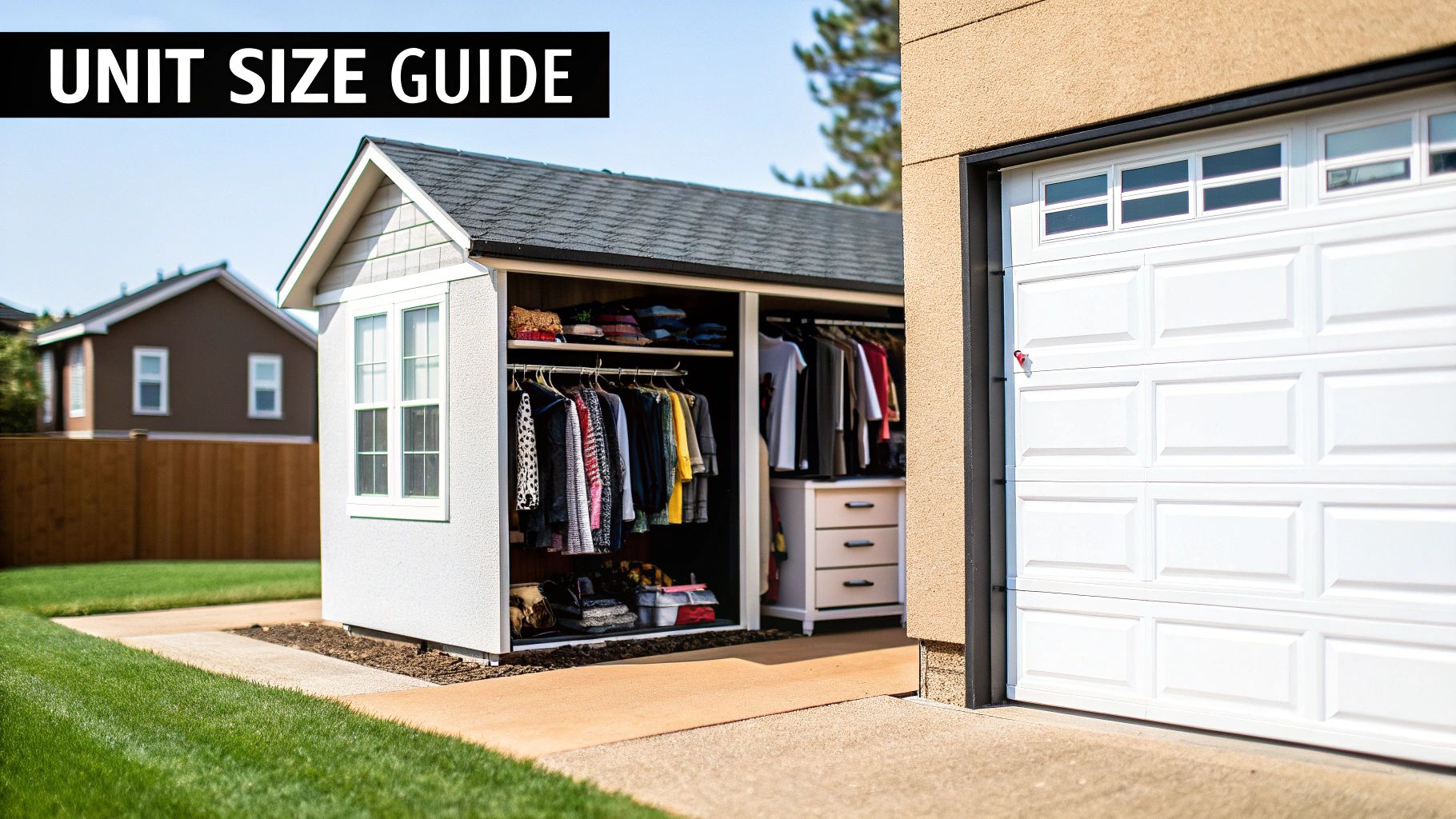
Picking the right storage unit size is probably the biggest decision you'll make in this whole process. Get it wrong, and you're either faced with the frustration of a unit that’s too small, forcing a last-minute upgrade, or you're stuck paying for empty space every single month. It's a classic and costly mistake.
The trick is to stop thinking in abstract square metres and start picturing your stuff in a real-world space. Using simple analogies makes this so much easier, turning confusing dimensions into familiar rooms you already understand. It’s a great way to cut through the noise when you’re searching for storage units and prices near me.
Visualising Common Storage Sizes
To make your choice easier, let's compare the most common unit sizes to spaces you already know. This mental picture is often all it takes to narrow down your options and find the perfect fit for your things.
-
Small Unit (e.g., 1.5m x 1.5m): Think of this as a big walk-in wardrobe. It’s perfect for stashing seasonal gear like winter coats or sporting equipment, archive boxes, a small desk, or a handful of decor items. This is a go-to size for students or anyone needing to declutter a single room.
-
Medium Unit (e.g., 3m x 3m): This is roughly half the size of a standard single-car garage. You can comfortably fit the contents of an average one-bedroom apartment in here, including a queen bed, a sofa, a small dining set, and plenty of boxes. It’s one of the most popular choices for people in the middle of a smaller move.
-
Large Unit (e.g., 3m x 6m): Now you’re talking about the space of a full single-car garage. This size is built for bigger moves and can hold everything from a two or three-bedroom house. It’s got room for major appliances like your fridge and washing machine, multiple bedroom sets, living room furniture, and a mountain of boxes.
Creating a Simple Inventory Checklist
While visualising the space helps, the most accurate method is to create a quick list of what you actually plan to store. This doesn't need to be a complex spreadsheet; a simple list on your phone or a notepad will do the trick.
Start by jotting down all the big, bulky items first—things like sofas, beds, wardrobes, and appliances. After that, just estimate how many boxes you think you’ll have. Grouping things this way helps you get a much clearer idea of the total volume you need.
By taking a few minutes to list your items, you move from guessing to knowing. This simple step is the best way to ensure you rent the right amount of space the first time, saving both money and stress.
For an even more precise measurement, an online tool can be a game-changer. To get a reliable estimate based on your specific furniture and box count, our easy-to-use cubic metre calculator can give you an accurate figure in just a few clicks. It takes all the guesswork out of the equation so you can confidently pick the perfect unit.
What Actually Determines Storage Unit Prices?
Ever looked up storage units and prices near me and wondered why two units of the exact same size have wildly different price tags? It’s a common question. While it’s easy to think size is the only thing that matters, the truth is a lot more goes into that final monthly figure.
Getting your head around these factors is the key to finding a great deal. It helps you see past the headline price and find a unit that offers real value, not just the cheapest option on the list.
The Power of Location
Location is, without a doubt, the single biggest influence on what you’ll pay for storage. A facility smack-bang in the middle of a bustling city centre is almost always going to be pricier than one in a quieter, suburban spot. It's just simple real estate economics—higher land values and running costs in prime areas get passed on to the customer.
Think about it: a 3m x 3m unit in inner-city Melbourne might cost a fair bit more than an identical one just 30 kilometres down the road. If you don't need to pop in and out every day, being a bit flexible on location can save you a serious amount of cash.
This infographic breaks down how location and a few other key factors can shift the average monthly cost.
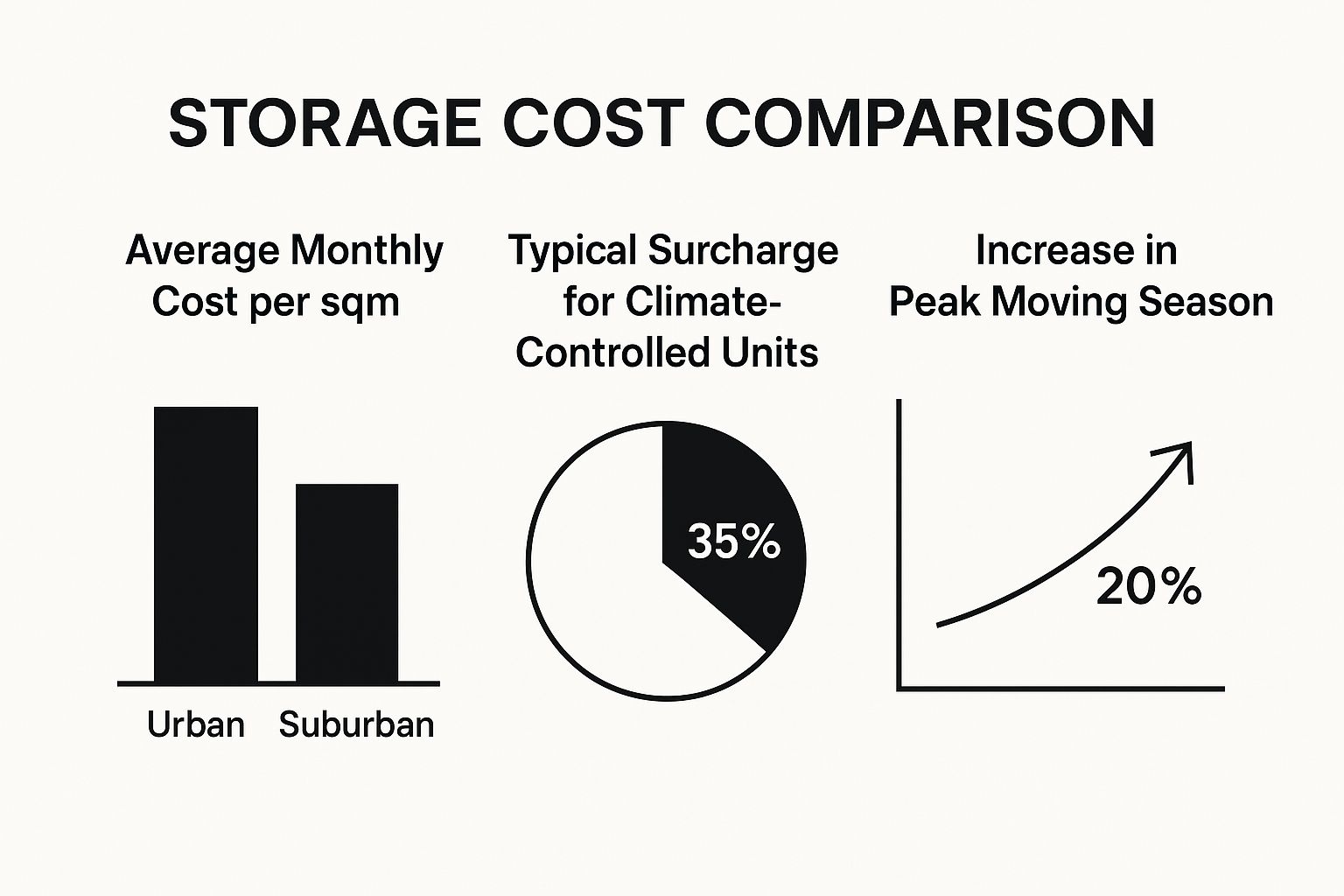
As you can see, choosing a suburban facility or skipping climate control can lead to some decent savings. On the flip side, renting during the busy season often means you'll pay a bit of a premium.
Amenities and Special Features
Beyond where it's located, the features a facility offers play a huge part in the price. These aren't just fancy extras; they're practical additions that give you better protection and make your life easier.
-
Climate Control: This one's a major price-shifter. Climate-controlled units keep the temperature and humidity steady, which is crucial for protecting sensitive things like wooden furniture, electronics, artwork, or important documents from damage. You can expect this feature to add a 15-25% surcharge to your monthly rent.
-
Security Systems: Better security means more peace of mind, and that has value. Facilities with 24/7 CCTV, individually alarmed units, electronic gate access, and on-site staff will naturally cost more than places with just a basic lock and fence.
-
Accessibility: How easy it is to get to your stuff also affects the price. Features like 24/7 access or a ground-floor unit you can drive right up to are in high demand, especially for businesses, and their price reflects that.
When you're comparing prices, it helps to see exactly how these different bells and whistles stack up.
How Features Affect Your Monthly Storage Cost
| Feature/Amenity | Impact on Price | Who Needs It? |
|---|---|---|
| Climate Control | Moderate to High | Anyone storing delicate items like wood furniture, electronics, art, or archives. |
| Drive-Up Access | Moderate | People who need to load/unload heavy or bulky items frequently. A must for business inventory. |
| Advanced Security | Moderate | Anyone storing valuable or irreplaceable items. Think CCTV, individual alarms, and on-site staff. |
| 24/7 Access | Low to Moderate | Businesses or individuals who need to access their unit outside of standard business hours. |
| Ground Floor Unit | Low to Moderate | Offers convenience over upper-level units, making it easier to move things in and out. |
| Basic Security | Low / Standard | Suitable for low-value items where you just need a locked space away from home. |
Ultimately, a higher price often means you're getting a higher level of protection and service.
Paying a bit more for a facility with top-tier security and climate control isn't just an expense—it's an investment in keeping your valuable belongings safe from theft, damage, and the elements.
There's a reason the Australian self-storage industry is thriving. It's a market valued at around AUD 3.01 billion, and with nearly 250 new facilities in the pipeline, it's clear the demand for quality storage is strong. Occupancy rates hover at an impressive 87%, showing that people are willing to pay for secure, well-kept spaces. If you're curious about this growth, you can explore detailed insights on the self-storage market's potential.
Smart Strategies for Saving on Storage Costs
Finding the right storage unit is one thing, but getting it at a price that doesn't blow out your budget is the real win. With a few clever tactics, you can chip away at those monthly costs without having to compromise on a quality, secure space. It’s all about looking beyond the sticker price and knowing where the savings are hiding.
A simple trick that many people miss is booking online. Facilities often run web-only promotions that you won't hear about if you call or walk in. They do this to streamline their own processes, and you get to reap the benefits—anything from a percentage off the first few months to a better ongoing rate. It always pays to check the website first.
Plan Ahead and Pack Smart
One of the most powerful ways to cut costs is simply to rent less space. That’s where smart packing becomes your secret weapon. By taking the time to disassemble bulky furniture, using vacuum-seal bags for clothes and linens, and making sure every box is packed to the brim, you can squeeze value out of every last centimetre.
Don't forget to think vertically! Using sturdy, same-sized boxes lets you stack them safely right up to the ceiling, taking full advantage of the unit's height. This one technique can easily be the difference between needing a pricey 3m x 3m unit and fitting everything neatly into a much cheaper 1.5m x 3m space.
When you dedicate a bit of extra time to planning your layout and packing efficiently, you're not just getting organised—you're actively lowering your monthly storage bill.
Be Flexible and Inquire About Discounts
Your own flexibility can be a great bargaining chip. If you don't need to access your things every other day, think about looking at facilities a little further out of town. The moment you move away from prime city-centre locations, prices can drop quite a bit. A slightly longer drive might be a minor inconvenience, but the savings can be substantial.
And never, ever be afraid to ask about discounts. It’s a standard part of the business, and most places have deals available if you just ask.
Many facilities offer lower rates for things like:
- Long-Term Rentals: If you know you'll need storage for a while, committing to a six or twelve-month term can often lock in a better monthly price. It’s an easy win for long-term storage needs.
- Pre-Payment: Some locations will give you a discount for paying for a few months all at once.
- Student or Senior Discounts: It never hurts to ask! Many facilities offer special rates for students, seniors, and even military personnel.
These money-saving ideas aren't just for storage. For more tips on how to manage all the expenses that come with moving, check out these valuable tips to keep your moving costs down. By combining savvy packing with smart booking, you can protect your belongings and your bank account at the same time.
Essential Features of a Secure Storage Facility
It’s tempting to hunt for storage units and prices near me and just pick the cheapest or closest option. But trust me, the quality of the facility is what really protects your belongings. A great price tag means nothing if your things aren't safe, so think of this as your must-have checklist when you’re sizing up any potential storage location.
Real peace of mind comes from knowing your valuables are tucked away behind multiple layers of security. This is about so much more than a simple padlock on the door. The best facilities invest heavily in proper systems designed to stop intruders in their tracks and keep a watchful eye on everything, 24/7.
Non-Negotiable Security Measures
There are a few security features that are simply non-negotiable. If a facility doesn't have these, it's a good idea to walk away. Treat them as the absolute baseline for a trustworthy space.
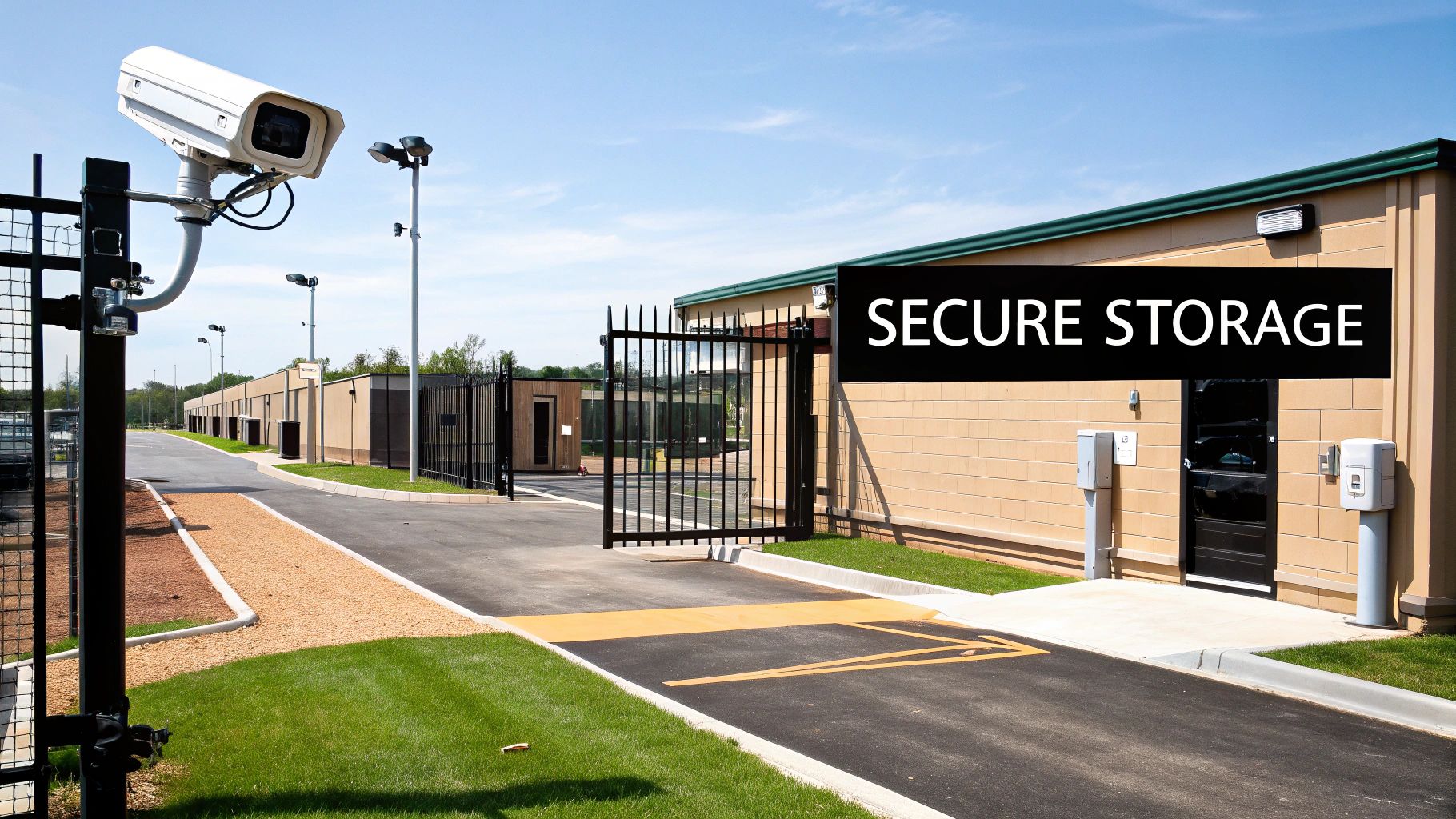
- 24/7 CCTV Surveillance: Good-quality cameras should cover every angle—all the entry points, hallways, and driveways. This isn't just for show; it's a powerful deterrent and your first line of defence.
- Secure Gated Access: The entire property needs to be fenced off, with a single, controlled entry point. A personal access code or a keycard system is the standard here, making sure only paying customers can get inside.
- Good Lighting: A well-lit facility is a safe facility. Bright lights everywhere, especially in the evenings, make a huge difference. It discourages sneaky behaviour and helps you feel more secure when you visit after dark.
When you're thinking about security for big, valuable items, you'll notice that facilities offering specialised solutions like durable metal buildings for RV storage often go the extra mile on structural integrity and overall security.
Beyond the Basics: Convenience and Care
A top-notch facility also cares about cleanliness and making your life easier. These things have a direct impact on the condition of your belongings and your whole experience. For example, proactive pest control is a must to keep your items safe from unwanted critters.
The attitude of the on-site staff also tells you a lot. Helpful, friendly managers can be a lifesaver if you ever run into an issue. Finally, check the access hours. You want to be able to get to your things on your schedule, not just during restrictive office hours.
These features, combined with solid security, are what separates a great facility from an average one. With the business side of the self-storage market set to grow at a CAGR of 4.7% from 2025 to 2034, these qualities are becoming more important than ever.
"Security is more than just a lock on a door; it's a comprehensive system of surveillance, access control, and proactive maintenance that creates a truly safe environment for your belongings."
Bringing all these security and convenience factors together is key. For anyone juggling a move, understanding how furniture storage and delivery services can work with a secure facility makes the whole process a lot less stressful.
Common Questions About Renting Storage
Once you've narrowed down your search for "storage units and prices near me," you're on the home stretch. But this is usually when a few last-minute questions pop up. Getting these sorted is the final piece of the puzzle, letting you choose your unit with total confidence.
Think of this as the fine print, explained simply. Understanding the rules from the get-go means a smooth, hassle-free experience without any nasty surprises down the line, especially when it comes to what you can't store, insurance, and the move-out process.
What Items Are Prohibited in a Storage Unit?
Any good storage facility puts safety and the law first, which means some things are strictly off-limits. Trying to store prohibited items isn't just a bad idea—it can damage your other belongings, get your rental agreement terminated on the spot, and even land you in legal trouble.
The general rule is pretty simple: you can't store anything that's hazardous, illegal, or will rot. This is all about protecting the facility, your own stuff, and everyone else's things, too.
Here’s a quick list of the usual suspects:
- Flammable or Combustible Materials: This is a big one. Think petrol, paint thinner, solvents, fireworks, and propane tanks.
- Perishable Goods: Anything that can spoil, attract pests, or create a stink is a no-go. No food items, basically.
- Hazardous or Toxic Substances: Things like chemicals, fertilisers, asbestos, and radioactive materials are absolutely forbidden.
- Illegal Items: This should be obvious, but it includes unregistered firearms, explosives, and any stolen property or illicit substances.
- Living Things: It's illegal and incredibly dangerous to store plants, animals, or people in a storage unit.
Do I Need Insurance for My Belongings?
Yep, in almost every case, you'll need insurance for your stored items. Even the most secure facilities can't guard against the completely unexpected, like a fire, major theft, or natural disaster. Their standard rental agreement almost never covers your personal property against these events.
Most places will ask for proof of insurance before they even let you move in. It’s a crucial safety net that ensures your valuables are protected.
Think of storage insurance as a non-negotiable part of the deal. It's a small investment for massive peace of mind, making sure you're covered no matter what happens.
Your existing home or renter's insurance might offer some coverage for items stored off-site, but you absolutely have to check the policy's limits and fine print. If it's not enough, the facility will usually offer an affordable insurance plan designed specifically for self-storage.
What Is the Typical Move-Out Notice Period?
Knowing the move-out policy is key to avoiding an extra month's bill when you’re ready to clear out. You can't just empty your unit and disappear; there's a proper process to follow.
Most storage facilities run on a month-to-month lease, but they still require a heads-up before you end your agreement. A typical notice period is anywhere from 7 to 30 days. This gives the management team enough time to get the unit ready for its next tenant.
Always give your notice in writing so there’s a clear record. If you don't, you'll likely be on the hook for the next full month of rent, even if your unit is completely empty. For more answers to your moving and storage questions, you can find a wealth of information in our frequently asked questions.