
Decoding the Cost of Movers: Your 2025 Australian Guide
Trying to figure out the average cost of movers in Australia can feel like guesswork, but it’s more straightforward than you might think. The key takeaway is that local moves are typically priced by the hour, while long-haul interstate relocations are almost always quoted at a fixed price. Grasping this fundamental difference is the first step to building a realistic and stress-free moving budget.
Your Guide to Australian Moving Costs

Putting together a realistic moving budget starts with understanding how removalists calculate the final bill. Whether you're shifting across town or heading to a new state, a few key factors always determine the cost. The most significant one is the distinction between a local job and an interstate one.
For local moves—anything within the same city—removalists nearly always charge an hourly rate. This fee covers the truck, the professional crew, and their expertise. The total cost is a simple equation: the hourly rate multiplied by the number of hours the job takes, from the moment they start until the last box is safely unloaded.
Interstate moves are a different beast entirely. These are quoted as a fixed price, calculated based on the total volume of your belongings (measured in cubic metres) and the distance to your new home. This method provides cost certainty for what is a much more complex logistical operation.
Interstate Moves Can Vary Significantly
It's crucial to understand how much prices can fluctuate, especially for these long-distance relocations. In Australia, the cost of moving between states is a complex mix of distance, timing, and, of course, the volume of your belongings.
The latest 2025 data shows that moving a standard three-bedroom home from one state to another can land anywhere between AU$2,600 to AU$5,850, and sometimes even more. Shorter interstate moves under 500 kilometres often sit between AU$1,300 and AU$2,600. But for those massive treks over 1,500 kilometres, you could be looking at a bill upwards of AU$8,700. For a closer look at the numbers, you can find more detail in recent interstate moving cost breakdowns.
A classic mistake is underestimating the volume of your belongings or how long the move will take. Always insist on a detailed in-home or video quote to ensure the estimate is as accurate as possible. It’s the best way to avoid unwelcome surprises on moving day.
Estimated Moving Costs in Australia at a Glance
To help you get a clearer picture, we've put together a quick summary of what you might expect to pay. This table breaks down the average costs for both local and interstate moves based on the size of your home.
| Home Size | Average Local Move Cost (Hourly Rate) | Average Interstate Move Cost (Fixed Price) |
|---|---|---|
| 1-Bedroom Home | $300 – $600 | $1,500 – $3,000 |
| 2-Bedroom Home | $600 – $1,200 | $2,500 – $4,500 |
| 3-Bedroom Home | $1,000 – $1,800 | $3,500 – $6,000 |
| 4+ Bedroom Home | $1,500 – $2,500+ | $5,000 – $8,500+ |
Think of these figures as a solid starting point for building your budget. Remember, these are just averages, and your final quote will depend on your specific circumstances.
How Professional Movers Calculate Your Quote
Ever wondered what really goes into a moving quote? It’s not just about the distance from point A to B. Professional removalists have a detailed process for determining the final cost, ensuring the price you pay is a true reflection of the job's demands.
Understanding these core components will demystify any quote you receive and put you in a much better position to compare different companies. It all boils down to three key elements: the volume of your items, the accessibility of your properties, and any additional services you require.
The Volume of Your Belongings
The single biggest factor that shapes the cost of movers is the total volume of your belongings, measured in cubic metres (m³).
Imagine the moving truck as a giant, empty container. The more space your furniture, appliances, and packed boxes occupy inside that container, the higher the cost of the move. It’s that straightforward.
This is especially true for interstate moves, where the price is almost entirely driven by how much you’re moving and how far it’s going. For local moves, the volume helps determine the right size truck and how many movers are needed, which then influences the total hours you’ll be billed for. You can get a great head start by using a handy cubic metre calculator to estimate your total volume before you even request a quote.
The infographic below highlights how the scale of a move—from a local shift to a cross-country relocation—dramatically impacts the price range.
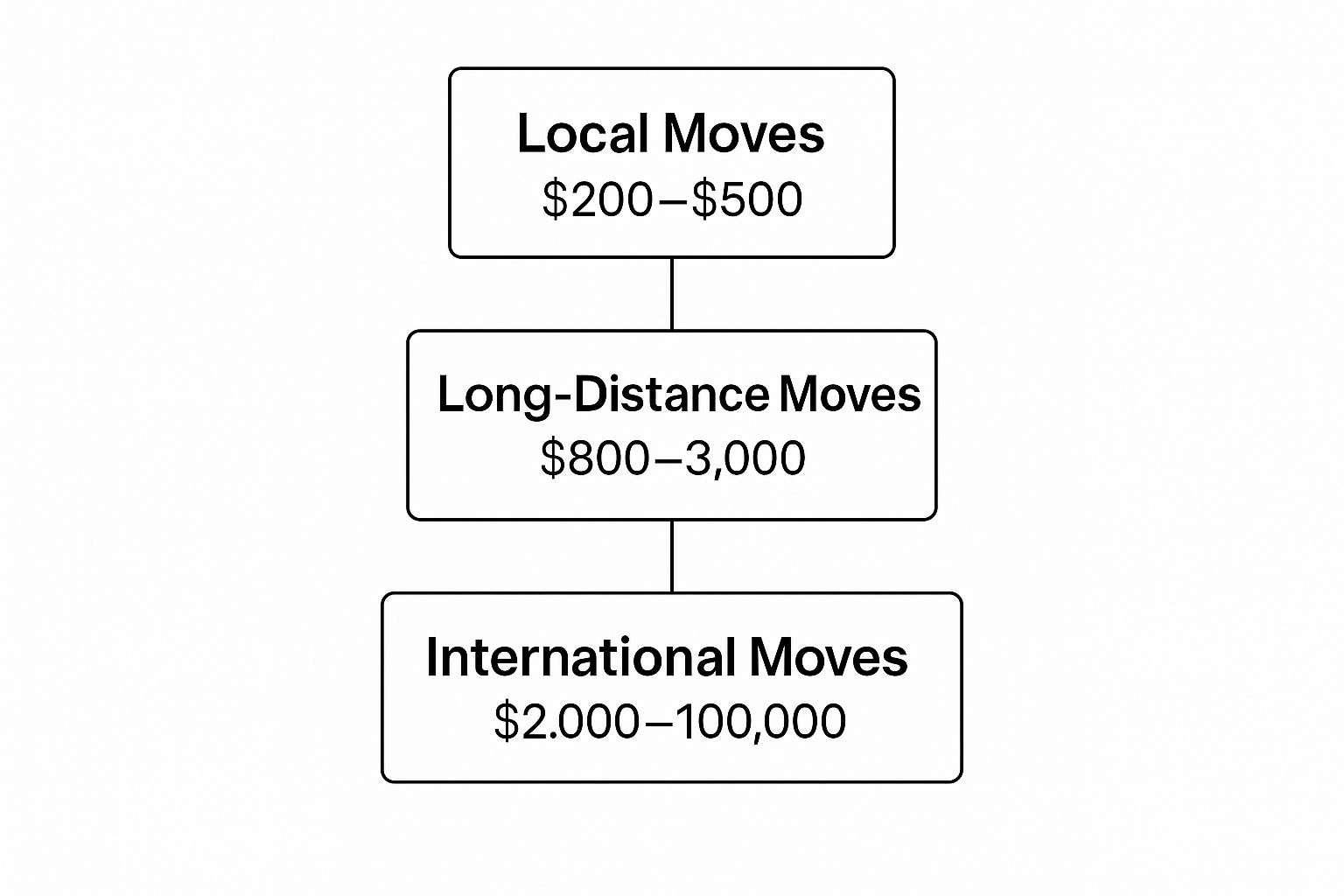
As you can see, costs escalate significantly as a move transitions from local to long-distance and then international. This is all due to the additional logistics, fuel, and resources required to execute the job successfully.
Property Access and Challenges
How easy is it for the moving crew to get your belongings from inside your home and onto the truck? This is what we in the industry call "access," and it plays a massive role in the time and effort required for any move.
Movers will need to know about any potential challenges at both your pickup and delivery locations. These seemingly minor difficulties can add a surprising amount of time to a job, which directly impacts your wallet, especially on an hourly rate.
Common access issues include:
- Stairs: Multiple flights of stairs, particularly tight or winding ones, mean more time and significant physical effort.
- Elevator Access: Is there a lift available? If so, does it need to be booked with building management? How far is it from your front door to the truck's parking spot?
- Long Carries: If the truck can’t park directly out front, the crew has a long walk back and forth. This extra "long carry" distance adds up quickly.
- Difficult Parking: A lack of suitable parking can force the team to park far away or even double-park, which is risky and consumes valuable time.
A reputable, professional mover will always ask you about access. It’s best to be completely upfront about any challenges—a surprise on moving day creates stress and unexpected costs for everyone.
Specialised and Add-On Services
Finally, your quote will also include any extra services you’ve requested to make your move smoother. While these will add to the bottom line, they can save you an incredible amount of time and hassle.
Popular add-ons that can affect your final quote include:
- Professional Packing and Unpacking: Having experts pack your fragile kitchen items or even your entire home.
- Furniture Disassembly and Reassembly: Essential for items like beds, large dining tables, and complex flat-pack furniture.
- Handling of Speciality Items: Pianos, pool tables, delicate antiques, and heavy artworks all require specialist equipment and expertise.
- Storage Solutions: If there’s a gap between leaving your old home and getting the keys to your new one, you might need your belongings stored securely.
Each of these services requires extra time, specific materials, and a certain level of skill, all of which will be factored into your moving quote.
Comparing Local and Interstate Moving Costs
Not all moves are created equal, and their price structures are a clear indicator of this. The difference in what you'll pay for a local job versus an interstate relocation is substantial, and it all comes down to how movers calculate the final bill. Understanding these differences is the first step to creating an accurate moving budget.
A local move, typically a move within the same city or metropolitan area, is almost always priced by the hour. It’s a straightforward arrangement: the longer the moving crew is working, the more you pay.
On the other hand, an interstate move involves crossing state lines, bringing far more complexity and planning into the equation. Consequently, long-distance moves are nearly always quoted as a single, fixed price. This provides financial certainty for a major journey that has more moving parts, such as fuel, long-haul driving, and potential overnight stays for the crew.
The Dynamics of Local Hourly Rates
When you book a local move, you're essentially hiring a team and a truck for a specific duration. The clock starts ticking the moment they arrive at your door and only stops once the last item is in your new home and the truck is officially empty.
A few key factors will directly influence that hourly rate:
- Number of Movers: The standard is a two-person crew, which is generally sufficient for smaller homes. For a larger property, you’ll likely need three or four movers to work efficiently. While the hourly cost increases, the total time for the move often decreases.
- Truck Size: The truck must be large enough to fit all your belongings. A bigger truck costs more per hour but saves you from paying for multiple trips, which is a significant money-saver in the long run.
- Time of Day and Week: Planning to move on a weekend or a public holiday? Expect to pay a premium hourly rate due to high demand.
The total time your move takes will also depend on factors like stairs, tricky lift access, or difficult parking. How prepared you are when the team arrives also makes a massive difference.
A common mistake is to solely hunt for the lowest hourly rate. A slightly more expensive but highly experienced and efficient crew can often complete the job much faster, potentially resulting in a smaller final bill than if you had chosen a cheaper, slower team.
Interstate Moves and Fixed Pricing
For interstate moves, the hourly model is impractical. The sheer distance and logistical complexities demand a different pricing system. The final quote you receive will be a fixed price based on two primary factors: the volume of your belongings (in cubic metres) and the distance between your old and new addresses.
This all-inclusive price covers the significant costs of a long-haul move, including:
- Fuel for the entire journey.
- The crew's time for loading and unloading at both ends.
- The driver's wages for all hours on the road.
- Basic transit insurance and administrative costs.
Because every detail is calculated beforehand, you know exactly what you’re paying before the truck even hits the road. This clarity is essential when managing the budget for a major life event like moving states. When considering a significant move, it's vital to know how to choose the best interstate removalists who can provide a clear, detailed, and binding quote.
A Look at Australian Local Moving Costs
To give you a ballpark idea, hourly rates for local moves across Australia can vary significantly. In 2025, you can expect to pay somewhere between AU$180 and AU$350 for a two-person crew and a truck. This range depends on the company's reputation, the quality of their equipment, and the level of service offered.
Looking at specific home sizes, a 1-bedroom house move might set you back between AU$400 and AU$700. For a 3-bedroom home, you're likely looking at a starting price of AU$1,200, and the cost increases from there. You can get more detail on these cost breakdowns and what influences them.
How Your Location Impacts the Final Bill
When budgeting for a move, it’s natural to focus on the obvious factors like the volume of your belongings or the size of your house. However, another crucial factor often gets overlooked: your start and end postcodes. Where you’re moving from and to plays a massive role in the final bill.
Moving isn’t just about the kilometres on the odometer; it’s a complex logistical puzzle. Every city and region has its own unique economic environment, which directly shapes what removalists need to charge to cover their operational costs.
Understanding these regional price differences is vital for anyone planning a move, especially when crossing state lines. A move into a major capital city will almost always have a different price tag than a move to a quiet regional town. Knowing why helps you avoid any unpleasant surprises when the quotes start rolling in.
Why Some Cities Cost More
The price gap between Australian cities isn’t random—it's tied to real-world economics. The primary driver is local labour costs. In cities with a higher cost of living, removalists must pay their crews more, and that cost is naturally reflected in your quote.
Fuel prices are another piece of the puzzle, and they can vary significantly from one state to another. For a long-haul interstate move, even a small difference per litre can add up substantially on the final invoice.
Then there’s the logistical challenge. Moving to or from a remote town often means longer drive times, challenging road conditions, and fewer opportunities for the truck to secure a return job (known in the industry as a "backload"). All these factors increase the operational costs for the moving company, which are then passed on to the customer.
Moving quotes are a direct reflection of the operational realities on the ground. A higher price often points to higher local wages, fuel costs, or the simple fact that a location is more difficult or time-consuming to service.
Australian City Price Rankings
It’s no secret that some Australian cities are far more expensive to move in and out of. Recent analysis for 2025 highlights this, naming Perth as the priciest city for a relocation. A local move within Perth averages a staggering AU$11,968—well above the national median. This is largely due to its geographic isolation and a competitive labour market, which drives up both transport and staffing costs. For those interested, you can discover more insights about these relocation costs on Compare the Market.
Perth also holds the top spot as the most expensive city to move from, with an average bill of AU$9,488. Following close behind are other major hubs like Adelaide (AU$8,956), Canberra (AU$7,649), and Melbourne (AU$7,017). On the flip side, you’ll find more affordable moves in places like the Sunshine Coast, which comes in at around AU$6,249. If you’re planning a move within Victoria's capital, you can find a more detailed breakdown in our guide on how much moving houses costs in Melbourne.
This data makes one thing crystal clear: your route is a make-or-break variable in your moving budget. Whether you're heading to a bustling metro centre or a quiet regional town, the specific path will directly shape the quotes you receive.
Uncovering Potential Hidden Costs and Fees

A low initial quote can feel like a huge win, but it’s the final invoice that truly matters. The moving industry, like any other, has potential extra charges that can catch you off guard if you aren’t prepared. These aren't always a sign of a deceptive operator; often, they are legitimate fees for services that fall outside a standard move.
Understanding these potential surcharges is your best defence against a bill that blows your budget. It helps you ask the right questions from the outset, ensuring the quote you agree to realistically reflects the final cost of movers. This knowledge transforms you from a passive customer into an informed one, allowing you to compare quotes accurately and sidestep financial stress on moving day.
Surcharges for Difficult Property Access
One of the most common reasons for extra fees is challenging property access. If the moving crew has to navigate significant obstacles just to get your belongings from the house to the truck, it takes more time and physical effort, which often translates to a higher cost.
Consider the path from your front door to where the truck will be parked. Is it a clear, easy route, or are there potential challenges?
Common access issues that can trigger extra fees include:
- Stair Charges: If your apartment is on the third floor with no lift, expect a fee for each flight of stairs the team has to navigate.
- Long-Carry Fees: This applies when the truck cannot park close to your entrance. A fee is often charged for every 15-20 metres the crew has to walk beyond a standard distance.
- Lift or Elevator Fees: Using a lift isn’t always straightforward. You might incur a charge, especially if it’s slow, small, or requires a special booking with building management.
Always be upfront with your moving company about any access difficulties at both your old and new properties. A transparent conversation at the beginning prevents major headaches later.
Fees for Specialty and Bulky Items
Not all furniture is created equal. Items that are exceptionally heavy, fragile, or awkward to handle require specialised equipment and expertise, which comes at an additional cost. These items are well outside the scope of a standard furniture move.
Moving a grand piano, for example, is a world away from moving a sofa. It demands specific tools, protective gear, and a team trained to handle its unique challenges to ensure it arrives undamaged.
Be prepared for potential surcharges on items like:
- Pianos and organs
- Pool or billiard tables
- Large, heavy safes
- Oversized artworks or sculptures
- Gym equipment like treadmills or weight machines
Pro Tip: When getting a quote, create a specific list of these specialty items. This allows the mover to calculate the cost of movers accurately, factoring in the necessary labour and equipment, so there are no last-minute surprises.
Understanding Scheduling and Insurance Costs
The timing of your move and the level of protection you choose for your belongings can also significantly impact the final price. Moving is a service with fluctuating demand, and planning around these peaks can lead to decent savings.
Moving on a weekend, a public holiday, or at the end of the month is always more expensive simply because that's when everyone wants to do it. If your schedule has some flexibility, booking a mid-week, mid-month move can often reduce your bill.
Furthermore, while basic transit insurance is usually included, it often provides only minimal coverage. Upgrading to a more comprehensive policy will add to your cost but offers far greater peace of mind. For a deeper dive, check out our guide on the common hidden costs in moving house to ensure you're fully prepared.
Being proactive is the key to a stress-free move. It pays to be vigilant and ask plenty of questions before signing any contract. To help, we've created a checklist of common "hidden" costs that can appear unexpectedly.
Common Hidden Moving Costs to Watch For
| Potential Fee | Description | How to Avoid or Minimise |
|---|---|---|
| Packing Materials Fee | Charges for boxes, tape, and bubble wrap if you didn't expect to pay for them. | Ask if materials are included or buy your own supplies beforehand. |
| Disassembly/Reassembly | A fee for taking apart and putting back together large furniture items like beds or desks. | Clarify if this service is included in the hourly rate or is an extra. |
| Storage Fees | If there's a delay and your items need to be stored, this can add up quickly. | Confirm your move-in and move-out dates are firm before booking. |
| Cancellation Fee | A charge for cancelling or rescheduling your move with short notice. | Understand the company's cancellation policy from the very beginning. |
| Fuel Surcharge | An extra fee to cover the cost of fuel, especially for long-distance moves. | Ask if this is built into the quote or added on at the end. |
Keep this table handy when you're getting quotes. Knowing what to look for is half the battle won and ensures you're comparing apples with apples when you receive different prices.
Practical Strategies to Reduce Moving Costs
Moving house on a tight budget doesn't mean you have to compromise on a quality, stress-free experience. With some smart planning and proactive decisions, you can significantly lower the final cost of movers without skimping on the essential services you need.
It all comes down to being proactive. A few well-timed actions can make a massive difference to your final bill, putting you in control and ensuring there are no nasty surprises when the invoice arrives.
Declutter Before You Pack a Single Box
The most powerful way to cut your moving bill is also the simplest: move less stuff. Because the volume of your belongings is a primary driver of your quote, a thorough clear-out is the best place to start.
Go through your home room by room and be ruthless. If you haven't used an item in the last year, it's likely time to let it go. You can sell, donate, or recycle these items – not only does this slash your moving volume, but it can also put extra cash back in your pocket.
Think of every single item you get rid of as a direct saving. Less stuff means fewer boxes, less packing material, less space needed on the truck, and less time for the crew to load and unload. All of that shaves dollars off your final bill.
Be Flexible with Your Moving Date
When you book your removalists can be just as important as who you book. Demand for moving services fluctuates throughout the month, and you can use this to your advantage.
If you have some flexibility in your schedule, try to avoid booking your move on a weekend, a public holiday, or right at the end of the month. These are peak times when demand soars, and prices often climb to match.
- Mid-Week Moves: Choosing a Tuesday, Wednesday, or Thursday can often land you a better hourly rate or a more competitive fixed price.
- Mid-Month Timing: The first and last few days of the month are always hectic. Booking your move between the 5th and the 25th can lead to significant savings.
A little flexibility with your dates can unlock serious discounts, making it one of the easiest cost-control strategies available.
Smart Packing and Sourcing Materials
While having professionals handle all your packing is a fantastic luxury, you can trim costs by taking on some of the work yourself. Packing non-fragile items like books, clothes, and linen is a straightforward job that can reduce the number of labour hours you're paying for.
You can also save a bundle on packing supplies. Instead of buying everything new, try these options:
- Ask local businesses: Supermarkets, chemists, and liquor stores often have plenty of sturdy boxes they are happy to give away for free.
- Use what you already have: Don't forget about suitcases, laundry baskets, and any plastic storage tubs you own. They're perfect for moving clothes and other soft items.
For a deeper dive, check out our complete guide with more tips to keep your moving costs down for a smooth, budget-friendly relocation.
Always Get Multiple Quotes
This is crucial: never accept the first quote you receive. It is absolutely essential to get at least three detailed, written quotes from reputable moving companies. This is the only way you can properly compare what's on offer.
When reviewing the quotes, make sure you are comparing apples with apples. Does each quote include the same number of movers, the same level of insurance, and the same list of services? A few minutes of careful comparison is the best way to ensure you're getting a competitive and fair price for your move.
Your Top Questions About Moving Costs, Answered
Working out the final cost of a move can feel like assembling a complex puzzle. To help you fit all the pieces together, we've answered some of the most common questions we receive about the cost of movers.
Consider this your quick-reference guide for planning a move that is not only smooth but also financially savvy.
What Is the Cheapest Day of the Week to Move?
Looking to save some money? Timing is everything. As a general rule, the cheapest days to book your removalists are mid-week: Tuesday, Wednesday, and Thursday.
Most people aim to move on a Friday or Saturday to align with the weekend, and many tenancy agreements end on the first or last day of the month. This creates a huge spike in demand. By choosing a quieter day in the middle of the week and month, you sidestep the rush and often secure a much better price.
Is It Worth Paying for Moving Insurance?
Absolutely. While professional removalists are experts at handling your belongings with care, the reality is that accidents, though rare, can happen. The basic liability cover included in most quotes is very limited and typically pays out based on an item's weight, not its actual replacement value.
We always recommend discussing comprehensive transit insurance with your moving company. It’s a small additional cost, but it provides complete peace of mind, knowing your treasured belongings are covered for their full replacement value if something goes wrong.
It’s a small price to pay for protection against the unexpected during your move.
How Far in Advance Should I Book Movers?
To get the best price and secure your preferred moving date, aim to book your movers at least 4-6 weeks in advance. This is even more critical if you’re planning a move during a peak period, like the summer school holidays or over a long weekend.
If you’re moving interstate, it’s wise to book even earlier. Give yourself a 6-8 week buffer. This provides the moving company with ample time to arrange the detailed logistics involved in a long-haul relocation and ensures your move is as seamless as possible.
Ready to plan your move with a team you can trust? The experienced professionals at Get n Go Removals Melbourne offer transparent pricing and exceptional service for local and interstate moves. Get your free, no-obligation quote today and discover how easy your next move can be. https://www.getngoremovals.com.au