
The Ultimate Moving House Address Change Checklist for 2025

Moving house is a monumental task, but the administrative side of changing your address doesn't have to be. Forgetting to notify even one crucial organisation can lead to missed bills, lost mail, and significant stress. This is where a detailed moving house checklist for your address change becomes an indispensable tool, transforming a potentially chaotic process into a manageable series of steps.

This comprehensive guide breaks down every entity you need to contact, organised into critical categories for clarity. We will cover everything from official government bodies like Australia Post and the Australian Electoral Commission (AEC) to your bank, employer, and even your favourite streaming services. Each section provides actionable advice, specific timelines, and expert tips to ensure nothing is overlooked. Beyond updating your address, a comprehensive moving checklist can help you manage all aspects of your relocation for a seamless transition.

By following this structured roundup, you can confidently tick off each notification task, knowing your important documents and deliveries will follow you to your new Melbourne home or interstate address. This systematic approach ensures your move is as smooth and organised as possible, allowing you to focus on the more exciting part: settling in and making your new space feel like home.

1. Update Address with Australia Post

The very first action on your moving house checklist for an address change should be arranging a mail redirection with Australia Post. This essential service acts as a safety net, automatically forwarding any mail sent to your old address to your new one. It provides a crucial buffer period, ensuring you don't miss important documents, bills, or personal letters while you work through the process of notifying every organisation directly.
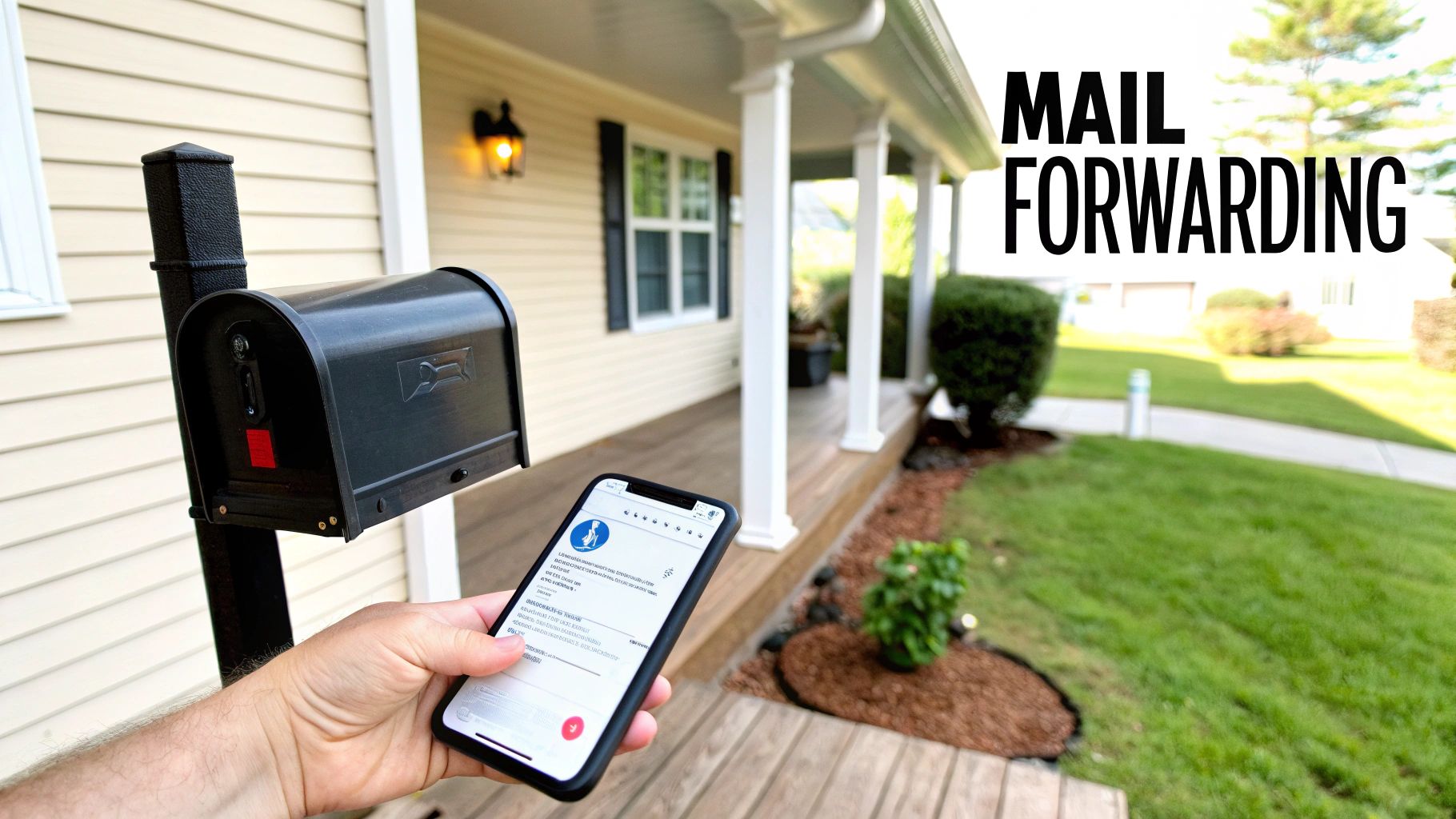
A hand holding a smartphone in front of a mailbox, with 'MAIL REDIRECTION' text overlay.

This service is a non-negotiable step for a smooth transition, preventing lost correspondence that could lead to missed payments or critical information gaps. Think of it as your personal mail concierge during the chaotic moving period. As you tackle the broader tasks in your moving plan, such as organising your move and packing, having mail redirection in place provides invaluable peace of mind. For a more comprehensive overview of all moving tasks, you can explore this ultimate moving house checklist.

How It Works and Who It's For

You can set up your redirection online via the Australia Post website or in-person at a post office. The service is highly flexible, catering to various scenarios:

  • Renters moving locally: A 3 or 6-month redirection is often sufficient to capture any lingering mail from previous utility providers or subscriptions.
  • Families relocating interstate: The 12-month option is ideal. It ensures that annual correspondence, such as car registration renewals, insurance policies, or birthday cards, are successfully forwarded.
  • Small businesses moving offices: This service is vital for maintaining business continuity, ensuring client invoices, payments, and official communications are not lost during the transition.

Key Insight: Mail redirection is a temporary safety measure, not a permanent solution. Use the mail you receive via the service as a prompt to identify and directly update organisations you may have forgotten.

Actionable Tips for Mail Redirection

To get the most out of this service, follow these practical steps:

  • Book in Advance: Organise your mail redirection at least one to two weeks before your move date to allow for processing time.
  • Choose the Right Duration: Be realistic about how long it will take to update everyone. A longer period (6-12 months) is safer and often more cost-effective than extending a shorter one.
  • Keep Your Receipt: Store the application receipt and reference number safely. You will need it if you have to amend or inquire about your service.
  • Prioritise Direct Updates: Even with redirection active, immediately notify high-priority institutions like your bank, employer, the Australian Taxation Office (ATO), and Medicare of your new address.

2. Update Address with Your Bank and Financial Institutions

Immediately after organising mail redirection, the next critical task in your moving house checklist address change is to notify your bank and other financial institutions. This step is vital for security and continuity. It ensures you receive new debit or credit cards, official statements, and important security communications without interruption. Failing to update this information can expose you to risks like identity theft and prevent you from accessing crucial financial documents when you need them most.

A person types on a laptop displaying a financial interface, with a text overlay "UPDATE BANK INFO" clearly visible.

Updating your financial providers safeguards your accounts and maintains a seamless flow of information. This is a high-priority action that fits neatly into your broader preparations, as outlined in this essential moving home to-do list. By taking care of this early, you prevent the stressful scenario of a sensitive letter being sent to your old address, protecting both your finances and your peace of mind.

How It Works and Who It's For

Most modern banks and financial services allow you to update your details online through their secure customer portal or mobile app. This process is designed for everyone with a financial account:

  • Individuals and Families: Simply log in to your internet banking, navigate to your profile or settings, and enter your new residential and postal addresses. The change is often instant or processed within 24 hours.
  • Credit Card Holders: Remember that each credit card provider is a separate entity. You must contact each company (e.g., Visa, Mastercard, Amex, or store-specific cards) individually to update your billing address.
  • Investors and Superannuation Funds: Your investment brokers and super funds require your current address for statements and compliance documents. Update them via their online portals or by calling their member services line.

Key Insight: Always update both your residential and your mailing address if they are different. A mismatched billing address can cause online payment failures or security flags on your accounts.

Actionable Tips for Financial Updates

To ensure a smooth and secure update process, follow these practical steps:

  • Update Proactively: Change your address with your bank one week before your move. This timing prevents new cards or statements from being sent to your old home just as you're leaving.
  • Prepare Your Documents: Some institutions may require proof of your new address, like a utility bill or lease agreement, for security verification. Have a digital copy ready.
  • Create a Checklist: List all your financial accounts: everyday banking, savings, credit cards, personal loans, superannuation, and any investment platforms like CommSec or fintech apps like PayPal.
  • Confirm the Change: After submitting the update, log back in a day later to verify that the new address is reflected in your account settings. If not, contact customer support directly.

3. Update Address with Employer and Payroll System

An often-overlooked yet critical task in your moving house checklist for an address change is notifying your employer. Updating your details with your workplace is essential for seamless payroll processing, receiving important tax documents like your annual payment summary, and ensuring benefit-related communications reach you without delay. An incorrect address can lead to misdirected pay slips, superannuation statements, or critical HR correspondence.

This step is fundamental for maintaining accurate employment records and avoiding administrative headaches down the line. Forgetting this can cause significant issues, especially during tax season or when company-wide announcements are mailed out. Ensuring your HR and payroll departments have your correct address guarantees continuity in your employment communications and remuneration.

How It Works and Who It's For

The process for updating your address varies depending on your employer's systems. It’s a universal requirement for anyone who is employed, regardless of the industry or company size.

  • Corporate Employees: Large companies often use integrated Human Resources Information Systems (HRIS) like Workday or ADP. Employees can typically log into a self-service portal to update their personal details instantly.
  • Small to Medium Business Staff: For smaller businesses, the process might be more manual. You may need to fill out a change of address form and submit it directly to your manager or the HR department.
  • Government Employees: Public sector workers usually update their details through a specific government personnel management portal, which ensures the change is registered across all relevant departments.
  • Remote Workers: Even if you work remotely, your physical address is vital for tax purposes and for receiving any company equipment or documents.

Key Insight: Your residential address is often linked to your tax obligations, superannuation, and work-related insurance. Keeping it current with your employer is not just an administrative task, it's a legal and financial necessity.

Actionable Tips for Updating Your Employer

To ensure a smooth update with your employer, follow these practical steps:

  • Act Promptly: Notify your HR department or update the system as soon as your new address is confirmed, preferably the week before you move.
  • Provide Written Notification: Even if you update your address online through a portal, send a brief confirmation email to your HR representative. This creates a paper trail.
  • Verify the Change: Check the address on your next pay slip to confirm the update has been processed correctly.
  • Update Emergency Contacts: While you're updating your own address, check if your emergency contact's details are still current.
  • Confirm Benefits Mailings: If you receive health insurance or other benefit information by mail, double-check that those providers have also received the updated address from your employer.

4. Update Address with Insurance Providers (Home, Auto, Life)

A critical component of your moving house checklist address change is notifying your insurance providers. This is not merely an administrative task; your address directly influences your policy coverage, premiums, and even the validity of a potential claim. Failing to update your details in a timely manner can leave you underinsured or, in a worst-case scenario, without any coverage at all when you need it most.

This step is essential because your location is a primary risk factor for most insurance policies. For vehicle insurance, the new postcode can affect premiums due to different rates of theft or accidents. For home and contents insurance, factors like local crime rates, flood risk, or bushfire zoning will alter your coverage needs and cost, making this a non-negotiable update for financial protection.

How It Works and Who It's For

Updating your address usually involves contacting your insurer directly via their online portal, mobile app, or by phone. The process will trigger a policy review based on your new location's specific risk profile. This applies to everyone with insurance:

  • Vehicle Owners: Your new garaging address must be updated. A move from a rural town to a dense Melbourne suburb will almost certainly change your premium.
  • Homeowners and Renters: Your home or contents insurance policy is tied to a specific property. Moving requires either updating the policy to the new address or cancelling it and starting a new one. For instance, moving to an area with higher storm risk may necessitate a policy adjustment.
  • Life and Health Insurance Holders: While premiums may not change, insurers need your current address for official correspondence, policy documents, and for processing claims efficiently.

Key Insight: Treat your insurance update as a legal requirement, not just an administrative one. Your policy is a contract based on the information you provide, and an incorrect address can be grounds for a denied claim.

Actionable Tips for Insurance Updates

To ensure your coverage remains seamless and appropriate for your new circumstances, follow these steps:

  • Notify Before You Move: Contact your car insurance provider before you move, especially if relocating interstate, as coverage requirements differ between states.
  • Review Your Coverage: Use the address change as an opportunity to review your policy limits. Does your new home need higher contents coverage? Is your new neighbourhood prone to specific risks like flooding that require additional cover?
  • Update All Policies: Ensure you update every policy you hold-car, home, contents, life, and health-for consistency and to prevent any administrative gaps.
  • Document Everything: Keep a record of who you spoke to and the date you notified the insurer of your address change. If you update online, save a confirmation email or screenshot.

5. Update Address with Government Agencies (ATO, Electoral Commission, Transport Dept.)

Beyond personal mail, updating your address with key government agencies is a critical and often legally required part of your moving house checklist address change. These updates ensure your driver's licence, vehicle registration, and voting details are current, preventing potential fines and ensuring you can exercise your civic duties. Failing to notify these bodies can lead to significant administrative headaches, such as missing tax correspondence or vehicle renewal notices.

This step is non-negotiable for maintaining legal compliance and ensuring seamless interaction with state and federal services. As you organise your move, dedicating time to these official updates is just as important as booking a professional moving service. Staying on top of these tasks prevents future complications and keeps your official records accurate.

How It Works and Who It's For

Each government body has a specific process for updating your details, which can often be completed online for convenience. This task is essential for every adult resident.

  • Drivers and Vehicle Owners: You must update your address with your state's transport authority (e.g., VicRoads, Transport for NSW). This is typically required within 14 days of moving to ensure your licence and registration are valid.
  • All Registered Voters: Notifying the Australian Electoral Commission (AEC) of your new address is mandatory. This ensures you are correctly enrolled to vote in local, state, and federal elections for your new electorate.
  • All Taxpayers: Informing the Australian Taxation Office (ATO) is vital for receiving tax refunds, notices of assessment, and other important correspondence. You can easily update your details through a myGov account linked to the ATO.

Key Insight: Many state-based government services are now linked. Updating your address for your driver's licence may automatically trigger an update for your electoral roll information, streamlining the process.

Actionable Tips for Government Updates

To ensure a smooth and compliant update process, follow these practical steps:

  • Act Promptly: Most transport departments require you to update your address within 14 days of moving. Check your specific state or territory's website for exact deadlines to avoid penalties.
  • Use myGov: The simplest way to update multiple federal agencies at once, including the ATO, Centrelink, and Medicare, is through your myGov portal.
  • Update Your Enrolment: Visit the AEC website to check and update your enrolment online. It’s a quick process that prevents you from being removed from the electoral roll. For a detailed guide on which agencies to notify, explore this comprehensive moving house address change checklist.
  • Keep Proof: Save any confirmation emails or reference numbers you receive after updating your details online as proof of the change.

6. Update Address with Healthcare Providers and Insurance

Ensuring continuity of care is a critical part of any moving house checklist address change, which means promptly updating your details with all healthcare providers. Neglecting this can lead to missed appointment reminders, delayed access to medical records, and crucial correspondence about your health insurance being sent to your old address. This is a vital step for maintaining your well-being during the often-hectic moving period.

Keeping your healthcare details current ensures that your medical history, prescriptions, and insurance coverage follow you without interruption. This task is especially important for individuals with ongoing health conditions or families with children who have regular appointments. Managing these updates proactively can significantly lower your moving-related stress levels, a key aspect of any smooth relocation. For more tips on managing the move with less anxiety, you can explore this guide on how to reduce stress when moving home.

How It Works and Who It's For

The process involves individually contacting each provider and your insurance fund. Most now offer convenient online portals or apps, but a phone call may be necessary for smaller practices. This applies to everyone:

  • Individuals with chronic conditions: Timely updates ensure that specialist appointments, prescription refills, and treatment plans continue seamlessly at the new location.
  • Families with young children: This is crucial for keeping immunisation records, paediatrician appointments, and dental check-ups on track.
  • Anyone with private health insurance: Your new address can affect your premiums and eligibility for certain provider networks, so updating your insurer is essential to avoid coverage gaps.

Key Insight: Your new address may place you outside your current health insurance provider’s network. Always verify your coverage in the new area to avoid unexpected out-of-pocket expenses for medical services.

Actionable Tips for Healthcare Updates

To ensure a seamless transition for your health management, follow these steps:

  • Notify Your Health Fund First: Update your private health insurer before your move. This gives them time to process the change and send you a new member card if required.
  • Create a Provider List: Make a list of all regular healthcare professionals, including your GP, dentist, optometrist, specialists, and allied health providers (e.g., physiotherapist, psychologist).
  • Update Pharmacy Details: Inform your local pharmacy of your move. If you use a chain like Chemist Warehouse, you can often update your details to be accessible at a new branch near your home.
  • Request Medical Records: If you are changing your primary GP or specialist, request a transfer of your medical records to the new clinic well in advance.
  • Verify Emergency Contacts: Alongside your own address, ensure your designated emergency contact information is up to date in all your medical files.

7. Update Address with Utilities and Service Providers (Electric, Gas, Water, Internet)

A crucial part of your moving house checklist address change is organising the seamless transfer of your essential services. Notifying your utility and service providers well in advance ensures you have power, gas, water, and internet from the moment you get your keys. Failing to do this can result in arriving at a dark, cold, and disconnected new home, creating unnecessary stress on moving day.
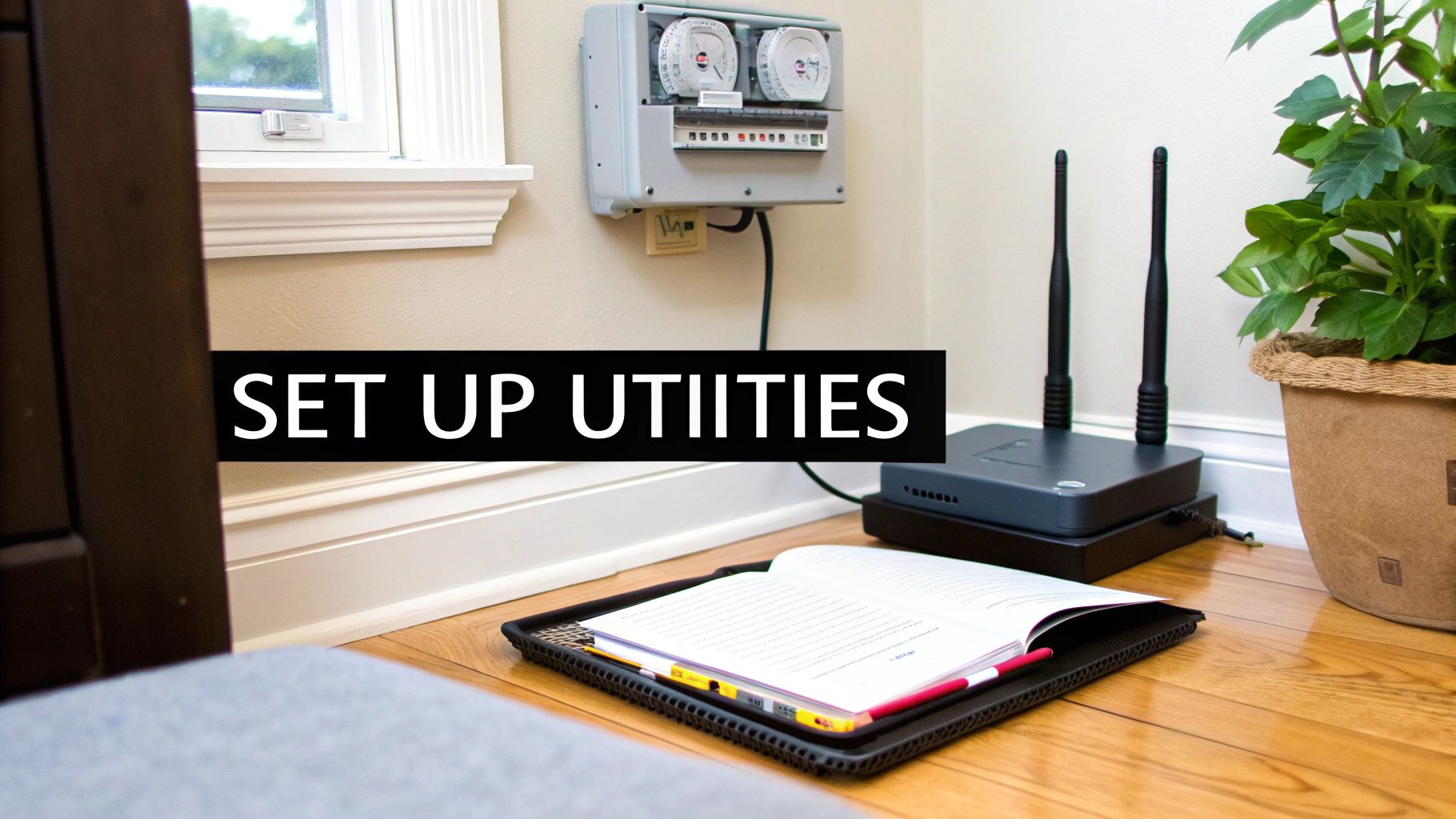
Home interior with a utility box, internet router, plant, and a notebook, displaying 'SET UP UTILITIES' text.

This step involves two key actions: scheduling the disconnection at your old address and arranging the connection at your new one. Coordinating these dates carefully prevents service gaps and ensures you are only billed for your actual usage. When it comes to setting up utilities, especially your internet, research your new area. You can simplify this step by looking into resources for finding local internet service providers and their best deals.

How It Works and Who It's For

Most energy and telecommunications providers offer a streamlined 'moving home' process through their website or customer service line. This process is universal and applies to anyone moving, regardless of their situation:

  • Renters in apartments: You will need to contact your providers to transfer your accounts. Your new building management may have preferred suppliers, so it’s worth checking with them first.
  • Homeowners: Transferring your existing services is often straightforward. This is also a great opportunity to compare providers and see if you can find a better deal for your new property.
  • Businesses relocating offices: This requires meticulous planning to minimise downtime. Liaise with your providers to ensure electricity, internet, and phone lines are active before your team arrives.

Key Insight: Do not assume services will be active when you arrive. You must proactively organise connections in your name to avoid delays and potential reconnection fees from the previous occupant's disconnection.

Actionable Tips for Utility Transfers

Follow these steps for a hassle-free transition of your essential services:

  • Contact Providers Early: Notify all your utility providers at least two to three weeks before your moving date. This gives them ample time to schedule technicians if needed.
  • Coordinate Dates Carefully: Schedule the disconnection at your old home for the day after you move out and the connection at your new home for the day you move in.
  • Take Meter Readings: On your last day, take photos of the gas, electricity, and water meters. Do the same at your new home before you start using utilities. This protects you from being billed for the previous occupant's usage.
  • Confirm Final Bill Forwarding: Ensure your final bill from the old address will be sent to your new one to settle any outstanding balances. This is a critical task covered in this detailed moving into a new house checklist.

8. Update Address with Subscription Services and Online Retailers (Amazon, Streaming Services, Online Shopping)

In our digital age, a critical part of your moving house checklist address change is updating your details with online retailers and subscription services. From your weekly meal kit delivery to that spontaneous late-night Amazon purchase, failing to update your address can lead to misdelivered parcels, billing errors, and significant frustration. This step ensures a seamless transition for all your online activities and purchases.

Neglecting this task can cause more than just a lost package; it can also affect billing for your digital subscriptions like streaming services, which often use your postcode to determine local content and tax. Proactively managing these accounts is a simple yet crucial part of a modern, organised move, preventing logistical headaches and ensuring your lifestyle continues uninterrupted in your new home.

How It Works and Who It's For

Most modern platforms make updating your address straightforward, typically within your account settings. This process is relevant for almost everyone:

  • Frequent Online Shoppers: For users of Amazon, eBay, or The Iconic, updating your primary shipping address is essential. Many services allow you to add multiple addresses, so remember to set your new one as the default.
  • Subscription Box Subscribers: Whether it's HelloFresh, a beauty box, or a wine delivery, these services operate on a recurring schedule. You can often schedule your address change to coincide precisely with your move-in date.
  • Digital Service Users: Streaming platforms like Netflix and Stan, as well as software subscriptions, use your billing address for payment verification. An incorrect address can lead to payment failures and service interruptions.

Key Insight: Don't just add your new address, actively remove your old one from your account's address book once you've moved. This eliminates the risk of accidentally selecting it for a future delivery at checkout.

Actionable Tips for Online Accounts

To ensure a smooth transition for your online life, follow these practical steps:

  • Create a Master List: Before you start, list all your online shopping accounts, subscription boxes, and digital services. This prevents you from forgetting any.
  • Update Billing and Shipping: Remember that some sites have separate fields for billing and shipping addresses. Ensure you update both to prevent payment issues.
  • Check Pending Orders: Review any orders that are scheduled to ship around your moving date. Contact the retailer directly to see if the delivery address can be amended for items already in transit.
  • Set a Calendar Reminder: Set a reminder for the day of your move to log in and switch your default address on your most-used platforms. This is a crucial final check.

8-Point Address Change Comparison

Service / Action Complexity 🔄 Speed & Resources ⚡ Expected Outcomes 📊 Effectiveness ⭐ Ideal Use Cases 💡
Update Address with Australia Post Low — online or in-person steps; simple form submission 1–3 business days processing; monthly fee applies Mail forwarding for 3/6/12 months; captures forgotten mail; limited package coverage ⭐⭐⭐⭐ Essential first step for all movers, temporary relocations, safety net for forgotten updates
Update Address with Your Bank and Financial Institutions Low–Medium — online portals or phone; ID/verification may be required Instant to 24 hours; may require ID for some banks Updated billing/statements, reduced fraud risk, new cards mailed correctly ⭐⭐⭐⭐⭐ Anyone with bank/credit accounts, preventing statement delays or security flags
Update Address with Employer and Payroll System Medium — HR coordination or self-service portal; possible paperwork 24 hours to 1 week depending on HR/payroll sync Correct tax documents, pay slip accuracy, benefits communications updated ⭐⭐⭐⭐ All employees changing address for tax, payroll, or benefits accuracy
Update Address with Insurance Providers (Home, Auto, Life) Medium — online, phone, or agent; may require policy re-evaluation Immediate to 24 hours typically; may trigger premium changes Maintains coverage, premium recalculation, policy documents reissued ⭐⭐⭐⭐ Moves affecting coverage area, out‑of‑state relocations, pre‑move auto insurance updates
Update Address with Government Agencies (Transport, AEC, ATO) Medium–High — agency-specific rules; some require proof of address Transport Dept: 14-day deadline; ATO (myGov): instant; AEC: instant Legal compliance, valid IDs/registrations, voting eligibility, tax records updated ⭐⭐⭐⭐⭐ Legally required updates (licences, registrations, taxes); essential for compliance
Update Address with Healthcare Providers and Insurance Medium — multiple providers/portals; medical records transfers may be needed 24 hours to 1 week; may need calls to multiple offices Continuity of care, correct billing, prescription and appointment accuracy ⭐⭐⭐⭐ Patients changing providers or moving; ensures insurance claims and prescriptions follow
Update Address with Utilities and Service Providers Medium — scheduling connect/disconnect; potential on‑site work 1–3 days notice; 1–2 weeks for some installations; possible deposits/fees Continuous service at new address, final bills at old address, scheduled connection ⭐⭐⭐⭐ Household moves where services must be scheduled to avoid gaps in power or internet
Update Address with Subscription Services and Online Retailers Low — usually online but many accounts to update Instant to 24 hours; time cost if many accounts Accurate deliveries/billing, avoid lost packages and misbilling ⭐⭐⭐ Frequent online shoppers, subscription services, everyone with saved addresses

Making Your Move Smooth and Seamless

Relocating your home or office is a significant undertaking, and amidst the physical tasks of packing and transport, the administrative details can easily be overlooked. A comprehensive moving house checklist for your address change is not just a convenience, it is a crucial tool for a seamless transition. By systematically updating your details across the key categories we have explored, you can prevent frustrating and costly disruptions.

This guide has provided a detailed roadmap for managing this essential process. From redirecting your mail with Australia Post to updating government bodies like the ATO and AEC, each step is designed to safeguard your personal information and maintain continuity in your life. Informing your financial institutions, employer, and insurance providers ensures your finances remain secure and your coverage stays active. Similarly, updating healthcare professionals and utility companies guarantees uninterrupted access to vital services from the moment you step into your new property.

Key Takeaways for a Successful Address Change

To crystallise the most important points, let's recap the core principles for a successful address update:

  • Start Early: Begin the address change process at least four weeks before your move. Many organisations require processing time, and an early start prevents last-minute panic.
  • Create a Master List: Use our checklist as a template. Customise it with your specific accounts, subscription services, and personal contacts to create a personalised, actionable plan.
  • Prioritise and Categorise: Tackle the most critical updates first. Government, financial, and utility providers should be at the top of your list, as delays here can have the most significant consequences.
  • Document Everything: Keep a record of who you have contacted, the date of the update, and any confirmation numbers provided. This creates a clear paper trail if any issues arise later.

Turning a Checklist into Peace of Mind

Mastering the address change process transforms a potentially chaotic aspect of moving into a manageable, organised task. The real value lies in the peace of mind it provides. You can focus on the excitement of settling into your new home or office, confident that important documents will arrive, services will function correctly, and your digital and physical life will remain perfectly synchronised with your new location. This meticulous planning is the foundation of a truly successful move, allowing you to embrace your new beginning without looking back at administrative loose ends. By following this moving house checklist for your address change, you are proactively ensuring your life continues smoothly, without missing a bill, a package, or an important piece of communication.


With your administrative tasks expertly managed, let the professionals handle the physical move. Get n Go Removals Melbourne offers reliable, careful, and efficient moving services across Melbourne and interstate, ensuring your belongings arrive safely. Visit Get n Go Removals Melbourne to get a quote and let us take the stress out of your relocation.

READ MORE

What Are the Real Storage Costs in Melbourne?

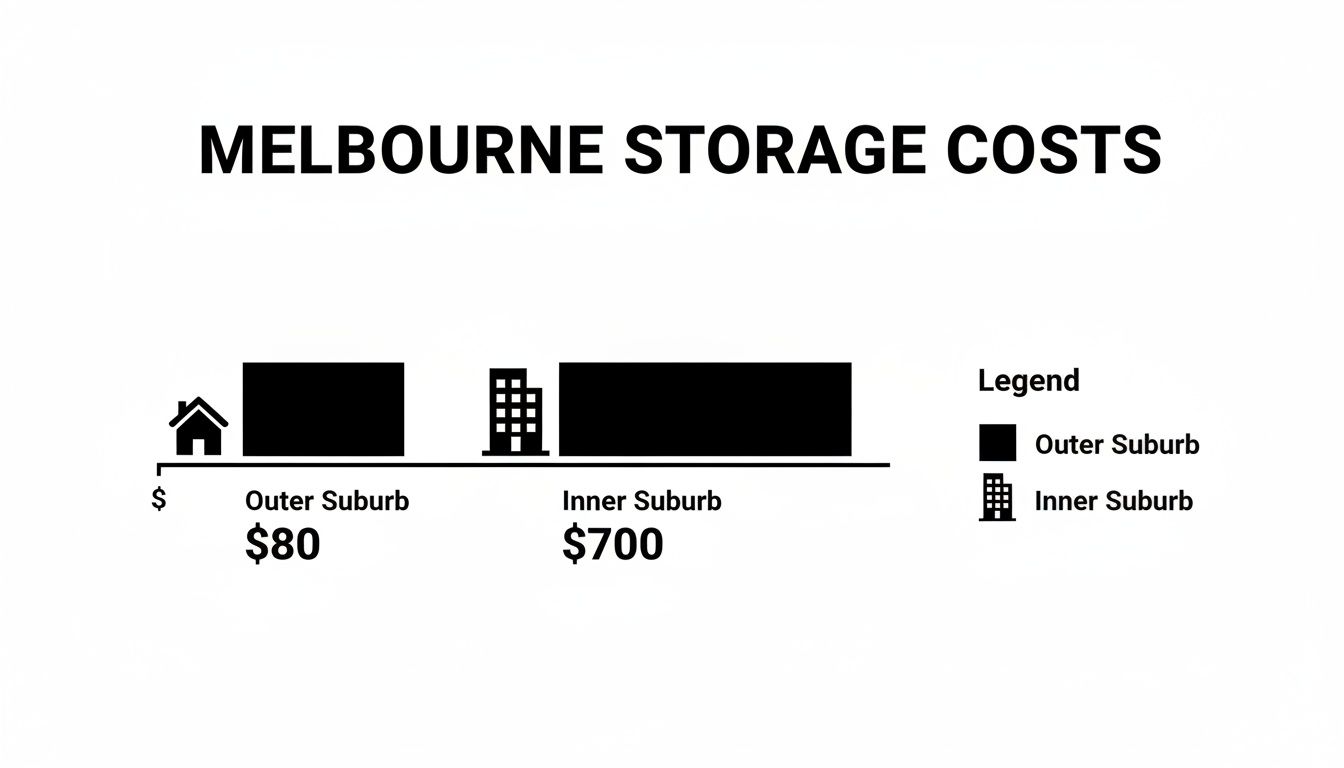
Trying to pin down the cost of self-storage in Melbourne can feel a bit like guesswork. In reality, what you’ll pay boils down to a few key things: the unit's size, its location, and any special features it has. Generally, you can expect a monthly bill anywhere from $80 to over $700, with a massive price gap between inner-city spots and those in the outer suburbs.

Your Quick Guide to Melbourne Storage Prices

Getting a handle on the costs is always the first step, whether you're planning a house move, coordinating an office relocation, or just trying to reclaim some space at home. The final price isn't just one flat number; it's shaped by a few important factors that are good to know. Let's break down what you can expect to pay so you have a clear starting point for your budget.

The single biggest influence on your quote? Location, location, location. While the average cost for storing household goods in Melbourne sits around $160 a month, this figure can swing wildly depending on the postcode.

For example, you could find a small unit in more affordable outer areas like Werribee or Frankston for as little as $80–$100 per month. Head closer to the city, and a larger, climate-controlled unit in suburbs like Port Melbourne or Toorak could easily set you back $700–$850 or more. If you want to dive deeper into the numbers, our guide on how much self-storage costs has all the details.

This image really highlights the huge difference in price between storing your things in an outer suburb compared to right near the city.

Comparison of Melbourne storage costs showing Outer Suburb at $80 and Inner Suburb at $700.

As you can see, simply choosing a facility a bit further out from the CBD can save you a serious amount of money each month. To give you an even clearer picture, here’s a quick breakdown of typical monthly costs.

Estimated Monthly Storage Costs in Melbourne by Location and Size

This table offers a side-by-side look at what you might pay for different-sized units in Melbourne, comparing the more budget-friendly outer suburbs with premium inner-city locations.

Unit Size Example Use Case Outer Suburbs (e.g., Werribee, Frankston) Inner Suburbs (e.g., Port Melbourne, South Yarra)
Small (3m²) Boxes, small furniture, seasonal items $80 – $140 $180 – $250
Medium (9m²) Contents of a 1-2 bedroom apartment $150 – $250 $300 – $450
Large (18m²) Contents of a 3-4 bedroom house $280 – $400 $500 – $700+
Vehicle Car, small boat, or caravan $180 – $300 $350 – $550+

This snapshot should give you a solid foundation for budgeting. Now, let's get into the other specific details that will shape your final quote.

Breaking Down What Drives Your Storage Bill

A long row of self-storage units with black doors and light brown walls next to a sidewalk and green grass.

Trying to figure out your final storage bill can feel a bit like decoding a restaurant menu—the final price really depends on what you order. There isn't just one flat fee. Instead, a few key "ingredients" come together to determine your total storage costs in Melbourne. Once you know what they are, you're in the driver's seat.

So, let's pull back the curtain on the four main things that shape your monthly quote.

The Obvious One: Unit Size

No surprises here—the biggest factor is the unit size. It’s the physical space you're renting, and it directly bumps the price up or down. A small locker just big enough for a few archive boxes is naturally going to cost a lot less than a garage-sized space you need to stash the contents of a three-bedroom home.

Think of it like booking a hotel room; a standard double is always cheaper than the penthouse suite. Nailing the right size from the get-go is the easiest way to keep your budget in check. After all, paying for empty space you're not even using is just like throwing money away.

Location, Location, Convenience

Just like the property market, where your storage facility is located plays a huge part in what you'll pay. A unit in a popular, inner-city suburb like South Yarra will come with a premium price tag. Why? Higher land values and pure convenience.

On the flip side, you'll generally find more affordable options in the outer suburbs, like Dandenong or Sunshine. If you don't need to pop in and grab things all the time, choosing a facility a bit further out can mean some serious monthly savings. For those who need a hand getting their stuff there, professional furniture removal and storage in Melbourne can easily bridge that distance, making an outer-suburb unit a really smart and practical choice.

The rule of thumb is pretty simple: the closer you get to the CBD, the more you can expect to pay per square metre. You're paying for that prime position and easy access.

How Long You Stay and What Extras You Need

How long you plan to store your belongings is another key piece of the puzzle. Many facilities will offer a better deal if you commit to a longer-term stay. While a month-to-month rental gives you total flexibility, signing a six or twelve-month lease can often shave a nice little discount off your monthly rate.

Finally, any special features or amenities will add to the bill. These are the premium options you can choose from:

  • Climate Control: This is a must-have if you're storing sensitive items like electronics, artwork, or wooden furniture that can't handle Melbourne's temperature swings.
  • 24/7 Access: Need to get to your unit outside of normal business hours? That extra convenience often comes at a slightly higher price.
  • Enhanced Security: Facilities that offer individual unit alarms, on-site managers, and top-tier video surveillance might charge a bit more for that extra peace of mind.

For businesses that rely on fulfilment networks, understanding how these factors play out is crucial. For instance, seasonal demand and warehouse location are massive elements in calculating things like Amazon FBA Q4 Storage Fees. By weighing up what's truly essential versus what's just a 'nice-to-have', you can find a storage solution that fits your needs perfectly without breaking the bank.

How Melbourne's Storage Market Got Here

A clipboard with a pen, measuring tape, and stacked cardboard boxes in a storage unit, with 'STORAGE COST FACTORS' text.

To really get your head around today's storage prices, it helps to look back at how we got here. Melbourne's storage industry didn't just pop up out of nowhere; it grew and adapted as the city around it changed at a breakneck pace. Understanding that story is the key to making sense of the current market for storage costs in Melbourne.

Over the last decade or so, Melbourne has absolutely exploded with growth. More people, more development, and a huge shift towards apartment and townhouse living. This has meant our homes have gotten smaller, leaving many Melburnians wondering where on earth to put their belongings.

This squeeze on space created a massive demand for an easy solution. Self-storage went from being a niche service to an absolute essential for thousands of families and businesses. As demand shot up, the industry had to get more competitive and a whole lot more sophisticated.

The Story Told by Prices

A quick look at the historical numbers tells the whole story. Even back in 2009, you could see the writing on the wall. The average cost for a small unit was around $174, while a midsize one sat at $416. And just like today, facilities closer to the city centre were already commanding higher prices, a trend that's only become more pronounced over the past 15 years.

This soaring demand, tied directly to Melbourne's property values and population boom, is what has sculpted the modern storage landscape. It's the simple reason prices are what they are today.

As our city keeps growing, the value of having a secure, easy-to-access space for your things just keeps climbing. When you understand this context, you realise you're not just renting a box; you're buying a clever solution born out of Melbourne's unique urban journey. For a closer look at the kinds of modern options available, check out our guide on storage solutions in Melbourne.

Short Term vs Long Term Storage: Which Is Cheaper?

Deciding how long you’ll need a storage unit is one of those key moments that can really swing your budget one way or the other. Your timeline is a massive factor in the overall storage costs in Melbourne, so it’s well worth getting your head around the two main options before signing on the dotted line.

Short-term, month-to-month rentals are brilliant for their flexibility. They’re the perfect stop-gap solution when you’re between houses, doing a renovation, or just need to clear out a room for a few weeks. That convenience, though, usually means you’re paying a slightly higher monthly rate.

On the other hand, committing to a longer-term plan—say, six months or more—is often where you’ll find the real savings. Many facilities are happy to reward that loyalty with some pretty attractive discounts, special deals, or even a 'first month free' offer. If you know you're in it for the long haul, this is almost always the more cost-effective way to go.

Finding Your Financial Sweet Spot

The trick is to figure out your own break-even point. If you genuinely only need storage for two months, paying a bit more for a flexible plan is a no-brainer. But once your timeline starts creeping towards six or seven months, a long-term contract will almost certainly work out cheaper overall, even if the monthly saving doesn't seem huge at first.

Think of it like a subscription service: paying annually is almost always cheaper than paying month-by-month. The same logic applies to storage, rewarding those who can plan ahead.

This whole dynamic really just reflects how healthy Melbourne's storage market is right now. Driven by our city's density, the market has seen consistent revenue growth—a 7% annual increase as of March 2023 and a massive 32% jump in revenue per available metre over three years. With 86.6% of Aussies living in cities by 2023, the demand for both short and long-term storage isn't going anywhere.

Picking the right plan simply helps you avoid paying a premium for convenience you don’t actually need. For anyone in the middle of a move, understanding the options for flexible short term storage can be an absolute game-changer.

Proven Strategies to Lower Your Storage Costs


Nailing down a storage unit is the easy part. Making sure you’re not paying a cent more than you need to? That takes a bit of strategy. With a few clever moves, you can keep your monthly bill down and make your **storage costs in Melbourne** much more manageable. The real secret is thinking smart before you even lock in a unit.

Honestly, the biggest money-saver has nothing to do with the storage facility itself. It’s all about a good, old-fashioned declutter. Before a single box gets packed, be ruthless. Go through everything you own and decide what really needs to come with you. Every single item you can sell, donate, or toss is one less thing you have to pay to store.

It’s a simple equation: less stuff often means you can get away with a smaller, cheaper unit. A huge chunk of your storage bill comes down to size, so getting a handle on your space requirements is key. This article on determining the right storage unit size is a great resource if you're not sure where to start.

Be Smart About Packing and Planning

Once you've whittled down your belongings, how you pack them can make a world of difference. Think of it like a real-life game of Tetris. Using uniform, sturdy, and stackable boxes lets you take full advantage of the unit's vertical space, cramming more in safely. Nailing your packing technique can be the very thing that stops you from having to upgrade to a larger, pricier unit.

Location is another big lever you can pull to cut costs. Sure, a facility in the inner suburbs is convenient, but you pay a premium for it. Units in the outer suburbs are almost always a better deal. If you don't need to be popping in and out all the time, choosing a facility a little further afield is a guaranteed way to save some cash. This idea lines up with a lot of general money-saving tips for moving, which you can read more about in our guide on tips to keep your moving costs down.

Don’t be afraid to ask about special offers. Lots of facilities have deals for new customers, discounts if you commit to a longer-term rental, or even special rates for students and seniors. A quick phone call could save you a surprising amount.

Finally, here are a few more practical ideas to consider:

  • Share a Unit: Got a friend or family member who also needs some storage space? Teaming up on a larger unit and splitting the cost is often much cheaper than renting two separate small ones.
  • Time Your Rental: Like most things, storage has its peak seasons. You’ll often find better rates if you book during the slower months, like winter, instead of the busy summer moving rush.

Common Questions About Storage Costs in Melbourne

A person in black clothing moves a beige storage box into a self-storage unit filled with stacked boxes.

To wrap things up, let's tackle some of the most common questions we hear about storage costs in Melbourne. Getting straight answers to these final queries will help you move forward with confidence, knowing you've covered all the bases before you sign on the dotted line.

Think of this as a final check-in. It’s designed to shine a light on those small but important details that are easy to overlook, from insurance needs to those sneaky fees that can sometimes pop up when you least expect them.

Does Storage Insurance Add Much to the Monthly Cost?

Yes, you'll definitely need to factor in insurance as a standard additional expense. While your home and contents policy might provide some cover for items in storage, most facilities will require you to take out their specific storage insurance.

This usually adds another $10 to $30 per month to your total bill, with the exact cost depending on the value of the goods you're storing. It’s always a good idea to ask whether the quoted price includes insurance or if it's a mandatory extra.

Are There Hidden Fees I Should Watch Out For?

Absolutely. It always pays to be aware of potential costs that go beyond the monthly rent. Some common extras you might run into include:

  • Administration Fees: Often a one-off charge when you first sign up.
  • Security Deposits: This is usually refundable when you move out, as long as the unit is left in good condition.
  • Lock Fees: You might be charged for a lock if you don't bring your own high-quality one.
  • Late Payment Fees: Penalties for missing your payment due date.

The key is to read your rental agreement carefully and ask for a complete breakdown of every single potential charge before you commit.

Can I Save Money by Booking My Storage Unit in Advance?

Booking your unit ahead of time can certainly save you some money. This is especially true during the busy moving seasons like summer, when demand shoots up and prices often follow.

Securing your unit early doesn't just guarantee you get the size you need; it can also lock in a better rate. On top of that, many facilities offer online-only specials or promotions like 'first month free,' which are much easier to snag when you book in advance.


When your move involves storage, you need a team that knows how to handle it all without a fuss. Get n Go Removals Melbourne offers secure, flexible storage solutions right alongside our expert moving services, ensuring your entire transition is smooth from start to finish. Let us simplify your move by visiting https://www.getngoremovals.com.au.

READ MORE

The Ultimate 2025 Moving into a New Home Checklist: 10 Essential Steps

Relocating to a new home is an exciting milestone, yet the process itself can often feel like a monumental task. The sheer volume of things to remember, from coordinating logistics to updating personal details, can quickly become overwhelming. Juggling packing, notifying providers, and managing the move day itself requires careful planning and organisation to avoid unnecessary stress and costly oversoversights. A disorganised move can lead to forgotten tasks, misplaced items, and a chaotic start in your new space, turning what should be a joyful transition into a frustrating ordeal.

This is where a comprehensive moving into a new home checklist becomes your most valuable tool. It serves as a strategic roadmap, guiding you through every critical stage of the relocation process. By breaking down the journey into manageable, sequential steps, you can tackle each task with clarity and confidence. This guide is designed to be your definitive blueprint, covering everything from the initial decluttering phase weeks before the move to the final walk-through and settling-in period. For an even more detailed guide to ensure you cover all bases, consider referencing this ultimate moving into new house checklist.

Whether you are a Melbourne homeowner preparing for a local move, a renter transitioning to a new apartment, or coordinating an interstate relocation along the East Coast, this checklist will provide the structure you need. We will detail ten essential phases, offering actionable insights and practical tips to ensure a seamless and efficient move. Our goal is to empower you with a clear plan, helping you avoid common pitfalls and ensuring your transition is as smooth and stress-free as possible. Let's begin building your personalised plan for a successful move.

1. Master the Art of Decluttering and Downsizing

The most crucial first step in any successful move is a strategic edit of your possessions. This isn't just about getting rid of old things; it's about curating the life you want to live in your new space. By systematically sorting through what you own, you reduce the volume of items to pack, move, and unpack, which directly lowers removalist costs and saves immense amounts of time. Think of it as a fresh start, ensuring you only bring belongings that add value, function, or joy into your new home. This foundational step is essential for a smooth transition and is a key part of any comprehensive "moving into a new home checklist."

How to Implement a Strategic Declutter

To avoid feeling overwhelmed, break this process down into manageable steps, ideally starting 2-3 months before your move.

  • Go Room by Room: Tackle one area at a time, such as the spare bedroom or the kitchen pantry. This prevents burnout and makes the task feel achievable.
  • Use Sorting Categories: As you go through each item, assign it to one of four categories: Keep, Sell, Donate, or Discard. Use coloured bins or designated corners of the room to keep things organised.
  • Apply the 'One-Year Rule': A practical filter for decision-making is to ask yourself, "Have I used this in the last year?" If the answer is no (and it isn't a sentimental keepsake), it's a strong candidate for a new home.

Actionable Tips for Downsizing

  • Selling Unwanted Goods: For valuable items, use platforms like Facebook Marketplace or Gumtree. Take clear, well-lit photos and write detailed descriptions to attract buyers. A pre-move garage sale can also be an effective way to sell multiple items at once.
  • Donating Responsibly: Charities like Vinnies and the Salvos welcome quality used goods. For larger items like furniture, schedule a donation pick-up in advance to ensure they can accommodate your timeline.
  • Disposing of Rubbish: For items that are broken or unsalvageable, arrange a council hard rubbish collection. If you have a significant amount of waste or need a faster solution, exploring professional junk removal services can help clear out unwanted items efficiently, leaving you free to focus on the rest of your move.

2. Create a Moving Timeline and Checklist

With the decluttering underway, the next pivotal stage is to impose order on the chaos with a detailed moving timeline. This isn't just a simple to-do list; it's a strategic schedule that maps out every task from now until you’re settled in your new space. By breaking down the entire process into weekly and daily goals, you transform an overwhelming project into a series of manageable actions. This proactive approach prevents last-minute panic, ensures no critical steps are missed, and keeps you in complete control, making it an indispensable part of any "moving into a new home checklist".

A desk with a laptop, an open calendar with a checked date, a blue cup, and a notebook with a pen, featuring a 'Moving Checklist' graphic.

How to Implement a Strategic Timeline

To be effective, your timeline should start approximately 6-8 weeks before your moving day. This provides ample time to handle everything without rushing.

  • Break It Down by Weeks: Assign major goals to each week. For example, weeks 1-2 might be for decluttering, weeks 3-4 for researching and booking movers, weeks 5-6 for packing non-essentials, and weeks 7-8 for final preparations and utility transfers.
  • Use Digital or Physical Tools: A colour-coded calendar, a dedicated notebook, or digital tools like Trello can help visualise your schedule. A large printed checklist on the refrigerator makes it easy for the whole household to stay on the same page.
  • Assign Responsibilities: If you are moving with others, delegate specific tasks. Clearly defining who is responsible for what (e.g., who calls the utility companies, who organises packing supplies) prevents confusion and shares the workload.

Actionable Tips for Checklist Creation

  • Be Granular: Break large tasks into smaller, specific sub-tasks. Instead of "Pack Kitchen," list "Pack crockery," "Empty pantry," and "Label spice jars." This makes progress feel more tangible and less daunting.
  • Build in Buffer Time: Unexpected delays are almost inevitable. Schedule some buffer days in the final weeks leading up to the move to handle unforeseen issues without derailing your entire plan.
  • Review and Update Weekly: Treat your checklist as a living document. Hold a brief weekly check-in to review what’s been accomplished and adjust the plan for the week ahead as needed. This ensures you stay on track and can adapt to any changes.

3. Book Your Movers and Transportation

Securing your transportation is a pivotal milestone in your moving journey. Whether you opt for a full-service removalist company, a do-it-yourself truck rental, or a hybrid container solution, booking well in advance is non-negotiable. This step transforms your moving plan from an idea into a scheduled event, locking in your preferred date and often securing better pricing. Leaving this too late can lead to limited availability, higher costs, and unnecessary stress, which is why it’s a critical component of any well-organised "moving into a new home checklist."

How to Implement Your Booking Strategy

The key to a successful booking is to start early, ideally 6-8 weeks before your moving day, especially during peak seasons like summer or the end of the month.

  • Determine Your Needs: First, assess the scale of your move. A small apartment may only require a simple truck hire, whereas a multi-bedroom house or a commercial office relocation will benefit from the expertise of professional removalists who can handle heavy lifting and logistics.
  • Gather Multiple Quotes: Never settle for the first price you receive. Contact at least three different companies to get detailed, itemised quotes. This allows you to compare services, pricing, and availability accurately.
  • Verify Credentials: Before committing, perform due diligence. Check online reviews, confirm their insurance policies, and ensure they have a solid reputation. A trustworthy mover will be transparent about their credentials and what their quote includes.

Actionable Tips for Securing Transportation

  • Full-Service Removalists: For a stress-free experience, professional movers handle everything from packing to transport. When getting quotes, ask specifically about what’s included, such as labour hours, packing materials, and transit insurance.
  • DIY Truck Rental: If you're managing the move yourself, book your truck rental well in advance. Be realistic about the size of the truck you’ll need. Don't forget to factor in the cost of fuel, insurance, and any moving equipment like dollies or blankets.
  • Portable Containers: A flexible option involves a container being delivered to your home. You pack it at your own pace, and the company transports it to your new address. This is an excellent solution if you need temporary storage between homes. Understanding all the variables is key, so find out more about choosing the right removals firm for your move to make an informed decision.

4. Notify Utility and Service Providers

Ensuring a seamless transition of essential services is a non-negotiable part of any move. This step involves proactively contacting your utility and service providers to schedule disconnection at your old residence and connection at your new one. Getting this organised 2-4 weeks in advance prevents the nightmare scenario of arriving at your new home to find no electricity, water, or internet. A smooth handover of these services is fundamental to settling in comfortably from day one and is a critical component of any well-planned "moving into a new home checklist."

How to Implement a Strategic Utility Transfer

To avoid last-minute stress, create a master list of all your service providers and their contact details. This organised approach ensures no provider is forgotten and that all services are active when you need them most.

  • Create a Master Contact List: Compile a document with the names, account numbers, and contact information for every provider. This includes electricity, gas, water, internet, Foxtel or other pay TV, and your security system.
  • Schedule in Advance: Contact each provider at least two weeks before your move date. Some providers, especially for internet installation, may have long lead times, so earlier is always better.
  • Overlap Services Deliberately: Schedule your old services to be disconnected the day after you move out and your new services to be connected the day before you move in. This provides a buffer for cleaning or unexpected delays.

Actionable Tips for Service Management

  • Request Final Meter Readings: Ask your current energy and water providers to take a final meter reading on your move-out day. This ensures you are only billed for what you used and prevents disputes later.
  • Confirm Appointments: Get written confirmation via email for all connection and disconnection appointments. Note these dates and times in your calendar so you don't miss a technician's visit.
  • Don't Forget Secondary Services: Beyond the main utilities, remember to update your address for services like council rates, subscription boxes, and rubbish collection. A detailed list is essential; for more ideas, you can explore this comprehensive moving into a new house checklist.

5. Update Address with Banks, Insurance, and Important Institutions

A crucial, yet often overlooked, part of moving is the administrative task of updating your address with all relevant organisations. Failing to do this can lead to missed bills, lost personal documents, and potential security risks. Systematically notifying everyone from your bank to your car insurer ensures a seamless continuation of services and protects your personal information. This proactive measure prevents critical correspondence from being sent to your old address and is a non-negotiable item for any "moving into a new home checklist."

How to Implement a Strategic Address Update

To avoid last-minute panic, start this process at least 2-4 weeks before your moving day. A methodical approach ensures no one is forgotten.

  • Create a Master List: Begin by listing every organisation that has your address on file. This includes financial institutions (banks, superannuation funds), insurance providers (health, car, home), government bodies (ATO, electoral commission), and subscription services.
  • Prioritise Critical Services: Categorise your list into high-priority (banks, insurance, employer) and lower-priority (magazines, loyalty programs) updates. Tackle the most critical ones first.
  • Track Your Progress: Keep a record of when you contacted each organisation, who you spoke to, and any confirmation details. This helps you follow up if mail continues to go to the wrong place.

Actionable Tips for Updating Your Details

  • Financial and Insurance Providers: For sensitive accounts like banking and insurance, call the institution directly or use their secure online portal. Update your home and contents insurance to reflect your new property before you move in to ensure your belongings are covered during the transition.
  • Government Agencies: Update your details with the Australian Taxation Office (ATO), your state's vehicle registration authority (e.g., VicRoads), and the Australian Electoral Commission (AEC) to ensure you can vote correctly.
  • Set Up Mail Redirection: As a safety net, arrange mail redirection with Australia Post. This service will forward mail sent to your old address to your new one for a set period, catching any notifications you may have missed. You can explore a detailed moving house address change checklist for a comprehensive breakdown of who to notify.

6. Schedule Inspections and Plan Deep Cleaning

Securing your bond and ensuring your new home is pristine are critical final steps before the transition is complete. This phase involves coordinating final inspections for your old property and arranging a deep clean for both locations. A meticulously planned clean and a thorough walk-through protect your financial interests, satisfy lease obligations, and guarantee you're moving into a hygienic, welcoming environment. This systematic approach is a non-negotiable part of any comprehensive "moving into a new home checklist," setting the standard for a smooth handover.

How to Implement a Strategic Inspection and Clean

This process requires careful timing, typically in the final week leading up to your moving day. Coordinating with landlords, property managers, and cleaning services in advance is essential to avoid last-minute stress.

  • Document Everything: Before any cleaning begins, conduct a final walk-through of your new home. Use your smartphone to take detailed photos and videos of every room, paying close attention to any pre-existing damage like scuffs on walls or scratches on the floor. This creates a clear record of the property's condition upon your arrival.
  • Coordinate Final Inspections: Schedule the final inspection at your old property for after all your belongings have been moved out and the cleaning is complete. Aim to be present during the walk-through with your landlord or agent to address any potential issues immediately.
  • Book Professional Cleaners: Unless you're a DIY expert, hiring professionals for an end-of-lease clean is often the most reliable way to meet the high standards required to get your bond back. Book them for the day after you've moved everything out.

Actionable Tips for a Flawless Handover

  • Review Your Lease: Your tenancy agreement will specify the cleaning standards required. Refer to this document to create a detailed checklist for your cleaners or for yourself, ensuring nothing is missed.
  • Plan a 'New Home' Clean: Even if the new property appears clean, consider scheduling a professional clean one or two days before you move in. This ensures all surfaces, carpets, and hidden corners are sanitised to your personal standard.
  • Create a Punch List: During your new home inspection, create a "punch list" of minor repairs or issues (e.g., a dripping tap, a faulty light switch). Submit this documented list to your new landlord or property manager right away.

7. Gather Important Documents and Set Up a Move Folder

During the controlled chaos of a move, the last thing you want is to frantically search for a birth certificate or the removalist's contract. Centralising all critical paperwork into a dedicated "move folder" prevents this stress, keeping essential information secure, organised, and accessible at a moment's notice. This simple act of organisation protects your most important assets and contact information from being lost or damaged amidst packing boxes. It’s a non-negotiable step in any thorough "moving into a new home checklist" that ensures you have complete control over the administrative side of your relocation.
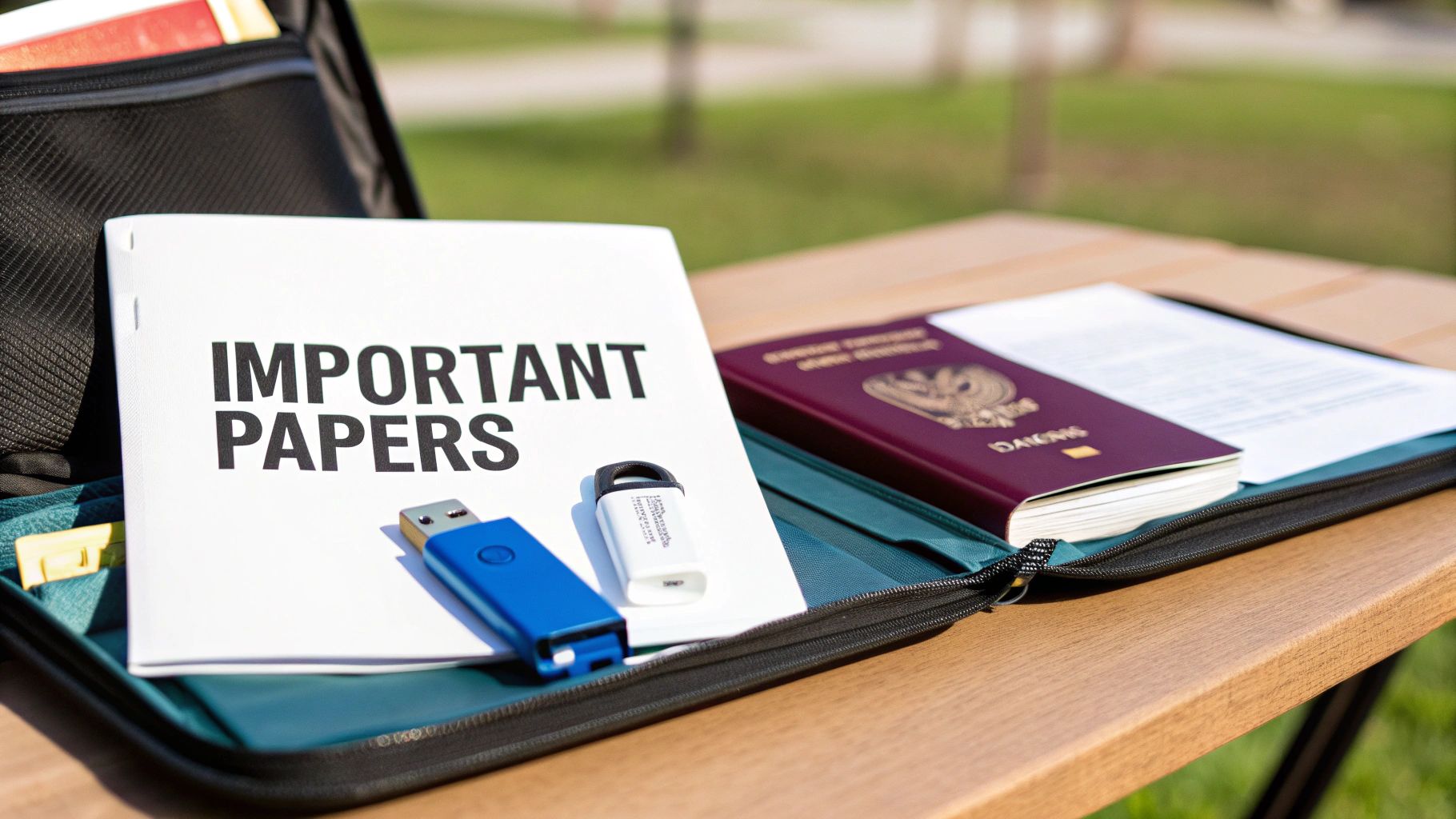
Important documents, a passport, and USB drives are organized in a folder on a table.

How to Implement a Strategic Move Folder

Begin assembling your move folder at least 4-6 weeks before your moving day. This gives you ample time to locate documents without last-minute panic.

  • Choose Your System: An accordion file with labelled tabs or a colour-coded binder works perfectly for physical copies. This allows you to categorise documents logically, for example, by "Moving Logistics," "New Home," and "Personal IDs."
  • Create Digital Backups: Scan or take clear photos of every document and save them to a secure cloud service like Google Drive or Dropbox. This creates a vital digital backup in case the physical folder is misplaced.
  • Compile a Master Contact List: Dedicate a page to list key contacts, including your real estate agent, landlord, utility providers, and your moving company's coordinator. Having these numbers in one place is invaluable on moving day.

Actionable Tips for Document Organisation

  • Separate and Secure: Keep irreplaceable documents like passports, birth certificates, and wills in a separate, waterproof sleeve within your folder. This folder should travel with you in your personal vehicle, never in the moving truck.
  • Key Paperwork to Include: Gather your moving company contract, new lease or closing documents, utility connection confirmations, insurance policies, and recent bank statements.
  • Family and Medical Records: If moving with family, include school enrolment forms, medical histories, and vaccination records to streamline the transition with new providers and institutions. For pets, include their vaccination and microchip details.

8. Pack Strategically Using Proper Materials and Labeling Systems

Effective packing is the foundation of an organised move. Instead of simply throwing items into any available box, a strategic approach involves using quality materials and a clear labelling system to protect your belongings and streamline the unpacking process. This methodical system turns potential chaos into a manageable, step-by-step task, ensuring you know exactly where everything is when you arrive. For anyone creating a "moving into a new home checklist," mastering this phase is non-negotiable for a stress-free transition.

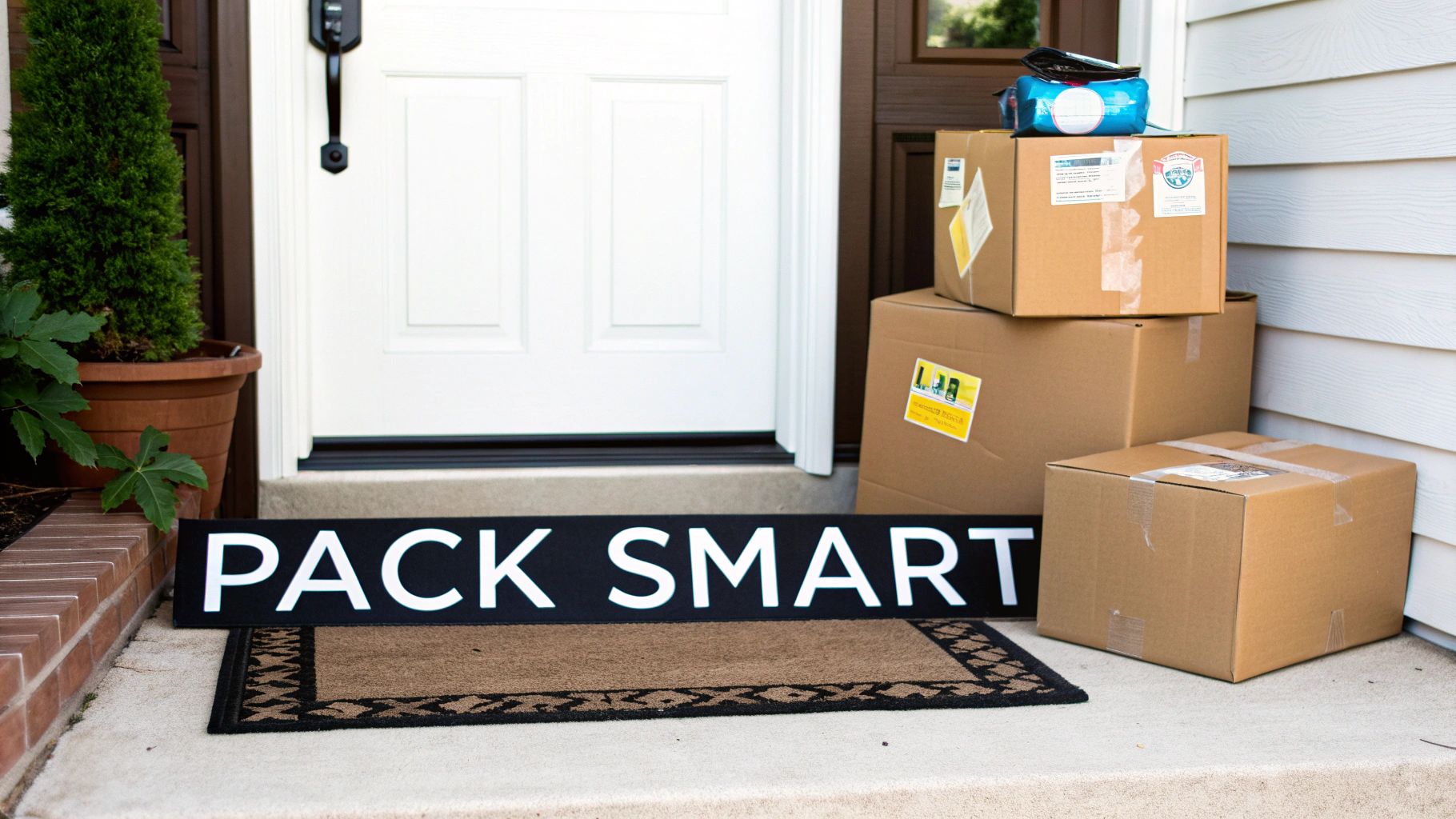
Multiple cardboard boxes stacked on a residential porch, next to a front door, with a 'PACK SMART' mat.

How to Implement Strategic Packing

A successful packing strategy relies on consistency and clear communication, both for yourself and for your removalists. This system ensures every box ends up in its designated room, making unpacking dramatically faster.

  • Create a Labelling System: Before you pack the first box, decide on your system. A popular method is colour-coding, where each room is assigned a specific colour (e.g., blue for the main bedroom, yellow for the kitchen). Apply coloured tape or stickers to each box.
  • Develop an Inventory: For added organisation, use a numbered system alongside your colours. Each box gets a unique number, which you record on a spreadsheet with a brief summary of its contents (e.g., Box #24, Blue: Bedside lamps, books).
  • Establish Priority Tiers: Not everything needs to be unpacked on day one. Sort your boxes into categories like 'Open First' (kettle, toiletries, bedding), 'Medium Priority' (kitchenware, office supplies), and 'Low Priority' (out-of-season clothing, decorative items).

Actionable Tips for Efficient Packing

  • Use Quality Materials: Invest in sturdy, uniform-sized moving boxes for easy stacking. Use proper packing tape, not masking tape, and wrap fragile items individually in bubble wrap or packing paper. For a detailed guide on materials and techniques, you can learn more about how to pack for a move.
  • Pack Smart, Not Heavy: Place heavier items like books in smaller boxes to keep them manageable. Ensure no box weighs more than 20-22 kg for safety.
  • Label on Multiple Sides: Mark boxes on the top and at least two sides with the destination room, box number, and a brief content description. This makes them easy to identify even when stacked.
  • Prepare an Essentials Box: Keep a clearly marked box or suitcase with everything you'll need for the first 24 hours: medications, chargers, toiletries, a change of clothes, and basic kitchen supplies. Keep this box with you, not on the moving truck.

9. Arrange Childcare and Pet Care for Moving Day

The chaos and physical demands of moving day can create a stressful and potentially hazardous environment for children and pets. Open doors, heavy boxes, and busy removalists present risks that are difficult to manage while overseeing the logistics of the move. Arranging dedicated care for your dependents is a non-negotiable step in any comprehensive "moving into a new home checklist." By ensuring they are safe, comfortable, and out of the way, you can focus entirely on the tasks at hand, reducing stress for everyone involved and preventing accidents. This proactive planning is crucial for a smooth and efficient transition.

How to Implement a Care Strategy

Begin organising care arrangements at least 2-4 weeks before your moving date, especially if you plan to use professional services which can book out quickly.

  • Assess Your Needs: Determine the best environment for your children and pets. Will they be more comfortable with a familiar family member, or would a structured setting like a day camp or boarding facility be more suitable?
  • Communicate Clearly: Prepare a detailed care package for the caregiver. This should include emergency contacts, feeding schedules, allergy information, medication instructions, and a list of favourite toys or comfort items.
  • Prepare a 'Go-Bag': Pack a separate, easily accessible bag for each child or pet containing essentials for the day. Include snacks, drinks, toys, medication, a change of clothes, and any comfort objects to help them feel secure.

Actionable Tips for a Stress-Free Day

  • For Children: Arrange for them to stay with grandparents or a trusted friend. Alternatively, a fun playdate or a drop-in day camp can turn a potentially stressful day into an exciting one for them.
  • For Pets: Consider booking a spot at a reputable local boarding kennel or cattery. Professional pet-sitting services are also an excellent option. Ensure the facility has your pet's vaccination records and your new contact details.
  • Safe Transport: Plan how your pets will travel to the new home. They should be secured in appropriate carriers. For more detailed advice, exploring a guide on moving with pets can provide specialised insights to ensure their journey is safe and calm.

10. Do a Final Walk-Through and Post-Move Inspection

The final walk-through is a non-negotiable step that protects you financially and ensures a clean break from your old property and a fair start in your new one. This process involves a meticulous inspection of both your vacated residence and your new home. For the old property, it's your last chance to confirm you’ve left nothing behind and to document its condition to secure your full bond return. For the new home, it establishes a baseline record of its state upon your arrival, protecting you from liability for pre-existing issues. This dual inspection is a critical component of any thorough "moving into a new home checklist."

How to Implement a Strategic Inspection

To be effective, this process must be systematic and well-documented. Conduct the walk-through of your old home after every single item has been removed, and inspect your new home before you move anything in.

  • Document Everything Visually: Use your smartphone to take a detailed video of every room in your old, empty property. Narrate the video, noting the clean and empty state of closets, cupboards, and drawers. Do the same for your new home, focusing on any existing damage like scuffs on the walls, stains on the carpet, or a crack in a tile.
  • Create a Condition Report: For your new home, create a simple written report or use one provided by your landlord. Note every scratch, dent, or malfunction you find. This report, supported by your photos and videos, is your proof of the property's initial condition.
  • Check Key Systems: Verify that all utilities have been correctly shut off at your old address and that everything (plumbing, electricity, heating, cooling) is operational at the new one. Test all appliances, light switches, and smoke detectors.

Actionable Tips for a Flawless Walk-Through

  • Use a Checklist: Prepare a detailed checklist covering every room, including often-forgotten areas like the attic, garage, and outdoor storage sheds.
  • Record Meter Readings: Take clear photos of the final readings on the electricity, gas, and water meters at your old property to avoid disputes on your final bills. Do the same at your new home to ensure you're only paying for your own usage.
  • Involve the Property Manager: If renting, arrange for the landlord or property manager to conduct the final walk-through with you. Having them sign off on your inspection notes provides an extra layer of security for your bond.

10-Step Moving Checklist Comparison

Task Implementation Complexity 🔄 Resource Requirements ⚡ Expected Outcomes ⭐ Ideal Use Cases 📊 Key Advantages & Tips 💡
Declutter and Downsize Belongings High 🔄 — time‑consuming & emotional decisions Low $ / High time ⚡ — minimal cost, significant effort High ⭐ — reduces volume, lowers moving cost, simpler unpacking Downsizing, long-distance moves, fresh starts Sell/donate items, start 2–3 months early; use room‑by‑room approach
Create a Moving Timeline and Checklist Medium 🔄 — planning and coordination Low $ / Moderate time ⚡ — requires scheduling effort High ⭐ — reduces stress, prevents missed tasks Complex moves, families, multi-step relocations Break tasks weekly, assign responsibilities, build buffer time
Book Movers and Transportation Medium 🔄 — research, quotes, scheduling High $ / Logistics ⚡ — deposits, insurance, booking windows High ⭐ — professional handling, reduced physical strain Heavy loads, long-distance, limited time or labor Get ≥3 estimates, check reviews, book 6–8 weeks out; confirm liability
Notify Utility and Service Providers Low 🔄 — procedural but multiple contacts Low $ / Moderate time ⚡ — scheduling appointments needed High ⭐ — prevents service gaps & billing errors All moves (2–4 weeks before) Create contact list, request final meter reads, confirm in writing
Update Address with Banks, Insurance, Institutions Medium 🔄 — many organizations & processing times Low $ / Moderate time ⚡ — documentation may be required High ⭐ — ensures continuity of critical mail & accounts Moves with financial/legal implications Use mail forwarding, log contacts/dates, update 2–4 weeks prior
Schedule Inspections and Plan Deep Cleaning Medium 🔄 — coordination + physical work Moderate $ / Time ⚡ — possible professional cleaning costs High ⭐ — maximizes deposit return, documents condition Rental move-outs, property sales, lease ends Schedule on move-out day, photograph condition, hire pros 3–4 days prior
Gather Important Documents and Set Up Move Folder Low 🔄 — organizational task Low $ / Low‑Moderate time ⚡ — secure storage required High ⭐ — quick access, protects against lost paperwork All moves, especially closings or with minors Keep physical + cloud copies, prepare 4–6 weeks early, use labeled folder
Pack Strategically Using Proper Materials and Labeling Systems Medium 🔄 — disciplined packing process Moderate $ / High time ⚡ — boxes, materials, inventory tracking Very High ⭐ — protects items, speeds unpacking, eases placement All moves; high‑value items or complex households Use uniform boxes, label multiple sides, keep "Open First" box
Arrange Childcare and Pet Care During Moving Day Low–Medium 🔄 — coordination with caregivers Variable $ / Logistics ⚡ — sitter/boarding costs and transport High ⭐ — improves safety and moving efficiency Families with young children or pets Book 2–4 weeks early, provide care instructions and essentials bag
Do a Final Walk‑Through and Post‑Move Inspection Medium 🔄 — methodical and time‑sensitive Low $ / Time ⚡ — needs documentation tools (camera) High ⭐ — documents condition, protects deposit & liability Rental exits, dispute prevention, new‑home verification Perform after last item leaves, photograph/video dated evidence, obtain signatures

You've Arrived: Turning Your New House into a Home

Congratulations, you’ve officially made it across the threshold! The doors are closed on the old chapter, the keys to your new property are in hand, and the journey of transforming this new space into a genuine home has just begun. While the sight of stacked boxes might feel a little overwhelming, take a moment to appreciate the monumental task you've just accomplished. By following a detailed moving into a new home checklist, you have navigated one of life’s most significant stressors with organisation, foresight, and control.

The meticulous planning, from decluttering weeks ago to that final, critical walk-through, has paid off. You’ve laid the groundwork for a seamless transition, not just a chaotic relocation. The real value of a comprehensive checklist isn't merely in ticking off tasks; it’s about reclaiming your peace of mind and energy, allowing you to focus on the excitement of what lies ahead rather than the anxieties of what might have been missed.

Key Takeaways for a Successful Move

Let's recap the core principles that guided you here. These aren't just steps; they are strategies for a smoother, more efficient move every time:

  • Preparation is Paramount: The success of your move was largely decided before the first box was even packed. Proactive steps like creating a moving timeline, downsizing your belongings, and booking professional movers well in advance are non-negotiable for a stress-free experience.
  • Organisation is Your Best Tool: A systematic approach saves time, money, and sanity. This includes everything from a colour-coded labelling system and an "essentials box" to a centralised folder for all your important documents and contracts. This organised foundation makes the unpacking process exponentially easier.
  • Communication is Crucial: Effectively coordinating with utility providers, updating your address with financial institutions, and arranging care for children or pets prevents last-minute panics and ensures continuity in your life. A smooth transition is a well-communicated one.

Your Actionable Next Steps: Settling In

The checklist may be complete, but the process of settling in is a marathon, not a sprint. Here’s how to channel your momentum into creating a comfortable and functional living space:

  1. Prioritise Unpacking: Start with the essentials. Set up the beds, unpack the kitchen basics, and prepare at least one bathroom. Creating functional "zones" first will make the rest of the process feel far less daunting.
  2. Systematic Set-Up: Tackle one room at a time. Fully unpack, organise, and decorate a single room before moving to the next. This provides a sense of accomplishment and gives you a box-free sanctuary to retreat to.
  3. Explore Your New Neighbourhood: Take breaks from unpacking to walk around your new area. Locate the nearest grocery store, chemist, park, and local cafes. Connecting with your new community is a vital part of making a house feel like a home.
  4. Plan a Housewarming: Don't wait until everything is perfect. Inviting friends and family over, even amidst a few stray boxes, breathes life and warmth into your new space and helps create your first new memories there.

Embracing this new chapter is the final, and most rewarding, item on your list. The effort you invested in following a detailed moving into a new home checklist has given you the ultimate gift: a calm, organised start in a place you can truly call your own. Welcome home.


Ready to make your next move in Melbourne or along the East Coast your smoothest one yet? Let the experienced, family-owned team at Get n Go Removals Melbourne handle the heavy lifting with our professional packing, moving, and storage solutions. Visit Get n Go Removals Melbourne to get a free quote and see how we can perfect every step of your moving journey.

READ MORE

How to Transport a Piano Without Damaging It

Successfully transporting a piano isn't just about heavy lifting; it's a careful, planned operation. The golden rules are to measure everything, wrap it securely, and use specialised equipment like a piano dolly. Following this process is the only way to protect its delicate internal parts and heavy frame, making sure it arrives in one piece, whether you're moving house or relocating an office.

Why Moving a Piano Is a High-Stakes Task

A person in blue gloves works on the intricate internal mechanism of an upright piano, with text 'HANDLE WITH CARE'.

Let's be clear: moving a piano is nothing like moving any other piece of furniture. It’s a precision operation where one wrong move can lead to incredibly expensive—and sometimes irreversible—damage. These instruments are a tough combination of massive weight, awkward shapes, and literally thousands of tiny, intricate moving parts.

An average upright piano can weigh anywhere from 150 to over 400 kilograms. Grand pianos? They can easily top 500 kilograms. This isn't just dead weight, either; it’s unevenly distributed, making the whole thing unstable and a nightmare to balance.

Understanding the Delicate Interior

Underneath that polished exterior is a seriously complex machine. We're talking about over 12,000 individual parts—hammers, strings, dampers, keys—all finely tuned to work together. The vibrations and jolts from a clumsy move can throw this whole delicate ecosystem into chaos.

An improper move can easily lead to:

  • Internal Damage: The action mechanism, which controls the hammers, can get knocked out of alignment.
  • Structural Strain: The cast-iron plate holding tonnes of string tension can actually crack under the wrong kind of stress.
  • Tuning Instability: Your piano will need a retune after any move, that's a given. But a rough ride can cause serious tuning problems that are a real headache to fix.

The Risks of Cosmetic and Structural Damage

Beyond the guts of the piano, the outside is just as vulnerable. That beautiful finish can be scratched or gouged in an instant, and the frame isn't designed to handle the stresses of being moved incorrectly.

A piano’s legs are built to hold its weight vertically, not to take sideways force from being tilted or dragged. Snapping a leg is one of the most common—and gut-wrenching—disasters we see from DIY moves.

The lyre that holds the pedals is another weak spot that can break away if not handled with care. The basic principles of safe lifting are crucial here, which is why having a good grasp of how to move heavy furniture is a solid starting point before you even think about tackling a piano.

Ultimately, understanding these risks is the most important first step. It helps you decide whether to attempt the move yourself or call in specialists who know exactly what’s at stake. The safety of your piano—and the people moving it—has to be the top priority.

Assess Your Piano and Plan Your Route

A man kneels to measure a white doorway with a yellow tape measure, with a piano in the background.

A successful piano move comes down to meticulous planning, not brute force. Before you even think about lifting anything, you need a rock-solid understanding of two things: the piano itself and the exact path it needs to travel. This foresight is what separates a smooth, damage-free relocation from a very expensive mistake.

First up, you need to know exactly what you’re dealing with. Is it a compact spinet, a standard upright, or a much larger baby grand? This isn't just about knowing the name; the type dictates the weight, dimensions, and the sheer complexity of the move.

An upright piano can weigh anywhere from 180 kg to over 500 kg, while a concert grand can easily top 650 kg. Knowing this is critical for getting the right gear and, more importantly, the right number of people to help.

Measuring Up: The Piano and the Path

Right, time to grab a tape measure. Accuracy is your best friend here, so measure everything twice just to be sure.

  • Piano Dimensions: Get the exact height, width, and depth. For a grand piano, you'll also need the length from the keyboard to the curved end (the bow).
  • Path Assessment: Physically walk the entire route your piano will take, from its current spot all the way to the moving truck. Measure every single doorway, hallway, and staircase width.
  • Vertical Clearance: Don't forget to look up! Check the height of doorways and any low-hanging light fixtures that could get in the way.

Transporting a piano in Australia involves a specific set of challenges. It's not just about muscle; it's about route planning, precise measurements, and clearing obstructions. You can read more about what professionals consider when they transport large instruments in Australia.

This whole process isn’t just about making sure the piano fits. It's about finding the hidden hazards. That tight 90-degree turn at the bottom of a staircase? That’s a classic problem spot that can bring a DIY move to a screeching halt.

Pianos are not all built the same, and their moving requirements vary wildly. What works for a small spinet will be completely inadequate for a baby grand. Here's a quick look at what you're likely up against.

Piano Type and Moving Requirements

Piano Type Average Weight (kg) Recommended Team Size Essential Equipment
Spinet 140 – 180 kg 2 – 3 people Heavy-duty dolly, moving blankets, straps
Console 160 – 230 kg 3 people Heavy-duty dolly, moving blankets, straps
Upright 230 – 450 kg 3 – 4 people Piano dolly, locking straps, skid board
Baby Grand 270 – 360 kg 4+ people Grand board (skid board), locking straps, piano dolly
Grand 360 – 650+ kg 4 – 6 people Grand board, heavy-duty straps, multiple dollies

This table should give you a much clearer idea of the manpower and gear you'll need. Underestimating these requirements is one of the biggest risks in a DIY piano move.

Spotting Potential Obstacles

As you walk the route, keep your eyes peeled for more than just tight spaces. You're looking for anything that could throw a spanner in the works.

Common obstacles include:

  • Staircases: Count the steps and check the width. A straight flight is tough enough, but a winding staircase can make a DIY move almost impossible without professional gear.
  • Flooring: Are you crossing plush carpet that will create drag, or delicate timber floors that could easily be scratched?
  • Inclines: Watch out for ramps, a sloped driveway, or any uneven ground between the house and the truck.
  • Thresholds: Even a small bump from a door threshold can be enough to destabilise a piano on a dolly.

Completing this assessment will give you a brutally honest picture of the job ahead. It’s the final decider on whether a DIY attempt is truly feasible or if the smart move is to call in specialist piano movers in Melbourne who deal with these headaches every day.

Pro Tip: Use your phone to take a quick video of the entire route. This makes it easy to review any problem spots and show your moving team exactly what they're up against before anyone starts lifting.

Remember, every centimetre counts. Finding out a hallway is just a fraction too narrow on moving day isn't bad luck—it's a failure to plan.

Gathering Your Essential Moving Equipment

Trying to move a piano without the right gear is asking for trouble. Seriously. It’s a recipe for disaster that can damage the instrument, your house, and even cause serious injury. The right equipment isn't just a "nice-to-have"; it’s the non-negotiable part of the job that separates a risky DIY attempt from a move done right.

Proper tools aren't just about lifting. They’re specifically designed to manage the piano’s enormous and awkward weight, keep its delicate finish safe from dings and scratches, and give you the leverage you need to get around tight corners. Think of this as your must-have checklist before you even think about lifting.

Your Core Piano Moving Toolkit

Before you even touch the piano, you need to have your gear lined up and ready to go. The easiest way to get your hands on this stuff is usually by hiring it from a local equipment shop.

Here's what you absolutely need:

  • A Piano Dolly: And no, not your standard furniture dolly. A proper piano dolly is a heavy-duty, four-wheeled beast, usually carpeted to stop scratches. It's built specifically to handle the intense, focused weight of a piano and has a low centre of gravity for stability.
  • Heavy-Duty Padded Moving Blankets: You’ll need a good stack of these. Their job is to wrap the piano in a protective cocoon, absorbing bumps and shielding the wood finish. Don’t try to get by with thin household blankets; they just won’t cut it.
  • Weight-Bearing Straps or Webbing: These are tough, high-tension straps you'll use to lock the piano onto the dolly and, later on, secure it inside the truck. Look for ratchet straps that you can crank down tight so the piano can't shift an inch.
  • Packing Tape and Stretch Wrap: You'll use strong packing tape to hold the blankets in place. Once it's all blanketed, wrapping the whole thing in plastic stretch wrap adds another layer of security, holding everything together and protecting it from dust or a sudden downpour.

One of the biggest mistakes people make is trying to use a regular two-wheeled appliance dolly. They are completely wrong for the wide, top-heavy shape of a piano and are dangerously unstable. Always, always use a proper four-wheeled piano dolly.

Preparing and Wrapping the Piano for Transit

With all your equipment laid out, it’s time to prep and wrap the piano. This isn't a race—taking your time here is what protects the most vulnerable parts of the instrument.

First up, lock down any moving parts. If the keyboard lid has a lock, use it. If not, close it gently and make sure it’s padded and held shut by the blankets and wrap. Whatever you do, never put tape directly onto the piano’s wood finish. It can pull the lacquer right off when you remove it.

Next, give some attention to the pedals and legs. On an upright piano, the pedals are pretty tucked away, but they still need padding. Wrap them with a small piece of blanket before you wrap the main body. For grand pianos, it’s a whole different ball game—the legs and the lyre (the pedal assembly) have to be carefully taken off, wrapped one by one, and moved separately.

The Wrapping Process Step-by-Step

Now it’s time to build that protective cocoon. This is where a little bit of patience goes a long way.

  1. Drape the Blankets: Start by draping your heavy-duty moving blankets over the entire piano. Overlap them generously so there are absolutely no gaps, paying extra attention to the corners. Corners are magnets for damage. You'll probably need at least two or three big blankets for a standard upright.
  2. Secure with Tape: Use your packing tape to wrap the blankets tightly around the piano. Go all the way around the instrument in a few places—top, middle, and bottom. Again, make sure the tape is only sticking to the blankets, not the piano itself.
  3. Add Stretch Wrap: For that final, professional touch, grab the plastic stretch wrap. Start at the bottom and wrap it around and around the piano, working your way up. This locks the blankets in place, creates a tight, secure package, and stops the blankets from snagging on doorways.

The techniques for careful wrapping apply to all sorts of valuable items. For more tips that are just as relevant here, our guide on how to pack fragile items for moving has some excellent advice for protecting delicate belongings. Once your piano is all wrapped up, it's ready for the careful lift onto the dolly.

Executing the Move: Loading and Transporting

Alright, your piano's wrapped and the path is clear. Now for the hard part. This is where all that planning gets put into action, and your focus needs to be laser-sharp on safety and teamwork. Every single move has to be slow, deliberate, and perfectly in sync to avoid disaster.

This is easily the most physically draining part of the whole process, and it all comes down to communication. You need one person to be the clear leader, calling out every step: "lifting on three," "slow it down," "watch that left corner." It stops any guesswork and makes sure everyone is moving together as one unit.

The whole process really just boils down to wrapping, lifting, and rolling. This visual breaks down that simple but crucial flow.

Diagram showing the three-step piano moving process: wrap with blankets, lift with straps, and roll with a dolly.

You can see how each tool does a specific job, from the blankets protecting the finish to the dolly doing the heavy lifting.

Lifting and Manoeuvring with Precision

Getting the piano onto the dolly is your first big test. With a person at each corner, everyone needs to use proper lifting form—bend your knees, keep your back straight, and lift with your legs. On the count of three, lift one side just high enough to slide the dolly underneath, making sure it’s dead centre.

Once it's on the dolly, you need to move at a snail's pace. Seriously. Trying to rush a heavy instrument like this is just asking to lose control. Have one person guide from the front while the others help steer and keep it steady from the sides and back.

Key Takeaway: You should never be trying to lift the piano's full weight for more than a second. The dolly is there to do the hard work. Your team’s job is to guide it, balance it, and control its every move with total precision.

Tackling obstacles needs extra focus:

  • Doorways: Always go through straight on, never on an angle. It helps to have someone walk through backwards to guide the dolly and keep an eye on the clearances on every side.
  • Tight Corners: This usually calls for a "pivot." You’ll need to move the piano past the corner, then slowly turn the dolly, watching that the back end doesn't swing around and smack the wall.
  • Stairs: Let's be honest, this is the most dangerous part of a DIY piano move. If you don't have a ramp, each step has to be taken one at a time. Without professional gear like a skid board, trying to move a piano down stairs is a huge risk for both you and the instrument.

Securing the Piano in the Moving Truck

Once you've made it to the truck, the next job is getting it loaded and strapped down tight for the trip. Use a strong, wide ramp with a gradual slope. You'll want two people pushing from behind and at least one person inside the truck guiding and acting as a brake.

The best spot for a piano in a moving truck is right up against the front wall, the one closest to the driver's cab. This spot minimises how much it can shift when you brake or accelerate.

Get the piano's longest, flatter side pressed firmly against that wall. Make sure the keys are facing the wall, too—this protects them from anything else in the truck that might slide around. For smaller moves, where you might not have enough stuff to pack around it, hiring a specialised 2 man with a van service is a smart move. They know exactly how to secure a single large item so it doesn't budge.

With the piano in place, it’s time to lock it down. You’ll need at least two to three high-tension ratchet straps. Loop them through the truck's anchor points and run them over the top of the piano, making sure the straps are only touching the padded blankets, not the piano itself. Crank those ratchets until the straps are rock solid. A piano that can move even a few centimetres in transit is a piano that's going to get damaged.

When to Call Professional Piano Movers

Knowing when a DIY piano move crosses the line from ambitious to outright dangerous is a sign of wisdom, not defeat. There’s a world of difference between sliding an upright across a single-level home and tackling a more complex job.

Ignoring the warning signs doesn't just put your priceless instrument at risk; it jeopardises your property and, more importantly, the safety of everyone involved. The decision really comes down to weighing the upfront cost of hiring specialists against the potential cost of a catastrophic mistake. A snapped leg, a deep gouge in the finish, or internal damage can lead to repair bills that dwarf the price of a professional move.

Red Flags for a DIY Piano Move

If your moving plan involves any of the following, it’s a massive indicator that professional help is essential, not just a nice-to-have. These situations introduce complexities that standard DIY gear and amateur experience simply can't handle safely.

  • Any Grand Piano: Moving a grand or baby grand is a completely different ball game. It requires partial disassembly—taking off the legs and pedal lyre—and specialised equipment like a grand board to move it safely on its side. This is absolutely not a job for first-timers.
  • Multiple Flights of Stairs: A couple of steps up to a porch is one thing. A full flight of stairs, or worse, several flights in an apartment building, increases the risk exponentially. Professionals use specific techniques, ramps, and sometimes even hoisting equipment to navigate stairs without losing an ounce of control.
  • Winding Staircases or Tight Turns: That narrow, winding staircase or a hallway with a sharp 90-degree turn can make a move seem physically impossible without the right expertise. Pros are masters of geometry and leverage, able to pivot and manoeuvre heavy objects in ways that can feel like they're defying physics.

A professional mover’s greatest asset isn’t just their strength; it’s their experience. They’ve seen hundreds of tricky layouts and know instinctively how to angle and tilt a piano to get it through a space you might have deemed impossible.

Weighing the Cost and Value of Professional Movers

The complexities of handling heavy, delicate items aren't unique to pianos; similar care is needed for big jobs like the one covered in this guide on moving a boiler. When it comes to your piano, the value of a professional service goes far beyond just muscle. You're paying for their specialised knowledge, purpose-built equipment, and crucial insurance coverage.

Professional piano moving is a vital niche within Australia's removals industry. For long-distance moves, costs for a grand piano can range from AUD 1,000 to 2,500, sometimes more. A concert grand can be over 2.8 metres long and weigh more than 500 kilograms, requiring a team of at least four professionals to manage safely.

Critical Questions to Ask Potential Movers

Once you've decided to hire a pro, the next step is to make sure they're genuine specialists. Not all removalists are equipped to handle pianos properly. Before you book anyone, be sure to ask these critical questions.

Key Questions for Your Mover:

  • Do you have specific experience with my type of piano (e.g., upright, baby grand)?
  • What specialised equipment do you use for piano moves? (You want to hear them mention piano dollies, skid boards, and hoisting straps).
  • What kind of insurance do you carry? (Ask for proof of transit and public liability insurance that specifically covers the piano).
  • Are your movers full-time employees or contractors? (Full-time staff typically have more consistent training and experience).

Choosing the right company is the most important decision you'll make in this process. For a deeper look at this, check out our guide on choosing the right removals firm for your move. A reputable company will answer these questions with confidence, giving you peace of mind that your instrument is in the safest possible hands.

Settling Your Piano in Its New Home

You've done the hard part—the piano is safely inside. But don't crack open the bubbly just yet. Where you place your piano now is just as critical as the journey it took to get here.

Your best bet is an inside wall. You want to find a spot that’s well away from anything that could cause temperature or humidity to fluctuate. These changes can wreak havoc on the piano's delicate timber and complex internal mechanisms.

Think of it this way, you need to avoid a piano's natural enemies:

  • Direct Sunlight: Those UV rays aren't just bad for your skin; they can fade and crack the piano's beautiful finish over time.
  • Heating/Cooling Vents: A constant blast of hot or cold air forces the wood to expand and contract, which is a one-way ticket to tuning instability.
  • Drafty Windows and Doors: Sudden shifts in temperature are a piano's worst nightmare.

The Crucial Acclimation Period

Now for the most important part of this whole process: walk away and leave it alone. I know, the temptation to sit down and play, or to immediately call your tuner, is huge. But you have to resist.

A piano needs time to get used to its new environment. It has to slowly adjust to the room's specific temperature and humidity levels.

It’s one of the most common—and costly—mistakes we see. Rushing to tune a piano the day after it arrives is a waste of money. Give it at least two to four weeks to settle in. This patience is vital for its long-term health and ensures that when it is tuned, the tuning will actually hold.

Making sure the space is ready is also a good idea. In fact, including carpet cleaning as part of your moving checklist can help prepare the room, whether you're moving in or out.

Once that settling-in period is over, then you can go ahead and schedule a professional tuning to bring its beautiful sound back to life.

Common Questions About Moving a Piano

It's completely normal to have a heap of questions when you're staring down the barrel of a piano move. Even the best-laid plans can leave you wondering about a few key details. Let's tackle some of the most common queries we hear, so you can feel confident you've got all the bases covered.

How Much Does It Cost to Transport a Piano in Australia?

The cost of moving a piano can swing quite a bit, depending on what you've got, how far it's going, and how tricky the access is.

For a local move in Melbourne with a standard upright piano, you're generally looking at somewhere between $300 and $600.

Of course, if we're talking about a grand piano or an interstate relocation, the price will naturally go up. These more involved jobs can run from $800 to over $2,500. This higher range accounts for things like flights of stairs, tight hallways, or other awkward spots that demand more hands on deck and specialised gear.

Can I Use Regular Movers to Transport My Piano?

Look, while it might seem like a tempting way to shave a few dollars off the moving budget, we strongly advise against it. Your average furniture mover just doesn't have the specific equipment or the hands-on training needed for an instrument this heavy and delicate.

Professional piano movers come armed with heavy-duty piano dollies, skid boards for navigating stairs, and specific strapping techniques that are all designed to handle a piano’s unique, top-heavy weight distribution. This specialised knowledge drastically cuts the risk of damage—to your piano, your floors, and the movers themselves.

It all comes down to experience. General removalists are pros at handling boxes and couches, but a piano is a different beast altogether. It requires a focused skillset to get it from A to B safely.

Does a Piano Always Need Tuning After a Move?

Yes, absolutely. Think of it as the final, essential step you should never, ever skip. The vibrations from the journey itself, coupled with the new room's specific temperature and humidity, will throw the piano's fine-tuned mechanics out of whack.

The key is to give the instrument time to settle into its new home before calling a tuner. This allows the wood and all the internal bits and pieces to acclimate properly. We recommend waiting at least two to four weeks. After that, book in a professional tuning to bring its beautiful sound back to life and help the tuning hold for much longer.


When the risks of a DIY move just aren't worth it, you need to trust the experts to handle your prized instrument with the care it deserves. Get n Go Removals Melbourne has over a decade of experience in specialised piano transport, ensuring your piano arrives safely at its new home. Contact us today for a detailed quote and let us take the stress out of your move.

READ MORE

How much does moving house cost: A clear breakdown of fees and tips

Trying to figure out how much moving house costs can feel a bit like guessing the number of jellybeans in a jar. But it doesn't have to be that complicated.

For a local move here in Australia, you're generally looking at anywhere from $400 for a small apartment to over $2,000 for a larger family home. It all boils down to the time involved and how tricky the job is. Interstate moves are a different ball game entirely, usually starting around the $1,500 mark.

Your Quick Guide To Australian Moving Costs

Before we get into the nitty-gritty, it's crucial to understand that moving quotes aren't a one-size-fits-all deal. Think of it like booking a flight—the price shifts based on your destination, how much luggage you have, and even the day you travel.

Your moving invoice is built on the same idea. The final price is a mix of key factors: how much stuff you have, how far you're going, and what day of the week you pick. A quick trip across a Melbourne suburb will naturally cost a lot less than a long-haul trek up to Sydney.

To give you a clearer starting point, let's look at some typical price ranges. This infographic gives you a simple visual of what to expect for local moves based on your home's size.

An infographic detailing Australian moving costs for small apartments ($0-$7000) and houses ($31.2k-$2k).

As you can see, the cost scales up pretty directly with the size of your home. More stuff simply means more time and more hands on deck.

Breaking Down the Numbers

The cost of moving house in Australia can swing quite a bit depending on where you are, the size of your place, and how complex the move is. Typically, you'll find removalist hourly rates land somewhere between $100 to $220.

In major hubs like Sydney, you’ll often see rates on the higher side, from $140 to $180 per hour for a two-person crew. Head over to a city like Adelaide, and you might find more competitive pricing.

To put it in perspective, a local move for a 1-bedroom apartment usually ends up between $400 and $700, taking about 2-4 hours. For a 3-bedroom house, you’re more likely looking at $1,200 to $2,000 for a 6-8 hour job.

The single biggest takeaway is this: your quote is a direct reflection of the time, labour, and resources your specific move requires. No two moves are identical, which is why getting a personalised quote is essential for accurate budgeting.

To help you get a clearer picture, we've put together a table outlining what you might expect to pay. For a deeper dive into these numbers, you might find our detailed guide on moving company costs helpful.

Estimated Moving Costs in Australia At a Glance

Here’s a quick summary of average costs based on property size, covering both local hourly jobs and fixed-price interstate relocations.

Property Size Average Local Move Cost (Hourly Rate) Average Interstate Move Cost (Fixed Price)
1-Bedroom Apartment $400 – $700 $1,500 – $2,800
2-Bedroom House $800 – $1,400 $2,500 – $4,500
3-Bedroom House $1,200 – $2,000+ $4,000 – $6,500+

Remember, these are ballpark figures. The best way to know for sure is to get a quote tailored to your unique move.

Decoding Your Removalist Quote

Ever stared at two moving quotes for the exact same house and wondered why they're worlds apart? Figuring out how much moving house costs is a bit like putting together a puzzle; every single piece, big or small, affects the final picture and, of course, the price tag. To budget properly, you need to see how removalists build your quote from the ground up.

A laptop displays 'Estimated Costs' next to a calculator, tape measure, and plant on a wooden desk.

This section breaks down the core factors that directly shape your final bill. Once you get a handle on these variables, you’ll be able to read any quote like a pro, know exactly what you’re paying for, and spot a fair deal when you see one.

The Volume of Your Belongings

The biggest factor in any quote is, without a doubt, the sheer amount of stuff you own. Removalists don't just guess; they calculate the total space your things will take up in their truck, measured in cubic metres (m³). Simply put, more stuff equals more cubic metres, which might mean a bigger truck or even multiple trips.

Think of it like this: moving a minimalist one-bedroom apartment is like packing a small car for a weekend away. But moving a four-bedroom family home packed with furniture, kids' toys, and garage gear? That’s more like packing for an overseas expedition—it needs a much bigger vehicle and a lot more muscle.

  • 1-Bedroom Apartment: Typically needs 10-15m³ of truck space.
  • 2-Bedroom House: Usually fills up about 20-25m³.
  • 3-Bedroom Family Home: Often takes up 30-40m³ or more.

An accurate inventory list is your best friend here. The more detail you can give—from large furniture and the number of boxes to outdoor items—the closer your quote will be to the final cost.

Travel Distance and Time

This one might seem obvious, but distance plays a massive role. For local moves, this is all about the total time the moving crew is on your job, from the moment they leave their depot until they get back. A longer drive between your old and new places means more time on the clock.

And it's not just about the kilometres. Things like navigating Melbourne’s peak hour traffic or winding through slow suburban streets can add serious time to the trip, bumping up the labour cost. For interstate moves, distance is an even bigger deal, affecting fuel costs, driver hours, and the whole logistical plan. For a full rundown of what’s involved, exploring the various costs of movers can give you a deeper insight into how distance shapes your quote.

Property Access Challenges

How easy is it for the movers to actually get your belongings from inside the house to the truck? This is what we in the business call "access," and it can be a huge hidden cost driver.

A smooth move relies on clear, easy access. Every obstacle, from a tight corner to a flight of stairs, adds minutes to the job—and those minutes add up on your final bill.

Keep an eye out for these common access challenges that can crank up the time and effort needed:

  • Stairs: Hauling a heavy sofa up three flights of stairs is a whole different ball game to wheeling it out a ground-floor door. It’s far more time-consuming and physically demanding.
  • Lifts: Apartment moves often mean waiting for lifts, which adds to the total time. Strict booking windows for lifts can also add pressure and complexity.
  • Parking: If the truck can’t park right near your front door, the crew will spend extra time and energy carrying everything over a longer distance.
  • Narrow Hallways: Trying to manoeuvre big items like fridges or beds through tight corners and skinny corridors is a slow, careful process.

When you ask for a quote, be upfront about any potential access issues. A good removalist will ask these questions anyway, but giving them the heads-up ensures your estimate is as accurate as it can be.

Timing Your Move Strategically

Finally, when you move really matters. The removalist industry has clear peak and off-peak seasons. Demand goes through the roof on weekends, at the end of the month, and during school holidays.

Booking your move for a Tuesday or Wednesday in the middle of the month can often get you a lower hourly rate and more flexibility with scheduling. It’s a simple switch that can lead to real savings, making it a smart move if your timeline allows for it.

The True Cost of a Local Move

When you're just moving across town, that old saying "time is money" couldn't be more accurate. Unlike big interstate moves that often come with a fixed price, local moves in Melbourne are almost always priced by the hour. Getting your head around this is the key to figuring out how much moving house costs when you're not going far.

Think of the hourly rate as a package deal. It’s not just some random number; it typically bundles together the essentials: two professional movers and a truck that’s the right size for your stuff. This is the base of your quote, but it's always smart to ask exactly what's included before you lock anything in.

What Is Included in the Hourly Rate?

So, what are you actually paying for with that hourly rate? Essentially, it’s your core moving service—the labour and gear needed to get everything from your old place to your new one, safely and without fuss.

Here’s a quick rundown of what you can usually expect:

  • Professional Movers: Most standard rates get you a two-person crew. These aren't just guys who can lift heavy things; they're trained pros who know how to handle awkward furniture, navigate tight corners, and pack a truck so nothing moves an inch.
  • The Moving Truck: Your rate covers a well-maintained, fully equipped truck. The removalists will choose the right size based on how much stuff you have, making sure it all fits in a single trip.
  • Essential Equipment: This means things like trolleys, dollies, thick protective blankets, and straps. It’s all the gear needed to keep your belongings and your property damage-free during the move.

This all-in-one approach keeps the pricing simple. Still, it never hurts to double-check if there are any other costs, like a fuel levy or a travel charge, that might pop up on the final invoice.

How Hourly Rates Translate to Real Costs

The big question is, how do those hourly figures actually stack up on moving day? Your final bill comes down to how long the job takes, which is all about the size of your home, how much furniture you own, and those access challenges we talked about earlier.

Here's a crucial point: removalists often charge by the hour for each person, somewhere in the ballpark of $35 to $50 per hour per person. But what you actually pay is the combined rate for the whole crew. For instance, a 3-bedroom house might need four movers, bringing the combined rate to around $245 per hour. For a typical 6-8 hour move, you're looking at a final cost between $1,470 and $1,960. If you've got a larger 4-bedroom home, that could climb to $2,200 to $3,150 for a similar amount of time.

It really comes down to efficiency. A bigger, more experienced crew might have a higher hourly rate, but they often get the job done so much faster that you end up saving money in the long run.

Real-World Examples of Local Moving Costs

Let's break it down with a few common scenarios to see how the final bill takes shape.

  • Studio or 1-Bedroom Apartment: A smaller job like this usually needs two movers and takes about 2-4 hours. The total cost often falls between $450 and $800. Lift access and how far the truck has to park are the biggest factors here.
  • 2-Bedroom House: Moving a two-bedder generally requires two or three movers and takes around 4-6 hours. You can budget for something in the range of $800 to $1,500.
  • 3-Bedroom Family Home: This is a bigger job, often needing three or four movers for 6-9 hours. The total cost typically ends up between $1,400 and $2,200, depending heavily on the sheer volume of furniture and boxes.

To get the clearest picture of your home's volume and what you'll need on the day, it pays to do a little prep. Using a professional cubic metre calculator gives you a really precise idea of your needs before you even ask for a quote. Taking that step helps you budget properly and avoids any nasty surprises on moving day.

Budgeting for an Interstate Move

Moving between states is a whole different beast compared to a local shift across Melbourne. The pricing model changes completely. Forget about hourly rates; when you’re crossing state lines, you’re almost always dealing with fixed-price quotes. This is where understanding how much moving house costs becomes about distance and volume, not just time.

Two professional movers carrying a beige couch towards a white moving truck near a house.

Long-distance relocations involve far more complex logistics, from fuel and driver hours to navigating different state regulations. Because of this, removalists provide an all-inclusive price upfront, giving you a clear figure to budget for. Your quote will be carefully calculated based on two main things: the total cubic metres of your belongings and the kilometres between your old front door and your new one.

How Interstate Quotes Are Calculated

Think of your interstate quote as a travel ticket for all your stuff. The price is set by how much "luggage" you have (your volume) and how far it needs to go (the distance). Naturally, a move from Melbourne to a nearby regional city will be significantly cheaper than a cross-country journey to Brisbane or Perth.

You can expect interstate moves in Australia to be quite a bit more expensive than local ones, with typical costs ranging anywhere from $1,400 to over $5,000. Moving the contents of a standard 3-bedroom house, which usually takes up between 25 and 35 cubic metres, often costs between $4,420 and $6,187. It's also worth remembering that moving during peak season can add an extra 30% to the final bill.

To manage these bigger costs, you absolutely need a clear plan. For a detailed walkthrough of the entire process, check out our comprehensive guide for long-distance relocations, which covers everything you need to know.

For an interstate move, your inventory list is non-negotiable. An accurate, detailed list of every single item you're moving is the only way for a removalist to give you a precise, fixed-price quote and avoid any "surprise" costs later on.

A Smart Way to Save: Backloading Explained

One of the best ways to cut down on interstate moving costs is a clever industry practice called backloading. It’s a term you’ll hear a lot, and understanding it can save you a serious amount of money.

So, what is it? Imagine a moving truck travels from Melbourne to Sydney for a delivery. Instead of driving all the way back to Melbourne empty, the removalist offers the vacant space on the return trip at a heavily discounted rate. That's backloading. You're essentially sharing the truck with another move, which helps split the operational costs.

  • How it Works: You book the available space on a truck that is already scheduled to return to, or pass through, your destination city.
  • The Savings: Because the main cost of the journey (fuel, driver’s wages) is already partly covered by the first move, the price for the backload is much, much lower.
  • The Catch: The main trade-off is flexibility. You might need to align your moving dates with the truck's existing schedule, which can be less convenient than booking a dedicated service just for you.

Comparing Costs: Full Service vs. Backloading

The potential savings from backloading are huge. By sharing truck space, you could reduce your moving expenses by up to 50%. For that 3-bedroom house move we mentioned earlier, a backloading deal could potentially drop the price to as little as $2,210. This makes it an incredibly attractive option for anyone on a tight budget.

To give you a clearer picture, let's look at some sample costs for a 3-bedroom house move from Melbourne.

Sample Interstate Moving Costs From Melbourne

Destination City Estimated Full Service Cost Estimated Backloading Cost
Sydney $4,500 – $6,000 $2,500 – $3,500
Brisbane $5,500 – $7,500 $3,000 – $4,500
Adelaide $4,000 – $5,500 $2,200 – $3,200

As you can see, the savings are pretty substantial. If your moving dates are flexible, always ask your removalist if they have any backloading opportunities available for your route. It’s one of the most powerful tools you have for making an interstate move more affordable.

Uncovering Hidden Moving Costs

The quote from your removalist is the biggest piece of the puzzle, but it’s rarely the whole picture. Figuring out how much moving house really costs means looking beyond that initial estimate. You need to account for all the extra services and fees that can easily catch you by surprise.

These aren’t necessarily "hidden" fees in a sneaky way; they're often for optional add-ons or things that crop up unexpectedly. But if you haven't planned for them, they can definitely feel like a shock when you get the final bill. Let's break down what these potential extras are so you can build a budget with no nasty surprises.

Professional Packing and Unpacking Services

One of the most common additional costs is getting the pros to pack for you. Sure, you can save a bit of cash by doing it all yourself, but it will cost you a huge amount of time and energy. For people with busy schedules or bigger homes, hiring a packing service is a very popular choice.

This is usually charged by the hour, per packer, and can add a fair bit to your total cost. The upside? It guarantees your belongings are packed correctly and safely, which is invaluable for your peace of mind.

  • Partial Packing: You can get the movers to pack only the tricky stuff, like your kitchen glassware or artwork. It costs less than a full pack and takes the stress out of handling your most delicate things.
  • Full Packing: The team packs everything. This is the pricier option but it offers the ultimate convenience, turning what could be a week-long chore into a single day's work.
  • Unpacking: Some companies will also unpack everything at your new home, placing items on flat surfaces so you can easily put them away.

Boxes and Packing Materials

Even if you decide to pack everything yourself, you still need to budget for all the gear. The cost of boxes, bubble wrap, packing paper, and tape adds up a lot faster than you might think, especially for a family home.

A typical 3-bedroom house can easily chew through 50 to 80 boxes of various sizes. While some removalists might throw in a few boxes with their quote, you’ll almost certainly need to buy more. It's smart to budget anywhere from $150 to $400 (or more) just for good quality packing supplies.

A lot of people really underestimate the sheer volume of packing materials they'll need. A good rule of thumb is to budget at least $100 per bedroom for boxes and supplies. It’ll save you making panicked, last-minute runs to the hardware store.

Short-Term Storage Fees

Sometimes the dates just don't line up. You might need to be out of your old place a week before your new home is ready to move into. This is where short-term storage becomes a lifesaver, and it's a cost that's rarely included in a standard moving quote.

To get the full financial picture, you need to check out potential expenses like local storage unit costs and hidden fees. Prices vary depending on the size of the unit and how long you need it, but it's a critical line item to add to your budget if there's any gap in your schedule. For a deeper dive, our guide on the hidden costs in moving house breaks it down even further.

Comprehensive Moving Insurance

Your removalist will have standard carrier insurance, but this often provides very limited coverage. For genuine peace of mind, especially if you're moving valuable furniture or electronics, taking out comprehensive moving insurance is a really good idea.

This type of policy protects your belongings against accidental damage or loss for their full replacement value. The cost is typically a percentage of the total value of your goods you declare, usually between 1.5% and 2.5%. So, for items valued at $50,000, you should plan for an insurance cost somewhere between $750 and $1,250.

Special Handling Charges

Finally, don't forget about those awkward or oversized items that need extra care and equipment. These almost always come with an extra fee because they are more difficult and risky to move.

Common items that need special handling include:

  • Pianos: These require specialist equipment and a lot of expertise.
  • Pool Tables: They have to be professionally dismantled and reassembled.
  • Large Antiques or Artwork: Often need custom crating and very delicate handling.
  • Heavy Safes or Gym Equipment: These demand extra muscle and specific tools to be moved safely.

Always, always mention these items when you're getting a quote to make sure the cost is included upfront.

How to Reduce Your Moving Costs

Knowing what a move could cost is one thing. Actually slashing that final number is where the real magic happens. With a few clever strategies, you can take back control of your moving budget and shave a significant amount off the final invoice, all without adding extra stress to your plate. It really just comes down to being proactive.

Clipboard with 'HIDDEN FEES' text, a magnifying glass, and moving boxes on a white background.

This section is packed with actionable, tried-and-tested tips to bring those expenses down. From a pre-move cleanout to picking the right day to book the truck, these tactics will help you make every dollar count.

Declutter Before You Pack a Single Box

Honestly, the most effective way to cut moving costs is to simply move less stuff. It’s that straightforward. Remember, whether you're moving locally or interstate, the volume of your belongings (measured in cubic metres) is a massive cost driver. More stuff means more packing supplies, more time for the crew to load and unload, and maybe even a bigger, more expensive truck.

Before you even think about packing, go through every single room and be ruthless.

  • Sell: Jump on online marketplaces to sell furniture, gadgets, or clothes you don’t use anymore.
  • Donate: Give away anything in good nick to local charities.
  • Dispose: Responsibly toss anything that’s broken or past its prime.

By doing a big declutter, you’re not just saving money on the move itself; you’re also getting a fresh start in your new place surrounded only by things you actually love.

Source Free or Low-Cost Packing Materials

The cost of brand-new moving boxes, bubble wrap, and tape can sneak up on you fast. Instead of buying everything new from a supplier, it’s time to get a little creative and resourceful to protect your wallet.

A bit of forward-thinking here can literally save you hundreds on packing supplies. Start collecting boxes a few weeks before the big day.

Here are a few spots to hunt for free or cheap boxes:

  1. Local Supermarkets and Retailers: Just ask! Your local grocery or department store often has stacks of sturdy, clean boxes they’re happy to get rid of.
  2. Community Groups: Check out local Facebook groups or online forums. People who have just moved are usually desperate to offload their mountain of used boxes for free.
  3. Use What You’ve Got: Don't forget about suitcases, laundry baskets, and storage tubs. They’re perfect for moving non-fragile things like clothes, towels, and linen.

Schedule Your Move for an Off-Peak Time

Like we touched on earlier, timing is everything. Demand for removalists goes through the roof on weekends, public holidays, and at the end of the month. When demand is high, so are the prices. It’s simple supply and demand.

If you have some flexibility, booking your move for a mid-week day, like a Tuesday or Wednesday, can often land you a cheaper hourly rate. Shifting in the middle of the month is also usually less expensive than joining the chaotic end-of-month rush.

Get Multiple Detailed Quotes

Never, ever accept the first quote you get. To make sure you’re getting a fair price from a reputable company, you absolutely must get at least three detailed quotes from different removalists. This isn't just about comparing the final number; it's about comparing what’s included, their insurance coverage, and what other customers have to say about them.

Beyond the direct costs of the move, how you manage the sale of your current home can also have a huge impact on your overall budget. Learning how to price a home for sale accurately can maximise your return and reduce financial pressure. By being strategic with both your move and your sale, you can make the entire process much more affordable.

Your Moving Cost Questions, Answered

Even after you've sketched out a budget, there are always a few lingering questions about the cost of moving house. We get it. Here are some quick, straightforward answers to the questions we hear all the time, helping you lock in your final budget with a bit more confidence.

Is It Cheaper To Move On a Weekday?

Yes, it absolutely is. It's a classic supply and demand situation. Weekends and the last few days of the month are prime time for moving, so demand for removalists skyrockets, and prices follow suit.

If you can swing it, booking your move for a Tuesday or Wednesday in the middle of the month is your best bet. You’ll often find better hourly rates and a lot more flexibility with scheduling. That simple change can shave a decent chunk off your final bill.

How Much Should I Budget For Moving Insurance?

While your removalist will have some basic carrier insurance, it's important to understand its limitations – it often provides very minimal coverage for your actual belongings. For genuine peace of mind, taking out a comprehensive moving insurance policy is something we always recommend.

As a rule of thumb, this type of insurance typically costs between 1.5% and 2.5% of the total value you declare for your goods. So, if you've valued your possessions at $50,000, you should plan to budget between $750 and $1,250 for full protection against accidental damage or loss.

Do I Have to Pay for the Removalist's Travel Time?

More often than not, yes. Most local Melbourne removalists work on a 'depot-to-depot' basis. This just means the clock starts ticking the moment the crew leaves their base and doesn't stop until they’re back there after your job is done.

This fee covers the team's travel to your old place and the trip back from your new home. It’s a standard practice in the industry, but it's always smart to ask your mover to confirm if it’s included in the quote to avoid any surprises on the day.

What Is the Most Expensive Part of Moving House?

The biggest line item on your moving bill really boils down to where you're moving.

  • For local moves around Melbourne: It’s almost always the labour cost. This is directly tied to the number of hours it takes from the moment the truck arrives until the last box is inside your new home.
  • For interstate moves: The two heavy hitters are transport (fuel and the sheer distance) and the volume (measured in cubic metres) of your stuff. How much space your belongings take up on the truck is a massive factor.

Ready to find out exactly what your Melbourne move will cost? The team at Get n Go Removals Melbourne is here to give you a clear, fair, and no-obligation quote that’s built around your specific needs. Visit our website to start planning a smooth, stress-free relocation at https://www.getngoremovals.com.au.

READ MORE

A Guide to Using a Removalist Cost Calculator for Your Australian Move

Budgeting for a house or office move can feel like trying to hit a moving target. A removalist cost calculator is your essential first step to gaining clarity, offering a solid ballpark figure before you even make a call. The final price will always be determined by the volume of your goods, the travel distance, and the level of service you require, but a quality calculator helps you understand how these critical factors interact to determine your moving costs.

How a Removalist Cost Calculator Works

So, how does an online tool transform the complex task of a house move into an accurate dollar figure? It simplifies the process by focusing on the three core components every professional removal company uses to formulate a quote.

This simple flow illustrates precisely how these key elements—your belongings, the journey, and the specific services you need—combine to build your final estimate.

Logistics diagram illustrating volume, distance, and service with corresponding icons and arrows.

As you can see, each factor builds on the last. It's a clear progression from what you own, to where you're headed, and finally, how much hands-on help you want on moving day.

The Three Pillars of Your Quote

First is the volume of your belongings, which is measured in cubic metres (m³). The principle is simple: the more items you have, the larger the truck and the more crew members you'll need. Accurately calculating this figure is the most crucial part of the estimation puzzle. A detailed tool, such as a comprehensive cubic metre calculator, will provide a much more precise picture than simply guessing based on your number of bedrooms.

Next, the calculator analyses the distance of your move. A local relocation across Melbourne is a completely different logistical operation compared to an interstate move to Sydney. For local moves, you're typically looking at an hourly rate. For long-distance jobs, the quote must account for fuel, the crew's extensive travel time, and sometimes even their overnight accommodation.

Finally, the level of service you require adds the final layer. Do you want professionals to handle all the packing and unpacking? Do you need them to dismantle a large wardrobe and reassemble it at the new property? These add-on services are invaluable time-savers but will naturally adjust the final quote.

Behind the scenes, leading removalist companies use advanced software to track jobs and costs efficiently, which is what makes their online calculators so reliable and accurate.

By inputting these three key details, you receive a solid baseline estimate. This empowers you to establish a realistic budget and engage with movers with a clear understanding of what your job entails.

Estimated Local Moving Costs By Property Size

To provide a clearer idea of what to expect for a local move, we have compiled a quick reference table. Remember that these are average figures—your final cost will depend on the specific details we've just discussed.

Property Size (Bedrooms) Average Time Required (Hours) Estimated Cost Range (AUD)
1-Bedroom Apartment 2-4 Hours $300 – $600
2-Bedroom House 4-6 Hours $600 – $950
3-Bedroom House 6-8 Hours $950 – $1,400
4-Bedroom House 8-10 Hours $1,400 – $1,900
5+ Bedroom House 10+ Hours $1,900+

These figures generally cover two professional movers and a suitable truck. If you have challenging property access, numerous stairs, or particularly heavy items, the time required—and therefore the cost—could increase.

The Core Factors Driving Your Removalist Costs

A removalist cost calculator is an excellent starting point, but to truly understand a quote, you need to view the move from a professional's perspective. Several key variables directly dictate the time, labour, and resources required, all of which shape your final bill. Understanding these factors helps you prepare thoroughly and avoid any unwelcome surprises on moving day.

A desk with a laptop, measuring tape, and moving box, highlighting 'ESTIMATE MOVE COST'.

The single most significant factor is the volume of your belongings. It’s not merely about the number of bedrooms you have; it’s about the total space everything will occupy in the truck, measured in cubic metres (). A minimalist three-bedroom apartment will cost significantly less to move than a three-bedroom house filled with extensive furniture, outdoor equipment, and years of accumulated possessions.

This is precisely why a detailed inventory is crucial for an accurate quote. We use that list to determine the optimal truck size and the right number of crew members to execute the job flawlessly.

Calculating the Space and Distance

At its core, your quote is a calculation of space and time. A larger volume of goods naturally requires a bigger truck and more hours of labour. For local moves around Melbourne, we typically bill at an hourly rate that reflects the crew size and vehicle required.

The second major driver is distance. The journey from your old front door to your new one directly impacts the cost in two primary ways:

  • Local Moves: Billed by the hour, the travel time between properties is part of the billable duration. Peak-hour traffic can surprisingly add to this time.
  • Regional or Interstate Moves: These are priced differently, usually as a fixed cost that covers fuel, vehicle wear and tear, and the crew's long-haul driving time.

Understanding the distinction between local and long-distance pricing is vital. What appears to be a short trip on a map can completely alter the logistics and, consequently, the cost.

For a more in-depth look at how these factors influence real-world pricing, see our detailed guide on the cost of movers in Australia.

The Impact of Accessibility

Finally, there's accessibility. The ease or difficulty of accessing your old and new properties can add time and complexity to the job. These are the crucial details an online calculator can't always foresee, but they have a tangible impact on the physical work involved.

Consider the potential challenges the crew might encounter:

  • Stairs: Multiple flights of stairs, especially without a lift, mean more time and significantly more physical effort.
  • Parking: If the truck cannot park directly in front of your property, the team has a longer walk to your door. This is known as a 'long carry,' and it definitely adds to the total time.
  • Difficult Angles: Manoeuvring a large sofa through a narrow hallway, around a tight corner, or up a steep driveway can slow the entire process down considerably.

By flagging these potential issues with your removalist beforehand, you provide them with the necessary information for a truly precise quote. It also allows you to prepare by clearing pathways or reserving a parking spot, which helps ensure your moving day runs smoothly and stays on budget.

Beyond the Basics: Additional Services That Affect Your Quote

A standard quote from a removalist cost calculator covers transporting your items from Point A to Point B. But a genuinely stress-free move often requires additional expert assistance.

These extra services are designed to save you time and reduce stress, though they will naturally adjust your final quote. Knowing what is available helps you decide where your money is best spent for maximum convenience and peace of mind.

A man measures a couch and boxes with a tape measure, holding a clipboard for calculating cubic meters.

For many people, the thought of packing an entire home is completely overwhelming. This is where professional packing services become invaluable, genuinely transforming your moving experience.

Professional Packing and Unpacking

Hiring professionals to pack your belongings is about more than just convenience—it’s about security and expertise. Trained packers have the experience to properly wrap fragile items, correctly distribute weight in boxes, and label everything meticulously so the unpacking process at your new home is seamless.

You generally have a couple of options:

  • Full-Pack Service: The team arrives and packs everything, room by room. It’s the ultimate hands-off option, ideal if you're juggling work, family, or simply cannot face the task.
  • Fragile-Only Service: A fantastic middle-ground solution. You can pack sturdy items like clothes and books, while the experts handle delicate possessions such as glassware, artwork, and electronics.

Unpacking services are also available. The team will not only place boxes in the correct rooms but will also unbox everything and even dispose of all the used packing materials for you. To understand why this is such a popular choice, explore the top benefits of using professional packing services.

Furniture Disassembly and Reassembly

That king-sized bed frame or complex wardrobe won't magically fit through a narrow hallway. This common add-on service can prevent significant headaches and potential damage.

The removalist team arrives with the correct tools and the expertise to dismantle items safely and reassemble them correctly in your new home. It’s a massive time-saver and ensures you avoid the wobbly table legs that can result from a DIY attempt.

Secure Storage Solutions

Sometimes, moving dates don't align perfectly. You might need to vacate your old property before your new one is ready, which is where storage becomes an essential lifeline. Most removalists offer short-term and long-term storage in secure, often climate-controlled, facilities.

Key Takeaway: Using your removalist’s storage service simplifies the process immensely. They can move your items from your home to storage, and then from storage to your new home, all managed by one trusted company.

The Australian removalist industry, with a market size of approximately $2.6 billion, is built on providing these essential services beyond mere transportation. Even with market fluctuations, these value-added options remain a core part of what defines a successful move for both homeowners and businesses.

Finally, don't forget to protect your valuables. While any reputable mover will exercise extreme care, accidents can happen. Moving insurance provides a vital safety net, covering your goods against loss or damage during transit. For the peace of mind it offers, it is a very wise investment.

How Broader Economic Trends Are Shaping Removalist Prices

Have you ever wondered why the quote from a removalist cost calculator can fluctuate? It’s not just about the volume of your furniture or the distance to your new home. The price is also influenced by larger economic and social currents across Australia. Understanding this bigger picture helps to explain why moving costs shift and why certain routes are in higher demand.

A room prepared for moving with stacked cardboard boxes, a potted plant, a couch, and an 'ADD-ON SERVICES' banner.

Take the national housing crisis, for example. It has a significant, direct impact on the moving industry. Soaring property prices and an incredibly tight rental market in major cities are fundamentally changing how, when, and where people decide to relocate.

This has led to a fascinating, and somewhat counterintuitive, shift. One might assume a growing population would automatically lead to more moves, but the reality is far more complex.

Constrained Mobility and Shifting Demand

It might be surprising to learn that Australia's moving industry has recently seen demand for services hit a 20-year low. This is a direct consequence of broader economic pressures. One industry index highlighted a staggering 22% decrease in Google search interest for movers since 2019—the lowest since tracking began in 2006.

This decline tells a clear story: skyrocketing housing prices, particularly in cities like Sydney where they have almost doubled compared to regional NSW, are effectively anchoring many Australians in place. If you are interested in the data, you can learn more about how the housing crisis is affecting relocation trends across Australia.

This "constrained mobility" has created a two-speed market. While fewer people are moving overall, there is a distinct trend of residents leaving capital cities for more affordable regional areas.

This means that while the total volume of moves has decreased, the demand for long-distance, regional relocations has actually grown. It’s a fundamental change in the types of jobs removalists are quoting on daily.

The New Moving Landscape

This exodus from major cities to regional hubs has completely reshuffled the dynamics of removalist services. It’s a classic case of supply and demand, with a geographic twist that directly impacts your moving budget.

Here’s a breakdown of how it could affect your moving costs:

  • Hot-Spot Regional Demand: Popular "tree-change" or "sea-change" destinations are experiencing a surge in new residents. This creates more competition for bookings, which can make it harder to secure an available truck and may lead to higher prices on those specific routes.
  • Changing City Dynamics: With more people moving out of major cities than into them, the flow of traffic is less balanced. A removalist might have a fully loaded truck heading to a regional town but face an empty run on the return journey. That "empty leg" is a business cost that must be factored into their pricing models.
  • Service Availability: In high-demand regional areas, you might find you need to book your movers much further in advance to secure your preferred date, especially if you’re moving during a peak season like summer or school holidays.

Understanding these national trends provides valuable context. The quote you receive isn’t just about your move; it's also shaped by the decisions of thousands of other Australian households. Armed with this knowledge, you can approach your moving budget with a clearer and more informed perspective.

The Rise of Regional Moves and Its Impact on Your Budget

Are you considering trading the city hustle for a quieter country lifestyle? You are not alone. The great Australian migration from capital cities to regional hubs is more than a fleeting trend—it is completely reshaping how we budget for a move.

This isn't just a small number of people making a tree-change. Data reveals that migration from capital cities to regional areas is a staggering 20.5% higher each quarter than it was before the pandemic, and this trend is not slowing down. This massive shift, driven by the pursuit of affordable housing, better lifestyles, and remote work opportunities, is having a tangible impact on the removalist industry.

Why a Regional Move Costs Differently

Moving across town and relocating to a regional area are two entirely different logistical challenges, and your quote will reflect that. A local job is relatively straightforward, usually billed by the hour. A regional move, however, introduces a new set of cost factors that a removalist cost calculator must take into account.

It’s not just about adding more kilometres to the journey. The booming demand for moves to hotspots like the Sunshine Coast, the Gold Coast, and regional New South Wales affects everything from truck availability to the final price.

Here’s what primarily drives up the cost of a regional move:

  • Travel Time and Fuel Surcharges: This is the most obvious factor. The long haul between your old and new homes means more time on the road and a larger fuel bill.
  • Overnight Costs: For very long-distance moves, the quote may need to cover an overnight stay for the crew, including their accommodation and meals.
  • Return Journey Logistics: Removalists must account for the truck’s return trip, which is often empty. This 'empty leg' is a significant business cost that gets factored into the price of your one-way move.

Planning Your Tree-Change or Sea-Change

Understanding these extra complexities is crucial when planning to leave the city behind. With so many people making the same move, it's wise to book your removalist well in advance, especially if you require a weekend slot or are moving during a peak period.

A regional move is more than just a longer drive; it's a specialised logistical operation. Factoring in these unique costs from the outset helps you set a realistic budget and avoid any surprises.

If you are planning a major relocation, understanding the specific challenges is essential. Our comprehensive guide for long-distance relocation offers a deeper dive into making your big move as smooth as possible. By preparing for the financial and logistical realities of a regional move, you can start your new chapter with confidence and a clear budget.

Common Questions About Removalist Costs

Even after using a removalist cost calculator, you might still have a few questions. That’s perfectly normal. Clarifying these final details is key to setting a firm budget and ensuring there are no last-minute surprises on your moving day. We have compiled answers to some of the most common questions to help you finalise your plans with confidence.

How Can I Get the Most Accurate Removalist Quote?

The single best way to obtain a rock-solid quote is to provide your movers with as much information as possible. Don't just state you have a "three-bedroom house." Be specific. Create an inventory list of your major items, and be sure to highlight anything especially bulky, heavy, or fragile.

You must also be upfront about any access issues at both properties. Are there stairs? Narrow hallways? Is there lift access? Is parking tricky? The more a removalist knows from the start, the lower the chance of facing unexpected fees later.

For the most precise estimate, request an in-home or video survey. This allows a professional to see exactly what is involved, resulting in a much more reliable quote.

Is It Cheaper to Move on a Weekday?

Yes, in most cases. Weekends, particularly Saturdays, are peak times for removalists, and this high demand naturally increases the price.

Public holidays and the last few days of the month are also extremely busy periods. If your schedule has some flexibility, booking your move for a Tuesday, Wednesday, or Thursday can often lead to significant savings. Booking well in advance, especially during the slower winter months, can also help you secure a better rate.

What Is Depot-to-Depot Charging?

Depot-to-depot charging is a standard practice in the moving industry. It simply means the billing time starts the moment the truck leaves the removalist's base (the depot) and stops when it returns after your move is completed. This fee covers the crew's travel time and vehicle costs for the journey to your old property and back from your new one.

It is crucial to ask a potential mover if they use this model so you can factor it into your total budget. Some companies may use a flat-rate "call-out fee" instead, so always clarify the exact billing structure before you commit.

Are There Any Hidden Costs I Should Watch Out For?

Reputable, professional movers are always transparent with their pricing. However, certain costs can arise if they are not discussed beforehand. These are not necessarily "hidden," but they are conditional on the specific challenges of your move.

Here are a few potential extra charges to be aware of:

  • Long-Carry Fees: This applies if the truck cannot park close to your front door, requiring the team to carry your belongings over a long distance.
  • Stair Fees: Often charged per flight of stairs, especially if a lift is unavailable.
  • Specialty Items: Pianos, pool tables, or heavy safes require special equipment and handling, which comes at an additional cost.
  • Furniture Disassembly/Reassembly: You may see a charge for dismantling and reassembling complex items like beds or flat-pack furniture.

Always insist on a detailed, itemised quote in writing and read the terms and conditions carefully. This is the best way to understand exactly what is and isn't covered in the base price. For more answers, you can explore our full list of frequently asked moving questions to ensure you are fully prepared.


Ready to get a clear, no-obligation quote for your Melbourne move? The team at Get n Go Removals Melbourne is here to provide a seamless, stress-free moving experience. Use our online tools or give us a call to start planning today!

https://www.getngoremovals.com.au

READ MORE

Understanding Interstate Moving Rates in Australia: A Complete Guide

Planning a move across state lines is a significant undertaking. While the excitement of a new beginning is high, the first practical question is always: "How much will this actually cost?" The answer to understanding interstate moving rates primarily depends on two key factors: the distance of your move and the total volume of your belongings. Consequently, moving a small apartment from Sydney to Melbourne will have a vastly different price tag compared to relocating a large family home from Brisbane to Perth.

This comprehensive guide is designed to demystify the entire process. We will delve into the details of each cost factor, providing you with the clear, expert advice needed to navigate your interstate move with confidence and financial clarity.

Your Quick Guide to Interstate Moving Rates

Moving interstate is a major life event, and gaining a firm grasp of the associated costs is the first step toward a seamless transition. It’s tempting to focus solely on the final figure of a quote, but by understanding the components that make up that price, you empower yourself to plan more effectively, budget accurately, and make informed decisions.

Consider your moving quote not as a simple price tag, but as a detailed breakdown of services. Each component contributes to the final cost. By dissecting these elements, you can see precisely where your money is allocated and identify potential opportunities for savings.

The Core Cost Drivers

Every interstate moving quote is built upon a foundation of fundamental factors. These are the primary variables that professional removalists use to calculate the baseline price for your relocation. Mastering these concepts will enable you to interpret any quote with expertise.

When formulating your moving budget, a few key elements consistently exert the greatest influence on the final price. The table below outlines these factors and explains their impact on your quote.

| Key Factors Influencing Your Interstate Moving Quote |
| :— | :— | :— |
| Cost Factor | Description | Impact on Rate (Low to High) |
| Distance Travelled | The total kilometres between your origin and destination addresses. This accounts for fuel, driver wages, and vehicle maintenance. | The greater the distance, the higher the cost. A move from Victoria to Queensland will be more expensive than one from Victoria to NSW. |
| Volume of Goods (m³) | The total space your belongings occupy in the truck, measured in cubic metres. More items necessitate a larger truck or multiple trips. | A studio apartment has a low impact, whereas a 4-bedroom home with extensive garage contents has a high impact. |
| Level of Service | The scope of services required, ranging from basic loading and unloading to a full-service move with professional packing and unpacking. | A standard "door-to-door" service is the most cost-effective option, while comprehensive, all-inclusive services will increase the rate. |
| Timing & Seasonality | The time of your move, such as a weekday in winter versus a weekend during peak summer. Supply and demand significantly affect pricing. | Off-peak periods (mid-month, mid-week, winter) have a low impact. Peak periods (weekends, public holidays, summer) have a high impact. |

As illustrated, the final cost is not determined by a single factor but by the interplay of these key variables.

Understanding these core elements is your first step to budgeting accurately. You're no longer just looking at a price; you're seeing the story behind it. For a deeper dive, check out our guide on the average cost of movers to see how these services stack up.

This guide will pull back the curtain on the entire process, providing the detailed insights you need to manage your interstate move confidently.

The Three Pillars of Your Moving Quote

Every interstate moving quote you receive is fundamentally constructed upon three core pillars. Grasping these pillars demystifies the pricing structure and equips you to evaluate quotes with enhanced confidence.

When you delve into interstate moving rates, you'll find that distance, the volume of your possessions, and the required labour are the foundational elements. These are the universal metrics in the moving industry that determine the true cost of relocating your life from point A to point B.

Pillar 1: Distance – The Kilometres Count

This is the most straightforward pillar. Moving your entire household from Sydney to Perth is a vastly different logistical challenge than a shorter trip from Sydney to Melbourne. The cost implications extend beyond just fuel consumption.

Longer journeys equate to more time on the road for the moving crew, leading to higher labour costs. They also result in increased wear and tear on the vehicle and introduce a greater potential for logistical complexities and delays.

  • Fuel Costs: The most significant and direct expense tied to the distance of your move.
  • Driver Wages: The crew must be compensated for their total time, including the hours spent driving, not just loading and unloading.
  • Vehicle Maintenance: Long-haul trips place considerable strain on trucks, and the cost of maintaining a reliable fleet is factored into your rate.

In short, the further your destination, the more substantial this portion of your quote will be.

Pillar 2: Volume – The Space Your Life Occupies

The second pillar is volume, measured in cubic metres (m³). This represents the total space your belongings will occupy in the moving truck. A larger volume of goods requires a larger truck and more resources, thus increasing the cost.

For context, a one-bedroom apartment might occupy 10-15m³, while a three-bedroom family home could easily require 30-40m³ or more. Professional removalists are skilled at estimating volume, but you can approximate it by considering the quantity of your furniture and the number of boxes.

A common pitfall is underestimating volume. Items stored in the garage, shed, or bulky sporting equipment can add several cubic metres that you may not have initially accounted for, leading to an unexpected price increase.

This is precisely why a thorough declutter before you move is one of the most effective cost-saving strategies. Fewer possessions mean less volume, which directly translates to a lower moving bill.

Pillar 3: Labour and Transport – The Human and Machine Power

The final pillar encompasses the personnel and equipment required to execute your move successfully. This includes the professional removalists performing the physical work and the truck itself. The cost is influenced by the complexity of your move and the specific services you require.

Labour involves more than just lifting boxes. It includes the skilled technique of packing a truck securely to prevent items from shifting or breaking during a long journey. It also accounts for navigating access challenges, such as narrow stairwells or apartment buildings without elevators. To understand the specifics for your move, it's best to obtain a detailed moving quote that considers these variables.

The transport component refers to the actual vehicle. A large-scale move needing a 12-tonne truck will naturally cost more than a smaller one requiring only a 4.5-tonne truck. This pillar ensures that the right-sized team and vehicle are allocated for an efficient and seamless relocation.

Unpacking The Cost of Additional Moving Services

While distance, volume, and labour form the foundation of your moving quote, a truly smooth interstate move often involves more than just transporting boxes. This is where additional services become crucial. Although they add to the initial quote, they can provide invaluable savings in time and stress, while also safeguarding your belongings. These services are what truly refine the final interstate moving rates.

One of the most requested add-ons is professional packing and unpacking. While it may seem like a luxury, its true value lies in the expertise provided. Professional movers are trained to wrap, box, and secure items using industry-best practices, significantly reducing the risk of damage during transit. For an average three-bedroom house, this service can add several hundred dollars to the cost but saves you countless hours of meticulous work.

Valuing Protection With Transit Insurance

It's wise to view transit insurance not as an optional extra, but as an essential component of your move. The basic liability coverage included by most removalists is typically very limited, often only applying in cases of major incidents like a vehicle fire and paying out based on weight. This means a high-value television could be valued the same as a box of old towels—a far from ideal scenario.

Comprehensive transit insurance, however, covers your goods for their actual replacement value, providing a crucial safety net against accidental damage that can occur during a long journey.

  • Peace of Mind: Relax knowing your valuables are properly protected.
  • Financial Security: Avoid unexpected expenses for repairing or replacing damaged items.
  • Customisable Coverage: Policies can be tailored to match the specific value of your belongings.

This protection ensures that a minor mishap on the road doesn't escalate into a significant financial burden upon your arrival.

This flowchart illustrates the primary factors—distance, volume, and labour—that form the basis of every moving quote.

Flowchart illustrating how a quote is determined by distance, volume, and labor inputs.

Understanding these core components helps you see how additional services build upon this base price to create your final moving cost.

Handling Specialised and High-Value Items

Certain possessions require more than a standard moving box. For delicate, bulky, or high-value items, specialised services are necessary.

Proper preparation is critical, which is why understanding the nuances of shipping antique furniture safely, for instance, is vital. Items that frequently require specialised attention include:

  • Pianos and Pool Tables: These items are not just heavy; they require specialist equipment and expertise for correct dismantling, transportation, and reassembly.
  • Artwork and Antiques: These irreplaceable items may necessitate custom crating and even climate-controlled transport to protect them from damage.
  • Vehicle Transport: Professional vehicle transport offers a convenient solution for moving a second car across the country without a long road trip.
  • Pet Relocation: Specialised pet movers ensure your furry family members travel safely and comfortably, in compliance with all state regulations.

Each of these services is priced based on the specific needs of the item and the associated risk. While they increase the total cost, they are essential for ensuring your most treasured possessions arrive at your new home intact. It is also beneficial to be aware of all potential expenses. For a complete overview, consult our guide on the hidden costs in moving house.

How Timing and Location Impact Your Moving Price

Beyond the volume of your belongings and the distance of your move, two other significant factors influence your final bill: when you move and where you're moving to and from. This is analogous to booking a flight, where the same seat can have vastly different prices depending on the season or day of the week. Understanding these dynamics can provide a strategic advantage in planning a cost-effective move.

The moving industry operates on a cyclical rhythm, with distinct peak and off-peak seasons. Unsurprisingly, as demand for removalists increases, so do the prices.

Navigating Peak and Off-Peak Seasons

The peak season for moving in Australia is undoubtedly summer. From December to February, a confluence of factors—school holidays, favourable weather, and the end of many work contracts and leases—leads to a surge in demand. If you plan your move during this period, you will be competing with a large portion of the country for a limited number of trucks and moving crews.

Conversely, the off-peak season typically occurs during the cooler months, from approximately May to August. With fewer people relocating, removalists have greater availability. To maintain a steady workflow, they are often more inclined to offer competitive rates.

Key Takeaway: If your schedule allows for flexibility, booking your move for a weekday in the middle of winter could result in significant savings compared to a Saturday in January. Even shifting your move to mid-month, rather than the end-of-month rush, can often lead to a more favourable price.

The Influence of Moving Routes and Regional Demand

Your origin and destination postcodes are crucial, but the pricing is more complex than just the distance between them. The popularity of a moving route is a major determinant.

Consider a high-traffic corridor like Sydney to Melbourne. Trucks operate frequently in both directions, often fully loaded. This operational efficiency allows moving companies to offer more competitive pricing. For more insight, explore our detailed guide for removals from Sydney to Melbourne.

In contrast, moving to a more remote or less-travelled location can increase the cost. A removalist may need to "deadhead"—drive the truck back empty—and this operational cost is typically passed on to the customer. The direction of your move is also relevant, as it is influenced by national migration patterns.

Recent statistics from the Australian Bureau of Statistics provide a clear picture. In the year ending June 2023, Queensland experienced a net gain of 32,625 people from interstate migration, while New South Wales had a net loss of 33,184 residents. This indicates that significantly more people are moving into Queensland than are leaving. High demand for removal services on inbound routes to popular states can consequently increase prices. You can explore more detailed Australian migration statistics to see these trends for yourself.

By understanding these market forces, you can transition from simply collecting quotes to making strategic decisions. Aiming for quieter periods and choosing routes with better value can turn market trends into tangible savings for your interstate move.

Real-World Interstate Moving Rate Examples

View from a car driving on an interstate highway with a document on the dashboard, overlaid with 'COST EXAMPLES'.

Discussing the factors that influence interstate moving rates is informative, but seeing concrete figures provides practical clarity. To help you budget effectively, we have compiled cost estimates for some of Australia's most common moving routes.

These figures should be considered a starting point, not a definitive quote. They are intended to provide a ballpark estimate, enabling you to create a realistic budget and evaluate whether the quotes you receive are reasonable.

Assumptions Behind These Estimates

Before reviewing the numbers, it's important to understand the basis for these estimates. The price ranges are for a standard move without significant complications.

Here’s what we’re assuming:

  • Standard Service: This includes the crew loading your pre-packed boxes and furniture, transporting them to your new home, and unloading. It does not include professional packing, unpacking, or storage.
  • Easy Access: This assumes homes with straightforward access for the moving truck, without significant challenges like multiple flights of stairs, long walks from the truck to the door, or restricted parking.
  • Off-Peak Move: These prices are based on a weekday move outside of peak season. A move on a weekend or during the summer school holidays will typically incur higher costs.

With these assumptions in mind, let's examine the estimated costs.

Estimated Interstate Moving Rates For Popular Australian Routes

The table below provides a breakdown of potential costs for some of the most frequently travelled routes in Australia. It clearly demonstrates how both distance and the size of your home significantly impact the final price.

Route (From/To) 1-Bedroom Apartment (Est. Cost) 3-Bedroom House (Est. Cost) 5-Bedroom House (Est. Cost)
Sydney to Melbourne $1,500 – $2,500 $3,000 – $4,500 $5,000 – $7,000
Sydney to Brisbane $1,800 – $2,800 $3,500 – $5,000 $5,500 – $7,500
Melbourne to Brisbane $2,200 – $3,500 $4,000 – $6,000 $6,500 – $9,000
Brisbane to Perth $4,500 – $6,500 $7,000 – $10,000 $9,500 – $13,000
Melbourne to Adelaide $1,400 – $2,400 $2,800 – $4,200 $4,500 – $6,500

As you can see, the variation is substantial. A common route like Melbourne to Adelaide is significantly more affordable than a cross-country relocation from Brisbane to Perth.

Why Your Quote Might Be Different

This table serves as a valuable guide, but your final quote will be tailored to your unique circumstances. If your move requires professional packing, short-term storage, or involves navigating a complex apartment building, your costs will be higher.

Remember, the cheapest quote is not always the best value. A reputable mover provides peace of mind through experienced staff, proper insurance, and reliability—assets that are invaluable during a long-distance move.

Use these figures as a tool for informed discussions with potential movers. For a large-scale move, our team of expert long distance movers can provide a precise quote based on your specific requirements, ensuring your budget is based on facts, not just industry averages.

Smart Strategies to Lower Your Moving Costs

Understanding the components of an interstate moving quote is the first step; actively reducing that cost is the ultimate goal. With strategic planning, you can significantly lower your final bill without compromising on a safe and efficient move. This is your game plan for a budget-friendly relocation.

A few calculated decisions in the weeks before your move can save you hundreds, or even thousands, of dollars—money that can be better allocated to settling into your new home.

Declutter and Downsize Your Volume

The most effective way to reduce moving costs is to move fewer items. As volume is a primary driver of your quote, every item you decide not to take translates into direct savings. A thorough and honest decluttering process is not merely about tidying up; it is one of the most powerful budgeting tools at your disposal.

A simple rule of thumb: if you haven't used an item in over a year, carefully consider whether it's worth paying to transport it across the country.

By donating, selling, or recycling unwanted furniture and other belongings, you reduce the total cubic meterage required for your move. This can lower your quote and may even allow for the use of a smaller, more cost-effective truck.

Consider this: disposing of a bulky old sofa not only saves you the cost of moving it but might also generate some cash if you sell it online. It's a win-win strategy with an immediate positive impact on your interstate moving rates.

Become a Savvy Packer

While professional packing services offer significant convenience, adopting a DIY or hybrid approach can yield substantial savings. You can easily pack non-fragile items such as clothes, books, and linen yourself, while entrusting more delicate items—like glassware and electronics—to the experts.

You can also be resourceful in sourcing packing materials to cut costs:

  • Hunt for Free Boxes: Visit local supermarkets, liquor stores, or retail outlets. They often have sturdy boxes available for free. Online community forums are another excellent resource.
  • Use What You Already Own: Towels, blankets, and clothing can serve as effective padding for fragile items, reducing the need to purchase bubble wrap and packing paper.
  • Buy in Bulk: If you need to purchase supplies, hardware stores often offer better value when buying in bulk compared to specialty moving stores.

Compare Quotes with a Critical Eye

Obtaining multiple quotes is essential, but the process should go beyond simply selecting the lowest price. A suspiciously low quote may conceal exclusions or hidden fees that could lead to unexpected costs later. When comparing, look beyond the final number to assess the overall value provided.

Lay your quotes side-by-side and ask critical questions:

  • What level of transit insurance is included, and what are the terms?
  • Are there potential extra charges for difficult access, stairs, or delays?
  • Is GST included in the final price?
  • What is the company's policy on cancellation or rescheduling?

By thoroughly vetting what each quote includes, you can avoid unpleasant surprises and maintain control over your budget, paving the way for a genuinely affordable and stress-free interstate move.

Got Questions About Moving Rates? We’ve Got Answers.

Let's address some of the most frequently asked questions about interstate moving rates. Moving is a complex process, and it's natural for questions to arise as your moving day approaches. Our goal is to ensure you feel completely prepared and confident.

How Far in Advance Should I Book My Removalist?

For an interstate move, the best advice is to book as early as possible. As a general rule, we recommend securing your removalist at least four to six weeks before your planned move date. If you are moving during the peak summer season (December to February), you should aim to book even earlier—ideally eight weeks or more in advance.

Booking early offers several distinct advantages:

  • Greater Choice: You have access to a wider selection of reputable movers, rather than being limited to last-minute availability.
  • Better Pricing: Early bookings can often secure more competitive rates before demand drives prices up.
  • Reduced Stress: It provides ample time to coordinate packing, insurance, and other logistical details without a sense of urgency.

Is a DIY Move Cheaper for Long Distances?

The idea of renting a truck and managing the move yourself can seem like a cost-effective option. While this may be true for a local move, the financial equation for an interstate relocation is far more complex. When you account for all the associated costs, a DIY move can quickly become a logistical and financial burden.

Consider the true costs of a DIY interstate move:

  • Substantial one-way truck rental fees.
  • The significant cost of fuel to travel hundreds or thousands of kilometres.
  • Accommodation for overnight stops during the journey.
  • The value of your own time, physical effort, and the risk of injury from improper lifting.

For long distances, the comprehensive pricing, efficiency, and safety offered by a professional removalist typically provide superior value and peace of mind.

What Is Backloading and How Can It Save Me Money?

Backloading is an industry term for a cost-saving solution that can significantly reduce your moving expenses. It involves booking space on a moving truck that is making a return trip from a previous job. For example, if a truck completes a delivery from Melbourne to Sydney, it can transport your belongings on its otherwise empty return journey to Melbourne.

Backloading allows you to utilize that empty truck space at a heavily discounted rate. You still receive professional moving services, but because the truck was already scheduled to make the trip, the company can offer a much lower price.

This is an excellent option if you have some flexibility with your moving dates, as your schedule will need to align with the truck's itinerary. It is also an environmentally friendly choice, as it ensures trucks are not consuming fuel on empty runs.


Ready to get a clear, no-surprise quote for your interstate move? The team at Get n Go Removals Melbourne has the experience and expertise to make your relocation seamless and affordable. Contact us today for a free, detailed moving quote.

READ MORE

Your Ultimate Guide to Packing and Moving Boxes in Australia

Let's be honest, moving house or an office can feel chaotic. But there's one simple thing that can bring immediate order to the madness: the right packing and moving boxes. Strategically choosing your boxes is genuinely the first, and most important, step towards a relocation that doesn't end in disaster. It protects your valuable belongings and ensures the entire moving day runs smoothly.

Why Your Choice of Moving Boxes Actually Matters

Picking the right packing boxes is about so much more than just finding a container for your belongings. It's a strategic decision that directly impacts the safety of your possessions and the efficiency of your relocation. When you use professional, sturdy boxes of a uniform size, they stack neatly and securely in the moving truck. This massively reduces the risk of items shifting, toppling over, or being crushed during transit.

Think of your boxes as the foundation for your entire move. A weak foundation—like flimsy, mismatched boxes from a supermarket—can lead to breakage, frustration, and unnecessary stress. On the other hand, a strong foundation built with high-quality materials ensures everything arrives at your new home or office in the exact same condition it left the old one. That small investment in quality supplies pays significant dividends by protecting everything from your everyday items to priceless heirlooms.

The Humble Power of Quality Cardboard

That simple cardboard box? It's an absolute powerhouse in the world of logistics and removals. The Australian market for corrugated paperboard containers, the source of most moving boxes, is a multi-billion dollar industry. This alone shows just how vital these containers are for everyone, from large corporations to families moving house.

For your move, this means you are using a product specifically engineered for strength and reliability. The key is understanding which type of box to use for specific items. Your journey to an organised, stress-free move starts right here, and you can get a head start by reviewing our guide on packing to move house where to start?.

A well-packed box is your first line of defence against damage. It’s not just cardboard; it’s peace of mind, ensuring your cherished items are protected from bumps, drops, and the general turbulence of transit.

From standard cartons to specialised boxes designed for fragile items, we’ll walk you through how to make smart choices. This will help you get every single item packed securely, setting you up for a seamless transition into your new space.

To give you a head start, here's a quick rundown of the most common types of moving boxes and what they're best used for.

Quick Guide to Common Moving Box Types

Box Type Best For Key Feature
Small Boxes Books, tools, canned goods, CDs/DVDs Easy to carry without becoming too heavy; perfect for dense items.
Medium Boxes Kitchenware, small appliances, toys, décor The most versatile "all-rounder" box for a variety of household goods.
Large Boxes Linens, pillows, blankets, bulky but light items Ideal for volume, but avoid overpacking with heavy objects.
Dish Pack (Cell Box) Glasses, mugs, wine bottles, fragile kitchenware Features cardboard dividers to cushion and separate delicate items.
Wardrobe Boxes Hanging clothes (suits, dresses, coats) Includes a metal bar to keep clothes on hangers and wrinkle-free.

This table should help you quickly identify the boxes you'll need for different rooms in your house. Grabbing a mix of these will cover almost everything you need to pack.

A Practical Guide to Different Types of Moving Boxes

Choosing the right packing and moving boxes can feel overwhelming, but it's simpler than you think. The reality is, not all boxes are created equal, and knowing the main types available in Australia is your first step to a damage-free move. Most boxes fall into three basic sizes, each designed for a specific job.

Your choice of box has a direct impact on how efficiently you can pack and how safe your belongings will be. You wouldn't try to carry a heavy collection of books in a massive, flimsy box, would you? The same principle applies here.

Standard Box Sizes for Everyday Items

Any good packing strategy is built on the foundation of the classic trio of box sizes. Each one is designed to handle different household or office goods, ensuring they are not only secure but also easy to lift without causing injury.

  • Small Boxes: These are your workhorses. They're perfect for anything dense and heavy, like books, tools, canned food, and small gadgets. Confining heavy items to small boxes is the secret to keeping them manageable and preventing the bottom from giving way.
  • Medium Boxes: The jack-of-all-trades in the moving world. These are your go-to for kitchenware, small appliances, toys, and most of your general household or office items. They strike that perfect balance between space and strength.
  • Large Boxes: Reserve these for items that are big but light. We're talking pillows, quilts, blankets, and lampshades. A classic rookie mistake is stuffing these with heavy items, which almost always ends with a crushed box or a pulled muscle.

Getting these basics right sets you up for a much smoother pack. But the real game-changer is when you bring specialty boxes into the mix.

Speciality Boxes for Ultimate Protection

For all those items that are fragile, oddly shaped, or just need a bit more care, a standard cardboard carton won't suffice. This is where specialty packing and moving boxes are worth their weight in gold, offering custom protection that dramatically reduces the risk of damage.

Think of a dish pack like an egg carton for your plates—it’s specifically designed with dividers to cradle each item, giving it maximum protection from bumps and rattles on the road.

Here are a few essential specialty boxes you should seriously consider:

  • Wardrobe Boxes: These are essentially portable mini-closets. They're tall boxes with a metal bar across the top, allowing you to hang clothes straight from your wardrobe. This is a lifesaver for keeping suits, dresses, and coats from getting crushed and wrinkled.
  • Dish Packs (Cell Boxes): An absolute non-negotiable for the kitchen. These are heavy-duty, often double-walled boxes that come with cardboard dividers. They create separate cells for glasses, mugs, wine bottles, and plates to stop them from smashing against each other.
  • Picture and Mirror Boxes: Built to protect your framed art, photos, and mirrors. They are flat, sometimes adjustable, and made from tougher cardboard to prevent anything from piercing through and damaging the glass.

Using the right combination of standard and specialty boxes means you can pack everything, from your everyday cutlery to that expensive painting, with total confidence. There's a reason the humble cardboard box still dominates the moving supplies market; it’s light, strong, and perfect for residential and commercial moves across Australia. The global moving supplies industry was valued at a massive USD 741.8 billion, which highlights how vital these simple tools are. You can learn more about the global moving supplies market on futuremarketinsights.com. This breakdown should help you pick the perfect box for every single thing you own.

How to Select the Perfect Box Size and Strength

Matching your items to the right box isn't just a good idea—it's a game-changer for a safe and efficient move. As professional removalists, we live by one simple, non-negotiable rule that ensures everything arrives in one piece: heavy items go in small boxes, and light items go in large boxes.

It might sound counterintuitive, but it’s a strategy rooted in pure physics. When you put dense, heavy things like books or canned goods into a small carton, the total weight stays manageable. This simple step prevents the box from becoming dangerously heavy to lift. A small, properly packed heavy box is far less likely to break than a massive, overstuffed one, which saves both your belongings and your back. If you have a library to move, you can learn more from our detailed guide on how to pack books for moving.

On the flip side, large boxes are perfect for all your bulky but lightweight possessions. Think pillows, quilts, lampshades, or large plastic kids' toys. Filling these spacious containers with lighter items prevents them from becoming back-breakers and means they can be stacked in the truck without crushing whatever is underneath.

This simple decision tree helps you visualise which packing options are best for your different belongings.

A graphic with the question "What are you packing?" offering three options: Heavy (with a box icon), Fragile (with a circle icon), and Clothes (with a hanger icon).

The main takeaway here is to take a moment to assess your items first—their weight, fragility, and shape—before you start grabbing any old box.

Understanding Box Strength: Single-Wall vs. Double-Wall

Beyond just the size, the actual strength of the cardboard is incredibly important. You’ll generally find two main types of packing and moving boxes, and knowing when to use each one provides a crucial layer of protection for your things.

  • Single-Wall Boxes: These are your standard, everyday moving boxes, made from a single layer of corrugated cardboard. They’re perfectly fine for most general household items like clothes, toys, and kitchen utensils.
  • Double-Wall Boxes: Just as the name implies, these are built with two layers of corrugated cardboard. That extra layer makes them significantly stronger and much more resistant to being crushed.

So, when should you opt for the extra strength of a double-wall box?

Double-wall boxes are your go-to for anything valuable, heavy, or fragile. Think of them as affordable insurance for your most cherished items during transit or long-term storage.

Use them for your electronics, delicate china, heavy kitchen appliances, or for anything you're putting into a storage unit where boxes will be stacked for months on end. The added rigidity stops the box from sagging or collapsing under pressure, giving you superior protection against bumps and knocks. Ultimately, choosing the right strength helps you pack smarter, not harder.

Mastering the Art of Packing Boxes Like a Pro

A person carefully places blue cushioning inside a cardboard box, packing items for moving.

Once you've got your stack of packing and moving boxes, it's time to learn how to fill them like a seasoned professional. The way you pack can genuinely make or break your moving day, turning a potential disaster into a smooth, organised experience. It all starts with building a solid foundation.

Before you even think about putting something inside, make sure you've constructed the box properly. Fold the bottom flaps and seal the central seam with high-quality packing tape. For real peace of mind, use the "H-taping method"—run another strip of tape across each of the two side seams. This creates a seriously strong base that won’t buckle under pressure.

Strategic Weight Distribution and Cushioning

The golden rule of packing? Distribute the weight evenly. Always place your heaviest items at the bottom of the box, then work your way up with lighter things. This simple trick creates a stable centre of gravity, which makes the box much easier and safer to carry.

Next up is cushioning. Every single item, especially fragile ones, needs a protective buffer.

  • Wrap Individually: Items like glassware and plates should be wrapped one by one in packing paper or bubble wrap before they go anywhere near the box.
  • Create a Base Layer: Before you start loading items, line the bottom of the box with a soft layer of scrunched-up paper or even a towel.
  • Fill All Gaps: This is the most important step of all. Any empty space is an invitation for items to shift, rattle, and break during the move. Use packing paper, linens, or even clothes to fill every last nook and cranny. A perfectly packed box won’t make a sound when you give it a gentle shake.

For your most precious and delicate belongings, knowing the right packing methods is crucial. You can find detailed instructions in our guide on how to pack fragile items for moving.

A properly packed box is solid and silent. If you can hear items shifting inside, they are at risk. Filling every gap is the single best way to ensure your belongings arrive in perfect condition.

Of course, before you even start packing, it's smart to declutter. Putting some effective decluttering strategies to use can massively cut down the number of boxes you need, making the whole job a lot simpler.

The Power of a Simple Labelling System

Finally, never underestimate the power of a clear and consistent labelling system. A well-marked box saves an incredible amount of time and frustration when you're unloading at the new place. Your future self will definitely thank you for taking a few extra seconds to get this right.

Grab a thick, permanent marker and label at least two sides of every single box. Your labels should always include these three key pieces of information:

  1. Destination Room: Clearly write which room the box belongs in (e.g., "Kitchen," "Main Bedroom," "Office"). This helps the movers place everything in the right spot from the get-go.
  2. Content Summary: Give a brief list of what's inside (e.g., "Pots and Pans," "Bedside Lamps," "Board Games"). This makes it easy to find what you need without tearing open every box.
  3. Handling Instructions: Add any special notes like "Fragile," "This Side Up ↑," or "Heavy – Lift with Care." This gives anyone handling the box a quick heads-up.

By mastering these packing basics, you're not just filling boxes—you're creating a highly organised system that sets you up for an efficient and stress-free move.

Sourcing Your Packing and Moving Boxes in Australia

Getting your hands on good quality packing supplies is one of those non-negotiable steps for a smooth move. Where you find your packing and moving boxes in Australia can make a huge difference to the safety of your belongings on moving day. Hunting down free boxes might seem like a clever way to save a few dollars, but it can often come with hidden risks that just aren't worth it.

Honestly, buying new, uniform boxes from a moving specialist or packaging supplier is almost always your best bet. These boxes are built specifically for the demands of a move; they're clean, strong, and consistently sized. That uniformity is key – it allows movers to build solid, stable stacks in the truck, which seriously reduces the chances of anything toppling over and crushing your things.

Professional Supplies Versus Free Alternatives

Using second-hand boxes from supermarkets or online marketplaces can cause significant headaches. You never know if they have hidden weak spots from previous use, moisture damage, or even pests. Plus, the variety of sizes makes them a nightmare to stack safely. It’s like playing a risky game of Jenga with your prized possessions in the back of the truck.

When you invest in new, professional-grade moving boxes, you are essentially buying peace of mind. You're ensuring that the containers holding your most valued possessions are strong, reliable, and built for the specific purpose of protecting them during relocation.
If you're looking for an eco-friendly option, renting sturdy, reusable plastic tubs is a fantastic alternative. These tubs provide top-notch protection against crushing or water damage, and their interlocking design makes them incredibly easy to stack securely.

The Local Industry Behind Your Move

Australia has a robust corrugated paperboard container manufacturing industry, which produces the cardboard moving boxes we rely on for relocations. The industry generates around AUD 3.5 billion in revenue, and with approximately 75 businesses in operation, there's ample capacity to meet demand. This healthy local industry ensures we have a steady supply of quality packing materials. You can dig deeper into the stats by exploring insights from ibisworld.com about Australian manufacturing.

At the end of the day, weighing the pros and cons of each option helps you make the right call for your budget and timeline. For a full rundown of your choices, check out our guide on where to find moving boxes for your next move.

Common Moving Box Mistakes and How to Avoid Them

Even with the best intentions, a few simple packing mistakes can snowball into massive moving-day headaches. Knowing the common traps people fall into with packing and moving boxes is the secret to sidestepping them and ensuring your belongings arrive in one piece.

The most common mistake? Overpacking. It’s tempting to cram as much as possible into one large box, but this is a recipe for disaster. It makes the box dangerously heavy and puts it at risk of breaking. A box weighing over 20 kilograms is not just a safety hazard for the person lifting it; it also puts immense strain on the cardboard itself, risking a complete collapse.

Another classic blunder is using weak or damaged boxes. Sure, grabbing free boxes from a local supermarket seems like a savvy way to save money. But those boxes might have hidden weaknesses from moisture or wear and tear from their previous life. When it comes to your valuable and fragile items, always invest in new, sturdy moving boxes. It's a small price to pay for peace of mind.

Skipping a System and Rushing the Job

Failing to label your boxes properly is practically guaranteed to cause chaos. Imagine unloading a truck full of identical, anonymous brown boxes. Finding essentials like the coffee maker or bedding turns into a frustrating treasure hunt right when you're at your most exhausted. A simple label with the destination room and a quick summary of the contents can save you hours of stress.

Many people also don't realise that professional movers are legally prohibited from transporting certain items. Packing hazardous materials like aerosol cans, cleaning solvents, or flammable liquids can bring your move to a screeching halt. If discovered on moving day, you'll be forced into a last-minute repack, causing major delays.

A well-planned pack is a fast-unpacked home. Taking the time to avoid these common errors is the single best investment you can make for a smooth transition into your new space.

While you're focused on getting everything packed, don't forget the crucial step of cleaning your old home. To make sure nothing gets missed during this busy time, it helps to follow a comprehensive move-out cleaning checklist so you can hand over the keys with confidence.

For a deeper look at what not to do, check out this guide on the top 10 common packing mistakes when moving home to ensure your move is seamless from start to finish.

Common Questions About Moving Boxes

Even the most organised move can leave you with a few lingering questions about boxes. To help you pack with confidence and keep your move on track, here are some quick answers to the questions we hear most often.

So, How Many Moving Boxes Do I Really Need?

It's the classic question! A good rule of thumb is to budget for about 10-15 boxes per room.

For a standard one-bedroom apartment, you’re probably looking at 20-30 boxes. If you're in a three-bedroom house, that number jumps to anywhere between 60 and 80 boxes of different sizes. It’s always a smart move to grab a few extra – you’ll thank yourself when you find those last-minute items you completely forgot about.

Can I Just Use Free Boxes from the Supermarket?

We understand the temptation. Using free boxes from local supermarkets seems like a savvy way to cut costs. But honestly, it's a risky move.

Those boxes have often been exposed to moisture or have leftover food residue, which can weaken them significantly. Plus, their odd shapes and sizes make them a nightmare to stack safely in the moving truck. When it comes to anything valuable or breakable, investing in proper, high-quality moving boxes is always the safest bet to protect your possessions.

What’s the Best Way to Tape a Box Shut?

For a box that won’t quit, you need good quality packing tape. Start by taping securely right down the centre seam where the bottom flaps meet.

But don't stop there. Add two more strips of tape across the edges, perpendicular to the first strip. You're basically creating an 'H' shape on the bottom. This is called the H-taping method, and it’s the best way to reinforce the base and stop it from bursting open under weight.

Pro Tip: The H-taping method gives your boxes maximum strength. By taping the centre seam and then both side edges, you create a base that’s far less likely to give way when you're carrying a heavy load.


Ready to make your next move completely stress-free? For professional packing, top-quality moving supplies, and a seamless moving day, you can trust the experts at Get n Go Removals Melbourne. Visit https://www.getngoremovals.com.au to get your free quote today.

READ MORE

Where to Get Boxes for Moving: A Complete Melbourne Guide

Figuring out where to get boxes for moving is the first critical step in any relocation, and here in Melbourne, your options are plentiful. The best choice for you hinges on a balance of cost, convenience, and quality. Are you hunting for freebies to save money, buying brand new for peace of mind, or streamlining the process by getting a complete kit from your removalist?

Your Melbourne Moving Box Strategy Starts Here

Before you wrap a single plate, you need a solid plan for sourcing your boxes. This isn't just about grabbing any available cardboard; it's about creating a system that protects your belongings and makes unpacking at your new home a smooth, organised process. A little forethought here prevents a great deal of stress and last-minute panic later.

This diagram breaks down the three main factors—cost, convenience, and quality—to help you decide which source is best for your unique situation.

Flowchart showing a top 'Cost' factor branching into 'Cost', 'Convenience', and 'Quality', each with multiple sub-factors.

As you can see, every option presents its own advantages and disadvantages. Whether you opt for free boxes, purchase them from a retailer, or get them directly from your removalist, you're making a decision that will shape the rest of your packing journey.

Key Considerations for Sourcing Boxes

Thinking about your priorities from the outset will simplify the entire process. Are you working with a strict budget? Is your time extremely limited? Or is your primary concern ensuring your fragile and valuable items are perfectly protected? Your answers will guide you to the right solution.

There is a vast amount of packaging material in circulation. The Australian paper and paperboard packaging market was projected to reach 4.63 billion tonnes in 2024, with corrugated boxes comprising over 42% of that total. This sheer volume means there are always boxes to be found, whether they’re brand new or ready for a second life.

A successful move begins long before the truck arrives. Choosing the right boxes is your foundational step, impacting everything from packing efficiency to the safety of your most treasured possessions.

Ultimately, the goal is to acquire a good supply of sturdy, clean boxes that are mostly uniform in size. This consistency simplifies packing and, more importantly, allows us to stack them securely in the truck like a game of Tetris. To truly master the process, review our expert guide on how to pack for moving; it's filled with professional tips for keeping your belongings organised and safe.

Melbourne Moving Box Sources At a Glance

To make your decision easier, here's a quick breakdown of your main options for getting moving boxes in Melbourne. Each has its own set of trade-offs, so comparing them side-by-side is worthwhile.

Source Type Cost Convenience Best For
Free Sources $0 (just your time and effort) Low (requires hunting and collecting) Small moves, non-fragile items, or those on a very strict budget.
Retail Stores Moderate (pay per box or in packs) High (one-stop shop, readily available) People who need specific sizes and want the convenience of buying new.
Removalists Varies (often bundled in moving packages) Very High (delivered to your door) Anyone looking for professional-grade boxes and maximum convenience.

As the table illustrates, there is no single "best" answer—it all depends on your specific needs, budget, and timeline for the move.

Finding Free Moving Boxes Around Melbourne

Scoring free moving boxes is an excellent way to keep your relocation budget in check, but it does require some effort. Forget just asking a friend; Melbourne is full of places where you can find high-quality, sturdy boxes for absolutely nothing.

The key is knowing where to look and, more importantly, when to ask. Many local businesses are happy to offload their used cartons, saving them the hassle of breaking them down for recycling. It’s a win-win situation – you save money, and the boxes get a second life. For more ideas on managing your budget, check out our essential tips to keep your moving costs down.

Best Spots for Free Boxes in Melbourne

Your own neighbourhood is likely full of potential box sources. You just need to time your visit correctly, usually on restocking days when businesses have the most empty cartons available.

Here are the top places to try:

  • Supermarkets and Grocers: Think Woolworths, Coles, and Aldi. Their produce and stock boxes are often double-walled to handle significant weight, making them ideal for heavier items like books and kitchenware. Try visiting on a weekday morning.
  • Liquor Stores: Shops like Dan Murphy's and BWS receive frequent deliveries in robust boxes designed to protect fragile glass bottles. These are perfect for packing your own glasses, jars, and other delicate items.
  • Big-Box Retailers: Places like Bunnings, Officeworks, and The Good Guys often have large, durable boxes from electronics or bulk office supplies. These are fantastic for bigger, awkwardly shaped items that won't fit in standard boxes.

A word of advice: when collecting free boxes, always inspect them. Ensure they are clean, dry, and free from any signs of pests or water damage. A weak, damp box is a recipe for disaster on moving day.

Thanks to the rise of e-commerce, there are more quality boxes in circulation than ever before. The Australian corrugated boxes market was valued at around AUD $8.7–$9.0 billion in 2024, driven partly by online shopping. This means more strong, reusable boxes are out there waiting for a second use.

Tapping into Online Communities

Don't overlook online resources for free supplies. Digital platforms are an excellent way to connect directly with people who have just finished their move and are eager to get rid of a mountain of boxes.

Check these online resources:

  • Facebook Marketplace: A quick search for "moving boxes" usually yields dozens of listings from people giving them away for free.
  • Gumtree: Similar to Marketplace, the "Freebies" section here can be a goldmine for recently used packing materials.
  • Community Groups: Local neighbourhood or "Buy Nothing" Facebook groups are fantastic places to post an "in search of" request for boxes.

To help you save on moving costs, this guide on where to find quality free boxes for moving is a great resource. A little proactive searching can easily save you hundreds of dollars on packing supplies.

Where to Buy New Moving Boxes and Supplies

While finding free boxes is great for the budget, sometimes you need the assurance of new materials. When it comes to protecting fragile or valuable items, buying new moving boxes provides a level of peace of mind that used ones cannot guarantee.

The structural integrity and uniformity of brand-new supplies are unmatched. You can be certain that every box is clean, dry, and strong enough to be stacked securely in the moving truck without any risk of collapsing. Additionally, buying new allows you to get the exact sizes you need, from standard cartons to specialty options like wardrobe and archive boxes. This makes packing more efficient and loading the truck a much smoother process.

If you're moving delicate electronics, expensive glassware, or sentimental treasures, the small investment in new boxes is a smart form of insurance against damage.

Stack of cardboard moving boxes on a pallet next to a building with a 'FREE BOXES HERE' sign.

Top Melbourne Retailers for Packing Supplies

Fortunately, finding quality packing materials in Melbourne is straightforward. Several major retailers offer a comprehensive range of moving supplies, making it easy to get everything you need in one trip.

  • Bunnings Warehouse: A go-to for many Melburnians, Bunnings stocks a wide variety of box sizes, including heavy-duty and wardrobe options. You can also pick up packing tape, bubble wrap, and furniture covers.
  • Officeworks: More than just a stationery supplier, Officeworks has a solid selection of archive and moving boxes perfect for packing a home office or securing important documents.

Investing in new, uniform boxes is about more than just cardboard; it’s about creating a stable, predictable system for protecting your belongings. The consistency in size and strength is a game-changer on moving day.

Don't Overlook Self-Storage Facilities

Here’s a pro tip: your local self-storage facility is another excellent place to buy professional-grade moving supplies. Their business caters to people moving and storing items, so they almost always have a retail section stocked with high-quality boxes, packing paper, and protective wraps available to the public.

This is all supported by Australia's robust packaging industry. The corrugated paperboard container manufacturing sector alone is an estimated A$3.5 billion market, which ensures a wide availability of quality boxes through all these different channels. You can learn more about the scale of Australia's packaging industry if you're curious.

The Smartest Move: Ordering Boxes from Your Removalist

While hunting for free boxes or buying them from a retail store are viable options, there is a far more strategic approach: sourcing your packing supplies directly from your removalist.

This is the most efficient and reliable method. It eliminates guesswork and streamlines your entire moving process, ensuring you receive exactly what you need, delivered right to your doorstep.

A wide aisle in a store with shelves stacked high with various new boxes for storage or moving, featuring a 'BUY NEW BOXES' sign.

This isn’t just about convenience; it’s about quality. The boxes we provide at Get n Go Removals are specifically designed for professional moving. They are typically professional-grade, double-walled corrugated containers built to withstand the pressures of being stacked high in a truck and transported across Melbourne.

The Benefits of Professional-Grade Supplies

Using mover-supplied boxes means you are getting a complete packing system, not just random cardboard.

  • Uniformity and Strength: Every box is a standard, sturdy size. This makes them easy to pack, label, and stack securely in the truck, which is crucial for preventing items from shifting during transit.
  • Specialised Solutions: Removalists have access to a range of specialty boxes you won’t find at a local hardware store. This includes wardrobe boxes to keep clothes crease-free, dish packs with dividers for fragile kitchenware, and custom cartons for artwork or large-screen TVs.
  • Time-Saving Delivery: Instead of spending an afternoon driving around town, your removalist can deliver a complete packing kit directly to you. This saves invaluable time and energy in the hectic days leading up to your move.

Choosing to source boxes from your removalist is an investment in a smoother, more organised move. You’re tapping into their professional expertise and using the exact same high-quality materials their own expert packers rely on every day.

This integrated approach perfectly complements the decision to hire professionals. You can read more about why hiring removal services is the smart way to move and see how every detail, right down to the boxes themselves, contributes to a less stressful experience.

By bundling your packing supplies with your moving service, you ensure every item is packed safely and efficiently, ready for a seamless relocation.

Pro Packing Tips For a Damage-Free Move

Acquiring the right moving boxes is half the battle, but how you pack them is what truly ensures a damage-free move. With a few smart techniques, you can transform a tedious chore into an efficient system that keeps your belongings safe.

A man in a black shirt and jeans carries brown cardboard boxes to the doorstep of a house.

It all begins with a simple principle: weight distribution. Following this one rule will save you from crushed boxes and a strained back. Heavy items always go in small boxes, and light, bulky items belong in large ones.

For instance, books, tools, and canned goods should be packed into smaller cartons that are manageable to lift. Conversely, use your largest boxes for items like duvets, pillows, and lampshades.

Smart Packing Strategies

Beyond weight distribution, a few simple habits can make a significant difference. Proper taping, clear labelling, and giving delicate items extra care will save you a massive headache on moving day.

  • Reinforce Your Boxes: Before placing anything inside, use strong packing tape to seal the bottom seam. For extra strength, tape along the main seam and then across it in a cross-hatch pattern to improve structural integrity.
  • Create a Cushion: Always line the bottom of boxes containing fragile items. A layer of packing paper, bubble wrap, or even a soft towel provides an effective buffer.
  • Label Everything: This step is non-negotiable. Clearly mark each box with its contents and destination room (e.g., "KITCHEN – Mugs & Glasses"). This makes unloading and unpacking exponentially easier.

The goal isn't just to fill boxes. It's to create stable, stackable building blocks that will make the truck load secure. A well-packed box doesn't just protect its own contents; it supports the weight of the boxes stacked on top of it.

Your most delicate possessions require special attention. For a detailed guide, see our post on how to pack fragile items for moving to ensure everything from glassware to artwork arrives intact. For a deeper dive, explore these essential tips for packing when moving house.

Common Questions About Moving Boxes

Even with a solid plan, questions often arise about the best way to get and use moving boxes. To help you finalise your packing strategy, we’ve compiled straightforward answers to the questions we hear most often from our clients.

Use these insights to pack with confidence and ensure your moving day goes off without a hitch.

How Many Boxes Should I Get?

A reliable rule of thumb is to budget for 10 to 15 boxes per room.

For a standard one-bedroom apartment in Melbourne, you're likely looking at around 20-30 boxes. For a larger three-bedroom house, that number can easily increase to 60-80 boxes.

It's always wise to get a few extras. Running out of boxes mid-pack is a common source of last-minute stress. You'll want a good mix of small, medium, and large sizes to accommodate everything from heavy books to bulky duvets.

Ever wonder what the real difference is between a regular cardboard box and a proper moving box? It's all about durability. Professional-grade moving boxes are almost always made from double-walled corrugated cardboard. This gives them the strength to be stacked high in a moving truck without crushing under the weight.

Are Used Moving Boxes a Safe Option?

Absolutely, provided you inspect them first. Using pre-loved boxes is a great way to cut costs and be more environmentally friendly.

Before you start packing, check for any signs of water damage, mould, major tears, or anything that compromises their structural integrity.

We always recommend avoiding boxes that previously held perishable food, plants, or harsh chemicals. This simple check can prevent you from inadvertently bringing pests or unpleasant smells into your new home. For more answers to your moving questions, you can explore our detailed moving FAQs page.

Where Can I Recycle Boxes After My Move?

Most local councils across Melbourne offer kerbside recycling for flattened cardboard boxes, making disposal easy.

An even better option is to pass them on. You can list them for free on platforms like Facebook Marketplace or Gumtree. This allows someone else to use them and keeps perfectly good boxes out of landfill.


Ready to make your Melbourne move completely stress-free? Let Get n Go Removals handle the heavy lifting. We offer professional-grade packing supplies and expert moving services tailored to your needs. Visit us at https://www.getngoremovals.com.au to get your obligation-free quote today.

READ MORE