
Interstate Removals Melbourne to Sydney: A Complete Guide

Embarking on a move from Melbourne to Sydney is a significant undertaking, but with a robust plan, it can be a seamless and exciting transition. This comprehensive guide serves as your ultimate roadmap for interstate removals Melbourne to Sydney, transforming a potentially overwhelming task into a smooth, manageable process. Consider this your go-to resource for navigating every stage with absolute confidence.

Charting Your Course From Melbourne to Sydney

Relocating your life nearly 900 kilometres is a major logistical challenge that extends far beyond simply packing boxes. It's a complex operation where early and detailed planning is your greatest asset. A well-structured strategy is the best defence against last-minute stress, ensuring your budget remains intact and your possessions are transported securely. The true journey from your Melbourne residence to your new life in Sydney begins months before the moving truck arrives.

The entire relocation process can be broken down into several key phases, each with its own set of critical tasks. By approaching the move in manageable, bite-sized segments, the overall project becomes far less daunting.

Key Milestones in Your Relocation Plan

First and foremost, establishing a realistic timeline is crucial. A successful interstate move is the culmination of weeks, not days, of meticulous preparation. Every task, from decluttering your home to reduce moving volume to coordinating the disconnection and reconnection of utilities, needs a designated spot on your calendar.

Next comes one of the most pivotal decisions you'll make: selecting your removalist. This choice can define the success of your move, as it directly impacts the safety, security, and handling of every item you own. We'll delve into how to identify a reliable partner with proven expertise on the Melbourne to Sydney route.

Finally, your plan must extend beyond moving day. Settling into Sydney is a process in itself, involving updating official documents, sourcing local services, and familiarising yourself with your new community.

A successful interstate move is 10% moving and 90% planning. The more you organise in advance, the smoother the final journey will be. Taking the time to structure your tasks with a detailed checklist will yield significant dividends in stress reduction.

As you map out your move, remember to account for any pets. Consulting a comprehensive guide to traveling with pets is essential to ensure they have a safe and comfortable journey. By meticulously managing every detail, from your largest piece of furniture to your furry companions, you are setting the stage for a seamless transition into your exciting new chapter in Sydney.

Budgeting for Your Interstate Move

Let's discuss finances. A clear understanding of the costs involved is the foundational step for a move that avoids unpleasant financial surprises. When planning a significant relocation like an interstate removal from Melbourne to Sydney, creating a realistic and detailed budget is what distinguishes a smooth transition from a stressful ordeal.

The total cost is not a single figure but a composite of various factors. Understanding these elements empowers you to make informed decisions that align with your financial goals.

The primary driver of your moving cost is the total volume of your belongings, measured in cubic metres (m³). A one-bedroom apartment typically occupies 10-15m³, whereas a four-bedroom family home can easily exceed 40m³. The principle is simple: the more items you have, the more truck space is required, which directly increases the price.

Key Factors That Shape Your Moving Quote

Beyond the volume of your possessions, several other factors can significantly influence the final cost. The time of year, for instance, has a substantial impact. Moving during the peak summer season (December-January) or on a weekend will invariably be more expensive due to heightened demand.

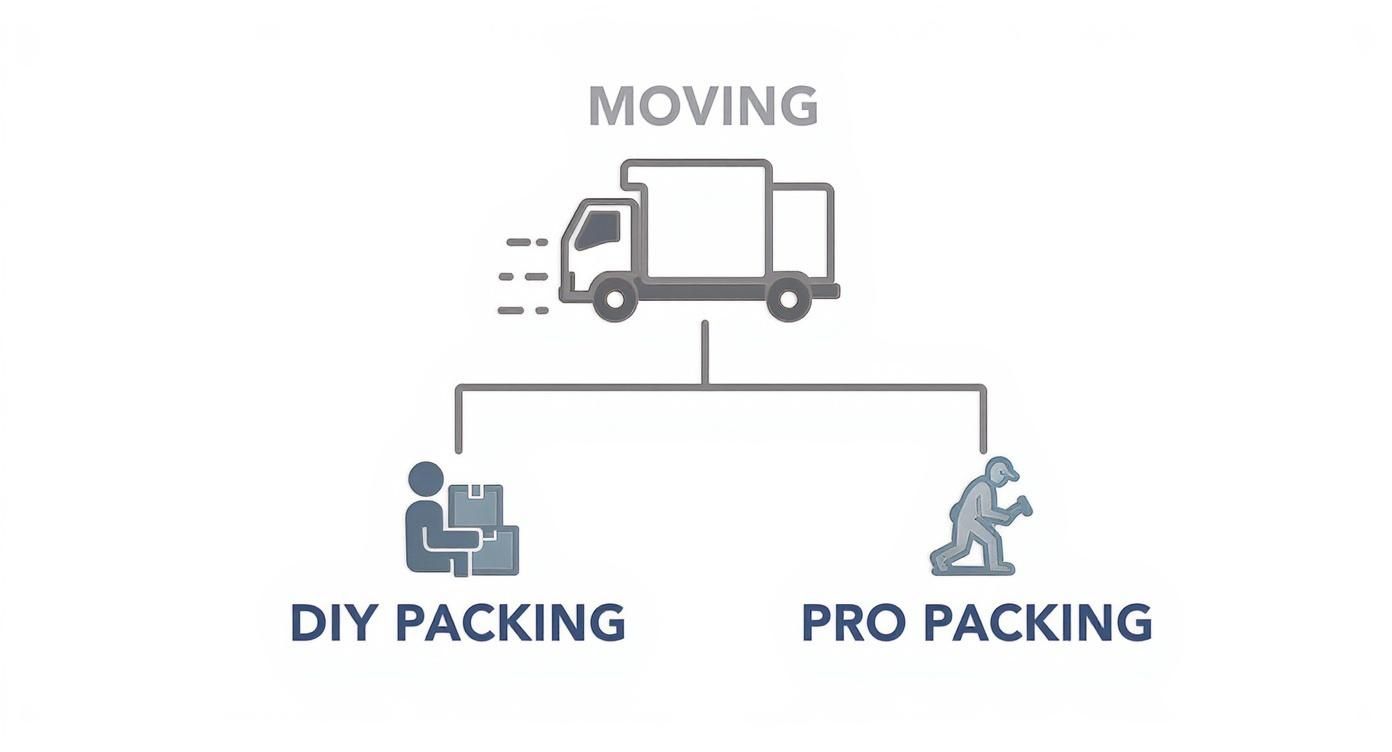
The level of service you select also plays a crucial role. Will you require professional packing for every item, or will you handle the packing yourself? These decisions are vital when constructing your budget. For a more detailed exploration of all potential expenses, refer to our guide on the cost of movers in Australia.

Comparing Standard Services with Backloading

As you begin to gather quotes, you will encounter two primary service options for an interstate move: a standard dedicated service and backloading. These are fundamentally different approaches.

  • Standard Removals: This is the premium, express option where a truck is exclusively reserved for your belongings. This results in a much faster transit time, with delivery to Sydney typically within 2-4 business days. You gain complete control over pick-up and delivery dates, but this convenience comes at a higher cost.

  • Backloading: This is the cost-effective, savvy choice. Your items share truck space with other consignments, effectively utilising available capacity on a truck already making the journey. This can lead to significant savings, but the trade-off is reduced flexibility. Delivery windows are considerably wider, often spanning 5-14 days.

Backloading is an excellent way to save money on your interstate move if your timeline is flexible. It leverages empty space on trucks already making the trip, reducing both the cost for you and the environmental footprint of the journey.

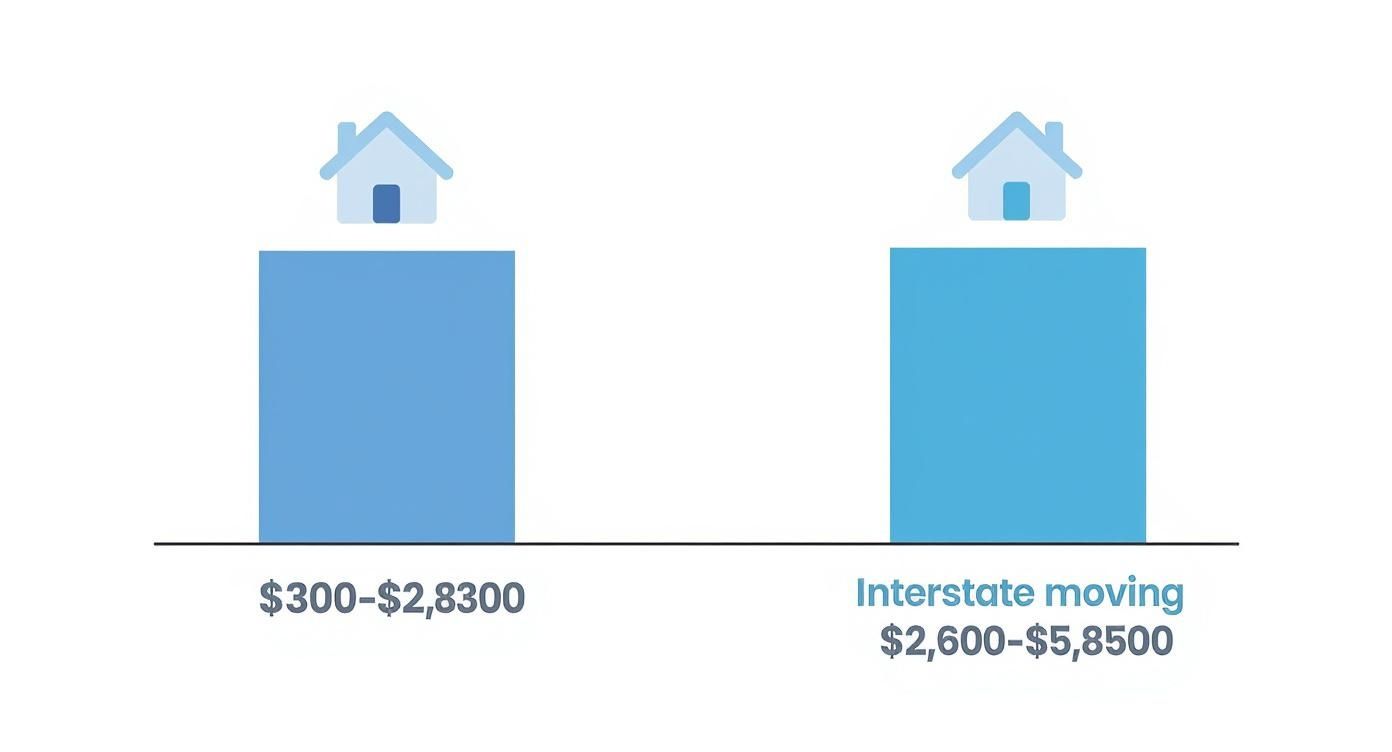
The cost data for the Melbourne to Sydney route highlights this difference clearly. On average, moving costs for this popular corridor range between $1,660 and $4,742, with a typical professional service costing around $2,800.

If budget is a key concern, backloading can reduce these costs by up to 50%, with some flexible customers paying as little as $765. This significant price difference is rooted in the per-metre rate: standard moves average approximately $145 per cubic metre, whereas backloading is closer to $95 per cubic metre. Furthermore, booking your move on a weekday can reduce the price by an additional 10-15% compared to a weekend slot. You can find more details on these pricing trends by reviewing interstate moving costs on Zoom Removals.

Here’s a comparative breakdown of estimated costs for the journey from Melbourne to Sydney.

Estimated Moving Costs from Melbourne to Sydney

Household Size Average Volume (m³) Standard Removalist Cost (Est.) Backloading Cost (Est.)
1 Bedroom Apt 10-15 m³ $1,450 – $2,175 $950 – $1,425
2 Bedroom Home 20-25 m³ $2,900 – $3,625 $1,900 – $2,375
3 Bedroom Home 30-38 m³ $4,350 – $5,510 $2,850 – $3,610
4 Bedroom Home 40-50 m³ $5,800 – $7,250 $3,800 – $4,750

These figures are estimates and can vary based on the specific removalist, time of year, and services required. It's always best to get a detailed quote.

As demonstrated, flexibility with your moving dates and opting for backloading can substantially impact your final expenses.

How to Read Your Quote and Spot Hidden Fees

A reputable and trustworthy removalist will provide a detailed, itemised quote. An estimate that feels vague or seems too good to be true should be treated with caution.

Ensure the quote provides a clear breakdown of all charges, including:

  • The total volume (m³) being transported.
  • The rate charged per cubic metre.
  • Any additional fees for challenging access (e.g., multiple flights of stairs, long-carry distances).
  • Fuel levies or applicable road tolls.
  • Specifics on the insurance coverage included.

Always inquire about potential extra costs before signing any agreement. Unforeseen charges can arise for things like waiting time if you are not ready at the scheduled time, or for shuttle van services if the primary truck cannot access your new street. By understanding every line item, you can build an accurate budget and select a mover that aligns perfectly with your plan.

Your Pre-Move Timeline and Checklist

A smooth and stress-free move from Melbourne to Sydney is achieved through solid, forward-thinking planning. Attempting to manage an interstate relocation without a structured plan is not advisable. A detailed timeline is your most valuable tool for preventing last-minute chaos and ensuring a seamless process. By breaking down the entire move into manageable weekly tasks, a seemingly monumental project becomes a series of achievable goals.

This timeline will guide you through the critical stages, ensuring that by moving day, you are thoroughly prepared.

Eight Weeks Out: The Strategic Start

With two months to go, the focus is on big-picture planning and making key decisions. This is the ideal time to begin a purposeful decluttering process. Methodically go through every room, cupboard, and drawer. Be ruthless in your evaluation. Every item you choose not to take is one less thing to pack, move, and pay for.

Consider this: with an average interstate removal cost of around $145 per cubic metre, discarding an old bookshelf or spare mattress that occupies just one cubic metre instantly saves you money. This is also the time to start researching and requesting quotes from professional removalists who specialise in the Melbourne to Sydney route.

Four Weeks Out: Getting Hands-On

At the one-month mark, the move begins to feel more tangible. Now is the time to start packing non-essential items. This includes books, out-of-season clothing, guest room linens, and any decorative items you won't need in the coming weeks.

This is also the deadline for critical administrative tasks. Notify your utility providers (electricity, gas, internet) of your moving date and arrange for final meter readings. Simultaneously, schedule the connection of services at your new Sydney address. Remember to set up mail redirection with Australia Post to ensure no important correspondence is lost during the transition.

Pro Tip: Create a detailed inventory of your belongings as you pack. A simple spreadsheet listing the box number, the destination room, and a brief summary of its contents is invaluable. This document is essential for insurance purposes and for verifying that all items have arrived safely in Sydney.

For an even more granular breakdown of every task, you can use our comprehensive moving house checklist, the only guide you will ever need to work alongside this timeline.

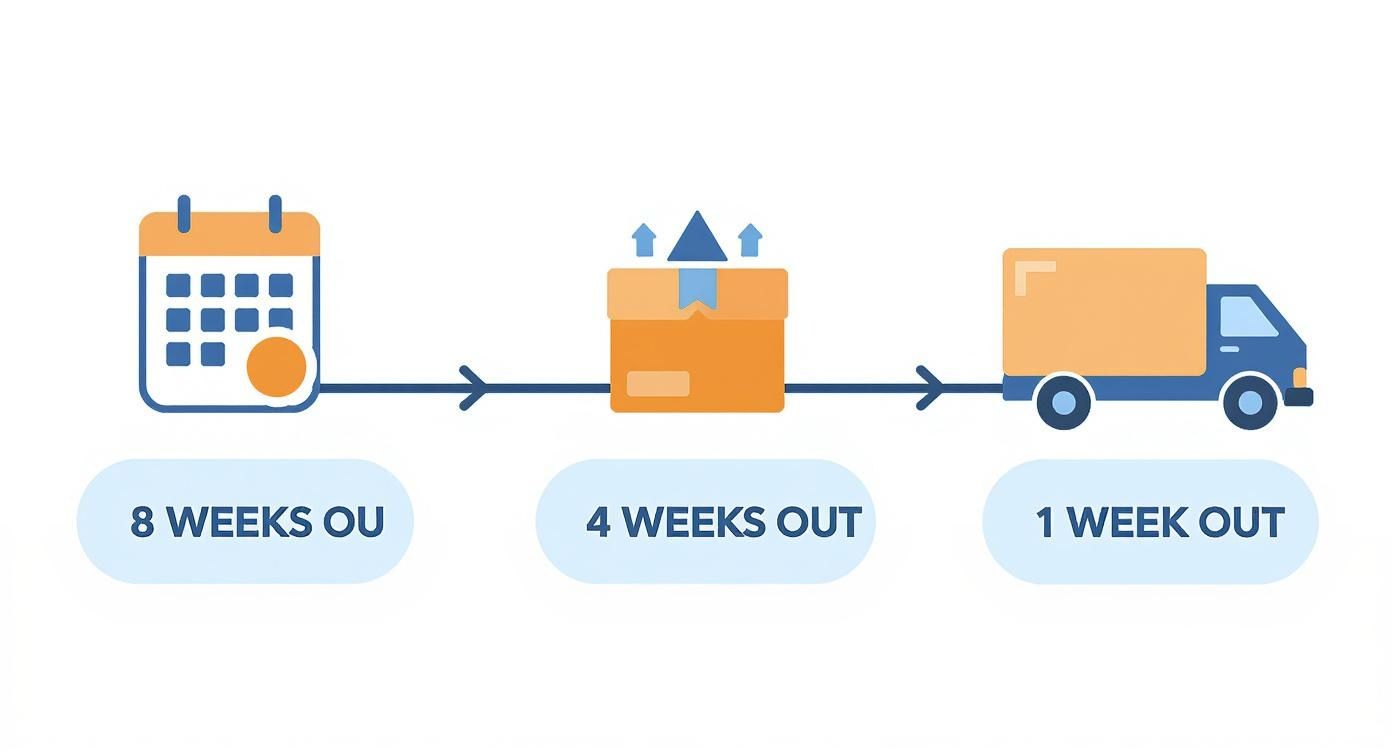
This timeline infographic breaks down the key phases of your pre-move preparation.
Infographic about interstate removals melbourne to sydney

Visualising your move in stages—from big-picture planning eight weeks out to final preparations in the last week—helps keep the process organised and manageable.

The Final Week: The Home Stretch

The last seven days are dedicated to final preparations and completing the last few tasks. By this point, the majority of your home should be packed, leaving out only daily essentials. Contact your removalist to confirm all details, including arrival times, contact numbers, and any special access instructions for your new Sydney property.

One of the most critical tasks during this final week is to pack a dedicated 'essentials' box. This box should travel with you in your car, not on the moving truck.

It should contain everything you'll need immediately upon arrival, such as:

  • Kettle, coffee, tea, and mugs
  • Basic toiletries and a change of clothes for each family member
  • Phone chargers and any essential medications
  • A small toolkit with a screwdriver and Allen keys
  • Bed linen for the first night

To ensure a smooth departure from your old home, a thorough clean is essential. You can refer to this ultimate end of lease cleaning checklist to help you cover all the bases. Finally, conduct a final walkthrough of your empty Melbourne home to ensure nothing has been left behind. With your timeline completed, you are now ready for the journey ahead.

Packing Strategically For The Long Haul

Packing your entire life for a nearly 900-kilometre journey is fundamentally different from a local move. When undertaking an interstate removal from Melbourne to Sydney, your belongings will endure a much longer transit. They will be exposed to more road vibrations and potential shifts, which demands a packing strategy that is robust, methodical, and focused on maximum protection.

Your first line of defence is using the right materials. Flimsy, single-walled boxes from the supermarket are inadequate for this journey. Investing in high-quality, double-walled cardboard boxes is absolutely non-negotiable for long-distance moves.

A person wrapping a fragile item carefully over a box filled with packing peanuts.

Essential Packing Materials For Interstate Protection

To properly secure your items for transit, a specific set of tools is required. This goes beyond simple boxes and tape.

  • Double-Walled Boxes: These are the industry standard for strength. They provide superior crush resistance, which is critical when boxes are stacked high in a moving truck.
  • Specialised Wraps: Bubble wrap is essential for delicate items, while butcher's paper is ideal for glassware to avoid ink transfer from newspaper. For electronics, anti-static bubble wrap is a must.
  • Heavy-Duty Packing Tape: Do not compromise on quality here. Secure the bottom and top of every box with multiple strips of tape to prevent them from bursting open during transit.
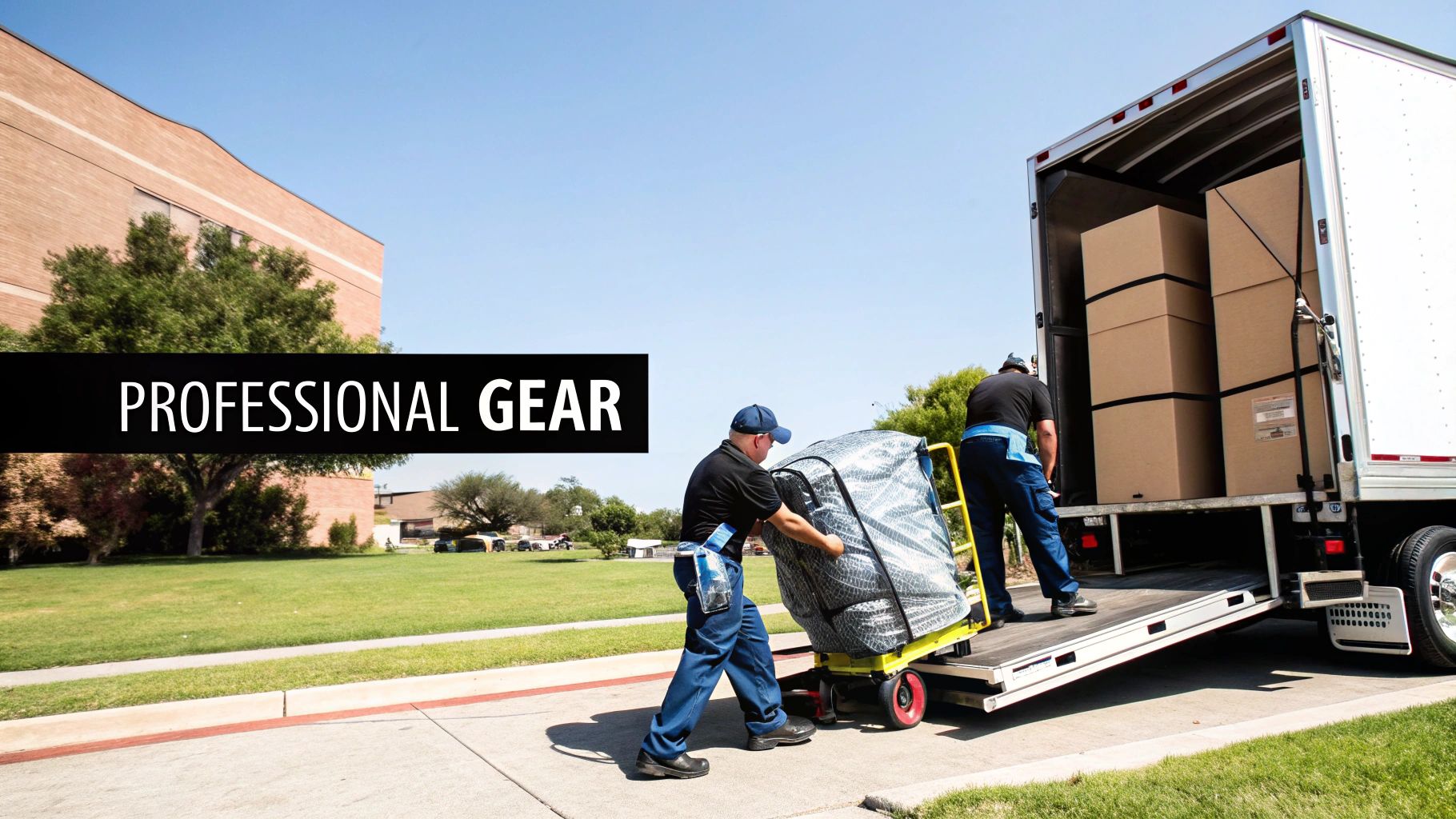
  • Furniture Blankets and Pads: Professional movers use these for a reason. They are vital for protecting wooden surfaces from scratches, dents, and other damage in transit.
  • Permanent Markers: Clear, bold labelling will be your greatest asset when you arrive in Sydney, exhausted and faced with a mountain of identical boxes.

Proven Packing Methods For A Seamless Unpack

How you pack is just as important as what you pack with. The objective is to create solid, stable boxes that can withstand the journey and facilitate a straightforward unpacking process in your new Sydney home. For a complete guide to best practices, our in-depth article on how to pack for moving offers even more detailed advice.

Always begin by reinforcing the bottom of every box. A single strip of tape is insufficient; use the 'H-tape' method, taping along all seams for maximum strength.

Next, focus on correct weight distribution. Place heavier items at the bottom and lighter ones on top. This creates a stable centre of gravity and prevents delicate belongings from being crushed. Aim to keep each box around 20kg—sturdy enough for protection, yet manageable for one person to lift safely.

A well-packed box should have no empty space. Gaps allow items to shift and break. Fill any voids with crushed packing paper, towels, or soft linens to create a snug, cushioned environment.

Labelling Everything For An Organised Arrival

Effective labelling is the difference between a chaotic guessing game and a streamlined unpacking process. Do not just write "Kitchen" on a box; be specific.

A comprehensive label should include three key pieces of information:

  1. Destination Room: e.g., "Main Bedroom," "Kitchen," "Living Room."
  2. Brief Contents Summary: e.g., "Everyday Plates & Bowls," "Linen Closet – Towels."
  3. Handling Instructions: Clearly mark boxes with "FRAGILE," "THIS WAY UP," or "HEAVY."

This simple system allows you or your movers to place each box in the correct room as it comes off the truck. You'll be able to locate the kettle and coffee mugs without having to open twenty different boxes—a small victory that feels immense after a long-distance move.

Finally, apply the same level of care to your furniture. Wrap large pieces in thick moving blankets and secure them with packing tape (ensuring the tape does not touch the furniture's surface). Disassemble items like bed frames and tables where possible, and keep all screws and bolts in a labelled zip-lock bag taped securely to the main component. This meticulous approach ensures everything arrives in Sydney in the same condition it left Melbourne.

How to Choose a Trustworthy Interstate Removalist

Choosing your removalist is undeniably the most critical decision for your interstate removals from Melbourne to Sydney. You are not merely hiring a truck; you are entrusting a company with all your worldly possessions for a journey spanning nearly 900 kilometres. A correct choice here ensures a smooth, secure, and stress-free move.

The selection process begins with thorough research. A legitimate removalist will have a professional website, a verifiable physical address, and easily accessible contact details. Be wary of any company that operates only with a mobile number or provides a quote that seems drastically lower than competitors, as this can be a red flag for hidden fees or substandard service.

A professional removalist smiling and holding a box, ready to help with an interstate move.

Verifying Credentials and Reputation

Before requesting a quote, perform due diligence. A reputable company should be a member of a professional organisation like the Australian Furniture Removers Association (AFRA). AFRA members adhere to a strict code of conduct, which means they are equipped with the proper equipment, well-maintained vehicles, and professionally trained staff to handle your move to the highest standards.

Beyond official accreditations, a company's public reputation provides valuable insight. Check for recent, genuine customer reviews on independent platforms. While an isolated negative comment is not necessarily a deal-breaker, pay close attention to how the company responds. A professional firm will engage with feedback constructively and seek to resolve issues, demonstrating accountability and a commitment to customer satisfaction.

Understanding Insurance and Liability

This is a critical area that is often misunderstood. Any professional removalist will carry Public Liability Insurance and Transit Insurance for their vehicles. However, it is crucial to understand that this does not automatically cover the full replacement value of your personal belongings in the event of accidental damage.

It's a common misconception that the removalist's standard insurance covers everything. For complete peace of mind, you must arrange comprehensive moving insurance. This protects the replacement value of your goods if they are lost or damaged in transit.

Ask any potential mover to explain their insurance options in detail. They should be able to offer a suitable policy directly or recommend a trusted third-party provider. If a company is vague about insurance or dismisses its importance, consider it a significant warning sign and look elsewhere. For a more thorough explanation, our guide on how to choose the best interstate removalists is an excellent resource.

Analysing Quotes and Services

When you receive quotes, look beyond the final price. A detailed, itemised quote is a hallmark of a professional operation. It should clearly break down:

  • The total volume of your goods in cubic metres (m³).
  • All included services, such as packing, disassembly, or short-term storage.
  • A transparent breakdown of costs, highlighting any potential extra fees for issues like difficult access or delays.
  • The estimated pick-up and delivery timeframe.

The Melbourne to Sydney route is one of Australia's busiest transport corridors, representing a 10-12 hour drive. The cost for such a move typically ranges from $1,660 to $4,742, depending on the volume of goods, the time of year, and the level of service required. For those with flexible schedules, backloading can offer significant savings, with prices starting from as low as $765.

Finally, before committing, ask some final qualifying questions. Do they use their own trained employees or subcontract the work? What is their communication protocol during transit? A trustworthy removalist will gladly answer all your questions, providing the confidence you need for your move to Sydney.

Arriving and Settling into Your New Sydney Home


The truck has arrived and your boxes are being unloaded, but the final phase of your **interstate removals Melbourne to Sydney** is just beginning. This stage is about transforming a house filled with boxes into a functional and comfortable home. A clear plan for this part of the process is invaluable.

Prioritise the essentials. Before unpacking begins, conduct a quick walkthrough of your new home. Direct the movers on where to place large furniture items and stacks of boxes—this is where your detailed labelling system proves its worth. Once the truck has departed, locate your 'essentials' box. Make the beds, put the kettle on, and take a moment to decompress. You've earned it.

Your Post-Move Action Plan

With immediate needs met, it's time to tackle the administrative tasks that officially establish you as a Sydney resident.

Your immediate to-do list should include:

  • Connect Utilities: Even if pre-booked, verify that your electricity, gas, and internet services are active. Discovering you have no hot water after a long day of unpacking is an easily avoidable frustration.
  • Update Your Details: Contact Service NSW to update the address on your driver's licence and vehicle registration. Remember to update your details on the electoral roll as well.
  • Find Local Services: Begin identifying your new local amenities. This includes finding and registering with a local GP and dentist, and noting the location of the nearest hospital or medical centre.

A methodical approach to unpacking is your best friend right now. Start with the most frequently used rooms—the kitchen, bedrooms, and bathrooms. Completely unpack and organise one room before moving to the next. This creates pockets of order and makes the entire house feel far less overwhelming.

Getting to Know Your New Neighbourhood

Once the administrative tasks are handled, the enjoyable part begins: exploring your new community. Sydney is a city of distinct villages, each with its own unique character. Take the time to go for a walk.

Locate the nearest supermarket, post office, and pharmacy. Find a local park or walking trail to get some fresh air after being surrounded by boxes. Familiarising yourself with Sydney’s public transport system early on will also build your confidence for exploring further afield.

The adjustment period is an integral part of the relocation journey. You are not alone in making this popular move. The migration between Australia's two largest cities is significant. In recent years, population flows have shifted, and by September 2023, Sydney's outbound moving enquiries reached 30%, indicating a dynamic and ever-changing demographic landscape. You can explore these patterns further by looking into Australia's interstate moving trends on Find a Mover.

Your Top Questions About Moving to Sydney

Even with the most meticulous planning, questions can arise. When undertaking a move as significant as Melbourne to Sydney, it's natural to have some uncertainties. To provide clarity, we have compiled and answered the most frequently asked questions.

How Long Will My Belongings Take to Arrive?

While the drive itself takes approximately 9-10 hours, the delivery time for your belongings is longer.

If you have booked a dedicated truck (a standard removal service), the transit is much faster. In this case, you can expect your belongings to arrive in as little as 2-4 business days.

Conversely, if you opt for a budget-friendly backloading service (sharing truck space), the timeline is extended. The delivery window is typically between 5-14 days. This allows the removalist to coordinate multiple pick-ups and drop-offs along their route. Always obtain a firm delivery window in writing before you finalise your booking.

Do I Need Special Moving Insurance?

Yes, absolutely. While any reputable removalist will have Public Liability and Carrier's Liability insurance, this provides only basic coverage. It is often limited and is unlikely to cover the full replacement value of your goods in the event of an incident.

For genuine peace of mind, you really need to arrange your own comprehensive transit insurance. This kind of policy is designed specifically to cover your belongings for their full value against accidental damage or loss, all the way from your old front door to your new one.

What Is the Best Time of Year to Move?

To achieve cost savings and greater flexibility, aim for the off-peak season. Summer, particularly the hectic period of December and January, is the busiest and most expensive time to move. School holidays also see a surge in demand and prices.

You will generally find more competitive rates and better availability by moving mid-week (Tuesday to Thursday) and mid-month. The shoulder seasons of autumn (March-May) and spring (September-November) often represent the ideal balance, offering pleasant weather and more favourable pricing for your Sydney relocation.

Can Removalists Transport My Plants or Pets?

This is almost always a no. The vast majority of professional removalists cannot transport live plants due to state quarantine regulations and the high probability that plants will not survive the journey in a dark, enclosed truck. It is best to transport them in your own vehicle or re-home them before you leave.

For pets, you must engage a specialised pet transport service. These companies are equipped to move animals safely and humanely, by road or air. They manage all the logistics to ensure your furry family members are comfortable and that all travel regulations are met.


When you're ready to make your move from Melbourne to Sydney, you need a team you can trust. Get n Go Removals Melbourne offers reliable, professional, and careful interstate removal services to ensure your belongings arrive safely. With years of experience and a commitment to transparent communication, we make your big move a smooth one.


Get your free, no-obligation quote today!

READ MORE

Find the Best Melbourne Removalists for Your Move

Let's be honest, finding the right Melbourne removalists can feel like the difference between a smooth, exciting new chapter and a complete logistical nightmare. The secret is finding a professional, reliable crew that actually treats your belongings with respect and keeps you informed from the first phone call to the final box.

This comprehensive guide is here to help you cut through the noise, avoid common pitfalls, and find that perfect team for your house or office move.

Your Guide to Selecting the Best Melbourne Removalists

Two professional removalists carefully carrying a large couch out of a home.

Whether you’re moving your family home or shifting your office across town, the sheer number of moving companies in Melbourne can be overwhelming. The city is constantly growing, and with that comes a huge demand for quality movers. But this boom also means you need to be more discerning than ever to find a team that truly delivers on its promises.

Think of this as your personal roadmap. We'll break down everything you need to know to find a trustworthy moving partner, whether you’re just hopping over to the next suburb or making a big interstate move.

Understanding the Melbourne Moving Market

Melbourne is growing at a staggering pace. Projections show the city's population is on track to hit 6.2 million by 2030, which means we need up to 40,000 new homes every single year.

That’s a lot of moving! This surge puts immense pressure on the removals industry, making it absolutely crucial to partner with an established, professional company that can handle the volume without cutting corners on service.

A successful move isn't just about getting boxes from A to B. It's about entrusting a team with your life's possessions and having the peace of mind that comes from true professionalism, reliability, and clear communication.

What to Look for in a Mover

So, how do you spot a dependable mover in a crowded market? It really comes down to a few key non-negotiable factors.

Here's a quick look at the most important criteria to consider when vetting Melbourne removalists for your move.

Key Factors for Choosing Your Removalist

Factor Why It Matters What to Look For
Experience & Reputation A long track record in Melbourne means they understand the city's logistics, from tricky laneways to apartment block rules. Look for years in business and a solid collection of recent, positive customer reviews on independent sites.
Transparent Pricing The last thing you need on moving day is a surprise bill. A quality mover is upfront about all potential costs. Insist on a detailed, itemised quote. Ask specifically about any potential extra fees (e.g., stairs, difficult access).
Comprehensive Insurance Accidents, though rare with professionals, can happen. Proper insurance protects you from financial loss. Confirm they hold both Public Liability and Transit Insurance. Ask to see the certificates of currency.
Professional Team A dedicated, in-house team is more accountable and better trained than a crew of random contractors. Ask if their staff are full-time employees and if they undergo background checks and professional training.

By focusing on these points, you can weed out the unreliable operators and find a team you can genuinely trust. If you're looking for more real-world advice, be sure to check out these extra tips to find a removal company in Melbourne.

How to Decode Removalist Quotes and Hidden Costs

A person reviewing a moving quote on a clipboard.

Alright, you’ve started gathering quotes from a few Melbourne removalists. This is where things get real, but it's crucial to remember that the first number you see on an estimate isn't always the final figure you'll pay. Knowing how to read between the lines is the secret to avoiding a nasty surprise on moving day.

In Melbourne, most professional movers structure their pricing in one of two ways. Each has its pros and cons, and the right one for you really depends on the specifics of your move.

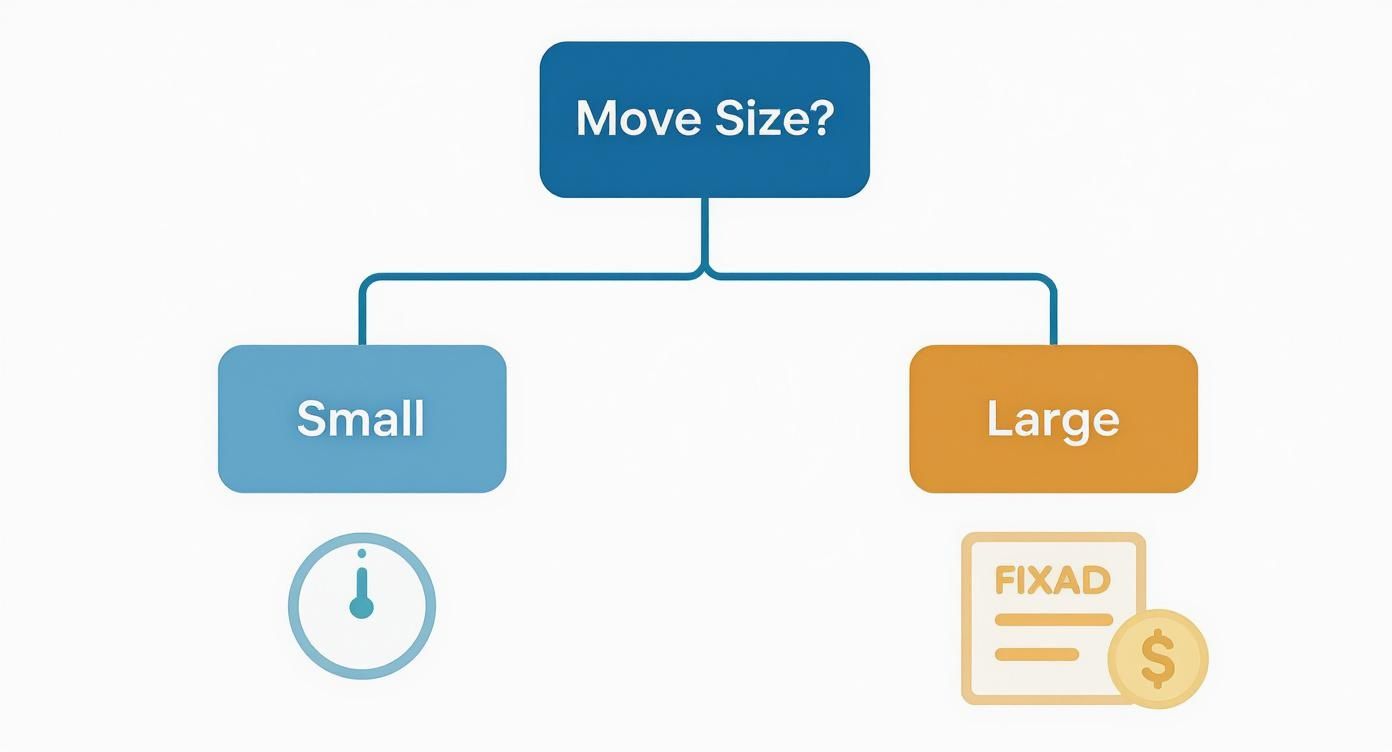
Hourly Rates vs Fixed Price Quotes

The most common model you’ll come across is an hourly rate. Simple enough—you pay for the time the crew is on the clock, which usually starts when they leave their depot and ends when they get back. This can be a fantastic, cost-effective option for smaller, local moves, especially if you’re well-prepared and have done most of the packing yourself.

Then you have the fixed price quote. This gives you one solid, all-inclusive price for the entire job, from start to finish. It’s often the smarter choice for larger homes, long-distance moves, or complex jobs where the timing is a bit of a guessing game. It might look a little higher at first glance, but it gives you total peace of mind and budget certainty.

Choosing the right pricing model is really about managing risk. An hourly rate has the potential for savings if your move is quicker than planned, while a fixed quote is your insurance against delays and unexpected hiccups.

Spotting Common Hidden Charges

The biggest headaches on moving day often stem from costs that were never mentioned upfront. These are the extra fees for tasks that demand more time, muscle, or specific resources from the moving crew. If you know what to look for, you can ask the right questions before you commit.

Here are a few of the most frequent extra charges to keep an eye on:

  • Stair Fees: Lugging a heavy sofa up three flights of stairs is tough, time-consuming work. It's no surprise that many companies add a surcharge for each flight of stairs involved.
  • Long-Carry Distances: If the truck can't park right out front—a common problem in Melbourne's inner suburbs—the crew has a longer walk to your door. This "long-carry" fee covers that extra time and effort.
  • Difficult Access: Think tight hallways, awkward corners, or having to use a tiny lift. Anything that complicates the physical process of moving items can sometimes incur an extra charge.
  • Specialty Items: Got a piano, a slate pool table, or a massive piece of gym equipment? These items require special handling, and sometimes extra crew members or equipment, which will always come at an additional cost.

The best way to protect yourself is to ask for a fully itemised quote. If a price seems way too good to be true, it probably is. To get a better handle on this, check out our guide on the common hidden costs you might face when moving house. Getting total clarity on potential extras is the key to keeping your moving budget firmly on track.

Identifying and Avoiding Unreliable Movers

Melbourne's moving scene is buzzing, which is great for choice, but it also means there are a few rogue operators floating around. Picking the wrong team can turn the excitement of a new home into a nightmare of stress, damage, and surprise costs. Knowing how to spot the red flags is your best line of defence.

The first, and often most tempting, red flag is a quote that’s miles cheaper than everyone else's. We all love a bargain, but a price that seems too good to be true usually is. It often points to a company cutting corners on crucial things like insurance, vehicle maintenance, or proper staff training. That initial saving can end up costing you a whole lot more down the track.

Do Your Homework

Vague or spotty communication is another massive warning sign. A professional removalist will be clear, quick to respond, and more than happy to walk you through any questions you have. If a company is a pain to get hold of, gets cagey when you ask about their insurance, or doesn't have a physical address listed anywhere, you should be suspicious.

And here’s a non-negotiable: every legitimate business in Australia needs an Australian Business Number (ABN). You can—and absolutely should—check it for free using the ABN Lookup tool online. If they don't have an ABN or it’s invalid, walk away. It's a clear sign they aren't a registered, legitimate business.

Trust, but Always Verify

Beyond the ABN, ask them to show you their certificates of currency for Public Liability and Transit Insurance. A mover with nothing to hide will have these ready to go. Without proof, you've got no guarantee your belongings are covered if something goes wrong on the day.

Online reviews are a goldmine of information, but you need to read between the lines. Don't just look at the star rating; look for consistent themes in recent comments. A couple of grumpy reviews are one thing, but a long history of complaints about broken furniture, hidden fees, or terrible communication is a clear signal to look elsewhere.

The problem is bigger than most people think. While official stats show a rise in complaints, many in the industry believe that for every formal complaint made, about five other incidents never get reported. It really drives home how important it is to vet your mover properly before you book. You can read more about Melbourne's moving industry challenges to get the full story.

In the end, protecting yourself and your belongings comes down to a few simple checks:

  • Verify their ABN: Make sure they're a real, registered business.
  • Confirm Insurance: Ask for up-to-date certificates for Public Liability and Transit Insurance.
  • Check Online Reputation: Scan recent reviews on multiple sites for any recurring problems.
  • Demand Clear Communication: A pro company is transparent and easy to deal with from the very first call.

By taking these steps, you can confidently weed out the dodgy operators and find a team you can trust. When you're ready to start looking, our guide on finding the best removalists near me can point you in the right direction.

A Practical Guide to Moving Day Preparation

How you prepare before your Melbourne removalists roll up is just as crucial as the move itself. Trust me on this one. A bit of organisation beforehand saves a mountain of time and stress, and it helps the moving crew work at their best—which, when you're paying by the hour, saves you a decent chunk of money.

Getting organised turns what could be a chaotic day into a smooth, well-oiled machine. It all boils down to smart packing and clear communication.

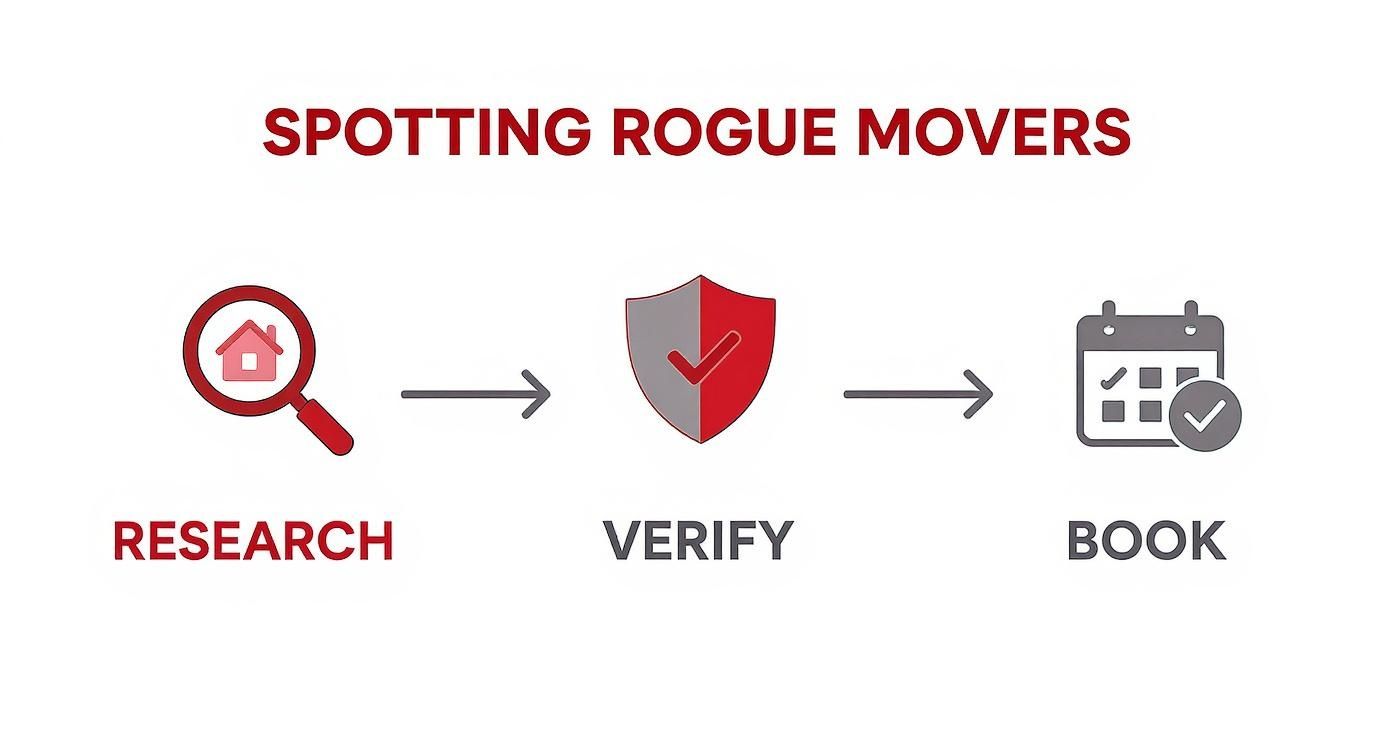
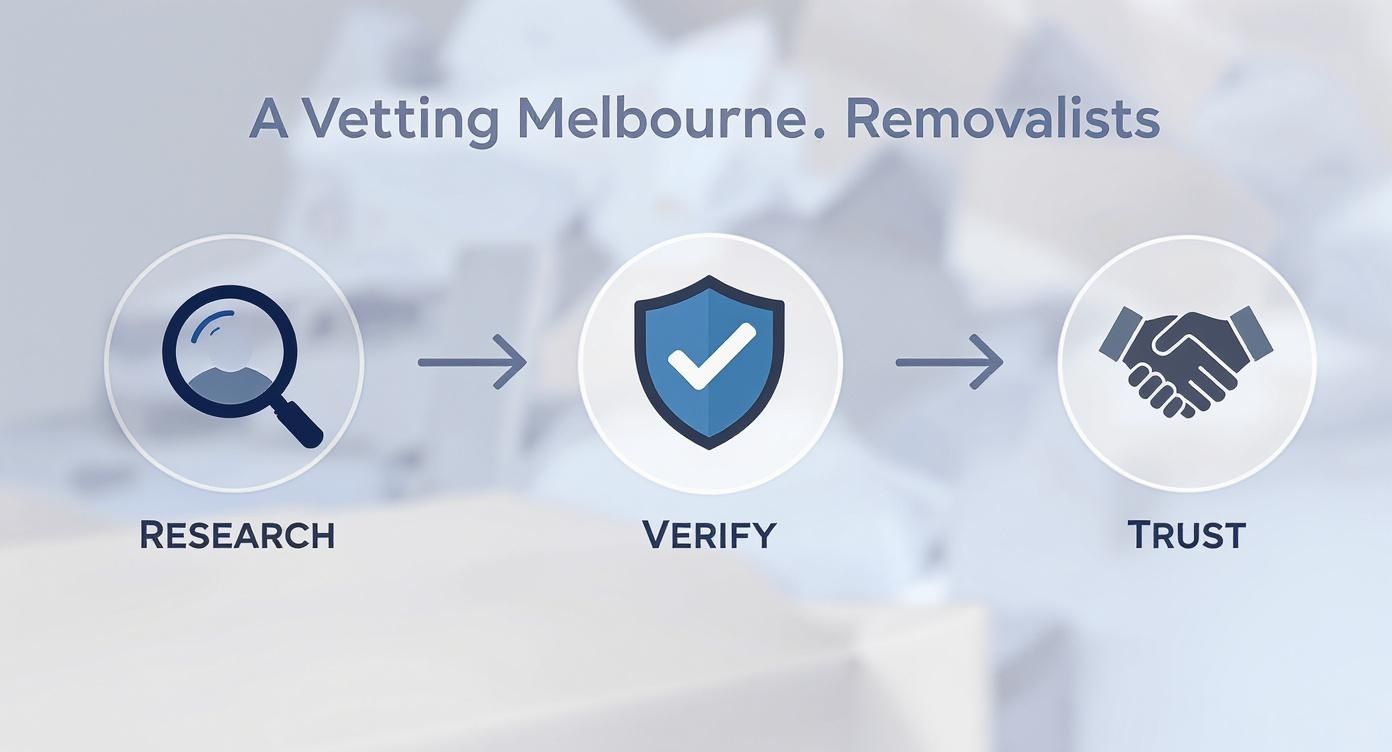
This infographic lays out the simple but vital steps to make sure you're hiring genuine pros, not cowboys.

Infographic timeline showing the process of spotting rogue movers, with icons for Research, Verify, and Book.

As you can see, locking in your booking should be the very last thing you do. Only after you've done your homework and verified the company’s credentials can you be sure you're avoiding a dodgy operator.

Strategic Packing And Labelling

The humble box is the foundation of any good move. Make sure you're using sturdy, decent-quality boxes in a few different sizes. A common mistake is overpacking them; a box that's too heavy is a recipe for disaster. When it comes to fragile things like plates, pack them on their side, like vinyl records in a crate. This makes them far less likely to shatter in transit.

Labelling is your absolute best friend on moving day. Don't just scrawl "Kitchen" and call it a day. Get specific: "Kitchen – Plates & Mugs" or "Linen Cupboard – Towels". Label at least two sides of every box with a thick marker so you can easily spot what's what, no matter how they're stacked in the truck or a corner of your new place.

Pro Tip: Grab a few rolls of coloured tape or some stickers to colour-code your boxes by room. Blue for the master bedroom, green for the kitchen, you get the idea. Then, stick a matching piece of tape on the doorframe of each room in your new home. Your removalists will love you for it—they can get everything to the right spot without having to ask you a single question.

Preparing Furniture And Appliances

Your big-ticket items need a little prep work before the truck arrives. If you're handy with a screwdriver, dismantling things like bed frames or big dining tables will save a massive amount of time. Pop all the screws, bolts, and other little bits into a labelled zip-lock bag and tape it securely to the biggest part of the furniture it belongs to. No more mystery screws!

Appliances have their own to-do list:

  • Fridges and Freezers: Defrost, clean, and dry them out completely at least 24 hours before the move. This is non-negotiable if you want to avoid a mouldy, watery mess.
  • Washing Machines: Make sure the hoses are disconnected and, if you still have them, secure the drum with the original transit bolts. This stops the drum from rattling around and getting damaged.
  • Electronics: Before you unplug everything, snap a quick photo of the back of your TV or computer setup. It’ll make remembering where all those cables go so much easier.

Managing Moving Day Logistics

A little bit of forward-thinking here goes a very long way. If you live in a busy Melbourne suburb with tight parking or in an apartment block, logistics are everything. You might need to contact your local council to reserve a parking spot for the moving truck. Or, if you’re in a building, chat with the manager to book the service lift and give them a heads-up on your moving schedule.

Finally, pack an "essentials box" that travels with you in the car, not on the truck. This is your first-night survival kit. Fill it with everything you’ll need right away: toilet paper, soap, medications, phone chargers, snacks, the kettle, and a few basic tools. Having this box means you can make a cuppa and relax for a minute, rather than frantically tearing through boxes to find a mug. For a complete guide on what to tackle, check out the essential moving home to-do list to make sure nothing gets missed.

Understanding Mover Insurance and Liability

Even when you hire the best Melbourne removalists, you have to remember that accidents can, and sometimes do, happen. A sudden stop in traffic, a misstep on the stairs—these unexpected moments can put your treasured belongings at risk. This is precisely why getting your head around insurance coverage isn't just a good idea; it's non-negotiable. Think of it as the safety net that protects you from a financial headache and gives you genuine peace of mind.

Most professional moving companies will have insurance, but what they carry can vary wildly. The devil is always in the detail, and knowing the difference between policies is critical before you sign on the dotted line.

The Two Core Types of Mover Insurance

When you start digging into it, you'll mainly come across two policies: Public Liability and Transit Insurance.

Public Liability is there to cover damage to property. For instance, if a mover accidentally scrapes a wall in your apartment building's hallway or damages the lift, this is the policy that kicks in. It’s designed to protect the building, not your actual belongings.

Transit Insurance is the one you’re likely most interested in. This is what covers your goods while they're physically in the truck, from the moment they’re loaded until they’re unloaded at your new place. This policy is your shield against major events like fire, theft of the truck, or a vehicle accident during the journey.

What Is and Isn't Covered

Now, this is where a lot of people get caught out. It’s vital to understand the limitations of these policies. Standard Transit Insurance often only covers your items while they are on the truck—not necessarily while they're being carried from your front door to the vehicle.

Another massive blind spot? Boxes you packed yourself. Unless a box you packed shows clear, obvious external damage (like it's been crushed), the mover's insurance typically won't cover any breakages inside.

There's a common myth that a removalist's standard insurance is an all-encompassing shield. The reality is their liability is often quite limited. Always ask to see their Certificate of Currency and actually read the fine print. You need to know exactly what's protected.

For a deeper dive into the kind of coverage professionals should have, looking into specific policies like Motor Truck Cargo Insurance can give you a much clearer picture of their obligations.

To help you navigate the options, here’s a quick breakdown of the common types of moving insurance.

Moving Insurance Comparison

Insurance Type What It Typically Covers Key Consideration
Public Liability Damage to property (e.g., walls, floors, common areas) during the move. Doesn't cover your personal belongings, only third-party property.
Transit Insurance Loss or damage to your goods from fire, theft, or collision while on the truck. Coverage is limited to the transit phase only. May not cover packing/unpacking.
Accidental Damage Breakages that happen accidentally during handling, loading, or unloading. This is often an optional add-on. Ask your mover if they offer it.
Comprehensive Cover Full door-to-door protection, including packing, transit, and unpacking. Usually a separate policy you purchase. Offers the highest level of protection.

Understanding these distinctions is the first step toward ensuring your move is truly protected from start to finish.

Key Questions for Your Removalist

Before you lock anything in, you need to get straight answers to a few direct questions. Don't feel awkward about asking for proof; a reputable mover will have it all on hand.

  • Can I see your Certificate of Currency? This is non-negotiable. It’s the only way to prove their insurance is active and up-to-date.
  • What is the excess on your policy? You need to know how much you’d be out-of-pocket if you had to make a claim.
  • What is the total value your policy covers? Make sure their coverage limit is high enough to replace your most valuable items if the worst happens.
  • Do you offer accidental damage cover? This is a big one. It's often an add-on that protects against accidental breakage during handling, not just major events during transit.

It's also worth checking your own home and contents insurance policy. Some include a 'goods in transit' clause, but you'll need to confirm if it covers a move with professional removalists. If it doesn't, or if the coverage feels a bit thin, your best bet is to buy a separate, comprehensive moving insurance policy for complete door-to-door protection.

For a team that offers transparent advice on insurance, consider reaching out to professional furniture removalists in Melbourne who can walk you through your options clearly.

The Headaches Facing Melbourne's Moving Industry Right Now

To get the best out of your move, it helps to understand what's happening behind the scenes. Like a lot of industries right now, Melbourne removalists are dealing with a few major operational hurdles that can have a real knock-on effect for customers.

Knowing what these are explains why it’s become so crucial to book a quality company well ahead of time. These pressures directly impact everything from scheduling and pricing to the simple availability of a good crew, especially when things get busy in summer or at the end of the month.

Labour Shortages and Soaring Costs

One of the biggest headaches for the industry is a serious shortage of skilled labour. Many of the best, most experienced movers have been tempted away by other sectors like construction, which can often pay more. This has left a real gap, putting a strain on even the most established moving companies and making it harder to find a booking.

On top of that, the cost of just running the business has shot up. We're talking about everything from the fuel in the trucks and vehicle maintenance to the price of good quality packing boxes and tape. These increases inevitably find their way into the final quote for a professional move. You can read more about these industry-wide pressures to get the full story.

For you, this means being wary of any quote that seems too good to be true. A suspiciously low price is often a massive red flag. It could mean the company is cutting corners on experienced staff, using subpar equipment, or—worst of all—skimping on essential insurance just to keep their prices down.

The Push for Greener Moves

Another big shift is the growing demand from customers for more sustainable, eco-friendly moving options. People are asking for things like reusable packing materials, trucks with lower emissions, and clear strategies for reducing waste.

This is a fantastic change for the better, but going green isn't free. It requires real investment and smart planning. The best removalists are stepping up to the plate by:

  • Offering tough, reusable moving boxes for hire.
  • Planning smarter routes to cut down on fuel.
  • Working with recycling services to properly dispose of unwanted items and packing materials.

All these industry challenges really highlight why it pays to go with an established, well-run moving company. They’ve got the experience and the resources to handle these pressures, making sure your move isn’t derailed by a last-minute cancellation or some other preventable drama.

Here are the answers to some of the most common questions we get asked by people planning a move in Melbourne. Hopefully, they'll clear a few things up for you and make the whole process feel a bit less daunting.

When Is the Best Time to Book My Movers?

Timing really is everything, especially in a busy city like Melbourne. The moving season hits its peak during summer and at the end of each month, which means good removalists get booked out fast.

As a rule of thumb, you should lock in your removalist at least four to six weeks in advance. This gives you the best shot at securing your preferred date and avoids that last-minute panic when you find everyone is already taken.

If you’re planning an interstate move or shifting during a major holiday period, it’s even smarter to book further ahead—think about eight weeks out, just to be safe.

Is There Anything Removalists Can't Move?

While we'd love to take everything, there are certain items professional movers can't transport for safety and legal reasons. It's really important to sort these out yourself before moving day.

  • Hazardous Materials: This is a big one. Think things like paint tins, fuel, aerosol cans, gas bottles, and harsh cleaning chemicals. They’re all strictly prohibited.
  • Perishable Food: Anything that can spoil, like the contents of your fridge and freezer, needs to be moved by you. A cooler bag on the front seat is usually the way to go!
  • Valuables and Personal Items: We always recommend you personally look after irreplaceable things. This includes important documents (passports, birth certificates), jewellery, medication, and any sentimental items you can't bear to part with.

Should I Be Tipping the Removalists?

Tipping isn't a standard or expected custom here in Australia, unlike in some other countries. So, don't feel obligated at all.

That being said, if your moving crew has done a fantastic job—they were punctual, efficient, careful with your things, and just genuinely great to work with—a tip is a really thoughtful way to acknowledge their hard work.

Another way to show your thanks, which is always hugely appreciated, is to offer some cold drinks or snacks on a hot day. And leaving a positive online review for the company afterwards? That helps us out immensely.


Planning your move and need a team you can trust? The professional crew at Get n Go Removals Melbourne has the experience and dedication to make your relocation seamless and stress-free. From local moves to interstate journeys, we handle every detail with care. Get a free quote online or call us today to discuss your moving needs.

READ MORE

A Comprehensive Guide to Finding the Best House Movers Near Me in Melbourne

When you type "house movers near me" into a search bar, the sheer volume of results can be overwhelming. You're faced with a seemingly endless list of companies, all promising a seamless experience. But finding just any mover is easy; the real challenge lies in finding the right one. You need a team that is not only reliable and careful but also transparent and professional. This guide is designed to help you navigate the process, build a shortlist of Melbourne's finest movers, and ensure your moving day is a success.

How to Find a Mover Beyond a Simple Search

While a quick Google search is a natural starting point, the most trustworthy moving companies are often discovered through word-of-mouth and genuine local recommendations. A company's website can provide a good overview of their services, but it rarely tells the full story of their reliability and customer service when it matters most.

The most effective strategy is to combine online research with community-based intelligence. By tapping into your local network, you can find movers that your neighbours have personally used and trusted with their own possessions. This kind of firsthand validation is far more valuable than any polished online advertisement.

Leverage Local Community Recommendations

Before you dive into the rabbit hole of online reviews, start with the people you trust. A personal recommendation offers real context and unfiltered feedback, which is priceless.

Here are the best places to find genuine referrals:

  • Neighbourhood Social Media Groups: Local community pages on platforms like Facebook are goldmines for this type of information. A simple post asking for "recommendations for local house movers" will often result in a wealth of suggestions from people who have recently navigated the moving process in your specific area.
  • Friends, Family, and Colleagues: Reach out to anyone in your personal or professional circle who has moved in Melbourne recently. They can provide a detailed account of their experience—what went well, what didn't, and what they would do differently.
  • Real Estate Agents: Your agent is deeply embedded in the property market. They almost always maintain a list of preferred removalists they recommend to clients to ensure smooth and timely settlements.

The Impact of Melbourne's Housing Market

Understanding the current state of the local housing market is also beneficial. The Australian removalist industry has been significantly affected by the broader housing crisis. Recent data indicates a two-decade low in the demand for moving services, with search interest for removalists dropping by 22% since 2019. This decline is a direct result of fewer people relocating due to housing shortages and escalating rental prices. You can explore more data on this trend in the Muval Index 2025. This market shift can impact a mover's availability and pricing, making it even more critical to secure a high-quality team well in advance. Our guide to the best moving companies in Melbourne offers further insights to help you navigate your options.

Key Takeaway: While a quieter market might suggest more choices are available, don't be misled. The most reputable and in-demand companies are still booked weeks, or even months, in advance, particularly during peak seasons. Starting your search early is not just advisable—it's essential for securing a top-tier service.

How To Properly Vet and Compare Moving Companies

Once you've compiled a shortlist of potential "house movers near me," it's time for the crucial vetting process. This is where you dig deeper to distinguish the true professionals from the unreliable operators. Your goal is to ensure the company you hire is legitimate, dependable, and adequately insured to handle your valuable possessions.

A professional moving company is more than just a truck and a couple of workers; it's a registered business with legal accountability. The first non-negotiable check is their Australian Business Number (ABN). A quick search on the official ABN Lookup website will confirm their legitimacy. If a company is hesitant to provide their ABN, consider it a major red flag and move on.

The next critical factor is insurance. Never take a company's word for it. A reputable mover will have no issue providing you with a certificate of currency for their insurance policies.

The Two Types of Insurance You Must Confirm

Every professional mover in Melbourne should carry two essential types of insurance. Understanding the distinction is vital to ensure you are fully protected against any potential mishaps.

  • Public Liability Insurance: This policy protects property and people. It covers accidental damage to the buildings themselves, such as a scuffed wall in an apartment corridor or a dented lift door.
  • Transit Insurance: This policy is specifically for your belongings. It covers your items against damage or loss while they are being handled, packed, loaded, and transported by the moving team.

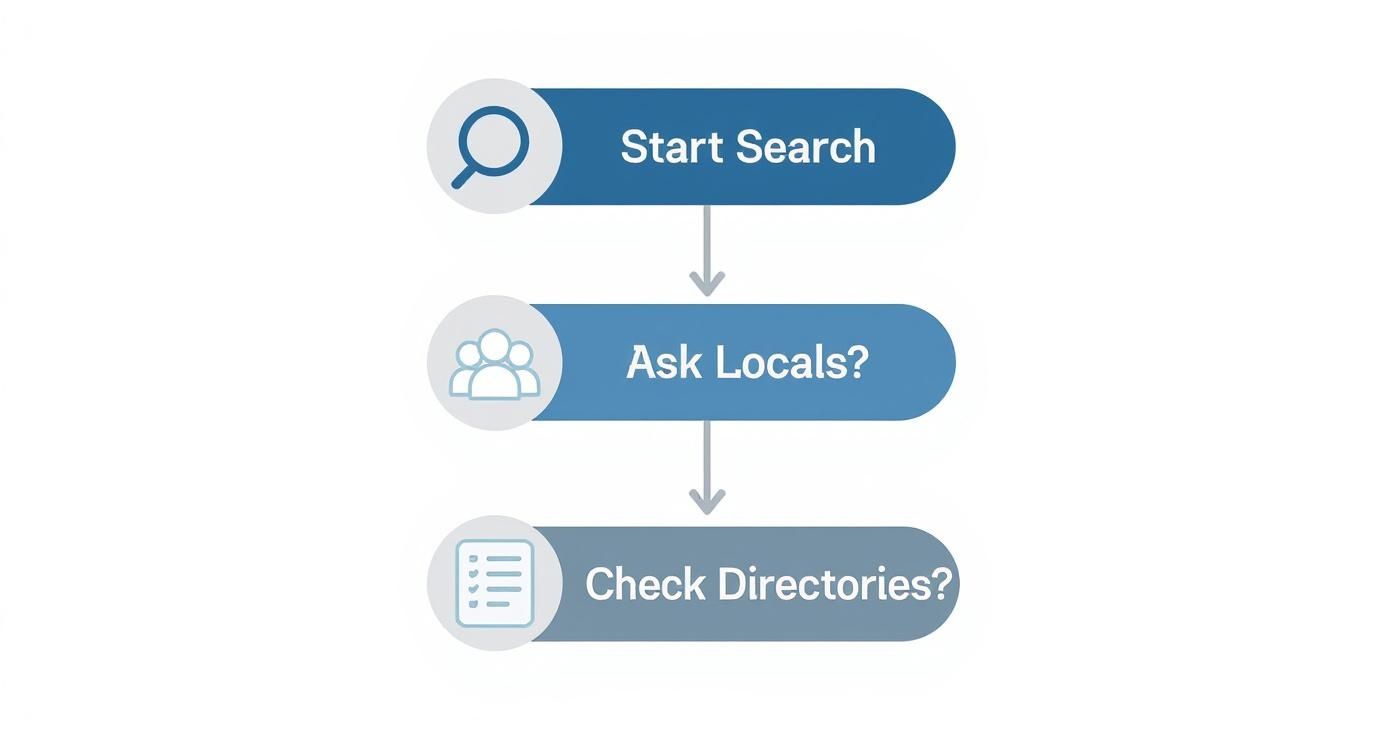
Finding the right mover often starts with a mix of research methods.

Infographic about house movers near me

As this infographic illustrates, casting a wide net by consulting local sources, checking directories, and reading online reviews will provide you with a stronger pool of companies to evaluate.

Looking Beyond the Star Rating

Online reviews are an invaluable resource, but it's important to read between the lines. A company with thousands of five-star reviews isn't automatically the best choice; the quality and substance of the feedback are what truly matter.

Be cautious of potential red flags. A long list of vague, generic positive comments like "Great service!" can be less informative than a single, detailed review. More importantly, pay close attention to how the company responds to negative feedback. A professional, solution-oriented reply demonstrates excellent customer service. An aggressive or dismissive response, however, is a significant warning sign.

A mover’s response to criticism reveals more about their customer service culture than a dozen glowing reviews. Look for accountability, not arguments.

When you make initial contact, have a list of questions prepared. Inquire about their team—are they experienced, full-time employees or temporary subcontractors? Do they have specific experience with your type of residence, such as a high-rise building with complex lift access or a property on a narrow street? Their answers will give you a clear indication of their expertise. For more tips, our guide on choosing the right removals firm for your move is an excellent resource.

To stay organized, a simple checklist can be a lifesaver. It helps you compare companies on a like-for-like basis and identify potential issues early in the process.

Mover Vetting Checklist

Verification Point Mover A Status Mover B Status Notes & Red Flags
ABN Verified Any hesitation to provide this is a deal-breaker.
Public Liability Insurance Ask for the Certificate of Currency.
Transit Insurance Confirm what the policy covers and its limits.
Read Negative Reviews How do they handle problems? Are they defensive?
Quote Inclusions Clear Are packing materials, travel time, or stair fees extra?
Employee vs. Contractor Direct employees often mean more accountability.

Using a structured table like this makes it easy to see at a glance which company meets all the essential criteria and which ones might be hiding potential issues.

Finally, when you receive quotes, resist the urge to immediately choose the cheapest option. An unusually low price is often a sign of trouble. Scrutinize what each quote includes. Does it cover packing materials, furniture disassembly, or potential access fees? A low-ball offer can quickly escalate with hidden costs, turning a perceived "bargain" into a financial nightmare.

True value lies not in the lowest hourly rate, but in transparent pricing and comprehensive, professional service.

Understanding Moving Costs and Getting Accurate Quotes

Deciphering a moving quote can sometimes feel like solving a complex puzzle. As you begin to receive prices from various "house movers near me," you will notice that they don't all follow the same format. This can make direct, like-for-like comparisons difficult.

Understanding the two primary pricing models is the first step toward making a confident and informed decision.

You will almost always encounter either hourly rates or fixed prices. An hourly rate is precisely what it sounds like: you pay for the time the movers are on the job, often calculated from the moment they leave their depot until the work is complete. This model is typically best suited for smaller, local moves where unforeseen complications are less likely.

A fixed price, conversely, is a single, all-inclusive cost for the entire move. This is an excellent option if you require budget certainty and is generally preferred for larger, more complex relocations or long-distance moves where factors like traffic could significantly extend the duration.

How to Get a Quote You Can Trust

The accuracy of your quote depends entirely on the quality of the information you provide. The more detailed you are upfront, the lower the risk of facing unexpected charges on moving day. Vague information will invariably result in a vague estimate.

To secure a reliable and accurate quote, be prepared to discuss the following points in detail:

  • A Detailed Inventory: Don't just state you have "a three-bedroom house." Be specific. Create a comprehensive list of all large furniture items, estimate the number of boxes, and highlight any unusually heavy or oversized items, such as pianos, large potted plants, or slate pool tables.
  • Access Challenges: Be completely transparent about the access at both your current and new properties. Are there multiple flights of stairs? Is there a long walkway from the street to your front door? Is parking restricted? Do you need to book a lift in an apartment building? Each of these factors adds time and labor, which in turn affects the cost.
  • Service Inclusions: Get absolute clarity on what is included in the price. Does the quote cover packing materials? Will the team disassemble and reassemble your furniture? Crucially, does the billing start when they arrive at your door or when they leave their depot?

Pro Tip: Never accept a verbal quote without receiving a written confirmation. An itemised quote sent via email serves as your official record of what was agreed upon and is your best protection against "misunderstandings" or disputes later on.

Uncovering Common Hidden Costs

Unfortunately, the moving industry is not immune to hidden fees. That attractively low quote can quickly inflate if you are not vigilant. This is particularly true in a dynamic market. The Australian removalist industry, with a projected revenue of around AUD 2.6 billion in 2025, has faced disruptions from rising fuel prices and labor shortages, which can lead to unpredictable costs.

Keep a sharp eye out for these common additional charges:

  • Depot Fees: A charge for the travel time from the mover's base to your home and back again.
  • Stair Fees: Some companies add an extra cost for each flight of stairs their team must navigate.
  • Heavy Item Surcharges: Expect to pay extra for items exceeding a certain weight threshold.

For a more comprehensive breakdown of expected costs, we have compiled a detailed guide on how much moving houses costs in Melbourne. If you prefer to analyze the numbers yourself, using various financial estimation tools can also provide a clearer financial overview.

The bottom line is simple: always ask a potential mover to provide a complete list of all possible extra charges before you sign any agreement.

Preparing For a Seamless Moving Day

A successful move is a collaborative effort. The preparation you undertake in the weeks leading up to the big day is just as crucial as the work performed by the movers. Proper organization helps the moving crew work more efficiently, minimizes your own stress levels, and ensures the entire day proceeds smoothly.

Stacks of packed moving boxes in a room

When your chosen "house movers near me" arrive, they can immediately get to work instead of navigating a chaotic environment. This preparation sets the stage for a much smoother and more efficient transition.

Your Packing Game Plan

Let's be realistic: packing is often the most time-consuming and daunting aspect of any move. A strategic approach not only saves time but also protects your belongings and simplifies the unpacking process at your new home.

First, gather the right supplies. You will likely need more than you anticipate, so it's always better to purchase extra and return any unused items later.

  • Strong Boxes: Avoid using random boxes from the supermarket. Invest in proper moving boxes of various sizes, as they are designed to be stacked securely in the truck.
  • Quality Tape: This is not an area to cut corners. High-quality packing tape is essential for keeping boxes securely sealed.
  • Protective Materials: Bubble wrap, packing paper, and even old towels or linens are perfect for wrapping fragile items.

A robust labelling system is an absolute game-changer. Clearly mark every box with its destination room (e.g., "Kitchen," "Main Bedroom") and a brief description of the contents. This prevents movers from constantly asking for directions and saves you from opening multiple boxes just to find the kettle.

For a complete, room-by-room guide to stay organised, check out our ultimate moving house checklist. It breaks down the entire process into manageable steps.

Handling Key Logistics Before Moving Day

Beyond packing, there are several key logistical tasks to address to prevent last-minute complications. These details are easy to overlook but can cause significant delays on moving day.

Start by contacting your local council regarding any parking restrictions. In many Melbourne suburbs, you may need to arrange a parking permit or reserve a space for the moving truck, especially on narrow or busy streets.

Next, coordinate with your building manager if you are moving out of or into an apartment. You will almost certainly need to book the service lift for a specific time slot. This is a critical step that ensures your movers have exclusive access and avoids inconveniencing your neighbours.

The All-Important Essentials Box

One final tip: pack an "essentials box." This box should travel with you in your car, not in the moving truck. Think of it as your first-night survival kit. It should contain everything you'll need the moment you arrive at your new home, long before you begin the main unpacking.

Your essentials box should include items like:

  • Kettle, tea, coffee, and a couple of mugs
  • Toilet paper and basic toiletries
  • Phone chargers and a portable speaker
  • A small toolkit with a screwdriver and a box cutter
  • Snacks, bottled water, and pet food if applicable

Having this box readily accessible means you can make a cup of tea, charge your phone, and take a well-deserved break before tackling the mountain of boxes. It's a small detail that makes a huge difference after a long and tiring day.

Looking Beyond the Standard Move: Specialty Services and Add-Ons

Not every move is a simple matter of boxes and standard furniture. When searching for "house movers near me," it's crucial to consider whether you have items that require specialized handling. Many professional movers in Melbourne offer a range of additional services to manage precious, awkward, or oversized belongings, ensuring everything arrives at your new home safely and intact.

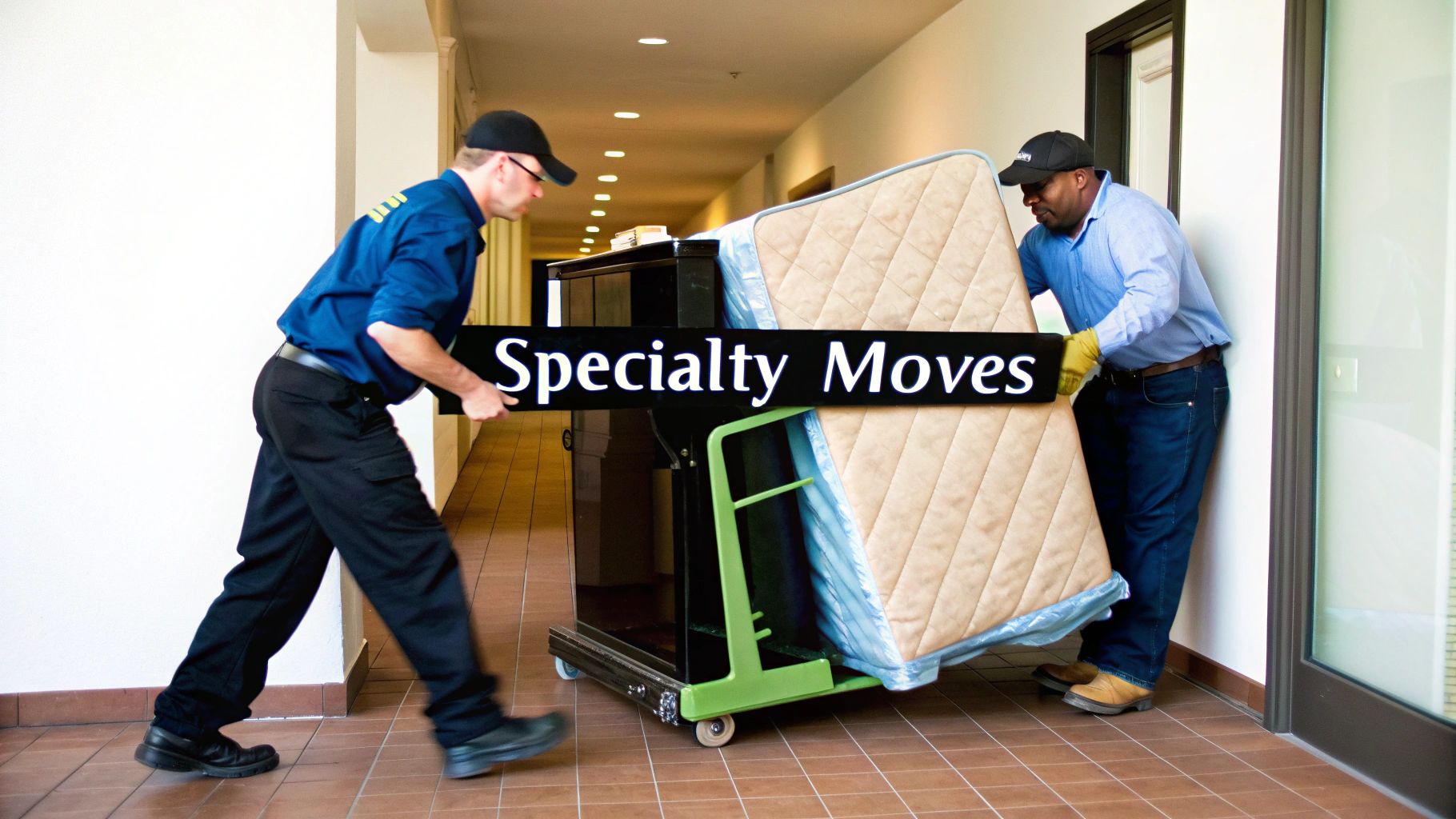
This is particularly important for items that cannot simply be wrapped in a blanket and loaded onto a truck. This includes pianos, antique grandfather clocks, valuable artwork, or heavy slate pool tables. A standard moving crew may lack the specialized equipment—such as piano trolleys or custom crating—or the specific training required to move these items without causing damage to the item itself or your property.

A professional mover carefully wrapping a piece of delicate furniture.

Valuable Add-Ons for a Smoother Move

In addition to handling specialized items, many moving companies offer add-on services that can significantly reduce your workload and stress levels. These extras allow you to customize a moving plan that perfectly aligns with your specific needs, budget, and timeline.

Some of the most popular options include:

  • Professional Packing and Unpacking: This is a true game-changer, especially for busy families and professionals. A trained team can pack your entire home far more efficiently and securely than you might manage on your own, using high-quality materials to protect all your belongings. If you're undecided, learning about the top benefits of using professional packing services can highlight its value.
  • Furniture Disassembly and Reassembly: Consider large, bulky items like bed frames, wardrobes, and complex shelving units. Professional movers can expertly dismantle them and, more importantly, reassemble them correctly in your new home, saving you time and frustration.
  • Short-Term Storage Solutions: If there is a gap between your move-out and move-in dates, a secure storage option is invaluable. It provides a safe place to keep your belongings, offering you essential flexibility.

Key Insight: These add-on services are not just about convenience; they are about risk management. Having professionals pack your fragile items or reassemble a complicated wardrobe dramatically reduces the likelihood of damage and saves you hours of effort.

It is also worth exploring how self-storage can assist with your house move, as it can provide flexible solutions during transitional periods.

The most important step is to be upfront with potential movers about all your requirements. A reputable, transparent company will clearly explain the costs and logistics for any specialty services, ensuring there are no surprises on moving day and that every one of your belongings receives the appropriate care and attention.

Your Top Questions About Hiring Movers Answered

Even after thorough research, it's common to have a few lingering questions when searching for "house movers near me." Addressing these final details is key to feeling confident and prepared for moving day.

Here are the answers to some of the most frequently asked questions from people moving in and around Melbourne.

How Far in Advance Should I Book Melbourne Movers?

This is a crucial question. Ideally, you should book your movers 4-6 weeks before your planned move date. This is especially important if you are moving during a peak period.

In Melbourne, the busy season typically includes weekends, the last few days of each month (when leases often expire), and the entire summer season. If you plan to move during these times, booking well in advance gives you the best chance of securing a high-quality, reputable company that meets your standards.

If you are moving mid-week during the winter, you might be able to book 2-3 weeks out. However, it is always better to be proactive. The last thing you want is the stress of scrambling for a last-minute mover, which often leaves you with limited and less desirable options.

What Is the Difference Between Transit and Public Liability Insurance?

It's easy to confuse these two types of insurance, but they cover distinct—and equally important—areas. Any professional moving company worth hiring will have both.

  • Public Liability Insurance: This policy provides protection for the property surrounding the move. If a mover accidentally scrapes a wall in your building's hallway or damages a lift door, this insurance covers the cost of repairs.
  • Transit Insurance: This policy is specifically for your possessions. It covers your furniture and boxes against damage or loss while they are being handled, loaded, transported to your new home, and unloaded.

Always ask to see a Certificate of Currency for both policies. A legitimate mover will readily provide this documentation, giving you peace of mind that you are fully covered in the event of an accident.

Should I Empty Drawers Before the Movers Arrive?

Yes, absolutely. While it might seem like a convenient shortcut to leave clothes or other soft items in drawers, it is strongly discouraged.

Leaving items in drawers makes furniture significantly heavier and more awkward to handle. This increases the risk of injury to the movers and damage to the furniture itself. The contents can also shift during transport, which can unbalance the piece and cause drawers to slide open. It is much safer and more efficient to pack all contents into clearly labelled boxes.

Is Tipping Movers Customary in Australia?

Tipping is not a standard or expected practice in Australia. Professional removalists are paid a proper wage for their services, so you should never feel obligated to offer a tip.

However, if your moving crew has delivered exceptional service, worked tirelessly, and made your day significantly easier, a tip is always a greatly appreciated gesture. Another excellent way to show your appreciation, particularly on a long, hot Melbourne day, is to offer cold drinks and snacks. It's a small gesture that goes a long way in acknowledging their hard work.


Ready to stop searching and start moving? The professional, police-checked team at Get n Go Removals Melbourne has the experience and equipment to make your next relocation seamless and stress-free. From local apartment moves to full-service interstate relocations, we provide transparent pricing and reliable service you can count on. Book your move online or get a free, no-obligation quote today.

READ MORE

Your Ultimate Guide to Finding “Movers and Packers Near Me”

Searching for "movers and packers near me" is the first critical step towards a smooth and stress-free relocation. The right local team is a blend of proven reliability, transparent pricing, and comprehensive insurance to protect your valued possessions. The secret to a successful search? Understanding your specific needs before you start comparing options. This guide is designed to empower you with the knowledge to navigate the process, helping you find the perfect moving partner for your house or office move.

Finding The Right Local Movers And Packers

Two movers carefully carrying a large cardboard box down a flight of stairs

Let's be honest, the initial search for professional movers can feel overwhelming. A single query can unleash a flood of options, making it easy to feel lost. However, by taking a structured, step-by-step approach, you can cut through the noise and identify the ideal team, whether you're moving from a compact apartment or a large family home.

The primary objective is to find a dependable team that precisely matches your requirements. Every move is unique, and the nature of what you're relocating will dictate the type of service you need. This initial stage is all about defining those needs before you even begin comparing companies.

What to Look for in a Moving Company

Before diving into quotes, it's crucial to understand what distinguishes an excellent moving company from a potentially problematic one. The key factors are their experience, customer reputation, and the range of services they provide. For a comprehensive overview, our guide on choosing the right removals firm for your move offers a wealth of essential advice.

Here are the key considerations:

  • Full-Service vs. Labour-Only: Do you need a team to handle everything from wrapping your glassware to reassembling your furniture, or do you simply require skilled professionals for the heavy lifting?
  • Specialty Items: Do you own delicate or oversized items? Pianos, antique furniture, pool tables, or valuable artwork require specialised equipment and expertise that not all movers possess.
  • Insurance and Licensing: This is non-negotiable. Always verify that the company holds valid public liability and transit insurance. This is your essential protection should any unexpected incidents occur.

A common pitfall is selecting a mover based solely on the cheapest quote. While your budget is undoubtedly a major factor, the true value is found in a team that arrives on time, works efficiently, and handles your belongings with the utmost care.

Clarifying these points from the outset will make your search for "movers and packers near me" significantly more effective. It ensures you're not just booking any service, but the right service tailored to your specific move.

Defining Your Moving Needs Before You Search

A person using a tablet to create a home inventory list with moving boxes in the background

Before you pick up the phone or type "movers near me" into a search engine, there's a vital preparatory step: defining exactly what needs to be moved. This goes beyond a simple "three-bedroom house" description. The specific details will determine the appropriate truck size, the number of crew members required, and ultimately, the accuracy of your quote.

Creating a detailed inventory might seem tedious, but it is the cornerstone of a stress-free move. Walk through each room with a notepad, or create a spreadsheet, and list every significant item. This process provides a tangible sense of the volume of your belongings—the precise information that potential moving companies need to give you an accurate estimate.

This is also the perfect opportunity to declutter. As you decide what to bring to your new home, assess your larger items. For instance, understanding how long a mattress should last can help you decide if it’s worth the moving cost or if it's time for a replacement. For more valuable tips, explore our guide on how to declutter before you move.

Choosing Your Service Level

Moving services are not one-size-fits-all. Understanding the available options helps you select the perfect fit for your budget and schedule.

  • Full-Service Packing and Moving: This is the ultimate hands-off experience. The moving crew handles everything—wrapping dishes, boxing books, disassembling furniture, and transporting it all to your new location.
  • Fragile-Only Packing: An excellent compromise. Professionals securely pack your most delicate items, such as glassware, artwork, and electronics, while you manage the rest.
  • Labour-Only Service: If you prefer to handle the packing and truck rental yourself, you can hire a professional crew solely for their strength and expertise in loading and unloading heavy items efficiently and safely.

Taking the time to create an inventory and choose a service level prevents the number one cause of moving day stress: unexpected costs. Clarity upfront means no nasty surprises later.

Let's face it, affordability is a huge factor for anyone moving in Australia. Recent studies show that 28% of Australians are thinking about a move, often to upgrade their home (35.5%) or to cut down on their cost of living (31.3%). When you know exactly what you need moved, you can make sure your budget lines up with these goals.

How To Vet Local Removalist Companies

Once you have a shortlist of potential movers, it’s time for due diligence. This stage involves digging deeper to distinguish the true professionals from less reputable operators. This is the crucial step that ensures your belongings are in safe hands and that you avoid unwelcome surprises on moving day.

First, verify that they are a legitimate Australian business. A quick search on the Australian Business Register for their Australian Business Number (ABN) confirms their registration status. It's a simple but essential check for legitimacy.

Checking Insurance and Credentials

Think of insurance as your non-negotiable safety net. Any reputable removalist will have comprehensive coverage and be completely transparent about it. Don't just take their word for it—ask to see proof of their policies.

You should look for two primary types of insurance:

  • Public Liability Insurance: This covers any accidental damage to your property during the move, such as a scratched floor or a mark on the wall.
  • Transit Insurance: This protects your possessions while they are on the truck, covering events like theft, fire, or road accidents.

It’s also wise to understand the specifics of their coverage, including any limitations or excess fees applicable in the event of a claim. For complete peace of mind, especially when relocating valuable items, our dedicated team of furniture removalists in Melbourne is fully insured, and we pride ourselves on providing complete transparency regarding our policies.

Reading Between the Lines of Reviews

Online reviews are an invaluable resource, but you need to know how to interpret them correctly. Look beyond the overall star rating. Read a balanced mix of positive, average, and negative reviews to get a comprehensive picture of the company.

The key is to identify recurring themes.

A single negative review about a late arrival might be an isolated incident. However, if multiple reviews over recent months consistently mention tardiness or poor communication, it indicates a pattern of unreliability.

Look for reviews that provide specific details. Do they comment on the crew's professionalism, how carefully they wrapped furniture, or their efficiency? Genuine reviews often include small details about the move or mention crew members by name. This level of detail is a strong indicator of a real customer experience, offering a much more accurate insight into the company than a simple star rating can provide.

Comparing Quotes And Spotting Hidden Costs

A person sitting at a desk, reviewing moving quotes on a laptop with a calculator and notepad nearby

You've received several quotes from different removalists. Now comes the critical task of understanding what they truly represent for your budget. A direct comparison is rarely straightforward, as the details can vary significantly.

First, clarify the type of quote you have received. Is it a binding estimate (a fixed, all-inclusive price) or a non-binding estimate (based on an hourly rate)? A fixed price offers budget certainty, while an hourly rate can be more cost-effective for a straightforward move where you are fully packed and prepared when the team arrives.

However, the final figure is only part of the equation. You must delve into the fine print to see what is included. This is where you can identify potential budget overruns before they impact your moving day.

Decoding The Details In Your Estimate

To accurately compare quotes, you must break them down. Look past the total cost and scrutinize the individual line items. This is the only way to understand where your money is going and to spot the differences in each company's offerings.

Here are the key elements to look for in every quote:

  • Hourly Rate vs Flat Fee: Be clear on the pricing model. Crucially, ask what happens if the move takes longer than estimated.
  • Travel Time and Depot Fees: Many companies start charging from the moment they leave their depot until they return. Ensure this is clearly outlined.
  • Minimum Hours: Most movers have a minimum booking time, typically two or three hours. This is an important consideration, especially for smaller moves.
  • Extra Services: Are packing materials included? Is there a charge for disassembling your bed frame or disconnecting appliances? These are often additional costs.

A trustworthy quote is always detailed and transparent. If an estimate seems vague or the mover becomes evasive when asked for a cost breakdown, consider it a major red flag. A true professional will have no problem explaining every single charge.

To simplify this, we’ve created a comparison checklist. Use it to lay out the details from each quote side-by-side, allowing you to see exactly what you’re getting for your money.

Moving Quote Comparison Checklist

Cost Component Mover A Details Mover B Details Mover C Details
Pricing Structure
Hourly Rate / Flat Fee
Minimum Booking (Hours)
Travel/Depot Fee
Stair Fees
Long-Carry Fees
Difficult Access Fees
Weekend/After-Hours Rate
Packing Materials
Furniture Disassembly
Insurance Coverage
Payment Surcharge
TOTAL ESTIMATED COST

This simple table can be a real eye-opener, quickly showing you which quote offers the best value, not just the lowest price.

Uncovering Common Hidden Fees

Hidden fees are a primary source of stress on moving day. These are charges that aren't always obvious in the initial quote but can add up quickly. Knowing what to look for allows you to ask the right questions upfront. For a more detailed analysis, read our guide on the hidden costs in moving house.

Here are common hidden fees to watch for:

  • Stair Fees: A charge per flight of stairs, particularly in buildings without a lift.
  • Long-Carry Fees: Applied if the truck cannot park close to your entrance and the crew must carry items over a specified distance.
  • Difficult Access Fees: For navigating tight hallways, hoisting items over balconies, or other challenging situations.
  • After-Hours or Weekend Surcharges: Moving outside standard business hours almost always incurs a higher rate.

It's an interesting time in the industry, too. With the current housing crisis making it harder for people to relocate, demand for removalists has actually dropped. Searches have fallen by 22% since 2019. While this can lead to more competitive pricing from movers, it also means you have to be extra careful that a super-low quote isn’t just hiding a long list of extra fees.

Getting Your Home Ready For Moving Day

A well-prepared hallway with cleared pathways, floor protection, and neatly stacked moving boxes

A truly seamless move depends heavily on preparation done before the truck arrives. Being well-prepared not only reduces chaos for you but also helps the entire process run more efficiently, which can save you money if you're on an hourly rate.

The goal is to create a safe and clear workspace for your movers. Simple actions, like ensuring unobstructed pathways from every room to the exit, make a significant difference. This includes rolling up loose rugs, clearing children's toys, and moving any small furniture that could pose a trip hazard.

If you have delicate flooring, such as polished timber or light-coloured carpet, laying down protective coverings is a smart precautionary measure.

Your Labelling System and Essentials Box

A robust labelling system is your best friend when faced with a sea of boxes in your new home. Go beyond a simple "Kitchen" label. Be specific: "Kitchen – everyday plates & cutlery" or "Bathroom – towels & toiletries." This turns the overwhelming task of unpacking into a logical, manageable process.

Here’s a simple yet effective labelling method:

  • Room Name: Clearly write the destination (e.g., Main Bedroom, Kitchen, Lounge).
  • Brief Contents: List a few key items inside to help you prioritise (e.g., Kettle, toaster, mugs).
  • Priority Level: Use a number or a bright colour to mark boxes you'll need on day one as high priority.

Your most important box is the one that never goes on the truck. Pack a 'Moving Day Essentials' box that stays with you in the car. Fill it with phone chargers, medications, important documents, snacks, water bottles, and a basic toolkit for reassembly.

Final Preparations for a Smooth Day

On the morning of your move, conduct a final walkthrough. This is your opportunity to dismantle any furniture you agreed to handle beforehand, such as bed frames or desks. Having these items ready to go saves the crew valuable time.

Beyond packing, a thorough clean is often part of the moving process. You may want to consider professional moving-related window cleaning services to leave your old property in pristine condition or to prepare your new home. For a complete checklist, our essential moving home to-do list is an invaluable resource.

This level of preparation is particularly crucial as more Australians move to regional areas. With moves from capital cities to regions having recently increased by 10.5%, efficiency is vital for these longer journeys. Being organised ensures your movers can get on the road promptly, resulting in a much smoother experience for everyone.

Got a Few Lingering Questions?

Even with thorough research, a few questions are likely to arise. When searching for "movers and packers near me," small details can make a big difference. We've compiled answers to the most common queries to help you feel completely confident in your hiring decision.

Consider this your final checklist for peace of mind. Clarifying these last details will ensure there are no surprises, allowing you to focus on the excitement of settling into your new home.

How Far in Advance Should I Book Movers?

This is perhaps the most frequently asked question, and for good reason—timing is crucial. The ideal window to book your professional movers is four to six weeks before your moving date.

This timeframe is especially important if you plan to move during a peak period. In Australia, these typically include:

  • The busy summer months (December to February)
  • The last weekend of any month
  • School holidays

Booking well in advance gives you a better selection of top-rated companies and greater scheduling flexibility. Leaving it to the last minute often results in higher prices, limited availability, and the stress of settling for a mover who wasn't your first choice. For an off-peak move, two to three weeks may suffice, but securing your booking early is always the wisest strategy.

Are Professional Packing Services Worth The Cost?

Deciding whether to invest in professional packing is a balance of your time, budget, and stress tolerance. If you have a large home, a demanding job, or a significant collection of fragile items, a professional packing service can be a game-changer.

Professional packers are experts in efficiency. They arrive with high-quality materials and possess the expertise to secure everything from delicate glassware to awkwardly shaped electronics, significantly reducing the risk of damage. While it is an additional expense, the hours of labour and mental energy saved can be invaluable.

Pro Tip: A great middle-ground option is to ask for a partial packing service. You can pack the easy stuff like clothes and books, and let the pros handle the tricky, time-consuming areas like the kitchen or your art collection. It strikes a fantastic balance between saving money and reducing stress.

What Should I Do If The Movers Damage Something?

Even with the most careful and experienced crews, accidents can occasionally happen. If you notice any damage to your belongings or your property, it's crucial to act immediately.

First, document everything. Use your phone to take photos from multiple angles before the moving team leaves. Bring the issue to the attention of the crew leader on-site and ensure a note is made on the final paperwork before you sign anything. After the crew has departed, follow up by contacting the company’s office in writing as soon as possible to initiate a formal claims process. This is precisely why verifying a company's insurance policy is a non-negotiable step before hiring them.

What Items Will Movers Refuse To Take?

For critical safety and legal reasons, there are certain items that removalists are prohibited from transporting. You will need to arrange to move these items yourself.

Generally, movers will not take:

  • Hazardous Materials: This includes petrol, paints, solvents, gas cylinders, aerosols, and most cleaning supplies.
  • Perishable Food: Anything from your refrigerator or freezer that can spoil.
  • Valuables and Personal Documents: You should always keep items like jewellery, cash, passports, wills, and important financial records with you personally.

Our best advice is to pack a "personal valuables" box that stays with you in your own car on moving day. This ensures your most critical items are safe, secure, and right where you need them. It's also a good idea to ask your chosen company for their complete list of non-allowable items when you book, just to be sure.


Navigating the world of movers and packers doesn't have to be a headache. Armed with the right information, you can make confident choices that lead to a smooth, stress-free move. When you're ready to book a team you can trust, Get n Go Removals Melbourne is here to help with every step of your journey. Get a free, no-obligation quote today!

READ MORE

Your Ultimate Guide to Finding Affordable Removalists Melbourne

Finding affordable removalists in Melbourne doesn't mean you have to compromise on reliability or peace of mind. The secret lies in balancing cost with quality service. It's about understanding the key factors that influence the final price and adopting a strategic approach from the outset. This guide will transform a potentially stressful task into a smooth, straightforward, and budget-friendly experience.

Why the Cheapest Quote Is Often a False Economy

When facing a mountain of moving expenses, the lure of the lowest quote is powerful. But seasoned industry experience shows that the rock-bottom price often leads to the biggest headaches. An unusually low hourly rate can be a significant red flag, potentially masking hidden fees, signaling inexperienced (and therefore slower) movers, or indicating a concerning lack of proper insurance.

Ultimately, any of these shortcomings can cost you far more in terms of time, stress, and damaged possessions. The goal isn't just to find cheap movers; it's to secure the best value. This means partnering with a professional team that operates with efficiency, handles your belongings with care, and maintains complete transparency about costs from the very beginning. A well-executed move by a reputable company is often completed faster, saving you money on the hourly rate while preventing costly mishaps.

The Power of a Pre-Move Inventory

Before you even think about requesting quotes, undertake this one critical step: create a detailed inventory of everything you need to move. While a complex spreadsheet isn't necessary, a comprehensive list is a strategic advantage.

  • Large Furniture: Itemise every bed, sofa, dining table, fridge, and washing machine.
  • Box Estimate: Develop a realistic count of the boxes you'll need for each room.
  • Specialty Items: Note anything unusually heavy, fragile, or awkward. This includes items like pianos, large art pieces, or heavy marble-topped furniture.

This preparation allows removalists to provide highly accurate quotes by correctly estimating the required truck size and team members. It also forces you to declutter before you start paying someone to transport items you no longer need. Why spend money moving things destined for donation?

This checklist will help you get organised and position you to negotiate the best possible price.

Quick Checklist for an Affordable Melbourne Move

Complete these actions before contacting removalists to ensure you receive the most competitive and accurate pricing.

Action Item How It Reduces Your Bill Time Commitment
Declutter and Donate Fewer items mean a smaller truck and reduced labour hours. 2-4 hours
Create a Detailed Inventory Empowers movers to provide a precise quote or a reliable time estimate. 30 minutes
Disassemble Large Furniture Saves the movers valuable time on the clock, directly cutting hourly costs. 1-2 hours
Assess Building Access Informing movers about stairs, lifts, or difficult parking avoids surprise fees. 15 minutes

Completing these tasks demonstrates to removalists that you are an organised and serious client, which often leads to a smoother process and a better overall experience.

Understanding Removalist Pricing Models

As you begin your search for affordable removalists in Melbourne, you'll encounter two primary pricing structures. Understanding the nuances of each is crucial for managing your budget effectively.

The first is a fixed quote, which provides a single, all-inclusive price for the entire job. The second, more common for local Melbourne moves, is an hourly rate.

An hourly rate might seem straightforward, but clarity is key. You must ask critical questions: Does the clock start when the team leaves their depot or upon arrival at your home? Are there additional charges for fuel, stairs, or heavy items? A transparent, professional mover will proactively clarify these points.

By creating a thorough inventory and understanding these pricing models, you are already well-equipped to make an informed decision. For more insights into what separates reputable movers from the rest, consult our expert guide on finding trustworthy removalists near me. This knowledge is your best defence against a stressful moving day and ensures you find a team that delivers excellent value for your budget.

Decoding Quotes and Dodging Hidden Fees

An enticingly low hourly rate can often be a smokescreen for a barrage of unexpected charges. Securing a genuinely good deal from an affordable removalist in Melbourne requires you to read between the lines of a quote and demand absolute clarity on every potential cost.

You'll primarily encounter two pricing structures: fixed quotes and hourly rates. A fixed quote offers the comfort of cost certainty, making it ideal for larger or more complex relocations where timing is less predictable. Hourly rates, while common for smaller local jobs, demand rigorous scrutiny.

Understanding the Hourly Rate Breakdown

When quoted an hourly rate, the final cost can easily escalate. A common practice is the "back-to-base" or "depot-to-depot" fee, where the clock starts the moment the truck leaves the depot—not when it arrives at your property. If their base is an hour away, you could be paying for two hours of travel before a single box is lifted.

A reputable mover will be completely upfront about their charging policy. They should clearly state when billing starts and stops and provide a realistic estimate of the total hours your move is likely to take. Any ambiguity on this point is a major red flag.

Common Red Flags and Hidden Charges

The Melbourne removalist industry, unfortunately, has its share of unscrupulous operators. It's a significant issue; for every official complaint lodged with Consumer Affairs Victoria, it's estimated that at least five others go unreported. This suggests thousands of problematic moves occur each year.

This is precisely why you must meticulously examine every quote for potential traps. Be vigilant for these common extra charges that can dramatically inflate your final bill:

  • Stair Fees: A classic add-on, often charged per flight of stairs, which can add up significantly in apartment moves.
  • Difficult Access Surcharges: Applied for challenges like a long walk from the truck to your front door or navigating narrow hallways.
  • Heavy Item Levy: An extra fee for moving particularly bulky items such as pianos, pool tables, or large appliances.
  • Fuel Levy: A separate charge for fuel that may not be included in the advertised hourly rate.

This decision tree can help you determine which pricing model best suits your move.

Infographic about affordable removalists melbourne

The key takeaway is that fixed quotes provide cost certainty for complex moves, whereas hourly rates offer flexibility for smaller, straightforward relocations, provided you've clarified all potential fees.

Demanding a Transparent and Itemised Quote

Never accept a verbal quote or a vague, one-line email. A professional and trustworthy removalist will always provide a detailed, written quote that itemises every potential cost. This is non-negotiable.

Your quote must explicitly detail:

  • Insurance: Clear information on their Public Liability and Transit Insurance policies. If it's not mentioned, assume they don't have adequate cover.
  • Team Size and Truck: The number of movers allocated to your job and the size of the vehicle they will use.
  • Inclusions and Exclusions: A precise breakdown of what the rate covers (e.g., labour, truck) and what it doesn't (e.g., packing materials, furniture disassembly).

By asking these critical questions and insisting on this level of detail, you ensure the price you agree upon is the price you pay. For a more comprehensive look at potential pitfalls, review our complete guide on spotting hidden costs in moving house. This diligence ensures your search for an affordable removalist in Melbourne concludes with a genuinely great deal, not a costly surprise.

Proven Strategies to Cut Your Moving Costs

Person packing a moving box with household items.

While finding a competitively priced removalist is a crucial first step, your ability to reduce the final bill is significant. With strategic planning, you can make a substantial impact on the total cost. These are the tried-and-tested strategies that savvy Melburnians use to manage their moving budget effectively.

The single most effective cost-cutting measure is to move less stuff.

It sounds simple, but its financial impact is profound. Every item you choose not to take is one less thing to pack, carry, load, transport, and unload. Begin a thorough decluttering process at least four to six weeks before your move date. Go through your home room by room and be ruthless. If an item hasn't been used in a year, it's time to sell, donate, or discard it. This single action can mean you require a smaller truck or fewer billable hours, translating directly into significant savings.

Source Free Packing Materials

Spending hundreds of dollars on new boxes and packing supplies is an unnecessary expense. With a bit of resourcefulness, you can acquire most of what you need for free.

  • Leverage Your Community: Check Facebook Marketplace, Gumtree, or local "Buy Nothing" groups. You'll frequently find people who have just moved and are eager to offload a large number of high-quality boxes.
  • Connect with Local Retailers: Supermarkets, liquor stores, and large hardware stores often have a surplus of sturdy cardboard boxes they are happy to give away. Simply ask a manager for the best time to collect them.
  • Utilise Household Items: Instead of buying bubble wrap, use towels, blankets, quilts, and clothing. These items provide excellent padding for fragile goods, saving you money while also reducing the number of linen boxes you need to pack.

Optimise Your Move Timing

The timing of your move can have a surprising effect on the price. Weekends (especially Saturdays) and the end of the month are peak periods for removalists, and this high demand invariably leads to higher rates.

If your schedule allows, book your move for a weekday. A Tuesday or Wednesday in the middle of the month can unlock substantial savings. Removalists often have more availability during these off-peak times and may offer more competitive rates to fill their schedules.

This is one of the easiest ways to secure a better deal without compromising on the quality of the service.

Prepare for Maximum Efficiency

When you're paying an hourly rate, every minute is money. The preparatory work you complete before the truck arrives will directly accelerate the process and lower your final bill.

Disassemble large items like beds, desks, and dining tables yourself. Ensure every box is securely packed, taped shut, and clearly labelled with its destination room. Furthermore, clear all hallways and pathways and reserve a convenient, close parking spot for the moving truck. These proactive steps prevent delays and keep the moving team working at maximum efficiency.

For a deeper dive into cost-saving measures, explore our guide on more tips to keep your moving costs down. Remember to factor in other moving-related expenses. For instance, when arranging your end-of-lease clean, it's wise to compare DIY and professional carpet cleaning options to determine the most budget-friendly choice.

How to Vet and Choose a Reliable Mover

Hiring a cheap, unvetted mover can quickly become your most expensive mistake. If your valuables are damaged or the team fails to show up, any initial savings become meaningless. This stage requires due diligence; you must thoroughly investigate any moving company before engaging their services.

Your first step is to verify their legitimacy as an Australian business. A quick search for their ABN (Australian Business Number) on the Australian Business Register is non-negotiable. If they cannot provide one or it doesn't check out, cease all communication immediately. This fundamental check separates professional operators from rogue outfits that lack accountability.

This is a more significant issue than many realise. Melbourne's rapid population growth has created high demand for removalist services, making it easier for substandard operators to enter the market. With the city's population projected to reach 6.2 million by 2030, the need for reliable, professional movers will only increase.

Check Their Insurance and Reviews

Next, you must address the topic of insurance. Any professional removalist must hold Public Liability Insurance to cover potential damage to your property (e.g., scuffed walls, scratched floors) and Transit Insurance to protect your belongings while on the truck.

Do not simply take their word for it. When gathering quotes, it is prudent to verify their coverage by requesting a Certificate of Insurance. Any reluctance on their part to provide this document is a serious red flag.

Once their credentials are confirmed, investigate their reputation. Disregard the curated testimonials on their website and head straight to independent platforms like Google Reviews. Look for recent, detailed feedback that discusses their professionalism, punctuality, and, crucially, how they resolved any issues that arose during the move.

The Essential Questions to Ask

Before making a final decision, arm yourself with a checklist of critical questions. The quality of their answers will be highly revealing. For a comprehensive list of what to ask, explore our detailed guide on choosing the right removals firm for your move.

A true professional will welcome your questions and be proud to discuss their equipment, their team's experience, and their operational processes. Evasive or vague answers are a clear signal to continue your search.

Here are several must-ask questions for any potential affordable removalists in Melbourne:

  • What is your process for handling damaged items? A reputable company will have a clear, documented claims process, not a series of excuses.
  • What kind of equipment do you use? You want to hear about professional-grade trolleys, dollies, protective blankets, and tie-down straps—not just a couple of workers and a van.
  • How experienced is your team with moves in my specific suburb? Melbourne's diverse suburbs present unique challenges, from the narrow laneways of Fitzroy to the new estates in the outer west. Local knowledge is a significant asset.

Investing this time upfront ensures your "affordable" mover is also a trustworthy professional who will make your moving day a success, not a nightmare.

Your Moving Day Game Plan for Efficiency

A neat stack of labelled moving boxes ready for removalists.

When paying removalists by the hour, time is literally money. Every minute the crew is on the clock contributes to your final bill, so your preparation on the day has a direct impact on your budget. This is your playbook for a smooth, swift, and cost-effective move.

It begins with a highly effective labelling system. Don't just write "Kitchen" on a box. Be specific: "Kitchen – Pots & Pans" or "Living Room – Books." This clarity empowers the movers to work autonomously, placing each box in the correct room without needing to constantly ask for directions.

This level of organisation not only accelerates the process but also enhances safety. This is particularly important as the furniture removal industry in Melbourne is currently navigating a significant labour shortage, which affects both service availability and pricing. Coupled with rising operational costs like fuel and insurance, it's becoming more challenging for companies to offer low rates. You can learn more about the industry challenges and what it means for your move.

Pre-Move Prep for Maximum Speed

Well before the truck arrives, several preparatory actions can prevent costly delays. Investing a couple of hours to get your home ready can easily save you hundreds of dollars on the final invoice.

  • Disassemble Key Furniture: Do not leave this task for the movers. Taking apart beds, desks, and dining tables is one of the most effective ways to reduce billable hours. Have all components and hardware neatly organised.
  • Clear All Pathways: Ensure there is a wide, unobstructed path from every room to the front door. This includes rolling up rugs, clearing away toys, and removing any potential trip hazards.
  • Secure Parking: This is critical. Reserve the closest possible parking space for the moving truck. A long walk between the truck and your front door can add a substantial amount of time and cost to the job.

The Five-Minute Briefing That Saves an Hour

The moment your crew arrives, conduct a quick five-minute walkthrough. This small time investment yields a significant return.

Point out any items that are especially fragile, heavy, or valuable so the team can strategise their handling. Then, provide a quick tour of the new property, explaining the layout. This simple briefing eliminates confusion, minimises the risk of damage, and enables the movers to work with confidence and speed.

Implementing these steps is fundamental to keeping your costs under control. For an even more detailed strategy, review our complete guide on how to move house efficiently.

Got Questions About Finding a Mover on a Budget?

When you're trying to lock in a great deal on Melbourne removalists, a few questions are bound to pop up. Getting straight answers is the best way to feel confident in your choice and avoid any nasty surprises on moving day. We've rounded up the most common queries we get to give you the info you need.

Think of this as the final check-in before you book. We'll cover everything from the cheapest days to move to what that insurance policy really covers, giving you the peace of mind to finalise your plans.

What Is the Cheapest Day to Book Removalists?

If you have some flexibility in your schedule, you can save a decent amount of cash just by picking the right day. The most expensive times are always weekends, the last few days of the month, and, of course, public holidays. Demand goes through the roof, and prices follow suit.

For the best possible rates, try to book your move for the middle of the week and the middle of the month. Tuesdays, Wednesdays, and Thursdays are usually the quietest days for removalists. They’re often keen to offer better pricing to keep their teams busy. Booking between the 5th and the 20th of the month also helps you dodge that end-of-month scramble when everyone's lease is up.

Does Transit Insurance Cover Everything?

This is a big one, and it causes a lot of confusion. A reputable mover will always have Transit Insurance, but it's important to know what it actually covers. Generally, it protects your belongings against major disasters while on the road—we’re talking about events like a fire, the truck being stolen, or a major traffic accident.

What it does not typically cover is accidental damage to a single item during the carrying process. So, if a box gets dropped or a piece of furniture gets a scratch while being navigated through a tight doorway, standard Transit Insurance usually won't cover that.

If you want wall-to-wall protection, it’s worth looking into your own specific moving insurance. You could also check if your current home and contents policy offers any cover while you're in the process of moving. Always ask a potential removalist for their Certificate of Currency and get them to explain exactly what is—and isn't—included in their policy.

What Should I Do if Something Goes Wrong?

Even with the most meticulous planning, things can sometimes go sideways. If you run into an issue, like damaged property or a final bill that looks way higher than the quote, the key is to handle it calmly and professionally.

Here’s a simple process to follow for an effective resolution:

  1. Document Everything: Snap clear photos of any damage right away. If you can do it before the removalists leave, even better.
  2. Communicate in Writing: Raise your concerns with the moving company via email. This creates a paper trail of your conversation. Make sure you reference your original quote and any other agreements.
  3. Don't Settle Under Pressure: If you're not happy, avoid paying the final bill in full straight away. However, you should be prepared to pay the undisputed portion of the bill while you negotiate the rest.
  4. Seek External Advice: If you can't get anywhere with the company, you can lodge a formal complaint with Consumer Affairs Victoria, which helps mediate disputes with service providers.

Of course, choosing a trusted, transparent team from the get-go is the best way to sidestep these headaches entirely.


Ready to book a stress-free move with a team that values transparency and care? Get n Go Removals Melbourne offers reliable, professional, and affordable moving services across Melbourne and beyond. Get a free, no-obligation quote today!

READ MORE

Movers That Will Pack for You: A Complete Guide

Let's be honest: staring at a mountain of empty boxes and rolls of tape is enough to make anyone feel overwhelmed. The good news is there are movers that will pack for you, and it's a game-changer for any house or office move. Think of it less as a luxury and more as a smart investment in your own sanity, transforming the usual chaos of a DIY move into a smooth, professionally managed process.

This comprehensive guide will walk you through everything you need to know about professional packing services, helping you make an informed decision for a stress-free transition.

Why Smart Movers Hire Professionals to Pack

Moving house or office consistently ranks as one of life’s most stressful events. A huge portion of that pressure comes directly from the sheer, monumental task of packing up your entire life. It's not just about putting things in boxes; it's about doing it correctly to ensure everything arrives safely.

Hiring movers to pack for you is like commissioning a master artist for a portrait versus trying to paint it yourself. Sure, you could give it a go, but only one approach guarantees a professional, efficient, and stress-free result from an expert who does this every single day. It's the ultimate way to reclaim your time, ditch the stress, and know your belongings are being handled with professional care from the very start.

Reclaim Your Most Valuable Asset: Your Time

All those hours spent wrapping dishes, meticulously sorting through cupboards, and taping up what feels like a million boxes add up frighteningly fast. If you're a busy professional, a parent, or simply anyone juggling a demanding schedule, that time is invaluable. A professional packing team can often accomplish in a single day what might take you weeks of stressful evenings and weekends to finish on your own.

This efficiency frees you up to focus on other critical aspects of your move, like coordinating with real estate agents, sorting out utilities, staying on top of work, or simply spending quality time with your family during a major life change.

The real value of a full-service move isn't just about avoiding the physical labour; it's about buying back dozens of hours of your life. It transforms moving from a draining chore into a managed project, letting you stay productive and calm.

Guarantee the Safety of Your Belongings

Professional packers are trained experts. They arrive equipped with the right skills and all the proper materials to protect your items, from the most fragile glassware and bulky electronics to priceless artwork. They know the specific techniques required for everything, ensuring each item is secured for transit.

This expertise drastically reduces the risk of damage. For a deeper look into the advantages, check out our guide on the top 5 benefits of using professional packing services.

The demand for these expert services is clear. The Australian packaging services industry, valued at USD 3.45 billion in 2019, was projected to hit USD 4.31 billion by 2025. This growth is driven by households and businesses seeking reliable, professional solutions for their relocations. When you entrust your belongings to a team using high-quality materials and proven methods, you’re not just packing boxes—you're investing in the secure and intact arrival of everything at your new home or office.

DIY vs. Professional Packing: A Quick Comparison

Still weighing your options? Sometimes seeing a direct comparison makes the decision clearer. Here’s a quick look at how packing yourself stacks up against hiring the pros.

Factor DIY Packing Professional Packing Service
Time Can take weeks of evenings and weekends. Usually completed in 1-2 days.
Stress High. Constant worry about time, technique, and potential damage. Low. The entire process is managed for you.
Cost Lower upfront cost, but materials must be purchased separately. Higher upfront cost, but includes all labour and materials.
Safety Higher risk of damage due to improper packing techniques. Significantly lower risk. Professionals are trained and insured.

Ultimately, while the DIY route seems cheaper on the surface, the time, stress, and risk involved can quickly outweigh the initial savings. For total peace of mind and a truly smooth transition, professional packing is hard to beat.

Choosing Your Ideal Packing Service

Every move is unique, and so are your packing needs. It’s a common misconception that you must choose between doing everything yourself or handing over your entire life in boxes to a moving company. The reality is far more flexible. Professional movers offer a range of services designed to fit different schedules, budgets, and stress levels. Understanding these options is the first step toward creating a moving plan that works for you.

Think of it like arranging dinner. You could cook the whole meal from scratch (DIY packing). You could order a complete, multi-course dinner delivered to your door (full packing service). Or, you could just get the tricky main course catered while you handle the easy sides yourself (partial packing). Each method gets you fed, but the effort and convenience are worlds apart. The best choice depends on your specific circumstances.

This diagram breaks down the main approaches to packing, highlighting where professionals can step in.

Infographic about movers that will pack for you

As you can see, professional packing isn't a one-size-fits-all solution. It branches out into specialised services, allowing you to get the exact amount of help you need.

Full Packing: A Completely Hands-Off Experience

The full packing service is the gold standard for a stress-free move. It's simple: on a pre-arranged day, a team of professional packers arrives with everything needed—high-quality boxes, tape, bubble wrap, packing paper—and they meticulously pack up your entire home or office.

This is an absolute lifesaver for busy professionals, families juggling kids and work, or anyone on a tight deadline. Imagine focusing on your job and family while trained experts handle the tedious task of boxing up every single room, from the kitchen chaos to the garage treasures. Everything is properly labelled, inventoried, and prepared for a safe journey.

Partial Packing: Strategic Help Where You Need It Most

Perhaps you don't mind packing your clothes and books, but the thought of wrapping dozens of delicate wine glasses and plates fills you with dread. This is where a partial packing service is perfect. It’s the ideal middle ground where you tell the professionals which rooms or specific items you want them to handle, and they take care of it.

This option is hugely popular for those tricky areas, such as:

  • The Kitchen: Often the most challenging room to pack, filled with fragile, heavy, and awkwardly shaped items.
  • Fragile Collections: If you have delicate china, valuable figurines, or an extensive glassware collection, letting the pros wrap and box them provides immense peace of mind.
  • Home Offices: Ensuring sensitive electronics, important files, and expensive equipment are protected requires a specific touch that experts can provide quickly and efficiently.

By choosing partial packing, you get an expert hand for the most difficult parts of the job. You remain in control and save money by tackling the easier tasks yourself. It’s a smart way to simplify your move without going all-in.

Specialty Item Packing: Protecting Your Valuables

Some items simply cannot be placed into a standard cardboard box. For possessions that are incredibly large, heavy, fragile, or valuable, specialty item packing isn't a luxury—it's essential. Professional movers have the specialised training and custom-built materials to prepare these unique pieces for transport.

This service is crucial for items like:

  • Artwork and Mirrors: Using custom crates and extensive padding to prevent scratches or cracks.
  • Pianos and Pool Tables: These require specialised equipment and techniques for both packing and lifting.
  • Antiques and Heirlooms: Ensuring your most irreplaceable items receive the highest possible level of care and attention.

Ultimately, the best movers that will pack for you are those who offer this level of flexibility. Whether you need your entire home packed or just some expert assistance, you can tailor the service to your exact needs. If you're ready to find local experts offering these custom solutions, looking for reliable movers and packers near you is the best way to start building your perfect moving plan.

Understanding Professional Packing Costs in Australia

So, you're considering hiring movers to pack for you? A wise decision. But one of the first questions that comes to mind is, "What's this going to cost?" Let's break it down. Determining the price of professional packing in Australia isn’t about a random number; it’s about understanding the real value you’re getting.

Think of it like ordering a custom-made suit. You wouldn't expect a simple jacket to cost the same as a full three-piece tuxedo. Similarly, packing costs are tailored to the size and specifics of your property, ensuring you only pay for what you actually need.

Key Factors That Determine Your Quote

Several factors combine to create your final packing quote. Any reputable moving company will be transparent about these elements, showing you exactly where your money is going. There should be no hidden fees, only a clear price based on your unique situation.

Here are the main factors movers consider:

  • Size of Your Home: This is straightforward. A one-bedroom apartment will have significantly less to pack than a sprawling four-bedroom family home. More rooms mean more time and more materials.
  • Volume and Nature of Belongings: It's not just about square metres, but what's in them. A minimalist's home will be a quicker, cheaper job than a residence filled with collectibles, a large library, or delicate antiques that require extra care.
  • Type of Service Selected: As discussed, a full packing service where the team handles everything will naturally cost more than a partial pack. If you just need assistance with the kitchen or a few challenging items, you'll save on costs.
  • Required Packing Materials: Professional teams use high-quality supplies, not flimsy, second-hand boxes. The cost covers sturdy boxes, bubble wrap, packing paper, tape, and any special containers for items like artwork or large-screen TVs.

Estimated Packing Service Costs by Australian Home Size

To give you a rough idea of what to budget, let's look at some typical price ranges. Remember, every move is different, but these figures provide a solid starting point for your planning. A mover will always give you a firm quote after an in-home or video assessment.

Planning your budget is a crucial part of a stress-free move. You can get a more complete picture by learning about the overall cost of movers and how it all fits together.

Here’s a sample cost breakdown to help you budget for packing services for different Australian homes.

Estimated Packing Service Costs by Australian Home Size

A sample cost breakdown for full and partial packing services based on typical home sizes to help you budget for your upcoming move.

Home Size Estimated Full Packing Cost Range (AUD) Estimated Partial Packing Cost Range (AUD)
1-Bedroom Apartment $350 – $650 $200 – $400 (e.g., kitchen & fragiles)
2-Bedroom Home $550 – $950 $300 – $550 (e.g., kitchen & one bedroom)
3-Bedroom Home $800 – $1,400 $450 – $750 (e.g., kitchen & main living areas)
4+ Bedroom Home $1,200 – $2,200+ $600 – $1,000+ (customised to specific areas)

Disclaimer: These prices are estimates only. The final cost can vary based on your location, the specific moving company, and the complexity of your move.

This table provides a ballpark figure, helping you see where your home might land on the spectrum.

What You Are Actually Paying For

It’s easy to look at a quote and just see the dollar amount, but what are you really getting for your money? When you hire professional packers, you're buying more than just boxes and labour. You're investing in a smooth, secure, and incredibly efficient process handled by people who do this every single day.

The cost of professional packing is a direct investment in peace of mind. You're paying for expertise, efficiency, and the assurance that your most valued possessions are protected by trained professionals from start to finish.

Your payment covers these four key elements:

  1. Expert Labour: You get a team of trained professionals who know exactly how to pack everything, from your wine glasses to your awkwardly shaped lamp. Their experience means fewer breakages and a much more organised move.
  2. High-Quality Materials: All necessary supplies are included. We’re talking double-walled boxes for heavy books and soft paper for delicate china. This saves you the headache of guessing what you need and making multiple trips to the store.
  3. Insurance and Liability: Reputable movers provide transit insurance. A crucial point: for many insurance policies to be valid, your items must be packed by certified professionals. This adds an essential layer of financial protection.
  4. Efficiency and Speed: Let's be honest, what might take you weeks of stressful evenings can be completed by a professional team in just a few hours or a single day. The time you regain is priceless during a chaotic move.

What to Expect on Packing Day

So, what actually happens when you hire movers that will pack for you? The idea can seem a bit strange until the day arrives. Knowing the play-by-play transforms what could be a chaotic day into a smooth, well-oiled process. When a professional packing crew arrives, they operate like a finely tuned machine, getting everything sorted with care, precision, and surprising speed.

A professional mover carefully packing items into a box.

This organised approach is a primary reason why so many Australians, especially in busy cities, are choosing to hand over their packing duties. It’s part of a broader trend toward finding smart, time-saving solutions in our busy lives.

The Team's Arrival and Initial Walkthrough

On packing day, the crew will arrive on time, usually with a team supervisor leading the charge. The very first thing they’ll do is a quick walkthrough of your home with you. This is your opportunity to point out any items you’re particularly concerned about, flag high-value pieces, or mention anything you’ve decided to pack or move yourself.

Think of the supervisor as the project manager. Their job is to understand the scope, assign roles to each team member, and ensure the entire operation runs smoothly from the first box to the last. This initial consultation is crucial for a successful day, ensuring everyone is on the same page and your priorities are clear.

A Systematic Room-by-Room Strategy

Once the walkthrough is complete, the team won't just start grabbing things randomly. They employ a systematic, room-by-room packing strategy. It’s this organised method that prevents confusion and makes the whole process so efficient.

They’ll typically start with the least-used rooms first—like guest bedrooms or a formal dining room—and save the high-traffic hubs like the kitchen and main bedrooms for last. This approach allows you to live in your home for as long as possible before the essential spaces are packed up.

Their workflow usually looks something like this:

  1. Preparation: The team lays down floor protection in hallways and high-traffic areas to prevent scuffs or scratches.
  2. Assembly: Flat-packed boxes are assembled quickly, creating a ready supply for the packers.
  3. Packing: Each crew member is often assigned a specific room or type of item to focus on, allowing them to work simultaneously without getting in each other's way.

A professional packing team's efficiency isn't magic—it's their disciplined process. They break down the massive job of packing an entire house into a series of smaller, manageable tasks that happen concurrently, dramatically cutting down the time required.

Meticulous Labelling for Easy Unpacking

One of the most valuable aspects of a professional packing service is their meticulous labelling system. Every single box is clearly marked with its contents and the destination room.

This simple step makes a world of difference when you arrive at your new property. Instead of facing a mountain of identical brown boxes, you’ll have a clear roadmap. The movers can place each box directly into the correct room, which makes unpacking significantly faster and far less stressful.

For more tips on being ready, check out our guide on what you should do the night before your movers arrive to ensure your packing day gets off to a perfect start.

Careful Handling of Fragile and Specialty Items

This is where professionals truly demonstrate their value. They come prepared with all the right materials and techniques for your delicate possessions. We're talking dish packs with special cardboard dividers for plates, multiple layers of bubble wrap for your electronics, and soft, ink-free packing paper for glassware.

And it’s not just about small items. Professional packers are also experts at preparing your larger pieces for the move. This includes ensuring safe transport and even arranging secure furniture storage during a move if needed. They’re trained to handle everything with the highest level of care, giving you complete peace of mind that your belongings are in good hands.

It’s About More Than Just Saving Time

Sure, regaining your time is a huge benefit, but the real perks of hiring movers that will pack for you go much deeper than mere convenience. It’s a decision that completely changes the nature of your move, turning a stressful, risky chore into a professionally managed project. The true value lies in the expert protection, streamlined organisation, and genuine peace of mind you receive.

This all-in-one approach is becoming the new standard for relocations. The courier, express, and parcel (CEP) market in Australia, which encompasses these full-service moves, was valued at AUD 18.83 billion in 2025 and is projected to climb to AUD 32.16 billion by 2034. This growth shows a clear demand from people who want reliable, start-to-finish solutions that keep their belongings safe and eliminate the headaches of moving.

Superior Protection for Your Belongings

Professional packers are genuine experts. They don't just throw things in boxes; they use specific materials and battle-tested techniques to ensure everything arrives at your new home in one piece. It's the difference between wrapping a wine glass in old newspaper and hoping for the best, versus securing it in a proper cell box with layers of cushioning paper.

They bring this level of care to everything you own:

  • Specialised Boxes: Pros use heavy-duty, double-walled boxes for items like books and dish packs with built-in dividers to cradle each plate.
  • Quality Materials: They arrive with all the right gear—industrial-strength bubble wrap, soft packing paper that won't leave ink stains on your valuables, and tape that actually sticks.
  • Proven Techniques: Whether it’s the "crush and float" method for your TV or wrapping your furniture in thick, protective blankets, every action is designed to prevent scratches, dings, and breaks.

A Dramatically More Efficient Move

A professionally packed home isn't just safer—it’s also set up for maximum efficiency at both ends of the move. Think about it: the chaos of unpacking is often a direct result of chaotic packing. When every single box is clearly labelled with its contents and the room it belongs in, unloading becomes a smooth, logical process.

The real secret to a quick and painless unpack is a professional pack. When movers can place every box in its intended room, you avoid the classic "where does this go?" shuffle, cutting down your settling-in time from weeks to days.

This organised approach means the movers aren't just dumping a mountain of mystery boxes in your living room. The kitchen boxes go straight to the kitchen, bedroom boxes to the bedroom, and so on. Your new place immediately feels less like a storage unit and more like a home you can actually start living in.

The Critical Role of Transit Insurance

Here’s a detail that many people overlook: your moving insurance might depend on who packed your boxes. Delve into the fine print of many comprehensive transit insurance policies, and you'll often find a clause stating they only cover damage to items that were packed by the moving company's professionals.

Why? Insurance companies know that the risk of breakage drops significantly when trained experts handle the packing. By hiring movers that will pack for you, you’re not just buying a service; you're actively ensuring your insurance coverage is valid. It's a crucial financial safety net for everything you own. While you're streamlining your move, it's also worth considering professional move-out cleaning services to leave your old place spotless without any additional stress.

How to Choose the Right Packing and Moving Company

Selecting the right partner for your move is arguably the most critical decision you'll make in this entire process. The quality, reliability, and professionalism of the company you choose will define your experience. A great crew can transform a daunting task into a smooth, managed project, while a poor choice can quickly lead to a nightmare of delays, damaged goods, and unexpected costs.

Finding trustworthy movers that will pack for you requires some due diligence, but the peace of mind you gain is invaluable. Your goal is to find a team that's not only efficient but also honest, properly insured, and has a stellar reputation.

A person researching moving companies on a laptop, with moving boxes in the background.

Verify Their Credentials and Insurance

Before you proceed too far with any company, verify that they are a legitimate operation. A professional moving business should have no hesitation in providing proof of their credentials. These items are non-negotiable and are the clearest distinction between professionals and risky operators.

Start by asking for:

  • Industry Accreditations: In Australia, a key indicator is membership in the Australian Furniture Removers Association (AFRA). This signifies adherence to a strict code of conduct.
  • Insurance Coverage: Request to see their Certificate of Currency for both Public Liability and Transit Insurance. This is what protects you if something goes wrong during the move.
  • ABN and Physical Address: A legitimate business will have an Australian Business Number (ABN) and an actual office or depot you can verify.

Scrutinise Customer Reviews and Testimonials

Online reviews are your best tool for getting unfiltered feedback. Don't just glance at the star rating; dive into what people are actually saying. Look for recent reviews on multiple platforms like Google, productreview.com.au, and their own social media pages.

Pay attention to comments about:

  • Punctuality and Professionalism: Did the crew arrive on time? Were they courteous and professional?
  • Packing Quality: Were belongings packed with care? Was anything damaged?
  • Communication: Was the company easy to contact and responsive before, during, and after the move?

A consistent pattern of positive feedback is a fantastic sign. Conversely, if you notice recurring complaints about broken furniture or poor communication, consider it a major red flag. For a more detailed guide, check out our article on choosing the right removals firm for your move.

Insist on a Detailed In-Home or Video Quote

Never accept a quote over the phone without a proper assessment. A reputable company will insist on conducting an in-home visit or a thorough video walkthrough to accurately gauge the volume of your belongings. It's the only way to get a firm, reliable price.

A vague quote based solely on the number of bedrooms is a classic sign of an amateur or, worse, a dishonest company. A professional assessment ensures your quote is based on your home, preventing nasty surprises on moving day.

Use the quoting process as an opportunity to test their expertise. Ask direct questions:

  • What kind of packing materials do you use for delicate items like glassware?
  • Are your packers full-time employees or do you use contractors?
  • How would you handle specialty items, like my large-screen TV or artwork?

A confident, detailed response indicates they have extensive experience. If a company is evasive with their answers or uses high-pressure sales tactics, walk away. The right partner will be transparent, thorough, and focused on providing a clear, accurate plan for your move.

Still Have a Few Questions About Packing Services?

Even after getting the full rundown, it’s completely normal to have a few final questions before you commit to hiring movers that will pack for you. Getting these last answers is key to feeling confident in your decision. Here are some of the most common questions people ask us.

Do I Need To Be Home While The Packers Are Working?

While you don't need to supervise their every move, we highly recommend being present (or having a trusted representative there) at the beginning and end of the day.

Being there for the kick-off allows you to do a final walkthrough, point out fragile items like a family heirloom, and answer any immediate questions the team might have. Staying for the final sign-off is equally important to ensure everything has been packed to your satisfaction.

What Should I Do To Prepare For The Packers?

A little preparation on your part can make packing day go much more smoothly and efficiently. Your main task is to sort out what's moving with you and what's not. Decluttering is key!

A few simple steps will make a huge difference:

  • Set Aside Essentials: Prepare a "first night" box yourself. This should include medications, phone chargers, toiletries, important documents, and a change of clothes. Keep this box with you, not on the truck.
  • Clear Pathways: Ensure the crew can move freely in and out of every room without navigating an obstacle course.
  • Separate Valuables: Keep personal treasures like jewellery, passports, and irreplaceable sentimental items aside. It's always best to move these items yourself for complete peace of mind.

How Long Does Professional Packing Usually Take?

This depends on the size of your property and the volume of your belongings. However, a professional crew works incredibly fast.

As a general guide, a typical two or three-bedroom house can often be completely packed in a single day. Consider that for a moment—a task that could take you weeks of evenings and weekends, completed in just a matter of hours.

The real magic of professional packing is the speed and organisation. A dedicated crew can condense what would be weeks of your personal effort into a single, highly productive day, letting you focus on everything else that comes with moving.

This efficiency not only saves you time but also dramatically reduces the period you have to live in a maze of boxes, getting your home ready for moving day much faster.


Ready to experience what a genuinely stress-free move feels like? Let our team handle the packing so you can focus on the exciting parts of settling into your new home. Get n Go Removals offers comprehensive packing solutions, from a single room to an entire household, all carried out by our trusted, full-time professionals. Get a transparent, obligation-free quote today and discover just how easy your Melbourne or interstate move can be.

READ MORE

Movers and Packers Melbourne: The Complete Moving Guide

Moving house in Victoria's bustling capital can feel like a mountain to climb, but bringing in professional movers and packers in Melbourne turns a potentially chaotic job into a smooth, straightforward process. It’s not just about heavy lifting; it's about the peace of mind that comes from knowing your life's belongings are in expert hands.

Your Melbourne Relocation Strategy

Let’s be honest, moving is a huge undertaking. It’s more than shifting boxes from A to B – it’s a major life event that deserves a solid game plan. The secret to a stress-free move is breaking it down into manageable stages, from the initial research right through to unpacking that last box. This structured approach helps you stay in control and avoid common pitfalls.

This is especially true in a city as popular as Melbourne. People are flocking here for a reason! In fact, as of September 2023, Melbourne was attracting a massive 28% of all metropolitan inbound moving enquiries. With so many people on the move, especially during the peak season from October to March, it pays to book a reliable crew well ahead of time. You can dig into the latest Australian moving statistics to see just how popular the city has become.

To help you get organised, here’s a quick overview of what your move might look like from start to finish.

Your Melbourne Relocation At A Glance

This table lays out the key stages of hiring movers and packers in Melbourne, giving you a clear timeline to work with. Think of it as your high-level roadmap to a successful relocation.

Moving Phase Key Action Items Timeline
Research & Vetting Get multiple quotes, check reviews (Google, Facebook), verify insurance. 6-8 weeks before moving day
Booking & Confirmation Choose your mover, confirm the date, pay the deposit, review the contract. 4-6 weeks before moving day
Pre-Move Prep Declutter your home, start packing non-essentials, arrange parking/access. 2-4 weeks before moving day
Final Preparations Pack an "essentials" box, disconnect appliances, confirm details with your movers. The week of the move
Moving Day Supervise the crew, do a final walkthrough, ensure all items are loaded. The big day!
Post-Move Guide movers at the new place, check for any damages, start unpacking. Arrival & unpacking

Having a clear plan like this takes the guesswork out of the process and ensures nothing important gets missed in the lead-up to moving day.

The Value of Professional Movers

Tempted to go the DIY route? While it might seem cheaper on the surface, hiring a professional team brings a level of efficiency and expertise that’s hard to replicate. These crews know Melbourne inside and out, from navigating tight inner-city laneways to managing access in sprawling suburban estates.

Here’s where you really see the benefits:

  • Time Savings: Professionals pack, load, and transport everything, freeing you up to deal with important tasks like sorting out utilities or getting the kids settled.
  • Reduced Physical Risk: Let’s face it, hauling heavy furniture is demanding work. A professional team has the right equipment and techniques to avoid injuries and prevent damage to your belongings.
  • Accountability: Any reputable moving company will have comprehensive insurance. This provides a crucial safety net and protects your belongings while they're on the road—a huge source of comfort.

At the end of the day, investing in a professional service is about buying yourself a streamlined, less stressful experience. You're not just moving boxes; you're moving your life, and it deserves to be done with care.

For anyone planning a big relocation, our detailed guide on moving to Melbourne is packed with more tips to help you get ready. A solid strategy, backed by the support of skilled movers and packers, is your ticket to a successful new start in this amazing city.

Getting A Grip On Melbourne Moving Costs

Let's be honest, figuring out the budget is usually the most daunting part of any move. But it doesn't have to be a source of stress. Getting a clear picture of what goes into the cost of hiring professional movers and packers in Melbourne means you can plan properly and dodge any nasty surprises when the final bill arrives. The price you pay isn't just a random hourly rate; it’s shaped by the unique details of your specific move.

The biggest factors that will influence the cost are, unsurprisingly, the size of your property and the volume of items you own. A one-bedroom flat will always be a quicker, cheaper job than a sprawling four-bedroom house. The complexity of the move also comes into play. If the crew has to tackle multiple flights of stairs, a tight driveway, or a long distance from the truck to your door, that extra time and effort will naturally be reflected in the price.

This infographic gives a great snapshot of the moving scene here in Australia.

Infographic about movers and packers melbourne

As you can see, Melbourne is a popular destination, especially during the busy seasons. This just reinforces why it’s so important to get your planning and budgeting sorted early to lock in a quality team.

Decoding The Price Tag

So, what should you really expect to pay? Generally, you'll find competitive hourly rates for movers in Melbourne sitting somewhere between AUD 100 and AUD 280. The sweet spot often lands around an average of AUD 157.53 an hour. This range indicates a healthy market, allowing you to find a budget-friendly option without compromising on the reliable, professional service you need.

But the hourly rate is just one piece of the puzzle. Here’s a rough guide to what you can expect based on your home size.

Estimated Moving Costs in Melbourne by Home Size

This table gives you a comparative look at the typical time and cost associated with moving different sized homes in the Melbourne area.

Home Size Estimated Hours (2 Movers) Average Cost Range (AUD)
Studio / 1-Bedroom Apartment 2 – 4 hours $340 – $680
2-Bedroom Home 4 – 6 hours $680 – $1,020
3-Bedroom Home 5 – 7.5 hours $1,040 – $1,520
4-Bedroom Home 7 – 11 hours $1,485 – $2,640

Of course, these are just estimates. Several other factors will influence your final cost:

  • Travel Time: The clock often starts when the team leaves their depot, covers the trip to your old place, then to your new one, and finally back to base. This is usually billable time.
  • Specialty Items: Got a piano, a pool table, or some fragile antique furniture? These require special equipment and know-how, which usually adds extra to the bill.
  • Packing Services: If you get the pros to handle your packing and unpacking, that's an added cost. It's typically based on the amount of materials used and the time it takes.

Keep An Eye Out For Hidden Fees

A transparent, detailed quote is the hallmark of a mover you can trust. Some less-reputable operators might try to surprise you with hidden charges that blow out your budget. The best defence is to ask plenty of questions before you sign on the dotted line.

Be proactive and ask your potential movers for a full breakdown of charges. A reputable company will be upfront about any costs associated with stairs, long-carry distances, or after-hours service. This clarity is key to a stress-free experience.

For a more detailed look at what to budget for your move, have a read of our complete guide on how much moving houses costs in Melbourne. Knowing all the potential costs from the start gives you the confidence to plan your move properly and pick the best team for the job without any financial headaches.

How to Choose the Right Moving Company

Picking the right team of movers and packers in Melbourne is hands down the most important decision you'll make for your entire relocation. Get it right, and moving day is a breeze. Get it wrong, and you're in for a logistical nightmare. It’s not just about finding the cheapest hourly rate; it's about trusting a crew with literally everything you own.

Your first move should be to do your homework. Don't just book the first company that pops up in your search. A much smarter approach is to create a shortlist of three to five well-regarded companies. From there, you can start digging into what really makes them tick. This small amount of prep work will pay off significantly when the truck pulls up.

Verifying Credentials and Insurance

Before you even think about getting a quote, you need to confirm that the company is a legitimate, registered business with proper insurance. This is non-negotiable. Any professional removalist worth their salt will have no issue showing you proof of their Public Liability and Transit Insurance.

Think of this insurance as your safety net. Public Liability has your back if there's any damage to your property (like a ding in the wall or a scratch on the floorboards), while Transit Insurance covers your belongings while they’re on the road. Without this coverage, you’re left with zero recourse if something goes wrong.

It's also worth looking into how they run their operation. Well-organised movers often use industry-specific solutions for moving companies to manage their jobs and keep things running smoothly, which is a good sign of professionalism.

A crucial question to ask is whether they use full-time, trained employees or rely on casual subcontractors. A dedicated, police-checked team will almost always provide better care, consistency, and accountability than temporary day labour.

Analysing Reviews and Reputation

Online reviews are a goldmine, but you've got to know how to interpret them. Don't just read the glowing testimonials on the company’s own website. Jump onto independent platforms like Google and Facebook to get the real story from recent customers.

Also, pay close attention to how a company responds to feedback, especially the negative comments. A business that engages with criticism and tries to make things right shows they genuinely care about customer service.

Here's what to look out for in reviews:

  • Punctuality: Did the crew actually show up on time?
  • Care and Professionalism: How did they handle delicate furniture and fragile boxes?
  • Communication: Was the office staff easy to deal with and quick to respond?
  • Pricing Transparency: Were there any nasty surprises on the final bill that didn't match the quote?

Getting Accurate and Detailed Quotes

Never accept a quote over the phone without a proper assessment of what needs to be moved. A vague "guesstimate" is a massive red flag. A reputable mover will always want to understand the full scope of the job to provide an accurate price, whether that means an in-home visit, a video walkthrough, or having you fill out a detailed inventory list.

When you do get a quote, make sure it’s a written document that breaks down every single cost. It should clearly list the hourly rate, the number of movers and trucks, any call-out fees, and spell out extra charges for things like stairs or difficult access. This clarity is what separates the professionals from the cowboys and ensures you won't get stung with a surprise bill.

For a deeper dive into this, check out our in-depth article on choosing the right removals firm for your move.

Smart Packing Strategies for a Melbourne Move

Let’s be honest, the success of any move really comes down to one thing: how well you pack. Good packing is your first line of defence against damage, making sure everything arrives at your new home in one piece.

Whether you're rolling up your sleeves to do it yourself or calling in the pros like movers and packers in Melbourne, having a solid strategy will save you a world of time, stress, and probably some money too.

A person carefully wrapping a fragile item in bubble wrap before placing it into a moving box.

If you're tackling the packing on your own, the absolute key is to be methodical. It's tempting to just start throwing things into boxes, but trust me, working room by room is the way to go. It keeps you organised and makes the unpacking process about a million times easier.

Getting the right materials is another big one. You can sometimes get free boxes from local shops, but they might not be strong enough for heavy items like books or your kitchen gear. It’s usually worth investing in proper moving boxes, bubble wrap, and good quality packing tape. For a deep dive, our guide has some essential packing tips for moving house that’ll walk you through everything.

Packing For The Melbourne Climate and Architecture

Moving in Melbourne comes with its own unique set of challenges. The classic "four seasons in one day" weather means you have to think about protecting your electronics from a sudden downpour while everything’s being loaded. A smart move is to double-wrap sensitive equipment in plastic or use waterproof tubs.

Then you’ve got the gorgeous older terrace houses in suburbs like Fitzroy and Carlton. They’re full of character, but they often come with narrow hallways and tight staircases. You need to plan ahead for this.

  • Use smaller, more manageable boxes. They’re simply easier to carry and manoeuvre.
  • Clearly label any heavy or awkward pieces so the moving crew knows what they’re dealing with.
  • Wrap furniture corners with padding to prevent them from scuffing walls (or getting scuffed themselves).

Using a Professional Packing Service

Choosing a professional packing service can be an absolute game-changer. It takes a huge amount of work off your plate. When the packers show up, they have all the right materials and know exactly how to get your belongings secured safely and efficiently.

Want to make their job even faster and save a bit on the billable hours? Get your place ready before they arrive.

Your main job is to declutter. Figure out exactly what’s coming with you and what’s being donated or discarded. That way, the packers only spend time on the things you actually want to keep, which makes the whole process far more efficient.

Even if you go for the full valet service, there are some things you should always pack and move yourself. Think of it as your "first 24 hours" essentials box.

Items to Pack Yourself:

  • Important Documents: Passports, birth certificates, house deeds, and other critical papers.
  • Medications: Any prescription or essential medicines for you, your family, or your pets.
  • Valuables: Jewellery, sentimental items, and expensive electronics like laptops or tablets.
  • Immediate Needs: Phone chargers, toiletries, a fresh change of clothes, and maybe the kettle and some coffee for that first morning.

Having this box with you means no frantic searching through a mountain of boxes on your first night. It's a small thing that provides huge peace of mind.

Your Moving Day Action Plan

A smooth move doesn't just happen by chance. It's all about smart, practical preparation. With the big day getting closer, having a solid action plan can turn potential chaos into a controlled, manageable process. This is your go-to guide for the final weeks and moving day itself, making sure nothing important gets missed.

Two people smiling and looking at a checklist on a clipboard with moving boxes in the background.

The weeks leading up to your move are the perfect time to get all those little administrative and logistical tasks ticked off. These small steps now prevent major headaches later. Trust me, a bit of organisation at this stage pays off big time when the truck finally arrives.

Final Pre-Move Checklist

Before your movers and packers in Melbourne are due at your door, it’s a good idea to work through these essential items. Getting them sorted will free you up to focus completely on the move when it matters most.

  • Redirect Your Mail: Jump on the Australia Post website and set up mail redirection. It’s a simple step that ensures important letters and parcels follow you to your new address.
  • Notify Building Management: If you’re in an apartment, give your building manager plenty of notice. They might need to book a lift for you or reserve a specific parking bay for the moving truck.
  • Final Decluttering Push: This is your last chance to discard anything you don't want to pay to move. Be ruthless—donate, sell, or toss anything that won’t have a place in your new home.
  • Confirm with Movers: A few days before the move, give your moving company a quick call. Just confirm the arrival time and run through any specific access details they need to know.

One of the best things you can do is pack a dedicated 'essentials box'. This should contain everything you'll need for your first 24 hours in the new place: toiletries, chargers, medications, a change of clothes, and maybe even the kettle. It's a lifesaver.

Your Game Plan for the Big Day

When moving day finally rolls around, your role shifts from packer to project manager. The main goal is to help the crew work smoothly without getting in their way. A great start is to do a quick walkthrough with the team leader, pointing out any fragile items or special instructions.

Once they get started, stay available to answer questions but try not to hover. A good crew works systematically and knows what they're doing. Your main job is to be ready for the final walkthrough of your old property. This is a crucial step to ensure nothing has been left behind in cupboards or forgotten corners.

Finally, have a clear idea of where you want the big furniture pieces to go in your new home. Directing the movers will save a lot of time and effort for everyone involved. For more tips on getting ready, check out our detailed guide on what to do the night before your movers arrive. A little preparation really does make all the difference.

Common Melbourne Moving Questions

Even the most organised move can throw up a few last-minute questions. It's totally normal. To make sure you're feeling completely confident, we've pulled together some of the most common things people ask when hiring movers and packers in Melbourne. Think of it as your final check-in for total peace of mind.

How Far in Advance Should I Book Movers?

This is easily one of the most frequent questions we get, and the answer can really save you a headache. For a Melbourne move, you should aim to book your removalists at least four to six weeks in advance.

This is especially true if you’re moving during the peak season, which runs from about October to March. Booking early means you secure your pick of the best, most reputable companies on your preferred date. If you leave it to the last minute, you often have to take whoever is available, and that’s a gamble you don’t want to take with your belongings.

Should I Tip My Movers in Melbourne?

Tipping in Australia isn't the same as in other parts of the world. It’s definitely not expected or mandatory, but it's always a lovely gesture if your moving crew has done a brilliant job.

If the team was super careful, efficient, and had a great attitude, a tip is a fantastic way to show your appreciation. There's no set amount – it's completely up to you and should just reflect how happy you were with the service. Honestly, though, offering some cold drinks on a hot day or taking the time to leave a glowing online review is another awesome way to say thanks.

Remember, a genuine thank you and a positive review can be just as valuable as a tip. Great reviews help reliable movers build their reputation and let other customers know they're making a good choice.

What Happens if Something Gets Damaged?

This is a big worry for a lot of people, and it’s precisely why you should never hire a mover who isn’t fully insured. Any professional moving company worth its salt must have Transit Insurance and Public Liability Insurance.

Here’s what they cover:

  • Transit Insurance: This protects your belongings while they're actually in the truck, travelling between your old place and the new one.
  • Public Liability Insurance: This covers accidental damage to the property itself, like a scuff on the wall or a dent in a doorframe at either end of the move.

Before you lock anything in, ask to see proof of their insurance certificates. If an accident does happen, let the moving company know straight away – ideally before the crew leaves. Snap a few photos of the damage and follow their claims process. A good company will have a clear, simple procedure to get things sorted. This is one of the biggest reasons hiring professional movers and packers in Melbourne is such a smart move.


Ready to make your Melbourne move simple and stress-free? The expert team at Get n Go Removals Melbourne is here to handle everything with professionalism and care, from expert packing to safe transport. Book your move online or get in touch for a detailed, no-obligation quote today.

READ MORE

Decoding the Real Cost of Moving in Australia

Let's get straight to the point. One of the biggest questions on anyone's mind when planning a move is: "What's this actually going to cost me?" It’s a critical question. The answer can vary significantly, but on average, you're looking at a range from $300 to $2,800 for a local move within the same city. If you're heading interstate, that figure jumps dramatically to anywhere from $2,600 to over $5,850.

The final number on your moving quote isn't just an arbitrary figure. It’s a calculated total based on the distance of your move, the volume of your belongings, and the specific level of service you need to get from your old home to your new one. This comprehensive guide will break down every factor to help you plan your budget with confidence.

Your Quick Guide to Australian Moving Costs

Planning a move is always a mix of excitement and complex logistics. Before you get lost in the details, understanding the potential cost is the most crucial first step. It empowers you to set a realistic budget and saves you from any unwelcome surprises when the final bill arrives.

So, what are the primary elements that influence the price? It boils down to three key factors:

  • Distance: The logic is simple. A short move across a few suburbs will always be more affordable than a long-haul journey to a different state.
  • Volume of Goods: The more possessions you have, the larger the truck and the more movers you'll need. This directly impacts the overall cost.
  • Service Level: Are you looking for a full-service team to meticulously pack everything, or do you just need professional help with the heavy lifting? The choice between an all-inclusive service and a basic transport job plays a significant role in the final price.

This infographic provides a clear visual snapshot of what to expect for local moves versus their interstate counterparts.

Infographic about cost of moving

As you can see, the leap in cost from a local to an interstate move is substantial. This is due to the extra fuel, time, and complex logistical planning required for a long-distance relocation.

Estimated Moving Costs At a Glance

To provide a clearer picture, let's examine some typical figures. The size of your home is a reliable indicator for removalists to estimate the volume of your belongings and provide an initial quote. Moving the contents of a one-bedroom apartment is naturally a smaller task than relocating a sprawling five-bedroom family home.

Here's a table to give you a quick overview of what you might expect to pay for different-sized homes, whether you're moving locally or interstate.

Move Type 1-2 Bedroom Home 3-4 Bedroom Home 5+ Bedroom Home
Local Move $300 – $800 $800 – $1,800 $1,500 – $2,800+
Interstate Move $2,600 – $3,500 $3,500 – $5,000 $4,500 – $5,850+

Remember, these are average figures to help you start your planning. Your unique circumstances will ultimately shape the final quote. For a more detailed breakdown, you can learn more about how a moving company calculates costs to help you budget more effectively.

Ultimately, distance is the single biggest factor that separates a three-figure move from a four-figure one. Crossing state lines introduces a new layer of logistical complexity, and that's always reflected in the final price. Now that you have a baseline, we'll delve into why these costs can vary so much and what you can do to keep them under control.

What Really Drives Your Final Moving Bill

Think of your final moving bill as a recipe—a few key ingredients combine to create the total cost. When you understand these ingredients, you can see exactly what you're paying for and, more importantly, identify where you might be able to save money.

While every move is unique, a few core factors almost always have the most significant impact on your final quote.

Woman packing boxes and a man carrying a box in the background

From the sheer volume of your belongings to the specific day you choose to move, let's pull back the curtain on what shapes that number. Understanding these cost drivers helps you spot potential budget-breakers and make smarter decisions from the beginning.

The Volume and Weight of Your Belongings

At its core, the most significant factor in your moving cost is simply how much stuff you have. The equation is straightforward: more items require a larger truck, more movers, and more time to complete the job. Removalists typically measure this volume in cubic metres (m³).

For context, a small one-bedroom apartment might contain around 10-15m³ of belongings. At the other end of the spectrum, a large four-bedroom family home could easily exceed 40-50m³. This volume estimate is crucial for determining the right-sized truck and the number of movers needed for your job.

But it’s not just about the space your items occupy. Some belongings are particularly challenging. Pianos, pool tables, or heavy marble tabletops require special equipment and extra manpower, which is naturally factored into your quote.

The Distance Between Properties

Distance is the second major piece of the pricing puzzle. The further your belongings need to travel, the more it will cost—that's no surprise. This covers more than just fuel; it also accounts for the time our crew is dedicated exclusively to your relocation.

For local moves, the travel time between your old and new properties is usually factored into the hourly rate. For interstate moves, however, distance becomes the primary cost driver, covering fuel, the crew's time over multiple days, and sometimes even their accommodation. A move to Sydney is a completely different logistical operation than moving a few suburbs over.

Key Takeaway: The combination of volume and distance forms the foundation of every moving quote. A large volume of goods moved a short distance might cost the same as a small apartment's worth of items moved across state lines.

Property Access and Potential Challenges

How easy is it for our truck to access your front door? This is a crucial, and often overlooked, detail that can add unexpected time and cost to moving day. We need to plan for any obstacles that might slow down the loading and unloading process.

Consider these common access issues:

  • Stairs: Moving from a ground-floor apartment is far easier than a third-floor walk-up. Every flight of stairs adds time and significant physical effort.
  • Elevator Access: In many buildings, a dedicated lift booking is required. This can come with time restrictions and requires coordination with building management.
  • Parking: If the truck cannot park close to your entrance, the team must perform a "long carry," which can add a surprising amount of time to the job.
  • Narrow Streets or Driveways: Sometimes a large truck simply won't fit. In these cases, we may need a smaller "shuttle" truck to ferry items from the main vehicle, which is an additional step.

Being upfront about these details is essential for an accurate quote. Forgetting to mention a tricky staircase or poor parking can lead to additional charges on the day. To fully prepare, it’s wise to read up on the common hidden costs in moving house.

The Timing of Your Move

Believe it or not, when you move can make a significant difference to the price. Just like the travel industry, the moving industry has its own peak and off-peak seasons.

Demand for removalists skyrockets at certain times, and rates increase accordingly.

  • Peak Season: Summer (December to February) is the busiest time of year.
  • Peak Days: Weekends, especially Saturdays, are always in high demand.
  • Peak Times: The end of the month is a popular time for moves, driven by lease cycles.

If your schedule is flexible, booking your move for a weekday in the middle of the month during autumn or winter can often result in a more competitive price. Another consideration is storage. If your move-out and move-in dates don't align perfectly, exploring different storage options when moving house can help you manage your budget and avoid last-minute stress.

Breaking Down Local Moving Costs

When your new home is just a short distance away, your moving costs are calculated very differently from a long-haul interstate move. Local relocations almost always operate on an hourly rate rather than a fixed price. It’s a straightforward system, but understanding how that hourly rate accumulates is key to keeping your moving budget on track.

At its core, the hourly rate you're quoted covers the removalists' time on the job, the truck, fuel, and basic insurance. Think of it like hiring any skilled tradesperson—the more hands on deck or the more complex the job, the higher the hourly investment.

Understanding the Hourly Rate System

The primary factor influencing the hourly rate is the size of the crew. If you're moving out of a one-bedroom apartment, a team of two movers will likely suffice. However, for a large family home with multiple levels and bulky furniture, you’ll probably need three or four professionals to complete the job safely and efficiently.

The logic is simple: more movers get the work done faster. While a larger team costs more per hour, they can often reduce the total time required, which can sometimes balance out the final bill. Your removalist company should recommend the appropriate crew size based on the volume of your belongings and any access challenges you've communicated.

This is where your own preparation on moving day becomes a powerful money-saving tool. Because the clock is literally ticking, every minute you save by being organised is a dollar saved.

Pro Tip: Being fully packed with boxes clearly labelled and stacked near the door before the movers arrive can shave a surprising amount of time off your move. This simple step allows the crew to start working at maximum efficiency from the moment they arrive.

How Crew Size Affects Your Quote

Hourly rates for professional removalists vary depending on the city and service level, typically falling between $100 to $220 per hour in 2025. For example, in Sydney and Canberra—Australia's most expensive cities—you can expect to pay $140–$180 per hour for two movers and a truck. A three-person team pushes the rate to $180–$230 per hour. Melbourne is comparable, with two movers costing $130–$170/hour and three movers running $170–$220/hour. Cities like Brisbane, Perth, and the Gold Coast often have slightly lower rates, reflecting local labour costs and demand. These hourly charges usually cover the crew, the truck, and basic insurance, but be aware that packing materials, flights of stairs, heavy items, or a long carry can incur extra fees.

As you can see, the numbers can add up quickly. Having a clear idea of how much moving houses costs in Melbourne specifically will help you establish a realistic budget. The goal is to find the perfect balance: a crew large enough to be efficient but not excessive for the size of your move.

Watching Out for Common Surcharges

While the hourly rate is the foundation of your bill, some items and situations require more effort or special equipment, leading to additional fees. Knowing about these common surcharges in advance ensures you get a transparent quote without any surprises on moving day.

Here are a few "extras" you might see on your final invoice:

  • Specialty Items: Pianos, pool tables, heavy marble furniture, and large safes are not average household items. They require specialised equipment and expertise to be moved safely.
  • Stair Fees: Carrying furniture up and down multiple flights of stairs is strenuous work. Many companies add a one-off fee per flight of stairs to compensate for the extra labour.
  • Difficult Access: If the truck can't park close to your front door, forcing a "long carry," you can expect an extra fee. The same applies if a smaller shuttle truck is needed for a narrow laneway.
  • Disassembly and Reassembly: If you need assistance taking apart beds, desks, or other furniture and reassembling it in your new home, this service will add to the total time and, consequently, the cost.

The best strategy is to be completely transparent with your moving company about every potential challenge. A detailed discussion from the outset ensures your quote is accurate, leaving no room for unexpected costs when it's time to settle the bill.

Navigating Higher Interstate Moving Costs

Moving between states is a completely different logistical challenge compared to a local shift. The price tag is naturally higher, and the calculation method changes entirely. Where a local move is based on an hourly rate, the cost of moving interstate is almost always a fixed-price quote. This isn't to complicate things; it's because the logistics are far more involved than a few hours of work.

A large moving truck driving on a highway with mountains in a background, symbolising an interstate move.

A fixed quote provides financial certainty for a journey that spans hundreds, or even thousands, of kilometres and often takes several days to complete. It bundles all major expenses into a single, predictable figure, so you’re not left guessing while the clock is ticking.

The Anatomy of an Interstate Quote

So, what exactly is included in that fixed price? It's a carefully calculated sum based on key logistical factors that don't apply to a quick local job. Once you understand these elements, the higher cost becomes clear, and you can see precisely what you're paying for.

Here are the main cost drivers for a long-distance move:

  • Multi-Day Labour: Your moving crew isn't just working for a few hours. Their wages, accommodation, and meal allowances for the entire multi-day trip are factored in.
  • Fuel and Running Costs: Fuel is a massive expense for a large truck crossing state lines. The quote also accounts for tolls, registration, and general vehicle wear and tear over a long haul.
  • Distance and Route Complexity: It goes without saying that the sheer distance is a huge factor. A move from Melbourne to Sydney has a different cost profile than a cross-country trek to Perth, which involves more remote routes and higher operational costs. For more insight, check out these tips for moving to another city or country.
  • Dedicated Resources: For a long-distance move, a truck and its crew are dedicated solely to your relocation for an extended period. This means they cannot take on other jobs, and the fixed price reflects this exclusive allocation of resources.

Scaling Costs With Distance

The cost of moving interstate has certainly climbed. A standard three-bedroom house move between states now typically costs between $2,600 and $5,850—and in some cases, can easily exceed $10,000 depending on the distance and volume. Interstate relocations are a significant investment due to these complex logistics.

Here's a clearer picture of how distance impacts the final bill.

Typical Interstate Moving Costs by Distance

Distance Typical Cost Range (3-Bedroom Home)
Short Distance (< 500 km) $1,300 – $2,600
Medium Distance (500–1,500 km) $2,200 – $3,900
Long Distance (> 1,500 km) $3,900 – $8,700+

As you can see, the further you go, the more the costs accumulate. A move over 1,500 km can easily soar into the upper thousands, illustrating how significantly distance multiplies the final bill.

A Key Insight: The fixed price for an interstate move is your ally. It protects you from surprises. Unforeseen traffic jams or a longer-than-expected loading time won't inflate your bill, giving you complete budget clarity from the outset.

Smart Ways to Reduce Interstate Moving Costs

While interstate moves are inherently more expensive, there are clever strategies to keep the cost of moving as manageable as possible. The single most effective method is a service called backloading.

Backloading is a savvy, eco-friendly option where you share truck space with other customers. Imagine a removalist is already booked for a primary move from Melbourne to Brisbane but has empty space on the truck. By booking that unused space for your own move along the same route, you can secure a significantly reduced rate. Our team of expert long-distance removalists can help determine if backloading is a viable option for your specific route and timeline.

Here’s why backloading works so well:

  1. Cost Sharing: You only pay for the portion of the truck your belongings occupy. This allows you to split major operational costs (like fuel and labour) with other customers.
  2. Flexibility is Key: The main trade-off is that you need to be flexible with your pick-up and delivery dates, as the schedule is built around the primary, full-price move.
  3. Perfect for Smaller Moves: It’s an ideal solution if you're moving the contents of a smaller apartment or just a few large items, where booking an entire truck would be unnecessary.

How to Choose the Right Moving Service

Selecting the right moving service isn’t just about booking a truck; it’s about deciding how you want your move to feel. This choice directly shapes your budget and, just as importantly, your peace of mind on the big day.

Not all moving services are created equal, and your choice will have a massive impact on the overall cost of moving. The best option boils down to a classic trade-off: convenience versus price.

A professional mover carefully wrapping furniture in a protective blanket.

Do you prefer a completely hands-off experience where professionals handle every detail? Or are you happy to roll up your sleeves to keep costs down? Let’s break down the main options to help you determine what’s best for your timeline, budget, and willingness to do the heavy lifting.

Full-Service Removals: The All-Inclusive Option

A full-service move is the gold standard for anyone seeking a stress-free relocation. The moving company takes care of everything. This includes meticulously packing every item in your home—from delicate glassware to your entire wardrobe—using professional-grade materials.

They then handle all the loading, driving, and unloading. They’ll even unpack your boxes in the correct rooms and reassemble your furniture at the destination. It’s a complete, end-to-end solution. Naturally, this premium service comes at the highest price point.

Partial-Service Removals: A Balanced Approach

If you're happy to do some of the work yourself to save money, a partial-service move is a fantastic middle ground. The most common arrangement is that you pack all your own boxes, and the professionals manage the heavy lifting.

This means the moving crew arrives on the day, loads your pre-packed boxes and furniture onto the truck, drives to your new home, and unloads everything for you. This option gives you control over your packing while saving your back from the strain of moving large items, making it a very popular and balanced choice.

The type of service you choose dramatically affects the total cost. Full-service is the most expensive, while options where you do the packing can significantly reduce the price. For example, moving a one-bedroom home from Sydney to Melbourne with a full-service company averages $2,520–$7,200. In contrast, opting for a self-service container could bring that cost down to as little as $765.

Self-Service Moves: The Budget-Friendly Choice

For those on a tight budget who don’t mind putting in some serious physical effort, self-service is the most economical option. This usually involves hiring a moving container or a truck that you are responsible for packing and loading yourself.

Once you’ve loaded everything, the company transports the container or truck to your new address, where you unload it. This approach demands the most effort on your part but also delivers the greatest savings. It's a great fit for smaller moves or for people who are comfortable with the physical work involved.

Crucial Advice: Regardless of which service you choose, always insist on a detailed service agreement. This document should explicitly state what's included in your quote—from packing materials to potential stair fees. It's the best way to ensure there are no hidden charges on moving day.

Making the Right Decision for Your Move

Ultimately, the right service depends entirely on your personal situation. Consider your budget, how much time you have, and how much physical work you're prepared to do.

By weighing your priorities, you can find a service that feels right for your needs. Finding that sweet spot between cost and convenience is the true key to a smooth and successful move.

Common Moving Cost Questions Answered

Even with meticulous planning, the financial side of a move can raise a few last-minute questions. To ensure you feel completely prepared, we’ve compiled answers to the most common queries we receive about the cost of moving. These clear, straightforward responses will help you finalise your budget and move forward with total confidence.

Think of this as your final check-in before the big day. We're here to resolve any lingering doubts, from securing a trustworthy quote to understanding what your insurance really covers. Our goal is to provide you with the knowledge you need to manage your move without any unwelcome surprises.

How Can I Get the Most Accurate Moving Quote?

The secret to a reliable moving quote is simple: details, details, details. A vague request will only yield a vague estimate, so it pays to be thorough. Start by creating a complete inventory of your belongings. Don't forget to flag anything unusually large, heavy, or delicate that might require special handling.

Next, be completely upfront about any access challenges at both properties. Disclose every flight of stairs, narrow hallways, or difficult parking situations. The best approach is to get at least three in-home or video estimates. This allows a professional to assess the job firsthand, which always leads to a more precise quote.

Always remember: A quote isn't final until it's in writing. Insist on a written agreement that breaks down all costs, including potential extras like packing materials or long-carry fees. This is your best protection against unexpected charges.

Is Moving Insurance Necessary and What Does It Cover?

Yes, absolutely. Think of moving insurance as essential peace of mind. While reputable removalists have basic transit insurance, this typically only covers major disasters like a truck fire. It often won't cover your individual items if they are accidentally damaged during the move.

You should seriously consider obtaining additional coverage, such as full replacement value insurance. This type of policy will pay to either repair a damaged item or replace it at its current value. It’s crucial to read the policy's Product Disclosure Statement (PDS) thoroughly so you know exactly what’s covered, what excess you'll have to pay, and how to make a claim if necessary.

  • Don't Assume You're Covered: A common mistake is assuming your home and contents insurance will protect you. Most standard policies do not cover your belongings once they have left your property.

What Are the Most Common Hidden Costs When Moving?

"Hidden" costs are almost always just charges for challenges that weren't discussed beforehand. One of the most common is a difficult access fee. This can be applied for anything from navigating multiple sets of stairs to a long carry distance if the truck can’t park directly out front.

Another is a shuttle truck fee. If the street at your new home is too narrow for a large moving truck, the crew may need a smaller vehicle to ferry your belongings. This adds time and cost to the job. Lastly, expect extra charges for special items like pianos, pool tables, or heavy gym equipment, as these require specific gear and expertise.

The best way to avoid these "surprises" is to over-communicate. Discuss every potential hurdle with your mover before you book, and ensure any potential charges are noted in your written contract.

What Is the Cheapest Way to Move Interstate in Australia?

For those on a very tight budget, the cheapest way to move interstate is a complete DIY approach. This involves hiring a truck and handling everything yourself—packing, loading, driving, and unloading. It’s a massive undertaking but offers the greatest savings.

A great middle-ground option is using a self-service moving container. A company delivers a container to your home, you pack it on your own schedule, and they handle the long-haul transportation to your destination.

However, if you definitely need professional help with the heavy lifting, backloading is a fantastic, budget-friendly choice. You’re essentially purchasing unused space on a truck that's already heading in your direction. This can dramatically reduce the cost compared to booking a dedicated truck solely for your belongings.


Planning your next move? Whether you're relocating across Melbourne or heading interstate, Get n Go Removals Melbourne offers a reliable, professional, and transparent service to get you there smoothly. From expert packing to secure storage, our experienced team has you covered. Get a free, no-obligation quote today!

READ MORE

A Practical Guide to Hiring Furniture Removalists in Melbourne

Choosing the right furniture removalists in Melbourne is one of the most critical decisions for your move. Get it right, and your moving day is seamless and stress-free. Get it wrong, and you could face a nightmare of hidden fees, damaged heirlooms, and overwhelming frustration.

The best professional movers are transparent with their pricing, have a rock-solid reputation for reliability, and carry comprehensive insurance to provide genuine peace of mind. This guide will equip you with the knowledge to make an informed choice.

Finding Trustworthy Melbourne Removalists

Let's be honest: selecting a furniture removalist in Melbourne can feel like a lottery. You're entrusting a team of strangers with all your possessions. A great crew transforms a stressful day into an easy one, but a poor choice can lead to serious headaches. This guide is designed to cut through the noise and provide a clear, practical checklist for properly vetting moving companies.

We will explore the real-world challenges Melburnians face and show you precisely what separates the true professionals from the risky operators you must avoid.

Understanding the Local Landscape

The moving industry in Melbourne has its share of issues, and it's crucial to be aware of them. According to Consumer Affairs Victoria, formal complaints against removalists jumped from 656 in 2019 to 726 in 2020.

What’s more concerning is what industry insiders suggest: for every single complaint that is officially lodged, approximately five others go undocumented. This points to a significant number of moves going wrong each year, making thorough research and due diligence absolutely non-negotiable.

Infographic about furniture removalists melbourne

This simple flow is your roadmap. It takes you from initial homework all the way to feeling confident you've found a team you can count on before you sign any agreement.

Vetting a Mover's Online Presence

In today's digital age, a reputable removalist must have a professional and easily accessible online presence. Its absence is a significant red flag. For local service providers like movers, evidence of sound local SEO strategies for small businesses can reveal a lot about their legitimacy and commitment to serving the Melbourne community.

A clean, modern website and active business listings are strong indicators that you're dealing with a professional and established operation.

To streamline your vetting process, I have compiled a quick checklist of the non-negotiables to look for.

Quick Checklist for Vetting Melbourne Removalists

Verification Step Why It's Important What to Look For
Check Their Website A professional website indicates a legitimate, established business. Look for a modern design, clear contact information, service details, and an "About Us" page. Avoid sites that look dated or thrown together.
Verify ABN An active Australian Business Number (ABN) proves they are a registered business. Search their ABN on the official Australian Business Register. Make sure it's active and matches the company name.
Read Online Reviews Reviews on Google and other platforms offer unbiased customer feedback. Look for consistent positive feedback. A few negative reviews are normal, but watch out for recurring themes like lateness or hidden fees.
Confirm Insurance Proper insurance protects you if your belongings are damaged. Ask for a Certificate of Currency for Public Liability and Transit Insurance. Don't just take their word for it.
Request a Detailed Quote A transparent quote prevents surprise charges on moving day. The quote should detail hourly rates, call-out fees, number of movers/trucks, and any potential extra costs (e.g., stairs, heavy items).

Think of these steps as your first line of defence. A small amount of due diligence now can save you a world of pain later.

Your goal is to find a mover you can genuinely trust with your most valued possessions. Think of this as your foundational checklist for setting up a successful relocation from the very beginning.

By focusing on clear pricing, legitimate insurance, and a proven track record, you can filter out unsuitable options and confidently choose a true partner for your move. For an even deeper dive, you can also check out our guide on finding the best house movers in Melbourne for more detailed tips.

How To Get and Compare Accurate Mover Quotes

A moving quote should never be just a single figure on a piece of paper. A professional quote is a transparent, detailed breakdown of every potential cost, giving you a crystal-clear picture of what you'll actually be paying. Mastering this part of the process is key to avoiding budget-blowing surprises on moving day.

Getting this right means providing the furniture removalists in Melbourne you're considering with all crucial information upfront. Ambiguity is your enemy; the more specific you are, the more accurate your quote will be.

A person on a call getting a mover quote

Providing the Right Details for an Accurate Price

To get a quote you can rely on, you need to paint a complete picture of your move for the removalist. Do not leave anything to their imagination, as that's where unexpected costs often hide.

Be ready to supply the following:

  • A Complete Inventory List: Go room by room and list every major piece of furniture. It is also a good idea to estimate the number of boxes you'll have.
  • Access Details for Both Properties: Note any challenges, such as multiple flights of stairs, narrow hallways, tricky parking situations, or long walks from where the truck can park to your front door.
  • Photos or Videos: A quick walkthrough video on your phone showing tricky access points or unusually large items can be incredibly helpful for the quoting team.
  • Specialty Items: Always mention oversized, heavy, or fragile items. Pianos, pool tables, large artworks, and antique cabinets require special equipment and handling, which will definitely affect the cost.

This level of detail allows a reputable mover to assign the right size truck, the correct number of staff, and the proper equipment, leading to a much more reliable price for you.

Fixed-Price Quotes vs Hourly Estimates

Understanding the type of quote you are receiving is critical. Some companies offer a loose hourly estimate, which may sound appealing but can easily escalate on the day if things take longer than expected.

A fixed-price quote, on the other hand, provides complete peace of mind. It is a locked-in price based on the detailed inventory and access information you provide. This means the final bill won't change unless you add more items or the conditions of the move differ from what you described.

For peace of mind, always push for a fixed-price quote. It shows the company is confident in their assessment and, more importantly, it protects you from unexpected costs. An hourly rate can seem cheaper initially but it carries far more financial risk.

Uncovering Common Hidden Fees

When comparing quotes, you must look beyond the prominent figure at the top. Less scrupulous movers often hide costs that only appear on the final invoice. It is essential to ask about these directly so you can compare all offers on a true like-for-like basis.

Be sure to clarify these potential extra charges:

  • Depot-to-Depot Charges: Does the clock start when they leave their depot, or only when they arrive at your home? This can add a surprising amount of time to the bill.
  • Stair Fees: Many companies charge extra per flight of stairs.
  • Long-Carry Fees: If the truck cannot park directly out front, you might be charged more for the extra walking distance.
  • Fuel Levies or Call-Out Fees: These are base charges that are added on top of the hourly rate or final price.

Being informed about these variables is your best defence. To get a better feel for industry standards, you can explore this detailed breakdown of the average cost of movers in Melbourne. Armed with that knowledge, you can analyse quotes intelligently and choose a removalist based on genuine value, not just a deceptively low initial price.

Decoding Removalist Insurance To Protect Your Belongings

Insurance is your safety net during a move, but it is often the most confusing part of hiring a removalist. Think of it this way: you wouldn't drive a car without insurance, so why would you let a stranger handle everything you own without proper protection?

Let’s cut through the jargon and determine what you actually need. When you are evaluating furniture removalists in Melbourne, there are really only two types of policies that matter for your protection.

Key Types of Removalist Insurance

The two main types you will hear about are Public Liability and Transit Insurance. Any professional moving company worth its salt will have both, and they each serve a very different purpose.

  • Public Liability Insurance: This covers the property, not your belongings. If a mover damages a wall in your building’s hallway or scrapes the inside of a lift, this insurance pays for the repairs. It's about protecting the buildings you are moving out of and into.
  • Transit Insurance: This is the policy that covers your belongings while they are physically in the truck. It protects your goods against major events like a fire or a vehicle accident during the journey from point A to point B.

Now, here’s a crucial detail that is often overlooked: standard Transit Insurance might not cover accidental damage that occurs while your items are being carried. This means if a sofa is dropped on the way to the truck, it might not be covered. This is a massive grey area that you absolutely must clarify.

Always, always ask for a copy of the removalist's Certificate of Currency for both Public Liability and Transit Insurance. This is the only way to prove their policy is active and from a legitimate Australian insurer.

Verifying Coverage and Asking the Right Questions

Do not just take their word for it—get the paperwork. When you have the insurance certificate, check the expiry date and ensure the business name on the policy is the exact same one you are hiring.

Seeing the policy is just step one. You need to dig a little deeper to understand what you are actually protected against.

Here’s what you should ask:

  • What is the coverage limit for a single item and for the entire move?
  • Can you walk me through the exact process for making a claim if something gets damaged?
  • Is accidental damage during handling and carrying covered, or only while it's on the truck?
  • What is the excess I would have to pay if we need to make a claim?

Tough economic times can lead some operators to cut corners. The furniture removal industry in Victoria is closely tied to the real estate market. With property costs on the rise, people aren't moving as often, which puts a squeeze on some smaller moving companies. This makes verifying a company's insurance more critical than ever.

Finally, remember that documentation is your best friend if you ever need to make a claim. Getting the policy details is one thing, but being prepared is another. It is always a smart move to start by creating a home inventory specifically for insurance claims. This simple, proactive step gives you undeniable proof of what you own and its condition, which can make a world of difference if you ever need to use it.

Vetting a Mover's Reputation Through Real Reviews

Past performance is one of the most reliable indicators of future service. When choosing furniture removalists in Melbourne, delving into what previous customers have to say is arguably the most powerful tool you have. This goes far beyond the hand-picked, glowing testimonials found on a company's own website.

To get the real, unfiltered story, you need to check independent, third-party platforms. These are the places where people can leave honest feedback—the good, the bad, and the ugly—without the company having any control over what gets published.

Where to Find Authentic Customer Feedback

Your research should focus on platforms where the removalist has little to no control over the reviews. This is how you gain a balanced perspective from real Melburnians who have already been through the moving process with them.

Here is where you should start looking:

  • Google Reviews: This is typically the first and most revealing source. Do not just glance at the overall star rating. The real insights are in the most recent reviews, which tell you how the company is performing right now.
  • ProductReview.com.au: As an Australian-specific site, this is a fantastic resource. You will often find highly detailed, long-form reviews here that provide a much deeper look into a customer's entire experience with a company.

Reading through these reviews is like getting direct advice from dozens of people. It gives you a sense of how a company truly operates day-to-day, something a slick website or a cheap quote will never reveal. To see what a great review profile looks like, check out these verified Melbourne removalist reviews. It helps to set a benchmark for what you should be looking for.

Analysing Reviews to Spot Red Flags

A high star rating is a good start, but the real value is in the details. Do not just skim the ratings; take the time to actually read what people are saying and keep an eye out for recurring themes.

Look for patterns related to:

  • Punctuality: Are people consistently saying the team arrived on time? Or are there frequent complaints about them running late? This can be a sign of poor organisation.
  • Professionalism: How did the crew behave in the customer’s home? Comments about their attitude, care, and efficiency are incredibly telling.
  • Communication: Was the office staff easy to deal with? Did they answer calls and emails promptly and helpfully?
  • Pricing Accuracy: Do the reviews mention the final bill matching the initial quote? A series of complaints about hidden fees is a massive red flag.

The most revealing feedback often comes from seeing how a company handles things when they go wrong. A mover's response to a negative review tells you everything you need to know about their commitment to customer service.

A defensive or dismissive reply is a very bad sign. On the other hand, a professional company will respond constructively and try to resolve the issue publicly. It shows they are accountable and genuinely care about providing a good service, even when things are not perfect. By looking at these interactions, you can confidently choose a mover with a solid, verifiable track record built on real customer experiences.

What To Look For in Professional Movers and Equipment

The real difference between a move that goes off without a hitch and one that becomes a total nightmare often boils down to two things: the crew and their gear. That super-cheap quote might look tempting, but it means absolutely nothing if the team that turns up is completely unprepared for the job.

You can tell a lot about a moving company by the state of their equipment. True professionals invest in their tools and their people, and it’s obvious from the moment they pull up to your kerb. When you’re looking for furniture removalists in Melbourne, pay close attention to the tools of their trade. It’s not just about having a big truck; it’s about having the right truck, kitted out to protect your belongings.

A professional removalist carefully loading a moving truck with furniture.

Assessing the Moving Fleet and Tools

A proper moving setup is so much more than a person with a van. The gear they use has a direct impact on how safely and efficiently your move is handled.

Here's a quick checklist of the non-negotiables:

  • Well-Maintained Trucks: The vehicles should be clean and appear to be in good condition. A company that cares for its fleet is far more likely to care for your furniture.
  • Hydraulic Tailgates: These are an absolute must for safely lifting heavy, awkward items like fridges, washing machines, and solid timber cabinets. Attempting to lift these manually is just asking for damage and injury.
  • The Right Protective Gear: You want to see stacks of thick, padded moving blankets, rolls of plastic shrink-wrap for your sofas, and floor runners to protect your carpets and floorboards.
  • Proper Moving Dollies: A professional crew will arrive with a range of dollies—flat ones for stacks of boxes and appliance dollies with straps to securely move your white goods.

These are not just nice-to-haves; they are the bare minimum for a safe move. If a company is missing this basic equipment, consider it a massive red flag.

The Importance of a Skilled Crew

The people physically handling your possessions are just as crucial as the truck they drive. A professional moving crew isn't just a couple of strong individuals; they are trained specialists who understand the physics of moving valuable items without breaking them. They should be in uniform, communicate clearly, and treat your home with respect.

According to the 2021 Census, there are around 5,800 employed furniture removalist drivers in Australia. Their job is so much more than just driving—it demands real skill in loading, stowing, and securing furniture to prevent even the slightest bit of damage during the journey. You can learn more about what the role entails from the furniture removalist driver profile on Jobs and Skills Australia.

A professional team has the spatial awareness to navigate a three-seater sofa through a narrow hallway without a single scuff mark. That's a skill that only comes from experience and proper training—something you simply won't get from an amateur crew.

Finally, think about any special items you need moved. If you have a piano, a pool table, or fragile antique furniture, you absolutely need a team with proven experience in handling them. Do not be shy—ask potential movers directly about their expertise in these areas. Do they have piano trolleys, custom crating, and the right know-how? Getting this confirmed upfront means your most prized possessions are in capable hands, turning your moving day into a smooth operation instead of a stressful gamble.

Preparing Your Home for a Smooth Moving Day

How you prepare your home before the moving truck arrives can make or break the entire day. A bit of forward-thinking organisation goes a seriously long way, not just for your own stress levels, but in making the work of your furniture removalists in Melbourne faster, safer, and much more efficient.

This is your chance to control the chaos before it begins. Simple preparations can save a surprising amount of time and money, especially if you're paying by the hour. The goal is to clear any and all roadblocks so the crew can establish a smooth, efficient rhythm from the moment they walk through the door.

A neatly packed moving box is labeled and ready to be loaded by removalists.

Clear the Way

First and foremost, ensure the movers have a clear path. This means creating unobstructed walkways from all rooms to the front door.

Move any stray items, children's toys, or small pieces of furniture out of the main thoroughfares. If you have rugs, it might be a good idea to roll them up and put them aside to prevent anyone from tripping. You will also want to designate a clear, safe parking spot for the moving truck as close to your entrance as possible.

Label Everything (And We Mean Everything)

This is a non-negotiable step. Clearly labelling every single box with the room it belongs in is one of the best things you can do. Go a step further and add a brief list of the contents – you will thank yourself later when you are desperately searching for the coffee machine.

A good labelling system means the crew knows exactly where to place each box in your new home without having to ask you every five minutes. It streamlines the entire unloading process.

For a complete game plan to keep you on track, our moving house checklist offers a detailed timeline of everything you need to sort out before the big day.

Think of it this way: every minute the movers spend asking questions or navigating an obstacle is a minute you're paying for. A well-prepared home empowers them to work at their best, which directly benefits you.

Pack a 'First Day' Essentials Box

Finally, do yourself a massive favour and pack one special box: your 'first-day' survival kit. This should be the very last thing loaded onto the truck and the absolute first thing taken off.

Fill it with everything you'll need immediately upon arrival:

  • Toiletries and any necessary medications.
  • Phone chargers and a power bank.
  • Kettle, coffee, tea bags, and mugs.
  • Basic tools like a box cutter and screwdriver.
  • Snacks and water bottles.

Having this box handy means you can make a brew and charge your phone without frantically tearing open a dozen boxes. It’s a small step that makes settling into your new Melbourne home feel instantly more manageable.

Your Top Moving Questions Answered

Have a few lingering questions before you book? You're not alone. Here are quick, no-nonsense answers to the most common questions from people hiring furniture removalists in Melbourne.

How Far in Advance Should I Book?

My best advice? Try to lock in your Melbourne removalists 4 to 6 weeks before your moving day.

This is especially critical during busy periods, like summertime or the end-of-month rush when it seems everyone is moving at once. Booking early ensures you get your pick of the best companies and your preferred date, avoiding last-minute stress.

What Items Will Removalists Not Transport?

Yes, there are definitely items that movers cannot take, primarily for safety and legal reasons.

This includes hazardous materials such as flammable liquids, corrosive chemicals, or explosives. Most professional crews will also not transport perishable food, plants, or your pets. It is always a smart move to personally transport your most valuable items like jewellery, cash, and important personal documents yourself.

Local vs Interstate Movers: What Is the Difference?

The main difference comes down to distance and charging structure.

Local furniture removalists in Melbourne are your go-to for moves within the city and surrounding suburbs, and they almost always charge by the hour. Interstate movers, on the other hand, specialise in long-haul, state-to-state relocations. Their pricing is typically based on the total volume of your belongings (measured in cubic metres) and the distance of the journey, not the time it takes.

Have more questions on your mind? We've probably answered them on our full moving FAQs page.


Planning your next move? For a reliable, professional, and stress-free experience, trust the experts at Get n Go Removals Melbourne. Let our family-owned business handle the heavy lifting while you focus on settling into your new home. Get Your Free Quote Today!

READ MORE