
Finding Moving Companies Near Me: Your Ultimate Guide to a Smooth Relocation

The journey to a new home or office begins long before a single box is packed. The first, most crucial step is finding the right professionals for the job. A quick search for "moving companies near me" unleashes a flood of options, but the key to a stress-free experience is to build a shortlist of reputable, vetted local movers you can trust.

How to Start Your Search for Local Movers

Person using laptop and smartphone to search and compare local moving companies online

This initial research phase is the foundation of a successful move. Instead of simply clicking the first advertisement, your goal is to curate a focused list of three to five highly-regarded local companies. Limiting your options at this stage prevents overwhelm and allows for a more thorough comparison later on.

One of the most powerful, yet often overlooked, resources is your own community. Ask friends, neighbours, or colleagues for recommendations based on their recent moves. This provides honest, firsthand feedback—the good, the bad, and the essential details you won't find on a company's polished website.

Tapping into Trusted Sources

Beyond personal referrals, leverage local online communities. Facebook groups and community forums are excellent platforms for gathering real-world insights into a removalist's performance, punctuality, and professionalism on moving day.

For an added layer of assurance, consult industry associations. In Australia, the leading authority is the Australian Furniture Removers Association (AFRA). An AFRA accreditation signifies that a mover has passed rigorous audits and adheres to strict standards for equipment, staff training, insurance, and business practices. It’s a powerful indicator of a company's commitment to quality.

What to Look For on a Mover’s Website

Once you have a few promising names, it's time for some digital due diligence. A professional website is a good start, but you must look deeper to verify their credibility.

Pay close attention to these key elements:

  • A Physical Address: Does the company list a local depot or office? A verifiable physical address demonstrates that they are an established, local business, not a transient operator.
  • Clear Service Area Details: Their website should clearly define the suburbs, cities, or regions they service. Vague descriptions may indicate they are not true local specialists.
  • Authentic Photos: Look for genuine photos of their team, branded trucks, and equipment. A heavy reliance on generic stock imagery could suggest a lack of experience or an attempt to appear more established than they are.

By diligently gathering recommendations, verifying accreditations, and scrutinising websites, you create a high-quality shortlist. This foundational work is the single most effective way to ensure a smooth, efficient, and stress-free move.

Vetting Removalists to Avoid Moving Day Disasters

Professional moving company workers coordinating logistics outside Vetting Movers warehouse facility

With a strong shortlist in hand, the next critical phase is to vet each company thoroughly. This process separates the true professionals from potential nightmares and is essential for protecting yourself, your home, and your belongings. Investing time in asking the right questions now will save you immense stress on moving day.

The absolute non-negotiable is insurance. Any professional moving company must be fully insured. Do not simply take their word for it. A reputable firm will readily provide a Certificate of Currency for both Public Liability and Transit Insurance.

Public Liability covers damage to your property, such as scuffed walls or scratched floors. Transit Insurance protects your belongings while they are in transit on the truck. If a company cannot or will not provide proof of both, remove them from your list immediately. The risk is simply too great.

Reading Between the Lines of Customer Service

Beyond documentation, the way a company communicates speaks volumes. Vague, evasive answers to your questions are a major red flag. You need clear, confident responses from a team that demonstrates deep industry knowledge. For a comprehensive overview, our guide on choosing the right removals firm for your move is an invaluable resource.

A professional mover should be able to explain, without hesitation:

  • Their Crew Structure: Are their movers experienced, full-time employees or temporary contractors? Full-time staff are typically more skilled, accountable, and invested in their work.
  • Their Contingency Plans: What happens if a truck breaks down or the crew is unexpectedly delayed? A professional operation has robust backup plans to mitigate disruptions.
  • Their Damage Resolution Process: In the unfortunate event that an item is damaged, what is the procedure? They should have a clear, documented process for filing and resolving claims.

To help you stay organised, use this checklist to ask consistent, crucial questions to each company on your list, making side-by-side comparison simple and effective.

Essential Vetting Questions for Your Potential Mover

Use this checklist to consistently evaluate each moving company and compare their professionalism, preparedness, and transparency.

Area of Inquiry Crucial Question to Ask What a Professional Response Includes
Insurance "Could you please email me a copy of your Certificate of Currency for Public Liability and Transit Insurance?" An immediate "yes" and a promptly sent document. They should understand this is a standard and vital request.
Crew & Training "Are your movers full-time employees or subcontractors? What kind of training do they receive?" Confirmation of in-house, trained employees. They might mention specific training in heavy lifting or fragile packing.
Contingency "What is your backup plan if a truck breaks down or a crew member is sick on my moving day?" A clear plan involving a backup vehicle, a replacement crew member, or a clear communication protocol to keep you informed.
Damage Claims "If an item is accidentally damaged, what is the exact process for filing a claim and getting it resolved?" A straightforward, documented process. They should explain the steps, timelines, and who your point of contact would be.
Payment Terms "What are your payment terms? Do you require a deposit, and what forms of payment do you accept?" A small booking fee is normal. They should accept credit cards or bank transfers, not just cash.

These answers will build a complete profile of each company, ensuring there are no unwelcome surprises on the day of your move.

Be extremely cautious of any company that pressures you for a large cash deposit upfront. A modest fee to secure your booking is standard industry practice, but demanding a significant portion of the total cost in cash before the work is performed is a classic tactic of disreputable operators.

Finally, while online reviews are useful, learn to read them with a critical eye. Look for patterns. A single negative review could be an anomaly, but consistent complaints about tardiness, damaged goods, or hidden fees are a clear warning sign. Conversely, look for detailed positive reviews that mention specific crew members or highlight exceptional service elements.

Decoding Moving Quotes and Uncovering Hidden Fees

Calculator, pen, clipboard and documents on desk for clear moving quote estimation

A moving quote should provide clarity, not confusion. Understanding the document in front of you is the only way to effectively manage your budget and avoid unexpected costs on moving day. It is vital to know precisely what you are paying for when comparing different moving companies.

Most quotes are structured in one of two ways: a fixed-price quote or an hourly rate. Neither is inherently superior; the best choice depends entirely on the specifics of your move.

An hourly rate is often the most economical choice for smaller, local moves, particularly if you are well-prepared and fully packed. For a straightforward job, you simply pay for the time the team is actively working. Conversely, a fixed price offers complete cost certainty, providing significant peace of mind for larger homes, long-distance relocations, or moves with complex logistics.

Spotting Common Hidden Costs

The fine print is where unexpected charges often reside. An initially low quote can quickly escalate if you are not vigilant. To accurately compare your options, you must ensure you are evaluating the total potential cost from each company.

Be on the lookout for these potential extra charges that can appear on your final invoice:

  • Difficult Access Fees: Multiple flights of stairs, a long walk from the truck to your front door, or complex lift arrangements can all incur additional fees.
  • Heavy Item Surcharge: Pianos, pool tables, safes, or large marble furniture require specialised equipment and additional labour, which nearly always comes at an extra cost.
  • Fuel Levy or Travel Time: Some movers bill separately for fuel or for the time it takes the crew to travel from their depot to your location and back.
  • Packing Materials: Never assume boxes, tape, and protective wrap are included. Clarify whether they are supplied and at what cost.

Always insist on a detailed, itemised quote that breaks down every potential charge. A transparent and professional mover will have no issue providing this, giving you confidence that the quoted price is the price you will actually pay.

For a deeper analysis of factors that can influence your final bill, understanding the typical cost of movers in Australia can provide valuable context. When you understand these variables, you can ask insightful questions and confidently select the best value, not just the lowest price.

The Big Shift to Regional and Rural Living

In recent years, a significant trend has emerged: a widespread migration from bustling cities to the tranquillity of regional and rural areas. This "tree change" phenomenon has reshaped the moving industry. When you're searching for "moving companies near me" for a move to the country, you require more than just a truck; you need a team with specialised expertise.

Relocating to a regional area presents unique challenges compared to a simple suburban move. You're contending with longer travel distances, potentially challenging road conditions, and logistical complexities that demand true local knowledge. A city-based removalist, while adept at navigating urban environments, may be ill-equipped for the demands of a rural relocation.

Why You Need a Regional Moving Specialist

This is where hiring a removalist who specialises in regional moves provides a distinct advantage. These companies possess the experience and resources to manage the specific challenges of country moves. They understand the terrain, anticipate potential issues, and have the network to ensure a smooth transition.

Key benefits of a regional specialist include:

  • Genuine Local Knowledge: They are familiar with the best routes, tricky access points for rural properties, and common causes of delays.
  • Appropriate Equipment: They have a diverse fleet of vehicles and will select the right-sized truck that can safely access your new property, avoiding issues with narrow driveways or unpaved roads.
  • A Robust Network: They have established contacts for services like storage or local assistance in areas where city-based companies have no presence.

The data supports this trend. In 2025, there was a substantial 10.5% increase in people moving from capital cities to regional Australia in a single quarter. This is part of a larger pattern that has seen regional migration surge 20.5% above pre-pandemic levels. You can explore the 2025 moving industry trends here.

When requesting quotes for a regional move, directly ask about the company's experience with your specific destination. You want a team that can confidently articulate their process for handling long-haul and rural jobs. This confidence is a strong indicator of a seamless move.

Planning a significant relocation out of the city is a major undertaking. To better understand the process, review our guide on what to expect from long-distance movers. Proper preparation will ensure your new life in the country begins on the right foot.

Choosing Between Professional Movers and a DIY Move

One of the most significant decisions in any relocation is whether to hire professional movers or undertake a do-it-yourself (DIY) move. This choice has far-reaching implications for your budget, timeline, and overall stress levels. While the DIY approach may seem financially appealing, its hidden costs and demands can be substantial.

Consider the true cost of a DIY move. Once you factor in truck rental, fuel, equipment hire (dollies, blankets), packing materials, and the value of your own time—plus that of any friends you recruit—the initial savings can diminish rapidly. This is before accounting for the physical exertion and the risk of personal injury or damage to your valuable possessions.

Weighing Your Options Carefully

The Australian moving landscape is evolving. Recent trends indicate a growing number of households are opting for self-move solutions, such as hiring a van or using a portable container. This shift is primarily driven by the perceived upfront cost savings of the DIY method.

For those managing their own move, securing storage often becomes a critical component. It is wise to consider self-storage container options to temporarily house your belongings during the transition period.

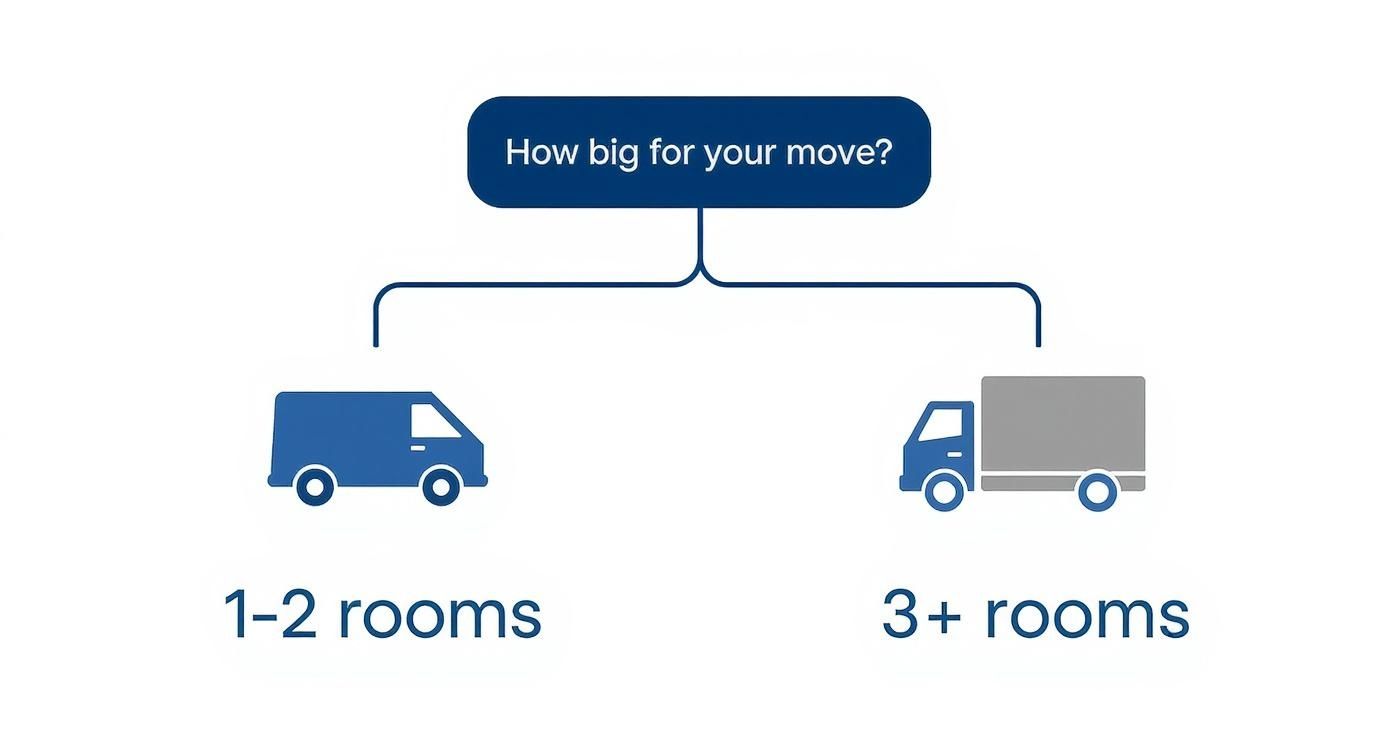
This diagram illustrates the decision-making process when choosing between a local mover for an urban job and a regional specialist for a long-distance relocation.

City Mover connecting with Regional Specialist through bidirectional workflow diagram illustration

Ultimately, the scale and distance of your move are the primary determinants of the type of professional assistance you will require.

A professional moving team provides efficiency, experience, and the invaluable peace of mind that comes with comprehensive insurance. They manage the heavy lifting and logistical challenges, freeing you to focus on your new beginning. We have explored this in greater detail in our article on why hiring removal services is the smart way to move. The final decision requires a careful assessment of your budget, timeline, and personal capacity.

Common Questions About Hiring Local Movers

Selecting the right local mover often comes down to getting clear, direct answers to your most pressing questions. To help you make an informed decision, here are expert answers to the queries we frequently receive from people searching for "moving companies near me."

How Far in Advance Should I Book Movers?

To secure a reputable company at a competitive price for your preferred date, you should aim to book your movers at least four to six weeks in advance. This timeframe provides ample opportunity to compare quotes and vet companies without feeling rushed.

If your move falls during a peak period—such as the end of the month, school holidays, or a long weekend—it is highly advisable to book even earlier. Aim for at least eight weeks out to guarantee availability with your chosen company. While last-minute bookings are sometimes possible, they often come with higher prices and limited options.

What Insurance Should Every Reputable Mover Have?

This is a critical, non-negotiable requirement. Any professional, trustworthy moving company must carry two specific types of insurance to protect you, your property, and your belongings.

  • Public Liability Insurance: This covers accidental damage to your property during the move, such as damage to walls, floors, or driveways.
  • Transit Insurance: This protects your possessions while they are on the truck and in transit between your old and new locations.

Before signing any agreement, always request to see a Certificate of Currency for both policies. It's also prudent to consult with your own home and contents insurance provider to see if you need additional coverage for high-value items.

Peace of mind is priceless on moving day. Verifying a company's insurance is one of the most important steps in your vetting process. It is a key differentiator between a professional service and a high-risk operator.

When Is an Hourly Rate Better Than a Fixed Price?

The choice between an hourly rate and a fixed-price quote depends entirely on the nature of your move.

An hourly rate is typically the most cost-effective solution for smaller, local moves where you are well-prepared and the logistics are simple. If you have done all the packing yourself and there are no access challenges, you pay only for the time the movers are working.

Conversely, a fixed-price quote is generally the better option for larger homes, long-distance moves, or any job with potential complexities like difficult staircases, tight parking, or multiple delivery points. A fixed quote provides complete cost certainty and protects you from unforeseen charges if delays occur.

What Should I Do to Prepare for Moving Day?

A seamless move is the result of preparation that begins weeks in advance. The more organised you are, the more efficient (and cost-effective) the moving day will be. Start by decluttering thoroughly; there is no sense in paying to move items you no longer need or want.

Ensure all boxes are securely packed and clearly labelled with the destination room and a brief description of the contents. Pack an "essentials" box containing items you'll need immediately upon arrival, such as toiletries, phone chargers, medications, and a kettle. On the day, ensure there is clear access and parking for the truck, and communicate with the moving crew leader to identify fragile or high-priority items.

For a more detailed guide on preparation, you can find a wealth of information in our comprehensive moving company FAQs.


Ready to plan a stress-free move with a team you can trust? Get n Go Removals Melbourne offers transparent pricing, experienced full-time staff, and a commitment to making your relocation seamless. Contact us today for a free, no-obligation quote!

READ MORE

The Ultimate Guide to Finding the Best Removalists Melbourne Has to Offer

Let's be honest, the thought of moving in Melbourne can be a bit overwhelming. But hiring the right removalists in Melbourne can genuinely transform a stressful ordeal into a smooth, straightforward experience. This guide is your complete roadmap, expertly designed to help you navigate every step with confidence and ensure you partner with a professional, reliable team for your house or office move.

Your Essential Guide to a Stress-Free Melbourne Move

Professional movers carrying cardboard boxes up stairs during residential relocation service

Uprooting your home or office consistently ranks as one of life’s most intense events. It doesn't have to be that way. With meticulous preparation and the right professional support, your move can become an exciting new chapter instead of a logistical nightmare. This playbook is designed to empower you with the knowledge to make smart, informed decisions for a successful Melbourne relocation.

We'll walk you through the entire process, starting with identifying the exact type of moving service you need. Whether you're shifting from a compact apartment, relocating an entire corporate office, or have specialty items requiring delicate handling, understanding your options is the critical first step.

Getting a Feel for the Melbourne Removalist Scene

The Australian removalist industry is a significant economic player, generating around $2 billion AUD annually, with Melbourne at the heart of the action. The city is home to over 150 removalist companies, making it a highly competitive market. Understanding this landscape is your key to finding a high-quality, reputable partner for your move.

Local moves are the industry's bread and butter, accounting for nearly 29% of the total revenue. This highlights the sheer volume of people moving within this vibrant city. This guide will help you cut through the noise and focus on what truly matters when selecting a service.

We'll cover:

  • Service Types: Pinpointing the exact assistance you require, from comprehensive packing and wrapping to secure short-term storage solutions.
  • Cost Estimation: Gaining a clear understanding of how to budget effectively and what factors contribute to your final quote.
  • Vetting Movers: Learning the essential questions to ask and the critical red flags to avoid.

Prepping for a Smooth Transition

Meticulous planning is the cornerstone of a successful move. Investing time in organisation will dramatically reduce your stress levels. For expert advice on managing the entire process, you can find practical tips on how to make the moving process less painful.

Ultimately, our goal is to provide you with a clear, actionable path forward. By the end of this guide, you will have the confidence to select the best removalists Melbourne provides for your specific needs, ensuring your belongings—and your peace of mind—are in the safest hands.

A Look at Different Melbourne Removalist Services

No two moves are identical. Relocating from a studio apartment in Fitzroy is a world away from moving a five-bedroom family home in the suburbs. Because every situation is unique, professional Melbourne removalists offer a comprehensive suite of services to meet any requirement.

Understanding these different specialities is key to creating a moving plan that aligns perfectly with your needs, budget, and timeline. It’s about more than just transporting boxes from point A to B; it’s about securing the right team with the right skills and equipment for your specific possessions.

The most common service is standard residential moving. This is the quintessential house move, where a professional team manages all the heavy lifting, expert loading of the truck, and safe transportation of your household goods to your new home. For most people, this service is precisely what they need.

But what about items that require more than just muscle? That's where specialised services come into play.

Got Valuables? You’ll Need Specialised Handling

Certain belongings demand a delicate, precise touch and specialised equipment. Melbourne’s leading professional removalists have dedicated teams trained specifically for these high-value or complex items.

Consider items such as:

  • Piano Removals: A piano cannot simply be loaded onto a truck. It requires special dollies, ramps, and extensive protective padding, not to mention the expertise to navigate tight corners and staircases without causing a single scratch.
  • Artwork and Antiques: These items are often fragile and irreplaceable. They demand custom crating, acid-free packing materials, and sometimes climate-controlled transport to ensure their perfect preservation.
  • Pool Table Relocations: This is a highly technical task. It involves meticulous disassembly, safe transport of the incredibly heavy slate components, and professional reassembly and levelling at the new location.

When moving such items, hiring a removalist with proven, verifiable experience is non-negotiable. The potential cost of damage far outweighs the investment in a specialised team.

Commercial and Office Relocations

Moving a business is an entirely different logistical challenge. Commercial relocations are defined by precision planning, with the primary objective being to minimise operational downtime. An expert commercial mover understands that every hour the business is not functional, revenue is lost.

These moves are structured around efficiency and detailed project management, often scheduled after hours or over weekends to prevent disruption. A commercial moving team is skilled in handling everything from bulky office furniture and sensitive IT equipment to confidential archives, ensuring a secure and systematic transition.

Add-On Services That Save Your Sanity

Beyond the core moving service, many Melbourne removalists offer valuable add-ons that can transform a stressful move into a seamless, turnkey experience. These services are designed to take the most time-consuming and tedious tasks off your plate.

  • Professional Packing and Unpacking: This service is a true game-changer. A trained team can pack your entire home in a fraction of the time it would take you, using high-quality materials to ensure maximum protection. They can also unpack at your new home, getting you settled in record time.
  • Furniture Disassembly and Reassembly: Complex items like flat-pack wardrobes or elaborate bed frames can be a major headache. Professional removalists have the correct tools and expertise to dismantle and reassemble your furniture correctly and efficiently.
  • Secure Storage Solutions: If there's a gap between your move-out and move-in dates, or if you need to downsize temporarily, many companies offer secure, climate-controlled storage units for both short and long-term needs.

For smaller jobs, such as moving a few large items or clearing out a one-bedroom flat, a more agile solution might be more suitable. Discover how a 2 man with a van service provides a cost-effective and efficient alternative for these types of moves. Knowing all your options empowers you to tailor your move perfectly, ensuring every detail is handled by a professional.

Decoding the Costs of Moving in Melbourne

Budgeting for your move can feel like navigating a maze. When you start receiving quotes from removalists in Melbourne, the figures can vary significantly. The key is to understand the components that make up the final price, enabling you to plan accurately and avoid any unwelcome surprises on moving day.

A moving quote is not a single flat fee; it is a calculation based on several factors. Everything from the size of your home to the complexity of property access will influence the cost. Once you know what to look for, you can compare quotes with confidence, ensuring you receive fair value.

This chart provides a quick overview of the service categories typically offered by Melbourne removalists, helping you identify where your needs fit.

Melbourne removalist services showing residential, commercial, and specialty moving options with icons

As you can see, there's a tailored service for every scenario, from a standard apartment move to a full-scale corporate relocation or the transport of delicate, high-value items.

Key Factors That Influence Your Quote

Your moving quote is like a recipe—each ingredient affects the final outcome. The most significant factor is the total volume of your belongings, measured in cubic metres (m³). A typical one-bedroom apartment may contain 10-15m³ of goods, whereas a four-bedroom family home could easily exceed 40-50m³.

Next is distance. Logically, a local move from South Yarra to Brunswick will be less expensive than a relocation to regional Victoria. Increased kilometres mean more time on the road and higher fuel consumption.

However, other variables can also impact your quote:

  • Property Access: Are there multiple flights of stairs? Is booking a lift complex? Is there a long walk from the truck to your front door? These logistical challenges add time and labour, which is reflected in the cost.
  • Crew Size: For a simple move, a two-person team may suffice. For a larger home with heavy or awkward furniture, a team of three or four movers is necessary for a safe and efficient job.
  • Specialty Items: Moving a grand piano, a slate pool table, or a fragile antique armoire is not a standard task. These items require specialised equipment and expertise, which comes at a premium.

Hourly Rates vs. Fixed-Price Quotes

When you receive quotes, you'll likely encounter two primary pricing models. Understanding the difference is crucial for selecting the best option for your move.

Hourly rates are very common for local moves within Melbourne. You pay for the time the crew is working, which typically begins when they leave their depot and ends upon their return. This is a transparent model, ideal for straightforward moves without anticipated delays.

Fixed-price quotes offer a single, all-inclusive price for the entire job. This is an excellent choice for larger, more complex moves or long-distance relocations, as it provides complete cost certainty. Regardless of traffic or minor delays, your price is locked in.

A fixed-price quote provides exceptional peace of mind, as the price you're quoted is the price you pay, eliminating the risk of unexpected costs on moving day. It effectively transfers the risk of delays from you to the moving company.

To give you a clearer idea of what to expect with hourly rates, here is a general guide based on team and truck size.

Estimated Hourly Rates for Melbourne Removalists

This table outlines the typical hourly rates you can expect from removalists in Melbourne. Please note that these are industry averages and can vary between companies and based on the day of your move (weekends and public holidays may incur higher rates).

Team Size Truck Size Average Hourly Rate (AUD)
2 Movers 4-6 Tonne Truck $140 – $180
2 Movers 8-10 Tonne Truck $160 – $200
3 Movers 10-12 Tonne Truck $210 – $260
4 Movers 12+ Tonne Truck $280 – $340

Using this as a baseline will help you understand how quotes are formulated and allow you to better estimate the potential cost of your move.

Uncovering Potential Hidden Charges

A reputable removalist will always be transparent about their pricing, but it pays to be informed and know what to look for. Always read the terms and conditions carefully to avoid future misunderstandings.

Be sure to ask specifically about these potential charges:

  • Travel Time or Depot Fees: This is a standard charge covering the team's travel from their base to your location and back. It should be clearly itemised on your quote.
  • Fuel Surcharges: For long-distance moves, some companies may apply a surcharge to cover fluctuating fuel costs.
  • Stair Fees: If your property involves multiple flights of stairs and no lift, an additional fee may apply. Disclose this information upfront.
  • After-Hours or Weekend Rates: Moving on a Sunday or late in the evening will likely cost more. Confirm these rates in advance if you require a non-standard booking time.

For an even more in-depth breakdown, explore our post on how much does moving houses cost in Melbourne. It delves into the finer details of budgeting. By mastering these cost factors, you can plan your budget with confidence and choose a removalist that ensures a smooth, stress-free move.

How to Choose a Reputable Removalist and Avoid Pitfalls

Selecting the right moving company is the most critical decision you will make in your relocation journey. It’s the difference between a seamless, organised day and a nightmare of chaos, hidden fees, and damaged possessions. When vetting removalists in Melbourne, you are not just shopping for the lowest price; you are seeking a trustworthy partner to handle your most valuable belongings.

Unfortunately, the moving industry has its share of unscrupulous operators. Data from Consumer Affairs Victoria revealed a significant increase in complaints, rising from 656 in 2019 to 726 in 2020. Industry insiders estimate that for every formal complaint, at least five other incidents go unreported, indicating a much larger underlying problem of unprofessionalism and deceptive practices.

This section provides a practical checklist to help you identify genuine professionals and sidestep common pitfalls.

Essential Credentials Every Professional Mover Must Have

Before you begin comparing quotes, there are several non-negotiable credentials to verify. These fundamentals separate legitimate professionals from rogue operators. Any reputable removalist will readily provide proof of their credentials.

Think of this as a safety net for your move. Without these essentials, you expose yourself to significant financial risk if things go wrong.

Here’s what to demand:

  • Comprehensive Insurance: This is absolutely critical. A professional mover must have both Public Liability Insurance (to cover accidental damage to your property, such as walls or floors) and Transit Insurance (to cover your goods while they are in transit on the truck). Do not take their word for it—request to see the current certificates of currency.
  • AFRA Accreditation: The Australian Furniture Removers Association (AFRA) is the industry's peak body. Membership signifies that the company adheres to high standards for training, equipment, and customer service. Choosing an AFRA-accredited mover provides an extra layer of confidence and access to a formal dispute resolution process.
  • A Professional Online Presence: A legitimate business will have a professional, user-friendly website. It should clearly display contact details, list services, and feature authentic customer reviews. A weak or non-existent online presence is a major red flag.

Spotting the Red Flags of a Dodgy Operator

Verifying credentials is a great start, but you must also trust your instincts when evaluating quotes. Some operators use deceptive tactics to lure customers with low prices, only to impose hidden charges or provide substandard service on moving day.

A quote that seems too good to be true almost always is. An unusually low price often indicates that corners are being cut, whether through untrained staff, a lack of insurance, or poorly maintained vehicles.

Be vigilant for these common warning signs:

  • Vague or Unclear Contracts: A professional quote is detailed and transparent. It should clearly break down the hourly rate or fixed price, list all potential additional charges (like depot-to-depot travel or stair fees), and specify the extent of their insurance coverage.
  • Demands for a Large Cash Deposit: While a small deposit to secure your booking is standard practice, a company demanding a large cash payment upfront could be a sign of financial instability or, in the worst case, a scam.
  • Poor Communication: Pay close attention to how they interact with you from the initial inquiry. Are they professional? Do they respond promptly? Are they willing and able to answer your questions clearly? If communication is poor before they have your business, it will likely be worse on moving day.

By investing a little time in due diligence, you can save yourself significant stress and potential financial loss. For further guidance, read our detailed article on choosing the right removals firm for your move.

Your Ultimate Pre-Move Checklist

Pre-move checklist clipboard with cardboard moving boxes stacked against white wall on wooden floor

A successful move is a well-planned move. The process can feel overwhelming, but by breaking it down into manageable weekly tasks, you can avoid last-minute panic and ensure nothing is overlooked. This timeline is your roadmap to staying organised, calm, and in control from start to finish.

The weeks leading up to your move are for laying the groundwork. Getting these early steps right ensures everything else falls into place smoothly. This is the time for making critical decisions and, most importantly, decluttering.

Four to Six Weeks Before Your Move

The countdown has begun. With over a month to go, you have ample time to get organised without feeling pressured. The primary goals during this period are to secure your professional movers and begin the essential process of culling your belongings.

  • Research and Book Removalists: This is your top priority. Start gathering quotes from reputable removalists Melbourne has available. Evaluate them not just on price, but also on their insurance, reviews, and professionalism. Confirm your booking to lock in your preferred moving date.
  • Declutter Ruthlessly: Be honest with yourself about what you truly need. Go through every room and sort items into four categories: keep, donate, sell, or discard. The less you have to move, the more you save in time, money, and effort.
  • Organise Important Documents: Collect all vital paperwork—passports, birth certificates, financial records, and contracts. Place them in a secure, clearly labelled folder that you will keep with you personally on moving day.

Two to Four Weeks Before Your Move

With your moving date confirmed, the reality of the move begins to set in. The focus now shifts to the practical tasks of packing and administration. A proactive approach during this phase is the secret to a seamless transition.

A well-organised move is a calm move. Use this period to methodically work through your home, packing non-essential items and notifying key organisations of your change of address.

First, gather your packing supplies. You will need a good supply of sturdy boxes in various sizes, high-quality packing tape, bubble wrap, and permanent markers. Begin packing items you don't use daily, such as books, off-season clothing, and decorative objects.

To make moving day more efficient for both you and your movers, it's an excellent idea to create detailed floor plans of your new home. This allows the crew to know exactly where heavy furniture should be placed.

This is also the prime time for life admin:

  • Notify your utility providers (electricity, gas, internet) of your move-out date.
  • Arrange mail forwarding with Australia Post.
  • Update your address with your bank, insurance providers, and any subscription services.

For a truly exhaustive guide, consult our comprehensive moving house checklist Australia, which covers every detail.

To help you stay on track, here is a quick summary.

Essential Moving Timeline
Timeframe Key Tasks
4-6 Weeks Out Book your removalists, declutter your entire home, and gather all your important documents in one safe place.
2-4 Weeks Out Gather packing supplies, start packing non-essential items, and handle all the change-of-address admin.
The Final Week Finish packing, prepare an "essentials box" for day one, and reconfirm all details with your moving company.

This timeline will keep you on track, ensuring no crucial tasks slip through the cracks.

The Final Week Before Moving Day

You're in the home stretch! This week is dedicated to final preparations and double-checking logistics. Your goal is to complete all packing, leaving out only the absolute essentials for the last 24 hours.

Pack an "essentials box" containing everything you will need immediately upon arriving at your new home. This should include toiletries, a change of clothes, phone chargers, a basic toolkit, and snacks. Keep this box separate and label it clearly to prevent it from being loaded onto the truck.

Finally, place a confirmation call to your removalist team to reconfirm the arrival time, access details for both properties, and any special instructions. This simple step provides valuable peace of mind.

How Removalists Keep Melbourne Moving

Melbourne is one of Australia's fastest-growing cities, a metropolis in constant motion. This perpetual energy isn't just about new skyscrapers reshaping the skyline; it's about the thousands of individuals and businesses relocating to new homes and pursuing new opportunities. At the heart of this activity are Melbourne's professional removalists, the unsung heroes facilitating this growth.

Think of the city as a dynamic organism. As new suburbs and business districts emerge, removalists function as the essential circulatory system, ensuring the smooth flow of people, families, and commerce. Without their logistical expertise, the city's development would stagnate. They are the quiet engine powering Melbourne's evolution.

The Fuel for a Growing City

It’s no surprise that as Melbourne’s population expands, so does the demand for quality movers. With new suburbs materialising and established ones densifying, the need for efficient relocation services has surged. Removalists are on the front lines, helping thousands of households and offices transition smoothly every year.

The statistics are compelling. Melbourne's population is projected to reach approximately 6.2 million by 2030. To accommodate this growth, an estimated 30,000 to 40,000 new homes are required annually. This population boom directly fuels the moving industry, underscoring the critical role removalists play in the city's expansion. You can explore a deeper analysis of Melbourne's growth and its impact on the moving industry here.

Helping Both Families and Businesses Make Their Move

The story isn't limited to residential moves. Melbourne’s dynamic economy means businesses are constantly relocating—upgrading to larger offices, opening new retail locations, or shifting warehouses to more strategic positions. Professional removalists provide the specialised skills required to move an entire company with minimal disruption, ensuring business continuity.

Whether it’s a startup moving into its first dedicated office or a family establishing roots in a new suburb, removalists are the logistical backbone that supports Melbourne's ambition. They don't just move boxes; they move the city forward.

This symbiotic relationship between urban growth and the moving industry is what keeps Melbourne thriving. Every successful relocation, whether residential or commercial, is a vital piece of the city's ongoing narrative. Removalists are a fundamental component of Melbourne's economic machinery, helping it remain a vibrant and accessible place to live and work.

Common Questions About Moving in Melbourne

Have a few last-minute questions before the big day? You're not alone. Even the most meticulously planned move can come with its share of "what ifs" and "how-tos".

Let's address some of the most common queries we receive from people moving house or office in Melbourne. Getting these details clarified is the final step in ensuring your move is genuinely smooth and stress-free.

How Far in Advance Should I Book Removalists in Melbourne?

Our expert recommendation is to book your Melbourne removalists at least 4 to 6 weeks in advance of your desired moving date. This is especially critical if you are moving during peak season, such as summer, school holidays, or the end of the month, when demand is highest.

Booking early does more than just secure your preferred date. It gives you adequate time to compare quotes and vet companies without the pressure of a looming deadline. If you are moving during a quieter, off-peak period, you might be able to secure a booking with 2 to 3 weeks' notice, but the extra buffer almost always results in better availability and more competitive pricing.

What Kind of Insurance Should My Mover Have?

A professional, reputable removalist must carry two essential types of insurance: Public Liability Insurance and Transit Insurance. Public Liability covers any accidental damage to your property (e.g., a scratch on a floor or a dent in a wall), while Transit Insurance protects your belongings while they are being transported in the truck.

Do not hesitate to ask for certificates of currency for these policies. It is your right to understand the extent of your coverage. For complete peace of mind, you may also consider arranging your own comprehensive moving insurance policy, which can cover your items for the entire duration of the move, from packing to final placement.

Can Removalists Transport Potted Plants?

For local moves within Melbourne, the answer is generally yes, but it is crucial to discuss this with your removalist beforehand. Some companies have specific policies regarding the transport of plants due to the potential for soil spillage or damage to the plants themselves.

Interstate moves are a different matter entirely. Australia has strict quarantine laws to prevent the spread of pests and diseases across state borders. This means transporting plants and soil between states is often prohibited. Always check the specific biosecurity regulations for your destination state to avoid any issues.

What Items Will Removalists Not Take?

This is a matter of safety and legality. For safety and regulatory reasons, professional movers are prohibited from transporting hazardous materials. This is a consistent industry-wide policy designed to protect you, your belongings, and the moving crew.

It's crucial to properly dispose of prohibited items or arrange alternative transport for them before moving day. Your moving company can provide a specific list of what they cannot accept.

As a general guide, the following items are typically off-limits:

  • Flammables: Fuel, paints, aerosol cans, and certain cleaning solvents.
  • Explosives: Fireworks, ammunition, and similar hazardous items.
  • Corrosive Chemicals: Acids, bleach, and other harsh chemical agents.
  • Pressurised Containers: BBQ gas bottles, scuba tanks, or portable heater cylinders.

Movers will also decline to transport perishable foods that could spoil during transit. Finally, a crucial tip: always keep valuables such as jewellery, cash, and important documents with you personally for maximum security.


Planning your move in or out of Melbourne? Let Get n Go Removals Melbourne handle the heavy lifting with our professional, reliable, and fully insured services. From expert packing to secure transport, we ensure your relocation is seamless. Get your free, no-obligation quote today and experience a stress-free move.

READ MORE

How to Find the Best Removalists in Melbourne for 2025

Relocating your home or office in Melbourne can feel overwhelming. From navigating the tight laneways of Fitzroy to coordinating lift access in a Southbank high-rise, the logistical challenges are significant. The single most important decision you'll make for a stress-free transition is choosing the right mover. But with countless options available, how do you genuinely find the best removalists Melbourne has to offer for your specific needs?

This guide cuts through the noise. We have meticulously analysed the top-tier services and platforms available, comparing them on the criteria that matter most: transparent pricing, insurance coverage, specialist handling capabilities, and verified customer reviews. Whether you're moving a one-bedroom apartment from St Kilda to Brunswick or relocating an entire corporate office, this comprehensive roundup is designed to give you clarity and confidence.

We'll explore dedicated, full-service companies and how they compare against flexible comparison platforms, giving you a complete picture of your options. For any major relocation, understanding the complexities and beginning your preparations well in advance is key. You can gain valuable insights into the importance of early and detailed planning for a move by looking at comprehensive guides, which highlight similar logistical challenges.

Our goal is simple: to equip you with the detailed, actionable information needed to select a reliable partner who will treat your belongings with the care they deserve. This resource, complete with direct links and service breakdowns, ensures your move is smooth, efficient, and secure from start to finish. Let's find your perfect Melbourne moving partner.

1. Get n Go Removals Melbourne

Best For: A comprehensive, five-star moving experience for residential, commercial, and interstate relocations.

Get n Go Removals Melbourne stands out as a formidable contender for the title of best removalists in Melbourne, cementing its place at the top of our list. As a family-owned business with over a decade of dedicated experience, it has built a reputation for reliability, professionalism, and meticulous care. This isn't just a team that moves boxes; it's a full-service logistics partner committed to delivering a seamless, stress-free transition, whether you're moving across the street or up the East Coast. Their blend of in-house resources, comprehensive insurance, and a customer-first approach makes them a standout choice for discerning clients.

Get n Go Removals Melbourne loading a truck

What truly sets Get n Go Removals apart is its end-to-end control over the moving process. From the initial quote to the final box being unpacked, you are in the hands of a cohesive, well-oiled team. This commitment to quality and security provides invaluable peace of mind for homeowners, businesses, and anyone needing dependable moving services.

Key Strengths and Service Highlights

Get n Go Removals excels by combining a robust operational framework with a suite of specialised services tailored to meet diverse client needs.

  • In-House Fleet and Professional Team: Unlike companies that rely on subcontractors, Get n Go operates its own fleet of well-maintained trucks ranging from 4.5 to 12 tonnes. This ensures the right vehicle is available for any job, from a small apartment move to a large family home. More importantly, their team consists of full-time, police-checked employees, not casual contractors. This guarantees a consistent level of professionalism, training, and accountability on every move.

  • Comprehensive Insurance Coverage: Your belongings are protected by both Public Liability and Transit Insurance. This dual-layer protection is a critical trust signal, assuring clients that their assets are covered against unforeseen circumstances during loading, transit, and unloading.

  • Specialist Handling and Valet Services: The team is expertly trained to handle difficult items. Whether it's a grand piano, a slate pool table, or delicate antiques, they have the equipment and expertise to move it safely. They also offer a premium white-glove valet service, which includes professional packing and unpacking, allowing you to walk into your new home or office with everything perfectly organised.

  • Flexible and Client-Centric Operations: Recognising that moves don't always happen during standard business hours, Get n Go offers flexible 24/7 scheduling. A single point of contact streamlines communication, making it easy to coordinate lift bookings, settlement times, and other logistical hurdles. For a complete breakdown of their offerings, you can explore the full range of services from Get n Go Removals.

Interstate and Storage Solutions

For those moving beyond Victoria, Get n Go provides reliable and efficient interstate services. They operate weekly direct runs to Sydney, Brisbane, and other key East Coast destinations. This direct-route model minimises transit times and reduces the risk of damage associated with multiple handling points, a common issue with backloading services.

Furthermore, they offer secure short-term and long-term storage solutions. This is an ideal service for clients who are downsizing, renovating, or navigating a gap between settlement dates. Your possessions are kept in a safe, monitored facility until you’re ready for them.

Practical Tip: When requesting a quote, be as detailed as possible about your inventory, including any oversized or fragile items. This will help them provide the most accurate price and allocate the appropriate resources for your move.

Feature Summary Get n Go Removals Melbourne
Service Type Residential, Commercial, Interstate
Specialities Piano & Pool Table Moving, Valet Packing/Unpacking, Furniture Assembly
Team Full-Time, Police-Checked Staff
Fleet Company-Owned (4.5t – 12t Trucks)
Insurance Public Liability & Transit Insurance Included
Scheduling 24/7 Flexible Booking
Pricing Custom Quote-Based

Pros & Cons

Pros:

  • Highly Trusted Team: Full-time, police-checked staff backed by comprehensive insurance.
  • Full-Service Offering: Includes specialist handling, valet packing, and furniture assembly.
  • Company-Owned Assets: A dedicated fleet and premium equipment ensure quality control.
  • Flexible and Direct: 24/7 scheduling and weekly direct interstate runs improve efficiency.
  • Stellar Reputation: Overwhelmingly positive five-star reviews confirm their reliability.

Cons:

  • No Fixed Pricing: You must contact them for a customised quote, as no standard rates are published online.
  • Limited Interstate Reach: Services are primarily focused on the popular East Coast corridor, which may not suit moves to WA, SA, or other regions.

Website: https://www.getngoremovals.com.au

2. Understanding Quote Comparison Platforms

Comparison platforms, often called aggregators or marketplaces, operate differently from a traditional moving company. They are online services that connect you with a network of different removalists, allowing you to find, compare, and sometimes book a service that fits your moving date and budget. This platform-based approach is designed to save you the time and hassle of individually contacting multiple companies for quotes, streamlining the initial search process.

Muval homepage showcasing its booking interface

The core strength of these platforms lies in transparency and convenience. When you enter your move details—such as pickup and delivery suburbs, property size, and preferred date—the platform presents a list of available movers, often with pricing. This allows you to make an informed decision based on cost and customer ratings without waiting for callbacks. These tools can be useful for research, helping you understand what the best removalists Melbourne are charging and what services are available.

How These Platforms Work

These services aren’t moving companies themselves; they are middlemen. Quality can vary significantly as they often feature a wide range of providers, from large companies to smaller independent operators.

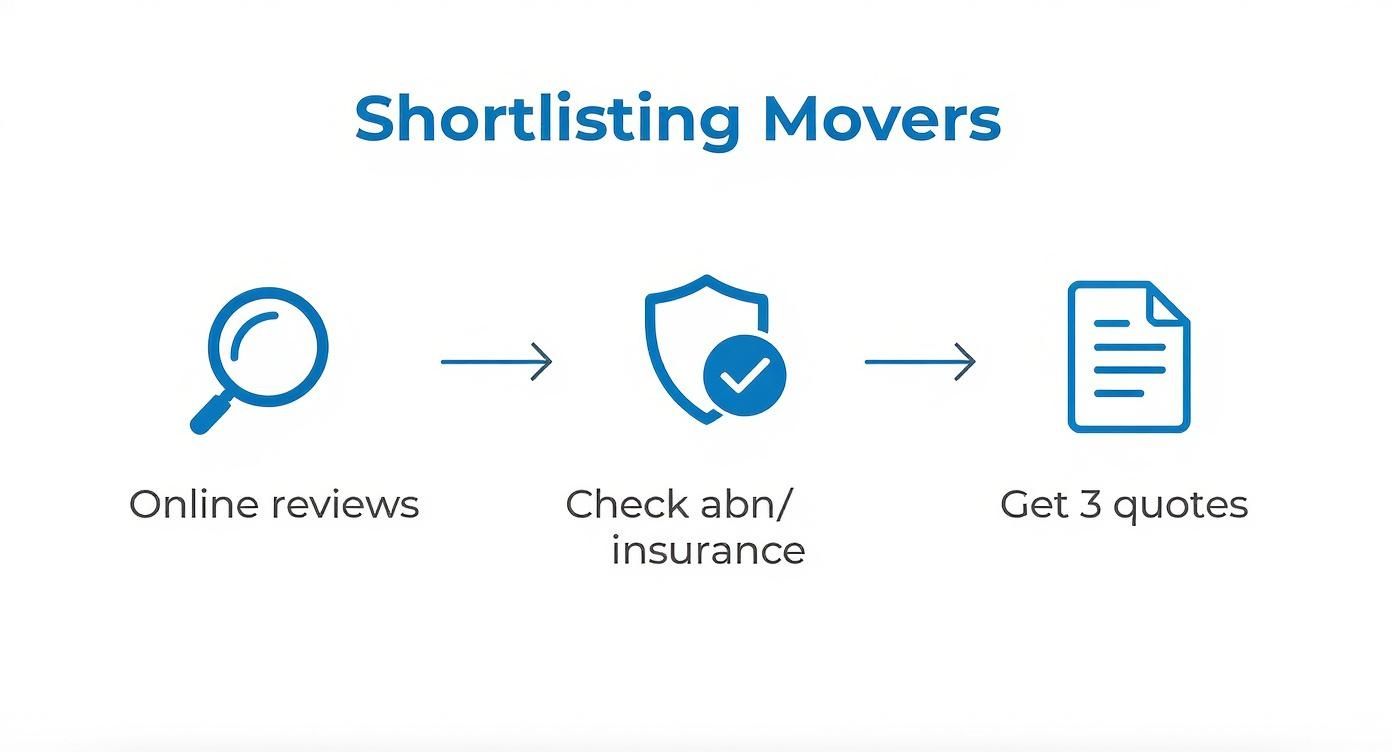
  • Vetting Processes: Some platforms have a vetting system, checking for valid ABNs, public liability insurance, and transit insurance. However, the thoroughness of these checks can differ.
  • Booking Models: Some allow instant online booking, while others function as a "reverse marketplace" where you post your job and movers bid on it.
  • Potential Downsides: The primary drawback is the lack of direct accountability. If something goes wrong, you may be caught between the platform and the third-party mover. Quality control is less consistent than with a dedicated company that uses its own trained staff and equipment.

Pricing and User Experience

One of the most useful features of these platforms is cost transparency, as they often display typical hourly rates and average job totals for Melbourne moves. This data can help you set a realistic budget. While the sheer number of options can feel like choice overload, using built-in filters can help narrow the field. It’s a good way to get a general sense of the market before approaching a professional firm.

Pro Tip: When using a comparison site, pay close attention to the detailed profiles of each removalist. Read their recent customer reviews and check their specific service inclusions to ensure they align with your needs. This research can help you understand what to look for when searching for a removalist near you.

Example Platforms: https://www.muval.com.au/removalists/melbourne, https://www.findamover.com.au/removalist-quotes/Melbourne

3. Using On-Demand Service Marketplaces

On-demand marketplaces function as vast platforms connecting you with local individuals and teams ('Taskers' or freelancers) who can handle moving tasks. You post a job detailing your needs—whether it's a full house move, shifting a single piece of furniture, or just needing an extra pair of hands for packing—and then receive offers from available individuals. This model is built for flexibility, speed, and custom jobs that might not fit a standard removalist package.

Airtasker

The key advantage of these platforms is their ability to service urgent or unconventional moving needs quickly. Instead of waiting for quotes from established companies, you can often secure help within hours. These marketplaces empower you to choose a provider based on their profile, completion rate, past reviews, and the price they offer. This makes them a versatile option for last-minute or smaller-scale jobs.

Key Considerations and Risks

While these marketplaces offer convenience, they come with significant risks compared to professional removal companies. The responsibility for vetting falls almost entirely on you, the customer.

  • Lack of Professional Vetting: Many individuals on these platforms are not professional removalists. They may lack the proper training, equipment, and insurance to handle your belongings safely.
  • Insurance Gaps: A significant risk is the lack of comprehensive insurance. While the platform might offer some basic protection, it often doesn't compare to the Public Liability and Transit Insurance provided by a dedicated moving company. Damage to your property or belongings may not be covered.
  • Variable Quality and Reliability: The skill level and professionalism can vary dramatically. User reviews are your primary guide, but there is less accountability if the person fails to show up or performs poorly.

Pricing and User Experience

Pricing on these platforms is determined by the offers you receive, giving you some control over your budget. However, the price often reflects the level of service. Cheaper offers may come from individuals with a van but no professional equipment like dollies, blankets, or straps. This can lead to a higher risk of damage.

Pro Tip: If you use an on-demand marketplace, be extremely specific in your task description. Include photos of items, list any access challenges like stairs, and state what equipment is required. Be aware that for a full house move, using a dedicated service is a much safer option. You can find more advice on selecting professional movers in Melbourne to ensure all your bases are covered.

Example Platforms: https://www.airtasker.com.au/au/services/house-removal/melbourne/, https://www.oneflare.com.au/removalists/vic/melbourne

How to Choose the Right Moving Service for You

Understanding the differences between a professional removalist company and marketplace platforms is crucial for a successful move. Your choice will depend on your specific needs, budget, and risk tolerance.

When to Choose a Professional Removalist Company (like Get n Go Removals)

A dedicated, full-service company is the superior choice for most moving scenarios, especially when peace of mind and the safety of your belongings are top priorities.

  • Full Home or Office Moves: For relocating the entire contents of a property, the expertise, equipment, and insurance of a professional firm are non-negotiable.
  • Valuable or Fragile Items: If you have expensive furniture, antiques, pianos, or artwork, only a trained and insured team should handle them.
  • Interstate Relocations: Complex logistics, long transit times, and regulations make a professional interstate specialist essential.
  • When You Need Full Accountability: A dedicated company provides a single point of contact and is fully accountable for the entire process, from packing to unloading.

When a Marketplace Platform Might Be an Option

Marketplaces can serve a purpose for very specific, low-risk tasks where professional oversight is less critical.

  • Single-Item Moves: Moving a single, non-valuable item like a second-hand fridge or couch.
  • Hiring Extra Labour: If you have your own truck and just need an extra pair of hands for a few hours.
  • Small, Low-Value Moves: A student moving a few boxes and a mattress from a share house might find this a budget-friendly option.
  • Initial Budget Research: Browsing these platforms can give you a baseline understanding of moving costs in Melbourne, which you can then compare against quotes from professional companies.

Even in these cases, it's vital to check the provider's reviews, ask about their insurance, and clarify all details before booking. Understanding how to evaluate different options is key, as covered in various reviews of cheap removalists in Melbourne.

Website Examples (for research):

Top Service Types Comparison: Professional vs. Marketplace

Feature Professional Removalist (e.g., Get n Go) Marketplace / Aggregator On-Demand Service (e.g., Airtasker)
Accountability High: Single point of contact, direct responsibility. Variable: Shared between platform and third-party mover. Low: Responsibility lies with the individual Tasker.
Team Professionalism High: Vetted, trained, full-time employees. Variable: Ranges from professional companies to sole traders. Variable: Anyone can sign up; skills are not verified.
Insurance Coverage Comprehensive: Public Liability & Transit Insurance included. Inconsistent: Varies by provider; must be verified. Very Low / None: Rarely includes proper transit insurance.
Equipment Professional Grade: Company-owned trucks, dollies, blankets, tools. Variable: Depends on the specific mover you choose. Often Basic: May be just a van with no specialised gear.
Ideal Use Case Full home/office moves, valuable items, interstate moves. Price comparison for standard local moves. Single-item transport, urgent labour needs (low-risk items).
Risk Level Low Medium High

Making Your Melbourne Move a Seamless Success

Navigating the landscape of Melbourne's removalist services can feel overwhelming, but with the right framework, you can pinpoint the perfect partner for your specific needs. This guide has dissected the various options available, highlighting the critical differences between dedicated full-service companies like Get n Go Removals and expansive marketplaces. The key takeaway is that for any move involving valuable belongings or complex logistics, the security and professionalism of a dedicated removalist are paramount.

By now, you should have a clear understanding of the distinct advantages a professional moving company offers. They provide a high level of accountability, specialised equipment, and experienced, in-house staff, making them the only sensible choice for complex, valuable, or large-scale relocations. In contrast, marketplaces may appear to offer flexibility and competitive pricing, but this often comes at the cost of inconsistent quality, inadequate insurance, and higher risk.

Your Actionable Checklist for Choosing a Removalist

Before you make your final decision, it's crucial to consolidate your research into a concrete plan. The process of selecting from the best removalists Melbourne has to offer is not just about comparing prices; it's about matching service capabilities to your personal requirements to ensure a smooth, damage-free transition.

Here are the final steps to take:

  1. Define Your Move's Complexity: Are you moving a few boxes from a studio apartment or relocating a five-bedroom family home interstate? Do you have fragile items like pianos, artwork, or antique furniture? Your answer will immediately point towards the need for a professional service.
  2. Scrutinise the Quotes: Don't just glance at the final figure. Look for a detailed, itemised quote that clearly outlines all potential costs. Ask about call-out fees, stair charges, fuel levies, and depot-to-depot pricing to avoid unexpected expenses. Transparency is a hallmark of a reputable company.
  3. Verify Insurance and Credentials: This is non-negotiable. Ensure any company you consider has comprehensive Public Liability and Transit Insurance. Ask for their ABN (Australian Business Number) to confirm they are a legitimate, registered business. This protects you and your belongings.
  4. Read Between the Lines of Reviews: Look for recent, detailed reviews that mention specifics. Pay attention to comments about the crew's professionalism, punctuality, communication, and problem-solving skills. A pattern of positive feedback across multiple platforms is a strong indicator of reliable service.

Matching the Service to Your Scenario

To put this all into perspective, let’s consider a few practical scenarios. If you're moving a single, inexpensive item across town, a marketplace might suffice. However, if you're a family undertaking an interstate relocation from Melbourne to Sydney with valuable possessions and children to manage, the structured support, guaranteed quality, and comprehensive services of a dedicated removalist firm become indispensable. The risks associated with using an unvetted individual from a platform for such a significant move are simply too high.

Ultimately, your goal is to find a removalist that offers not just a truck and manpower, but peace of mind. Investing a little extra time in vetting your options now will pay significant dividends in the form of a stress-free move. Armed with the insights from this guide, you are fully equipped to make a confident, informed decision and turn the page to your next chapter in Melbourne with ease.


Ready to experience a truly seamless and professional move? For a service that combines reliability, transparent pricing, and a highly-trained team dedicated to the safety of your belongings, look no further than Get n Go Removals Melbourne. As one of the best removalists Melbourne has to offer, we provide tailored solutions for everything from local apartment moves to complex interstate relocations. Get n Go Removals Melbourne today for a comprehensive, obligation-free quote and let our experts handle the heavy lifting.

READ MORE

Finding Furniture Removalists Melbourne Trusts: A Comprehensive Guide

Choosing the right furniture removalists in Melbourne is a critical decision that transforms a potentially chaotic move into a seamless experience. It's about entrusting your valued possessions to a professional, reliable crew with the expertise to navigate Melbourne's unique landscape, whether you're shifting from a compact city apartment or a sprawling family home in the suburbs.

Why Your Choice of Melbourne Removalist Matters

Selecting a moving company is one of the most significant decisions you'll make during your relocation. In a vibrant and bustling city like Melbourne, the difference between a premier mover and a subpar one is vast. It's the difference between a sigh of relief at the end of a long day and a cascade of unforeseen complications and stress.

A top-tier team provides more than just heavy lifting. They bring extensive practical experience, strategic planning, and the correct equipment to ensure every item, from your bulky sofa to your most fragile heirlooms, is meticulously protected and transported.

Professional movers loading boxes and lamp into moving truck while helping woman relocate home

This is about more than just muscle; it's about deep local knowledge. It’s understanding how to navigate the notoriously tight laneways of Fitzroy, coordinating with building managers for high-rise moves in Southbank, or finding parking in congested inner-city streets. The right crew has encountered these challenges before. They anticipate potential hurdles, create effective solutions, and keep your move on schedule and within budget, providing a truly professional service.

First, Define Your Unique Moving Requirements

Before you begin your search, take a moment to outline the specific details of your move. Every relocation is different, and having a clear understanding of your needs from the outset will empower you to find the perfect service provider.

Create a brief inventory covering these key points:

  • Volume of Belongings: Are you moving the contents of a studio apartment or a four-bedroom house? The total volume of your goods is the primary factor determining the required truck size and the number of crew members needed.
  • Specialty Items: Do you own any items that require specialist handling? Think of an antique grandfather clock, a grand piano, a delicate glass-top dining table, or a heavy slate pool table. These items demand specific skills and equipment that not all removalists possess.
  • Property Access: Carefully assess the access points at both your current and new properties. Note any potential challenges, such as multiple flights of stairs, narrow hallways, lift access restrictions, or difficult parking situations.

Having this information ready will make it significantly easier to filter your options and obtain accurate, detailed quotes from prospective movers in Melbourne.

Time to Vet the Contenders

With a shortlist of potential companies, it's time to conduct some thorough research. A company's website is your first stop. A professional, well-designed site with transparent information about services, insurance, and contact details is a positive indicator. However, your due diligence shouldn't end there. Seek out genuine customer reviews on independent platforms like Google or ProductReview to gain unbiased insight into their service quality and reliability.

To help you make an informed decision, use this checklist to compare your options effectively.

Quick Vetting Checklist for Melbourne Removalists

Vetting Criteria What to Look For Why It Matters
Online Reviews Consistent, recent positive feedback on independent platforms. Observe how they respond to any negative reviews. This provides an unfiltered view of their performance, customer service standards, and professionalism.
Insurance Coverage Clear, upfront details about their Transit Insurance and Public Liability policies. Don't hesitate to ask for a certificate of currency. This protects you financially in the event of accidental damage to your belongings or property. Vague answers are a major red flag.
Transparent Pricing Detailed, itemised quotes that clearly break down all costs (e.g., hourly rate, call-out fee, depot-to-depot charges). No hidden fees. You must understand exactly what you are paying for to avoid unexpected costs on your final invoice.
AFRA Accreditation Look for membership with the Australian Furniture Removers Association (AFRA). AFRA members are held to the highest industry standards for equipment, staff training, premises, and professional conduct.
Local Expertise Demonstrated experience moving within Melbourne's diverse suburbs and handling various building types. An experienced local team will be prepared for tight streets, parking regulations, and high-rise logistics, saving valuable time and reducing stress.

This checklist is a powerful tool to help you eliminate unreliable operators and focus your attention on the truly professional furniture removalists Melbourne has to offer.

A truly professional removalist is more than just a pair of strong hands; they're your logistics partner for the day, dedicated to getting your life's possessions from A to B safely. They invest in proper training, the right gear, and solid insurance to protect you every step of the way.

Decoding Removalist Costs and Quotes

Let’s be honest, the big question hovering over any move is always, "What’s this actually going to cost me?". Understanding how furniture removalists in Melbourne structure their pricing is essential for managing your budget and avoiding any unwelcome surprises when the final bill arrives. The total cost is not just a single figure; it's a combination of several important variables.

Person comparing removal quotes on tablet with calculator and measuring tape on desk

At the core of any removalist quote are two main elements: the volume of your items and the time required to move them safely. It’s logical that moving the contents of a one-bedroom apartment will be faster and more affordable than relocating a four-bedroom family home filled with a lifetime of possessions.

This is where creating a detailed inventory list becomes your most powerful tool. By providing a removalist with a comprehensive list of everything you need moved—from major furniture pieces down to an approximate box count—you enable them to provide a far more accurate and reliable estimate.

Key Factors That Influence Your Quote

Several variables can cause the price of your move to fluctuate. Knowing what these are will help you understand the quotes you receive and plan your budget effectively.

  • Distance and Travel Time: The journey between your old and new homes is a significant cost component, covering fuel and the crew's time on the road. A local move within the same suburb is a vastly different undertaking compared to a relocation across Melbourne's sprawling metropolitan area.
  • Property Access: This is a crucial factor. Difficult access can substantially increase the time and labour required. Consider elements like multiple flights of stairs, narrow corridors, a long walking distance from the truck to your front door, or navigating parking on a busy Melbourne street.
  • Specialty Items: Moving a grand piano, a slate pool table, or a fragile antique armoire is not a standard task. These items require specialised equipment, additional personnel, and specific expertise, all of which will be reflected in the final cost.

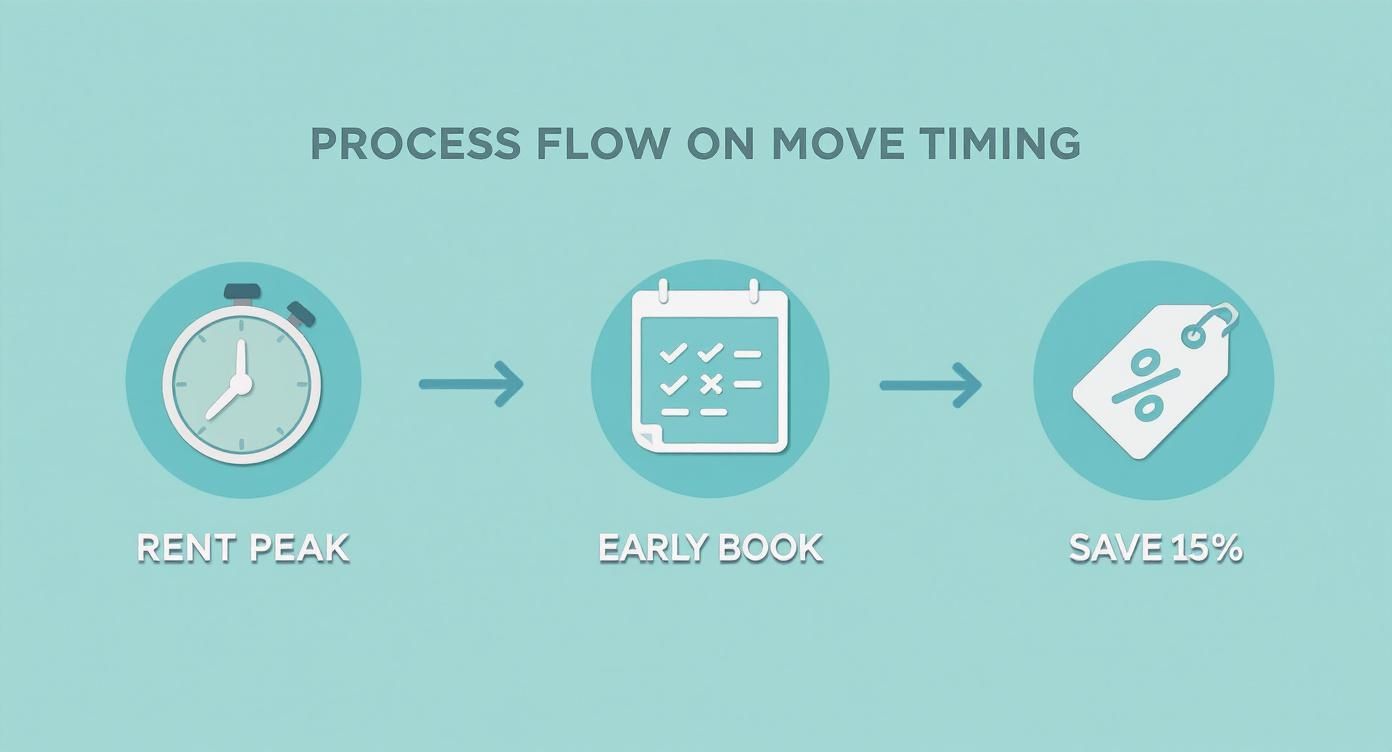
Believe it or not, when you move matters too. Weekends, public holidays, and the end of the month are peak moving periods and often command higher rates. If you have flexibility in your schedule, booking your move for a mid-week day can be a straightforward way to reduce costs.

The best quotes are always built on transparency. A true professional will ask you plenty of detailed questions about your move. They want to make sure their estimate is as close to the final cost as possible, leaving no room for guesswork.

Fixed Price vs. Hourly Rate

When you start receiving quotes, you will likely encounter two primary pricing models. Understanding the difference is vital for selecting the best option for your specific circumstances.

An hourly rate is very common for local Melbourne moves. The concept is simple: you pay for the time the removal crew is actively working, typically from the moment they arrive at your property until the last item is placed in your new home. This can be a highly cost-effective option for smaller, well-organised moves where minimal delays are expected.

A fixed-price quote, conversely, provides a set cost for the entire job, regardless of how long it takes. This offers excellent budget certainty and is often the preferred choice for larger, more complex, or long-distance moves, as it eliminates the risk of unexpected overtime charges. For a comprehensive overview, you can explore a full breakdown of the cost of movers.

For additional context, real-world data indicates that the average cost for furniture removalists in Melbourne can range from $100 to $250, with a median price of about $150 for a standard job. You can investigate more Melbourne-specific pricing and reviews on service platforms like Airtasker. This type of data is invaluable for benchmarking the quotes you receive to ensure they are competitive and fair for the local market.

Critical Questions to Ask Before You Hire

You've successfully narrowed down your list of potential removalists. Now it's time to delve deeper. Securing the right answers before you commit is the single most effective way to avoid potential issues on moving day.

Consider this a brief but crucial interview. You are about to entrust this company with your most valuable possessions, so it's essential to feel completely confident in their operations. Asking a few targeted questions now can reveal everything you need to know about their professionalism and whether they are the right partner for your move.

Understanding Insurance and Liability

This is a non-negotiable topic and perhaps the most important area to gain absolute clarity on. Don't simply accept the word "insured" on a website at face value. You must understand exactly what their policy covers and, more importantly, what it excludes.

  • Public Liability Insurance: This covers damage to the property itself, such as scraped floors, a dented door frame, or a cracked tile at either your old or new residence.
  • Transit Insurance: This protects your belongings while they are in the truck during transit from point A to point B.

Request specific details. What is the excess on their policy if a claim is necessary? Are there exclusions for high-value items like electronics, art, or antiques? Obtaining these answers upfront provides critical protection and peace of mind should an unforeseen accident occur.

A key thing to remember: a removalist's standard insurance isn't the same as getting your own comprehensive moving insurance. If you have particularly valuable or sentimental items, it's always a smart move to arrange a separate policy for total peace of mind.

Probing Their Experience and Equipment

An experienced crew equipped with the right tools is the cornerstone of a smooth, damage-free move. It’s not just about physical strength; it's about utilising professional-grade equipment to handle your belongings safely and efficiently.

When you speak with them, ask about the standard equipment they bring to every job. You want to hear them mention essentials like:

  • Heavy-duty moving blankets for wrapping and protecting furniture
  • Professional-grade trolleys and dollies for heavy and cumbersome items
  • Straps and ties to ensure everything is securely fastened inside the truck

It's also wise to inquire about their team. Are the movers full-time, trained employees, or are they temporary contractors? A dedicated, in-house team often signifies a higher level of accountability and consistency in service. Our guide on choosing the right removals firm for your move offers more detailed guidance on this topic.

Confirming Logistics and Policies

Finally, confirm all the practical details. How do they handle payments? Is a deposit required, and what payment methods do they accept? A crucial question to ask is about their cancellation or postponement policy, especially if your settlement date could change at the last minute.

Clarifying these operational procedures ensures that everyone is on the same page. A professional furniture removalist in Melbourne will have clear, straightforward policies and will be happy to explain them to you, reinforcing their commitment to transparent and customer-focused service.

Preparing Your Home For A Smooth Move

The success of a move is often determined long before the removalist truck arrives. The time invested in properly preparing your home and belongings not only prevents damage but also significantly accelerates the entire process. When you are paying an hourly rate, this efficiency translates directly into cost savings.

Moving boxes with packing supplies and bubble wrap on wooden floor ready for relocation

Think of it as creating a clear, organised, and safe workspace for the crew you've hired. When your professional furniture removalists in Melbourne can operate at peak efficiency—navigating your home safely and loading the truck logically—the entire day runs more smoothly for everyone involved.

Prepping Your Furniture For Transit

Preparing your furniture for transport involves more than just draping a blanket over it. Each piece should be made as secure and easy to handle as possible for the moving team.

  • Empty Everything: First and foremost, remove all contents from drawers, cupboards, and wardrobes. Loose items add significant weight and can shift during transit, causing damage from the inside out.
  • Secure Doors and Drawers: Use painter's tape or stretch wrap to secure all cabinet doors and drawers. This prevents them from swinging open while being carried. A crucial tip: never apply packing tape directly to wood finishes, as it can strip the varnish upon removal.
  • Disassemble When Possible: Large items such as bed frames, modular sofas, or flat-pack shelving units are much safer and easier to move when disassembled. Place all screws, bolts, and small components in a labelled ziplock bag and tape it securely to the largest piece of the corresponding furniture.

Smart Packing And Labelling Strategies

A systematic packing strategy is invaluable when you arrive at your new home. It’s the difference between organised unpacking and overwhelming chaos. Mastering this is key, and you can find some top tips on moving house packing to guide you.

Implement a clear labelling system. On every box, write the destination room (e.g., "Kitchen," "Main Bedroom") and a brief summary of the contents ("Plates & Mugs," "Bedside Lamps"). This simple habit allows the movers to place boxes directly into their correct rooms, saving you the arduous task of moving them later. For a complete checklist, review our guide on the essential moving home to-do list.

Pro Tip: Pack a "Day One" box. Fill it with essentials like toiletries, phone chargers, the kettle, coffee, basic tools, and cleaning supplies. Keep this box with you and move it in your own car so you can find what you need the second you walk through the new door.

Making Your Home Move-Ready

Finally, you need to prepare the physical space. The objective is to create a safe and efficient environment for the removalists by eliminating any obstacles that could slow them down or pose a safety risk.

Ensure there is a clear, unobstructed path from all your furniture to the front door, including hallways and stairwells. It's also a good practice to protect vulnerable surfaces like hardwood floors and carpets with flattened cardboard or old blankets. You can even cover sharp corners on walls and banisters to prevent scuffs.

Crucially, reserve a prime parking spot for the moving truck, as close to your entrance as possible. In many Melbourne suburbs, this might require putting out cones or parking your own cars in the space overnight. A shorter walking distance for the crew directly results in a faster—and therefore more affordable—move.

What to Expect on Moving Day and Beyond

With all your meticulous planning complete, moving day is when your preparation pays off. Understanding the process when your furniture removalists in Melbourne arrive is key to a calm, efficient, and well-executed day.

Consider yourself the project manager. Your primary role is to be available, provide clear direction, and oversee the process.

Professional movers in blue overalls carrying furniture and boxes on moving day

Upon arrival, the crew leader will typically conduct a walkthrough of your home. This is your opportunity to point out fragile items, identify furniture that needs special care, and indicate boxes that should be loaded last for easy access at the destination. Be clear and concise, and then trust the professionals to handle the technical aspects of the move.

Your Role at the Old and New Properties

Your most important job on moving day is to act as the central point of communication. Be prepared to answer questions and provide clear instructions.

Once the truck is loaded, it is absolutely essential to perform a final, thorough sweep of your old property. Check every room, cupboard, garage, and outdoor area to ensure nothing has been left behind.

Upon arrival at your new Melbourne home, your guidance remains crucial. This is where your diligent labelling system proves its worth. You can simply direct the team to the correct rooms for each box and piece of furniture, streamlining the unloading process and saving you from a strenuous session of rearranging heavy items later.

A great move is a real team effort between you and your removalists. Your clear directions at both ends of the move are what make it efficient, preventing mix-ups and ensuring everything lands exactly where it belongs.

After the Last Box Is Unloaded

While the movers' job is nearly complete, yours isn't quite finished. Before signing any completion paperwork, take a few minutes to inspect your major furniture items for any obvious scuffs or damage that may have occurred during transit. Reputable movers are extremely careful, but accidents can happen.

If you notice an issue, follow these steps:

  • Document it immediately. Use your phone to take clear photos of the damage from multiple angles while the crew is still present.
  • Note it on the paperwork. Before signing, make a brief note of the damage on the delivery receipt or contract.
  • Contact the company. Follow up with a phone call or email to the removalist's office as soon as possible to formally report the issue and initiate the insurance claim process.

Once the crew has departed, you can begin unpacking. Start with your "Day One" essentials box to get your immediate needs sorted for a comfortable first night. A successful move isn't just about transporting items; it's about facilitating a smooth and positive transition into your new home.

For more preparation tips, see our guide on what you should do the night before movers arrive.

Your Melbourne Moving Questions Answered

Even the most organised individual can have a few lingering questions before booking a removalist. This is perfectly normal. Getting these final queries answered is the last step toward feeling completely confident that your move is in capable hands. Here are clear answers to some of the most common questions people ask when moving in Melbourne.

How Far in Advance Should I Book Removalists in Melbourne?

Ideally, you should aim to book your furniture removalists in Melbourne approximately 4 to 6 weeks before your intended moving date. This is particularly important if you plan to move during a peak period, such as spring, summer, or the last weekend of the month when many leases expire.

Booking well in advance provides you with a better selection of dates and times, giving you the flexibility to choose a slot that perfectly suits your schedule. It also allows ample time to compare quotes and thoroughly vet different companies without the stress of a looming deadline. While you might manage with a 2 to 3-week window during the quieter off-season, booking early is always the recommended and less stressful approach.

Many people underestimate how quickly reputable movers get booked out. The best and most reliable teams are often secured weeks, if not months, in advance. Proactive planning is your ticket to securing a high-quality crew.

Do I Need to Arrange My Own Moving Insurance?

This is a critical consideration. While any professional removalist will hold Public Liability and Transit Insurance, these policies are not all-encompassing. It is essential to ask any potential mover for the specific details of their insurance coverage. You need to understand what is covered, what is excluded, and what the excess would be in the event of a claim.

For complete peace of mind, especially if you own high-value furniture, electronics, art, or items of sentimental value, arranging your own comprehensive transit insurance policy is a highly recommended and prudent step. This separate coverage protects your belongings against accidental damage that may not be covered under a removalist's standard policy.

Is It Cheaper to Move During the Week?

Yes, absolutely. If your schedule allows for some flexibility, booking your move on a weekday—specifically from Monday to Thursday—will almost always be more cost-effective.

The demand for removal services skyrockets on Fridays and Saturdays as people try to align their move with the weekend. This surge in demand naturally leads to higher prices. Opting for a mid-week move is one of the simplest and most effective strategies for reducing the overall cost of your relocation.

What Items Will Removalists Not Transport?

For critical safety and legal reasons, professional movers are strictly prohibited from transporting hazardous materials. This is a non-negotiable industry standard designed to protect the crew, your belongings, and the public.

The list of prohibited items typically includes:

  • Flammable Liquids: Such as petrol, paint, thinners, and certain cleaning solvents.
  • Corrosives: Including car batteries and industrial chemicals.
  • Explosives: This covers fireworks, ammunition, and flares.
  • Compressed Gases: Such as BBQ gas bottles, oxygen tanks, and aerosol cans.

Most companies will also decline to transport perishable food, live plants, and pets. It is always best practice to request a specific list of prohibited items from your chosen removalist. This allows you to make alternative arrangements well in advance and avoid any complications on moving day.


For a professional, stress-free move handled by experienced experts, trust Get n Go Removals Melbourne. Let our team manage the details so you can focus on settling into your new home. Discover how we can help by visiting us at https://www.getngoremovals.com.au.

READ MORE

A Practical Guide to Finding the Best Furniture Removalists Near Me

Typing "furniture removalists near me" into a search engine is just the first step. The real work—the planning that separates a smooth, hassle-free move from a stressful, costly ordeal—begins long before you pick up the phone.

The secret to a successful move lies in knowing precisely what you need before you start asking for quotes. This guide will walk you through everything, from creating an inventory to asking the right questions, ensuring you hire a professional team you can trust.

Starting Your Search for the Right Movers

The first step to finding a great mover doesn't involve websites or reviews. It starts in your own home with essential prep work. You need to create a clear, detailed brief of your move.

Without this, you’re asking removalists to guess, and that’s a recipe for disaster. They’ll either quote high to cover unknowns or quote low and surprise you with extra charges on moving day. An hour of planning now is the best investment you can make for a stress-free relocation.

Create a Quick Home Inventory

You don't need a complex spreadsheet. Just grab a notepad or use the notes app on your phone and do a quick walkthrough of your home.

Jot down the big items in each room, paying close attention to anything that's tricky – oversized, heavy, or exceptionally fragile.

  • Living Room: Three-seater sofa, armchair, large entertainment unit, coffee table, bookshelf.
  • Bedroom: Queen bed frame and mattress, two bedside tables, tallboy dresser.
  • Kitchen: Fridge, microwave, dining table, four chairs.
  • Specialty Items: Upright piano, large glass-top dining table, antique grandfather clock.

This simple list is invaluable. It helps a removalist instantly gauge the volume of your goods, which determines the truck size and the number of crew members needed. It’s the difference between a 4.5-tonne truck for a one-bedroom apartment and an 8-tonne truck for a three-bedroom house. For a closer look at what’s involved with different property sizes, see how professional furniture removalists in Melbourne plan for various moves.

Assess Your Property Access Points

Any reputable mover will ask detailed questions about access. It’s one of the biggest factors that can impact the time and cost of a job. Walk around both your current and new properties and look for potential challenges.

Be on the lookout for common obstacles:

  • Are there multiple flights of stairs and no lift?
  • Is the driveway long, steep, or too narrow for a large truck?
  • Will the team have to navigate tight corners or awkward hallways?
  • Are there body corporate rules about lift bookings or parking restrictions?

A classic example we see all the time is an apartment where the closest park for the truck is 50 metres down the road. That "long-carry" adds a surprising amount of time to the job. Being upfront about these things from the start is crucial. It lets the removalist plan properly and give you a quote that won’t have any nasty surprises.

Making Sense of Removalist Quotes and Hidden Costs

Getting a quote from a furniture removalist is just the beginning. The real skill is understanding what you’re actually paying for and spotting the potential extra costs that can pop up unexpectedly. A cheap-looking quote can easily blow your budget if you're not paying close attention to the details.

Removalist pricing can seem complex, but it usually boils down to two main structures. Each has its pros and cons, depending on the specifics of your move.

Comparing Hourly Rates and Fixed Fees

An hourly rate is the most common model for local moves. It’s simple—you pay for the time the crew is on the clock, from their arrival until the last item is placed in your new home. This can be a cost-effective option for smaller, well-organised moves where delays are unlikely.

Then there's the fixed fee, which provides complete certainty on the final cost. This is usually the better choice for larger moves, long-distance relocations, or any job with complex elements. You lock in a price upfront, and that’s what you pay, regardless of traffic or minor unforeseen delays.

This infographic highlights the key pieces of information that determine the accuracy of either type of quote.

As you can see, a detailed inventory, a thorough assessment of access at both properties, and selecting the right-sized truck are the three pillars of an accurate quote.

Estimated Hourly Costs for Local Furniture Removalists

To give you a clearer picture, here’s a rough guide to what you might expect to pay per hour for a local move in Australia. Keep in mind these are just averages—prices can shift depending on your city, the specific company, and the time of year.

Home Size Recommended Movers Estimated Hourly Rate (AUD) Best For
Studio / 1 Bedroom 2 Movers $125 – $160 Small apartments and quick, simple moves.
2 Bedroom House/Apt 2-3 Movers $160 – $220 Standard homes with a moderate amount of items.
3 Bedroom House 3 Movers $210 – $260 Family homes needing an efficient, larger team.
4+ Bedroom House 3-4+ Movers $250 – $315+ Large households with significant furniture.

A pro tip? You can often save 10% to over 50% off these prices just by booking on a Tuesday instead of a Saturday. Interstate moves are a different beast, ranging anywhere from $2,000 to $6,000 or more.

Uncovering Common Hidden Charges

The difference between a solid quote and a nasty surprise often hides in the fine print. When you’re looking up "furniture removalists near me," you need to have your detective hat on to sniff out the extra charges.

Here are the usual suspects to ask about directly:

  • Stair Fees: Most companies will charge extra for every flight of stairs. It’s more labour-intensive and time-consuming.
  • Long-Carry Fees: If the truck can't park within a reasonable distance of your front door (usually 20-30 metres), expect a fee for the extra hauling.
  • Bulky Item Surcharges: Have a piano, pool table, or a giant marble dining table? These require special equipment and extra manpower, which almost always costs more.
  • After-Hours or Weekend Rates: Moving outside standard business hours, on a weekend, or a public holiday will definitely come with a higher price tag.
  • Fuel Levies or Travel Time: Watch out for "depot to depot" charging. This means your bill starts when they leave their base and ends when they get back, not just for the time they’re at your properties.

The best, most transparent removalists will lay all these potential costs out for you in the quote. If a price seems way too good to be true or the details are vague, don't be shy—ask about these specific charges before you sign anything.

Real-World Quote Examples

Let's break this down with a couple of common scenarios. Remember, these are just estimates and will change based on your location and the company you hire.

Scenario 1: Studio Apartment (Local Move)

You might get an hourly rate of $140/hour for two movers and a small 4.5-tonne truck. If the job takes three hours, your base cost is $420. But wait—your old apartment is on the second floor with no lift. With a $100 stair fee for the two flights, your new total is $520.

Scenario 2: Three-Bedroom House (Local Move)

For a bigger place, the quote might be $210/hour for three movers and an 8-tonne truck. You figure it’ll take about six hours, so that’s $1,260. But you also need them to move the family piano, which adds a $250 bulky item fee. The final cost is now $1,510.

To get a really accurate picture, it pays to check out a detailed guide on the cost of movers so you can budget properly and avoid any day-of shocks.

How to Vet and Choose a Trustworthy Moving Company

You've got a few quotes sitting in your inbox. Great. But this is where the real work begins. Rushing to pick the cheapest option can often be the most expensive mistake you make—in terms of stress, delays, and broken treasures. Now's the time to separate the true professionals from the 'cowboys' who can turn a move into a total nightmare.

A little bit of homework at this stage will save you a world of headaches later. Think about it this way: you wouldn't hire an unlicensed plumber, right? The same logic applies here. This guide to hiring any professional service echoes the same core principles—it's all about checking credentials and asking the right questions.

A person on a laptop, vetting a moving company online, with a checklist and moving boxes in the background.

Start with the Basics: A Quick ABN Check

Before you even think about insurance or reviews, do the simplest check of all. Every single legitimate business in Australia has an Australian Business Number (ABN). If a mover is cagey about providing one, or the number they give you doesn't check out, it's a massive red flag. Full stop.

You can visit the official Australian Business Register website and verify an ABN in seconds. This tiny step confirms they're a registered, accountable business and not just a person with a truck and a mobile number. It's your first line of defence.

Insurance Is Absolutely Non-Negotiable

This one is simple: if you ask about insurance and the removalist hesitates, walk away. Professional movers will carry two critical types of insurance and should be completely transparent about what is and isn't covered. Don't just take their word for it, either. Ask to see their certificates of currency.

Here’s what you need to confirm they have:

  • Public Liability Insurance: This protects you if they accidentally scrape a wall in your rental, dent a lift door, or damage common areas in an apartment building. Without it, you could be on the hook for those repair bills.
  • Transit Insurance: This covers your belongings while they're on the truck, protecting against major events like a road accident, fire, or theft during transit. It's the safety net for your possessions while they're on the move.

Be aware of this common misunderstanding: basic removalist insurance often does not cover accidental damage if a mover simply drops an item. We'll get into comprehensive moving insurance in the next section, but for now, just make sure those two essential policies are active and in place.

Decode Online Reviews with a Critical Eye

Online reviews are a goldmine of information, but you have to learn how to read between the lines. A company with nothing but thousands of glowing five-star reviews can be just as suspicious as one with a page full of horror stories. You're looking for balance, detail, and authenticity.

Look for patterns in the feedback. Are customers consistently praising the crew's professionalism and care? Or are there repeated complaints about hidden fees, no-shows, and poor communication? The specific details are far more revealing than the overall star rating.

Also, check how the company responds to negative feedback. A professional business will address criticism constructively with apologies and solutions. A company that gets defensive, makes excuses, or ignores complaints is showing you exactly how they’ll treat you if something goes wrong with your move.

Essential Questions to Ask Before You Book

Once a company has passed your initial checks, it's time to get them on the phone. The way they answer these questions will tell you everything you need to know about their experience and operational standards. Our in-depth article on choosing the right removals firm for your move has a complete checklist for this crucial step.

Before you lock anything in, make sure you get clear answers to these questions:

  1. "How much experience do you have with a move like mine?" Shifting a one-bedroom apartment is a world away from relocating a four-bedroom family home full of antiques. You need a team that understands the unique challenges of your situation.
  2. "What is your policy for handling damages?" Let's be real, accidents can happen. A reputable company won't pretend they don't. They'll have a clear, straightforward process for making a claim. Ask them to walk you through it.
  3. "Are your movers full-time employees or contractors?" Companies that invest in their own trained, police-checked staff tend to deliver a much more consistent and reliable service than those who rely on random contractors.
  4. "Can you provide a detailed, itemised quote in writing?" A quote over the phone is not a contract. Insist on getting everything in writing—a breakdown of all costs and potential extras—so there are no nasty surprises on moving day.

Understanding Moving Insurance for Your Valuables

Here’s one of the most common—and costly—assumptions people make when moving: if something breaks, the removalist automatically pays for it.

Unfortunately, it's rarely that simple. Understanding the different types of moving insurance is a vital step in protecting your valuables and giving yourself true peace of mind on moving day.

Many people searching for "furniture removalists near me" don't realise that the basic liability included in a quote is often very minimal. Think of it as a safety net, but one with some pretty big holes—it's not designed to cover the full replacement cost of your beloved items.

The Difference Between Basic Liability and Transit Insurance

It’s crucial to know what you're actually covered for. While professional movers carry their own insurance, the level of protection it offers you can vary dramatically.

Basic Carrier Liability is the standard, legally required minimum coverage. The crucial thing to know is that this cover is based on weight, not value. This means if a mover accidentally drops your brand new $3,000 television, you might only be compensated a tiny fraction of its worth, perhaps $50-$100, based on its kilograms. It’s there to protect against clear negligence but falls way short of covering the real replacement cost.

Comprehensive Transit Insurance, on the other hand, is a proper policy designed to protect the full value of your goods. It covers your belongings against accidental damage, loss, or theft while they are being packed, moved, and transported. This is the policy that ensures you can actually repair or replace your items at their true value if an accident happens.

How to Correctly Assess Your Items for Coverage

Figuring out how much insurance you need doesn't have to be a massive headache. You don't need to price every single teaspoon. The goal is to get a realistic figure for your most valuable possessions.

Start by doing a quick walk-through of your home and making a list of the big-ticket items. Think about what it would cost to replace them today, not what you paid for them years ago.

  • Electronics: Your TV, sound system, computers, and high-end kitchen appliances.
  • Furniture: Focus on expensive pieces like a leather sofa, solid oak dining table, or that antique dresser from your grandma.
  • Artwork and Collectibles: Any paintings, sculptures, or special items that hold significant monetary value.
  • High-Value Boxed Items: Don't forget about the box with designer handbags or the expensive dinnerware set.

Add up these values to get a rough estimate. This number gives you a solid starting point for discussing the right level of transit insurance with your moving company. Many people are shocked to find their belongings are worth $20,000 or more, which suddenly makes insurance feel like a very smart investment.

It's a simple risk assessment. If you couldn't afford to replace your most expensive furniture out of pocket tomorrow without financial strain, you absolutely need comprehensive transit insurance. The small premium is well worth the protection it provides.

Practical Steps to Document Your Valuables

Before the movers even pull into the driveway, a little preparation can make a world of difference if you need to make a claim. Good documentation removes any doubt and speeds up the entire process.

First, use your smartphone. Take clear photos or a quick video of your high-value items. Capture them from a few different angles and be sure to document any existing scratches or scuffs. This creates a simple "before" record of their condition.

For particularly expensive items like antiques or electronics, it’s also a good idea to have proof of their value on hand. This could be:

  • Original purchase receipts.
  • A recent professional valuation for artwork or jewellery.
  • A screenshot from a retailer's website showing the current replacement cost.

Finally, once you've agreed on an insurance policy, get the details in writing. Your moving contract or a separate insurance document should clearly state the level of coverage, the policy terms, and the process for making a claim. A verbal promise is not enough—always get it in writing.

Your Practical Checklist for a Smooth Moving Day

A well-prepared move is a stress-free move. Simple as that. With the removalists booked and the date locked in, your focus should shift to the day itself. A bit of organisation in the week leading up to the move makes a world of difference, turning potential chaos into a smooth, efficient process.

This isn’t just about ticking off a list; it’s about creating a system that saves time, reduces stress, and keeps your belongings safe. When you're proactive, your moving team can work faster, your items are better protected, and you can start enjoying your new home without frustrating setbacks.

A checklist on a clipboard with packed moving boxes in the background.

Smart Packing and Labelling Strategies

Good packing is the absolute foundation of a smooth move. As you get everything ready, checking out some essential moving house packing tips can streamline the process and ensure your belongings are ready for the crew. It's more than just putting things in boxes; a smart system will save you hours of guesswork when unloading.

The goal is to make it obvious where every single box goes with just a quick glance.

  • Be Specific with Labels: Don't just scrawl "Kitchen" on a box. Get more detailed. Think "Kitchen – Pots & Pans," "Kitchen – Glassware (Fragile)," or "Kitchen – Pantry." This helps the movers place them correctly and helps you find what you need without opening every box.
  • Use a Colour-Coding System: This is a classic for a reason. Assign a different coloured sticker or marker to each room—blue for the main bedroom, green for the kitchen, and yellow for the living room. It's a simple visual cue that lets your removalists work quickly.
  • Number Your Boxes: Keep a running inventory list on your phone or in a notebook. Number each box (e.g., "Kitchen 1 of 12") and jot down a quick summary of what's inside. This makes it easy to check that everything has arrived safely.

A crucial tip people often forget is to pack a "First Night" essentials box. This is your survival kit. It should have everything you'll need right away: toiletries, medication, phone chargers, the kettle, coffee, basic tools, and a change of clothes. Keep this box with you and move it in your own car so it doesn't get lost in the sea of other boxes.

Preparing Furniture and Appliances

Your large, heavy items need special attention before the truck arrives. Prepping your furniture and appliances properly not only protects them from damage but also makes the job safer and more efficient for the removalists.

First, empty everything out. Dressers, cabinets, and desks must be completely cleared. Moving furniture with contents inside adds unnecessary weight and risks damage to both the items and the furniture itself.

Next, secure all moving parts. Use painter's tape to hold drawers and cabinet doors shut so they don't fly open in transit. For appliances like your washing machine, it's vital to install the transit bolts to lock the drum in place. Don't forget to defrost and thoroughly dry your fridge and freezer at least 24 hours before the move to avoid watery messes.

Day-Of Logistics and Clear Communication

The final piece of the puzzle is managing the logistics on the day. Your main job is to be the director of operations, ensuring clear pathways and maintaining open communication with your moving team.

To help things run like clockwork, take these steps:

  1. Reserve Parking: If you're in an area with tight parking, reserve a space for the moving truck as close to your front door as possible. This might mean blocking off an area with your own cars or cones. The shorter the walk, the faster the move.
  2. Clear All Pathways: Ensure there's a clear, unobstructed path from your door to the truck at both your old place and your new one. Remove any rugs, pot plants, or other items that could be a trip hazard.
  3. Protect Your Property: Lay down old sheets or protective coverings on high-traffic floor areas, especially if you have carpets or timber floors, to prevent scuffs and dirt.

For a complete plan to guide your move from start to finish, our comprehensive moving house checklist for Australia has every little detail you need to remember. By following these practical steps, you create the perfect environment for your chosen removalists to do their best work.

Common Furniture Removalist Questions Answered

Even after extensive research, a few last-minute questions always seem to pop up before you book your movers. That’s completely normal. Nailing down these final details provides the peace of mind that everything is sorted for a smooth, stress-free move.

Let’s tackle some of the most common questions people have when they’re searching for a reliable furniture removalist. The goal here is to give you clear, straightforward answers to eliminate any lingering doubts.

How Far in Advance Should I Book Removalists?

Booking early is always your best strategy. To get the best choice of movers and lock in a favourable rate, aim to book your removalist four to six weeks before your moving date. This is especially important if you’re moving during a peak period.

Times that get booked out quickly include:

  • Summer months: Particularly December and January.
  • School holidays: This is when many families choose to relocate.
  • End of the month: The classic rush when leases are turning over.

If you’re moving during a quieter time—say, the middle of a weekday in winter—you might get away with booking just two or three weeks out. However, giving yourself that extra buffer reduces stress and ensures you can hire a quality, reputable company instead of settling for whoever is left.

Is an Hourly Rate or a Fixed Price Better?

There’s no single "better" option—it really depends on the specifics of your move and your personal preference for budget certainty.

An hourly rate is often the most cost-effective choice for smaller, local moves. If you're highly organised, have everything packed and ready, and don't anticipate any delays like lift issues, paying by the hour can save you money. It works best for straightforward studio or one-bedroom apartment moves.

A fixed price is generally the smarter, safer choice for larger or more complicated relocations. Think large family homes, long-distance interstate moves, or jobs with tricky access points. A fixed quote gives you total certainty on the final cost, protecting you from surprise bills if the truck gets stuck in traffic or the apartment lift breaks down.

A quick tip: a legitimate fixed-price quote should always be based on a detailed inventory of what you’re moving. If a company offers a fixed price without asking what you have, that’s a massive red flag.

Are There Items Removalists Will Not Move?

Yes, absolutely. For critical safety and legal reasons, professional removalists have a standard list of items they cannot transport. You'll need to arrange to move these items yourself.

Generally, this list includes:

  • Hazardous Materials: Flammable items like fuel, paint, and cleaning solvents.
  • Explosives: This includes ammunition, fireworks, or flares.
  • Compressed Gases: Items like BBQ propane tanks, scuba tanks, or fire extinguishers.
  • Perishables: Food that can spoil and attract pests.
  • Living Things: This covers both your pets and your houseplants.

It’s also a smart idea to personally transport anything of high value, whether monetary or sentimental. This includes jewellery, cash, passports, important documents, and family heirlooms. Don't pack these in a box for the truck; keep them with you. For a more detailed breakdown, you can usually find these answers on a company's FAQ page. We've covered many of these common queries in our own frequently asked questions section.

Do I Really Need to Be There on Moving Day?

We highly recommend it. While it can be tempting to leave the professionals to it, being present is crucial for several key reasons. When you're on-site, you can direct the team, answer questions about specific items, and show them exactly where boxes should go in your new home.

Most importantly, you or a trusted representative needs to be there at the end of the job. You'll want to do a final walkthrough of the old property to ensure nothing was left behind. Then, at the new property, you'll need to check your items as they come off the truck and sign the final paperwork to confirm the job is complete and everything has arrived safely.

READ MORE

Finding Removal Companies Near Me in Australia

Let's be honest, moving house can feel like complete chaos, but finding the right crew to help you doesn't have to be. Forget getting lost in a sea of "removal companies near me" search results. This guide is your straightforward, practical plan to find a reliable, professional team that will protect your belongings and make your move a whole lot smoother.

Your Guide to Finding the Best Local Movers

A professional mover carefully wrapping a piece of furniture in a blanket

Moving your home or office is a significant undertaking, and choosing the right people for the job is arguably the most critical decision you'll make in the entire process. A truly great removalist does more than just lift heavy boxes. They provide peace of mind, ensuring your most valued possessions arrive at their new home safely and in one piece.

We're going to show you how to avoid the common moving day disasters by focusing on three key areas:

  • Figuring out exactly what you need for your specific move.
  • Thoroughly vetting potential removal companies.
  • Asking the right questions that separate the true professionals from the rest.

This is your clear, actionable plan. No more guesswork.

Understanding the Australian Removals Industry

The Australian removalist industry is a significant contributor to our economy, and it's a sector that has faced considerable challenges recently. The market size is projected to reach approximately AUD 2.6 billion in 2025.

However, over the last five years, the industry has experienced a downturn in revenue, impacted by the COVID-19 pandemic, volatile fuel prices, and significant labour shortages. For a more detailed analysis, the statistics over at IBISWorld paint a clear picture.

Why is this important for you? Because it highlights the resilience and professionalism required to survive, let alone thrive. The companies that have successfully navigated these challenges are often the most reliable and well-managed operators.

Knowing this context helps you identify the stable, experienced professionals who can deliver a seamless move, regardless of external pressures. That's the difference between a nightmare relocation and a successful one.

We've developed a simple checklist to get you started on the right foot. It will help you cut through the noise and find a team you can genuinely trust.

If you know you'll need assistance with both packing and the heavy lifting, our detailed guide on finding local movers and packers is the perfect next step. It's designed to ensure your belongings receive the professional care they deserve.

Your Quick-Start Checklist for Finding a Removalist

Here's a concise rundown of the essential stages for selecting the best local removal company. Consider this your roadmap to a stress-free moving experience.

Stage Key Action Why It's Important
1. Research & Shortlisting Gather names from Google, ask friends for recommendations, and check reviews. Aim for a list of 3-5 companies. Casting a wide net initially helps you compare services and prices effectively.
2. Vetting & Verification Check for proper insurance, ABN, and industry accreditations. Read recent reviews carefully. This confirms they are a legitimate, professional business and protects you from scams or uninsured accidents.
3. Getting Quotes Contact your shortlisted companies for a detailed, written quote. Provide as much detail as you can about your move. Vague quotes are a red flag. A detailed quote prevents surprise costs and ensures you're comparing apples with apples.
4. Asking Questions Ask about their experience, equipment, team size, and how they handle potential damages. Their answers reveal their level of professionalism, customer service, and preparedness for the job.
5. Making the Decision Compare the quotes, weigh up the company's reputation and your gut feeling, and book your chosen removalist. The cheapest option isn't always the best. A reliable, professional team is worth the investment for peace of mind.

Following these key actions will put you in a great position to hire a team that makes your moving day a success, not a source of stress.

Defining Your Moving Needs for an Accurate Quote

A person making a detailed inventory list on a clipboard in a room full of moving boxes.

To receive a quote you can truly trust, you first need a precise understanding of what you’re moving. Vague estimates are a guaranteed way to be hit with unexpected charges, making a detailed inventory your best defence against a budget blowout on moving day.

Consider the difference: moving a ground-floor, three-bedroom house is entirely different from relocating a third-floor apartment with no lift. Professional removal companies base their quotes on volume, complexity, and time—and they rely on you for those critical details.

Creating Your Home Inventory

The most effective method is to walk through your home, room by room, and compile a list of every significant item. Don't just count large items like sofas and beds; also estimate the number of boxes you'll need for each space. This isn't just busywork—it’s the exact information a removalist requires to select the right truck size and crew for your job.

An accurate inventory ensures you don’t pay for a truck that’s half empty or, even worse, face delays because the vehicle that arrives is too small. For an easy way to get a precise estimate, a good cubic metre calculator can be a lifesaver, converting your list of belongings into the exact volume of space required.

This process is not just about getting a price; it's about ensuring the company you hire is properly equipped to handle your move without any issues. The more information you provide upfront, the smoother the entire operation will be.

Key Takeaway: A detailed and honest inventory is the foundation of an accurate quote. The time you invest now directly translates into cost savings and fewer surprises on the day of your move.

Spotting the Details That Impact Price

Beyond a simple list of furniture, several factors can significantly affect the cost. It's crucial to be transparent about these specifics with any "removal companies near me" you contact.

Keep an eye out for these common cost influencers:

  • Specialty Items: Pianos, pool tables, oversized artwork, or fragile antiques require special equipment and extra care, which will be reflected in the price.
  • Disassembly/Reassembly: Do your beds, desks, or large wardrobes need to be taken apart and then reassembled at the destination? This adds to the time and labour involved.
  • Access Challenges: Are there multiple flights of stairs, a small lift, or a long path from your front door to where the truck must park? These all add time.
  • Parking Restrictions: A narrow street or clearway restrictions can be a major complication. They might complicate loading and could even require special permits.

Each of these adds a layer of complexity to the job. A professional mover will factor them into your quote so the right team and tools are allocated from the start. Concealing these details will only lead to stress and additional costs when the movers arrive and cannot perform the job as planned. Clear communication is always your best strategy.

How To Research and Shortlist Reputable Removalists

With your inventory sorted, it's time for the critical step: finding a great local removalist who won't let you down. This isn't just about a quick Google search; it's about digging deeper to filter out unreliable operators and find a team you can genuinely trust with your belongings.

Your first move should be to ask for personal recommendations. Speak with friends, family, or colleagues who have moved recently. A personal referral is invaluable because you get an honest, unfiltered account of a company's performance on moving day.

Decoding Online Reviews

Online reviews are your next best resource, but you need to know how to read between the lines. Don't be swayed by a five-star average alone. The real insights are often buried in the detailed comments.

Look for recurring themes. Are customers consistently praising the crew for being punctual and professional? Or is there a concerning pattern of complaints about hidden costs or damaged furniture? Specific, detailed comments are far more telling than a generic "Great service!" ever will be.

Pro Tip: Be sceptical of companies with nothing but vague, glowing reviews posted within a short timeframe. Authentic customer feedback is usually more varied and includes specific details about the moving experience, which makes it feel much more credible.

Verifying a Company’s Legitimacy

Once you have a few promising candidates, it's time for a quick background check. This is a non-negotiable step to protect yourself from illegitimate operators. Any professional moving company will make this information readily available.

Here’s a quick checklist of what to look for:

  • A Physical Address: A real depot or office address indicates they are an established local business, not just a sole operator with a van and a PO Box.
  • A Valid ABN: Every legitimate Australian business must have an Australian Business Number (ABN). You can easily verify this on the official Australian Business Register website to confirm their legitimacy.
  • Proof of Insurance: At a minimum, they need Public Liability and Transit Insurance. A reputable mover will be transparent about their coverage.

While we're discussing movers, these principles apply to finding almost any local tradesperson. In fact, many guides offer similar tips on finding a good local service provider that can be useful across the board.

Creating Your Final Shortlist

By this stage, you should have a solid sense of which companies are professional and trustworthy. The goal now is to narrow it down to a final shortlist.

Aim for three to four strong contenders. Obtaining several different quotes is crucial, which is why we've put together a whole guide on the importance of choosing the right removals firm for your move.

With this carefully selected list, you're ready for the next stage: getting detailed quotes. You've already done the hard work of filtering out the risky options, so you can move forward with confidence.

Comparing Quotes and Understanding True Costs

Once you've received quotes from your shortlisted local removal companies, the real analysis begins. It’s tempting to simply choose the cheapest option, but the lowest price doesn't always represent the best value. To make an informed decision, you must understand what you are actually comparing.

Not all quotes are structured the same. The two most common types are hourly rates and fixed-price quotes, each with its own advantages and disadvantages. An hourly rate can be cost-effective for a simple, local move where you are fully packed and ready to go. Conversely, a fixed price offers invaluable peace of mind for larger or more complex moves.

Getting to this stage with only reputable movers on your list is half the battle.

Infographic outlining the process to shortlist removal companies near me: checking online reviews, verifying ABN/insurance, and getting three quotes.

If you've followed these steps, you are already set up to compare like-for-like services, making it much harder for dishonest operators to surprise you with hidden costs.

Decoding the Fine Print

A professional quote should be a detailed, transparent document—not a vague number scribbled down. Ambiguity is your enemy here. If a quote simply lists "Moving services," you must insist on a complete breakdown.

Any comprehensive quote should clearly specify:

  • The number of movers and trucks assigned to your job.
  • Specific details about the insurance coverage for your goods in transit.
  • A list of any additional charges, such as call-out fees or fuel levies.
  • The cost of any packing materials if you have requested them.

A quote missing this level of detail should be a major red flag.

A price that seems too good to be true usually is. Some movers will quote an incredibly low rate to secure your business, then add unexpected fees for stairs, a long carry from the truck, or even working on a weekend.

The True Cost of Moving Services

Understanding why prices vary helps you identify a quote that is suspiciously low. Running a legitimate removalist business involves significant overheads. According to the Australian Taxation Office, for larger removal companies, expenses like fuel, labour, insurance, and vehicle maintenance can consume as much as 88% of their total revenue. You can see the full breakdown of these small business benchmarks on the ATO website. This puts into perspective why quality, reliable service comes at a fair price.

Let's examine a real-world example. Here’s a comparison of two different quotes for a standard two-bedroom apartment move.

Quote Comparison Scenario: 2-Bedroom Apartment Move

This table illustrates how an hourly rate quote can quickly surpass a fixed-price one once "extras" are factored in.

Cost Item Company A (Hourly Rate) Company B (Fixed Quote)
Base Rate $150/hour (Est. 4 hours = $600) $750 (All-inclusive)
Call-Out Fee $75 (Not initially mentioned) Included in quote
Fuel Levy 5% surcharge ($30) Included in quote
Stairs Fee $50/flight (2 flights = $100) Included in quote
Final Estimated Cost $805 $750

As you can see, the "cheaper" hourly rate from Company A suddenly became the more expensive option once all the hidden fees were revealed. A transparent, all-inclusive quote from a reputable provider like Company B often provides far better value and protects you from a budget blowout on moving day.

For a more detailed look at what you should expect to pay, have a read of our guide on the average cost of movers in Australia. Arming yourself with this knowledge helps you find a moving partner who values honesty and transparency as much as you do.

Vetting and Booking Your Chosen Mover

You’ve done the hard work—you've sifted through quotes, read reviews, and now you have a preferred company. But don't celebrate just yet. Before signing anything, it's time for the final checks that distinguish a dream move from a day of regret. This is your last chance to ask the tough questions and finalise all the details.

Choosing the right removal company isn't just about finding the lowest price; it's about feeling confident and entrusting them with your life's belongings. Any truly professional mover will be happy to answer your questions and provide clear, direct answers. If they become evasive or cannot provide specifics, that's a massive red flag.

Questions You Must Ask Before Committing

Think of this as the final interview for the job. Don't hesitate to dig into the details. How they respond will tell you everything you need to know about their professionalism and how they handle unexpected situations.

Here are the non-negotiable questions you need to ask:

  • What is your damage policy? Ask them to explain the entire process, from the moment you notice damage to how it's resolved. Will they repair it, replace it, or offer cash value for any damaged goods?
  • What are your cancellation terms? Life is unpredictable. You need to know how much notice they require to cancel or reschedule your move and whether any fees are involved.
  • How do you handle delays? What happens if the move takes longer than originally quoted? Get clarity on how they charge for overtime and their process if, for example, your property settlement is delayed.

Asking these questions is about protecting yourself from worst-case scenarios. Understanding their policies on damages, cancellations, and delays provides a safety net and prevents unpleasant surprises later on.

Lock It In with a Written Contract

When it comes to moving house, a verbal agreement or a handshake is insufficient. You must insist on a detailed, written contract or a formal booking confirmation that outlines every single detail of the service.

Crucial Tip: Never book a mover without a written agreement. This document is your only proof of the terms you've agreed to. It's essential for resolving any disputes and protects both you and the removal company.

Your contract should clearly state the agreed-upon price, the moving date, and both the pickup and delivery addresses. It also needs to specify the insurance coverage, particularly what is covered under their transit insurance policy. Review this document carefully and ensure everything you've discussed is in writing before paying a deposit.

Final Verification and Professional Credentials

One final check can provide an incredible amount of peace of mind. Look for credentials that demonstrate a company's commitment to upholding industry standards. In Australia, membership with the Australian Furniture Removers Association (AFRA) is a significant green flag.

AFRA members are properly audited, have the right equipment, and must adhere to a strict code of conduct. Checking for this accreditation is a quick and easy way to confirm you're dealing with a professional, reputable operator. Taking these final steps means you can book your mover with total confidence.

Preparing for a Smooth and Efficient Moving Day

A neatly packed moving box labelled 'Essentials' sitting on a clean floor.

You’ve booked your removalist – excellent! Now it’s time for the final preparations. The week leading up to the move is all about smart prep work that makes the actual day far less frantic.

A little planning here not only keeps your stress levels down but also helps the moving crew work more efficiently, saving you time, headaches, and potentially money.

First, prepare an 'essentials' box. This is the last box you'll pack and the first you'll open. Think of it as your moving day survival kit: toiletries, phone chargers, medications, the kettle (an absolute must!), and a few basic tools. You'll be grateful later when you're not searching through mountains of boxes for your toothbrush.

Finalising Logistics and Clearing the Way

Nailing down practical details is crucial for a smooth operation. If you live in an apartment, notify your building manager, book the lift, and determine exactly where the truck can legally and safely park. A well-prepared space allows for a faster move.

On moving day, ensure there is a clear, unobstructed path from your front door to the truck. Move any cars, shift potted plants, and clear away anything that could be an obstacle. It’s a simple action, but it helps your removalists work safely and efficiently, meaning you get settled into your new home sooner.

For more helpful tips, take a look at our guide on what to do the night before movers arrive. A solid move-in/out cleaning checklist can also be a real lifesaver when you're juggling countless other tasks.

Booking well in advance is always advisable, as demand can fluctuate with the housing market. For instance, the industry saw a 22% drop in search interest for removal services across 2024 and 2025, mirroring wider constraints in the housing market and a general slowdown in relocations.

Common Questions About Hiring Removalists

Even after completing your research, it’s completely normal to have a few lingering questions before hiring a removalist. Getting clear answers is key to feeling confident in your choice and knowing your belongings are in safe hands.

Let's address some of the most common queries we receive from people moving across Australia.

How Far in Advance Should I Book a Removal Company?

The ideal time to book your removalists is generally 4-6 weeks before your planned move. This provides enough time to properly research companies, compare several quotes, and secure a booking with a trusted team without the stress of last-minute arrangements.

However, if you're planning a move during a peak period—such as summer, school holidays, or the end of the month—you'll want to book even earlier. For these busy times, or for a more complex interstate relocation, booking 8 weeks in advance is a much safer strategy. Leaving it to the last minute often results in fewer options and significantly higher prices.

What Is Transit Insurance and Do I Need It?

Think of transit insurance as a safety net for your possessions while they are on the truck. It is designed to cover your belongings against loss or damage that may occur during the journey from your old home to your new one.

While professional movers are extremely careful, unexpected incidents can happen on the road. Any reputable removalist will include transit insurance as part of their service, but it is your responsibility to confirm the specifics of their policy.

Always ask to see the details of their insurance coverage in writing. If you have particularly valuable items, such as antiques or artwork, it's worth double-checking if you need to arrange additional cover. It’s a small step that provides significant peace of mind.

Should I Choose an Hourly Rate or a Fixed Price Quote?

This decision really depends on the size and complexity of your move.

An hourly rate often proves more economical for smaller, local moves, especially if you are well-packed and the truck can park directly outside. It's straightforward, and you only pay for the time used.

On the other hand, a fixed price is usually the better option for larger homes or long-distance relocations. It gives you complete certainty on the final cost and protects you from unexpected expenses if there are delays due to heavy traffic or settlement issues. Just ensure any fixed quote is based on a detailed inventory of your belongings to avoid any unpleasant surprises on moving day.


For a stress-free move with transparent pricing and a dedicated team, trust the experts at Get n Go Removals Melbourne. Let our family-owned business handle the heavy lifting with the care your belongings deserve. Plan your move with confidence by visiting us at https://www.getngoremovals.com.au.

READ MORE

The Ultimate Guide to Finding Trusted Movers Near Me

Moving locally can be a stressful and time-sensitive process. Whether it’s a home or office relocation, securing professional and dependable movers near me ensures a smooth transition. Follow this guide to compare quotes, vet service providers, and lock in the best moving team for your needs.

Need movers at short notice? Zero in on four proven criteria and you can lock in a reliable crew within minutes. Start by gathering at least three local quotes so you know the going rate. Next, deep-dive into feedback, confirm licences and insurance, then check date availability and any packing extras.

How To Find Local Movers Near Me

Trustworthy moving vans ready to depart

When time is tight, these checkpoints will cut through the overwhelm:

  • Gather multiple quotes to benchmark rates and note binding versus non-binding estimates
  • Scan online reviews and, where possible, call past clients for an honest rundown
  • Verify licences, public liability and transit insurance to shield your belongings
  • Lock in your preferred date and explore packing, storage or assembly add-ons

Key Factors To Compare With Local Movers

Below is a side-by-side look at the four critical criteria when choosing movers near me. Refer back to it as you narrow down your shortlist.

Criteria Why It Matters How To Verify
Quotes and Rates Sets realistic budget expectations Request itemised quotes and flag surprises
Reviews and Testimonials Reveals consistent service levels Read star ratings and follow up with references
Licences and Insurance Protects against loss or damage Check licence numbers on your state registry
Availability and Extras Avoids rush fees and missed slots Confirm move dates and ask about extra services

Use this breakdown to guide your questions and sidestep hidden fees.

Evaluate Quotes And Estimates

Comparing like-for-like services reveals the market norm—and the outliers.
• Clarify whether each quote is binding or can fluctuate.
• Ask for a line-by-line breakdown so nothing springs up later.

Vet Online Reviews

Don’t get swayed by a single five-star rating. Patterns tell the real story.
Browse platforms like Google and Facebook for balanced opinions.
For a broader approach, general principles for finding a 'near me' business can sharpen your search.

Verify Licences And Insurance

Genuine operators hold a current licence and robust insurance cover.
Always ask to see registration details and policy limits before you commit.

Confirm Date Availability And Extras

Securing your preferred date early means no last-minute surcharges.
Discuss any extras you might need—packing materials, furniture assembly or short-term storage.

“Booking only after you’ve nailed down clear estimates and valid licences turns uncertainty into confidence.”

For specific suburbs, explore our Areas We Service to match the right team with your postcode.

Next Steps For Your Move

• Get a written booking confirmation to lock in dates and fees.
• Keep digital copies of all quotes and licences until the job’s done.

These four focus areas give you the clarity to choose local movers swiftly and stress-free.

Understanding Local Moving Market

When you start hunting for movers near me, it helps to know what’s driving those quotes. Think about soaring fuel prices or the odd labour shortage—that’s often why hourly rates creep up.

Movers today lean heavily on local SEO strategies to get noticed. Companies investing in marketing usually match that with solid service, so you’ll spot them first on your search results.

Pricing Trends Across Suburbs

In Melbourne’s inner north, you’ll see hourly rates sitting between $120 and $160. Head further out and those prices generally fall by about 15%, which can trim hundreds off your total.

Factors influencing suburban pricing include:

  • Fuel price adjustments that tack on 5–10% per job
  • Labour crunches that push rates up during busy windows
  • Access fees for tight lanes or high-rise buildings

Seasonal Demand And Cost Fluctuations

Spring and summer school breaks send move requests through the roof. Autumn brings another bump, thanks to leases ending in bulk. During these peaks, you might pay an extra 10–20% just to secure a slot.

Over the last decade, local moving demand in Australia has bounced around, tied closely to the economy and housing trends. According to the IBISWorld Removalists Industry Analysis for 2025, the market hit $2.6 billion, despite a 0.9% CAGR decline over five years. Read the full research about Australian removalist market trends.

Scouring this chart helps you spot when and where rates peaked, so you can lock in a better deal.

Comparing Local Brokers And National Chains

Smaller outfits often tempt you with lower quotes and flexible timing, but they can struggle with same-day moves. Big-name chains deliver reliability, guaranteed slots and wider coverage—at a premium.

  • Small Broker – cheaper quotes, adaptable schedules, limited crew
  • National Chain – steady service, higher fees, extensive network

You might also want to plan for storage while you shift gear. Check out our guide on storage units and prices near me to scope out nearby facilities.

Spotting true value means weighing price against service hours, insurance cover and crew expertise.

Factors That Shape Your Final Bill

Your invoice rarely stops at the base hourly rate. Extras like packing or dismantling often come with flat fees instead of per-hour charges.

Look out for add-ons such as:

  • Distance travelled with per-kilometre charges
  • Packing materials and labour billed per box or bundle
  • Insurance upgrades to boost coverage limits

Specialty moves—think pianos or pool tables—demand extra hands or gear. One customer in South Yarra paid a one-off $200 crane-lift surcharge just for her grandmother piano.

Empowering Your Negotiation

Armed with these insights, you can ask movers to waive or soften small fees—weekend surcharges or stair-climbing charges, for instance. One savvy Collingwood client snagged a 12% discount simply by shifting their booking a week earlier and locking in a midweek slot.

Key Takeaways

  • Align your move with suburb and seasonal trends to score the lowest hourly rates.
  • Weigh up small brokers against national chains, balancing cost with service quality.
  • Negotiate hard on hidden fees—stair charges, fuel surcharges and weekend premiums.

“Market insights transform quotations into real savings,” says a Get n Go Removals director.

Next, take these pointers into your quote comparisons and move ahead with confidence.

  • Ask detailed questions about fuel surcharges and insurance
  • Compare midweek and weekend rate differences
  • Verify crew qualifications and equipment availability today

Regional Moving Trends Impacting Movers Near Me

Australia’s population is on the move, and it’s reshaping the way we think about local relocations. Coastal enclaves and country hubs are outpacing inner-city demand. Over the March 2025 quarter, moves from capital cities to regional areas climbed by 10.5%, and since the pandemic, quarterly migration into regional Australia has remained about 20.5% above pre-COVID levels. Learn more about moving industry trends in 2025 on Austate’s blog.

This influx has a direct impact on your search for “movers near me.” Companies are reworking their schedules, expanding fleets and launching premium packages to keep pace.

High Demand Regional Corridors

A handful of corridors are experiencing surges right now:

  • Sunshine Coast enjoys a 15% uplift in weekly bookings as families chase the beachside lifestyle. Lead times now stretch from two to three weeks.
  • Hunter Valley draws professionals after vineyard retreats, nudging rates up by 12% on average. Weekends can carry an $80 per diem surcharge.
  • Byron Bay is a magnet for creatives, with midweek slots filling rapidly. Premium bookings here can attract 20% higher hourly rates.

These examples show how local hotspots can command extra resources and premiums.

“Spotting seasonal surges in these growth zones helps you lock in the best dates without overpaying,” notes a local mover.

Booking Windows And Surcharges

Booking lead times shift with geography and season. Coastal runs often need a four-week lead, while inland moves can be locked in three weeks out. Demand peaks around spring and autumn school terms, sending hourly rates up by 10–18%.

Region Typical Lead Time Weekend Surcharge
Sunshine Coast 3 weeks $75 per day
Hunter Valley 4 weeks $80 per day
Byron Bay 3.5 weeks $90 per day

By understanding these windows, you’ll reserve the right truck before slots vanish.

Budget Planning For Regional Moves

Building a realistic budget means factoring in base rates, surcharges and travel fees. It’s the extras that can catch you off guard—think distance charges or fuel levies. To stay on top of costs, consider:

  • A travel allowance based on per-kilometre fees (often $1.20 per km)
  • Packing and unpacking services if you need end-to-end support
  • Any crane lifts or stair carries for properties with tricky access

A little flexibility on dates can slice up to 15% off your total. For instance, shifting one Hunter Valley move from Sunday to Tuesday saved a client $200.

“Careful selection of move dates and service mix empowers you to stay within budget,” shares a Get n Go Removals planner.

Armed with these figures, your “movers near me” search becomes a strategic decision. You’ll know exactly when to book, which premiums apply and how to set realistic expectations. From there, you can compare local vendors, weigh trailers versus trucks and confirm licences.

Fleet Adjustments And Service Flexibility

On busy regional routes, movers fine-tune their fleets and services. Smaller vans tackle short hops under 20 km, while 10-tonne trucks handle full-home inland moves. A few popular options include:

  • Standard Service: Two crew, wrap materials and basic insurance
  • White-Glove Upgrade: Four crew, full assembly and premium coverage
  • Express Corridors: Priority trucks that halve lead times, albeit with higher surcharges

These choices help you align the move with your timeline and budget.

By mapping these trends and understanding your service options, your movers near me search will land you the best slots at the best rates. Start planning early to secure the best rates today.

Impact Of Housing Challenges On Local Moves

As rental prices climb and available homes grow scarce, Australians are rethinking their moving plans. Instead of interstate hauls, they’re searching for “movers near me” to tackle hops of 20 km or less. These close-range relocations carry fewer logistics headaches but can still command premium hourly rates during busy periods.

Inner-city rental competition is tightening supply. In some Melbourne postcodes, listing volumes have fallen by 18% year-on-year, nudging more people into short transfers rather than long-distance shifts.

  • Scarce Listings push residents to stay within or near their current suburb
  • Lease-End Dates trigger predictable peaks in moving demand
  • School Calendars often dictate when families can relocate

Search Trends For Short Vs Long Moves

Google Trends data reveals that 65% of “movers near me” searches are for intra-city moves, while only 12% concern interstate plans. Local operators are resizing crews and adjusting fleet availability to match this shift.

Consider a West Footscray household that moved a two-bedroom home across town with just seven days’ notice. By opting for a Wednesday slot, they shaved 12% off their overall cost.

  • Short Hops: Trips under 30 km dominate the booking charts
  • Long Hauls: Interstate enquiries dip when inner-city supply tightens
  • Midweek Demand: Tuesdays through Thursdays often have the best availability

Peak Hours And Cost Fluctuations

Weekend and school-term changeovers come with steeper hourly rates. Inner-city moves between 8 am and 4 pm on Saturdays typically run $150–$170 per hour. Shift to a midweek start and you could be looking at $120 instead.

“Moving on a weekday rather than a weekend can shave 10% off your total,” says a planner from Get n Go Removals.

In Richmond, one couple switched their Saturday booking to a Tuesday afternoon and ended up saving about $240.

Strategic Booking Windows

Lease cycles follow a familiar rhythm. Most late-autumn contracts finish by 30 April, which locks up trucks. Come early May, demand often eases by 15%, opening up more slots and better rates.

  • Reserve your move 4–6 weeks before your lease ends
  • Lock in a Tuesday or Wednesday to dodge weekend surcharges
  • Steer clear of end-of-month weekends when premium fees apply

For a deeper dive on how timing drives pricing, check out our guide on cost factors in local moves at Cost Drivers For Your Move.

Case Studies Around Rent Cycles

A Carlton family I worked with planned their shift two weeks ahead of lease break. By picking a midweek start, they slashed roughly $320 off the weekend estimate—about 12% in savings.

This kind of timing wins you both budget relief and peace of mind.

Maximising Savings With School Terms

Aligning your move with term breaks can dodge peak surcharges. In the Term 2 school holiday, a Brighton family scheduled a midweek move and knocked $150 off weekend costs.

  • Autumn & Spring Breaks often see demand ease by 20%
  • Mid-Term Windows free up at short notice—check 10–14 days out
  • Off-Peak Months like late July usually have under-booked crews

By syncing with the school calendar, you keep a weekend buffer and still save hundreds.

Housing Crisis Impact On Demand

Broader housing pressures have quietened some removal routes. The 2025 Muval Index reports the lowest service requests in 20 years, and Google search interest is down 22% since 2019.

Source: Broker News

These trends explain why local moves now dominate. Spotting these patterns early helps you book at the right moment—and secure the best deal.

How To Compare And Choose Local Movers

When you’re ready to pin down your shortlist of movers, it pays to examine every quote and contract clause. Even a small oversight can add hundreds of dollars to your final bill. By comparing each offer line by line, you’ll spot hidden charges and walk into the move fully prepared.

Spot Hidden Fees

Unearthing extra costs often means reading beyond a simple hourly rate. That surcharge for tight access or narrow stairwells can catch you off guard.

  • Distance Fees applying per kilometre on longer routes
  • Packing Materials billed per item (tape, blankets, paper)
  • Special Handling Fees for pianos, pool tables or fragile artworks

If any line-item feels vague or blank, challenge it. A quick call can clarify what you’re actually paying for.

Decode Binding Versus Non-Binding

You’ll find two common estimate styles:

  • Binding Estimate: Locks in a fixed price, often with a deposit upfront.
  • Non-Binding Quote: Adjusts according to actual weight and hours.

“This binding estimate remains valid for 30 days and covers up to 500 kg of goods. Excess weight charged at $1.50 per kilogram.”

Compare how each mover revises their figures. Some will revisit your home for free; others might charge extra for that second look.

Test Customer Support

Make a couple of quick calls or shoot a message via live chat. Ask about:

  • Crew size and estimated load/unload times
  • Availability of packing materials on moving day
  • Lead times for weekends or late-pm arrivals

If responses are slow or vague, you’ll want to reconsider that company.

Evaluate Reviews And References

Real feedback reveals how a mover handles high-pressure days.

  • Chat with recent clients about timeliness and any damage claims
  • Watch for repeated praise—or the same complaint—across platforms
  • Match positive reviews to the exact services you require

Infographic about movers near me

This graphic shows how booking early can save you up to 15% on a local move. Use it to map out your inquiry window and lock in the best dates before peak season hits.

Spot Contract Fine Print

Cancellation charges vary dramatically. Some firms take up to 20% of your total if you pull out within 48 hours.

  • Check for maximum fee caps and refund methods
  • Note deadlines for free date changes
  • Confirm if written notice (email or form) is required

Verify Credentials And Insurance

Always confirm each company’s licence against your state’s registry and examine their policy limits closely.

  • Basic Liability: Covers only carrier negligence
  • Transit/Replacement Value: Protects against loss or breakage

Insist on seeing a policy certificate before signing anything. That way, you can budget extra third-party cover if needed.

Confirming licences and insurance early gives you peace of mind and legal safety.

Build Your Decision Matrix

Turn subjective impressions into clear scores. Rate each mover on cost, service and trust (1–5), then total the columns.

Company Name Cost Score Service Score Trust Score Notes
Melbourne Movers 4 5 5 Strong reviews, clear binding quote
City Crew Removals 3 4 4 Good support, non-binding flexibility
Suburb Shifters 5 3 3 Cheapest rate, limited insurance

Use this snapshot to see which company comes out on top at a glance.

You might be interested in learning more about creating a fair comparison when choosing the right removals firm for your move in our detailed guide.
Read also: Choosing the Right Removals Firm for Your Move

Negotiate On Extras

Once your core quote is clear, ask if weekend or peak-time surcharges can be waived. One Melbourne client knocked $100 off their bill simply by shifting on a Friday afternoon instead of Saturday.

Review Packing Service Levels

Decide whether you need full packing, fragile-item wrap or just basic shrink-wrap.

  • Compare labour-only rates versus labour plus materials
  • Ask if standard boxes and tape come free when you book early

Confirm crew member names and precise arrival times before you sign.

Final Check Before You Book

Ring each shortlisted mover one last time to align on any final details. That quick conversation often uncovers hidden costs—and sometimes even unpublished discounts. With everything squared away, you’ll head into moving day with confidence and clarity.

Best Practices For A Smooth Local Move

Moving team packing furniture with care

Getting off on the right foot means preparing well in advance and keeping everyone in the loop. Clear communication plus hands-on planning can transform a hectic move into a calm, organised process.

Pack Fragile Items With Household Materials

You don’t need specialty foam when towels and t-shirts do the job just as well. Wrapping glassware in a “dish towel burrito” or slipping picture frames into pillowcases are quick hacks that most people overlook.

“We once used a suit jacket to pad a mirror—saved a trip back to buy foam.”
– Get n Go Removals crew member

  • Fill mugs and glasses with scrunched-up paper to stop them shifting.
  • Cushion electronics using old newspapers or tissue.
  • Mark boxes with Fragile in big, bold letters plus the room name.

A little extra padding up front means zero breakages when you unpack.

Label Efficiently To Save Unloading Time

A straightforward labelling system cuts confusion in half. Grab coloured tape and a permanent marker, then match each hue to a room.

  • Assign each room a unique colour code.
  • Number boxes in the order you pack them.
  • Photograph every label so you’ve always got a backup on your phone.

Pair this with a simple spreadsheet or a moving app to share updates with your crew instantly.

Load Items In Optimal Order

Think of your truck as a giant Jenga tower. Heavy appliances and bulky furniture go in first. Fragile or lightweight items ride on top.

Loading Stage Items Key Benefit
Base Fridge, washing machine Stable, balanced foundation
Middle Dressers, bookshelves Prevents slippage during transit
Top Fragile boxes, artwork Avoids crushing beneath heavy gear

Secure everything with ratchet straps or sturdy rope. A snug load stays level and safe on the road.

Use Communication Tools For Real-Time Updates

A quick group chat or in-app message can solve last-minute hiccups. Sharing GPS links and snapshot receipts makes coordination effortless.

  • Real-time alerts eliminate guesswork on arrival times.
  • Photo logs simplify damage claims if anything goes awry.
  • Voice notes speed up clarifications on special handling.

When plans shift unexpectedly, good tech keeps everyone on the same page.

Communicate Detailed Move Plan Early

Writing up a clear floor plan days ahead saves time on D-Day. Point out narrow corridors, tight stairwells or any awkward angles.

  • Share site photos to highlight potential snags.
  • Confirm lift bookings or parking permits in advance.
  • Email your timeline and contact list to the team before moving day.

Early visibility means your movers arrive ready for whatever your property throws at them.

Plan For Weather And Last-Minute Changes

The elements can make or break your move. Rain, wind and heat all demand quick thinking.

  • Check forecasts 24 hours before and again on moving morning.
  • Pack plastic tarps and fitted covers for sofas and electronics.
  • Keep a 15-minute buffer to absorb any surprises.

“A 15-minute buffer turned a potential storm delay into a seamless load.”
– Operations Manager, Get n Go Removals

Prepare Essential Moving-Day Supplies

Stash all your must-haves in one open-top tub so you can grab them instantly.

Supply Quantity Purpose
Pens and markers 3 each Label tweaks, quick notes
Utility knife 1 Box opening, tape cutting
Toolkit Family-size Screwdrivers, pliers, small wrench
Water bottles 4–6 per crew member Hydration during heavy lifting
Work gloves 1 pair per mover Grip support and hand protection

Having these on hand prevents downtime and keeps energy levels up.

Use Internal Resources For Packing Tips

Streamline your packing by visiting our in-depth tutorial on how to pack for moving. You’ll find extra pointers on tension-loading boxes and securing fragile gear.

Maximise Efficiency With Furniture Placement

Mapping out your new space before you load the truck makes all the difference. A rough floor sketch helps you slide each sofa, table and cabinet into place in minutes.

  • Measure doorways and hallways to plot your routes.
  • Label furniture pieces with room names and orientation arrows.
  • Break down large items into sections to speed up reassembly.

A clear layout cuts unloading time and prevents frantic rearranging.

Tips For Pets And Plants

Your four-legged family members and leafy friends deserve a stress-light move too. Give pets a safe spot or arrange a sitter, and handle greenery with care.

  • Place potted plants in sturdy crates or trays to catch any spills.
  • Water plants lightly the day before to avoid soggy soil in the truck.
  • Secure lids on small animal carriers and pin care instructions to them.

Keeping critters calm and pots intact is the cherry on top of a smooth move.

A well-planned relocation means you step over the threshold calm, confident and ready to settle in. Stay flexible, tackle surprises head-on, and you’ll be unpacking in no time.

Frequently Asked Questions

Local moves often bring up the same few queries. Below, we tackle the top questions you’ll see when searching for movers near me.

How Far In Advance Should I Book Movers Near Me?

To lock in a reliable crew, aim to reserve your service at least 4–6 weeks ahead of your target date. This is especially true during busy periods when peak season surcharges can sneak into last-minute bookings.

What Hidden Fees Might Appear On My Moving Invoice?

Surprise extras can push your total way beyond the quote. Keep an eye out for:

  • Stair Fees when the team tackles multiple flights.
  • Fuel Surcharges that hover around 5–10% of your move.
  • Charges for packing materials (think tape, blankets, bubble wrap).
  • Long-carry rates if items travel beyond 50 metres from your front door.

How Can I Protect Fragile Or High-Value Items?

Treat breakables like VIPs. Wrap each piece in bubble wrap, moving blankets or thick towels, then drop them into sturdy, snug-fit boxes. Finally, mark every container with a bold FRAGILE label so it gets the care it deserves.

What Types Of Insurance Do Movers Near Me Offer?

Most removalists include basic liability coverage for carrier negligence. From there, you can:

  • Upgrade to Transit Insurance for damage en route
  • Opt for Full Replacement Value if you want total peace of mind

Compare the policy limits and excesses closely—sometimes a small extra premium can save you thousands.

“Upgrading to full replacement insurance adds peace of mind for valuable antiques,” advises a Get n Go Removals specialist.

These pointers should give you the confidence to compare quotes side by side. Always request an itemised estimate in writing and read every clause before you sign on the dotted line.

Ready to make your move? Contact Get n Go Removals Melbourne today for transparent pricing and dependable service.

READ MORE

Top Tips from a Professional Moving Company Melbourne for a Smooth Relocation

Moving house in Melbourne can feel like a mammoth task, but securing the right moving company melbourne makes all the difference. The team you hire impacts everything, from the safety of your precious belongings to your stress levels on the big day. It’s easily one of the most critical decisions you'll make throughout the entire relocation process.

Your Ultimate Guide to a Stress-Free Melbourne Move

Let's be honest, moving in Melbourne presents its own unique challenges. You have to navigate busy city streets and find a reputable mover when it seems everyone else is doing the same. This comprehensive guide is designed to cut through the confusion and provide you with actionable, practical steps to manage your move with confidence.

We'll walk you through the entire process of finding, vetting, and hiring a professional team. You'll learn what to look for, what red flags to avoid, and how to make informed choices, ensuring your move—whether it's to the next suburb or across the city—is a resounding success.

This visual guide quickly breaks down the key actions you must take to secure a professional moving team in Melbourne.

As you can see, a successful, stress-free move is fundamentally about conducting thorough due diligence before you commit to a service.

Why Meticulous Planning is Non-Negotiable

High-quality movers in Melbourne are consistently in high demand, largely due to the city's continuous growth. The Australian Bureau of Statistics forecasts Melbourne's population to reach an incredible 6.2 million by 2030. This influx of new residents means a significant increase in households on the move, making it absolutely essential to book your removalists well in advance.

A successful move is built on a foundation of solid preparation. Rushing the process often leads to choosing the wrong company, resulting in damaged goods, hidden fees, and unnecessary anxiety.

Managing the Relocation Process Step-by-Step

Breaking down your move into smaller, manageable tasks can transform an overwhelming ordeal into a well-organised project. Here are the key areas to focus on for a smooth house or office relocation:

  • Declutter Early: Begin sorting through your belongings weeks before you move. The less you have to transport, the more time and money you save. It's that simple.
  • Create a Detailed Inventory: Compiling a list of your main items helps movers provide a much more accurate quote. It also simplifies the process of verifying that everything has arrived safely at your new location.
  • Book Well in Advance: Aim to secure your preferred moving company melbourne at least four to six weeks before your move date. This is especially critical if you're moving during peak periods like summer or over a public holiday weekend.

When you approach your move methodically, you maintain control and significantly reduce stress levels. For more expert advice, explore our guide on how to reduce stress when moving home. A proactive approach truly sets the stage for a smooth and positive move from the very beginning.

How to Identify a Trustworthy Melbourne Mover

With so many moving companies in Melbourne, determining who to trust can feel like a gamble. The key is to look beyond slick websites and flashy advertisements and focus on what truly matters: professionalism, transparency, and a proven track record.

A good place to begin your search is online, but don't stop at the first company you find. Delve into independent review platforms like Google Reviews and industry-specific directories. This is where you'll uncover genuine feedback from real customers about their experiences, both positive and negative.

This preliminary research is more crucial now than ever. The Melbourne moving industry has seen a concerning rise in customer issues. Consumer Affairs Victoria reported an increase in formal complaints against removalists from 656 in 2019 to 726 in 2020. Alarmingly, industry experts estimate this represents only a fraction of the actual problems, suggesting that thousands of problematic moves may go unreported each year.

Look for Signs of a Legitimate Business

A genuine, professional moving company has a tangible business presence. One of the first things you should verify is a physical address—a P.O. Box is not sufficient. An actual depot or office indicates an established operator, not just an individual with a truck and a mobile phone.

Furthermore, a legitimate company will be transparent about its credentials. Don't hesitate to ask for their Australian Business Number (ABN) and verify its activity. This simple check distinguishes registered businesses from fly-by-night operators who often lack proper insurance and accountability.

A professional moving company doesn't just sell a service; they provide peace of mind. This comes from transparent operations, clear communication, and a proven track record of accountability. If any of these are missing, it's a major red flag.

Scrutinise Their Insurance Coverage

Insurance is absolutely non-negotiable. Any professional Melbourne moving company must have, at a minimum, Public Liability Insurance and Transit Insurance. The former covers accidental damage to your property (e.g., scratched floors or dented walls), while the latter protects your belongings while they are in transit on the truck.

Always ask for proof. A reputable mover will readily provide a Certificate of Currency for their policies. Be extremely cautious of any company that is vague about their coverage or suggests that your home and contents insurance is sufficient. While your policy might offer some protection, it is the mover's professional responsibility to be fully insured for the services they provide.

To help you stay organised, here is a simple checklist you can use to compare the moving companies you are considering.

Essential Checklist for Vetting Melbourne Movers

Use this checklist to evaluate and compare the key services and credentials of different Melbourne moving companies you are considering.

Credential or Service Company A Company B Company C
Verifiable Physical Address ☐ Yes / ☐ No ☐ Yes / ☐ No ☐ Yes / ☐ No
Active ABN Provided ☐ Yes / ☐ No ☐ Yes / ☐ No ☐ Yes / ☐ No
Public Liability Insurance ☐ Yes / ☐ No ☐ Yes / ☐ No ☐ Yes / ☐ No
Transit Insurance ☐ Yes / ☐ No ☐ Yes / ☐ No ☐ Yes / ☐ No
Provided Certificate of Currency ☐ Yes / ☐ No ☐ Yes / ☐ No ☐ Yes / ☐ No
Detailed Written Quote ☐ Yes / ☐ No ☐ Yes / ☐ No ☐ Yes / ☐ No
Branded Trucks & Uniforms ☐ Yes / ☐ No ☐ Yes / ☐ No ☐ Yes / ☐ No

Taking the time to complete this checklist will provide a clear, side-by-side comparison, making your final decision much easier and more informed.

Red Flags to Watch Out For

Knowing what to avoid is just as crucial as knowing what to look for. Certain dishonest practices are common among less-reputable movers and should be immediate deal-breakers. Understanding how to choose a moving company is the best way to prevent a moving day disaster.

Here are a few tell-tale signs of a mover you should avoid:

  • Vague, "Too-Good-to-Be-True" Quotes: If one quote is significantly lower than others, be highly sceptical. These often come with unpleasant surprises, such as hidden fees for stairs, long-carry distances, or fuel surcharges that mysteriously appear on the final invoice.
  • Demands for a Large Cash Deposit: A professional company might request a small deposit to secure your booking, but they will never demand a large portion of the total cost upfront in cash.
  • No Professional Branding: A company serious about its reputation invests in its appearance. Look for branded trucks and staff in uniform. Unmarked rental vans and labourers in casual attire are signs of an unprofessional and likely unreliable crew.
  • Refusal to Provide a Written Agreement: A verbal conversation is not a contract. A trustworthy mover will always provide a detailed written quote or service agreement that clearly outlines all costs, terms, and conditions.

Investing this extra effort to properly vet your movers might seem tedious, but it is the single best action you can take to ensure your move proceeds without a hitch. For a more in-depth analysis, read our guide on how to find the best house movers in Melbourne. Taking these steps seriously helps you find a true partner who will handle your belongings with the care and respect they deserve.

Decoding Quotes and Understanding Moving Costs

You've completed your research and have a shortlist of potential movers. Now comes the critical stage: obtaining quotes. This is where your research on a moving company melbourne translates into a real-world budget for your relocation. Getting this right is the key to avoiding unexpected charges on moving day.

A moving company employee giving a quote to a client in Melbourne

The quotes you receive will likely fall into two main categories. Understanding the difference is your first step toward making a sound financial decision for your move. One isn't inherently better than the other, but one will certainly be more suitable for your specific situation.

Hourly Rate vs Fixed Price Quotes

Most local moves across Melbourne are priced at an hourly rate. This is precisely as it sounds—you pay for the time the crew is working, which typically starts when they leave their depot and ends upon their return after your last box is inside. For smaller moves, such as a one or two-bedroom apartment, this is often the most cost-effective option.

A fixed price quote, conversely, is a single, all-inclusive price for the entire job, regardless of how long it takes. This is more common for large family homes or long-distance moves. While it may appear higher upfront, it provides complete budget certainty. If the crew encounters unexpected traffic or a lift breakdown, that's their problem, not yours.

Choosing between hourly and fixed pricing really comes down to your tolerance for risk. An hourly rate is flexible and can save you money on a straightforward move, while a fixed price is your best friend for complex jobs where you just want peace of mind.

Key Factors That Influence Your Moving Quote

A moving quote isn't an arbitrary number; it's a careful calculation based on several key factors. The more accurate the information you provide, the more accurate your quote will be.

  • Volume of Belongings: This is the most significant factor. The more items you have, the larger the truck and the more movers will be required. A detailed inventory is your most valuable tool here.
  • Property Access: Can the truck park directly outside? Are there multiple flights of stairs? Do you need to book a difficult apartment lift? Every obstacle adds time and effort, which in turn adds to the cost.
  • Travel Distance: A straightforward factor—the distance between your old and new properties matters. For hourly-rate jobs, you are paying for that travel time.
  • Specialty Items: Do you own a piano, a pool table, or a large piece of art? These items require special care, equipment, and expertise. Ensure you mention them from the very beginning.

Why a Detailed Inventory is Non-Negotiable

Being vague about the volume of your belongings is a direct route to a surprise bill. Simply stating you have a "two-bedroom apartment" is insufficient. One person's two-bedroom apartment is minimalist chic; another's is filled to the brim.

Any professional moving company melbourne will request a comprehensive inventory list. This means listing all your large furniture items and providing a reliable estimate of the number of boxes. This isn't just busywork—it allows them to assign the correct size truck and the right number of movers, which is how you get a quote you can truly trust. For a deeper look at the numbers, check out our guide on what movers actually cost.

Scrutinising the Service Agreement

Before signing anything, read every word of the service agreement. This is your contract, and it must detail everything you have discussed. Look for clear information on insurance, cancellation policies, and a full breakdown of any potential extra fees.

Keep an eye out for terms like "depot to depot" charges, which are standard but should be clearly stated upfront. A little diligence at this stage protects you from hidden costs and ensures everyone is on the same page before the first box is lifted.

Preparing Your Home for a Seamless Move

The difference between a frantic, stressful moving day and one that proceeds smoothly almost always comes down to the preparation you do in the preceding weeks. Preparing your home is not a single task; it's a series of manageable steps that set the stage for success.

A proactive effort not only saves you time and stress on the day itself but also adds a crucial layer of protection for your belongings and helps the entire process run efficiently when your moving company melbourne arrives.

Start with Smart Decluttering Weeks Ahead

The single most impactful thing you can do before you even think about packing is to discard items you no longer need. The less you have to move, the less you have to pack, and the lower your moving costs will be. It's that simple.

This is not a task for the night before. Give yourself a significant head start by beginning the decluttering process at least 3-4 weeks before your moving date.

Work through your home room by room and be decisive. A simple four-category system is highly effective: Keep, Donate, Sell, or Toss. This method forces you to make a decision on every item, preventing you from simply transferring clutter from your old home to your new one. For a deeper dive, our guide on how to declutter before you move offers some fantastic strategies.

The golden rule of pre-move decluttering is simple: don't pay to transport something you no longer use, need, or love. Every item you remove now is a win for your future self.

A Logical Packing and Labelling System

Once you’ve downsized your belongings, it’s time to pack—but with a system. Randomly throwing items into boxes is a surefire recipe for chaos at your destination. Instead, focus on packing one room at a time.

This approach keeps related items together, making the unpacking process a thousand times easier and less overwhelming. If the thought of packing everything yourself is daunting, remember that services offering expert packing assistance for moving can be an absolute lifesaver.

Clear labelling is your best friend. On every single box, use a marker to write three key pieces of information:

  • Destination Room: Where it needs to go in the new property (e.g., "Kitchen," "Master Bedroom," "Lounge").
  • Brief Contents: A quick note on what's inside ("Books & Mags," "Pots & Pans," "Bathroom Linen").
  • Handling Instructions: A large, clear "FRAGILE" or "THIS WAY UP" for any delicate items.

This simple system empowers your moving crew to place boxes in the correct spots, saving your back from having to haul them around later.

Create Your 'First 24 Hours' Essentials Box

Imagine this: you've just arrived at your new house, completely exhausted, and you realize the kettle, your phone charger, and the toilet paper are buried deep inside one of fifty identical brown boxes. A true nightmare scenario.

This is where the 'essentials box' comes to the rescue. It's your secret weapon for a smooth transition.

This is a clearly marked box—or even a suitcase or a couple of reusable shopping bags—that travels with you in your car, not on the truck. Fill it with everything you'll absolutely need for that first night and morning.

What to Pack in Your Essentials Box:

  • Basic toiletries (toothbrush, soap) and any daily medications.
  • A fresh change of clothes and PJs for everyone.
  • Phone chargers and a portable power bank.
  • Kettle, coffee, tea, mugs, and some non-perishable snacks.
  • A basic toolkit (screwdriver, Allen keys) for assembling the beds.
  • Cleaning basics: paper towels, bin bags, and a multi-purpose spray.
  • Toilet paper, hand soap, and a towel for the bathroom.

Having these items within arm's reach means you can feel a little bit human and make the new place feel like home right away, without the frantic box-hunt.

Preparing Major Appliances and Furniture

Your large, valuable items require extra attention before moving day. Properly preparing them prevents damage to both the items themselves and your walls and floors during the move.

For appliances, always consult the manufacturer’s instructions first. Fridges and freezers should be emptied, cleaned, and defrosted at least 24-48 hours in advance to prevent messy leaks. Disconnect your washing machine hoses and, if you still have them, install the transit bolts to secure the drum.

When it comes to furniture, remove any loose shelves from bookcases and wrap them separately. Disassemble what you can, like bed frames or large dining tables, as this makes them far easier and safer to maneuver. Place all corresponding screws and bolts into a labelled zip-lock bag and tape it securely to the largest piece of that item. You will thank yourself when it's time to reassemble everything.

The Final Pre-Move Walkthrough

On the morning of the move, just before the crew begins loading, take five minutes for a quick walkthrough with the team leader. This is your opportunity to communicate any last-minute, crucial information.

Point out any boxes that are especially fragile or heavy. Inform them of any tricky spots, such as a tight corner in the hallway or a steep driveway. If you have specific furniture that requires disassembly, double-check that they are aware and have the necessary tools.

This brief conversation ensures everyone is on the same page and helps the team from your moving company melbourne work more safely and efficiently.

Expert Tips For A Flawless Moving Day

The day is finally here. After weeks of planning, decluttering, and packing, it's time for the main event. This is where your thorough preparation truly pays off, transforming what could be a chaotic day into a smooth, well-oiled operation. A successful moving day ultimately hinges on clear communication and a few key actions on your part.

Two movers carefully carrying a couch out of a house

Think of yourself as the director of this operation. Your role is to guide the moving crew without getting in their way. A professional team from a trusted moving company melbourne knows what they're doing; your job is to provide clarity and ensure the plan unfolds as discussed.

Navigating The Crew's Arrival

When the movers arrive, a brief, friendly introduction is the best way to start. Confirm the plan, conduct a final walkthrough, and highlight any particularly delicate items or boxes marked as fragile. This is also the ideal time to address any last-minute questions about parking or building access.

It’s highly effective to designate one person in your household as the main point of contact. Having a single person giving directions prevents confusion and allows the team to work efficiently without being pulled in multiple directions.

Your presence and clear guidance on moving day are invaluable. You're not just watching; you're the project manager of your own relocation. A calm, organised approach from you sets a positive and efficient tone for the entire day.

Supervising The Loading And Unloading Process

Once the team begins loading the truck, your primary role is to be available but not obstructive. Find a central spot where you can observe the process and answer questions without hovering. The crew needs ample space to move heavy furniture safely.

Keep your inventory list accessible. While you don't need to check off every box as it enters the truck, it's a useful reference. The crucial moment for this checklist is at your new property. As items are unloaded, you can direct the crew on precisely where each box and piece of furniture should go. This is far easier than moving a mountain of boxes yourself later.

For more advice on being ready, check out our guide on what to do the night before movers arrive—it's full of practical steps to ensure you wake up prepared.

Conducting The Final Sweep

After the truck is loaded and ready to depart, do not skip this vital step: the final sweep. Go through every single room, cupboard, and storage space—including the garage, attic, and any sheds.

Final Sweep Checklist:

  • Check all built-in storage: Open every wardrobe, pantry, and cabinet. It’s amazing what gets left behind on a top shelf.
  • Inspect outdoor areas: Do a quick check of the garden, shed, and any under-house storage.
  • Look for wall fixtures: Make sure you haven't forgotten picture hooks, shelves, or wall-mounted TVs you meant to take.
  • Confirm utilities are off: Double-check that you've done your final meter readings and switched off everything necessary.

This final inspection ensures nothing is accidentally left behind, saving you the hassle of retrieving it later.

Inspecting For Damage And Finalising Payment

Once everything is unloaded at your new home, take a few minutes for a walkthrough with the crew leader. Inspect your large furniture pieces and any items you identified as fragile for any signs of damage. Reputable movers are accountable, so it's essential to raise any concerns before they leave.

If you notice an issue, document it immediately. Take photos and make notes on the final paperwork before you sign anything. Any professional moving company melbourne will have a clear process for handling such situations.

Finally, it’s time to settle the bill. Confirm that the final amount matches your quote or the hours worked, as agreed. Most companies accept various payment methods, but it's always wise to confirm this in advance. A professional handshake at the end of the day signifies a job well done and a successful start to life in your new home.

Your Top Melbourne Moving Questions Answered

Organising a move in Melbourne can leave you with a million questions. To provide clarity and help you feel more in control of your house or office move, we've compiled straightforward answers to the most common queries we receive from people moving within our vibrant city.

A person looking thoughtful while planning their move in Melbourne

How Far in Advance Should I Book a Mover in Melbourne?

Ideally, you should book your Melbourne moving company 4-6 weeks before your planned move date. This is particularly important if you are moving during a peak season, such as summer, school holidays, or the busy end-of-month period when demand is highest.

Booking early is about more than just securing a date. It provides you with sufficient time to compare quotes, vet companies thoroughly, and book a high-quality team without the stress of a last-minute rush. If you are moving during a quieter, off-peak period, you can likely secure a booking 2-3 weeks in advance.

What Is the Average Cost of Hiring a Moving Company in Melbourne?

The cost of moving services can vary significantly. It depends on factors like the size of your property, the distance of the move, property access (e.g., stairs or lift access), and whether you require additional services like professional packing.

Most local movers in Melbourne charge an hourly rate. You can typically expect a rate between $140 and $220 per hour for a team of two movers and a truck.

To give you a general idea of costs:

  • A small one-bedroom apartment move might cost between $500 and $900.
  • A larger 3-4 bedroom family home move could range from $1,300 to $2,800+.

Please note that these are estimates. The only way to get an accurate price is to request a detailed, written quote based on your specific moving needs.

Does My Mover's Insurance Cover Everything?

This is a critical question and a common point of confusion. The short answer is typically no. The standard liability coverage included by movers is often basic and may not cover the full replacement value of your belongings if an incident occurs.

Ensure any company you consider has both Public Liability and Transit Insurance. For complete peace of mind, it is highly recommended that you review your own home and contents insurance policy to see if it covers your possessions during transit. If not, you may wish to consider purchasing a dedicated moving insurance policy.

What Items Will Movers Refuse to Transport?

For critical safety and legal reasons, professional movers are prohibited from transporting hazardous materials. This is a strict industry-wide rule designed to protect their crew, your belongings, and the public.

This list includes items such as:

  • Flammables: Petrol, paints, aerosol cans, and BBQ gas bottles.
  • Corrosives: Many cleaning supplies, acids, and batteries.
  • Explosives: Fireworks or ammunition.

Movers will also generally decline to transport perishable food, plants, or pets. It is always best to plan on moving personal documents, medications, and valuable jewellery yourself. Be sure to ask the company for their specific list of prohibited items before moving day.


Planning your Melbourne move and need a team you can trust? At Get n Go Removals Melbourne, we provide a professional, reliable, and stress-free service tailored to your needs. From local apartment moves to large-scale office relocations, our experienced, police-checked team is here to help. Visit us online to get your free, no-obligation quote today!

READ MORE

Finding Movers Melbourne: A Comprehensive Guide to Stress-Free Relocation

Finding the right movers Melbourne has to offer is more than just getting your belongings from A to B. It’s about choosing a professional service that understands your unique situation, whether you’re shifting from a compact apartment or relocating a large family home across the city.

The key is to understand what's actually on offer. From all-inclusive removalists who manage every detail to a simple van and some muscle, making the right choice from the start ensures you won't overpay or find yourself stranded with the wrong kind of help on moving day.

Decoding the Melbourne Moving Landscape

Moving in a dynamic city like Melbourne can feel like a massive undertaking. The city's continuous growth means the moving industry is always in high demand. In the 2023-24 financial year alone, Melbourne's population surged by 142,600 people, the largest increase of any Australian capital city, primarily driven by overseas migration. That's a significant number of people navigating the exact same challenges you are right now.

With so many options available, understanding the terminology is the first step to a seamless move. The term "movers" covers a vast range of services, and picking the right one is critical for both your budget and your peace of mind.

Matching the Mover to Your Move

Every move is unique. A student leaving a one-bedroom flat in Fitzroy has entirely different needs than a family upgrading to a four-bedroom house in Brighton. The main difference comes down to how much you want to do yourself versus how much you want the professionals to handle. For anyone new to the city, our ultimate guide to moving to Melbourne is packed with tips to help you settle in.

So, what are your main choices?

  • Full-Service Removalists: Consider these the complete, end-to-end solution. They handle absolutely everything—from expertly packing your fragile kitchenware and disassembling bulky furniture to transporting it all safely and reassembling it in your new home. This is the ideal option for larger homes, families, or anyone who wants a truly stress-free experience.

  • 'Man with a Van' Services: This is a more hands-on, budget-friendly option. It's perfectly suited for smaller moves, like a studio apartment or just a few large items you can't manage alone. You'll be expected to do the packing and preparation, and they provide the transport and heavy lifting.

The biggest mistake people make is assuming all movers offer the same level of service. Aligning the service type with the size and complexity of your move is the single most important decision you'll make at the start.

To make it even clearer, here's a quick breakdown to help you decide.

Choosing Your Melbourne Moving Service

A quick comparison to help you select the right type of mover for your specific situation in Melbourne.

Service Type Best Suited For What to Expect
Full-Service Removalists Large homes (3+ bedrooms), families with kids, interstate moves, or anyone wanting a hands-off experience. Professional packing, furniture disassembly/reassembly, loading, transport, and unloading. Higher cost, but maximum convenience.
'Man with a Van' Small apartments (1-2 bedrooms), students, moving a few large items (e.g., fridge, sofa), or budget-conscious moves. You pack your own boxes. They provide the truck and the muscle for loading and transport. More affordable, but requires more work from you.

Ultimately, the right choice depends on your budget, timeline, and how much heavy lifting you're prepared to do yourself. Taking a moment to assess your needs honestly will save you a world of hassle later on.

How to Find and Vet Reliable Melbourne Movers

Hiring the right team is the single most important decision you'll make for your entire move. It’s about more than just a quick Google search; it's about finding a trustworthy crew who will treat your belongings with the same care you would. A reliable partner transforms what could be a massively stressful day into a smooth, professionally managed process.

The first hurdle for many people is figuring out what level of service they actually need. This simple decision tree can help you work out if a full-service team or a smaller operation is the right fit.

Infographic decision tree for choosing Melbourne movers based on move size.

As you can see, the volume of your belongings is the primary factor that dictates the right type of mover for your Melbourne relocation.

Digging Deeper Than a Basic Search

Once you know the kind of service you’re after, it's time to start researching potential companies. Online reviews are a great starting point, but you need to read them with a critical eye. Genuine feedback often mentions specific details—the names of the crew, how a tricky problem was solved, or something specific about the process.

When you're trying to find a reliable Melbourne mover, knowing where to look for honest feedback is key. For a closer look at what makes different platforms useful, it’s worth checking out articles comparing online review platforms like Google Reviews and Yelp. This can help you learn to spot real testimonials versus generic, or even fake, praise.

Asking the Right Questions

Never hesitate to get on the phone and ask direct questions. A professional company will welcome the conversation and provide clear, confident answers. Your goal is to get a feel for their experience and transparency.

Here are a few non-negotiable questions you should ask any potential mover:

  • Insurance Coverage: Get the specifics. What do their Public Liability and Transit Insurance policies actually cover? Are there hidden excess fees you should be aware of?
  • Experience with Specialty Items: If you have a piano, antique furniture, or valuable art, ask if they have the proper equipment and trained staff to handle it. You don't want amateurs learning on your prized possessions.
  • Handling Delays: What happens if there are unexpected hold-ups, like settlement issues or lift access problems? Knowing their policy upfront can save you from costly surprises on the day.

A quote that seems too good to be true usually is. If you’re getting vague answers, they’re cagey about insurance details, or they're pressuring you for a large cash deposit, see these as major red flags.

Doing your homework to make an informed choice pays off immensely. For more detailed advice, you can explore our guide on choosing the right removals firm for your move. This extra diligence ensures you end up with professionals who respect your belongings and your time.

Securing an Accurate Moving Quote in Melbourne

A mover carefully wrapping a picture frame in protective material.

There’s nothing worse than an unexpected bill on moving day. A vague, back-of-the-envelope quote is a sure-fire recipe for a budget blowout, and it happens more often than you'd think. To properly compare quotes from different movers in Melbourne, you first need to understand what actually goes into their pricing.

A professional removalist’s final price isn't just a number pulled from thin air. It’s a careful calculation based on several key factors. The biggest factor is always the total volume of your belongings, measured in cubic metres (m³). It’s simple: a larger home full of furniture requires a bigger truck and more hands on deck, which directly impacts the cost.

But it's not just about the volume of your items. Access is a massive variable. A ground-floor house with a driveway is a completely different job than a third-floor apartment with a winding staircase. Any reputable mover will ask about these potential challenges because they add time, effort, and complexity to the day.

Unpacking the Main Cost Drivers

Every home and every move is unique, and professional removalists factor these differences into every estimate. To get the most accurate quote possible, you need to be ready to discuss these points in detail:

  • Property Access: Be upfront about everything. Mention any stairs (internal or external), tricky driveways, long walks from the truck to your front door, or if a lift needs to be booked in an apartment building.
  • Heavy or Awkward Items: Pianos, slate pool tables, massive marble dining tables, or bulky gym equipment require specialist handling. They often demand extra crew members or specific equipment, which will affect the price.
  • Travel Distance: This one's straightforward. The kilometres between your old and new properties are a clear cost factor, covering the crew's travel time and fuel.

Understanding these elements is the first step. If you want to dive deeper into what to expect, our detailed guide on the cost of movers offers a wealth of valuable insights.

To give you a clearer picture, here’s a breakdown of the variables that will shape your final quote.

Key Factors Influencing Your Melbourne Moving Quote

Understanding the main variables that removalists use to determine the final cost of your move will empower you to provide the right information and get a quote you can trust.

Cost Factor Why It's Important How to Prepare
Volume of Goods (m³) This determines the truck size and number of movers needed for the job. Create a detailed inventory list or have the mover perform an in-home survey.
Property Access Difficult access (stairs, lifts, long walks) adds significant time and labour to the move. Take photos or a short video of the access points at both properties to share with the mover.
Specialty Items Heavy, fragile, or oversized items require extra crew and specialised equipment. List all items over 75kg or anything that needs special handling (e.g., pianos, safes).
Distance Fuel costs and the crew's travel time between locations are factored into the price. Provide both pickup and delivery postcodes for an accurate travel time estimate.
Packing Services Deciding whether you pack yourself or hire professionals will significantly alter the final cost. Clearly state if you require full packing, partial packing (e.g., kitchen only), or just moving.
Move Timing Moving on a weekday is often cheaper than on a weekend or public holiday. If your dates are flexible, ask if there's a price difference between a Tuesday and a Saturday.

By having this information ready, you'll help the removalist give you a much more precise and reliable estimate from the get-go.

Fixed Price vs. Hourly Rate

When you receive a quote, it'll likely be one of two types. An hourly rate is common for smaller, local moves where the job is fairly predictable. On the other hand, a fixed price offers complete certainty and is the standard for larger, more complex relocations.

For any move bigger than a one-bedroom apartment, you should always insist on an in-home or video survey. A reputable mover will require this to lock in an accurate fixed-price quote. This protects both you and them from any unexpected costs or disagreements on moving day.

Your Pre-Move Preparation Playbook

A person using a checklist to prepare for their move, with moving boxes in the background.

You've booked your movers in Melbourne and the date is circled on the calendar. Now the real work begins. Getting organised in the weeks leading up to moving day is the difference between a chaotic scramble and a smooth, controlled relocation. The goal is to replace pre-move panic with a clear, actionable plan.

First things first: strategic packing. This is about more than just throwing things in boxes; it's about setting yourself up for an easier unpacking experience. A great pro tip is to use a colour-coded labelling system—blue for the kitchen, red for the master bedroom, green for the lounge. This simple visual cue helps the moving crew place boxes in the correct rooms, saving you from dragging them around later.

Nailing the Melbourne-Specific Logistics

Moving within a city like Melbourne presents its own unique challenges, especially regarding logistics. Your removalists will be experienced, but it’s your responsibility to arrange the necessary permissions beforehand.

  • Council Parking Permits: In suburbs like South Yarra, Richmond, or Fitzroy, street parking can be a major hurdle. You'll likely need to organise a parking permit from the local council to reserve a spot for the moving truck. This small step avoids potential fines and saves the crew from a long, time-wasting walk.
  • Booking Building Lifts: If you’re moving in or out of an apartment complex, contact your building manager well in advance. Lifts often need to be booked for exclusive use, and they might require protective padding to be installed, which takes time to arrange.
  • Utility Connections: Do not leave this to the last minute. Schedule your electricity, gas, and internet to be disconnected at your old place the day after you move out, and connected at your new home the day before you arrive. There’s nothing worse than arriving at a new house with no power.

A "First Night Box" is an absolute non-negotiable lifesaver. Pack it with all the essentials: toiletries, phone chargers, a kettle, coffee, snacks, basic tools, and pyjamas. Keep this box separate and move it yourself so you can easily find everything you need for a comfortable first night without digging through dozens of other cartons.

As you plan your move, don't overlook furniture disassembly and reassembly. Looking into professional furniture assembly services can be a massive time-saver. For a full rundown on how to organise your timeline, have a look at our article on the essential moving home to-do list.

Common Moving Mistakes and How to Avoid Them

We’ve all heard moving horror stories. The good news is that learning from others’ mistakes is the fastest way to ensure your own move is a success.

Even people who move frequently can fall into common traps that add unnecessary stress and cost to the day. By knowing what to look out for, you can sidestep these headaches before they even begin.

One of the biggest mistakes is automatically choosing the cheapest quote. It's tempting, but an unusually low price can be a massive red flag. It often indicates inexperienced movers, a host of hidden fees they'll spring on you later, or inadequate insurance. That "bargain" can quickly turn into a very expensive problem.

Underestimating Your Move

A classic pitfall is underestimating just how much stuff you actually own. This common oversight leads to not booking a large enough truck or enough movers, resulting in delays, extra charges, and a much longer day.

Another critical error is failing to declutter before you start getting quotes. Paying professionals to pack and move items you’re just going to discard later is a complete waste of time and money. A thorough clear-out ensures you’re only paying to move what you actually want in your new home.

This is especially relevant for the significant number of people swapping city life for regional areas. In fact, over 86% of people moving to regional Victoria came directly from Melbourne, a massive demographic shift. You can explore the full report on this demographic trend to see just how significant these moves are.

Don’t just assume your standard home and contents policy covers your belongings while they're on the truck. You need to clarify the specifics of your mover’s insurance and your own policy to avoid being left unprotected if something goes wrong.

Finally, poor communication can bring a move to a grinding halt. Forgetting to inform your movers about potential access issues—like a narrow stairwell or difficult parking on your street—is guaranteed to cause delays and frustration.

The same applies to packing. Simple mistakes can lead to damaged goods. To help you get it right, check out our guide on the top 10 common packing mistakes when moving home. A little foresight goes a long way in paving the way for a smooth, stress-free move.

Got Questions About Moving in Melbourne?

We get asked a lot of the same questions about hiring movers Melbourne wide and what to expect on the day. Let's run through the big ones so you can feel confident about your move.

How Far Ahead Should I Book Movers in Melbourne?

The earlier, the better. As a general rule, aim to book your Melbourne removalist at least 4-6 weeks in advance.

This is absolutely crucial if you're planning to move during a peak period. Think summer months, the last weekend of the month, or during school holidays – these are popular times, and the best crews get booked out fast.

Booking early isn't just about securing a spot. It means you get your pick of the best companies and more flexibility over your preferred moving day and time. If you're moving in a quieter season, you might get away with 2-3 weeks' notice, but it's always better to avoid last-minute stress.

My Movers Are Insured, So I Don't Need My Own Insurance, Right?

Not quite. This is a common misconception, and we strongly recommend you organise your own comprehensive cover. While any professional moving company will have Public Liability and Transit Insurance, this often provides only limited carrier liability.

What does that mean? It might not cover the full replacement cost of your belongings in the event of an unforeseen incident.

Don't just assume your movers' insurance has you fully covered. For total peace of mind, have a chat with your home and contents insurer to see if you're covered during a move, or look into a specific moving insurance policy. It's especially worth it for items that are valuable or hold a lot of sentimental value.

What Items Cannot Be Transported on the Moving Truck?

For safety and legal reasons, there is a clear list of items that cannot be loaded onto a moving truck. Professional removalists are strictly prohibited from transporting any hazardous materials.

This list generally includes:

  • Flammable Liquids: Petrol, paint, thinners, and certain cleaning solvents.
  • Corrosive Materials: Car batteries and powerful acids fall into this category.
  • Compressed Gases: Your BBQ gas bottle, oxygen tanks, or aerosol cans.
  • Explosives: This includes fireworks, ammunition, and flares.

It's also a wise practice to keep your most important personal items with you. This includes passports, vital documents, expensive jewellery, and any essential medications.

Do I Need to Tip My Movers in Australia?

Tipping is not a standard or expected practice in Australia, and this applies to removalists. The crew is paid a professional wage for their work and they won't be waiting for a tip when the job is complete.

That being said, if your movers have done an exceptional job – they were efficient, careful, and had a great attitude – a tip is a genuinely appreciated gesture of thanks. Another fantastic way to show appreciation? Offering cold drinks and snacks. After several hours of heavy lifting on a hot Melbourne day, it goes a very long way.


Ready to make your move smooth and stress-free? The team at Get n Go Removals Melbourne has the experience and work ethic to look after every part of your relocation with genuine care. Contact us today for a free, no-obligation quote!

READ MORE