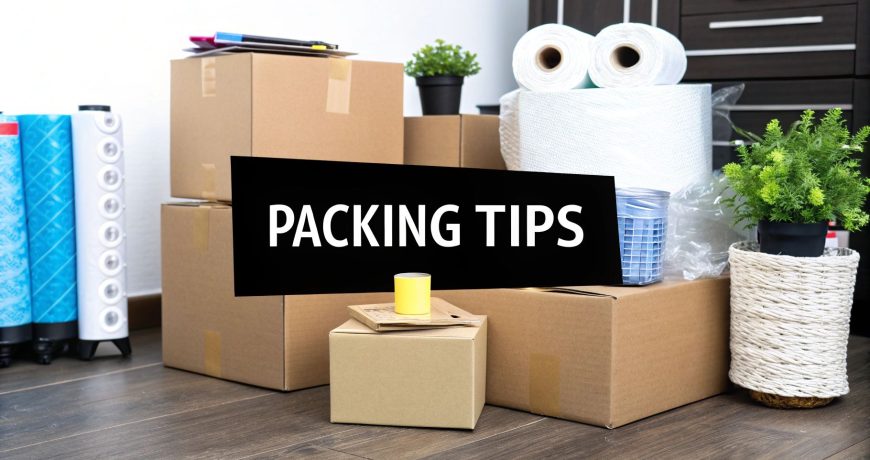
Expert Packing Tips for Moving House: The Ultimate Guide to a Stress-Free Move
Moving house consistently ranks as one of life’s most stressful events, but with a smart packing strategy, much of that pressure can be eliminated. A methodical approach does more than just get your belongings from A to B; it saves time, protects your valuables, and makes unpacking in your new home a streamlined process rather than a chaotic chore. The key to a successful relocation lies in the details—from how you declutter and organise your boxes to the techniques you use to safeguard your most fragile possessions. Forget the frantic, last-minute rush and the frustration of searching for essentials upon arrival.
This definitive guide provides a blueprint with proven, actionable packing tips for moving house that will transform the entire experience. We will explore professional-grade strategies that turn daunting tasks into manageable steps, ensuring every box is packed with purpose. Whether you are moving across town, relocating interstate, or organising an office move, these techniques will set you up for an organised new beginning. By implementing these expert methods, you can ensure your transition is as smooth and efficient as possible. For a broader collection of strategies, explore additional moving house packing tips to cover all bases. Let's get packing, the smart way.
1. The One-Room-at-a-Time Method
Feeling overwhelmed by the sheer scale of packing an entire house? The one-room-at-a-time method is a systematic approach that transforms a monumental task into a series of manageable projects. Instead of tackling a little bit everywhere, you focus all your energy on decluttering, sorting, and packing a single room completely before moving to the next. This strategy, a favourite among professional organisers, is one of the most effective packing tips for moving house because it creates a clear sense of progress and prevents the chaotic mixing of items from different areas.
This focused technique streamlines both the packing and unpacking phases. When every box is clearly labelled with its origin and destination room (e.g., "Guest Bedroom," "Kitchen – Pantry"), your movers can place them in the correct space at your new home. This eliminates the frantic search for the coffee maker or your toothbrush on moving day, significantly reducing stress and helping you settle in faster.
How to Implement This Method
To put this strategy into action, follow these practical steps:
- Start with Non-Essentials: Begin with rooms you use least, like the garage, spare bedrooms, or formal dining room. This allows you to pack a significant portion of your home without disrupting your daily life.
- Create a System: Use colour-coded tape or labels for each room. For instance, blue for the main bedroom, green for the kitchen, and yellow for the lounge. This visual cue makes identifying boxes instant and foolproof.
- Pack an 'Open First' Box: For each room, prepare one box containing critical items you'll need immediately upon arrival. For the bedroom, this might include bedding, a lamp, and phone chargers. For the bathroom, it would be toilet paper, towels, and essential toiletries.
- Leave Key Rooms for Last: The kitchen, main bedroom, and primary bathroom should be the last rooms you pack. This ensures you can live comfortably in your home for as long as possible before the move.
By adopting a structured, room-by-room approach, you establish an organised foundation for your entire move.
2. The Essentials Box Strategy
After a long and physically draining moving day, the last thing you want to do is hunt through dozens of unidentified boxes for a toothbrush or phone charger. The essentials box strategy, also known as a 'First Night Box', is a game-changing packing tip for moving house that solves this problem. It involves preparing one or more specific boxes containing everything your family will need to comfortably get through the first 24 to 48 hours in your new home, preventing stress and frantic searching. This simple but highly effective method is endorsed by professional movers for its ability to create a smooth transition.
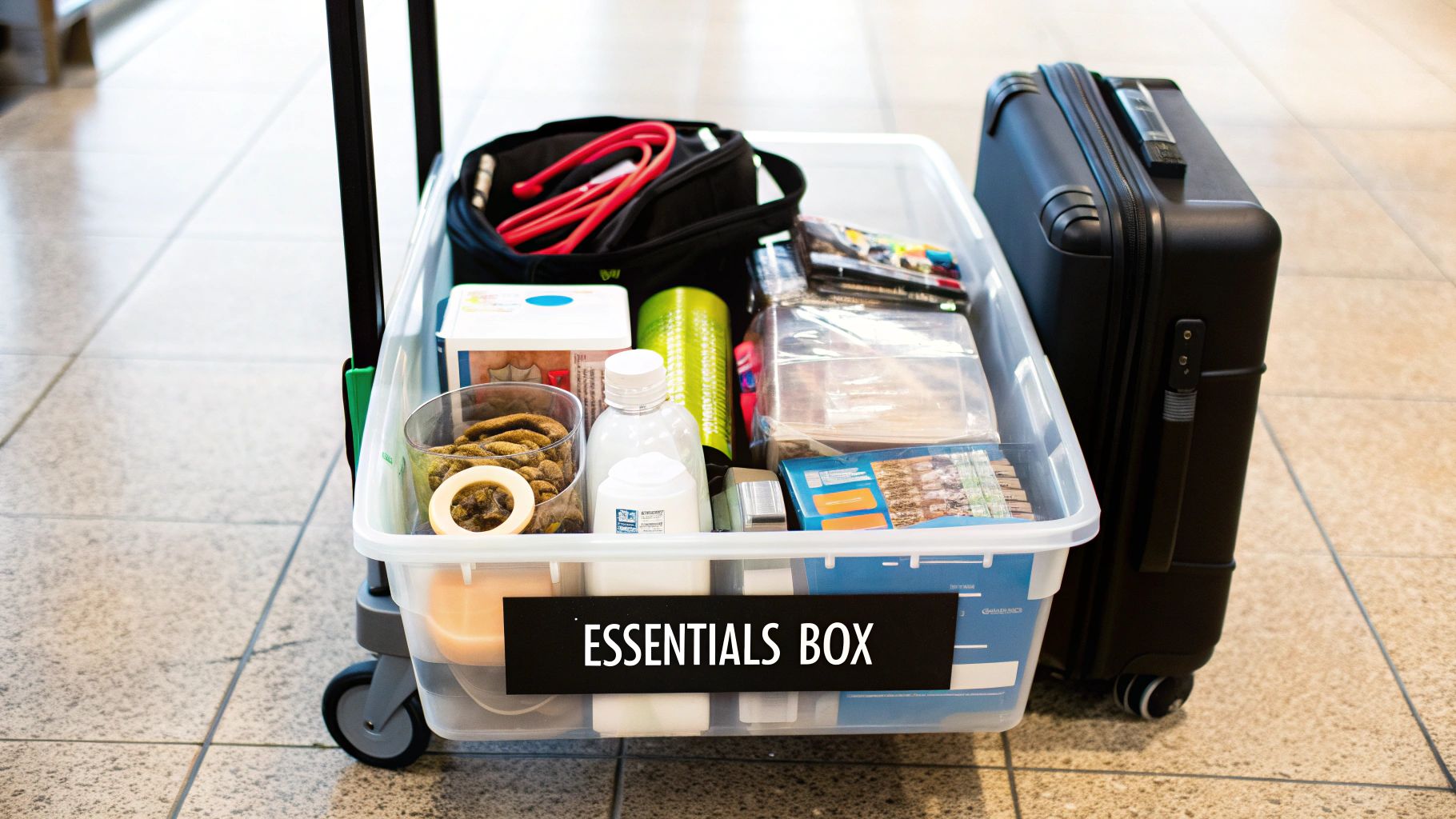
This dedicated box ensures all immediate necessities are in one easy-to-find place. Instead of unpacking under pressure, you can focus on getting settled and resting. A critical piece of advice is to keep this 'survival kit' with you in your personal vehicle rather than on the moving truck. This guarantees you have access to your critical items the moment you walk through the door of your new property.
How to Implement This Method
To create an effective essentials box, focus on immediate needs and comfort:
- Label it Clearly: Use a brightly coloured marker or label to write "OPEN FIRST" or "ESSENTIALS" in large letters on all sides of the box. Using a clear plastic tub is even better, as it allows you to see the contents at a glance.
- Include Personal Basics: Pack one change of clothes and pyjamas for each family member. Crucially, include essential toiletries like toothbrushes, toothpaste, soap, toilet paper, and any required daily medications.
- Prepare for Simple Meals: Moving day is not the time for gourmet cooking. Include paper plates, cups, utensils, a kettle, instant coffee or tea bags, and some non-perishable snacks like muesli bars or pasta and a jar of sauce.
- Pack Key Tools and Supplies: A small toolkit with a screwdriver and Allen keys, a torch, phone chargers, and basic cleaning supplies (paper towels, multipurpose spray) will prove invaluable for immediate tasks and clean-ups.
3. The KonMari Decluttering-While-Packing Method
Moving house presents a rare opportunity not just to relocate your belongings, but to reset your entire living space. The KonMari method, popularised by organising consultant Marie Kondo, integrates intentional decluttering directly into the packing process. Instead of mindlessly transferring every item you own, this approach encourages you to pause and evaluate each possession, asking if it truly "sparks joy" or serves a genuine purpose in the life you're building in your new home. This transforms a logistical chore into a meaningful fresh start, ensuring you don't bring old clutter into a new chapter.
This philosophy is one of the most transformative packing tips for moving house because it drastically reduces the volume of items you need to pack, move, and unpack. Downsizing families have been known to reduce their belongings by up to 40%, saving significantly on removalist costs and starting life in their new, smaller space with only the things they love and need. It shifts the focus from simply moving stuff to curating your ideal home environment from the very beginning.
How to Implement This Method
To effectively merge decluttering with packing, follow these practical steps:
- Start Well in Advance: Begin the decluttering process at least two to three months before your moving date. This provides ample time to make thoughtful decisions without the pressure of a looming deadline.
- Work by Category, Not Room: Unlike the one-room-at-a-time method, KonMari suggests tackling categories (e.g., all clothes, all books, all kitchenware). Gather every item from a single category into one spot to grasp the true volume of what you own before making decisions.
- Ask the Right Questions: For each item, hold it and ask yourself: "Does this spark joy?" and "Will I realistically use this in my new home?" If the answer is no, it's time to let it go.
- Plan Your Disposals: Organise your unwanted items into distinct piles: sell, donate, and discard. Schedule a donation pick-up in advance and list valuable items on platforms like Facebook Marketplace early on to maximise your chances of a sale.
- Consider Costs: For items you're unsure about, weigh the cost of moving and storing them against the cost of replacing them. Often, it's more economical to let go of a bulky, rarely used item than to pay to move it.
By adopting this mindful approach, you lighten your physical load and your mental space. If you want to dive deeper, our complete guide explains how to declutter before you move with a step-by-step plan.
4. The Wardrobe Box Technique
Folding every single piece of clothing in your closet is a tedious and time-consuming task. The wardrobe box technique is a professional-grade solution that bypasses this process entirely. These specialised, tall boxes feature a built-in hanging bar, allowing you to transfer clothes directly from your closet to the box, still on their hangers. This method is a cornerstone of efficient packing tips for moving house, as it prevents wrinkles, saves immense time on both packing and unpacking, and protects delicate garments.
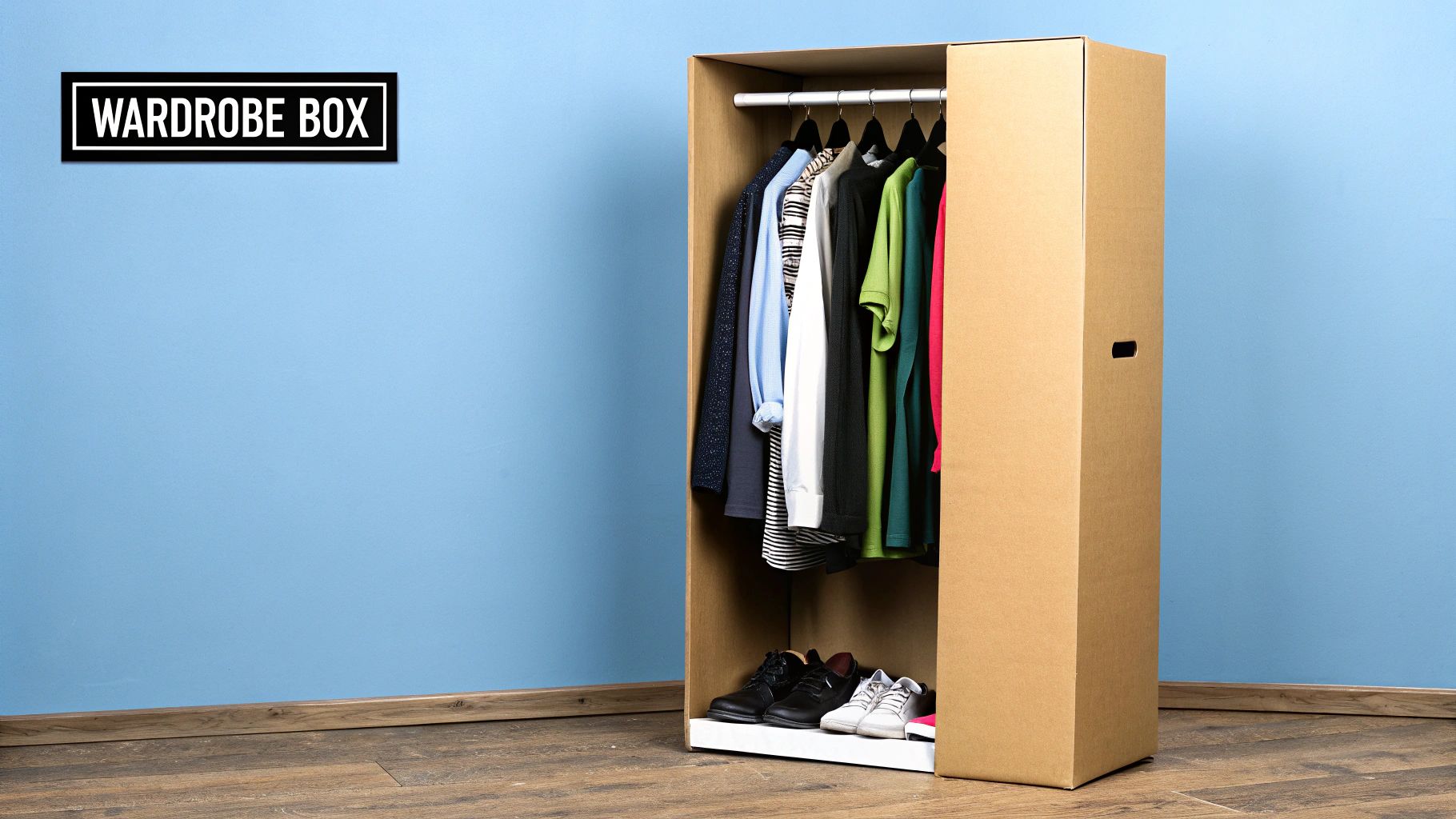
This technique transforms unpacking from a chore into a simple, swift action. Instead of facing piles of clothes to fold or re-hang, you simply move the hangers from the wardrobe box directly into your new closet. It’s particularly valuable for protecting business attire, formal wear, or delicate fabrics, ensuring they arrive at your new home in pristine, ready-to-wear condition.
How to Implement This Method
To make the most of this professional packing secret, follow these practical steps:
- Source Your Boxes: While you can purchase wardrobe boxes, many professional removalists offer them for hire, which is a more cost-effective and sustainable option for a single move.
- Organise by Type: Group similar clothing items together in each box. For example, dedicate one box for work shirts and blouses, another for dresses, and a third for jackets. This makes finding specific items much easier.
- Utilise the Bottom Space: The bottom of a wardrobe box is the perfect spot for lightweight, bulky items like shoes, purses, or even pillows and folded sweaters. This maximises space and provides a soft base for your hanging clothes.
- Choose Sturdy Hangers: Before packing, swap out flimsy wire hangers for more durable plastic or wooden ones. They provide better support and are less likely to bend or break during transit, keeping your clothes secure.
5. The Sandwich Method for Dishes and Fragiles
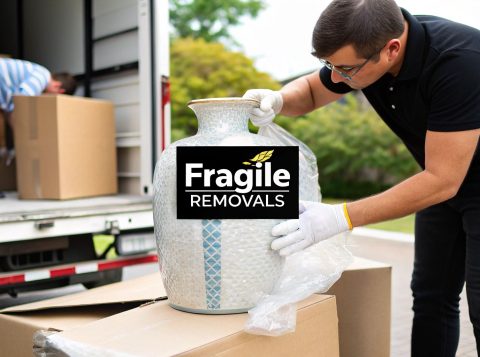
Protecting your fragile kitchenware, like dishes and glassware, is often one of the most stressful parts of any move. The Sandwich Method is a professional-grade technique that dramatically reduces the risk of breakage. It involves creating cushioned layers around each fragile item, much like making a sandwich, to absorb shock and prevent items from clashing during transit. This is one of the most crucial packing tips for moving house, transforming a box of potential shards into a securely protected package.
This method, used by professional movers, ensures that each plate, bowl, and glass is individually protected and stabilised within the box. By creating a system of padding at the bottom, between each item, and on top, you effectively build a shock-absorbing nest that guards against bumps and vibrations on the road.
How to Implement This Method
Follow these steps to pack your breakables like a professional:
- Prepare Your Box: Start by creating a thick, cushioned base inside a small (1.5 cubic foot) moving box. Use several sheets of scrunched-up packing paper or bubble wrap to form a protective layer at least 5-7 cm thick.
- Wrap and Layer: Wrap each dish or fragile item individually in packing paper. For plates and bowls, place them on their sides vertically in the box, like records in a crate. Slide a piece of cardboard or extra padding between each one.
- Use Dividers for Glassware: For wine glasses and stemware, use cell-divider kits specifically designed for moving boxes. Stuff crumpled paper inside each glass before wrapping it to provide internal support.
- Fill the Gaps: Once your items are in the box, fill any empty spaces with more crumpled paper, towels, or soft linens. Nothing should be able to shift or move when you gently shake the box.
- Add the Top Layer: Finish by adding another thick layer of crumpled paper or bubble wrap on top before sealing the box. Clearly label the box "FRAGILE" on all sides and the top, with arrows indicating which way is up.
This infographic outlines the simple three-step process for creating a secure package using the Sandwich Method.
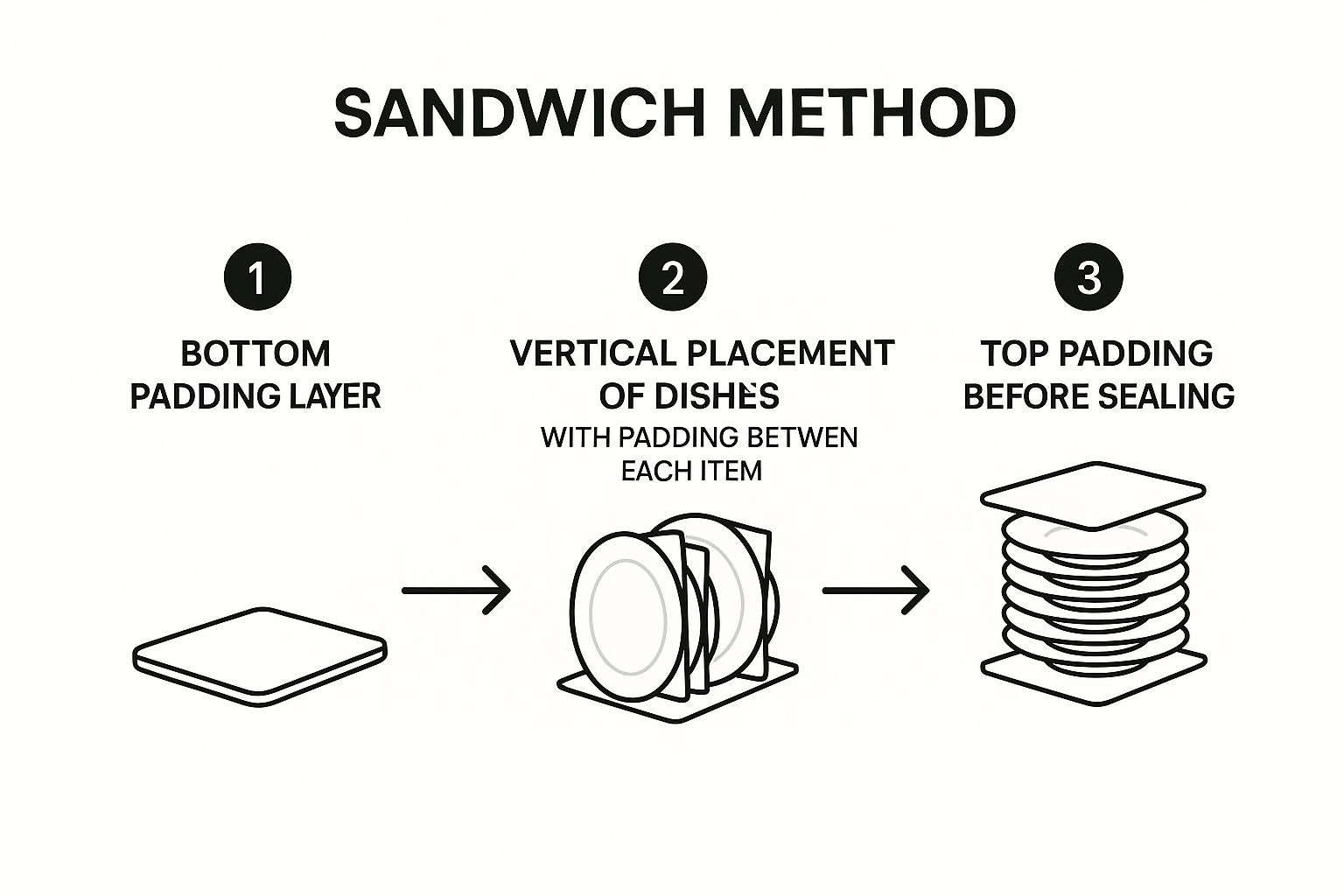
Following this sequence of padding the bottom, placing items vertically with dividers, and padding the top ensures maximum protection.
6. The Heavy-to-Light Box Loading Strategy
A fundamental principle of physics and professional packing, the heavy-to-light box loading strategy is crucial for a safe and successful move. This method involves placing the heaviest items at the bottom of a moving box and layering progressively lighter items on top. It’s a time-tested technique used by professional removalists to create stable, balanced boxes that are less likely to collapse, tip over, or cause damage to their contents. Adopting this strategy is one of the most effective packing tips for moving house, as it protects your belongings and makes handling boxes much safer.
This simple weight distribution principle prevents delicate items from being crushed by heavier objects during transit. A well-balanced box is also easier and safer to lift, carry, and stack, reducing the risk of personal injury or dropped boxes. By ensuring each box has a low centre of gravity, you create a solid foundation for stacking in the moving truck, maximising space and preventing shifts that could lead to breakages.
How to Implement This Method
To properly balance your boxes, follow these practical steps:
- Establish a Solid Base: Always start by placing your heaviest items at the bottom of the box. For a kitchen box, this means packing pots, pans, or small appliances first. For a study, this would be hardcover books or paper files.
- Layer Lighter Items: Continue packing by adding medium-weight items, finishing with the lightest objects at the very top. For instance, place dish towels or plastic containers on top of the heavy pots in a kitchen box.
- Use Small Boxes for Heavy Loads: When packing items that are uniformly heavy, like a collection of books, always use a small box. This prevents the box from becoming too heavy to lift safely—a common yet dangerous mistake.
- Fill the Gaps: Use soft, lightweight items like linens, socks, or packing paper to fill any empty spaces. This stops items from shifting and provides extra cushioning. You can avoid many of the top 10 common packing mistakes when moving home by ensuring every box is packed firmly.
7. The Colour-Coding and Detailed Labeling System
Turning a mountain of brown boxes into a logically organised system is one of the most powerful packing tips for moving house. This method uses coloured markers, tape, or stickers combined with detailed labels to create an instant visual guide for your belongings. Each room is assigned a unique colour, allowing anyone helping with the move to know exactly where a box belongs without reading a single word, dramatically speeding up the unloading process.
This system is a favourite of professional organisers and moving companies for good reason. It removes guesswork and confusion on moving day, empowering movers and helpers to place every box in its designated room efficiently. When paired with detailed content lists on each label, it transforms unpacking from a chaotic treasure hunt into a streamlined, room-by-room task.
How to Implement This Method
To put this highly effective strategy into action, follow these practical steps:
- Create a Master Key: Before you pack a single box, assign a colour to each room in your new home (e.g., blue for the main bedroom, red for the kitchen). Post a clear, printed copy of this colour key at the entrance of your new home for your moving team to reference.
- Use Durable, Visible Materials: Coloured duct tape or large, high-quality stickers are ideal as they are easily visible from a distance and adhere well to cardboard. Ensure you label boxes on the top and at least two sides so they can be identified even when stacked.
- Be Specific with Labels: Your written labels should be as detailed as possible. Instead of just "Kitchen," write "Kitchen – Kettle, Toaster, Coffee Mugs." Add handling instructions like "FRAGILE" or "THIS SIDE UP" where necessary.
- Number Your Boxes: For an extra layer of organisation, number each box (e.g., "Kitchen 1 of 15," "Kitchen 2 of 15") and keep a corresponding inventory list. This makes it easy to check that everything has arrived safely.
8. The Suitcase and Container Strategy
Why pay for empty space? The suitcase and container strategy is an incredibly efficient packing tip for moving house that leverages items you already own and plan to move. Instead of packing empty suitcases, laundry baskets, and storage tubs, this method involves using them as packing containers themselves. This common-sense approach reduces the number of cardboard boxes you'll need, saves money, and makes clever use of every available bit of space in the moving truck.
This strategy protects your containers from damage during transit while simultaneously housing soft, non-breakable items like clothes, linens, and towels. It's a sustainable and budget-friendly technique that simplifies the entire process. By filling these vessels with items destined for the same room (e.g., a laundry basket with bathroom towels), you also make unpacking a more organised and intuitive task.
How to Implement This Method
To put this space-saving strategy into action, follow these practical steps:
- Use Suitcases for Soft Goods: Pack rolling suitcases with off-season clothing, spare bedding, and pillows. The wheels make them easy to transport, even when heavy, and the soft contents provide a protective cushion.
- Fill Baskets and Hampers: Use laundry baskets and hampers to transport towels, children’s toys, or shoes. They are perfect for last-minute items you’ll need right up until moving day.
- Utilise Dresser Drawers: For lightweight items like socks, underwear, and t-shirts, you can often leave them in the dresser drawers. Secure the drawers with stretch wrap or painter's tape to prevent them from sliding open during the move. For heavier furniture, it's best to remove the drawers first.
- Label Everything: Even though it's not a box, a suitcase or storage tub still needs a clear label. Use luggage tags or a piece of masking tape to note the contents and the destination room (e.g., "Main Bedroom – Jumpers & Scarves"). This ensures movers place it correctly and you know what’s inside.
Packing Strategies Comparison: 8 Key Methods
| Method | Implementation Complexity 🔄 | Resource Requirements ⚡ | Expected Outcomes 📊 | Ideal Use Cases 💡 | Key Advantages ⭐ |
|---|---|---|---|---|---|
| The One-Room-at-a-Time Method | Moderate 🔄🔄 | Moderate (labels, boxes) ⚡ | Organized unpacking, manageable progress 📊 | Multi-room homes, phased packing | Reduces overwhelm, easy progress tracking ⭐ |
| The Essentials Box Strategy | Low to Moderate 🔄 | Low (one/two boxes with essentials) ⚡ | Immediate access to necessities, stress reduction 📊 | Moves with children, pets, or first night needs | Prevents frantic searching, ensures comfort ⭐ |
| The KonMari Decluttering-While-Packing | High 🔄🔄🔄 | Variable (time-intensive) | Less clutter, lower moving costs, fresh start 📊 | Downsizing, major decluttering, long-distance moves | Reduces volume/costs, easier unpacking ⭐ |
| The Wardrobe Box Technique | Low to Moderate 🔄 | High (special wardrobe boxes rental/purchase) ⚡ | Wrinkle-free clothes, fast unpacking 📊 | Moving formal wear, large wardrobes | Protects clothes, saves ironing ⭐ |
| The Sandwich Method for Dishes & Fragiles | Moderate to High 🔄🔄 | High (packing materials) | Minimal breakage, safe fragile items 📊 | Packing dishes/fragile collections | Great protection, cost-effective DIY ⭐ |
| The Heavy-to-Light Box Loading Strategy | Low 🔄 | Low (small boxes, tape) | Stable boxes, safer lifting 📊 | All packing situations, especially manual loading | Prevents damage, safer to carry ⭐ |
| The Color-Coding and Detailed Labeling System | Moderate 🔄🔄 | Low to Moderate (colored tape, labels) ⚡ | Fast unloading, easy identification 📊 | Large moves with helpers, multi-room unpacking | Speeds unpacking, reduces confusion ⭐ |
| The Suitcase and Container Strategy | Low 🔄 | Low (uses existing containers) ⚡ | Efficient packing, fewer boxes, less waste 📊 | Budget moves, short-distance, eco-friendly relocations | Saves money, reduces waste, uses existing containers ⭐ |
From Packed Boxes to Your New Front Door
Mastering these packing tips for moving house is your first and most crucial step toward a successful, stress-free relocation. The journey from a fully lived-in home to a new, empty space can feel monumental, but by implementing strategic systems, you transform chaos into an organised, manageable process. You're not just moving belongings; you're orchestrating a smooth transition into your next chapter.
Let’s recap the core strategies that will revolutionise your move:
- Systematic Decluttering: The KonMari method ensures you only move what you truly value, saving time, money, and energy.
- Prioritised Unpacking: The Essentials Box is your first-night saviour, providing immediate access to necessities without the need to tear through dozens of boxes.
- Strategic Organisation: A detailed, colour-coded labelling system turns unpacking from a guessing game into a streamlined activity, allowing you to settle in faster.
- Damage Prevention: Techniques like the Sandwich Method for dishes and the Heavy-to-Light box loading strategy are fundamental to protecting your valuables and ensuring everything arrives in one piece.
By adopting these approaches, from dedicating focus with the one-room-at-a-time method to utilising every available container, you lay the groundwork for an efficient move day and a far more enjoyable unpacking experience. An organised pack is the foundation upon which a smooth move is built.
Ultimately, the goal of these packing tips is to empower you with control over a process that can often feel overwhelming. Once your items are packed using these expert tips, the next critical step is ensuring they are transported safely. While careful packing is essential, remember that the heavy lifting, logistical planning, and safe transport are best left to professionals. This allows you to focus on the excitement of your new beginning, secure in the knowledge that your carefully prepared belongings are in safe hands. The effort you invest in packing now will pay dividends, welcoming you into your new property with calm and order, not clutter and confusion. For help finding reliable movers, resources like local moving companies can be a good starting point.
Ready to turn your organised packing into a seamless move? Trust the experienced, family-owned team at Get n Go Removals Melbourne to handle the heavy lifting. We offer everything from premium packing materials to full-service valet packing and unpacking, ensuring your carefully packed items arrive safely at your new Melbourne home or interstate destination.