Packing Materials Melbourne: The Complete Moving Guide
You're already halfway through a move if there's a stack of boxes in the hallway, a roll of tape on the floor, and one fragile lamp you're trying not to think about. In Melbourne, that moment usually turns ugly for one reason, the packing materials weren't chosen for the job. Cheap cartons buckle in apartment lifts, weak tape gives up on stair carries, and poor moisture protection can leave interstate freight looking fine on arrival, then failing later when humidity gets into the contents.
Packing materials Melbourne buyers often focus on the box price and ignore the failure points. That's the mistake that turns a simple move into broken glass, crushed electronics, and re-buying furniture you thought was protected. In practice, the right carton, the right filler, and the right closure system matter more than any single “moving box” label.
Australia's own packaging assessment shows why material quality and recovery system matter together, not separately. In 2020–21, 6.74 million tonnes of packaging were placed on the market, 44% went to landfill, and 86% had good recyclability, while 35% had good recyclability but still wasn't collected or reprocessed, which tells you the system around the material matters as much as the material itself (Australian Government packaging data). The same lesson applies to home moves. A box can be technically recyclable and still be the wrong choice if it collapses before the truck even leaves your street.
Why Packing Materials Make or Break Your Melbourne Move
The worst moving day I ever see starts the same way. Someone has saved money on cartons, filled a too-large box with crockery, taped it once across the middle, then tried to carry it down a stairwell in a Carlton walk-up or into a lift that keeps bouncing against the walls. The box survives the first lift. It doesn't survive the second drop.
That's why packing materials aren't just consumables. They're the difference between a controlled move and a damage claim. In Melbourne, the risk isn't only distance, it's the handling pattern. Apartment lifts shake boxes, stair carries concentrate load on corners, and interstate moves add long dwell times plus changing humidity.
What cheap materials really cost
Cheap cartons usually fail at the edges, seams, or under internal movement. Once a box starts bulging, every handling touch makes it weaker. Fragile items shift, the load spreads unevenly, and the carton loses its shape before the truck even gets to your new place.
You can often spot the bad setup before it's packed. The box is too big for the contents, the filler is light and airy, and the tape is the kind that peels when you pick up a flap. A move doesn't punish one weak point, it exposes every weak point at once.
Practical rule: if a carton feels light for its size, assume it's weak until proven otherwise.
That's why professional crews spend more on board grade, tape, and cushioning than most DIY movers expect. They're not buying “better-looking” supplies. They're buying margin for vibration, compression, and careless handling. For a Melbourne household, that margin is usually cheaper than replacing a smashed appliance or a box of broken crockery.
Essential Packing Materials and When to Use Each Type

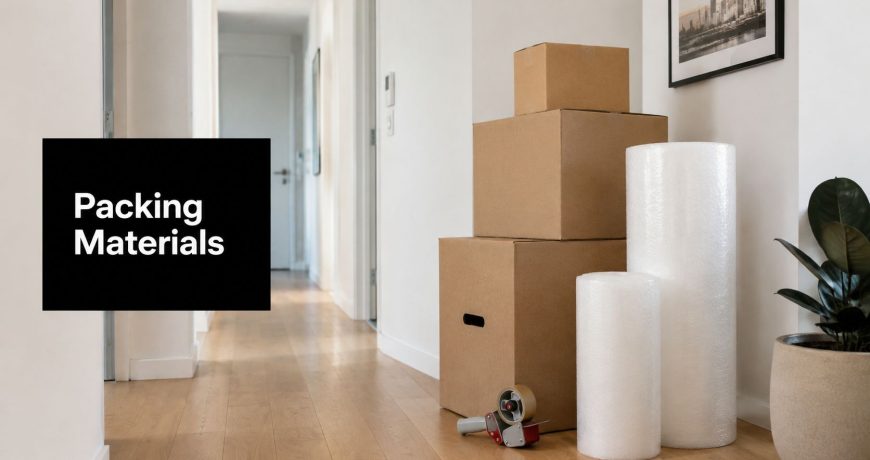
The smartest way to shop for packing materials Melbourne households need is to think by function, not by aisle. A good shopping list protects against impact, movement, moisture, and seam failure. If a material doesn't do one of those jobs, it's probably filler, not protection.
Boxes that match the load
Use small boxes for books, pantry jars, and other dense items. Use medium boxes for kitchenware, toys, and mixed household items. Save large boxes for light goods like linen, cushions, and soft toys. That simple rule matters because oversized cartons invite movement, and movement breaks things.
For heavy or fragile items, double-corrugated cardboard boxes are the gold standard. They're stronger than single-layer boxes and less likely to collapse under pressure, which matters for stacked apartment moves and truck loading. A lot of people think a bigger box is safer. It usually isn't.
Wardrobe cartons suit hanging clothes, while picture cartons protect flat artwork, mirrors, and framed prints. For mattress and sofa protection, use covers that keep dirt and scuff marks off during loading. A mattress dragged through a stairwell without a cover picks up more grime than many expect.
Cushioning, wrap, and filler
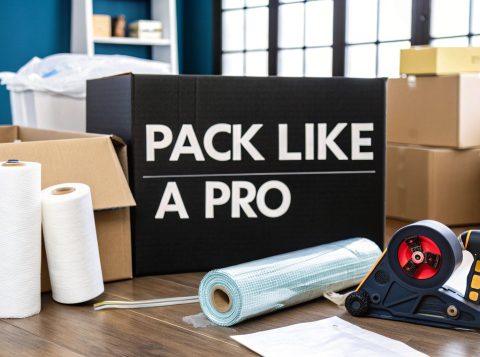
Use bubble wrap for fragile edges, glassware, and electronics. Use packing paper for wrapping plates, bowls, and items you want protected without sticky residue. Newsprint can work too, but plain packing paper is cleaner for white crockery and anything that stains easily.
Foam sheeting helps with surface protection for furniture and screens. Stretch wrap is best for keeping drawers closed, bundling loose parts, and preventing dust on upholstered items. It is not restraint for a heavy load, so don't rely on it to hold furniture together in transit.
Tape and sealing
Use heavy-duty tape with a dispenser. The closure has to survive repeated handling, not just one lift. In Melbourne moving conditions, the box gets set down, tilted, rotated, and squeezed more than people expect.
For a deeper packing reference, the guide to packing materials from Home Removals Sydney gives a useful overview of common supply types, and it pairs well with the packing approach most Melbourne movers need.
If you want one more practical reminder before you buy, this internal guide on how to pack fragile items for moving is worth a look because the material choice only works when the wrapping method is right.
What a typical three-bedroom home usually needs
For a standard family move, think in categories rather than exact counts, because the mix of rooms changes the order. You'll usually need a spread of small, medium, and large cartons, plus several specialty cartons for hanging clothes, pictures, and mattresses. You'll also need enough wrap, paper, and tape to protect every item once, then reinforce the weak points twice.
A good shopping rule is simple. Buy more small boxes than you think, fewer large boxes than you're tempted to buy, and enough tape that you're never rationing it on moving night.
A box only protects what it can hold still.
The infographic above matters because it shows the failure chain clearly. Compression, edge crush, point loading, and internal movement all happen in the same move, often within minutes of each other. If you stop those four problems, you stop most breakage.
For a practical comparison of box handling and packing habits, the pro moving hacks for 2026 guide from TLC Moving & Storage is a useful companion read, especially if you're reusing cartons and want them to stay square under load.
The Technical Reasons Boxes Fail During Transit

Carton failure is usually blamed on “bad luck”. It's not luck. It's mechanics. A box fails because its structure can't take the load pattern it's given, and Melbourne moves create a nasty mix of vertical pressure, corner stress, and repeated handling.
The four failure points
Compressive strength is the box's ability to hold weight from above. In a truck, that matters because cartons are stacked and the bottom layers carry the load. If the board is weak, the box flattens before the contents even get a chance to shift.
Edge crush is what protects the corners and vertical sides from tearing or puncture. When a box hits a wall in a lift or gets pressed against another carton, the edges take the impact first. Weak edges fail early.
Point loading is the hidden killer. One heavy item, an awkward shape, or a hard corner puts stress in one tiny spot. That's why a loose power supply, a ceramic bowl, or a metal tool can punch through what looked like a decent carton.
Internal movement finishes the job. If contents can slide, they keep building force inside the box until the seam, flap, or sidewall gives way. That's why void fill matters so much.
Why bigger boxes fail faster
A larger box than the contents often increases collapse risk unless the load is stabilised with dense void fill and a proper closure system. Empty space gives items room to accelerate inside the carton, and every bump multiplies the force on the sides. A box that looks roomy is often the one most likely to split.
That's also why the closure system matters. Australian packing guidance for shipment specifies 48 mm pressure-sensitive plastic packaging tape with three strips on both top and bottom flaps, which helps seam integrity under vibration and repeated handling in apartment lifts, stair carries, and vehicle loading (packing guidance). It also specifies reusable cartons must be rigid and in excellent condition, and heavy-duty double-layer board is recommended for items over 12 kg in the same guidance.
A taped seam is only as strong as the flap behind it.
If you've ever watched a box sag while someone turns sideways in a narrow stairwell, you've seen all four failure points work together. That's why professionals inspect carton shape, not just contents. They want square corners, tight fill, and a closure that won't peel when the box gets jolted.
For more on common packing errors, the internal guide on top 10 common packing mistakes when moving home is useful because most box failures start with a packing mistake, not a transport mistake.
Where to Source Packing Materials in Melbourne

Melbourne movers usually choose from four sources, retail stores, online suppliers, removalist-provided materials, and rental crate services. Each one solves a different problem, and none of them is perfect for every move.
Retail stores are the fastest option when you need boxes today. They're convenient, but the quality can vary and the better cartons usually cost more. Online suppliers are better when you can plan ahead and want a fuller range of sizes and protective materials delivered in one order.
Removalist-provided materials are purpose-selected for moving conditions, which matters if you're packing a fragile house, an office, or a tight apartment with stair access. They also save time because the materials can come to your door rather than requiring a separate store run. Rental crate services suit moves where reusability and neat stacking matter more than ownership, but they aren't always the easiest fit for a short-notice move.
Why free boxes are risky
The temptation to grab free cartons from supermarkets or liquor stores is strong. I get why people do it, but second-hand boxes are a gamble. They can be weakened by previous use, contaminated by spills, or structurally tired at the seams.
Australian biosecurity guidance is stricter for a reason. For interstate or international household moves, the Department of Agriculture requires a detailed packing list that identifies each carton and what's inside, and it says goods that have contacted food, soil, plants, animals, or their products must be clean and dry before packing. It also says second-hand boxes previously used for fruit and vegetable cartons, meat boxes, egg cartons, or fertiliser bags must not be used because they pose a biosecurity risk (Department of Agriculture moving guidance).
For a practical sourcing reference, the where to find moving boxes guide is helpful if you're deciding between pickup, delivery, and reuse.
The key question isn't “What's cheapest?”. It's “What will hold up once the lift stops, the truck turns, and the weather changes?” For many Melbourne households, the answer is a mixed order, because fragile and heavy items need different sources and different carton grades.
Sustainability and the Environmental Cost of Moving
Moving creates a surprising amount of packaging waste, so the sustainability question is real, not performative. The better move isn't always the greener one on paper, but the one that uses materials you can recover, reuse, or dispose of properly after the job.
Australia's latest APCO material factsheet shows that in 2022–23, 7,039,812 tonnes of packaging were placed on market, equal to 264 kg per capita, down from 269 kg per capita in 2021–22. It also shows the material mix is led by paper and paperboard at 54%, then plastics at 18%, glass at 16%, wood at 8%, and metals at 4%, with total recovery at 56% (APCO material factsheet). For movers, that means cardboard and paper-based protection make sense when they're strong enough for the job, because they sit in the dominant recovery stream.
The practical trade-offs
Recycled cardboard is a sensible choice for many household moves, but quality still matters more than the recycled label. A weak recycled box won't survive a stair carry just because it's environmentally friendly. Paper-based void fill is often a better sustainability compromise than plastic fillers, especially for furniture edges and lightweight household goods.
Reusable tubs can work well for storage-heavy moves or office relocations, but they're not always the right shape for fragile items or mixed household loads. Specialty protective materials can also be the right choice when breakage would create more waste than the packaging ever saved. That's the part people miss.
For a broader sustainability angle, the award-winning office cleaning Toronto page is an example of how service businesses are increasingly talking about waste reduction and responsible material use, which mirrors the direction Melbourne moving customers are starting to expect.
What actually helps
Use the materials that match recovery systems and reuse patterns. Donate cartons that are still square. Flatten and store clean boxes for future moves. Choose protective materials that can be reused once, not just used once.
The office and home move that wastes the least is the one packed with intent. A pile of broken cartons in the laneway is not a sustainability win, even if the cardboard is technically recyclable. The cleaner move is the one that arrives intact, gets unpacked once, and leaves materials in a condition someone else can use again.
Room by Room Packing Strategy for Melbourne Homes
Kitchen packing fails when people mix heavy items with fragile ones. Keep plates, glassware, and mugs separated by wrap, and use small boxes for pantry items so the weight stays manageable. Put knives, tools, and loose kitchen gadgets in a clearly marked container, not in the same carton as glass.
For bedrooms, use wardrobe boxes for hanging clothes if you want speed and less ironing later. Mattress covers keep bedding protected during loading, and they're especially useful when a bedroom has to pass through narrow hallways or balcony access. If the room is being staged or stored, keep seasonal clothing and spare linen compressed and labelled by use.
Living areas need tighter labelling because electronics and artwork are easy to misroute. Mark screens and framed pieces as fragile, keep cords in a separate bag taped to the device, and protect remote controls, stands, and brackets in a clearly named pouch. For large furniture, use furniture blankets under stretch wrap so surfaces don't rub against door frames.
Garages are where people get careless. Tools, oils, paints, and chemicals need isolation, and anything that might leak should be packed upright and separately from household goods. If the garage is part of a longer interstate move, the cleaner and drier the load, the less trouble you'll have on arrival.
The most useful labels go beyond room names. Mark fragile, this side up, and priority unpack where relevant, then add a short contents note. A box marked “Kitchen, Fragile, Plates” is far better than just “Kitchen”.
For a practical sequence, the internal guide on packing tips for moving house is worth using alongside your labels, because a good room-by-room plan only works if the packing order matches the load order.
Label for the person unloading, not for the person packing.
In Melbourne apartments, that matters even more. Balcony access, narrow stairwells, and lift bookings force quick decisions, so the cartons need to tell the crew exactly where they belong and how careful they need to be.
How Get n Go Removals Simplifies Your Packing Process
Some moves need more than boxes and tape. They need a team that turns packing into a managed task instead of a last-minute scramble. Get n Go Removals Melbourne provides packing materials, professional packing and unpacking, and specialist handling for items like pianos, pool tables, and fine art, so the materials and the labour are planned together rather than guessed separately.
The practical value is in the setup. If you're juggling settlement times, lift bookings, and a tight move-out window, having materials delivered and packed by experienced staff removes a lot of the friction. Their team works with full-time, police-checked staff, and transit insurance adds another layer of comfort when fragile goods are on the line.
For households that don't want full-service packing, partial packing can still take the pressure off the problem rooms, usually the kitchen, artworks, or the heavier storage pieces. Their valet white-glove packing and unpacking service suits people who want the boxes to land ready for a direct unpack, not just a drop-off.
If you want the broader argument for why packing help changes the whole moving day, the internal article on top 5 benefits of using professional packing services is a sensible next read. It lines up with what most experienced movers already know, the right packing system saves time, reduces damage risk, and keeps the load under control from the first carton to the last.
Your Complete Packing Materials Checklist
Boxes
- Small cartons for books, jars, and dense items.
- Medium cartons for mixed household goods.
- Large cartons for linen, cushions, and light bulky items.
- Wardrobe cartons for hanging clothes.
- Picture cartons for mirrors, frames, and artwork.
Protective materials
- Bubble wrap for fragile edges and electronics.
- Packing paper for crockery and glassware.
- Foam sheeting for surface protection.
- Mattress and furniture covers.
- Stretch wrap for bundling and dust protection.
Sealing and labelling
- Heavy-duty tape with a dispenser.
- Marker pens.
- Labels with room name, contents, fragility, and orientation.
Specialty items
- Double-corrugated boxes for heavy or fragile loads.
- Reusable tubs for stored items.
- Corner protection for screens and frames.
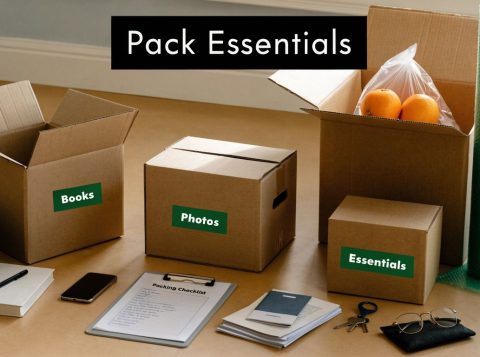
A practical timeline is simple. Order materials as soon as the move date is locked, start packing non-essentials first, then leave daily-use kitchen and bathroom items for last. Pack the essentials box the day before, and keep it separate so it doesn't disappear into the truck.
If you want the packing to feel controlled instead of chaotic, Get n Go Removals Melbourne can supply the materials, handle the fragile items, and manage the move around your schedule. Visit Get n Go Removals Melbourne to organise packing materials, expert packing help, and a move that's built around protecting what matters.