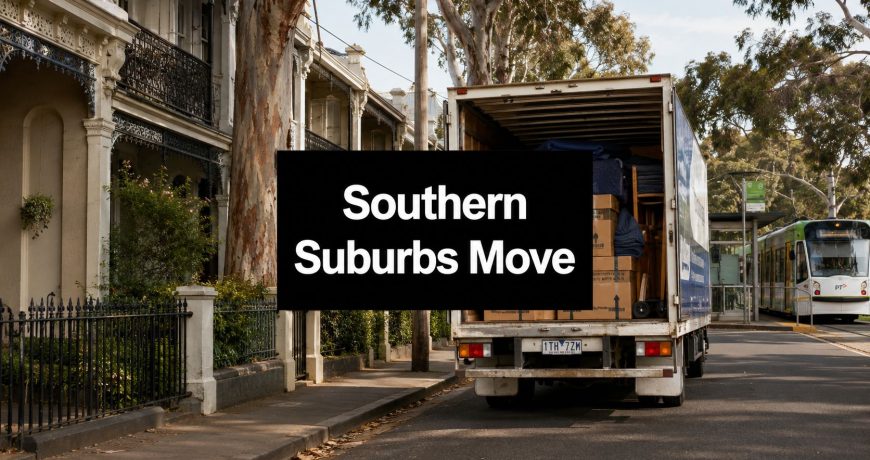
Moving House in Melbourne Southern Suburbs
You're halfway through moving day in South Melbourne. The truck is waiting near a tram stop, boxes are stacked through a narrow apartment lobby, and the building manager is watching the clock because your lift window has already started. One poorly parked car, an unprotected hallway or a missing loading permit can turn a straightforward relocation into a slow, expensive operation.
Moving through the Melbourne southern suburbs isn't the same as moving between wide suburban driveways. Heritage streets, tram corridors, apartment towers, narrow side lanes, restricted kerbs and busy commercial strips all change how the job needs to be planned. The right approach starts before packing day, with an honest assessment of the building, the street and the destination.
Why Moving in Melbourne’s Southern Suburbs Feels Different
A removal crew can carry furniture carefully and still lose time if the access plan is vague. In South Melbourne, Albert Park or St Kilda, the challenge often isn't the distance between two addresses. It's getting a truck into the right position without blocking a tram route, finding enough kerb space for loading, protecting common areas and completing the move inside a booked lift window.
South Melbourne demonstrates why local knowledge matters. The suburb was known as Emerald Hill until 1883 and became separate from the City of Melbourne in 1855, making it one of Melbourne's oldest southern suburbs. Its established streetscape now sits alongside a dense residential pattern. The 2021 Census recorded 11,548 people, 7,265 private dwellings and an average household size of 1.9 people in Australian Bureau of Statistics Census data. That combination produces many apartment and townhouse moves where stairs, service lifts and loading zones matter more than driveway length.
The access problems that create delays
A truck waiting in a tram lane isn't just inconvenient. It can restrict the crew's working position, force repeated repositioning and make it harder to move long items safely. A narrow heritage frontage may also mean furniture has to travel through a side entrance, over a protected path or along a corridor shared with other residents.
The most common preventable problems are predictable:
- No confirmed kerb space: The truck arrives, but another vehicle occupies the only practical loading position.
- No lift reservation: The crew has access to the building, but not to the lift during the agreed window.
- Oversized vehicle selection: A larger truck carries more capacity but may not turn or stage comfortably on the street.
- Unclear building rules: The body corporate requires lift padding, a service entrance or a specific booking process that nobody checked.
- Poor packing choices: Unlabelled cartons and unprotected fragile items slow every handover.
The Melbourne areas serviced by Get n Go Removals include southern locations where these constraints are routine rather than unusual. A good move plan accounts for them before the first item leaves the property.
Mapping the Southern Suburbs and What Each Pocket Looks Like
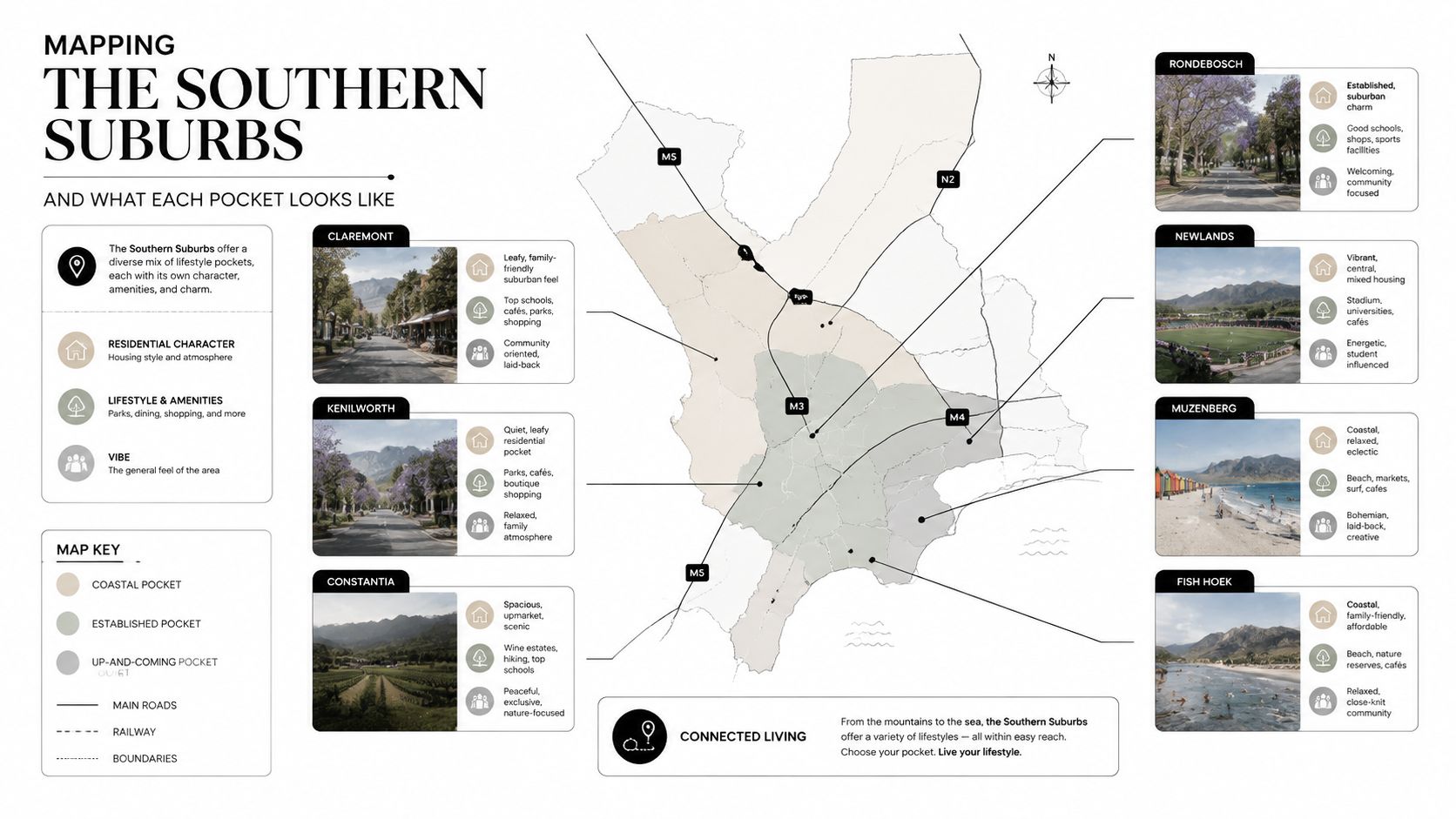
Treat the southern corridor as several different moving environments, not one large suburb. Your local pocket determines the likely housing stock, truck size, parking pressure and amount of hand-carrying required.
Identify your pocket before choosing the plan
The inner south includes South Melbourne, Southbank, Port Melbourne, Albert Park and Middle Park. Expect a mix of apartment buildings, converted warehouses, older terraces and compact streets. Southbank can involve basement loading areas, concierge instructions and protective requirements, while Albert Park and Middle Park often bring narrow access, older homes and limited kerbside room. Port Melbourne combines apartments with wider residential streets, but the exact access conditions still vary by block.
The bayside middle ring includes Elsternwick, St Kilda, Brighton, Hampton, Sandringham, Caulfield, Carnegie and Glen Huntly. Housing ranges from detached homes and period properties to units and mid-rise apartments. A Brighton house may offer better frontage but still have a long path, gates or delicate flooring. A Glen Huntly unit can have a tight stairwell or a small shared driveway that makes a compact truck and careful staging more useful.
The outer growth belt includes Dandenong, Keysborough, Cranbourne, Pakenham and Berwick. These areas generally offer newer estates, larger homes and more conventional driveways, but long internal paths, estate restrictions, construction activity and distance between addresses can affect the day. A large home may require more packing, dismantling and carrying even when truck access is easier.
Council boundaries matter because parking and road-use processes differ. Inner and middle areas may fall under Port Phillip, Glen Eira, Bayside or Kingston, while the outer corridor includes Greater Dandenong and Casey. Check the relevant council rather than assuming a permit accepted in one suburb applies in another.
For broader relocation context, the ultimate guide to moving to Melbourne can help you compare neighbourhood character, but the final moving assessment should always be made at street and building level.
Population Growth and Why It Changes Your Move
Growth changes moving logistics long before it changes a suburb's appearance. More residents mean more households leaving rentals, entering apartments, downsizing, renovating or relocating for work. In dense areas, each move competes for the same lifts, loading bays, building managers and practical Saturday time slots.
Infrastructure Victoria recorded 1,031,000 people in Melbourne's Southern Metro Region in 2016, around 22% of metropolitan Melbourne's population, after growth of 356,000 people over the previous two decades in its regional profile. Planning forecasts for the Southern Melbourne and Peninsula area project population growth from 738,420 in 2021 to 900,866 by 2046, while dwellings are forecast to rise from 324,100 to 402,643 over that period in Victorian planning data.
Those figures describe a corridor with both established inner suburbs and expanding outer precincts. The practical result is a busier network of household moves, not merely a larger population on paper.

What densification looks like on moving day
South Melbourne's own projection is particularly relevant to apartment movers. The suburb is projected to grow from 9,105 residents in 2021 to 11,730 by 2041, an increase of 28.8% in the South Melbourne Structure Plan background report. More residents in a compact area means more moves involving lifts, shared entrances, basement ramps and controlled building access.
The larger Southern Metro region is forecast to reach 1.76 million people by 2051, after adding around 630,000 residents, according to the Victorian planning introduction for the southern region. For a mover, that points to sustained demand for reliable scheduling across the corridor.
Planning reality: A move that needs a lift, a kerb position and a building representative must be booked as a coordinated operation, not treated as a simple collection and delivery.
Settlement dates also create pressure. If several apartments in one building change hands at the same time, the lift and loading area can become the limiting resources. Book early, confirm the building's move policy and keep a realistic buffer between addresses. Growth makes those small details more important because there are fewer spare access windows when plans change.
Getting Around by Tram, Train and Truck
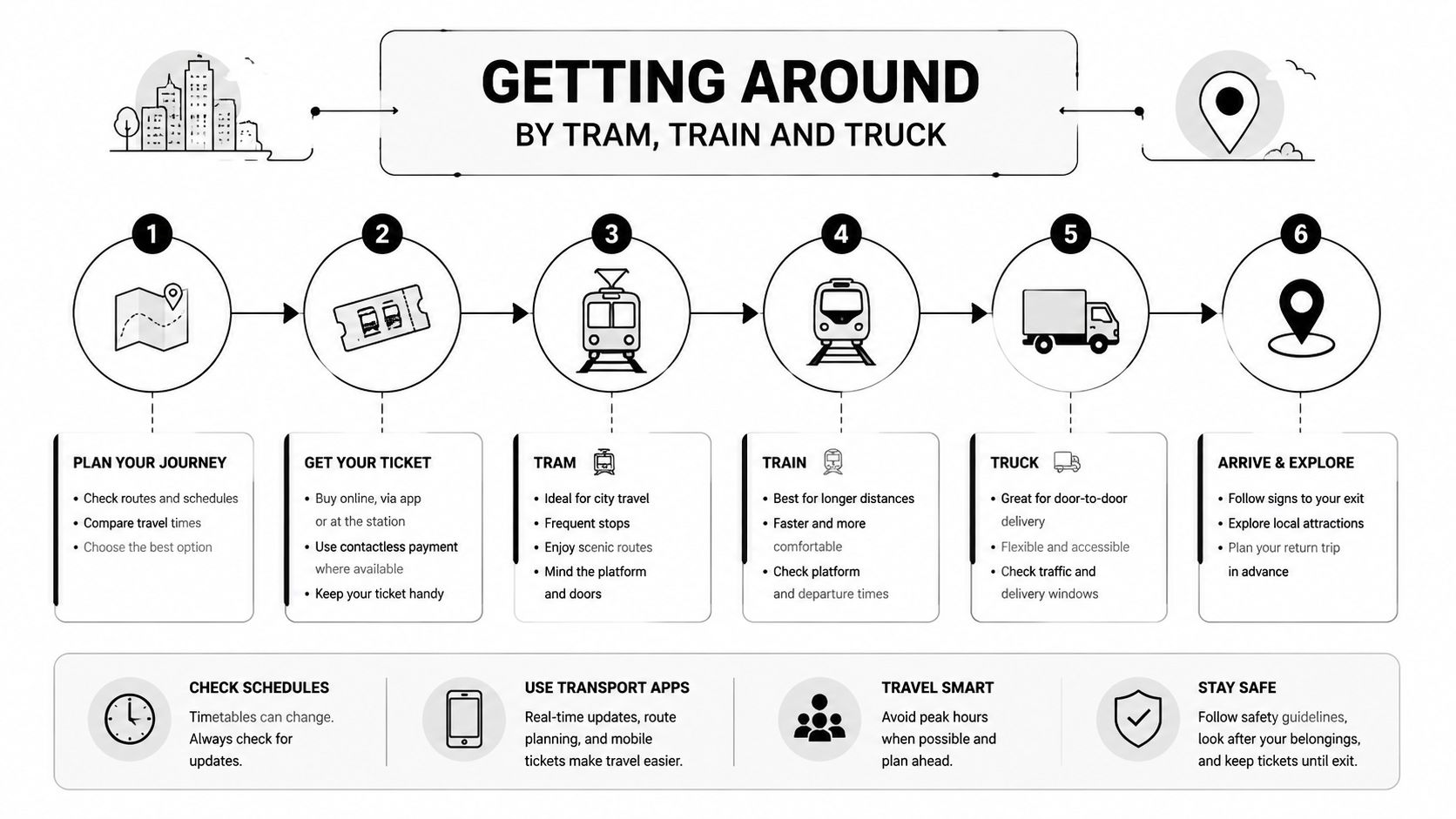
Public transport access and truck access are different questions. South Melbourne and Port Melbourne have no train station. Residents mainly rely on trams, including routes 96, 12 and 1, while Southern Cross is the nearest station at about 2 km away. A transport guide records tram services at roughly every 5–8 minutes during peak periods and 10–12 minutes off-peak in the supplied transport information.
That network is useful for residents, but it creates clear conditions for removal work. A truck can't be positioned casually on a tram corridor, particularly when the crew needs to unload long furniture or move items across a footpath.
Plan the truck around the street, not just the address
Kings Way, St Kilda Road and Nepean Highway can become difficult working environments during busy periods. Even if the truck reaches the suburb quickly, congestion can affect arrival, repositioning and the time available for loading. A parking plan should identify a legal staging point, an alternative side street and the safest route from truck to entrance.
Use these tactics:
- Choose a quieter window: Avoid the busiest tram and road periods where your building permits flexibility.
- Stage from side streets: A side street may give the crew a safer position than the frontage, provided local rules allow it.
- Match truck size to access: A smaller vehicle can work better on tight streets, laneways and restricted apartment approaches.
- Measure the route indoors: Check door widths, corners, stair turns, lift dimensions and basement clearance before the truck is selected.
- Protect the pedestrian path: Keep cartons and furniture consolidated so residents, prams and foot traffic can pass safely.
A 12-tonne truck can carry substantial volume, but that doesn't mean it suits every southern street. When access is uncertain, ask for a vehicle assessment rather than assuming maximum capacity will save time. A two-stage plan, with a smaller truck at the building and a larger vehicle used elsewhere, may be more practical than forcing one oversized vehicle into a constrained frontage. For compact jobs, a two-men-and-a-van moving option may suit the access conditions more effectively.
Permits, Lift Bookings and Timing Your Move
The move should be scheduled from the building outward. Start by confirming whether the truck needs a council parking or kerbside permit, then secure the lift and only after that lock in the crew's arrival window. Port Phillip, Bayside, Glen Eira and Kingston each manage local parking conditions, and requirements can vary by road, property type and the amount of space needed.
Inner-south councils are generally less forgiving when a truck occupies a busy frontage, while bayside streets can change character from one block to the next. Don't rely on a previous move in the same municipality as proof that your current address needs the same paperwork.
Confirm the building before you pack
Apartment buildings often require a booked move window, protective padding, a refundable bond or a nominated service lift. Some buildings apply after-hours surcharges, while others won't let movers use the passenger lift even when the service lift is small. Ask the building manager for written requirements and send them to the removal coordinator.
Month-end and settlement days can be crowded. Mid-month weekdays often provide more flexibility, while weekends may be easier for work and school commitments but harder for lift availability and kerb space. School-holiday timing can also suit families, but only if the building and removal schedule are reserved early.
Use this checklist with your building manager, council and removal coordinator:
| Check | Why It Matters | Who to Contact |
|---|---|---|
| Confirm truck access and kerb requirements | Prevents the crew arriving without a workable loading position | Local council and removal coordinator |
| Reserve the service lift | Protects the agreed loading window and avoids resident conflicts | Building manager or body corporate |
| Ask about padding and floor protection | Prevents damage claims and keeps common areas protected | Building manager and removal coordinator |
| Check entry, basement and height restrictions | Determines whether the planned vehicle can reach the property | Building manager and removal coordinator |
| Confirm after-hours rules and charges | Avoids unexpected restrictions or building fees | Body corporate or building manager |
| Reconfirm the booking the day before | Catches changes in access, parking or settlement timing | Building manager and removal coordinator |
Keep the permit confirmation, lift booking and building contact details together on your phone. On moving day, the crew should know who can approve access changes before the first trolley reaches the lobby.
Storage and Interstate Transit Options
Storage decisions usually come down to time, volume and access. Short-term storage suits the gap between selling one property and settling another, or a renovation where furniture can't remain on site. Long-term storage is more appropriate for downsizers, retirees, travelling households and businesses that need to clear a room without disposing of useful belongings.
A secure warehouse generally works better than a shipping container kept at home when the property has limited frontage, apartment access or no suitable place for a container. Warehouse storage also avoids leaving household goods exposed in a driveway or consuming the only practical parking area. A container can be convenient for a larger accessible property, but delivery and collection still require enough room for the vehicle and safe placement.
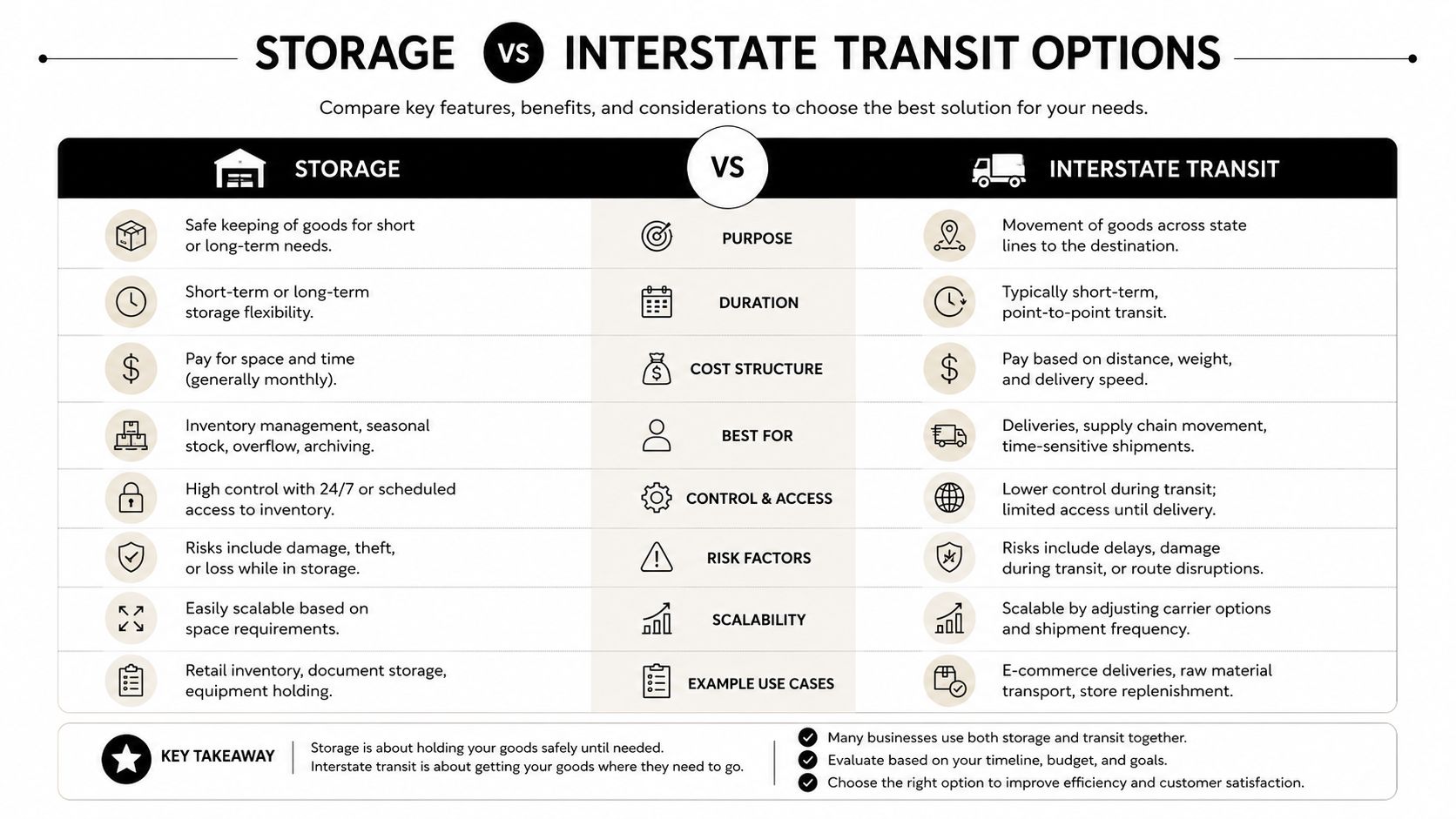
Match transit to the move rather than the marketing label
For an interstate relocation, a backload can suit flexible customers who can work around an available return route. A dedicated truck provides more control over collection and delivery timing, which matters when settlement dates, work starts or building bookings are fixed. Consolidated freight can make sense when the shipment is smaller and the delivery window is flexible, but it may involve more coordination at both ends.
Weekly direct runs from Melbourne to Sydney, Brisbane and key East Coast cities create useful options for customers who don't need an immediate dedicated vehicle. Ask what is included in the quoted service, including collection access, wrapping, storage, delivery to room, stairs, lift handling and reassembly. A low headline price isn't useful if the destination has the same access restrictions as the origin and those details appear later as extras.
Apartment storage pickups need the same preparation as a normal move. Reserve the lift, confirm protective requirements and arrange a practical kerb position. Before choosing a storage plan, record the number of rooms, large furniture items, fragile goods and the expected access at collection and delivery. The Melbourne storage pricing guide can help frame the conversation, but a proper quote still depends on volume, timing and handling conditions.
Packing, White-Glove and Specialist Handling
Self-packing can reduce labour costs, but it shifts the risk and workload to the household. It works best when you have time, suitable cartons, a clear labelling system and no complex fragile inventory. In a southern apartment, poorly packed boxes create more than breakage risk. They slow lift cycles, increase corridor congestion and make it harder to prioritise the items needed first.
Professional packing usually means room-by-room wrapping, premium packing materials, labelled cartons and controlled preparation of fragile items. That service is particularly useful when the move involves a Caulfield family downsizing, a busy professional leaving a St Kilda apartment or a Glen Huntly unit with a tight stairwell. The crew can prepare awkward furniture and protect it before it enters a confined common area.
Choose service depth by the problem you need solved
White-glove valet unpacking suits customers who want the new home functional on day one. The crew can place furniture, unpack priority cartons and remove packing materials, which is valuable for downsizers, families and people returning to work immediately after settlement. It costs more than a basic transport-only move, but the benefit is reduced physical effort and faster recovery after a demanding day.
Specialist handling deserves its own assessment. Pianos may require stair work, protective wrapping, route planning and weight-rated equipment. Pool tables need careful dismantling, transport and reassembly because the slate, frame and levelling system can be damaged by casual handling. A Brighton piano moved through a narrow side path is a different job from a standard lounge suite lifted through a driveway.
Artwork also needs more care than ordinary cartons. For fragile framed pieces, the guidance on when to call Colorado Art Services is a useful reference when deciding whether a piece needs specialist packing rather than household wrapping.
For a practical comparison of professional preparation methods, review the benefits of professional packing services. The right question isn't whether every item needs white-glove treatment. It's which items, rooms and access points create the greatest risk if handled casually.
Your Practical Plan for a Southern-Suburbs Move
A reliable move comes down to four decisions: when, how, where and who. Make them in that order, then check that each decision supports the next one.
Decide when
Start with the settlement date, lift availability and council access. Ask the building manager for the earliest and latest permitted loading times, then choose a window that leaves room for travel and handover. Confirm the kerb arrangement the day before, because a plan that depends on one unoccupied space can fail quickly.
Decide how
Choose self-packing when you have time and a manageable inventory. Choose professional packing when fragile goods, children, work deadlines or a dense apartment layout make preparation difficult. If you want the home usable immediately, add valet unpacking for priority rooms rather than treating every carton identically.
Decide where
If the destination isn't ready, compare short-term warehouse storage with a longer-term arrangement based on the expected gap and access conditions. For interstate moves, decide whether flexibility favours a backload or whether a fixed settlement date justifies a dedicated vehicle. Keep the collection and delivery access details together, because both addresses affect the quote.
Decide who
Use one insured point of contact when the move includes packing, storage, specialist items or interstate delivery. Multiple subcontractors can create gaps around responsibility, timing and damage reporting. Ask for the vehicle type, crew scope, insurance arrangements, access assumptions and possible additional charges in writing.
Before the crew arrives, photograph furniture before disassembly, label every carton by room and mark priority boxes clearly. Keep an essentials bag with medication, chargers, documents, toiletries, a change of clothes and basic kitchen items. Photograph valuable or delicate pieces separately, and tell the coordinator about staircases, tight corners, glass, stone, pianos and pool tables before moving day.
The practical standard: If the crew has to discover an access problem at the kerb, the plan started too late.
Get n Go Removals Melbourne offers residential and apartment moves, office relocations, packing and unpacking, specialist piano and pool-table handling, furniture disassembly and reassembly, storage, and interstate transport from Melbourne to East Coast destinations. For a coordinated quote that accounts for lifts, permits, truck access and storage from the first box packed to the last box delivered, visit Get n Go Removals Melbourne.