Where to Find packing boxes to buy for a Melbourne Move
When it comes to packing boxes to buy, your best bet is always the sturdy, professional-grade stuff you can get directly from your removalist. These aren't just any old boxes; they're specifically designed for moving, which means they stack properly in the truck and will actually protect your things far better than flimsy second-hand or retail options. The real secret to an organised, damage-free move is using a smart mix of sizes, including those specialised boxes for the awkward or fragile stuff.
Your Ultimate Guide To Buying Packing Boxes
Moving house or office in Melbourne is a huge undertaking, no doubt about it. But picking the right packing materials can turn a mountain of stress into a totally manageable process. It all starts with the boxes—they are the foundation of a good move. Think of this guide as your game plan, full of practical advice to help you dodge common pitfalls like overstuffed boxes or using weak ones that fall apart and put your belongings at risk.
Making the right choices from the get-go really does set the tone for your entire relocation. It’s not just about finding things to put your stuff in; it’s about creating a system that keeps everything safe and makes unpacking on the other side so much easier.
Understanding the Moving Industry Context
The logistics of moving house are part of a massive industry here in Australia. In fact, the removalist sector’s revenue is tipped to grow by 2.8% in the 2025-26 period, mostly because more people are moving locally and interstate again. For Melbourne families and businesses, this means that trusted movers are thriving by offering top-notch packing boxes and materials as part of their service. You can read up on these industry trends and their impact on moving services in Australia.
This consistent demand just goes to show how crucial reliable packing supplies are. Professional removalists know better than anyone that the success of a move literally starts with the quality of the boxes.
A well-packed box is your first line of defence against damage. Choosing professional-grade materials isn’t an expense; it’s an investment in protecting the things you own, from everyday essentials to irreplaceable heirlooms.
First Steps in Your Packing Journey
Before you buy a single box, it helps to get your head around two key ideas that will make all your decisions easier:
- Box Strength: You’ll see "single-wall" and "double-wall" cardboard mentioned. The difference is huge. Double-wall boxes are non-negotiable for anything heavy like books, or fragile like glassware. They offer way more strength and protection.
- Quantity Estimation: Running out of boxes halfway through packing is one of the most frustrating parts of moving. A quick estimate based on the size of your home will help you buy the right amount from the start, saving you a mad dash to the shops later.
Once you’ve got these fundamentals down, you’re in a great position to start your packing journey with confidence. This guide will walk you through all the details, making sure you have exactly what you need for a smooth, organised move.
Choosing the Right Types and Sizes of Moving Boxes
When you start looking for packing boxes to buy, it doesn’t take long to realise that one size definitely does not fit all. Using the wrong box for the job is a bit like trying to wear shoes that are three sizes too big—sure, it might work in a pinch, but it’s clumsy, inefficient, and you're just asking for a disaster. Getting the types and sizes right from the get-go is the absolute key to protecting your belongings and keeping your move organised.
Think of your collection of boxes as a specialised toolkit. Each box has a specific purpose, designed to carry certain items safely and efficiently. A small, sturdy box is your best friend for heavy books, while a large but lightweight one is perfect for all your pillows and doonas.
Standard Moving Boxes: The Workhorses of Your Move
Most of your stuff will end up in just a few standard types of cardboard boxes. Knowing what each one is for helps you avoid those classic moving mistakes, like creating a box that’s way too heavy to lift or leaving your fragile items with enough room to rattle around and break.
Here are the essentials you’ll be working with:
- Book Cartons (Small Boxes): These are small but they are mighty. Their whole purpose is to handle heavy, dense things like books, vinyl records, tools, and all those cans from the pantry. Their compact size is a feature, not a bug—it stops you from overpacking and creating a box that’s impossible to move safely.
- Standard Boxes (Medium Boxes): This is your versatile, all-rounder box. It’s perfect for a massive range of household items, from kitchen appliances and kids' toys to photo albums and general décor. You get a great balance of packing space and manageable weight.
- Tea Chests (Large Boxes): Don't be fooled by their large size; these boxes are strictly for light, bulky items. Think bedding, pillows, towels, and larger kitchen gear like pots and pans. Never, ever fill these with heavy items. They can become dangerously heavy and are much more likely to fall apart under the strain.
Speciality Boxes for Ultimate Protection
Beyond the standard trio, there’s a whole world of specialty boxes designed to give tailored protection to your most awkward or valuable possessions. These are the problem-solvers that give you real peace of mind, ensuring everything from your favourite suit to your fine china arrives in one piece.
For instance, when looking at your options, choosing the right box can make all the difference, from heavy-duty moving boxes to specialized boxes like those for delicate Christmas decorations.
The golden rule of packing is simple: match the box to the item. A wardrobe box isn't a luxury; it's a necessity for keeping your clothes crease-free. A dish pack isn't overkill; it's smart insurance for your kitchenware.
Some of the most useful specialty boxes include:
- Wardrobe Boxes: These tall boxes are a game-changer. They come with a built-in metal bar, so you can hang clothes directly from your closet into the box. This saves an incredible amount of time on ironing and organising when you get to your new place.
- Dish Packs (Dish Barrels): Built with double-wall cardboard for extra strength, these are absolutely essential for packing fragile kitchen items. Many even come with cell dividers to separate plates, glasses, and mugs, stopping them from chipping or smashing in transit.
- Picture and Mirror Boxes: These are specifically designed to protect your framed art, mirrors, and large photos. They’re often adjustable or come in sections that you can fit together, creating a custom-sized protective sleeve for each piece.
- TV and Electronics Boxes: If you’ve long since thrown out the original packaging for your electronics, these heavy-duty boxes are a must. They’re built to handle bumps and often include foam inserts for that extra layer of cushioning.
By putting together a smart packing plan with the right mix of standard and specialty boxes, you’re really setting yourself up for a successful move. For more in-depth strategies, have a look at our guide on how to pack for moving house to make sure every single item is secured properly.
Estimating How Many Packing Boxes You Need
Figuring out exactly how many packing boxes to buy is one of the first, and biggest, puzzles you’ll face when moving. It’s a real balancing act. Buy too few, and you’ll be making frantic, last-minute trips to the shops. Buy too many, and you're left with a mountain of cardboard to get rid of once you've unpacked. The goal is to land right in that sweet spot, and thankfully, it’s more science than guesswork.
While the size of your home or office is the obvious starting point, your lifestyle is just as important. A minimalist in a two-bedroom apartment will have a very different box count to a family of collectors living in the exact same space.
A General Guide by Home Size
A room-by-room inventory is the most accurate method, but a general estimate based on your home's size is a fantastic way to get the ball rolling. It helps you budget and plan, making sure you have the bulk of what you need from day one. For a really clear picture of your total volume, a professional tool like our cubic metre calculator can be a massive help.
To get you started, we've put together a handy table to help estimate your box needs.
Estimated Number of Boxes Needed by Home Size
| Home Size | Small Boxes (Book/Carton) | Medium Boxes (Standard) | Large Boxes (Tea Chest) | Specialty Boxes (Wardrobe, Picture) |
|---|---|---|---|---|
| 1 Bedroom | 10-15 | 15-20 | 5-10 | 2-4 |
| 2 Bedrooms | 15-25 | 20-30 | 10-15 | 4-6 |
| 3 Bedrooms | 25-35 | 30-45 | 15-20 | 6-8 |
| 4+ Bedrooms | 35-50 | 45-60 | 20-25 | 8-12 |
Remember, this is a starting point. Adjust these numbers up or down based on how long you've lived in your home and the amount of stuff you own.
Start with a Room-by-Room Breakdown
The most reliable way to nail your box count is to walk through your home, one room at a time. Each space has its own unique mix of items, which means different box types and quantities.
Here’s a rough guide to get you thinking:
- Kitchen: This is almost always the most box-heavy room. You’ll likely need 10-15 boxes, including sturdy dish packs for fragile plates and glasses, plus small book cartons for heavy pantry items, small appliances, and cookbooks.
- Bedrooms: Plan for around 5-10 boxes for each bedroom. This typically means a mix of medium boxes for folded clothes and décor, large tea chests for doonas and pillows, and at least one wardrobe box for hanging clothes.
- Living Area: This space usually needs about 8-12 boxes. You’ll want small boxes for books and DVDs, medium ones for electronics and cushions, and specialty picture boxes for any artwork or mirrors.
- Office: For a home office or a full business relocation, you'll need specialised archive boxes for documents and sturdy cartons for computers and monitors. The number of boxes varies widely based on the amount of paperwork and equipment.
Lifestyle and Length of Residency Matter
Two households in identical homes can have completely different packing needs. The simple truth is, the longer you've lived somewhere, the more you've likely gathered. Someone who has been in the same house for a decade will almost always need more boxes than a person who only moved in last year.
Think about your own habits. Are you a book lover with shelves that are groaning under the weight? A fashion enthusiast with a wardrobe to match? These collections demand a serious number of specific boxes, so be sure to factor them into your count.
A great rule of thumb is to start with an estimate of 10-15 boxes per person in your household. From there, add more based on how long you've lived there and whether you have big collections of books, clothes, or kitchen gear.
Here is a quick look at some common specialty boxes and what they are best suited for.
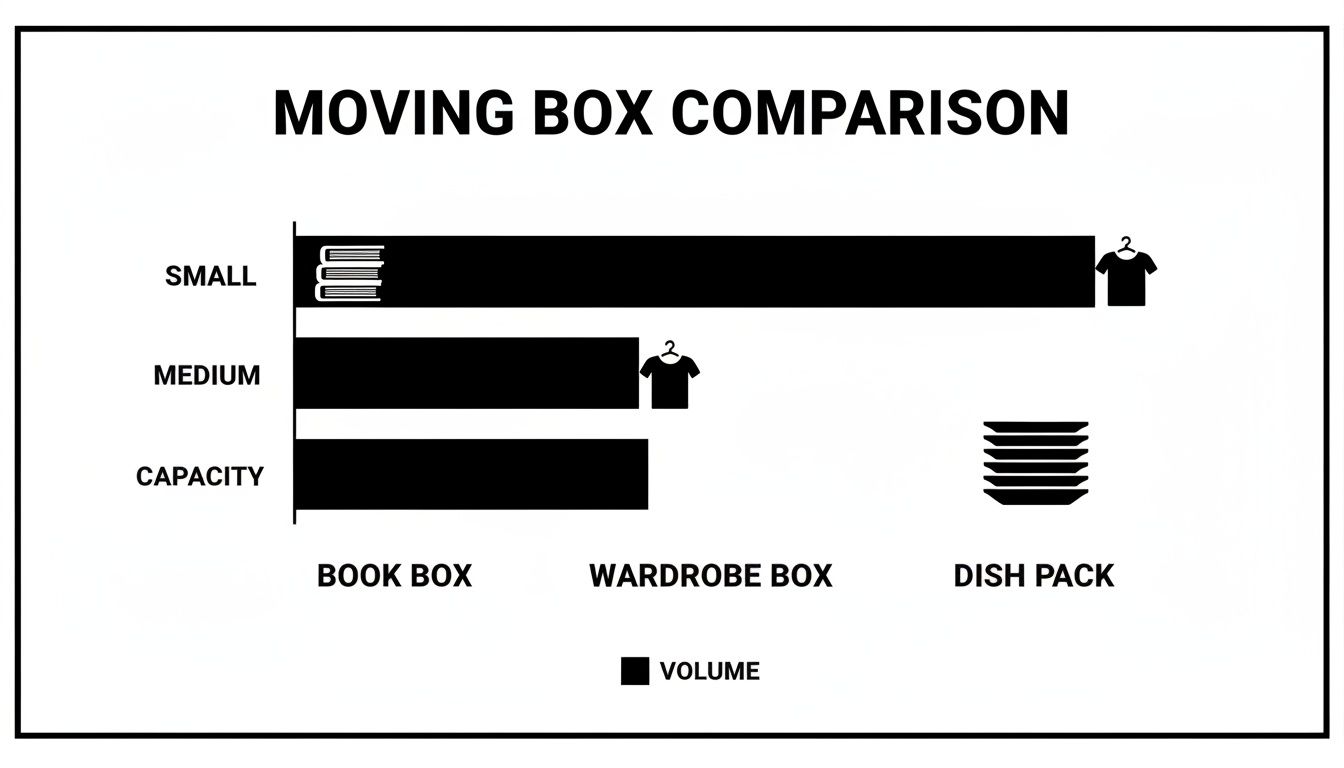
As you can see, specialty boxes like wardrobe and dish packs are built for a specific job, protecting your most important items and working alongside your standard boxes. Getting the right mix makes all the difference.
Where to Find Quality Packing Boxes in Melbourne
Once you’ve figured out what kinds of boxes you need and how many, the next big question is: where do you actually get them? In Melbourne, you’ve got a few options, but they are definitely not all created equal. The source you choose can be the difference between a smooth move and a box of broken heirlooms.
Making the right choice here is so important, especially when you’re moving anything valuable or delicate. It can be tempting to just grab the cheapest boxes you can find, but investing in quality materials is one of the most non-negotiable parts of a successful move.
Sourcing Boxes Directly from Your Removalist
Honestly, the most reliable and straightforward way to get your hands on professional-grade moving boxes is to get them straight from your removalist, like us here at Get n Go Removals. It just simplifies everything, giving you one point of contact for your move and your supplies.
There are some real advantages to doing it this way:
- Designed for Transit: The boxes you get from a professional mover are built for the job. They’re engineered to handle the bumps, jolts, and stacking that happen in the back of a moving truck without getting crushed.
- Guaranteed Quality: You know you're getting clean, new, and sturdy boxes. This completely sidesteps the risks that come with second-hand boxes, which might have hidden weaknesses, damp spots, or even unwanted pests.
- Correct Specifications: We supply the exact same boxes our own professional packing teams use every day—from the standard tea chests to specialty wardrobe and picture cartons.
Choosing your mover as your box supplier isn’t just about convenience; it’s about alignment. You get materials perfectly suited for the moving process, recommended by the very experts who will be handling them.
Comparing Professional vs Retail and Second-Hand Boxes
Sure, you can find moving boxes at big hardware stores or on online marketplaces, but the quality can be a real gamble. Retail boxes are usually made for a general audience and might not have the same crush resistance as the professional ones. And second-hand boxes from community groups or the local supermarket? They're the riskiest choice of all, because you have no idea what they've been through.
The need for good supplies is only growing. Interstate moves in Australia are projected to involve 180,000 to 220,000 people annually in 2025, which means a huge demand for reliable packing materials for major routes like Melbourne to Sydney. We're also seeing a 10.5% growth in people leaving the city for regional areas, with many Melburnians heading to places like Bendigo and Geelong. You can find more insights on Australia's population movements from the ABS.
Why a Single Point of Contact Streamlines Your Move
Let's face it, organising a move feels like juggling a dozen different tasks at once. When you get your boxes from Get n Go Removals, you're knocking two major jobs off your list with one call. No need to spend hours researching different suppliers or arranging separate deliveries for your packing gear.
We can deliver everything you need right to your door, making sure you have the right quantity and quality from the very start. This integrated approach saves you time, cuts down on stress, and gives you peace of mind knowing your packing efforts are built on a foundation of professional-grade materials.
To dive deeper into your options, have a look at our detailed guide on where to find moving boxes in Melbourne. It’s all about making your relocation seamless, from the first box you tape up to the last one we unload.
Pro Packing Tips and Essential Moving Supplies
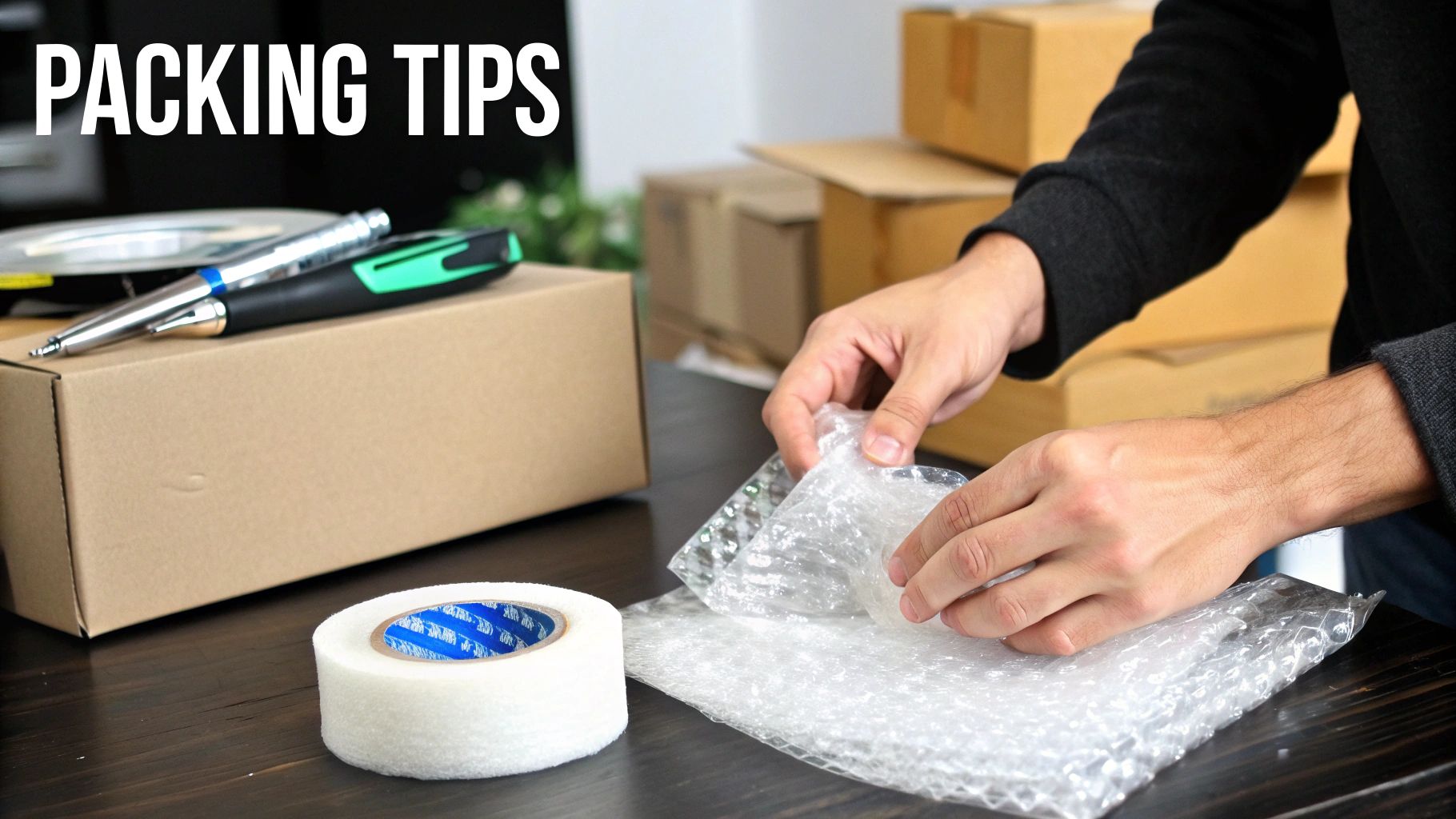
Getting the right packing boxes to buy is a huge first step, but how you pack them is what really counts. The right technique is the difference between a smooth, damage-free move and a chaotic one that leaves you with a massive headache when it's time to unpack.
Think about it: packing isn’t just about stuffing things into a space. It’s a real skill. It's about balancing weight, protecting your most delicate items, and creating a system so you’re not lost when you arrive at your new home. With a few tips from the pros and the right gear, you can pack with the same confidence as our experienced moving teams.
Nailing the Basics of Packing
A great pack job comes down to a few core principles. Get these right, and you'll sidestep all the common moving day dramas like collapsing boxes, shattered valuables, and throwing your back out lifting a box that’s way too heavy.
Here are the non-negotiables our crews live by:
-
Get the Weight Right: The golden rule? Heavy things on the bottom, light things on top. This creates a solid base and stops your fragile items from getting crushed. And please, don't overstuff a box. If you can't lift it safely, it's a hazard.
-
Cushion Everything: Empty space is your enemy. Any gaps let your belongings shift, rattle, and break in transit. Use packing paper, bubble wrap, or even soft fillers like towels and blankets to fill every nook and cranny for a snug fit.
-
Wrap Your Fragiles: Every single fragile item needs to be wrapped individually in paper or bubble wrap. For things like plates, always stack them vertically on their edge—never flat. They are surprisingly stronger this way and far less likely to crack under pressure.
The Simple Power of a Good Labelling System
A well-labelled box is a gift you give your future self. It turns unpacking from a frustrating guessing game into a logical, room-by-room process. You don't need anything fancy, just a simple and consistent system to stay in control.
Your labelling should always include:
- The Room: Clearly write which room the box is headed for (e.g., "Kitchen," "Master Bedroom", "Office").
- A Quick Summary: Briefly list the main contents ("Pots & Pans," "Harry's Books", "Server Cables").
- Clear Warnings: Use a thick marker to write "FRAGILE" or "THIS WAY UP" in big, bold letters on a few different sides.
An organised move is a calm move. A detailed labelling system is your roadmap to a stress-free unpacking experience, ensuring you can find your coffee maker or phone charger without tearing open every single box.
If you really want to get organised, you could even look into professional tools like label printer machines for perfectly clear, consistent labels.
Must-Have Supplies (Besides the Boxes)
While boxes are the star of the show, they can't do it all alone. You’ll need a few other key supplies in your toolkit to make sure everything is sealed, cushioned, and organised properly. Don't cheap out on these—quality supplies make a world of difference.
Here’s your shopping list:
- Good Quality Packing Tape: Cheap tape is a nightmare. It doesn't stick properly and can pop open mid-move. Invest in strong, wide packing tape to seal every box without worry.
- Bubble Wrap: An absolute must for electronics, artwork, mirrors, and anything else that's extra delicate.
- Packing Paper: Perfect for wrapping your everyday fragile items like glasses and dishes. It's clean, effective, and stops things from scratching each other.
- Permanent Markers: Grab a couple of thick, black markers so your labels are bold and easy to read from a distance.
With these supplies in hand and a few good techniques, you'll be set for a much smoother move. For a deeper dive, check out our complete guide on packing tips for moving house.
When to Hire Professional Packing Services
Even with the best plan and all the right packing boxes to buy, the sheer physical effort of packing up an entire home or office can be completely overwhelming. It's often the single most time-consuming and stressful part of any move. This is where professional packing services become a real game-changer, turning a daunting marathon into a seamless, hands-off experience.
Hiring experts isn’t just about clawing back some time; it’s about investing in peace of mind. It’s a smart choice for anyone who wants to minimise disruption, protect their valuable belongings, and make sure the whole move is handled with professional precision from the very start.
Scenarios Where Professional Packing Makes Sense
While anyone can benefit from an extra pair of hands, certain situations make hiring professional packers an incredibly savvy move. If you find yourself nodding along to one of these scenarios, a valet service could be the key to a stress-free relocation.
Consider hiring professional packers if:
- You're Facing a Tight Deadline: A sudden job transfer or a tight settlement date can leave you with no time to spare. Professional teams can pack an entire household in just a fraction of the time it would take most people.
- You Have a Demanding Schedule: Trying to juggle a full-time job, family commitments, and the endless logistics of a move can stretch anyone to their breaking point. A packing service lets you focus on your daily life while we handle the hard yakka.
- You're Moving a Large Home or Office: Packing a four-bedroom family home or an entire office is a massive undertaking. Teams of experts can tackle the sheer volume of work efficiently and safely.
- You Own High-Value or Fragile Items: Got antiques, artwork, or delicate electronics? Professional packers use industry-grade materials and proven techniques to give them maximum protection.
Our Valet and White-Glove Services Explained
At Get n Go Removals, our valet packing and unpacking services are designed to give you a truly comprehensive, door-to-door solution. We don't just put things in boxes; we manage the entire process with meticulous care from start to finish.
This kind of service is becoming more and more vital as many Melburnians are making the move to regional Victoria. Recent data shows that migration from capital cities to areas like Bendigo and Greater Geelong surged by 10.5% in the March 2025 quarter. In fact, moves post-COVID are a huge 20.5% higher than they were before the pandemic. Our flexible 24/7 scheduling and premium materials provide the secure, seamless transition these movers need. You can find more insights about these moving industry trends on austate.com.au.
Choosing a valet service transforms your move from a stressful chore into a managed project. It's the ultimate solution for protecting your time, energy, and valuable possessions, ensuring you arrive at your new property feeling organised and ready to start fresh.
When you book our valet services, here's what you can expect:
- All-Inclusive Materials: We bring absolutely everything needed, including professional-grade boxes, packing paper, bubble wrap, and heavy-duty tape.
- Expert Packing: Our trained staff will carefully wrap and pack every single item, from the cutlery in your kitchen drawers to the clothes in your wardrobe.
- Systematic Organisation: We label everything clearly, which makes unpacking at the other end logical and much more efficient.
- Full Unpacking Option: We can also unpack everything at your new home, placing items on benches and flat surfaces so it's easy for you to settle in.
By entrusting your packing to a professional team, you're not just buying convenience; you're ensuring every last detail is handled correctly. To get a better sense of the advantages, explore the top 5 benefits of using professional packing services and see how it can truly transform your move.
Your Packing Box Questions Answered
Even after reading a comprehensive guide, there are always a few lingering questions that pop up as you're finalising your moving plans. We get it. Getting straight answers to these last-minute queries can make all the difference, helping you tackle the final hurdles with confidence.
Think of this section as your quick-reference guide for the most common questions we hear about buying and using packing boxes for any house or office move. With these answers, you'll be set to pack efficiently and keep your belongings safe, just like the pros do.
Can I Reuse Old Boxes for My Move?
While it might seem like a thrifty way to save a few dollars, using old boxes from the supermarket or ones you've found online comes with some serious risks. You just never know their history. They often have hidden weaknesses, like structural fatigue from a previous life, unseen moisture damage, or even unwanted pests.
For a secure move, especially when you're packing fragile or heavy items, we always recommend using new, high-quality moving boxes. If you're really set on reusing some older boxes, save them for non-breakable things like clothes or linen, and give them a very thorough inspection for any signs of damage or dampness first.
Is It Cheaper to Buy Boxes in a Kit?
For most people, yes, buying boxes as part of a moving kit is definitely the more cost-effective way to go. Removalist companies often put together discounted packages that are tailored to different home sizes. These kits are great because they include a smart mix of box sizes plus other essentials like packing tape and paper.
Buying a pre-made kit doesn't just save you money compared to hunting down each item individually; it saves you a ton of time. It takes all the guesswork out of figuring out what you need, making sure you have a solid supply to get started.
The team at Get n Go Removals can advise you on the best value kit for your situation, whether you’re moving out of a one-bedroom apartment or a large family home.
How Should I Pack Electronics and Fragile Items?
Your electronics and other fragile possessions need a bit of extra TLC to make sure they arrive in one piece. If you’ve still got the original packaging they came in, that's always your best bet. If not, find a sturdy, double-wall box that's just a little bit bigger than the item itself.
Here’s the simple process our professional packers follow:
- Wrap the item completely in a few layers of bubble wrap, taping it securely.
- Cushion the bottom of the box with a good layer of scrunched-up packing paper.
- Place your wrapped item inside and then fill in all the empty space around it with more paper. You don't want it to be able to shift around at all.
- Seal it up and clearly label the box with "FRAGILE," drawing arrows to show which way is up.
For your really high-value electronics or irreplaceable family heirlooms, it's worth considering our professional valet packing service for that guaranteed protection and total peace of mind.
When Is the Best Time to Start Packing?
A good rule of thumb is to start packing at least 2-4 weeks before your moving day. This gives you enough time to work at a comfortable pace without that last-minute feeling of being rushed and overwhelmed.
Begin with the things you use least often—think books, off-season clothes, spare room decor, and anything hiding in the back of cupboards or in the garage. For an office move, start with archived files, surplus stationery, and non-essential equipment. Leave your everyday essentials for the final week. Starting early really does reduce the stress and helps you pack in an organised, thoughtful way, which makes the unpacking process so much easier on the other side.
Ready to get the best packing materials for your Melbourne move? The expert team at Get n Go Removals offers professional-grade moving boxes, specialty cartons, and all the essential supplies you need for a safe and organised relocation. Contact us today to order your supplies or to learn more about our valet packing services.