The Ultimate New House Moving Checklist for a Flawless Move

Moving to a new house is one of life's most exciting milestones, but it can quickly become overwhelming without a solid plan. Between coordinating logistics, packing a lifetime of belongings, and managing endless administrative tasks, it's easy to feel lost and stressed. That’s why a detailed new house moving checklist is not just helpful—it’s essential for a smooth transition. Forgetting a crucial step can lead to unnecessary costs, last-minute panic, and a chaotic start in your new space.

This comprehensive guide is designed to prevent that. Drawing on over a decade of professional experience helping Melbourne families and businesses relocate, we've organised this checklist into a strategic, chronological roadmap. It breaks down the entire process into manageable, actionable steps, from the initial eight-week decluttering phase right through to your first week of settling in. We will cover everything from booking reliable movers and transferring utilities to packing fragile items and preparing a moving day survival kit.

Following this structured plan will empower you to stay organised, protect your valuables, and maintain control over the entire process. It’s your complete blueprint for a flawless move, ensuring you can focus on the excitement of your new beginning rather than the chaos of relocation. Let's dive in and start planning your stress-free move.

1. Declutter and Downsize Your Belongings

Before you pack a single box, the most impactful step on your new house moving checklist is a thorough declutter. This process involves systematically sorting through everything you own and deciding what to keep, sell, donate, or discard. It’s a foundational task that not only reduces the volume of items you need to move, saving you money on removalist fees and packing supplies, but also ensures you start life in your new home surrounded only by things you truly value.

Why It’s a Crucial First Step

Decluttering transforms your move from a logistical chore into a fresh start. By shedding items you no longer need, use, or love, you simplify packing, unpacking, and organising your new space. Imagine arriving at your new house with less clutter, making it easier to set up rooms and feel settled more quickly. This proactive step directly contributes to a more efficient and less expensive move.

Actionable Tips for Effective Decluttering:

  • Implement the Four-Box Method: For each room, set up four distinct boxes or zones labelled: Keep, Sell, Donate, and Discard. Touch every single item and make an immediate decision, placing it in the corresponding area.
  • Start with Low-Emotion Areas: Begin in spaces like the laundry, garage, or linen closet. Tackling these less sentimental areas first helps build momentum and makes it easier to approach more personal items later.
  • Set a Schedule: Break down the task into manageable chunks. Dedicate one weekend to the bedrooms or a few evenings to the kitchen. This prevents overwhelm and keeps you on track.

As you sort, you will likely accumulate items for disposal. This is a good time to start planning by finding reliable waste disposal services in your area to handle everything you can't sell or donate. For a more detailed guide on this essential process, explore our expert advice on how to declutter before you move.

2. Create a Moving Timeline and Planning Schedule

With your home decluttered, the next vital item on your new house moving checklist is to establish a comprehensive timeline. This involves breaking down the entire moving process into smaller, manageable tasks spread over six to eight weeks. An organised schedule provides a clear roadmap, prevents last-minute panic, and ensures that critical deadlines, like booking removalists or transferring utilities, are not missed.

Why It’s a Crucial Second Step

A structured timeline transforms an overwhelming project into a series of achievable goals. It provides clarity and control, reducing stress by outlining exactly what needs to be done and when. This proactive approach helps you anticipate challenges, allocate resources efficiently, and coordinate with family members, ensuring everyone is on the same page from start to finish. It’s the framework that holds your entire move together.

Actionable Tips for Effective Planning:

  • Use Digital Tools: Leverage calendar apps like Google Calendar or planning tools like Trello. Set reminders for key dates, such as finalising your moving company or updating your address with Australia Post.
  • Colour-Code Your Tasks: Assign different colours to categories like Packing, Admin, Logistics, and Utilities. This visual organisation helps you see at a glance what your priorities are each week.
  • Build in Buffer Time: Always add a few extra days to your schedule for unexpected delays. This could be a delay in packing supply delivery or a last-minute appointment, and having a buffer prevents one small issue from derailing your entire plan.

A detailed schedule will guide you through every stage, from initial planning to settling into your new home. To help you build a comprehensive plan, check out our in-depth guide covering the essential moving home to-do list.

3. Research and Book Professional Moving Services

With your belongings decluttered, the next critical task on your new house moving checklist is securing a reputable removalist. This step involves researching, comparing, and booking a professional moving company well in advance, ideally 4-6 weeks before your move date. Choosing the right team ensures your possessions are handled with care, reduces the risk of scams, and brings invaluable peace of mind during a hectic period.

Why It’s a Crucial Step for a Smooth Move

Booking a professional mover early transforms a potentially chaotic day into a structured, efficient process. A reliable company provides experienced staff, proper equipment, and the necessary insurance to protect your belongings. Failing to book in advance, especially during peak season, can leave you with limited, often more expensive or less reputable, options. This is the cornerstone of a stress-free move.

Actionable Tips for Effective Booking:

  • Gather Multiple Quotes: Contact at least three different removalist companies to obtain detailed, itemised quotes. This allows you to compare pricing, services offered, and availability accurately.
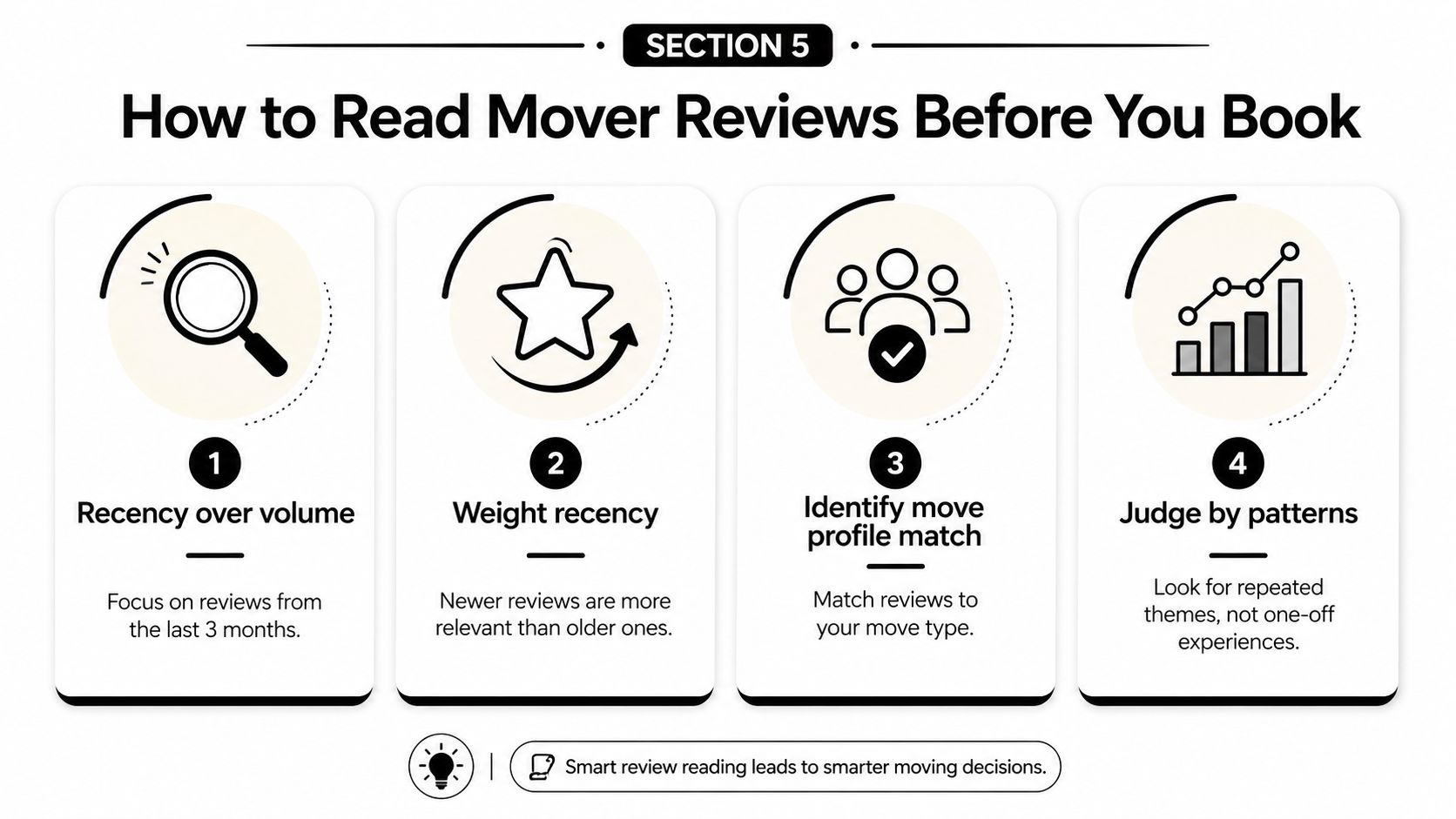
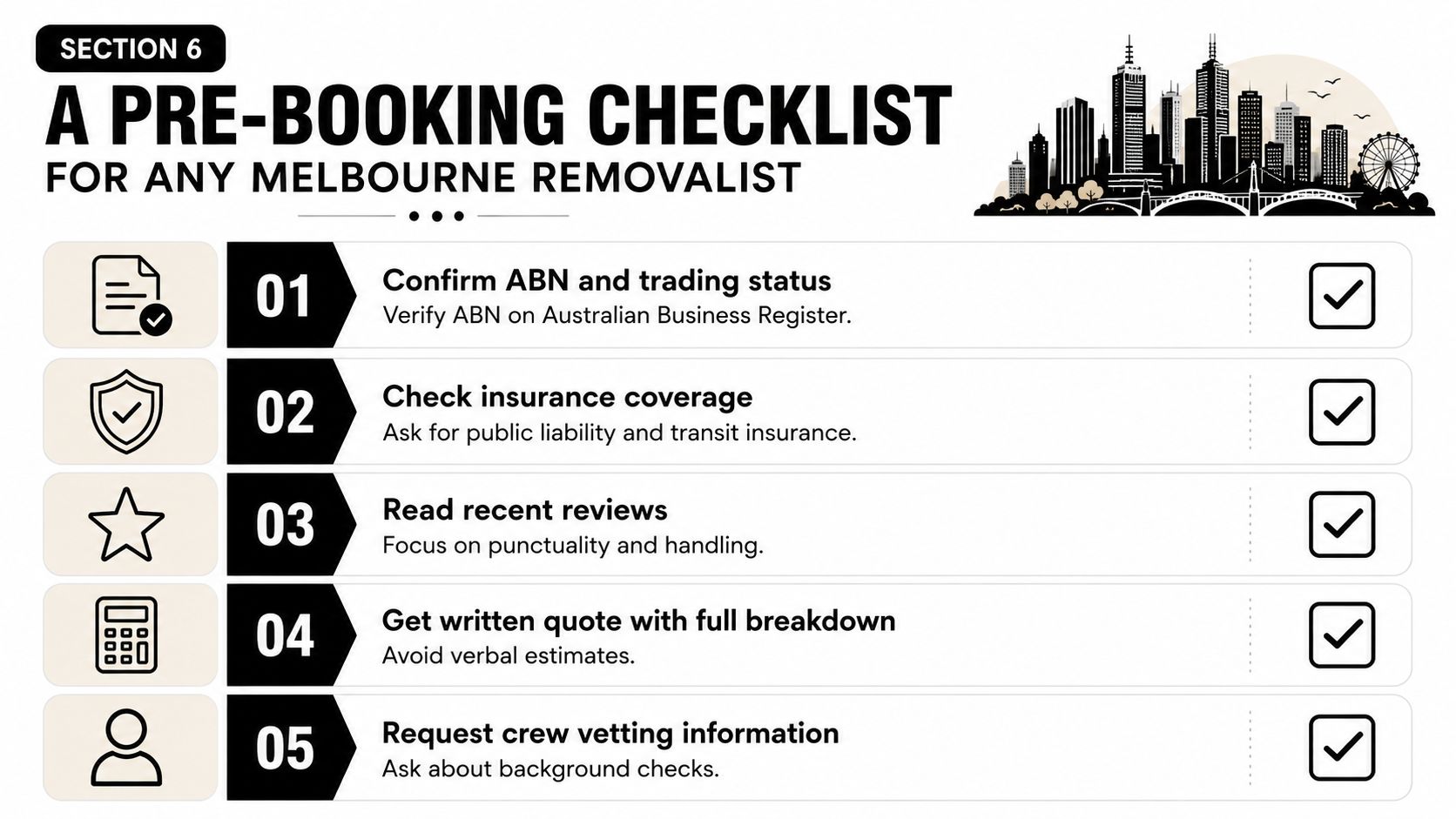
  • Verify Credentials and Reviews: Check for legitimate business credentials, insurance coverage, and read recent customer reviews on platforms like Google. A company’s reputation is a strong indicator of the service you’ll receive.
  • Book Well in Advance: To secure your preferred moving date and avoid last-minute price hikes, finalise your booking at least one month ahead. This is especially important for weekend or end-of-month moves.

Engaging professionals takes the immense physical and mental load off your shoulders. To understand the full scope of benefits, explore our detailed guide on why hiring removal services is the smart way to move.

4. Notify Organisations and Update Address Information

One of the most critical administrative tasks on your new house moving checklist is updating your address with all relevant organisations. This involves systematically informing everyone from your bank and employer to utility providers and subscription services of your new details. Neglecting this step can lead to missed bills, service interruptions, and even potential identity theft, making it a non-negotiable part of a well-organised move.

Why It’s a Crucial Administrative Step

Failing to update your address can cause significant disruptions. Important documents, financial statements, and even parcels could be sent to your old home, creating confusion and security risks. Proactively managing this process ensures a seamless transition, maintaining continuity for essential services like electricity, internet, and insurance while keeping your personal information secure. It’s a foundational task for settling into your new life without administrative headaches.

Actionable Tips for Effective Notifications:

  • Create a Master Checklist: Compile a comprehensive list of every organisation that has your address. Group them into categories like Financial (banks, credit cards, superannuation), Utilities (gas, electricity, water), Government (electoral commission, tax office), and Subscriptions (magazines, streaming services, online shopping).
  • Start Early and Prioritise: Begin the notification process at least four weeks before your move. Prioritise essential services like utilities and financial institutions to prevent any lapse in service or access to funds.
  • Leverage Online Portals: Most companies now allow you to update your address instantly via their online portals or mobile apps. This is often the fastest and most efficient method, providing immediate confirmation.
  • Use Mail Redirection as a Safety Net: Arrange a mail redirection service with Australia Post. This service will forward mail from your old address to your new one for a set period, catching any notifications you may have missed.

5. Gather and Organise Important Documents and Records

Amid the chaos of packing household goods, it’s easy to overlook your most valuable possessions: your personal documents. An essential task on your new house moving checklist is to gather, sort, and secure all critical paperwork. This includes everything from birth certificates and passports to property deeds, insurance policies, and medical records. Centralising these items prevents them from being lost, damaged, or accidentally packed away with general belongings.

Gather and Organize Important Documents and Records

Why It’s a Crucial Step for Security

Misplacing a crucial document during a move can cause significant stress and administrative headaches. By organising these records beforehand, you ensure they remain safe, confidential, and easily accessible when you need them for setting up new services or handling post-move administration. This small step protects your identity and provides peace of mind, guaranteeing a smoother transition into your new home.

Actionable Tips for Effective Organisation:

  • Create a "Moving Binder": Use a dedicated binder or portfolio with labelled dividers for categories like Financial, Legal, Medical, Property, and Personal IDs. This keeps everything in one portable place.
  • Digitise and Back Up: Scan or take clear photos of every important document and save them to a secure cloud service like Google Drive or Dropbox. This creates a digital backup in case the physical copies are ever lost.
  • Keep Originals with You: Never pack essential original documents in boxes that will go on the moving truck. Transport this collection personally in your vehicle to maintain control and security throughout the move.

6. Arrange for Utilities and Essential Services Setup

Ensuring your new home has power, water, and internet from day one is a critical component of a smooth transition. This step involves scheduling the disconnection of services at your old residence and the connection at your new one. Properly coordinating these transfers prevents service gaps, ensuring your home is functional and comfortable the moment you arrive, a vital part of any comprehensive new house moving checklist.

Why It’s a Crucial Step for Day One

Walking into a new house without electricity, hot water, or Wi-Fi can turn an exciting day into a frustrating one. By arranging your utilities in advance, you guarantee that essential services are active when you need them most, allowing you to charge your phone, use appliances, and begin settling in immediately. This foresight eliminates unnecessary stress and makes the first night in your new home far more pleasant.

Actionable Tips for a Seamless Utility Transfer:

  • Contact Providers Early: Call your electricity, gas, water, and internet providers at least two to three weeks before your moving date. This provides ample time to schedule both disconnection and new connection appointments.
  • Coordinate Final Meter Readings: Arrange for final meter readings at your old property on your move-out day to ensure you only pay for what you used. Take photos of the meters at both properties for your records.
  • Schedule Connections Strategically: Book your new service connections for your moving day or the day immediately following. Confirm installation windows, especially for services like the NBN, to ensure someone is present.
  • Keep Records: Store all confirmation numbers, appointment times, and contact details for your service providers in a dedicated folder or digital note that is easily accessible during the move.

7. Pack Strategically Using Proper Supplies and Labeling System

Successful packing is an art form, one that combines quality materials with a methodical system to protect your belongings and simplify unpacking. This involves using the right size boxes, proper protective wrapping, and a clear, consistent labelling strategy for every single box. A well-organised packing process is a cornerstone of any new house moving checklist, turning a potentially chaotic task into a manageable project and ensuring your move-in day is as seamless as possible.

Pack Strategically Using Proper Supplies and Labeling System

Why It’s a Crucial Step for Efficiency

Strategic packing saves time, money, and your sanity. By labelling effectively, you and your removalists know exactly where each box belongs, preventing a pile-up in the living room and allowing you to set up essential areas like the kitchen and bedrooms first. Using appropriate supplies minimises the risk of damage to fragile items during transit, avoiding costly replacements and disappointment.

Actionable Tips for Effective Packing:

  • Implement a Colour-Coded or Numbered System: Assign a specific colour to each room (e.g., blue for kitchen, red for bedrooms) and mark boxes with coloured tape or stickers. Alternatively, number each box and keep a corresponding inventory in a spreadsheet detailing its contents.
  • Label on Multiple Sides: Clearly write the destination room, a brief summary of contents, and the box number on the top and at least two sides of every box. This ensures you can identify it no matter how it's stacked.
  • Pack an "Essentials" Box: This box should contain everything you'll need for your first 24 hours, such as toiletries, medications, a change of clothes, basic kitchen items, and important documents. Keep it separate and load it last onto the truck.

A systematic approach prevents many of the frustrations that can arise on moving day. For a deeper understanding of what to avoid, learn more about the top 10 common packing mistakes when moving home to ensure your move is a success.

8. Prepare for Moving Day Logistics and Coordination

As your move date approaches, effective moving day logistics and coordination become the final, critical piece of your new house moving checklist. This stage involves finalising all arrangements with your removalists, preparing your home for their arrival, and ensuring the day runs smoothly for everyone involved, including family and pets. It’s about transforming your weeks of planning into a seamless, well-executed operation.

Prepare for Moving Day Logistics and Coordination

Why It’s a Crucial Final Step for Success

Careful coordination prevents last-minute chaos, reduces stress, and minimises the risk of property damage or delays. By proactively managing access, protecting surfaces, and communicating clearly with your moving team, you ensure an efficient and safe transition. This preparation allows your removalists to work at their best and gives you peace of mind on what can be a very hectic day.

Actionable Tips for Effective Coordination:

  • Confirm and Communicate: The day before, reconfirm the arrival time with your removalists. Provide them with clear instructions on parking, building access, and any potential obstacles.
  • Prepare the Environment: Clear pathways inside and outside your home. Protect high-traffic floor areas with cardboard or plastic sheeting and pad vulnerable corners or door frames.
  • Plan for Pets and Children: The activity of moving day can be stressful for pets and overwhelming for young children. Consider arranging for them to stay with a friend, family member, or at a pet boarding facility to ensure their safety and comfort.

A final walkthrough the night before is essential to catch anything you might have missed. For a comprehensive checklist, see our guide on what to do the night before your movers arrive.

9. Clean Your Previous Home and Document Condition

Once the last box is out, your final major task at your old residence is a thorough clean. This crucial step on any new house moving checklist involves restoring the property to its original state, addressing everything from walls and floors to appliances. Proper cleaning and documenting the home's condition are essential for securing your full security deposit and preventing future liability disputes with landlords or new owners.

Why It’s a Crucial Final Step for Handover

A meticulous move-out clean demonstrates respect for the property and fulfils your contractual obligations as a tenant. Failing to do so can result in significant deductions from your bond. By meticulously documenting the property's condition with photos and videos after cleaning, you create indisputable evidence that protects you from unfair claims about damage or mess left behind, ensuring a smooth and conflict-free handover.

Actionable Tips for a Flawless Handover:

  • Work Systematically: Clean only after the property is completely empty. Start from the back of the house and work your way to the front door, cleaning rooms from top to bottom (ceilings, walls, then floors) to avoid re-soiling cleaned areas.
  • Document Everything: Use your smartphone to take a detailed video walkthrough of the entire property once cleaning is complete. Take close-up photos of areas prone to disputes, such as ovens, carpets, and walls, and email them to your landlord or property manager as a time-stamped record.
  • Review Your Lease: Your tenancy agreement often specifies cleaning requirements, sometimes called a "bond clean" or "end-of-lease clean". Refer to this document to ensure you meet all specific obligations, such as professional carpet steam cleaning.

10. Unpack Strategically and Set Up Your New Home

Once you arrive, the final major task on your new house moving checklist is to unpack and set up your space. A strategic approach turns this potentially chaotic process into an organised and efficient one. It involves unpacking essentials first, methodically working through each room, and creating a functional living environment from day one, rather than trying to tackle everything at once.

Why It’s a Crucial Final Step for Settling In

Strategic unpacking prevents you from feeling overwhelmed and helps you settle in faster. By prioritising key areas like the bedroom and bathroom, you ensure immediate comfort and a place to rest after a long moving day. This transforms your new house into a home much more quickly, establishing a sense of order and reducing the stress of living amongst boxes.

Actionable Tips for Effective Unpacking:

  • Focus on Essentials First: Begin with your "essentials box," then set up the master bedroom and a functional bathroom. Assemble your bed and make it up immediately; having a comfortable place to sleep is a huge morale booster.
  • Establish a Functional Kitchen: Unpack core kitchen items next: the coffee maker, kettle, a few plates, cups, and utensils. This allows you to prepare simple meals without relying on takeaway.
  • Work Room by Room: Tackle one room at a time to avoid spreading clutter throughout the house. Completely unpack and organise one space before moving to the next.
  • Break Down Boxes as You Go: Collapse and remove empty boxes from the room as you finish them. This clears space, reduces visual clutter, and helps you see your progress.

10-Point New Home Moving Checklist Comparison

Task 🔄 Implementation complexity ⚡ Resource requirements 📊 Expected outcomes 💡 Ideal use cases ⭐ Key advantages 💡 Quick tip
Declutter and Downsize Your Belongings High — time‑intensive, emotionally demanding Low–moderate (time, possible storage, sales effort) Fewer items to move; lower costs; simpler setup Best before long‑distance moves or when starting fresh Cuts moving costs, simplifies unpacking, resale potential Start room-by-room; set deadlines
Create a Moving Timeline and Planning Schedule Moderate — requires ongoing discipline and updates Low (time, calendar/apps) Reduced stress; fewer missed tasks; better coordination Complex moves, families, corporate relocations Prevents oversights; enables cost/time comparisons Use digital calendar with buffers
Research and Book Professional Moving Services Moderate — research, vetting and scheduling High (moving budget, insurance; time for quotes) Professional handling; lower damage risk; saved labor Heavy households, long-distance, limited mobility Expertise, insurance coverage, time savings Get 3–5 quotes; verify licenses
Notify Organizations and Update Address Information Moderate — many contacts and follow-ups Low (time, documentation; mail‑forwarding fee optional) Continuous services; reduced missed mail or payments Every move; important for legal/financial continuity Prevents service interruptions and identity issues Create a master list; update critical accounts first
Gather and Organize Important Documents and Records Moderate — secure handling and backups needed Low–moderate (safe, scanner, cloud storage) Protected records; easier claims and legal processes All moves, essential for high‑value/legal households Protects identity; simplifies verification/claims Keep originals with you; scan to cloud
Arrange for Utilities and Essential Services Setup Moderate — coordinate multiple providers/timeslots Low–moderate (calls, possible deposits/fees) Utilities active at move‑in; minimal downtime Moves requiring same‑day occupancy or immediate services Ensures basic services; avoids gaps Call 2–3 weeks prior; confirm meter readings
Pack Strategically Using Proper Supplies and Labeling System Moderate — systematic packing and labeling Moderate (boxes, tape, protective materials, time) Safer transport; faster unpacking; inventory control All moves, especially long‑distance or professional movers Reduces damage; streamlines unpacking Label boxes on multiple sides; essentials box last
Prepare for Moving Day Logistics and Coordination High — many real‑time tasks and contingencies Moderate (helpers, protection materials, communication) Smoother move execution; property protection Large moves, tight access, or multi‑team coordination Minimizes delays and damage on moving day Do final walkthrough night before; keep contacts handy
Clean Your Previous Home and Document Condition Moderate — physical work plus documentation Low–moderate (supplies or cost for pros) Better deposit recovery; fewer disputes with landlord Rentals or leased properties at move‑out Supports deposit return; provides legal proof Take timestamped photos/video; consider pros
Unpack Strategically and Set Up Your New Home Moderate — phased over days/weeks Low–moderate (time, storage/organization supplies) Functional home quickly; reduced overwhelm Post-move settling for families and busy households Speeds return to normal routines; improves comfort Set up bedroom/bathroom first; unpack essentials day one

Making Your New House a Home

Congratulations, you've made it through the whirlwind of packing boxes, coordinating logistics, and finally unlocking the door to your new property. While the physical move might be complete, the journey of transforming this new space into a true home is just beginning. This comprehensive new house moving checklist was designed to be your roadmap, guiding you from the initial decluttering phase right through to the final box being unpacked. By following a structured timeline, organising your tasks, and planning strategically, you have laid the essential groundwork for a smooth and stress-free transition.

The key takeaways from this guide aren't just about ticking boxes; they're about reclaiming control over what can often feel like a chaotic process. Remember the importance of decluttering early, creating an organised labeling system, and booking professional services well in advance. These steps aren't just about efficiency; they are about minimising stress and protecting your valuable belongings, ensuring they arrive at your new Melbourne home in perfect condition. The diligence you apply to notifying organisations of your address change and setting up utilities before you arrive pays dividends, allowing you to settle in with immediate comfort and connectivity.

Your Actionable Next Steps to Settle In

Now that the major hurdles are behind you, focus on the final, rewarding phase. Prioritise setting up essential areas first: assemble the beds, organise the kitchen, and prepare at least one bathroom. This creates a functional, comfortable base from which you can tackle the rest of the house at your own pace. Don’t rush the process of decorating or finding the perfect spot for every item. Living in the space for a few weeks will give you a better feel for its flow and how you use each room.

This is also the perfect time to focus on safety and security. Once you're settled, researching the best home security systems is a vital step for ensuring long-term peace of mind for your family and your possessions. From smart cameras to comprehensive alarm systems, investing in security helps solidify that feeling of safety and permanence in your new environment. Mastering this final stage of your move by being patient and methodical is what truly cements the feeling of "home." This organised approach prevents overwhelm and allows you to genuinely enjoy the excitement of this new chapter in your life.


Ready to make your next Melbourne or interstate move your smoothest one yet? Let Get n Go Removals Melbourne handle the heavy lifting with our professional, reliable, and fully insured services. From expert packing to secure transport, we provide the support you need to follow your new house moving checklist with ease. Contact Get n Go Removals Melbourne today for a transparent, obligation-free quote and start your new chapter on the right foot.

READ MORE

How to Pack for Moving: An Expert’s Guide to a Stress-Free Relocation

The secret to a stress-free move isn’t complicated. It comes down to a simple, powerful formula: plan your timeline weeks in advance, get ruthless with decluttering, and create a home inventory before a single box gets taped up. Nailing these basics turns what could be a chaotic mess into a smooth, streamlined process, saving you a whole lot of time, stress, and even money. This guide provides actionable information for anyone moving house or office, ensuring your queries are answered.

Build Your Moving Blueprint Before You Start

A successful move doesn't just happen. It all starts with a solid plan, long before you even think about packing that first box. One of the biggest mistakes people make is jumping straight into packing without any real strategy, which almost always leads to frustration and disorganisation down the track.

Think of this early planning phase as your secret weapon. By taking the time upfront to map out a realistic timeline, trim down the amount of stuff you actually have to move, and get a clear picture of everything you own, you set yourself up for a much easier relocation.

Create a Moving Timeline

Trust us, packing always takes longer than you think. A proper timeline, kicking off 4-6 weeks before moving day, is non-negotiable. Break the whole job down into smaller, more achievable goals each week. For a great play-by-play schedule, have a look at our essential moving home to-do list for a week-by-week guide.

Declutter Before You Pack

Why on earth would you pay to move things you don't even need or want anymore? Before you bring out the boxes and tape, the most important thing you can do is lighten your load. Not only does this mean less to pack, but it can genuinely lower your removalist costs. The 'four-box' method is a popular and really effective way to tackle this.

  • Keep: Anything you use, love, and can't imagine your new home without.
  • Donate: Good, usable items that you no longer need but someone else could get great use from.
  • Sell: Things of value you're ready to part with. A garage sale or an online marketplace can put a bit of extra cash in your pocket.
  • Discard: Anything that's broken, past its use-by date, or just plain junk.

Getting a handle on how to declutter your house effectively is a game-changer that makes the entire moving process so much simpler.

This visual guide lays out the core steps for getting ready for your move: mapping out your timeline, clearing out the clutter, and then taking inventory.

Infographic about how to pack for moving

Following these three simple steps in order is the key to staying organised and making sure you're only moving what truly matters.

Build a Home Inventory

Once you’ve sorted through your belongings, it’s time to create a home inventory. This doesn't have to be complicated—a simple spreadsheet or a dedicated app will do the trick. An inventory is incredibly valuable for insurance purposes and is a lifesaver for keeping track of everything, especially if it's a big or complex move.

Just jot down the item, a quick note on its condition, and which box it ends up in. It might feel like a bit of extra work now, but it will save you massive headaches later if something gets damaged or goes astray.

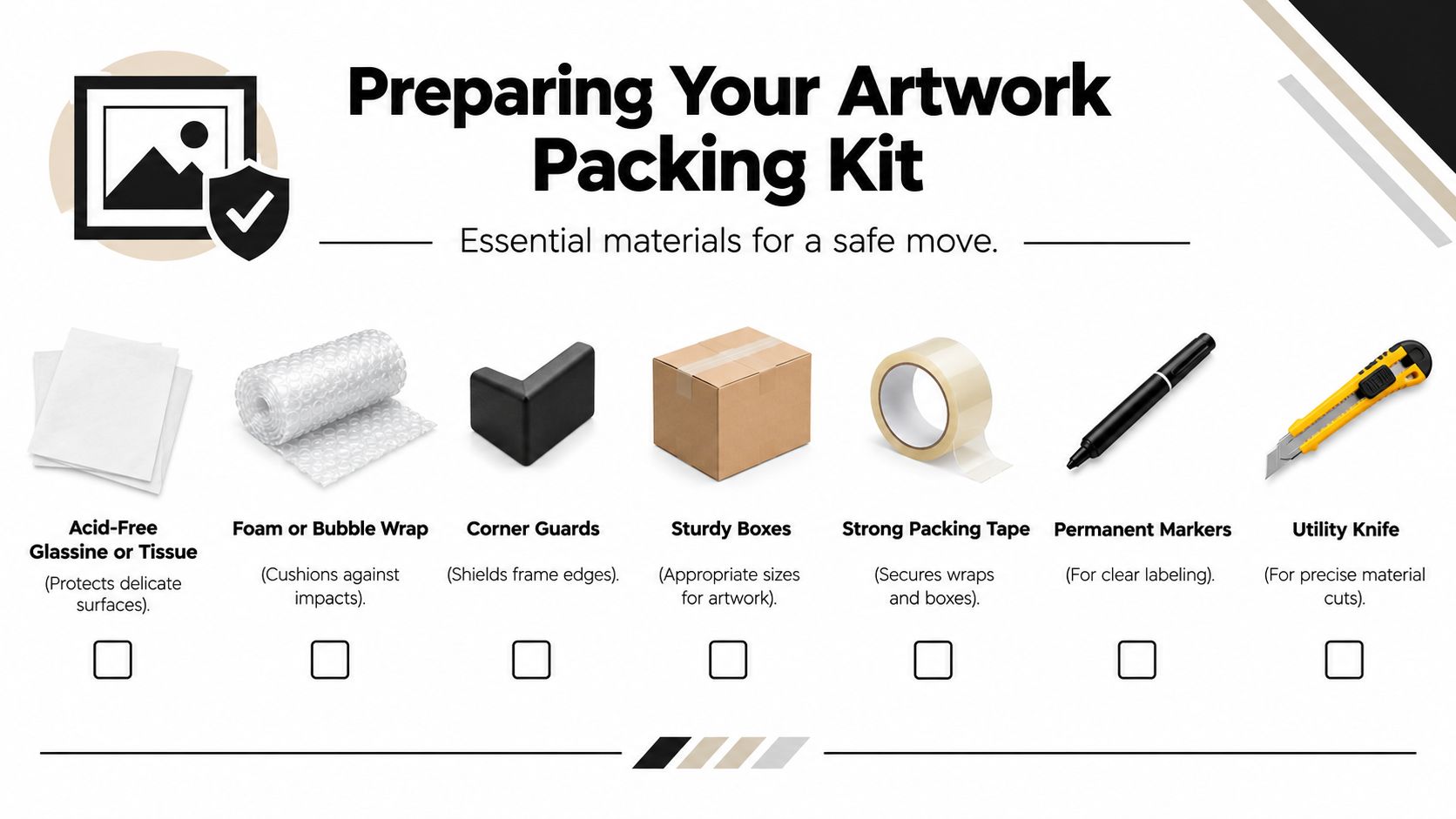
Gathering Your Packing Arsenal

Having the right tools for the job is non-negotiable for a smooth, damage-free move. Believe us, while it’s tempting to just grab any old boxes you can find, investing in proper, quality supplies is the first real step in protecting your belongings. Think of it as your insurance policy against breakages and utter chaos.

The foundation of your kit is, of course, the boxes. But not all boxes are created equal. Your standard moving cartons are great for most things, but specialty boxes are worth their weight in gold for certain items.

An organised collection of packing supplies, including boxes, tape, and bubble wrap.

Beyond the Basic Box

To pack like a seasoned pro, you’ll need a variety of supplies specifically suited to what you own. You'll thank yourself later for adding these to your shopping list:

  • Wardrobe Boxes: These are a lifesaver. They're tall boxes with a built-in hanging bar, letting you move clothes straight from your closet without any folding. It stops everything from getting horribly wrinkled and makes unpacking on the other end a breeze.
  • Dish Packs (Cell Boxes): These are a must for any kitchen. They come with cardboard dividers that create individual cells to cushion plates, glasses, and fragile stemware. This seriously cuts down the risk of chipping and breaking during transit.
  • Picture/Mirror Boxes: Designed to telescope, these boxes can be adjusted to fit and protect framed art, mirrors, and other large, flat items that are notoriously awkward and fragile to move.

Tapes, Wraps, and Other Essentials

It's not just about the boxes. A few other key items are absolutely crucial for packing efficiently and securely. Don't underestimate the massive difference these simple tools can make when you're in the thick of it.

Good quality packing tape is your best friend. Cheaper tape often splits or loses its stickiness, and the last thing you want is a box bursting open at the worst possible moment. Do yourself a favour and pair it with a tape gun – a small investment that will save you countless hours and the sheer frustration of trying to find the end of the tape roll.

For wrapping, we often recommend butcher’s paper over bubble wrap for everyday items like plates and glasses. It’s cheaper, takes up far less space in the box, and provides fantastic cushioning when crumpled up. Save your bubble wrap for those extremely delicate or oddly shaped items that need that extra layer of protection.

If sourcing all these materials and the thought of packing everything yourself feels overwhelming, you might want to explore the top 5 benefits of using professional packing services. It can save a lot of time and give you peace of mind that everything is protected properly.

To make sure you're fully prepared, here's a quick checklist of the essentials you'll want to have on hand.

Your Essential Packing Supplies Checklist

A quick reference to ensure you have the right materials on hand for a secure and organised move.

Item Primary Use Pro Tip
Moving Boxes Containing and protecting all your belongings. Get a mix of small, medium, and large sizes. Small for heavy items, large for light ones.
Packing Tape Sealing boxes securely. Don't skimp! A quality tape and a tape gun will make your life so much easier.
Butcher's Paper Wrapping everyday fragile items like dishes and glasses. It’s more cost-effective and space-efficient than bubble wrap for most items.
Bubble Wrap Protecting extremely fragile or awkwardly shaped items. Use it for things like electronics, vases, and delicate decor.
Permanent Markers Labelling boxes with contents and destination room. Use thick, bold markers so labels are easy to read from a distance.
Utility Knife Opening boxes and cutting packing materials. Keep one handy for packing, but have a fresh one ready for unpacking.

Having these items ready before you start will make the entire packing process feel less like a chore and more like a well-executed plan.

Pro Tip: As a rough guide, we usually tell people to plan for about 10-15 boxes per room. For a typical three-bedroom house, aiming for roughly 20 small, 35 medium, and 15 large boxes is a solid starting point.

Conquer Your Home Room by Room

Staring at an entire house full of stuff can be completely paralysing. The only way to get through it is to stop looking at the mountain and focus on a single stone.

A methodical, room-by-room strategy is your best defence against that feeling of being totally overwhelmed. It breaks the massive job of packing into a series of smaller, more achievable tasks. This keeps you sane, in control, and prevents you from burning out before you’ve even really started.

This isn't just about managing stress, though; it's a smart strategy. When you tackle your home in a specific order, you cause the least amount of disruption to your day-to-day life. The aim is to get the things you won't miss out of the way first, leaving your essentials accessible for as long as you can. It makes for a far less chaotic pack-up and an infinitely smoother unpack on the other side.

Start Where You Live the Least

Here’s the golden rule we always share with clients: begin in the least-used areas. Take a moment and think about the rooms you hardly ever step foot in. For most people, that’s the spare bedroom, the formal dining room, the garage, or storage spaces like the attic or shed.

Getting these spaces packed up first gives you a huge psychological win. You can see real, tangible progress without turning your main living areas into a chaotic mess of boxes. This is what builds momentum and gives you the confidence to keep going.

The Strategic Packing Order

To keep everything organised, it's best to follow a logical progression from the least essential rooms to the most critical ones. This guarantees you’ll have what you need, right up until the truck pulls up.

  • First Wave (3-4 weeks out): Garages, sheds, attics, spare rooms, and any other long-term storage areas. These are usually packed with things you won't need for a while.
  • Second Wave (2-3 weeks out): Living rooms, dining rooms, offices, and libraries. Now’s the time to box up books, most of your decor, out-of-season clothing, and any specialty gadgets.
  • Final Wave (The last week): Bedrooms, bathrooms, and the kitchen. You use these rooms every single day, so they absolutely must be the last things you pack.

This tiered approach is a non-negotiable for long-distance relocations. Each year, a significant number of Australians move interstate, and that kind of move demands next-level organisation. A room-by-room plan means all your boxes are logically grouped, which is a massive help when you’re trying to unpack in a brand new state.

Packing is a marathon, not a sprint. Tackling one room at a time prevents you from feeling overwhelmed and keeps your home liveable throughout the process. A calm packing environment leads to a calmer move.

Handling Problem Rooms Like a Pro

Some rooms are just plain tricky. The kitchen, with its mix of sharp knives, fragile glasses, and bulky appliances, is usually the one everyone dreads. The trick is to pack the rarely used items first—think that bread maker or specialty food processor you pull out twice a year. Keep a small "essentials" box on the counter with a frying pan, a couple of plates, cutlery, and most importantly, your coffee maker for the final few days.

For the home office, managing the snake pit of cables is key. Before you unplug a single thing, take a quick photo of how all your electronics are connected. Seriously, your future self will thank you for this. Then, use zip ties or painter's tape to keep cords bundled with their matching devices.

For more tips on how to get started, have a look at our guide on where to start when packing to move house.

Mastering the Art of Protecting Valuables

A person carefully wrapping a fragile vase in protective paper.

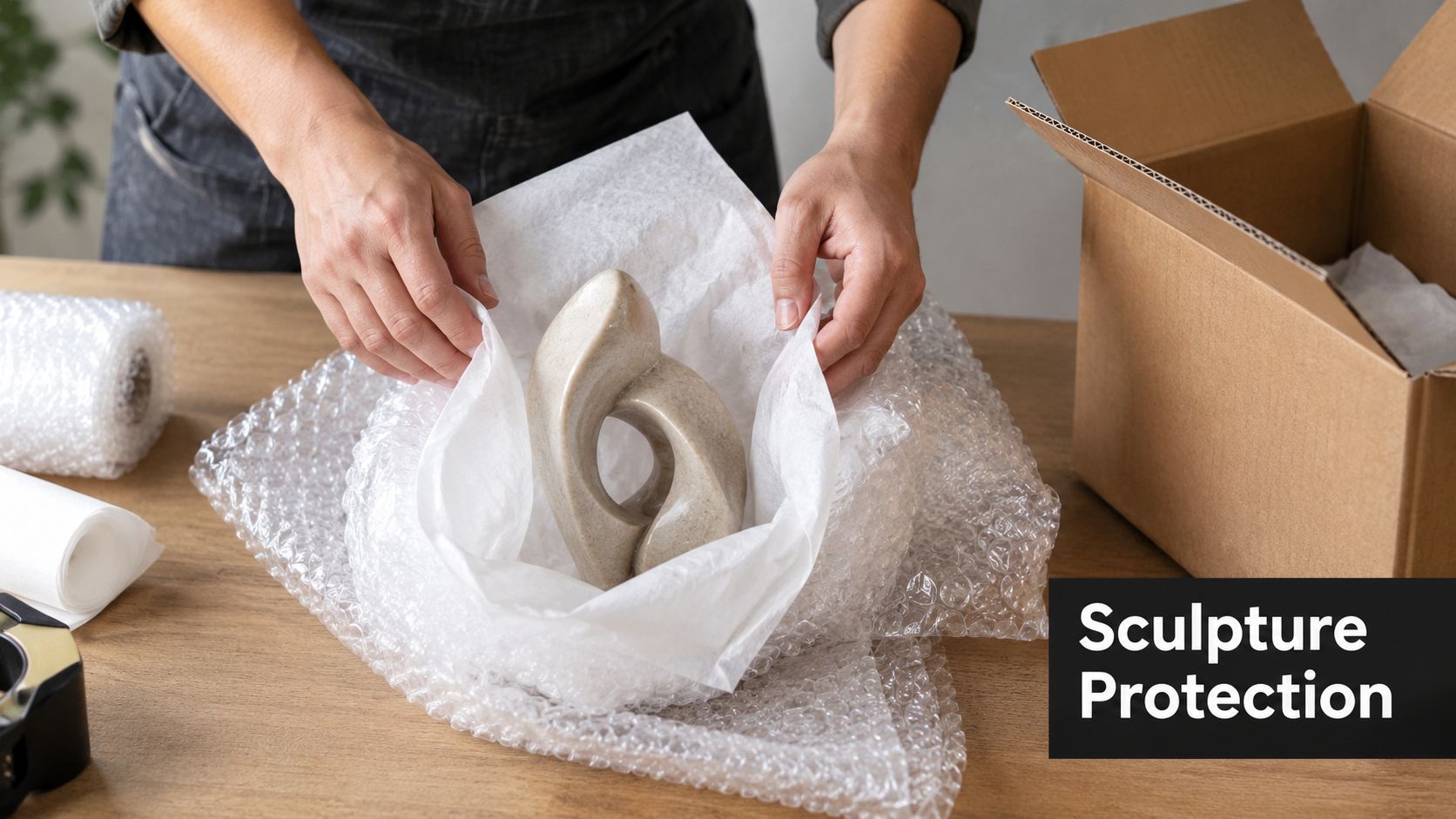
There’s nothing quite as gut-wrenching as opening a box after a long moving day only to find a treasured family heirloom or your favourite dinner plate in pieces. It’s a moment that can really put a damper on things. But keeping your fragile and high-value items safe isn't about crossing your fingers and hoping for the best; it's about using the same proven techniques we professionals rely on to make sure everything arrives in perfect condition.

The absolute foundation of good packing is proper cushioning. Every single box with breakables needs soft layers at the bottom and top. You can use scrunched-up packing paper, old towels, or even soft clothes to build up a buffer zone that will absorb the inevitable bumps and jolts of the road.

Pro Techniques for Fragile Items

When you get to the kitchen and start on the glassware and plates, the 'nesting' method is your best mate. Start by wrapping each glass or plate individually in packing paper. It might feel tedious, but it's worth it. Then, stack your plates vertically in the box, almost like you're filing documents. This orientation makes them much stronger and far less likely to crack under the weight of other items.

For glasses, once they're wrapped, place them rim-down inside a box with cell dividers. This simple flip puts the structural pressure on the strongest part of the glass. We’ve seen this trick save countless sets of glassware. For a more detailed breakdown of these methods, you can check out our full guide on how to pack fragile items for moving.

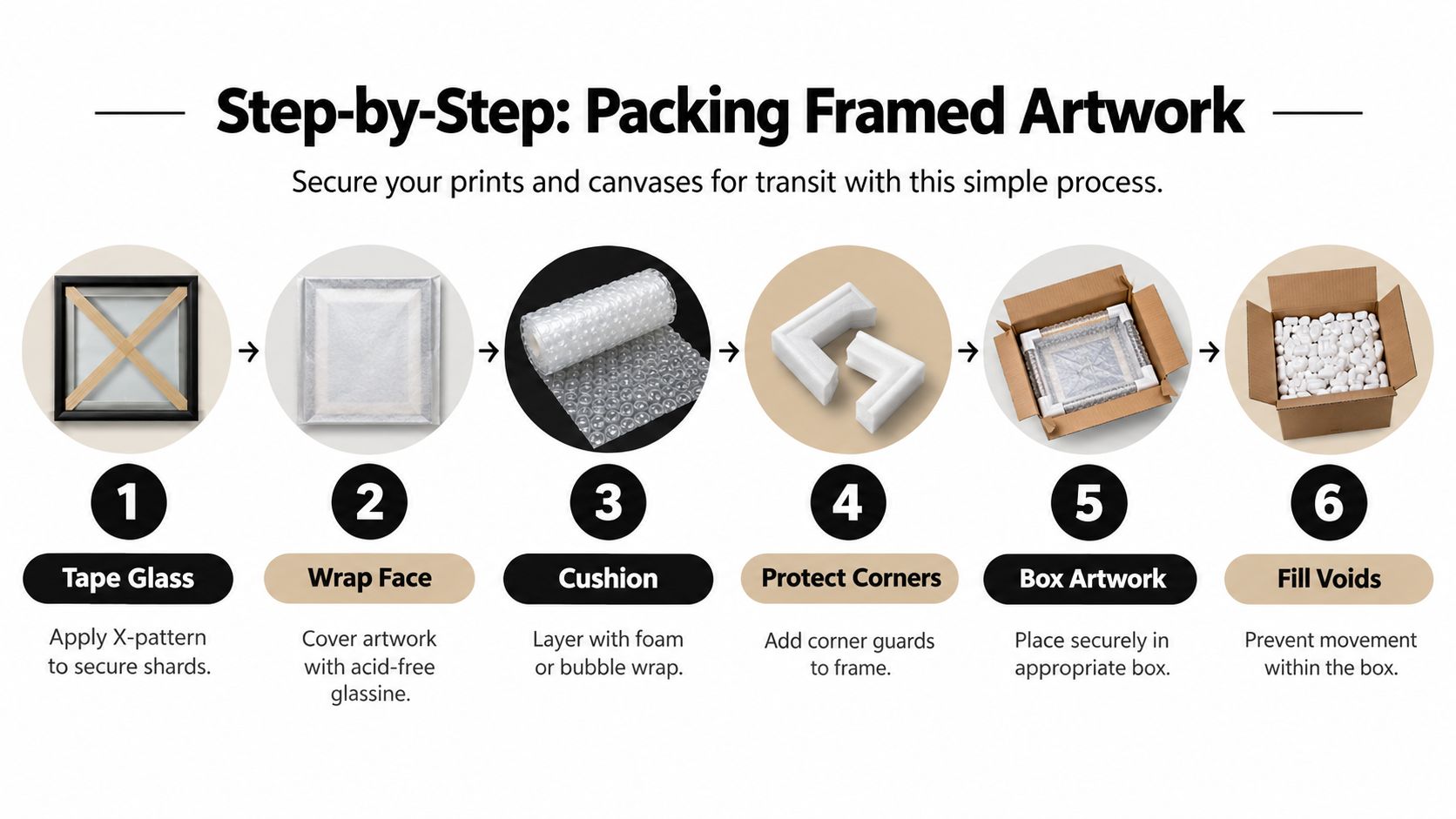
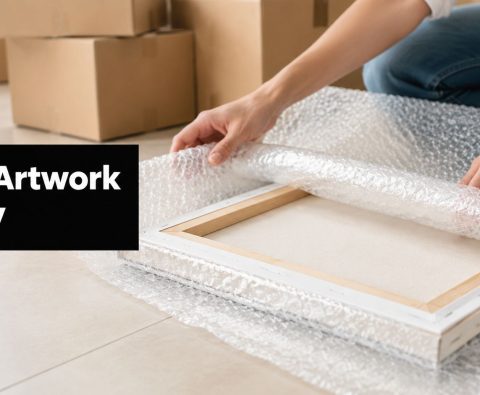
  • Mirrors and Artwork: The ideal solution is a purpose-built picture box. If you can't get one, wrap the piece generously in bubble wrap or a thick blanket. A good tip is to place a large 'X' across the glass with painter's tape; it helps absorb vibrations and can hold the glass together if it does crack.
  • Electronics: If you still have the original packaging, use it! It was designed to protect that specific item. If not, give it a good wrap in bubble wrap and pack it snugly in a sturdy box, filling any gaps with packing paper or linens to stop it from shifting around.

For really tricky items like antique furniture, you'll want to follow specialised guidelines. These pieces present unique challenges, and it pays to be prepared. You can find some fantastic expert packing advice for shipping antique furniture that covers these specific needs.

Create Your 'Day One' Essentials Box

While protecting your belongings is a top priority, don't forget to protect your own sanity on arrival. This is where the 'Day One' essentials box comes in. It should be the very first box you open, containing everything you need to survive the first 24 hours in your new place without tearing your hair out searching for a phone charger.

This box doesn’t go on the truck. It stays with you in your car. Think of it as your personal moving day survival kit.

Your essentials box is your moving day lifeline. Pack it well, and you can make a cuppa, charge your phone, and find a snack without any stress. It’s the difference between a chaotic first night and a comfortable one.

What to Include in Your Essentials Box:

  • Kettle or coffee maker, along with mugs and some instant coffee or tea bags.
  • All your phone chargers and a portable power bank.
  • A small toolkit with a utility knife, screwdriver, and pliers.
  • Toilet paper, hand soap, and a hand towel.
  • Basic toiletries like your toothbrush and toothpaste.
  • Any essential medications and a basic first-aid kit.
  • Snacks and a few bottles of water.
  • Paper plates and some cutlery.
  • Crucial documents like passports, birth certificates, and all your moving paperwork.

Let us be crystal clear on this: items like jewellery, passports, medications, and other irreplaceable personal documents should never be packed in the moving truck. Keep these critical and high-value things with you, personally, for the entire duration of the move.

The Smart Labelling System for Easy Unpacking

Good labelling is the unsung hero of a smooth move. Trust us, after a long, tiring day of lifting and shifting, the last thing you want is to be staring at a sea of identical brown boxes, desperately trying to guess which one holds the kettle. A smart, consistent labelling system can be the difference between a stressful scavenger hunt and a surprisingly organised unpacking process.

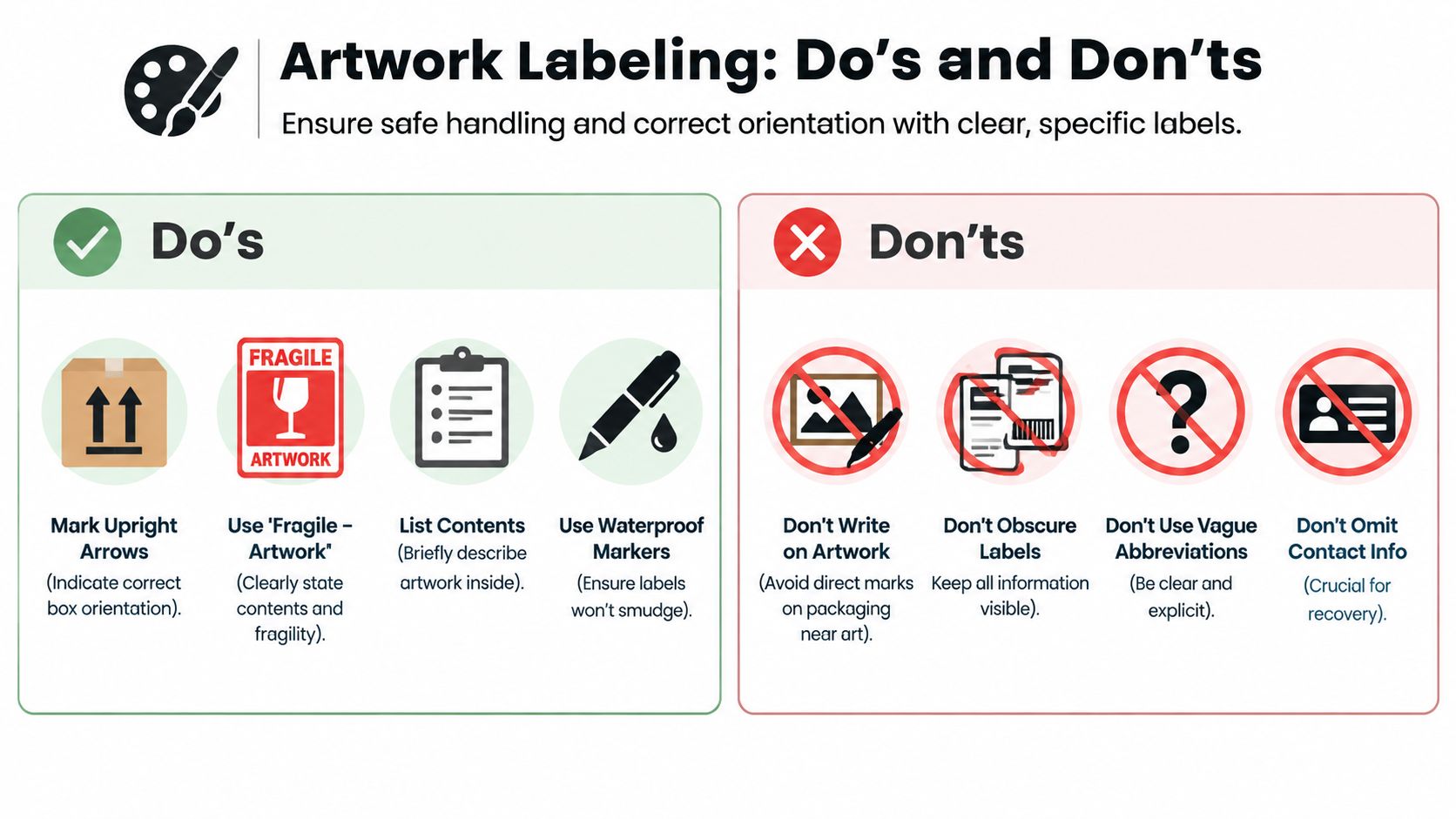
This goes way beyond just scrawling 'Kitchen' on the top of the box. Think about it – as soon as you stack another box on top, that label is completely hidden. We always tell people to label at least two sides of every single box with a thick, permanent marker. That way, you can see what’s what, no matter how they’re stacked in the truck or piled up in your new living room.

Beyond the Basics of Labelling

To really set yourself up for success, you need to add a bit more detail than just the room name. The key is to think about what you’ll need first when you walk through the door of your new home.

  • List Key Contents: Under the room name, quickly jot down 3-4 of the main items inside. Something like: "KITCHEN – Toaster, Blender, Cutlery Tray, Spices." It makes finding specific things a breeze.
  • Number Every Box: Give each box a unique number (e.g., Kitchen 1, Kitchen 2, and so on). You can then keep a master inventory list on a simple spreadsheet or even in a notebook.
  • Add Handling Notes: Don't be shy about marking boxes with clear instructions like "FRAGILE," "THIS WAY UP," or "HEAVY." This isn't just for you; it's a crucial heads-up for your removalist team, helping them handle your things with the right care.

With this level of detail, when you're dying for that first-morning coffee, you can just glance at your inventory list, see the coffee maker is in "Kitchen 4," and grab it in seconds. No more frantic box-opening.

The Colour-Coding Method

Here’s a simple trick that is incredibly effective: colour-coding. Just assign a different colour of tape or marker to each room in your new place. For example, you could use blue for the kitchen, red for the main bedroom, and green for the living room.

Pro tip: take a small piece of the matching coloured tape and stick it on the doorframe of each room in your new house before the movers arrive. This simple visual cue means they'll know exactly where every box goes without having to stop and ask you. It saves a massive amount of time on moving day.

When you combine detailed content lists, a solid numbering system, and a splash of colour-coding, you’ve created a genuinely powerful organisational strategy. This multi-layered approach makes sure every box is easy to identify, gets to the right room, and can be unpacked logically, helping you settle into your new home faster and with a whole lot less stress.

Your Final 48 Hours and Moving Day Plan

The final countdown is on. With just 48 hours to go until the truck pulls up, your focus needs to shift from frantically packing to strategically preparing for the big day itself. This isn't about filling more boxes; it's about executing a game plan that guarantees a smooth launch into your new life.

This is the time for all those crucial final touches. Top of the list? Your 'essentials box'. Think of it as your moving day survival kit. It should be the absolute last thing you pack and the very first thing you open at the new place.

Assemble Your Essentials Box

We can't stress this enough: this box is your personal lifeline for the first 24 hours. Keep it completely separate from everything else the removalists are loading—put it in your own car. This one simple step will save you from that soul-crushing hunt for a phone charger or a roll of toilet paper after an exhausting day.

Here's what we always recommend putting in there:

  • Key Items: Phone chargers, basic toiletries, a change of clothes for everyone, any essential medications, and a small toolkit with a utility knife for opening other boxes.
  • Comforts: A few snacks, bottled water, your kettle with some coffee or tea supplies, and a stack of paper plates so you don't have to tackle the kitchen boxes right away.
  • Documents: Keep crucial papers like your moving contract, passports, and birth certificates with you. Never, ever pack these on the truck.

Stage Boxes for Efficiency

Want to help your removalist team work faster? Of course you do—it saves you time and money. Stage all your packed and sealed boxes in one central, easily accessible spot, like the garage or living room.

Then, walk through your home and make sure there are clear, unobstructed pathways from every single room to the main exit. A clear run means a faster, safer load-out. For more great tips, check out our guide on what to do the night before your movers arrive.

The final 48 hours are all about setting the stage. By clearing paths and organising your boxes, you're not just helping your movers—you're directing the flow of the entire day, ensuring a positive and efficient start.

This final prep is more important than ever, especially when you consider how much Australia is growing. The Australian Bureau of Statistics clocked our population growth at 2.5% in the year ending 30 September 2023. All this movement means more families are navigating relocations, making smart planning absolutely critical. You can discover more insights from the ABS on population trends and see just how busy the moving industry is.

And don't forget the little things! Make sure you defrost your fridge and freezer at least 24 hours beforehand and give them a good, thorough clean. It’s these small but vital final steps that really set the tone for a successful, stress-free moving day.

Your Top Packing Questions, Answered

No matter how organised you are, a few questions always crop up during a big move. Let's tackle some of the most common ones that people run into, so you can keep the packing process moving forward without a hitch.

How Far in Advance Should I Start Packing?

The sweet spot is about 4-6 weeks before your moving date. Honestly, giving yourself this much runway is the single best thing you can do to keep the stress levels down. It gives you enough time to sort through your things properly, gather all your supplies without a last-minute panic, and pack up one room at a time.

If you’re caught in a time crunch, shift your focus. Decluttering is your top priority—it's always faster to get rid of something than to pack it. Once that's done, start packing the rooms you use the least, like the spare bedroom or that storage closet you haven't looked in for a year.

What Is the Hardest Room to Pack?

Ask anyone who's moved, and they'll likely tell you the kitchen is the absolute worst. It's a triple threat: tons of small items, fragile dishes and glassware, and awkwardly shaped appliances you use every single day.

Our best tip for the kitchen? Start weeks ahead with the things you rarely use, like that fancy stand mixer or the holiday-themed serving platters. Then, set aside one small box for your "last day" essentials: a frying pan, a couple of plates and cutlery, and most importantly, your coffee maker.

Can I Leave Clothes in Drawers?

It’s tempting, we know. It feels like a brilliant shortcut, but it’s generally a bad idea. Leaving clothes in your drawers makes furniture incredibly heavy and awkward for movers to handle safely.

All that extra weight puts a huge strain on the joints of your dresser or chest of drawers, and it's not uncommon for them to get damaged in transit. It’s much safer to pack clothes into boxes or proper wardrobe cartons. It might take a few extra minutes, but it protects your furniture and your clothes.


Ready to make your move completely stress-free? Let the experts at Get n Go Removals Melbourne handle the heavy lifting. From professional packing services to reliable, on-time relocations, we ensure your belongings arrive safely. Get your free quote today!

READ MORE

Moving Into a New House Checklist: Your Ultimate Guide for a Smooth Transition

Moving into a new house is an exciting milestone, but the process can quickly become overwhelming without a solid plan. From coordinating logistics weeks in advance to settling in on the first day, a detailed plan is the key to a stress-free transition. This definitive moving into a new house checklist is designed to guide you through every essential step, ensuring nothing is overlooked. We've organised it into a clear, actionable timeline, helping you tackle tasks from the crucial planning phase right through to the final box being unpacked.

Instead of juggling countless details in your head, use this comprehensive guide to stay organised and transform your move into a seamless and positive experience. This expert checklist covers everything from scheduling utility connections and deep cleaning your new home to securing the property and updating your important documents. This step-by-step framework breaks down the entire process into manageable actions, providing the structure needed for an efficient relocation. With a professional approach, like the one we take at Get n Go Removals, you can focus on the excitement of starting a new chapter. Let's get started on making your move a complete success.

1. Change Your Address and Update All Your Records

Updating your address is a foundational step in any moving into a new house checklist. Australian federal and state agencies, financial institutions, and service providers all rely on an up-to-date address for official communication. Completing this task early prevents missed bills, lost documents, and potential privacy issues, ensuring a smooth administrative transition.

Change Your Address and Update All Your Records

Why It Matters

An outdated address can delay critical notices from the ATO or your bank and disrupt essential services during your transition.

When to Start

Begin updating your details at least two weeks before your move date. This timeline gives Australia Post sufficient time to set up mail redirection and ensures all agencies receive your new location information promptly.

Who to Notify

  • Government bodies: Australian Taxation Office (ATO), Australian Electoral Commission (AEC), Medicare, Centrelink.
  • Financial institutions: All banks, superannuation funds, credit card providers, and insurers.
  • Service providers: Utilities, internet, mobile phone, and streaming platforms.
  • Commercial contacts: Your employer, university, subscription services (magazines, delivery boxes).
  • Local council: For council rates and waste collection services.

Key Benefits

  • Ensures continuous mail delivery and timely bill payments.
  • Significantly reduces the risk of lost documents and identity theft.
  • Speeds up the connection of utilities and essential services at your new home.

Real-Life Scenarios

  • A Melbourne family relocating interstate updated their Medicare and Centrelink details online in a single session, preventing any interruption to their benefits.
  • A corporate transferee used their employer's relocation support to streamline notifications to their bank and superannuation fund.

Actionable Tips

  1. Create a master spreadsheet listing each account, the date you updated it, and any confirmation numbers received.
  2. Consider requesting an extended mail forwarding period if you anticipate a longer transition time.
  3. Carefully monitor your bank statements and redirected mail for the first month to catch any errors.

Learn more about Change Your Address and Update All Your Records on getngoremovals.com.au

2. Schedule Utility Disconnection and Connection

Coordinating your utilities is a non-negotiable task in your moving into a new house checklist. This involves arranging the disconnection of services like electricity, gas, and water at your old property and ensuring they are connected and active at your new home before you arrive. Proper scheduling prevents service gaps and helps you avoid paying for utilities you are no longer using.

Why It Matters

A seamless utility transfer ensures your new home is comfortable, safe, and functional from the moment you step through the door.

When to Start

Contact your utility providers at least 10 business days before your move. This lead time is crucial for companies to schedule technicians and process your requests without last-minute complications, especially during peak moving seasons.

Who to Notify

  • Energy providers: Your chosen electricity and gas retailers.
  • Water corporation: The local water supplier for your new council area.
  • Telecommunications: Internet (NBN), landline, and mobile service providers.
  • Local council: For final water and rates readings if applicable.
  • Landlord or body corporate: To clarify any shared utility responsibilities and procedures.

Key Benefits

  • Guarantees uninterrupted access to essential services like power, water, and internet.
  • Prevents incorrect final bills and unnecessary charges at your old address.
  • Ensures a smooth transition for smart home systems, security cameras, and other connected devices.

Real-Life Scenarios

  • A family moving to a new Melbourne suburb scheduled their NBN connection for the day before their move, allowing them to work from home without any interruption.
  • A renter coordinated with their property manager to confirm the final meter readings, which prevented disputes over the final utility bill.

Actionable Tips

  1. Request final meter readings to be taken at your old home on your official moving day.
  2. Schedule the disconnection at your old place and connection at your new one for the same day to ensure a smooth handover.
  3. Use your move as an opportunity to compare internet and energy providers at your new address to potentially find better deals.
  4. Call your new providers the day before your move to confirm that all services will be active upon your arrival.

Learn more about Organising Your Utilities When Moving on getngoremovals.com.au

3. Deep Clean and Inspect Your New Home

Thoroughly cleaning and inspecting your new home before moving your furniture in is a critical part of any moving into a new house checklist. This crucial step creates a sanitary living environment from day one and allows you to identify pre-existing maintenance issues, potential pest problems, or damage that needs to be addressed before you settle in and it becomes your responsibility.

Deep Clean and Inspect Your New Home

Why It Matters

An empty house is far easier to clean thoroughly and allows for a clear, unobstructed inspection without furniture hiding potential problems like mould or damaged flooring.

When to Start

Schedule your deep clean and inspection for the 1-2 day window immediately after you receive the keys but before your moving truck is scheduled to arrive. This timing ensures the property is vacant, giving you or professional cleaners unrestricted access to every corner.

Who to Notify

  • Landlord or property manager: Promptly report any damage, pests, or necessary repairs discovered during your inspection.
  • Professional cleaners or pest control: Book their services well in advance for your specific move-in window.
  • Previous owners (if applicable): Communicate any findings that were not disclosed during the sale process.

Key Benefits

  • Establishes a healthy, clean baseline for your family, free from the previous occupants' dirt and allergens.
  • Helps you identify necessary repairs before they become your legal or financial responsibility.
  • Prevents the introduction of pests or contaminants that could infest your belongings.

Real-Life Scenarios

  • A family renting in Sydney used their initial inspection report and photos to have a faulty air conditioner repaired by the landlord before they moved their furniture in.
  • First-home buyers in Brisbane discovered a minor leak under a sink during their pre-move clean, allowing them to fix it immediately and prevent major water damage down the line.

Actionable Tips

  1. Use a detailed room-by-room checklist to clean systematically, focusing on often-missed areas like air vents, light fixtures, ceiling fans, and skirting boards.
  2. Take dated photos and videos of the property's condition and any issues you find to serve as a documented record for your rental bond or warranty claims.
  3. Test all appliances, plumbing (check for leaks!), and electrical outlets to confirm they are in safe, working order.
  4. As part of your deep clean, consider why professional carpet cleaning for your move is essential to remove deep-seated allergens and dirt left by previous occupants.

4. Set Up Internet, Cable, and Phone Services

Organising your internet, cable, and phone services is a modern necessity in any moving into a new house checklist. In today's highly connected world, having these utilities ready from day one prevents major disruption to work, school, and entertainment. Scheduling these installations well in advance ensures you are not left without essential connections during the critical first few days in your new home.

Why It Matters

A lack of connectivity can halt remote work, disrupt online learning for children, and delay your ability to settle in and communicate comfortably.

When to Start

Contact service providers at least three weeks before your move. This lead time is essential for comparing plans, checking service availability (e.g., NBN, 5G) in your new area, and scheduling a technician visit that aligns with your moving date, avoiding potential installation backlogs.

Who to Notify

  • Internet Service Providers (ISPs): Compare major providers available at your new address.
  • Pay TV providers: If you use services like Foxtel, arrange for a transfer or new installation.
  • Phone service providers: Notify both landline and mobile carriers if you are changing plans or addresses associated with your account.

Key Benefits

  • Guarantees seamless connectivity from the moment you move in.
  • Avoids costly downtime for work-from-home arrangements and online schooling.
  • Provides an excellent opportunity to find better deals and upgrade your service package.

Real-Life Scenarios

  • A family moving to a new Melbourne suburb coordinated their NBN installation to coincide with the first day of the school term, ensuring their children had immediate access to online resources.
  • A remote worker relocating to the Gold Coast confirmed high-speed fibre optic availability before finalising their lease, guaranteeing their professional productivity would not be compromised.

Actionable Tips

  1. Schedule your installation appointment for moving day or the day before if you have access to the property.
  2. Compare rates, speeds, and promotional offers from all available providers in your new postcode.
  3. Test your internet speed and Wi-Fi coverage throughout the house immediately after setup to identify any dead spots.
  4. Ask the technician to walk you through the modem and router configuration and help you set a secure password.

Learn more about how to be ready for your move on getngoremovals.com.au

5. Secure Home Locks and Access Control Systems

Securing your new property is a top-priority security step in any moving into a new house checklist. Changing or rekeying all exterior locks ensures that previous owners, tenants, or anyone they gave a key to (cleaners, friends, tradespeople) no longer have access. This initial security measure provides immediate peace of mind and establishes a secure foundation for your family and belongings.

Secure Home Locks and Access Control Systems

Why It Matters

Previous occupants may have given spare keys to relatives, cleaners, or contractors, creating an unknown and unacceptable security risk.

When to Start

Arrange for a locksmith to change the locks on or before your moving day. Completing this task before your valuable possessions arrive prevents logistical issues and ensures your home is secure from the moment you officially take possession.

Who to Notify

  • Family members or trusted contacts who will need a new spare key.
  • Your security system monitoring service (if you are installing or updating an alarm system).
  • Building management or strata (if applicable, to ensure compliance with their rules).

Key Benefits

  • Prevents unauthorised entry from any previous keyholders.
  • Establishes a new, completely controlled access system for your family.
  • Offers a great opportunity to upgrade to more secure, modern lock technology like smart locks or keypad entry.

Real-Life Scenarios

  • A Sydney family moved in and immediately rekeyed their locks, later discovering that a neighbour still had a key from the previous owner.
  • After a move, a homeowner upgraded to a smart lock system, allowing them to grant temporary digital keys to tradespeople without having to hand over a physical key.

Actionable Tips

  1. Schedule a professional locksmith to rekey or replace all external door locks, including gates and sheds.
  2. Reset the codes for garage door openers and any existing security alarm systems.
  3. Test every new lock and key thoroughly to ensure they function smoothly and correctly.
  4. Consider a professional security audit for recommendations on alarms, security cameras, or improved lighting.
  5. Beyond physical lock changes, you might also consider modern solutions to learn more about how to enhance your doorway and home security.

Learn more about Secure Home Locks and Access Control Systems on getngoremovals.com.au

6. Update Insurance Coverage and Notify Your Provider

Updating your insurance is a critical but often overlooked task in any comprehensive moving into a new house checklist. Your existing home and contents or renter's insurance policy is tied to your old address and its specific features. Transferring or updating your coverage to your new home ensures you are protected from day one against unforeseen events like theft, fire, or damage that occurs during the move itself.

Why It Matters

An outdated policy can lead to denied claims, leaving you financially exposed at a time when your assets are most vulnerable.

When to Start

Contact your insurance provider at least 30 days before your moving date. This gives you ample time to discuss changes to your policy, compare new quotes if necessary, and ensure there are no gaps in your coverage during the transition period.

Who to Notify

  • Your current insurer: To inform them of your move, new address, and settlement date.
  • Other insurance companies: If you decide to shop around for better rates or more suitable coverage.
  • Your mortgage lender: Your lender will require proof of adequate homeowners insurance for the new property before settlement can proceed.

Key Benefits

  • Provides continuous protection for your belongings during transit and at the new location.
  • Ensures your policy accurately reflects the value, construction, and risk profile of your new home.
  • Fulfills mortgage lender requirements and prevents costly settlement delays.

Real-Life Scenarios

  • A family moving to a new suburb discovered their premium changed due to different local risk factors (like bushfire ratings), prompting them to review their coverage limits.
  • A renter secured a new policy ahead of their move, ensuring their expensive electronics and furniture were covered from the moment they were unpacked at the new address.

Actionable Tips

  1. Create a detailed inventory of your belongings, complete with photos and receipts for high-value items, to ensure you have accurate contents coverage.
  2. Ask your provider specifically if your policy includes cover for "goods in transit" or if you need to arrange a separate policy for the move itself.
  3. Review the new policy's coverage limits, exclusions, and excess amount to ensure it aligns with your new property's value and your budget.

7. Create a Detailed Moving Inventory and Packing Strategy

A detailed inventory is an essential part of any successful moving into a new house checklist, providing a complete record of your belongings. Systematically cataloguing items by room and creating a corresponding packing plan ensures nothing is lost, damaged, or forgotten. This documented list also serves as vital evidence for any potential insurance claims and dramatically simplifies the unpacking process at your new home.

Why It Matters

A comprehensive inventory removes guesswork, reduces the stress of "Did we forget something?", and holds your moving company accountable for every single item.

When to Start

Begin creating your inventory four to six weeks before your moving date. This allows ample time to document everything without rushing and to organise your packing materials and strategy logically and efficiently.

Who to Notify

  • Yourself & Your Family: Share the list so everyone knows what is packed and where it should go.
  • Your Removalist Company: Provide them with a copy for an accurate quote and for efficient logistical planning on moving day.
  • Your Insurance Provider: Use the inventory to secure adequate transit and contents insurance coverage.

Key Benefits

  • Streamlines unpacking with clearly labelled boxes that can be taken directly to their destination rooms.
  • Prevents the loss or misplacement of items during the chaos of transit.
  • Provides crucial, undeniable documentation for any potential insurance claims for damage or loss.

Real-Life Scenarios

  • A family with valuable artwork in Melbourne documented each piece with photos and descriptions before transport for insurance and handling purposes.
  • An elderly individual worked with family members to catalogue lifelong collections and heirlooms, ensuring each precious item was handled with the utmost care.

Actionable Tips

  1. Use a digital app or a simple spreadsheet to create your list, which is easier to search and share than a paper copy.
  2. Take photos or videos of valuable or fragile items as clear proof of their pre-move condition.
  3. Implement a consistent labelling system (e.g., colour-coding stickers by room, numbering each box).
  4. Clearly mark each box with its contents, destination room (e.g., "Kitchen," "Main Bedroom"), and a corresponding inventory number.
  5. Keep a separate, easily accessible box for first-day essentials and make sure it is clearly marked and noted on your inventory.

Learn more about how to start packing to move house on getngoremovals.com.au

8. Register with Local Government and Update Important Documents

Registering your new address with state and local government agencies is a critical, and legally required, step in any moving into a new house checklist. In Australia, updating your voter registration, driver’s licence, vehicle registration, and any professional licences ensures you meet residency requirements. Timely updates help you receive official correspondence, maintain valid insurance, and remain compliant when relocating within Melbourne or interstate.

Why It Matters

Failing to update your official address can lead to fines, lapsed car insurance coverage, and missing out on your right to vote.

When to Start

Begin this process within 10 days of moving. Each Australian state or territory sets its own deadlines, so check your local government and transport authority websites as soon as you unpack.

Who to Notify

  • State Transport Authority (e.g., VicRoads, Service NSW) for your driver’s licence and vehicle registration.
  • Australian Electoral Commission (AEC) for your voting enrolment.
  • Professional licensing boards for any teaching, nursing, or trades licences you hold.
  • Your local council for rates notices and waste collection information.
  • Schools and childcare centres to update family residency records.

Key Benefits

  • Ensures continuous and valid insurance coverage for your vehicles.
  • Provides you with valid identification for banking, healthcare, and travel purposes.
  • Maintains your eligibility to vote in local, state, and federal elections.

Real-Life Scenarios

  • A family moving from Sydney to Melbourne updated their licences online and avoided potential Centrelink payment delays by ensuring all their records were consistent.
  • A military household coordinated multiple address changes for different services using a single state government digital portal.

Actionable Tips

  1. Gather documents: You will typically need proof of your new address (like a utility bill or lease agreement) and your photo ID.
  2. Book an appointment if required at your state’s transport office to avoid long queues.
  3. Use online portals wherever available to significantly cut down on wait times and paperwork.
  4. Update your voter enrolment on the AEC website at the same time you update your licence.
  5. Request duplicate licences or registration papers if your current ones are damaged or lost.
  6. Save all confirmation receipts and emails for your records after each update.

Learn more about staying compliant on getngoremovals.com.au’s moving into a new house checklist.

9. Arrange Professional or DIY Moving and Transportation

Planning the physical relocation of your belongings is a pivotal part of any moving into a new house checklist. Whether you hire professional removalists or organise a DIY move depends on your budget, timeline, the volume of your goods, and the distance to your new home. Making this decision early is crucial for securing the necessary resources for a smooth and efficient moving day.

Why It Matters

Proper transportation planning prevents last-minute logistical chaos, protects your valuable belongings from damage, and reduces the risk of physical strain or injury.

When to Start

Begin researching and booking your move 6-8 weeks in advance, especially if you are moving during peak seasons like summer, school holidays, or public holidays. This lead time provides better availability and more competitive pricing from professional movers or truck hire companies.

Who to Notify

  • Professional Movers: Provide a complete and accurate inventory of your items, highlighting any particularly fragile, heavy, or oversized pieces.
  • Friends/Family (for DIY): Give them ample notice and confirm their availability and physical capability to help.
  • Building Management: Notify both your current and new building managers of your moving date, time, and any lift booking requirements.
  • Council: Check if you need to arrange any special parking permits for the moving truck at either location.

Key Benefits

  • Ensures a safe and efficient transfer of your possessions by experienced handlers.
  • Reduces the risk of personal injury and damage to your property.
  • Frees up your time and energy to focus on other critical moving day tasks.

Real-Life Scenarios

  • An interstate family moving from Sydney to Melbourne hired a full-service removalist to manage everything from packing and transport to unpacking in the new home.
  • A university student organised a DIY move for a local relocation, hiring a small truck and enlisting friends to help, saving significant costs.

Actionable Tips

  1. Obtain at least three detailed quotes from reputable, fully insured removalist companies.
  2. For DIY moves, book your rental truck well in advance and confirm the pickup time and required driver's licence.
  3. Read recent customer reviews online to gauge a company's reliability, professionalism, and service quality.
  4. Clearly label all boxes with their contents and the designated room to help the movers work efficiently.

Learn more about why hiring removal services is the smart way to move on getngoremovals.com.au

10. Plan and Execute First-Day Setup and Essential Supplies

Preparing a dedicated "essentials box" or suitcase is a game-changing part of any moving into a new house checklist. This curated collection ensures you have immediate access to critical items for comfort, hygiene, and functionality on your first night, eliminating the stress of searching through dozens of sealed boxes. It's about making your new house feel like a home from the moment you arrive.

Why It Matters

Arriving exhausted to a new home without basics like toilet paper, phone chargers, or medication can quickly turn the excitement of moving into frustration.

When to Start

Begin gathering items for your essentials box a few days before the move. Pack it the night before or the morning of moving day and, most importantly, transport it in your own vehicle rather than with the removalists. This guarantees it arrives with you and is immediately accessible.

Who to Notify

  • Family members: Ensure everyone knows what is in the box and where to find it upon arrival.
  • Your moving team: Clearly let them know this box stays with you to avoid it being loaded onto the truck by mistake.

Key Benefits

  • Provides immediate comfort and dramatically reduces stress upon arrival.
  • Ensures you have access to essential medications, toiletries, and important documents.
  • Allows for a functional and comfortable first night without the need for extensive unpacking.

Real-Life Scenarios

  • A family with young children packed their kids’ favourite toys, pyjamas, and bedtime stories to create a sense of familiarity and comfort in the new, strange environment.
  • A remote worker ensured their laptop, charger, and a portable hotspot were in their essentials kit to set up a temporary workspace immediately and not miss any work.

Actionable Tips

  1. Use a brightly coloured or clearly labelled suitcase or box for easy identification.
  2. Always keep this essentials kit in your car, never in the moving truck.
  3. Include snacks, bottled water, and basic toiletries for everyone in the family, including pets (food, water bowl).
  4. Pack a small toolkit with a screwdriver, Allen keys, scissors, and a box cutter for basic furniture assembly and opening boxes.

10-Item New Home Move Checklist Comparison

Task 🔄 Implementation Complexity ⚡ Resource Requirements & Speed 📊 Expected Outcomes ⭐ Ideal Use Cases 💡 Key Advantages / Tips
Change Your Address with USPS and Update Records Low–Medium: online form quick, manual updates to many providers 🔄 Low cost (≈$1.10 online); minutes to hours, follow-up may take weeks ⚡ ⭐⭐⭐⭐ — ensures mail forwarding and reduces identity/fraud risk 📊 Every mover; short-term relocations, students, military Initiate ~2 weeks before move, keep spreadsheet, save confirmation 💡
Schedule Utility Disconnection and Connection Medium: multiple providers, scheduling windows and deposits 🔄 Moderate cost (connection fees, possible deposits); allow 5–10 business days ⚡ ⭐⭐⭐⭐ — prevents service gaps, avoids vacant property charges 📊 Homes requiring continuous utilities, remote workers, families Request meter reading final day, schedule same-day disconnect/connect 💡
Deep Clean and Inspect Your New Home Medium–High: time-consuming or requires booking pros 🔄 Cost varies (DIY time or professional fees); schedule 1–2 days before move ⚡ ⭐⭐⭐⭐ — sanitary baseline, uncovers maintenance/pest issues 📊 New tenants/homeowners, allergy sufferers, rentals needing documentation Hire pros close to move-in, take dated photos for records 💡
Set Up Internet, Cable, and Phone Services Medium: provider selection and technician scheduling 🔄 Moderate cost (installation fees, equipment); schedule 2–3 weeks ahead ⚡ ⭐⭐⭐⭐ — essential for work/life; quality varies by location 📊 Remote workers, families, streaming households Compare providers, test speeds after install, negotiate promos 💡
Secure Home Locks and Access Control Systems Medium: locksmith or tech install; may need professional help 🔄 Moderate–High cost (rekeying, smart locks, subscriptions); quick to moderate install time ⚡ ⭐⭐⭐⭐⭐ — major security/peace-of-mind impact 📊 New homeowners, renters, properties with unknown prior access Change locks before move, keep spare keys, test systems, update codes 💡
Update Insurance Coverage and Notify Your Provider Medium: policy review, possible appraisal and paperwork 🔄 Potential premium changes or appraisal costs; process time varies ⚡ ⭐⭐⭐⭐ — maintains continuous coverage, avoids claims denial 📊 Homeowners, renters, those with valuable belongings Notify insurer before move, create inventory and request proof of coverage 💡
Create a Detailed Moving Inventory and Packing Strategy Medium–High: time-intensive cataloguing and labeling 🔄 Low monetary cost, moderate time investment; digital tools speed process ⚡ ⭐⭐⭐⭐ — reduces loss, aids claims, speeds unpacking 📊 Large households, valuable item owners, frequent movers Start 4–6 weeks out, use apps, photo inventory for valuables 💡
Register with Local Government and Update Important Documents Medium: multiple agencies, possible in-person DMV visits 🔄 Low–Moderate (fees for registration/license); deadlines vary by jurisdiction ⚡ ⭐⭐⭐⭐ — legal compliance, voting and insurance validity 📊 Interstate movers, new residents, vehicle owners Prioritize DMV within 10 days, bring proof of address, update voter registration 💡
Arrange Professional or DIY Moving and Transportation Medium–High: logistics, quotes, and scheduling; peak-season constraints 🔄 High potential cost for full-service; DIY saves money but needs labor ⚡ ⭐⭐⭐⭐ — protects items and reduces physical strain when pro movers used 📊 Long-distance moves, large households, tight timelines Get 3–5 quotes, verify licensing/insurance, book 6–8 weeks ahead 💡
Plan and Execute First-Day Setup and Essential Supplies Low: simple packing of one box/bag; requires planning 🔄 Low cost; quick to assemble but must be accessible ⚡ ⭐⭐⭐⭐ — immediate comfort and reduced first-night stress 📊 All movers, families with children or pets, remote workers Keep box in your vehicle, use bright label, include documents and meds 💡

Welcome Home: Your Moving Journey Made Simple

You’ve reached the final box, walked through your new front door, and can finally take a well-deserved breath. Moving into a new house is undeniably a massive undertaking, but by following this comprehensive checklist, you have transformed a potentially overwhelming marathon into a series of manageable, well-planned sprints. Each task, from the initial administrative duties to the final security checks, has been a deliberate step toward building a new beginning.

The power of this moving into a new house checklist lies in its ability to bring order to chaos. It ensures that critical details, which are often forgotten in the rush, are addressed proactively. You’ve learnt the importance of early planning, from organising utility transfers weeks in advance to creating a meticulous inventory that accounts for every cherished possession. This structured approach not only minimises last-minute panic but also safeguards your belongings and financial well-being.

Key Takeaways for a Seamless Transition

The most crucial lessons from this journey centre on preparation and prioritisation. Remember these key points as you settle in:

  • Administrative Diligence: Updating your address with Australia Post, notifying government bodies like the ATO and AEC, and informing your insurance provider are non-negotiable first steps. These tasks prevent logistical headaches and ensure continuity in your official and financial life.
  • Security First: The first night in a new home should feel safe. Changing the locks, testing smoke alarms, and understanding your new home's access points provide immediate peace of mind, laying a foundation of security for your family.
  • The "First Day" Essentials Box: This simple yet brilliant strategy is your lifeline during the initial 24-48 hours. Packing it with toiletries, medications, basic tools, and snacks means you can function comfortably before the major unpacking begins.

Mastering this process is more than just about moving items; it’s about orchestrating a smooth transition into the next chapter of your life. A well-executed move allows you to focus on the joy of creating new memories rather than recovering from a stressful experience. It sets a positive tone for your life in your new space, allowing you to feel truly at home from day one. You've now got the framework to handle any future move with confidence and precision.


Ready to turn your checklist into a reality without the stress? Let the experts handle the heavy lifting. Get n Go Removals Melbourne offers a complete suite of services, from professional packing to secure transport, ensuring every item on your inventory arrives safely at your new home. Contact Get n Go Removals Melbourne today for a free quote and make your move the seamless experience you deserve.

READ MORE

Your Ultimate Guide to Finding Cheap Removalists in Melbourne

Searching for "cheap removalists melbourne" and grabbing the lowest quote might seem like a smart first step. Who doesn't want to save money? However, this approach often leads to more stress, damaged belongings, and a final bill riddled with unexpected fees. True value isn't found in the cheapest price; it's in securing a reliable, professional, and genuinely affordable moving service that treats your possessions with the care they deserve. This guide is designed to provide you with expert information to navigate your house or office move, helping you find the best value without the risk.

Finding Genuine Value Beyond the Lowest Price Tag

A moving truck on a sunny day with boxes, representing a successful move.

When you're facing all the costs of relocation, the temptation to choose the cheapest quote is completely understandable. The problem is, this decision can backfire spectacularly, turning an exciting new chapter into a logistical nightmare. The real objective isn't to find the cheapest service, but to secure the best possible value for your investment.

Focusing solely on the price tag means you're likely overlooking the crucial factors that ensure a smooth move. A suspiciously low quote can be a massive red flag for several reasons:

  • Hidden Fees: Suddenly, you're being charged extra for stairs, fuel, or even the travel time from their depot to your location. These costs add up fast, inflating the initial cheap price.
  • Lack of Insurance: Your antique dresser gets smashed, and you’re left with the replacement cost. Without proper insurance, you have zero recourse for damaged or lost items.
  • Unreliable Service: The crew might show up hours late, or worse, not at all. Imagine being stranded with all your belongings on the curb on your scheduled moving day.

The True Cost of a Bad Moving Experience

Opting for an unvetted, rock-bottom operator is a significant gamble. Unfortunately, the removalist industry in Melbourne has its share of unreliable players. To put it in perspective, Consumer Affairs Victoria officially recorded 726 complaints against removalists in 2020. Industry insiders suggest this is just the tip of the iceberg, with countless other negative experiences never being formally reported.

The crucial shift in mindset is moving from "who is the cheapest?" to "who offers the most transparent and reliable service for my budget?" This simple change protects your belongings and your wallet.

A truly professional mover might present a slightly higher upfront quote, but that price reflects their investment in high-quality equipment, trained staff, and comprehensive insurance. This is a primary reason why hiring professional removal services is the smart way to move. By prioritising reliability and transparency, you ensure your move is not just affordable, but completely disaster-free.

How to Vet Melbourne Removalists and Build a Shortlist

So, you have a list of potential moving companies. That's a great start. Now comes the critical work: distinguishing the genuine professionals from the risky operators hiding behind a slick website. Your first step should be to confirm they are a legitimate Australian business.

Every registered company must have an Australian Business Number (ABN). You can easily verify this on the official Australian Business Register website to see if their ABN is active and valid. If a removalist cannot provide an ABN, or the one provided doesn't check out, consider it a major red flag and move on.

Additionally, look for a physical address for their office or depot. A P.O. Box can be a warning sign. A company with a verifiable base of operations is far more accountable than one that only exists online.

Decoding Online Reviews to Find the Best

Online reviews are your next best friend, but you must approach them with a discerning eye. Don't just glance at the overall star rating. Delve into what customers are actually saying on platforms like Google, ProductReview, and even social media.

Look for consistent patterns. Are multiple reviews complaining about the same issues, such as late arrivals, surprise fees, or damaged furniture? These are clear indicators of poor service. Conversely, if positive reviews consistently praise the crew's professionalism, careful handling of items, and excellent communication, you're on the right track.

A single negative review could be a one-off issue, but a recurring theme tells a much more reliable story.

Be cautious of companies with nothing but flawless five-star reviews, especially if the comments are vague and generic. Authentic feedback usually includes specific details, such as mentioning the movers by name or describing how the team skillfully handled a particularly difficult item.

Here's a key takeaway: A company with a 4.7-star rating from hundreds of detailed reviews is often a much safer bet than one with a perfect 5.0 from ten generic, one-line comments.

Finalising Your Shortlist of Trusted Movers

With this research complete, it's time to create a final shortlist of three to four companies you feel confident about. These are the removalists you will contact for a detailed quote.

To make the final cut, ensure each company meets these criteria:

  • Legitimacy Confirmed: They have a valid ABN and a physical address you can find on a map.
  • Positive Review Patterns: The vast majority of feedback highlights their reliability, professionalism, and customer service.
  • Clear Service Offerings: Their website is transparent about their services, including crucial details about insurance coverage.

By investing this effort upfront, you're no longer just looking for cheap removalists in Melbourne; you're identifying trustworthy partners for your move. For more insights, check out our other tips to find a removal company in Melbourne. This initial vetting process ensures that when you compare quotes, you are choosing from a pool of high-quality, reliable movers.

Decoding Quotes and Avoiding Hidden Fees

Once you’ve got your shortlist, the quotes will start rolling in. This is where the hunt for cheap removalists melbourne can get a bit tricky. It’s easy to be tempted by a super-low price, but I’ve seen it time and time again – that initial low number often hides a much bigger final bill.

So, how do you figure out what you’re actually looking at? Most quotes will come in two flavours: a fixed price or an hourly rate. A fixed quote is brilliant for larger, more complicated moves because you know the total cost right from the start. No nasty surprises. On the other hand, an hourly rate can work out cheaper for smaller, local jobs, but only if you’re super organised and ready to go when the truck pulls up.

The real danger, though, is in the details—or the complete lack of them. A vague, one-line quote is a massive red flag. A professional mover will always give you a detailed breakdown so you know exactly what you’re paying for.

Spotting Potential Hidden Costs

To save yourself from that dreaded bill shock on moving day, you've got to ask the right questions before you sign anything. A lot of budget operators make their real money on the extras they conveniently forget to mention upfront. We actually dive deep into this topic in our guide on hidden costs in moving house.

Here are the non-negotiable questions you need to ask every single company on your list:

  • Is there a depot-to-depot fee? Some companies start the clock the second they leave their base and don’t stop it until they’re back. This can add a surprising amount to your bill.
  • Are there extra charges for stairs or tricky access? A fee for every flight of stairs or for a long walk from the truck to your front door is a common "gotcha."
  • What about fuel levies or call-out fees? These are classic add-ons that can quickly inflate what seemed like a great price.
  • Is Goods and Services Tax (GST) included? A quote that looks 10% cheaper might be a clever trick. They've just left out the GST, which will magically appear on your final invoice.

A crucial part of this process is thoroughly reviewing service terms and conditions before you commit. Any reputable company will have these easy to find and understand.

This infographic gives you a simple checklist to follow during your vetting process.

Infographic about cheap removalists melbourne

To really see the difference, let’s look at a couple of examples. It becomes pretty clear, pretty quickly, which one you can trust.

Comparing Removalist Quotes: A Red Flag Analysis

Quote Element Suspicious 'Cheap' Quote Example Professional Transparent Quote Example
Pricing "$120 per hour" "$150/hr for 2 Men & Truck (incl. GST). 2-hour minimum."
Travel Fees Not mentioned. "Includes 30 mins travel time to your location. Depot-to-depot."
Stairs/Access Not mentioned. "$25 fee per flight of stairs. Difficult access may incur extra charges."
Hidden Fees Not mentioned. "No fuel levy. No call-out fee. All potential charges listed here."
Inclusions "Moving service" "Includes blankets, trolleys, straps, and basic tool kit for disassembly."
Insurance Not mentioned. "Public Liability & Transit Insurance included. Certificate available."

See the difference? The "cheap" quote leaves you with a dozen questions, while the professional one gives you all the answers upfront. You know exactly what you're getting into.

Remember: A detailed quote isn't just a document; it's a sign of a professional and transparent business. Vague quotes often lead to vague service and surprise costs.

By looking closely at every detail and asking direct questions, you put yourself in the driver's seat. You’ll be making a truly informed decision, ensuring the price you're quoted is the price you actually pay.

How Melbourne's Growth Affects Your Move

To get a great deal on a mover in Melbourne, you first have to understand the city itself. Melbourne is growing at a crazy pace, and that has a direct knock-on effect on the moving industry. More people moving means more competition for good, reliable removalists.

This high demand, especially during certain times of the year, can really drive up prices. It also means you’re more likely to run into trouble finding a quality team when you need one.

Unfortunately, a booming market also brings out the dodgy operators. You'll see companies offering rock-bottom prices that seem too good to be true—and they usually are. They often lack the right insurance, experience, or frankly, the care needed to handle your belongings properly. Knowing this landscape helps you sidestep the cowboys and plan a smarter move.

Planning Around Melbourne’s Busy Periods

It's no secret Melbourne is booming. The city's population is on track to hit a staggering 6.2 million by 2030. To keep up, we're seeing around 30,000 new homes being built every single year, which keeps the demand for removalists constantly high.

This creates some seriously busy periods for moving. If you can, try to avoid booking your move during these peak times:

  • The end of the month: This is when most rental leases are up, causing a huge scramble for movers.
  • Fridays and weekends: Naturally, these are the most convenient days for people to move, which means higher rates and less availability.
  • Summer months: The good weather and holiday season always bring a spike in moves.

By scheduling your move for a mid-week, mid-month date, you step outside this peak demand. This simple tactic can significantly increase your chances of securing a better rate and a more reputable crew.

Being aware of how the market works is your first big advantage. For a deeper dive into making your Melbourne relocation a success, check out our ultimate guide to moving to Melbourne, which is packed with insights. Remember, smart timing is one of the best tools you have for locking in a great deal without having to compromise on quality.

Smart Preparation to Lower Your Moving Costs

Person wrapping furniture with plastic wrap to prepare for a move.

When paying an hourly rate, the biggest factor influencing your final bill is your level of preparation. Smart planning can transform a standard-priced removalist into one of the most cost-effective cheap removalists Melbourne has to offer, simply by reducing the time they spend on the clock. Every minute saved is money in your pocket.

Simple actions can shave a surprising amount of time off the job. Disassemble beds, tables, and other large furniture items before the crew arrives. Every minute they spend searching for an Allen key is a minute you're paying for. Similarly, ensure there is a clear, wide path from every room to the moving truck to speed up the loading process.

Maximising Efficiency on Moving Day

Organisation is your greatest asset for keeping moving costs down. Every moment the movers have to pause and ask for directions or clarification adds time to your invoice.

A few key strategies can prevent these delays:

  • Label Everything Clearly: Don't just write "Kitchen" on a box. Be specific: "Kitchen – Pots & Pans" or "Lounge – Books & DVDs." This precision directs the crew exactly where to place each box, eliminating questions.
  • Create a Floor Plan: A simple sketch of your new home with furniture placement marked out is invaluable. It removes guesswork and ensures heavy items are placed correctly the first time.
  • Declutter Ruthlessly: It’s simple maths: the less stuff you have, the less time it takes to move. Sell, donate, or discard items you no longer need. Reducing the volume of your belongings directly reduces the cost of moving them.

A well-organised move isn't just less stressful; it's financially smarter. An hour saved through good preparation can easily put over $150 back in your pocket.

These principles apply whether you're moving a one-bedroom apartment or an entire office. For business relocations, exploring specific strategies to save on office relocation costs can significantly impact the bottom line. For more detailed advice, our dedicated guide offers a wealth of tips to keep your moving costs down.

Got Questions About Your Melbourne Move?

As your moving day gets closer, a few last-minute questions always seem to pop up. It's completely normal. To help you out, here are some straightforward answers to the queries we hear most often from people moving around Melbourne.

Should I Get a Fixed Quote or Pay an Hourly Rate?

This is a big one, and the right answer really depends on the size of your move.

If you're moving a larger home—say, three or more bedrooms—or have a lot of complex items, a fixed quote is almost always your best bet. It locks in the price, giving you total certainty over the final cost. No nasty surprises, just peace of mind.

On the other hand, for a smaller local move, like a one-bedroom flat or studio, an hourly rate can be a real money-saver. The more prepared you are—with everything packed, disassembled, and ready to go—the quicker the job gets done, and the less you pay. Your efficiency directly cuts down the bill.

Do I Really Need My Own Moving Insurance?

Honestly, yes. It’s one of the smartest things you can do.

While every professional removalist will have Public Liability and Transit Insurance, it’s important to understand what that covers. It’s there to protect their liability, which isn’t the same as guaranteeing the full replacement value of your belongings if accidental damage happens.

Getting your own moving insurance policy is the only way to get complete, comprehensive protection for your stuff. It's a small price for total peace of mind.

What’s the Best Day of the Week to Move?

If you want to save a bit of money, aim for a mid-week move. Booking for a Tuesday, Wednesday, or Thursday is nearly always cheaper than a Friday or the weekend. Why? Simple supply and demand—everyone wants to move at the end of the week, so prices go up.

Booking mid-month can also help you sidestep the mad rush when most rental leases tend to end.

Melbourne is a serious hotspot for relocations. After 2020, moving trends really ramped up, and recent figures show Melbourne accounted for 28% of all capital city moving enquiries in September 2023. That makes it Australia's number one destination for movers. You can dig into more of the data on these Australian moving trends and patterns.


Ready to plan your next move? Let the experienced and reliable team at Get n Go Removals Melbourne give you a transparent quote. We’re here to make your relocation seamless and stress-free. https://www.getngoremovals.com.au

READ MORE

The Ultimate Moving House Checklist Australia: Your 2025 Comprehensive Guide

Moving house consistently ranks as one of life’s most demanding experiences, but with a structured approach, it doesn't have to be a source of stress. A comprehensive plan is the key to transforming a potentially chaotic process into a manageable and organised transition. This ultimate moving house checklist for Australia is designed to be your definitive guide, breaking down every essential task into a clear, chronological sequence. We've meticulously organised the entire relocation journey, from the critical administrative tasks weeks before you pack a single box to the final details after you've settled into your new space.

This guide provides actionable steps, ensuring no crucial detail is overlooked. Whether you're coordinating a local move within Melbourne, planning an interstate relocation up the East Coast, or simply need to transport goods for an event, this checklist provides the clarity you need. We will cover everything from notifying government bodies like the ATO and AEC, to transferring utilities, updating your driver's licence, and booking the right professional services to handle your belongings with care. Forget the last-minute panic; this is your blueprint for a seamless, efficient, and stress-free move. Let's begin the journey to your new home, step by organised step.

1. Dispose of Unwanted Items and Plan Packing

Starting your moving house checklist in Australia by decluttering is one of the most effective ways to save time, money, and stress. The less you have to move, the lower your removalist costs will be and the quicker the packing process. A thorough clear-out simplifies unpacking and helps you start fresh in your new home.

Why Decluttering Comes First

Beginning the decluttering process 6 to 8 weeks before your move date allows ample time to sort through belongings without feeling rushed. This crucial first step transforms packing from a daunting task into a manageable project. By deciding what to keep, sell, donate, or discard early on, you create a clear roadmap for the rest of your move.

Actionable Decluttering Strategies

  • The 12-Month Rule: A simple yet effective method is to let go of any items you haven't used in the past year. This applies to clothes, kitchen gadgets, and hobby supplies.
  • Sell for Extra Cash: Platforms like Facebook Marketplace and Gumtree are excellent for selling furniture, electronics, and other valuable items. For larger items you no longer need, like an old vehicle, learning how to dispose of a car in Australia for quick cash can provide a welcome financial boost for moving expenses.
  • Donate to Charity: Give your pre-loved goods a second life by donating to organisations like Vinnies (St Vincent de Paul) or The Salvos (Salvation Army). Ensure items are clean and in good condition.
  • Council Hard Rubbish Collection: Most local councils in Australia offer scheduled or bookable hard rubbish collections for large items that can't be sold or donated. Check your council's website for dates and guidelines.

Once you have streamlined your possessions, you can begin planning the packing stage. Create a detailed inventory of items, room by room, which is invaluable for both organisation and insurance purposes. For more in-depth strategies, discover our comprehensive guide on how to declutter before you move.

2. Notify Government Agencies and Official Bodies

Informing federal and state government bodies of your new address is a non-negotiable legal requirement when completing your moving house checklist in Australia. This crucial step ensures you continue to receive important correspondence, meet your tax obligations, and remain correctly enrolled to vote. Neglecting these updates can lead to missed notices, fines, and significant administrative headaches down the line.

Why Official Notifications are Time-Sensitive

Updating your details with key agencies should be done 1 to 2 weeks before your move, or as soon as possible after. The Australian Taxation Office (ATO), for example, processes over a million address changes annually from movers. Prompt notification prevents your personal information from being sent to an old address, safeguarding your privacy and ensuring you fulfil your legal responsibilities without interruption.

Actionable Notification Strategies

  • Use the myGov Portal: The most efficient way to update multiple agencies at once is through your myGov account. You can link services like the ATO, Centrelink, Medicare, and My Health Record and update your residential address details in a single, streamlined process.
  • Update Electoral Enrolment: You are legally required to update your enrolment details with the Australian Electoral Commission (AEC) within one month of moving. This can be done easily online and ensures you are ready to vote in federal, state, and local elections.
  • Notify State-Based Services: Remember to update your address with relevant state authorities. This includes your driver's licence and vehicle registration through bodies like VicRoads in Victoria or Service NSW in New New South Wales.
  • Keep Detailed Records: For your own peace of mind, maintain a record of which organisations you have notified and the date you made the change. This can be a simple spreadsheet or a note in your moving folder and is invaluable if any issues arise.

Once you have managed these official updates, you can focus on the next logistical steps. For a complete timeline and further guidance, explore our guide on creating the ultimate moving checklist.

3. Update Utilities and Service Providers

An essential part of any moving house checklist in Australia is managing the transfer of your utilities and services. Notifying your electricity, gas, water, and internet providers of your move ensures a seamless transition, preventing service interruptions at your new home and avoiding bills for a property you no longer occupy.

Why You Should Arrange Utilities Early

Contacting your service providers at least 3 to 4 weeks before your moving day is crucial. This notice period allows companies to schedule the disconnection at your old address and coordinate the connection at your new one, ideally for your move-in day. Leaving this task to the last minute can result in being without essential services like power or internet for several days, a major inconvenience when settling in.

Actionable Tips for a Smooth Utility Transfer

  • Contact Key Providers: Reach out to your current suppliers for electricity (e.g., AGL, Origin Energy, EnergyAustralia), gas, and water. Inform them of your move date and provide your new address for the final bill.
  • Document Meter Readings: On your final day, take clear photos of your electricity, gas, and water meters. This serves as undeniable proof of your final usage, protecting you from potential billing disputes.
  • Research New Connections: Your new home might be serviced by different providers or have access to better internet options. Use this opportunity to compare NBN plans from providers like Telstra, Optus, or TPG to find the best deal for your new location.
  • Schedule Connections Strategically: Aim to have your electricity and water connected on the day you move in. It’s wise to have the internet technician booked for the day after the move to avoid scheduling conflicts with removalists.

By organising your utilities in advance, you ensure your new house feels like a home from the moment you walk through the door. For those relocating an office, similar principles apply; coordinating with IT and service providers is vital for minimising business downtime. Our comprehensive guide on office relocation services offers specialised advice for commercial moves.

4. Update Financial Institutions and Insurance

Updating your address with banks, investment firms, and insurance providers is a critical security step in any Australian moving house checklist. Neglecting this task can lead to missed statements, policy lapses, and potential identity theft if sensitive documents are sent to your old address. Ensuring your financial details are current provides peace of mind and financial continuity during a hectic move.

Update Financial Institutions and Insurance

Why This Update is Crucial

Aim to notify all financial and insurance bodies at least one to two weeks before your move date. This timeframe allows them to process the change before your next billing or statement cycle. Prompt updates prevent mail from going astray and ensure you continue to receive important correspondence like new bank cards, policy renewals, and superannuation statements without interruption.

Actionable Update Strategies

  • Create a Master List: Compile a spreadsheet of every financial institution you deal with. Include banks like CBA, Westpac, ANZ, and NAB; insurance providers such as NRMA, AAMI, or Allianz; and your superannuation fund.
  • Prioritise Banks and Insurance: Update your bank and home and contents insurer first. Your home insurance premium may change based on your new postcode, so it's vital to ensure you have the correct cover from day one.
  • Update Superannuation: Log in to your super fund's online portal or contact them directly to change your address. If you manage your super through an employer, notify your HR department as well.
  • Confirm All Changes: After updating your details online or over the phone, request a confirmation email or letter. This creates a paper trail and confirms the change has been successfully processed.
  • Check Auto-Pay Accounts: Don't forget services linked to your bank accounts with a billing address, such as streaming services or online subscriptions, to avoid payment failures.

Updating your address with these providers can sometimes reveal policy adjustments or new offers. Understanding these changes can help you avoid some of the hidden costs in moving house that might otherwise come as a surprise.

5. Plan and Book Your Moving Service

Selecting and booking a professional moving company is one of the most critical decisions in your moving house checklist for Australia. The right removalist ensures your belongings are transported safely and efficiently, significantly reducing the stress on moving day. With numerous companies available, finding a reliable and professional service requires careful research and planning.

Plan and Book Your Moving Service

Why Booking Early is Crucial

Booking your removalist 4 to 8 weeks in advance is highly recommended, especially during peak moving seasons like summer or the end of the month. This timeframe gives you the best chance of securing your preferred date with a reputable company and avoiding last-minute price hikes. Early booking locks in your moving day logistics, allowing you to focus on other essential tasks like packing and administration.

Actionable Strategies for Choosing a Removalist

  • Get Multiple Quotes: Contact at least three different removal companies to get detailed, itemised quotes. This allows you to compare costs and services accurately. A professional removalist will often offer an in-home or video consultation for a more precise quote.
  • Verify Credentials and Insurance: Ensure the company you choose is a legitimate, registered business with a valid Australian Business Number (ABN). Crucially, confirm they have comprehensive transit insurance to protect your belongings during the move and understand the claims process.
  • Check Online Reviews: Use independent review sites like Google Reviews to gauge the experiences of previous customers. Look for consistent feedback on punctuality, care, and professionalism.
  • Clarify Inclusions: Ask for a clear breakdown of what the service includes. Confirm if the quote covers packing materials, packing and unpacking services, loading, transport, and unloading. Understanding the full scope helps avoid unexpected costs on the day.

By carefully vetting your options, you can confidently choose a moving service that aligns with your budget and needs. For a deeper understanding of the benefits, explore our guide on why hiring removal services is the smart way to move.

6. Update Vehicle Registration and Driver's License

Among the most critical post-move tasks on any moving house checklist in Australia is updating your driver's license and vehicle registration. This is a legal requirement, and failing to notify the relevant state or territory authority of your new address within the specified timeframe can result in fines. Each state has its own transport authority and deadlines, making it crucial to act promptly after you've settled in.

Why This is a Post-Move Priority

Updating your details ensures you receive important correspondence, such as registration renewal notices and traffic infringement letters, at your new address. In Australia, you are legally required to inform the relevant transport authority of your change of address within 14 days in most states. Forgetting this step can lead to an expired license or registration, creating significant legal and financial complications.

Actionable Steps for Updating Your Details

  • Identify Your State Authority: Each state and territory has a different governing body. For example, you'll deal with Service NSW in New South Wales, VicRoads in Victoria, and Transport and Main Roads (TMR) in Queensland.
  • Check the Timeframe: Visit your state authority's official website to confirm the exact deadline for updating your details. Set a calendar reminder to ensure you don't miss it.
  • Gather Necessary Documents: You will typically need proof of identity and proof of your new residential address, such as a utility bill or lease agreement.
  • Interstate Move Requirements: If you're moving interstate, you may also need to get your vehicle inspected for roadworthiness before you can register it in the new state. For instance, those relocating to Victoria should investigate the specific requirements. To better prepare, see our comprehensive guide on what to expect when moving to Melbourne.
  • Update Both Records: Remember to update the address on both your driver's license and your vehicle registration, as these are often separate records.

7. De-Register or Update Vehicle Insurance

Updating your car insurance details is a critical, yet often overlooked, part of any moving house checklist in Australia. Your insurance premium is heavily influenced by your postcode and where your vehicle is parked overnight, as different suburbs have varying risk profiles for theft, damage, and accidents. Failing to inform your provider of your new address can lead to claim denials and may even void your policy.

Why Updating Your Policy is Crucial

Insurers like AAMI, NRMA, and Allianz use your address to calculate risk and determine your annual premium. A move, even to a neighbouring suburb, can change this calculation. Notifying your provider as soon as you have your new address ensures you maintain continuous, valid cover. This small administrative task protects you from significant financial loss should an incident occur shortly after you move.

Actionable Policy Update Strategies

  • Notify Immediately: Contact your insurer as soon as you have signed your new lease or contract of sale. Most providers allow you to update your details online or over the phone.
  • Provide Accurate Parking Details: Be specific about where the car will be kept overnight. Let your insurer know if it will be in a locked garage, a secure apartment car park, a carport, or on the street.
  • Review Your New Premium: A change of address can cause your premium to go up or down. If you see a significant increase, it's a good opportunity to compare quotes from other providers to ensure you're getting a competitive rate.
  • Ask About Security Discounts: If your new home has better security features, such as a locked garage or off-street parking, you may be eligible for a discount on your premium.
  • Get Written Confirmation: Always request an updated Certificate of Insurance or policy schedule in writing or via email. This document serves as proof that your policy has been successfully updated with your new details.

8. Update Employment Records and Payroll

Updating your employment and payroll details is a critical, yet often overlooked, task in any moving house checklist in Australia. Notifying your employer of your new address ensures that essential documents like payslips, group certificates (now known as income statements), and other official correspondence are sent to the correct location, preventing delays and potential privacy issues.

Why Timely Notification is Crucial

Informing your employer of your new address as soon as possible, ideally within the first week of your move, is essential for administrative and legal compliance. Your registered address is used for tax purposes, superannuation records, and emergency contact information. A failure to update it can lead to missed communications and complications with the Australian Taxation Office (ATO) or your super fund.

Actionable Steps for Updating Your Details

  • Formal Notification: Check your company's standard procedure. Many businesses use an online HR portal (like Workday or BambooHR) for self-service updates. Alternatively, you may need to fill out a specific form or send a formal email to your HR or payroll department.
  • Confirm the Change: After submitting your new details, request a brief written confirmation via email. This creates a paper trail and gives you peace of mind that the update has been processed correctly.
  • Verify on Your Next Payslip: The simplest way to confirm the change is to check the address listed on your next payslip. If it's still incorrect, follow up with your payroll officer immediately.
  • Update Superannuation: While you're updating your work details, it's the perfect time to log into your superannuation fund's online portal and update your address there too. Your employer's notification may not automatically carry over.
  • Keep Your Own Records: Always save a copy of the notification you sent, whether it's a screenshot of the portal confirmation or a copy of the email. This is useful for your personal records and in case any discrepancies arise later.

9. Update Professional and Membership Registrations

Among the many address changes on your moving house checklist in Australia, updating professional and membership registrations is a critical task that is often overlooked. Neglecting this step can lead to missed renewal notices, lapsed certifications, and a failure to receive important industry communications, potentially affecting your career and professional standing.

Why This Update is Crucial for Professionals

For many Australians, professional registration is a legal requirement to practice in their field. Timely updates ensure you remain compliant and receive vital correspondence from regulatory bodies. This step should be completed around 2 to 3 weeks before your move to guarantee a seamless transition without any professional disruption or communication gaps.

Actionable Strategies for Updating Registrations

  • Create a Comprehensive List: Start by listing all your professional bodies, trade associations, and memberships. This includes organisations like AHPRA for health practitioners, state-based Law Societies, Engineers Australia, or CPA Australia.
  • Prioritise Online Portals: Most modern organisations have online portals where you can update your contact details instantly. This is the quickest and most efficient method. Log in to your account and navigate to the personal details or contact information section.
  • Formal Written Notification: For associations without a digital portal, a formal email or letter is necessary. Clearly state your full name, membership number, old address, and new address.
  • Request Confirmation: After submitting your change of address, always ask for a confirmation email or letter. This serves as proof of your update and provides peace of mind that your records have been successfully amended.
  • Don't Forget Subscriptions: Remember to update any industry journals, magazine subscriptions, or union memberships tied to your profession to ensure they are delivered to your new home.

10. Dispose of Unwanted Items and Plan Packing

Starting your moving house checklist in Australia by decluttering is one of the most effective ways to save time, money, and stress. The less you have to move, the lower your removalist costs will be and the quicker the packing process. A thorough clear-out simplifies unpacking and helps you start fresh in your new home.

Why Decluttering Comes First

Beginning the decluttering process 6 to 8 weeks before your move date allows ample time to sort through belongings without feeling rushed. This crucial first step transforms packing from a daunting task into a manageable project. By deciding what to keep, sell, donate, or discard early on, you create a clear roadmap for the rest of your move.

Actionable Decluttering Strategies

  • The 1-Year Rule: A simple yet effective method is to let go of any items you haven't used in the past year. This applies to clothes, kitchen gadgets, and hobby supplies.
  • Sell for Extra Cash: Platforms like Facebook Marketplace and Gumtree are excellent for selling furniture, electronics, and other valuable items you no longer need.
  • Donate to Charity: Give your pre-loved goods a second life by donating to organisations like Vinnies (St Vincent de Paul) or The Salvos (Salvation Army). Ensure items are clean and in good condition.
  • Council Hard Rubbish Collection: Most local councils in Australia offer scheduled or bookable hard rubbish collections for large items that can't be sold or donated. Check your council's website for dates and guidelines.

Once you have streamlined your possessions, you can begin planning the packing stage. Create a detailed inventory of items, room by room, which is invaluable for both organisation and insurance purposes. For more in-depth strategies, discover our comprehensive guide on how to declutter before you move.

10-Point Moving House Checklist Comparison (Australia)

Item Implementation Complexity 🔄 Resource & Time ⚡ Expected Outcomes ⭐📊 Ideal Use Cases 💡 Key Advantages ⭐
Change Your Address with Australia Post Low 🔄 — simple online form Low cost $11–25; minutes to apply ⚡⚡ Mail redirected; fewer lost bills ⭐⭐⭐ 📊 Short moves; immediate mail forwarding Cost‑effective; quick; covers PO Boxes
Notify Government Agencies and Official Bodies Medium-High 🔄 — multiple agencies myGov centralised but 1–4 weeks processing ⚡ Legal compliance; correct benefits/tax records ⭐⭐⭐ 📊 Anyone on welfare, tax, or enrolment registers Protects entitlements; prevents tax/election issues
Update Utilities and Service Providers Medium 🔄 — many providers to coordinate 3–4 weeks notice; connection 3–10 business days ⚡⚡ Continuous services at new address; accurate final bills ⭐⭐⭐ 📊 Homes/apartments needing power, water, internet Prevents disruptions; avoids double billing
Update Financial Institutions and Insurance Medium-High 🔄 — many accounts, ID checks 5–10 business days processing; phone/online ⚡ Receive statements; reduce fraud risk; correct premiums ⭐⭐⭐ 📊 Account holders, insureds, super members Protects finances; may adjust premiums
Plan and Book Your Moving Service Medium 🔄 — choice of service levels Book 4–8 weeks out; cost varies by distance ⚡ Efficient move; lower damage risk; time savings ⭐⭐⭐ 📊 Large households; interstate moves; fragile goods Professional handling; insured transport
Update Vehicle Registration and Driver's License Medium 🔄 — state-specific rules Must update within ~14 days; online/in‑person options ⚡ Legal compliance; avoids fines; insurance validity ⭐⭐📊 Vehicle owners after relocating interstate/intrastate Prevents penalties; maintains road legality
De-Register or Update Vehicle Insurance Low-Medium 🔄 — insurer reassessment possible Update within 1 week; 3–5 business days processing ⚡⚡ Policy validity; premiums adjusted to new risk ⭐⭐📊 Car owners changing postcode or parking type Keeps coverage valid; may lower or raise premium
Update Employment Records and Payroll Low 🔄 — single employer contact Notify HR within first week; quick admin update ⚡⚡ Correct payslips and super records; tax accuracy ⭐⭐📊 Employees receiving payroll or benefits Ensures payroll accuracy; avoids PAYG issues
Update Professional and Membership Registrations Medium 🔄 — multiple bodies possible 2–3 weeks recommended; portal or form updates ⚡ Maintains licences and renewal notices; compliance ⭐⭐📊 Licensed professionals and association members Prevents lapsed memberships; regulatory compliance
Dispose of Unwanted Items and Plan Packing Medium 🔄 — time and decision effort Start 6–8 weeks before; may save moving costs ⚡ Reduced volume/cost; easier unpacking; environmental benefit ⭐⭐📊 Downsizing, long-distance moves, estate clears Lowers move cost; opportunity to sell/donate

Settling In: Final Steps for a Flawless Move

Congratulations, you’ve navigated the whirlwind of moving day! By methodically working through this comprehensive moving house checklist australia, you have laid the groundwork for a smooth and organised transition. From notifying Australia Post weeks in advance to orchestrating the final box being placed in your new home, you've tackled the logistical mountain with precision. The heavy lifting might be over, but these final steps are what transform an empty space into a true home and ensure your new life starts without any lingering administrative headaches.

From Unpacking Boxes to Building a Community

While the initial focus is often on unpacking, the true process of settling in goes much deeper. It’s about re-establishing the rhythms and routines of daily life in a new environment. This final phase is less about physical labour and more about administrative finalisation and personal integration. It's the moment where you transition from "moving in" to "living here."

Think of this period as the final, crucial 10% of your move. It's easy to lose momentum once the immediate pressure is off, but diligently completing these last tasks provides peace of mind and prevents minor oversights from becoming major future problems. This is your opportunity to tie up every loose end, from confirming your electoral roll update to discovering your new favourite local cafe.

Key Takeaway: A successful move doesn't end when the last box is brought inside. The final phase involves systematically updating your life's infrastructure to reflect your new address and actively integrating into your new community.

Your Final Post-Move Action Plan

To ensure nothing is missed in the excitement of your new home, focus on these critical areas. First, conduct a final administrative sweep. Double-check that all your mail is being correctly forwarded and that key accounts, especially banking, superannuation, and your ATO records, reflect your new address. An incorrect address on a critical document can cause significant delays and stress down the line.

Next, prioritise establishing your local support network. This means:

  • Finding New Professionals: Register with a local doctor (GP), dentist, and veterinarian. Don't wait for an emergency to find these essential services.
  • Exploring Your Neighbourhood: Take walks to familiarise yourself with local parks, shops, public transport routes, and community centres. This helps your new suburb feel like home more quickly.
  • Enhancing Home Security: As you settle into your new place, don't forget to consider important safety aspects like installing or updating your home security systems. A new property is a good opportunity to assess and upgrade your security measures for ultimate peace of mind.

Finally, allow yourself time to truly settle. Moving is not just a physical process but an emotional one. Take the time to arrange your furniture in a way that feels comfortable, hang pictures on the walls, and start creating new memories. By following this complete moving house checklist for Australia, you’ve given yourself the best possible foundation for this exciting new chapter.


Ready to make your next move the smoothest one yet? Whether you're relocating across Melbourne or moving interstate, Get n Go Removals Melbourne offers the professional, reliable service you need to handle the logistics, so you can focus on settling in. Visit Get n Go Removals Melbourne to get a free quote and see how our expert team can make your transition seamless from start to finish.

READ MORE

Your Ultimate Guide to Interstate Removalists Melbourne to Sydney

Choosing the right interstate removalists Melbourne to Sydney is the single most important decision for your move. This isn't just about hiring a truck and some muscle; it's about entrusting a professional team with your entire household for the 878-kilometre journey. A skilled crew transforms a potentially chaotic and stressful marathon into a smooth, managed transition, letting you focus on the excitement of your new life in Sydney.

Your Melbourne to Sydney Move at a Glance

Let's be honest, planning an interstate move can feel like a mammoth task. There are so many moving parts, and it’s easy to get overwhelmed. The first step is to get a clear picture of the whole process—the timeline, what services you actually need, and of course, the costs involved.

An interstate move isn't just a longer version of a local one. It involves serious logistical planning, from figuring out the best routes to navigating different state regulations. This is where professional interstate removalists Melbourne to Sydney earn their stripes, handling the complex details so you can focus on what matters most: starting fresh.

Core Services to Expect

When you hire a dedicated moving team, you’re not just paying for heavy lifting. You’re investing in a comprehensive suite of services meticulously designed to transport your belongings safely and efficiently.

Here’s what you should typically expect:

  • Professional Packing and Unpacking: This is a genuine lifesaver. Trained staff use high-quality, industry-standard materials to protect everything from your most delicate glassware to that bulky antique wardrobe.
  • Expert Loading and Unloading: There's a true science to loading a moving truck for a long-haul journey. Experienced removalists know how to maximise space, secure items, and prevent shifting that leads to damage on the road.
  • Secure Transportation: Your possessions will travel in a well-maintained, company-owned truck specifically equipped for long-distance relocations.
  • Basic Transit Insurance: Any reputable company will include essential insurance coverage for your goods while they’re in transit, providing a foundational layer of protection.

A Realistic Look at Costs

Let's talk about the elephant in the room: the budget. This is usually the biggest concern for anyone planning a significant relocation. The final cost depends on a few key factors: the total volume of your belongings (measured in cubic metres), the specific services you choose (like a full packing service), and the accessibility of your properties.

For the journey from Melbourne to Sydney, costs can vary significantly. Moving a small 1-bedroom apartment might start from around $500, but a full 3-bedroom home will likely land somewhere between $2,900 and $4,500, depending on the level of service you require. Our friends at City Removalist offer a detailed breakdown if you want to explore these figures further.

To give you a clearer idea, here's a simple table outlining what you might expect to pay.

Estimated Moving Costs by Home Size

Home Size Estimated Cost (AUD) Common Services Included
1 Bedroom Apartment $500 – $1,500 Loading, transport, unloading, basic insurance
2 Bedroom Home $1,800 – $2,800 Loading, transport, unloading, basic insurance
3 Bedroom Home $2,900 – $4,500 Loading, transport, unloading, furniture assembly
4+ Bedroom Home $4,500+ All of the above, plus potential packing services

As you can see, the price scales logically with the amount of furniture and boxes you have. This is precisely why obtaining a formal quote, based on either an in-home inspection or a highly detailed inventory list, is absolutely essential for accurate and reliable budgeting.

Key Takeaway: It's tempting to jump on the cheapest quote, but remember the value of what you're paying for. A professional quote from experienced interstate removalists Melbourne to Sydney covers a comprehensive service, proper insurance, and the invaluable peace of mind that comes from knowing your belongings are in safe, expert hands. For more tips on getting organised, check out our comprehensive guide for long distance relocation.

Building Your Interstate Moving Plan

A successful move from Melbourne to Sydney isn’t about luck—it’s about solid, upfront planning. The moment you know you’re moving is the moment you should start mapping things out. A good timeline is your best defence against that last-minute panic, turning what feels like a massive project into a series of small, achievable tasks.

The absolute cornerstone of your plan is a detailed inventory. I know, going room by room and listing every single thing you own sounds tedious, but trust me, it’s non-negotiable. This list is exactly what professional interstate removalists Melbourne to Sydney need to give you an accurate quote, since the volume of your stuff directly sets the price. A proper inventory means no nasty surprises on moving day.

Plus, it forces you to face the clutter. Why pay to haul things across the country if you don't even want them anymore? Selling, donating, or just tossing items beforehand not only shrinks your moving bill but makes unpacking in your new Sydney home so much less of a headache. For a quick estimate of your total volume, our handy cubic metre calculator can give you a pretty clear idea of the space you'll need.
https://www.getngoremovals.com.au/cubic-metre-calculator/

Creating Your Moving Timeline

The best way to tackle this is to break it down into a weekly schedule. Give yourself at least eight weeks before the big day. This buffer is your best friend—it gives you plenty of time to research removalists, declutter properly, and sort out all the paperwork without feeling the pressure.

Here's a simple breakdown I recommend to clients:

  • 8 Weeks Out: Start the hunt. Get quotes from at least three different removal companies. While you're at it, begin that initial room-by-room inventory.
  • 6 Weeks Out: Time to commit. Book your chosen removalist. Now, get serious about decluttering. Start with the easy spots you don't use often, like the garage or the spare room.
  • 4 Weeks Out: Begin packing anything you won’t need for the next month. This is also the time to get on the phone with your utility providers to schedule the switch to your new Sydney address.

And for those with furry family members, don't forget them! Planning their trip is a key part of the process. You'll want to look into specialised interstate pet transport services to make sure they have a safe and stress-free journey.

A quick tip from experience: Don't let the small admin tasks slip through the cracks. Forgetting to update your address for your bank, car registration, or even magazine subscriptions can create huge headaches long after you've settled in. Make a separate checklist just for these notifications.

Navigating Peak vs. Off-Season Bookings

When you move can make a huge difference to the cost and stress levels. In Australia, the period between October and March is considered peak season. This is when everyone seems to be moving, thanks to the warmer weather, school holidays, and people starting new jobs in the new year.

This infographic lays out the key stages you need to nail down, from budgeting and picking services to locking in your timeline.

Infographic about interstate removalists melbourne to sydney

As you can see, getting these steps sorted early is the secret to a smooth move, especially if you're trying to book during those busy months.

Recent industry data really drives this home, showing Melbourne accounted for 28% of all metro inbound moving enquiries during this peak period, as people chased lifestyle changes and more affordable living. More demand means more competition for quality removalists. If you have the flexibility, booking your move in the off-season (April to September) can often land you better prices and more choice when it comes to dates.

How to Find a Trusted Removalist

Picking the right interstate removalist for your Melbourne to Sydney move is probably the biggest decision you'll make in this whole process. It’s a classic mistake to just go for the cheapest quote, but that low price is often a warning sign. These aren't just 'items' you're moving; they're your memories, your investments, and your life. They deserve to be handled by a team you can actually trust.

A good sign from the get-go is transparency. A professional mover won't just throw a number at you. They'll give you a detailed, transparent quote that breaks down every single cost, from packing materials to fuel. They won't pressure you into a quick decision either. In fact, they’ll welcome your questions and have clear, confident answers. That first conversation tells you almost everything you need to know.

Look for Signs of Legitimacy

So, how do you separate the pros from the cowboys? There are a few key things to look for, and the most important one is accreditation from the Australian Furniture Removers Association (AFRA).

An AFRA-accredited mover is held to a much higher standard. It means they’ve got the right gear, properly maintained trucks, and trained staff who know how to handle your belongings safely. It also means they are required to have public liability and transit insurance, giving you a crucial layer of protection.

Here’s a quick checklist when you're doing your research:

  • AFRA Accreditation: Look for the logo on their website. Don't just take their word for it—you can quickly verify their membership on the official AFRA site.
  • Real Customer Reviews: Go beyond the star ratings. Dig into detailed reviews on places like Google or ProductReview. You're looking for patterns—both good and bad—and pay close attention to how the company responds to any negative feedback.
  • Proof of Insurance: Don't be shy about asking for their Certificate of Currency for both transit and public liability insurance. A legitimate company will have it ready and won't hesitate to send it over.

A cautionary tale: We once had a client who shared a nightmare story about a budget mover. The price was unbelievably low, but insurance wasn't included. When a box with their expensive home theatre system was dropped and completely destroyed, the moving company washed their hands of it, leaving our client thousands of dollars out of pocket.

Spotting Red Flags and Green Flags

Knowing what to avoid is just as critical as knowing what to look for. The demand for good movers is always there. Back in March 2020, for example, online searches for interstate removal services went through the roof, hitting over a million queries as people flocked between cities. That boom really shone a light on the need for trustworthy, efficient movers.

But with high demand comes a wave of less-than-reputable operators. This chart shows just how much online search interest spiked, which is why being able to pick a quality company is more important than ever.

The massive jump in people looking for movers makes it vital to know how to sort the good from the bad.

To make it easier, here’s a quick rundown of the warning signs versus the signs you’re in good hands.

Red Flags (Warning Signs) Green Flags (Good Signs)
Vague, "too-good-to-be-true" pricing Detailed, itemised written quotes
No mention of insurance or AFRA Clear information on insurance coverage
Poor communication or slow responses A dedicated move coordinator or single point of contact
Negative reviews mentioning hidden fees Positive reviews praising transparency and service
Cash-only payment demands Multiple secure payment options
Unmarked, rented trucks A company-owned, well-maintained fleet

When you're getting quotes, asking the right questions is your best tool. Ask them how they handle potential damages. Find out if their trucks have GPS tracking. Are their staff full-time employees or just casual contractors? A team of professional interstate removalists from Melbourne to Sydney will have solid, confident answers to all of these.

Smart Packing For A Damage-Free Move

Woman packing a moving box with bubble wrap and plates

When you're staring down the long road from Melbourne to Sydney, good packing is your best friend. It’s not just about getting things into boxes; it’s your first line of defence against damage. Think of it as a strategic process that guarantees your delicate glassware and essential electronics arrive in the same condition they left.

The pros who handle interstate removalists Melbourne to Sydney routes have their techniques down to a science for a reason. They know how to protect against the constant vibrations, bumps, and shifts that happen on a long-haul trip. By borrowing a few of their methods, you can seriously reduce the risk of frustrating breakages and save yourself a ton of stress when you arrive.

Every box you pack is a protective shell. Your mission is to eliminate any empty space where items can rattle around. This doesn't mean cramming things in carelessly, but using the right materials to cushion and brace everything properly.

Mastering The Art Of Box Packing

It all starts with quality materials and a bit of know-how. Good boxes are a must, but how you fill them is what really makes the difference. The golden rule is simple: heavier items go in smaller boxes, and lighter, bulkier things go in the bigger ones.

This little trick keeps boxes from getting dangerously heavy and stops them from collapsing under their own weight. A small box is perfect for books, whereas a large one is ideal for doonas, pillows, and towels.

Here are a few professional tips for packing up some common household items:

  • Plates and Dishes: The biggest mistake people make is packing them flat. Instead, stand plates, saucers, and bowls on their edges after wrapping each one in packing paper. They're much stronger this way and less likely to crack.
  • Glassware: If you can get your hands on partitioned boxes, use them. If not, wrap each glass individually, then stuff some crumpled paper inside the glass for extra support before placing it in the box.
  • Electronics: Still have the original packaging? Perfect, use it. If it’s long gone, wrap the item generously in bubble wrap, find a snug-fitting box, and fill any gaps with soft materials like towels or packing paper.

When you're tackling big furniture pieces, choosing the right protective material is crucial. For instance, understanding the pros and cons of choosing between shrink wrap and stretch wrap can be a game-changer for keeping your furniture pristine.

Labelling For An Efficient Unpacking Experience

A well-labelled box is a gift to your future self. Scribbling "Kitchen" on the side is a start, but it won’t do you much good when you’re desperately hunting for the coffee machine on your first morning in Sydney.

A much better system involves putting three key bits of info on every box:

  1. Destination Room: (e.g., Main Bedroom, Kitchen, Living Room)
  2. General Contents: (e.g., Books, Pots & Pans, Towels)
  3. Priority Level: (e.g., "ESSENTIALS" or "UNPACK FIRST")

This simple method helps your movers put boxes straight into the correct rooms, saving you from a mountain of cardboard in the entryway. The priority label tells you where to start, making the whole settling-in process feel far more organised and less chaotic. For more detailed tips, check out our guide on how to pack fragile items for moving.

Pro Tip: Always pack a "First Night" essentials box. Keep it with you in the car or make sure it's the very last thing loaded onto the truck. This box should have everything you’ll need for the first 24 hours: toiletries, a change of clothes, basic cutlery, phone chargers, medications, and, most importantly, the kettle.

Navigating Moving Day Logistics

A professional removalist carefully loads boxes into a large moving truck, illustrating moving day logistics.

The calmer you feel, the smoother moving day goes. And that starts with knowing exactly how your furniture, boxes and fragile items will travel from Melbourne to Sydney.

When you hire professional interstate removalists Melbourne to Sydney, you’re tapping into a team that has already worked out the nitty-gritty of a long-haul trip. They map out the safest, most efficient route, taking into account:

  • Road conditions and weather forecasts
  • Peak hour traffic patterns
  • Mandatory driver rest stops and legal speed limits

The haul itself covers about 880 kilometres along the Hume Highway. A family car might zip through in nine hours, but a fully loaded removal truck runs on a different schedule. Factor in loading, unloading and any shared-load pickups, and you’re looking at 2 to 5 business days for transit. Your move coordinator will pin down a precise delivery window so you know exactly when your furniture arrives in Sydney.

Preparing For Pickup And Delivery

A little prep work on both ends can shave hours off your move.

  • Clear The Pathways: Keep hallways, doorways and stairwells free of clutter.
  • Designate A Staging Area: Gather packed boxes in one spot—garage, living room or spare bedroom—so the crew can load systematically.
  • Secure Parking: Book a nearby, legal spot for the truck. A short carry makes a world of difference.

When the truck reaches your new home in Sydney, have a rough floor plan ready. Pinpoint where sofas, beds and bulky cabinets should go to avoid shuffling heavy items later.

Effective Communication With Your Moving Team

Staying in touch is the secret weapon of a stress-free move. Before movers arrive, you’ll usually have a dedicated move coordinator—your single point of contact for updates and questions.

On the day, walk through your home with the crew. Highlight:

  • Boxes marked ‘Fragile’ or ‘Immediate Access’
  • Any restricted areas (loft hatches, narrow corridors)
  • Special handling requests for pianos, artworks or antiques

Don’t hesitate to ask about timing, route changes or safety precautions. The clearer you are, the faster the team can work.

Expert Insight: Unexpected hold-ups—whether from sudden storms or road closures—do occur. Top-notch removalists will keep you in the loop, offering revised arrival estimates so you’re never left guessing.

For practical advice on your final preparations, check out our detailed guide on what you should do the night before your movers arrive. Aligning those last-minute tasks means you’ll wake up ready for a smooth departure.

Covering All the Bases: Moving Insurance and Extra Services

The journey from Melbourne to Sydney is more than just getting your life from Point A to Point B. Sometimes, you hit a snag. Maybe there’s a gap in your settlement dates, or you’ve got items that need a specialist's touch. And while nobody likes to think about things going wrong, getting your head around insurance is the single best thing you can do for your peace of mind.

Most professional interstate removalists Melbourne to Sydney have a whole menu of services ready to tackle these exact problems. Thinking about them now can turn a logistical nightmare into a surprisingly smooth process.

Valet Packing and Unpacking Services

Picture this: you pull up to your new Sydney home, exhausted from the drive, only to find every box has been unpacked, your kitchenware is in the cupboards, and there's not a single piece of cardboard in sight. That’s not a dream—that's what a professional valet or "white glove" packing service does.

This is a lifesaver for anyone juggling a demanding job, a young family, or frankly, anyone who’d rather skip the most draining part of the move. Expert teams show up with all the right gear to wrap and pack your entire home, and then they do it all in reverse on the other end.

Secure Storage Solutions

Life is messy, and so are moving timelines. Settlement dates get pushed back, or you might decide to do a quick reno on the new place before you actually move your stuff in. These situations are incredibly common, and that's where secure storage becomes your best friend.

A good removalist won't just point you to a random self-storage shed. They offer clean, secure, and often climate-controlled facilities. Your belongings are kept safe in dedicated modules, away from dust, pests, and the damp. It's a much safer option because your items stay under the care—and insurance—of the moving company itself.

A Quick Tip: Always ask your removalist if they offer both short-term (a few days) and long-term (months) storage. That flexibility is gold when unexpected delays pop up.

Making Sense of Moving Insurance

Okay, this is the part where you really need to lean in. Good movers are incredibly careful, but the trip between Melbourne and Sydney is a long one. Accidents are rare, but they can happen. Knowing the difference between insurance types is non-negotiable.

Most removalists will include Transit Insurance as part of their standard service. But you have to know what it doesn't cover. This policy is usually for catastrophic events—think fire, flood, or a major truck accident. What it often won't cover is accidental damage to a single item while it's being carried in or out of the house.

For that kind of protection, you’ll want Comprehensive Insurance, sometimes called an "All-Risk" policy. This is an extra you opt into, but it covers accidental loss or damage for the whole journey, from the second a box leaves your Melbourne home to the moment it's set down in your Sydney one.

When you're talking insurance, here are the questions you absolutely must ask:

  • What’s the excess I'd have to pay on a claim?
  • Does the policy cover pairs and sets? (For example, if one dining chair of six breaks, will it cover a whole new set?)
  • How do you want me to document my high-value items like artwork or electronics?
  • Can I get a copy of the Product Disclosure Statement (PDS)?

Speaking of high-value items, do your homework here. Take clear photos of anything precious before it gets wrapped. For electronics, jot down the model and serial numbers. A simple inventory list with what you think it would cost to replace key items will make any potential claim a million times easier. A little diligence now can save a world of hurt later.

A Few Lingering Questions About Your Sydney Move

Even the best-laid plans can leave you with a couple of last-minute questions. It's completely normal. We get calls about these all the time, so let’s tackle some of the most common queries we hear from people making the big move from Melbourne to Sydney.

How Far Out Should I Book My Removalist?

This is a big one. For a major interstate move like this, especially during the busy season from October to March, you really want to lock in your removalist at least 6-8 weeks in advance. This gives you the best shot at getting the dates you want with a company you trust.

If you're moving during the quieter months, you might get away with 4-6 weeks, but honestly, earlier is always better. It takes a massive variable off your plate.

Is There Anything Movers Won't Take?

Absolutely. Safety and legal rules mean there are some things we simply can't load onto the truck. It’s nothing personal, it's just about keeping everyone and everything safe on the long haul.

Think of it this way:

  • Hazardous Stuff: This includes the obvious things like petrol, paint thinners, fireworks, corrosive chemicals, and gas cylinders for your BBQ. They're just not safe for a long-distance trip.
  • Food That Can Spoil: Anything perishable is a no-go. The journey takes a couple of days, and you don't want a nasty surprise waiting for you when the truck is unloaded.
  • Your Most Important Valuables: Things like jewellery, cash, passports, and key legal documents should always stay with you. Pop them in a secure bag and keep it with you personally during the move.

Can I Just Leave My Clothes in the Dresser Drawers?

For a quick move across town, maybe. But for the long trip from Melbourne to Sydney? That's a definite no.

The constant vibrations and movement over hundreds of kilometres can put a huge strain on your furniture. The weight of the clothes can warp the drawers or even damage the frame itself. It's far safer to pack all your clothes into boxes. It's a bit more work upfront, but it protects your furniture for the long run.

Expert Tip: After a long and tiring move, the last thing you want to do is cook. Plan ahead and have your first meal in Sydney be a takeaway from a local spot. It’s a great way to explore your new neighbourhood and give yourself a well-deserved break before the unpacking marathon begins.


Ready to make your move from Melbourne to Sydney a seamless and stress-free experience? Trust the experienced team at Get n Go Removals. We handle every detail, from professional packing to secure transport, so you can focus on starting your new chapter with confidence. Visit us online to get your free, transparent quote today.

https://www.getngoremovals.com.au

READ MORE

Your Ultimate Guide to a 2 Man With a Van Melbourne Move

For many small to medium-sized moves, a 2 man with a van service is the perfect solution. It offers the flexibility of a DIY move but with the safety and efficiency that only professional removalists can provide, making it an incredibly smart choice for relocating within Melbourne.

Why a 2 Man With a Van is Your Secret Weapon for Moving

Let's face it, moving in Melbourne can be a significant undertaking. Whether you're relocating from a one-bedroom flat in Fitzroy, moving a small office out of the CBD, or simply need to transport bulky furniture across town, the logistics can be overwhelming. This is precisely where a 2 man with a van service excels. It’s the perfect blend of efficiency, expertise, and value.

This isn’t just about saving money; it's a strategic decision for a stress-free move. A professional two-person team has the strength and expertise to handle heavy lifting and awkward items safely. Consider that antique wardrobe, your delicate electronics, or the sofa you can never quite pivot through the doorway. They make it look effortless, significantly reducing the risk of personal injury or damage to your valuable possessions.

You gain all the benefits of skilled professionals without the expense of a large removalist truck that may be unnecessary for your needs. It’s simply a more intelligent way to move, a topic we explore further in our article on why hiring removal services is the smart way to move.

The Sweet Spot for Melbourne Moves

The true advantage lies in the service's adaptability. A standard van is far more agile than a large truck, which is a lifesaver when navigating Melbourne’s notorious laneways, tight apartment building car parks, and streets with limited parking. This agility translates into a faster, more efficient move.

Consider these common scenarios where this service is an ideal fit:

  • Apartment Moves: Perfectly suited for a studio, one, or two-bedroom apartment where a large truck would be excessive.
  • Small Office Moves: Enables desks, chairs, computers, and files to be relocated with minimal business downtime.
  • Single-Item Transport: Ideal for Gumtree or Marketplace purchases like fridges, beds, or pianos that won't fit in a standard car.
  • Student Moves: An affordable and quick method for moving into or out of dorms and share houses without straining your budget (or your back).

This decision tree provides a clear visual guide to help you determine if this service is the right choice for you.

Infographic decision tree for choosing a moving service, showing branches for small, large, and DIY moves.

The conclusion is clear: for any move involving a few large items or the contents of a smaller home, the '2 man with a van' option strikes the perfect balance between a DIY effort and a large-scale removal service.

This isn't just an opinion; the data supports it. The Australian van market is expanding rapidly, with revenue reaching USD 2,174.8 million in 2024. Vans up to 2 tons—the exact size used for these services—account for 46.6% of that revenue, demonstrating how many people are opting for smarter, more versatile moving solutions.

Choosing Your Moving Service At a Glance

Still considering your options? This table breaks down the choices to help you see where a 2 man with a van service fits in.

Moving Need DIY Move 2 Man With a Van Large Removalist Company
Budget Lowest cost (truck rental, fuel) Affordable, fixed hourly rate Highest cost (full-service fees)
Effort Required Very high (all lifting, driving, packing) Low (professionals handle all heavy lifting and transport) Very low (they can handle packing, moving, and unpacking)
Best For A few small items, very tight budgets 1-2 bedroom homes, small offices, bulky furniture 3+ bedroom homes, large offices, interstate moves
Key Benefit Total control and minimal expense Balance of cost, convenience, and professional help Comprehensive, stress-free service for large-scale moves

Ultimately, the goal is to select a service that matches the scale of your move without incurring unnecessary stress or cost. For a vast number of Melburnians, the 2 man with a van option is that perfect match.

Finding and Vetting Your Melbourne Removalist Team

Once you've determined a 2 man with a van service is the ideal choice for your Melbourne move, the next crucial step is selecting a team you can trust with your belongings. A quick online search will yield dozens of results, but it's important to remember that not all moving services are created equal. Diligent research is essential to find a truly reliable and professional team.

You need to distinguish seasoned professionals from risky, amateur operations. A legitimate professional service is more than just two individuals and a vehicle; it's a properly registered business. This means they should readily provide their Australian Business Number (ABN) and proof of essential insurance, such as Public Liability and Transit Insurance.

Two removalists carefully wrapping a piece of furniture in protective plastic wrap.

Reading Between the Lines of Online Reviews

Online reviews are an invaluable resource, but you must know how to interpret them. Don't just look at the overall star rating—delve into the specific comments. Look for reviews that detail the movers' professionalism, punctuality, and problem-solving skills.

What you're really searching for are consistent patterns. Are multiple customers praising the team’s careful handling of fragile items or their positive attitude? Conversely, if you notice repeated complaints about hidden fees, damaged furniture, or poor communication, consider these significant red flags.

"A single glowing review can be written by a friend, but a consistent pattern of positive feedback over several months is a much stronger indicator of a company’s reliability and service quality."

Essential Questions to Ask Before Booking

Before you commit, it's vital to ask the right questions. Any reputable company will be happy to provide clear, direct answers. Consider it a brief interview to ensure they meet your standards.

Here are a few non-negotiable questions to ask:

  • "What type of insurance do you have?" They must have Public Liability Insurance (covering your property) and Transit Insurance (covering your belongings in the van) as a minimum.
  • "Is your quote all-inclusive?" Request confirmation of exactly what is covered. Inquire about potential extra costs, such as navigating multiple flights of stairs or moving exceptionally heavy items.
  • "What equipment does your team bring?" A professional crew arrives prepared with dollies, protective blankets, and straps as standard. A lack of basic equipment is a major warning sign.

Clarifying these points upfront will help you avoid unpleasant surprises on moving day. For a more detailed guide, see our article on how to find the best house movers in Melbourne.

Spotting the Red Flags

Knowing what to look for is only half the battle; you also need to know what to avoid. Some warning signs are subtle, while others are obvious. An established removalist business invests in its people and processes. If you're building a team yourself, you'll know that quality matters, and you might find good tips in this guide on how to hire employees for your small business.

Keep an eye out for these potential deal-breakers:

  • Vague or "Too Good to Be True" Quotes: An unusually low price often indicates hidden costs or subpar service.
  • No Professional Branding: The absence of a proper website, branded uniforms, or a sign-written vehicle can suggest an inexperienced or temporary operation.
  • Cash-Only Payments: This can be a sign that a business is not operating legitimately.

Ultimately, trust your intuition. If something feels off during your initial communication, it's wise to continue your search. Thoroughly vetting your removalist is the best investment you can make for a smooth, stress-free move.

How to Prepare for a Seamless Moving Day

A successful move with a 2 man with a van team hinges on your preparation before they arrive. The effort you invest beforehand is what distinguishes a chaotic, stressful day from an organised and efficient one. Consider it an investment in a hassle-free relocation.

It begins with strategic packing. Don't just throw items into boxes. Use small boxes for heavy items like books to make them manageable. Reserve larger boxes for bulky yet lightweight items like pillows, duvets, and cushions. This simple strategy makes the movers' job faster and safer.

Furthermore, give your fragile items special attention. Wrap each delicate piece individually in bubble wrap or packing paper. A little-known pro tip for plates is to stack them vertically—like records in a crate—rather than flat. This dramatically reduces the risk of cracking during transit.

Strategic Labelling and Furniture Prep

Clear labelling is non-negotiable. "Kitchen" is a start, but greater specificity is better: "Kitchen – Mugs & Glasses" or "Living Room – Books." This small detail transforms the unloading process from a guessing game into a streamlined operation.

To further enhance efficiency, use a colour-coded system. Assign a different coloured marker or sticker to each room in your new home. Place a matching sticker on the doorframe of each room, allowing the moving crew to instantly identify where every box belongs without needing to ask.

Deciding which furniture to disassemble is another significant time-saver. As a general rule, if an item won't fit through a doorway or is excessively heavy and awkward, it's best to take it apart. Common examples include:

  • Bed frames
  • Large dining tables
  • Modular sofas
  • Flat-pack wardrobes or bookshelves

Aim to complete this task the day before the move. As you do, place all nuts, bolts, and screws into a labelled zip-lock bag and tape it securely to the largest component of that item. This prevents lost hardware and reassembly frustrations. For a complete timeline, our essential moving home to-do list provides a detailed breakdown.

Clearing the Way for Moving Day

Finally, consider the logistics at both your old and new properties. Clear, unobstructed pathways are essential for safety and speed. Ensure hallways, stairs, and doorways are completely free of clutter. This means moving small furniture, rolling up rugs, and eliminating any potential trip hazards.

Remember, every minute your movers spend navigating obstacles is a minute you're paying for. A clear path allows them to work at maximum efficiency, which can directly impact your final bill.

Don't forget the exterior access either. If parking is limited, do what you can to reserve a spot for the van as close to your entrance as possible. Notify your building manager of your move-out and move-in times, especially if a lift booking is required. Attending to these small but critical details ensures your moving team can start work immediately upon arrival.

Working With Your Movers for Maximum Efficiency

On moving day, view yourself and the removalists as a collaborative team with a shared goal: a smooth and safe relocation. Your proactive involvement can significantly impact how the day progresses. While you shouldn't be in the way, your clear communication sets the tone for success from the moment your 2 man with a van crew arrives.

The best way to begin is with a brief walkthrough of your home. Guide the team through each room, pointing out any boxes or furniture that are particularly fragile or have sentimental value. This isn't about micromanaging; it’s about providing them with the crucial information needed to use appropriate handling techniques from the start. Also, highlight any potential challenges, such as a tricky corner on a stairwell or a narrow hallway.

A customer pointing out a specific box to a mover in a living room filled with packed boxes.

Strategising the Load and Unload

A quick discussion about the loading order can prevent headaches later. Most professional movers have a refined system—they typically load the heaviest, bulkiest items like refrigerators and sofas first to create a stable base in the van. Reviewing their plan with them ensures everyone is aligned and gives you an opportunity to flag items you may need to access first at the new property.

When you reach your destination, a simple floor plan can be a game-changer. You don't need a professional blueprint; a rough sketch of the new layout with furniture placement marked will suffice. Tape it to the front door, and the team can begin moving items directly into their designated rooms without constant interruptions for directions.

This simple act of planning empowers the movers to work more autonomously and efficiently. The less time they spend asking for guidance, the more time they spend moving.

Communication Is Key

Throughout the day, clear and open communication is essential. The goal is to be available for questions while giving the professionals the space to do their job effectively. Simply let them know where you'll be—whether you're handling last-minute cleaning or performing a final check of a room—so they can find you easily if a question arises.

A partnership approach on moving day doesn't just speed things up; it dramatically reduces stress for everyone involved. When you work with your removalists, you’re actively boosting their efficiency, which often means a lower final bill and a much more positive experience all around.

By being an organised and communicative partner, you help your moving team perform at their best. This collaborative spirit ensures your belongings are handled with care and the entire process is completed as quickly and smoothly as possible.

Understanding Costs and What Your Quote Includes

Let's discuss the financial aspect. No one wants an unexpected bill on moving day, so understanding the costs associated with a 2 man with a van service in Melbourne is crucial for a stress-free experience. Most professional removalists are transparent with their pricing, but it's important to know what to look for.

The most common pricing model in Melbourne is a simple hourly rate. This fee covers the two-person crew, their expertise, and the fully equipped van. You're not just paying for labour; you're investing in experience, efficiency, and the peace of mind that comes from having insured professionals handle your possessions.

A person reviewing a moving quote on a tablet with a moving van in the background.

There’s a reason this model is so effective. The 'two men and a van' approach provides a nimble, focused service that is perfectly suited for the majority of apartment and small home moves across the city. It’s a specialised service that larger, less agile companies often cannot match.

Deconstructing Your Quote

A good quote is a clear quote. In addition to the hourly rate, a few other standard charges may apply. Knowing these beforehand allows for accurate budgeting.

One of the most common is a call-out fee. This is a one-off charge covering the team's travel time and fuel from their depot to your location and back again after the job is completed. It's a fair method to ensure they are compensated for the entire duration of their commitment to your move.

My number one tip? Always double-check if GST is included in the quoted price. A rate that seems unbelievably cheap might just be missing the 10% GST, which can be a nasty sting on the final invoice.

To give you a clearer picture, here’s a rough guide to what you might expect to pay for common moves around Melbourne.

Estimated Moving Costs in Melbourne

This table provides a ballpark estimate of costs for different scenarios to help you plan your budget. Remember, these are estimates and can vary based on access, item quantity, and travel distance.

Move Type Estimated Time Typical Cost Range (AUD)
Studio / 1-Bedroom Apartment 2-4 hours $350 – $650
2-Bedroom Apartment / Small Unit 4-6 hours $650 – $950
Small 2-Bedroom House 5-7 hours $800 – $1,200
3-Bedroom House 6-9 hours $950 – $1,500+

These figures generally include the hourly rate and a standard call-out fee. Your final cost will depend on the unique details of your move.

Potential Extra Charges

Some moves are not straightforward. Certain situations require more time, effort, or special handling, which can lead to additional costs. A reputable company will always discuss these with you before moving day.

Here are a few common ones to look out for:

  • Stair Fees: Moving a heavy sofa up three flights of stairs is difficult and time-consuming. Many movers have a set fee for challenging stair access.
  • Heavy Item Surcharges: Pianos, slate pool tables, or solid oak sideboards often require special equipment and extra care, which typically incurs a surcharge.
  • Difficult Access: If the van must park a significant distance away or the crew has to navigate a maze of tight hallways, it adds time to the job. This is often covered by the hourly rate, but it's wise to mention it upfront.

If you want to dig deeper into creating a moving budget, we've put together a comprehensive guide on how much moving houses costs in Melbourne.

What Should Be Included as Standard

Your hourly rate should cover more than just labour. A professional company will always arrive with the necessary equipment to protect your belongings. This is non-negotiable.

Your team should arrive with all of this as standard:

  • Protective Equipment: An ample supply of thick moving blankets and shrink wrap for your furniture.
  • Moving Tools: Trolleys and dollies to move heavy items safely and efficiently.
  • Essential Gear: Straps and ties to secure everything firmly inside the van.

When you understand what goes into a quote, you can compare different services with confidence and find a 2 man with a van team that truly delivers value.

Common Questions About 2 Man With a Van Services

Even with the most detailed planning, it's normal to have a few last-minute questions. Getting these final uncertainties resolved is key to approaching moving day with confidence and peace of mind.

We've compiled the most frequent queries we receive about our 2 man with a van service to provide you with clear, direct answers. Consider this your final checklist for a smooth and successful move.

Can I Change My Moving Date or Time?

Life is unpredictable, and sometimes plans must change. A professional removalist service understands this, but providing as much notice as possible is crucial.

Rescheduling can be challenging, particularly during peak moving seasons like the end of the month or over summer. If you need to change your date, contact your removalist immediately. They will do their best to find the next available slot that suits you. Minor time adjustments on the day may be possible but depend on the team's schedule.

Do I Need to Help the Movers?

Absolutely not. You are hiring a 2 man with a van team for their expertise, strength, and professional skills. Their job is to handle all the heavy lifting and logistical challenges, so you don't have to.

Your primary role is to be available to direct them, answer questions about item placement, and conduct a final walkthrough of the old property. Attempting to "help" by lifting heavy items can disrupt their workflow and even pose a safety risk. It is always best to step back and let the professionals manage the move.

Should I Tip the Removalists?

Tipping is not a standard or expected practice in Australia, including for removalists. However, it is a thoughtful way to show your appreciation if the team has provided exceptional service.

If your crew was particularly efficient, careful with your belongings, and maintained a positive attitude, a tip is a welcome gesture. Alternatively, offering cold drinks on a hot day or leaving a positive online review for the company are also excellent ways to express gratitude. A few kind words can go a long way.

The significant trend towards regional living in Australia has highlighted the value of flexible moving services. Between March 2020 and late 2021, Australians searched for removalists online over one million times, reflecting a high volume of relocations. This underscores why a customer-focused service like a 2 man with a van is crucial for meeting the country's evolving needs. You can discover more insights about these moving trends in Australia.

What Happens If My Belongings Are Damaged?

This is a critical question that you should always ask. Any reputable removalist will carry both Public Liability and Transit Insurance. Transit Insurance specifically covers your belongings while they are on the truck.

Before booking, confirm the details of their insurance policy and understand its coverage. In the unfortunate event that an item is damaged, document it immediately with photographs and report it to the company as soon as possible to initiate the claims process. For a deeper dive into insurance and other important questions, it's worth checking out our comprehensive moving company FAQs.


Ready to experience a seamless, professional move in Melbourne? The expert team at Get n Go Removals Melbourne is here to handle every detail with care and efficiency.
https://www.getngoremovals.com.au

READ MORE

How to Pack for Moving House: An Expert Guide

Packing for a move can feel overwhelming, but the secret to a smooth transition lies in a methodical approach. It's not about frantically throwing things into boxes at the last minute. A successful move starts weeks in advance with a clear strategy: declutter with purpose, gather the right supplies, and pack room by room. This structured process transforms a potentially chaotic experience into a controlled, stress-free relocation.

Build a Solid Moving Plan Before You Pack a Single Box

The foundation of a stress-free move isn’t the packing itself, but the meticulous planning that precedes it. Rushing this initial stage is the primary cause of moving day chaos. A well-structured plan is your blueprint for saving time, money, and your sanity, ensuring you're not just moving belongings, but moving with intelligence and control.

Think of it this way: this foundational step ensures you aren’t just moving your belongings; you're moving with intelligence and control. It’s all about making deliberate choices long before the first box is even assembled.

Start With a Ruthless Decluttering Audit

Before you even think about boxes, conduct a thorough room-by-room audit. The objective is simple: don't pay to move items you no longer need, want, or use. It’s a fact that moving less stuff is always cheaper and easier.

Walk through each room with three categories in mind: keep, donate/sell, and toss. Be brutally honest. If you haven't used an item in over a year, it’s a prime candidate for a new home that isn't yours. This single step can dramatically reduce the volume of items you need to pack, move, and unpack.

A classic mistake is packing everything up with the promise to sort it all out at the new place. Let’s be real, this rarely happens. You just end up shifting clutter from one house to another, which makes the unpacking process a total nightmare.

This infographic breaks down the essential pre-packing workflow, from decluttering to inventory.

Infographic about how to pack for moving house

Seeing it laid out like this makes it clear that decluttering is the non-negotiable first action. Get it done, and every other stage becomes simpler.

Before diving into the nitty-gritty of packing, it helps to have a clear timeline. The table below outlines the key tasks to tackle in the weeks leading up to your move, ensuring nothing gets missed.

Your Pre-Packing Action Plan

Timeframe Key Task Why It's Important
4-6 Weeks Out Conduct a full decluttering audit. Reduces the volume of items to pack, move, and unpack, saving time and money.
3-4 Weeks Out Create a basic home inventory. Essential for insurance claims and helps you keep track of valuables during the move.
2-3 Weeks Out Source all your packing materials. Having everything on hand prevents last-minute scrambles and ensures you have the right supplies for fragile items.
1-2 Weeks Out Begin packing non-essential items. Gets a head start on the process, reducing stress and workload closer to moving day.

This plan isn't about creating more work; it's about spreading the tasks out so you're not left with an overwhelming list the night before the movers arrive. A little bit of organisation now pays off big time later.

Create a Simple Home Inventory

Once you've decided what's making the trip, creating a home inventory is a crucial next step. This doesn't have to be a monumental task. A simple spreadsheet or a dedicated notebook works perfectly.

List your valuable or significant items and make a quick note of their condition. For big-ticket items like electronics or antique furniture, snapping a few photos is a brilliant move. This inventory is invaluable for two key reasons:

  • Insurance Purposes: It provides a clear record of your belongings in case anything is damaged in transit.
  • Organisation: It helps you track what's been packed and ensures nothing important gets left behind.

It’s no secret that many Australians are on the move for some pretty big reasons. Recent insights show that over 28% of Australians are thinking about relocating in the next year. The main drivers? Upgrading to a better home (35.5%) and finding somewhere more affordable (31.3%). When you’re making such a significant life change, knowing exactly what you own is critical.

Source Your Packing Materials Smartly

With a clear idea of what you're actually moving, you can now gather your supplies without overspending. Remember, you'll need more than just a stack of boxes.

  • Boxes: Get a variety of sizes. You can often find decent second-hand boxes from local community groups or retailers. However, we always recommend investing in a few new, heavy-duty boxes for fragile or heavy items like books.
  • Packing Tape: Don't skimp here. Cheap tape that doesn't stick is beyond frustrating. Buy quality tape to ensure your boxes stay securely sealed.
  • Cushioning: Bubble wrap, packing paper, and even old towels, blankets, and linens are perfect for protecting your fragile goods.
  • Markers: A couple of quality permanent markers are absolutely non-negotiable for clear labelling.

Planning these initial steps methodically really does set the stage for a successful move. To make your relocation even smoother, you can explore some more essential moving house packing tips for a truly seamless move.

Gathering Your Packing Arsenal: The Right Tools for the Job

A stack of various moving boxes, packing tape, and other essential supplies.

Trying to pack your life into flimsy, mismatched boxes is a recipe for disaster. Having the right tools on hand not only protects your belongings but also streamlines the entire process. Building your packing arsenal with quality materials is a critical step that sets the stage for a damage-free move.

Think of it like cooking a great meal; you need the right ingredients. For moving, your key ingredients are sturdy boxes, quality tape, and proper cushioning. Skimping here often leads to broken valuables and significant frustration on moving day.

Choosing the Right Boxes for the Job

Not all boxes are created equal, and using the right type for the right items is a game-changer. A common mistake is packing heavy items like books into a massive box. This creates an unliftable, back-breaking container that’s prone to collapsing.

Here’s a quick rundown of the essential box types you'll need:

  • Standard Medium Boxes: These are your workhorses, perfect for the bulk of your household items—think kitchenware, toys, small appliances, and folded clothes. Their size keeps them from becoming too heavy.
  • Book Boxes (Small Heavy-Duty): These are non-negotiable for books, photo albums, canned goods, or tools. Their small, sturdy design forces you to keep the weight manageable.
  • Large Boxes: Use these only for light but bulky items, such as pillows, quilts, linens, and plastic toys. Filling one of these with heavy items is a mistake you'll regret.
  • Wardrobe Boxes: These tall boxes with a built-in hanging rail are lifesavers. They allow you to transfer clothes straight from your closet without folding, saving you from ironing at your new home.

Beyond the Box: Essential Packing Supplies

Once you have your boxes sorted, the next step is gathering materials to keep everything inside safe and secure. These supplies are just as important as the boxes themselves.

And please, don’t underestimate the power of good packing tape. A cheap, flimsy roll that constantly splits or won't stick properly will drive you mad. Invest in quality packing tape and a dispenser—it will make sealing dozens of boxes so much faster and more secure.

Investing in quality packing materials isn't an expense; it's insurance for your belongings. A few extra dollars on sturdy boxes and proper bubble wrap can save you hundreds in replacing a broken television or shattered family heirlooms.

Sourcing Your Supplies Without Breaking the Budget

Gathering all these materials doesn't have to cost a fortune. With some forward planning, you can significantly reduce your spending on packing supplies.

Where to Find Free or Cheap Supplies:

  • Check local community groups and online marketplaces. People are often keen to give away their moving boxes after unpacking.
  • Ask friends or family who have recently moved if they have any leftovers.
  • Some local businesses may give away used stock boxes if you ask politely.

However, some items are always worth paying for. Always buy new, high-quality tape and bubble wrap. For specialty items, knowing how to pack fragile items for moving is critical, and that often requires specific supplies like cell dividers for glassware. While using towels and blankets for padding is a smart way to save money, they don't offer the same targeted protection as bubble wrap for your most delicate possessions. A good toolkit should be a smart mix of saved and store-bought items.

A Strategic Room-by-Room Packing Method

A well-organised living room with stacked and labelled moving boxes, ready for transport.

The secret to a sane move is to stop viewing your house as one massive, unconquerable mountain of possessions. Instead, think of it as a series of small, manageable hills. Tackling your home one room at a time is the only way to keep chaos at bay and maintain your sanity.

This approach prevents you from feeling overwhelmed and ensures similar items stay together, which makes unpacking significantly easier. The golden rule is to start with the rooms you use least and work your way towards daily hubs like the kitchen and your bedroom.

Start with the Least-Used Spaces

Your packing journey should begin in the rooms you can live without for a few weeks. This includes the guest bedroom, formal dining room, study, or storage areas like the garage or attic.

Clearing these areas first is not just practical; it's a huge psychological victory. It creates a sense of accomplishment and gives you space to organise other packed boxes. In these rooms, you can be ruthless and pack up everything that isn't large furniture.

Actionable Tips for Low-Traffic Rooms:

  • Books and Media: Pack books flat inside small, heavy-duty boxes to keep the weight under 15 kg. Alternate the spine direction to prevent damage.
  • Decorative Items: Wrap each piece of decor individually in packing paper or bubble wrap. Place them in a box with plenty of soft cushioning to fill any gaps.
  • Linens and Textiles: Guest bedding, extra towels, and curtains are perfect for filling large boxes or can be used as free padding for more fragile items.

Conquering the Kitchen Chaos

The kitchen is often the most dreaded room to pack, filled with fragile plates, heavy appliances, and countless oddly-shaped utensils. The key is to leave absolute essentials until the last few days but begin packing everything else about two weeks before moving day.

Start with items you rarely use, like that fondue set, fancy china, or seasonal platters. This slow-and-steady approach makes the final kitchen pack-down feel much less frantic.

Here’s a pro mover’s secret: pack your dishes vertically, like records in a crate. They are far less likely to shatter when placed on their edge because this position distributes pressure and absorbs bumps much more effectively during the drive.

When it comes to glassware and plates, you can't overdo the cushioning. Wrap each item individually in packing paper, then bundle a few wrapped items together. Make sure to stuff every gap in the box with crumpled paper so nothing can shift.

Packing Bedrooms and Living Areas

As moving day approaches, turn your attention to the bedrooms and main living areas. To avoid disrupting your daily life, work in small sections. Tackle one closet, then one set of drawers. This keeps your living space functional for as long as possible.

Wardrobe boxes are a game-changer for clothes, allowing you to move hanging items straight from your closet to the box without folding. For drawers, you can often leave lightweight clothes inside and simply secure the drawers shut.

When it's time for electronics like TVs and sound systems, the original packaging is always your best bet. If you no longer have it, wrap the item securely in bubble wrap, paying extra attention to corners and screens. Before unplugging anything, take a quick photo of the cable connections—your future self will thank you.

Special Considerations for Families

Moving with a family presents unique challenges, especially when relocating to a new region. This is a growing trend, with data showing families increasingly moving to areas like Regional Queensland, which has an inbound-to-outbound family move ratio of 2.48. These moves often involve larger houses and more belongings. You can dive deeper into these trends in the full family relocation report.

This means your packing plan must account for more than the usual household goods.

Family Packing Checklist:

  • Toys and Games: Involve your children by letting them pack a special box of their favourite toys to keep with them during the move. Pack other toys by category (e.g., LEGO, dolls, board games).
  • School Supplies: Have a clearly labelled box for current school books, uniforms, and essential supplies to ensure a smooth transition to a new school.
  • Outdoor Gear: Clean bicycles, scooters, and garden tools, and remove any small, detachable parts. Place these parts in a labelled bag and tape it securely to the main item.

By breaking down the mammoth task of packing into a methodical, room-by-room process, you turn a stressful ordeal into a structured, manageable project. This strategy doesn't just protect your belongings—it protects your peace of mind, too.

Mastering Your Labelling System and Moving Day Survival Kit

https://www.youtube.com/embed/RqlZOODUg2M

Even the most perfectly packed boxes are useless if you don’t know what’s inside or where they belong. A clear, consistent labelling system is essential for transforming unpacking chaos into a straightforward process. Skipping this step is a classic rookie mistake that leads to hours of frustrating searches for essential items like the kettle.

Think of your labels as the GPS for your move. Without them, your movers (and you!) are just guessing, meaning heavy books could end up in an upstairs bedroom while your bedding gets left in the garage. A little effort here saves an enormous amount of stress and physical work later on.

Choosing Your Labelling Method

There’s no single “right” way to label boxes, but the best systems are simple and easy to understand at a glance. Remember, you’re creating clear instructions for anyone helping you move. The most important thing? Consistency.

A highly effective strategy is the colour-coded system. Assign a specific colour to each room in your new home (e.g., blue for the main bedroom, yellow for the kitchen). Apply a large, coloured sticker or a piece of coloured tape to at least two sides of every box. This visual cue allows movers to instantly identify where each box goes without reading a single word.

Combine this with clear text. On each label, include three key pieces of information:

  1. Destination Room: The room where the box needs to go (e.g., "Kitchen").
  2. Brief Content Summary: A quick list of what's inside (e.g., "Pots, Pans, Cutlery Tray").
  3. Handling Instructions: Any critical notes like “FRAGILE” or “THIS WAY UP” are non-negotiable.

This combination of colour and text is virtually foolproof. It dramatically speeds up the unloading process and ensures you aren't left hunting for essentials on your first night.

One of the biggest time-wasters during unpacking is having to move boxes multiple times. A robust labelling system ensures each box lands in its final destination room on the first try, allowing you to unpack methodically instead of constantly shifting things around.

To take your organisation to the next level, create a master inventory list in a notebook or on your phone. Number each box (e.g., Kitchen Box #1, Kitchen Box #2) and jot down a more detailed list of its contents on your inventory sheet. It might seem like overkill, but if a box goes missing, you'll know exactly what you've lost.

To help you decide on the best approach for your move, here's a quick comparison of a few popular labelling methods.

Effective Box Labelling Systems Compared

Labelling Method How It Works Best For
Colour-Coding Assign a colour to each room using stickers or tape. Large moves with lots of helpers, as it's a quick visual guide for movers.
Room & Content Write the destination room and a brief summary of contents on each box. Smaller moves or anyone who wants a straightforward, no-fuss system.
Numbered Inventory Number each box and keep a detailed inventory list in a separate notebook or app. Detailed-oriented people, long-distance moves, or those with valuable items to track.

No matter which system you choose, the key is to apply it consistently to every single box. It’s the little bit of prep that makes a huge difference on moving day.

Assembling Your Moving Day Survival Kit

Your most important box is your "essentials box," designed to help you survive the first 24 hours in your new home. This box should be the very last thing loaded onto the truck and the first thing brought inside.

It holds everything you'll need immediately upon arrival, saving you from a desperate search for toilet paper or a phone charger after a long, exhausting day. It’s your key to a comfortable and organised first night.

What to Include in Your Essentials Box

  • Basic Toiletries: Toilet paper, soap, toothbrushes, and toothpaste.
  • Cleaning Supplies: Paper towels, a multipurpose spray, and a rubbish bag or two.
  • Simple Toolkit: A screwdriver, box cutter, and hammer will be invaluable.
  • Kitchen Basics: Instant coffee or tea bags, a kettle, mugs, a few snacks, and bottled water.
  • Electronics: Don't forget your phone chargers and a portable power bank.
  • Important Documents: Keep any moving-related paperwork, IDs, and keys in this box for easy access.

Having this kit prepared is a huge part of knowing what you should do the night before your movers arrive. It ensures that once the movers have left, you can immediately start making your new house feel like a home, even if it’s just with a hot cup of coffee.

Packing Smart for Long Distance and Regional Moves

A long, straight road stretching through a regional Australian landscape, symbolising a long-distance move.

Moving to a new region or interstate is a different ball game that demands a more robust packing strategy. The methods used for a local move simply won't suffice when your belongings travel hundreds or thousands of kilometres over several days.

This is more relevant than ever, with a significant number of Australians swapping capital cities for a regional lifestyle. In a recent quarter, the number of people leaving hubs like Sydney and Melbourne for the regions surged by 10.5%. This trend underscores the importance of packing for longer journeys and increased handling.

Reinforcing Your Boxes for the Long Haul

A long-distance trip subjects your boxes to more vibration, bumps, and shuffling. Reinforcing every box is a non-negotiable step. Your standard taping job isn't going to cut it.

First, invest in high-quality, wide packing tape. Tape along every seam, not just the main one down the middle. For maximum security, use the "H-tape" method: tape down the centre seam, then run tape along both short edges, forming the shape of a capital "H". For heavy boxes, add a few extra strips of tape across the bottom for maximum support.

A common oversight I see in long-distance moves is people underestimating the slow, grinding effect of road vibrations. What seems like minor jostling can weaken box seams and cause chaos inside over a long trip. Properly reinforcing every box is your best defence.

Adding an Extra Layer of Cushioning

When moving regionally or interstate, you need to cushion against constant vibration, not just occasional bumps. This means adding an extra layer of protection to almost everything, especially breakables.

Advanced Cushioning Techniques:

  • Double-Box Your Valuables: For irreplaceable items like heirlooms or expensive electronics, place them in a small, well-padded box. Then, put that smaller box inside a larger one, filling all surrounding space with packing peanuts or crumpled paper.
  • Create a Padded Base: Before placing any items in a box, line the bottom with a layer of bubble wrap, a folded towel, or a generous amount of packing paper.
  • Fill Every Single Gap: Empty space is the enemy of a long-distance move. Voids allow items to shift, rattle, and break. Stuff every nook and cranny with packing paper, old t-shirts, or foam until nothing can move.

Protecting Furniture from Transit Stress

Your furniture will be handled multiple times and secured in a truck for hours or even days. Proper protection is key to avoiding scratches, dings, and other damage. Moving blankets are essential, but you can enhance their effectiveness.

Use stretch wrap to secure moving blankets tightly around timber items like tables and dressers. This holds the padding in place and protects the finish from dust and moisture. For sofas and armchairs, consider specialty plastic furniture covers to shield them from dirt and snags. For a deeper dive into these bigger tasks, have a look at our comprehensive guide for long-distance relocation.

Of course, long-distance moves can bring up all sorts of unique challenges, like moving internationally with pets, which is a whole specialised field of planning on its own. The same principle applies across the board: a little extra preparation goes a very long way. By future-proofing your packing, you give your belongings the best possible chance of arriving in the same condition they left, ready for their new home.

Common Packing Questions Answered

Even with the most solid plan, questions inevitably arise during the packing process. It’s a massive job, and it's completely normal to seek clarity on the finer details. Here are answers to some of the most common questions we hear, helping you navigate the process with confidence.

Think of this as your go-to guide for those "hang on, am I doing this right?" moments. Each answer builds on the key strategies we’ve already covered, helping you sidestep common problems and keep your move on track.

How Far in Advance Should I Start Packing?

The sweet spot is around 4-6 weeks before your moving date. While this might seem like a long time, a slow and steady approach is the secret to avoiding last-minute panic.

Start with items you use the least, such as out-of-season clothes, books, guest room linens, and decorative pieces you won't miss. By chipping away at these non-essentials first, you make significant progress without disrupting your daily life. A great strategy is to dedicate a few hours each weekend to a specific room or cupboard, leaving essentials in your kitchen and bedroom for the final week.

What Are the Most Common Packing Mistakes to Avoid?

Knowing what not to do is just as crucial as knowing what to do. The biggest mistakes are often the simplest to avoid, yet they can cause the most grief and damage on moving day.

Some of the most frequent errors we see include:

  • Using weak boxes: Using old, flimsy boxes from a supermarket might seem economical, but they can easily collapse under pressure.
  • Overfilling boxes: Cramming a box until it’s bulging makes it too heavy to lift safely and significantly increases the risk of the bottom falling out.
  • Forgetting to label properly: An unlabelled box is a mystery. Forgetting to clearly mark the contents and destination room will turn unpacking into a chaotic guessing game.
  • Skimping on cushioning: Not using enough packing paper or bubble wrap for fragile items is a surefire recipe for disappointment and broken valuables.

Another classic error is forgetting to pack that all-important 'essentials box' for your first night in the new place. To get the full rundown, you can learn more about the top 10 common packing mistakes when moving home and how to easily sidestep them.

How Do I Safely Pack Fragile Items?

Protecting your fragile items—like glassware, plates, and electronics—requires extra care and attention to detail. For glassware and dishes, the golden rule is to wrap each piece individually in packing paper, then bundle three or four together with another layer of paper.

Critically, you should always place them vertically in a sturdy, well-cushioned box—never lay them flat. Fill every gap with crumpled paper to prevent them from shifting during transit. For electronics, their original boxes are your best friend. If you don't have them, wrap the items securely in bubble wrap, tie up all cables, and place them in a snug-fitting box with padding on all sides. Always label these boxes clearly with "FRAGILE" and "THIS WAY UP."

Is It Better to Use Packing Paper or Bubble Wrap?

The simple answer? You need both. They serve different but equally vital roles in your packing toolkit. Think of them as a team working together to keep your belongings safe.

Packing paper is your everyday workhorse, perfect for wrapping standard items like plates and glasses and for filling empty spaces. Bubble wrap is your specialist protector, reserved for your most delicate and valuable possessions that need superior cushioning against bumps and shocks.

Packing paper is fantastic for providing a base layer of protection and is incredibly versatile. Bubble wrap, on the other hand, offers an unmatched level of cushioning that is essential for items like electronics, mirrors, artwork, and delicate ornaments. A smart packing strategy uses a combination of both to ensure everything arrives at your new home in one piece.


Feeling confident about your packing plan but not so much the move itself? Let the experts at Get n Go Removals Melbourne handle the heavy lifting. With over a decade of experience and a team of full-time, police-checked professionals, we offer a reliable, stress-free moving experience for your home or office. From careful packing services to secure transport, we ensure your belongings are in safe hands. Get a free quote today and make your next move your easiest one yet.

READ MORE

Your Expert Guide to Hiring Long Distance Removalists in Australia

Embarking on a long-distance move is more than just a change of address; it's a significant life transition. Whether you're relocating across the state or to the other side of the country, the logistics can be daunting. This is where professional long distance removalists become your most valuable asset. They are the specialists who orchestrate the complex process of moving your entire household, ensuring everything from your furniture to your treasured keepsakes travels hundreds or thousands of kilometres safely and efficiently.

Think of them as the project managers for your move. They handle the intricate details, from professional packing and creating detailed inventories to navigating the long-haul journey, allowing you to focus on the exciting new chapter ahead.

What Do Long Distance Removalists Actually Do?

A removalist carefully wrapping a piece of furniture in a living room.

While any move is a substantial task, relocating over a long distance presents a unique set of challenges. A local move across town might feel like a weekend project; you pack some boxes, hire a truck for a day, and you're done. An interstate move, however, is a major logistical operation. It demands meticulous coordination, precise timing, and a level of expertise far beyond a standard local move.

This is precisely where the specialised skills of professional long distance removalists come into play.

Their role extends far beyond simply lifting boxes. They are logistics experts, equipped to handle the unique hurdles of interstate relocations, such as navigating diverse state road regulations, coordinating multi-day transit, and ensuring the complete safety of your belongings over vast distances.

Long Distance vs Local Mover Services at a Glance

It can be tricky to see the difference between a local mover and a long distance specialist at first glance. This quick table breaks down where they differ, highlighting why a big move needs a specialised team.

Feature Local Movers (Under 100km) Long Distance Removalists (Interstate/Regional)
Primary Service Focus Quick, same-day moves within a single city or region. Complex, multi-day relocations across state lines or to distant regional areas.
Planning & Logistics Simple scheduling, often just booking a truck and a team for a few hours. Detailed logistical planning, including route optimisation, driver relays, and inventory tracking.
Pricing Structure Typically charged by the hour. Based on the volume (cubic metres) or weight of your goods and the total distance travelled.
Specialised Services Basic packing and furniture handling. Full-service packing, fragile item crating, vehicle transport, and secure storage solutions.
Typical Move Duration A few hours to a full day. Several days to over a week, depending on the distance.

As you can see, while both get your things from A to B, the scale and complexity of what a long distance removalist handles are in a completely different league.

Core Services That Define the Experts

To fully appreciate their value, it's essential to understand the specific services that distinguish long distance removalists. They provide a comprehensive suite of solutions tailored to the demands of an interstate or significant regional move.

  • Full-Service Packing and Unpacking: This is a professional skill, not just putting items in boxes. Experts use industry-grade materials and proven packing techniques to ensure everything from delicate glassware to large electronics is protected for the long journey.
  • Specialised Fragile Item Handling: Do you have valuable artwork, family heirlooms, or a grand piano? Professional long distance crews possess the training and custom equipment to crate, wrap, and transport high-value items, drastically reducing the risk of damage en route.
  • Vehicle Transport Coordination: Many people moving interstate prefer not to drive their second car, boat, or motorcycle over long distances. Removalists can coordinate safe, insured transport for your vehicles, seamlessly integrating it into your overall moving plan.
  • Secure Storage Solutions: Delays can occur during long-distance moves. Your new home might not be ready, or you may need some flexibility. Reputable removalists offer secure, often climate-controlled, storage facilities to keep your possessions safe until you are ready to receive them.

The decision to hire professionals is often a smart one, as the right team transforms a potentially chaotic experience into a structured and manageable process. Understanding why hiring removal services is the smart way to move can provide deeper insight into the value they bring.

By offering these bundled services, long distance removalists act as your single point of contact for what would otherwise be a major logistical challenge. They simplify the entire process, relieve the stress, and provide the peace of mind that your belongings are in capable hands from your old doorstep to your new one.

Why So Many Aussies Are Making a Long-Distance Move

If you're contemplating a significant move across the country or to a new state, you are far from alone. The demand for professional long distance removalists has surged in recent years as more Australians choose to relocate far from their current homes. This is not a mere coincidence but a major national trend often referred to as the 'great regional migration'.

This large-scale movement is reshaping communities and underscores why having a dependable removalist is more critical than ever. Understanding this broader context can help you view your own move not just as a personal decision, but as part of a larger Australian narrative—one driven by the pursuit of a better quality of life in the modern world.

What Exactly Is The Great Regional Migration?

At its heart, the great regional migration is a significant demographic shift away from Australia's major capital cities. For decades, hubs like Sydney and Melbourne were the primary destinations for career and lifestyle opportunities. However, that trend has reversed, with thousands now moving to regional towns and smaller cities.

This isn't about escaping city life entirely, but rather about discovering a new, more balanced version of it. The motivations behind this shift are compelling, persuading families, professionals, and retirees to reconsider where they want to establish their roots.

"What we're seeing is a fundamental re-evaluation of the Australian dream. It's no longer just about the quarter-acre block in the suburbs of a big city; it's about finding a place that offers affordability, community, and a balanced lifestyle."

Key Drivers Fuelling Long Distance Moves

Several powerful forces are converging to drive this national trend. Each addresses a different aspect of contemporary life, from financial pressures to a desire for greater freedom and well-being.

  • The Search for Housing Affordability: The primary driver is undoubtedly the cost of housing. With property prices in capital cities reaching record highs, homeownership has become an unattainable dream for many. Regional areas offer a viable alternative, with more affordable housing and a lower overall cost of living.
  • The Rise of Remote and Flexible Work: The widespread adoption of remote work has been a game-changer. No longer tethered to a physical office in a CBD, people now have the freedom to live where they want to live, not just where their job is located. This has effectively opened up the entire country as a potential new home.
  • A Desire for a Better Lifestyle: Beyond financial considerations, many people are seeking a different pace of life. They are trading traffic jams and urban density for more space, cleaner air, and a stronger sense of community. This is a significant factor for young families looking for an ideal environment to raise children.

These pressures are transforming the landscape of moving in Australia. In fact, 2025 data highlights a significant migration to regional centres such as Ballarat, Toowoomba, and Albury-Wodonga—towns experiencing population growth unseen in decades. You can get more insights into these Australian interstate moving trends on bestratedtransport.com.au.

This ongoing shift means you are part of a major national movement. Your search for a reliable long-distance removalist is a journey shared by countless others also making a bold move towards a better future.

How to Accurately Budget for Your Long Distance Move

A person using a calculator with moving boxes in the background, symbolising budgeting for a move.

Creating a budget for a long-distance move can feel like trying to hit a moving target. Generic online calculators often overlook the crucial details that significantly impact the final cost, leaving you with an unreliable estimate and the risk of a budget blowout.

The key to a realistic budget lies in understanding that a quote from professional long distance removalists is a detailed calculation, not a rough guess.

Unlike a local move typically billed by the hour, a long-distance relocation is priced based on a combination of specific factors. A firm grasp of these variables is the first step toward obtaining a clear, accurate quote and avoiding unexpected costs when the final invoice arrives.

The Australian removalist industry is a significant contributor to the national economy, generating approximately $2 billion AUD in annual revenue. A substantial portion of this—around 45%—is derived from interstate and long-distance moves. This illustrates just how many people are undertaking these major relocations, making an accurate budget more critical than ever.

The Key Variables Shaping Your Quote

Think of your moving quote as a recipe with several key ingredients. Each one contributes to the final price, and understanding them will enable you to have a more informed conversation with potential removalists.

  • Total Volume of Goods (Cubic Metres): This is the most significant factor. Your quote is heavily influenced by the amount of space your belongings occupy on the truck, measured in cubic metres (m³). A one-bedroom apartment might be around 10-15m³, while a large four-bedroom family home could easily exceed 40-50m³.

  • Travel Distance: A straightforward variable—the number of kilometres between your origin and destination directly affects fuel costs, driver hours, and overall transit time. A move from Melbourne to Sydney will naturally cost less than a move from Melbourne to Perth.

  • Property Access: Can the large moving truck get direct access to your front door? Or will the crew need to navigate narrow laneways, multiple flights of stairs, or a restrictive lift? Difficult access requires more time and labour, which will be factored into your quote.

Hidden Costs and How to Avoid Them

Beyond the primary factors, several other elements can increase your final bill. Being aware of these allows you to ask the right questions and ensure your quote is truly all-inclusive.

A transparent quote is the hallmark of a professional removalist. If a price seems too good to be true, it often is. Always ask for a detailed breakdown of costs to ensure there are no hidden fees for things you assumed were included.

Seasonal demand is a major influence. Moving during the peak summer months or school holidays is typically more expensive due to high demand. If your schedule allows for flexibility, planning your move during the off-season (such as autumn or winter) can result in significant savings.

For smaller moves, inquire about the consolidation of shipments. This is where your goods travel with other shipments on the same truck, allowing you to share the transport costs. Additionally, be upfront about any specialty items like pianos, pool tables, or fragile antiques, as these require special handling and will affect the cost. For more handy advice, check out our guide on tips to keep your moving costs down.

Your Pre-Quote Information Checklist

To receive the most accurate quotes and compare them effectively, you need to provide moving companies with precise information. Before you make any calls, gather the following details:

  1. A Detailed Inventory List: Go through each room and list all major items you plan to move. Include furniture, large appliances, and an estimate of the number of boxes.

  2. Addresses and Access Details: Have the full street addresses for both the pickup and delivery locations. Note any potential access challenges, such as stairs, narrow driveways, or lift booking requirements.

  3. Preferred Moving Dates: Determine your ideal moving window. If you have flexibility, mention it, as it may open up more cost-effective options.

  4. Specialty Items: Make a list of anything that requires extra care or special equipment, such as a piano, large artwork, or heavy gym equipment.

By preparing this information beforehand, you help long distance removalists provide a quote that accurately reflects the scope of the job. This not only saves time but also ensures you are comparing like-for-like quotes, enabling a better decision for your budget.

Choosing the Right Long Distance Removalist

Selecting the right long distance removalist is arguably the most critical decision you'll make for your entire move. You're not just hiring a truck; you are entrusting a company with all your worldly possessions for a journey that could span several days and thousands of kilometres. The right team ensures a smooth, stress-free process, while the wrong one can lead to a disastrous experience.

Approach this decision as you would hiring a builder for a major home renovation. You wouldn't simply accept the first or cheapest quote. You need a systematic approach to vet potential movers, verify their credentials, and identify any red flags before signing a contract. This diligence is your best defence against unreliable operators and the key to ensuring your belongings are in safe hands.

Your Step-by-Step Vetting Framework

To navigate the competitive removals market, you need a clear, actionable plan. Follow these steps to filter out unsuitable options and find a trustworthy mover that meets your needs and budget.

  1. Start With Solid Research: Begin by casting a wide net. Use online searches, ask for recommendations from friends or family who have moved interstate, and consult industry directories. Your objective is to create a shortlist of three to five companies with a professional online presence and positive initial feedback.

  2. Verify Their Business Credentials: This is a non-negotiable step. Every legitimate Australian business must have an Australian Business Number (ABN). You can easily verify this on the official Australian Business Register website. The absence of a valid ABN is a significant red flag.

  3. Dig Into Customer Reviews (On Multiple Sites!): Don't rely solely on the testimonials featured on a company's website. Conduct thorough research on independent review platforms like Google Reviews and ProductReview, and check their social media pages. Look for consistent patterns in customer feedback—both positive and negative—to gain a realistic understanding of their service quality and how they resolve issues.

The Importance of Industry Accreditation

In the Australian moving industry, one credential serves as a hallmark of quality and professionalism: AFRA. The Australian Furniture Removers Association (AFRA) requires its members to adhere to high standards covering everything from staff training and vehicle maintenance to fair contracts and effective dispute resolution processes.

Choosing an AFRA-accredited removalist provides an added layer of assurance. It signifies that the company is accountable to a professional code of conduct, uses approved contracts, and maintains the necessary insurance policies. While not mandatory for all movers, AFRA accreditation is a strong indicator that a company is committed to professional excellence. For more on this, explore our guide on how to choose the best interstate removalists.

Red Flags to Watch Out For

As you evaluate different movers, certain signs should raise immediate concerns. Knowing what to look for can save you from stress, financial loss, and potential damage to your belongings.

A professional removalist will give you a clear, detailed quote and communicate openly. Be wary of any company that pressures you, dodges questions, or offers a price that seems way too good to be true.

Keep a sharp eye out for these specific warning signs:

  • Unusually Low Quotes: If one quote is significantly lower than others, exercise caution. This could be a "bait-and-switch" tactic where hidden fees are added later, or it may indicate a lack of proper insurance or professional equipment.
  • Pressure for Large Upfront Cash Deposits: Reputable movers will require a deposit to secure your booking, but they will not demand a large portion of the total cost upfront, especially in cash. An insistence on cash payments can be a way to avoid a paper trail.
  • Vague Insurance Details: A professional company will be transparent about their transit insurance. If a mover is evasive when asked for their policy details or cannot provide a Certificate of Currency, it's best to walk away. Adequate insurance is absolutely essential for any long-distance move.

Your Essential Packing and Preparation Checklist

Securing the right long-distance removalists is a major milestone, but it's only half the battle. Your next task is to prepare your home for their arrival. A well-executed packing strategy is the key to a smooth, chaos-free move. It helps you avoid last-minute panic and ensures your valuable possessions are protected for the long journey. The golden rule? Start early.

By breaking down the process into a timeline, you can transform an overwhelming task into a series of manageable steps. Think of it as a countdown to your new beginning. Each week, you'll tackle specific tasks, moving progressively closer to being fully prepared. This approach not only keeps you organised but also helps manage your budget by prompting you to decide what is truly worth moving.

The Eight Week Countdown Begins

Believe it or not, eight weeks out is the ideal time to begin decluttering. Go through every room, cupboard, and drawer with a simple rule: if you haven't used it in a year, do you really want to pay to move it? The less you move, the smaller your volume in cubic metres, which directly translates to a lower moving quote.

Sort your belongings into three categories: keep, donate, and discard. This is the time to be decisive. That old armchair in the spare room or the boxes of books you'll never read again? Let them find a new home. This will save you money and simplify the unpacking process at your destination.

This infographic lays out the key stages, showing just how much a structured timeline can simplify things.

Infographic about long distance removalists

Viewing the move as a series of distinct phases allows you to focus your energy where it's needed most at each stage, preventing you from feeling overwhelmed.

Gathering Supplies and Starting the Pack

At the four-weeks-to-go mark, it's time to assemble your packing supplies. You will likely need more than you anticipate, so it's always better to have extra boxes on hand than to run out mid-way through packing your kitchen.

Your essential packing kit should include:

  • Sturdy Boxes: Obtain a variety of sizes. Use small boxes for heavy items like books and large boxes for light, bulky items such as linen and pillows.
  • Packing Tape: Invest in high-quality tape and a dispenser to save time and frustration.
  • Protective Materials: Bubble wrap, packing paper, and even old towels or blankets are excellent for protecting fragile items.
  • Permanent Markers: Label every box with its contents and the room it belongs in. This will be invaluable during unpacking.

Once you have your supplies, begin packing non-essential items. This includes out-of-season clothing, formal dinnerware, spare linen, and books. For a comprehensive guide, consulting an ultimate long-distance moving checklist can be incredibly helpful.

To help you stay on track, we've put together a simple week-by-week guide.

8-Week Countdown to Your Long Distance Move

Timeline Key Tasks to Complete
8 Weeks Out Research and get quotes from long-distance removalists. Start the big declutter: sort items into keep, donate, and discard piles.
7 Weeks Out Book your chosen removalist and confirm all dates. Begin using up pantry items to reduce food waste.
6 Weeks Out Notify important parties of your move: banks, utilities, subscriptions, schools, etc. Arrange for mail forwarding.
5 Weeks Out Gather packing supplies: boxes, tape, bubble wrap, markers.
4 Weeks Out Start packing non-essential items like out-of-season clothing, books, and decorative pieces. Label every box clearly.
3 Weeks Out Pack most of your home, leaving only daily essentials. Arrange for cleaning services for your old place if needed.
2 Weeks Out Confirm all arrangements with your removalists. Defrost your fridge and freezer.
1 Week Out Pack your "essentials box" with items you'll need immediately upon arrival. Disassemble remaining furniture.

Following a timeline like this helps ensure nothing crucial gets missed in the lead-up to the big day.

The Final Week and Moving Day Prep

With just one week to go, your focus should shift to the final details. Reconfirm all arrangements with your removalists, including arrival times and contact numbers. Finish packing everything except the absolute necessities for your last few days in the old home and the first night in the new one.

Pack an 'Essentials Box' that travels with you, not on the truck. This box should contain medications, important documents, chargers, toiletries, a change of clothes, and basic kitchen items like a kettle and coffee mugs.

Finally, prepare your home for the movers. Disassemble any remaining furniture if possible. Ensure the fridge and freezer are defrosted, clean, and dry. Crucially, clear a path from the entrance to every room to allow the crew to move freely and safely. While knowing how to pack is important, knowing what not to do is equally vital. To avoid common mistakes, review these top 10 common packing mistakes when moving home.

Navigating Moving Day and Your First 24 Hours

The day your long distance removalists arrive is the culmination of weeks of planning. All your preparation leads to this moment, and the key to a stress-free experience is to remain organised. Your primary role on moving day is to act as the director, guiding the crew and ensuring a smooth process.

Begin with a final walk-through with the team leader. Point out any boxes that are particularly fragile or any furniture that requires special care. This is also the ideal time to clearly designate any items that will be travelling with you in your car to prevent them from being loaded onto the truck by mistake. A few moments of clear communication at this stage can prevent significant issues later.

For a deep dive into prepping for the big day, our article on what to do the night before your movers arrive is packed with great tips.

Managing the Final Checks and Departure

As the crew begins to load your belongings, your job is to oversee the process and verify the inventory. Your removalists will provide a detailed list of every item being moved, often using numbered stickers for tracking. It is your responsibility to check this list against what is being loaded onto the truck.

Once the last box is loaded and before the truck doors are sealed, conduct a final sweep of your old home. Check every room, cupboard, and wardrobe thoroughly. It’s surprisingly easy to leave things behind, and this simple step can save you considerable hassle later.

Before you sign any final paperwork, make sure you're 100% happy with the inventory list and the condition report. This document is the official record of your move, so it's worth taking a moment to confirm every detail is spot on.

Arriving and Your First 24-Hour Action Plan

When you finally arrive at your new home, the ‘essentials box’ you packed will feel invaluable. As the removalists begin unloading, you can focus on establishing a small, functional base. This is especially relevant now, with more people relocating than ever before.

Long distance removalists in Australia have seen a surge in demand since the pandemic, with a significant wave of people moving from capital cities to regional areas. These internal moves increased by 10.5% in the March 2025 quarter alone, reflecting the ongoing trend of Australians seeking more space, affordability, and a different lifestyle. You can read more about these significant moving industry trends at austate.com.au.

Your first 24 hours should be about strategic unpacking, not chaos. Focus on these key tasks to feel settled quickly:

  1. Direct the Big Stuff: Guide the movers on the placement of large furniture items. It is much easier to get this right the first time than to move a heavy wardrobe by yourself later.
  2. Set Up the Bedrooms: Prioritise assembling the beds and making them with fresh linen. A good night's sleep is essential after a long move.
  3. Sort the Bathroom: Unpack toiletries, towels, and any necessary medications. A hot shower will feel incredibly refreshing.
  4. Create a Basic Kitchen: Get the kettle and coffee maker set up, along with some mugs and basic utensils. Order takeaway for dinner—you've earned it.

By tackling these key areas first, you can create pockets of calm and order amidst the boxes. It's the most effective way to make your new house start to feel like home.

Your Top Long Distance Moving Questions, Answered

Even with the most thorough planning, a few questions are bound to arise. This is completely normal, and getting clear, straightforward answers is key to feeling confident about your move. Here, we address some of the most common queries about hiring long distance removalists.

What Kind of Insurance Do I Really Need?

This is a critical question. While all professional removalists are required by law to have carrier's liability insurance, it's important to understand its limitations. This basic coverage typically protects against major incidents like a truck fire or a serious road accident. It does not cover accidental damage, such as scuffs or scratches, that may occur during loading or transit.

For comprehensive protection and genuine peace of mind, you should consider comprehensive transit insurance. This type of policy covers your belongings for their full replacement value against accidental loss or damage. Most removalists can help arrange this, or you can obtain a policy through a third-party insurer.

How Long Will My Delivery Take?

Unlike a local move that is completed in a single day, the delivery timeframe for a long-distance relocation can vary significantly based on several factors:

  • The total distance of your move.
  • Whether it's a dedicated trip or a backload (where your items share truck space with other jobs).
  • Road conditions and unforeseen events like adverse weather.

A move from Melbourne to Sydney, for instance, might take 2-5 days. However, a cross-country move to Perth could take 7-14 days or longer. Your removalist will provide an estimated delivery window rather than a fixed date to account for these variables.

What Is Backloading and Is It a Good Idea?

Backloading is a cost-effective option where your belongings are transported on a truck that is returning empty from a previous delivery. Because the removalist is utilizing space that would otherwise be wasted, they can offer this service at a significantly lower price.

Backloading is an excellent way to save money, especially if you have a smaller load and flexible moving dates. However, delivery times are often longer as the truck may make several stops along its route.

If you are on a tight budget and not in a hurry, backloading is a fantastic choice.

Are There Items I Cannot Move?

Yes, for safety and legal reasons, there are certain items that long-distance removalists cannot transport. These generally fall into the following categories:

  • Hazardous Materials: Anything flammable, corrosive, or explosive is prohibited. This includes petrol, gas bottles, paints, aerosols, and most cleaning chemicals.
  • Perishable Food: Any food items that require refrigeration or can spoil during transit are not allowed.
  • Plants: Due to strict interstate quarantine laws, most removalists will not transport live plants.
  • Valuables and Personal Documents: Items such as jewellery, cash, passports, and important paperwork should always be kept with you and not packed on the truck.

It is always advisable to confirm with your removalist for their complete list of prohibited items before you begin packing.


Planning your next big move? Let the experts handle the heavy lifting. Get n Go Removals Melbourne offers reliable, professional long distance removalist services to ensure your belongings arrive safely and on time. For a seamless relocation experience, visit https://www.getngoremovals.com.au to get your free quote today.

READ MORE