
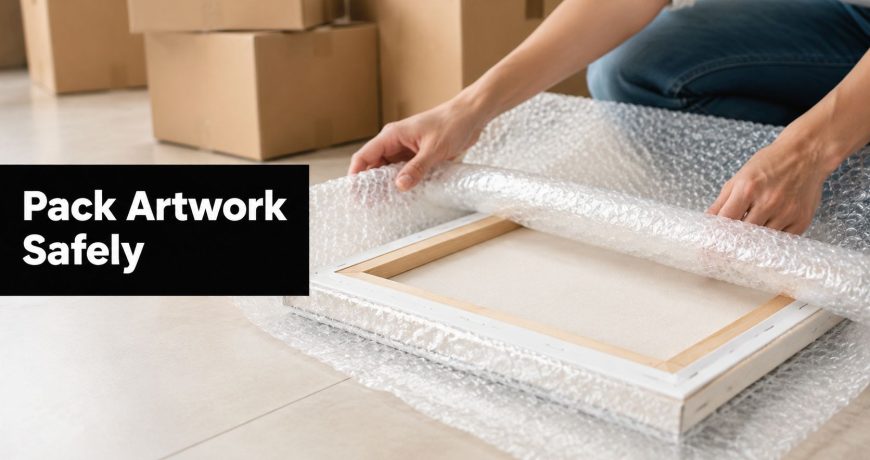
How to Pack Artwork for Moving Without Damage
You're halfway through a Melbourne move when someone mentions the artwork still hanging on the wall. The removal truck is booked, the boxes are stacked, and the interstate schedule is tight. Wrapping a painting in spare cardboard and bubble wrap may seem sufficient, but artwork needs a more deliberate system because glass, frames, painted surfaces, canvas tension, heat, humidity, and truck vibration all create different risks.
The safest approach to how to pack artwork for moving is to match the packing method to the piece. A small print may need a rigid carton and careful surface protection, while a glazed original, sculpture, or oversized canvas may justify bespoke crating and trained handling. The method below is designed for Melbourne house moves, apartment access, Victorian roads, and interstate transport.
Why Proper Artwork Packing Matters
A framed print can leave a Melbourne home looking perfect and arrive interstate with cracked glazing, a dented corner, or a mark across the image. The damage often happens without one dramatic impact. Repeated loading, stair carries, truck vibration, and movement inside an oversized carton can gradually transfer pressure to the weakest part of the piece.
That's why packing artwork is a conservation problem as much as a transport task. Archival handling guidance recommends separating unframed works from tape with acid-free barriers such as glassine or tissue. Framed works need corner protection, cushioning, and a box or crate that stops them moving in transit, as outlined in Australian artwork packing guidance.
The damage usually starts at the edges
Glass breakage is an obvious risk, but it isn't the only one. Frame corners can split or dent when they receive the first impact, while abrasive wrapping can scuff a surface that looks safely covered. A painting can also suffer when packing material presses directly against the face, especially if the material shifts during handling.
Practical rule: Padding only works when it stays between the artwork and the impact. Loose space inside a box turns cushioning into a source of movement.
A rigid outer package gives the work a protective shell, but the inner layers still matter. Surface protection prevents contact, edge protection absorbs corner knocks, outer cushioning reduces vibration, and the carton or crate keeps the whole assembly stable.
Why Melbourne and interstate moves need extra care
A short apartment relocation may involve lifts, narrow corridors, loading ramps, and several changes of grip. An interstate run adds longer exposure to vibration and changing conditions. Australian conservation guidance treats moved collections as vulnerable to the same risks as stored collections, with transport creating greater exposure to handling, heat, humidity, and impact. For collectors researching presentation and preservation, online art gallery case studies can also help show why the context around an artwork matters, not just its appearance on the wall.
Rushing the job can lead to repair costs, difficult claims, and a permanent loss of condition. The right materials and a calm packing sequence cost less than trying to recreate an original surface or repair a damaged frame.
Preparing Materials for Artwork Packing
Start by setting up a dedicated packing station away from the artwork itself. You'll need a clean surface, a permanent marker, strong packing tape, a utility knife, and enough room to measure the work without leaning it against an unstable wall.
Australian guidance consistently recommends a layered approach, beginning with glassine or acid-free tissue, followed by corner protection, foam or bubble wrap, and a rigid box or double-box arrangement for fragile pieces. Brown craft paper shouldn't touch artwork surfaces because it can stain, while bubble wrap belongs on the outside of the protective barrier so its pattern doesn't imprint the art. The moving box guide can help when you're sourcing suitable cartons locally.
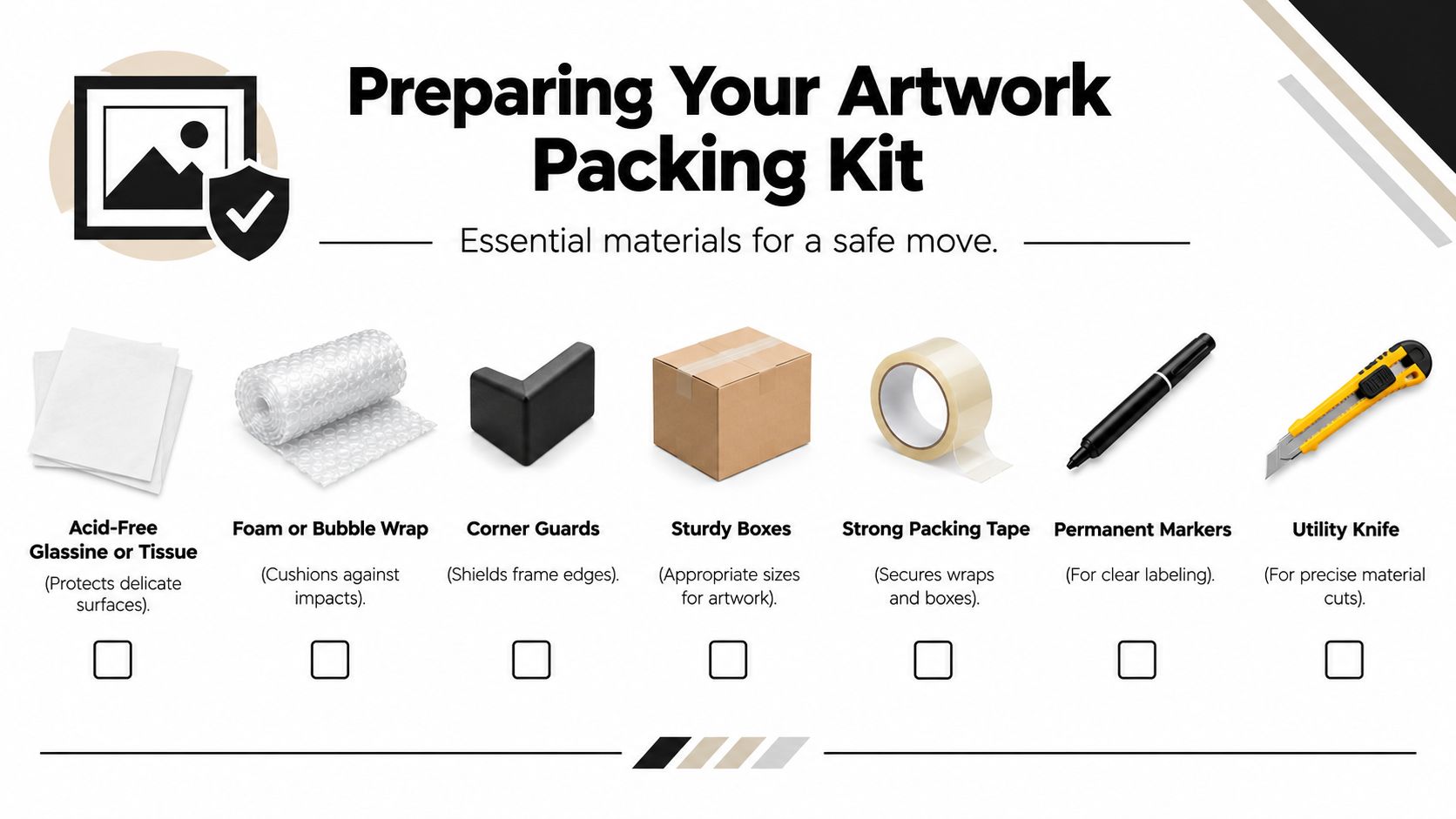
Essential packing materials
| Material | Purpose | Notes |
|---|---|---|
| Acid-free glassine or tissue | Separates the artwork from wrapping and tape | Use as the first surface barrier |
| Foam or bubble wrap | Cushions impact and vibration | Keep bubble wrap away from the artwork surface |
| Corner guards | Protects frame edges and corners | Fit all exposed corners securely |
| Sturdy picture carton or rigid box | Creates an outer protective shell | Choose a size that limits movement |
| Acid-free board | Adds support to prints and unframed works | Sandwich delicate pieces before wrapping |
| Strong packing tape | Secures layers and carton seams | Apply to packaging, never the artwork |
| Permanent marker and labels | Communicates handling requirements | Mark contents and orientation clearly |
For a framed work, measure the height, width, and depth, including the frame and any projecting hardware. The carton should allow protective layers without leaving enough internal space for the artwork to slide. Fragile pieces may need a double-box setup or a foam-lined timber crate rather than a standard moving carton.
For rolled works, use protective paper, padding, and Tyvek rather than forcing the piece flat. Australian handling guidance from the Australian Institute for the Conservation of Cultural Material recommends several protective layers and cotton tape tied firmly but not tightly. The roll must remain supported without compressing the artwork.
Packing Framed Prints and Canvases
A framed print can arrive with cracked glazing, a marked surface, or a split corner even when the carton looks intact. Long Australian routes add vibration, repeated loading, and temperature changes, so the packing method should match the artwork's medium, value, frame condition, and travel distance.
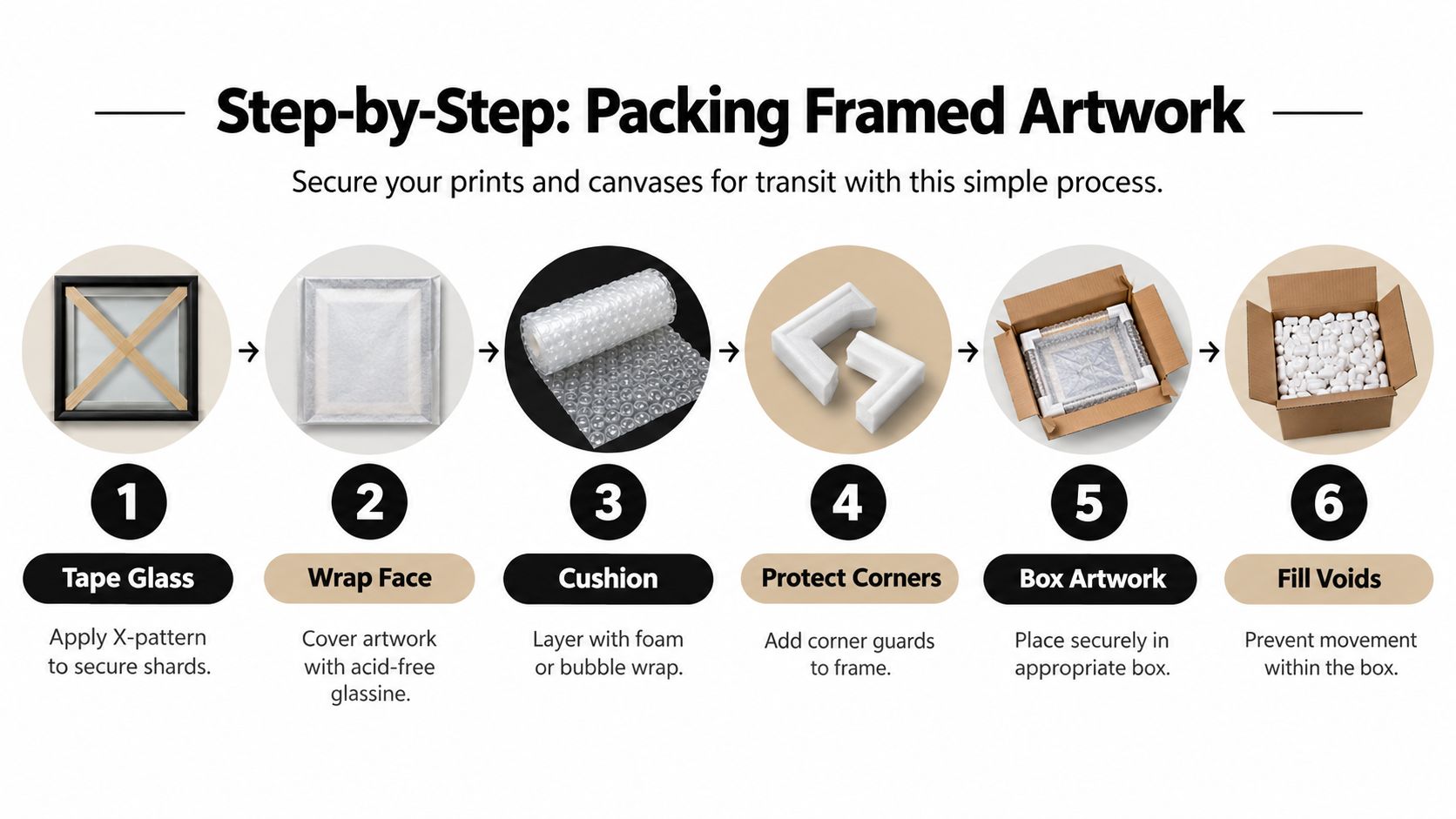
Use this packing sequence
Inspect and photograph the piece. Record existing marks, frame joins, glazing condition, and the back of the work before wrapping. Keep these images as a condition record for delivery checks.
Secure glazed surfaces. Place tape across the glass in an X pattern, or use a star pattern for particularly vulnerable glazing. This helps hold shards together if the glass breaks. It does not prevent every break.
Cover the face. Lay acid-free glassine or tissue over the artwork, keeping tape away from the surface. Unframed works must not contact adhesive directly.
Protect the corners. Fit foam or cardboard corner guards over every frame corner. A corner can take the first impact when a box is lowered, tilted, or loaded beside furniture.
Add outer cushioning. Wrap the protected frame with foam or bubble wrap, keeping the bubbles facing outward. The cushioning should absorb movement without pressing a patterned surface into the artwork.
Choose a stable carton. Slide the piece into a picture carton or rigid box that restricts movement. Fill the edges with acid-free tissue or suitable void fill. Avoid loose material that can settle and create a gap.
Close and identify the package. Seal the seams thoroughly, then apply “Fragile – Artwork” labels and upright arrows on visible sides. Marking helps handlers keep the carton upright during loading and unloading.
Adapt the method to the work
A modern framed print with intact glazing may suit a close-fitting picture carton on a straightforward move. A large canvas, ornate frame, loose glazing, or high-value piece needs tighter restraint. For a Melbourne to Sydney or Melbourne to Brisbane relocation, repeated truck movement makes immobilising the artwork inside its carton more useful than adding another soft layer.
Do not lay framed artwork beneath heavy household goods. Keep the carton upright, brace it against stable items, and prevent heavier objects from leaning into the frame. Vertical transport reduces pressure on the face and frame during vibration and loading.
The Australian artwork moving guide describes the same conservation-led approach for domestic transport. For rolled canvases or prints, use protective paper, padding, and Tyvek rather than forcing the work flat. Cotton tape should hold the roll firmly without compressing it.
Oversized, unusually valuable, or awkward-to-grip work may justify professional packing instead of the cost of replacing glazing or repairing a frame. The guide to packing fragile items for moving can help coordinate the wider load while keeping artwork separate from ordinary household cartons.
Packing Sculptures and Mirrors Safely
Three-dimensional artwork fails in different ways from a flat print. A sculpture can tip, concentrate pressure on a narrow projection, or move inside its box until a fragile element strikes the wall. A mirror has a broad vulnerable surface and exposed edges, so the package must control both impact and orientation.
Small sculptures and irregular shapes
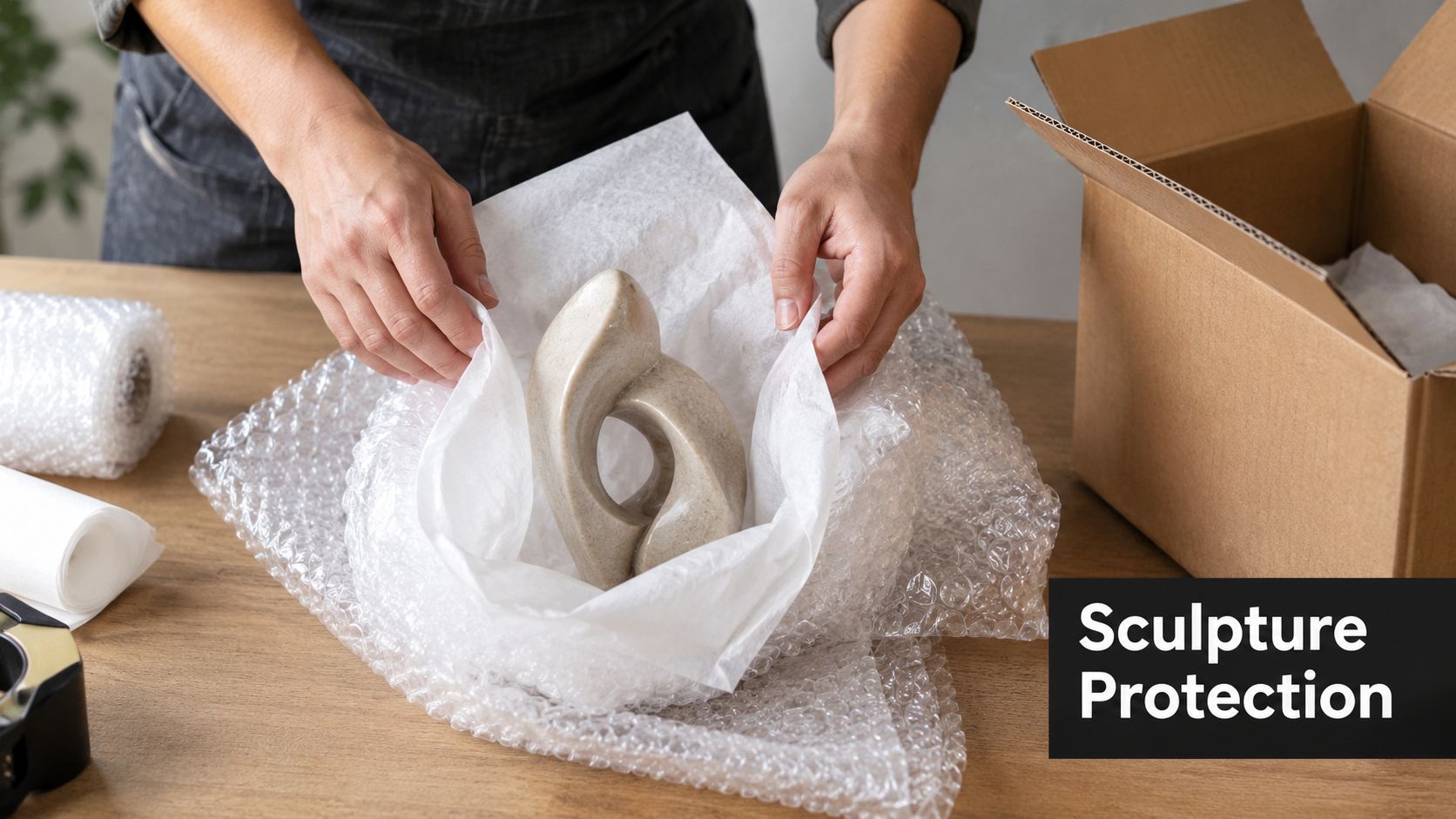
Wrap a small sculpture first in acid-free tissue, then add foam or bubble wrap as an outer cushioning layer. Build internal supports around the object so the padding carries the load without pressing against delicate projections. A snug box is safer than a large carton filled with loose material, because the sculpture shouldn't have room to gather momentum.
For a heavy stone, metal, or bronze piece, assess the base, handles, extensions, and centre of gravity before lifting. Specialist guidance on transporting valuable bronze statues securely is helpful when a sculpture needs more than household wrapping.
Use this video as a visual reference for careful protective wrapping, but assess each sculpture independently because materials and fragile points vary.
Crates, mirrors, and route conditions
Museum and gallery transport commonly uses foam-lined timber crates built to ISPM15 certification, while bespoke cardboard boxes and sleeves can offer a lower-mass option for suitable interstate moves, as described in Australian fine-art transport guidance. A crate makes sense when the work is heavy, valuable, unusually shaped, or exposed to a demanding route. It also gives handlers a rigid structure that can be secured in the truck.
Pack mirrors with corner guards, a face barrier, outer cushioning, and rigid bracing. Transport them upright in a mirror carton, using wedges or internal supports to prevent leaning. A broad mirror should never be left to slide within an oversized box, even if the empty space appears well padded.
Sculptures and mirrors also need safe lifting and positioning during the household move. Advice on moving heavy furniture is relevant when the package requires a team lift, a trolley, or a planned route through stairs and doorways. The package must protect the artwork, but the handling plan must protect the people carrying it as well.
Labeling Do's and Don'ts for Artwork Boxes
Labels guide the next person who touches the package. They're especially important when a carton looks similar to ordinary household boxes or when several pieces are loaded together.
Australian art-transport guidance identifies impact, glass breakage, and movement inside the box as major risks. It recommends clear “Fragile – Artwork” markings, upright arrows, and enough internal padding to stop the piece sliding, as set out in Australian artwork labeling guidance.
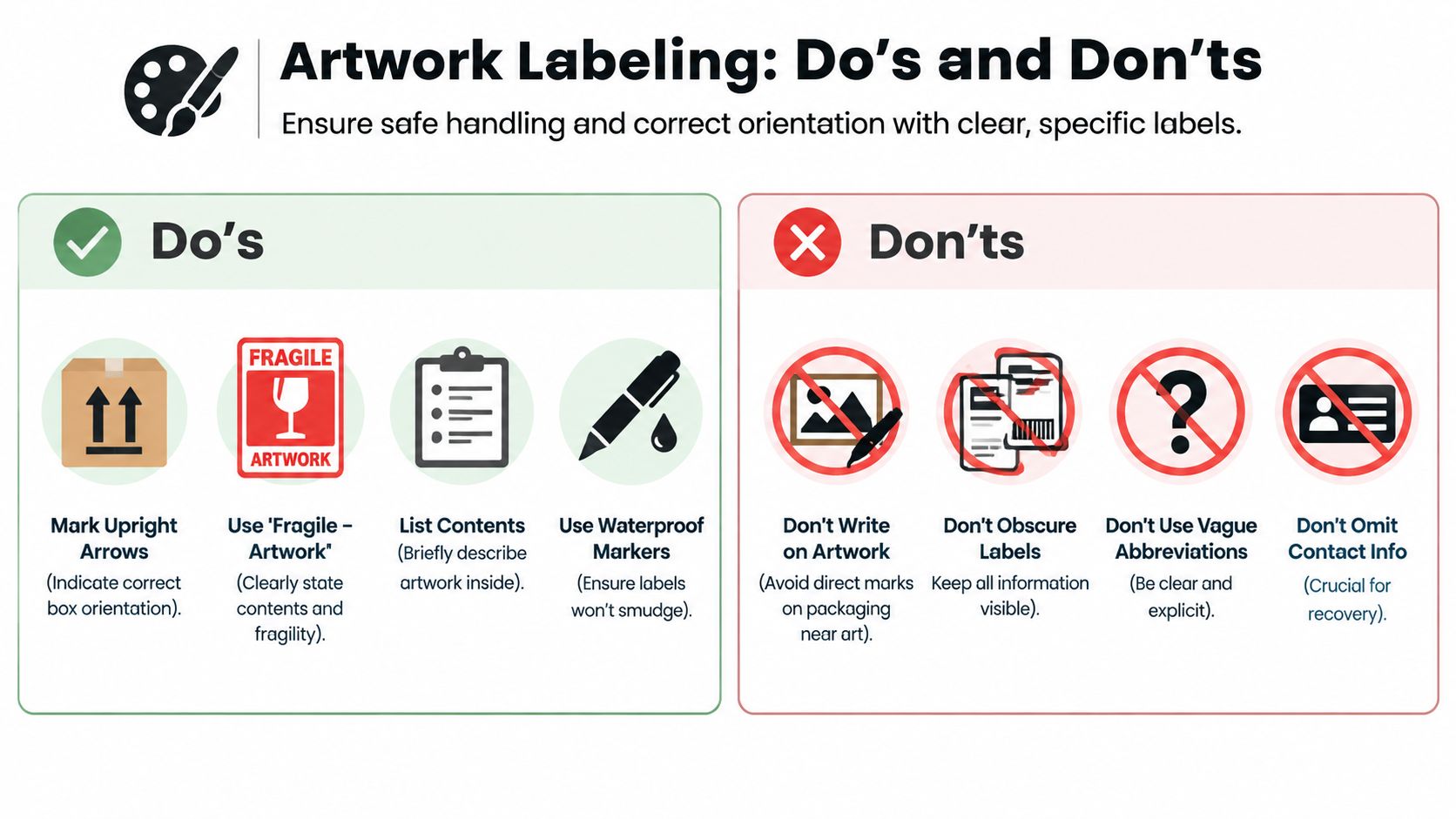
Do these things
- Mark upright arrows: Put arrows on more than one visible side so the correct orientation remains clear during loading.
- Use “Fragile – Artwork”: State what the carton contains instead of relying on a generic fragile sticker.
- List the contents: Add a short description such as “framed print” or “glazed canvas” to help with room placement and unpacking.
- Seal the seams: Check that tape has bonded across every carton opening before labeling.
- Use waterproof markers: Make sure instructions remain legible if the carton encounters damp conditions.
Avoid these mistakes
- Don't write on the artwork: Keep pens, tape, and labels on the packaging only.
- Don't cover existing instructions: Place new labels beside, not over, orientation marks and handling information.
- Don't use vague abbreviations: A clear description is more useful than shorthand that a casual handler may misunderstand.
- Don't stack heavy boxes on top: Weight can transfer through the carton and stress glazing or frame joints.
- Don't put bubble wrap against the surface: Keep the bubbles outward, with glassine, tissue, or another suitable barrier between the artwork and cushioning.
Double-boxing can provide an additional safety layer for particularly fragile prints, provided the inner package remains immobilised inside the outer box. Labels can't compensate for poor geometry, but good geometry becomes much safer when every handler understands which side stays up.
For broader household preparation, use this packing guide for moving to keep artwork instructions consistent with the rest of the relocation plan.
Unpacking and Storage Best Practices
Unpack artwork in a stable, dry area away from foot traffic. Photograph the package before opening, then compare each piece with its pre-packing condition record. Inspect glazing, corners, frame joins, canvas tension, and visible surfaces. Keep damaged packaging until any insurance discussion is complete.
Artwork may require specific insurance clauses during transit, so check the policy before moving day rather than assuming standard household cover applies. If damage appears, document it promptly and retain broken glass and packing materials.
Store prints and canvases upright, cool, dry, and away from direct sunlight. Australian summer heat and humidity can affect artwork in garages or utes, making both poor temporary storage choices. Mirrors and heavy sculptures need stable, padded bases that prevent tipping.
For a longer holding period, long-term storage options can provide better control than an unattended garage or spare room. Choose storage according to the medium, value, frame, glazing, and interstate route, especially where temperature changes and vibration are concerns.
Get n Go Removals Melbourne packs and unpacks fragile belongings, including artwork and antiques, using protective materials suited to local and interstate relocations. For glazed works, sculptures, difficult access, or storage between move stages, Get n Go Removals Melbourne can help plan handling, packing, and transport around the piece and the route.