
Settling Into New Home: Your 2026 Checklist
You've got the keys. The truck has left. The boxes are in the right general area, but nothing feels settled yet. The kettle might be somewhere in the kitchen, your phone charger could be in a bathroom carton by mistake, and everyone in the house is asking the same question in different ways. What do we do first?
That moment is where most moving stress peaks. Not because the move is still happening, but because the house doesn't work yet. You can't relax in a space that hasn't been checked, secured, and made functional.
The fastest way through it is to stop treating settling into a new home like one giant task. It works better as a timed sequence. First, make the property safe and liveable. Then make the key rooms work. After that, sort the admin that ties your life to the address. Once those layers are done, the place starts to feel like yours.
Welcome Home Now What
It's common to walk in and start opening random boxes. That feels productive for about twenty minutes, then the house turns into a maze of half-unpacked cartons, missing cables, and nowhere comfortable to sit. A better approach is to think in phases.
For day one, your job is survival. You need power, water, working lights, checked alarms, a place to sleep, basic food, and access to your essentials. In the first week, focus on function. That means unpacking in the right order, confirming services, resetting security, and getting the home running properly. In the first month, deal with administration and routines so the move stops following you around in the form of missed mail, forgotten address changes, and constant low-level friction.
Think in stages, not rooms
A common mistake is trying to “finish the house” straight away. That almost never works. Homes settle faster when you prioritise by need, not by area.
A simple way to judge every task is this:
| Priority | Ask yourself | Examples |
|---|---|---|
| Urgent | Does this affect safety or sleep tonight? | Alarms, locks, utilities, beds |
| Important | Does this make daily life work this week? | Kitchen setup, bathroom items, internet |
| Useful later | Can this wait without causing problems? | Styling shelves, wall art, spare room organisation |
Practical rule: If a task doesn't improve safety, sleep, hygiene, or food access, it can probably wait.
That mindset cuts through overwhelm quickly. It also stops the classic first-night mistake of spending hours on décor while the beds are still unmade and the bathroom towels are buried in a box marked “linen misc”.
If you're trying to reduce the mental load before you even arrive, this guide on how to reduce stress when moving home is worth reading before the next stage kicks off. And once the practical work is under control, a softer layer matters too. For ideas that help a lived-in space feel warm rather than temporary, you can discover more from Sofa Cover Crafter.
The First 24 Hours Your Survival Checklist
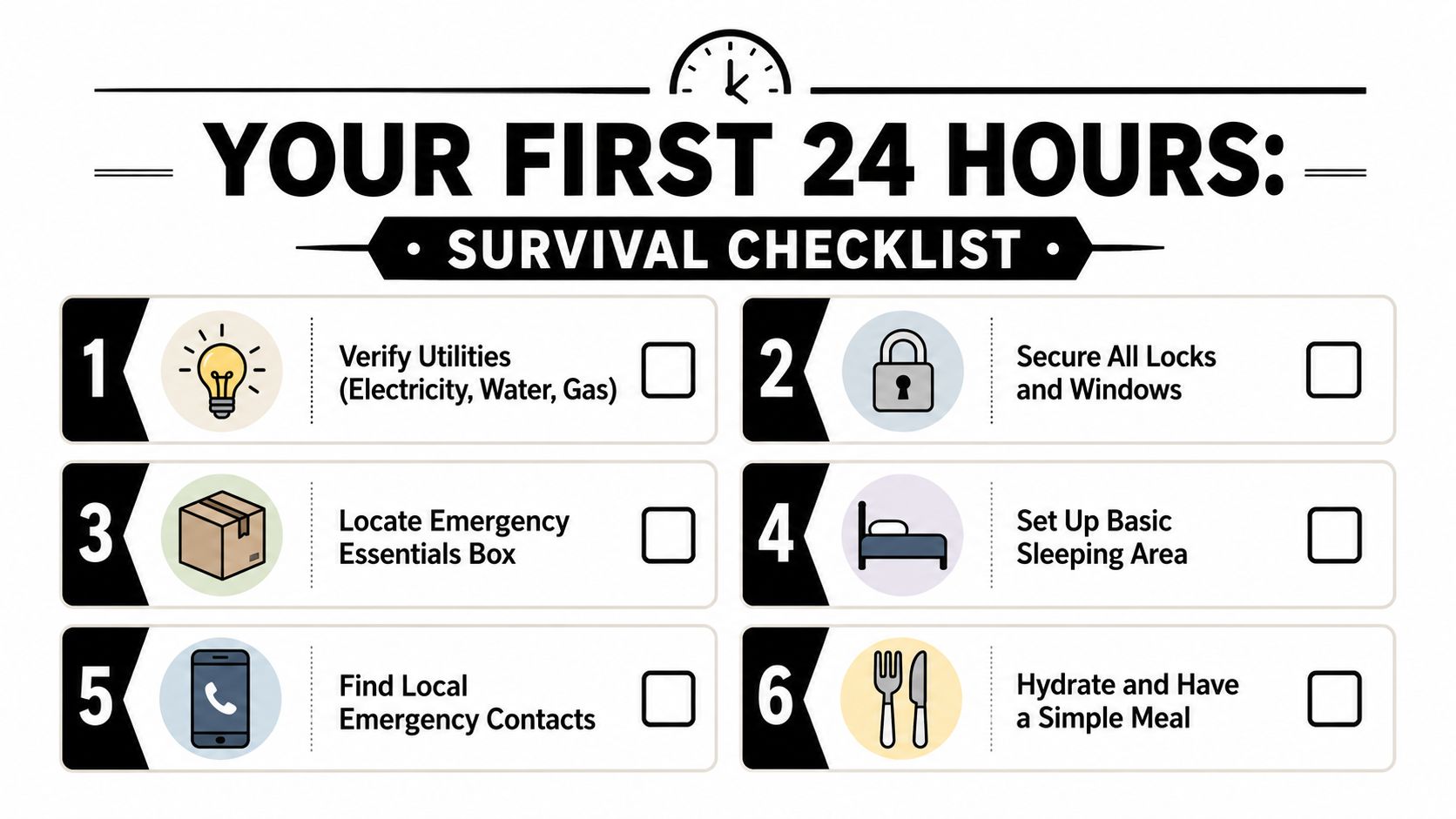
The first day isn't about making the home pretty. It's about making it safe, secure, and manageable. If you get this part right, everything that follows becomes easier.
Do a full safety walk before major unpacking
A critical first step is post-occupancy safety verification. Australian fire authorities treat working smoke alarms as essential life-safety infrastructure, and a practical settling protocol is to complete a room-by-room functional check of power, water, gas, alarms, and all doors and windows before large-scale unpacking begins, as outlined in this guide on settling into your new home safely.
Walk the property slowly. Turn lights on. Run taps. Flush toilets. Check that exterior doors latch properly. Open and close windows. Test alarm units. If the property has a security system, confirm you know how it works before night falls.
Also locate these straight away:
- Fuse box or switchboard: You don't want to be hunting for it during an outage.
- Water shut-off point: Useful if you spot a leak after moving appliances.
- Gas control point: Especially important if something smells off.
- Internet connection point: Handy when you start setting up modem gear.
Build one liveable base camp
Every smooth move has a base camp. Usually that's the kitchen bench plus one bedroom and one bathroom. You don't need the whole house operational on day one. You need one zone where people can function without tearing through boxes.
Set aside:
- Essentials box: Chargers, medication, toilet paper, basic toiletries, paper towels, bin bags, scissors, kettle, tea or coffee, pet items, and a change of clothes.
- Bed gear: Sheets, pillows, doona, pyjamas.
- Quick food: Water, fruit, snacks, something simple for dinner, baby supplies if needed.
The first night runs better when you assume everyone will be tired, dusty, and less patient than usual.
Hydrate early. Eat something simple. Don't aim for a full cooked meal unless the kitchen is already very close to ready.
Secure the property before you relax
A surprising number of people leave this for later because they're exhausted. That's understandable, but it's risky. Change locks or rekey external access as soon as practical, especially if you don't know who previously had copies. At minimum, confirm every lock works and every accessible window closes properly.
If you're moving with a tight schedule, having the final pre-move setup sorted helps a lot. This checklist on what to do the night before your movers arrive makes the first 24 hours far less messy.
Do these before bed
Don't finish the day until these are done:
- Make every main bed so nobody is digging through linen boxes late at night.
- Charge phones and key devices in one known spot.
- Put toiletries in the bathroom so the morning starts cleanly.
- Check external doors once more after dark.
- Leave one pathway clear from bedroom to bathroom to kitchen.
People often underestimate how much a good first night changes the rest of the move. Sleep is what turns the next day from chaos into a plan.
The First Week Unpacking and Establishing Order
The first week decides whether the house starts working or stays in limbo. Random unpacking drags the process out. A deliberate sequence gets you back to normal life faster.
Follow the room order that actually works
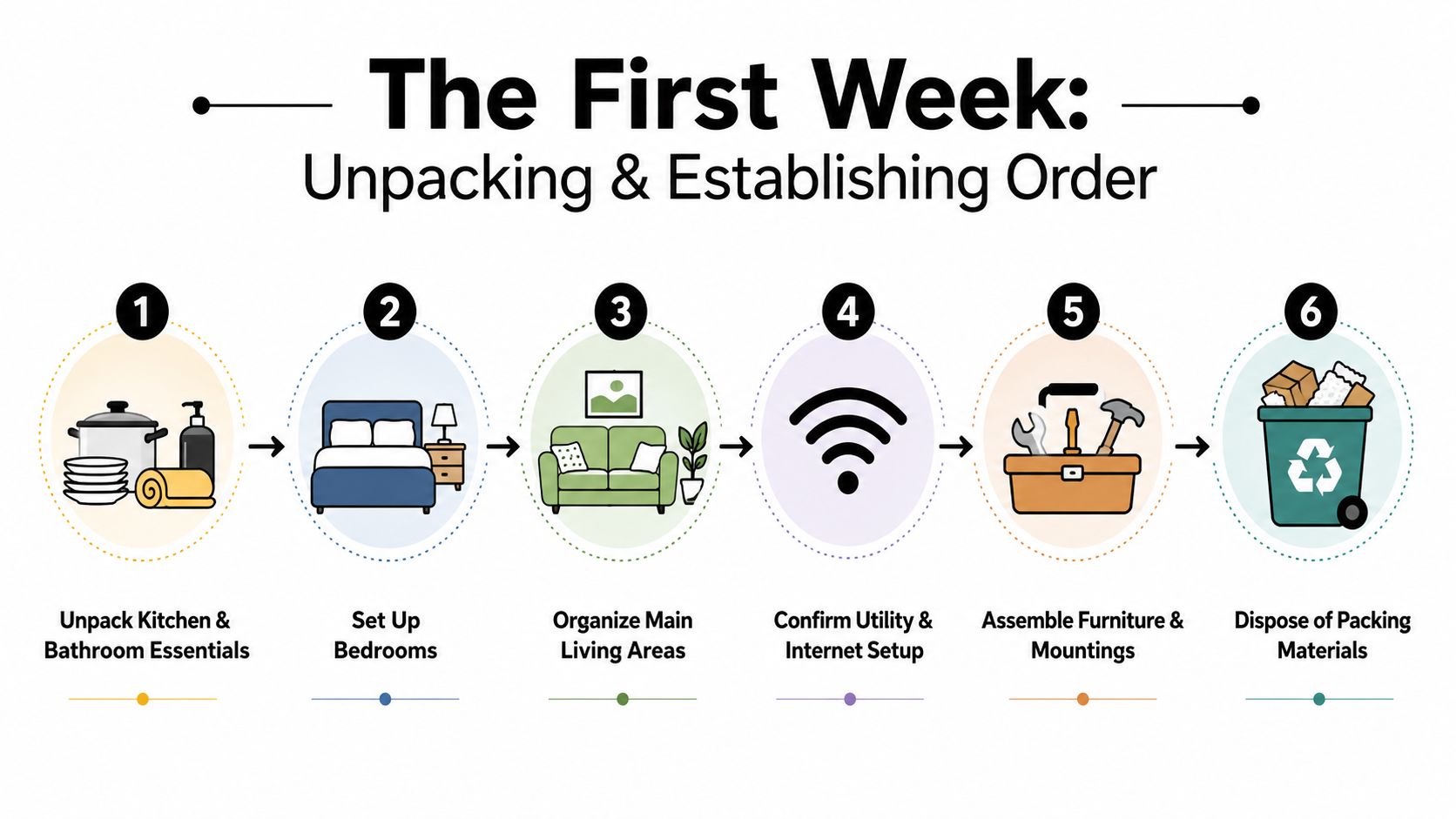
A methodical unpacking sequence matters. Guidance used by housing and mortgage experts recommends prioritising bedrooms, bathrooms, and the kitchen first, while keeping an inventory so missing or damaged items can be identified within the first 24-48 hours. That early window is important, and it's covered in this practical guide to essential post-move steps.
That sequence works because it restores the core routines of sleeping, washing, and eating. Once those three are handled, the house feels far less chaotic.
What to unpack first and why
Kitchen first.
Not the whole kitchen. Just the section that lets you make breakfast, tea, school lunches, or a simple dinner. Unpack mugs, plates, one saucepan, one frypan, chopping board, kettle, toaster, sharp knife, dish cloths, and cleaning spray. If you can make coffee and wash up afterwards, the room is functional.
Bathroom next.
Get towels hung, soap out, shower curtain or screen checked, and one drawer or shelf assigned per person. That stops the daily hunt for toothbrushes and medication.
Bedrooms before living areas.
A finished bedroom gives the house a proper reset point. Clothes don't need to be perfectly arranged, but beds, lamps, chargers, and enough wardrobe access for the week should be sorted.
Living room after essentials.
People often start here because the furniture is large and visible. That's fine once the high-use rooms are stable. Until then, the lounge room is mostly cosmetic.
Use an inventory instead of memory
The homes that settle well usually have one person keeping track of what has arrived, what is damaged, and what still hasn't turned up. That can be a notebook, spreadsheet, or phone notes app. The tool matters less than consistency.
Keep a simple record with these headings:
| Item | Room | Status | Action |
|---|---|---|---|
| Cartons and furniture | Assigned location | Arrived, damaged, missing | Photograph, report, recheck |
| Appliances | Kitchen, laundry, study | Tested or not tested | Plug in, run, confirm |
| Hardware | Beds, tables, shelves | Complete or incomplete | Set aside in labelled bag |
Proactive inspection saves people future frustration. A cracked lamp base is easy to spot in the first day or two. It's much harder after a week of box shuffling.
Complete the services reset
By the end of the week, the home should be fully usable. That means checking not only whether a service is “on” but whether it's working the way you need it to.
Focus on:
- Electricity and gas: Confirm billing transfer and appliance function.
- Water: Check pressure, hot water performance, and any leaks under sinks.
- Internet and NBN handover: Test coverage where you'll work or stream.
- Mobile reception zones: Useful in houses with patchy areas or thick walls.
- Waste and recycling setup: Know where bins are stored and collection expectations.
A home isn't settled when the boxes are gone. It's settled when your morning routine works without friction.
Know when help is smarter than DIY
There's a point where doing everything yourself stops being efficient. Families with young children, people working full-time through the move, and anyone downsizing from a larger home often hit that point quickly.
That's where practical support can make sense. Options include handyman help for wall mounting and assembly, internet technicians for service issues, and unpacking support for room-by-room setup. One local option is Get n Go Removals Melbourne, which offers packing, unpacking, furniture reassembly, and related move support. Services like that don't replace planning, but they can shorten the messy middle.
Also, don't keep every box. Break down cartons daily, group packing paper in one area, and clear walkways as you go. The house feels more organised long before it's fully finished.
Conquering the Admin Your First Month To-Do List
By this point, the home may look mostly sorted, but the move isn't finished until your paperwork, accounts, and local services catch up. This is the stage people delay because it's dull. It's also the stage that prevents missed bills, lost mail, and frustrating identity mismatches.

Treat services and security as one system
A commonly missed part of settling in is a coordinated security-and-services reset. That goes beyond changing locks. It includes confirming handover of water, gas, electricity, and NBN or telecom services, arranging mail redirection, and learning local council waste schedules, all highlighted in this advice on settling into your new home with the right service checks.
That matters because these tasks are connected. If mail redirection isn't active, your final utility notice may go astray. If council collection days aren't clear, boxes and waste pile up quickly. If internet ownership or account handover is incomplete, work-from-home plans can unravel fast.
Your first-month admin checklist
Use one sitting to list every organisation tied to your address. Then work through them in batches.
Government and identity updates
- Driver licence and vehicle records: Check your state requirements and update promptly.
- Electoral enrolment: Keep your voting details current.
- Tax and official correspondence: Make sure your address on record is accurate.
- Medicare and health records: Especially important if you've changed suburb or region.
Financial and contractual accounts
- Banking: Update all transaction, savings, and loan records.
- Insurance: Home, contents, car, and health.
- Employer and payroll: Payslips and super correspondence need to reach you.
- Subscriptions and memberships: Streaming, meal plans, magazines, clubs.
Household services
- Mail redirection: Useful while old records catch up.
- Utilities and telecom accounts: Confirm the new address is the billing address too.
- School, childcare, and pet records: Emergency contact details should match your current location.
- Health providers: GP, pharmacy, specialists, and any repeat prescriptions.
Make local council information part of the move
Council details are easy to ignore until you need them. Then suddenly you're searching for hard rubbish rules while cardboard stacks up in the garage.
Check these early:
| Council item | Why it matters |
|---|---|
| Bin collection days | Stops missed rubbish and recycling pickup |
| Hard waste process | Useful for old furniture, broken packing material, and move leftovers |
| Parking permits | Important in inner suburbs and apartment areas |
| Pet registration rules | Often required after a move into a new municipality |
Keep one moving admin file
Whether it's a folder in your email or a physical binder, keep all move-related documents in one place. Include lease or settlement papers, utility confirmations, locksmith receipts, warranties, photos of condition on arrival, and any damage reports.
That file saves time when something doesn't line up later.
If you want a cleaner master list to work from, this moving house address change checklist gives you a practical starting point for the paperwork side.
The move feels finished when your post, bills, licences, and services all agree on where you live.
Making It Home Connecting with Your New Neighbourhood
A house can be fully unpacked and still feel temporary. That usually changes the moment daily life starts attaching itself to the area. You find the bakery you'll use on Saturday mornings. You learn which chemist stays open late. You work out the quiet walking route and the shortcut to the station.

One family can unpack every box in a week and still feel unsettled because they haven't built any routines outside the front door. Another can still have a study full of cartons, but feel at home because they've met a neighbour, found a good café, and know where to take the dog.
That human layer matters. Housing-related reasons remain the biggest driver for moves, and the 2021 Census counted 2,339,030 internal interstate movers in the previous year, equal to 9.1% of the population changing states or territories, while long-term mobility has trended lower over time as housing costs and life-stage changes reshape relocation decisions. Housing-related reasons also accounted for 41.6% of movers in U.S. Census evidence cited here, which aligns with the broader pattern that households move in search of a better home environment. That context is discussed in these relocation moving statistics.
Start with repeatable routines
The easiest way to feel grounded is to repeat small actions in the same local places.
Try this in the first few weeks:
- Pick one local café or takeaway spot and become a regular.
- Find your practical anchors such as GP, pharmacy, supermarket, petrol station, and hardware shop.
- Walk the neighbourhood at different times so you learn traffic, noise, lighting, and general rhythm.
- Use nearby parks and public spaces if you have kids, pets, or need a break from unpacking.
Let neighbour contact happen naturally
You don't need a formal introduction strategy. A simple hello while bringing bins in is enough. Borrowing local knowledge is often more useful than trying to make a polished first impression.
Ask practical questions instead:
- Which day do bins go out around here?
- Is there a reliable local tradie people use?
- Does this street get busy with school traffic?
- Where's the nearest good coffee before 7 am?
Those conversations build familiarity quickly.
The home starts to feel real when you know who to wave to and where to go without checking your phone.
Add personality once the house has rhythm
Personal touches land better after the practical side is stable. That's when cushions, throws, artwork, plants, and layout changes stop feeling like decoration and start feeling like identity. Renters often need low-commitment ways to do that, and this guide on how to personalize a rental offers useful ideas that work without major alterations.
Settling into a new home isn't only about where the furniture goes. It's also about where your life starts happening again.
Your Partner for a Seamless Settlement
A smooth move rarely comes from working harder. It comes from doing the right jobs in the right order. Day one is for safety and sleep. Week one is for function. Month one is for admin, routines, and local connection.
That approach works because it matches how homes become liveable. You don't need every picture hung before the place feels good. You need secure access, working utilities, unpacked essentials, organised high-use rooms, and a plan for everything else.
Professional support helps most when it removes the jobs that create bottlenecks. Packing services reduce the scramble before moving day. Valet unpacking helps busy households get kitchens, bedrooms, and bathrooms operational quickly. Furniture disassembly and reassembly save time, reduce damage risk, and stop half-built rooms from lingering for weeks. If you're weighing up whether to outsource part of the workload, this article on why hiring removal services is the smart way to move lays out the practical case.
The main thing is to avoid treating the entire house as equally urgent. It isn't. Once you prioritise properly, settling into a new home becomes far more manageable, and a lot less exhausting.
If you're planning a move and want practical help before, during, or after the truck arrives, Get n Go Removals Melbourne can assist with home moves, packing, unpacking, furniture setup, and the details that make settling in easier.