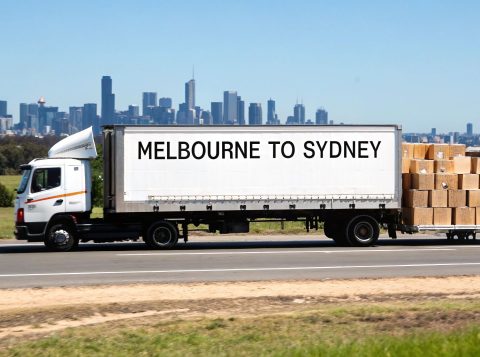

Removals Melbourne to Perth: Your 2026 Moving Guide
A Melbourne to Perth move usually starts the same way. You look around your home, realise everything you own somehow has to travel across the country, and wonder how many things can go wrong between pickup in Victoria and delivery in WA.
That reaction is normal. This route is long, planning-heavy, and far less forgiving than a short metro move. Timing matters more. Packing quality matters more. Access details matter more. If you leave the big decisions too late, the move can become expensive and stressful very quickly.
The good news is that this kind of relocation is far from unusual. Australia's capital cities lost a net 160,100 people to internal migration over the five years to 2021, and Greater Melbourne alone recorded a net loss of 41,500 people in 2020 to 2021, which shows that long-distance relocation is a regular part of life for many households and workers across the country, not a rare one-off event (Australia moving and migration statistics).
Your Stress-Free Start to Moving from Melbourne to Perth
Most customers planning removals from Melbourne to Perth are juggling more than just boxes. They're lining up settlement dates, handing over rentals, arranging school transfers, changing jobs, or trying to make a new suburb feel familiar before they even arrive.
That's why the move works better when you stop treating it like one giant task. Break it into stages. First, decide what's travelling. Then lock in timing. Then sort access, packing, and delivery conditions. Once those pieces are clear, the move starts to feel manageable.
If you're still deciding where in WA you want to land, a practical way to narrow it down is to look at top Perth suburbs for living so you can weigh commute, lifestyle, and local amenities before choosing delivery access and move-in timing.
What people usually worry about first
The first concerns are usually predictable:
- Transit distance: People worry about how their furniture will hold up over a long haul.
- Budget blowouts: They want to know what factors affect the quote.
- Timing risk: They need to coordinate keys, cleaners, lifts, and arrival dates.
- The first few days in Perth: They don't want essentials buried in the wrong carton.
Practical rule: Long interstate moves feel chaotic when every decision is left open. They get easier the moment dates, inventory, and access details are written down.
A lot of moving stress comes from uncertainty, not the move itself. If you want a calmer lead-up, this guide on how to reduce stress when moving home is worth reading before you start booking services and packing rooms.
A better mindset for this route
The Melbourne to Perth corridor isn't a move you “wing”. It rewards planning and punishes guesswork. Customers who usually have the smoothest experience do three things early. They declutter hard, confirm building access in writing, and keep a separate essentials load for the first days after arrival.
That doesn't remove every challenge, but it gives you control over the parts that matter most.
A Realistic Timeline for Your Interstate Relocation
A Melbourne to Perth move runs better when you treat it like a project with fixed milestones, not a last-minute scramble. The linehaul itself is only part of the job. The primary work occurs in the lead-up.
The route's typical transit time is about 5 to 10 business days, and that window is shaped by shipment volume and scheduling across the roughly 2,721.4 km route rather than straight-line driving alone (Melbourne to Perth removal timing guide).

Eight to six weeks before moving
This is the decision phase. You want clarity before you want cartons.
- Declutter properly: Remove anything you don't want to pay to transport. Old flat-pack furniture, duplicate kitchenware, worn linen, and unused garage items often cost more to move than they're worth.
- Build your inventory: Go room by room and note large furniture, fragile items, appliances, outdoor pieces, and anything awkward to carry.
- Request detailed quotes: The useful quote isn't just a price. It should reflect your actual volume, service level, and access conditions.
If your timing is tight, it helps to understand how long it takes to move house at each stage, not just on the truck.
Four to two weeks before moving
By now, your mover should be booked and your move plan should be narrowing.
A professional booking should confirm pickup suburb, delivery suburb, property type, stairs or lift access, parking conditions, and whether any items need special handling. This is also the point where you decide who is packing what.
If you're packing yourself, don't wait for the final week. Long-haul moves expose rushed packing immediately.
Use this period to do the following:
- Book lifts or loading bays if you're in an apartment.
- Arrange utility connections at the Perth address.
- Separate essentials such as medication, chargers, documents, school items, work gear, and basic kitchen items.
- Label by room and priority, not just by contents.
The final week and moving day
The last week is about confirmation, not chaos. Recheck addresses, contacts, pickup windows, and the delivery contact in Perth. If settlement or lease dates are close together, make sure everyone involved knows who can authorise entry at each end.
On moving day, do a final walkthrough after loading. Open every cupboard, storage cage, shed, and linen press. Long-distance moves don't give you the convenience of “I'll collect it later”.
A well-run interstate relocation doesn't feel rushed. It feels sequenced.
Decoding the Costs of Removals Melbourne to Perth
The biggest mistake people make with interstate quotes is assuming price is based mostly on distance. Distance matters, but it isn't the whole story. For removals from Melbourne to Perth, volume is often the strongest cost driver.
A practical benchmark for this route is A$233.87 per cubic metre, with an average job cost of A$3,793.40 for an average shipment size of 16.22 cubic metres (Melbourne to Perth removals cost benchmark). That's why accurate inventory measurement matters. A quote built on rough guesses often changes once the actual load is assessed.

What actually changes the quote
Think of cubic metres as the truck space your household consumes. A few bulky items can add volume quickly, even when they don't seem heavy. Sofas, bed frames, outdoor furniture, and packed garage contents are common quote-changers.
The final figure usually moves because of factors like these:
- Shipment volume: More space on the truck means a higher linehaul cost.
- Access conditions: Stairs, long carries, poor parking, and lift bookings add labour time.
- Service level: Packing, unpacking, dismantling, and reassembly all affect labour and materials.
- Timing: Tight timeframes and inflexible pickup windows reduce scheduling options.
Why two similar homes can price differently
A two-bedroom apartment in a compact inner-city building can cost more to handle than a larger ground-floor home with clean access. The truck crew might need more time, more handling, and stricter booking windows.
That's why itemised quoting matters more than headline pricing. A proper quote should explain the service, not just list a total.
For a plain-English breakdown of what usually sits inside a moving estimate, this guide to decoding the cost of movers is useful before you compare providers.
Cheaper quotes often rely on broad assumptions. Accurate quotes rely on detail.
Cost control that actually works
People usually cut moving costs in the wrong places. They focus on the base rate, then ignore the inventory. In practice, the most effective savings often come from reducing what's being moved and improving access.
Here are the tactics that usually work:
- Measure before quoting: Don't describe a home by bedroom count alone. Describe the actual furniture and packed goods.
- Cull low-value bulk: Cheap shelving, old outdoor pieces, and damaged storage tubs add volume without adding value.
- Be honest about access: Hidden stairs and difficult parking tend to create avoidable variation later.
- Choose the right service level: Don't pay for full packing if you only need help with fragile items and loading.
A good interstate quote should leave you with fewer surprises, not more questions.
Choosing Your Ideal Interstate Removal Service
Not every Melbourne to Perth move needs the same service model. Some customers want a crew to handle everything from packing to furniture reassembly. Others are happy to pack themselves and only need transport and heavy lifting.
The right choice depends on budget, time, delivery certainty, and how much responsibility you want to carry yourself.

The four service models most people compare
Full-service removals suit households that want the least disruption. The mover handles packing, protection, loading, transport, unloading, and often reassembly. This works well for busy families, office relocations, and customers with fragile or high-value contents.
Partial-service removals are often the middle ground. You pack the cartons, and the moving crew handles the physical move. This reduces labour cost while keeping the heavy lifting with professionals.
Container services appeal to customers who want more control over loading. You load into a container or dedicated space, and the container is transported interstate. This can work well when timing and self-packing flexibility matter.
Backloading is the budget-sensitive option many people ask about first. It uses available truck space on a load already heading west.
The real trade-off with backloading
For this route, one pricing page notes that Melbourne to Perth removals may start from $3,980+ and advertise 5 to 10 day delivery options, but that timing can be less certain than a premium direct service because the load depends on consolidation and truck availability on a longer route (Melbourne to Perth backloading considerations).
That doesn't make backloading wrong. It just means you should only choose it when your schedule can absorb movement in pickup or delivery timing.
Backloading can save money. It rarely gives you the same certainty as a dedicated schedule.
Comparing your Melbourne to Perth moving services
| Service Level | Best For | Get n Go Handles | Your Responsibility |
|---|---|---|---|
| Full-service removals | Busy households, larger homes, office relocations | Packing, loading, transport, unloading, furniture handling | Personal documents, valuables, essentials bag |
| Partial-service removals | Budget-conscious movers who can self-pack | Loading, linehaul transport, unloading | Packing cartons and prep work |
| Container services | Flexible self-pack moves | Transport coordination and delivery handling | Loading strategy and carton protection |
| Backloading | Customers with flexible timing | Available truck space, standard transport handling | Accepting wider scheduling variation |
When customers compare service types, the useful question isn't “Which one is cheapest?” It's “Which one fits the consequences I can live with?” If your lease ends on a fixed date and you need furniture delivered quickly, certainty usually matters more than the lowest starting price.
If you're weighing providers and service inclusions, this overview on how to choose the best interstate removalists helps separate useful detail from sales language.
For customers who want a local Melbourne operator with interstate capability, Get n Go Removals Melbourne offers local and interstate moving, packing, storage, and specialist furniture handling. That makes it relevant for households that need one provider to coordinate more than just truck space.
Expert Packing for the Long Haul to Perth
Packing for a cross-country move isn't the same as packing for a short suburban shift. Your goods are going through repeated handling points, longer transit, and more time in storage or staging positions between pickup and delivery.
That means the packing job has to do more than close a box. It has to protect contents through the whole journey.
Packing methods that hold up better
Start with the right materials. Use sturdy cartons in the correct size, quality tape, butchers paper, bubble wrap where needed, mattress protection, and purpose-made covers for lounges and timber pieces. Oversized boxes packed with heavy books are a common failure point.
For fragile items, movement inside the box is the primary enemy. Wrap each item individually, fill voids so contents don't shift, and keep heavier pieces at the bottom with cushioning on all sides.
- Books and records: Use small cartons only. Heavy items in large boxes split quickly.
- Kitchenware: Stack plates vertically with paper between each one, rather than flat in a pile.
- Electronics: Use original boxes if you still have them. If you don't, add padding around all sides and protect screens separately.
- Linen and soft goods: These can help cushion lighter items, but don't use them as a substitute for proper wrapping.
The long-haul packing mistakes that cause trouble
The most common issue isn't usually one dramatic breakage. It's cumulative pressure from poor packing choices.
Watch for these problems:
- Underfilled cartons: Contents collapse and shift.
- Overpacked cartons: Bottoms bow out and handles fail.
- Weak labelling: Unclear room names slow delivery and create confusion at unload.
- Mixed-priority boxes: Daily essentials disappear into general household loads.
Label for the person unloading in Perth, not just for the person packing in Melbourne.
A written inventory helps more than people expect. It gives you a cleaner loading plan, faster room placement on arrival, and less searching during unpacking. If you'd rather avoid the trial-and-error approach, these packing tips for moving house cover the basics that make the biggest difference on move day.
What to keep with you
Keep critical items separate from the main load. That usually includes identity documents, medication, chargers, laptops, valuables, children's essentials, toiletries, and enough clothing for the first few days.
If your delivery lands after your own arrival, that separate kit stops the move from feeling disorganised before the truck even turns up.
Your Ultimate Melbourne to Perth Booking Checklist
Most interstate moving issues start before the truck arrives. They start at booking, when assumptions replace confirmations.
A strong booking checklist protects you from unclear inclusions, preventable delays, and awkward surprises on move day.

What to confirm before you say yes
Use this list before paying a deposit or accepting a booking window:
- Final inventory is current: Add anything newly purchased, stored in the garage, on the balcony, or packed after the first quote.
- Access has been checked at both ends: Confirm stairs, lifts, loading docks, parking restrictions, and gate codes.
- Insurance has been discussed clearly: Ask what transit cover applies, what public liability covers, and what exclusions exist.
- Service inclusions are written down: Packing, unpacking, dismantling, reassembly, and material supply should never be assumed.
- Delivery contact is nominated: One person should be reachable to approve timing and site access in Perth.
The questions worth asking
Customers often focus on price and forget the operational details that matter more once the move starts.
Ask questions like these:
- Is my move going as a direct run or consolidated load?
- What could shift my delivery window?
- How are fragile and high-value items documented?
- What happens if my Perth property isn't ready on delivery day?
- Who is my point of contact if plans change during transit?
Clear paperwork beats verbal reassurance every time.
The booking habit that saves headaches
Send photos of large furniture, difficult access points, and any item that may need special handling. That one step improves quote accuracy, labour planning, and truck setup.
It also helps prevent the worst kind of moving-day sentence: “We weren't told about that.”
Frequently Asked Questions About Moving to Perth
Can I move my car as part of an interstate household move
A removals company can coordinate the household goods side, while vehicle transport is usually arranged through a specialist carrier. The key is timing the car delivery so you're not left without transport longer than necessary. If you plan to drive instead, make sure your arrival date, fatigue management, and accommodation line up with your furniture schedule.
What if my Perth home isn't ready yet
That's where storage becomes important. Short-term storage can bridge the gap between settlement dates, lease start dates, or renovation delays. Long-term storage is useful if you want to stage the move and only bring in part of your household at first.
Should I pack my own valuables
Yes. Keep jewellery, passports, licences, financial documents, personal records, medication, and small high-value electronics with you. Those items are easier to manage personally than through the general freight load.
Can pets be included in the same moving plan
Yes, but pet transport is usually arranged separately from furniture removals. Pets need a calm, purpose-built travel setup, and their itinerary should be planned around arrival access, feeding, and the first night in the new home.
What insurance should I ask about
Ask for a clear explanation of transit insurance and public liability insurance, and ask where responsibility starts and ends. Also ask what packing standards are required for any claim to be considered, especially if you are self-packing.
What else should I sort before I arrive
Budget planning matters more than many people expect, especially when bond, storage, utility setup, and travel costs all hit at once. If you're reorganising finances after the move, this guide to find your Perth financial advisor may help you line up local support once you've settled in.
If you're planning a Melbourne to Perth move and want a clear, well-organised process from quote to delivery, Get n Go Removals Melbourne is worth contacting for practical advice on timing, packing, storage, and interstate moving options.