
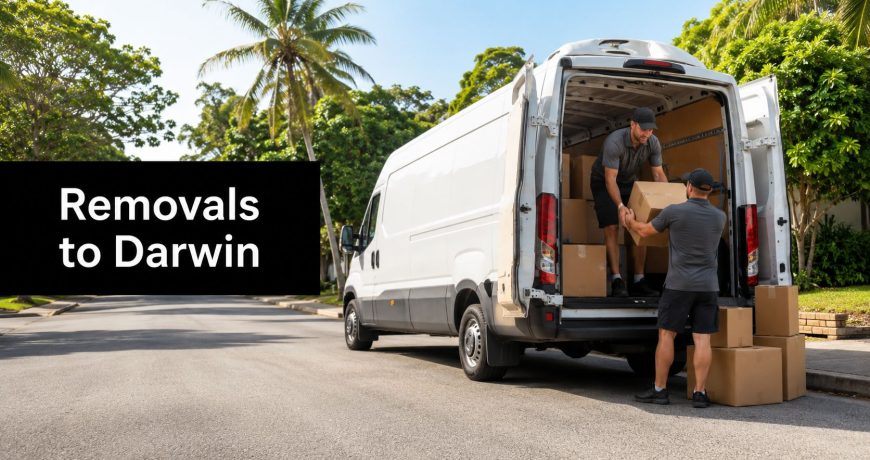
Removals to Darwin: The Ultimate 2026 Guide
You've signed the lease or accepted the job. Family and friends are asking when you're leaving Melbourne. Half your house is still where it always was, and the move to Darwin suddenly feels less like a plan and more like a giant logistics puzzle.
That reaction is normal. Removals to Darwin are different from a standard interstate move because the route is long, timing matters more, and the climate changes how you should pack, store, and unpack your belongings. A move that works perfectly well for Sydney or Adelaide can still go wrong in the Top End if the planning is too generic.
The good news is that Darwin moves become much easier once you understand the key pressure points. Most problems come from three places: unrealistic timing, poor loading and packing decisions, and underestimating how different Darwin's conditions are from southern cities.
Planning Your Interstate Move to Darwin
Moving to Darwin usually starts with a mix of excitement and second-guessing. You want the fresh start, but you're also staring at a house full of furniture, paperwork, settlement dates, and a route that feels a long way from a normal metro move.

A practical Darwin move starts with accepting one thing early. This isn't just about getting boxes from A to B. It's about coordinating a long-haul relocation where access, timing, weather, and storage decisions all matter more than people expect.
Why Darwin needs a different plan
Darwin's history helps explain why local knowledge matters. The city was founded in 1869 and later renamed in 1911, making it Australia's youngest capital city by historical development, and its urban history was shaped by the Overland Telegraph line arriving in 1872. It has also been almost completely destroyed four times, including WWII air raids and Cyclone Tracy in 1974, which has influenced its housing and infrastructure in ways older capitals don't share (historical background from Territory Stories).
That matters on moving day because housing styles, apartment access, loading arrangements, and even neighbourhood expectations can be a bit different from what many Melbourne clients are used to.
Practical rule: Treat a Darwin move like a project, not a booking. The more detail you lock in early, the fewer expensive surprises you'll deal with later.
There's also the admin side that people leave too late. Insurance details, address changes, contents cover, and transit-related questions tend to sit on the to-do list until the final week. If you want a useful non-removals checklist for that side of the move, this guide on managing your policies when moving is worth reading before the boxes start piling up.
What good planning looks like
A well-run Darwin relocation usually includes:
- A realistic booking window so you're not forcing your move into limited linehaul space
- A proper volume check because furniture volume often drives the freight plan more than people think
- Access planning at both ends including lifts, loading bays, key collection, and settlement timing
- A climate plan for anything sensitive to humidity, heat, or delayed delivery
- A fallback option such as storage-in-transit if your new place isn't ready exactly when the truck arrives
If you're still mapping out the broad process, this long-distance relocation guide is a helpful companion to your Darwin-specific planning.
Your 12-Week Darwin Relocation Timeline
The best Darwin moves rarely happen at short notice. They happen because someone worked backwards from the handover date and made good decisions before the panic stage kicked in.
For Melbourne to Darwin, the road journey is roughly 3,750 km by road, and interstate removals on this route usually run through a linehaul truck model. Transit time can vary because of fatigue-managed driving limits, road conditions, and wet-season disruption, which is why wider delivery windows and contingency planning matter (route and planning context).

Weeks 12 to 9
This is the decision stage. You're not packing much yet, but you are setting up the move properly.
- Week 12
Lock in your move date range, not just a single preferred day. For Darwin, flexibility helps. - Week 11
Start decluttering room by room. Don't pay to linehaul furniture you already know you won't keep. - Week 10
Request detailed quotes. Ask what's included, how access is handled, and whether storage-in-transit is available. - Week 9
Confirm your removalist and get the booking secured in writing.
A lot of trouble starts when people spend weeks comparing quotes, then book too late and lose their preferred dispatch window.
Weeks 8 to 5
This part decides whether the last month feels organised or frantic.
| Timeframe | Priority | Why it matters |
|---|---|---|
| Week 8 | Finalise school, daycare, pet, and travel planning | These items often have fixed lead times |
| Week 7 | Order packing materials and begin non-essentials | Good packing takes longer than most people expect |
| Week 6 | Arrange utility disconnections and connections | You don't want last-minute account problems during travel |
| Week 5 | Confirm access details for both properties | Lifts, loading bays, parking, and handover times can delay the truck |
If you need a broader checklist for the moving-home admin, keep this moving home to-do list handy and tick things off weekly.
Bookings for Darwin work best when you plan around a delivery window, not a fantasy that every part of the route will run like suburban courier work.
Weeks 4 to 2
The move transitions into reality. Good households get more disciplined at this stage.
Pack by zone, not randomly
Finish guest rooms, books, spare linen, off-season clothing, décor, and garage overflow first.Create your essentials category
Put aside medication, chargers, documents, bedding, basic kitchenware, and a few days of clothes.Separate high-value items
Jewellery, passports, contracts, sentimental documents, and anything irreplaceable should have their own handling plan.Reconfirm dates
Don't assume everyone remembers. Reconfirm keys, cleaners, lift access, travel, and the mover's attendance details.
Final week and moving day
The final week should be about finishing, not scrambling.
- Clean out the fridge and pantry
- Defrost appliances if needed
- Label the essentials boxes clearly
- Take final photos of key items and furniture condition
- Keep phone access easy on loading day
- Do one last walkthrough of every cupboard, shelf, and outdoor area
On moving day, stay available for decisions. The smoothest jobs always have one contact person who can answer questions quickly.
Budgeting for Your Darwin Removal Costs
People often expect removals to Darwin to be priced mainly by distance. Distance matters, but it isn't the whole story. On this route, the bigger cost conversation is about space, timing, and truck efficiency.
A quote can look attractive at first glance and still be poor value if it relies on weak scheduling, vague delivery timing, or minimal handling standards. That's why comparing Darwin quotes needs more attention than merely asking who's cheapest.
What really changes the price
For Darwin moves, backloading availability and truck utilisation have a major effect on cost, not just the amount you're moving. Early booking can materially improve pricing because timing and freight consolidation matter more here than on shorter metro-to-metro work (pricing context for Darwin moves).
Here's the practical breakdown:
Your total volume
This is still the first thing to get right. If you overestimate, you may pay for space you don't need. If you underestimate, the plan can fall apart late.Backloading opportunities
If your move fits into an existing northbound schedule, pricing is often better than a poorly timed booking that needs a less efficient arrangement.Access complexity
Stairs, long carries, apartment rules, narrow driveways, and booked lift times all affect labour and truck time.Packing level
Owner-packed moves can cost less upfront, but poor packing often creates bigger problems later.
The cheapest quote can cost more
Low quotes on long-haul work sometimes hide trade-offs that matter a lot on the Darwin run.
| Low quote question | Why it matters |
|---|---|
| Is the inventory detailed? | Vague inventories often lead to later disputes |
| Is storage included if timing shifts? | Long routes don't always line up perfectly with settlement |
| How clear is the delivery window? | A narrow promise can be unrealistic |
| What handling is included? | Basic loading isn't the same as careful interstate preparation |
A smart way to sense-check your budget is to combine the quote with your own planning. If you want a plain-English resource on strategies for understanding moving expenses, that article is useful for building a more realistic total figure around transport, packing, and extras.
Where savings usually come from
The best savings usually come from decisions made early, not from haggling at the end.
- Reduce volume before quoting by selling, donating, or disposing of furniture that doesn't suit the new property.
- Be flexible with date ranges if you can. That helps freight consolidation.
- Sort access upfront so there are no unexpected labour delays.
- Know when storage helps. A short hold can be cheaper and safer than forcing delivery into a bad access window.
For a broader look at quote variables, this guide to the cost of movers helps you ask better questions before you commit.
How to Pack for Darwin's Tropical Climate
Packing for Darwin isn't just normal interstate packing with extra tape. The climate changes the risk profile of the whole move.
Darwin has a tropical savanna climate with a pronounced Wet Season from around October to April, and the city experiences very high humidity and heavy rainfall during that period. Goods arriving from a drier southern climate without the right packing or acclimatisation are at higher risk of damage. That's why removals to Darwin are also a climate-management job, not just a transport job.

What's most at risk
Some belongings handle the transition well. Others need much better preparation.
- Timber furniture can react badly if it's wrapped poorly and then exposed to humid conditions.
- Leather and upholstered items can trap moisture if packed without airflow in mind.
- Books, paper files, and photos are vulnerable if they're packed damp or stored carelessly.
- Electronics don't like condensation, heat buildup, or rushed unpacking after arrival.
- Clothing and linen can develop odour issues if packed before they are fully dry and clean.
The mistake I see most often is packing southern-household items as if they're only travelling through cool, stable conditions. They're not.
Packing methods that actually help
For climate-sensitive moves, better materials and a bit more patience make a real difference.
Use clean, dry cartons only
Never pack anything that still holds moisture, even slightly.Choose breathable protection where appropriate
Plastic wrap has its place, but not everything should be sealed tightly for long periods.Add moisture control to selected cartons
Desiccant packs can help with boxed items that are especially sensitive.Dry appliances thoroughly
Washing machines, fridges, and small appliances need to be fully dry before packing.
If an item feels even a little damp in Melbourne, it can become a much bigger problem by the time it reaches Darwin.
What not to do
A few shortcuts cause a lot of preventable damage.
| Avoid this | Better approach |
|---|---|
| Packing damp linen or clothing | Wash early, dry fully, then box |
| Wrapping all timber in airtight layers for too long | Use protective wrapping with some airflow where suitable |
| Leaving electronics loose with mixed household items | Pack separately with cushioning and stable positioning |
| Unpacking everything immediately in humid conditions | Let sensitive items acclimatise first |
If your move lands in hotter conditions or around a difficult weather window, these summer moving tips are useful for thinking through heat-sensitive packing and loading decisions.
Arrival matters as much as packing
A Darwin move can still go wrong after perfect loading if the unloading plan is rushed. If the home isn't ready, or if conditions are poor for immediate unpacking, short-term storage can be the safer call. That's especially true for furniture, electronics, and boxed paper goods.
Open cartons carefully, let airflow do its job, and don't shove every item straight against walls or into closed cupboards on day one. A calm unpack beats a fast unpack.
Moving Pianos, Pool Tables and Valuables
Most household items can be packed with care and patience. Specialty items are different. A piano, pool table, large artwork, antique cabinet, or designer stone table needs a handling plan before the truck even arrives.
Long-haul interstate work adds extra strain because vibration, repeated handling points, and load shift all become bigger risks over distance. On routes like Darwin, the quality of preparation matters more than people realise.
Why these items fail in transit
For interstate removals, damage risk rises when items aren't properly inventoried and immobilised inside the truck, and best practice for high-value items includes double-corrugated cartons, corner protection, and loading methods that reduce movement because vibration is a frequent damage mechanism on long-haul routes (handling and damage-prevention guidance).
That translates into some very practical rules:
Pianos need controlled handling
The issue isn't just weight. It's shape, internal mechanics, polished finishes, and safe lifting points.Pool tables usually need partial disassembly
Slate, frame components, legs, and felt all need separate protection and sequencing.Artwork and mirrors need rigid protection
Soft wrapping alone isn't enough for large flat fragile pieces.Antiques need condition notes before loading
If an item already has hairline cracks, loose joints, or veneer lifting, that should be recorded before transport.
Questions worth asking before you book
Ask direct questions. Vague answers are a warning sign.
How will this item be packed?
You want to hear specifics, not “we'll wrap it up”.Will it be disassembled?
Some pieces should be. Others shouldn't.How is it immobilised in the truck?
The loading answer matters as much as the packing answer.Will there be an itemised condition report?
For valuables, there should be.
A careful interstate move isn't won by speed. It's won by preventing movement inside the truck.
What clients should do beforehand
You can help the process without trying to do the specialist work yourself.
- Clear access paths fully
- Measure doorways, stair turns, and lift openings
- Remove loose accessories and detachable parts
- Photograph condition before collection
- Keep provenance or valuation paperwork separate from the item itself
For specialty goods, the safest plan is usually the one with more preparation and less improvisation.
Finding a Trustworthy Darwin Removalist
Choosing a mover for Darwin isn't just about hiring a truck. You're choosing the team that will manage your furniture across a demanding interstate route, through handover points, schedule changes, and often a very different unloading environment than the one you left.
That's why the right question isn't “Who can do it cheapest?” It's “Who has a process that still works when the move doesn't go perfectly?”

The four signs that matter most
I'd judge a Darwin removalist on four things before anything else.
Clear quoting
A trustworthy quote should show what's being moved, what services are included, and how timing is handled. If the inventory is vague, the problems usually show up later.
Real communication
You want one clear communication path. Not a different answer every time you call.
Long-haul handling standards
For Darwin, ask how they load, how they protect furniture, and how they manage changes to delivery timing. If they can't explain that clearly, keep looking.
Access and storage competence
The move doesn't happen in a vacuum. Apartment lifts, delayed keys, settlement changes, and partial delivery all need practical solutions.
To compare providers more carefully, this guide on the best interstate removalists in Australia is a useful framework for your shortlist.
Here's a helpful visual overview of what to check when you're narrowing the field:
Red flags people miss
Some warning signs are obvious. Others are subtle.
| Red flag | Why it matters |
|---|---|
| The quote is much lower but not very detailed | Cheap and unclear is a risky combination on interstate work |
| No one asks about access | Good operators always care about lifts, stairs, and loading zones |
| The delivery promise sounds too exact | Long-haul routes need realistic windows |
| You can't get a straight answer on insurance or claims | That becomes very important if something goes wrong |
Questions that sort the professionals from the rest
Use these when you're speaking to potential movers:
- Who handles the move day communication
- How are delays communicated
- What's the plan if my property isn't ready
- Do you provide packing and storage if needed
- How are high-value items documented
- What happens if access conditions differ from the quote
A good removalist won't sound annoyed by those questions. They'll answer them clearly because they deal with them every week.
The best Darwin move is usually the one run by a team that plans for changes before they happen.
Your Darwin Move FAQs Answered
How long should I allow for a Darwin move?
Allow more flexibility than you would for a standard interstate run. Darwin work depends on linehaul scheduling, loading availability, road conditions, and delivery access at the NT end. Build your travel, key collection, and first-night planning around a delivery window rather than a single exact hour.
Should I move everything at once?
Not always. For some households, a staged approach works better. If you're downsizing, waiting on keys, or moving into temporary accommodation first, split the move between essentials, storage, and later delivery rather than forcing everything into one drop.
What about my car?
You've got two broad choices. Drive it yourself or arrange separate vehicle transport. The better option depends on your schedule, fatigue tolerance, and whether you need the car immediately on arrival. If you're already managing children, pets, flights, and settlement, outsourcing the vehicle side often reduces stress.
How should I move pets?
Use a specialist pet transport service for long-distance relocations. Pets need a proper travel plan, crate suitability, and timing that works with their welfare, not just your furniture delivery. Also make sure tags, records, and contact details are current before the move.
What if I can't move straight into the new property?
Arrange storage before it becomes urgent. This is one of the most common pressure points in interstate moves. If settlement shifts, cleaning runs late, or access isn't ready, pre-booked storage keeps the move orderly and stops you making rushed decisions on delivery day.
What should stay with me and not on the truck?
Keep these items with you:
- Identity documents and contracts
- Medication and prescriptions
- Chargers and key devices
- Basic toiletries and clothes
- Children's comfort items
- Jewellery and irreplaceable valuables
Do I need to do anything official after I arrive?
Yes. Sort your address updates promptly, and check the Northern Territory requirements for your driver's licence, vehicle registration, and any local services you'll need to transfer. Handle those jobs early so they don't drift into the first busy month.
If you want experienced help with interstate removals to Darwin, Get n Go Removals Melbourne offers residential and commercial moving, specialist handling for bulky and delicate items, packing and unpacking, storage, and practical support for complex long-distance relocations. If you'd like a straightforward quote and clear advice on the best way to plan your move, their team is easy to talk to and focused on getting the details right from the start.