
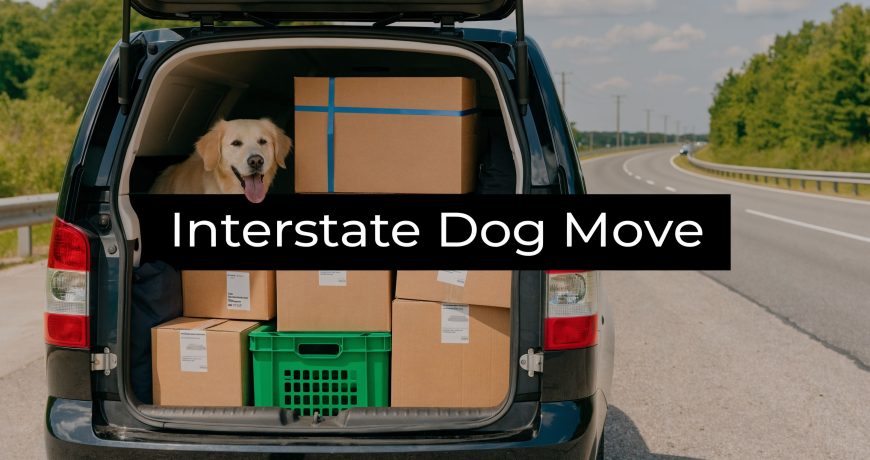
Dog Interstate Transport: Your Guide for a Smooth Move
Moving interstate already feels like a full-time job. Boxes are everywhere, booking windows are tight, and every decision seems to affect three others.
Then you look at your dog.
Most owners have the same reaction. The furniture move makes sense. The utilities can be switched over. The dog’s trip feels harder, because it isn’t just logistics. It’s welfare, paperwork, timing, and stress management all rolled into one.
That’s why dog interstate transport needs its own plan. Not a last-minute add-on. Not something sorted the night before. A smooth move usually comes down to three things: legal compliance, physical safety, and a routine your dog can cope with.
When those three line up, interstate pet travel becomes manageable. The crate is ready. The vet paperwork is current. The travel day fits around loading times instead of clashing with them. Your dog arrives settled enough to eat, drink, toilet, and start adjusting to the new place.
Owners often underestimate one practical point. A dog rarely struggles because of the kilometres alone. Problems usually start when the pet plan and the house move plan are handled separately. Pickup times drift. Feeding gets forgotten. Documents sit in the wrong folder. Your dog ends up waiting around while trades, agents, or removal crews come and go.
A better approach is simple. Treat your dog’s journey as part of the move itself.
Your Interstate Move and Your Four-Legged Family Member
A family home in the final week before relocation has a very recognisable rhythm. Tape guns on the bench. Half-packed wardrobes. A dog following everyone from room to room, noticing that something’s changed even if they don’t understand what.
That’s when owners start asking the right questions. Should the dog travel with us? Should we book a specialist service? What paperwork do we need? What happens if settlement runs late? Can the dog stay calm while the truck is loaded?
Those questions are normal. They’re also worth answering early.
What matters most on a pet move
The strongest plans focus on three priorities:
- Compliance first: State entry rules, health documents, vaccination records, microchip details, and any permit requirements need to be checked before travel is booked.
- Welfare on the day: Your dog needs a transport method that matches its age, breed, temperament, and health.
- Timing with the household move: The pet journey should fit around packing, access windows, and arrival times so your dog isn’t stuck in the middle of moving chaos.
Practical rule: If your dog’s travel plan only exists in your head, it isn’t organised yet.
Dogs pick up on disruption fast. The usual bed moves. Their bowls disappear into a box. Doors stay open longer than normal. People come and go. Even calm dogs can become clingy, unsettled, or reactive during this stage.
That’s why planning isn’t only about transport. It’s about reducing unnecessary pressure on the dog while everything else is changing.
What works in real relocations
Owners usually get better outcomes when they separate the move into stages. The first stage is legal and medical prep. The second is crate and routine prep. The third is coordinating travel day so the dog has a clear departure and arrival plan.
What doesn’t work is improvising.
Leaving the crate setup until the final week, assuming one set of rules applies across every state, or trying to manage handover, key collection, and dog transport all at once creates avoidable stress. A dog that has a familiar crate, a prepared bag, and a clear transport booking generally handles the move far better than a dog dropped into the day cold.
Navigating Australian Interstate Pet Travel Laws
Australian pet travel isn’t governed by one simple national rulebook. Interstate dog movement is governed by individual state regulations, which is why owners get caught out when they assume a general vet check is enough.

The most common mistake is handling the move booking first and the pet paperwork second. In practice, it needs to happen the other way around.
If you’re also dealing with broader pet relocation questions, including import processes and travel prep, Moving Pets to Australia is a useful background guide. For local move-specific advice, this practical page on moving with pets helps frame the timing side of the move.
The documents that usually matter
For interstate dog transport, owners should expect to check these items early:
Microchip details
Your dog’s identification needs to match the paperwork exactly. A typo in the number or a mismatch between old and current records can create delays.
Vaccination status
The verified requirements provided for this article note that dogs over 12 weeks need current rabies vaccination for interstate movement.
Veterinary health certificate
This certificate isn’t open-ended. It must usually be issued within a set period before travel, and that period varies by destination.
Import permit if required
Some destinations require a formal permit before the dog crosses the border.
Any destination-specific treatment or testing
Queensland and New South Wales can involve additional checks depending on the dog’s circumstances.
Victoria to New South Wales
NSW example: Moving a dog from Victoria to New South Wales requires an Import Permit from the NSW DPI, proof of rabies vaccination, and a vet certificate issued within 7 days of travel, according to the verified data linked to Canine Express.
That short validity window matters. If your move date shifts, the certificate may need to be redone.
The same verified source states that many pet relocation inquiries involved non-compliance issues, leading to quarantine delays and significant costs per dog. Even if your own move doesn’t involve quarantine, the takeaway is clear. Incorrect paperwork can derail your timeline fast.
Victoria to Queensland
Queensland transport needs close attention as well. The verified data notes that moving a dog from Victoria to Queensland requires a Queensland Import Permit and added checks for heartworm and tick treatments, with the permit valid for 30 days.
That longer permit window can help with planning, but it doesn’t remove the need to time the vet visit properly. Owners still need documents that line up cleanly with the booking date.
A simple legal checklist
Use this before you confirm the travel date:
- Check the destination state directly: Don’t assume NSW, Queensland, and other states all want the same thing.
- Book the vet around the certificate window: The examination date needs to fit the travel date, not just your own availability.
- Match names and numbers exactly: Owner name, address, dog description, and microchip details should be consistent across every document.
- Keep digital and printed copies: A scanned set on your phone helps, but hard copies still matter on moving day.
- Review the timing after any delay: If settlement, pickup, or handover changes, review the paperwork again.
Paperwork errors rarely look serious when they happen. They become serious when the dog is already due to travel.
Welfare rules matter too
Legal compliance is only one part of the picture. The verified data also states that puppies under 8 weeks are generally prohibited from interstate travel under state animal welfare laws, and that the Australian Code of Practice for the Welfare of Animals during Transport places limits on confinement and rest requirements.
That means the transport method itself has to be lawful and humane, not just documented.
A valid permit won’t fix a poor travel setup. If the crate is unsuitable, the vehicle isn’t appropriate, or the dog’s age or condition makes travel unsafe, you still have a problem.
Choosing Your Dog's Mode of Interstate Transport
How your dog travels should depend on the route, the season, the breed, and your dog’s temperament. Owners often start with the question, “What’s cheapest?” The better question is, “What gives my dog the best chance of arriving settled and safe?”

The verified data says Australia has a significant dog population, with many relocating interstate annually, and notes that the Australian Code of Practice for the Welfare of Animals during Transport limits confinement to 48 hours max without rest. It also states that short-nosed breeds face a higher heat stress risk during summer interstate trips. That source appears here, where transport choice matters most: what to do the night before your movers arrive.
If you’re comparing long-haul relocation options more broadly, this page on long-distance movers is useful for understanding interstate scheduling and route planning.
Driving your dog yourself
This works best when you want direct control over the day.
You choose the stops, control the crate setup, and can respond immediately if your dog shows signs of distress. For some dogs, especially those strongly bonded to their owner, that familiarity can make a big difference.
Driving yourself tends to suit:
- Dogs that travel well in cars
- Shorter or staged interstate routes
- Owners who can devote the full trip to the pet, not just the destination
- Moves where the household load and the pet move are separated
The downside is practical. Long routes are demanding. If you’re also managing keys, settlement, children, cleaning, or arrival access, your focus gets split. That’s where owner-driven travel often starts well and ends in fatigue.
Flying by air cargo
Air freight is usually the fastest option over long distances.
That speed can be a real advantage for dogs that cope poorly with prolonged road time. It also reduces the hours spent in transit compared with a road journey across multiple states.
But air travel isn’t automatically gentler. Airline rules, crate standards, check-in windows, temperature constraints, and breed restrictions all matter. Owners also need to be realistic about their dog’s temperament. Some dogs do well with the shorter overall journey. Others struggle with airport handling and separation.
Professional road transport
A professional pet mover sits between those two extremes. You’re not driving the trip yourself, but the dog still travels by road with a service designed around animal transport rather than household freight alone.
This can be the best fit for long routes when:
- You’re moving house at the same time and can’t supervise every stop
- Your dog needs a structured road journey
- You want a climate-controlled setup
- The route needs planned rest breaks and monitoring
The quality gap between operators is large. A strong provider will explain crate standards, ventilation, rest schedules, and contingency procedures clearly. A weak one will speak vaguely about “pet-friendly travel” without saying what that means in practice.
Comparison of Interstate Dog Transport Options
| Factor | Driving Yourself | Flying (Air Cargo) | Professional Pet Mover |
|---|---|---|---|
| Control | Highest owner control | Low during transit | Moderate, handled by transport team |
| Travel time | Slowest on long routes | Fastest for long distances | Moderate |
| Best for | Confident travellers, owner-supervised moves | Long-distance speed | Owners balancing a full household move |
| Stress points | Fatigue, long driving days, inconsistent stops | Airport handling, crate compliance | Quality depends on the operator |
| Breed sensitivity | Heat and breaks must be managed closely | Airline restrictions may apply | Climate control can help on long routes |
| Flexibility | High | Lower due to airline schedules | Route-dependent |
How to make the right call
A useful way to choose is to ask four blunt questions.
Can my dog tolerate the duration
A calm dog that becomes restless after a few hours in the car may not cope well with a very long self-drive route. In that case, a shorter air journey or structured professional service may be the better option.
Is my breed a heat risk
Flat-faced breeds need more caution than most owners realise. In summer, that alone can rule out some transport setups.
The verified data specifically flags brachycephalic dogs as having a higher heat stress risk. That should influence not just the travel method, but also the time of year and time of day.
Will I be available for the pet on move day
If your attention will be on loading, access issues, cleaners, bond return, or handover, then “driving the dog myself” may sound better than it works.
Does the transport method match the move as a whole
Some owners pick a pet option in isolation, then discover it clashes with everything else. The right choice is the one that fits the household timeline as well as the dog.
Crate and Comfort Preparation for the Big Day
Most travel problems start before the vehicle even moves. A dog that sees the crate for the first time on departure day is already under pressure.
Proper crate work changes that. It gives your dog one familiar, controlled space in the middle of a disrupted environment.

The verified data cites recent Australian research reporting that dogs showed increased cortisol after 12-hour road trips in moving trucks, compared with air freight, and links that stress to vibrations and temperature swings. The same data notes that preparation is even more important for brachycephalic breeds because of their higher heat stress risk. That source is referenced here: the impact of transportation on puppy welfare.
If you want a basic external guide for sizing, these dog kennel size recommendations are helpful for visualising space and fit. For the home-moving side of anxiety reduction, this guide on how to reduce stress when moving home is worth reviewing.
Make the crate familiar before the move
Start early if you can.
Leave the crate open in a quiet area of the house. Put a blanket inside. Feed meals near it, then inside it. Reward calm entry and short stays. Build duration gradually instead of forcing confinement.
What works best is repetition without drama. The crate should feel boring and safe, not like a warning sign that something stressful is coming.
Choose a setup your dog can handle
A useful travel crate should allow your dog to stand, turn, and settle comfortably. It also needs reliable ventilation and secure latching.
When owners get this wrong, it usually happens in one of two ways:
- Too small: The dog can’t adjust posture or settle properly.
- Too large: The dog slides more in transit and doesn’t feel contained.
A crate isn’t just a container. It’s your dog’s only stable room on travel day.
Build a simple dog travel kit
Keep this separate from household packing so it doesn’t disappear into the truck.
- Food and bowl: Pack enough for the trip plus a buffer in case access to shops is delayed.
- Water and dispenser: Bring what your dog already uses if possible.
- Medication: Keep it in your personal bag, not in boxed household goods.
- Lead and spare lead: One breakage or one misplaced lead can create a real problem at a service stop.
- Comfort items: A blanket or toy that smells like home can help lower arousal.
- Cleaning basics: Towels, wipes, and waste bags are worth having close.
Feeding and exercise timing
Don’t overfeed before travel.
A light meal at the right interval is usually better than a full bowl just before departure. Most dogs travel better after a proper walk and toilet break, with enough time to settle before loading.
This short video is a good prompt for owners working on crate confidence and calm handling before the trip:
Sedation needs veterinary advice
Owners sometimes ask whether they should sedate a dog for interstate transport. That decision belongs with your vet.
Some dogs need prescription help for severe anxiety or motion sickness. Others do better with behavioural preparation, a stable crate routine, and a calmer travel setup. What doesn’t work is guessing. The wrong medication, wrong dose, or wrong timing can make the trip harder, not easier.
Coordinating Pet Transport with Your Household Move
The pet move and the furniture move shouldn’t run as separate projects if you can avoid it. That’s where many otherwise organised relocations start to fray.
One booking says the truck arrives in the morning. Another says the dog pickup is “sometime after lunch”. Settlement shifts. Lift access changes. The dog ends up confined longer than planned, or the owner has to choose between supervising loading and caring for the pet.
A coordinated plan solves those conflicts before they happen.
Why integration works better
The verified data for Melbourne-based interstate moves notes that compliance with state biosecurity laws is critical to avoid fines up to $10,000 per state, and that professional removalists must keep paperwork such as vet certificates and microchip data in order. It also notes high compliance rates in professionally managed transports in DAFF audits. That’s the legal side.
The operational side matters just as much. When the household schedule and dog schedule are aligned, the whole move becomes cleaner.
A coordinated move lets you organise:
- Departure timing: Your dog leaves before peak loading chaos or after it, depending on temperament.
- Access windows: Apartment lifts, building rules, and key handover times don’t conflict with pet handling.
- Arrival sequence: The dog reaches the new address when there’s a safe room, water, bedding, and one settled human available.
- Single communication flow: Fewer handoffs means fewer mistakes.
The biggest mistakes happen in the gaps
Most pet transport issues I’ve seen aren’t dramatic welfare failures. They’re planning gaps.
The crate is packed too early and can’t be used the night before. The dog’s bag is loaded with the linen. The vet certificate is in a glovebox while another family member has the dog. Nobody has decided where the dog will stay during final cleaning.
That kind of friction builds quickly on move day.
The smoother move is usually the one with fewer moving parts, not more.
A better move-day sequence
For most interstate household relocations, this order works well:
Keep the dog in a quiet, closed room during heavy loading
That prevents escapes and lowers overstimulation.
Load the dog bag separately
Food, water, paperwork, lead, medication, and bedding should stay with you.
Time the dog’s departure deliberately
Some dogs cope better leaving before strangers start moving furniture. Others do better once the noisy stage is over.
Prepare the arrival space before the dog gets there
One room with water, bedding, and a closed door is better than immediate free roam in a new house full of boxes.
If you’re building the rest of your relocation timeline, a detailed moving house checklist helps keep the pet tasks tied to the broader move.
One plan is calmer than two
Owners often think separate providers give them more flexibility. Sometimes they do. But they also create more coordination points, more call-backs, and more room for crossed wires.
For dog interstate transport, simplicity is underrated. A pet that travels within a well-timed household plan usually experiences less waiting, less confusion, and fewer abrupt changes on the day.
How to Hire a Reputable Pet Transport Service
Not all pet transporters operate to the same standard. Some run disciplined, welfare-focused systems. Others rely on broad claims and thin details.
When you’re comparing services, don’t start with price. Start with process.

The verified data states that professional pet transport success rates in Australia are high when following AVA-endorsed protocols. It also identifies key benchmarks including crash-tested crates, real-time temperature monitoring, and mandatory rest stops on long-haul trips. The same source says trucks must meet ADR 43/04 for animal compartments, with a 96.8% zero-incident rate on weekly runs like Melbourne-Sydney for insured professional operators, according to the verified source linked here: the pros and cons of dog transport.
If you’re comparing the broader professionalism of interstate operators, this guide on how to choose the best interstate removalists is a useful companion read.
Questions worth asking before you book
A reputable transporter should answer these without hesitation:
- What crate standards do you use: Ask whether crates are crash-tested and how sizing is determined.
- How is temperature monitored: “Ventilated vehicle” is vague. Ask how temperature is tracked during transit.
- How often are dogs checked on long routes: You want a clear rest and monitoring routine, not a general reassurance.
- What happens if a trip is delayed: Good operators have contingency plans for weather, breakdowns, or route changes.
- How is paperwork checked before departure: The company should have a process, not just rely on the owner saying everything is fine.
Red flags that should slow you down
Some warning signs are easy to miss because the website looks polished.
Vague language
If the provider talks about “loving pets” but gives no detail on vehicles, crate setup, or procedures, that’s not enough.
No discussion of breed or health suitability
A serious operator will ask questions about age, breed, temperament, and medical issues. If they don’t, they’re treating every dog the same.
No clear line on welfare procedures
You should know how rest breaks, hydration, and environment control are handled.
Ask for specifics. Good operators don't get annoyed by detailed questions.
What good looks like
Strong pet movers tend to be methodical. They document the route. They explain the vehicle setup clearly. They tell you what to pack, what not to pack, and what they need from your vet.
They also speak plainly about limits. If a dog isn’t suitable for a particular route or season, they’ll say so.
That honesty matters more than polished sales language. A transporter who sets boundaries is usually safer than one who says yes to everything.
Frequently Asked Questions About Dog Interstate Transport
How early should I book dog interstate transport
Book as early as you reasonably can, especially if your route, settlement date, or building access is fixed. The primary reason isn’t only availability. It’s document timing, crate prep, and making sure the pet booking fits the household move instead of fighting with it.
Is it better to drive my dog or use a transport service
It depends on the dog and the move.
Driving yourself gives you more control. A professional service can be a better choice when you’re also managing a full interstate relocation and can’t properly supervise the trip. The best option is the one that matches your dog’s temperament and your capacity on move day.
Are flat-faced breeds harder to move interstate
Yes. Brachycephalic dogs need more caution because heat and breathing stress can escalate quickly. That affects route choice, travel timing, crate setup, and whether a climate-controlled road option is more appropriate than another method.
Should I sedate my dog for travel
Only if your vet recommends it.
Some dogs benefit from prescribed support. Others do worse if owners try to medicate without proper veterinary guidance. Good crate acclimation, a familiar blanket, and a calmer loading routine often help more than people expect.
What should stay with me instead of going in the moving truck
Keep your dog’s paperwork, lead, food, medication, water, bowls, and comfort items with you. Those items should never be buried inside general household cartons.
What’s the biggest mistake owners make
Treating the dog’s travel as a separate task instead of part of the whole move.
That’s when schedules clash, paperwork gets overlooked, and the dog spends too long waiting through noise and disruption. The smoothest relocations usually come from one joined-up plan, not a patchwork of last-minute fixes.
If you're planning an interstate move and want the pet side to fit neatly with the rest of the job, Get n Go Removals Melbourne can help you organise the broader relocation so timing, access, packing, and travel-day logistics are easier to manage.