Small Moving Boxes: Sizes, Uses, and Packing Tips
You're at the kitchen bench, surrounded by half-packed cupboards, flattened cartons and the growing suspicion that the boxes you bought are wrong. The large tea chest looks efficient until you load it with books or crockery. Then it becomes a heavy, awkward block that's difficult to lift, dangerous on stairs and liable to fail before it reaches the truck.
Small moving boxes solve that problem when you use them for the right loads. They're designed for dense contents, fragile items and anything that becomes unsafe when packed into a larger carton. They're not the answer for doonas, pillows or bulky coats, where a larger box uses space more sensibly.
The rule is simple. Choose the carton by weight and handling risk, not by how much space it appears to offer. A properly selected small box protects the contents, makes stacking easier and keeps moving day under control. The wrong box does the opposite. For broader preparation advice, use this practical guide to reduce stress when moving home.
Why Small Boxes Decide Whether Moving Day Goes Smoothly
At seven in the morning, a three-bedroom home can look organised from the hallway and chaotic in the kitchen. One carton is packed with Le Creuset cookware, its base beginning to sag. A book box has split at the seam because someone treated empty space as spare capacity. Meanwhile, the removalist is changing the truck layout because the heavy cartons can't safely sit where the original plan placed them.
That scene is common, and the cause usually isn't bad luck. It's poor right-sizing. Large cartons filled with dense goods become too heavy long before they look full, while small cartons filled with linen waste cardboard, tape and valuable floor space.
The carton has to suit the load
Small moving boxes are the workhorse carton for books, pantry goods, tools, documents, crockery and other compact household items. Their smaller footprint limits how much you can add, so the box reaches a manageable carry weight before the contents become an unstable tower. That also helps prevent items from shifting inside the carton during a stair carry or a short vehicle trip.
A larger carton has its place. Use it for light, bulky belongings such as doonas, pillows, towels and coats. Those items fill volume without creating the same concentrated load. Putting them into small cartons creates too many boxes without improving protection.
Practical rule: If the contents are dense enough to make you hesitate before lifting the carton, use a smaller box before you use more tape.
Why this matters in Melbourne
Apartment moves expose weak packing decisions quickly. Stairs, lifts, narrow corridors and limited kerbside access reward cartons that one person can grip, turn and stack. Small cartons also sit more securely on a trolley and are easier to position around furniture inside a truck.
Across Australia, around 1.14 million people move house each year, and about 84% use Australia Post's Mail Redirection service, according to Australian moving-box guidance. That scale makes small cartons a standard part of household relocation, not a specialist extra. The practical objective is to stop overpacking, keep dense goods controlled and give the removal team a load they can handle safely.
What Counts as a Small Moving Box in Australia
A small carton earns its keep after you leave the kerb. It stacks neatly on a removalist trolley, fits more easily into an apartment, and stores conveniently during unpacking. Choose one for dense or fragile loads, not only because its label says “small”.
Australian suppliers use different names for similar cartons. One retailer may list a small box, another a book box, and another a half-carton. Check the measurements before ordering. The printed name is only a guide.
A practical Australian small carton commonly holds around 20 to 40 litres. Local examples include a 20-litre box and a 40-litre carton measuring 41 cm x 30 cm x 32.5 cm. Some Australian retail channels list small moving boxes at approximately 406 x 298 x 431 mm, or roughly 52 litres. Categories therefore overlap between suppliers. Review the Australian carton sizing guidance before ordering a mixed pack.
Compare the formats before buying
Use the table as a planning guide. Dimensions vary by supplier, so treat these figures as typical ranges rather than a universal standard.
| Box Type | Typical Dimensions (mm) | Volume (L) | Best Fit |
|---|---|---|---|
| Small carton | Around 403 x 301 x 330 to 406 x 298 x 431 | About 20 to 52 | Books, pantry goods, tools, crockery, documents |
| Medium carton | Varies by supplier, usually larger than small | About 45 to 50 | Kitchen appliances, toys, décor, mixed household goods |
| Tea chest | Varies by supplier | About 60 to 65 | Lighter household contents and general packing |
| Large carton | Varies by supplier | Up to around 104 in some retail ranges | Linen, clothing and bulky lightweight items |
The overlap between small and medium volume makes ordering by label a poor approach. A medium carton may provide more space without increasing its safe practical load. A full small box can protect heavy, fragile or shifting contents better than a half-filled medium carton.
Before buying, check the external dimensions, board construction, hand holes and lid style. If you are comparing supplier formats, use this guide to finding moving boxes. Then choose based on the load.
Small boxes win when contents are dense or fragile. Right-size each carton so one person can carry it comfortably, rather than filling a larger box because unused volume remains. That approach reduces shifting, protects the base and prevents overbuying cartons for loads that need control.
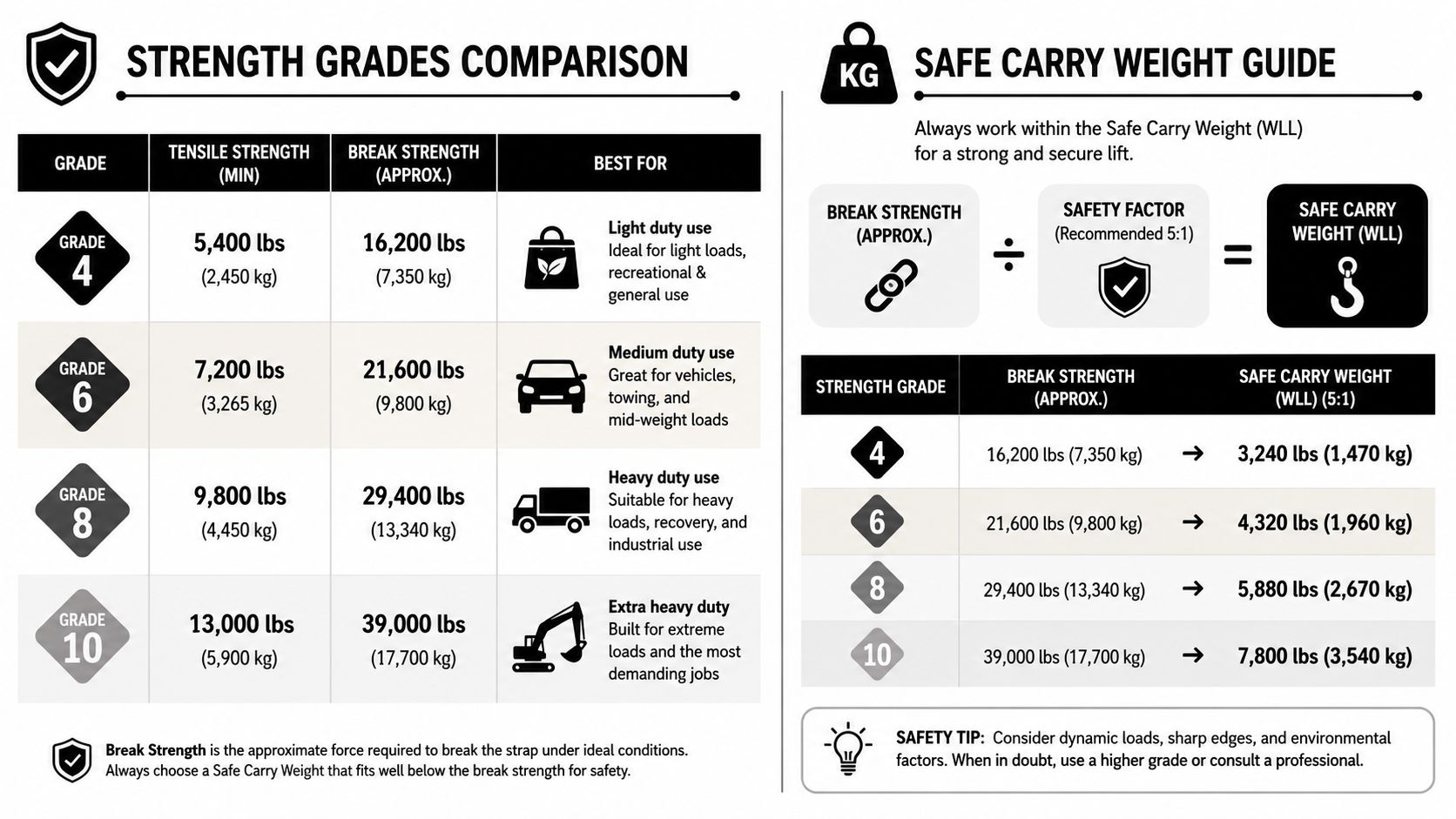
Strength Grades and Safe Carry Weight
Box size doesn't determine strength on its own. Wall construction matters. Single-wall corrugated board uses one fluted layer between liners. Double-wall board adds another fluted layer, giving the carton more resistance when dense contents press against the base, corners and side panels.
Australian packing suppliers commonly specify heavy-duty cartons by construction and board thickness. Product listings include medium heavy-duty cartons with wall thickness around 6.5 mm and double-cushion construction, which supports better edge-crush resistance and stacking stability under load, as shown in Australian box product specifications.
Match construction to contents
Use a sound single-wall carton for ordinary, evenly distributed household items. Choose double-wall smalls for concentrated loads such as hardcover novels, canned goods, stoneware, tools and tightly packed kitchenware. The box may be physically small, but the load still pushes hard against the base and can crush the fluting from underneath.
The practical carry ceiling is more important than any advertised box capacity. Australian moving guidance generally keeps a fully loaded carton below roughly 15 to 20 kg, with 20 kg treated as a practical upper limit in several packing guides, including this removalist packing guide.
A carton that looks sturdy at the shop can still fail when cheap board, weak fluting and concentrated weight meet a rough stair carry.
Budget cartons are risky when they use thinner board, lower-grade recycled fibre or short flutes. They may look identical before packing, then buckle under a heavy book run or a stack of dense cartons. Check the board grade where possible, reinforce the base and never use a carton's visual fullness as permission to exceed a manageable lift.
Best Uses for Small Boxes Around the Home
Small cartons earn their space when the contents are heavy, compact, fragile or likely to shift. Books are the obvious example. A small box limits the number of hardcovers you can add, keeps the load close to the floor and prevents the carton becoming impossible to carry.
Kitchen packing follows the same logic. Canned goods, spice jars, crockery, glasses, mugs and compact appliances sit more securely in a small footprint. Trays stack flat, wrapping stays close to each item and the reduced internal space leaves fewer gaps for breakables to collide.
| Item Category | Best Carton Size | Why | Avoid If |
|---|---|---|---|
| Books, CDs and records | Small | Dense items stay within a manageable lift | The carton is filled beyond the carry limit |
| Canned goods and pantry staples | Small | Concentrates weight without creating a deep, unstable load | Leaking containers are packed without separate protection |
| Crockery, glasses and mugs | Small | Limits movement and supports tighter protective layers | Items are forced together without padding |
| Tools and hardware | Small, preferably heavy-duty | Controls concentrated metal weight | Sharp edges can puncture unprotected board |
| Small appliances | Small or medium | Depends on shape and protective packaging | The appliance needs more cushioning than the carton allows |
| Linen, doonas and pillows | Medium or large | Uses volume for lightweight contents | The box becomes underfilled and collapses when stacked |
| Clothing and bulky coats | Medium or large | Prevents excessive box count | Heavy shoes are mixed into a large carton |
| Toys | Usually medium | Better use of volume for light, irregular items | Small components need tighter containment |
| Bathroom toiletries | Small | Keeps bottles upright and limits liquid weight | Open or poorly sealed containers can leak |
Crockery and glassware almost always deserve small cartons. Wrap each piece, keep the load compact and place the finished box where another carton won't crush it. Tools, bathroom supplies and hardware belong in the same category because their weight rises quickly even when their volume doesn't.
Where small is the wrong choice
Don't use small cartons for doonas, pillows, towels or bulky coats. They consume a box without giving you a useful weight advantage. Linen also cushions itself, so a medium carton normally makes better use of the truck and your unpacking time.
Toys and clothing sit between the two formats. Use mediums for ordinary soft goods, then reserve smalls for shoes, delicate components, compact collections or items that need to stay tightly organised. For wardrobes, cupboards and loose accessories after the move, affordable closet organiser bins can provide a reusable alternative to keeping every carton in circulation.
How Many Small Boxes to Buy Per Room
For a typical three-bedroom Melbourne home, buy by the rooms that contain dense goods, not by the number of cupboards. The kitchen usually needs the largest allocation because crockery, glassware, pantry supplies and small appliances create weight quickly.
Use this as a starting order:
- Kitchen: 12 to 15 small cartons, depending on how much pantry stock, crockery and glassware you keep.
- Living room: 4 to 6, mainly for books, DVDs, records and electronic accessories.
- Each bedroom: 3 to 5, covering shoes, personal items and bathroom overflow.
- Home office: 6 to 8, for paperwork, cables, stationery and small hardware.
- Garage or shed: 4 to 6, for tools, fixings and garden gear.
Those room allocations produce a working total of around 36 to 46 small cartons for the dense contents of a three-bedroom home. Add approximately 20 to 30 medium cartons for soft and bulky loads, as outlined in this house-packing starting guide.
Calibrate the order before checkout
An apartment resident with built-in wardrobes and limited storage may need fewer cartons overall, but lift access and long corridors make compact, controllable boxes more valuable. A family that cooks extensively will lean towards the upper end of the kitchen range. Someone with a large book collection, workshop or home office may need more small cartons while using fewer mediums.
Don't buy every carton at once if you haven't sorted. Pack one representative cupboard, weigh the finished box and use that result to adjust the remaining order. It's better to add a few cartons after measuring your real contents than to store a stack of unused boxes in a small Melbourne apartment.
Packing Techniques That Protect Contents
A small carton only works when the base and internal packing are prepared properly. Start with the base before adding anything. Use two strips of tape across the top seam, then reinforce the bottom with a strip along each bottom edge. Press overlapping ends flat so they can't catch on a trolley, stair edge or another carton.
Build the interior from the bottom upwards:
- Cushion the base. Add crumpled paper or bubble wrap before placing contents inside.
- Set heavy items low. Place dense goods beneath lighter breakables, and keep fragile pieces upright where their shape allows.
- Wrap individually. Use tissue or glassine wrap for delicate items, then add a divider for glasses, mugs or crockery.
- Fill every gap. Scrunched paper should stop movement without forcing the contents against the walls.
- Test the closure. The lid should close without pressure. If it won't, remove items rather than stretching the flaps.
Books need special attention. Stand them spine-down to protect the hinge, and don't stack a heavy run flat under its own weight. Kitchenware also needs even distribution, because one dense corner can twist the carton while it's being lifted.
Label for the unpack, not just the truck
Label two adjacent sides with the room, contents and fragile status. A label on the top disappears when cartons are stacked. Small colour-coded stickers help a crew sort boxes quickly, especially when the new home has a tight hallway or limited lift access.
Use a bathroom scale before sealing. If the carton is approaching the 15 to 20 kg handling range, split the contents. A heavy box can tear at the flap regardless of how neatly you wrapped the items. For more detailed protection methods, follow this guide to packing fragile items for moving.
Pairing Small Boxes With Professional Packing Services
Professional packing works best when the crew matches the carton to the load instead of handing every item the same box. Dense book collections need stronger small cartons. Kitchenware may suit a standard carton when it's evenly distributed. Glassware needs careful wrapping, dividers and enough cushioning to stop contact between pieces.
A valet packing crew also brings consistency to the details that homeowners often rush. Plates are wrapped and placed vertically, fragile corners receive protection, and cartons are sealed and labelled as each room is completed. The 15 to 20 kg carry rule remains the working limit, even when trained movers are doing the lifting.
Materials are only part of the service
The useful difference is the sequence. Packers sort first, choose the carton, protect the item, test the fill and label the destination. On the truck, small cartons can sit above medium cartons when that arrangement prevents crush damage, while fragile goods stay visible and accessible rather than buried beneath general household loads.
Self-sourced supermarket cartons can be suitable for light items, but inconsistent sizes and worn seams create uncertainty. If a carton has already softened, absorbed moisture or lost its original shape, don't use it for crockery, books or tools.
For a closer look at how trained packing changes the moving process, read about the benefits of professional packing services. The right service doesn't eliminate the need to right-size. It makes the decision more reliable and reduces rushed packing on settlement day.
Reusing, Recycling, and Storing Small Boxes After the Move
The final carton often causes a new problem in Melbourne apartments. You've unpacked the kitchen, books and office, but the hallway is crowded with flattened cardboard and the building's storage cage has little room left. Small moving boxes are worth keeping only if they remain dry, clean and structurally sound.
Flatten good cartons and stack them inside a wardrobe cavity or beneath a bed. A dozen small boxes can stay ready for the next move, a garage clear-out or a parcel of household goods going to family interstate. Add a simple label such as kitchen, books or décor so the next packing session starts with usable materials rather than a random pile.
Retire damaged cartons
A crushed corner, grease mark, damp patch or torn handhold is enough reason to stop reusing a box. Damaged board can weaken further when folded, taped or loaded. Don't pass poor cartons to another household just because they still look acceptable from one side.
For Victorian households, confirm local collection rules before putting cardboard out. Many councils accept clean corrugated cardboard through the yellow-lid kerbside stream, and local guidance may specify how it must be flattened or bundled. Remove tape and labels where practical, keep cardboard dry, and never force oversized pieces into a bin.
Choose the easiest local option
Drop-off facilities, cardboard recycling stations and community reuse channels can all work, depending on your suburb and access to a vehicle. Visy facilities, Bunnings cardboard recycling stations and community groups found through Gumtree or Facebook Marketplace are practical places to investigate for clean cartons. Gardeners may also take flattened cardboard for sheet mulching.
Don't burn treated cardboard, and don't leave flattened cartons in a building chute. They can jam compactor systems and create work for other residents. Reusable moving boxes are also entering the Australian market, with some suppliers marketing systems designed for use up to 400 times before recycling, while recycled-content cartons are widely sold, as discussed in this Australian post-move box guide.
Get n Go Removals Melbourne can supply small and other moving cartons, provide careful packing and unpacking, and handle house, apartment and office relocations across Melbourne. If you want the boxes matched to your contents and the move managed from packing through transport, visit Get n Go Removals Melbourne to discuss your requirements and schedule a quote.