
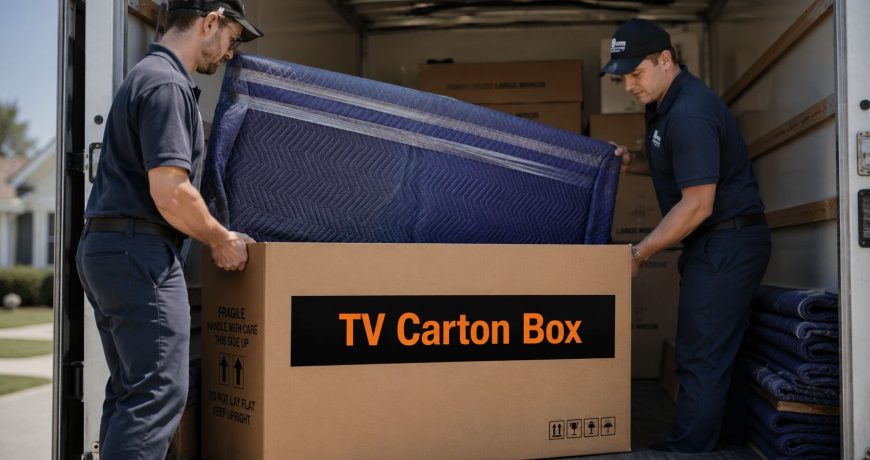
TV Carton Box Guide: Choose, Pack, and Move Safely
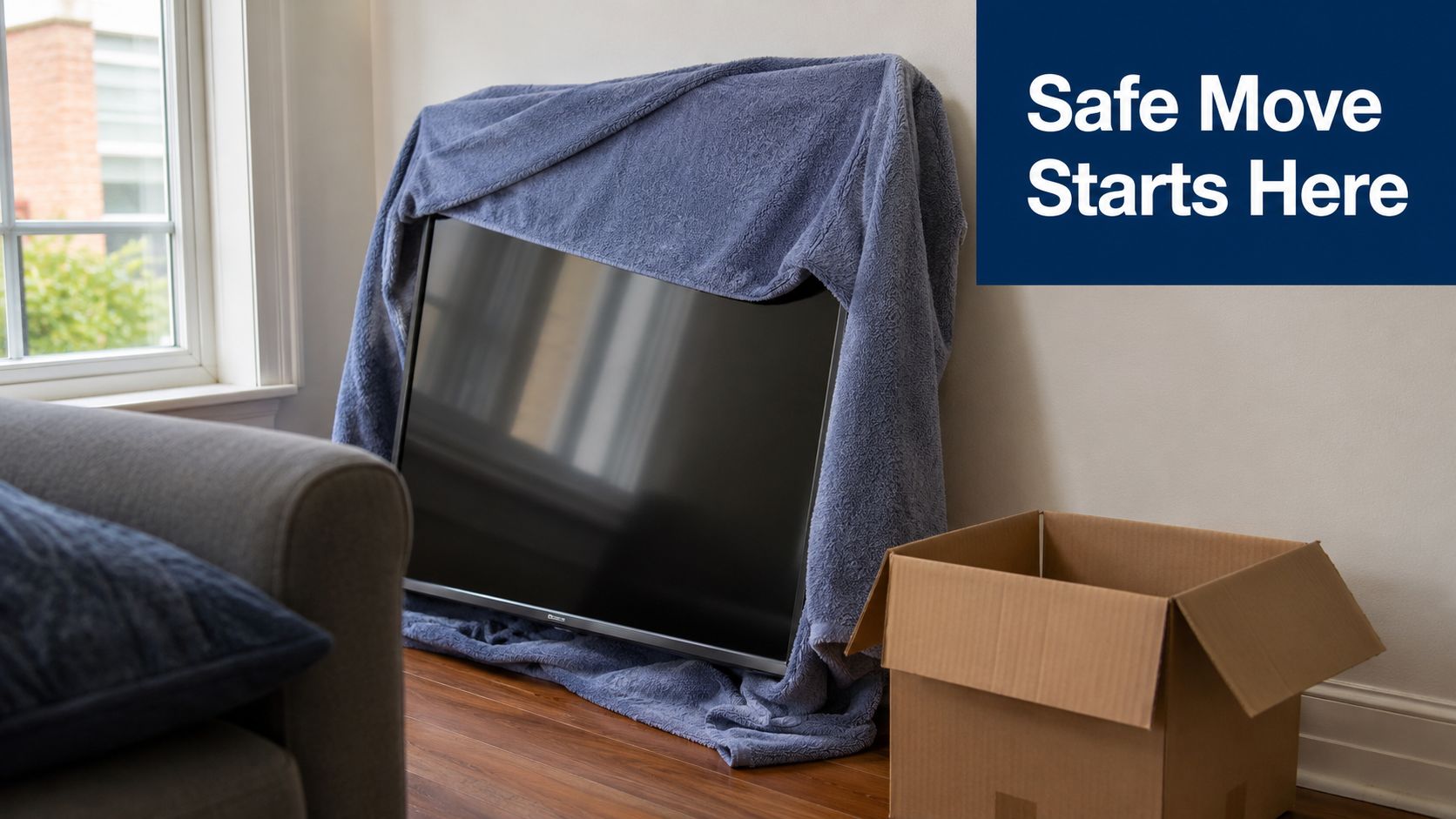
You're halfway through a Melbourne move, the lounge is stripped bare, and the television is leaning against a wall under a towel because the original packaging disappeared years ago. A generic carton is sitting nearby, too narrow for the panel and too shallow for its edges. That setup may look temporary, but it leaves the screen exposed to the exact forces that cause moving-day damage.
A TV carton box isn't just a bigger removal carton. It's a fitted protective shell designed around the screen's width, height, depth, corners, and upright transport position. The right box, internal cushioning, and loading method work together. Miss one of those controls, and padding alone won't compensate.
Why Your TV Needs a Proper Carton Box
A flat-screen television can flex under uneven pressure, while its corners and panel edges remain vulnerable to knocks. A towel protects against surface scratches, but it doesn't stop the television from shifting, tipping, or taking a concentrated impact when a trolley crosses a threshold or a truck brakes.
The carton is part of the protection system
The safest arrangement has several jobs happening at once:
- The outer shell resists knocks: Corrugated board takes contact from door frames, lift walls, other cartons, and handling equipment.
- The internal supports protect the edges: Foam corners or retainers keep the panel away from the carton walls.
- The fit limits movement: Empty space allows the television to gain momentum inside the box, especially during cornering and sudden stops.
- The upright position protects the panel: Standing the screen on its edge avoids the uneven pressure created when a large panel lies flat.
A general-purpose removal carton is built for mixed household contents. Books, kitchenware, and soft goods can be packed around their shape. A television has a broad, rigid panel with delicate internal components, so a standard RSC carton can leave pressure points at the corners or along the face.
Australian moving guidance commonly specifies a standard removal carton at about 435 x 410 x 600 mm, while a flat TV carton may be around 200 x 1430 x 750 mm because the box must distribute the screen area and protect its edges. The Australian carton sizing guide shows why a TV package needs a different proportion from a household carton.
Practical rule: If the screen can slide, bow, or touch the carton wall, the packing job isn't finished.
For a useful overview of how screen class affects box choice, start with this guide to find the right 4K TV box. Before the carton arrives, also prepare the room and route. Tight apartment corridors, lift doors, stair landings, and balcony access can turn a well-packed television into an awkward load if the path hasn't been cleared. Advice on how to pack fragile items for moving is especially relevant when the TV is travelling with glass, mirrors, artwork, or other pressure-sensitive belongings.
What Makes a TV Carton Box Different From a Regular Box
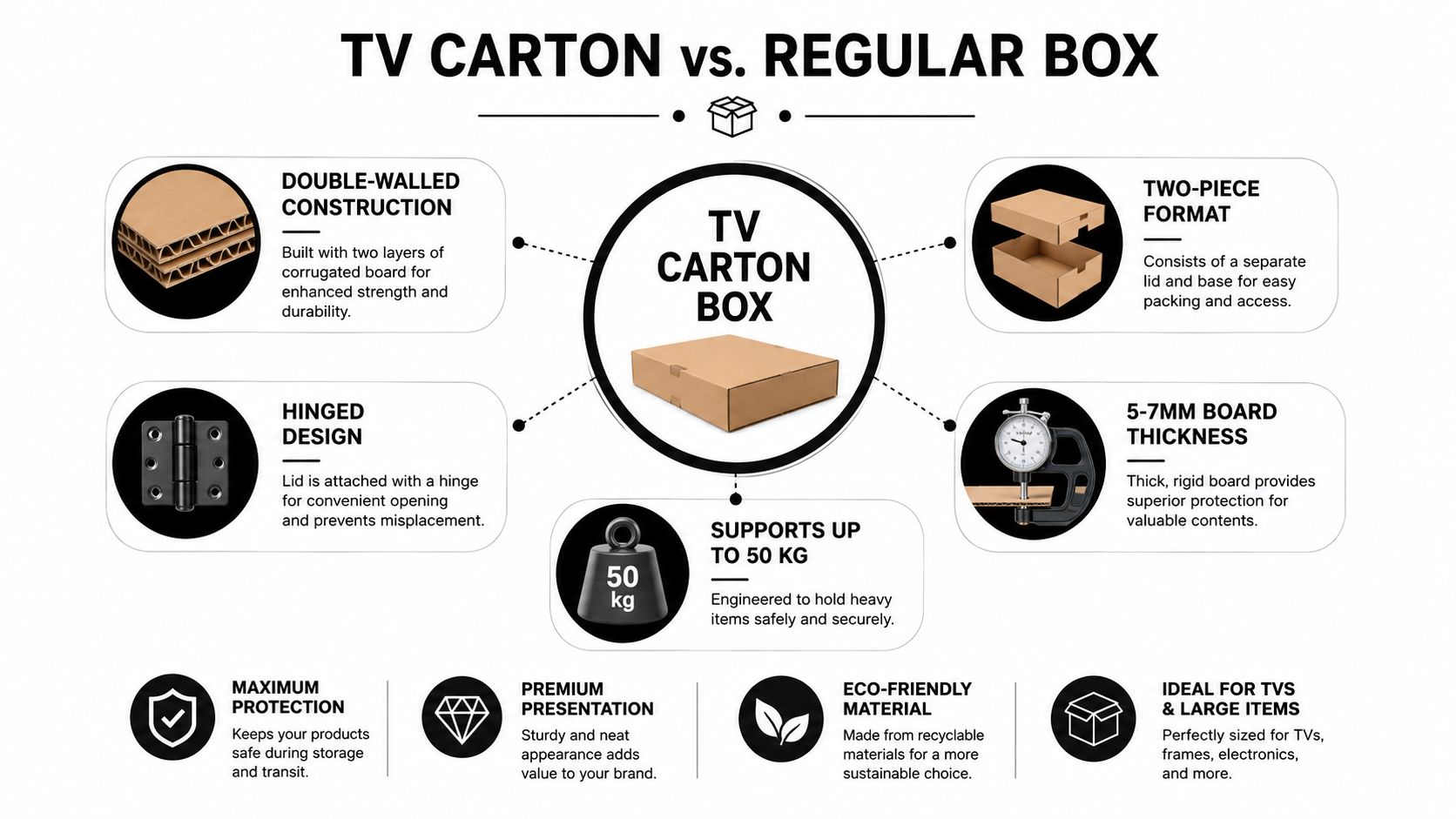
The first difference is construction. Heavy-duty TV cartons use kraft corrugated board made for courier and freight handling, rather than the lighter board commonly used for general household packing. Larger screens may need double-walled construction, which gives the carton more resistance to crushing when it's handled beside bulky furniture or moved through a busy loading area.
The second difference is format. For screens 55 inches and above, Australian packing guidance describes a two-piece or hinged carton that can open around the television instead of forcing the panel through a narrow opening. That design makes it easier to lower the screen into place while keeping hands, tape, and pressure away from the display.
The specification matters more than the label
A supplier may call a carton “heavy duty”, but the useful question is how the board and finished box perform. Australian carton verification can include:
- Box compression strength, which assesses resistance to crushing under load.
- Edge crush test, or ECT, which helps indicate how well the board's edges support the carton.
- Cobb water absorption, which assesses how readily the board absorbs moisture.
Those tests matter because a TV carton may encounter truck vibration, damp loading areas, warehouse floors, and pressure from adjacent items. A box with poor edge strength can fail at the corners even when its face looks intact.
Fit separates a TV carton from a repurposed carton
A regular carton is sized around a broad category of household contents. A TV carton is sized around a screen class, with room for protective inserts but not enough uncontrolled void space for the television to build momentum.
Look for these features:
- Two-piece or hinged panels for larger screens.
- Foam corners or cardboard retainers that hold the frame away from the outer walls.
- A close dimensional match to the television, including its depth.
- Clear orientation markings for upright loading.
- A board grade suited to the screen's weight and transport route.
A carton can still fail if the inside is poorly packed. Australian packaging guidance stresses that contents should remain uniform, fill the box appropriately, and have no internal movement. The relevant moving box options should therefore be judged by construction and fit, not by appearance or a broad size description alone.
Matching Carton Size to Your TV Screen
Measure the television before buying the carton. Use the panel's full height and width, then account for the depth of the television and any stand, base, or bracket that will remain attached during transport. Most purpose-built cartons are sold by diagonal screen class, but the carton still needs enough internal clearance for protective material without leaving a large void.
Australian suppliers commonly map screen classes like this:
| TV Screen Size | Carton Type | Typical Base Dimensions (mm) | Best For |
|---|---|---|---|
| 32 to 43 inches | Small TV carton | 1120 x 300 x 300 | Smaller flat screens in houses, units, and office rooms |
| 50 inches | Small/medium carton | Supplier-specific | Mid-sized screens requiring a closer fit |
| 55 to 65 inches | Medium TV carton | Supplier-specific | Larger lounge-room screens and apartment moves |
| 70 to 85 inches | Large TV carton | 1960 x 300 x 500 | Oversized modern screens and long-distance transport |
The small and large base dimensions above come from Move In Boxes' Australian TV box sizing guide, which links a small carton with 32-inch, 40-inch, and 43-inch screens, a small/medium carton with 50-inch screens, a medium carton with 55-inch, 60-inch, and 65-inch screens, and a large carton with 70-inch, 75-inch, 80-inch, and 85-inch screens.
Match the box to the panel, not the room
A television described as “65-inch” is measured diagonally, so two models with the same diagonal can have different bezels, stands, and depths. Remove the stand and wall bracket where possible. If the original manufacturer's carton and foam inserts are still available, they'll usually provide the closest engineered fit because they were designed for that exact model.
A carton that's slightly larger for cushioning is useful. A carton that's much larger creates a restraint problem.
The large-screen benchmark is revealing. A reusable carton for an 85-inch television has internal dimensions of 1920 x 215 x 1100 mm, with an outer box measuring 2010 x 310 x 1000 mm, according to Rebul Packaging's reusable TV crate information. The fixed internal support shows how tightly large-screen packaging is engineered around immobilisation.
For general moving cartons, broader advice on which moving box size to choose can help with the rest of the house. For the television itself, use the screen class as the starting point, then verify the carton's internal dimensions and insert system before ordering.
Packing the TV So It Cannot Move Inside the Box
Switch the television off, unplug it, and let it cool before handling it. Dust the panel with a soft, clean cloth, remove cables, and place the remote, screws, stand fittings, and wall-mount hardware in a labelled bag. If the television is wall mounted, remove the screen from the bracket before removing the bracket from the wall, and use a second person for the lift.
Wrap the panel in a soft protective layer that won't scratch the screen. A clean moving blanket can protect the outside, but it shouldn't replace a fitted carton or edge protection. Keep tape on the wrapping or carton, never directly on the television.
Protect the corners before the face
Corners take concentrated impacts. Fit foam corners or rigid cardboard retainers around the frame, then check that the protective pieces contact the frame rather than pressing into the display. If the carton uses internal braces, install them before closing the box and test the fit with a gentle hand check.
For screens 55 inches and above, use the two-piece or hinged format so the carton closes around the television. Lower the television into the carton while it remains upright, keep the panel facing a protected direction, and add cushioning only where it stops movement without creating pressure on the screen.
The finished pack should meet two mechanical rules:
- No internal movement: The television must not slide, rock, or rattle when the carton is carefully checked.
- No flat laying: The screen stays upright from the room to the truck and from the truck to the new home.
Laying a large television flat in a ute, on a garage floor, or across a vehicle tray creates uneven pressure across the panel. A bump beneath the carton can then transfer force directly into the display. Proper packing tips for moving house apply here, but the television needs stricter restraint than ordinary cartons.
Seal every opening with strong packing tape. Mark the carton Fragile, This Side Up, and identify the room it belongs in. These labels don't replace careful handling, but they tell every person who touches the carton how it must be carried and positioned.
Loading, Transporting, and Stacking the TV Safely
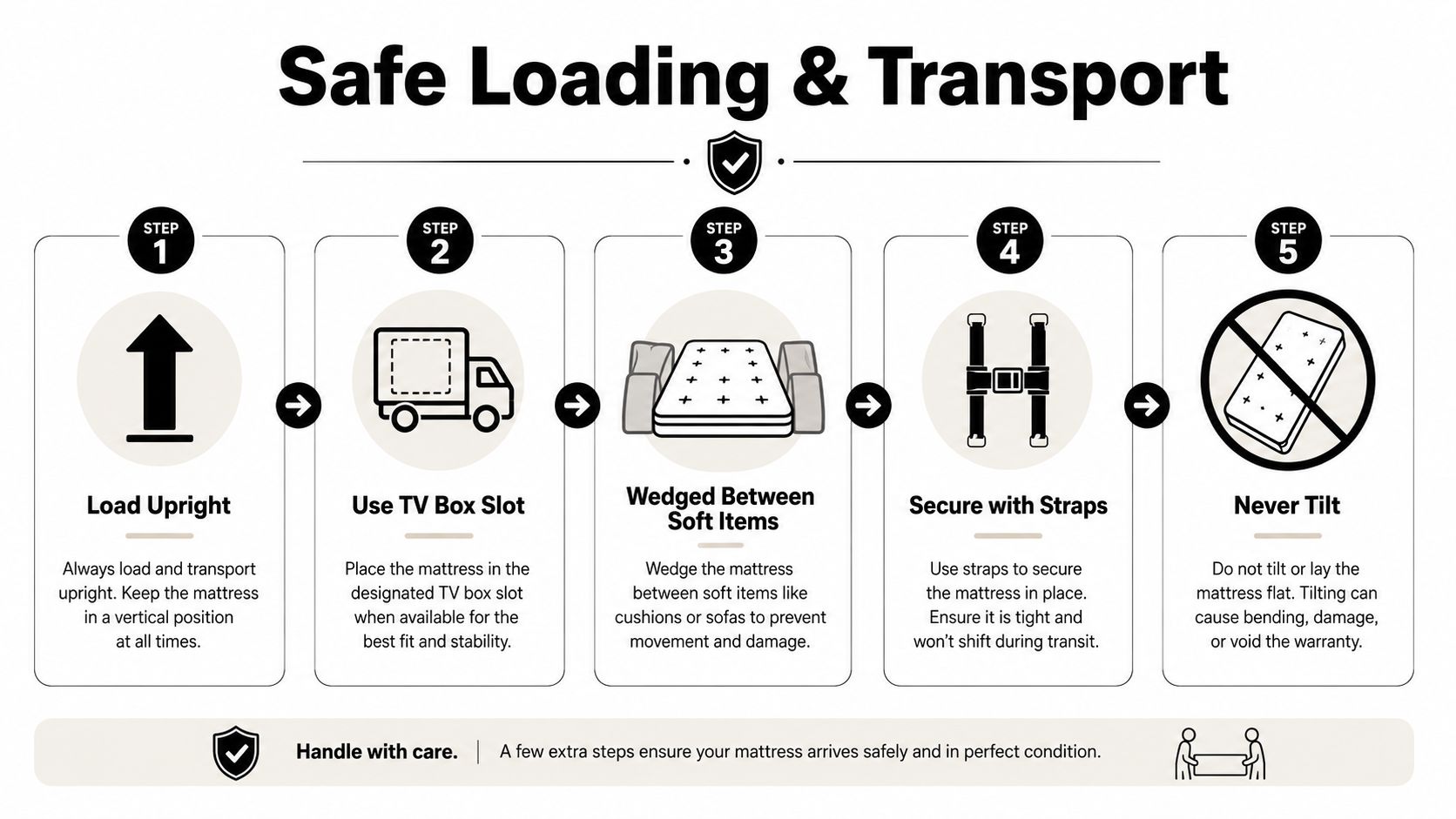
The carton can be packed perfectly and still be damaged by poor loading. Keep it upright in the truck, with its broad face protected from direct contact with hard furniture. A dedicated slot beside a mattress, padded lounge component, or other stable soft item gives the carton support without placing weight against the panel.
Build a stable load around the carton
Use the surrounding load to stop tipping, not to crush the box. A fridge, bookshelf, solid timber cabinet, or stack of books shouldn't press against the TV carton. Keep sharp corners and hard hardware away from the board, and never stack heavy goods on the television's flat face.
Secure the upright carton with straps or appropriate load restraints. Restraints should stop the box tipping during cornering and braking, but they mustn't be tightened directly against the screen area. A soft buffer between the carton and restraint helps distribute pressure.
A short Melbourne move may involve lift access, local roads, and a relatively controlled route. That doesn't make the television safe by default. Lift thresholds, narrow hallways, reversing movements, and repeated loading adjustments can still create impact points.
An interstate run to Sydney, Brisbane, or regional Victoria exposes the load to longer road vibration, more stops, and more opportunities for the carton to settle or shift. The longer journey demands a tighter fit inside the carton and more deliberate restraint in the vehicle.
Loading principle: The TV carton should have its own protected position, not a leftover space created after everything else is loaded.
The accompanying safe loading and transport video provides a visual reminder of how an upright, restrained load should be managed. For heavy items around it, use the same discipline described in how to move heavy furniture. Label the carton on more than one face with the top direction, fragile warning, and destination room. Those markings help the crew place it correctly when visibility is limited inside a crowded truck.
When to DIY Pack and When to Hire Valet Packers
DIY packing makes sense when the television is a manageable size, the original carton and inserts are available, the access route is straightforward, and the move is local. You still need a second person, an upright plan, and enough time to test the fit before the truck arrives.
The risk changes when the screen is large or valuable. A television over 65 inches has more panel area to protect and is harder to manoeuvre through apartment lifts, stairwells, tight corners, and basement loading areas. The box may fit the screen but not the route, so access planning becomes as important as carton selection.
Use three questions to make the call
Can the screen be lifted and turned safely? If the answer depends on squeezing through a stairwell or carrying around a blind corner, professional handling removes a major failure point.
Does the move involve distance or storage? A local Melbourne relocation has different handling demands from an interstate journey, warehouse transfer, or delayed settlement. Longer handling chains increase the importance of strong board, fixed inserts, and secure load restraint.
Can you tolerate a DIY mistake? If replacing the television or repairing a damaged panel would create serious financial or practical pressure, paying for specialist packing is a rational risk decision.
Valet packing from a Melbourne removalist such as Get n Go can include the carton, protective materials, screen preparation, edge protection, internal immobilisation, sealing, labelling, and careful placement in the truck. The household can still manage personal items while trained movers handle the awkward, fragile load. Their professional packing service benefits are most relevant when access, screen size, distance, and risk tolerance all point away from improvisation.
A simple rule works well: pack smaller screens yourself when the original packaging or a correctly matched carton is available. For larger screens, difficult apartment access, interstate transport, or high-value displays, arrange specialist packing before moving day.
Storage and Recycling After the Move
If the television will be mounted immediately, keep it boxed until the wall bracket is installed and the room is clear. For short-term storage, leave the carton upright in a dry area, away from direct sun, heaters, damp concrete, and places where other items can fall against it.
For medium-term storage in a warehouse or garage, keep the television upright and preserve the internal retainers. Store the carton where moisture and pressure won't weaken the board. If you expect to move again, flatten the carton only after removing tape carefully and keeping the inserts together. An assembled carton offers better immediate protection, while a flattened carton saves space and can be rebuilt when required.
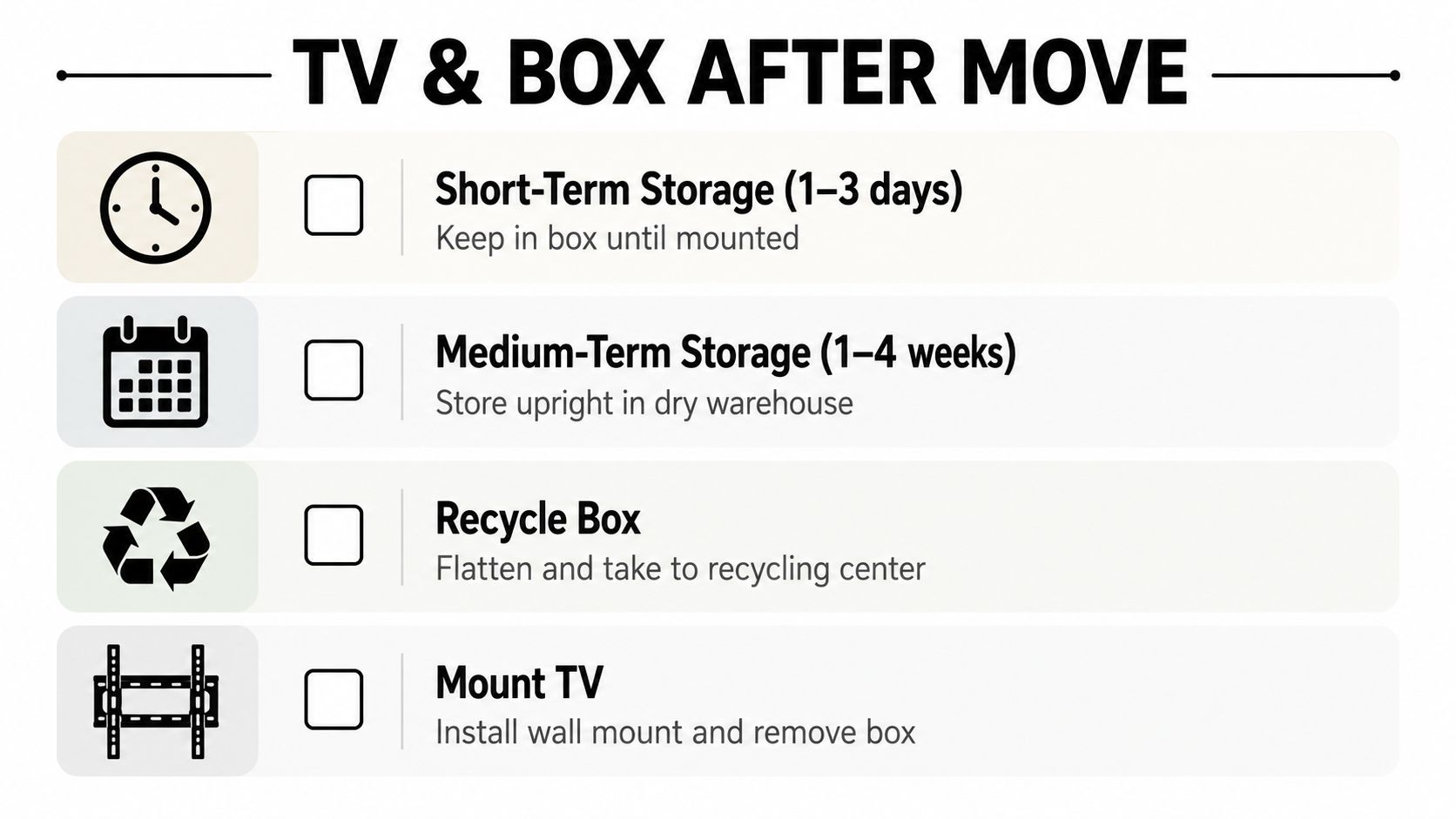
Clean, dry, uncoated cardboard can go into Australian cardboard recycling. Wax-coated and plastic-lined board generally belongs in general waste unless a specialised recycling programme accepts it. Flatten boxes before collection to save bin space and make handling easier, as outlined in Australian cardboard recycling guidance.
The material has a useful second life. Visy explains that its Australian recycling facilities can process kerbside paper and cardboard and remanufacture it into recycled paper for new cardboard boxes. Reuse a sound TV carton first, then flatten and recycle it when the board is no longer suitable for another move.
Get n Go Removals Melbourne can supply specialty TV cartons, pack and immobilise fragile screens, and manage careful local or interstate transport with suitable equipment. Visit Get n Go Removals Melbourne to organise TV packing, removal, storage, or a complete move around your building access and timing.