
Packing and Crating Services: A Melbourne Guide for 2026
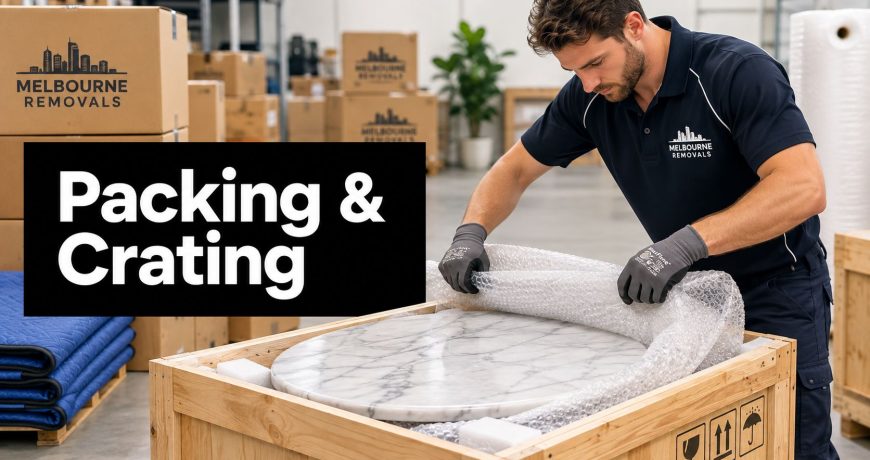
You're halfway through moving day when the marble tabletop slips against a poorly secured blanket. A corner chips. Later, someone opens a carton and finds a mirror broken because the box had no rigid support and the glass could move inside it. These failures rarely come from one dramatic mistake. They usually begin with unsuitable materials, empty space, weak labelling, or a packing method that treats a fragile item like ordinary furniture.
Professional packing and crating services solve different parts of that problem. Packing means wrapping, cushioning, boxing, labelling, and preparing items for handling. Crating goes further, creating a rigid timber or plywood enclosure that supports the load, limits movement, and gives handlers a safer structure to lift. A removalist shouldn't just throw furniture pads over everything and hope for the best. Good preparation considers weight, impact, vibration, pressure, moisture exposure, access, and the way an item will be loaded.
For Melbourne households, offices, galleries, event suppliers, and interstate consignments, the right service can prevent damage, delays, and difficult claims. A useful overview of the practical advantages is available in this guide to the benefits of professional packing services.
Why Professional Packing and Crating Services Matter
A blanket protects a polished surface from scratches, but it doesn't stop a stone slab from flexing, a cabinet door from opening, or a server component from absorbing repeated vibration. That distinction matters during a move where items are carried through doorways, placed on trolleys, loaded into a truck, and handled again at the destination.
Professional packing starts with an assessment. The crew identifies weak points, removable parts, sharp edges, glass panels, delicate finishes, and areas where internal movement could cause damage. They then choose materials that match the item. A ceramic ornament may need wrap, paper cushioning, and a snug carton. A large artwork may need corner protection, a moisture-resistant barrier, foam, and a purpose-built timber case.
Practical rule: The outside of an item can look protected while the vulnerable parts inside remain exposed.
Packing and crating are different jobs
Packing creates layers of protection around an item. Those layers can include tissue or paper, bubble wrap, foam, corrugated cardboard, double-wall cartons, anti-static film, furniture pads, and straps. The objective is to absorb contact and stop the contents from moving within the carton.
Crating creates a structural shell. A crate can include a base, skids, bracing, blocking, internal padding, and lifting points. The crate must also suit the item's weight and handling method. Guidance used for freight-style timber cases says contents should be immobilised, the safe working load should exceed the cargo weight, and the design should include suitable skids or forklift points. That approach reduces risks such as racking, crushing, and internal impact during transport, as set out in BHP's packaging standards.
Why shortcuts become expensive
A weak carton can collapse when stacked. Loose cushioning can migrate away from a fragile corner. A poorly braced item can move inside a crate and damage itself even though the timber remains intact. These are packing failures, not unavoidable bad luck.
The service spectrum runs from basic box packing through fragile-only preparation, full valet packing and unpacking, and engineered crating. The sensible choice depends on the item, the route, the handling environment, and the consequences if it arrives damaged.
Types of Packing and Crating Services Available
A reputable Melbourne removalist should be able to match the service to the inventory rather than selling the same treatment for every object. Start with the least intensive option that gives the item a proper safety margin, then increase protection where weight, fragility, value, or handling risk demands it.
Standard household packing
Standard packing suits clothing, books, kitchenware, toys, linen, office supplies, and many everyday household goods. The crew supplies cartons, paper, tape, bubble wrap, labels, and protective materials, then works methodically so boxes aren't overloaded or left with dangerous empty space.
Double-wall cartons are useful for heavier contents and for boxes likely to be stacked. Paper cushioning works well around sturdy kitchen items, while bubble wrap or foam protects surfaces and breakable pieces. The key isn't using the most expensive material. It's using enough material, placing it correctly, and keeping the contents stable.
Fragile-only packing
Fragile packing targets the items most likely to fail during handling. That can include glassware, mirrors, artwork, televisions, computers, sculptures, instruments, and collections with irregular shapes.
Electronics may need anti-static wraps, foam isolation, and protection against pressure on screens or controls. Glass should be wrapped individually, separated, and placed in cartons that don't allow contact. Artwork often needs edge protection and a face-safe covering before it goes into a reinforced box or crate.
For furniture and bulky items travelling by less-than-truckload freight, readers can also review this practical resource on how to safely ship furniture LTL, particularly where multiple handling points are involved.
Valet or white-glove packing
Valet service removes most of the preparation burden. The team packs the home or workplace, labels and inventories the cartons, protects larger items, then unpacks at the destination when that option is included. The crew can also remove packing debris, leaving the customer with a more usable space instead of a room full of flattened cartons and wrap.
This option suits busy households, office relocations, settlement-day moves, older customers, and anyone who can't safely or efficiently pack heavy or delicate objects.
Custom timber crating
Custom crating is built around the item's dimensions and handling needs. A piano may require a padded enclosure with internal bracing. A server rack may need anti-vibration mounting and careful immobilisation. A marble dining table may need to be separated into safe components and secured inside a custom A-frame crate.
Use ISPM 15-compliant timber where the crate will enter international trade. The material and marking requirements are separate from the question of whether the crate is physically strong enough.
When You Actually Need Custom Crating
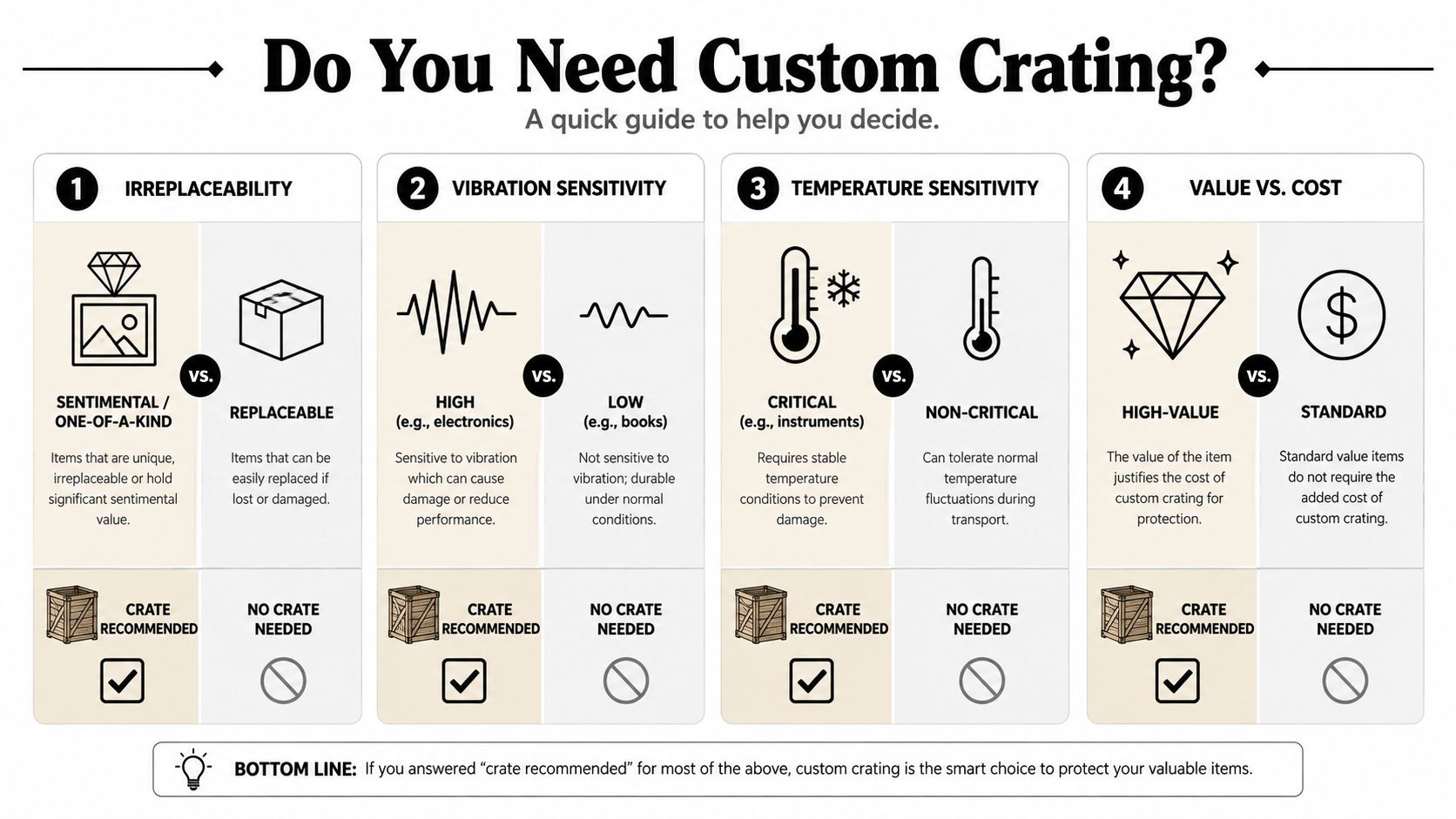
Not every valuable item needs a timber box. Over-crating ordinary furniture adds labour, materials, handling weight, and disposal work without necessarily improving the outcome. The better test is whether a rigid enclosure solves a specific risk that ordinary packing can't control.
Four questions decide the treatment
Is the item irreplaceable? An antique cabinet, original artwork, family heirloom, or one-of-a-kind sculpture deserves a higher protection standard than a readily replaceable bookcase. Sentimental value also matters, even when an insurer can assign a monetary value.
Does vibration threaten its function? Electronics, laboratory instruments, precision equipment, and delicate mechanisms can suffer from repeated movement even when no single impact looks severe. Foam isolation, internal blocking, and a crate that prevents shifting can be more useful than extra layers of loose wrap.
Does temperature exposure matter? Instruments, specialist equipment, certain artworks, and sensitive materials may react poorly to heat, cold, or rapid changes. A crate won't control temperature by itself, but it can support insulation, separation, and a more controlled handling plan.
Is there regulatory exposure? Export or import movements introduce biosecurity and declaration requirements. Solid timber packaging and dunnage used with consignments must be treated and declared in the relevant circumstances, and compliant ISPM 15 timber needs the approved treatment mark. Australia's timber packaging guidance from DAFF also distinguishes lower-risk processed wood such as plywood from solid timber attached to a consignment.
Melbourne to Sydney and Melbourne to Brisbane routes can involve repeated loading, unloading, road vibration, and changing conditions inside the vehicle. Those forces increase the dynamic load on an inadequately supported item. A solid timber table may only need careful wrapping and edge protection, while a marble top, antique veneer, or precision machine may justify a fitted enclosure.
The same reasoning applies to commercial and event work. If you're moving custom exhibition stands Melbourne, display panels and branded structures may need separate protection for surfaces, corners, fasteners, and reassembly parts. For specialist household items, a removalist experienced in piano moving in Melbourne can assess weight distribution, access, and protective support before deciding whether a crate is warranted.
What to Expect During a Booked Packing Service
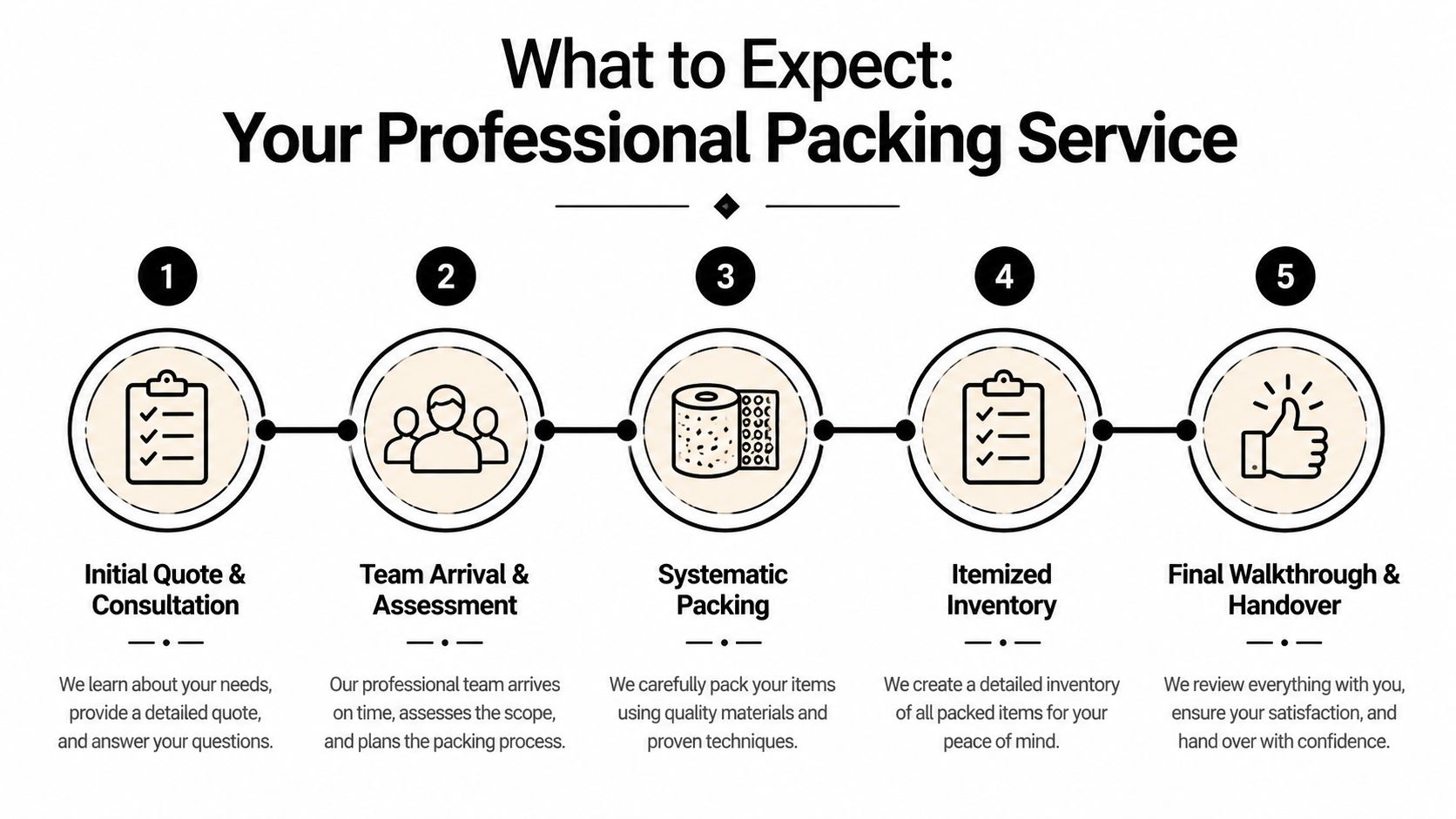
The smoothest packing jobs start before the crew arrives. During the initial consultation, the provider should ask about the property, access, floor levels, lift restrictions, fragile items, storage requirements, destination conditions, and any pieces that need dismantling or custom protection.
A pre-move survey helps separate routine cartons from specialist work. The assessor can identify a marble table that needs an A-frame, a television that needs screen protection, or a server rack that must remain correctly supported. That information makes the quote more useful than a rough allowance based only on the number of rooms.
Packing day should follow a system
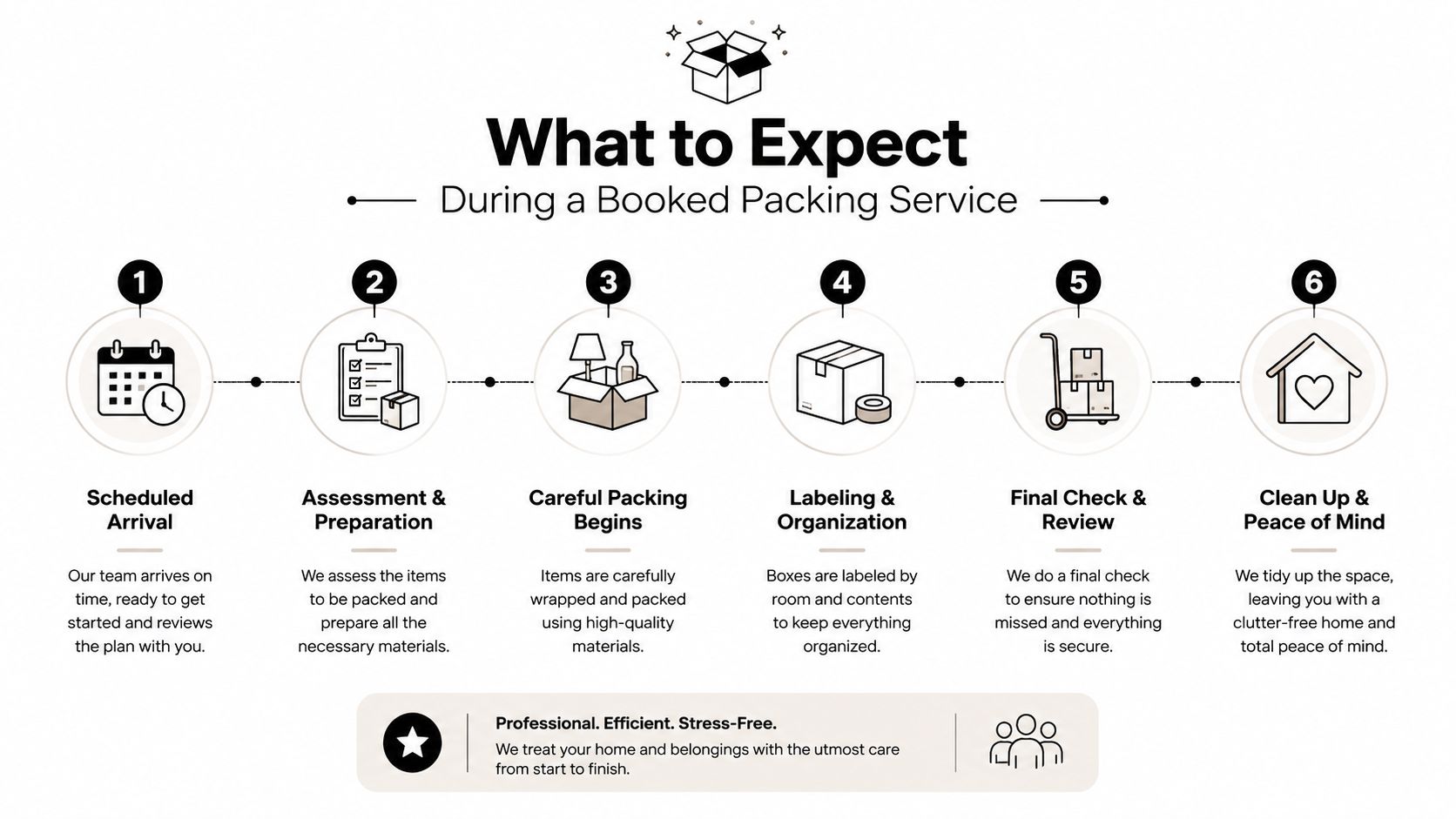
The crew arrives with the required materials and normally works room by room. They protect floors and vulnerable surfaces where appropriate, wrap items individually, fill cartons so contents can't shift, and label boxes with their room and handling instructions.
An inventory gives the customer and the moving team a shared record. It can identify carton contents, note pre-existing marks, track specialist items, and support a more orderly unpacking process. If you choose valet service, the same system helps the crew place items in the correct rooms and remove debris as they work.
A three-bedroom home typically needs a full day for a two-person packing crew, although the actual duration depends on the volume, level of preparation, number of fragile items, access, and whether furniture disassembly is included. Treat that as a planning guide rather than a guaranteed schedule.
Your preparation is simple but important
Before the team arrives:
- Clear access: Keep hallways, doorways, driveways, and lift paths free of clutter.
- Set aside essentials: Keep medication, documents, chargers, toiletries, basic clothing, and work items separate.
- Secure pets: Arrange a quiet, closed room or off-site care so animals can't escape or interfere with lifting.
- Identify exclusions: Tell the crew what isn't moving, what must travel with you, and what requires special handling.
- Confirm building rules: Check lift padding, loading times, loading zones, and access codes.
A useful night-before checklist is available in this guide on what to do before movers arrive. At the destination, the team can unpack selected or all cartons if that service was booked, place furniture, and clear packing materials according to the agreed scope.
Cost Factors and Price Ranges for Packing and Crating
A quote can change sharply when a straightforward household move includes artwork, fragile lighting, stone furniture, or items that need disassembly. Packing prices reflect the work, materials, access, and risk involved, not the number of rooms.
The main price drivers are:
- Volume and rooms: More contents require more cartons, wrapping, labelling, and labour.
- Fragility: Glass, artwork, electronics, instruments, and antiques need slower handling and specialist materials.
- Crate construction: A custom enclosure requires measuring, cutting, joining, padding, bracing, and handling.
- Materials: Double-wall cartons, foam, anti-static protection, timber, hardware, and protective films affect the quote.
- Access and distance: Stairs, lifts, tight entries, permits, parking, and interstate travel increase planning and handling requirements.
- Inventory control: Itemised labels and tracking take time, but reduce confusion during delivery.
Custom crating costs more than ordinary packing because it combines protective packing with carpentry and load engineering. Export work may require approved treated timber and compliant marking. The Australian packaging industry guidance from DAFF covers solid wood packaging categories including pallets, dunnage, cases, skids, reels, and load boards under the ISPM 15 framework.
Estimate the scope before comparing quotes
The following ranges are not provided by the verified data. A responsible provider should price them after reviewing the inventory and access conditions:
| Service Type | Typical Scope | Estimated Cost Range |
|---|---|---|
| Standard three-bedroom home packing | Household cartons, wrapping, labelling, and room-by-room packing | Price varies by inventory, materials, and access |
| Fragile-only packing add-on | Glassware, artwork, electronics, mirrors, and selected high-risk items | Quote required after reviewing the items and protection method |
| Single custom crate | Large artwork, piano, marble piece, machinery, or specialist equipment | Price depends on measurements, timber, padding, bracing, and handling |
A quote that appears dramatically cheaper may exclude materials, inventory work, access charges, or adequate protection. Lower preparation costs can become damage, delays, replacement work, downtime, and claims administration. For broader budgeting context, compare the moving variables covered in how much moving house costs in Melbourne.
Commercial relocations also need consistent identification. Businesses reviewing warehouse pallet label technology can apply the same principles to relocation labels, pallet IDs, and itemised consignment records. Clear records help crews locate goods and identify missing or damaged items without relying on memory.
Insurance and Liability Considerations
Insurance doesn't replace competent packing. It responds to covered events under a policy, and the condition of the item, the packing method, the declared value, and the provider's terms can all affect a claim.
Transit insurance generally relates to damage or loss during the move. Public liability insurance addresses third-party property damage, such as damage to a wall, floor, doorway, or building fixture while work is being carried out. They protect against different exposures, so a provider carrying one shouldn't be assumed to carry the other.
Before booking, ask for the relevant policy details and exclusions in writing. Find out whether customer-packed goods are treated differently from goods packed by the removalist, whether high-value items need to be declared, and how pre-existing marks are recorded. A condition report with photographs can help establish what was present before wrapping and loading.
Poor packing can weaken a claim
An insurer may question whether inadequate preparation contributed to the damage. An overloaded carton, an item packed without immobilisation, or a non-compliant timber case can create an argument about contributory negligence or breach of policy conditions. The exact outcome depends on the policy and facts, so don't rely on a verbal assurance that “everything is covered”.
Crating also has a biosecurity dimension. Australia's Department of Agriculture says non-compliant untreated solid timber packaging may require mandatory treatment on arrival, or may be exported or disposed of at the importer's expense, as explained in its timber packaging import requirements. That cost can arise before anyone discusses a conventional damage claim.
For exports to countries that have adopted ISPM 15, treated wood packaging must carry an internationally recognised certification mark, according to Australia's export advice on ISPM 15 marking. The mark is evidence of treatment, not a substitute for a crate that properly supports the cargo.
Cheap packing becomes expensive when the customer must prove that the item was protected, the crate was compliant, and the policy conditions were satisfied.
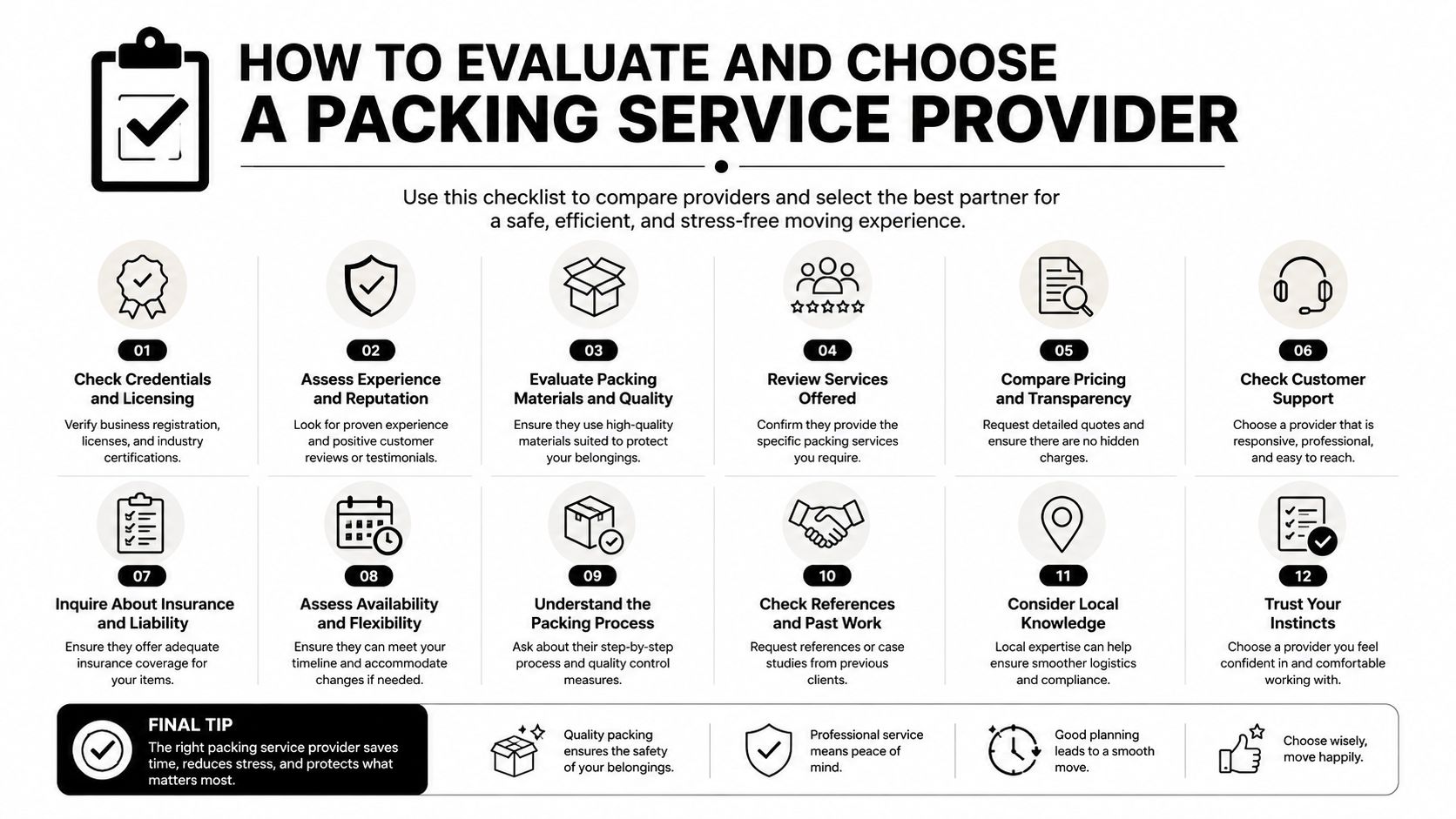
How to Evaluate and Choose a Packing Service Provider
The cheapest quote often tells you very little about the finished job. Compare the people, materials, process, insurance, fleet, and accountability behind the price.
Start with these checks:
- Staff screening: Ask whether the crew is employed, trained, and police checked.
- Insurance: Confirm both public liability and transit insurance, then ask for exclusions and claim instructions.
- Experience: Look for practical experience with pianos, artwork, marble, electronics, office equipment, and interstate transport.
- Reviews: Read verifiable customer reviews and look for comments about care, communication, punctuality, and damage resolution.
- Fleet and control: A company-owned fleet can provide clearer accountability than a chain of unknown subcontractors.
- Industry involvement: Ask whether the provider belongs to relevant moving or logistics associations and follows documented procedures.
Questions to ask before accepting a quote
A competent estimator should answer these without hesitation:
- Do you supply all cartons, wrap, foam, tape, labels, and protective equipment?
- Will someone complete a pre-move survey?
- Which items do you recommend for custom crating, and why?
- Can you build a crate on-site or arrange it before the move?
- How do you record pre-existing condition and high-value items?
- What is the process if something is damaged?
- Do you coordinate lift bookings, loading zones, access codes, and building requirements?
- Does the price include unpacking and debris removal, or are those separate services?
Pressure to book immediately is a warning sign, especially when the provider won't explain insurance, materials, exclusions, or access assumptions. A low figure that excludes cartons or treats fragile packing as an afterthought isn't a comparable quote.
Customers can also review this guide to choosing the right removals firm before signing. Look for one point of contact who can answer questions from the first survey through delivery, rather than passing responsibility between sales staff, subcontractors, and drivers.
Melbourne-Specific Logistics and Pre-Move Checklist
Melbourne access can determine the packing plan before the first carton is sealed. Apartment residents may need to book a lift, arrange loading-zone access, protect common areas, and provide building time windows. Period homes often have narrow stairwells, tight turns, and low clearances that limit crate dimensions and may require extra disassembly.
Settlement-day moves leave little room for recovery if the truck arrives late or a crate isn't ready. Interstate schedules add another constraint, because a custom crate must be measured, built, checked, and loaded before the relevant departure.
Use this checklist:
- Declutter first: Remove items that won't travel.
- Separate essentials: Keep documents, medication, chargers, toiletries, and work equipment with you.
- Confirm access: Book lifts, permits, parking, keys, codes, and building protection.
- Flag specialist items: Identify artwork, marble, pianos, server racks, antiques, and regulated consignments.
- Arrange pets: Keep animals away from open doors and lifting paths.
- Notify utilities: Organise electricity, gas, internet, mail, and access changes.
- Confirm the schedule: Match packing, loading, settlement, storage, and interstate departure times.
- Ask about timber compliance: Check treatment, declarations, and marking where export or import rules apply.
Get n Go Removals Melbourne provides residential and commercial packing, valet unpacking, specialist handling, storage, and interstate transport, with materials supplied for the job. Visit Get n Go Removals Melbourne to discuss your inventory, access conditions, crating requirements, and moving date before requesting a clear quote.