
Moving Cats House Without the Stress
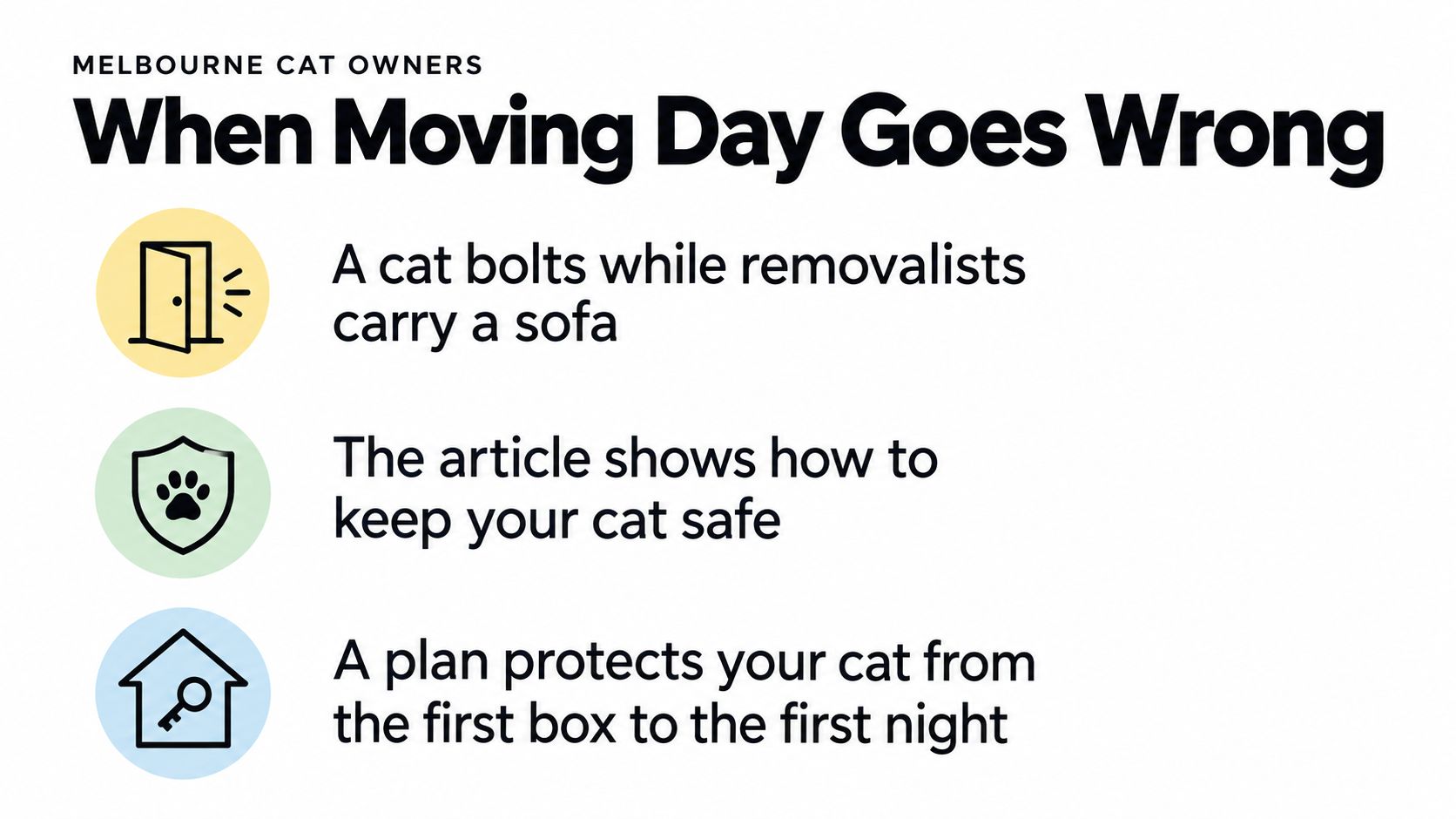
The sofa is halfway through the front door when the cat appears. One removalist is carrying the cushions, another is backing down the path, and the front door is propped wide open. Your cat sees one clean escape route and takes it. That's how an ordinary Melbourne move becomes a frantic search through driveways, laneways and neighbouring gardens.
Moving cats house safely is a logistics problem first and a stress problem second. You need a pre-move routine, a locked safe room, a carrier handover, a transport plan and a controlled settling period. Apartment owners also need to manage lifts, balconies, fire doors and shared loading areas. Renters and interstate movers have extra registration, utility and address updates to complete.
What each section covers
| Stage | Focus | Key outcome |
|---|---|---|
| Preparation | Carrier, vet, records and familiar items | Your cat starts the move organised and identifiable |
| Safe room | Confinement before packing and loading | Doors stay open without creating an escape route |
| Transport | Carrier timing, car safety and rest stops | Your cat travels separately from removalist activity |
| Apartment move | Lifts, balconies, fire doors and strata | High-rise risks are controlled before they occur |
| Arrival | Indoor settling and gradual exploration | Your cat learns the new home before outdoor access |
| Administration | Registry, council, utilities and VicRoads | Welfare tasks and moving paperwork are completed together |
When Moving Day Goes Wrong Without a Cat Plan
Melbourne homes create plenty of escape opportunities. A terrace has a front door opening onto a footpath, a suburban house has side gates and garages, and an apartment has corridors, lifts and shared loading zones. During a move, every one of those spaces may be busy while people carry mattresses, wardrobes and sofas.
Australian households move often enough for this to be a recurring issue. The Australian Bureau of Statistics housing mobility data recorded 1.14 million households, or 12% of Australian households, moving at least once during the 12 months before its 2019–20 Housing Mobility and Conditions survey. More than 40% of households had moved within the previous five years. Most moves were local or within the same state, but interstate relocations remain a real planning scenario.
Cats are part of that household picture. RSPCA Australia's contained-cats guidance estimates approximately 5.3 million owned cats in Australia, with cats present in 33% of Australian households. The organisation also identifies cats as Australia's second-most common household pet and warns that moving can cause stress, while recommending a secure carrier with familiar bedding.
Practical rule: If a cat can reach a door that removalists use, that cat isn't secure.
A quiet bedroom may sound like the obvious answer, but it isn't always the safest room. If the crew keeps returning for furniture, the door will open repeatedly. An already-cleared bathroom or internal room can work better because it reduces traffic and gives one nominated person a clear responsibility.
This guide treats the move as a sequence: prepare early, secure the safe room, transfer the carrier before the crew arrives, keep the cat away from the truck, inspect the new property, then allow exploration gradually. That approach protects your cat from the first box to the first night.
Building a Calm Pre-Move Plan for Your Cat
Start before the house fills with boxes. Cats cope better when their bedding, food, litter and daily rhythm remain recognisable while the rest of the home changes around them.
Book a veterinary appointment early if your cat has a history of travel anxiety, stress-related illness, appetite changes or difficult carrier handling. Ask the clinic to confirm the medical record, prescriptions and any travel advice you need. Don't introduce a new diet during the moving period. Familiar food removes one avoidable variable.
Leave the carrier open in a room your cat already uses. Put a familiar blanket or favourite toy inside and allow your cat to investigate it without being chased or forced through the door. Short practice sessions are more useful than a single dramatic attempt on moving morning.
A practical preparation runway
Several weeks before the move: Bring packing materials into the home gradually and keep one predictable area available. Collect bedding, scratchers, toys and feeding equipment in a clearly labelled cat kit. Read this guide to reducing stress when moving home while you still have time to change the routine.
As packing progresses: Leave the cat's familiar items in place until late in the process. If you need to pack them, place everything together so it can be recreated quickly at the destination. Keep feeding, play and sleep patterns as normal as the packing schedule allows.
Before departure: Check the microchip number and make sure the registry record has your current mobile number and address. Confirm council registration details and ask your veterinarian for the cat's file or any documents needed at the new location.
Make the carrier ordinary
A carrier becomes frightening when it only appears before a vet visit or a long drive. Leave it accessible, reward calm investigation, and practise lifting it without turning every session into a trip. For a nervous cat, covering part of the carrier with a familiar towel can make the space feel less exposed.
Pack a separate travel bag with food, water, bowls, litter equipment, medication, absorbent material, paper towels and familiar bedding. Keep that bag with you, not in the removalist truck. Your cat's essentials must arrive when your cat arrives.
The Safe-Room Protocol That Protects Your Cat
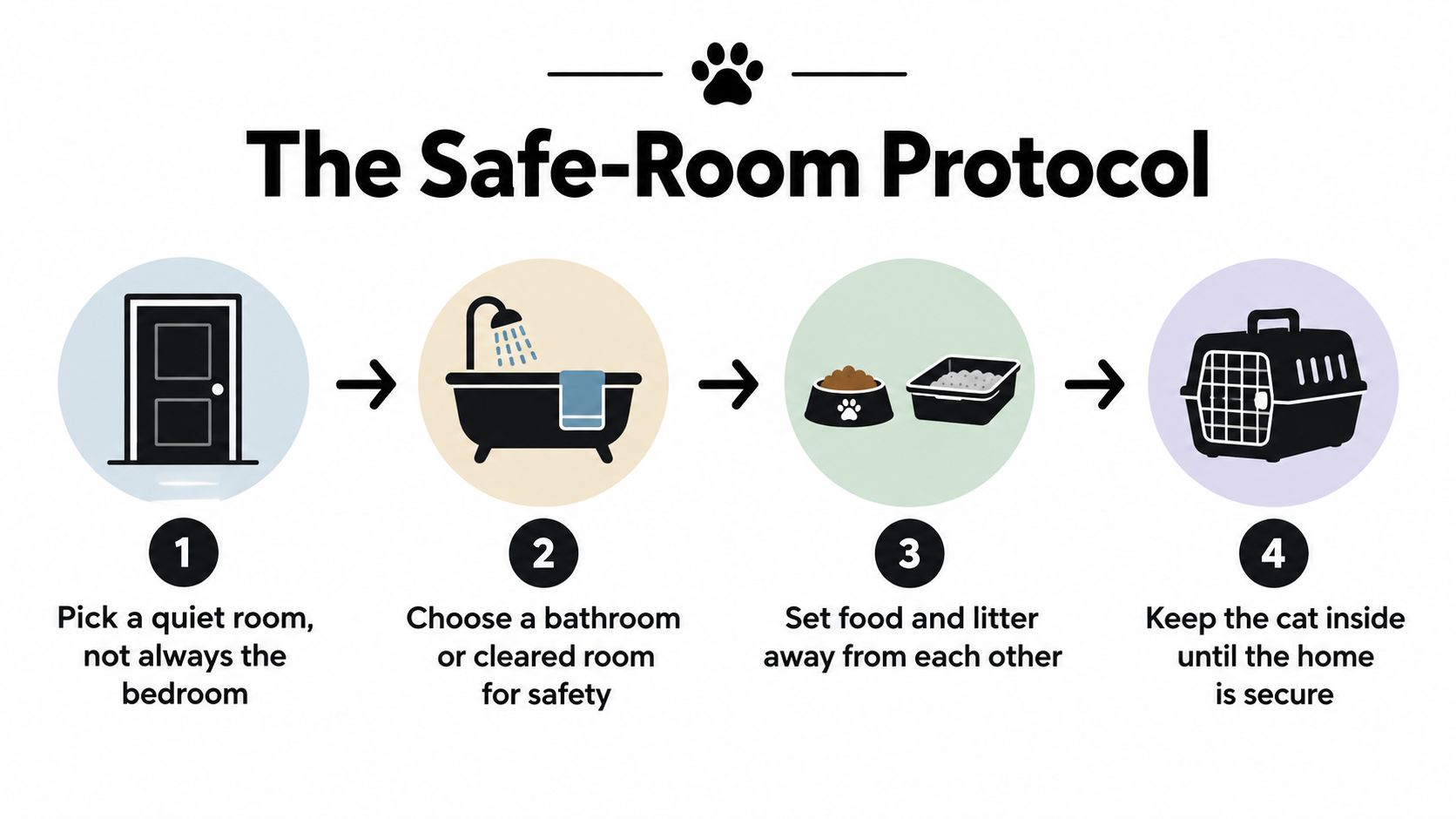
The safest moving-day cat is contained before the first removalist knocks. Start packing the cat's room last, or move the cat into a room that has already been cleared and won't be needed again.
The Cat Protection Society's moving-house factsheet recommends a secure room at the old property and a prepared room at the new one. Keep bedding, food, water and litter equipment available until the cat is transferred. On moving day, place the cat in the closed room and move it into a secure carrier at least 30 minutes before removalists begin.
Choose the room for door control
The main bedroom often contains familiar furniture, but familiarity isn't enough if the crew needs access to it. A bathroom, laundry or internal room may be better when it has a solid door, no open window, no balcony access and minimal reason for anyone to enter.
Put food and water away from the litter tray. Add familiar bedding, a scratching surface and a hiding option. Check behind appliances, inside cupboards and around vents before closing the door.
Place a large notice on the outside:
CAT INSIDE. KEEP DOOR SHUT. SPEAK TO [NOMINATED PERSON] BEFORE OPENING.
Nominate one person as the cat's handler. That person checks the door, confirms the carrier is latched and decides when the cat moves. Don't rely on every helper remembering a verbal warning given during a noisy load.
Brief the removalist crew clearly
Tell the team which room is restricted and that the cat will travel separately. Load the household first, keep the safe-room door shut, and move the carrier only once the car is ready and the truck is prepared to leave. A professional crew creates more door traffic than a quiet do-it-yourself move, so the protocol matters even more.
For a broader pet-specific preparation list, use this guide to moving with pets.
A secure room is a control measure, not a guarantee. Block gaps, check windows and keep the cat contained until the old property is quiet and the destination room is ready.
Moving-Day Execution From Carrier to Car
Moving day should have a simple order. The cat stays in the safe room while the crew works, enters the carrier near departure, travels in your car and enters the new property only after its room is secure.
Transfer the cat into the carrier at least 30 minutes before the removalists start. This gives you time to latch the door, check the bedding and settle the carrier without doing it while a sofa is blocking the hallway. Keep the carrier closed even if your cat is vocal.
Place it low and stable in the passenger area, preferably in a footwell where it can't tip. Wedge it with a folded towel, but don't block ventilation. Never allow the cat to travel loose on a seat, in the boot or inside the moving truck.
During a Melbourne drive
Keep the car cool and out of direct sun, particularly on a warm Melbourne day. Offer water according to your cat's normal routine, but don't force food or drink while the car is moving. Familiar bedding helps, and an absorbent layer makes accidents easier to manage.
For an interstate relocation, plan rest stops without opening the carrier in a public area. A cat escaping beside a motorway or at an unfamiliar service centre is difficult to recover. If you need to inspect the cat, take the carrier into a fully enclosed room first. On an overnight journey, the cat stays with you in a secure, pet-appropriate room, not in the truck.
A pet transport guide for interstate moves can help you separate the cat's travel arrangements from the household freight schedule.
Protect the new floors without creating a cat risk
Moving blankets and temporary floor protection keep wet paths and tracked dirt away from carpet, but don't place loose plastic where a carrier can slide or where a cat could chew it. For practical information about protecting carpet during furniture movement, see J.G. Carpet Cleaning's protector tips.
At the destination, take the carrier directly to the prepared room. Don't open it in the driveway, hallway or living room. The truck can be unloaded around the closed room while your cat remains separate from noise, open doors and unfamiliar people.
Apartment and High-Rise Risks Melbourne Owners Overlook
An apartment move adds several escape points that a suburban-house checklist misses. The lift may be booked for a narrow window, a fire door may be propped open, the loading bay may be shared, and a balcony may have gaps your cat can reach before you notice them.
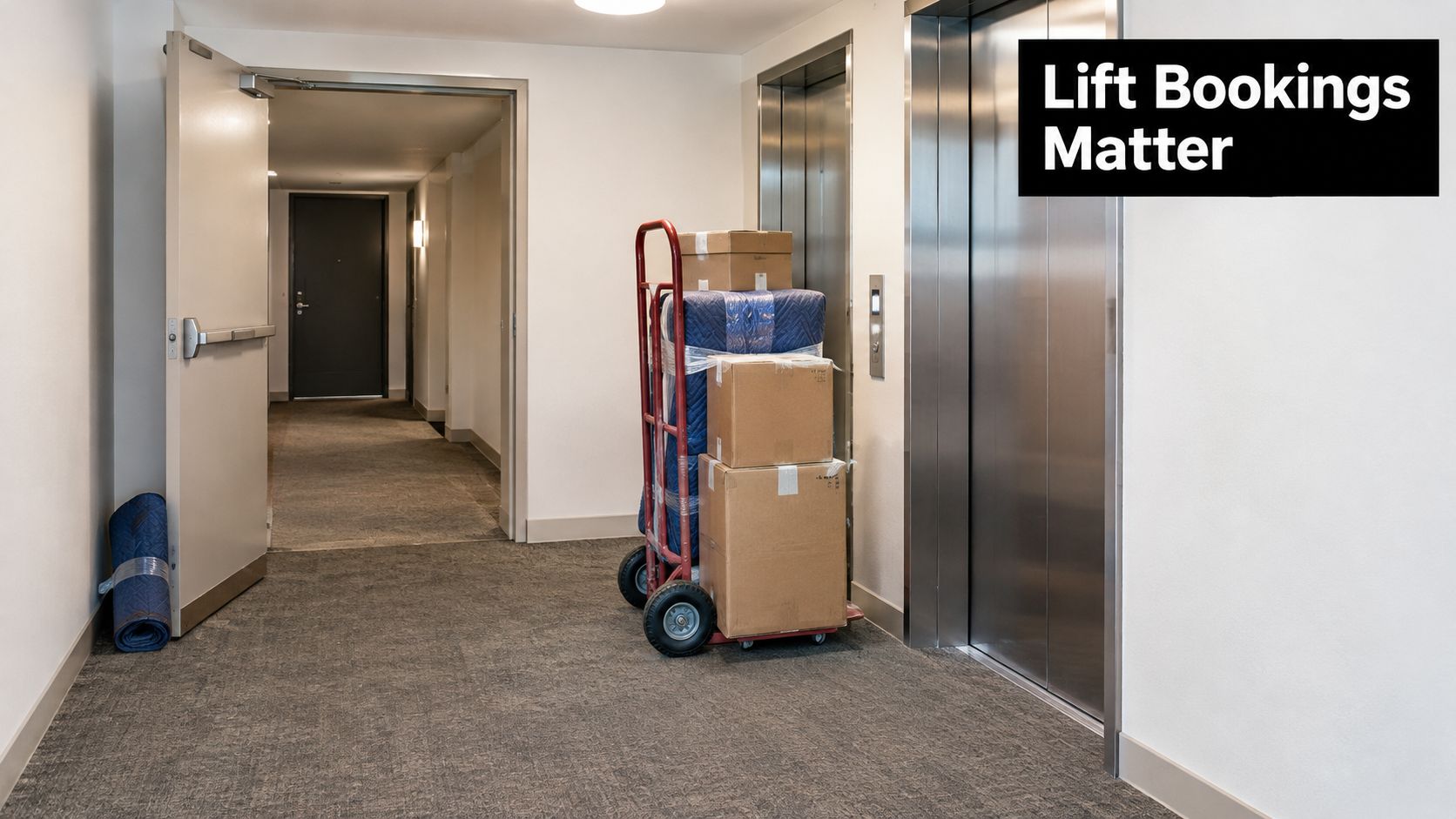
Confirm the lift booking with the building manager or owners corporation before moving day. Ask about the approved access window, loading-bay rules, hallway restrictions and any requirements for transporting pets through common areas. Check whether the building has rules about animals in lifts and whether balcony screening is acceptable for the tenancy or strata scheme.
The timed handover
Use one person, one carrier and one clear sequence.
- Before the crew arrives: Put the cat in a closed internal room. Attach the warning notice and tell the building contact which door must remain shut.
- Before the truck is loaded: Check that the carrier is closed, the cat is inside and the handler has the keys and travel bag.
- When the truck is ready: Move the carrier through the apartment only when the lift and loading path are clear.
- At the destination: Take the carrier straight to the prepared room. Keep lift doors, apartment doors and corridor fire doors under control.
- Before release: Inspect windows, screens, balcony doors and balcony gaps. Don't assume a familiar bedroom is safe just because it contains familiar furniture.
The Veterinary Voices guidance on moving house with pets highlights the risks created by removal activity and open doors, and recommends dedicated supervision, boarding or a trusted carer where appropriate. For apartment relocations, a cleared bathroom can be safer than a bedroom that the crew repeatedly enters.
Balcony and corridor checks
Keep the carrier closed in shared spaces. Don't let your cat walk through a corridor on a harness unless you have a specific reason and complete control. A lift lobby is not a safe settling area.
At the new apartment, inspect balcony barriers and windows before the cat leaves the carrier. A gap that looks harmless to an adult can be an escape route for a determined cat. Keep the cat inside the safe room while furniture placement, door traffic and lift returns continue. Use this apartment moving plan to coordinate access with the building's restrictions.
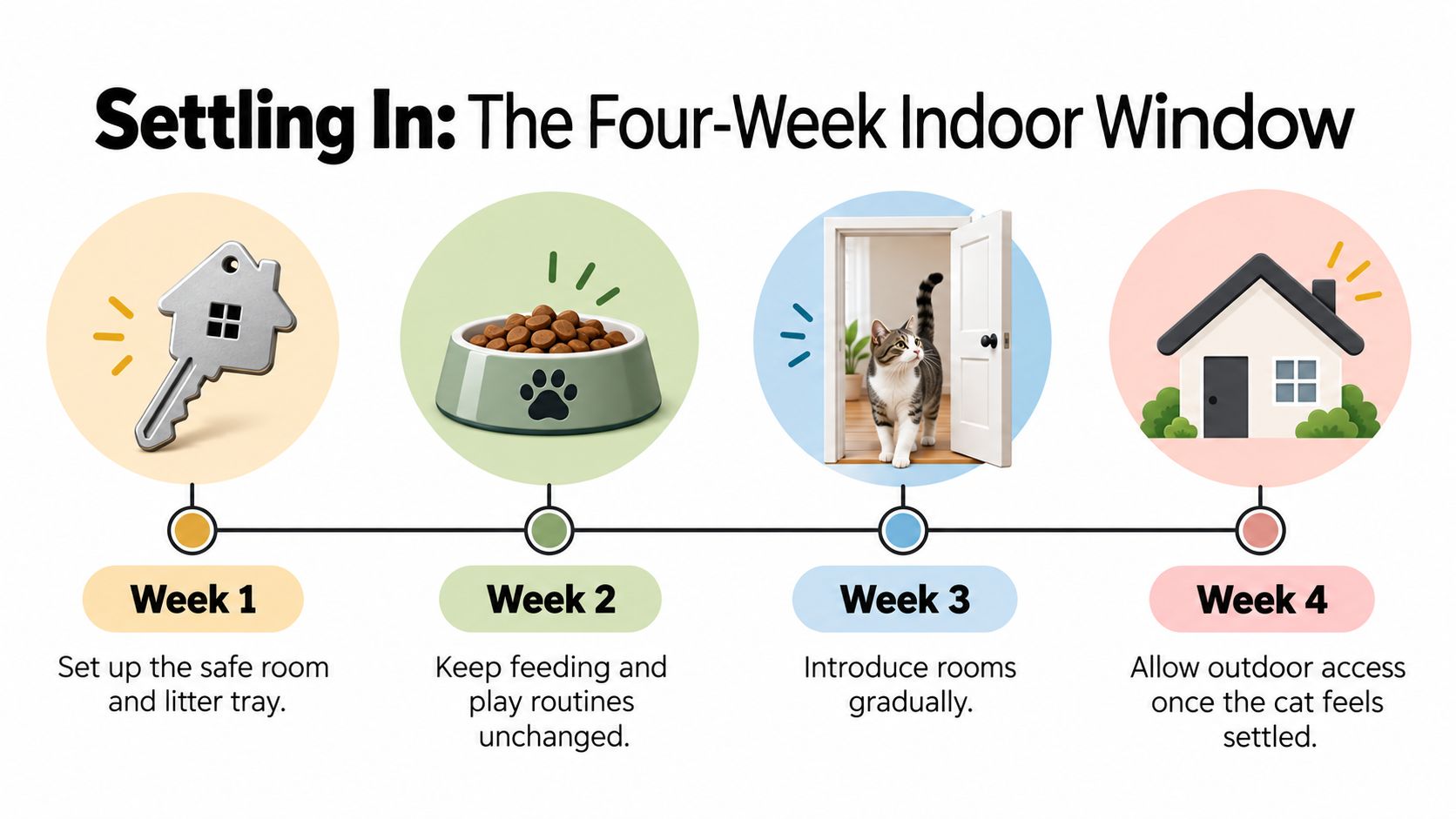
Settling In and the Four-Week Indoor Window
The destination safe room should be ready before the carrier arrives. Set up familiar bedding, toys, scratching equipment, food, water and a litter tray. Keep the litter tray away from food and water, and make sure the room has no open window, balcony route, loose screen or inaccessible hiding gap.
Release your cat only after unloading has stopped and the property is quiet. Let it leave the carrier in its own time. Don't pull it out, chase it from hiding or offer the whole home immediately.
Keep the first days predictable
Maintain the previous feeding and play routine as closely as possible. Familiar timing matters more than making the new room impressive. Sit with your cat, allow hiding, and let the animal decide when to approach.
Open more rooms progressively according to behaviour. Eating, drinking, toileting, resting and ordinary exploration are better indicators of readiness than a fixed calendar. Keep external doors closed while the cat learns the internal layout.
The Australian Cat Protection Society advises keeping a cat indoors for at least four weeks after moving, then beginning with short, supervised outdoor sessions, ideally using a harness where practical. Extend access only when your cat reliably returns and shows stable eating, toileting and exploratory behaviour. For cats that can't be supervised safely, a secure enclosure is preferable to unrestricted roaming.
Know when hiding is a medical concern
Some hiding is expected. Persistent accidents, blood in urine, appetite loss, aggression or hiding beyond roughly 48 hours should prompt veterinary assessment. Don't dismiss elimination changes as attitude, particularly if your cat has previously experienced stress-related illness.
If an accident happens, clean it properly rather than repeatedly masking the smell. This guide on how to eliminate cat urine odor in carpet offers practical cleaning context. For a broader settling routine, see this guide to settling into a new home.
Older cats, multi-cat households and cats with previous travel or stress problems may need a slower room-by-room introduction. Arrange veterinary support before departure if your cat has reacted badly to moves in the past.
Your Cat Moving Checklist and Melbourne Admin Updates
Use one checklist that follows the cat from the old property to the new one. Keep the welfare tasks beside the paperwork, because both are easy to miss during a rushed handover.
Before departure
- Vet check: Confirm medical records, medication and any travel advice.
- Carrier practice: Leave the carrier accessible and use familiar bedding.
- Cat kit: Pack food, water equipment, litter supplies, medication, towels and toys separately from household goods.
- Microchip scan: Scan the chip before departure and confirm the registry holding the record.
- Registry update: Victoria's microchip registry information changed in January 2026 after HomeSafeID's animal-registry service closed. Verify that the record is searchable, update your address and mobile number, and confirm the destination council's requirements through the Victorian domestic animal microchip registry information.
- Safe room: Choose the room, add the warning notice and nominate the handler.
Moving day
- Contain early: Close the cat away from packing and removalist traffic.
- Transfer safely: Put the cat in the carrier at least 30 minutes before work begins.
- Travel separately: Keep the cat in your car, not the moving truck.
- Load last: Move the carrier only when the truck and destination room are ready.
- Apartment check: Confirm lift access, fire-door control, balcony screening and the loading path.
After arrival
- Prepare first: Set up the safe room before opening the carrier.
- Expand slowly: Add rooms according to behaviour, not impatience.
- Stay indoors: Follow the four-week indoor window before controlled outdoor access.
- Update records: Maintain the veterinary file, registry record and council registration.
The surrounding move needs attention too. Victorian renters should notify electricity, gas, water and other utility providers of the departure date, and arrange final readings and bills under the Consumer Affairs Victoria utility guidance. After moving into a rental, return the signed condition report within five business days, keeping a copy, as set out in the Victorian renters' moving guidance. Drivers moving within Victoria must update their address with VicRoads within 14 days, alongside mail, vehicle registration, Medicare and other records, according to Housing Victoria's moving information.
Get n Go Removals Melbourne can coordinate house, apartment and interstate relocations while you keep your cat's carrier, travel bag and safe-room plan separate from the furniture workflow. Visit Get n Go Removals Melbourne to arrange a moving team around lift bookings, tight settlement timing, packing, storage or a Melbourne-to-East-Coast move.