
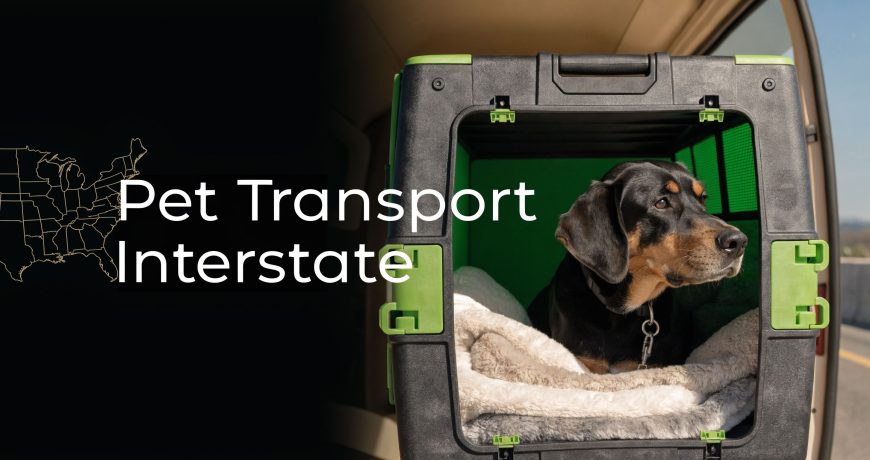
Pet Transport Interstate: Your 2026 Guide to a Smooth Move
The truck is booked. Utility transfers are half done. Boxes are stacked in the hallway. Then the hardest question lands on the kitchen table. How do you move the dog or cat interstate without turning the whole relocation into chaos?
For most households, pet transport interstate is not just a travel problem. It is a timing problem, a paperwork problem, and a settling-in problem all at once. Your pet needs a safe journey, but you also need keys, access times, building slots, and furniture delivery to line up.
That is often where many interstate moves go sideways. Families often plan the house move first and the pet move later. In practice, that creates rushed vet appointments, poor crate preparation, and awkward arrival timing when the pet reaches the new address before anyone is ready.
A smoother move starts when you treat your pet’s journey as part of the main relocation, not a separate errand.
Starting Your Interstate Move with a Pet
A common Melbourne move goes something like this. A family is relocating to Sydney. The removals date is locked in, the apartment lift is booked, and everyone is focused on packing glassware, labelling boxes, and clearing the garage. Then someone asks who is handling the Labrador.
That question matters early, not late.

Pets feel the lead-up to a move before the vehicle ever arrives. Furniture shifts. Routines break. Their bedding disappears into cartons. Even calm animals can become clingy, unsettled, or unusually withdrawn once the house starts changing around them.
The first practical step is to build one move plan, not two.
What early planning changes
If you leave pet transport interstate until the final week, you usually end up making decisions under pressure. That is when owners choose a transport method that clashes with settlement timing or forget that the pet cannot be dropped into a new property that is still full of trades, open gates, and unpacked hazards.
A better approach is to map these items together:
- Departure window: Decide whether your pet should leave before, on, or after your furniture.
- Arrival window: Work out who will physically receive the pet at the destination.
- First-night setup: Make sure bedding, food, water bowls, medication, and a quiet room are available straight away.
- Contingency plan: Prepare for delays if the household move and pet journey do not finish at the same time.
For household planning, a detailed moving house checklist for Australia helps keep those moving pieces visible instead of buried in messages and calendar notes.
Cats and dogs need different planning
Dogs usually struggle most with the disruption of routine and long transit periods. Cats often struggle with territory loss, noise, and confinement. The transport method may look similar on paper, but the preparation is not.
If your move includes a cat, practical reading like this guide on moving across country with cats is useful because cats often need a more controlled handover and quieter arrival environment than owners first expect.
Tip: The best pet move is rarely the fastest one. It is the one that matches your household access, your pet’s temperament, and your ability to receive them properly at the other end.
Navigating Vet Checks and State Regulations
Plenty of online advice about pet travel is written around US rules. That creates confusion for Australian households. Many online guides reference US-based USDA or IATA standards, but there is a significant lack of information on Australian state-specific pet quarantine laws and biosecurity requirements. For moves between states like Victoria and Queensland, understanding local rules on health certificates, microchipping, and potential breed-specific permits is critical for avoiding delays or legal issues (digtransports.com/pet-relocation-service).
That is why vet checks for pet transport interstate should never be treated as a box-ticking task.

Book the vet before you book around the pet
Owners often lock in a transport date and assume the paperwork will sort itself out. In real moves, the order should usually be reversed. Your vet appointment tells you whether your pet is fit to travel, whether records are current, and whether anything needs updating before transport can go ahead smoothly.
At that appointment, ask your vet to review:
- General fitness to travel: Especially important for older pets, brachycephalic breeds, and animals with anxiety, heart, or respiratory concerns.
- Vaccination status: Confirm your records are current and suitable for the planned transport method.
- Microchip details: Check that the chip is readable and the registry contact information reflects your new mobile number and destination address once available.
- Current medication plan: If your pet takes regular medication, ask how to manage doses on travel day and during handover.
Focus on Australian destination rules
The biggest mistake in this part of the process is assuming interstate pet movement inside Australia is simple because it is domestic. It may be simpler than international movement, but it is not identical across every route.
For Melbourne households heading north or into major east coast corridors, verify requirements that may affect entry, booking acceptance, or timing:
Health documentation
Some routes or transport providers may require recent veterinary confirmation that your pet is well enough to travel.Microchipping
Even where it is not the only requirement, it is often central to identification and record-matching.Breed or property restrictions
Some issues arise not at the border but at the destination. Body corporate rules, council rules, and landlord conditions can derail an otherwise organised move.Biosecurity questions
If your route or destination has additional animal movement considerations, clarify them early rather than relying on general internet advice.
A practical companion resource is this guide on moving with pets and what you need to know, especially if you are coordinating the pet move around a wider household relocation.
Build one travel folder
Keep both digital and printed copies of every relevant document. That reduces stress if the phone battery dies or reception is poor during handover.
A simple folder should include:
| Document | Why it matters |
|---|---|
| Vet records | Confirms recent health history |
| Vaccination history | Helps transport staff verify readiness |
| Microchip details | Supports identification if plans change |
| Medication instructions | Prevents confusion during long transit days |
| Emergency contact list | Gives everyone the same backup contacts |
Key takeaway: For pet transport interstate, vague paperwork is not enough. You want documents that are current, easy to access, and checked against the rules that apply to your actual Australian destination.
Choosing the Right Pet Transport Method
Often, people compare transport methods by cost or convenience. That is only half the job. The harder question is whether the method works with your household move, not against it.
That matters because a major challenge for families relocating interstate is the coordination gap between pet transport services and household moving companies, which operate independently. This often creates timing conflicts, as there is no integrated logistical solution to ensure pets and household goods arrive in sync, particularly for long-haul moves like Melbourne to Sydney or Brisbane (interstatepettransport.com).

Drive the pet yourself
This works best when you want full control and your pet travels well in the car.
You control rest stops, feeding breaks, and the immediate environment. You can also adjust the day if your pet shows signs of stress. For some owners, that peace of mind is worth the extra effort.
The trade-off is operational. If you are driving interstate with the pet, who is supervising loading, meeting the truck, handling keys, or receiving goods at the other end? In many real relocations, the owner becomes the missing link because they cannot be in two places at once.
This option is strongest when:
- You have support at both ends: Someone can handle access, keys, or the pet if your timing slips.
- Your pet is calm in vehicles: Not every animal tolerates a long road journey well.
- Your move is staged: For example, one adult travels with the pet while another manages the household handover.
If you need practical travel handling advice for dogs on the road, this ultimate guide to traveling safely with your dog is a useful general read.
Use a specialist pet transport provider
This is often the cleanest option for households that are already managing settlement pressure, building access times, or children on moving day.
A specialist provider brings routines, handling experience, and transport-specific processes. That can reduce owner stress and remove a major task from an already packed move week.
The downside is that pet movers and furniture movers usually run on separate schedules. That means your pet may be ready for collection on one timetable while your household goods are operating on another. Without deliberate coordination, the pet can arrive before the beds, after the keys, or during a window when nobody is available to receive them properly.
Book an airline option
Airline transport may suit households that need speed over long distances or have a narrow availability window at the destination.
Air travel can tighten the overall journey, but it is the least forgiving method operationally. Check-in windows, crate compliance, weather-related conditions, and airport transfer logistics all need to line up. If the flight lands while you are still waiting for property access or unloading the truck, the convenience disappears quickly.
A practical comparison
| Method | Best for | Main upside | Main risk during a house move |
|---|---|---|---|
| Drive yourself | Owners with time and support | Maximum control | You may not be available for removals tasks |
| Specialist transporter | Busy interstate households | Less owner handling | Timing may not match furniture delivery |
| Airline travel | Tight long-distance schedules | Fast transit | Airport timing is rigid |
What usually works best
The strongest plan is not about the vehicle. It is about the handover sequence.
Ask these questions before choosing:
- Who is with the pet on departure day?
- Who receives the pet at the destination?
- Will the new property be safe, quiet, and accessible on arrival?
- If your furniture is delayed, where does the pet settle first?
- If the pet is delayed, who manages the first night without them?
Tip: Choose the method that leaves the fewest unanswered handover questions. In interstate moves, the weak point is usually not transport itself. It is the gap between arrival and proper settlement.
For households balancing these timing issues with furniture logistics, reading through the practical standards used by best interstate removalists in Australia can help you think more clearly about access windows, direct runs, and delivery sequencing.
Mastering Crate Prep and Travel Comfort
A crate should not be introduced as a last-minute restraint. For pet transport interstate, it needs to function as a familiar den.
That change in mindset makes a big difference. Pets cope better when the crate already smells like home and already means rest, not panic.

Turn the crate into normal furniture
Put the crate out early in a quiet part of the home. Leave the door open. Add bedding your pet already uses. Let them investigate on their own terms.
Do not start with door-closed sessions. Start with voluntary time around the crate, then meals near it, then meals inside it, then short settled periods with the door shut.
Good crate conditioning usually includes:
- Familiar scent: Use bedding or a blanket your pet already sleeps on.
- Short practice periods: Build from minutes, not long forced sessions.
- Calm timing: Introduce the crate when the house is quiet, not during a packing rush.
- Positive association: Feed, reward, and settle. Do not use the crate as punishment.
What to place inside
The crate should be comfortable, but not cluttered. Too much inside can create safety issues during handling or transit.
A practical setup often includes:
- Absorbent bedding or a secure blanket
- A familiar item with home scent
- A suitable water solution if your transport method allows it
- Clear ID on the crate exterior
- Any handling instructions attached clearly, not loosely tucked inside
Avoid chew hazards, bulky toys, or anything that could shift and create stress in transit.
Here is a useful visual demonstration of calm crate preparation and travel setup:
Feed for comfort, not routine alone
Owners often feed on normal schedule without thinking about motion and stress. On travel day, comfort matters more than habit.
A lighter meal earlier in the day is often easier on the stomach than a full meal just before departure. Water access should stay sensible and consistent within the rules of your chosen transport method. If your pet has medical needs or a sensitive stomach, ask your vet for a travel-specific feeding plan rather than guessing.
Keep the move-day environment quiet
The crate can be perfectly prepared and still fail if the surrounding environment is frantic. On moving day, pets should be kept away from open doors, noisy loading areas, and constant foot traffic.
A separate room with the crate set up early works well. That prevents escape attempts and gives your pet one stable zone while the rest of the property is being dismantled around them.
For broader preparation around household packing and protecting familiar items, these packing tips for moving house can help you organise what stays accessible for your pet right through to arrival.
Key takeaway: Crate success does not start on departure day. It starts when your pet learns that the crate is safe before the move becomes noisy.
Finalising Bookings and Understanding Insurance
Once the transport method is chosen, the remaining work is administrative. Small oversights in this stage create the most avoidable stress.
Start by confirming all bookings in writing. You want dates, collection windows, delivery windows, contact names, and any special handling notes in one place. Verbal assumptions are not enough when your household, pet, keys, and travel plans are all moving at once.
Questions worth asking before you lock it in
Do not stop at availability and price. Ask operational questions that affect the actual journey.
A good booking conversation should cover:
- Vehicle and handling process: How is the pet collected, secured, monitored, and handed over?
- Crate expectations: What size, material, and labelling standards apply?
- Contact process during travel: Who updates you if timing changes?
- Delay procedure: What happens if access at the destination changes or the route is disrupted?
- Special needs: Can the provider work with medication schedules, older pets, or specific behaviour issues?
If a provider cannot answer those questions clearly, that is a warning sign.
Insurance needs plain-English checking
Insurance around pet transport can be misunderstood because owners often assume one policy covers everything. It usually does not.
Your pet’s regular health insurance and a transporter’s operational cover are not the same thing. One may relate to veterinary treatment. Another may relate to transport liability or defined incidents during transit. Owners need to ask exactly what is covered, what is excluded, and what documentation is required if something goes wrong.
Review these points carefully:
Transport-related cover
Ask what the provider includes as part of their service.Veterinary treatment during transit
Clarify who authorises treatment and who pays upfront if care is needed.Owner responsibilities
Some cover may depend on accurate disclosure about health, temperament, or medication.
Tip: If an insurance explanation sounds vague, ask for it in writing. A clean written summary is far easier to rely on than a rushed phone call made during move week.
Final confirmation list
Before the move, send yourself a final summary with:
- booking reference
- collection and delivery addresses
- emergency contacts
- crate details
- feeding instructions
- medication notes
- destination access information
That single document becomes your control sheet when the week gets busy.
Melbourne to East Coast Pet Move Checklist
Moves from Melbourne to Sydney or Brisbane usually run more smoothly when the pet plan is tied closely to access, unloading, and first-night setup. The route is familiar. The friction points are not. Heat, humidity, apartment access, and timing around direct truck runs all matter.
Use this checklist as a working plan, not a last-minute reminder list.
Before move week
- Confirm destination rules early: Check what applies to your pet and your exact state-to-state route.
- Book the vet appointment: Make sure health, records, and microchip details are in order.
- Prepare the crate properly: Your pet should already be calm inside it before moving week starts.
- Inspect the new property: Ask about secure fencing, balcony safety, screen doors, and any body corporate pet rules.
In the final lead-up
- Build a pet day bag: Food, bowls, lead, harness, litter, medication, bedding, wipes, and records should stay with you, not disappear into the truck.
- Plan for climate change: A pet moving from cool Melbourne to Brisbane may need a gentler introduction to heat and humidity than owners expect.
- Set an arrival room first: Choose one quiet room or enclosed zone where the pet can settle before the whole home is unpacked.
On moving day
- Keep the pet contained early: Use a closed room well before loading begins.
- Do a final property sweep: Check gates, doors, fences, under beds, wardrobes, and garages before departure.
- Align handover timing: Make sure the person receiving the pet can access the property and stay with them.
On arrival in Sydney or Brisbane
- Unload the essentials first: Bedding, food, water, and any medication should be accessible straight away.
- Keep introductions slow: Let the pet settle into one safe area before opening the whole home.
- Watch behaviour closely: Refusal to eat, pacing, hiding, or toilet changes may reflect stress and may need attention if they continue.
If your route is specifically Sydney-bound, this page on interstate removalists from Melbourne to Sydney is useful for understanding the broader household timing around that corridor.
If you are planning an interstate move and want the household side handled by an experienced team, Get n Go Removals Melbourne can help make the wider relocation simpler. With regular east coast runs, careful handling, and practical scheduling support, the move becomes easier to coordinate from the first packed box to the first night in your new home.