
Moving Sydney to Brisbane: The Complete 2026 Guide
You're standing in a half-packed Sydney apartment, trying to decide whether the outdoor furniture is worth transporting, while the lease end date, Brisbane keys and removalist booking all compete for attention. The truck date looks like the simple part. In practice, the difficult decisions are usually timing, access, storage, weather and cash flow.
Moving Sydney to Brisbane is also happening within a sustained interstate population shift. In the year ending June 2020, Queensland recorded 101,789 interstate arrivals and 76,441 departures, producing a net gain of 25,300 people, while New South Wales recorded 89,873 arrivals and 110,760 departures, resulting in a net loss of 20,900 people. The figures cover movement between states, not the exact Sydney-to-Brisbane corridor, but they show why this route has become such a regular part of east-coast relocation planning. (Australian Bureau of Statistics migration data)
A successful move depends less on finding the cheapest truck than on putting decisions in the right order. You need to match transport with your inventory, confirm both properties can accept the vehicle, plan for weather at each doorstep, and allow for the period when rent, storage or settlement dates overlap.
Why So Many Households Are Moving Sydney to Brisbane Right Now
During the five years before the 2021 Census, Queensland recorded 107,549 people in net interstate migration, while New South Wales recorded a net loss of 102,227. That wider shift helps explain demand on the Sydney to Brisbane route, but the more useful question for a household is what is changing at the Brisbane end.
In 2021–22, Greater Brisbane grew by 59,200 people, or 2.3%. Internal migration contributed 28,111 people, approximately 47.5% of that increase. The ABS reported that Brisbane and Perth were the only capital cities with net internal-migration gains that year, while Sydney and Melbourne recorded the largest internal-migration losses. (ABS regional population data for 2021–22)

The destination market is still changing
Greater Brisbane added 72,900 people, or 2.7%, in 2023–24. Net overseas migration contributed 44,300, net internal migration added 15,600, and natural increase contributed 13,100. Greater Sydney also grew by 107,500 people, or 2.0%, so Sydney is not emptying while Brisbane absorbs every departing household. Both are active markets, with Brisbane still receiving domestic movers. (ABS regional population data for 2023–24)
That demand changes the practical cost of relocating. A preferred delivery slot may compete with apartment lift bookings, limited storage space and the availability of suitable Brisbane rentals. The cheaper weekly rent can be offset by overlapping leases, a settlement gap, temporary storage or a second trip if the new property is not ready.
The two doorsteps also create different risks. Check vehicle access, loading space and weather exposure at both properties. Brisbane rain can delay unloading, while Sydney storms can affect collection, and Queensland utility or tenancy arrangements may require separate checking before handover.
The guide to moving to Queensland from Australia provides broader relocation context. The practical decision is narrower: confirm when you can leave, when you can enter, what the truck can access and how much cash you need for the transition before fixing the removal date.
Planning Your Sydney to Brisbane Move Week by Week
The order matters more than the calendar. A removal date chosen before you know when you can leave Sydney or enter Brisbane creates expensive pressure later, especially if the truck arrives before the keys.
About eight weeks out
Start with the destination property and your available handover dates. If you're renting, confirm the Brisbane lease before committing to a fixed delivery window where possible. If you're buying, wait until settlement timing is sufficiently firm, then ask the removalist to quote separate pickup and delivery dates rather than treating the move as one appointment.
At this stage, obtain an inventory-based quote and describe access accurately. Tell the coordinator about lifts, stairs, basement ramps, loading zones, narrow streets, long carries and any oversized items. A professional mover asks these questions before price because access determines crew time, truck choice and whether a transfer vehicle is needed.
Six to four weeks out
Choose between a dedicated truck, backload, shared freight or self-drive hire. The right option depends on whether your dates are fixed, how much you own and how much handling risk you can accept. Begin decluttering before the final inventory, because transporting unwanted furniture costs more than disposing of it in Sydney.
If children are moving, begin school research and enrolment paperwork once the Brisbane suburb is reasonably settled. Keep identity documents, proof of address and school records together rather than packing them into general cartons.
Three to two weeks out
Finalise the inventory and notify the mover about changes. Don't add a garage, outdoor setting or second fridge at the last minute without checking the revised volume. Book Sydney and Brisbane lift access, confirm parking arrangements, arrange utility disconnections and connections, and decide whether a settlement gap requires storage.
Start packing low-use rooms first. Keep passports, medication, contracts, chargers, keys and valuables out of the truck. Your travel bag should stay with you, because you and the furniture may not arrive on the same schedule.
The final week
Confirm both addresses, access instructions, contact numbers, loading windows and weather contingencies. Defrost the fridge, drain garden equipment, separate restricted items and prepare an inventory that the crew can check room by room.
A sound sequence is destination certainty first, transport booking second, inventory finalisation third. Reversing that sequence is one of the most common ways a manageable relocation becomes a rushed and costly one.
Choosing Between Truck Runs, Backloading and Freight
There isn't one best transport method for every Sydney-to-Brisbane household. The choice is a trade-off between control, handling, timing and price.
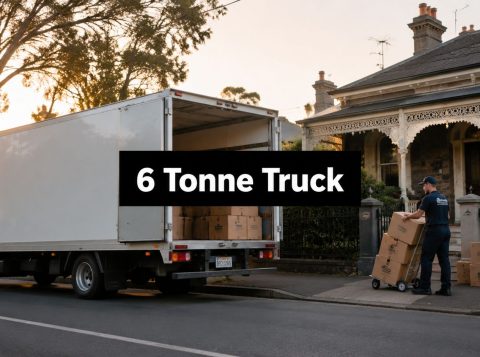
A dedicated truck run carries your goods as the primary load. It costs more than sharing capacity, but the pickup and delivery windows can be planned around settlement, lease expiry, school terms and lift bookings. It suits a family home, a full apartment or an office where delay creates a larger problem than transport cost.
Backloading uses spare capacity on a vehicle already travelling north. It can reduce the transport charge, but the mover may need flexibility around pickup and delivery. Your goods can also be handled as part of a broader logistics schedule, so it's less suitable for fragile collections, strict handovers or households with no accommodation buffer. See the practical guidance on backloading removals before asking for a quote.
Shared freight sits between household removal and parcel transport. It may work for a small volume of sturdy cartons, office equipment or selected furniture, but packaging standards and terminal handling need close attention. Self-drive hire gives you control over the departure, yet you take responsibility for loading, securing, driving, fuel, parking and the risk of damage.
Sydney to Brisbane transport options compared
| Option | Typical Transit | Cost Band (3-bed home) | Best For | Main Trade-off |
|---|---|---|---|---|
| Dedicated truck run | Scheduled around agreed pickup and delivery windows | Higher | Full homes, fixed settlement dates, offices | You pay for greater control and reserved capacity |
| Backloading | Flexible timing set by available truck capacity | Lower | Flexible households with storage or temporary accommodation | Delivery timing is less predictable |
| Shared freight | Depends on consolidation and terminal handling | Variable | Smaller loads and selected durable items | More handling points and stricter packing expectations |
| Self-drive hire | Controlled by the customer's driving schedule | Variable | Small moves and people comfortable managing the whole journey | Driving, loading, insurance and damage risk sit with you |
Practical rule: Choose a dedicated run when missing the Brisbane handover would cost more than the transport premium. Choose backloading only when your accommodation, storage and work schedule can absorb a flexible delivery date.
For a two-bedroom apartment, compare a backload with a dedicated shared-capacity quote. For a family home, ask whether the truck can carry the complete inventory without a second handling stage. For a small office, prioritise chain of custody and delivery coordination over the lowest headline price.
Packing and Handling Specialist Items the Right Way
Interstate packing fails in predictable places. Cartons go unlabelled, heavy books are packed into oversized boxes, fragile screens travel without edge protection, and the customer discovers at delivery that “kitchen” covers half the house.
Pack room by room and label every carton on two sides. Use a simple inventory such as BED 1 - LINEN, KITCHEN - GLASS, or OFFICE - CABLES. Keep each box firm but not overfilled, and put dense items in smaller cartons so the crew can lift them safely without crushing the contents.

Materials that earn their space
Use double-walled cartons for books, kitchenware and long-distance storage. Wardrobe cartons keep hanging clothes upright and reduce creasing. Mirrors, framed art and screens need edge protection and suitable glassine or non-abrasive wrapping rather than a loose sheet of plastic.
Furniture should be wrapped in heavy-duty moving blankets, with corners protected before stretch film is applied. Mattress bags prevent contact with dust and moisture during loading, transit and unloading. Don't use household rubbish bags for valuable textiles, and don't place cartons directly on wet concrete during either delivery.
Items that need specialist handling
A piano, pool table, marble top, large glass panel, antique cabinet or oversized television can require equipment and techniques that a general crew doesn't use every day. Pianos need weight-aware handling, protected legs and careful movement through turns, lifts and thresholds. Pool tables often require partial dismantling, level reassembly and protection for slate or engineered surfaces.
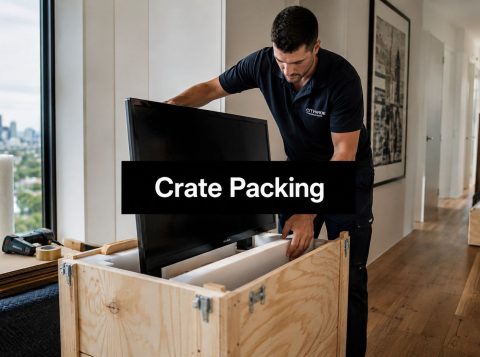
Marble and glass tops should travel vertically where appropriate, with padded separation and no pressure on unsupported edges. Antiques need an honest condition report and a discussion about finish, joints and climate sensitivity before wrapping. Large TVs should remain upright, protected from impact and kept away from loose items that can shift against the screen.
Fridges need time to settle after transport before they're powered up, while front-load washing machines require transit bolts or equivalent drum stabilisation. Electronics, timber furniture, mattresses and instruments also deserve attention where humidity and vibration can affect materials.
If an item is valuable, unusually heavy, fragile, tilt-sensitive or difficult to replace, tell the mover before quoting. Specialist handling is cheaper than correcting a failed lift, cracked top or damaged finish after the truck has left Sydney. Detailed guidance on specialty item moving can help you identify what belongs in that category.
Realistic Costs and How to Budget the Whole Transition
A relocation budget has two layers. The first is transport and handling. The second is the cost of getting from one tenancy or settlement to the next without leaving your household stranded.
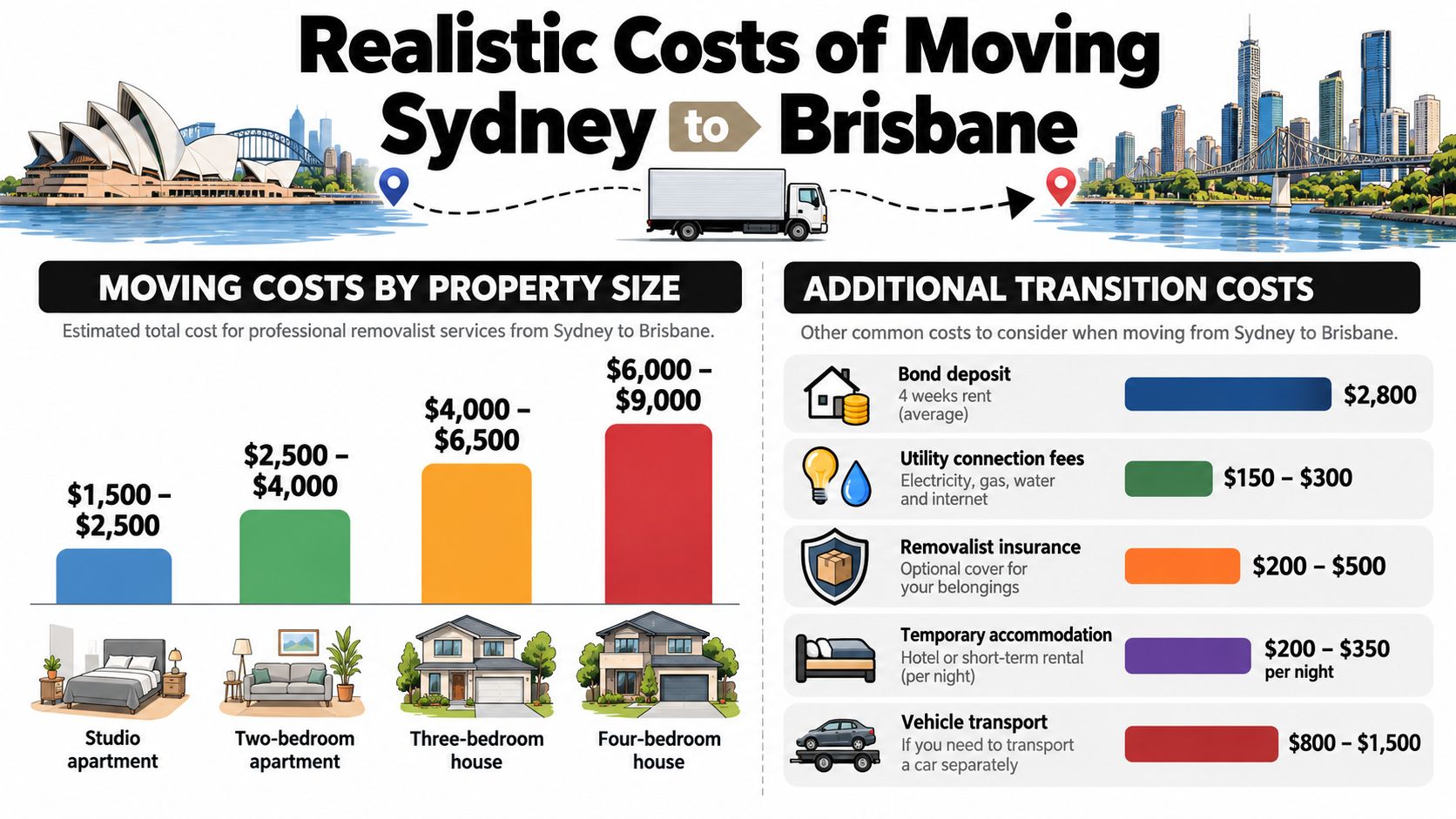
The transport quote is shaped by volume, access, packing, timing and the option selected. A studio may fit a shared freight arrangement, while a four-bedroom home generally needs reserved capacity and more labour. The figures shown in the required cost visual are useful as planning examples, but they shouldn't replace a written quote based on your actual inventory and addresses.
The move itself
For rough planning, the supplied ranges are:
- Studio apartment: $1,500 to $2,500.
- Two-bedroom apartment: $2,500 to $4,000.
- Three-bedroom house: $4,000 to $6,500.
- Four-bedroom house: $6,000 to $9,000.
These are not universal prices, and they don't describe every transport model equally. A backload may sit below a dedicated run when your dates are flexible, while a self-drive quote can appear low before fuel, accommodation, insurance, loading equipment and your own time are included. A dedicated truck is usually easier to budget when the delivery date has financial consequences.
The transition budget
The commonly missed expenses are less visible than the truck:
- Overlapping rent: You may pay for the Sydney property while waiting for Brisbane keys or delivery.
- Bond and first rent payment: A new tenancy can require substantial cash before the old bond is returned.
- Storage: A settlement or lease gap can add warehouse handling and another delivery stage.
- Utilities: Disconnections, connections and equipment changes can create separate charges.
- Parking and access: Council permissions, building bookings and loading restrictions may affect labour or vehicle choice.
- Temporary accommodation: Hotels, short-term rentals and pet-friendly options can become necessary when dates slip.
- Vehicle transport: A car, trailer or second vehicle may need separate logistics from the household load.
Queensland rent isn't automatically far below Sydney. One recent Australian comparison reported Brisbane rents at approximately $727 per week against Sydney's $780 per week, a narrower difference than many relocation articles suggest. (R2G's Australian relocation market overview)
Supply pressure can also force applicants to accept a less convenient suburb, pay overlapping rent or store furniture while waiting for a suitable property. KPMG forecasts approximately 151,000 new dwellings against demand from roughly 194,000 households in FY2026, implying a projected shortfall of about 43,000 dwellings. (Cotality's housing chart pack)
The cheapest move is often the one that gives you enough time to declutter, confirm access, avoid emergency accommodation and choose the correct truck. Compare total transition cost, not just the removalist line.
Paperwork, Utilities and the Queensland Tenancy Side
The NSW departure and Queensland arrival should be treated as separate administrative jobs. Before leaving Sydney, give the required notice, arrange final meter readings, confirm the bond process, redirect mail and check whether strata or building management imposes a moving-day booking or parking rule.
On arrival, complete the Queensland entry condition report carefully and photograph existing marks before furniture blocks walls or floors. Keep the tenancy agreement, key handover record, meter readings and correspondence in one digital folder.
Queensland utility responsibilities
Queensland's Residential Tenancies Authority says tenants usually pay for services such as electricity, gas, telephone and internet, unless the tenancy agreement includes them in rent. Any service charges must appear in the agreement, and a tenant can't be charged more than the billable amount or for supplying or maintaining equipment. Installing a new service requires written permission from the property manager or owner. (Queensland RTA guidance on charging for utilities)
Where a tenant is responsible for general service charges, the property manager or owner must provide the relevant service-provider document within four weeks of receiving it. If they don't, the tenant isn't required to pay those service charges. Keep invoices, connection confirmations and meter information, and use a resource such as compare quarterly energy bills Queensland to understand how the new property may differ from the old one. (Queensland RTA guidance on rent and other bills)
Other documents to close
Update your employer, bank, insurer, health providers, electoral details and school records. Transfer vehicle registration and organise the Queensland licence process according to current government requirements. If you have pets, confirm transport arrangements, council registration and any body corporate restrictions before the animal arrives.
For a practical pre-departure checklist covering moving house electricity, make utility responsibility part of the booking conversation rather than an afterthought. The last box being unloaded doesn't mean the move is administratively finished.
Your Sydney to Brisbane Moving Day Checklist and Week One Plan
The final week should be boring. Boring means the addresses are confirmed, the access is booked and the essentials aren't buried in the truck.
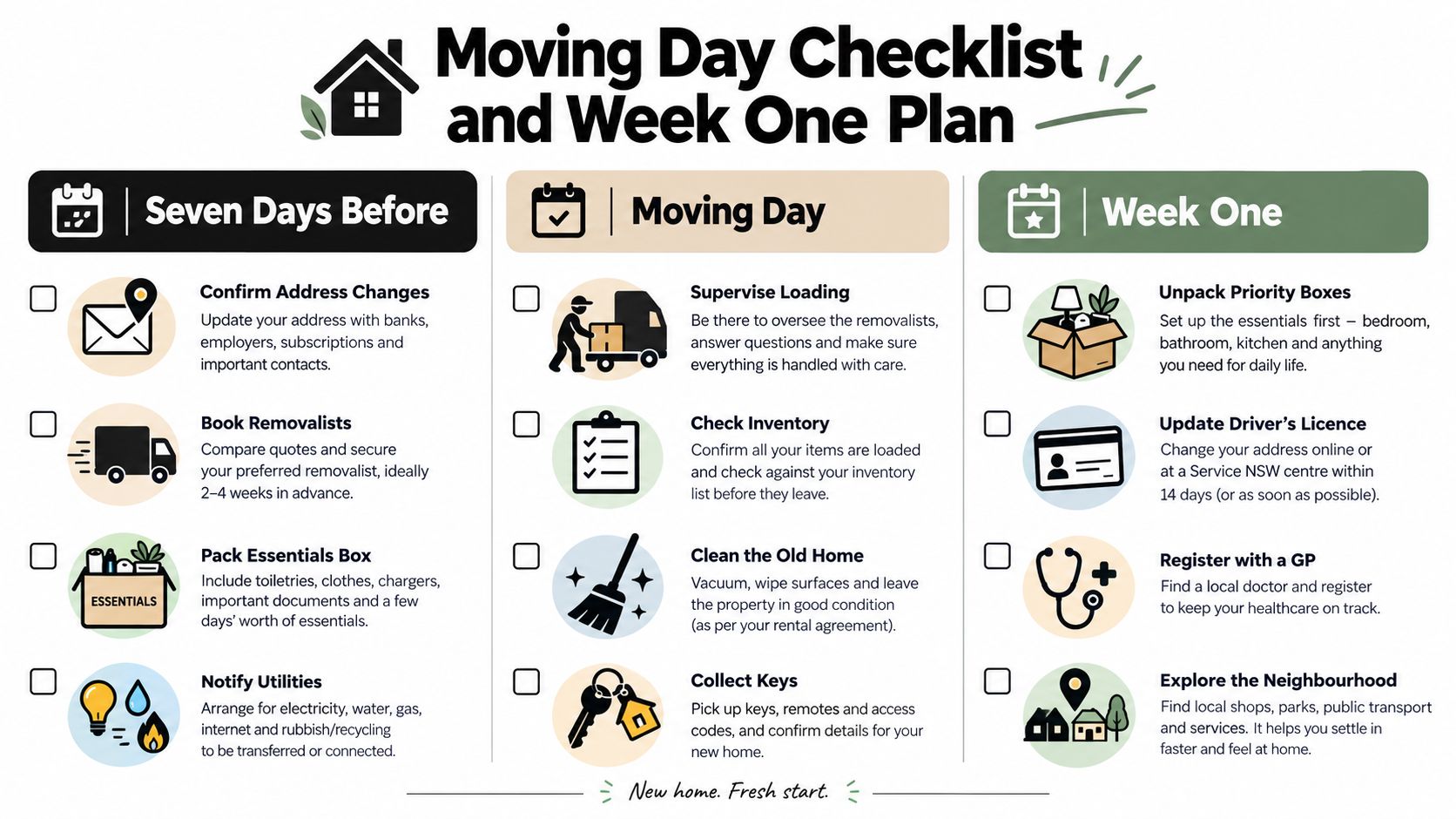
Seven days before
- Confirm access: Send the crew both addresses, contact numbers, parking details, lift bookings and building manager rules.
- Protect essentials: Set aside documents, medication, valuables, chargers, keys, pet supplies and several days of clothing.
- Prepare appliances: Defrost and dry the fridge, stabilise the washing machine and drain fuel-based equipment.
- Check weather: Review forecasts 72 and 24 hours before each loading and unloading window, as rain can affect apartment lifts, driveways and final-mile handling. Sydney averages approximately 1,044 mm of annual rainfall and Brisbane approximately 1,080 mm, while Brisbane's long-term monthly mean ranges from about 32 mm in August to 153 mm in February. (Bureau of Meteorology city climate averages)
- Confirm cash flow: Check rent overlap, storage, temporary accommodation and any access-related charges.
Moving day
Walk through the Sydney property with the crew, record pre-existing damage and check the inventory as items leave. Let trained movers handle heavy, awkward and fragile pieces. You should carry passports, medication, keys, jewellery, legal documents and irreplaceable personal items yourself.
At Brisbane, inspect the access path before unloading, direct furniture into rooms and keep wet cartons off exposed concrete. Photograph any apparent damage before unpacking or disposing of packaging, then notify the mover according to the contract and insurance process.
Week one
Unpack beds, bathroom supplies, kitchen basics, work equipment and children's essentials first. If something arrives damaged, retain the carton and packaging, photograph the item and its condition, and submit the claim with the inventory, consignment documents and supporting images.
Arrange the Queensland car registration process, update licence details, locate the nearest hospital, GP and vet, and check rubbish, parking and public transport arrangements in the new suburb. A short walk through the neighbourhood often reveals practical details that property listings don't show, such as the easiest school route or where deliveries can stop.
Get n Go Removals Melbourne can coordinate Sydney-to-Brisbane household and office relocations, including packing, specialist furniture handling, storage and delivery planning around settlement or lift access. For a carefully organised interstate move with one point of contact, visit Get n Go Removals Melbourne and request a quote based on your inventory, access and preferred dates.