Master Your 2026 Move: Moving Truck with Lift Gate Guide
You're probably looking at one item that has changed the whole move.
Maybe it's a double-door fridge that won't forgive a bad angle. Maybe it's a marble dining table, a heavy timber buffet, or a commercial printer sitting in an office fit-out that has to be cleared fast. Everything else feels manageable until you get to the question that matters most. How do you get the heaviest pieces from ground level into the truck without risking injury, damage, or a day that runs badly behind?
That's where a moving truck with lift gate stops being a nice extra and starts being the right tool for the job. In Melbourne, plenty of moves involve apartment buildings, narrow access, older homes, awkward driveways, and receivers with no dock or forklift. In those conditions, brute force isn't a plan. It's how people strain backs, chip door frames, and damage expensive furniture.
The Heavy Lifting Problem Every Mover Faces
The hardest part of most moves isn't the number of boxes. It's the few items that can't be improvised.
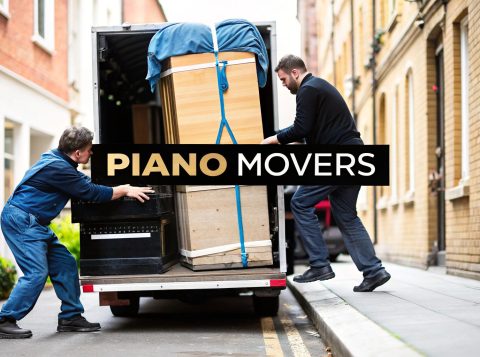
A sofa can usually be manoeuvred with enough care. Archive cartons can be stacked. Bed frames come apart. But a solid oak bookshelf, a front-load washer, or a piano changes the workflow immediately. One wrong lift from the tail of a truck can put all the weight on the movers' wrists, backs, and knees in a split second.
That's the moment people realise why “we'll just carry it” often doesn't hold up in real life. Heavy items don't only weigh more. They're bulky, awkward to grip, and harder to control at height. Even when something technically can be hand-unloaded, that doesn't mean it should be.
Practical rule: If the item is hard to lower from truck-bed height in a slow, controlled way, you're already in lift gate territory.
This is especially true on apartment moves and inner-suburban jobs where there's no loading dock and no room for a long ramp setup. The truck arrives, the booking window starts, and suddenly every lift has to be clean, efficient, and controlled.
A lift gate solves the exact problem people get stuck on. Instead of lowering a fridge, safe, buffet, or pallet by hand from the rear of the truck, the item stays on a hydraulic platform and moves vertically to ground level. That changes the move from a risky muscle job into a managed handling process.
If you're also planning around oversized household pieces, this guide on how to move heavy furniture safely helps you think through item preparation before moving day.
Understanding the Moving Truck with a Lift Gate
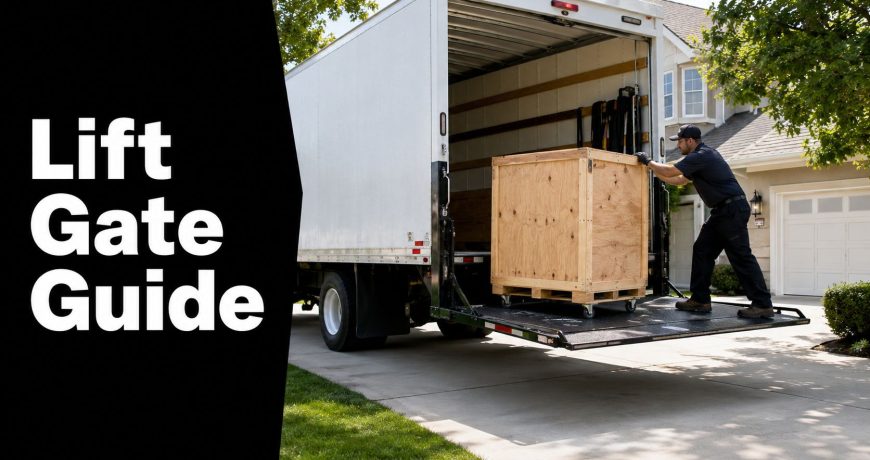
A moving truck with lift gate is a truck fitted with a hydraulic platform on the rear. The platform lowers to the ground, the item is loaded onto it, and the mechanism raises it to the truck floor height, or lowers it back down during unloading.
That's the simple version. In practice, it's one of the most useful pieces of moving equipment for jobs involving heavy, dense, or awkward items.

What the lift gate actually does
A lift gate works like a compact freight elevator fixed to the truck. Instead of asking movers to carry a load up a ramp or lower it from tray height, the platform takes the vertical load movement. That means the team can focus on stabilising, steering, and securing the item.
This matters most for:
- Appliances such as fridges, washing machines, and freezers
- Large furniture including buffets, bookcases, and heavy dining tables
- Specialty items like pool tables, pianos, and commercial equipment
- Palletised freight where hand unloading isn't realistic
If you're comparing vehicle options before booking, a practical reference on selecting the right box truck size can help you understand how truck length and payload planning affect loading efficiency.
Tuck-under versus rail-mount
Not all lift gates suit the same move. That's where configuration matters.
For Australian removals, tuck-under liftgates preserve full interior cargo length, ideal for long items like pool tables, while rail liftgates offer higher load capacities, often up to 3,000 lbs (1,361 kg) according to Hire Express.
That trade-off is practical, not theoretical.
- Tuck-under lift gates are better when cargo length matters. Long disassembled bed frames, oversized tabletops, and pool table components fit more cleanly because the truck keeps more usable internal space.
- Rail-mount lift gates suit heavier, denser loads where platform strength matters more than every inch of cargo length.
Capacity matters more than guesswork
Industry guidance for box trucks equipped with liftgates puts typical rated lifting capacity between 1,000 lbs (454 kg) and 3,000 lbs (1,361 kg), and the recommendation is to round up generously when estimating load weight, as explained by Tommy Gate's liftgate overview.
That's why experienced movers don't estimate casually. A fridge isn't just “heavy”. A stone table base isn't just “probably fine”. The job gets safer when the load, truck, and platform are matched properly before the team arrives.
Key Benefits of Using a Lift Gate for Your Move
The value of a lift gate shows up in three places. Safety, speed, and protection of your belongings. If one of those matters to you, the lift gate isn't a gimmick. It's part of doing the move properly.

Safer loading and unloading
In Australia, tail-lift services are legally required whenever freight is too heavy or bulky to be unloaded safely by hand at locations lacking a forklift or loading dock, according to QFM Logistics' explanation of tail-lift delivery in Australia.
That tells you something important. The lift gate isn't only about convenience. In the right circumstances, it's part of a compliant and safer unloading method.
A controlled platform reduces the moments where injuries usually happen:
- From truck floor to ground level when an item has to be lowered manually
- At awkward hand positions when a bulky load blocks visibility
- During fatigue late in a move when grip and posture start to break down
Faster workflow on real jobs
A lift gate also speeds up the work in a practical way. Not because movers rush, but because they stop wasting time wrestling heavy pieces through the riskiest part of the job.
A ramp can be useful for light, wheeled items. It's less useful for dense furniture, large whitegoods, and awkward pieces that need stable vertical transfer. If you want a plain-language refresher on the mechanics behind that, this guide to hydraulics for UK engineers gives a solid overview of how hydraulic systems create controlled lifting power.
For customers, faster often means less stress. The truck spends less time parked. The team spends less time resetting loads. Building access windows become easier to hit.
The smoothest moves aren't the ones with the strongest lifters. They're the ones with the right equipment at the pinch points.
For households juggling moving day with delayed settlement, temporary storage, or staggered access, integrated furniture removal and storage in Melbourne can also take pressure off the schedule.
Better protection for valuable items
Heavy items get damaged when people try to “save time” without the right handling method. Corners catch. Weight shifts. One end drops. Timber legs crack under uneven load. A polished fridge door gets scraped at the tail of the truck.
A lift gate reduces those failure points because the item stays level and supported through the height change.
Here's a quick look at lift gate use in action:
When Is a Lift Gate Truck Essential for Your Melbourne Move
Some moves can go either way. Others really can't. In Melbourne, a lift gate becomes essential when the job includes heavy items, limited unloading infrastructure, tight timing, or access conditions that make manual unloading unsafe.
Apartment and high-rise moves
Apartment buildings create a common misunderstanding. People assume the building lift solves the whole problem.
It doesn't.
The building lift helps once the item is inside the property. It does nothing to lower a fridge, sofa, washer, or packed trolley from truck-bed height to the ground. That first transfer still has to happen safely at the kerb, in the loading bay, or on the street frontage.
A lift gate is often the cleanest option for:
- Buildings with booked loading windows
- Sites with no dock access
- Moves involving large appliances or dense furniture
- Properties with narrow corridors where rehandling needs to be minimised
For business relocations, the same issue shows up with printers, cabinets, boxed IT equipment, and reception furniture. If your move includes those items, professional planning for commercial office removals in Melbourne usually needs to account for truck-side lifting, not just building access.
Houses with awkward access
A suburban house move can still need a lift gate. The deciding factor isn't whether the destination is a house or apartment. It's the unloading setup.
Watch for these conditions:
- Steep or uneven driveways that make ramp use unstable
- Long carry distances where repeated handling increases risk
- Rear access constraints that force unloading from the street
- Properties without practical room for manual tail unloading
If the truck can park, but the load can't be lowered cleanly by hand, the lift gate becomes the safer call.
Heavy and specialty items
This is the most obvious category, but it's also where people underestimate risk.
A few common examples:
| Move Type / Item | Lift Gate Recommended? | Primary Reason |
|---|---|---|
| Apartment move with fridge and washer | Yes | Safe ground-level transfer before building access |
| House move with standard boxes and light furniture | Sometimes | Depends on truck height, access, and unloading conditions |
| Piano move | Yes | Controlled vertical loading for a dense, sensitive item |
| Pool table move | Yes | Heavy slate components and long sections need stable handling |
| Office move with copier or commercial fridge | Yes | Weight and awkward dimensions make manual unloading unsafe |
| Interstate move with mixed household contents | Often | Reduces rehandling risk and improves consistency at both ends |
Interstate and longer-distance jobs
On interstate moves, the cost of one loading mistake gets bigger. Damage isn't discovered until delivery. Replacement or repair becomes slower. Rehandling at each end needs to be predictable.
That's why lift gate planning matters more on longer hauls involving heavy furniture, whitegoods, or specialised pieces. The loading method needs to be repeatable at pickup and at delivery, even when the two properties are very different.
If the origin and destination don't offer dock-style access, assume the truck needs to do the lifting work.
Mastering Safety with Professional Lift Gate Removals
A lift gate is only safe when it's used correctly. The equipment helps, but the operating method matters just as much. Good removals teams don't treat the platform like a shortcut. They treat it like load-handling equipment that needs planning, stable setup, and clear communication.

What safe operation looks like
Before any heavy item goes onto the platform, the team checks the ground, truck position, item path, and platform condition. That sounds basic, but it's where many bad lifts start. If the truck is off-level, the platform can't do its job properly.
The item also needs to be centred and balanced on the gate. Too much weight on one edge creates instability. Too little communication between operators creates timing errors.
A safe lift usually follows this sequence:
- Inspect the area and clear bystanders, loose debris, and obstructions.
- Position the truck properly on the most stable available ground.
- Load the platform evenly so the weight is controlled.
- Secure the item during movement so it won't shift while rising or lowering.
- Keep one person in control of the operation and maintain clear verbal cues.
Manual gate handling rules matter
WorkSafe Victoria states that if employees manually handle lift gates, they must be placed on a solid platform at a height between shoulder and mid-thigh, often requiring two employees for taller gates to prevent injury, as outlined in WorkSafe Victoria's safe handling guidance for securing loads on trucks.
That point matters because it shows how seriously gate handling is treated. It isn't meant to be improvised from ground level. Professionals need to manage the equipment and the manual handling zone properly.
Maintenance is part of safety
Safe operation also depends on inspection and upkeep. Hydraulic equipment, platform hinges, controls, rails, and locking points need regular attention. Anyone comparing service standards can get a sense of what structured inspection culture looks like by looking at guides around HGV and trailer inspections.
The customer takeaway is simple. If a team can't explain how they handle the lift gate safely, you shouldn't assume they're prepared for your heaviest items.
How Get n Go Removals Makes Booking a Lift Gate Truck Easy
Most customers don't need to know the difference between lift gate models. They need to describe the move accurately. That's what makes the booking process work.
The easiest way to get the right truck assigned is to give clear information at quote stage. That means the team can match vehicle size, access method, and loading equipment to the actual job instead of guessing on the day.
The details that matter most
A good quote process usually starts with a short list of practical questions:
- What are the heaviest items? Think fridges, safes, pool tables, pianos, stone tops, compactus units, and commercial equipment.
- What's the pickup and delivery access like? Apartment loading bay, street parking, rear lane, steep drive, stairs, or lift booking.
- Are there any timing restrictions? Building lift bookings, strata windows, office shutdown periods, or settlement deadlines.
- Will anything need disassembly or extra protection? Large tables, bed frames, delicate finishes, or specialist handling.
That's enough to identify many lift gate jobs early.
Why the quote should include the right equipment from the start
Adding the correct truck at booking stage is far better than trying to solve the problem on moving day. If the heaviest part of the move has been overlooked, the whole run slows down. The team has to adapt around a preventable issue.
Industry guidance shows liftgate installation can cost thousands, but in practice a professional service builds that fleet investment into the overall move rather than treating safety equipment like a hidden extra. The cost ranges and equipment context are covered in this box truck liftgate guide.
That's one reason it helps to compare operators on planning quality, not only headline price. This advice on choosing the right removals firm for your move is useful if you're weighing professionalism against low-cost shortcuts.
What helps the move run smoothly
Customers can make the booking process easier by sending photos of access points and problem items. A quick image of the fridge, staircase, driveway, loading bay, or apartment lift area often answers questions faster than a long description.
If you're not sure whether you need a moving truck with lift gate, say that upfront. A good removals team should be able to work it out from the move details.
Your Melbourne Lift Gate Moving Questions Answered
Does a building lift mean I don't need a truck lift gate
No. They solve different problems.
A building lift moves items inside the property once they've already been unloaded from the truck. A truck lift gate handles the transfer between truck floor height and ground level. On many Melbourne apartment jobs, both are needed for the move to work safely and on time.
A common mistake is assuming the building booking replaces the truck-side equipment. It doesn't. Restricted booking windows can make the truck lift gate more important because unloading needs to be faster and more controlled.
Can I skip the lift gate to save money
If the move involves items that are too heavy or bulky to unload safely by hand, skipping it isn't a sensible saving. It increases risk to people, property, and timing.
What looks cheaper in a quote can become more expensive when an appliance gets damaged, a team has to rework the loading plan, or the building access window is missed.
How much weight can a lift gate usually handle
Typical box-truck liftgate capacities commonly sit between 1,000 lbs (454 kg) and 3,000 lbs (1,361 kg), depending on the truck and gate setup, as noted earlier in this guide. The exact safe working load depends on the specific platform fitted to the vehicle and how the item's weight is distributed.
Do interstate moves benefit from lift gate trucks too
Yes, especially when either end lacks a dock or forklift and the inventory includes whitegoods, heavy timber furniture, or specialist pieces. Consistent loading and unloading matters more on longer runs.
How do I estimate truck space properly
Start with volume, not guesswork. A room-by-room inventory gives a far better picture than trying to eyeball it from memory. If you want a quick planning tool before requesting quotes, this cubic metre calculator helps you estimate how much space your contents are likely to take.
If you want a move planned around the right truck, the right equipment, and the right access strategy from the start, speak with Get n Go Removals Melbourne. Their team can help you work out whether a moving truck with lift gate is necessary for your house, apartment, office, or interstate relocation, then organise a clear quote built around safety and efficiency.