
The Definitive Guide to Professional Pool Table Moving
Moving a pool table is a whole different ball game compared to shifting regular furniture. It demands a specialised skill set, blending raw strength with almost surgical precision. Many people mistakenly believe it's a simple DIY job, but this approach often leads to disaster—think cracked slate, a warped frame, or torn felt. It's a costly learning curve that's best avoided.
Why Pool Table Moving Requires Specialist Skills
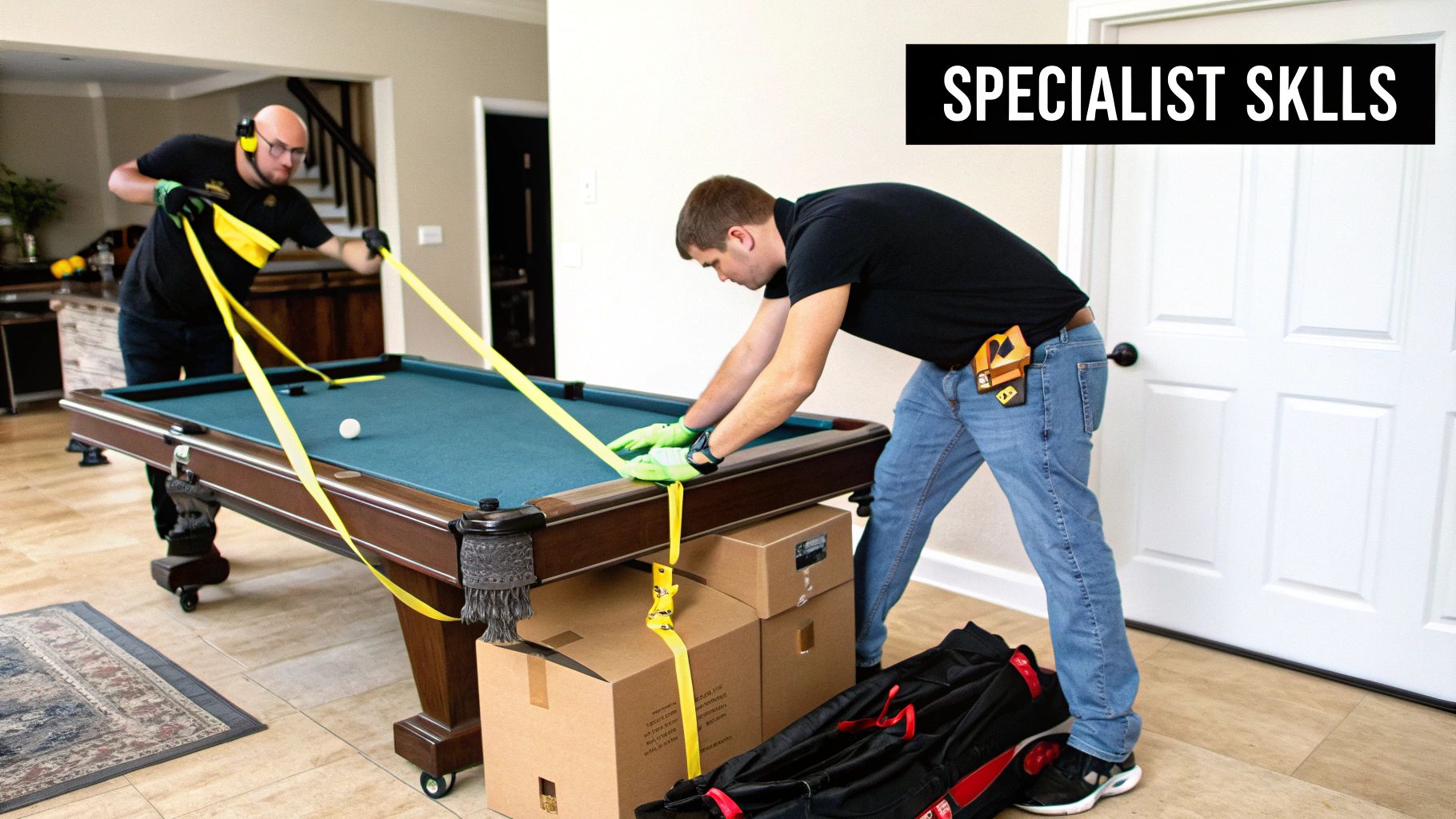
Thinking you can move a pool table like a dining table is the first and biggest mistake. You can’t just flip it on its side and shuffle it out the door. Attempting this is a near-guarantee of serious damage to the frame, the legs, or the incredibly heavy slate concealed beneath the felt.
The process is less about brute force and more about a careful, methodical disassembly and reassembly. It requires specific tools, a deep understanding of the table's construction, and a team trained to handle significant weight safely.
The Challenge of Immense Weight and Fragility
The heart of any quality pool table is its slate playing surface. This component is exceptionally heavy and, surprisingly, very brittle. A typical full-sized, three-piece slate table can weigh anywhere between 300-500kg. Each individual slab of slate can tip the scales at 80-100kg or more.
Moving this requires at least 3-4 strong individuals who understand proper lifting techniques—using their legs, not their backs. Professionals can complete the job in 4-8 hours, whereas a novice attempt can drag on for days and comes with a shocking 25% damage rate from misaligned slates, making a perfectly flat playing surface impossible to restore.
A pool table is a finely calibrated instrument. One wrong move can crack the slate, a component that can cost thousands to replace. It’s a high-stakes task where professional expertise is not a luxury, but a necessity.
Precision in Disassembly and Reassembly
Beyond its sheer weight, a pool table is an intricate puzzle of pockets, rails, felt, and slate. Each component must be removed in a specific sequence to prevent damage.
This is far more complex than just unscrewing a few bolts. It involves:
- Careful Rail Removal: The rails must be detached without scuffing the wood finish or damaging the cushions.
- Felt Preservation: The felt is typically stapled or glued. Removing it gently so it can be reused without rips or stretches is a delicate operation.
- Systematic Labelling: Every screw, bolt, and bracket needs meticulous labelling. Without this, achieving a perfect reassembly is nearly impossible.
Skipping these steps can result in a wobbly table, unresponsive rails, or a playing surface that is anything but level. The skills required are similar to those for other large, delicate items; you can see similar challenges detailed in our guide on how we move a piano in Melbourne. This methodical approach is precisely why a professional pool table moving service is a smart investment over a risky weekend project with friends.
Preparing Your Home for a Smooth Move
A successful pool table relocation doesn't begin on the day the truck arrives. It starts long before the first bolt is turned. Just like any major project, preparing your home and the table itself is a critical part of the process. A bit of upfront planning ensures moving day is safer and far more efficient.
First, document everything. Use your phone to take comprehensive photos of your pool table from every angle. Be sure to get close-ups of any existing scuffs, marks, or unique characteristics. This creates a clear "before" record, providing peace of mind and a useful reference for reassembly.
Next, you’ll need to know your table's exact size. Most are standard 7ft, 8ft, or 9ft tables, measured along the length of the playing surface. Knowing the dimensions is crucial so the moving team can bring the right equipment and have an adequate number of personnel.
Mapping Out the Moving Path
Once you have the basics down, it's time to scout the route. This means the entire route, from the table's current position to its final spot in your new home or office. This isn't a quick glance; you'll need a tape measure and a keen eye for potential problems.
Measuring every doorway, hallway, and stairwell at both locations is non-negotiable. Don’t forget to check for tricky corners and low ceilings – these are common obstacles in many Melbourne properties, from older inner-city terraces to modern suburban builds. If you spot a potential bottleneck, flag it immediately.
Planning the route is like a dress rehearsal for the move. Identifying a narrow staircase or a tight turn in advance allows the moving team to bring specialised equipment, preventing delays and potential damage on the day.
After clearing the path, consider the table's final placement. It’s not just about getting it through the door. You need to plan the room's layout carefully. Getting some ideas on how to arrange furniture in your living room can be a huge help, ensuring there's ample space for players to take shots without hitting walls.
Essential Tools and Professional Materials
A professional team arrives with more than just muscle; they bring a specific toolkit designed for the job. Attempting to move a pool table without the right gear is a recipe for disaster, risking damage to the table, your property, or even personal injury.
The toolkit for a proper pool table move is extensive. While our guide, The Essential Moving Home To-Do List, covers general moving prep, a pool table demands a more specialised approach.
Here are some of the non-negotiable items that the pros use:
- Socket Wrench Set: Absolutely essential for carefully removing rail and leg bolts without stripping the hardware.
- Power Drill with Multiple Bit Attachments: This makes short work of the numerous screws holding the slate and frame together.
- Staple Remover or Needle-Nose Pliers: Needed to gently detach the felt from the slate without ripping it, enabling reuse.
- Furniture Dollies and Sliders: Heavy-duty dollies are a must for moving the slate pieces. Each one can weigh over 100kg, and these tools help move them safely without damaging your floors.
- Premium Moving Blankets and Padding: Every finished component, especially the wooden rails and legs, needs to be wrapped in thick, protective blankets to prevent scratches and dings in transit.
- Labelling Materials: Pros use ziplock bags, masking tape, and markers to label every bolt and bracket. This meticulous system ensures a perfect reassembly.
The presence of this specialised gear is a clear sign you’re dealing with a serious, professional moving service. It’s what separates a risky DIY attempt from a secure, damage-free relocation of your valuable table.
Taking Apart and Packing Your Pool Table
This is where the real work begins, and technical know-how is invaluable. The secret to a successful pool table moving day lies in the disassembly. Rushing this stage or performing steps out of order is a surefire way to get stripped bolts, ripped felt, and a great deal of frustration. It’s a job that demands patience, not brute force.
The primary goal is to protect every single piece, from the smallest screw to the massive slate slabs. You are deconstructing a precision piece of furniture, and every part must be returned to its exact original position.
Before touching a single screwdriver, there are a few foundational steps to get right. This simple graphic breaks down the essential prep work.
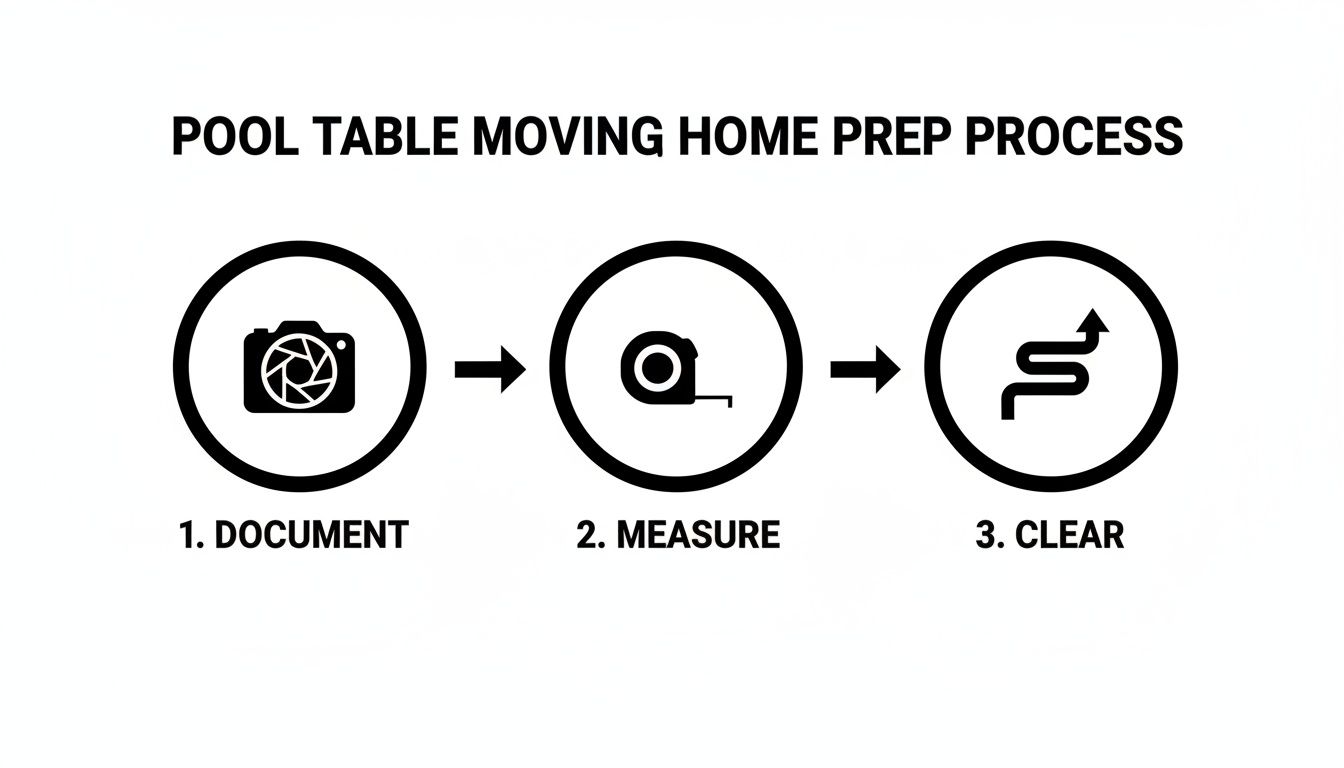
As you can see, a smooth move starts with documenting your table's condition, measuring all pathways, and clearing any obstacles well before disassembly begins.
First Up: Pockets and Rails
The first components to be removed are the pockets. Depending on your table's style, they are usually attached with staples, screws, or bolts. Proceed gently—yanking them out can easily damage the wooden frame or tear the leather.
Once the pockets are off, you can access the bolts holding the rails in place, which are found on the underside of the table. A socket wrench is the best tool for this job, allowing you to loosen the bolts without stripping the heads. As each rail is removed, label its position (e.g., "head rail," "left side rail"). This small step takes seconds but saves a world of guesswork during reassembly.
Carefully Removing and Saving the Felt
The felt is arguably the most delicate part of the table. Whether it’s stapled or glued down, it requires careful handling if you plan to reuse it. A cheap replacement felt might only cost a few hundred dollars, but high-quality cloth is significantly more, so it's worth taking your time.
If it's stapled, use a proper staple remover or needle-nose pliers to lift each one out individually. If it's glued, patience is key. Slowly and carefully peel it back, perhaps using a scraper for assistance, ensuring not to stretch or tear the fabric. Once it’s off, fold it loosely—never crease it—and place it in a clean bag to protect it from dust and moisture.
The condition of the felt has a huge impact on how the table plays. Rushing the removal can create permanent wrinkles or tears, forcing a costly replacement. An extra 30 minutes of care here can easily save you hundreds of dollars.
Unbolting and Lifting the Slate
You’ve now reached the heart of the table: the slate. This is the heaviest and most fragile part of the assembly, requiring your full attention. Most modern tables use a three-piece slate, with each slab weighing anywhere from 80kg to over 150kg.
The slate pieces are typically screwed directly to the frame. To create a perfectly smooth playing surface, the screw heads are often covered with beeswax or putty. You’ll need to scrape this away carefully to access them.
This is absolutely not a one-person job. You need at least two, and ideally three, strong helpers to lift each slab. The key is to lift it perfectly straight up, keeping the weight evenly distributed. Any twisting or pressure on one spot can cause a catastrophic crack. Handling heavy items like this has specific safety protocols; for more tips, review our guide on how to move heavy furniture safely.
The Make-or-Break Step: Meticulous Packing
With everything disassembled, your focus must shift to protection. Proper packing is the only thing that will shield your table from the bumps and rattles of the move. This is not the time to cut corners with flimsy materials.
-
Rails and Legs: Every wooden piece—rails, legs, and frame sections—must be wrapped individually in thick, high-quality moving blankets. Use packing tape or stretch wrap to hold the blankets firmly in place so they don’t slip off in transit.
-
Hardware and Small Parts: This is where your labelling pays off. Place all the screws, bolts, and brackets from each part into their own Ziploc bags and label them clearly. For best practice, tape the bag directly to the wrapped component it belongs to. No more mystery screws!
-
The Slate Slabs: Protecting the slate is your number one priority. Wrap each piece in multiple layers of moving blankets. For ultimate protection, especially on an interstate move, professionals build custom wooden crates for the slate. This creates a solid shell that makes chips, cracks, and fractures virtually impossible.
Following a careful disassembly and packing process like this is how you protect your investment. It ensures every piece arrives at your new home or office ready for a flawless reassembly, which is the hallmark of a professional pool table moving job.
Ensuring Safe Transport and Perfect Reassembly
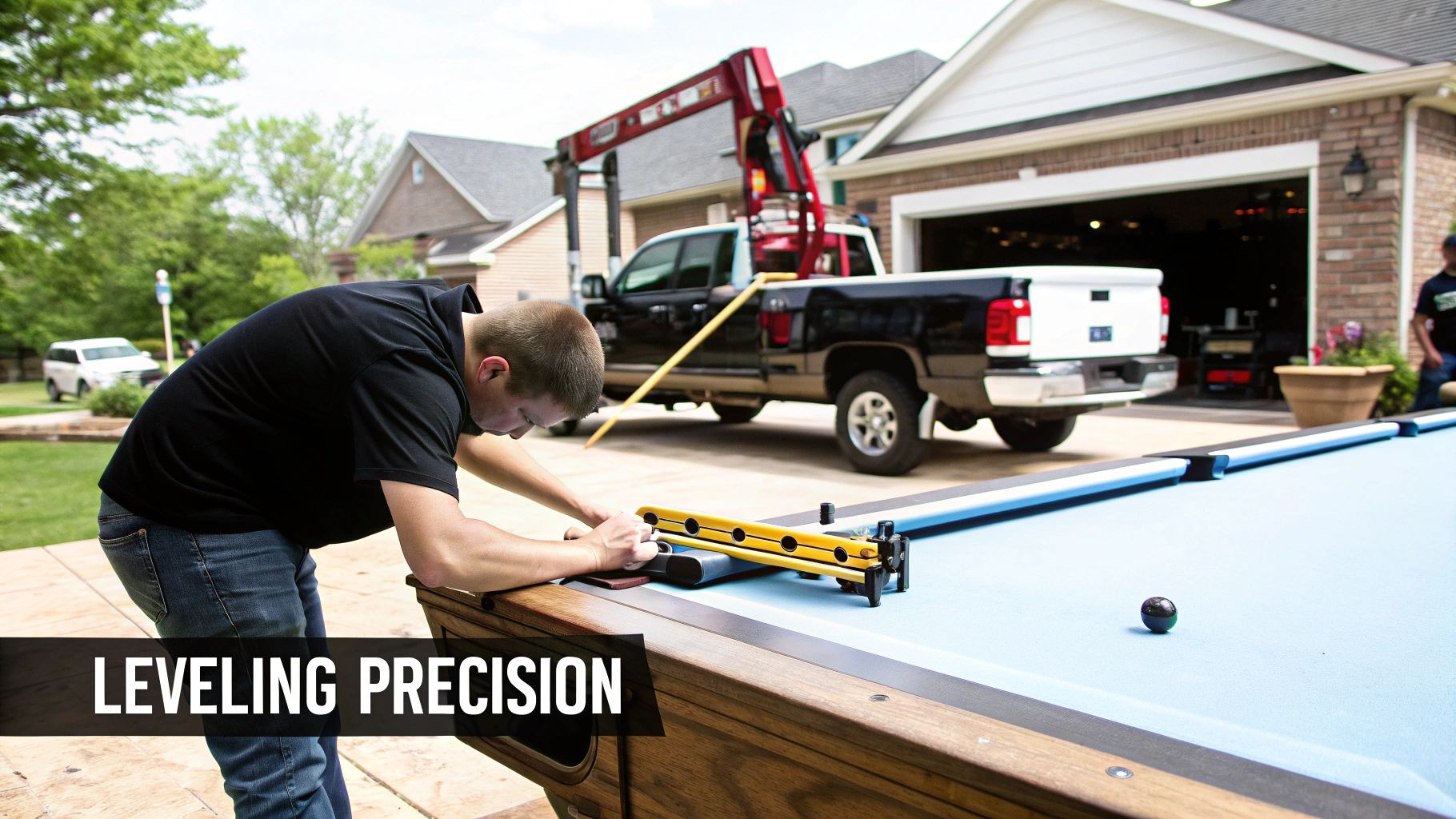
With every part of your pool table carefully dismantled and packed, the physical journey begins. This is where meticulous planning and preparation pay off, as moving these incredibly heavy pieces is a serious test of strength and strategy. Having the right equipment and using safe handling techniques is not just a good idea—it's absolutely essential.
You are not just moving a piece of furniture; you are transporting several hundred kilograms of slate, timber, and hardware. A standard moving van and a bit of muscle simply won't suffice. Professional pool table moving is a specialised service that relies on purpose-built vehicles and precise methods to ensure nothing is damaged along the way.
The Logistics of Safe Slate Transportation
The slate pieces are the heart of your table and also its most fragile and valuable components. Moving each slab requires a coordinated team effort. Team members must lift with their legs, keep their backs straight, and maintain constant communication. One wrong move could result in personal injury or a cracked piece of slate.
Furniture dollies are non-negotiable for this task. They allow the crew to roll the heavy slabs smoothly, significantly reducing the risk of dropping or scraping them. When it's time to load, the slate must be transported vertically, standing on its long edge. Laying it flat in a van is a recipe for disaster, as it can easily crack under its own weight from road vibrations.
This is exactly why dedicated moving trucks are a must. A proper professional setup will include:
- A Hydraulic Lift: Makes loading and unloading the heavy slate slabs safe and efficient, eliminating risky manual lifting.
- Secure Strapping: Inside the truck, the slate pieces must be strapped tightly to the walls. This prevents them from shifting, sliding, or toppling over during transit.
- Sufficient Space: A proper truck provides enough room to transport everything without stacking components on top of each other, preventing scratches and pressure damage.
This kind of specialised transport becomes even more critical for long-distance moves. There has been a notable increase in pool table relocations as Melbourne families and businesses move interstate, according to recent data on Victorian moving trends from 2021-2023. The average cost for these Melbourne-to-East Coast moves sits around $2,200, which typically includes padded transport in 12-tonne trucks and, crucially, re-levelling at the destination. You can read more about what’s driving these moves at Find a Mover.
Rebuilding the Frame with Precision
Once you've arrived at the new location, the reassembly process begins. Think of it as disassembly in reverse, but with an even greater need for precision. The first task is to rebuild the frame in its final designated spot.
Using the labels you carefully created earlier, reattach the legs to the main frame. Ensure every single bolt is tightened properly to create a rock-solid foundation. Any wobble at this stage will only get worse, making a perfectly level playing surface impossible to achieve.
Sealing the Slate for a Flawless Surface
With the frame solid and in position, it's time to gently place the slate pieces back on top. Again, this is a job for a strong, coordinated team. Line up the slabs according to your labels, ensuring they fit together as snugly as possible with minimal gaps.
Now for the step that truly separates a professional job from a DIY attempt. The seams between the slate pieces must be perfectly sealed to create a single, continuous playing field. Pros use beeswax or a specialised slate putty. The material is melted or spread into the seams and then scraped completely flush with the slate, leaving no bumps or ridges behind.
The quality of the seam seal is paramount. An uneven seam will cause balls to roll off-course, completely ruining the game. This precise, patient work is a hallmark of an expert installation.
The Final, Critical Step: Levelling the Table
The slate is sealed, the felt is re-stretched and stapled—you're on the home straight. But the last step is the most important one: levelling. A pool table can't be "close enough." It must be perfectly flat, from every rail to every corner.
While a regular carpenter's level might get you in the ballpark, professionals use a high-precision machinist's level. This tool is far more sensitive and is the only way to guarantee a truly accurate, tournament-quality surface.
The process involves:
- Placing the level in the centre of the table to check it both lengthwise and widthwise.
- Moving the level to different spots all over the playing surface to identify any high or low areas.
- Making tiny adjustments by using shims under the slate or tweaking the table’s built-in leg levellers until the bubble sits dead centre, no matter where the level is placed.
This meticulous attention to detail ensures every shot rolls true, giving you the professional-quality game you paid for. Once it's perfect, the rails and pockets are reattached, and your table is ready for its first game in its new home.
If your move involves more than just the pool table, we can help with that too. You can explore our complete solutions for furniture removal and storage in Melbourne.
Understanding Pool Table Moving Costs
When considering moving a pool table, one of the first questions that comes to mind is, "How much is this going to cost?" The reality is, there's no single price tag. The final cost is a combination of different factors, all specific to your table and the details of your move.
Understanding what goes into the quote helps you budget properly and, more importantly, helps you identify a fair, transparent price. Every detail, from the size of your table to the layout of your property, plays a part.
Key Factors That Shape Your Quote
At its core, the price you pay reflects the labour, risk, and logistics involved. Professional movers evaluate several key variables before providing a solid estimate.
Here’s a breakdown of the primary cost influencers:
- Table Size and Type: It’s simple – larger tables mean heavier slate and more work. A standard 7-foot slate table is a much different challenge than a hefty 12-foot tournament table. While you might find an MDF (non-slate) table, which is lighter and cheaper to move, the vast majority of quality tables are slate.
- Moving Distance: A local job within Melbourne will always be more affordable than an interstate move to Sydney or Brisbane. Long-haul moves involve more fuel, more time on the road, and more complex logistics.
- Access and Complexity: This is a major factor. Are there stairs involved? What about narrow hallways, tight corners, or elevators? Every obstacle adds time, complexity, and risk to the job, which naturally increases the labour cost.
A move from a ground-floor house to another ground-floor house will always be the most straightforward and affordable option compared to a relocation involving a multi-storey apartment building.
Realistic Cost Ranges for Melbourne Moves
To give you a clearer idea, let’s talk numbers. Based on industry rates here in Melbourne, the average cost to move a pool table locally starts around $400 but can climb quickly from there.
For a standard 6 or 7-foot table, you're often looking at an average of $550. This rises to around $600 for an 8-foot model and can reach as high as $1,550 for massive 12-foot billiards tables.
For interstate moves from Melbourne to major cities like Sydney or Brisbane, which Get n Go Removals handles weekly, the price can range from $1,000 to $2,200. This reflects the extra distance and specialised handling required to ensure a safe arrival.
A professional company won't just give you a single number. A good quote is itemised, spelling out all potential charges so there are no surprises on moving day. This transparency protects you and ensures you know exactly what you’re paying for.
What a Professional Quote Should Always Include
When you receive a quote for pool table moving, it needs to be more than just a final figure. A trustworthy mover will provide a detailed breakdown so you can see where your money is going.
A complete, professional quote should cover:
- Labour Costs: This includes the team's time for disassembly, packing, loading, transport, unloading, reassembly, and precision levelling.
- Transportation Fees: The cost of using the right truck – one equipped with a hydraulic lift and proper securing gear.
- Packing Materials: The price for quality moving blankets, padding, and any custom crating needed for the slate.
- Insurance Coverage: It must confirm you're covered by Public Liability and Transit Insurance to protect your table and property.
- GST: All taxes should be clearly stated and included in the final price.
Knowing what to look for in a quote puts you in a much better position to compare options and make an informed decision. For a broader look at moving expenses, check out our guide on the average cost of movers in Melbourne.
Common Questions About Moving a Pool Table
Even with a comprehensive guide, it's normal to have a few questions. Moving a pool table is a major undertaking, and you want to ensure it's done right. Here are the answers to some of the most common queries we receive.
Can You Move a Pool Table Without Taking It Apart?
Attempting to move a slate pool table in one piece is one of the biggest and most expensive mistakes you can make. While it might seem like a shortcut, the frame and legs are not designed to support the massive, concentrated weight of the slate while being tilted and moved.
This can easily twist the frame, snap the legs, or crack one of the slate slabs—a catastrophic outcome. Any professional will insist that complete disassembly is the only correct method. It’s the only way to protect the table's structural integrity and safely navigate it through doorways and tight spaces. The only exception might be a very lightweight, non-slate table, but even then, it's a significant risk.
How Long Does a Professional Pool Table Move Take?
The timeframe really depends on the size and complexity of your table, plus the access at both the pickup and delivery locations. For a standard local move in Melbourne, a professional team will typically require between 4 to 8 hours to complete the entire job properly.
This includes every step from start to finish:
- Methodical and careful disassembly.
- Wrapping and packing every component.
- Safe transportation to the new location.
- Unloading and reassembling the table.
- The crucial final step of precision levelling.
A DIY attempt can easily consume an entire weekend and often results in a table that is wobbly or unlevel.
Does Moving a Pool Table Affect Its Level?
Yes, absolutely. Every single time a pool table is moved, it must be professionally re-levelled in its new position. The playing surface is not a single slab; it's composed of separate pieces of slate that must be perfectly aligned and sealed.
A pool table's level is incredibly sensitive. Just shifting it a few centimetres in the same room can throw the whole thing off. After a full move, re-levelling isn’t just a suggestion—it's absolutely essential if you want the balls to roll true.
Is My Pool Table Covered by Insurance During the Move?
When you hire a reputable, insured moving company, your pool table should be fully covered. Professionals carry Public Liability Insurance (to protect your property) and Transit Insurance (to cover your belongings while on the truck). It's crucial to research companies that offer professional moving services to ensure your table is handled by insured experts. If you move it yourself or hire someone without proper insurance, you assume all financial risk if something goes wrong.
Moving a pool table correctly requires experience, proper equipment, and a focus on precision. At Get n Go Removals Melbourne, we provide your table with the specialised care it needs for a seamless and stress-free move. Ready to get it done right? Contact us today for a clear, no-obligation quote. https://www.getngoremovals.com.au