
House Move Cost: A Comprehensive Guide to Budgeting Your Move
So, what is the real house move cost in Melbourne? On average, you can expect to pay anywhere from $380 for a small apartment move up to $880 or more for a larger family home.
The final figure on your invoice comes down to several key factors: the size of your property, the number of movers required, and the total time the job takes. Let's break down these elements so you can create an accurate budget and plan a seamless transition to your new home.
Your Quick Guide to House Move Costs in Melbourne
Trying to determine moving costs can feel like hitting a moving target. The good news is, the pricing structure is usually straightforward. Most Melbourne removalists operate on an hourly rate that scales based on the volume of your belongings which, in turn, is related to the size of your home.
Understanding these figures is the first crucial step towards a smooth, stress-free relocation.
The primary drivers of your quote are the number of removalists needed and the size of the truck they require. A small one-bedroom apartment might only necessitate two movers and a compact truck, whereas a sprawling four-bedroom family home will demand a larger team and vehicle to complete the job efficiently in a single trip.
Understanding Average Moving Expenses
To give you a practical starting point, let's examine what people typically pay for different home sizes across Melbourne. For a one-bedroom apartment, you’re looking at an average of around $380. A two-bedroom property usually averages about $450.
As the property size increases, a standard three-bedroom house move often comes in around $660, and a four-bedroom home can easily reach $880 or more. These prices are all based on hourly rates that can range from $75 to $300, depending on the crew size and truck required for your specific needs.
A well-planned move is a cost-effective move. By understanding the key variables—from truck size to the number of movers—you empower yourself to get an accurate quote and avoid unexpected expenses on moving day.
Estimated Local Melbourne Moving Costs By Home Size
To make things even clearer, here is a quick-reference table. It outlines the average costs you can expect for a local move within Melbourne, providing a solid baseline for your budget.
| Home Size | Average Cost (AUD) | Typical Truck Size | Ideal For |
|---|---|---|---|
| 1-Bedroom Apartment | $350 – $550 | 4.5 Tonne | Students, couples, or minimalists |
| 2-Bedroom Home | $450 – $750 | 6.5 Tonne | Small families or couples with more furniture |
| 3-Bedroom Home | $650 – $950 | 8 Tonne | Growing families with standard household items |
| 4+ Bedroom Home | $880 – $1,500+ | 10-12 Tonne | Large families with extensive furniture & belongings |
Of course, choosing the right team is just as important as knowing the cost. To ensure you're partnering with a reliable crew, check out our guide on selecting the best moving companies in Melbourne.
The Real Factors That Shape Your Moving Quote
Have you ever received two moving quotes for what seems like the exact same job, only to find the prices are worlds apart? The number of bedrooms in your home is merely a starting point. Your true house move cost is determined by a handful of crucial factors that dictate the time, labour, and resources your specific move demands.
Understanding these variables is the key to interpreting your quote accurately and avoiding any unwelcome surprises on moving day. It’s less about the property type and more about the real-world logistics of transporting your life from point A to point B, safely and efficiently.
The Volume Of Your Belongings
The single biggest factor that shapes your moving quote is the total volume of your possessions, which we measure in cubic metres (m³).
Think of the moving truck as a giant, empty container. The more of that container you need to fill, the more the move will cost. This is why a minimalist in a two-bedroom apartment might have a cheaper move than a family in a one-bedroom unit packed to the rafters with furniture, boxes, and heirlooms.
This is precisely why experienced removalists focus on volume, not just the room count. We are mentally calculating the space required for:
- Large Furniture: Sofas, beds, wardrobes, and dining tables.
- Appliances: Refrigerators, washing machines, and dryers.
- Boxes: The total number and sizes of your packed boxes.
- Miscellaneous Items: Things like bicycles, pot plants, and that bulky BBQ on the balcony.
A larger volume necessitates a bigger truck and likely more movers to load and unload everything efficiently. This directly increases the hourly rate and the total time your move will take.
This diagram breaks down the core components that build up to your final moving quote.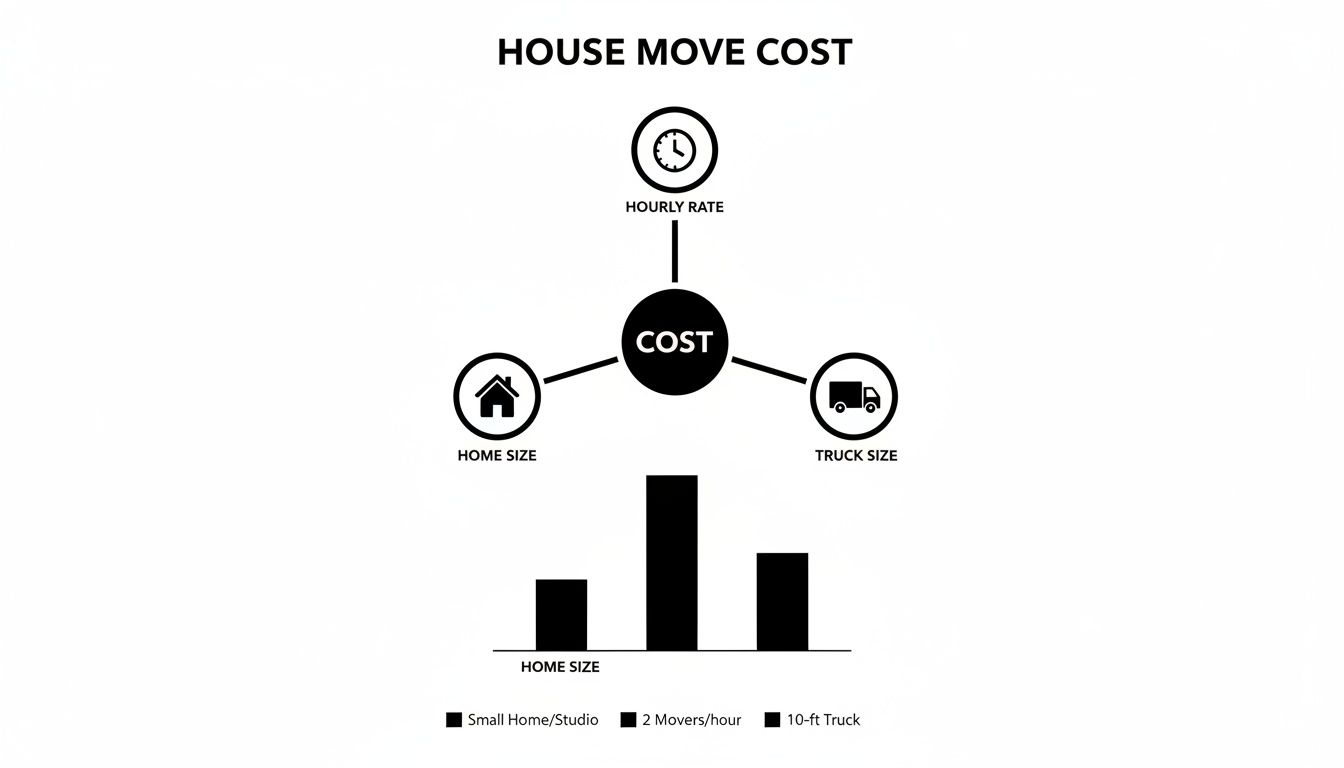
As you can see, the size of your home dictates the truck and hourly rate required, creating a direct link between how much stuff you have and the final bill.
Travel Distance And Time
The next significant piece of the puzzle is the distance between your old and new homes. This impacts the quote in two primary ways: the cost of fuel and the time the moving team spends on the road. A move across a few Melbourne suburbs will naturally be cheaper than relocating to a regional town hours away.
However, it's not just about the kilometres. Removalists must also factor in travel time, which can be challenging with Melbourne's traffic. A move booked in the middle of peak hour might take longer than one scheduled for mid-morning, adding to the total hours you're billed for.
Key Takeaway: The quote you receive is a professional estimate of the total time involved. This includes the crew's travel to your first address, the loading, the drive to the new place, the unloading, and their trip back to the depot.
Property Access And Logistics
How easy is it to get your furniture in and out of each property? This is where logistics can make a massive difference to your house move cost. Difficult access means more time and labour for the moving team, which translates directly to a higher final bill.
Consider these two scenarios:
- Scenario A: A ground-floor house with a driveway right out front. The truck can park next to the door. The movers can wheel everything out on trolleys in a straight, easy line.
- Scenario B: A third-floor apartment with no lift, a narrow stairwell, and the only parking is 50 metres down the street. Every single item must be carried down three flights of stairs and along a public footpath.
The move in Scenario B will take significantly longer and be much more physically demanding for the crew. The final bill will be higher, even if the volume of furniture is identical to Scenario A.
Common access challenges that can add to your cost include:
- Stairs and Lifts: Hauling furniture up and down multiple flights of stairs is time-consuming. Even with a lift, it may need to be booked, and it can create a bottleneck if it’s slow or small.
- Parking Proximity: If the truck has to park a long way from your door, it creates what we call a "long carry." This adds a surprising amount of time to both loading and unloading.
- Difficult Angles: Tight hallways, sharp corners, or narrow doorways can turn moving a large sofa or fridge into a time-consuming puzzle.
By getting a handle on these three core factors—volume, distance, and access—you can better understand the quotes you receive. For a deeper dive, you can learn more about the overall cost of movers and see how pricing is structured. This knowledge puts you in the driver's seat, allowing you to prep your home properly and give your removalist the clear info they need for the most accurate estimate.
Navigating Interstate Moving Costs From Melbourne
Moving house within Melbourne is one thing, but crossing state lines is a different ball game entirely. When you’re looking at an interstate move from Melbourne, the house move cost increases significantly, and for good reason. It’s not just a longer drive; it's a major logistical operation involving meticulous planning, more resources, and specific expertise.
Think of a local move as a courier delivery across town. An interstate move, by contrast, is more like a freight operation. It involves long-haul trucking, adherence to different state regulations, much higher fuel costs, and compensating a driving team for days, not just hours. This complexity is what contributes to the higher price tag.
Why Interstate Moves Cost More
To understand the price difference, you need to look beyond the kilometres. Several key factors contribute to the final quote when you're moving from Melbourne to a destination like Sydney or Brisbane.
- Long-Haul Logistics: A truck travelling hundreds or thousands of kilometres consumes substantially more fuel, incurs more tolls, and experiences more wear and tear. The drivers are also on the road for multiple days, which naturally increases labour costs.
- Coordinated Scheduling: Unlike a local job completed in a day, interstate moves must be integrated into established transport routes. This ensures your belongings arrive within a specific timeframe and requires a highly organised network to execute successfully.
- Higher Insurance Premiums: Protecting your possessions over such a long journey carries greater risk. Comprehensive transit insurance is essential for interstate moves, and the premiums are higher to cover the extended time and distance.
- Specialised Equipment: The large trucks used for long-haul routes are built for multi-day trips and require a higher standard of maintenance to remain reliable and safe over vast distances.
When you combine all these elements, you can see why it’s a much more involved process that demands a higher level of service and planning from your removalist.
Typical Costs For Moving From Melbourne
We've seen a significant number of Victorians heading north recently, chasing lifestyle changes or entering different property markets. This trend has helped establish clearer pricing for popular routes. For instance, with Brisbane house prices soaring 53.9% in just two years, it's become a major destination for people leaving Melbourne. Consequently, moving costs have also risen. A 1-bedroom or studio move to Brisbane now sits around $4,400–$4,900, while a large 4-bedroom home can range from $7,900–$8,400.
To give you a better idea, here is a quick overview of what you can expect to pay for a move from Melbourne to the two most common East Coast cities.
Cost Comparison For Interstate Moves From Melbourne
This table provides estimated price ranges for moves to Sydney and Brisbane to help you start budgeting. Remember, these are ballpark figures. Your final quote will always depend on the exact volume of your belongings and any additional services you require.
| Home Size | Estimated Cost To Sydney (AUD) | Estimated Cost To Brisbane (AUD) |
|---|---|---|
| 1-Bedroom / Studio | $4,300 – $4,700 | $4,400 – $4,900 |
| 2-Bedroom Home | $4,700 – $5,100 | $4,900 – $5,300 |
| 3-Bedroom Home | $5,600 – $6,000 | $5,800 – $6,200 |
| 4+ Bedroom Home | $7,700 – $8,200 | $7,900 – $8,400 |
These numbers help paint the picture, but there's a key piece of advice to keep in mind when you're getting quotes.
Crucial Insight: The cheapest quote for an interstate move is rarely the best one. A professional company with regular, established weekly routes between major cities offers reliability and efficiency. It gives you peace of mind knowing your belongings won't be delayed or handled by some random third party.
Selecting a removalist with a proven track record is vital for a smooth long-distance relocation. If you're planning that big leap, it's well worth checking out our detailed guide on the best interstate removalists in Australia to ensure you partner with a professional. This is one of the most important decisions you'll make for a safe and stress-free move to your new home.
Uncovering The Hidden Costs Of Moving
It’s a story we hear all too often. The final moving invoice arrives, and the total is significantly higher than the original quote. That initial excitement about your new home suddenly turns into a major financial headache. The best way to manage your house move cost is to enter the process with your eyes open, fully aware that the initial estimate isn’t always the final price.
A reputable quote should be a promise, not just a ballpark figure. To achieve that clarity, you need to know exactly where potential extra charges might be hiding. Let's illuminate the usual suspects so you can ask the right questions upfront and avoid any unpleasant surprises on moving day.

Fees For Packing And Materials
One of the fastest ways a moving budget gets blown out is through packing supplies. Some quotes only cover the labour and the truck, leaving you to foot the bill for every roll of tape, sheet of bubble wrap, and box the team uses on the day.
This can add up quickly, especially when you need specialty items like portable wardrobes for clothes or heavy-duty cartons for kitchenware. If your removalist is handling the packing, ensure you clarify whether materials are included in the packing fee or if they are billed as a separate line item.
Pro Tip: Always ask your moving company for a detailed price list for their materials. A transparent mover will have no problem telling you the cost per box, tape roll, and protective wrap, so you know exactly what you’re paying for.
Surcharges For Access And Specialty Items
Logistical challenges are a classic source of unexpected fees. If the moving truck cannot park directly out front, you could be looking at a ‘long carry fee’. This covers the extra time and effort required to haul everything over a significant distance from your door to the truck. Similarly, navigating several flights of stairs without a lift will almost certainly add to the cost.
On top of access issues, some items simply require more work, and that comes at a price.
- Pianos and Pool Tables: These are incredibly heavy and awkward. They require special equipment and movers with the right experience for safe relocation.
- Antiques and Fine Art: Valuable or particularly fragile items may need custom crating or extra padding, which will be an added expense.
- Difficult Furniture: That complex bed frame or large wardrobe that needs to be disassembled and reassembled? That all adds to the labour time and, consequently, your bill.
You must mention these items when requesting a quote to avoid surprises. Understanding every line item is crucial; for a deeper dive, check out our guide on what affects moving company costs.
Charges For Delays And Rescheduling
In the removals industry, time is money. If the movers arrive and you’re still frantically packing, that delay will cost you, especially if you are paying by the hour.
Changing your move date at the last minute can also be costly. Most companies will charge a cancellation or rebooking fee because they have already rostered a crew and allocated a truck for you. Always check the company's policy on rescheduling before you confirm a booking. Remember, moving involves more than just the movers; don't forget to factor in other potential expenses by checking a guide to move-out cleaning costs, another cost that people often overlook.
By discussing all these potential costs with your removalist from the outset, you can turn a vague estimate into a solid budget you can rely on. A little planning upfront saves a world of financial stress later, allowing you to focus on the exciting part—settling into your new place.
Smart Strategies To Lower Your House Move Cost
Knowing what increases your house move cost is one thing, but using that knowledge to your advantage is where the real savings are made. You don't need to cut corners or risk your valuables to save money. It’s all about making smart, strategic choices that trim your moving budget without compromising on quality or safety.
With a bit of planning, you can make a serious dent in that final bill. Every adjustment, from when you book to how you prepare your belongings, adds up to significant savings.
Declutter Before You Get Quotes
The easiest way to reduce your moving bill? Move less stuff. It’s that simple. As we've discussed, volume is a massive factor in your quote, so a ruthless declutter before you even request estimates is your single most powerful money-saving strategy.
Go through every room, cupboard, and garage corner. Create three piles: keep, sell/donate, and discard. By shrinking the total volume of belongings you're moving, you may be able to use a smaller truck or reduce the crew's working hours, putting money directly back in your pocket.
Be Flexible With Your Moving Date
Timing is a huge factor in the moving industry. Weekends, the end of the month, and school holidays are peak times for removalists, and high demand naturally leads to higher prices. If you have some flexibility in your schedule, booking your move mid-week can result in substantial savings.
- Tuesdays and Wednesdays are typically the quietest days for moving companies.
- Mid-month bookings are almost always cheaper than the end-of-month rush.
- Avoiding public holidays will help you steer clear of peak-period surcharges.
By shifting your move to an off-peak day, you’ll not only save money but you will often find the moving crew has more time and flexibility for you.
A mid-week move can sometimes save you up to 20-30% compared to a weekend booking. It's a simple switch that can have a significant impact on your overall house move cost.
Pack Yourself, But Do It Right
Taking on the packing yourself is a classic way to slice labour costs from your bill. But here’s the crucial warning: a poor packing job can lead to broken items, which completely negates any money you thought you saved.
If you decide to go the DIY packing route, do not skimp on proper materials. Use sturdy, double-walled boxes for heavy items, use ample bubble wrap or packing paper for anything fragile, and label every single box with its contents and destination room. This level of organisation not only protects your belongings but also makes the unloading process much faster, saving you time and money at your new home. For more insights on financial planning, you can find a helpful guide on saving for a house.
Source Your Own Packing Materials
While your removalist can supply you with high-quality packing materials, sourcing them yourself is another excellent way to cut costs. And you don't always need to buy them brand new.
Consider these options:
- Local community groups: Check Facebook Marketplace or local forums. People are often eager to give away their used moving boxes.
- Retail stores: Your local supermarket or bottle shop often has a stack of strong, clean boxes they’re happy to part with for free.
- Friends and family: Just ask around! Chances are someone you know has recently moved and has a garage full of boxes you can borrow.
Always give used boxes a quick inspection to ensure they're clean, dry, and strong enough to keep your belongings safe during transit.
The Cheapest Quote Is Not Always The Best Value
Finally, a word of caution. It is tempting to simply accept the cheapest quote you receive, but this can backfire spectacularly. A price that seems too good to be true might be a red flag for an uninsured or inexperienced operator.
A professional, reputable moving company has costs for a reason: they invest in well-trained staff, properly maintained trucks, and comprehensive insurance. These elements are your safety net against expensive damage, frustrating delays, and immense stress. The few hundred dollars you might save on a rock-bottom quote can vanish instantly if an antique furniture piece is broken or your new television is damaged.
Always focus on value, not just the price. Look for a company that provides a transparent quote, can show proof of insurance, and has a history of positive customer reviews. For more actionable advice, explore our detailed tips to keep your moving costs down while ensuring a safe and secure move.
Beyond The Move: Valet And Storage Services
A successful move is about more than just transporting boxes from point A to point B. It's about making the entire transition feel less like a chaotic ordeal and more like a well-managed project. This is where extra services, often called valet or white-glove services, come into play.
Instead of viewing them as costly add-ons, consider them an investment in your own sanity. You're trading a little more on your house move cost for a massive return in saved time, reduced stress, and the freedom to focus on important tasks—like managing work and family during the upheaval.

Professional Packing And Unpacking Services
Ask anyone who has moved, and they will tell you the single most exhausting part is the packing. It’s a marathon of wrapping, boxing, and labelling that can drag on for weeks. Handing this task over to professionals removes the entire burden from your shoulders.
A trained crew arrives with all necessary supplies—proper boxes, bubble wrap, and special cartons for fragile items. They can pack your entire home with incredible efficiency, ensuring every item is secure and clearly marked for its destination.
- Speed and Efficiency: A task that might take you a full week can often be completed by a professional team in a single day.
- Superior Protection: These teams are trained to handle delicate items like glassware, artwork, and electronics, which significantly reduces the risk of damage.
- Full Unpacking: Upon arrival at your new home, they can unpack everything onto benches and flat surfaces. They can even reassemble your furniture so you can start settling in immediately.
Furniture Disassembly And Reassembly
Modern furniture can be a significant challenge. From complex bed frames to large IKEA wardrobes, many items need to be taken apart to fit through doorways without causing damage. It's a fiddly job that's easy to get wrong if you lack the right tools or patience.
Adding this service to your move makes practical sense. The removalist team will expertly disassemble your large items at the old house and reassemble them correctly in the right rooms at your new place. No stripped screws, no wobbly tables—just furniture that's ready to use from day one.
Think of these services as a direct investment in your time and energy. By outsourcing the most physically and mentally demanding tasks, you free yourself up to focus on what really matters—coordinating settlement, setting up utilities, and preparing for life in your new space.
Secure Storage Solutions
Sometimes, moving dates don't align perfectly. Perhaps you're downsizing, renovating, or have a gap between settlement dates. This is where secure storage becomes a lifesaver, not just a place to store old items.
Professional moving companies offer clean, secure, and monitored storage facilities that are perfect for:
- Bridging Settlement Gaps: Store your entire household securely while you wait for the keys to your new property.
- Decluttering For Sale: Staging your home to achieve the best sale price is much easier when you can move excess furniture and personal clutter into temporary storage.
- Long-Term Needs: If you're heading overseas or travelling for an extended period, long-term storage keeps your belongings safe until you return.
These services are a game-changer, especially in a fast-moving property market. In our experience, around 20-40% of clients add services like packing, which, while increasing the total bill, dramatically cuts down on the stress and risk of doing it all yourself. With Melbourne property prices on the rise, this kind of support becomes even more valuable for navigating a complex move. You can find more details on these projections on Melbourne property prices.
Got Questions About Moving Costs? We've Got Answers
We've covered the main factors that shape your moving budget, but you likely still have a few questions. Let's address some of the most common queries we hear from people planning their move.
Is It Cheaper To Move On A Weekday?
Yes, it almost always is. Weekends and public holidays are peak times for removalists, and high demand naturally pushes prices up.
If you have the flexibility, booking your move on a Tuesday or Wednesday is often the most cost-effective option. You will likely find better hourly rates and have more choice with booking times, which can make a real difference to your final house move cost.
How Much Notice Should I Give A Moving Company?
To secure the best price and your preferred date, aim to book your removalist at least 4-6 weeks in advance.
This is especially important if you are moving during a busy season, such as summer or during school holidays. For larger interstate moves, providing even more notice is a smart strategy to ensure all logistics align perfectly.
Does Moving Insurance Cover Everything?
This is a critical question, and the answer is usually no. It is crucial to understand what your coverage includes.
The basic transit insurance most movers offer typically only protects your belongings while they are physically on the truck. It may not cover accidental damage that occurs during packing or unpacking if you do it yourself. Always request the specific details of the insurance policy. For highly valuable items, it is wise to consider additional coverage for complete peace of mind.
Ready to get a clear, no-surprises quote for your move? The team at Get n Go Removals Melbourne is here to help with local and interstate moves that are built around you.
Plan your stress-free move by visiting us at https://www.getngoremovals.com.au.