

House Cleaning Cost: Your 2026 Melbourne Pricing Guide
In Melbourne, standard house cleaning usually sits within the broader Australian benchmark of A$25 to A$75 per cleaner per hour, and a typical 2,000 sq ft home often lands around A$110 to A$320 for a standard clean. The final price depends on the type of clean, the size of the home, and whether you need an end-of-lease standard that protects your bond rather than a basic tidy-up.
Moving day budgets usually start with the obvious items. Truck hire, removalists, packing materials, utility transfers, maybe storage. Then the cleaning quote arrives, and suddenly the numbers feel less predictable.
That's where a lot of renters and homeowners get caught. Cleaning is one of the last jobs in the move, but it can become one of the most important. For renters, it's tied directly to the condition report, final inspection, and whether the property is returned in the state the agent or landlord expects. For sellers, it affects presentation and handover. For anyone moving on a tight schedule, it also affects stress.
Budgeting Your Move Beyond the Boxes
You load the truck, hand over the keys, and then the agent books the final inspection. That is usually the moment cleaning stops feeling optional and starts affecting your bond.
Cleaning costs catch people out because they sit near the end of the move, when the budget is already stretched. The mistake is treating it like a small add-on. In practice, end-of-lease cleaning is part of the move itself. If the property does not meet the standard in the entry condition report, you can lose time arguing with the agent, pay for a return clean, or risk a deduction from the bond.
The price also shifts faster than people expect. Two rentals with the same layout can produce very different quotes. One has been kept in good order and only needs detail work. The other needs oven cleaning, shower screens scrubbed, skirting boards wiped, cupboards emptied and cleaned inside, and pet hair removed from carpets.
For budgeting, I tell clients to start with the outcome they need. If you are leaving a rental, the target is not a cheap clean. The target is a property that is ready for final inspection without last-minute problems.
Practical rule: Budget for the cleaning standard your lease exit requires, not the lowest advertised price.
That usually means checking scope before comparing quotes. A basic house clean and an end-of-lease clean are not the same job, even if both are described as "full cleaning" in an ad.
A simple way to keep control of the cost is to do three things early:
- Describe the property clearly: Include bedrooms, bathrooms, living areas, balcony, laundry, garage, and whether the oven, windows, blinds, or carpets need attention.
- State the condition accurately: Grease, mould, hard water marks, pet hair, wall scuffs, and heavy dust all add labour.
- Budget the move as one job: Cleaning, removals, packing, access times, and key handover all affect each other. It helps to review the broader hidden costs in moving house before locking in dates and suppliers.
Book it early and the rest of the move gets easier. You get better quote accuracy, more choice on timing, and a better chance of finishing the tenancy without a dispute over cleaning.
Understanding House Cleaning Pricing Models
Cleaning quotes get easier to judge once you know what the cleaner is selling. For a move-out clean, you are usually paying for labour, detail, and the risk of missing items that matter at final inspection. That is why two quotes for the same property can look different even before anyone starts talking about extras.
Some cleaners bill by time. Others give a fixed price for the whole job after reviewing the property. A few use room count or floor area as a starting point, then adjust for kitchens, bathrooms, windows, and condition. If you want a broader market reference point, you can learn about cleaning prices with Estimatty, but the model matters more than the headline figure.
Comparing the main pricing models
| Pricing Model | Best For | Pros | Cons |
|---|---|---|---|
| Hourly rate | Smaller homes, lighter cleans, properties already kept in good order | Flexible, straightforward, useful when the scope may change | Final cost can rise if grime, pet hair, or overlooked detail adds time |
| Flat-rate fee | End-of-lease cleans, larger homes, tenants who need cost certainty | Easier to budget, clearer for bond-related cleaning, fewer billing surprises | Only works well when the inclusions are written down properly |
| Per-room pricing | Homes where room count reflects the work reasonably well | Simple to compare at a glance | Misses the difference between a light spare room and a bathroom with heavy scale |
| Floor-area pricing | Larger homes and early-stage estimates | Quick way to build a rough quote | Often too blunt for kitchens, bathrooms, internal cupboards, and detailed finish work |
Which model suits an end-of-lease clean
For regular upkeep, hourly pricing can be fair. For end-of-lease work, fixed pricing is usually safer.
The reason is simple. Bond cleaning is judged by result, not by how many hours were spent on site. Tenants need to know whether the oven, inside cupboards, shower glass, skirting boards, and other inspection points are included. A low hourly rate can look attractive, then become expensive once the cleaner starts adding time for jobs you assumed were standard.
Flat-rate quotes are often better for move planning because they give you a firmer number to work around removals, key return, and utility cut-off times. The trade-off is that a fixed quote is only as good as the scope behind it. If the quote says "full clean" and nothing else, ask questions.
A useful quote lists the tasks. A weak quote leaves the hard parts open to debate later.
Room count and floor area can still help with first-pass estimates, but they should not be the final basis for a bond clean. A one-bedroom apartment with heavy kitchen grease and mould in the bathroom can take more effort than a tidy two-bedroom unit. This is also why it helps to compare cleaning with the rest of your relocation budget, including moving company cost considerations in Melbourne. Timing and access affect both jobs.
What standard usually includes and what often costs extra
A standard house clean usually covers general surface wiping, floors, bathroom cleaning, and basic kitchen attention. That suits maintenance cleaning.
An end-of-lease clean goes further because the goal is inspection readiness. Inside cupboards, skirting boards, window tracks, wall marks, splashbacks, and appliance detailing often sit in that category. Carpet steam cleaning, exterior windows, blind cleaning, balcony pressure washing, and rubbish removal are commonly priced separately.
Read the checklist before you compare the number. That is how you avoid paying twice for the same job, or worse, saving a little upfront and losing part of the bond later.
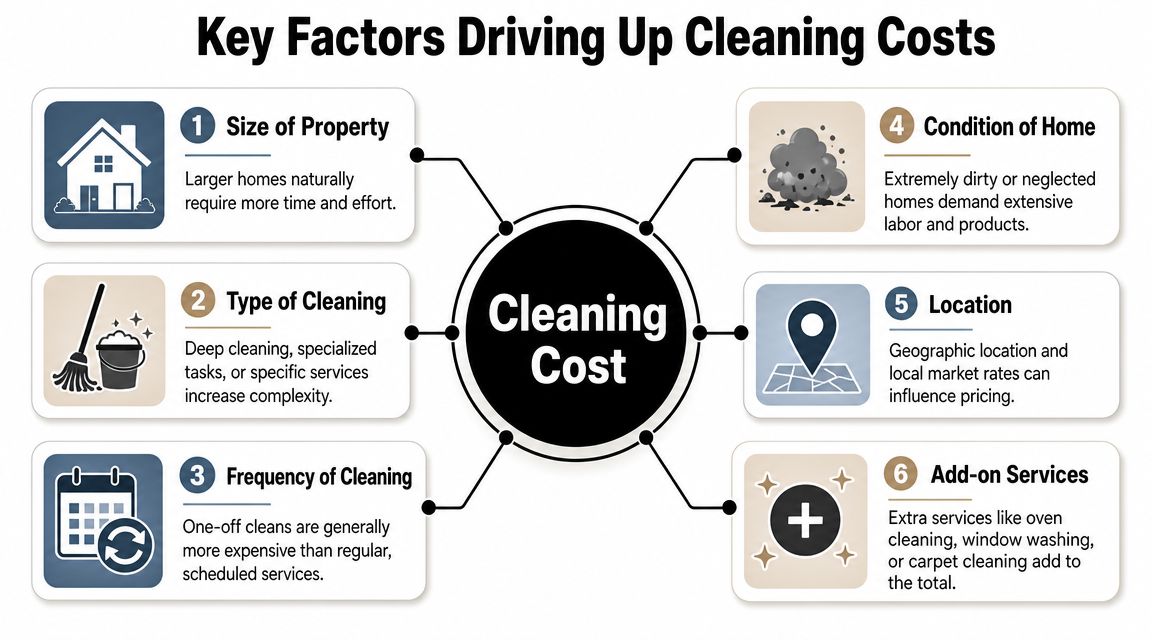
Key Factors That Drive Up Cleaning Costs
The quote usually jumps for one reason. The cleaner expects the job to take longer than it sounds on paper.
For movers, that matters because end-of-lease cleaning is tied directly to the final inspection. A place can be small and still be expensive to clean if the kitchen is greasy, the bathroom has scale, or the property has been packed around for weeks. In bond terms, cleaners are pricing the risk of missed details as much as the floor area.
Condition matters more than many people expect
I see this often during move-outs. Two tenants leave similar apartments, but one has kept on top of grease, dust, and bathroom buildup, while the other has let it stack up for months. The second job takes more labour, more chemicals, and more checking before the cleaner is comfortable calling it inspection-ready.
The usual cost drivers are practical ones:
- Kitchen buildup: Oven grease, stovetop residue, splashback grime, and sticky cupboard fronts slow everything down.
- Bathroom detailing: Soap scum, hard-water marks, grout discolouration, and cloudy shower glass need repeated work.
- Clutter and blocked access: Cleaners lose time working around bags, loose items, and half-emptied cupboards.
- Pet-related cleaning: Fur, odour treatment, extra vacuuming, and marks near doors or skirting boards increase labour.
- Delicate or awkward surfaces: Textured floors, glass panels, blinds, and detailed fittings take longer to clean properly.
If you want a useful outside reference for how providers break down scope, you can learn about cleaning prices with Estimatty.
Add-ons can change a cheap quote into an expensive one
Tenants often fall into this trap. The headline number looks reasonable, then the tasks that matter for the property manager are priced separately.
Oven cleaning, internal windows, wall spot cleaning, carpet steam cleaning, blind cleaning, balcony washing, and rubbish removal are common examples. On a routine clean, some of these may be optional. On an end-of-lease clean, they are often part of what decides whether the agent raises issues.
Ask for the extras in writing. If the oven, rangehood, window tracks, or inside cupboards are likely inspection points, they need to be listed clearly before you compare providers.
The type of clean changes the labour profile
A regular house clean is about presentation. An exit clean is about handover.
That difference affects how a cleaner works through the property. They spend more time on edges, fittings, inside storage areas, and marks that would be ignored in a normal maintenance visit. The job also has less margin for shortcuts because a missed item can mean a callback, delay the key return, or put part of the bond at risk.
Preparation helps keep that cost under control. Clearing shelves, tossing rubbish, and removing leftover packing materials will not turn a heavy clean into a light one, but it does stop paid cleaning time being wasted on access problems. Before you lock in the booking, it helps to sort out how to declutter before you move so the cleaner can focus on the actual bond-cleaning work.
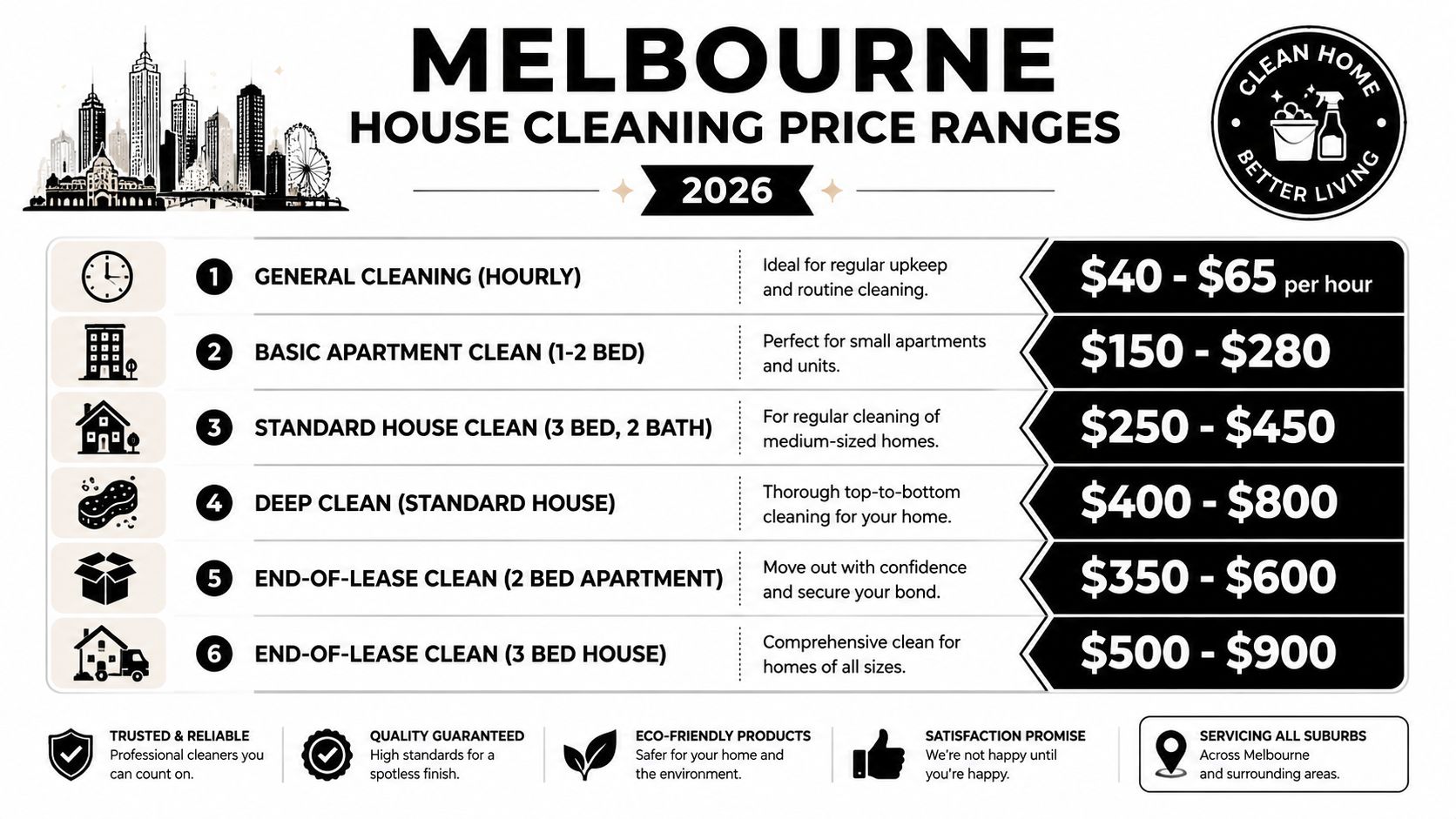
House Cleaning Prices in Melbourne 2026
You hand back the keys, the agent walks through the property, and the bond comes down to whether the place meets vacate standard. That is why cleaning costs need to be budgeted as part of the move, not treated as a last-minute extra.
Melbourne customers still ask the same question. What should a fair quote look like in 2026? There is no single citywide rate, because end-of-lease jobs are priced by labour, condition, and inspection risk. A cheap figure can be fine for a light touch-up. It is rarely enough for a proper vacate clean where the oven, bathrooms, cupboards, and window tracks all need attention.
Early in the process, it helps to have a room-by-room reference for what an exit clean usually involves.
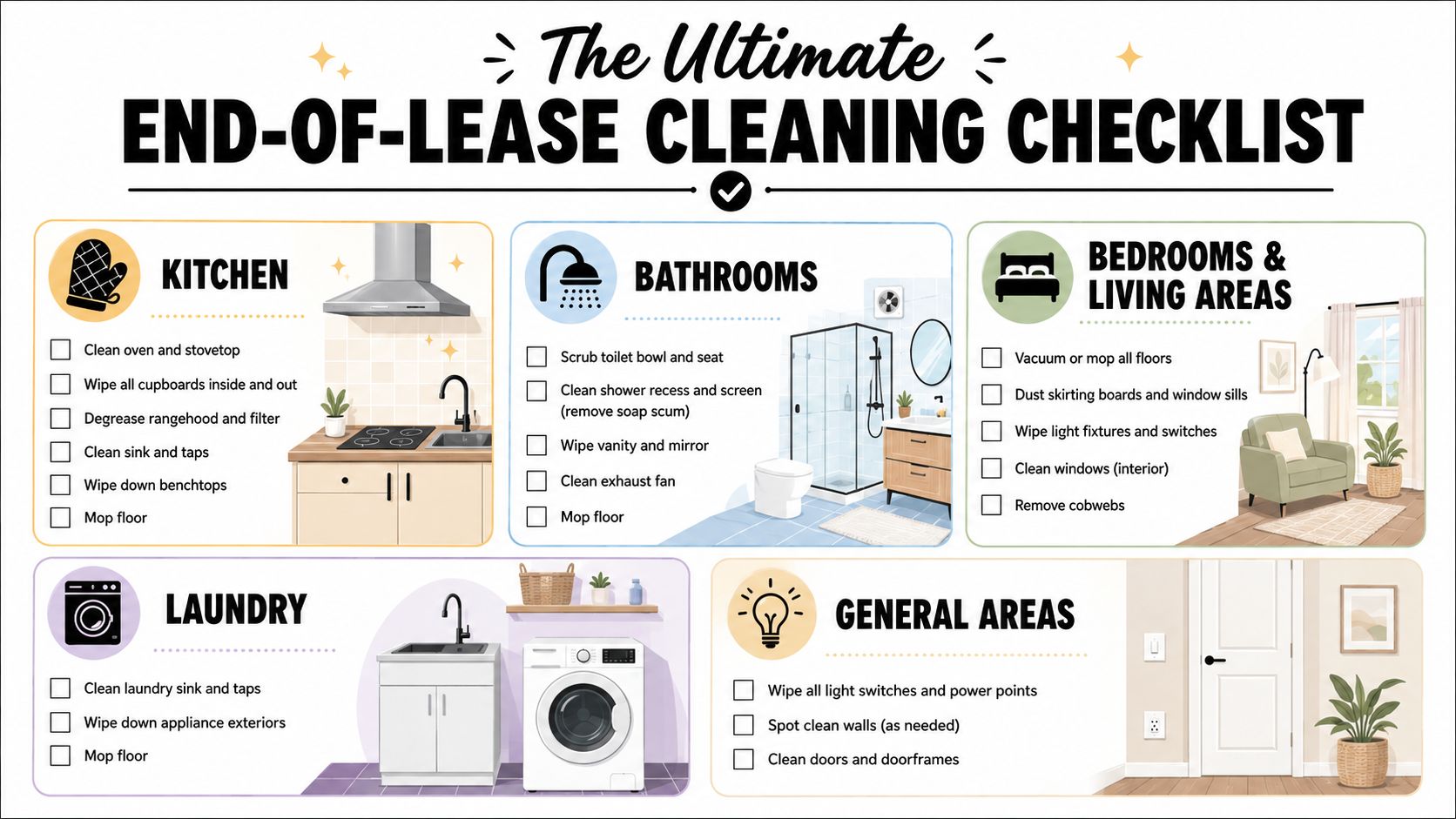
Why Melbourne quotes can feel higher
Melbourne pricing often reflects the cost of sending a compliant, insured team to do detailed work under time pressure. End-of-lease cleaning is not the same as a regular weekly service. The cleaner is working to inspection standard, and that usually means more time on grease, soap scum, built-up dust, marks, fittings, and inside storage areas.
The job can also become harder to deliver if access is awkward. Apartment towers with lift bookings, limited parking, key collection, or tight agent deadlines all add labour friction. If the clean has to happen on the same day as the move, the margin for delays gets smaller fast.
I see this regularly with relocations. A customer tries to save money by booking the cheapest cleaner available, then ends up paying again for a return visit after the property manager picks up missed items. That is where the actual cost shows up. Extra cleaning, delayed key return, and bond disputes.
What to watch for in a Melbourne quote
A quote is only useful if it tells you what standard is being priced and what work is included.
Look for these points:
- Type of clean: Standard house clean, deep clean, or end-of-lease clean
- Included tasks: Oven, rangehood, internal windows, skirting boards, inside cupboards, and wet areas
- Property access: Stairs, lifts, parking, key handover, and whether utilities are still connected
- Timing: Same-day move and clean bookings often cost more because delays affect both trades
- Re-clean policy: Whether the cleaner will return if the agent raises reasonable issues after inspection
If you are pricing the whole relocation at once, it helps to compare cleaning against the rest of your moving budget. This guide to moving house costs in Melbourne gives a clearer picture of where cleaning sits alongside transport, packing, and access costs.
A short visual explainer can also help when you're comparing jobs and deciding how much work the property really needs.
The best quote is not the lowest one. It is the one that matches the condition of the property, the standard your agent will inspect against, and the timetable for a low-stress move.
DIY vs Professional Cleaning The Real Tradeoffs
The fundamental choice isn't just “Can I clean this myself?” It's “What am I saving, and what am I risking?”
For some moves, DIY is perfectly reasonable. For others, it becomes a false economy because the property needs more than a general clean and you're already stretched by packing, lifting, paperwork, and time pressure.
When DIY makes sense
DIY usually works best if the home has been well maintained and you can spread the work over several days. It also helps if you already have the right products, a reliable vacuum, mop system, buckets, cloths, gloves, and the energy to do detail work after the furniture is out.
DIY is often the better option when:
- The property is already in good condition: No major grease, mould, or heavy grime.
- You have time after the move-out: Not just an hour before key return.
- The inspection standard is modest: For example, an owner-occupied sale handover rather than a strict rental vacate.
- You're confident with detail work: Skirting boards, inside cupboards, switches, and window tracks are where people often fall short.
When professional cleaning usually wins
A move-out clean is often closer to a deep clean than a standard clean. One pricing guide estimates that deep cleans are about 30% to 60% higher than standard maintenance cleaning, with a 2,000 sq ft home estimated at about $180 to $280 for standard maintenance and $280 to $400 for a deep clean, based on LeadDuo's pricing guide.
That difference reflects labour, not marketing. Deep work means more time on fixtures, grime buildup, and detailed surfaces.
If you're exhausted from packing and moving, the “cheap” DIY option can end up costing more in re-cleaning, missed inspection items, or lost time.
Professional cleaning usually makes the most sense when bond return matters, when the kitchen and bathrooms need real restoration, or when your move has to run on a tight timetable. The same logic applies to packing. If you're trying to protect time and reduce chaos, it's worth looking at the benefits of using professional packing services alongside the cleaning decision.
The hidden cost of doing it yourself
The hidden cost isn't only products. It's decision fatigue and physical effort.
After a move, people often underestimate how hard it is to clean an empty property properly. Empty rooms show every mark. Empty cupboards reveal crumbs and dust. Bathrooms look harsher under inspection lighting than they did when the home was furnished.
That's why the smartest choice is often the one that protects your time, your energy, and the standard required at handover.
How to Get Accurate Quotes and Save Money
The fastest way to get a bad cleaning quote is to give vague information. “Three-bedroom house, need a clean” doesn't tell a provider enough to price properly.
The best quotes come from clear job details. That helps you compare providers on scope, not just on headline price.
What to give a cleaner before they quote
Send the essentials upfront:
- Property details: Bedrooms, bathrooms, kitchen, laundry, living areas, study, balcony, garage if relevant.
- Type of clean required: Standard, deep, or end-of-lease.
- Condition notes: Grease, pet hair, mould spots, marks on walls, neglected appliances.
- Access details: Stairs, lift, parking, key pickup, deadline for completion.
- Must-do items: Oven, internal windows, fridge, cupboards, skirting boards, carpets if they form part of your required standard.
Photos help. A short list helps even more. Cleaners can quote faster when they know what they're walking into.
Questions worth asking before you book
Use a checklist instead of relying on assumptions:
- What exactly is included in the quoted clean?
- Are oven, windows, and appliance interiors included or extra?
- Is the quote fixed, or can it change on the day?
- What conditions would trigger extra charges?
- Do you supply all products and equipment?
- Can you work to an end-of-lease checklist if I provide one?
- What happens if the agent flags missed items after the clean?
If you want another framework for understanding how cleaning bids are structured, Pebb resources for cleaning bids can be a helpful reference point for scoping labour and task-based work.
Simple ways to keep the cost under control
You don't need gimmicks to save money. The practical wins are usually straightforward.
- Declutter before the cleaners arrive: They clean faster when surfaces and floors are clear.
- Defrost and empty the fridge early: If the fridge interior needs cleaning, don't make the team wait for ice to melt.
- Remove rubbish first: Cleaners shouldn't be spending paid time bagging general move-out waste unless that's part of the job.
- Separate repairs from cleaning: If hooks, damage, or broken fittings need attention, sort those before the clean.
- Book with enough buffer: Last-minute jobs reduce your options and can push you into paying more for rushed scheduling.
A good quote saves money because it reduces surprises. A cheap but vague quote usually does the opposite.
The Ultimate End-of-Lease Cleaning Checklist
For renters, the final clean isn't just about appearance. It's a bond-risk decision.
One of the biggest gaps in public advice is the difference between a normal house clean and a compliant exit clean. Bond disputes often hinge on the property's condition, and many pricing guides don't clearly quantify the extra work involved in a proper move-out clean that includes ovens, walls, and carpets, as discussed in Workiz's guide to cleaning cost and pricing.
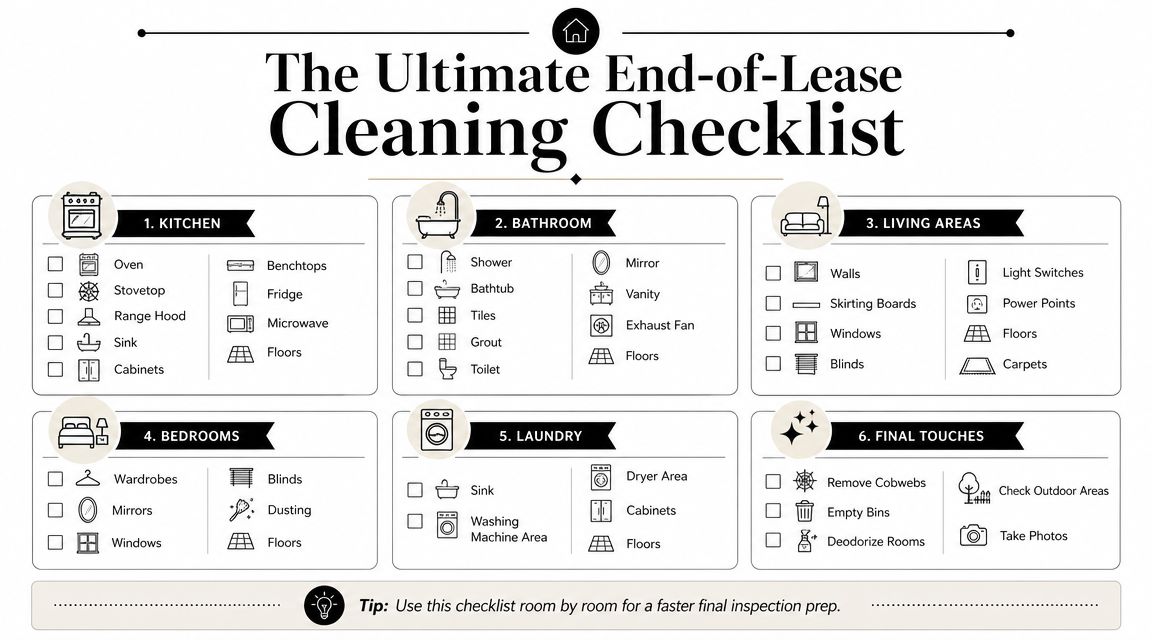
Kitchen
This is usually the room that decides whether a clean feels professional.
- Oven and stovetop: Remove grease, baked-on residue, and food debris.
- Rangehood and filter: Wipe exterior surfaces and degrease where buildup is visible.
- Cupboards and drawers: Clean inside and outside, especially handles and corners.
- Benchtops and splashbacks: Remove grease film and marks.
- Sink and taps: Polish away residue and water marks.
- Floor edges: Mop properly, not just the centre of the room.
Bathrooms and laundry
Bathrooms fail inspections for detail, not effort. Laundry areas get missed because they look secondary.
- Shower recess and screen: Remove soap scum and residue.
- Toilet: Clean bowl, seat, hinges, and surrounding floor.
- Vanity and mirror: Wipe all surfaces and edges.
- Exhaust fan and vents: Remove visible dust.
- Laundry sink and taps: Clean residue and lint.
- Cabinet fronts and floors: Don't ignore corners and behind doors.
Agents often check the areas tenants skip when they're tired. Tracks, switches, handles, and cupboard interiors matter because they show whether the job was finished properly.
Bedrooms, living spaces, and final details
The last pass is where bonds are won or lost.
- Floors: Vacuum or mop every room after furniture is out.
- Skirting boards: Dust and wipe where needed.
- Window sills and tracks: Remove dust and debris.
- Light switches and power points: Wipe finger marks.
- Doors and frames: Spot clean marks and dust along edges.
- Wardrobes and built-ins: Empty, wipe shelves, and clear dust from corners.
- Walls: Spot clean only where needed and safe for the paint finish.
- Cobwebs: Check ceilings, corners, and outdoor entry points.
Use this checklist whether you're doing the work yourself or checking a professional clean before the keys go back. It's much easier to fix a missed item before inspection than to argue about it later.
House Cleaning FAQ For Movers
Do I need to supply cleaning products and equipment
Usually, professional cleaners bring their own products and tools, but you should confirm that when you book. If the property has delicate stone, timber, or specialty finishes, mention them in advance so the team can use the right products.
Should I be at the property while the cleaners work
Not always. Many people hand over access and return near the end. What matters more is clear instructions, working utilities, and a way to confirm any must-do items before the team starts.
Is professional cleaning worth it for a rental move-out
Often, yes. The value isn't just labour. It's the standard of finish during a stressful part of the move. If your bond depends on the result, paying for a stronger clean can be easier than trying to fix problems after inspection.
What's the difference between a standard clean and an end-of-lease clean
A standard clean focuses on ongoing maintenance. An end-of-lease clean is more detailed and inspection-focused. It usually includes the neglected areas that a weekly clean doesn't target, such as cupboard interiors, skirting boards, and appliance detailing.
Can I book cleaning for the same day as the move
You can, but it's risky if timing is tight. Delays with keys, settlement, lift bookings, or the truck can compress the cleaner's window. If possible, leave a buffer so the property can be cleaned after everything is fully removed.
What should I do before the cleaners arrive
Empty the property, remove rubbish, disconnect or empty appliances if needed, and leave power and water on. If you're handling some tasks yourself, finish those first so the cleaner isn't working around half-complete jobs.
What if I only need help with the hardest areas
That can be a smart compromise. Some movers do the basic wiping and floors themselves, then book help for the oven, bathrooms, or windows. It won't suit every lease standard, but it can reduce cost while still improving the final result.
Is a cheap quote a good deal
Sometimes, but not automatically. A low number only helps if the scope is clear and the result meets the standard you need. For moving jobs, the cheapest quote often becomes expensive when re-cleans, missed tasks, or timing problems appear.
If you're planning a move and want the whole job to run smoothly, Get n Go Removals Melbourne can help take pressure off the process. From home and apartment moves to packing, unpacking, storage, and careful coordination around tight schedules, the team handles the relocation side so you can stay focused on handover, cleaning, and getting settled in your next place.