
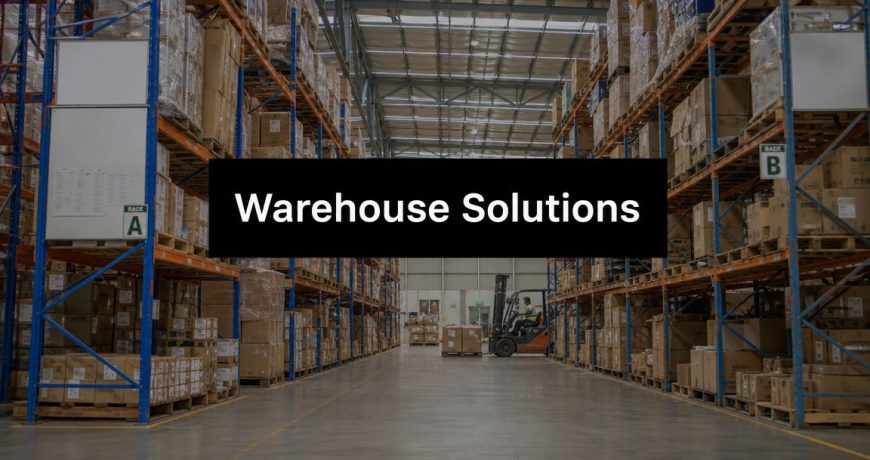
Warehouse Storage Solutions: Melbourne Guide 2026
If you're dealing with a house move, a growing stockroom, or an event schedule that's tighter than the loading zone booking, storage stops being a background detail very quickly. It becomes the thing that decides whether everything runs smoothly or turns into a week of double-handling, misplaced items, and avoidable stress.
That's why good warehouse storage solutions matter to more than warehouse managers. A homeowner between settlement dates needs safe access to furniture without turning the garage into a maze. A small business needs overflow space that still lets staff find stock fast. An event organiser needs gear packed, held, and dispatched in the right order, not just stacked wherever it fits.
Why Smart Storage Is More Than Just Space
Individuals often begin by asking one question. How much room do I need?
That's understandable, but it's rarely the right starting point. In practice, storage works when it gives you control, not just capacity. A room full of cartons, furniture, marketing collateral, or spare stock can still be badly stored if nobody can reach what they need without shifting five other things first.
In Melbourne, this shows up every day in fairly ordinary situations. A family sells before they buy and needs furniture out of the house for a short period. A retailer runs out of backroom space before a seasonal delivery lands. An events team finishes one activation on a Sunday and needs staging, signage, and display stock held safely until the next job. The problem isn't just “too much stuff”. The problem is timing, access, handling, and keeping order while everything else is moving.
What smart storage actually solves
Good warehouse storage solutions usually fix a few problems at once:
- Access pressure: you can retrieve what matters without unloading half the site
- Handling risk: heavy or awkward items aren't stacked in ways that create damage or injury problems
- Timing gaps: storage bridges the period between pickup, delivery, installation, or settlement
- Space waste: vertical room and layout are used properly instead of relying on floor clutter
- Security concerns: higher-value stock and equipment are held in a controlled environment
For businesses holding valuable stock or equipment, security planning also matters beyond the shelving layout. It's worth understanding the broader issues involved in protecting logistics and distribution centers, especially if your goods are moving in and out regularly.
Storage during a move is a workflow issue
When removals teams talk about storage, they're usually talking about workflow. The easiest jobs are not the ones with the least furniture. They're the ones where the storage plan matches the delivery plan.
If you need short or long term furniture holding, a practical starting point is to look at furniture removal and storage in Melbourne as one connected process instead of booking moving and storage separately and hoping the handover lines up.
Practical rule: If you'll need to touch the same item more than once before final delivery, the storage layout matters as much as the storage size.
That's the shift people often miss. Smart storage isn't paying for empty square metres. It's buying back order, speed, and peace of mind.
Decoding Your Needs A Practical Assessment Checklist
The quickest way to choose the wrong storage is to focus only on floor area. Before comparing warehouse storage solutions, work through what you're storing, how often you'll need it, and what would cause trouble if the setup is wrong.

Start with the inventory, not the building
A sofa, a pallet of boxed stock, and a crate of event lighting don't behave the same way in storage. One is bulky and damage-prone. One needs clean counting and fast retrieval. One often comes with cables, accessories, and fragile parts that go missing if packed loosely.
A simple first pass should cover:
- What are the items? Furniture, cartons, stock, equipment, documents, displays, or mixed loads
- What's the value? Financial value matters, but replacement difficulty matters too
- What's awkward? Long items, heavy pieces, fragile goods, or irregular shapes change the storage plan
- What must stay together? Teams waste time when accessories, fixings, and labels get split from the main item
If you're unsure on volume, use a cubic metre calculator before asking for quotes. It won't replace a site assessment for complex jobs, but it will stop you guessing wildly and paying for the wrong amount of space.
Access decides the layout
Many people overbuy density and underbuy usability. A tightly packed storage arrangement can look efficient until someone needs one carton from the back, one chair from a stack, or one banner stand buried behind packing materials.
Ask yourself:
| Need | What to check |
|---|---|
| Frequent access | Do you need regular retrieval, stock rotation, or ad hoc pickups? |
| Occasional access | Can the goods sit deeper in storage without causing delays? |
| Urgent access | Will someone need same-day or scheduled release windows? |
| Sequenced access | Do items need to come out in delivery order, event order, or room order? |
Dense storage only works when the retrieval pattern is simple. If access is mixed or unpredictable, a little extra aisle space often saves far more time later.
Safety, environment, and duration
Safe Work Australia reports that manual tasks remain one of the main sources of serious workers' compensation claims, and in warehouse settings dense layouts can increase bending, reaching, and travel if they aren't designed around task flow, as discussed in this warehouse safety and storage guidance. That matters for both business inventory and temporary household storage. The densest option isn't always the smartest option.
Check these points before you commit:
- Security: Do the goods need controlled access, records, or higher protection?
- Environmental needs: Are you storing anything sensitive to heat, dust, or damp conditions?
- Insurance: What is and isn't covered while the goods are stored and handled?
- Duration: Short-term move storage needs flexibility. Long-term business storage needs consistency and clear records.
- Handling safety: Will staff need to bend, climb, stretch, or manually shift too much stock to reach items?
A sensible checklist saves money, but it also prevents the common mistake of buying “maximum storage” when what you need is usable storage.
Common Warehouse Storage Solutions Explained
Most warehouse storage solutions fall into a few practical categories. The terms can sound technical, but the easiest way to understand them is by asking what each setup helps you do.

Australia's industrial market is pushing more operators toward vertical thinking. The national industrial vacancy rate was 1.4% in the first half of 2024, and around 4.3 million square metres of industrial space was due for completion between 2024 and 2026, which has encouraged greater focus on vertical utilisation and storage density according to this overview of Australian warehouse storage trends. In plain terms, businesses can't rely on endless cheap floor expansion. They have to use the space they already have better.
Pallet racking for boxed and repeatable stock
Think of pallet racking as a vertical library for inventory. It gives each pallet or load a defined place, which is why it works well for businesses with cartons, packaged stock, archived materials, or repeatable product lines.
It tends to suit:
- Wholesale and retail overflow
- E-commerce stock holding
- Commercial relocations with boxed assets
- Document and archive storage in larger volumes
The advantage is visibility and order. You can label locations, group similar stock, and retrieve items without turning the whole storage area upside down. The downside is that it's less useful for oversized household furniture or irregular event pieces unless those items are packed onto pallets properly.
Shelving systems for smaller hand-picked items
Shelving is the organised library version of storage. It's built for smaller, mixed items that staff need to handle manually rather than by forklift or pallet jack.
This setup works when you need:
| Storage type | Best fit | Watch-out |
|---|---|---|
| Open shelving | Small cartons, parts, boxed accessories | Can get messy quickly without labels |
| Heavy-duty shelving | Mixed stock, records, event kits | Weight limits still matter |
| Bin-based shelving | Components, fixings, consumables | Poor discipline leads to mispicks |
For small businesses, shelving often beats more complex systems because it stays flexible. You can re-slot products, separate fast movers, and make access easier without major fit-out changes.
Bulk storage for furniture and oversized items
Bulk storage is closer to a secure oversized garage. It's suited to large, awkward, or non-standard items that don't belong on neat rows of shelving.
That includes:
- lounges and dining settings during house moves
- office furniture waiting on fit-out dates
- exhibition stands and display pieces
- machinery, props, and irregular commercial equipment
Bulk storage is simple, but it still needs structure. The common mistake is treating it like a dumping zone. When oversized goods aren't grouped, wrapped, and labelled properly, retrieval becomes slow and damage risk rises.
Mezzanine floors for height, not footprint
A mezzanine is basically adding a second storey inside the warehouse. It can separate slower stock from active floor operations or create room for packing benches, archives, and support stock without relocating.
You'll usually consider mezzanine space when floor area is tight but ceiling height is workable. It can be useful, but only if movement between levels is practical. If staff are constantly hauling frequently accessed goods up and down, it creates a new bottleneck instead of solving one.
For people comparing options in Melbourne, storage solutions in Melbourne usually make more sense when matched to the actual item type first. The right system is the one that fits how the goods move, not the one with the most impressive warehouse terminology.
Choosing the Right Solution for Your Situation
A family settles out of one Melbourne home on Friday and cannot get keys to the next place until Tuesday. A small online retailer in the eastern suburbs has stock stacked in a garage and orders slipping. An event team needs banners, lighting and display pieces out in dispatch order for a weekend bump-in. All three need storage, but they do not need the same setup.

The practical choice comes down to three things. How often the goods need to be touched, how quickly they must be retrieved, and how much visibility you need while they are in storage. If you get those three right, the storage method usually becomes obvious.
The homeowner between settlement dates
This is one of the most common short-term storage jobs we see across Melbourne. The truck is booked, the old place has to be handed over, and the new address is not ready because of settlement timing, repairs, cleaning, or an interstate leg of the move.
For that kind of job, simple and controlled usually beats complex. Furniture, whitegoods and cartons need secure holding, careful loading, and a clear inventory. They do not need a pick face or warehouse staff walking in and out of the load every day.
The better fit is usually bulk storage with disciplined preparation:
- furniture wrapped and grouped by room
- cartons labelled for first access versus late access
- an inventory that separates stored items from direct-delivery items
- a confirmed release date, or at least a release window
The trade-off is access. Dense storage is space-efficient, but it slows retrieval if you suddenly need one specific item. If there is any chance you will need the cot, work setup, medication, school uniforms, or kitchen basics before final delivery, set those aside at the start and mark them clearly.
That one decision saves a lot of grief.
The small e-commerce business with overflow stock
For smaller businesses, the primary issue is rarely just lack of room. It is the time lost to messy stock flow. Orders take longer to pick, receivals get left in the way, and fast movers end up buried behind slow lines. Industry guidance from the Warehousing Education and Research Council consistently points to picking and labour efficiency as major warehouse cost pressures, which is why layout matters so much once stock starts moving regularly.
The question for a growing retailer is straightforward. Do you need static storage, or do you need storage that supports daily order work?
If stock mainly sits until a weekly replenishment run, reserve storage with clear labelling may be enough. If the business is packing orders every day, the setup needs proper pick locations, logical SKU grouping, and a basic stock-control process that staff can follow without guessing.
A sensible approach usually looks like this:
| Need | Practical solution |
|---|---|
| Mixed SKU access | Shelving or selective racking with clear slotting |
| Overflow holding | Separate reserve stock from daily pick faces |
| Faster order prep | Put fast movers close to packing benches |
| Inventory clarity | Use a simple WMS or a disciplined stock register |
| Growth flexibility | Add modular storage instead of fitting out for next year's volume too early |
For businesses comparing options, it also helps to understand Melbourne storage pricing for business and household use before choosing between overflow space and a fuller 3PL-style service.
Get n Go Removals Melbourne can be one option for businesses that need combined transport, storage, and handling support rather than just empty floor area.
A quick visual on handling and layout can help here:
The event manager with short-term storage pressure
Event stock has a different pattern again. It often arrives in batches, leaves on a run sheet, comes back mixed after bump-out, and needs checking before the next job. That means the best event storage setup is built around sequence and reset, not just capacity.
Large display items, stands and staging pieces often suit bulk storage. Smaller accessories, branded materials, cables, fixings and spares usually need shelving or containerised grouping so they stay with the event they belong to. Packing by event zone or install order makes dispatch faster and reduces on-site scrambling.
The common failures are predictable:
- accessories separated from the stand or display they belong to
- no return check after bump-out
- vague labels such as "misc"
- next-up dispatch items blocked by low-priority stock
For event work, dense storage is not always the right answer. Quick, ordered retrieval usually matters more than fitting every item into the smallest footprint.
The Cost of Warehouse Storage What to Expect
A family between homes, a Brunswick retailer with overflow stock, and an event team staging gear for a weekend activation can all ask for “warehouse storage” and receive very different quotes. That is normal. Storage pricing reflects how the goods will be received, stored, accessed, and sent back out, not just how much floor area they occupy.

What usually drives the quote
In Melbourne, the quote usually comes down to six practical factors:
- Space used: cubic volume often matters more than square metres, especially for stacked furniture, cartons, and irregular items
- Length of stay: a short stop between settlement dates is priced differently from stable long-term storage
- Handling: receival, unloading, re-stacking, picking, and dispatch all take labour
- Access pattern: occasional planned access is cheaper to service than frequent or same-day retrievals
- Inventory control: item-level scanning, stock counts, and reporting add administration time
- Extra services: transport, pick and pack, pallet wrapping, or coordination with couriers and installers sit outside basic storage
That last point catches people out. A low monthly rate can still become an expensive job if every access request creates a separate handling charge.
Cheap rates can hide expensive retrieval
The best question to ask is simple. “What happens if I need three cartons, one chair, or one event kit back tomorrow?”
The answer tells you whether the provider has set the job up for access or buried everything to maximise density. For homeowners, that might mean paying extra and waiting days to retrieve a pram, cot, or work desk packed too far back. For a small business, it can mean staff standing around while stock is located. For an event crew, it can mean missing a bump-in window because the accessories came out separately from the stand they belong to.
A useful quote should make these points clear:
| Question | Why it matters |
|---|---|
| How do you measure storage volume? | Helps avoid billing disputes and lets you compare providers properly |
| What access is included in the rate? | Shows whether retrievals are limited, booked, or charged each time |
| Are inbound and outbound handling fees separate? | Many quotes exclude receival and dispatch labour |
| Do you track items individually or by load only? | Matters for business stock, archived files, and event materials |
| Are there minimum terms or notice periods? | Important for temporary move storage and short campaigns |
One more trade-off matters on the East Coast, especially for clients juggling tight dates. Flexible short-term storage often costs more per week than stable long-term storage, but it can still save money overall if it prevents rushed removals, double handling, or a failed delivery window.
If you want a local benchmark before comparing providers, review current Melbourne storage prices and then ask each warehouse exactly what is included in that figure.
From Plan to Placement Implementation and Optimisation
Choosing a storage method is only half the job. The result depends on how the goods are packed, labelled, placed, and recorded on day one.
Prepare goods for retrieval, not just storage
People naturally pack for departure. They should really pack for return.
Use a simple sequence:
Group by destination or function
Keep each room, stock category, or event kit together. Mixed cartons save space for about a day, then waste time for weeks.Label for a stranger, not for yourself
“Office” isn't enough. “Office. monitors and docking gear” is better. Labels should make sense even if someone else receives, stores, or dispatches the item.List priority items separately
Settlement kits, daily business stock, or next-event materials should be marked before loading, not remembered later.Protect awkward pieces properly
Furniture corners, glass tops, electronics, and framed items need wrapping that survives movement in and out of storage.Leave logical access paths
If something may come out early, don't bury it behind long-term stock.
Small layout decisions save a lot of trouble
Optimisation doesn't need to mean robotics or a major refit. In many Melbourne operations, the biggest gains come from simple discipline.
Good practice usually looks like this:
- Fast movers forward: Place high-turn stock or priority cartons where they can be reached first
- Heavy items low: Reduce unsafe lifting and keep stacks stable
- Clear aisles: Don't win space by blocking access
- Consistent labels: One naming pattern beats clever shorthand
- Inventory snapshots: Update the record after each movement, not at the end of the month
Automation can help in the right setting, but smaller facilities often get better value first from tidy zoning, selective racking, and clearer stock control. The expensive system isn't automatically the rational one.
Compliance matters for business clients
For businesses storing goods on behalf of others in Australia, a warehouse licence is often required, and licensed operators must maintain specific security controls and inventory records. That's a key compliance issue when choosing a 3PL provider for imported goods in Melbourne, as outlined in this guidance on warehouse licence requirements.
That point matters if you're a retailer, importer, distributor, or project manager using third-party storage. Before signing anything, ask:
- Who legally controls the goods in storage?
- What records are maintained on receival and dispatch?
- What security controls apply to the site?
- Can the provider support inspections or stock verification if needed?
If you need storage combined with transport back out to site, it helps to look at furniture storage and delivery as one operational process rather than separate bookings.
A storage system is working properly when retrieval feels boring. The item is where it should be, the label is clear, and nobody needs to improvise.
Your Next Steps with Get n Go Removals
The right warehouse storage solutions don't just hold goods. They remove friction from moving, trading, and delivering. For a household, that means furniture stays protected and accessible during a settlement gap. For a business, it means stock is easier to control and dispatch. For an event team, it means gear leaves in the right order and comes back into storage without chaos.
The practical move is to choose a setup that fits your access pattern, handling needs, and timeframe. Not the densest option by default. Not the most technical option by default. Just the one that makes the next step easier.
If you're also thinking about where storage operations are heading more broadly, this guide on how to master 2026 supply chain automation is a useful read for understanding the bigger operational direction, especially for growing businesses.
If you need help planning a move, overflow storage, commercial holding, or event logistics, contact Get n Go Removals Melbourne for a customized quote and a practical storage plan that fits how your items need to move.