
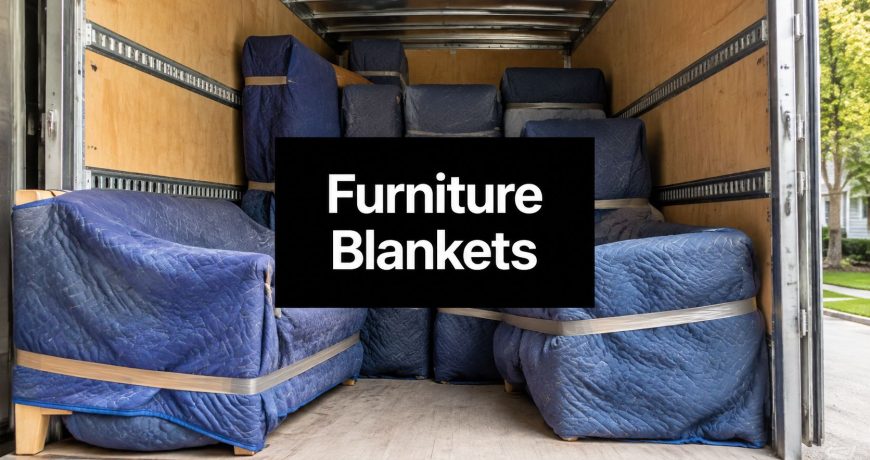
Furniture Blankets: The Complete Moving and Storage Guide
You've just finished loading the truck when you notice a polished cabinet pressed against an unprotected chair leg. The furniture looked secure, but the first sharp turn has created a rub point, and the damage won't be visible until unloading. Furniture blankets earn their place. They create a padded barrier between valuable surfaces, truck walls, straps, door frames and other household items.
A good blanket is only part of the system. The result depends on choosing suitable material, covering the whole item, securing the padding correctly and storing the blankets dry between jobs. Australian moves also bring their own challenges, particularly when furniture sits in garages, sheds or storage units between settlement dates.
Why Furniture Blankets Matter for Every Move
A move doesn't need to travel interstate to damage furniture. A short trip through Melbourne can involve narrow hallways, lift doors, kerbs, ramps, sudden braking and repeated handling. A timber table may scrape against a doorway, while a lounge can pick up dust and moisture from the truck floor. Drawers can shift, handles can catch and corners can take the full force of contact.
Unprotected furniture is vulnerable in several different ways:
- Abrasion: Polished timber and painted finishes can mark when they rub against another item.
- Impact: Corners and edges can chip when furniture contacts a wall, trolley or truck panel.
- Pressure: Glass and veneers can crack or split when straps press against unsupported areas.
- Contamination: Upholstery can collect dirt, moisture and grime during loading and unloading.
- Movement: Furniture can slide or vibrate when the load settles during transport.
A blanket doesn't make furniture invulnerable, but it separates the surface from the hazards around it. The padding absorbs some contact, while the fabric reduces direct friction. That protection matters during storage as well as transport, particularly when several items share a confined space.
Furniture blankets belong to a longer Australian tradition
Blanket production was already connected with colonial institutions in 1801, when female convicts were introduced to manufacture rough woollen blankets at Parramatta gaol. The historical account of Australian blanket production places blanket-making among the country's earliest organised textile activities and shows that blankets served penal-era labour and supply chains, not just domestic use.
Later evidence records blankets being made across Australia in over 100 woollen mills for more than a century, with the industry employing tens of thousands of people. Modern furniture blankets are a practical continuation of that broader Australian tradition of textile manufacture and protective coverings.
Practical rule: If two furniture surfaces can touch during carrying or transport, put a padded barrier between them before the item leaves the room.
For heavy or awkward pieces, protection must work alongside safe handling. Planning the route, removing detachable parts and using the right lifting equipment reduces the chance that a wrapped item will be dragged or forced through a tight opening. A useful guide to moving heavy furniture safely can help you assess the job before wrapping begins.
Types and Materials of Moving Blankets
The right furniture blanket depends on the surface, the item's shape and the type of contact it may face. A thin, soft pad can be useful for a television or a delicate finish, but it may compress quickly under a heavy cabinet. A dense woven blanket offers stronger abrasion resistance, though it can be bulkier around irregular shapes.
Common blanket constructions
Woven cotton-polyester blends are the workhorses of furniture removal. Their dense weave handles rubbing against timber, painted panels and truck interiors, while the fabric usually grips surfaces better than a smooth synthetic sheet. They're suitable for dining tables, bookcases, dressers and other solid furniture.
Non-woven polyester pads are lighter and easier to fold tightly around curved or unusual items. They can suit electronics, lamps and surfaces that need a soft contact layer, but they may not resist punctures or sustained abrasion as well as a heavy woven pad.
Quilted blankets contain internal padding stitched into sections. This construction helps prevent the fill from gathering in one place and provides a more consistent cushion for high-value or vulnerable items. Quilting doesn't automatically mean superior quality, however. Weak stitching or thin outer fabric can still fail.
Some suppliers also use skin blankets, which are softer and intended for polished or highly finished surfaces. Heavy-duty pads are better suited to industrial equipment and items with protruding corners. For leather, avoid rough or dirty fabric, and make sure the leather is clean and dry before covering it.
How to read the specification
GSM means grams per square metre. A higher GSM generally indicates more material, but weight alone doesn't prove quality. Construction, stitching, fibre strength and padding stability all affect performance. A heavy blanket with loose seams may fail sooner than a slightly lighter pad with tight binding and secure quilting.
| Blanket Type | Material Composition | Best For | Protection Level | Typical GSM Range |
|---|---|---|---|---|
| Woven removal pad | Cotton-polyester blend | Timber furniture and general moves | High abrasion resistance | Product-dependent |
| Non-woven pad | Polyester fibres | Electronics, contours and light items | Moderate cushioning | Product-dependent |
| Quilted moving blanket | Woven outer layers with internal padding | Antiques, lounges and valuable pieces | High impact absorption | Product-dependent |
| Skin blanket | Soft textile surface | Polished finishes and delicate surfaces | Surface-focused protection | Product-dependent |
| Heavy-duty pad | Dense woven textile with reinforced construction | Large cabinets and equipment | Very high durability | Product-dependent |
A practical Australian benchmark is approximately 1.83 x 3.4 metres, a footprint large enough to cover major household appliances such as washers and dryers, according to local moving blanket guidance. Thick, woven pads are generally preferable to thin felt blankets where puncture, corner abrasion and truck vibration are concerns.
How to Wrap Furniture Properly
The most reliable method uses two layers. First, place a furniture blanket between the item and the surrounding hazards. Then apply stretch film over the blanket to hold it in position. The blanket cushions the surface, while the film stops the pad slipping during lifting and transport.
Clean and dry the furniture before wrapping. Dust trapped between fabric and a polished finish can act like fine abrasive grit, while moisture sealed against timber or leather can mark the surface.
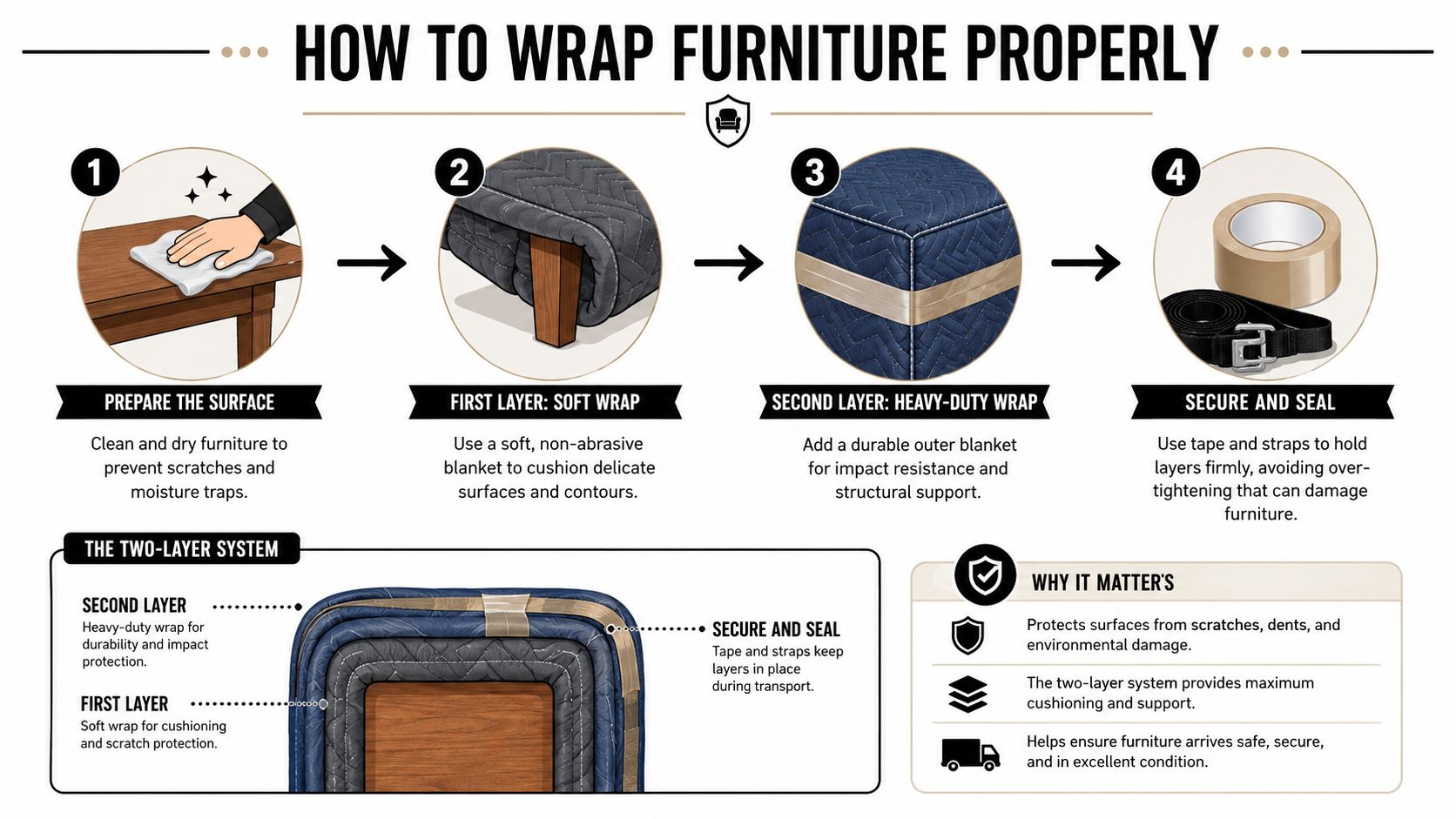
The two-layer method
- Cover the entire surface. Start with the broadest face and fold the blanket around the sides, top and vulnerable edges. Don't leave the bottom edge loose, because it can catch on a trolley or doorway.
- Build up impact zones. Add a folded section at corners, feet, handles and protruding hardware. A single thin layer over a sharp corner can compress immediately.
- Create clean folds. Keep excess fabric flat rather than bunching it behind the item. For tapered legs, wrap each leg separately, then cover the whole base.
- Apply stretch film over the blanket. Use enough tension to hold the pad firmly, but don't crush veneer, delicate trim or upholstered cushions.
- Anchor the wrap. Secure the film around a padded section, not directly against exposed timber or leather. Australian moving guidance warns that stretch film should not contact timber or leather directly because trapped moisture can damage finished surfaces. The recommended furniture protection method combines the padded barrier with an outer securing layer.
- Use bands or straps where appropriate. Tape can hold a fold temporarily, but straps and moving bands provide a more dependable hold during carrying and loading.
For a dining table, remove detachable legs where possible and wrap each one independently. Protect the tabletop separately, placing extra padding over corners and edges. For a bookcase, secure shelves and doors, then wrap the full frame without pressing film tightly against fragile glass. A lounge needs full coverage over the arms, back and base, with particular care around exposed zips and metal feet.
Guidance on packing fragile items for moving is useful for glass shelves, ornaments and detachable components that shouldn't travel loose.
A broader set of tips for packing when moving house can help you organise the packing sequence, but remember that blankets protect surfaces, not unsecured loads. Furniture still needs to be positioned so it can't topple, slide or press heavily against another item.
Buying Versus Renting Furniture Blankets
Buying gives you control over the blankets from the first wrap to the final storage day. Renting gives you access to a larger quantity without finding somewhere to keep bulky pads afterwards. The right choice depends less on the move itself and more on how often you'll need the equipment.
Renting usually suits a one-off household move, especially when a removalist supplies commercial-grade pads as part of the service. You avoid cleaning and storage after the job, and you don't need to guess how many blankets you'll need. Check the rental terms carefully, though. Damage, staining, loss and late returns may create replacement or extra-day charges.
Buying can make sense for people who move regularly, store furniture between properties or want dedicated protection for antiques, pianos and other high-value pieces. Owned blankets are also useful for renovations, garage storage and future deliveries. The downside is that cheap pads may be too thin, shed fibres or shift during transit, forcing you to double them up.
| Factor | Buying Blankets | Renting Blankets |
|---|---|---|
| Upfront commitment | You pay for equipment that remains yours | You pay for the rental period |
| Repeated use | Useful across future moves and storage jobs | Costs recur each time |
| Storage | Requires a dry, clean storage area | Usually returned after use |
| Quality control | You choose the material and construction | Quality depends on the supplier |
| Damage risk | You carry the replacement risk only for your own items | Damage or loss may attract extra charges |
| Convenience | Available whenever you need it | Collection, delivery and return must be arranged |
A hybrid approach often works well. Keep a small number of high-quality blankets for fragile surfaces and rent additional coverage for standard furniture when the load is larger. You can also reduce waste and handling problems by following practical advice on keeping moving costs down, particularly by preparing furniture before the crew or truck arrives.
Caring for and Storing Your Blankets
A dirty or damp blanket can damage the furniture it's meant to protect. Dust, grit, food residue and metal fragments may transfer onto surfaces, while moisture trapped in folded padding can create odour and mould. Australian conditions vary widely, but coastal humidity, tropical weather and poorly ventilated garages all increase the need for careful drying and storage.
Clean before the next job
Shake each blanket outdoors and inspect both sides. Look for embedded grit, loose stitching, exposed fasteners and compressed areas where the padding no longer springs back. Wash according to the product label, using a cold-water cycle and mild detergent where the construction allows it. Avoid fabric softener, which can reduce the fabric's grip and alter how the blanket handles moisture.
Air-dry blankets thoroughly before folding. Shade drying is generally preferable to prolonged direct sun, which can weaken or fade some textiles. Never pack a blanket while it still feels cool, damp or smells musty.
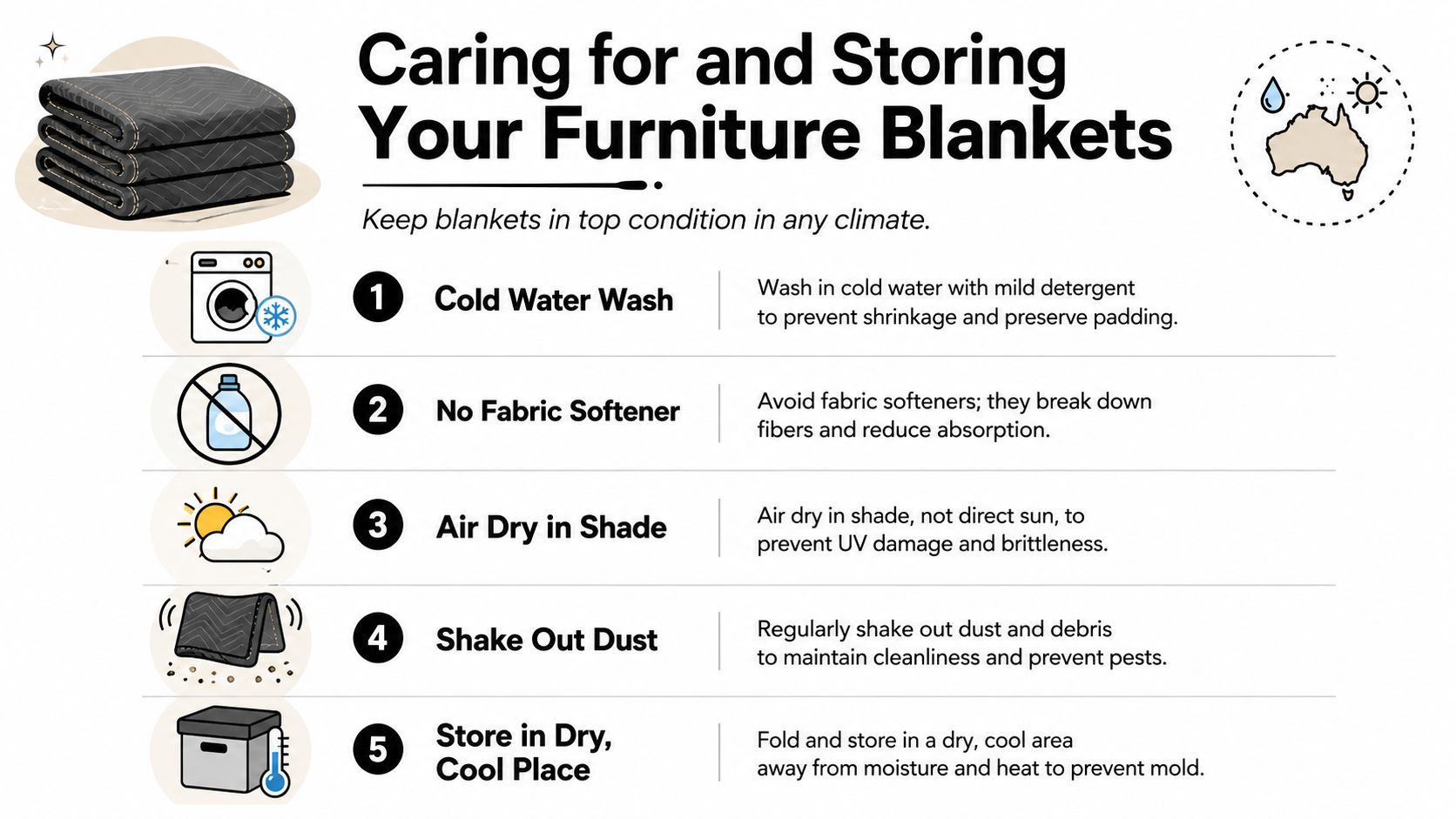
Store for the climate, not just convenience
Fold blankets loosely along their existing quilting or weave. Avoid forcing thick pads into tight plastic bags, because sealed plastic can trap moisture. A breathable storage bag, dry cupboard or ventilated shelving system is safer than leaving blankets on a concrete garage floor.
For garages, sheds and self-storage units:
- Raise the bundle: Use shelving or a clean pallet so air can circulate underneath.
- Control moisture: Desiccant such as silica gel can help inside a storage container, but it won't replace proper ventilation.
- Keep dust away: Use breathable covers rather than open piles beside tools, chemicals or loose building materials.
- Inspect before use: Check for mould spots, odour, pests, broken binding and hard compressed patches.
- Sanitise carefully: Airing and gentle sunlight can help, while a compatible textile sanitiser may be suitable if the manufacturer permits it.
Fire-safety products must be treated differently. Australian fire guidance stresses correct storage and following manufacturer instructions, and a fire blanket intended for one-time use shouldn't be treated as a reusable furniture pad. Consumer safety information also shows why textile products need inspection and correct maintenance rather than casual reuse.
For furniture held between settlements, long-term storage options should include a plan for dry, clean coverings, not just a blanket thrown over the top of an item.
Choosing Quality Blankets That Last
A quality furniture blanket should stay intact when it's dragged over a door sill, folded around a corner and compressed under a strap. It should also maintain enough padding to separate the furniture from impact points. Look beyond colour and headline thickness.
Dense outer fabric resists tearing and abrasion. Cotton or a heavy polyester blend can work well, provided the weave is tight and the edges are properly bound. Double-stitched binding reduces fraying, while stable internal quilting keeps padding from migrating into thin spots.
The Australian market commonly uses a blanket size of approximately 1.83 m x 3.4 m, which can cover large household items including washers and dryers, as noted in Australian furniture protection guidance. Larger items such as pianos and tall cabinets may need oversized pads or multiple blankets arranged without exposed seams.
What to check before buying
- Weight and density: A heavier pad may offer better cushioning, but assess the whole construction rather than relying on weight alone.
- Edge binding: Look for reinforced, double-stitched edges with no loose threads.
- Padding stability: Press and fold the blanket. The internal fill shouldn't bunch into one area.
- Surface feel: Avoid rough, dirty or shedding fabric for polished timber, glass and leather.
- Odour: A strong chemical smell can indicate poor materials or inadequate finishing.
- Hardware: Handles can assist with carrying, but they mustn't sit directly against a delicate surface.
Be cautious with specifications copied from generic product listings. The current Australian care-labelling requirements apply to furnishings, upholstered furniture, bedding, mattresses and related textile products under the Consumer Goods Care Labelling Information Standard. Follow the manufacturer's care instructions, particularly if a blanket has coatings, bonded layers or special fibres.
Quality test: Hold the blanket up to light, fold it around a sharp but padded edge and inspect the seams. Gaps, thin patches and loose binding are warning signs before the first move begins.
A cheap blanket that needs doubling may cost more in handling time and storage space while still shifting under pressure. One dependable pad, correctly placed and secured, is often more useful than several flimsy layers.
Your Moving Day Protection Checklist
Use this sequence before the truck doors close. It catches the mistakes that happen when everyone is tired and the final items are being rushed.
- Inventory every piece. List furniture that needs padding, including drawer units that look sturdy.
- Measure the route. Check doorways, hallways, lifts and tight turns before wrapping bulky items.
- Prepare the equipment. Set out blankets, stretch film, straps, tape, corner protection and a trolley.
- Clean the surfaces. Remove dust and make sure timber, leather and upholstery are dry.
- Wrap in two layers. Use the furniture blanket as the padded barrier, then secure it with stretch film.
- Protect vulnerable points. Wrap table legs separately and add extra padding to corners, handles and feet.
- Check the load. Make sure each item is stable, upright where appropriate and separated from damaging contact.
- Care for the blankets afterwards. Shake out debris, check for moisture and set aside anything that needs cleaning or replacement.
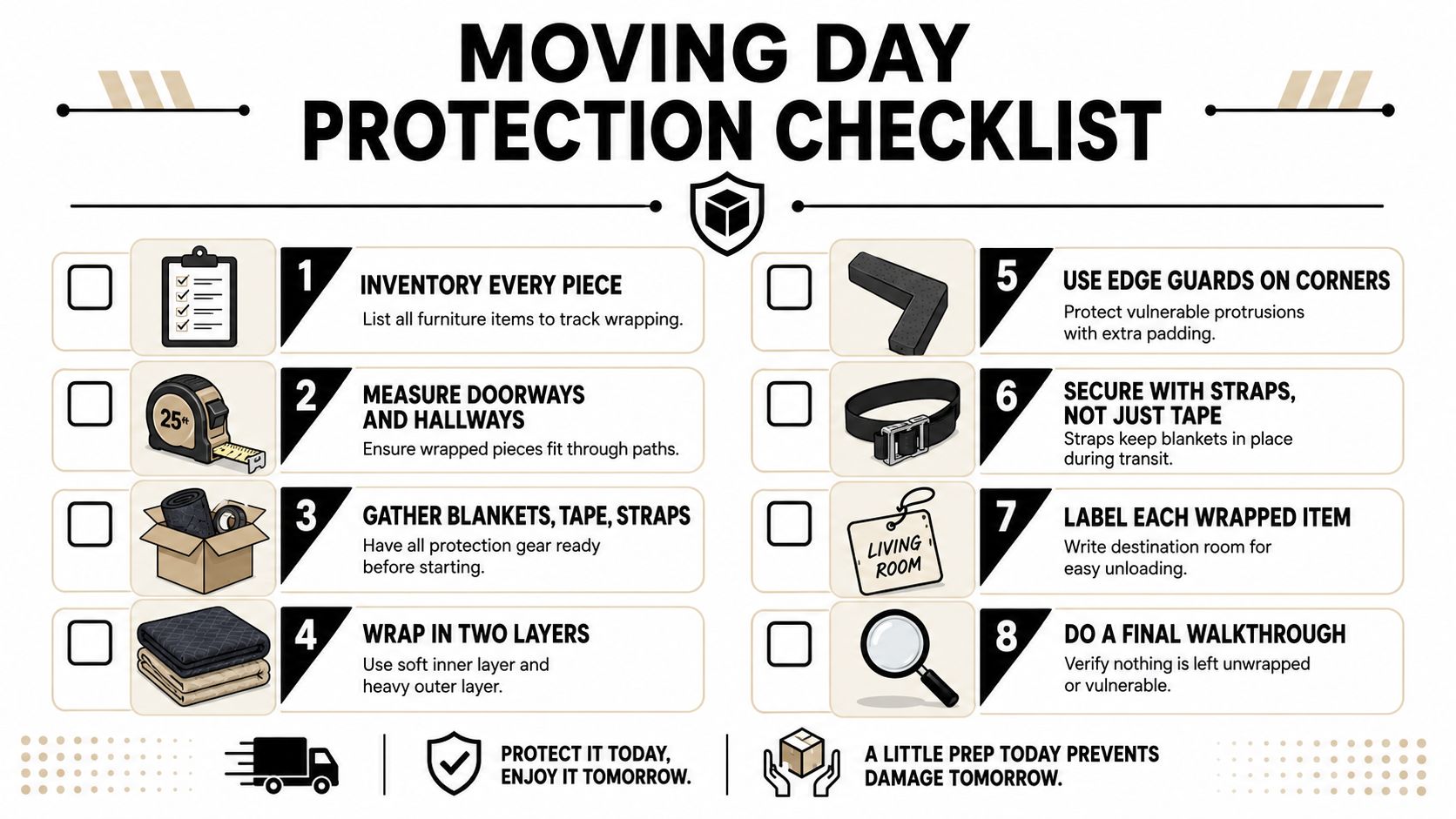
Don't rely on tape alone to hold a blanket around a heavy item. Straps or moving bands keep the padding in place more reliably, while tape can secure loose folds and labels. For upholstered pieces, these practical sofa protector tips provide another useful perspective on keeping fabric clean during handling, but any plastic layer should be used thoughtfully and not sealed against moisture-prone surfaces.
A final walkthrough should include the backs, undersides and protruding hardware. The complete moving house checklist can help coordinate those protection checks with access, packing and unloading tasks. Thirty organised minutes spent wrapping properly can prevent a long repair process after the move.
Get n Go Removals Melbourne supplies protective equipment and uses heavy-duty moving blankets on furniture during transport, with services covering house moves, office relocations, packing, disassembly and secure short- and long-term storage. Visit Get n Go Removals Melbourne to arrange a careful local or interstate move where your furniture is wrapped, secured and handled with the right protection from pickup to delivery.