House Moving Trailer Guide: Safety, Rules, and Tips
A house moving trailer is practical in Victoria for small, light loads, but most furniture moves exceed the small-trailer exemption of under 200 kg unloaded, 3 metres including the drawbar, and no wider than the tow vehicle. Once the load, towing limits, stability risks, permits, and insurance gaps are included, professional movers are often the safer and more economical option.
You've hired a trailer for a weekend move, borrowed a ute, and planned the route from one Melbourne suburb to another. Then the sofa won't sit below the trailer sides, the drawbar pushes the overall length beyond what you expected, or the tow vehicle's rating doesn't cover the loaded trailer. A job that looked like a cheap Saturday can quickly become a compliance problem, a physical test, and a stressful drive.
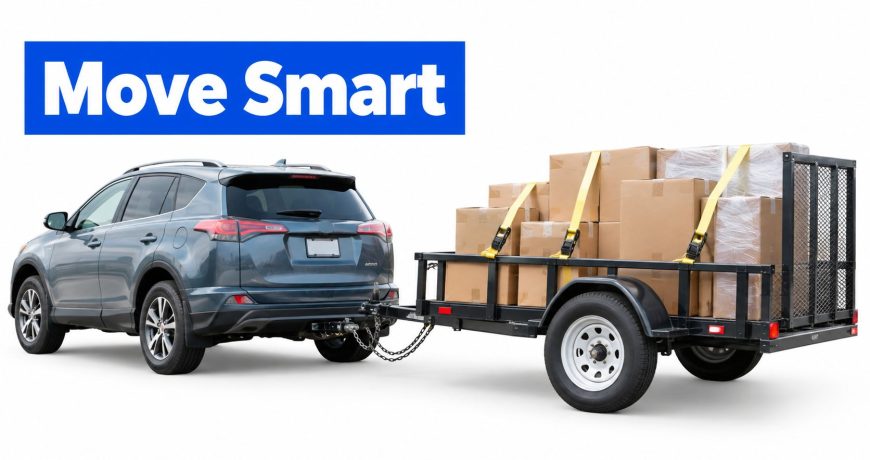
A house moving trailer sits between a ute and a removal truck. It can work well for boxes, garden equipment, and a limited amount of furniture, but it isn't automatically suitable for relocating an entire home. Trailer type, aggregate mass, axle arrangement, coupling, load placement, registration, route access, and insurance all affect whether the plan makes sense.
Why House Moving Trailers Matter in Melbourne
Melbourne moves often involve narrow driveways, apartment loading zones, laneways, steep kerbs, and buildings with strict booking windows. A trailer may appear easier to manoeuvre than a truck, but the tow vehicle and trailer behave as one longer combination. Reversing into a tight driveway takes more space, and a poorly balanced load can make ordinary urban turns uncomfortable.
The legal distinction matters from the start. Under the Commonwealth Road Vehicle Standards framework, trailers with an aggregate trailer mass of 4.5 tonnes or less are treated as low ATM trailers and need approval before being supplied to the Australian market. Trailers generally also need a Register of Approved Vehicles entry before first registration, as explained in the federal trailer requirements guidance.
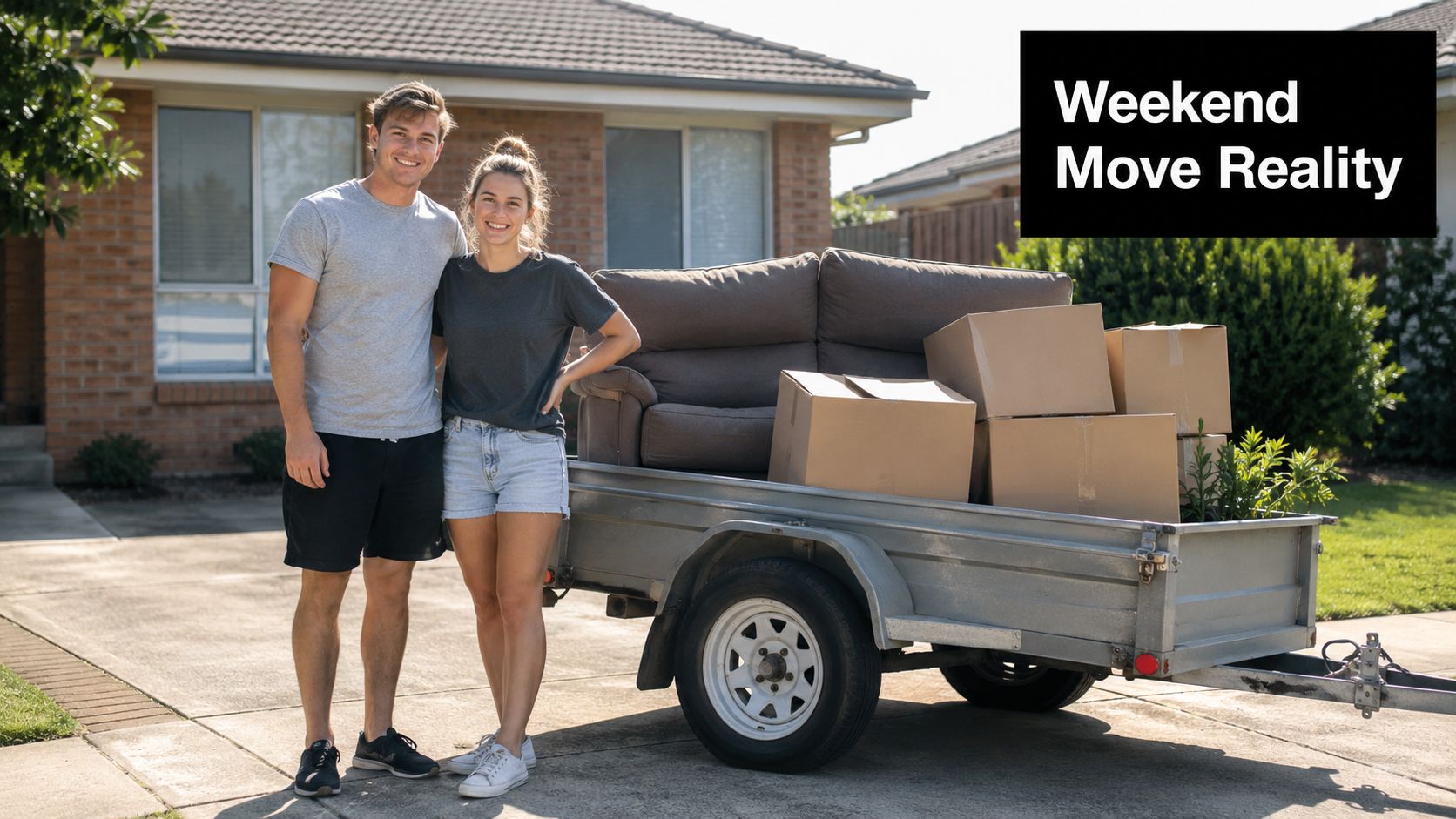
The weekend move that changes shape
A small trailer can be sensible when the contents are mostly cartons and lightweight items. It becomes a different proposition when you add a refrigerator, washing machine, solid timber furniture, mattresses, tools, and several passengers. The issue isn't only whether everything fits. The combined mass must stay within the trailer, hitch, brake, tow vehicle, and licence limits.
Trailer dimensions also restrict what can travel on public roads. Australian towing guidance commonly works around a 2.5-metre maximum trailer width, while state rules set different maximum lengths, including 12.5 metres in Victoria and 19 metres for vehicle-trailer combinations in NSW and Queensland. Check the applicable authority before an interstate move because a Victorian assumption may not transfer across the border.
Practical rule: If your plan depends on stacking furniture high, towing close to the vehicle's maximum rating, or guessing the load weight, the trailer is probably the wrong tool.
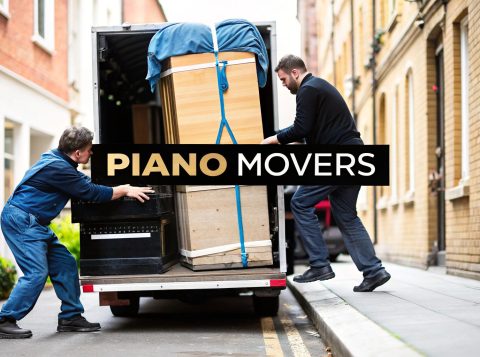
A professional removal truck brings purpose-built floor space, controlled loading, protective equipment, and an operator used to route and access issues. That doesn't make every truck booking necessary, but it does change the risk profile when the move includes heavy, fragile, valuable, or awkward items.
Types of House Moving Trailers and What They Carry
The trailer category should match the contents, not the label used in a rental advertisement. “House moving trailer” can describe a small box trailer for household goods, a flat furniture trailer, or a specialist platform intended for a tiny house or other oversized load. Those uses have very different engineering and approval requirements.
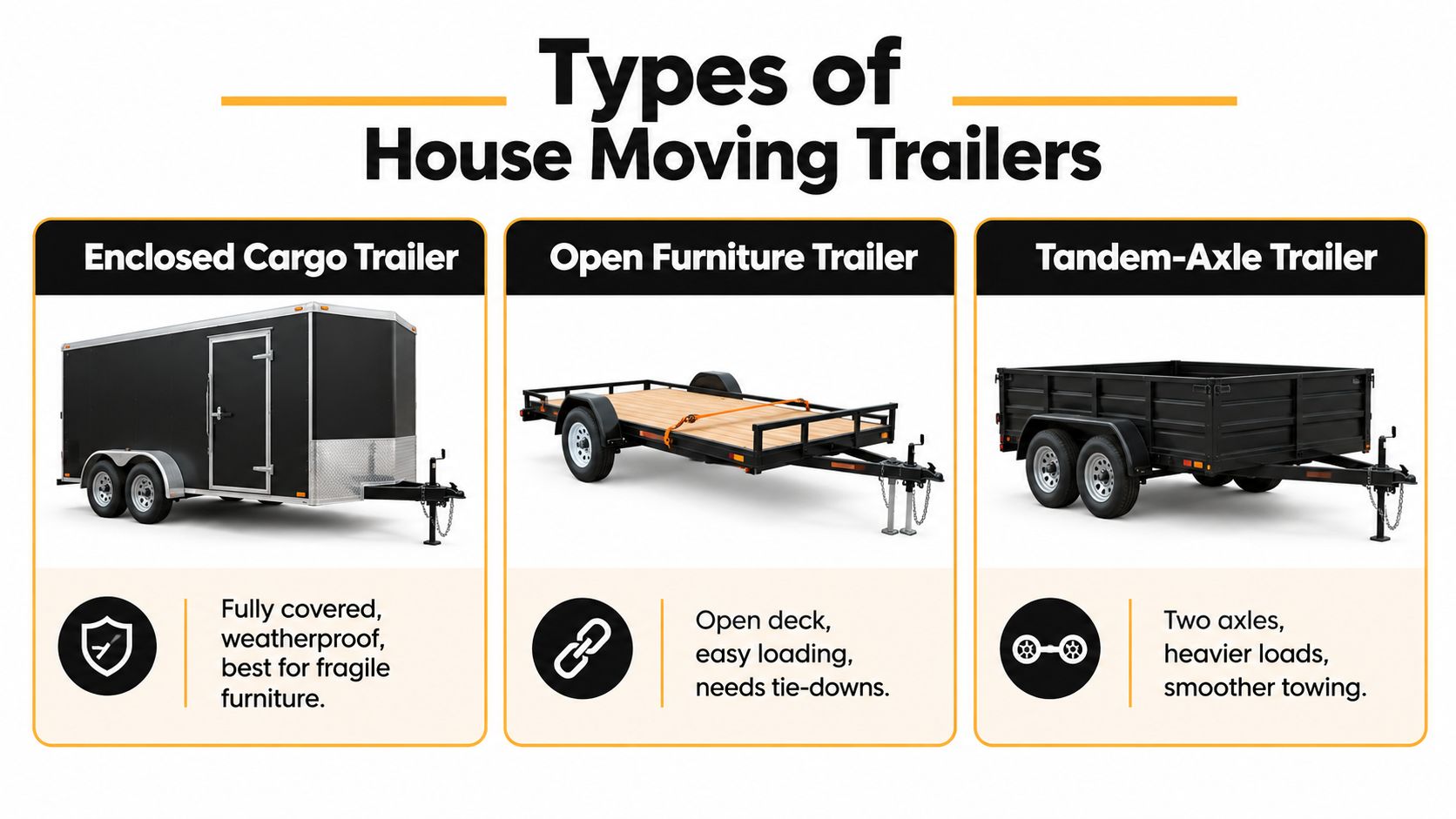
Enclosed cargo trailers
An enclosed cargo trailer protects cartons, soft furnishings, and appliances from rain, road spray, and wind. It also gives you walls against which items can be padded and restrained. The trade-off is reduced visibility, more wind resistance, and limited internal height. A tall wardrobe may fit physically but still leave no safe room for straps or protective wrapping.
This option suits a contained load where weather protection matters more than rapid access. It doesn't solve overloading. Every shelf, ramp, partition, and trailer component contributes to the trailer's own mass.
Open furniture trailers
An open furniture trailer makes loading easier for bulky items and can accept furniture that won't pass through an enclosed door. That convenience comes with exposure to weather and movement. Sofas, timber surfaces, mattresses, and cartons need suitable covers, rated straps, edge protection, and a loading pattern that won't let wind lift loose material.
Open decks are useful for a controlled, short move, especially when the furniture is limited and the driver understands restraint. They work poorly as an excuse to pile household goods above safe side height.
Tandem-axle trailers
A tandem-axle trailer uses two axles to support heavier loads and can feel more settled than a small single-axle unit. That doesn't give unlimited capacity. The trailer's ATM, axle ratings, tyres, coupling, brakes, towbar, and vehicle rating still govern the legal and safe setup.
For a full house, the main question is often not “which trailer is biggest?” but whether the whole combination can be loaded, stopped, turned, and legally routed. Tiny houses and removable homes may need a purpose-designed platform, specialist towing equipment, engineering checks, and permits. A household furniture trailer isn't a substitute for that transport solution.
Before choosing a trailer, compare the load with the vehicle and access requirements using this practical guide to moving truck size and capacity. A larger trailer may carry more, but it can also create a heavier, longer combination that is harder to control and more restricted on the road.
Victoria Trailer Registration and Towing Rules
Victoria's trailer rules are straightforward only when the trailer is really small. A trailer can be exempt from registration when it is under 200 kg unloaded, no wider than the towing vehicle, 3 metres or less in length including the drawbar, and not used for business purposes, according to the Victorian vehicle registration information. Most trailers carrying a household's furniture exceed at least one of those conditions.
A trailer outside the exemption needs registration, and a trailer can't be towed in Victoria while its registration is expired. VicRoads says registration can be renewed for up to three months after expiry, and it advises registering the trailer in Victoria before travelling interstate with it. Treat registration as a pre-loading check, not something to sort out at the departure point.
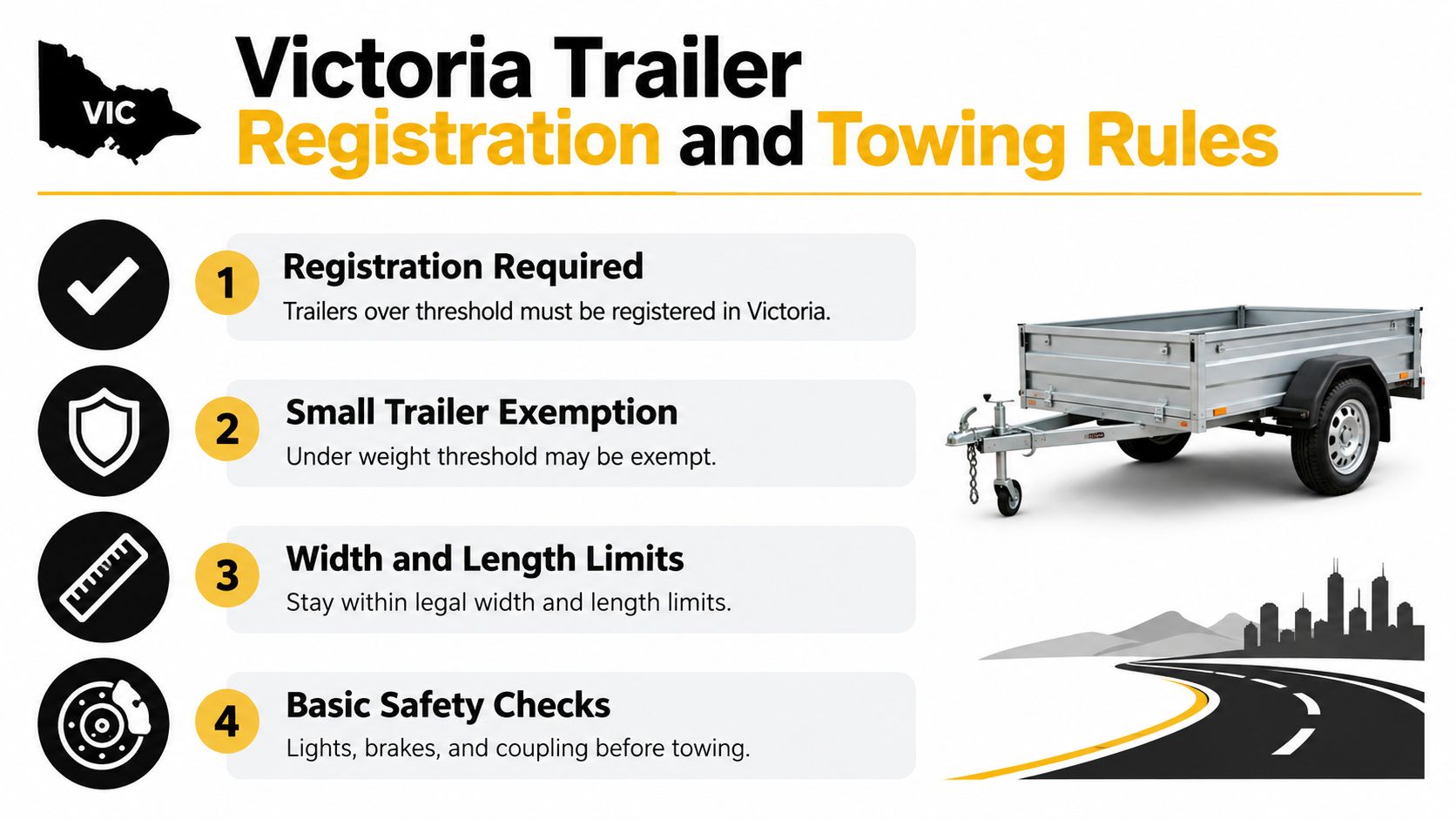
A practical compliance check
Before collecting a trailer, confirm:
- Registration status: Check the trailer's current registration and make sure the identifying details match the hire or ownership documents.
- Approval status: Confirm that the trailer is an approved road vehicle and has the required RAV entry where applicable.
- Dimensions: Measure the loaded width and overall length, including the drawbar and any projecting load.
- Coupling and safety connection: Inspect the towbar, coupling, safety chains or cable, locking pin, lights, and breakaway equipment where fitted.
- Mass and braking: Check the trailer ATM, axle ratings, brake requirements, tow vehicle capacity, and licence conditions.
Australian trailer-building standards say trailers of any kind must not be designed or used to carry passengers. Keep everyone in the tow vehicle, and don't treat the trailer as an extra seating area during a rushed move.
State rules also differ. NSW, Queensland, and Victoria don't share identical length, mass, or network arrangements, so interstate travel needs its own check. From 1 August 2026, Australian mass and dimension settings include a new 1:1.3 tow-mass ratio for certain tag-trailer arrangements, while some combination length limits rise from 19 metres to 20 metres, according to the NHVR 2026 changes fact sheet. Those changes are specific, not a general permission to tow a larger household load.
This visual guide can help with the broader house relocation process in Victoria.
Load Distribution and Safe Towing Basics
A trailer's stability depends on where the weight sits, not just the number printed on its capacity plate. NSW guidance recommends keeping the load low and close to the axle group, with about 60% of the total weight forward of the axle group and roughly 5–10% of the combined trailer and load mass supported at the coupling, as set out in the NSW towing guidance.
That balance gives the coupling enough downward force to help the trailer track behind the tow vehicle. A rear-heavy trailer can yaw from side to side, particularly when a car passes, the road surface changes, or the driver brakes and steers at the same time. Too much weight at the front can overload the towbar and rear axle of the vehicle, so the target is controlled balance, not just “put the heavy items at the front”.
Load it low and near the axles
Place dense items such as books, tools, and packed kitchenware low on the deck and close to the axle group. Put lighter cartons above them, and keep tall furniture secured rather than relying on its own weight. Don't leave voids where boxes can slide into a rear-heavy position during braking.
Use rated straps over suitable contact points. Protect corners so straps don't cut into timber or appliances, and use blankets to prevent friction damage. A tarp protects from weather, but it isn't a restraint system.
The towing and transporting equipment range is useful for checking the types of straps, couplings, and accessories commonly used with trailer work. Buy equipment that matches the load and attachment points instead of relying on thin rope or improvised knots.
Check the whole combination
Read the tow vehicle handbook and trailer plate before loading. Confirm the towbar rating, ball size, brake controller requirements, tyre condition, lighting, coupling lock, safety chains, and load projection. WA guidance says that when towing capacity can't be determined, a loaded trailer must not exceed 750 kg without brakes, or 1.5 times the towing vehicle's empty mass when brakes are fitted. The same guidance limits load projection beyond the trailer width to 150 mm and sets overall width at 2.5 metres unless a permit applies, as explained in WA safe-towing guidance.
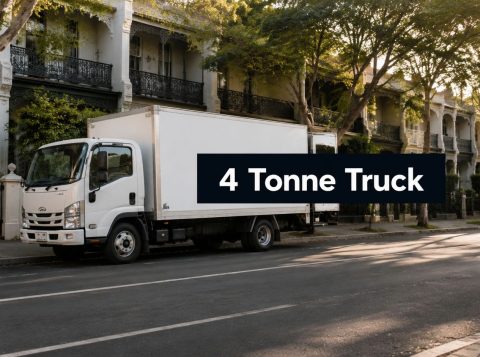
For heavier household loads, compare the trailer plan with the practical capacity of a 4.5-tonne moving truck. A truck can remove the uncertainty created when the trailer, furniture, and tow vehicle are all close to their limits.
DIY Trailer Hire vs Hiring a Removal Truck
DIY trailer hire usually wins the first comparison because the hire price looks separate from the rest of the move. The full calculation includes fuel, towing equipment, packing materials, extra driving time, loading help, possible accommodation on a longer route, and the cost of replacing items damaged during loading or travel.
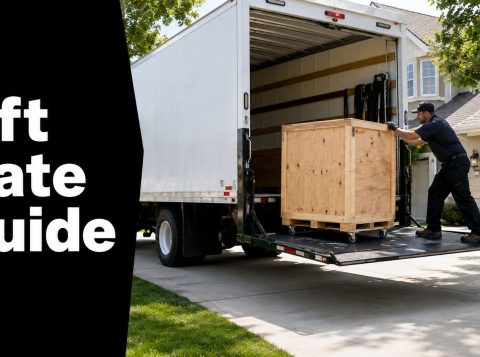
A removal truck costs more as a single booking, but the price includes capability that a trailer hire doesn't provide. A professional crew can plan the loading order, protect doorways and floors, use ramps and lifting equipment, secure furniture inside the body, and manage the awkward items that turn a simple move into a series of risky lifts.
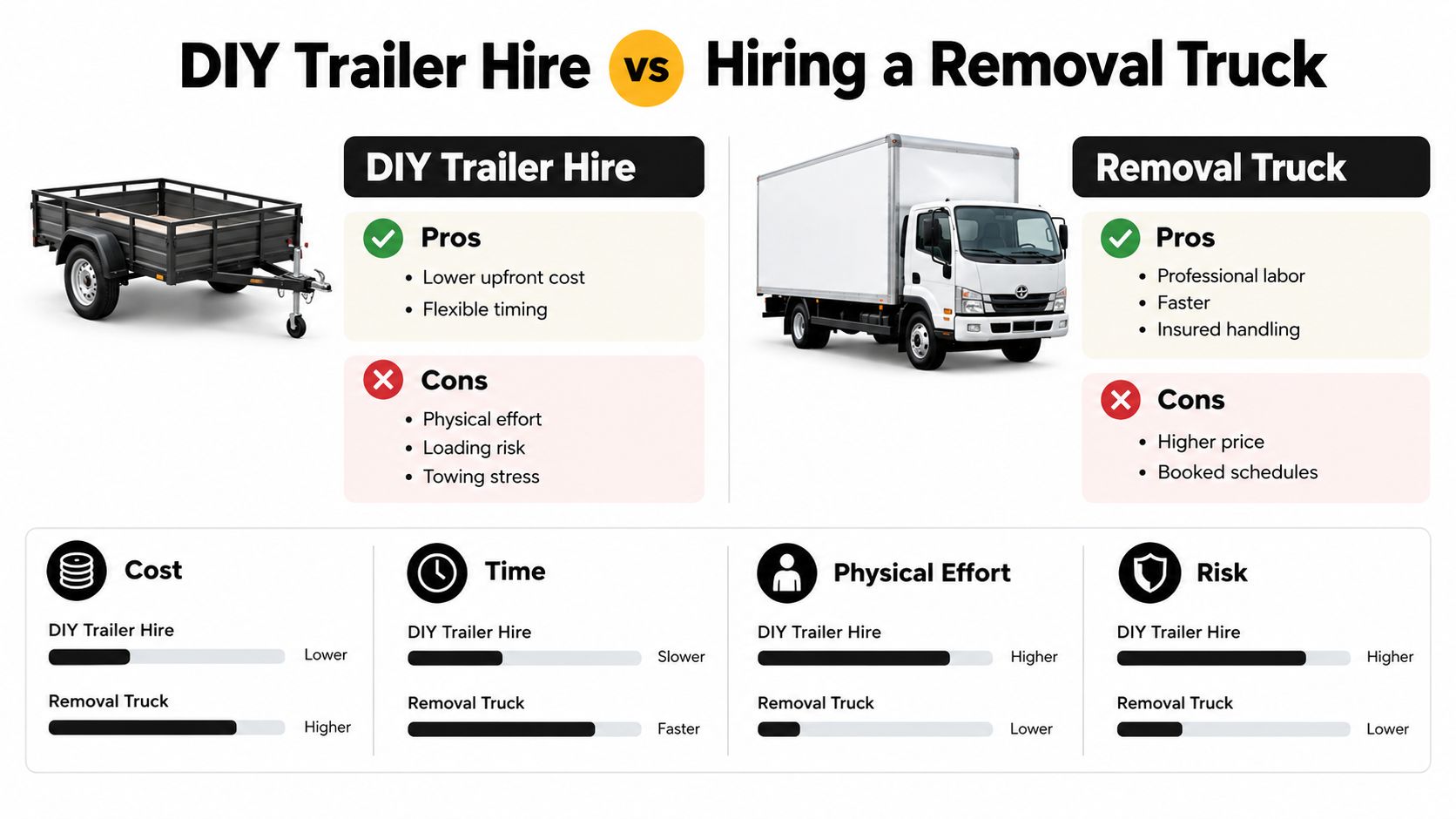
Where DIY works
A trailer can be a reasonable choice when the move is small, the items are manageable, the tow vehicle and trailer ratings have clear margins, and you have enough time to load carefully. It also suits people who already understand trailer handling and have a secure place to load and unload.
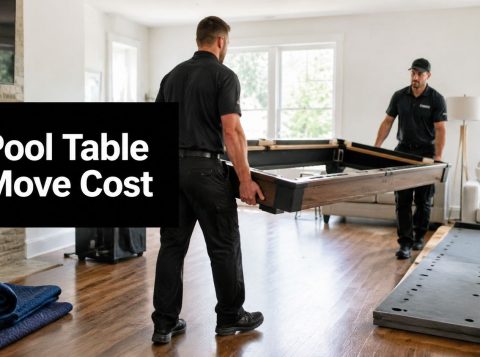
The approach stops working when the move includes stairs, narrow apartment access, heavy appliances, fragile antiques, pianos, pool tables, or a settlement deadline. These items need more than floor space. They need coordinated handling, protective materials, and people who know how to move weight without damaging the property or themselves.
| Decision factor | DIY trailer hire | Professional removal truck |
|---|---|---|
| Upfront spend | Often lower, but add fuel, equipment, labour, and risk | Higher booking cost, with labour and vehicle capability included |
| Time | Depends on your loading skill and available helpers | Crew can load and unload as one organised operation |
| Physical effort | You and your helpers carry, lift, strap, and unload | Trained movers handle the main lifting and protection |
| Compliance | You remain responsible for mass, registration, coupling, and route checks | The operator manages an appropriate vehicle and driving setup |
| Damage exposure | You carry more responsibility for loading and transit decisions | Professional handling and applicable cover can reduce personal exposure |
Insurance is another trade-off. A trailer may be legal and still leave uncertainty about the contents if something is damaged or stolen. If the consequences of one broken appliance, damaged floor, or missed booking window would outweigh the apparent saving, a truck is usually the sensible option.
For a smaller van-based move, review the practical considerations around renting a moving van in Melbourne, then compare the total workload rather than the vehicle price alone.
Insurance Gaps and Protecting Your Belongings
Many DIY movers assume their home contents policy automatically follows their furniture into a hired trailer. That assumption can be wrong. Trailer and caravan policies may exclude trailers or caravans while they are in storage, and they may not clearly cover household goods, damage, or theft during a self-managed move. Allianz's caravan and trailer insurance information illustrates why policy wording needs careful checking.
Ask the insurer direct questions before loading:
- Contents in transit: Are household goods covered while they are being moved in a hired or privately owned trailer?
- Damage during loading: Does cover apply when the owner or friends load and unload the items?
- Theft and weather: Are goods covered if the trailer is parked overnight, left unattended, or exposed to rain?
- Trailer responsibility: Does the policy cover damage to the trailer, tow vehicle, coupling, or another person's property?
- Exclusions: Are fragile items, electronics, antiques, tools, motor vehicles, or self-packed cartons treated differently?
Request the answer in writing and keep the hire agreement, photographs, receipts, condition notes, and a simple inventory. Photograph valuable furniture before wrapping it, then record existing marks on both the goods and the trailer.
Professional movers commonly carry public liability and transit insurance suited to removal work, but cover isn't automatic for every item or circumstance. Ask what protection applies, what exclusions exist, and whether customer-packed goods are treated differently. If you prefer to control packing but want clearer transit arrangements, review the questions raised by goods in transit insurance.
The insurance gap is often the deciding factor for renters and homeowners. A trailer can save money only if the remaining risk is acceptable and understood.
Planning Your Move and Booking Professional Help
Start with an inventory, not a trailer booking. Separate cartons, furniture, appliances, fragile items, oversized pieces, and anything requiring specialist handling. Measure large items and the access route at both properties, including gates, lifts, stairwells, turning areas, and available kerb space.
Then choose the transport method against the actual load:
- Use a trailer for a controlled small move: Confirm the legal status, dimensions, mass ratings, tow vehicle capacity, coupling, brakes, and insurance before paying the hire fee.
- Use a truck for a full household: This is usually the better fit when furniture fills multiple rooms, the move includes heavy appliances, or the route has tight timing and access constraints.
- Book specialists for awkward items: Pianos, pool tables, large safes, fragile art, and bulky commercial equipment need appropriate protection and handling.
- Allow time for packing and access: Label rooms, keep an essentials box separate, reserve lifts, protect floors, and confirm parking or loading permissions.
- Check the operator before booking: Ask about staff, vehicle ownership, equipment, insurance, storage, cancellation terms, and who remains your point of contact.
Interstate moves need another layer of planning. NHVR's 2026 operator guidance shows that some 20-metre truck-and-dog combinations can access approved networks in Victoria, NSW, Queensland, South Australia, and the ACT, but that access depends on the approved network and applicable mass conditions. For a household move, route eligibility can matter as much as the trailer's dimensions.
A reliable removal company should give you a clear scope of work. Confirm whether packing, furniture disassembly, reassembly, protective wrapping, storage, stairs, lifts, and waiting time are included. Don't accept a vague promise that the largest available trailer will solve every problem.
For Melbourne homeowners and renters, the safest decision is usually the one that leaves legal capacity, physical capability, and insurance clarity after the final box is counted. If the trailer plan has no margin, change the plan before moving day.
Get n Go Removals Melbourne provides residential and commercial moving, interstate transport, specialist handling, packing and unpacking, furniture disassembly, and secure short- and long-term storage across Melbourne and beyond. For a compliant, carefully planned alternative to managing a house moving trailer yourself, contact Get n Go Removals Melbourne to discuss your move and receive practical help from the first box to the final placement.