Climate Controlled Storage: A Melbourne Mover’s Guide
You're probably here because your move has got messy in a very normal Melbourne way. Settlement dates don't line up. The new place isn't ready. You're renovating, downsizing, heading interstate, or clearing a spare room that somehow turned into a storage cave. Now you're staring at a timber dining table from your grandparents, a TV you don't want to replace, a few framed prints, maybe a box of paperwork, and wondering whether a basic storage unit is enough.
That question matters more in Melbourne than many people realise. Our weather can feel mild day to day, but the swings in moisture and temperature can still be hard on stored belongings. That's one reason the Australian self-storage market reached USD 1,260.9 million in 2025 and is projected to reach USD 1,899.0 million by 2034, with demand growing for specialised options such as climate controlled storage that protects sensitive items in varied Australian conditions, according to IMARC's Australia self-storage market outlook.
A lock keeps people out. It doesn't stop wood from warping, metal from corroding, paper from absorbing moisture, or electronics from sitting in damp air for weeks. That's where climate controlled storage earns its keep.
Why Your Valuables Need More Than Just a Lock and Key
A family in Melbourne's east packs up for a short move while waiting for their new home to settle. The obvious things go first. Sofa, bed, boxes of clothes. Then the harder items appear. A polished wooden sideboard. A record collection. Two laptops kept for work backup. Wedding albums. A painting wrapped in blankets. At that point, a standard unit can start to feel like a gamble.
The problem isn't only theft or dust. It's environmental damage. A storage unit can be perfectly secure and still be the wrong place for valuables if the air inside shifts with the season. Melbourne is famous for quick weather changes, and your belongings feel those changes too. Wood expands and contracts. Leather dries out or goes musty. Electronics don't like moisture sitting on internal components. Paper and photographs can curl, stick, and stain.
The damage people often don't see coming
Individuals often consider only visible heat. They imagine a scorching summer day and a stuffy metal unit. But many storage problems build slowly.
- Wooden furniture: Timber can twist, swell, or crack when moisture levels change.
- Electronics: Damp air can encourage corrosion on internal parts and connectors.
- Artwork and framed pieces: Canvas, paper, adhesives, and timber frames all react differently to changing conditions.
- Documents and keepsakes: Files, books, certificates, and old photos can absorb moisture long before mould is obvious.
Practical rule: If you wouldn't leave the item in a garage for weeks without worrying about it, it probably deserves more protection in storage too.
That's why climate controlled storage isn't just for collectors or businesses. For many households, it's the sensible choice when the stored items are difficult, expensive, or impossible to replace.
Good packing still matters as much as the unit itself. If you're boxing up glassware, artwork, monitors, or sentimental items before they go into storage, this guide on how to pack fragile items for moving will help you avoid damage before the storage door even shuts.
Why this matters during a move
Moving days create rushed decisions. People choose whatever unit is available, load it quickly, and promise themselves it's only temporary. But temporary storage has a way of stretching out. One month becomes three. A renovation runs late. Settlement gets pushed. Office fit-outs take longer than expected.
That's usually when people stop asking, “Is the unit secure?” and start asking, “What's happening to my things while they sit there?” Climate controlled storage answers that second question.
What Is Climate Controlled Storage Really
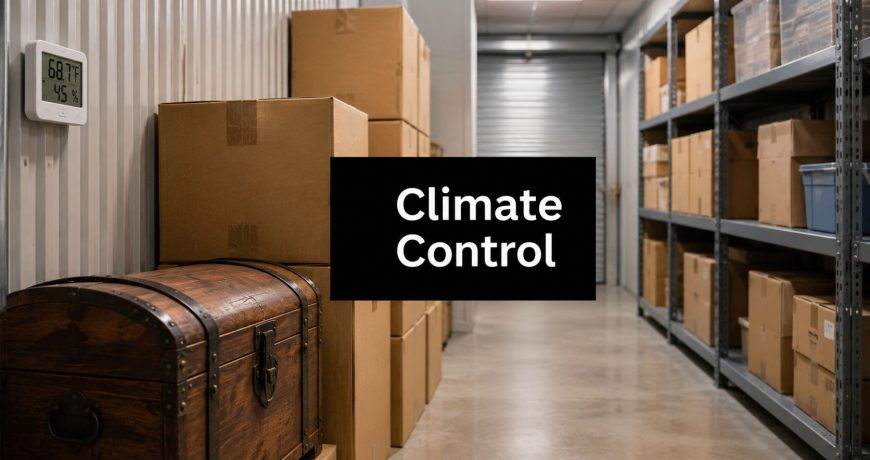
The term “climate controlled” often brings to mind only “air-conditioned.” That's only part of it. True climate controlled storage manages two things at the same time: temperature and humidity.

A good way to think about it is this. It should work more like a museum archive or a wine cellar than a room with a split system on the wall. The goal isn't just making the space feel cooler for people walking in. The goal is keeping the environment steady enough that stored materials don't deteriorate.
The two parts that matter
According to this guide to climate-controlled storage standards, climate-controlled units are engineered to maintain a temperature range between 12°C and 27°C and a relative humidity level of 45% or below. That humidity target matters because mould and corrosion grow exponentially once humidity rises above 50 to 55%.
In plain terms:
| Control area | What it does | Why it matters |
|---|---|---|
| Temperature management | Prevents extreme heat and cold | Helps protect wood, electronics, artwork, and finishes from cracking, warping, or stress |
| Humidity management | Reduces excess moisture in the air | Helps prevent mould, mildew, rust, corrosion, and paper damage |
If you've ever looked into evaluating humidifiers for your home, you'll know indoor air isn't only about comfort. Moisture levels change how materials behave. The same principle applies in storage, except the stakes are often higher because the unit stays closed for long periods.
Why air conditioning alone isn't enough
A unit can feel cool and still be too damp. That's the bit many people miss.
Cooling the air doesn't automatically mean the facility is actively regulating humidity every hour of the day. A proper climate controlled storage setup uses HVAC and dehumidification together, plus air circulation, so the conditions remain stable rather than drifting with the weather or daily traffic through the facility.
Here's a quick visual explainer before we go further:
What to ask when a provider says “climate controlled”
Don't stop at the label. Ask direct questions.
- What temperature range do the units maintain? You want a clear operating range, not a vague promise that the site is “cooler.”
- Is humidity actively controlled? If the answer only mentions air conditioning, keep asking.
- How is the environment monitored? Consistency matters more than marketing language.
- Are the units internal or drive-up? Indoor, enclosed spaces usually offer more stable conditions.
If you're comparing options, this page on storage units and prices near me is a useful starting point for understanding what features are being offered, not just what size you're paying for.
Standard Storage vs Climate Control The Melbourne Difference
In many cities, people can get away with generic storage advice copied from overseas websites. Melbourne needs a more local lens. The main issue isn't just heat. It's moisture.
According to this Melbourne-focused climate control discussion, most guides miss the difference between “air-conditioned” and true “humidity-regulated” control. It notes that Melbourne's relative humidity swings between 40% and 90%, and moisture is involved in 42% of storage-related damage claims in the city. That's the critical distinction.

How a standard unit behaves
A standard unit usually does the basic job well. It gives you enclosed space, physical security, and easy access. For hardy items, that can be enough. Think outdoor gear, tools, sealed plastic tubs, or things you'd comfortably leave in a garage.
But the internal environment tends to follow the broader weather pattern. The structure warms up, cools down, and absorbs ambient moisture. That's where trouble starts for sensitive goods.
Common outcomes in standard storage include:
- Wood movement: Furniture joints loosen, veneers lift, and drawers stop sitting square.
- Moisture odours: Upholstery, mattresses, and soft furnishings can smell stale even when they look fine.
- Surface deterioration: Metal fixtures, screws, and appliance parts can pick up rust or corrosion.
- Paper and media damage: Files, books, photographs, and records can curl or stick.
How climate controlled storage changes the risk
A climate controlled unit is built to reduce those environmental swings. Instead of reacting to outdoor conditions, it aims to keep the interior more stable. That stability is what protects delicate materials over time.
A cool room isn't automatically a safe room. If the air stays damp, the risk to your belongings remains.
This matters a lot in Melbourne suburbs near the bay, in older buildings, and during long stretches of wet weather when the air outside feels heavy for days. A unit that only cools the air can still allow moisture damage if it doesn't actively dehumidify.
A side-by-side way to think about it
| Feature | Standard storage | Climate controlled storage |
|---|---|---|
| Air conditions | Largely follows outside weather | Managed for consistency |
| Best for | Durable goods and lower-risk items | Sensitive, valuable, or sentimental belongings |
| Main local risk | Humidity and temperature fluctuation | Reduced exposure to those fluctuations |
| Typical feel | More like a garage or shed | More like an indoor managed environment |
For Melbourne households, the smarter question isn't “Do I want a premium unit?” It's “What happens to these items if they sit in damp air for longer than planned?”
If you're weighing those options suburb by suburb, storage solutions in Melbourne can help you compare practical access needs with the level of protection your items require.
A Practical Checklist for Items Needing Protection
Some belongings clearly need climate controlled storage. Others sit in the grey area. The easiest way to decide is to sort items by material, not by room. Materials tell you how they'll react.

According to facility planning guidance for climate-controlled storage, specialty items need precise conditions. Wine is best stored at 12.8°C, art at 21 to 24°C, and paper documents at 18 to 22°C. Those conditions are especially relevant in Melbourne when you're storing furniture, cosmetics, medical supplies, heirlooms, and other moisture-sensitive goods.
Furniture and soft furnishings
Start with timber, leather, and upholstered pieces.
- Wooden furniture: Dining tables, bed frames, cabinets, and antique pieces can react badly to fluctuating moisture. Solid timber can swell or shrink. Veneer can lift.
- Leather items: Leather lounges, chairs, and ottomans don't enjoy damp storage. Moisture can lead to odours and surface changes.
- Upholstered furniture: Fabric absorbs surrounding air conditions. If the unit feels musty, the couch often will too.
A good test is sentimental value. If it's the one item in the house you'd hate to replace, don't treat it like a folding chair.
Electronics, media, and office contents
These items often look tough because they're boxed in plastic or metal. Internally, they're not.
- Electronics: TVs, desktop computers, monitors, speakers, printers, and gaming gear all benefit from stable conditions.
- Appliances with electronics: Coffee machines, microwaves, and similar items can be affected by damp air during long storage.
- Media collections: Vinyl records, tapes, old discs, and photo negatives all dislike moisture.
Pack smarter: Use clean, dry boxes, keep cables bagged and labelled, and don't wrap electronics in plastic so tightly that trapped moisture has nowhere to go.
Artwork, paper, rugs, and special pieces
At this point, climate control usually moves from “nice to have” to “worth it.”
- Artwork and framed prints: Canvas, paper, adhesives, timber frames, and glass all respond differently to changing conditions.
- Documents and photographs: Certificates, legal files, books, albums, and archived business records are highly vulnerable to moisture.
- Rugs and textiles: Natural fibres need careful preparation before storage. If you're storing wool or delicate floor coverings, this guide on proper storage for oriental rugs is a handy reference for cleaning, rolling, and wrapping them correctly.
- Musical instruments, wine, cosmetics, medical supplies, heirlooms: These items are often more sensitive than people expect.
A simple way to decide is to ask two questions: Does this item react to moisture? Would replacing it be expensive or upsetting? If the answer is yes to either, climate controlled storage makes sense.
Understanding the Cost of Climate Controlled Storage
Storage pricing can feel confusing because people compare the monthly rent without comparing the environment, access, or risk. A basic drive-up unit and a properly controlled indoor unit don't offer the same level of protection, so they shouldn't be judged on price alone.
As of 2025, the average monthly rate for self-storage in Australia was AUD 266 per square metre, and the industry is projected to reach $2.5 billion in revenue in 2026, reflecting strong ongoing demand for secure storage options, according to StorTrack's Australia and New Zealand self-storage update.
What usually changes the price
Even before climate control enters the picture, storage costs move around based on a few practical factors.
| Factor | Why it affects price |
|---|---|
| Unit size | Larger spaces cost more because they hold more volume |
| Location | Inner and high-demand areas often carry higher rates |
| Access type | Indoor managed facilities may price differently from drive-up sites |
| Length of stay | Short and long bookings can come with different terms |
| Facility features | Security systems, monitoring, and specialised climate systems add operating cost |
Climate controlled storage also costs more to run. The provider isn't just renting out a room. They're maintaining HVAC systems, dehumidification, monitoring, insulation, and a more controlled building envelope.
Why the cost question should be framed differently
A lot of people ask, “Is climate controlled storage worth the extra money?” I'd frame it another way. “What would it cost me if these items came back damaged?”
That's usually where the answer becomes clearer.
- Sentimental belongings: Family furniture, albums, or inherited pieces can't really be priced once they're damaged.
- Business records and equipment: Replacing stock or reconstructing files creates stress and downtime.
- Large furniture items: One damaged table, cabinet, or lounge can wipe out any saving you made on a cheaper unit.
The cheapest unit is only cheap if your things come out in the same condition they went in.
If you're budgeting for an upcoming move, comparing Melbourne storage prices side by side can help you weigh cost against the level of protection you need. For some items, standard storage is fine. For others, climate control works like practical insurance.
Your Checklist for Choosing a Melbourne Storage Provider
Once you've decided you need more than a basic unit, the next step is choosing the right provider. Many people get tripped up at this stage. They compare size and price, but forget to verify how the facility operates.

The questions worth asking before you book
Use this as a practical shortlist when you call or inspect a site.
- Climate details: Ask whether the unit controls both temperature and humidity. If staff only mention cooling, ask again more directly.
- Security setup: Look for CCTV, gated entry, alarm systems, and clear access procedures.
- Cleanliness: A tidy, dry, organised facility usually tells you a lot about how the site is managed.
- Access hours: Make sure the site fits your real schedule, not your ideal one.
- Insurance: Ask what's covered, what isn't, and whether there are limits for high-value items.
- Loading conditions: Check whether there are lifts, trolleys, undercover loading zones, or narrow access points.
Signs the provider understands sensitive storage
You can usually tell within a few minutes whether a provider understands climate controlled storage or uses the term in marketing.
Good signs include:
| What they say | What it usually means |
|---|---|
| They explain humidity control clearly | They likely understand the real risk to stored goods |
| They discuss item suitability | They're thinking beyond unit size |
| They can describe monitoring systems | The environment is likely managed, not guessed |
| They ask what you're storing | They're matching the unit to your needs |
Some movers prefer using one company for both transport and storage because it reduces handovers and keeps responsibility clearer. For example, Get n Go Removals Melbourne's furniture removal and storage service combines moving and secure storage in one workflow, which can be useful when access windows, settlement dates, or office relocation timing are tight.
“Ask the provider to describe the unit as if they were storing their own timber furniture, electronics, and paperwork in it. The quality of that answer tells you a lot.”
The simple test before you commit
Before signing anything, ask yourself:
- Do they explain protection in practical terms?
- Do they make access and pricing clear?
- Would you feel comfortable leaving irreplaceable items there?
If the answer to any of those is no, keep looking.
Melbourne Climate Control FAQs
Do I need climate controlled storage for a short-term move?
Sometimes yes, sometimes no. It depends more on what you're storing than on the calendar alone. If the unit will hold timber furniture, electronics, artwork, documents, leather, rugs, or sentimental items, climate control is a sensible option even for a shorter stay. If you're storing durable tools, outdoor items, or sealed plastic tubs of low-risk household goods, a standard unit may be enough.
Can I store business records in a climate controlled unit?
Yes, and it's often a smart move. Paper, folders, archived files, brochures, and boxed records all react poorly to damp conditions. If those documents matter for compliance, accounting, contracts, or client history, a stable environment helps protect them from moisture-related deterioration.
Is climate controlled storage only about temperature?
No. That's the most common misunderstanding. Proper climate controlled storage also manages humidity. In Melbourne, that's often the more important part because moisture can damage belongings even when the temperature doesn't seem extreme.
Can I store a vehicle in climate controlled storage?
That depends on the facility and the type of vehicle. Some providers have specialised indoor storage arrangements, while others only offer units for household or business goods. Always ask about ventilation, access, battery considerations, and any rules around fuel and registration before booking.
What's the best way to pack for a humidity-controlled unit?
Pack clean, dry items only. Use sturdy boxes, label them clearly, and avoid trapping moisture inside with damp linen, recently cleaned rugs that haven't fully dried, or sealed plastic around items that need to breathe. Leave a little space around furniture where possible so air can circulate.
If you're moving house, relocating an office, or need secure short or long term storage in Melbourne, Get n Go Removals Melbourne can help you organise the move and storage side together so your items spend less time in transit and more time protected in the right environment.