Where to Get Free Moving Boxes: 10 Sources
Supermarkets, bottle shops and local online community groups are the best first stops for free moving boxes, while pharmacies, bookstores and retailers can fill specialist needs. Match each box to the weight of its contents, then check it for moisture, pests, odours and weak seams before use.
You're probably looking at a half-packed room, a moving date that's getting close and far more belongings than your existing shopping bags can handle. Buying every carton is convenient, but it isn't the only option. In Melbourne, cardboard moves continuously through supermarkets, retail stockrooms, community exchanges and recycling channels, so a careful collection plan can provide much of what you need for free.
The key is to combine sources rather than depend on one lucky pickup. Use clean grocery cartons for general household goods, divided bottle-shop boxes for fragile items, strong book cartons for dense loads and online groups to fill gaps in size or quantity. Ask at sensible times, take only what you can transport, and reject anything damp, crushed, contaminated, pest-affected or strongly scented.
APCO data supports why these channels are practical in Australia. Its 2022–23 figures record 69,000 tonnes of boxboard and cartonboard recovered against 37,000 tonnes consumed, while its earlier 2018–19 dataset records 288,000 tonnes placed on market and 131,000 tonnes recovered. Those figures show how much carton material passes through retail and recovery systems, although not every recovered box is suitable for moving. For more planning ideas, see this guide to free moving boxes.
1. Local Supermarkets and Grocery Stores
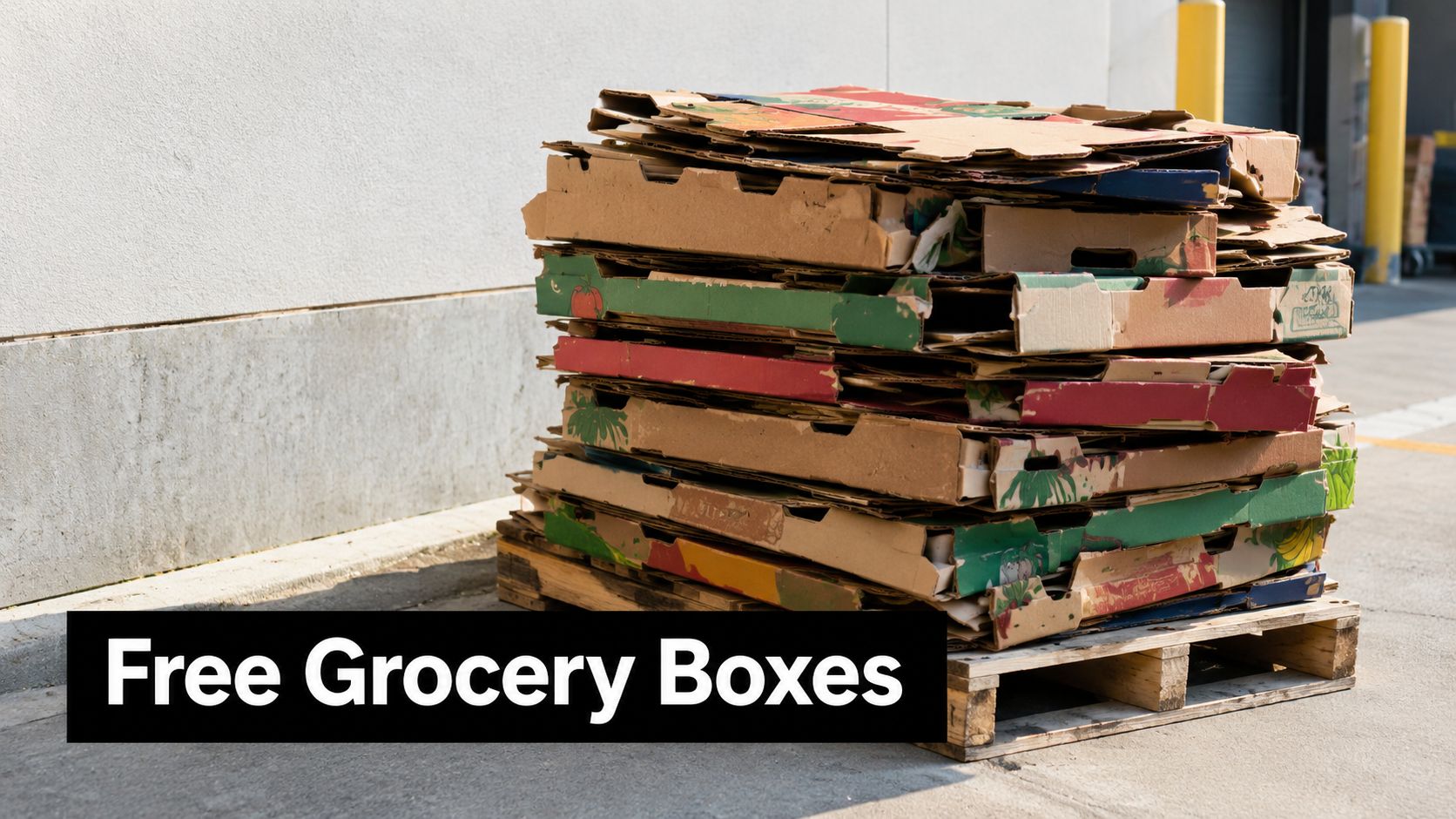
Supermarkets are usually the most accessible place to begin. Coles, Woolworths, Aldi and independent grocers receive produce, pantry goods and general stock in cartons designed for repeated handling. Produce cartons can be particularly useful because they're often compact, rigid and easy to carry, although their condition varies depending on the contents and how they were stored.
Ask at the customer service desk rather than taking boxes from a loading area. Staff may direct you to a stockroom or tell you when the next delivery is being unpacked. Mid-morning after early restocking can work well, but the best window depends on the individual store's delivery routine. A smaller grocer in Carlton, Footscray or Box Hill may be more flexible than a busy major chain, so try several nearby locations instead of waiting for one store to produce everything.
Choose grocery cartons carefully
Use clean, dry cartons for towels, pantry items, toys and lighter kitchenware. Avoid boxes with produce residue, soft bottoms, split corners or signs of insects. A box that feels sturdy while empty can fail once filled with crockery, so test the base and reinforce sound seams with proper packing tape.
Practical rule: Ask before taking boxes, bring a vehicle if you're collecting a large stack, and leave damaged cartons for recycling.
Free cartons can reduce the need to buy supplies, particularly when you combine them with sensible ways to keep moving costs down. Store collected boxes somewhere dry and flat, and don't accept more than you can inspect and transport safely.
2. Liquor and Bottle Shops
Bottle shops produce some of the most useful free cartons for fragile household goods. Wine and spirit boxes are built to protect glass bottles, so they often have stronger construction and internal dividers. Those compartments can separate glasses, mugs, ornaments and small appliances without allowing every item to shift together.
Dan Murphy's, BWS and independent bottle shops are worth approaching, as are specialist wine stores that may have premium cartons in good condition. Ask an employee whether empty boxes are available rather than searching near bins or stock areas without permission. Stock-taking and delivery periods may provide better access, but staff availability matters too, so a quiet visit is more considerate than arriving during a busy service period.
Match dividers to the contents
Keep the dividers in place when packing stemware, bottles, vases or other narrow fragile items. Remove them when the carton needs to hold a larger object, but add wrapped cushioning so the item can't slide into the walls. These boxes also suit toiletries, candles and small kitchen equipment when the individual compartments make organisation easier.
Inspect every cell and flap for compression, tears or moisture. Glass packaging can still be dirty, dusty or scented, particularly if a carton has been stored near a spill. Air it out before use, and use clean paper or towels around anything that could absorb an odour.
Stack divided cartons with their bases level and keep them manageable for the person carrying them. Their vertical strength helps, but no box becomes safe because it came from a bottle shop.
3. Pharmaceutical and Medical Supply Retailers
Pharmacies receive medicines, health products, cosmetics and equipment in protective cartons that are often clean and well formed. Chemist Warehouse, Priceline Pharmacy and independent pharmacies may have useful small and medium-sized boxes after restocking. These cartons suit electronics, toiletries, documents, small appliances and other items that benefit from a clean interior.
Ask the pharmacist or store manager rather than interrupting staff serving customers. Restocking periods can be productive because cartons are being emptied, but each pharmacy follows its own schedule. Independent shops in Toorak, South Yarra and Malvern may be able to set aside boxes if you explain what you need and when you'll collect them.
Clean cardboard is valuable for more than appearance. Dust, leaked products and strong smells can transfer to clothing, linen and upholstered items.
Reserve them for sensitive loads
Use pharmacy cartons for smaller valuable objects, chargers, computer accessories, bathroom supplies and wrapped fragile goods. Retain any clean internal cardboard supports or padding that arrive with the packaging. Don't assume every medical-supply carton is automatically suitable, however. Check for crushed corners, opened seams, chemical odours, leaks and labels indicating liquid contents.
Collect gradually if the shop can't provide a full batch. A polite request followed by a reliable pickup is more likely to lead to useful cartons than promising to collect and leaving a pile behind. Never remove boxes from a public recycling area unless the business or building manager has approved it.
4. Bookstores and Libraries
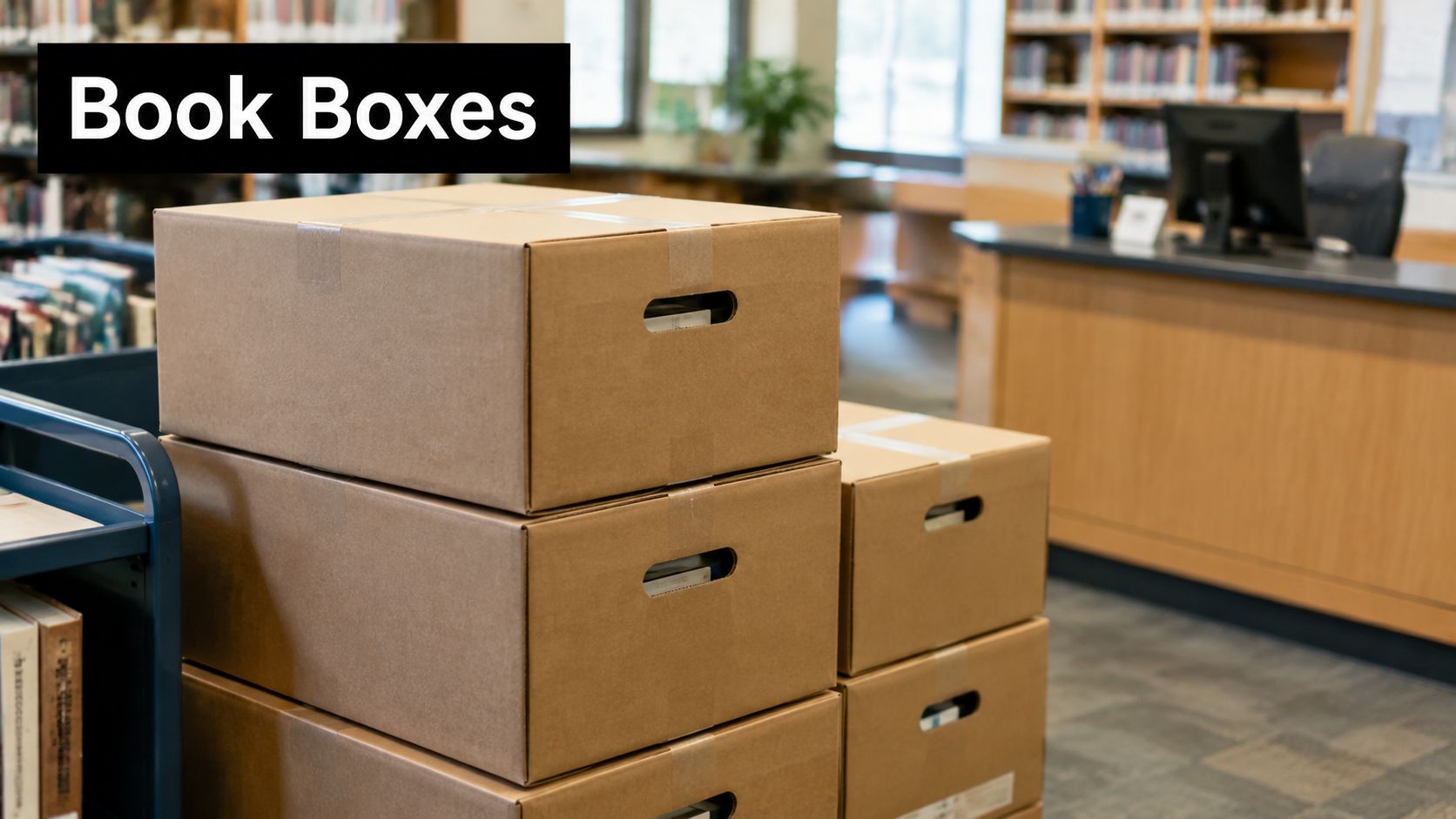
Books travel in cartons that need to tolerate dense, heavy contents, which makes bookstores and libraries valuable sources for strong small and medium boxes. Gleebooks, public library branches and book distribution operations may have surplus cartons after new acquisitions, stock processing or community donations.
These boxes work well for books, records, tools, cookware and office files. They're not ideal for a large load of lightweight clothing because their strength can encourage overfilling. A full book carton becomes difficult to lift quickly, and an awkward heavy box can damage its seams or injure the person carrying it.
Ask before a book-processing cycle
Contact a library branch in advance if you need a group of cartons. Staff may not keep boxes on the public floor, and a branch might have only a few available after unpacking deliveries. Used-book donation areas can be productive, as can local book clubs and reading groups whose members may be coordinating their own box reuse.
Label dense cartons clearly and keep each load manageable. Put heavier books at the bottom, fill gaps so they don't move and avoid mixing fragile objects with hardcovers unless you've added proper cushioning. This guide to packing books for moving explains why distributing book weight matters during transport.
Stack cartons with the heaviest stable loads low in the vehicle. Don't rely on a box's reinforced construction to compensate for careless packing or an overloaded base.
5. Electronics and Appliance Retailers
Electronics and appliance retailers receive televisions, computers, refrigerators and kitchen equipment in large corrugated cartons with protective foam, moulded inserts and internal supports. JB Hi-Fi, Harvey Norman, The Good Guys and independent appliance showrooms may have packaging that's far more suitable for a television or delicate appliance than a random recycled carton.
Call before travelling. Large boxes may be compacted quickly, and a store may need to keep packaging for returns or warranty handling. Ask whether recent deliveries, customer cancellations or unpacked returns have produced cartons you can take. A manager can also tell you which days are most useful for collection.
Reuse the internal protection
Foam corners, folded cardboard and clean protective sleeves can cushion mirrors, monitors and framed items. Large appliance cartons are also useful for clothing, doonas, towels and other soft goods, provided the box is dry and can be carried through doorways. Smaller electronics cartons can be flattened and used as protective layers between furniture or around corners.
Keep original-shaped inserts with the item they fit whenever possible. Otherwise, label them so you know which materials belong together. Before packing, inspect the carton for crushed edges, punctures and missing panels. A premium-looking appliance box still needs intact flaps and a sound base.
A short visual demonstration can help you plan fragile packing before collecting cartons.
For fragile household goods, combine firm cartons with suitable wrapping and fragile-item packing guidance. Oversized boxes shouldn't be filled with dense objects because they have spare capacity.
6. Online Marketplaces and Community Groups
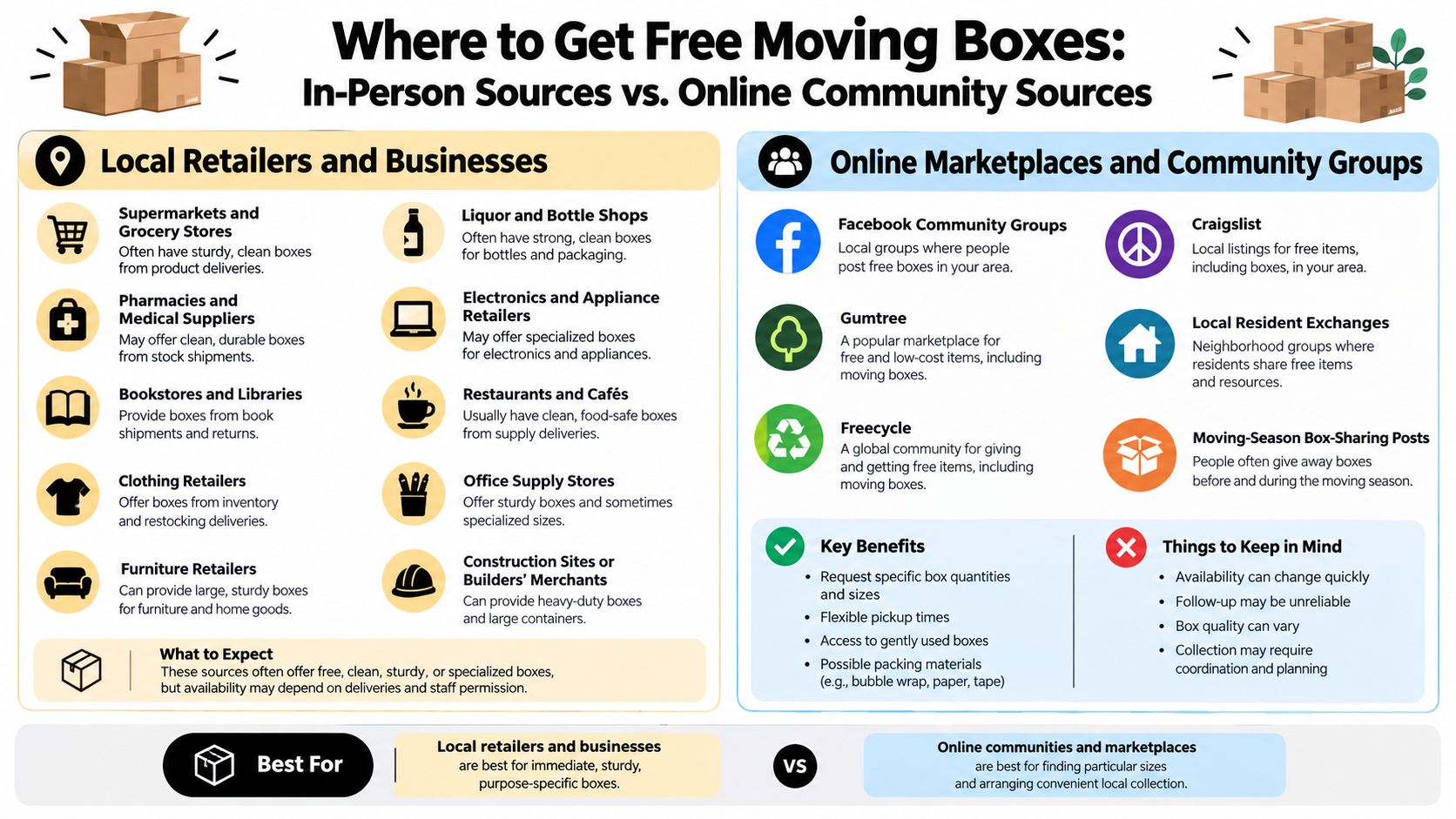
Online exchanges are often the fastest way to find boxes left over from a recent move. Facebook Marketplace, Gumtree Free listings, Buy Nothing groups, Freecycle and suburb-based community groups connect someone clearing a garage with someone preparing a move. Melbourne guides specifically recommend alerts on Marketplace and Gumtree because free listings can disappear quickly, and local-pickup posts are time-sensitive. See this Melbourne moving-box resource for the same hyperlocal approach.
Search by suburb and post a specific request. “Boxes wanted” is less useful than stating the sizes you can collect, whether you need clean cartons for fragile items and when you can pick them up. Camberwell, South Yarra, Hawthorn, Fitzroy and other suburb groups may produce responses from neighbours who've just unpacked.
Make collection easy for the donor
Respond promptly, confirm the quantity and ask for current photos. Arrange a defined pickup time, bring enough space in your vehicle and don't leave a donor waiting. If the cartons are stacked outside, confirm they're protected from rain before setting off.
- Specify the load: Ask for book cartons, wardrobe-style cartons, kitchen boxes or general household cartons rather than accepting an unknown pile.
- Confirm condition: Check that the boxes are dry, odour-free and free from insects before collection.
- Close the loop: Thank the donor and repost usable cartons after your move so the local exchange continues.
The guide to finding moving boxes can help you combine online sources with nearby retail pickups. Don't collect boxes from a stranger's property without clear permission, and use sensible precautions when arranging private collection.
7. Restaurant, Café and Food Service Suppliers
Restaurants, cafés and catering businesses receive cartons for produce, dry goods, beverages and kitchen supplies. Food-service cartons are often compact and practical for pantry items, utensils, towels and smaller household goods. Their condition depends on what they carried, so a produce carton may be useful while a box with oil, liquid or food residue should be rejected.
Approach family-owned restaurants and cafés during quiet periods, not at the height of lunch or dinner service. Mid-afternoon can give the manager time to answer, while catering companies and food suppliers may be able to offer larger batches if you call ahead. Carlton, Abbotsford, Collingwood, Coburg and bayside precincts such as Brighton and Sandringham can provide several nearby businesses to contact in one trip.
Keep food odours out of your move
Open every carton and inspect the base, corners and inner surfaces. A clean exterior doesn't guarantee a clean interior, and odours can transfer to clothing or soft furnishings. Air sound boxes out, then use crumpled clean paper or a light amount of bicarbonate of soda only if the carton is otherwise dry and structurally sound.
Offer to collect during an off-peak window so staff don't need to store boxes for you. Take only the amount you can carry and secure in your vehicle. Never block a service lane or loading area while waiting for cartons, and don't remove packaging from a rear area without staff approval.
8. Clothing and Textile Retailers
Fashion stores and department retailers receive garments, accessories and textiles in clean cartons that are often well suited to clothing and soft furnishings. Cotton On, Myer, David Jones and independent boutiques may have boxes after stock changes or new-season deliveries. These cartons are useful for shirts, linen, towels, cushions and other items that don't need heavy-duty compression resistance.
Visit mid-week or during a quiet trading period. Staff are more likely to help when they aren't serving a queue or processing a delivery. Seasonal stock changes can create a cluster of available cartons, but don't assume a particular retailer will have them on a particular day. Call first if you need a large collection.
Protect fabrics from retail debris
Remove hangers, plastic sleeves and tissue that you don't need, but keep clean tissue paper if it can wrap delicate items. Check for staples, torn edges, dust and moisture before placing clothing inside. Don't use a carton with a strong perfume or chemical smell for garments, bedding or upholstered pieces.
Clothing cartons are usually a poor choice for dense books, crockery or tools. Their value is clean storage and manageable packing, not maximum load strength. Fold clothing rather than compressing it until the flaps strain, and label each carton by room or category so unpacking doesn't become a second sorting project.
9. Office Supply and Furniture Retailers
Office retailers and furniture showrooms receive boxes for desks, chairs, filing systems, printers and stationery. Officeworks and independent commercial-furniture suppliers may have cartons suited to files, monitors, office accessories and household items that need a firm container. Larger furniture packaging can also provide protective cardboard for tabletops, doors and other flat surfaces.
Call ahead if you're organising a business relocation. A retailer may be willing to hold suitable cartons from an incoming delivery, but it may not have space to store them indefinitely. Ask about returns-processing areas as well, since unpacked returned goods can create clean protective packaging.
Keep office cartons practical
Use copy-paper boxes for documents and smaller office items because their uniform shape and carry handles make them easy to stack. Don't fill them with dense files beyond a manageable carrying weight. Larger furniture cartons suit lightweight equipment, chairs and soft protective materials better than concentrated loads.
For an office move: Consistent box sizes simplify labelling, stacking and lift access, but strength still matters more than appearance.
Collect during an agreed off-peak period and avoid obstructing staff or delivery crews. Keep foam corners, cardboard supports and protective sheets for monitors, artwork and furniture edges. A detailed packing guide for moving can help you decide which cartons should carry documents, equipment and personal items.
10. New Home Construction Sites and Builders' Merchants
Builders' merchants, hardware retailers and new-home projects receive fixtures, fittings, tools and materials in large cartons. Bunnings, Mitre 10 and independent suppliers may have useful packaging, while construction sites can accumulate boxes from kitchens, bathrooms and other installation deliveries.
Always ask the site supervisor, store manager or builder before approaching a work area. Construction sites contain hazards, moving vehicles and restricted zones, so don't enter a loading area or take packaging from a skip without permission. Daytime contact is generally more practical because the responsible staff are present, but arrangements vary by site.
Clean and stage construction cartons
Construction dust, sawdust, fasteners and insulation fibres can make a carton unsuitable for household belongings. Shake out and inspect each box outdoors, then wipe clean surfaces where appropriate. Reject cartons with damp patches, sharp debris, chemical residue, torn bases or weather damage.
Use sound heavy-duty cartons for tools, cookware and other dense loads, but distribute weight across several boxes instead of creating one unmanageable lift. Large cartons can be awkward in apartment corridors and lifts, so check the route before filling them. If you're storing collected boxes before moving day, keep them in a dry garage or enclosed area. Weather-resistant packaging is not waterproof packaging.
Top 10 Places for Free Moving Boxes
| Source | 🔄 Implementation complexity | ⚡ Resource & availability | ⭐ Quality (protection) | 📊 Expected outcomes | 💡 Ideal use cases / Key advantages |
|---|---|---|---|---|---|
| Local Supermarkets and Grocery Stores | Low, ask staff or collect after deliveries | High, abundant; varies by store/day | ⭐⭐⭐⭐, sturdy produce boxes | High volume of free boxes; mixed condition and sizes | Bulk moves, heavy items; visit mid-morning and build relationships |
| Liquor and Bottle Shops | Low, polite request at counter | Medium, consistent but fewer boxes | ⭐⭐⭐⭐⭐, very sturdy with dividers | Excellent protection for fragile items; smaller sizes | Glassware, bottles, organized small items; use/remove dividers as needed |
| Pharmaceutical and Medical Supply Retailers | Medium, may need to ask staff | Low–Medium, steady small sizes | ⭐⭐⭐⭐, clean, pharmaceutical-grade | Clean boxes with internal padding; limited size variety | Electronics, valuables, and fragile goods; retain padding for protection |
| Bookstores and Libraries | Medium, often request/reserve in advance | Medium, specialized heavy-duty boxes | ⭐⭐⭐⭐, engineered for weight-bearing | Ideal for heavy/dense items; limited size variety | Books and heavy household items; contact branches ahead for bulk |
| Electronics and Appliance Retailers | Medium, call ahead for large boxes | Low–Medium, premium large sizes | ⭐⭐⭐⭐⭐, premium padding and foam inserts | Superior protection for valuable/bulky items; fewer quantities | TVs, appliances, electronics; reuse foam and flatten small boxes |
| Online Marketplaces & Community Groups | Medium–High, requires monitoring and quick response | Variable, can request exact sizes; timing-dependent | ⭐⭐⭐⭐, often gently used, high-quality | Flexible matches and bonus packing materials; reliability varies | Specific sizes, last-minute needs; join multiple local groups and act fast |
| Restaurant, Café & Food Service Suppliers | Low–Medium, approach off-peak times | High, regular daily deliveries | ⭐⭐⭐⭐, food-grade, clean and durable | Clean, commercial-quality boxes; possible food odours | Kitchen items, heavy loads; collect mid-afternoon and freshen if needed |
| Clothing and Textile Retailers | Low, request during restocking | Low–Medium, seasonal availability | ⭐⭐⭐, clean, moderate strength | Good for soft goods and neat packing; limited strength for heavy items | Clothing, linens, delicate textiles; remove hangers and reuse tissue paper |
| Office Supply & Furniture Retailers | Medium, requires coordination/reservation | Low–Medium, large commercial boxes | ⭐⭐⭐⭐, commercial-grade, reinforced | Reliable protection for furniture and office equipment; bulky | Business moves, furniture, high-value items; reserve in advance |
| New Home Construction Sites & Builders' Merchants | Medium–High, arrange permission/collection | Variable, potential for large quantities | ⭐⭐⭐⭐, industrial-strength, weather-resistant | Very durable and large; may be dusty and heavy | Oversized items, outdoor storage, heavy loads; clean boxes and enlist helpers |
Choose the Right Boxes Before Moving Day
Free boxes work best as a planned mix. Start with nearby supermarkets, bottle shops, pharmacies and other retailers that turn stock over regularly. Use online community groups to fill gaps in size and quantity, especially when someone in your suburb has just finished unpacking. Keep the strongest cartons for books, kitchenware, tools and equipment, and use cleaner lighter cartons for clothing, linen and soft goods.
Australian recovery data explains why council recycling channels and recycling centres can also be logical places to ask about reusable cartons. APCO's Paper and Paperboard factsheet records 2,897,221 tonnes of corrugated cardboard placed on market and 2,118,637 tonnes recovered in Australia, while the same packaging data notes a 61% total packaging recycling rate. Those channels handle substantial material, but recovery streams aren't curated moving-supply stores. A carton from a recycling area may be wet, taped, labelled, crushed or contaminated.
National packaging information also highlights an important limitation. Paper and paperboard recovery was reported at roughly 59% to 66% in 2023–24, depending on the dataset, meaning a substantial share still goes to landfill. The practical lesson for Melbourne movers is simple: availability doesn't equal suitability. Inspect every box before it enters your home.
Use this inspection sequence:
- Dry cardboard: Reject soft, swollen or water-marked panels.
- Firm seams: Press the base and corners to find separation or crushing.
- Intact flaps: Make sure the flaps close fully without excessive bending.
- Clean interiors: Look for food residue, dust, leaking products and strong odours.
- Pest-free surfaces: Check folds, tape lines and dark marks for insects or eggs.
- Manageable weight: Pack fewer dense items rather than overloading a strong-looking carton.
Ask permission before taking boxes and collect only what you can transport securely. Don't place questionable packaging around fragile, valuable or sensitive belongings. If you're moving interstate, carrying heavy furniture, managing a lift booking or packing an office under time pressure, professional support can reduce handling risk. Get n Go Removals Melbourne provides residential and commercial moving, packing and unpacking, furniture disassembly, storage and specialist handling across Victoria and interstate, with packing materials available when free cartons don't cover every requirement.
If you want help with the move after collecting your boxes, Get n Go Removals Melbourne offers house and apartment moves, office relocations, professional packing and unpacking, furniture handling, storage and interstate transport. Contact the team to discuss your box plan, packing needs and moving-day logistics.