Move Out Checklist 2026: Smooth Melbourne Move in 10 Steps
Moving can feel overwhelming, but a structured approach transforms chaos into control. This definitive move out checklist is your step-by-step roadmap, meticulously organised to guide you from the initial decluttering phase right through to the final handover. Whether you're moving a one-bedroom apartment across Melbourne or relocating an entire family home interstate, a detailed plan is the key to a smooth and efficient transition. It prevents last-minute panic, ensures no critical task is forgotten, and ultimately saves you time, money, and stress.
This guide is designed to be the only resource you'll need, breaking down the entire process into manageable timelines. We cover everything from eight weeks out to moving day and beyond. You will find actionable steps for:
- Strategic Planning: How to properly conduct a home inventory, declutter effectively, and book professional moving services without the hassle.
- Administrative Tasks: A clear guide to notifying utility providers, updating your address with government bodies like Australia Post and the AEC, and transferring important records.
- Practical Execution: Systematic packing techniques, preparing your property for the final inspection to secure your bond, and coordinating moving day logistics, including lift bookings and parking permits in busy Melbourne suburbs.
- Specialised Needs: Advice on arranging pet relocation, organising secure storage solutions, and planning for furniture assembly at your new home.
By following this comprehensive move out checklist, you can navigate your relocation with confidence, knowing every detail has been accounted for. Let’s get you moving the smart way.
1. Conduct a Home Inventory and Declutter
Before a single box is packed, the most crucial step in any successful move out checklist is a thorough home inventory and decluttering session. This foundational task involves systematically cataloguing your possessions to decide what to keep, sell, donate, or discard. It’s not just about tidying up; it's a strategic move that significantly reduces moving costs, simplifies the entire relocation process, and ensures you start fresh in your new home without unnecessary baggage.

Decluttering can reduce your moving volume by an astonishing 20-40%. For Get n Go Removals customers, this often means dropping down an entire truck size category, which directly translates into lower transportation costs and a faster, more efficient move day. This initial purge streamlines every subsequent step, from packing and labelling to unpacking at your destination.
How to Get Started
To tackle this task effectively, start at least 6-8 weeks before your moving date to avoid feeling rushed. The goal is to make deliberate, clear-headed decisions rather than frantic last-minute choices.
- Use the Four-Box Method: Set up four distinct areas or boxes labelled: Keep, Sell, Donate, and Discard. As you go through each room, place every item into one of these categories.
- Document Valuables: Take clear photos of valuable items. This creates a visual inventory for insurance purposes and provides ready-to-use images if you decide to sell them online.
- Sell Locally: Platforms like Facebook Marketplace and Gumtree are excellent for selling unwanted furniture and household goods to buyers in the Melbourne area.
- Schedule Pickups: Don't wait until the last minute. Book council hard rubbish collections or schedule a pickup from a local charity well in advance. This avoids having unwanted items cluttering your space right before the move.
Pro Tip: When assessing furniture, consider the layout of your new home. That oversized sofa might be perfect now, but will it fit through the doorway or overwhelm the new living room? Making these decisions early prevents moving items that won't work in your new space.
For a more in-depth guide on making smart decisions during this phase, you can discover more on how to declutter before you move. This initial effort pays dividends, making your entire move smoother and more organised.
2. Arrange Professional Moving Services and Confirm Booking
Once you have a clear picture of what you're taking, the next vital step in your move out checklist is to secure a reputable moving company. Arranging professional services is not just about hiring muscle; it’s about entrusting your belongings to experienced professionals who ensure a safe, efficient, and stress-free relocation. Booking early, especially during peak seasons like summer (December to February) in Australia, guarantees availability and locks in your preferred moving date.
Engaging a reliable firm like Get n Go Removals, with over a decade of five-star service in Melbourne, can make a significant difference. Professional movers are trained to handle everything from fragile items to heavy furniture, and they come equipped with the right tools and insurance. This protection provides peace of mind that is invaluable on a hectic moving day, whether you are moving across town or relocating interstate to Sydney or Brisbane.
How to Get Started
Aim to book your movers at least 4-6 weeks in advance. This gives you ample time to compare quotes and secure a slot that aligns perfectly with your settlement or lease-end date, avoiding last-minute surcharges and limited availability.
- Gather Multiple Quotes: Contact several reputable companies to compare pricing, services, and availability. Be wary of quotes that seem too good to be true.
- Verify Insurance: Always confirm that the company holds both Public Liability and Transit Insurance. This protects you and your possessions from accidental damage during the move.
- Clarify Inclusions: Ask exactly what is covered in the quote. Does it include packing materials, furniture assembly/disassembly, or charges for stairs and difficult access?
- Confirm Truck Size: Based on your home inventory, ensure the company allocates the correct truck size to avoid multiple trips or items being left behind. Companies like Get n Go Removals can expertly advise on this.
Pro Tip: For apartment moves in Melbourne, check if you need to book the building's lift and secure a dedicated parking permit for the moving truck. A professional moving company can often assist with this coordination, preventing costly delays and access issues on the day.
Properly vetting and booking your removalist is a cornerstone of a successful move. To help you make a confident decision, find out more about choosing the right removals firm for your move.
3. Notify Utilities and Service Providers of Disconnection
An often-overlooked but critical part of any move out checklist is managing the transfer of your utilities and services. This involves contacting your electricity, gas, water, and internet providers to schedule a disconnection at your old home and a seamless reconnection at your new one. Proper timing is everything; it prevents service gaps, ensures you aren’t paying for utilities you're no longer using, and guarantees your final bills are accurate.
Failing to schedule these transfers can lead to costly overlaps or, worse, arriving at your new home without power or internet. A well-organised utility transfer ensures a smooth transition, allowing you to settle in comfortably from day one. It’s a simple administrative task that has a huge impact on the success of your moving day and the first few days in your new property.
How to Get Started
Begin contacting your providers at least two to three weeks before your move. This provides ample time for them to process your requests and book technicians if required. A little forward planning prevents last-minute stress.
- Create a Master List: Compile a list of all your service providers (electricity, gas, water, internet, Foxtel) along with your account numbers and their contact details.
- Schedule Strategically: Arrange for disconnection at your old property for the end of moving day or the morning after. Schedule connection at your new property for the day before you arrive, ensuring everything is active when you walk in.
- Keep Meticulous Records: After each call, note down the confirmation or reference number, the date of the call, and the name of the representative you spoke to. This is crucial for resolving any potential disputes.
- Forward Your Mail: While contacting utilities, also arrange mail forwarding with Australia Post to catch any final bills or stray correspondence. This can be easily set up online.
Pro Tip: For internet services, consider keeping your old connection active until the morning after your move. This ensures you have a reliable connection to finalise any digital tasks or communicate with your moving team on the day without relying on mobile data.
4. Update Address with Government Agencies and Financial Institutions
One of the most critical administrative tasks in your move out checklist is formally updating your address with all relevant organisations. This step goes beyond simply redirecting mail; it’s about ensuring legal compliance, maintaining financial security, and guaranteeing that crucial documents from the ATO, banks, and electoral commissions reach you without interruption. Neglecting this can lead to missed bills, potential fraud, and significant administrative headaches down the line.
Failing to update your details can have serious consequences. For instance, in Victoria, you are legally required to notify VicRoads of a change of address within 14 days. Similarly, ensuring your details are correct with the Australian Electoral Commission (AEC) is vital for voting. For Get n Go Removals customers, especially those undertaking business relocations, updating ABN and GST registration details is a non-negotiable step to maintain compliance and business continuity.
How to Get Started
Begin this process 3-4 weeks before your move to allow ample time for all organisations to process the changes. A systematic approach ensures no one is forgotten, protecting your identity and finances during the transition.
- Create a Master List: Compile a comprehensive list of every entity that has your address. This includes government bodies, financial institutions, insurance providers, employers, and subscription services.
- Prioritise Official Bodies: Start with legal and financial priorities. Update your address with the ATO, the AEC, and VicRoads first. For those moving interstate, you'll need to update details with the relevant road authority in your new state.
- Notify Financial Institutions: Contact your banks, superannuation funds, and any investment platforms. Most allow you to do this quickly and securely online through their portals.
- Don't Forget Subscriptions: Update your address for everything from your gym membership and magazine subscriptions to streaming services that use location-based billing.
Pro Tip: Set up an Australia Post Mail Redirection service for at least six months. This acts as a safety net, catching any mail from organisations you may have accidentally missed and providing a clear record of who is still using your old address.
To ensure you cover all bases, our comprehensive moving house address change checklist provides a detailed breakdown of everyone you need to notify. Properly managing this task is a cornerstone of an organised and stress-free move.
5. Arrange Transfer of Medical and School Records
Beyond the logistics of moving boxes, ensuring continuity of care and education is a vital part of a well-executed move out checklist, especially for families. This step involves proactively arranging the transfer of medical records from current healthcare providers and managing school enrolments for children. It’s a crucial task that prevents disruptive gaps in health services and ensures a smooth academic transition, minimising stress for the entire family.
For families moving with Get n Go Removals, especially interstate from Melbourne to Brisbane or Sydney, coordinating these transfers early is key. A seamless handover of medical histories for those with chronic conditions, or securing a place in a new school, provides peace of mind. It allows you to focus on the physical move, knowing these essential life admin tasks are already handled.
How to Get Started
Start this process 4-6 weeks before your move date to allow ample time for administrative processing at both your old and new institutions. This buffer is critical for avoiding last-minute complications with document retrieval or school placements.
- Request Records Early: Contact your GP, dentists, and specialists at least 2-3 weeks before moving. Ask for a complete copy of your records to be sent to your new provider or given to you directly.
- Notify Schools: Inform your children's current school of the transfer date 4-6 weeks in advance. Simultaneously, contact the new school to understand their enrolment process and required documentation.
- Gather Essential Documents: Obtain sealed copies of immunisation records and a full list of current prescriptions. Keep digital and physical copies of everything during the transition.
- Research New Providers: If possible, register with a new GP or medical centre in your new suburb before you arrive. This ensures you can get an appointment quickly if needed after the move.
Pro Tip: When moving interstate, be aware of curriculum differences between states, such as Victoria's VCE and Queensland's QCE. Discussing this with the new school's administration early can help plan for any academic adjustments and ensure your child is placed in the appropriate year level and subjects.
6. Pack and Label All Boxes and Belongings Systematically
Systematic packing is the backbone of an organised move, transforming a potentially chaotic process into a streamlined operation. This step involves more than just putting items into boxes; it’s about a methodical approach to sorting, protecting, and labelling your belongings. A well-executed packing strategy not only prevents damage but also makes unpacking at your new home significantly faster and less stressful.

This task often accounts for 30-40% of the total time and stress associated with moving. For our clients, from those undertaking interstate moves requiring durable packing for long transit, to businesses needing specialised handling of IT equipment, a systematic approach is non-negotiable. It ensures every item arrives safely and can be located instantly, minimising downtime and confusion.
How to Get Started
Begin packing non-essential items 3-4 weeks before your move. This staggered approach prevents last-minute panic and allows you to be more thorough and organised. For a more detailed approach to organising your belongings, refer to an ultimate moving house packing checklist.
- Pack Room-by-Room: Tackle one room at a time to keep items grouped logically. This makes unpacking a simple matter of distributing boxes to their designated rooms.
- Use a Consistent Labelling System: On each box, clearly write the Room, a brief list of Contents, and its Priority (e.g., 'KITCHEN – Mugs & Kettle – OPEN FIRST').
- Use Quality Materials: Invest in sturdy boxes, strong packing tape, and proper protective materials like bubble wrap and packing paper to safeguard your belongings.
- Balance Box Weight: Pack heavy items like books and tools in small boxes, and light, bulky items like bedding and pillows in large boxes. Aim for a maximum weight of 20-25kg per box for safe handling.
- Use Colour-Coding: Assign a different coloured marker or sticker to each room. This allows for quick visual identification of boxes on moving day, speeding up the unloading process.
Pro Tip: Create an 'Open First' box containing essentials for your first 24 hours in the new home. Include items like toiletries, a change of clothes, basic kitchen supplies (kettle, coffee, mugs), chargers, and any necessary tools for assembly.
For those with valuable, fragile items or limited time, consider a professional valet packing service. To master the fundamentals yourself, find out more about how to pack for moving house. Proper packing is a critical part of any successful move out checklist.
7. Arrange Pet Relocation and Update Pet Records
Moving can be stressful for the entire family, especially for your pets. A critical part of any comprehensive move out checklist is organising their safe relocation and ensuring all their records are in order. This process involves more than just transporting them; it’s about minimising their anxiety and guaranteeing a seamless transition of care. Proper planning prevents last-minute panic and ensures your furry, feathered, or scaled companions arrive at their new home safely and comfortably.
Arranging pet transport well in advance is crucial, particularly for interstate moves from Melbourne, which may involve specific state biosecurity rules. For Get n Go Removals customers, we understand that pets are family. While we focus on your belongings, we can advise on coordinating with professional, climate-controlled pet transport services to ensure your pet’s journey is as smooth and safe as your own. This forethought ensures continuity of care and a less stressful experience for everyone involved.
How to Get Started
Begin organising your pet's move at least 4-6 weeks before your relocation date. This timeline provides ample opportunity to book services, gather necessary documents, and prepare your pet for the change.
- Update Identification: Before you move, update your pet’s microchip registration with your new address and contact number. Also, ensure they have a visible ID tag with the new details.
- Gather Vet Records: Contact your current veterinarian to obtain a complete copy of your pet’s health and vaccination records. This is vital for establishing care with a new vet.
- Book Transport: Research and book a reputable pet transport service, especially for long-distance or interstate moves. Ask about their climate-control measures and animal welfare policies.
- Prepare for Moving Day: On the day of the move, keep your pet in a secure, quiet room with their essentials to prevent them from getting underfoot or escaping.
Pro Tip: For interstate relocations, such as moving from Melbourne to Queensland or Western Australia, check the destination state’s government websites for any specific entry requirements, such as vaccination or quarantine rules. Preparing this documentation early prevents any delays at state borders.
8. Prepare Current Property for Handover and Final Inspection
The final step before closing the door on your old property is preparing it for handover and the final inspection. This crucial task on any move out checklist involves deep cleaning, completing minor repairs, and ensuring the property meets the agreed-upon conditions in your lease or sales contract. For renters, this is the key to securing a full bond return, while for sellers, it ensures a smooth settlement with the new owners.
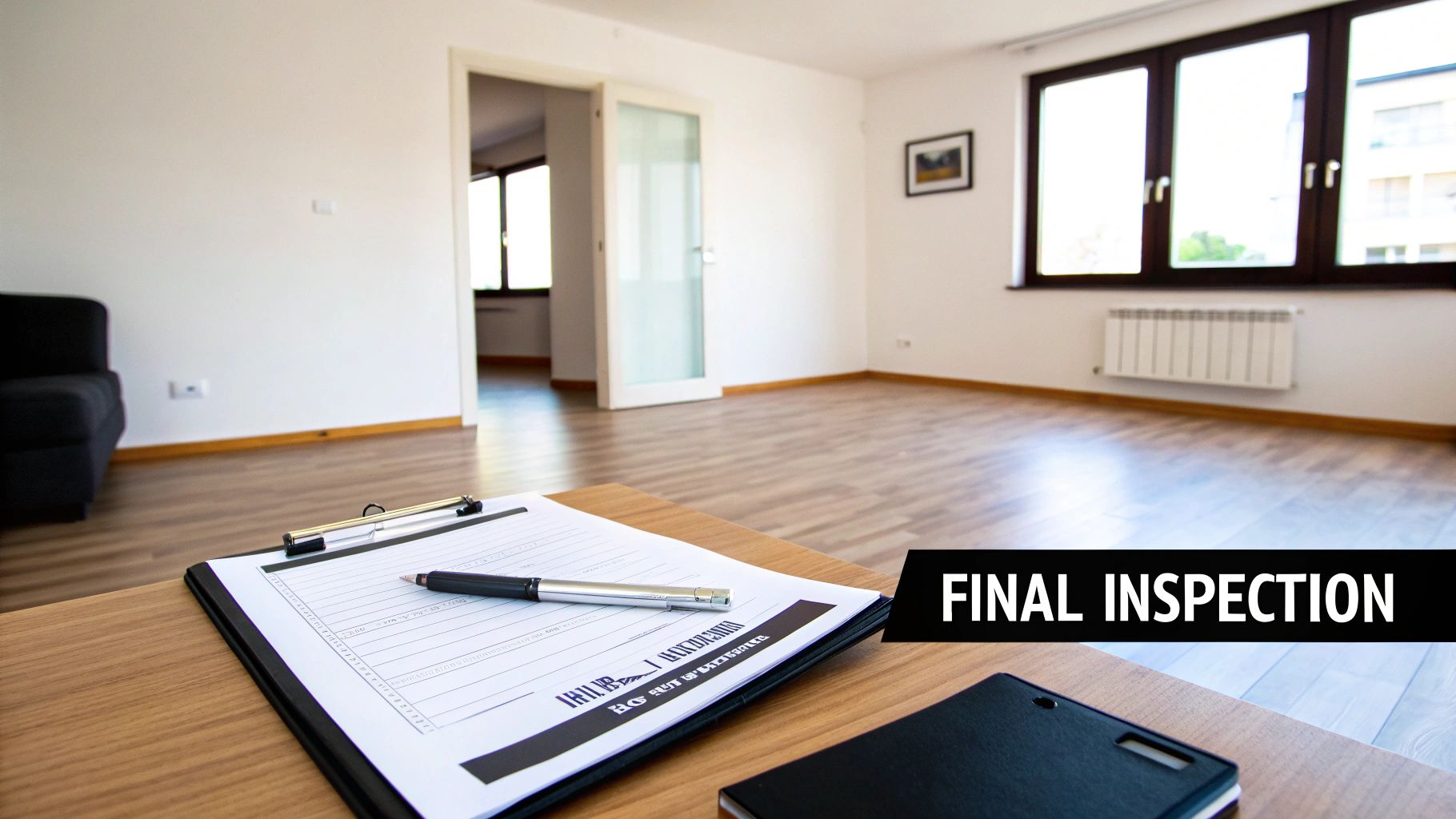
Leaving the property in impeccable condition prevents disputes and potential damage claims. A meticulously executed handover reflects your care as a tenant or owner and finalises the moving process on a positive and professional note. This isn't just a courtesy; it's a contractual obligation that protects your financial interests and reputation.
How to Get Started
Aim to have the property completely empty before starting the final clean and repairs. This allows you to address every corner without obstruction and present the property in its best possible state for the formal inspection.
- Schedule Professional Cleaning: Book a professional end-of-lease cleaning service for 1-2 days after your movers have cleared the property. Ensure they specialise in bond-back cleans, which typically cover ovens, carpets, and windows.
- Complete Minor Repairs: Address small issues like patching nail holes, touching up paint scuffs, and tightening loose fixtures. These minor fixes demonstrate responsible care and prevent deductions from your bond.
- Document Everything: Before handing over the keys, take a comprehensive set of photos and a video walkthrough of the empty, cleaned property. This visual evidence is invaluable if any disputes arise about the property's condition.
- Review Your Lease Agreement: Re-read your lease to understand specific handover requirements. For renters, it's also wise to determine if your lease requires notarization for termination or other formal agreements with your landlord.
Pro Tip: Be present for the final inspection with your landlord or real estate agent. Walking through the property together allows you to address any potential issues on the spot and ensures everyone is in agreement before the bond is released or the sale is finalised. Keep copies of all cleaning receipts and inspection reports.
9. Arrange Secure Storage Solutions if Needed and Organise Furniture Assembly
Not every move is a straightforward A-to-B transition. Gaps between settlement dates, downsizing, or renovating can create a need for temporary storage, making this a critical item on any comprehensive move out checklist. Organising a secure place for your belongings provides flexibility and peace of mind, while pre-planning furniture disassembly and reassembly saves invaluable time and prevents damage on moving day.
Planning these logistics in advance is a strategic move that addresses common relocation headaches. For Get n Go Removals clients, integrating our storage solutions or furniture assembly services creates a seamless, all-in-one process. This is particularly beneficial for interstate moves from Melbourne, where items might need to be stored temporarily before the new home is ready, or for complex office relocations requiring professional handling of modular furniture.
How to Get Started
Begin coordinating storage and assembly services at least 3-4 weeks before your move. This ensures availability and allows for a smooth integration into your moving day schedule.
- Assess Storage Needs Early: Determine precisely which items will go into storage and for how long. This will help you choose the right-sized unit and avoid paying for unused space.
- Book a Secure Facility: Don't leave it to the last minute. Book a secure, accessible storage unit in advance. Consider climate-controlled options for sensitive items like electronics, artwork, or wooden furniture.
- Schedule Furniture Services: Arrange for professional disassembly at your current home to ensure items are packed safely and efficiently in the truck. Concurrently, schedule reassembly at your new address to make settling in faster.
- Create a Storage Inventory: Keep a detailed list or photo log of everything placed in your storage unit. This is vital for both insurance purposes and for easily locating items when you need them.
Pro Tip: When booking furniture services, be specific about complex items like antique wardrobes, pool tables, or multi-part workstations. Specialist items require specialist handling, and informing your removalist ensures they arrive with the right tools and expertise.
Proper planning of storage and furniture handling transforms potential moving day chaos into a well-organised operation. For a detailed breakdown of options and what to expect, you can learn more about Melbourne self-storage costs.
10. Plan Your Moving Day Logistics and Final Day Coordination
The success of your entire move hinges on the execution of the final day, making meticulous logistics planning a non-negotiable part of any comprehensive move out checklist. This step involves orchestrating the entire workflow for moving day itself, coordinating access, confirming timings with all parties, and ensuring a seamless transition. Effective final day coordination prevents costly delays, miscommunications, and the stress that comes from last-minute problem-solving.
A well-coordinated plan ensures that your professional movers, like the Get n Go Removals team, can operate at peak efficiency. For apartment moves in Melbourne, this means having lift access booked and ready. For house moves, it means clear parking and access paths. This level of organisation minimises downtime, protects your belongings, and helps you stick to a strict settlement or handover timeline.
How to Get Started
Begin finalising these details in the week leading up to your move, with a final confirmation call 24-48 hours beforehand. The goal is to create a clear, shared timeline for everyone involved.
- Create a Detailed Timeline: Map out your moving day in 30-minute to one-hour increments. Include everything from the movers' arrival and the final walkthrough to the key handover and travel time.
- Confirm with All Parties: Call your Get n Go Removals coordinator 24 hours prior to confirm the start time. Reconfirm the key exchange time with your real estate agent or landlord.
- Arrange Property Access: For apartment buildings, book the service lift and loading bay well in advance. For houses, secure a dedicated parking spot for the moving truck, arranging a council permit if necessary.
- Prepare for Payment: Ensure your chosen payment method is ready. If doing a bank transfer, double-check daily limits and have the correct account details on hand to avoid any delays upon completion.
Pro Tip: Designate one person as the primary point of contact for the moving crew on the day. This individual should brief the team on fragile items, specify the placement of key furniture at the new property, and be available to answer any questions, ensuring clear and efficient communication throughout the day.
A smooth moving day is the direct result of careful planning. By coordinating these final logistics, you ensure that the last step of your move out checklist is completed without a hitch.
10-Point Move-Out Checklist Comparison
| Task | 🔄 Complexity | ⚡ Resource Requirements | 📊 Expected Outcomes | Ideal Use Cases | ⭐ Key Advantages |
|---|---|---|---|---|---|
| Conduct a Home Inventory and Declutter | Medium — room-by-room effort and decisions | Low–Medium — time, storage space, apps/spreadsheets | Reduced volume (≈20–40%), lower transport cost, faster unpacking | Downsizing, cost-sensitive moves, long-distance relocations | ⭐⭐⭐⭐ — lowers costs, creates insurance records, simplifies setup |
| Arrange Professional Moving Services and Confirm Booking | Medium — vendor selection, quote comparison, scheduling | High — moving fees, insurance, possible specialist handling | Safe transport, reduced damage risk, guaranteed move date | Interstate moves, heavy/special items, time-poor households | ⭐⭐⭐⭐⭐ — expert handling, insurance coverage, efficiency |
| Notify Utilities and Service Providers of Disconnection | Low — phone/email/online updates per provider | Low — account details, time to call or submit forms | Avoids service gaps, accurate final bills, smooth reconnection | Every relocation (especially with strict reconnection timing) | ⭐⭐⭐⭐ — prevents unexpected charges and service downtime |
| Update Address with Government Agencies and Financial Institutions | Medium — multiple agencies and documentation | Low — time, account info, possible fees | Maintains legal compliance, secure mail, uninterrupted finances | All moves; essential for legal/financial continuity | ⭐⭐⭐⭐ — prevents fraud, ensures receipt of critical correspondence |
| Arrange Transfer of Medical and School Records | Medium — consent, paperwork, potential fees | Medium — time, authorisations, copies of records | Continuity of care and education, fewer repeat tests | Families with children, ongoing medical needs, interstate moves | ⭐⭐⭐⭐ — preserves medical history and school placement continuity |
| Pack and Label All Boxes and Belongings Systematically | High — extensive packing and organization | High — packing materials, time, possible pro packers | Reduced breakage, faster unpacking, easier inventory tracking | Fragile/valuable moves, large households, long transit times | ⭐⭐⭐⭐ — protects items and speeds settling-in |
| Arrange Pet Relocation and Update Pet Records | Medium–High — health rules, microchip updates, transport | Medium — vet fees, transport carriers, possible quarantine costs | Safe pet transport, continued care, legal compliance for interstate moves | Pet owners, interstate relocations, multi-pet households | ⭐⭐⭐⭐ — ensures pet safety, continuity of care, updated ID |
| Prepare Current Property for Handover and Final Inspection | Medium — cleaning, minor repairs, documentation | Medium — cleaning/repair costs, time for touch-ups | Higher chance of deposit return; smoother sale/handover | Renters seeking bond return, sellers preparing final walkthrough | ⭐⭐⭐⭐ — reduces disputes, improves sale/bond outcomes |
| Arrange Secure Storage Solutions & Organize Furniture Assembly | Medium — assess needs, book units, schedule assembly | Medium–High — storage fees, assembly labor, insurance | Flexible timing, protected items, ready-to-install furniture | Downsizing, settlement gaps, renovation or staging needs | ⭐⭐⭐⭐ — provides flexibility and protects valuables |
| Plan Your Moving Day Logistics and Final Day Coordination | High — many simultaneous details and contacts | Medium — coordination time, possible fees for permits/lift bookings | Minimized delays, coordinated handovers, clear accountability | Settlement-day moves, apartment moves, complex multi-party moves | ⭐⭐⭐⭐⭐ — prevents delays, ensures smooth, documented move |
Ready for a Stress-Free Move? Let's Get Started!
Navigating the complexities of a move can feel overwhelming, but with the right strategy, it transforms from a stressful ordeal into a manageable project. This comprehensive move out checklist has been designed to serve as your roadmap, guiding you chronologically from the initial planning stages eight weeks out to the final moments after you’ve settled into your new space. We have broken down every critical task, from conducting a thorough home inventory and decluttering your life, to the meticulous process of packing, labelling, and arranging professional moving services.
The key to a successful relocation lies not just in doing the tasks, but in doing them at the right time. By addressing administrative duties like notifying utility providers and updating your address with government agencies well in advance, you prevent logistical headaches on moving day. Similarly, by systematically preparing your property for handover, arranging pet relocations, and planning for secure storage if needed, you create a buffer that absorbs unexpected challenges. This checklist isn't just a list; it's a strategic framework built to save you time, reduce stress, and protect your belongings.
Key Takeaways for a Seamless Transition
The most crucial lessons from this guide can be distilled into a few core principles. Proactive planning is paramount. Starting early allows you to secure the best movers, compare quotes without pressure, and declutter thoughtfully rather than frantically. Documentation is your best friend. From taking photos of your property's condition to keeping an inventory of your boxes, these records provide peace of mind and are invaluable in case of disputes.
Here are the most important actionable next steps to take right now:
- Download and Print the Checklist: Make it tangible. Pin it to your fridge or keep it in a dedicated "moving binder" so you can physically tick off items as you complete them.
- Book Your Movers: High-quality, reliable removalists, especially in busy areas like Melbourne, are often booked weeks or even months in advance. Securing your professional team should be one of your first concrete actions.
- Start Small: Begin the decluttering process in a single, low-stakes area like a linen closet or a spare room. The momentum you build from this small win will make tackling larger areas feel much less daunting.
The True Value of a Meticulous Move Out Checklist
Mastering this process does more than just get your possessions from point A to point B. It ensures you meet all your legal and contractual obligations as a tenant or seller, safeguarding your bond or ensuring a smooth settlement. It minimises the risk of losing or damaging precious items and prevents the chaos of not knowing where essential items are when you arrive at your new home. Ultimately, a well-executed move provides a positive start to your next chapter, allowing you to focus on the excitement of a new beginning rather than the stress of a disorganised departure. By embracing a structured approach, you are not just moving house; you are orchestrating a smooth, efficient, and successful life transition.
When you're ready to put this checklist into action, partnering with the right team can make all the difference. For a truly seamless and worry-free experience, trust the experts at Get n Go Removals Melbourne. Our professional, police-checked team can handle every aspect of your move, from meticulous packing to secure transport and storage, ensuring your transition is as smooth as possible. Contact us today for a transparent, obligation-free quote and let us take the weight off your shoulders.