November Weather Melbourne: Moving Tips
November in Melbourne can start with clear skies, turn into a sharp shower while the truck is being loaded, then finish warm enough to make a sealed vehicle feel uncomfortable. If your settlement date, lift booking or interstate departure depends on a tight timetable, treating the month as reliably mild is a costly mistake. The practical approach is to plan for the usual conditions while leaving room for the unusual ones.
Understanding the November Climate Baseline
A typical November moving day has a useful balance. Melbourne is generally warmer than winter, daylight lasts longer, and the weather often feels comfortable for carrying furniture between a front door and a truck. But “comfortable” doesn't mean consistently dry, and a mild forecast can still include a short, disruptive burst of rain at exactly the wrong time.
The Bureau of Meteorology's long-term Melbourne climate averages record 59.1 mm of mean November rainfall at Melbourne Olympic Park and a 22.1 °C long-term mean daily maximum temperature. Those figures describe a shoulder-season baseline, not a promise for a particular loading window.
What the average means on a moving day
At around 22.1 °C, physical work is usually easier than during a hot summer relocation. Crews can load steadily without the same level of heat stress, and residents aren't dealing with winter cold while sorting boxes in an unheated garage. The longer spring days also give you more useful natural light for checking rooms, photographing pre-existing damage and directing furniture into the correct spaces.
Rainfall changes the practical picture. Even moderate monthly rain can arrive in concentrated events rather than as gentle showers spread evenly across the calendar. A driveway can become slippery, cardboard can soften at the base, and a lift booking can lose valuable time while wet furniture is wiped before entering a shared building.
For a broader preparation guide, use this Melbourne relocation guide to coordinate access, utilities, parking and destination details alongside the weather plan.
Why shoulder-season conditions suit some moves
November often works well for households that want to avoid winter darkness and the peak heat of summer. It can also suit office relocations, because businesses may be able to schedule work around normal operations without relying on the hottest part of the year. Regional and interstate departures benefit from planning that allows the crew to protect the load before it leaves Melbourne.
The trade-off is that your schedule needs more resilience than the climate average suggests. Keep protective materials at the property before loading begins, confirm whether the building has covered access, and avoid arranging a final handover with no margin between the truck's arrival and the appointment. The baseline is manageable, but it rewards preparation rather than optimism.
Practical rule: Plan for a dry November move, prepare for rain, and never let the forecast be your only weather protection.
Navigating Extreme Spring Weather Volatility
The phrase “mild and wet” hides the main problem with November weather in Melbourne. The month can move between cool, persistent conditions and early summer warmth, so a single average doesn't tell you how a particular moving day will behave.
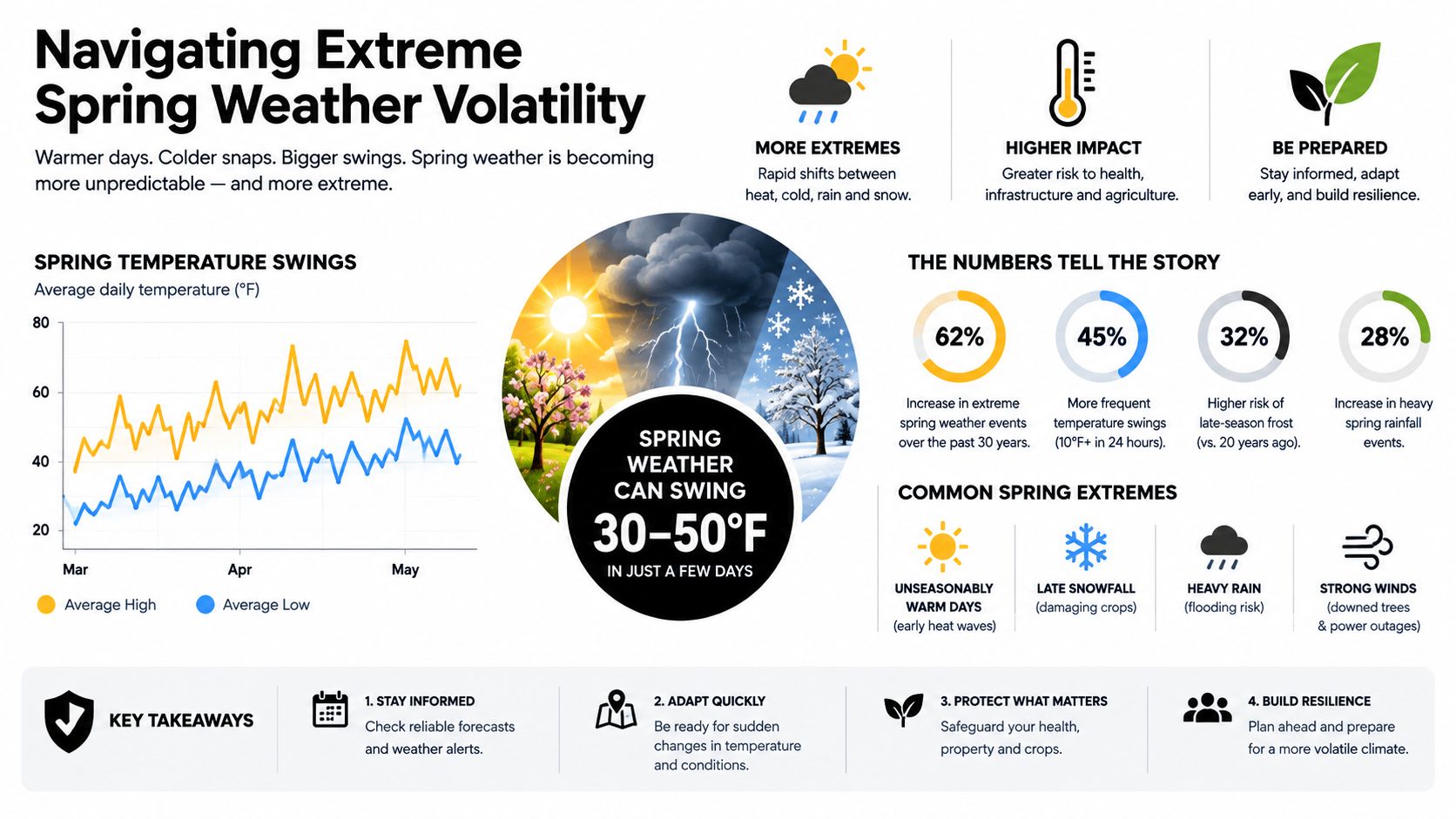
The variation is visible in Bureau of Meteorology records. In November 2020, Victoria's rainfall was 35% below the long-term average of 52 mm, while the state's mean temperature was 3.18 °C above average, making it the second-warmest November on record and the warmest since 2009, as reported in the Bureau's Victorian November summary. Those conditions can create a deceptively easy loading day, followed by storage and transit concerns if items sit in direct sun.
The opposite pattern appeared in Melbourne reporting for November 2025. At Melbourne Olympic Park, rainfall reached 127.8 mm, or 216% of the long-term average of 59.1 mm, while the mean daily maximum was just 20.5 °C, 1.8 °C below average, according to the BoM November 2025 Melbourne summary. A move planned around a mild, dry assumption would need substantial adjustment in that kind of month.
What volatility does to household goods
Rapid changes don't only affect people carrying boxes. Timber furniture, veneers and glued joints can react badly when they move from damp conditions into a warm, enclosed truck. Moisture trapped beneath plastic wrapping can mark upholstery or encourage musty smells if items remain covered for too long after arrival.
Electronics need a different response. Rain protection is essential during transfers, but sealing cold items immediately in airtight plastic can trap condensation when they move into a warmer room. Keep screens, computers and audio equipment upright, dry and protected from direct heat, then allow them to acclimatise before switching them on if they feel cold or damp.
Plants also need attention. A plant left beside a hot window in a stationary vehicle can suffer even if the day began cool. Use breathable protection, keep foliage away from crushed cartons and unload plants promptly at the destination.
Why a long forecast isn't enough
A fourteen-day forecast is useful for identifying broad patterns, but it can't reliably tell you whether a local storm cell will sit over a particular suburb during your loading window. Melbourne's conditions can differ between the property, the truck route and the destination, particularly when a move crosses the metropolitan area or heads into regional Victoria.
Use the forecast as a planning input, not a guarantee. Confirm conditions again close to the move, keep a wet-weather operating plan, and make sure the people controlling the booking know which parts of the schedule can move. Flexibility matters most when a high-rise lift, a narrow laneway or a long interstate drive leaves no easy alternative.
Strategic Scheduling for Wet and Unsettled Days
Rain becomes a logistics problem when several small delays arrive together. A truck may need to wait for a safe loading position, a crew may have to cover a walkway, and a building manager may pause access while a wet ramp is checked. On a metropolitan freeway, reduced visibility and slower traffic can then remove the time you thought you had available.
Greater Melbourne's November rainfall demonstrates why a suburb-level plan matters. In 2022, November rainfall ranged from 121% to 243% of the monthly average across Greater Melbourne suburbs, a pattern associated with wet-road travel and event-driven delays around high-rise loading zones, according to the BoM Melbourne November 2022 summary.
Build the schedule around the fragile points
Start with the appointment that can't move. That might be settlement, a lease handover, a lift reservation, a building access window or a commercial site opening. Work backwards and leave space between the truck's expected arrival and that fixed commitment.
For a house move, the fragile points usually include driveway access, street parking and the final clean. For an apartment, they include the loading dock, lift protection, concierge access and the distance between the truck and the entrance. For an interstate move, add fuel, traffic and weather contingencies rather than assuming the departure time will remain exact.
- Confirm building access: Ask the owners corporation, concierge or building manager about wet-weather entry, lift padding and loading-zone rules.
- Reserve enough lift time: Don't book a lift for the theoretical fastest move. Rain slows wrapping, wiping and positioning.
- Protect the approach: Check whether a ramp, path or driveway becomes slippery when wet, and identify a safer alternate route.
- Keep settlement separate: Avoid making the truck's arrival and your handover the same tightly timed event.
- Recheck the route: Look at the local forecast and traffic conditions before loading, especially when the move crosses Melbourne.
Morning starts and interstate departures
An early start can be sensible when afternoon instability is forecast, but it isn't a universal rule. The best window is the one that combines safe light, building availability, crew access and the latest local forecast. Starting early only to discover that a lift or property isn't available creates a different kind of delay.
For an interstate departure, pack the load so weather-sensitive items are protected before the truck leaves. Don't place loose tarpaulins, cartons or furniture covers where they can shift during travel. If conditions deteriorate, a professional crew should be able to pause safely rather than rushing people across a wet surface to protect an arbitrary departure time.
The broader best time to move house guidance can help compare seasonal trade-offs, but November still needs a date-specific plan. The workable schedule is the one with clear decision points, not the one that looks perfect on paper.
Packing Tactics for Rain and Early Heat Spikes
November packing needs to handle two opposing risks. Rain can soak exposed cartons and upholstery during short transfers, while an early heat spike can warm the inside of a stationary truck and stress items that don't tolerate heat well. The answer isn't to wrap everything in plastic and forget about it. It's to use the right barrier for each material, then remove or loosen protection when the goods reach a dry, ventilated space.
BoM records show the range that belongings may face. The Melbourne November 2021 summary noted a wet period with 5 consecutive days below 16 °C, while the warmest day reached 29.3 °C in November 2022 and 32.3 °C in November 2025, as recorded in the BoM Melbourne November summary.
Use layers, not one universal wrap
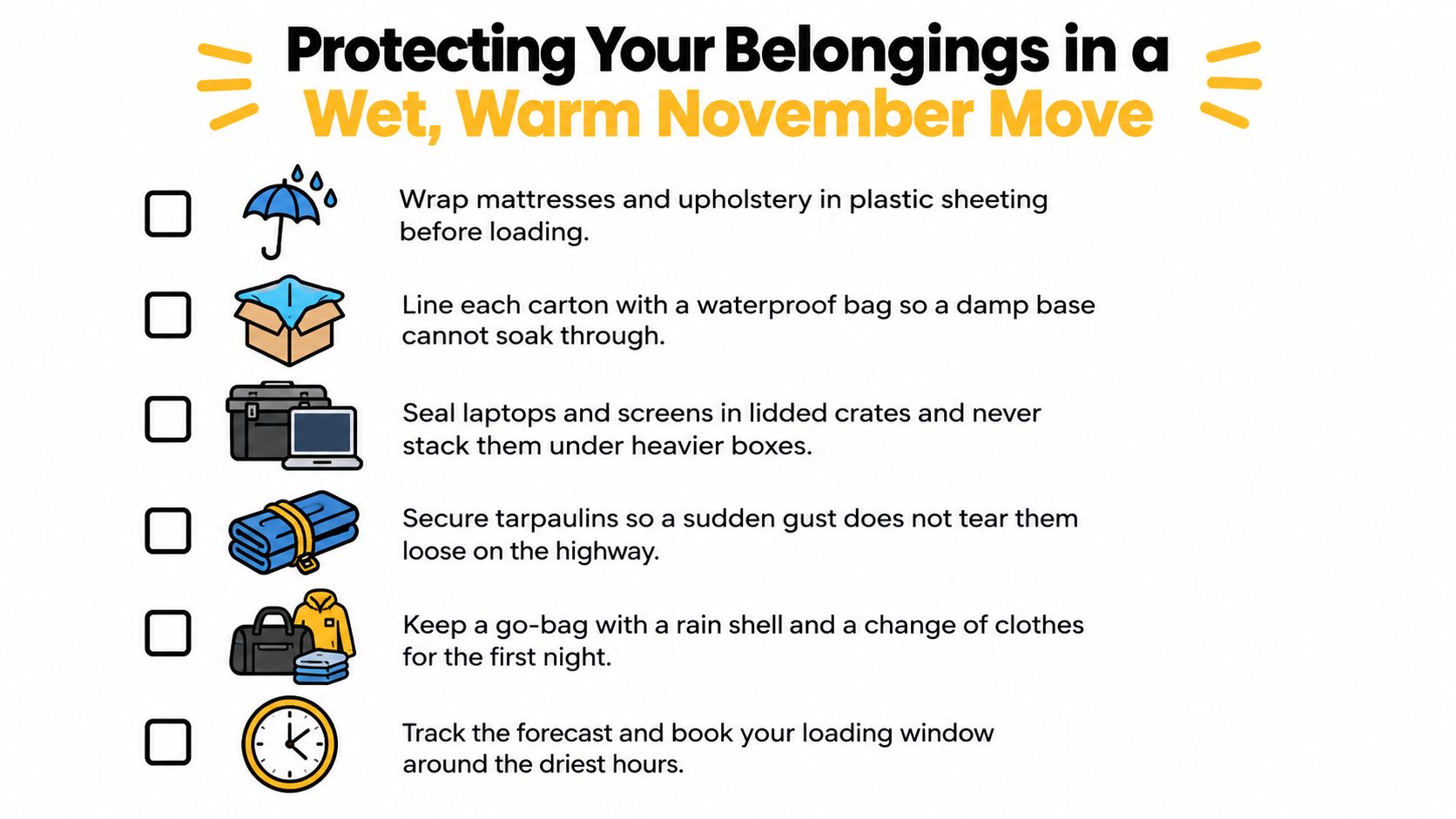
Mattresses and upholstered furniture should be covered before they leave the room, preferably with clean plastic sheeting that stops rain splash without allowing the item to drag along the ground. Add moving blankets underneath the outer cover for impact protection, and remove damp plastic at the destination so moisture doesn't remain trapped against fabric.
Cartons need strong sealing and a dry resting point. Use proper packing tape, avoid placing boxes directly on wet concrete, and keep books, documents and clothing away from the truck door. A waterproof bag or liner can add protection inside a carton, but it shouldn't replace dry handling or careful loading.
Electronics, artwork, candles and antique furniture require individual decisions:
- Screens and computers: Use lidded crates or sturdy cartons with cushioning, keep them upright and avoid placing heavy boxes above them.
- Artwork: Protect the face and corners, then keep framed pieces away from wet walls, direct sun and pressure from other goods.
- Candles and wax items: Pack them in a cool interior area, away from warm truck walls and windows.
- Glued or veneered furniture: Use breathable blankets under weather covers, and don't leave sealed pieces in heat longer than necessary.
- Indoor plants: Secure pots in crates, protect the soil from tipping, and give foliage airflow rather than sealing the entire plant tightly.
These methods can also make moving day less stressful by separating weather preparation from the rush of loading. Label boxes that need immediate dry storage so the unloading crew can place them correctly without opening every carton.
Ventilation matters after protection
A covered truck protects the load from rain, but it can still become warm when parked. Keep air circulation in mind, avoid overpacking around heat-sensitive goods and open protective layers once the truck reaches a safe, dry destination. Don't switch on electronics that have been exposed to cold rain until they're visibly dry and have had time to adjust to the indoor environment.
For more warm-weather handling ideas, the practical moving house in summer heat advice is useful even during a spring move, because November can produce short periods that feel more like summer than winter.
Choosing Professional Removalists Over DIY Moves
DIY moving can appear straightforward when the weather looks settled. You hire a truck, gather help and work through the rooms in sequence. The difficulty emerges when the plan meets a wet ramp, a narrow apartment loading zone or a vehicle you aren't used to driving in slick conditions.
A professional service costs more than borrowing a trailer or hiring a rental truck, but the comparison should include the work that sits outside the headline hire price. You need suitable covers, trolleys, straps, labour, fuel, tolls, access planning and a response if rain interrupts the original sequence.
Where the professional option earns its place
Experienced removalists bring equipment and routines designed for awkward access. They can protect floors, wrap furniture before it reaches the vehicle, position heavier items safely and adjust the loading order when a wet path changes the workflow. A company-owned fleet also puts vehicle maintenance and appropriate capacity in the hands of the operator rather than the customer.
Insurance needs careful checking. Ask whether the quote includes transit protection, what public liability cover applies, and which exclusions could affect water damage, customer-packed goods or items left outdoors. Don't assume that a rental truck's basic cover protects the contents you load into it.
The difference becomes more important for offices, apartments, pianos, pool tables and interstate consignments. These moves have less tolerance for improvised lifting, poor weather protection or a missed access window.
Where DIY can still work
A DIY move can suit a small, uncomplicated load when you have flexible timing, easy ground-level access and people who can safely handle the furniture. It gives you direct control over packing and may feel economical if you already have suitable equipment.
It becomes less attractive when rain is forecast or the route is demanding. An unfamiliar heavy vehicle, wet roads and a tight property handover can turn a simple task into a stressful day. You also carry the responsibility for damage, loading decisions and delays.
For international or commercial shipments, separate logistics may need customs preparation. Anyone arranging clearing goods through Melbourne customs should treat that paperwork as its own timeline rather than assuming it will align automatically with domestic moving arrangements.
Melbourne's rainfall can be only slightly above normal in one recent year. BoM recorded 63.4 mm at Melbourne Olympic Park in November 2024, or 108% of the long-term average, as reported in the BoM November 2024 summary. That doesn't make DIY unsafe by itself, but it reinforces the need to choose based on access, belongings and schedule rather than the label “spring”.
A useful case for hiring removal services is strongest when the move has multiple dependencies. Compare the cover, equipment, crew capability and flexibility, not just the truck rate.
Your Complete Spring Relocation Action Plan
A reliable November move starts with decisions made before the weather becomes urgent. Use this sequence to turn a changeable forecast into a controlled operating plan.
-
Set the fixed commitments. Write down settlement, lease handover, lift access, loading-zone reservations and any interstate departure requirement. Identify which appointments can move and which can't.
-
Monitor the local forecast. Check conditions for both properties and the route, then review them again close to moving day. A citywide outlook may not reflect a storm cell over the suburb where the truck is parked.
-
Inspect access points. Walk the driveway, ramp, footpath, loading dock and lift route. Decide where wet furniture will be covered, where cartons can wait safely and how the crew will avoid slippery surfaces.
-
Separate vulnerable items. Mark electronics, artwork, plants, candles, documents and timber or glued furniture for specialised handling. Keep essential clothing, medication, chargers, towels and a change of clothes in a dry go-bag.
-
Pack for the first unload. Label rooms clearly, identify cartons that must stay dry and keep cleaning supplies accessible. If you're arranging a professional clean, review move in cleaning pricing Australia early so the service timing doesn't collide with unloading.
-
Confirm the protection and cover. Check blankets, plastic sheeting, trolley access, floor protection, transit insurance and the process for changing the loading window. Get every important agreement in writing.
-
Leave a real buffer. Wet handling takes longer, high-rise access can be interrupted and traffic may slow. A schedule with breathing room protects the handover far better than one built around perfect conditions.
The essential moving home to-do list can help keep utilities, keys, addresses and final checks visible while you manage the weather-specific details.
Get n Go Removals Melbourne provides residential and commercial relocations, professional packing, furniture protection, storage and interstate moving support with flexible scheduling and transit insurance. For a November move that needs careful loading around rain, apartment access or a tight handover, visit Get n Go Removals Melbourne to discuss your date and requirements.