

Finding Professional Movers and Packers Near Me: An Expert Guide
When you search for "movers and packers near me," it’s easy to feel overwhelmed and just pick the first result. However, the best local moving companies aren't always the ones with the flashiest ads. They're the trusted professionals recommended by your neighbours, praised by your colleagues, and accredited by official industry bodies. This guide will walk you through, step-by-step, how to find, vet, and hire a moving company that ensures a seamless and stress-free relocation.
How To Kick Off Your Search For Local Movers
Finding the right moving company is all about starting broad before you narrow in on the real contenders. It's easy to get lost in a sea of search results, but with a solid game plan, you can build a strong shortlist without all the usual stress. Getting this groundwork right from the start makes all the difference for a smooth move.
Remember, you're not just looking for a truck and some muscle. You're looking for a reliable partner for what can be a pretty full-on life event. Focusing on reputation and local know-how right out of the gate is the key to a successful house or office move.
Look Beyond a Basic Google Search
A quick online search is a fine place to start, but it should never be where you finish. The most valuable, honest-to-goodness insights come from people who've just been through the moving wringer themselves. That kind of unfiltered feedback is something no shiny advertisement can ever compete with.
Think about tapping into these goldmines for genuine recommendations:
- Community Social Media Groups: Local neighbourhood pages on Facebook are brilliant for this. Post a quick question asking for recommendations for movers, and you’ll get a flood of honest, real-world experiences from people right around the corner.
- Word-of-Mouth Referrals: This is the old-school classic for a reason. Chat with friends, family, or workmates who've moved recently. A personal recommendation is still one of the most powerful signals of a great company. People won't hold back if they had a bad experience.
- Industry Associations: Always check the member directories of professional organisations like the Australian Furniture Removers Association (AFRA). To be a member, companies have to meet strict standards for their gear, staff training, and insurance.
Create Your Initial Longlist
Once you've collected a few names from different places, it’s time to put together your "longlist." Don't overthink it at this point. Just pull together a list of about five to seven companies that feel like they could be a good fit.
Jot down their name, website, and phone number in a simple spreadsheet to keep things tidy. This list is your foundation for the next stage, where you'll start digging a little deeper. If you're planning a move around Victoria or up and down the East Coast, it’s also a smart move to check a company's service area early on. No point getting your heart set on a mover who doesn't even go to your new suburb! A quick look at the areas we service on their site will tell you if they cover both your starting point and destination.
A well-researched longlist is your best friend in this process. It turns a massive, overwhelming search into a manageable task, ensuring you only invest your time in companies that are already pre-vetted and have a good reputation.
Conduct a Quick First-Pass Screening
With your longlist ready, it's time for a quick screening to weed out any obvious red flags. This isn't the deep-dive investigation just yet—it's more of a gut check to see if a company even meets your basic criteria.
Spend a few minutes on each company's website. Is it professional? Do they clearly explain their services? Can you find their contact details without a treasure map? A well-maintained, informative website is often a good sign of a professional operation. This quick scan helps you focus your energy on the real contenders before you move on to the more detailed checks.
Vetting and Comparing Moving Companies Like a Pro
Right, you’ve got your shortlist of potential movers. Now comes the real work: separating the genuine professionals from the cowboys. Putting in a bit of effort at this stage is the single best way to dodge those moving day nightmares of surprise fees, broken furniture, and general chaos.
Think of it as an interview. You're about to hand over everything you own to a team of strangers, so you need to be dead certain they're not just strong, but also insured, legitimate, and know how to handle a move like yours.
This simple decision tree can help you visualise the process of narrowing down your options to find the best local movers.
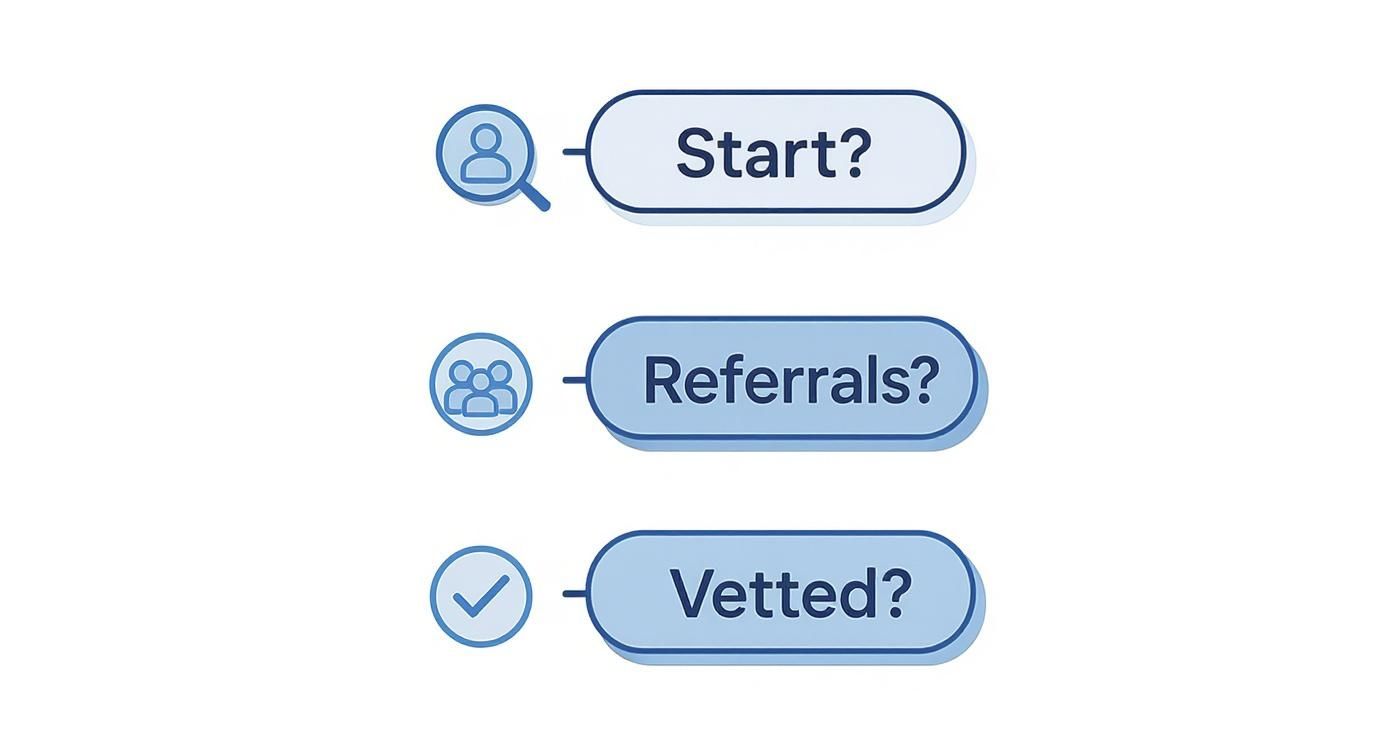
The key takeaway here is that a structured process, from digging around online to verifying the facts, is your most reliable path to finding a mover you can trust.
The Non-Negotiable Checks
Before you even think about picking up the phone, there are a few boxes you absolutely have to tick. Any reputable moving company in Australia will have this info on hand. If they get shifty about it, that’s a massive red flag.
Start with these three essentials:
- Australian Business Number (ABN): Jump onto the official ABN Lookup tool online. It’s a free, two-second check to confirm the business is actually registered and legit. Instant peace of mind.
- Public Liability Insurance: This is what covers you if the movers accidentally gouge your floorboards or put a dent in the apartment building’s lift. Ask them for a Certificate of Currency to prove their policy is active.
- Transit Insurance: This one is crucial. It covers your goods while they’re on the truck. You’ll want to confirm exactly how much you're covered for and what’s included.
These checks are the absolute baseline. Don't even consider a company that can't provide this information straight up.
Asking the Right Questions on the Phone
Okay, basics are covered. Now it's time to call. You can tell a lot about a company by how they handle this first chat. Go in prepared with a few specific questions that get to the heart of their experience.
For example, if you're moving from a high-rise with finicky lift booking times, ask them: "What’s your process for CBD apartment moves? Have you dealt with strict body corporate rules before?" You’re listening for a confident, detailed answer, not just a vague "yeah, no worries." We’ve found that choosing the right removals firm for your move often comes down to the details that emerge in these early conversations.
Don't underestimate this first phone call. It’s your best chance to get a feel for their communication and professionalism. If they rush you off the phone or give you wishy-washy answers, that's probably the kind of service you can expect on moving day.
To make this easier, here's a quick checklist of questions to run through with every potential mover.
Mover Vetting Checklist: Key Questions to Ask
| Verification Point | What to Ask | Why It Matters |
|---|---|---|
| Experience | "How long have you been in business?" "Do you have experience with [my specific type of move – e.g., piano, apartment, interstate]?" | You want a team that has seen it all before, not one learning on the job with your possessions. |
| Team | "Are your movers full-time employees or contractors?" "What kind of training do they receive?" | Full-time employees are often more invested and better trained, leading to a higher quality of service. |
| Quoting | "How do you calculate your quotes? Are they binding or an estimate?" "What's included? Are there extra fees for stairs, long-carry, or difficult access?" | This uncovers potential hidden costs and ensures you're comparing apples with apples. |
| Equipment | "What size trucks do you have?" "Do you use protective gear like blankets, trolleys, and straps?" | The right gear is a sign of professionalism and is essential for protecting your belongings and property. |
| Insurance Claims | "What is your process for handling a damage claim if something goes wrong?" | A clear, straightforward process shows they are accountable and prepared. A vague answer is a red flag. |
Having these answers helps you build a complete picture of each company, making your final decision much clearer.
Decoding Online Reviews and Spotting Red Flags
Online reviews are a goldmine, but you have to learn how to sift through them properly. Don't get hung up on one amazing or terrible review; look for the patterns. Consistent comments about the crew being on time, careful with furniture, and easy to communicate with? That's a great sign.
On the flip side, keep an eye out for recurring complaints like:
- Vague or Changing Prices: Be very wary of quotes given over the phone without a proper look at what you’re moving.
- High-Pressure Sales Tactics: A good mover will give you a quote and the space to make a decision.
- Poor Communication: If they’re a pain to get in touch with before you’ve even booked, just imagine the stress on moving day.
You need to be diligent when navigating Australia’s $2.6 billion removals industry. With as many as 220,000 of us moving interstate each year, the demand for good movers is sky-high. This is made even trickier by the tight housing market—especially in cities like Sydney and Brisbane, where rental vacancy rates are hovering around a tiny 1.2%. This reality makes your vetting process more critical than ever to lock in a reliable team for your move.
Decoding Quotes to Avoid Hidden Moving Costs
A moving quote isn't just a number; it’s a detailed breakdown of the service you’re paying for. Honestly, learning how to read between the lines is probably the most important skill you can have to avoid a nasty budget blowout on moving day. It’s how you spot the transparent professionals and sidestep the companies that use vague terms to inflate their final bill.
Getting this right is all about making a true apples-to-apples comparison. That cheap-looking quote might be tempting, but it could be missing crucial services that another, slightly higher quote includes as standard. This is your chance to get everything locked in writing and say goodbye to unwelcome surprises.

Why an In-Home or Video Survey Is Non-Negotiable
Here’s a golden rule: never, ever accept a quote from a company that hasn’t seen what you need to move. A quick phone chat is nowhere near enough to give you an accurate price. Any professional mover worth their salt will insist on a proper assessment.
These days, this is usually handled in one of two ways:
- In-Home Survey: A consultant from the moving company visits your home. They’ll physically see everything you’re moving, check out access points like stairs or tricky driveways, and have a proper chat about your specific needs.
- Video Survey: This is the modern, convenient option. You’ll walk the mover through your home using your phone's camera, showing them the contents of each room and pointing out any potential hurdles.
This detailed survey is the absolute foundation of an accurate quote. It’s what allows the removalist to correctly figure out the truck size, how many crew members are needed, and roughly how long the job will take. Without it, any price you're given is pure guesswork.
An estimate without a detailed survey is a massive red flag. Insisting on one isn't you being difficult; it's you being a smart consumer. It protects both you and the moving company from misunderstandings down the track.
Binding vs. Non-Binding Estimates
When the quotes start rolling in, they'll generally fall into one of two camps. Knowing the difference is absolutely crucial for keeping your moving budget on track.
- Binding Quote: Think of this as a fixed price for the job. As long as the list of items you’re moving doesn't change, the price you're quoted is the price you pay. Full stop. It gives you complete certainty over the cost, which is fantastic for peace of mind.
- Non-Binding Estimate: This is more of a projection based on the estimated time your move will take. If things take longer than expected—maybe there’s bad traffic, a difficult staircase, or just more stuff than anticipated—the final cost will be higher.
While a non-binding estimate can sometimes work out cheaper if the move is super quick, it carries the very real risk of a much bigger final bill. For most people, a binding quote is the safer bet, offering far better protection and predictability.
Uncovering Potential Extra Charges
The final figure on your invoice can be bumped up by a lot more than just labour and the truck. Many quotes have fine print detailing extra fees that can add up fast if you’re not looking for them. You need to actively hunt for these potential surcharges when reviewing any quote.
Be sure to ask about these common extra costs directly:
- Stair Fees: Charges for carrying items up or down flights of stairs, often billed per flight.
- Long-Carry Fees: If the truck can't park right near your door (say, more than 20-30 metres away), you might be charged extra for the time it takes to walk everything to and from the truck.
- Specialty Items: Things like pianos, pool tables, huge artworks, or bulky gym equipment always cost extra. They need special handling and equipment.
- Fuel Levy: Some companies add a surcharge based on current fuel prices, which is more common for longer-distance moves.
- Disassembly and Reassembly: Don't just assume that taking your bed frame apart or putting your dining table back together is included. It’s often an add-on service.
Getting clarity on these points before you sign anything is essential. For a much deeper dive, our guide on the hidden costs in moving house has a comprehensive checklist to make sure you ask all the right questions. Being proactive is the best way to ensure the price you agree to is the price you actually pay.
Understanding How Market Trends Affect Your Move
Your search for "movers and packers near me" doesn't happen in a vacuum. It takes place within the dynamic Australian property market, and understanding this context is your secret weapon for a smarter, less stressful move. Market conditions create a ripple effect that touches everything from a removalist's availability to how flexible they can be with scheduling. Being aware of these trends allows you to plan strategically.
The Squeeze of a Tight Housing Market
In most of our capital cities, the property market is running hot. We're talking low vacancy rates and sky-high demand for both rentals and homes for sale. This pressure cooker environment means settlement dates are often set in stone and can shift at the last minute, which has a direct knock-on effect for the removals industry.
When multiple people are competing for the same property, there's little room to negotiate move-in dates. This forces many into a last-minute scramble, causing a huge spike in demand for movers on very short notice.
Here’s the best advice I can give you: plan ahead. As soon as you have even a hint of a move-in date, start your research and get on the phone with moving companies. Booking four to six weeks in advance, especially during the busy season, will save you a world of stress.
The Great Migration to Regional Australia
One of the biggest shifts we've seen lately is the flood of people ditching the big smoke for regional life. Australian migration patterns clearly show a massive trend of city-dwellers heading for the hills (and the coast). The number of people leaving capital cities is way up compared to pre-pandemic times. This has completely changed the game for removalists, who are now dealing with more demand for long-distance jobs to hotspots like the Sunshine Coast, the Gold Coast, and regional New South Wales. If you're curious, you can get the full rundown on these moving industry trends at Austate.
So, what does this mean for you? Two things, really:
- Availability: The companies that are pros at long-distance moves are flat-out busy. Their calendars fill up fast, so booking well in advance is non-negotiable.
- Pricing: More demand plus longer trips can definitely bump up the cost of regional and interstate moves.
When you're on the hunt for a new home, knowing exactly what you need makes everything easier. For anyone navigating the property market, it's worth checking out resources like this real estate buyer questionnaire to get your priorities straight before you even start looking. That same level of prep is just as crucial for your move.
What This Means for Your Moving Strategy
So, how can you use all this inside knowledge? It’s all about being proactive and staying on your toes. Instead of just reacting when things go sideways, you can see the challenges coming and build a plan that works with the market, not against it. To help you figure out what's best for your situation—whether you're up against a tight deadline or planning a big regional move—let's break down the different types of moving services.
Comparing Service Types for Your Move
Deciding on the right level of service comes down to your budget, timeline, and how much heavy lifting you're willing to do yourself. This table lays out the common options to help you choose.
| Service Level | What's Included | Best For |
|---|---|---|
| Standard Move | Loading, transport, and unloading of your pre-packed boxes and furniture. | Budget-conscious movers who are happy to do their own packing and have a straightforward move. |
| Partial Packing | Professional packing for specific areas, like the kitchen or fragile items, plus standard moving services. | People who need expert help with delicate or difficult items but want to manage the rest themselves. |
| Full-Service Valet | Complete packing, moving, and unpacking services. The crew handles everything from start to finish. | Time-poor individuals, families with young children, or anyone wanting a completely hands-off, stress-free move. |
Having a grasp of these market trends and service options puts you in the driver's seat. By booking early, being a bit flexible, and picking the right service for your needs, you can confidently tackle whatever the dynamic Aussie housing market throws your way.
Your Practical Guide to a Smooth Moving Day
Alright, you've done the hard yards searching "movers and packers near me" and have a professional crew locked in. Now, the real work begins: preparing for the big day itself. I've seen it a thousand times – the difference between a chaotic, stressful move and a smooth, easy one comes down to what you do in the weeks and days leading up to it.
This is your chance to get ahead of the game. A bit of planning now, like decluttering your space and having a clear chat with your movers, can make a world of difference. It saves time, stress, and honestly, it can even save you money. An organised move is an efficient one.

Declutter and Prepare Weeks in Advance
The best moving day prep doesn't start the night before; it starts weeks out. Your most powerful tool for a faster, cheaper move is decluttering. It’s simple, really: less stuff means less to pack, less to load, and a smaller bill at the end of the day.
Here’s a rule I tell all my clients: if you haven’t touched it in a year, do you really need to take it with you? Go room by room and make three piles: donate, sell, and discard. This isn't just about making the move easier; it makes unpacking and setting up your new home so much more enjoyable.
The Art of the Essentials Box
Picture this: you've just spent a full day moving, you're exhausted, and you arrive at your new, empty house. The last thing you want is to be rummaging through fifty identical boxes just to find the kettle, toilet paper, or your phone charger. This is where the 'essentials box' comes in—it's your secret weapon against first-night frustration.
This is one box that travels with you in your car, not on the truck. Pack it with everything you'll need for the first 24 hours.
- Kitchen Basics: Kettle, mugs, some instant coffee or tea, snacks, and paper towels.
- Bathroom Supplies: Toilet paper, hand soap, toothbrushes, toothpaste, and a couple of towels.
- Essential Tools: A small toolkit, a box cutter, and rubbish bags are non-negotiable.
- Personal Items: Daily medications, phone chargers, and a fresh change of clothes for everyone in the family.
Think of your essentials box as a first-night survival kit. Packing it is a small act of kindness to your future, exhausted self. Trust me, you’ll be glad you did.
Smart Packing and Clear Communication
How you pack and label your boxes has a direct impact on how smoothly and quickly the crew can work. A good system means your stuff ends up in the right rooms from the get-go, which makes your life a whole lot easier when it comes to unpacking.
Keep your labelling simple and consistent. On the top and at least one side of every box, write the room it’s going to (e.g., "Kitchen," "Master Bedroom") and a quick note on the contents ("Pots & Pans," "Books"). For the delicate stuff, grab a thick marker, write "FRAGILE" in big letters, and draw arrows showing which way is up.
When the movers arrive, take a minute to walk the team leader through the house. Point out anything especially fragile or furniture that needs a bit of extra care. Good communication is the best way to prevent mishaps. For a few more pointers, have a look at our guide on what to do the night before movers arrive.
The Final Walkthrough and Paperwork
Once the truck is fully loaded, don't just lock up and leave. Take one last, slow walk through your now-empty home. Check every single cupboard, wardrobe, and forgotten corner to make sure nothing has been left behind. It’s also the perfect time to give the place a final once-over for any accidental scuffs or damage.
If you're moving out of a rental, getting your bond back is a top priority. Using a professional move-out cleaning service checklist can be a lifesaver, ensuring you leave the property in fantastic condition.
When you get to your new place and everything's unloaded, you'll be handed the final paperwork. This is usually a 'bill of lading,' which confirms the job is done. Take a moment to read it over carefully before you sign, just to make sure all the services are listed correctly. It’s your final sign-off on a job well done.
Last-Minute Questions for Your Movers and Packers
Even with the best-laid plans, a few questions always seem to surface as moving day gets closer. That’s perfectly normal. Getting the final details sorted for your move can feel like slotting in the last few pieces of a puzzle, and you want everything to fit just right.
This section is all about tackling those common, practical questions people have when they’re locking in a local mover. Think of it as a final sanity check to make sure you’re completely confident in your plans, leaving nothing to chance for a smooth, hassle-free move.
What’s the Best Day of the Week to Move?
We get asked this one all the time, and the answer usually comes down to a trade-off between cost and convenience. Fridays and weekends are, without a doubt, the most popular days for moving. That popularity means they're also the most expensive and get booked solid weeks, sometimes even months, ahead of time.
If your schedule has some flexibility, booking your move for a Tuesday, Wednesday, or Thursday can often save you a decent amount of money. Removalists generally have more availability mid-week, which can translate to lower hourly rates. As a bonus, it leaves you the entire weekend to unpack and settle into your new place without feeling rushed.
How Much Should I Tip Movers in Australia?
The tipping culture in Australia is a bit different from what you might be used to in other parts of the world. In the removals industry, tipping is not expected or required. However, for a job well done, it's a gesture that is always genuinely appreciated by the crew.
If the team was professional, efficient, and handled your belongings with care, a small tip is a great way to say thanks. There's no fixed rule, but a common amount is around $10-$20 per crew member. Honestly though, offering cold drinks and a few snacks on a hot day is another gesture that goes down an absolute treat.
The single best way to show your appreciation is by leaving a detailed, positive online review. A great review supports their business directly—far more than a one-off tip—and helps future customers know they're choosing a great company.
Do I Need to Be There on Moving Day?
Yes, absolutely. We strongly recommend that you or another trusted adult is present for the entire move. Being there in person is crucial for a few key reasons.
- Guidance and Direction: The crew will likely have questions. You'll need to point out fragile items, clarify what's going, and—most importantly—direct them where to place furniture in your new home.
- Final Walkthrough: It's your responsibility to do one last sweep of your old property to make sure nothing has been accidentally left behind.
- Paperwork: At the end of the day, you'll need to sign the final bill of lading, which is the document confirming the job was completed to your satisfaction.
If you absolutely can't be there, you must arrange for a representative to be there who has the full authority to make decisions for you. It's your move, after all, and staying involved is the best way to ensure it goes exactly to plan. For more detailed answers to common queries, you can always check out a comprehensive moving company FAQ page for some extra guidance.
Can Movers Take My Plants and Pets?
This is a really important distinction to make. Professional removalists are experts in moving household furniture and goods, but there are certain things they can't transport due to safety and liability rules.
- Pets: Moving companies are not licensed to transport live animals. You’ll need to make separate arrangements for your pets, either by having them travel with you in your car or by using a dedicated pet transport service.
- Plants: This can be a bit of a grey area. Some local movers might agree to take houseplants if they're small and properly secured. However, many won't, especially on longer trips, because of the risk of damage from temperature shifts or tipping over in the truck. It's always best to ask about their specific policy on plants beforehand.
The safest bet is to plan separate, comfortable transport for your furry (and leafy) family members to make sure they arrive at your new home happy and healthy.
Ready to book a moving team you can trust for your Melbourne or East Coast relocation? At Get n Go Removals Melbourne, we combine years of experience with a commitment to careful, reliable service. Get your free, no-obligation quote today!