
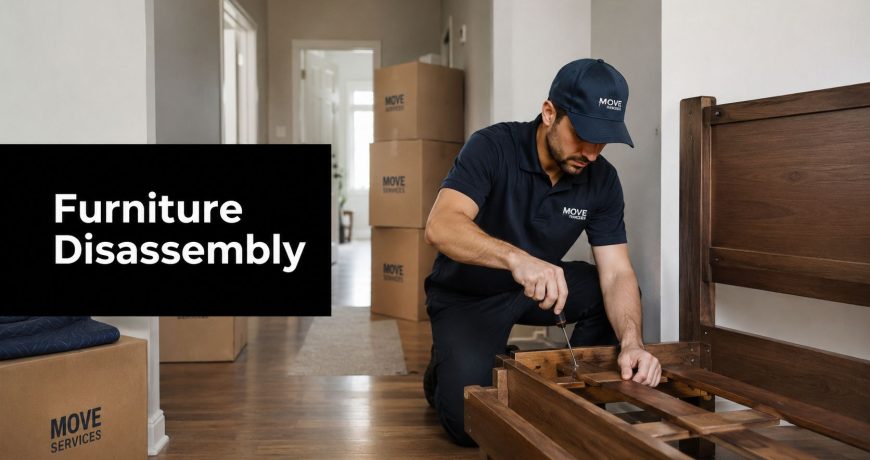
Furniture Disassembly Service: Your 2026 Guide
You're already on the edge of move-day chaos if a wardrobe won't fit through the hallway, a bed frame needs to come apart before the truck arrives, or a desk is blocking the only clear path to the lift. In Melbourne apartments, that awkward moment usually comes with a booking sheet, a hard deadline, and not much patience for guesswork. A furniture disassembly service turns that scramble into a plan, so bulky pieces stop acting like roadblocks and start moving the way they should.
A good rule is simple, if the furniture is bigger than the access, it needs a strategy. That might mean taking apart a bed, labelling hardware, or deciding whether a modular item should travel in pieces and be rebuilt later. If you're trying to visualise how much space a large lounge might need, corner couch measurements can help you think more clearly about clearance before the movers even arrive. For heavy-item planning, this practical guide on how to move heavy furniture is a useful companion.
Introduction to Move-Day Furniture Challenges
The trouble usually starts with one oversized piece that looked manageable the night before. On move day, that same wardrobe suddenly needs to clear a narrow doorway, a stair turn, or a booked service lift, and everyone's timing gets squeezed at once. The result is rarely graceful, especially when the truck is waiting and someone's already holding a screwdriver in one hand and a box of loose screws in the other.
Why bulky furniture causes the most stress
Large furniture creates three problems at the same time, access, damage risk, and time pressure. A bed base that won't pivot cleanly can slow the whole load. A tall cabinet can become a scratch magnet. A desk with fixed panels can turn a quick job into a long one.
The smarter response is to treat awkward furniture like a puzzle, not a barrier. Pieces that look simple from the outside often hide the exact parts that matter most, such as braces, bolts, runners, and corner connectors. If one part is rushed, the whole item can wobble later or refuse to go back together properly.
Practical rule: if a piece needs two people to steer it carefully through a doorway, it's worth checking whether partial disassembly will save time and reduce damage.
The pressure feels even worse in apartments, where the furniture move isn't just about the furniture. It's about hall access, neighbour timing, and keeping the booking window intact. That's why a structured disassembly plan usually beats last-minute brute force.
Understanding Furniture Disassembly Service

A furniture disassembly service is not just someone undoing screws. It's a methodical process where a mover takes apart furniture in a way that preserves the structure, the finish, and the hardware so the item can travel safely and go back together later. In Australia, this service sits inside the wider Removal Services industry, which IBISWorld values at A$2.6 billion in 2026 across 8,310 businesses (IBISWorld removal services industry overview).
What a professional team actually does
Furniture disassembly is a modular puzzle with a memory. A professional doesn't just remove parts at random. They identify the order, separate hardware, protect delicate edges, and keep each component tied to the right item so reassembly doesn't turn into guesswork later.
A typical service call can include a pre-move look at the furniture, removal of detachable parts, wrapping or padding the pieces, and rebuilding the item at the destination. Some jobs also include clearing away packing waste after the furniture is reassembled. That matters because the value isn't only in the labour, it's in keeping the piece functional when the move is over.
For businesses comparing layout options for offices or temporary setups, strategic workspace solutions for businesses can be a useful way to think about how furniture is moved, placed, and reused across changing spaces.
A well-handled dismantle is about control. Every screw, rail, and panel has a place, and every place needs to be remembered.
Once you understand that, the service stops looking like an extra and starts looking like risk management. A bed frame, wardrobe, or desk isn't safer just because it's smaller. It's safer when the right parts are removed in the right order and protected properly.
When and Why to Hire Experts
Some pieces are fine to handle yourself, but many aren't worth the gamble. The moment a move involves a high-rise apartment, a tight settlement deadline, or a bulky item with hidden fasteners, a professional becomes less of a luxury and more of a practical choice. Independent Australian guides report typical disassembly rates of A$50 to A$100 per hour, with specialist items often billed up to A$150 each (Melbourne furniture dismantling guide).
Situations where help makes sense
Heavy solid timber pieces are the obvious example, because they're awkward to control and unforgiving if they're dropped or dragged. Antique items are another. So are modular office systems that rely on matching parts and proprietary fittings. If the hardware is missing or the piece was assembled years ago with no instructions left in the box, the job becomes more technical than casual DIY.
There's also the injury side. People underestimate how quickly a cabinet shifts when it's halfway through a doorway, and that's when backs, fingers, and wall corners take the hit. A moving team already has the right tools, the right sequence, and the muscle memory for the job.
For a broader comparison of move support options, this guide on why hiring removal services is the smart way to move is worth reading alongside any quote you're reviewing.
When DIY usually backfires
DIY disassembly often fails in the same few ways, stripped particleboard, missing screws, and parts that get mixed up before the truck even leaves. That's why complex pieces need a sober decision, not optimism. If the furniture is expensive, fragile, or needed again the same day, the cost of a mistake can quickly outweigh the savings.
If the item matters enough to keep, it matters enough to dismantle carefully.
Step-By-Step Service Process

1. Pre-move assessment
The first check is simple, what needs to come apart, and what can stay intact. A mover looks at the furniture type, access points, and any building restrictions before touching a tool. That keeps the job realistic from the start.
2. Scheduling and lift logistics
This part matters more than many people expect. The service has to fit around truck arrival, building access, and any lift booking. In Melbourne, that planning often decides whether the move feels smooth or frantic, especially when the building manager has fixed time slots.
3. Expert disassembly
Once the plan is set, the technician removes parts in a controlled sequence. Hardware gets separated and labelled straight away, because that's what prevents reassembly headaches later. The safest approach is to use the right driver torque and hand tools where needed, not brute force.
4. Protection and packing
After disassembly, each piece needs wrapping and secure loading. Panels, rails, and smaller fittings should be kept together, not tossed into a box and forgotten. A photo log helps too, especially for furniture with repeated bolts or similar-looking connectors.
5. Reassembly at destination
The last step is rebuilding the item in the new place and checking that it sits level, locks correctly, and fits the space it was meant for. If the furniture has been wrapped properly and labelled well, this stage is usually orderly rather than stressful.
For a wider moving overview, the embedded video below is a useful visual companion.
Cost Factors and Sample Price Ranges
Disassembly pricing in Australia usually follows labour and complexity, not a one-size-fits-all menu. Technical benchmarks for disassembly labour range from AUD $50 to $150 per hour depending on joinery complexity and heritage hardware (technical pricing benchmark). That spread makes sense, because a flat-pack bed and a built-in modular wall unit don't ask for the same effort.
What changes the price
The biggest driver is time. After that comes access, then complexity, then whether reassembly is included. A simple job may be straightforward enough to finish quickly, while a more complex one can stretch because of hidden fasteners, panel construction, or fragile older fittings.
| Item Type | Melbourne Rate (AUD/hr) | Estimated Time (hrs) |
|---|---|---|
| Bed frame | 50 to 100 | 1 |
| Wardrobe | 50 to 150 | 2 |
| Desk | 50 to 100 | 1 to 2 |
| Modular office system | 100 to 150 | 3 |
These figures are a practical way to think about budgeting, not a fixed quote. The point is to compare what's included, especially whether the quote covers wrapping, reassembly, and transport. For a separate cost reference on broader moving fees, see cost of movers.
How to read a quote properly
If one quote looks cheaper, check whether it leaves out hardware handling or reassembly. That's where surprise costs often appear later. A clear quote should explain whether the service is hourly, per item, or bundled with the move.
A good price is transparent before the first screw comes out.
Move-Day Checklist and Prep Tips

A calm move day usually starts two days earlier. If the furniture is already identified, the route is clear, and the hardware is packed, the team can move quickly without waiting for decisions. For safe disassembly, industry guidance stresses separating and labelling hardware immediately and using low-torque electric screwdrivers to avoid stripping MDF (safe disassembly guidance).
Final prep checklist
- Confirm lift bookings. Check the date, time, and any building access rules again, especially if the move is in a shared apartment block.
- Clear hallways and entry paths. Remove shoes, mats, boxes, and loose items so movers can work without snagging corners.
- Protect floors. Lay down mats or coverings where furniture will be turned or staged.
- Gather manuals and tools. Put Allen keys, screwdrivers, and assembly notes in one place so nothing goes missing.
- Set aside an essentials bag. Keep screws, labels, tape, and personal items in a single small bag you can reach fast.
Small habits that save time
Photograph tricky joints before anything comes apart. Label parts by room, not just by item, if the same style of furniture appears in more than one place. Keep a backup toolkit nearby, because the wrong-sized driver can stall a simple job.
For a broader household prep list, the moving house checklist guide is a handy reference before the movers arrive.
Questions to Ask Providers and Insurance Notes
Good questions prevent expensive confusion. Ask whether reassembly is included, whether protective wrapping is part of the job, and how the team handles missing hardware. Those three answers usually tell you a lot about how carefully the provider works.
What to confirm before booking
- Scope of service. Find out whether the team only dismantles, or also rebuilds and places the furniture.
- Specialty item handling. Ask how they approach antiques, oversized desks, or items with glass and fragile fittings.
- Hardware responsibility. Check what happens if a screw, bracket, or proprietary connector goes missing.
- Insurance cover. Confirm public liability and transit cover, and ask how claims are handled if damage occurs.
- Quote transparency. Make sure any extra fee for stairs, lifts, or awkward access is stated up front.
These questions matter because a furniture move is never just about lifting weight. It's about risk control, and the provider should be able to explain how they reduce that risk in practical terms.
If you're comparing firms, this guide on choosing the right removals firm for your move gives a sensible framework for reviewing scope, insurance, and communication before you sign anything.
If a provider can't explain what happens to hardware, reassembly, and damage claims, keep looking.
Scheduling Tips and Conclusion with CTA
Many Melbourne apartment moves go smoother when disassembly is timed around the lift booking instead of treated as an afterthought. That detail matters because a few minutes of poor sequencing can turn into lost time, especially when the access window is tight (Melbourne lift-booking coordination note). The best schedule is usually the one that matches the building, not the one that looks easiest on paper.
For local moves, disassembly often works best the day before if the item is large, the access is tight, or the move involves shared building rules. For interstate trips, the planning needs to be even tighter, because the furniture has to be ready for loading, transit, and reassembly without extra handling in between. That's where a structured service saves time, because the team can break, protect, move, and rebuild the item in one flow rather than improvising at each step.
Commercial and household moves both benefit from the same principle, don't wait until the truck is on site to decide what comes apart. If the furniture is awkward, valuable, or tied to a short settlement window, early disassembly planning is usually the calmer choice.
If you want a team that handles furniture disassembly and reassembly as part of a broader move, Get n Go Removals Melbourne works across residential and commercial relocations with flexible scheduling, insured transport, and weekly East Coast runs. For a move that needs planning around lifts, tight timing, or mixed furniture types, request a quote and line up the service before move day arrives.
A CTA for Get n Go Removals Melbourne.