
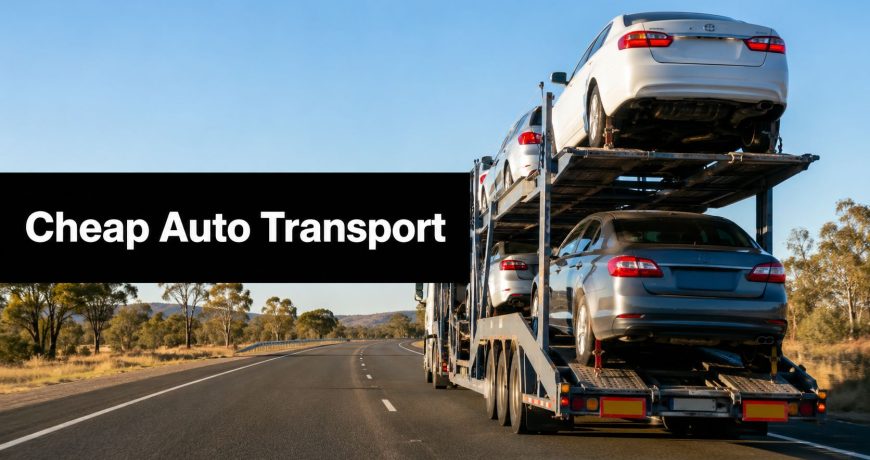
Cheap Auto Transport: 2026 Guide for Australia
If you're moving house, buying a car interstate, sending a vehicle to family, or trying to avoid a long drive up the Hume, you're probably asking the same question most customers ask first. How do I get the car moved without paying more than I need to?
Cheap auto transport is possible in Australia, but only if you understand what you're paying for and where the traps are. From Melbourne, I see the same pattern again and again. People focus on the lowest headline quote, then get caught by vague pickup windows, weak communication, or extra charges that weren't obvious at booking time.
The better approach is simple. Learn how pricing works, choose the right service level for your car, stay flexible where it matters, and vet the carrier properly before the booking is locked in. That's how you keep costs down without creating a bigger problem for yourself later.
Understanding Car Transport Pricing Factors
Car transport pricing looks opaque from the outside, but the quote usually comes down to a handful of commercial realities. You're not just paying for kilometres. You're paying for truck space, route efficiency, loading time, scheduling risk, and how easy it is for the carrier to match your job with an existing run.
In Australia, that route logic matters more than many customers expect. Road freight moved about 241 billion tonne-kilometres in 2022–23, and road accounted for roughly 75% of the domestic freight task by tonne-kilometres, which helps explain why the cheapest vehicle transport deals usually show up on dense east-coast corridors where trucks already operate frequently (road freight data referenced here).

Distance is only the starting point
It's a common assumption that a quote is just distance multiplied by a rate. It isn't. Two routes with a similar kilometre count can price very differently if one lane has regular carrier traffic and the other requires a truck to reposition or run partly empty.
Direction also matters. A route with strong return-load demand can be cheaper because the carrier doesn't need to absorb as much empty running. That's why the same city pair can produce noticeably different quotes depending on timing and traffic flow.
Practical rule: A cheaper lane is usually a busier lane. If carriers already run it often, you're more likely to get a sharper rate.
Vehicle type changes the job
A compact hatchback is easier to load and fit than a large SUV, ute, lifted 4WD, or non-running vehicle. Size, weight, clearance, modifications, and whether the car can be driven on and off the truck all affect how attractive the booking is to the carrier.
A standard, running vehicle is usually the easiest job to price competitively. Once special handling enters the picture, cheap auto transport becomes harder to secure.
Service method changes your price
Here's a quick pricing lens:
| Factor | Usually cheaper | Usually dearer |
|---|---|---|
| Carrier type | Open carrier | Enclosed carrier |
| Delivery style | Terminal-to-terminal | Door-to-door |
| Timing | Flexible window | Tight date or urgent move |
| Route type | Metro to metro | Metro to regional or remote |
If you're also budgeting the rest of your move, this broader guide on the cost of movers in Melbourne helps put transport decisions in context.
Timing, fuel, and load planning
Seasonal pressure can push quotes up or down, but the bigger issue is how efficiently the carrier can build a load. A truck that can collect several vehicles in sequence on a clean metro route is easier to schedule than one that has to zigzag through outer suburbs or regional drop points.
Fuel also affects pricing, but not in a neat, customer-friendly way. Carriers don't just price fuel itself. They price the total operating risk around the run, including idling, congestion, detours, and whether the truck can stay productive on both legs of the trip.
Choosing Your Service Level for the Best Value
Most customers only need to make two decisions. First, open or enclosed transport. Second, door-to-door or terminal-to-terminal. Everything else tends to sit underneath those choices.
Pick the wrong combination and you'll either overspend or create extra hassle for yourself. Pick the right one and cheap auto transport becomes far more realistic.

Open carrier versus enclosed carrier
For most everyday vehicles, open carrier transport is the value option. It's the standard market format, widely available, and generally the first place to look if your goal is affordability.
Enclosed transport has a place, but it isn't automatically the smart choice. It makes more sense when the vehicle's value, finish, rarity, or sentimental importance justifies paying more for added protection from weather and road grime.
A practical way to consider this:
- Daily driver or family car: Open transport is usually enough.
- Prestige vehicle: Depends on your tolerance for exposure during transit.
- Classic, collectible, or freshly restored car: Enclosed can be easier to justify.
- Budget-first interstate move: Open transport is usually the right starting point.
If the car is replaceable and used like a normal vehicle, paying for enclosed transport often adds cost without adding much practical value.
Door-to-door versus terminal-to-terminal
This choice is less about protection and more about convenience.
Door-to-door works well when you're already juggling a settlement, key handover, bond clean, lift booking, or moving truck schedule. It reduces your own coordination load. You're paying more for easier logistics.
Terminal-to-terminal can be cheaper, but only when the terminal locations suit you well. If you need to take time off work, organise a second driver, or travel across Melbourne traffic to meet the depot, the paper saving can disappear quickly.
Here's a side-by-side view:
| Option | Best for | Trade-off |
|---|---|---|
| Open + door-to-door | Most household relocations | Balanced cost and convenience |
| Open + terminal-to-terminal | Budget-focused customers with flexible availability | More effort on your side |
| Enclosed + door-to-door | High-value vehicles where convenience matters too | Highest total cost |
| Enclosed + terminal-to-terminal | Niche use cases | Protection, but still less convenient |
For smaller local logistics jobs around the start or end of a move, some people compare transport costs against alternatives such as a 2 man with a van service, especially when coordinating boxes, personal items, and depot visits on the same day.
What usually delivers the best value
For a Melbourne customer moving a normal registered vehicle interstate, the best value is often open carrier plus realistic timing, then deciding whether terminal handling saves enough to be worth the effort.
The cheapest setup on paper isn't always the cheapest in real life. If terminal access creates delays, storage, or extra travel, the gap can close fast.
Actionable Strategies to Lower Your Transport Costs
Negotiating the quote before improving the booking is backwards. The strongest savings usually come from making your job easier to fit into a carrier's schedule.
Industry pricing guides consistently show that open carrier transport plus flexible timing is the most actionable cost-reduction method. Booking early with a wider pickup and delivery window helps carriers fill loads and avoid deadhead repositioning, which can reduce the rate you're offered (pricing guidance noted here).
Flexibility beats haggling
If you only change one thing, change your dates.
A rigid “must collect Tuesday morning and deliver Thursday before lunch” brief narrows the carrier pool immediately. A wider pickup window gives dispatch far more room to place your car on a run that already makes commercial sense.
That's where genuine cheap auto transport usually comes from. Not from forcing the carrier down on price, but from removing scheduling friction.
Try this instead of asking for “your best price”:
- Offer a wider pickup window: A flexible collection range is one of the easiest ways to improve a quote.
- Accept a realistic delivery range: Long-haul vehicle transport runs on route sequencing, weather, traffic, and loading order.
- Avoid artificial urgency: Expedited handling can turn an affordable job into a premium one.
Book early, but keep the booking usable
Early bookings help, especially on common interstate lanes. The key is to book with enough lead time for planning, while keeping your actual dates workable.
A poor booking looks like this: exact date, exact time, hard access constraints, and no backup plan if settlement shifts. A useful booking gives the carrier room to build the run properly.
That same logic applies across relocation services generally. If you're managing a full move, these tips to keep your moving costs down line up closely with how vehicle transport pricing behaves too.
Give carriers an easy vehicle
A standard, operable car is easier and cheaper to move than a vehicle with complications. If the car runs, starts reliably, rolls freely, and doesn't have unusual dimensions, you've already improved your chances of getting a sharper price.
Things that often push a booking out of the “cheap” category include:
- Non-running condition: Loading becomes slower and may need special equipment.
- Oversize accessories: Roof racks, bull bars, oversized tyres, and modifications can affect fit.
- Low-clearance concerns: Carriers may hesitate if loading angles create risk.
- Loose items inside the vehicle: Many operators either restrict them or make the terms stricter.
Compare like with like
Multiple quotes help only when you compare the same service. If one quote includes door delivery, a clear booking window, and documented insurance terms, while another is vague on all three, they're not equivalent.
Ask every provider the same practical questions:
- Is it open or enclosed transport?
- Is pickup door-to-door or depot based?
- What is the actual pickup window?
- Are there extra charges for access issues or delays?
- What insurance scope is included in writing?
If the vehicle isn't worth transporting, selling may be the cheaper option. For example, someone offloading an older car before a regional Queensland move might be better served by an instant cash for cars Gatton service instead of paying to move a vehicle they no longer need.
The lowest quote only works if the job actually happens on time and on the agreed terms.
How to Vet Carriers and Manage Your Booking
A cheap quote can still be expensive if the operator misses pickup, goes quiet, changes the terms, or leaves you chasing updates while your moving dates slide. Good vetting protects your budget as much as it protects your car.
The simplest test is this. Can the provider explain, in writing, how they handle timing, insurance, access, and delays? If the answer is fuzzy before payment, it usually gets worse after payment.

Ask about operational reliability, not just price
One of the most useful questions in this industry is also one of the least asked. What is your on-time pickup performance?
One industry guide recommends questioning providers with less than 90% on-time pickup success because underpriced operators often overbook routes and then miss collection windows (reliability benchmark noted here). That's especially important when your car movement is tied to a house move, lease end, or settlement.
A provider doesn't need a polished sales script. They do need a straight answer.
The booking checklist that matters
Before you pay a deposit or confirm the job, get clarity on these points:
- Pickup window: Not just the date. Ask for the window and how updates are communicated.
- Insurance scope: Ask what is covered in transit and what exclusions apply.
- Access limits: Tight streets, apartment basements, steep driveways, and loading restrictions can affect final arrangements.
- Cancellation and change terms: Plans move. You need to know what happens if yours do.
- Delivery process: Ask whether the final address is guaranteed or subject to safe truck access.
If you're comparing movers and transport providers together, this guide on how to choose the best interstate removalists is useful because the same service discipline applies. Clear paperwork, realistic scheduling, and proper insurance matter in both jobs.
Red flags that usually cost more later
Cheap auto transport goes wrong in familiar ways. The warning signs are usually visible before booking.
Watch for:
- A quote that is far lower than everyone else's: It may be a lead price designed to win the booking first and solve the logistics later.
- Vague wording: “Approximate,” “best effort,” and “subject to availability” aren't automatically bad, but too much vagueness is a problem.
- No written confirmation of inclusions: If it isn't written down, assume it can be disputed.
- Poor communication before payment: This rarely improves once the car is booked in.
- Unclear claims process: If damage occurs, you need a documented path, not a phone promise.
Cheap transport should mean efficient transport. It shouldn't mean disorganised transport.
Manage the booking like a project
Treat the car move as one piece of your broader relocation timeline. Confirm who will hand over the keys, where the vehicle can be loaded safely, what contact number the driver will use, and what happens if your own move shifts by a day or two.
That level of coordination prevents last-minute scrambling. It also reduces the chance that a budget booking turns into storage fees, reattendance charges, or a missed collection.
Preparing Your Car for Interstate Transport
Good preparation won't magically cut your quote, but it does stop avoidable issues at pickup and delivery. That matters more on long-haul Australian routes, where missed handovers and vehicle condition disputes can slow the whole job down.
Australia's geography shapes expectations here. Major centres are separated by long road distances, including roughly 900 kilometres from Melbourne to Sydney and roughly 1,700 kilometres from Melbourne to Brisbane by road. Price per kilometre often falls on longer interstate moves as fixed costs are spread, but regional routes usually have fewer options and higher costs (distance and route context noted here). In plain terms, metro-to-metro jobs are generally easier to organise than metro-to-regional jobs.

The practical pre-transport checklist
Use this before handover:
- Clean the car: Dirt hides scratches, chips, and small dents. A clean vehicle makes the condition report clearer.
- Photograph everything: Take clear photos of all sides, wheels, interior, and any existing damage.
- Remove personal items: Carriers usually want the cabin and boot clear of loose belongings.
- Check basic vehicle condition: Make sure tyres are properly inflated and there are no obvious fluid leaks.
- Disable the alarm if needed: A sensitive alarm can create problems in transit.
- Leave only minimal fuel: Enough for loading and unloading is the usual goal.
- Have keys and contacts ready: Don't make the driver wait while you search for a spare key or the correct paperwork.
What Melbourne customers often overlook
Access is a big one. Inner-city streets, loading zones, low branches, apartment ramps, and narrow laneways can make direct truck access impossible. In those cases, the carrier may arrange a nearby meeting point instead of trying to squeeze a larger truck into an unsuitable space.
That's not a bad sign. It's often the safer option for the vehicle and the street environment.
Another common issue is timing overlap with the household move itself. If your furniture truck, cleaners, agent, and vehicle carrier all need the same driveway or kerb access, someone will lose time. Build separation into the day where you can.
Regional delivery needs a different mindset
Customers often assume the “cheap” option available on a Melbourne to Sydney lane will also exist for a regional town. It may not. Once the destination sits outside a dense corridor, carrier frequency drops and scheduling becomes more sensitive.
That doesn't mean the move can't be done affordably. It means expectations need to match the route. A realistic collection window and a practical handover location can make a big difference.
For people planning a broader east-coast move, this guide for long-distance relocation helps with the wider logistics around timing, access, and interstate planning.
Handover and delivery discipline
At pickup, walk around the car with the driver or booking contact if possible. Make sure existing damage is recorded clearly. At delivery, repeat the process before signing off.
Don't rush that final inspection because you're tired, at work, or trying to finish the rest of the move. A careful five minutes at delivery is worth far more than a long email chain later.
A smooth delivery usually starts with a boring, organised pickup. That's what you want.
If you're coordinating a house move and need practical help aligning vehicle transport with the rest of your relocation, Get n Go Removals Melbourne handles residential and interstate moving logistics across Melbourne and the East Coast. That can make it easier to plan dates, access, and handover timing around the bigger move instead of treating the car as a separate last-minute problem.