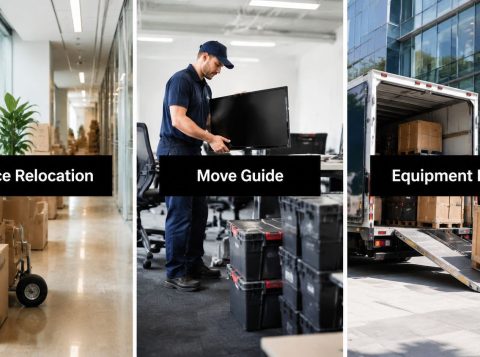

7 Commercial Relocation Companies Compared
Your office move is booked, but the difficult questions are still open. Can the movers work within the building's loading window? Who protects the servers and workstations? Where will furniture go if the new fit-out isn't ready, and how will you keep staff disruption and budget surprises under control? These questions matter more than the size of the truck.
The best commercial relocation companies match their operating model to your move. A Melbourne office with lift restrictions needs a different partner from a multi-site enterprise, a warehouse, or a business moving between Australia and New Zealand. This comparison assesses Get n Go Removals Melbourne, Grace Workplace Solutions, Allied Moving Services, Kent Relocation Services, Chess Moving, Alliance Relocation Group and Conroy Removals by service scope, network, specialist capability, pricing signals and best-fit use case. Before requesting proposals, you may also want to compare office lease terms, because access, reinstatement and handover conditions can change the relocation plan.
1. Get n Go Removals Melbourne
A Melbourne business moving an office, showroom, workshop or warehouse often needs more than a truck and loading crew. Get n Go Removals Melbourne is suited to projects where one team handles packing, furniture work, transport, placement and storage. The family-owned operator has more than 10 years of experience, full-time police-checked staff and a company-owned fleet ranging from 4.5 to 12 tonne trucks. That capacity fits moves involving furniture, equipment, event goods or household contents, rather than a labour-only transfer.
Its service scope covers business-asset packing, furniture disassembly and reassembly, transport, unloading, destination setup, and secure short- or long-term storage. White-glove packing and unpacking, premium packing materials and protective equipment are useful for fragile furniture, sensitive finishes and valuable equipment. Pianos and pool tables can also be handled when unusual assets form part of the relocation.

Where the Melbourne model works best
Flexible 24/7 scheduling can help with settlement dates, lift reservations and after-hours cutovers. Weekly direct runs connect Melbourne with Sydney, Brisbane and key East Coast destinations, so an interstate move may be simpler when its timing matches those routes. Public liability and transit insurance, a company-owned fleet and one contact also reduce coordination between separate suppliers.
Server and network moves need a written responsibility split before approval. Confirm who will label assets, photograph workstation states, seal peripheral cartons, protect equipment and produce the room-by-room placement manifest. Critical IT equipment should receive its own risk classification. A specialist server relocation service is relevant when infrastructure requires planned shutdown, transport and reconnection.
Practical rule: Request an itemised quote separating packing, disassembly, transport, storage, reassembly and after-hours labour. A detailed itemised quote takes more effort than comparing flat rates, but it shows the actual work being priced.
The trade-off is clear. Get n Go does not publish flat rates, so the client must request a custom quote. A full-service insured operator may also cost more than a budget mover supplying labour only. For Melbourne businesses that value careful handling, flexible timing, storage and one accountable contact, review the office moving services in Melbourne before choosing a provider.
2. Grace Workplace Solutions
A multi-site office programme with a fixed opening date needs more than a crew and a truck. Grace Workplace Solutions is suited to large, complex and time-sensitive workplace programmes, including enterprise, government, institutional, laboratory, library, museum and FF&E projects. Its workplace division covers project management, IT decommissioning and recommissioning, workstation installation, audiovisual equipment handling and coordination across sites.
Grace's national network of branches supports local, interstate and international work. That geographic reach is useful when one programme involves several cities, staged occupation or local teams at different destinations. It also fits specialist environments where furniture is only one part of the inventory.
The strength is programme control
Grace is a practical choice for projects involving a fixed handover, multiple stakeholders and significant technology. A formal plan can allocate tasks between facilities, IT, building management, department leaders and movers. Its scale may provide capacity for a major cutover, although the same processes can be excessive for a small office move or a short-notice booking.
The main trade-off is limited public rate transparency. Grace prices work through a custom quotation, and demand can affect availability for large programmes. Before comparing headline totals, confirm how the proposal prices change requests, storage, overtime, missed access windows and post-move defects. Those details often determine the final cost more than the initial transport allowance.
Technology work also needs a clear asset-control plan. Confirm who labels devices, records workstation positions, protects equipment and manages shutdown and reconnection responsibilities. For server rooms or other sensitive infrastructure, compare Grace's workplace scope with the control standards expected from a server relocation specialist.
The provider is strongest where governance, geography and coordination justify a structured programme. A smaller, local move may offer better value through a simpler scope and more transparent labour comparison.
3. Allied Moving Services
Allied Moving Services is a sensible shortlist candidate for national commercial relocations and specialist environments. The business has more than 95 years of experience and supports offices of different sizes, hospitals, galleries, schools, warehouses and technology-heavy sites. That breadth matters when the project includes equipment or operating conditions that don't resemble a conventional desk move.
Its depot and branch network supports local work, interstate routes and multi-stage projects. For a business moving between Melbourne and Sydney, national coverage can reduce the coordination burden, particularly when the same project requires collection, temporary storage and delivery at different points. Allied also publishes planning resources and relocation guides, which can help internal teams organise inventory, responsibilities and move-day communication.
Good coverage, less rate visibility
Allied's principal strength is depth. A complex timeline benefits from a provider that understands staged delivery, specialist handling and large inventories. The trade-off is that pricing is based on assessment and quotation rather than published rates. Weekend and after-hours work may also add a premium, so the proposal should identify the labour window and any access assumptions.
Technology moves need more than careful loading. Before approval, confirm who disconnects devices, who labels workstations, who protects confidential files and who tests the destination before staff return. Victorian employers should also treat the relocation as a safety project. WorkSafe Victoria's office guidance recommends a move coordinator, employee consultation, risk identification and controls covering equipment such as trolleys, ladders, boxes and protective equipment.
Allied's national model is strongest when route consistency and organisational depth matter more than a simple local price comparison. For a Melbourne business still deciding whether it needs a national commercial mover or a local operator, the practical distinction is accountability. Identify who owns the move at the destination, not just who provides the quote. You can also compare business moving companies near Melbourne against the scope Allied proposes.
4. Kent Relocation Services
Kent Relocation Services is aimed at governance-heavy workplace programmes where procurement, reporting and vendor control are as important as the physical move. Its open-book, cost-plus approach discloses costs rather than reducing the project to a single opaque figure. That can suit organisations with audit requirements, multiple suppliers or a programme office responsible for approvals and reporting.
A central management platform coordinates timelines, scope, vendors and service quality. This is valuable when the move includes several buildings, staged department transfers, furniture suppliers, IT contractors and storage providers. Instead of relying on scattered spreadsheets and email threads, the client can require a central record of milestones, decisions, exceptions and outstanding work.
Transparent doesn't always mean simple
Open-book pricing is a genuine advantage for procurement teams because it makes cost drivers easier to examine. It can also expose where scope has expanded, which is useful during a phased relocation. However, cost-plus pricing is more complex than a fixed quote. A small business wanting a quick local move may find the engagement model unnecessarily formal, especially if the move is urgent.
The platform doesn't remove the need for a detailed brief. Provide floor plans, inventory categories, access conditions, storage requirements, IT responsibilities and the preferred cutover sequence. Confirm how Kent handles unplanned labour, damaged assets, missed building slots and changes to the destination layout.
A structured programme also benefits from a written move plan that staff can follow. A practical office move project plan template can help define owners, dependencies and approval points before commercial proposals are compared.
Kent is the better fit when financial visibility and programme discipline outweigh speed and simplicity. For a small office with one building and a short distance, a less structured provider may deliver a more proportionate process.
5. Chess Moving
Chess Moving suits SME and mid-market office moves that need coordination across Australian locations. Its Australian-owned network covers major capitals and regional centres, with local branches handling site-level delivery. That structure can work for a business with a Melbourne head office and another workplace elsewhere, provided the branches agree on one operating plan.
Services include office relocations, containerised storage, move management and planning support. Request a written quote that identifies the inventory, packing responsibilities, access conditions, storage period and delivery sequence. Office moves often involve workstations, confidential files, printers, meeting furniture and specialist equipment. Clear labelling rules also show which tasks belong to the mover and which each department must complete.
Check branch execution before signing
A shared network can reduce the effort of arranging separate providers for a multi-site relocation. Containerised storage is useful when the destination is delayed, space is being staged or all assets cannot move on the same day. The trade-off is pricing visibility. Commercial rates are not generally published, so the proposal must show labour, transport, storage, packing and any access-related charges clearly.
Local execution still needs testing. Ask for the project contact, crew structure, escalation process and destination branch responsibilities. Confirm that every site will use the same inventory, labelling and sign-off system. For a move involving several buildings, document who controls changes to the schedule and who authorises additional work.
A national logo does not replace a local handover plan. The destination branch must know what arrives, where it goes and who signs for it.
Chess is a sensible choice for an SME that needs broader geographic coverage than a single-site mover, without adopting a large enterprise programme. It may be a weaker fit where the project requires extensive IT engineering, formal cost-plus governance or specialised laboratory handling. Compare its proposal with Get n Go Removals if Melbourne execution and East Coast routes are central to the move.
6. Alliance Relocation Group
Alliance Relocation Group is a strong option for a Melbourne office-only move where local building knowledge is a priority. Based in Port Melbourne, the company focuses on workplace transitions and provides services including pre-move audits, packing, IT handling, reinstallation and office setup. That office-specific focus can create tighter execution than a general removal service when the project involves floor plans, workstations, access permits and sequencing between buildings.
Melbourne office conditions can be demanding. A building may restrict loading times, require a freight lift booking, limit truck access or impose documentation requirements before the crew arrives. A local provider that understands CBD, fringe and suburban access patterns can help identify these constraints earlier, although the client still needs to obtain written confirmation from building management.
Local expertise versus national scale
Alliance has demonstrated capability on large programmes and multi-building consolidations, including work associated with Australia Post. For Melbourne organisations, that indicates an ability to manage more than a simple one-day relocation. The company can coordinate packing, IT handling and setup around a staged workplace plan.
The trade-off is geographic. Alliance has a smaller national footprint than multinational providers, and interstate work is handled from its Melbourne hub rather than through the same broad network model available from larger companies. That may matter if the project has several destinations or requires direct local teams outside Victoria.
For a Melbourne business comparing CBD, fringe and suburban premises, ask for a site-specific access plan. Include lift bookings, permits, parking, loading routes, building contacts, protection of common areas and the exact point at which the destination becomes ready for placement. Those details reveal more about operational fit than a general claim of office expertise.
7. Conroy Removals
A company moving equipment, records or furniture from Australia to New Zealand needs more than a crew and a truck. Conroy Removals fits small-to-mid-sized commercial moves with Australia to New Zealand requirements, combining office relocation with packing, storage, logistics and international connections. That single-provider model can reduce handoffs, although the buyer still needs to confirm which branch and destination partner owns each stage.
Its published conditions of contract and insurance documents give procurement and legal teams material to review. FIDI affiliation may also support that review. Check liability definitions, exclusions, claims procedures, storage responsibility, transit periods and the obligations of any destination partner before signing.
Validate the local delivery model
Conroy's geographic fit is its main advantage. The operational risk sits in branch accountability and handover quality, so validate those details against the actual route and scope. Consumer feedback is mixed, and one branch's performance should not be treated as evidence for every team or partner.
Ask Conroy to name the destination partner in Auckland or Christchurch, identify who signs the inventory at handover, and provide a sample chain-of-custody form. The form should link asset IDs to collection and delivery records, with photo evidence at both points. For confidential files and technology, require one responsible contact for each country, a documented escalation route and sign-off when custody changes. The Australian Bureau of Statistics population estimates also show why destination coordination and delivery windows need attention across Australian jurisdictions before an international leg is added.
For comparison on scope and building coordination on a Melbourne leg, review the office relocation services in Melbourne.
Conroy belongs on a shortlist when New Zealand is part of the route and contract transparency matters. A locally focused provider may be easier to hold accountable for a purely Melbourne move.
Top 7 Commercial Relocation Companies Comparison
| Provider | Implementation complexity 🔄 | Resource requirements ⚡ | Expected outcomes ⭐📊 | Ideal use cases 💡 | Key advantages |
|---|---|---|---|---|---|
| Get n Go Removals Melbourne | 🔄🔄🔄, Full‑service coordination, packing & specialist handling | ⚡⚡⚡, Company fleet, insured/police‑checked crew, storage options | ⭐⭐⭐⭐, Reliable, low‑damage relocations; high customer satisfaction 📊 | Homeowners, renters, SMEs, event planners, weekly interstate runs | End‑to‑end service, 24/7 scheduling, specialist handling, single point of contact |
| Grace (Grace Workplace Solutions) | 🔄🔄🔄🔄, Formal PM methodologies for complex programmes | ⚡⚡⚡⚡, National project teams, IT/AV setup capability (50+ branches) | ⭐⭐⭐⭐⭐, Enterprise‑grade delivery for time‑critical, multi‑site moves 📊 | Medium–large offices, institutions, labs, museums, FF&E projects | Dedicated workplace PM, IT re‑commission, large‑scale capacity |
| Allied Moving Services (Business/Commercial) | 🔄🔄🔄, Nationwide commercial processes and specialist handling | ⚡⚡⚡, Extensive depot network and planning resources | ⭐⭐⭐⭐, Consistent execution on complex timelines; strong corridor coverage 📊 | Hospitals, schools, warehouses, tech‑heavy workplaces, interstate projects | Deep experience (95+ yrs), planning guides, nationwide reach |
| Kent Relocation Services (Kent Relocation Group) | 🔄🔄🔄🔄, Program management for multi‑vendor, governance‑heavy moves | ⚡⚡⚡, Centralised platform, auditable cost‑plus model | ⭐⭐⭐⭐, Transparent, procurement‑friendly outcomes with robust reporting 📊 | Corporate programmes requiring compliance, multi‑phase/multi‑vendor moves | Open‑book cost‑plus pricing, centralised coordination and reporting |
| Chess Moving | 🔄🔄🔄, Practical branch‑led execution with standardised processes | ⚡⚡⚡, National branch network, containerised storage options | ⭐⭐⭐, Reliable SME/mid‑market delivery; variable local service levels 📊 | SME to mid‑market office moves, multi‑site coordination with local accountability | Broad geographic coverage, AFRA‑aligned quotes, local branch accountability |
| Alliance Relocation Group (Office Relocations) | 🔄🔄🔄, Office‑focused sequencing and local permit handling | ⚡⚡⚡, Melbourne hub with office move specialists | ⭐⭐⭐⭐, Strong local execution in Melbourne; good for permit/constrained sites 📊 | Melbourne CBD/suburban office moves, large programme consolidations | Deep Melbourne knowledge, office‑only focus, responsive to building constraints |
| Conroy Removals (Commercial/Office) | 🔄🔄, Standard commercial/office workflows with international links | ⚡⚡⚡, AU–NZ integration, published T&Cs and insurance docs | ⭐⭐⭐, Suitable for AU–NZ moves; quality may vary by branch, verify locally 📊 | Small–mid commercial moves with Australia–New Zealand needs | Trans‑Tasman reach, transparent contract/insurance documentation, industry affiliations |
Turn the Shortlist Into a Move Plan
The right commercial relocation company isn't automatically the largest or the cheapest. It's the provider whose operating model matches the assets, buildings, route and level of coordination your business needs. A Melbourne office with a small inventory may value flexible scheduling and direct communication, while a multi-site enterprise may need formal governance, reporting and technology cutovers.
Start with a complete inventory. Separate furniture, IT equipment, confidential records, stock, specialist assets and items that won't move. Mark what needs packing, disassembly, crating, storage, disposal, reassembly or final placement. If the destination layout isn't finished, include temporary storage and phased delivery in the initial scope rather than adding them after the quote.
Confirm access before comparing totals. Ask building management about loading zones, freight lifts, protection requirements, permits, parking and after-hours rules. Victorian employers should appoint a move coordinator, consult employees and health and safety representatives, identify manual-handling hazards and provide clear preparation instructions. Staff shouldn't be expected to perform prolonged lifting or awkward handling without considering safety, ordinary duties and working-time obligations. The National Employment Standards set a maximum ordinary working week of 38 hours for most employees, subject to reasonable additional hours, so managers should plan attendance and packing responsibilities carefully through Fair Work's National Employment Standards guidance.
Technology deserves its own workstream. Record asset identifiers, photograph workstation states, document disconnect and reconnect responsibilities, seal peripheral cartons and prepare a room-by-room placement manifest. Measure success through first-placement accuracy, device loss or damage, workstation readiness at the agreed opening time and business-hours downtime. Hybrid work makes this more important. Telstra reported that 44% of Australian enterprises and government departments had implemented some form of virtual or mobile work, with another 21% implementing it, while 23% had no plans to implement workforce mobility in the following 12 to 24 months. The Telstra workforce mobility research supports treating an office move as a continuity project, not just a transport booking.
Request an itemised proposal and compare assumptions, not just totals. Check packing materials, labour windows, storage terms, insurance, transit limits, claims procedures, cancellation rules, overtime, access delays, reassembly and post-move support. Photograph valuable items before packing, retain inventories and receipts where available, and confirm whether existing contents insurance applies during transit or storage. The Australian Defence Force Financial Services Consumer guidance advises reporting loss or damage promptly and keeping supporting documents.
For a Melbourne office needing flexible scheduling, compare Get n Go Removals and Alliance Relocation Group against the building access plan. For a multi-site enterprise requiring programme governance, Grace or Kent may be better aligned. An SME wanting national coordination should examine Allied or Chess, while an Australia to New Zealand move warrants a close review of Conroy's route, branch responsibilities and contract terms.
Melbourne's office market also supports a more flexible planning approach. KPMG reported national office vacancy of 14.1% in the March 2025 quarter, compared with 14.0% in December 2024, while separate commercial-property reporting recorded Melbourne office vacancy at 19% in the six months to January 2026. The KPMG commercial property update provides the national context. High vacancy doesn't tell you whether to downsize, consolidate or upgrade, but it does make phased moves, modular layouts, inventory reduction and temporary storage worth pricing from the beginning.
Match the supplied capabilities to your inventory, geography, building constraints and continuity requirements. Then request a specific quote from the preferred provider with every assumption written down.
Get n Go Removals Melbourne provides full-service commercial relocations, including packing, furniture disassembly and reassembly, secure storage, careful transport and flexible after-hours scheduling across Melbourne and key East Coast routes. For a move that needs one accountable contact and a practical plan around access, IT equipment and staff disruption, visit Get n Go Removals Melbourne to discuss your scope and request a custom quote.