
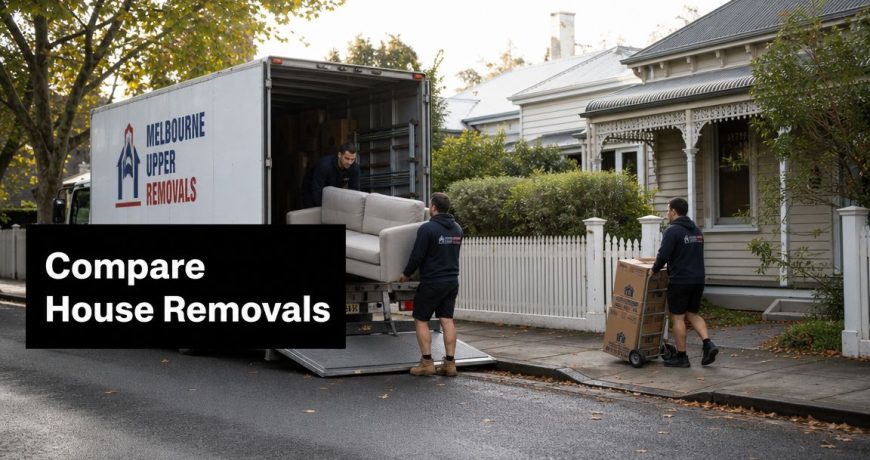
How to Compare House Removals in Melbourne (2026 Guide)
You've probably got a few tabs open right now, three quotes in your inbox, and no clear idea why one mover is far cheaper than the others. One quote looks simple. Another is packed with terms and conditions. A third sounds professional on the phone but leaves out half the detail you need.
That's where a common misstep occurs when comparing house removals. They compare the total at the bottom of the quote, not the service that produces it.
A move in Melbourne can go smoothly or go sideways fast. Access issues, lift bookings, packing gaps, weak contracts, unclear insurance, and under-scoped quotes are what cause blowouts and disputes. The right way to compare movers is to ask a harder question. Which company gives you the clearest scope, the lowest risk, and the least chance of damage or delay?
Your Guide to Comparing Melbourne House Removals
Melbourne is a busy moving market, and crowded markets create noise. More dwellings, more households, and more turnover mean more removal companies competing for the same bookings. Australia's dwelling stock reached 10,759,865 dwellings in the 2021 Census, up from 9,754,797 in 2011, an increase of about 1.0 million dwellings or 10.3% over the decade according to this housing and moving analysis. That growth means more people needing movers and more variation in how companies quote.
The practical problem is simple. Two quotes can look comparable while covering very different jobs. One may include furniture protection, disassembly, and waiting time. Another may only cover truck space and labour, with extras added later.
Use this quick comparison before you go deep:
| What to Compare | Cheap-Looking Quote | Well-Scoped Quote |
|---|---|---|
| Inventory detail | Vague or missing | Clear room-by-room scope |
| Access notes | Not mentioned | Stairs, lift, parking, carry distance noted |
| Packing materials | Often excluded | Included or clearly itemised |
| Furniture assembly | Assumed, not written | Listed if required |
| Insurance info | Generic wording | Specific explanation of cover and process |
| Terms | Short and unclear | Detailed booking, payment, and delay terms |
What a smart comparison actually looks like
A good comparison isn't about finding the lowest number. It's about checking whether each company priced the same move.
Practical rule: If two quotes are far apart, assume the scope is different until proven otherwise.
That means checking inventory, access, timing, special items, truck size, staffing, packing, storage, and any likely complication on the day. If you skip that step, you're not comparing house removals properly. You're comparing assumptions.
What usually works and what usually doesn't
What works is a mover that asks detailed questions before quoting, confirms difficult access early, and explains what happens if settlement runs late or the building lift isn't available.
What doesn't work is choosing the fastest quote with the fewest details. In removals, missing detail isn't convenience. It's usually future friction.
Key Comparison Points Beyond the Price Tag
Price matters. It just isn't the first thing to trust.
Most comparison guides stop at the headline number and ignore how inclusions change the final bill. Buyers should compare what's included and check for exclusions like packing, specialist handling, or fees for stairs and long-carry distances, because hidden costs are a major source of quote variation, as outlined in this guide on comparing removal quotes and exclusions.

Credibility beats a polished sales pitch
A professional operator should be easy to verify. You want a real business with a physical address, a clear booking process, and written terms that match what the salesperson says.
Look for these trust markers:
- Insurance clarity: They should explain what cover applies in transit, on-site, and during loading or unloading.
- Physical presence: A business with a genuine base and identifiable fleet is easier to deal with if anything goes wrong.
- Written paperwork: The quote, acceptance, and move-day terms should line up.
If a mover avoids written detail, that's not flexibility. It's risk.
Staff and equipment tell you how the move will actually run
The quote is one thing. The people and gear on the day are another.
A mover using trained in-house staff usually delivers a more consistent result than a loosely assembled crew. The same goes for equipment. Proper trolleys, straps, blankets, mattress covers, shrink wrap, and the right truck size matter more than most customers realise until moving day arrives.
Watch how the company talks about the move. Do they ask about access, item weight, fragile pieces, or the timing between key collection and delivery? If they don't, they're pricing blind.
Service scope is where cheap quotes often unravel
A lot of quote variation comes from what isn't included. That's why it helps to review common hidden moving costs in house removals before you commit.
Check whether the quote covers:
- Packing help: Full packing, partial packing, or none at all.
- Furniture disassembly: Beds, dining tables, modular lounges, desks.
- Specialist handling: Pianos, antiques, gym gear, stone tops, artwork.
- Storage options: Short-term or longer-term if settlement timing changes.
- Access complications: Stairs, narrow hallways, lift bookings, long walks from truck to door.
A low quote that excludes predictable extras often ends up costing more than a higher quote that scoped the move properly from the start.
Customer experience matters when the plan changes
Moves rarely run in a perfect straight line. Settlement can shift. Apartment management can delay lift access. Parking can become an issue. The better mover is usually the one with a clear process for handling changes, not the one with the neatest-looking estimate.
If you want one simple filter, use this. Choose the company that reduces uncertainty, not just the company that reduces the starting price.
How to Accurately Decode Removalist Quotes
A removal quote should answer one question clearly. What exactly is this company charging for, and under what conditions can that amount change?
To compare house removals properly, get 3–5 removal quotes so you can normalise scope before judging price, especially when inventory, stairs, parking, and add-on services affect complexity, as recommended in this advice on how to compare removals quotes fairly.
Start by checking the pricing model
Most quotes fall into one of two camps.
Hourly rates can work well for smaller local moves, simple access, and customers who are organised and packed on time. They can also create uncertainty if the job has variables such as bad parking, multiple flights of stairs, lift delays, or an incomplete inventory.
Fixed-price quotes suit larger homes, longer distances, and moves where certainty matters more than squeezing the last dollar out of the booking. They only work if the scope is accurate. A fixed quote based on poor information is just a dispute waiting to happen.
Neither model is automatically better. The right one depends on how stable the scope is.
Read every line item, not just the total
This is where people miss things. One mover might include truck, labour, and standard protection in a single figure. Another may split everything into separate charges. Neither is wrong, but you need to know what sits behind the number.
| Item/Service | Description | Example Cost |
|---|---|---|
| Labour | Crew time for loading, travel, unloading | Varies by company and move scope |
| Truck fee | Vehicle allocation and operating cost | May be separate or bundled |
| Call-out or travel | Time from depot to property and return | May be charged one-way or depot-to-depot |
| Packing materials | Boxes, wrap, tape, mattress covers | Sometimes excluded |
| Stairs or difficult access | Added labour for lifts, stairs, long carry | Often conditional |
| Heavy or specialist items | Pianos, safes, large stone or timber pieces | Usually quoted separately |
| Storage | Short-term holding if timing changes | May be daily, weekly, or bundled |
| Insurance-related charges | Extra protection options or declared value process | Terms vary |
That table matters because removals pricing is similar to other service industries. The headline figure only makes sense once the scope is defined. If you've ever looked at how to price house cleaning, the same principle applies. Property size, access, condition, labour time, and add-ons all change the price.
Scope-align the quotes before comparing them
Don't compare quote A with quote B until you've made sure both companies priced the same move.
Use this checklist:
- Match the inventory. Make sure both quotes include the same furniture, whitegoods, outdoor items, storage boxes, and fragile pieces.
- Match the access conditions. Confirm stairs, lift access, parking distance, loading zones, and whether the truck can stop close to the property.
- Match the timing. Check pickup window, delivery window, key collection, and any waiting-time exposure.
- Match the service bundle. Packing, unpacking, disassembly, reassembly, and materials should be either included in all quotes or excluded from all.
- Match the risk items. Call out pianos, antiques, artwork, marble, glass, and oversized furniture.
If you want a practical benchmark for what affects mover pricing, this breakdown of the cost factors behind hiring movers is useful.
Red flags inside the quote
Some warning signs only show up in the wording.
- Vague inventory descriptions: “General household goods” is too broad for a larger move.
- No access notes: If the quote doesn't mention stairs, parking, or apartment procedures, the mover may not have allowed for them.
- Missing terms: Cancellation, payment timing, delays, and claim procedures shouldn't be left to guesswork.
- Unclear insurance language: Generic reassurance is not the same as a defined process.
- Open-ended extras: If every likely complication is “to be advised on the day,” the actual price is still unknown.
The best quote usually isn't the shortest one. It's the one that leaves the fewest unanswered questions.
Comparing Movers for Local and Interstate Relocations
A local Melbourne move and an interstate move shouldn't be compared the same way. They use different planning logic, different risk controls, and often different pricing structures.
The 2021 Census showed that 6.7 million Australians changed address in the previous year, with 2.3 million moving locally within the same region and 1.1 million moving interstate, according to this summary of Australian household moving patterns. Local moves are more common, but interstate demand is substantial enough that you need to compare the right kind of operator for the job.

What matters most for local Melbourne moves
For a metro move, efficiency is everything. Small delays can stack up fast when you're paying for labour and truck time.
Compare these points closely:
- Depot location and travel charging: Ask where the truck starts and whether travel is charged one-way or both ways.
- Apartment experience: Lift bookings, loading dock rules, body corporate requirements, and move windows can make or break timing.
- Parking knowledge: A mover who understands local access restrictions is less likely to lose time finding legal loading space.
- Truck fit for suburban streets: The wrong truck can create access problems in tight streets or laneways.
Local moves reward preparation. A mover who asks detailed questions early usually saves time later.
What matters most for interstate moves
Interstate work is less about hourly efficiency and more about logistics discipline. You need to know how the move will travel, who handles it, and what happens if timing shifts.
Check for:
- Run frequency: Regular east coast runs usually mean more predictable scheduling.
- Handling model: Ask whether the same company handles the goods throughout or whether handovers occur.
- Storage contingency: Useful if settlement dates don't line up.
- Transit process: Road, rail, direct load, or shared load all affect timing and handling.
- Long-haul protection: Insurance and claims procedures matter more when the goods are in transit for longer.
If you're weighing local operators against interstate specialists, use a guide built around how to assess interstate removalists across Australia so you're comparing the right service model.
Don't let one quote template decide both jobs
A company that handles local apartment moves well isn't automatically the right fit for a Melbourne to Sydney or Melbourne to Brisbane relocation. The comparison criteria shift. For local jobs, speed and access management matter most. For interstate jobs, handover risk, scheduling discipline, and transit planning matter more.
Essential Questions to Ask Every Removal Company
A common first question is, “How much?” A better question is, which quote reduces damage and delay risk? Advice on spotting unreliable movers stresses proof of insurance, a physical address, detailed contracts, and whether the business uses its own staff. Those are key trust signals often missed in price-only comparisons, as noted in this guide to comparing removal companies and avoiding risk.

Ask questions that reveal the operation behind the quote
These questions do more than fill a checklist. They tell you how the company works.
- Are your movers employees or subcontractors? A strong answer is direct and specific. If the company uses a mix, ask who will handle your move.
- Can you send a written quote with all inclusions and exclusions? Good operators don't dodge detail.
- What happens if access is harder than expected? You want a practical answer, not “we'll work it out on the day.”
- Can you explain your damage or claims process? If they sound vague when things go wrong, expect trouble later.
Listen for the quality of the answer, not just the answer itself
A professional mover won't get defensive when you ask detailed questions. They'll usually welcome them.
Good answers are calm, clear, and operational. They mention process, paperwork, and responsibility. Weak answers rely on reassurance alone.
Here are a few more worth asking:
- What protective materials do you use for furniture and mattresses?
- Have you allowed for stairs, lifts, and parking distance in this quote?
- Who is my contact person if settlement or key collection changes?
- Do you provide packing, unpacking, and storage if plans shift?
One practical example in Melbourne is Get n Go Removals' guide to choosing the right removals firm, which reflects the kind of detail you should expect any serious mover to address.
If a company rushes you off the phone, avoids specifics, or pushes for a booking before clarifying scope, keep looking.
The red-flag answers to watch for
Some answers should slow you down immediately.
- “Insurance is covered” with no explanation of how.
- “We never have issues” instead of explaining the claims process.
- “That won't be a problem” before they've asked about access.
- “We'll confirm later” on key parts of price, staffing, or timing.
The right mover should make you feel more informed after the call, not less.
The Ultimate Checklist for Choosing Your Mover
When you've narrowed it down to two or three options, stop comparing marketing and start scoring the job in front of you.

Use this final pass:
The shortlist test
- Quote clarity: Is the inventory specific? Are exclusions obvious? Are access conditions noted?
- Protection and risk: Do you understand the insurance position, handling method, and claims process?
- Operational fit: Can they handle your stairs, apartment booking, settlement timing, storage needs, or special items?
- Communication quality: Did they answer clearly, confirm details in writing, and stay consistent?
- Confidence factor: Do they sound organised, or just available?
Save this planning resource as well if you want a broader moving house checklist for Australia.
A quick visual summary helps when you're making the final call:
Choose the mover you'd trust to solve a problem at 4 pm on settlement day, not just the mover who looked cheapest on a quiet Tuesday night.
Frequently Asked Questions About House Removals
Is it cheaper to move on a weekday?
It often can be, because weekday availability is usually easier than peak weekend demand. But price alone shouldn't decide it. If weekday access is harder because of loading restrictions, building rules, or work schedules, the cheaper slot can become the less efficient one.
Should you tip removalists in Australia?
Tipping isn't mandatory in Australia. If the crew is punctual, careful, professional, and handles a tough move well, some customers choose to tip or provide drinks and lunch. It's a gesture, not an obligation.
What happens if settlement is delayed on moving day?
That depends on the booking terms and the mover's flexibility. Some companies can wait, return later, or move goods into storage. The important thing is to ask this before booking. Settlement delays are manageable when the process is clear in advance.
Who arranges parking permits or loading access?
It varies by property and council. In many cases, the customer needs to secure building access, loading dock time, or any permits tied to the address. A good mover will tell you what they need from you, but don't assume they control the building side unless that's confirmed in writing.
Do I need packing services, or can I pack myself?
Both can work. Self-packing saves money if you're organised and realistic about time. Professional packing is worth considering for fragile items, tight timeframes, or larger family homes where the risk of rushed packing is high.
If you want a mover that gives clear written scope, explains costs properly, and helps you compare actual moving risk instead of just chasing a low headline number, Get n Go Removals Melbourne is worth a look for local and interstate moves.