Moving Costs Interstate: Your Comprehensive 2024 Melbourne Guide
Planning a major move across state lines can feel daunting, especially when it comes to the final bill. As a reliable benchmark, the average cost for moving a standard three-bedroom home interstate in Australia typically falls between $2,600 and $5,850.
Naturally, this is a broad spectrum. The final cost is intricately tied to the distance of your journey and the volume of your belongings. Understanding these variables and establishing a clear budget is the critical first step towards a successful, stress-free relocation.
Your Quick Guide to Interstate Moving Costs from Melbourne
Grasping the potential financial outlay is fundamental for a smooth transition. While every move is unique, having a solid ballpark figure allows for meticulous planning and helps you select the professional services that best align with your needs and budget.
The two most significant factors influencing your final quote are the size of your home (which determines the volume of goods) and the distance to your new city. To provide a clearer financial picture, let's explore the typical price ranges for popular interstate routes originating from Melbourne.
Breaking Down the Numbers
Relocating from Melbourne up the East Coast to major hubs like Sydney or Brisbane is a significant logistical operation. The greater the distance the removalist truck must travel, the higher the costs for fuel, labour, and transit time—all of which are factored into your comprehensive quote.
For a standard three-bedroom house, the cost generally ranges from $2,600 to $5,850. However, for larger households with a substantial volume of belongings or moves to more remote destinations, this figure can climb towards $10,000. This highlights why it is absolutely essential for families to budget with precision before committing to a removalist.
For context, a local move operates on a completely different cost scale. You can explore these differences in our detailed guide on how much moving houses costs in Melbourne.
To help you anticipate your moving expenses, here is a quick overview of estimated costs for common interstate relocations from Melbourne.
Estimated Interstate Moving Costs From Melbourne To East Coast Cities
This table provides a snapshot of potential costs based on your property size and destination.
| Property Size | Estimated Volume (Cubic Metres) | Melbourne to Sydney (Approx. 900 km) | Melbourne to Brisbane (Approx. 1,700 km) |
|---|---|---|---|
| 1-Bedroom Unit | 8-15 m³ | $1,800 – $3,000 | $2,200 – $3,800 |
| 2-Bedroom Home | 20-30 m³ | $2,500 – $4,500 | $3,500 – $5,500 |
| 3-Bedroom Home | 30-40 m³ | $3,500 – $6,000 | $4,800 – $7,500 |
| 4+ Bedroom Home | 45+ m³ | $5,500+ | $7,000+ |
Please remember, these figures are estimates. Your final quote will be tailored to the specific details of your individual move.
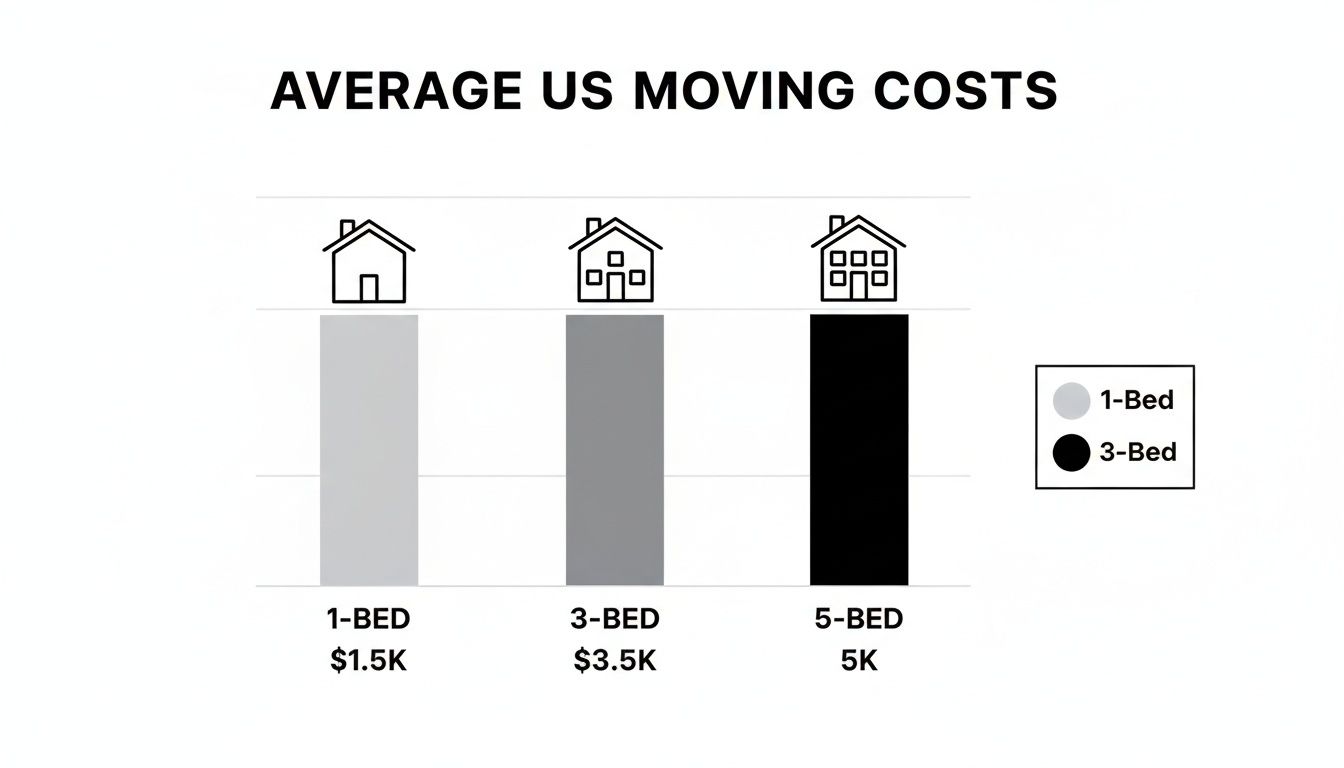
As illustrated, the cost escalates significantly from a small apartment to a large family home. This serves as a powerful reminder that one of the most effective ways to manage moving expenses is to declutter thoroughly before seeking quotes.
The Key Factors That Shape Your Final Moving Bill

When you begin to gather quotes for your interstate relocation, you will notice that no two are identical. This is by design. Professional removalists meticulously calculate your final cost based on several core factors that directly impact their resources, including time, fuel, and labour.
Understanding these factors is the key to interpreting any quote you receive. It also empowers you to identify areas where you can directly influence your final moving costs interstate. Your move can be viewed as a simple equation with three primary variables: the volume of your possessions, the distance of the journey, and the timing of the move.
The Volume Of Your Belongings
The single most significant driver of your moving cost is the volume of your items, measured in cubic metres (m³). The principle is straightforward: the more space your belongings occupy in the truck, the higher the price.
To provide perspective, the contents of a compact one-bedroom apartment might occupy approximately 10-15 cubic metres. In contrast, a larger three-bedroom family home can easily command 30-40 cubic metres or more.
A crucial takeaway here is that every single item you decide not to move translates into a direct saving. Decluttering before requesting a quote is the most effective strategy for reducing volume and, consequently, your final bill.
This is precisely why a detailed inventory is so critical. A reputable mover will assist you in estimating your total volume to provide an accurate, transparent quote, eliminating the risk of unexpected charges on moving day. For a more detailed breakdown of how volume and other factors influence the final price, refer to our complete guide on what a moving company costs.
The Distance To Your New Home
The next major component of the pricing puzzle is the distance from your current Melbourne residence to your new one. The logic is clear: the farther the truck must travel, the greater the expenditure on fuel, driver wages, and vehicle maintenance.
- Fuel Costs: A journey from Melbourne to Sydney (approx. 900 km) will consume significantly less fuel than a trip to Brisbane (approx. 1,700 km).
- Labour Hours: Extended routes mean more driving time for the crew, which is naturally reflected in the labour costs.
- Route Complexity: Moving to another major metropolitan area via a direct highway is typically more cost-effective than relocating to a remote or rural location that requires detours and more intricate logistics.
While you cannot alter the distance, understanding its impact helps clarify why a move to a neighbouring state is priced so differently from a cross-country relocation.
The Timing Of Your Move
Finally, when you choose to move can have a surprising effect on your expenses. Similar to the travel industry, the removals sector experiences peak and off-peak seasons. Demand fluctuates, and pricing adjusts accordingly.
Moving during peak times, such as summer holidays or the end of the month, is invariably more expensive due to heightened demand. If you have flexibility in your schedule, you can unlock substantial savings.
For example, scheduling your move mid-week (Tuesday to Thursday) is almost always more economical than on a weekend. Similarly, moving in the middle of the month is more budget-friendly than booking for the first or last day. Industry data confirms that factors like a mid-week booking can make a tangible difference, with the average three-bedroom house move from Melbourne to Sydney costing between $3,000 and $8,000 depending on these variables. At Get n Go Removals, we offer flexible 24/7 scheduling to help you align with property settlements and identify the most cost-effective time for your move.
Backloading Vs Direct Transit: What Is The Difference?
As you begin requesting quotes for your interstate move, you will encounter two primary service options: backloading and direct transit. Understanding the distinction is crucial, as your choice will significantly impact both your final cost and your moving timeline.
To put it simply, direct transit is analogous to chartering a private flight—it's exclusively yours, fast, and operates entirely on your schedule. Backloading, conversely, is like a clever ride-share for your belongings—it’s cost-effective, efficient, and leverages a shared journey.
What Is Backloading?
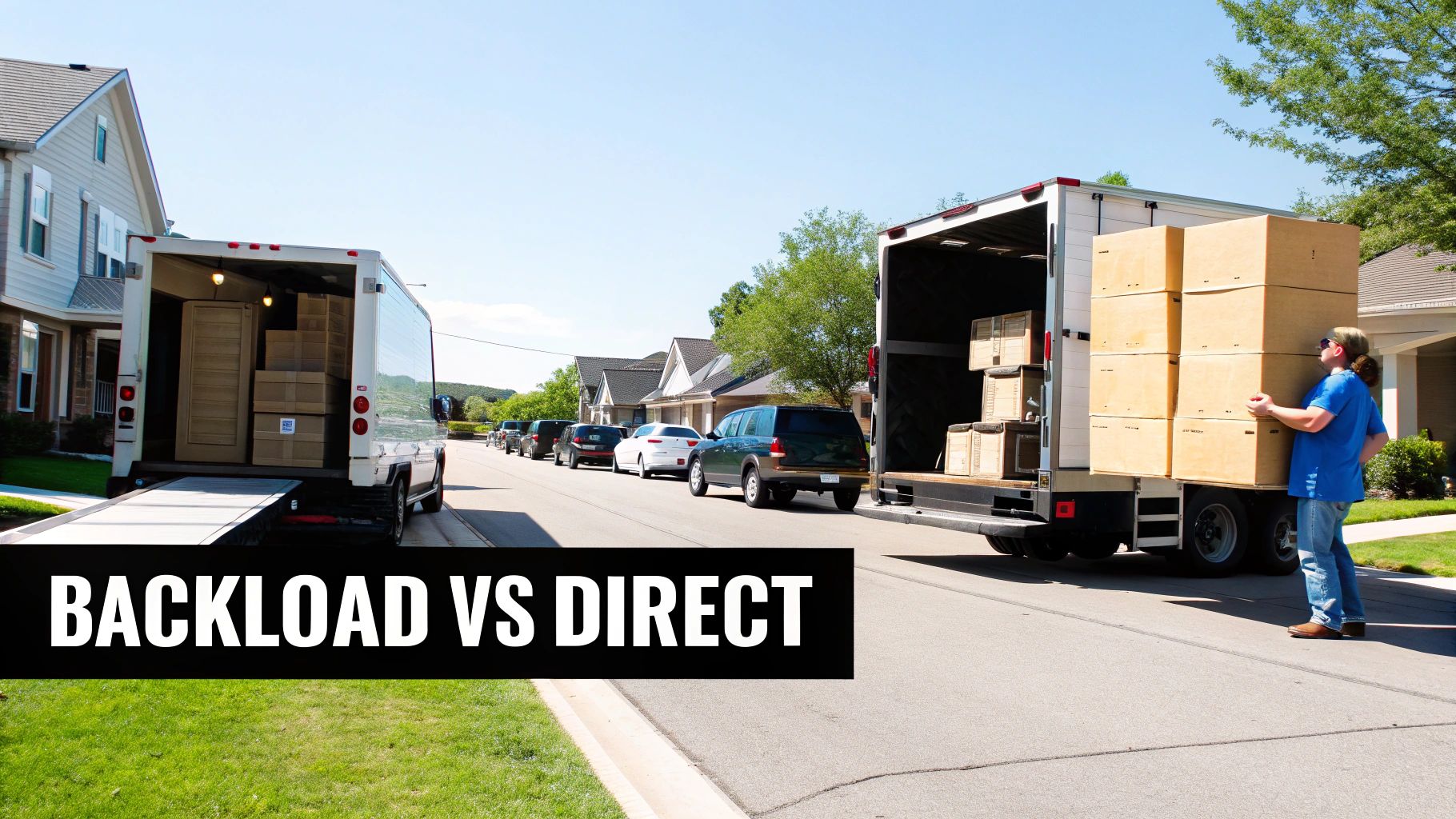
Backloading is a savvy, budget-friendly solution for relocating interstate. At its core, it means your belongings share truck space with other customers' items, or they are placed on a truck that is returning to its home base after completing another delivery.
You are essentially paying to fill what would otherwise be empty, underutilised space on the road. This shared model allows removalists to distribute major operational costs—such as fuel, tolls, and driver wages—among all clients on board.
The biggest win with backloading? The cost savings. Because you're sharing the truck, you only pay for the slice of space your belongings take up, not the entire vehicle and trip.
This option is ideal if you have some flexibility with your moving dates. Since the truck is making multiple stops along its route, the delivery windows are typically broader. This trade-off for scheduling flexibility results in a much more attractive price point.
What Is Direct Transit?
Direct transit is the premium, exclusive service for your interstate relocation. When you choose this option, you are booking the entire truck and its dedicated crew for your move alone. No other customers, no other furniture—just your belongings.
Your items are loaded, driven directly to your new address, and unloaded without detours or additional pickups. It is the most streamlined, predictable, and expedited method for handling an interstate move.
- Fixed Schedule: You secure precise pickup and delivery dates, making it significantly easier to plan around critical events like property settlements, flights, or starting a new job.
- Faster Delivery: With a direct route and no other clients to service, transit time is minimised. Your possessions arrive at your new home as quickly and safely as possible.
- Exclusive Use: The truck is 100% dedicated to your move, offering enhanced peace of mind, especially for high-value items or large-scale household relocations.
Making The Right Choice For Your Move
So, which service is the right fit for you? The decision ultimately comes down to your primary priorities. An excellent starting point is to consult with experienced long distance removalists who can provide quotes for both options, allowing for a direct, side-by-side comparison.
This quick-glance table can help you weigh the options:
| Feature | Backloading (Shared Service) | Direct Transit (Exclusive Service) |
|---|---|---|
| Cost | More affordable; significant savings | Higher cost; premium price |
| Speed | Slower; flexible delivery window | Faster; direct route to destination |
| Flexibility | Requires flexibility with dates | Fixed, predictable schedule |
| Best For | Budget-conscious movers with flexible timelines. | Movers on a tight schedule or those who need a guaranteed delivery date. |
Ultimately, both backloading and direct transit are reliable and effective methods for managing an interstate move. The key is to balance the considerations of cost and speed to find the service that aligns perfectly with your budget and calendar.
Uncovering The Hidden Costs Of Moving
A comprehensive moving budget extends beyond the cost of the truck and crew. While the primary transport fee constitutes the largest portion of your quote, several other essential services can influence your final moving costs interstate. These are not surprise fees from a reputable mover; rather, they are crucial investments in protecting your belongings and ensuring peace of mind.
Considering these potential costs from the outset helps you build a robust budget free from unexpected shocks. The goal is to make your move as smooth and predictable as possible. Let's illuminate the common additional costs that can otherwise catch people unprepared.
The Critical Role Of Transit Insurance
Even with the most meticulous removalists, long-haul journeys present inherent risks. Unpredictable road conditions or adverse weather events are factors beyond anyone's control. This is where transit insurance becomes your non-negotiable safety net.
The standard liability offered by movers is often limited and may not cover the full replacement value of your goods in the event of an incident. A comprehensive transit insurance policy ensures your treasured possessions are protected against loss or damage while in transit.
Think of it this way: you wouldn't drive your car without insurance, so why would you send everything you own on a 1,700 km trip without the right cover? It's a small price to pay for total financial security.
Quality Packing Materials Add Up
The expense of boxes, tape, bubble wrap, and packing paper can seem minor initially, but these costs accumulate. You could easily spend between $100 to $400+, depending on the volume of your belongings. While it's tempting to source free boxes from local retailers, they often lack the structural integrity required for a demanding interstate move.
Investing in high-quality, professional-grade materials is one of the smartest decisions you can make. Sturdy, double-walled boxes are designed to be stacked high in a truck without collapsing, safeguarding your fragile items. Professional packing services not only save you a significant amount of time and effort but also ensure everything is packed securely, preventing costly and heartbreaking breakages. For further insight, explore our guide to the hidden costs in moving house.
Potential Fees For Storage And Specialty Items
Life rarely adheres to a perfect schedule. Settlement dates can shift, or your new home may not be ready for occupancy when the moving truck arrives. This is when short-term storage becomes an invaluable service.
- Secure Storage: If there's a gap between your move-out and move-in dates, you’ll need to factor in the cost of keeping your goods in a secure facility.
- Specialty Items: Possessions like a piano, pool table, or valuable artwork require specialised handling, additional manpower, and specific equipment for safe transport, which typically incurs an additional fee.
- Access Challenges: Difficult access at either property—such as multiple flights of stairs, a long distance from the truck to the door, or the need for a smaller shuttle vehicle for a narrow street—can also increase the final bill due to the extra time and labour required.
Understanding these variables is more important than ever. Recent statistics show that between 180,000 to 220,000 people in Australia move between states each year. A significant driver for this trend is the housing crisis, with 32% of movers citing the pursuit of a lower cost of living. As more Melbourne families look towards the East Coast for affordability, being aware of every potential cost is crucial. By planning for these 'hidden' costs, you transform them from surprises into manageable components of your moving budget.
Smart Strategies To Reduce Your Interstate Moving Costs

Effectively managing your interstate moving costs isn’t about cutting corners or compromising on service quality. It’s about making intelligent, proactive decisions that yield genuine savings. With thoughtful planning, you can significantly reduce your final expenditure.
Consider this an optimization process for your move. A few strategic actions taken weeks before moving day can create a ripple effect, trimming costs from the quoted volume right through to the labour time required.
This section is your playbook of practical, actionable tactics. From decluttering to strategic scheduling, each tip is designed to give you greater control over your budget and make your relocation as affordable as it is seamless.
Embrace The Power Of Decluttering
This is, without a doubt, the single most effective way to shrink your moving bill. Since the volume of your belongings is a massive cost driver, every single item you decide not to move is a direct saving. Think of it as the Marie Kondo effect on your final invoice—if an item doesn't serve a purpose in your new home, don't pay to transport it across the country.
Begin this process at least a month before your move. Systematically go through each room with a decisive mindset.
- Sell: Use platforms like Facebook Marketplace or Gumtree to sell valuable items you no longer need.
- Donate: Pass on good-quality furniture, clothing, and homewares to local charities.
- Dispose: Responsibly discard anything that is broken, worn out, or not worth the cost of moving.
Remember, you're not just saving on truck space. You’re also saving the time and materials needed to pack those items, plus the effort of unpacking and finding a spot for them in your new home.
Choose Your Moving Date Wisely
Timing is everything in the removals industry. Demand for movers fluctuates significantly throughout the year, and you can leverage this to your advantage. If your schedule allows for some flexibility, you can unlock substantial savings on your interstate moving costs.
The peak moving season typically runs from November to February, coinciding with the summer holidays. Moving mid-week (Tuesday to Thursday) is almost always less busy and therefore more affordable than moving on a weekend. Booking your move for the middle of the month is also often more economical than on the first or last day, when most rental leases turn over.
The Paradox Of Professional Packing
While it may seem counterintuitive, hiring professional packers can sometimes save you money in the long run. The reason is simple: expert packers are masters of spatial efficiency. They possess the skills to utilise every centimetre of a box and the truck, which can effectively reduce the total volume of your shipment.
Furthermore, they use high-quality materials and proven techniques to protect your fragile items. This dramatically lowers the risk of costly and emotionally distressing damage to valuables like electronics, artwork, or family heirlooms. Preventing a single significant breakage could easily offset the cost of the entire packing service. For more insights, you can review our detailed tips to keep your moving costs down.
Plan Ahead And Compare Quotes
Whatever you do, don't leave booking your removalist to the last minute. Start your research and begin getting quotes at least four to six weeks before your move. This gives you ample time to compare offers thoroughly without feeling pressured into a hasty decision.
While focusing on your move, remember that the principles of smarter spending strategies are highly applicable—it's all about effective expense management. When you receive a quote, insist on a fixed price based on a detailed inventory list. This is your best safeguard against hidden fees. A clear, itemised quote from a reputable company is the most powerful tool you have for accurate budgeting.
How To Choose The Right Interstate Removalist
Selecting an interstate removalist is a critical decision. You are not merely comparing prices on a spreadsheet; you are entrusting a company with your entire household, from essential furniture to irreplaceable personal items. The key to a smooth, stress-free move is to shift your focus from finding the cheapest price to securing the best overall value.
A surprisingly low quote might seem appealing, but it can often be a red flag for potential issues such as inexperienced crews, hidden fees, or inadequate insurance. A professional, reliable moving partner is an investment in your peace of mind, ensuring your belongings arrive safely, on time, and without any unwelcome financial surprises.
To distinguish the professionals from the pretenders, you must ask the right questions. This process goes beyond the price tag; it's about delving deeper to find a mover you can genuinely trust with your life's possessions.
Essential Questions For Any Potential Mover
Before signing any agreement, you need clear, direct answers to several non-negotiable questions. A company's response will reveal a great deal about their professionalism and the quality of service you can expect.
Keep this checklist handy during your inquiries to ensure you cover all crucial points:
- Do you use your own trucks and staff, or do you use subcontractors? This is a critical distinction. A company with its own full-time, trained employees maintains complete control over quality and accountability. Subcontractors can introduce variability and reduce direct oversight.
- What's your experience with my specific route (e.g., Melbourne to Brisbane)? An experienced interstate mover will have intimate knowledge of long-haul routes, including optimal rest stops, potential traffic bottlenecks, and the logistical nuances of the journey.
- Can you provide a detailed, itemised quote in writing? Vague, informal quotes are a major warning sign. A professional will always provide a comprehensive breakdown of costs, including the calculated volume, distance, labour, and any other potential fees.
- What's your policy for delays or changes to the schedule? Unforeseen circumstances can arise. A property settlement might be delayed, or a truck could encounter an issue. It is essential to understand how the company manages these situations before they occur.
Understanding Insurance And Contracts
This is arguably the most critical part of your evaluation. Do not simply accept a tick-box for "insurance." You must understand the specifics of what their policy actually covers and what your responsibilities are.
A professional mover will be completely transparent about their insurance coverage. If a company gets cagey or dismissive when you ask about insurance, see it as the giant red flag it is and walk away.
Here’s exactly what you need to confirm:
- What level of Public Liability and Transit Insurance do you hold? Do not hesitate to ask for proof of their policies. This insurance protects you against property damage during the move and, most importantly, covers your belongings while they are in transit.
- What is the process for making a claim if something is damaged? A reputable company will have a clear, straightforward claims process. You should know exactly who to contact and what documentation is required before you sign any contract.
When comparing removalists, it is vital to grasp the legal foundation of your agreement. For a deeper insight, consider understanding what a service contract entails, as this document forms the basis of your relationship with the mover. This knowledge will empower you to review their terms and conditions with confidence, ensuring you know precisely what you are agreeing to.
Common Questions About Interstate Moving Costs
To conclude, let's address some of the most frequently asked questions we receive about moving costs interstate. These concise answers should resolve any remaining queries and help you proceed with planning your move from Melbourne with confidence.
How Far In Advance Should I Book An Interstate Mover?
For a major interstate move, it is advisable to book your removalists at least four to six weeks in advance. This is particularly important if you are planning to move during a peak period, such as the summer months or school holidays.
Booking early not only increases your chances of securing your preferred moving date but can also result in cost savings. It also provides ample time to organise your packing without a last-minute scramble.
Is A DIY Interstate Move Actually Cheaper?
While renting a truck may seem cheaper initially, the associated costs can accumulate quickly. You must budget for fuel over long distances, comprehensive insurance for the vehicle and your belongings, all necessary packing materials, and potentially one or two nights of accommodation en route.
When you weigh these expenses against the significant time and physical exertion involved, hiring a professional team often proves to be more cost-effective and certainly far less stressful. There is immense value in knowing your possessions are being handled by an experienced crew with the right equipment.
What Is The Biggest Factor In My Moving Quote?
Your moving quote is primarily determined by two key factors: the total volume of your belongings (the space they occupy in the truck, measured in cubic metres) and the distance of the move.
A larger volume of goods requires more truck space and labour, while a longer journey naturally incurs higher fuel and operational costs.
The real takeaway here? Decluttering is your secret weapon for controlling costs. The less stuff you have to move, the smaller the volume, and the lower your final bill will be.
Should I Get A Fixed Price Quote For My Move?
Absolutely. Any reputable interstate removalist will provide a detailed, fixed-price quote following a thorough assessment of your moving needs. This is your best protection against hidden fees and unexpected charges on moving day.
Always insist on a written quote that clearly itemises all included services and lists any potential additional charges. This document serves as your financial roadmap, ensuring a fair, transparent, and predictable cost for your entire relocation.
Ready to take the guesswork out of your interstate move? The team at Get n Go Removals Melbourne provides transparent, fixed-price quotes and reliable service to get you to your new home with confidence. Plan your stress-free move with us today.