The Ultimate Moving Checklist Australia: Your Step-by-Step Guide for 2025
Moving house can be an overwhelming prospect, but with a meticulously organised plan, the entire process becomes manageable and stress-free. Whether you're relocating your business across town, moving your family interstate, or simply shifting apartments in Melbourne, a clear, step-by-step approach is the key to success. This definitive moving checklist Australia guide breaks down the entire relocation journey into 10 crucial tasks, ensuring no critical detail is overlooked. From notifying government bodies and arranging utilities to the physical logistics of packing and transport, we'll guide you through each stage for a seamless transition.
Our comprehensive list is designed for Australians, covering everything from the initial planning stages weeks out from your move to settling into your new space. We’ve tailored these insights to address the unique requirements of moving within Australia, such as notifying services like Australia Post, Medicare, and state-based vehicle registration authorities. For those entering the property market as part of their relocation, consulting an ultimate first home buyer checklist can be incredibly beneficial in parallel with this guide. Let's get you ready for a smooth move into your new home or office, starting with the essentials every Australian needs to tackle.
1. Notify Australia Post of Your Address Change
One of the first and most critical tasks on any Australian moving checklist is formally updating your address with Australia Post. This step ensures that your mail is redirected from your old address to your new one, preventing crucial documents like bills, government correspondence, financial statements, and personal letters from getting lost. Neglecting this can lead to missed payments, security risks, and significant inconvenience.
The mail redirection service acts as a safety net, catching any mail sent to your old address after you've moved. Whether you're a professional relocating interstate for a new job or a family moving to a different suburb, this service provides peace of mind that nothing important will be missed during the transition.
How to Implement This Step
Setting up mail redirection is a straightforward process that can be completed online or at a local post office. It is a vital part of any comprehensive moving house address change checklist.
- Act Early: Organise the redirection at least one to two weeks before your moving day to ensure it activates on time.
- Choose Your Timeline: Australia Post offers redirection for 1, 3, 6, or 12 months. If you are unsure how long it will take to update all your contacts, opting for a longer period is a wise investment.
- Keep Records: Once you've set up the service, keep the confirmation email or receipt as proof.
- Be Proactive: While the service is reliable, it's still best practice to manually notify key organisations like your bank, employer, and the Australian Taxation Office (ATO) of your new address.
2. Update Your Address with State and Federal Government Services
Beyond managing your mail, it is a legal requirement to update your address with various state and federal government bodies. This crucial step ensures you remain compliant with regulations for tax, voting, driving, and vehicle registration. Failing to update these records promptly can lead to fines, missed government communications, and complications with your legal identity and obligations.
This process is a non-negotiable part of any Australian moving checklist, as it affects everything from receiving your tax return to maintaining your eligibility to vote. For instance, if you move interstate, you will need to transfer your driver's licence and vehicle registration to your new state of residence, a process with strict time limits.
How to Implement This Step
Updating government services requires a systematic approach, as different agencies must be contacted individually. It’s essential to tackle this task methodically to ensure nothing is overlooked.
- Create a List: Compile a list of all necessary agencies, including the Australian Taxation Office (ATO), Australian Electoral Commission (AEC), and your state’s road and traffic authority (e.g., VicRoads, Service NSW).
- Adhere to Timelines: Many states require you to update your driver's licence address within 14 days of moving. Similarly, the AEC requires you to update your enrolment details within one month.
- Update the ATO: Ensure the Australian Taxation Office has your new address to receive important correspondence, especially around tax time.
- Keep Confirmation Records: After updating each service online or in person, save any confirmation emails, receipts, or transaction numbers as proof of the change.
3. Arrange Utilities and Update Connection Details
Ensuring a seamless transition into your new home means having essential services like electricity, gas, water, and internet ready from day one. Arranging the disconnection at your old property and connection at your new one is a non-negotiable part of any Australian moving checklist. This step prevents the inconvenience of arriving at a dark, cold, and disconnected house, allowing you to settle in comfortably immediately.
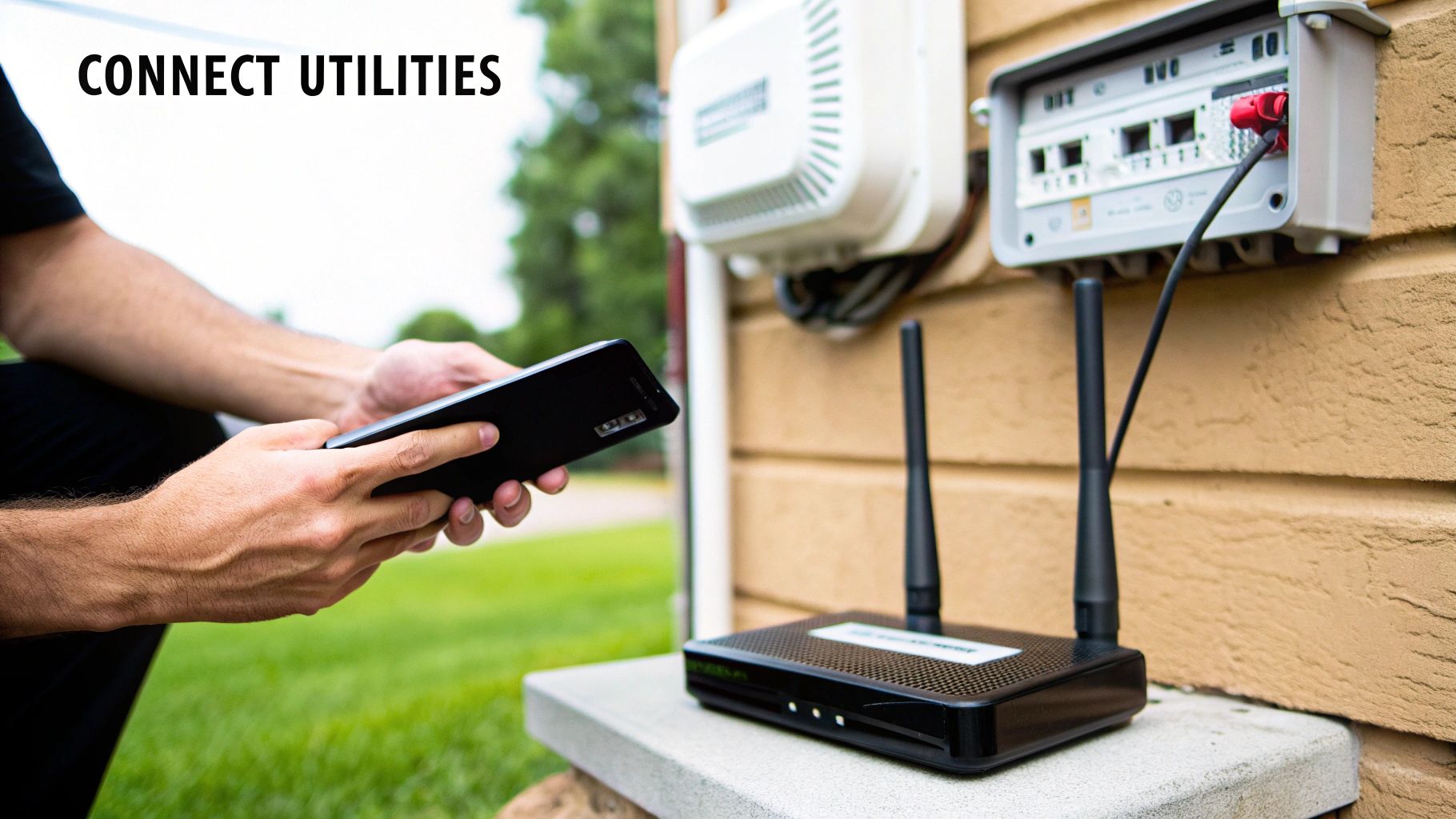
Whether you're moving to a metropolitan area with NBN Co connectivity or a regional location with different providers, organising utilities in advance is crucial. Properly managing these accounts also ensures you receive a final, accurate bill for your old address and avoid paying for services you no longer use, a key task in any thorough moving into a new house checklist.
How to Implement This Step
Coordinating with multiple providers like Origin Energy or AGL requires forward planning. The process involves scheduling both a final reading and disconnection at your current home and a new connection at your future one.
- Book Well in Advance: Contact your utility providers at least four weeks before your move. This provides enough time to schedule technicians if needed, especially for new internet connections.
- Stagger Your Dates: Arrange for disconnection at your old property to occur the day after you move out. Schedule connection at your new home for the day before or the day of your arrival to ensure everything is working when you get there.
- Compare and Connect: Research the best internet options (NBN, 5G, etc.) available at your new address. Moving is an excellent opportunity to compare plans and find a better deal.
- Confirm Final Readings: Request a final meter reading at your old property to ensure you are only billed for your actual usage. Keep a record of these readings for your reference.
4. Update Banking and Financial Institution Records
Ensuring your financial institutions have your new address is a non-negotiable step in your moving checklist. From your bank and credit card providers to your superannuation fund and insurance companies, failing to update your details can lead to missed statements, potential security breaches, and even lapses in crucial insurance coverage. Timely updates ensure you continue receiving sensitive financial mail securely and remain compliant with institutional requirements.
Updating your financial records promptly is essential for maintaining the validity of your insurance policies. For instance, moving to a new suburb or state can significantly impact your car, home, and contents insurance premiums. Your new location might be in a different risk zone for theft, floods, or fires, which directly affects your policy terms and costs. Keeping these details current is a core part of any effective moving house checklist for Australia.
How to Implement This Step
Managing your financial updates systematically prevents critical oversights. Start by compiling a list of every financial service provider you use and update them methodically, preferably online through their secure portals.
- Act Within Two Weeks: Aim to notify all financial institutions of your new address within two weeks of your move.
- Verify the Change: After updating your details, check your next statement or log in online to confirm the new address has been correctly registered.
- Review Insurance Policies: When updating your address with insurers, ask if the change affects your premium or coverage. This is especially important for interstate moves.
- Update Superannuation: Don't forget your super fund. An accurate address ensures you receive annual statements and important communications regarding your retirement savings.
5. Book Your Moving Company and Arrange Transportation
Selecting and booking a professional moving company or organising your own transport is a cornerstone of any successful Australian move. This step involves researching reputable removalists, comparing quotes, scheduling dates, and ensuring you have adequate insurance to protect your belongings during transit. It's a significant logistical task that directly impacts the cost, stress, and efficiency of your relocation.
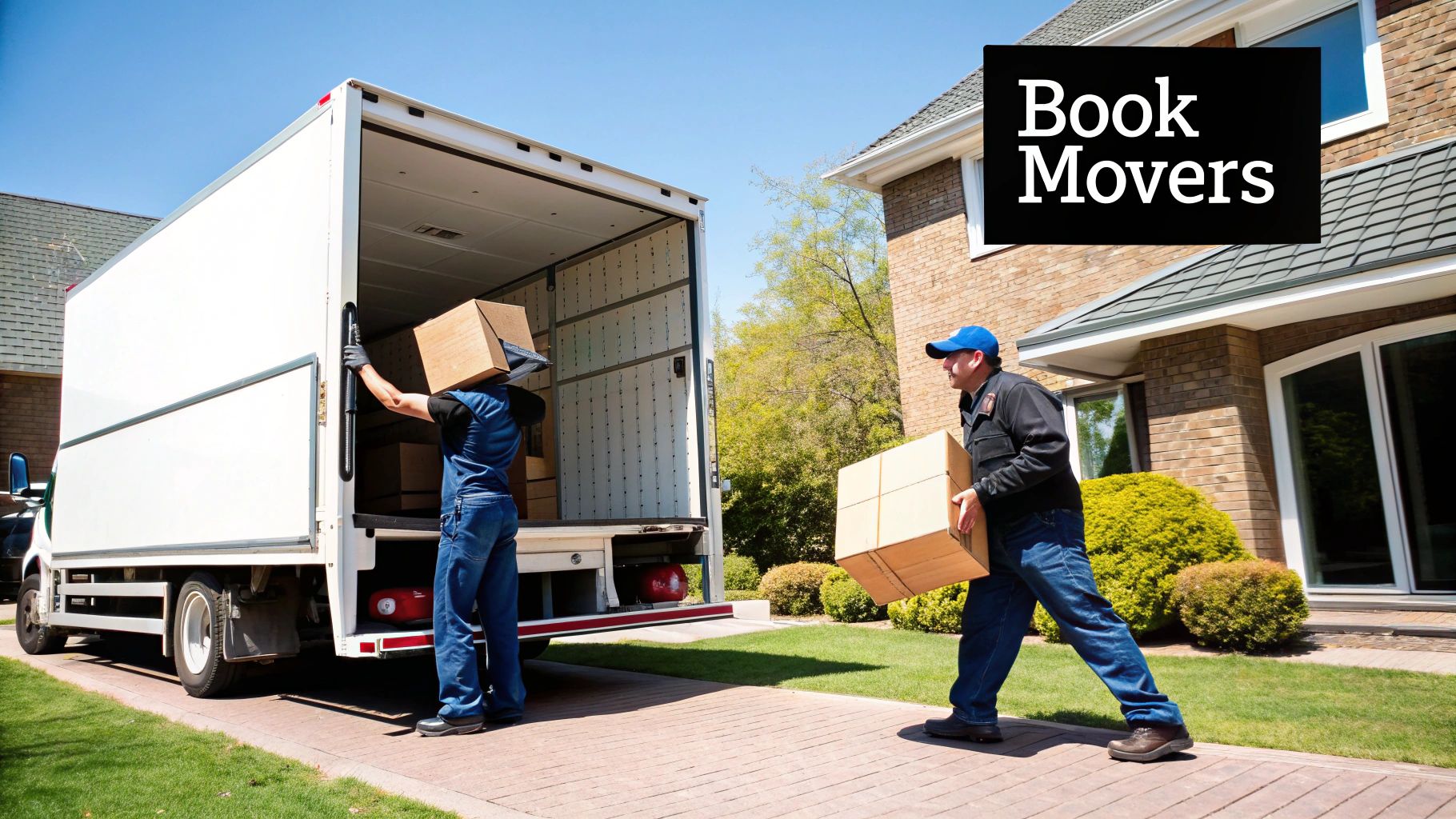
Whether you're undertaking a major interstate move from Sydney to Melbourne or simply moving across town, engaging professionals can save you time and prevent damage to your valuables. Alternatively, for smaller local moves, a DIY approach with a hired truck might be more cost-effective. The key is to assess your needs early and secure your arrangements well in advance.
How to Implement This Step
Finding the right moving solution is crucial for a smooth transition and should be a priority on your moving checklist in Australia. Research and early booking are essential, especially during peak seasons.
- Book Early: For interstate moves, aim to book your removalist 4 to 8 weeks in advance. For local moves, 2 to 4 weeks is usually sufficient, but booking earlier is always safer.
- Verify Credentials: Look for movers who are members of the Australian Furniture Removers Association (AFRA). This accreditation ensures they meet high standards for training, equipment, and service.
- Get Multiple Quotes: Contact at least three different companies to get detailed, written quotes. Compare not just the price but also the inclusions, such as packing materials, insurance coverage, and disassembly/reassembly services.
- Check Insurance: Confirm the removalist’s insurance coverage and determine if you need additional transit insurance for high-value items. Don't assume your home and contents insurance will cover goods in transit. For more guidance, see this detailed guide on choosing the right removals firm for your move.
6. Transfer or Update Subscriptions and Memberships
An often-overlooked task in any comprehensive moving checklist Australia is updating your various subscriptions and memberships. This crucial step ensures uninterrupted access to services you enjoy and prevents billing errors, missed deliveries, or security issues related to your personal data being sent to an old address. Failing to update these can lead to everything from a missed monthly subscription box to a lapsed professional membership.
Whether it’s your local gym membership, a streaming service like Stan, or a professional body membership, each requires your new address to function correctly. This is particularly relevant for services with regional variations, like certain media content or nationwide gym chains that may have different facilities or pricing structures depending on the location.
How to Implement This Step
Methodically updating your services prevents future headaches. The key is to be organised and proactive, addressing each subscription well before your moving day arrives.
- Create a Master List: Before you start packing, compile a detailed list of every subscription and membership you hold. This includes gyms (e.g., Fitness First), streaming services (Netflix, Foxtel), professional bodies (e.g., CPA Australia), and physical delivery boxes (e.g., wine or meal kits).
- Review and Cancel: Use this move as an opportunity to declutter your recurring expenses. Review your list and cancel any services you no longer use or need, saving money in the process.
- Check for Service Availability: If you're moving interstate, confirm that your current services are available at your new location. Some gym chains or delivery companies may not operate in certain regional areas.
- Update Billing and Delivery Details: Log into each account online or call their customer service to update both your billing and delivery addresses simultaneously. Do this about two weeks before you move.
7. Register Your Vehicle and Update License Details
A crucial and legally mandated task on any Australian moving checklist is updating your vehicle registration and driver's license details. This must be done with your state or territory's transport authority promptly after relocating. Failing to do so can result in fines, demerit points, and potential complications with insurance claims, as your official records will not reflect your current residential address.
This administrative step ensures you remain compliant with road laws and that all correspondence, such as registration renewals and infringement notices, is sent to the correct address. Whether moving across suburbs or interstate, keeping your vehicle and license information current is a non-negotiable part of a responsible move, protecting you legally and financially.
How to Implement This Step
Updating your details is generally a straightforward process, with most states offering convenient online services to avoid queues at a physical service centre. It's an essential item for your moving checklist Australia to ensure a seamless transition.
- Act Promptly: Most states, like NSW and Victoria, legally require you to update your address within 14 days of moving. For interstate moves, you will need to transfer your registration and license to the new state entirely, which often has a tighter timeframe.
- Gather Your Documents: Have proof of identity and your new residential address (like a utility bill or lease agreement) ready. For interstate transfers, you may also need a vehicle inspection certificate.
- Use Online Portals: Take advantage of digital services like Service NSW, VicRoads, or the Queensland Department of Transport and Main Roads to update your details quickly and efficiently from your new home.
- Inform Your Insurer: Once your registration address is updated, immediately notify your car insurance provider. Your premium may be adjusted based on your new postcode, and having an incorrect address can void your policy.
8. Notify Medical and Healthcare Providers
Ensuring a seamless transition of your healthcare is a non-negotiable part of any Australian moving checklist. Informing your general practitioner (GP), dentist, specialists, and pharmacist of your move prevents disruptions to your care, such as missed appointment reminders, delayed test results, or lost prescriptions. This is especially crucial for individuals managing chronic conditions or families with ongoing medical needs.
Whether you're moving to a regional area where new providers may be scarce or relocating interstate where specialist referral systems differ, proactive communication is key. This step guarantees that your medical history remains accessible and your health continues to be a priority, no matter where your new home is. A well-organised move considers not just your belongings, but your well-being too.
How to Implement This Step
Managing your healthcare information during a move requires a methodical approach to ensure nothing is overlooked. A smooth handover protects your continuity of care and simplifies interactions with new medical professionals.
- Request Medical Records: Before you move, ask your current GP for a copy or a summary of your medical records. This provides your new doctor with a complete health history.
- Update Medicare Details: Change your address with Medicare as soon as possible. This can be easily done online through your myGov account linked to Medicare.
- Research New Providers: If possible, identify and register with a new GP, dentist, and pharmacy in your new suburb or city before you move.
- Transfer Prescriptions: Inform your regular pharmacy of your move. They can advise on how to transfer any remaining prescriptions or provide you with a list of your current medications.
- Notify Specialists: If you see any specialists, such as a cardiologist or dermatologist, inform their offices of your new address and ask about the process for transferring referrals if you are moving interstate.
9. Arrange Childcare, School Enrollment, and Education Services
For families with children, one of the most significant parts of any moving checklist in Australia is managing the transition of childcare and schooling. This step is crucial for ensuring educational continuity and a smooth emotional adjustment for your children. Organising these services well in advance minimises disruption and provides stability during an otherwise unsettled period.
Whether you are moving from Sydney to Perth and navigating a new state education system or simply securing a place in a high-demand Melbourne childcare centre, proactive planning is essential. A well-managed school transition helps children feel secure and excited about their new home, making the entire relocation process easier for the whole family.
How to Implement This Step
Managing your child's educational move requires research, timely applications, and clear communication with both old and new institutions. Getting this right provides peace of mind that their learning and development will not be compromised.
- Research Early: Begin researching schools and childcare centres in your new area three to six months before your move. Consider factors like curriculum, reputation, and proximity.
- Enrol Promptly: Popular schools and childcare facilities often have long waiting lists. Enrol your children as early as possible, sometimes up to 12 months in advance, to secure a spot.
- Transfer Records: Contact your child’s current school to request their academic records and transfer documents. Provide these to the new school to facilitate a smooth placement process.
- Plan a Visit: If possible, arrange for your child to visit their new school or meet their new teachers before their first day. This can help ease anxiety and build familiarity.
10. Declutter and Organise Belongings Before Packing
A crucial, often underestimated, part of any moving checklist in Australia is to systematically declutter your home before you even think about packing a single box. This process involves sorting through all your possessions and deciding what to keep, sell, donate, or dispose of. By reducing the volume of items you need to move, you can significantly lower removalist costs, simplify the packing process, and ensure a fresh, organised start in your new home.
Whether you're downsizing from a large family house to a city apartment or simply clearing out years of accumulated possessions, decluttering is non-negotiable. It transforms the overwhelming task of moving into a manageable project, saving you time, money, and stress. A well-organised move begins with a well-organised home.
How to Implement This Step
Tackling decluttering room by room makes it far less daunting. By starting early and using a structured approach, you can make significant progress. For a more detailed guide, explore these expert tips on how to declutter before you move.
- Start Early: Begin decluttering at least 6-8 weeks before your moving date to avoid a last-minute rush.
- Use the Four-Box Method: Set up four distinct areas or boxes labelled: Keep, Sell, Donate, and Dispose. Address every item with this system.
- Sell or Donate Unwanted Items: Use platforms like Facebook Marketplace or Gumtree to sell valuable items. For donations, schedule a pickup with Australian charities like Vinnies or the Salvos.
- Dispose of Rubbish Thoughtfully: For items that can't be sold or donated, check your local council's hard rubbish collection dates or hire a skip bin. When dealing with old gadgets, it is important to learn how to dispose of electronic waste responsibly to protect the environment.
- Be Ruthless: A good rule of thumb is to let go of anything you haven't used in the past year.
Australian Moving Checklist — 10-Point Comparison
| Task | Implementation complexity 🔄 | Resource requirements ⚡ | Expected outcomes ⭐📊 | Ideal use cases & tips 💡 |
|---|---|---|---|---|
| Notify Australia Post of Address Change | Low 🔄 — simple online or in‑office process | Low ⚡ — fee AUD $11.50–$30; internet/visit | High ⭐📊 — reliable temporary mail redirection | Essential early step; update 1–2 weeks prior; choose longer period if unsure 💡 |
| Update Address with State and Federal Government Services | Medium–High 🔄 — multiple agencies, differing rules | Medium ⚡ — time, ID docs; some in‑person visits | Critical ⭐📊 — legal compliance, tax and voting accuracy | Required for interstate moves; update within statutory timeframes and keep confirmations 💡 |
| Arrange Utilities and Change Connection Details | Medium 🔄 — coordinate multiple providers and dates | Medium ⚡ — connection fees AUD $50–$200; scheduling | High ⭐📊 — services available at move‑in; avoids disruption | Contact 4–6 weeks ahead; arrange final meter reads and compare providers 💡 |
| Update Banking and Financial Institution Records | Medium 🔄 — multiple institutions, possible verifications | Low–Medium ⚡ — online forms, ID checks | High ⭐📊 — ensures statements, insurance and tax documents reach you | Update within 2 weeks; verify statements and insurance implications 💡 |
| Book Moving Company and Arrange Transportation | High 🔄 — quotes, scheduling, insurance choices | High ⚡ — cost AUD $2,000–$15,000+ (interstate); logistics | High ⭐📊 — reduced damage risk, time saved, insured transport | Get 3–5 quotes; book 4–8 weeks ahead; verify AFRA and written inclusions 💡 |
| Transfer or Update Subscriptions and Memberships | Low–Medium 🔄 — many small accounts to update | Low ⚡ — mainly online account time | Medium ⭐📊 — prevents service/billing interruptions | Make a subscription list; update immediately and cancel unused services 💡 |
| Register Vehicle and Update License Details | Medium 🔄 — state‑specific processes and time limits | Medium ⚡ — fees AUD $30–$150; proof of residence | Critical ⭐📊 — legal compliance and valid ID/registration | Update within 14 days (varies); use online services where available and carry documents 💡 |
| Notify Medical and Healthcare Providers | Medium 🔄 — multiple providers; record transfers | Medium ⚡ — time to request/transfer records; Medicare update | High ⭐📊 — continuity of care; correct prescriptions and notices | Request records before moving; update Medicare online and find new local providers if needed 💡 |
| Arrange Childcare, School Enrollment, and Education Services | High 🔄 — enrollment timelines and waitlists | High ⚡ — long lead times, documentation, research | High ⭐📊 — ensures education continuity and placement | Research 3–6 months ahead; enroll early and request school records; plan for waitlists 💡 |
| Declutter and Organize Belongings Before Packing | Medium 🔄 — time‑intensive sorting process | Low–Medium ⚡ — time, possible sale/donation logistics | High ⭐📊 — lower moving costs, easier unpacking, less clutter | Start 6–8 weeks out; use 4‑box method (Keep/Sell/Donate/Dispose); sell or donate unwanted items 💡 |
Ready to Make Your Move? Let's Get Started
Navigating a move, whether it's across Melbourne suburbs or interstate to a new city, can feel like a monumental task. The sheer volume of administrative updates, logistical planning, and physical labour can easily become overwhelming. However, by transforming this mountain of work into a series of manageable steps, you reclaim control and pave the way for a smooth, organised transition into your new home or office.
This comprehensive moving checklist for Australia has been designed to do exactly that. We’ve broken down the entire process, from the initial eight-week countdown to the final tasks after you’ve unpacked the last box. The key takeaway is simple but powerful: proactive planning is your greatest asset. Addressing critical tasks like notifying Australia Post, updating your details with Services Australia, and arranging utility connections well in advance prevents last-minute chaos and ensures continuity of essential services.
Mastering Your Relocation Strategy
The most successful moves are not about luck; they are the result of methodical preparation. Think of this checklist as your strategic blueprint. Each item, from booking a reputable moving company to decluttering your belongings, is a crucial component that contributes to the overall success of your relocation.
Remember these core principles we've covered:
- Start Early: Time is your most valuable resource. Beginning the process two months out gives you the breathing room to handle unexpected issues without stress.
- Be Systematic: Work through the checklist chronologically. Tackling tasks in a logical order, like organising your belongings before you start packing, saves significant time and effort down the line.
- Centralise Your Records: Keep a dedicated moving folder or digital document with all your important contacts, booking confirmations, and receipts. This simple organisational habit is a lifesaver on a hectic moving day.
By embracing this structured approach, you do more than just get from Point A to Point B. You minimise the risk of misplaced mail, service disruptions, and the financial strain of last-minute bookings. You create a seamless experience that allows you to focus on the excitement of starting a new chapter, rather than the stress of the move itself. Your future self will thank you for the diligence you put in today.
Ready to tick off the most important item on your list? Partnering with a trusted, professional removalist is the cornerstone of a stress-free move. Let the experienced, police-checked team at Get n Go Removals Melbourne handle the heavy lifting with expert care and efficiency. Get n Go Removals Melbourne offers a seamless service, from professional packing to secure transport, ensuring your belongings arrive safely so you can focus on settling in.