
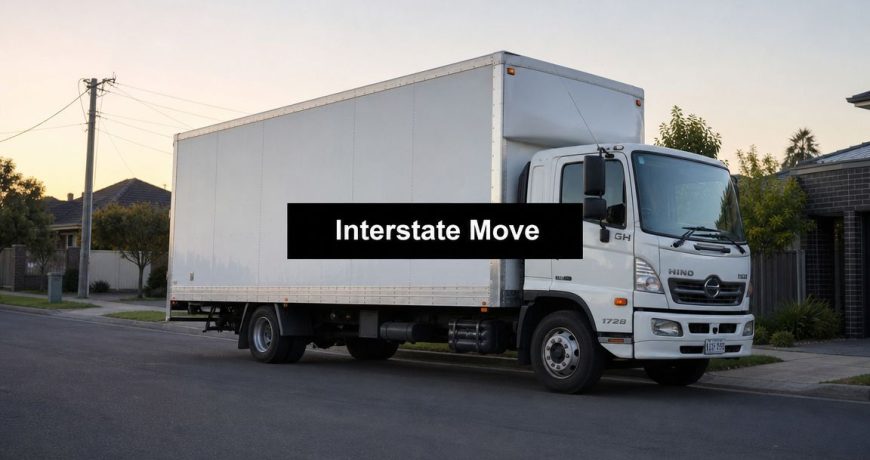
Inter State Transport: Your Ultimate Melbourne Guide 2026
Moving interstate usually starts the same way. One tab open for rental listings or settlement dates, another for school enrolments or office fit-outs, and a growing feeling that the actual move is bigger than expected. Most Melbourne customers aren't worried about the idea of a new start. They're worried about the handover between homes, the truck arrival window, the safe handling of furniture, and whether everything shows up when it should.
That concern is reasonable. An interstate move isn't just a longer local move. It has more timing dependencies, more planning around access, and more pressure on packing quality because your goods are travelling far beyond the usual suburban run. In Australia, interstate transport sits on a small number of major corridors, and the practical reality is that moves between cities often involve very long distances and tightly planned schedules.
Customers moving from Melbourne to Sydney or Brisbane often ask the same first questions. How does the process work? What affects cost? How long will it take? What happens if the destination has poor access? Those are the right questions to ask.
Your Interstate Move from Melbourne Starts Here
A typical call comes from someone standing in a half-packed lounge room in Melbourne, trying to line up several moving parts at once. They've signed a lease in Sydney, or they're heading to Brisbane for work, and the date looked manageable until they started listing everything that has to happen in order. Keys, elevators, fragile items, pet travel, utilities, storage, address changes. Suddenly the transport side feels like the part that could throw everything off.
That's where a calm process matters.
A first interstate move always feels more uncertain than it should because the intricate processes behind the scenes are rarely visible. They see a truck on moving day. They don't see the booking checks, access questions, load planning, wrapping standards, route timing, or the way a well-run company builds a schedule around real conditions instead of guesswork.
If you're still comparing providers, it helps to look at a team that already handles a broad mix of Melbourne jobs, from local homes and apartments through to larger relocations. A good starting point is reviewing removalists near you in Melbourne so you can compare service style, access experience, and communication before you commit.
Practical rule: If a mover can't explain the full journey from uplift to delivery in plain English, they probably won't manage surprises well on the day.
The good news is that interstate transport becomes far less stressful once you break it into stages. You don't need to solve everything at once. You need a realistic plan, honest timing, and a mover who checks the details that usually get missed.
What Interstate Transport from Melbourne Involves
An interstate move has a clear operational sequence. Once you understand the sequence, the process stops feeling vague and starts feeling manageable.
In Australia, interstate transport is structurally concentrated on the east coast, with the National Land Transport Network linking major cities such as Melbourne, Sydney and Brisbane. That corridor-based system makes route reliability and careful scheduling critical for runs that often exceed 1,000 kilometres, as outlined in this overview of interstate transport corridors.

Phase one is the quote and planning stage
Here, the move is won or lost.
A proper quote isn't just a price list. It's a planning document. The mover should ask what you're taking, whether there are stairs, whether the pickup or delivery address has loading restrictions, whether you need packing, and whether any items need special handling. If they don't ask those questions, they're not really pricing the job. They're estimating blind.
For a deeper look at how long-distance jobs are structured, this guide for long-distance relocation is useful background reading before you lock in dates.
Phase two is uplift in Melbourne
“Uplift” means collection day. The crew arrives, protects floors and key furniture pieces where needed, loads in a safe order, and records what's travelling.
The loading pattern matters more on interstate work than many customers realise. Heavy items, fragile cartons, mattresses, tall furniture, and awkward pieces all need the right placement because they're travelling much further than they would on a suburban job.
Phase three is linehaul
Linehaul is the long-distance transport leg between cities. The easiest way to think about it is this. Local moving gets your goods out of the property. Linehaul gets them across the state border on the main corridor.
This is why established east coast routes matter. Professional movers don't usually reinvent the route for each job. They work within proven schedules, departure windows, compliance requirements, and delivery sequences.
Linehaul is where interstate moving becomes a logistics job, not just a lifting job.
Phase four is delivery and unloading
Delivery is the final handover, but it's not just “reverse the load”. The destination property often changes the plan. Apartment lifts, narrow driveways, access hours, building rules, and where each item needs to go all affect the unload.
A smooth interstate move usually looks uneventful from the customer side. That's the point. Good planning removes friction before the truck turns up.
Decoding Interstate Moving Costs and Transit Times
The two questions customers care about most are simple. What will it cost, and when will my things arrive?
The answer to both depends on more than distance. Interstate pricing is shaped by the space your goods take up in the truck, the labour needed at each end, and the complexity of both properties. Timing depends on service type, scheduling, and how your job fits into the broader run.
What usually affects the price
The biggest cost drivers are practical, not mysterious. A larger household takes more truck space. Difficult access means more labour. Added services increase handling time and material use.
Common pricing factors include:
- Volume of goods: Movers often price around the load size, commonly described in cubic metres or by the inventory list.
- Property access: Stairs, long walks from truck to door, lift bookings, or limited loading areas can change labour time.
- Special items: Pianos, pool tables, antiques, oversized furniture, gym equipment, and motorbikes need extra preparation.
- Packing level: Owner-packed moves usually cost less than full packing, unpacking, and furniture reassembly.
- Storage needs: If settlement dates don't align, the move may need a storage leg before final delivery.
If you want a broader breakdown of typical moving charges, this page on the cost of movers helps frame the main variables.
Dedicated truck versus consolidated service
This is one of the most important trade-offs.
A dedicated truck carries only your load, or primarily your load, from Melbourne to destination. It usually gives tighter timing and fewer handling points, but it often costs more.
A consolidated service combines multiple compatible jobs on a scheduled corridor run. That can be more economical, but the timing window is usually broader because the truck sequence needs to work across several pickups and deliveries.
Customers sometimes compare this decision to vehicle transport because the trade-off is similar. If you want context on how transport pricing changes over long distances in another logistics category, this resource on compare 2000-mile car transport costs is a useful parallel.
Estimated interstate transit times from Melbourne
These timeframes are best treated as planning windows, not promises detached from access, service type, and schedule.
| Destination City | Estimated Transit Time (Business Days) |
|---|---|
| Sydney | Short transit window, often scheduled on regular east coast runs |
| Brisbane | Moderate transit window, depending on service type and load coordination |
| Canberra | Similar to Sydney corridor timing, subject to booking schedule |
| Gold Coast | Comparable to Brisbane timing, with local delivery access affecting final handover |
| Adelaide | Usually shorter than northbound east coast runs, depending on departure schedule |
Ask for a delivery window, not just a date. The answer tells you whether the mover is speaking from an actual schedule or from wishful thinking.
What slows a move down
Transit delays usually come from one of four causes:
- Late booking, which limits your place on scheduled runs.
- Incomplete inventory, which causes load plan changes.
- Access problems at destination, especially in apartments or regional properties.
- Mismatch between service expectations and budget, such as wanting dedicated timing on a consolidated price.
The best quotes are the ones that explain these trade-offs clearly before pickup day.
Navigating Insurance Legalities and Mover Liability
Insurance is where many customers assume they're covered, only to discover later that they didn't understand what was included. Interstate moving is not the time to be vague about risk.
The first distinction to understand is this. Public liability and transit protection for your goods are not the same thing. One relates to damage or incidents involving third-party property or premises. The other concerns the items you've entrusted to the mover during transport and handling.

What to check before you book
Ask direct questions and ask for plain answers.
- What cover applies to my goods in transit: Don't assume all loss or damage scenarios are automatically included.
- What packing conditions apply: Some transit cover depends on who packed the items and how they were packed.
- What documentation will I receive: You want confirmation in writing, not a verbal summary.
- What happens if there is a claim: The claims pathway should be clear before the move starts.
A serious mover should also be able to explain operational compliance, not just paperwork. Professional interstate transport operates under the Heavy Vehicle National Law, enforced by the National Heavy Vehicle Regulator, which harmonises rules for mass, load restraint, and driver fatigue across participating jurisdictions. In practice, that means a compliant Melbourne-to-Sydney job requires multi-jurisdiction checks before loading, as outlined in this reference on interstate access and compliance frameworks.
Why legal compliance matters to customers
Customers sometimes think compliance is a back-office issue. It isn't.
If a company cuts corners on vehicle condition, load restraint, route suitability, or driver fatigue management, the risk lands on your move. Safety standards affect whether your goods travel on a well-prepared vehicle with a realistic schedule or on an overcommitted run that's already under pressure.
A cheap quote can become an expensive problem if the company hasn't done the legal and operational checks before pickup.
Your role in reducing risk
Customers have responsibilities too. Declare unusual items. Mention fragile goods, access issues, steep driveways, mezzanines, and anything that might affect loading or unloading. If the crew arrives to surprises, the plan changes under time pressure, and that's when mistakes become more likely.
Clear inventories, honest access details, and written confirmation of cover are the basics. None of that is optional on an interstate job.
Specialist Transport for Pianos Pool Tables and Vehicles
Some items need more than care. They need a different method entirely.
A fridge, sofa, and dining table can usually move well with standard wrapping, tie-downs, and solid loading technique. A grand piano, slate pool table, artwork, motorbike, or collector furniture piece is another category. These jobs require the right equipment, enough trained hands, and a plan for each stage from extraction to delivery.

Pianos need controlled handling
Pianos aren't just heavy. They're awkward, weight-biased, and sensitive to impact. Uprights and grands each need different handling methods, and stairs or tight turns can completely change the equipment required.
Professional crews typically assess:
- Access path: Door widths, turns, flooring, thresholds, ramps, and stairs.
- Protection method: Quilted blankets, secure strapping, corner protection, and stable positioning in the truck.
- Loading gear: Piano trolleys, tailgate lifters, skates, and tie-down points suited to the instrument.
If you're pricing this kind of move specifically, these piano moving prices give useful context for the extra labour and handling involved.
Pool tables usually need disassembly
A proper slate pool table is rarely moved as-is. It's usually dismantled, protected in sections, transported carefully, then reassembled and levelled at the destination. The danger isn't only breakage. It's also poor reinstallation that leaves the table playing badly.
The same principle applies to bulky gym equipment, marble-top furniture, and fragile display cabinets. The cost comes from skilled handling, not just extra muscle.
A closer look at specialist handling techniques is worth watching here:
Vehicles and motorbikes need separate planning
When customers ask whether a car or bike can go with household goods, the answer depends on the service model and the item itself. In some cases, vehicle transport is arranged as a separate logistics stream because restraints, loading systems, and insurance conditions differ from standard furniture removals.
The key question isn't “Can you take it?” It's “What method are you using, and how is it secured?” That's the detail that separates a specialist service from a vague yes.
Valuable and awkward items should never be treated as add-ons. They need their own handling plan before moving day.
Coordinating Packing Storage and Weekly Direct Runs
Packing, storage, and scheduling are often treated as separate decisions. In practice, they work best when planned together.
A customer might be vacating a Melbourne apartment before the new interstate property is ready. Another may be downsizing and unsure what will fit. An office move may need staged packing so daily operations can continue until the final handover. These aren't unusual complications. They're normal parts of inter state transport, and they're easier to manage when the move plan includes all three pieces from the start.
Choosing the right packing level
There's no single correct way to pack. The right option depends on time, budget, and the type of goods you're moving.
Some customers prefer a partial service. They pack clothes, books, and personal items themselves, then leave fragile kitchenware, artwork, or awkward furniture protection to the movers. Others want full packing and unpacking because work, kids, or settlement timing leave no room to do it properly.
A sensible packing plan usually falls into one of these approaches:
- DIY packing with supplied materials: Suitable if you're organised and have enough lead time.
- Partial professional packing: Good for breakables, glassware, electronics, and high-risk items.
- Full-service packing and unpacking: Best when time is tight or the move involves a large home or office.
Storage works best as part of the same move plan
Storage is most useful when it bridges a timing gap cleanly. That might be a short period between settlement dates, or a longer hold while a renovation or construction finish is delayed.
The practical benefit of integrated storage is control. Your goods are packed, documented, loaded, stored, and redelivered under one coordinated plan rather than being handed across multiple providers. If you're comparing options, these Melbourne storage prices are a helpful reference point for short-term and longer-term arrangements.
Why weekly direct runs matter
Australia's interstate freight task is dominated by road freight, which carries the vast majority of domestic freight by volume. Operationally, that means professional interstate removals are planned around scheduled departures, driver hours, and vehicle types on the main corridors linking cities such as Melbourne, Sydney and Brisbane, not just around raw distance, as discussed in this overview of interstate system conditions and performance.
That matters for customers because scheduled direct runs usually produce a cleaner process than ad hoc transport. Your move can be aligned with a known departure pattern rather than squeezed into whatever space appears at the last minute.
Get n Go Removals Melbourne states that it operates weekly direct east coast runs, which is the kind of service structure many customers look for when they want more predictable timing between Melbourne and major interstate destinations.
What works and what doesn't
The smoothest interstate moves usually have three things in common:
- Packing is finished before the crew arrives: Not half-finished, not “almost done”.
- Storage is arranged before it becomes urgent: Last-minute storage decisions create rushed handling.
- The departure run matches the customer's actual timeline: Not the ideal one, the actual one.
What tends not to work is trying to save money by underestimating the job. Customers underquote volume, leave access details out, or assume they can finish packing the night before. Those choices usually cost more in stress than they save in price.
Your Step-by-Step Interstate Relocation Checklist
A good checklist protects you from avoidable mistakes. It also gives you a way to test whether your mover is organised. If they can't answer practical questions at each stage, keep looking.

Eight weeks before
Start with the decisions that affect everything else.
- Shortlist movers: Compare communication quality, service inclusions, and how thoroughly they ask about access and inventory.
- Declutter properly: Don't pay to move items you already know you won't keep.
- Check destination details: Confirm building rules, delivery windows, lift bookings, driveway access, and parking constraints.
If you're considering different storage formats during planning, this article on shipping container storage gives useful general context on storage use cases and practical trade-offs.
Four weeks before
This is where the move becomes real. Bookings, notices, and early packing should already be underway.
- Pack non-essentials: Seasonal items, books, décor, archived files, and rarely used kitchenware can go first.
- Notify providers: Utilities, schools, insurers, banks, subscriptions, and delivery services all need address updates.
- Confirm inventory changes: If you add or remove major items after quoting, tell the mover now.
Two weeks before
Final planning matters more than speed at this stage.
A major overlooked risk in interstate transport is the last-mile destination. Route-specific permits, height and weight limits, and local access constraints can create problems at delivery even when the highway leg goes smoothly, as noted in this guidance on underserved access and transport constraints.
That's why customers should double-check:
- Driveway and street access: Can a larger truck reach the property safely?
- Building restrictions: Are there fixed loading times, basement height limits, or concierge booking rules?
- Room placement instructions: Label clearly so the crew doesn't have to guess at delivery.
The most frustrating interstate delays often happen at the destination address, not on the road.
One week before
This week is about reducing pressure on moving day.
- Pack an essentials kit with chargers, medications, documents, toiletries, clothes, and basic kitchen items.
- Finish loose jobs like dismantling anything you've agreed to handle yourself.
- Confirm booking details in writing including address, contact numbers, preferred arrival windows, and payment arrangements.
Moving day and arrival
Stay available, but don't micromanage the crew. Good movers work faster when they have clear access and one decision-maker.
Before the truck leaves Melbourne:
- Do a final walkthrough: Check cupboards, garage shelves, outdoor areas, and storage cages.
- Secure keys and documents: Keep them with you, not inside a random box.
- Confirm the destination contact: Especially if someone else will receive the goods.
At delivery, inspect the access path first. Open doors, protect pets, direct room placement, and raise any concerns before unloading starts.
Critical questions to ask any interstate mover
These questions reveal a lot very quickly:
- What exactly is included in the quote, and what would count as a variation?
- How do you handle difficult access at pickup or delivery?
- Is the service dedicated or consolidated?
- What cover applies to my goods while in transit and storage?
- What happens if my destination date changes?
- How are fragile or specialty items prepared and loaded?
- Who is my contact person if plans change during transit?
The right mover won't be annoyed by these questions. They'll answer them clearly.
If you're planning an interstate move and want a straightforward discussion about timing, packing, storage, and delivery access, Get n Go Removals Melbourne is one Melbourne-based option to contact for practical advice and a written moving plan.