
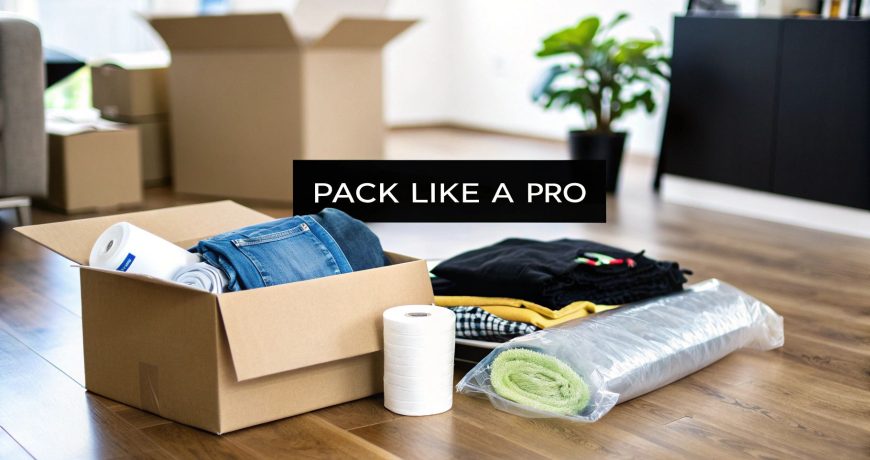
How to Pack Clothes for Moving Like a Pro
The secret to packing your clothes without all the drama? It starts way before you even think about grabbing a box. The real trick is to be strategic – a good old-fashioned declutter first, followed by getting the right supplies to keep your clothes in good nick. Get this part right, and the rest of the process is a breeze.
Your Smart Start to Packing Clothes for Moving
Let's be honest, moving is the perfect excuse to finally go through that wardrobe. We've all been there, moving clothes we haven't touched in years, only for them to take up precious space in the new place. The smartest way to kick things off is with a simple but super effective sorting session.
Don't try to tackle your entire wardrobe at once – that’s a one-way ticket to feeling overwhelmed. Instead, just pull things out one by one and make three piles: Keep, Donate, and Sell. This isn't just about clearing out clutter; it's about making your move leaner, your packing quicker, and your unpacking a whole lot less painful.
Sort and Categorise Your Wardrobe
Alright, once you've got your "Keep" pile, it's time to get organised. A bit of clever grouping now will save you from tearing your hair out later.
A great way to break it down is by:
- Season: Pull your summer gear apart from your winter woollies. If you’re moving in the middle of winter, you won’t be needing those board shorts and singlets on day one.
- Necessity: Think about what you'll absolutely need that first week. This is your 'essentials' pile – work uniforms, comfy clothes for unpacking, a couple of go-to outfits.
This simple sorting means you won't be digging through ten boxes just to find a jumper when a cold snap hits. For a bigger picture on how to tackle your entire move from the get-go, our guide on where to start when packing to move house is a fantastic resource.
Here’s a great little infographic that shows this simple three-step prep in action.
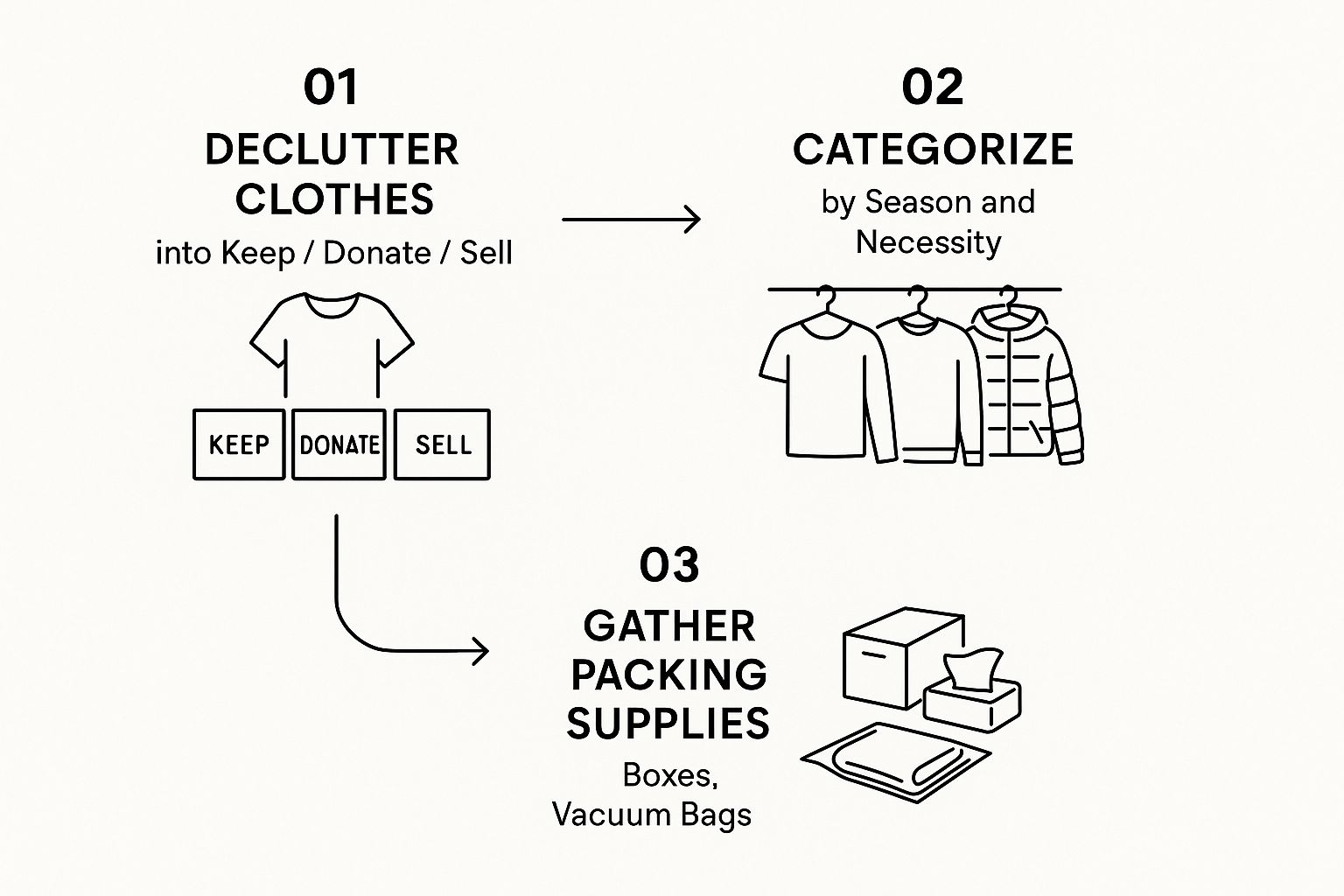
Seeing the workflow laid out like this—from decluttering right through to gathering your supplies—really helps make the whole task feel less daunting.
Proven Packing Methods for Every Type of Garment
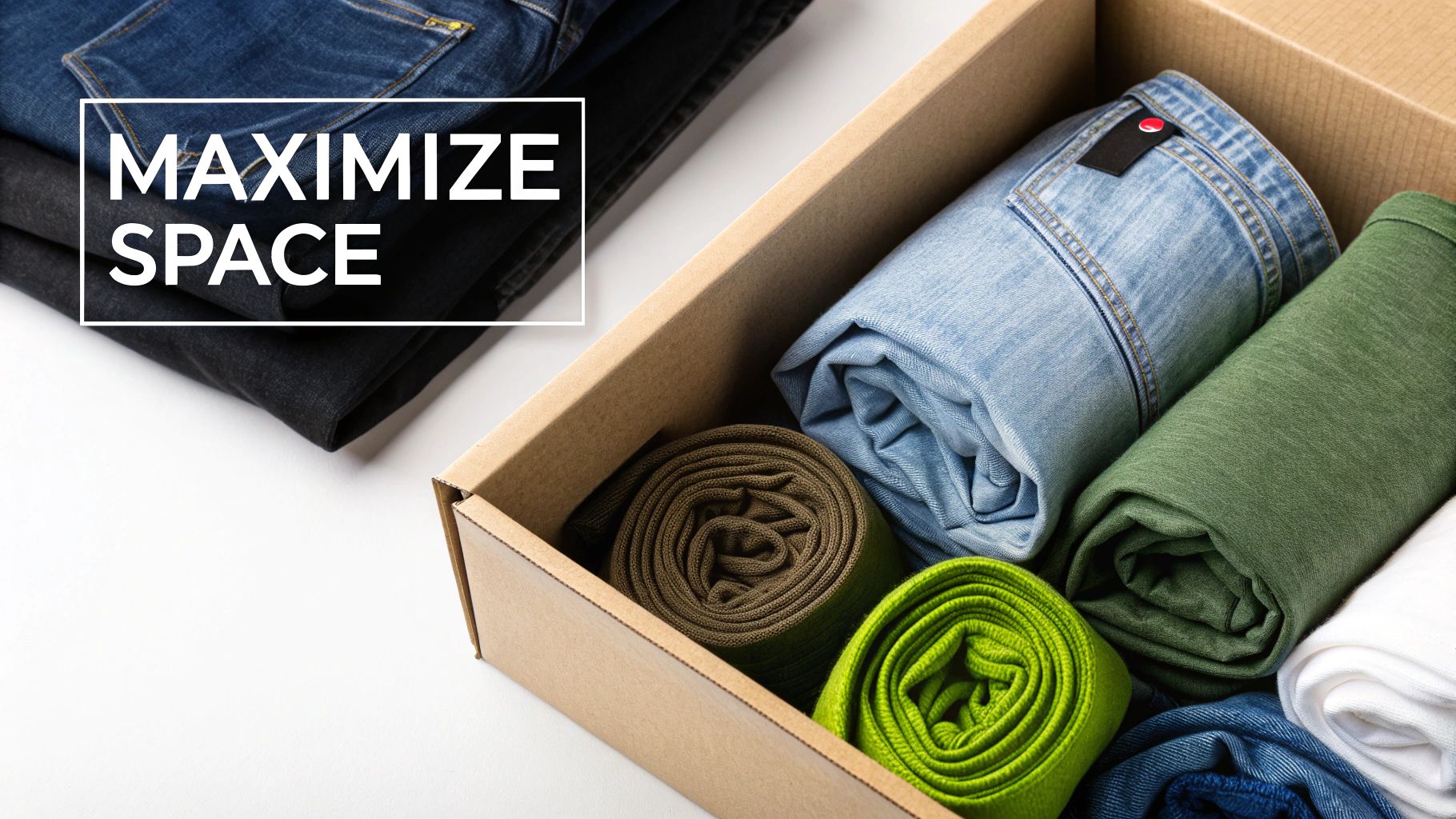
Not all clothes are created equal, so your packing strategy shouldn't be either. Just throwing everything into a box is a rookie error and one of the most common packing mistakes when moving home. When you tailor your method to the specific garment, everything arrives in great condition, making unpacking a whole lot less of a chore.
For all your everyday stuff like t-shirts, activewear, and jeans, the rolling technique is your best friend. Tightly rolling each piece saves a surprising amount of space and helps keep those deep-set wrinkles at bay. It lets you pack more into a standard box, creating a neat grid of clothing that's easy to see and grab.
Folding Delicates and Formal Wear
Now, when it comes to more delicate items—think woollen jumpers, silk blouses, or formal wear—folding is definitely the way to go. Rolling can stretch or damage these sensitive fabrics, which is the last thing you want.
Here’s a great little trick I’ve picked up over the years: place a sheet of acid-free tissue paper on the garment before you fold it. This simple step stops zips or buttons from snagging on other items in the box and lets the fabric breathe. If you're looking to really master the art of packing, it's worth exploring some effective methods for folding clothes to save space.
Pro Tip: When you're packing a box of folded items, always put the heavier garments like jumpers at the bottom. Lighter pieces like silk tops should go on top. This stops the weight from crushing your more delicate clothing during the move.
Using Wardrobe Boxes and Vacuum Bags
For some clothes, neither folding nor rolling will quite cut it. Wardrobe boxes are an absolute necessity for your suits, long dresses, and nice coats. These are basically tall boxes with a built-in hanging bar, so you can transfer items straight from your closet to the box, hanger and all. Your clothes travel upright, stay clean, and arrive ready to wear.
Bulky items like ski jackets, puffer vests, and doonas can eat up a ridiculous amount of box space. This is where vacuum-sealed bags become a game-changer. By sucking all the air out, you can shrink their volume by more than half, freeing up precious room for other essentials. You can’t afford to waste a single centimetre of space.
Protecting Delicate Fabrics and Valuable Items
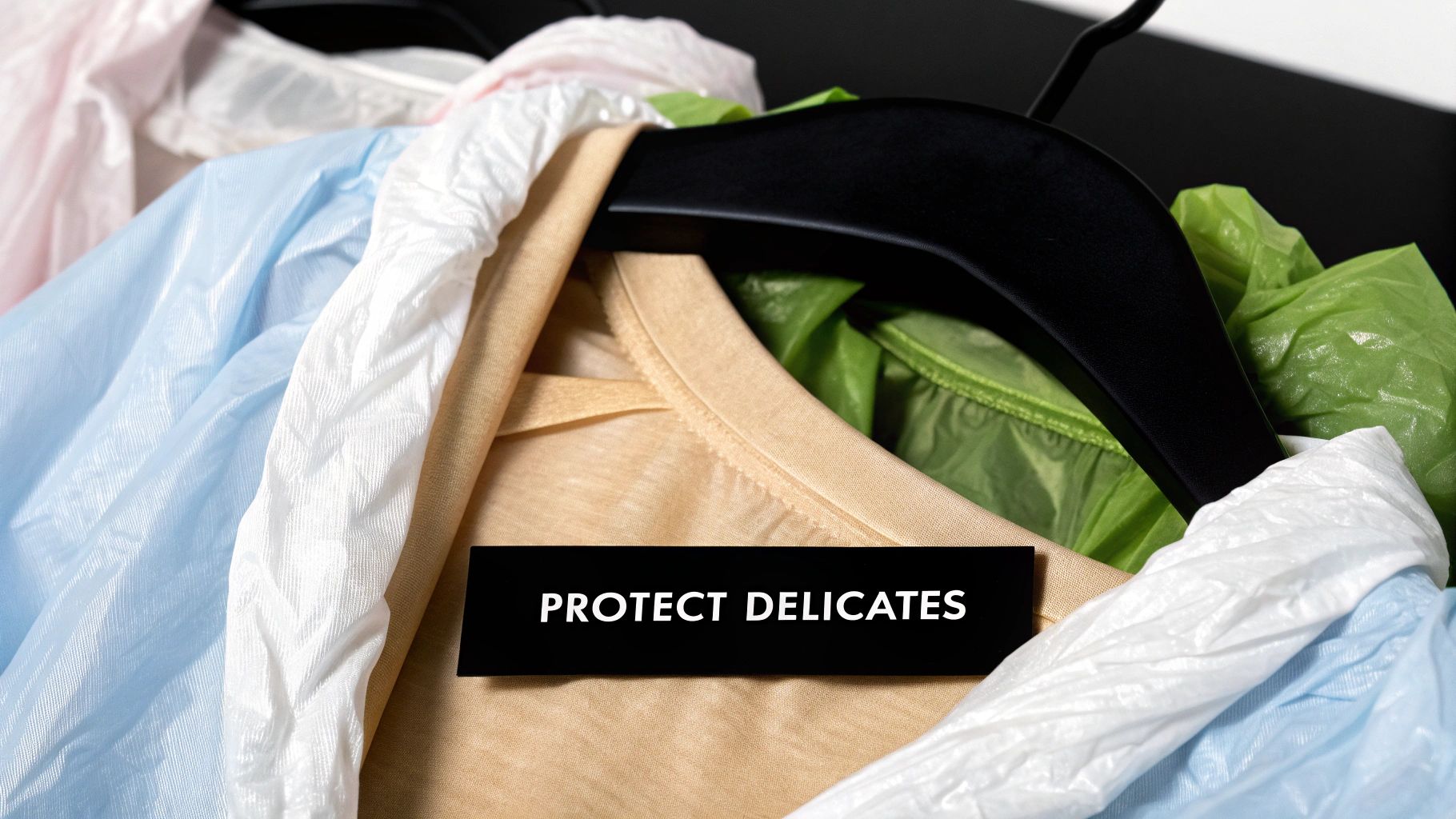
Let's be honest, some things in your wardrobe demand more respect than your trusty old t-shirts. When you're figuring out how to pack clothes for moving, it’s the items made from silk, wool, lace, or leather that need special attention to avoid snags, stretching, or other irreversible damage.
The golden rule here is to stop these delicate pieces from rubbing up against cardboard or even other clothes. This is where acid-free tissue paper becomes your best friend. Unlike regular paper, it won’t discolour your fabrics over time.
Just lay each delicate garment flat, place a sheet of tissue paper on top, and then fold it gently. It's a simple step, but that little barrier makes all the difference by cutting down on friction and the risk of damage.
Strategies for High-Value Garments
Now for the really important stuff: formal suits, wedding dresses, or that designer leather jacket you saved up for. These pieces are often major emotional and financial investments, so a little extra care goes a long way.
Wardrobe boxes are great for anything that needs to stay on a hanger. But for items that have to be packed flat, you'll need a bit more of a strategy.
- Handbags and Shoes: Stuff your leather handbags, boots, and shoes with crumpled acid-free tissue paper or even some rolled-up socks. This is a game-changer for helping them keep their shape and avoid creases.
- Formal Wear: For suits and gowns, a high-quality garment bag is your first choice. If you absolutely have to box them, lay the item down in a clean, lined box with plenty of tissue paper cushioning every single fold.
- Layering Correctly: Common sense, but easily forgotten. Always put the heaviest protected items at the bottom of the box. Your light, delicate silk scarf should always go right on top.
This careful approach is a lot like learning how to pack fragile items for moving – it’s all about smart layering and cushioning. And for those garments that really can't leave their hangers, looking into clothes racks with covers can be a fantastic way to give them maximum protection from dust and dirt during the move.
A Simple Labelling System for Stress-Free Unpacking
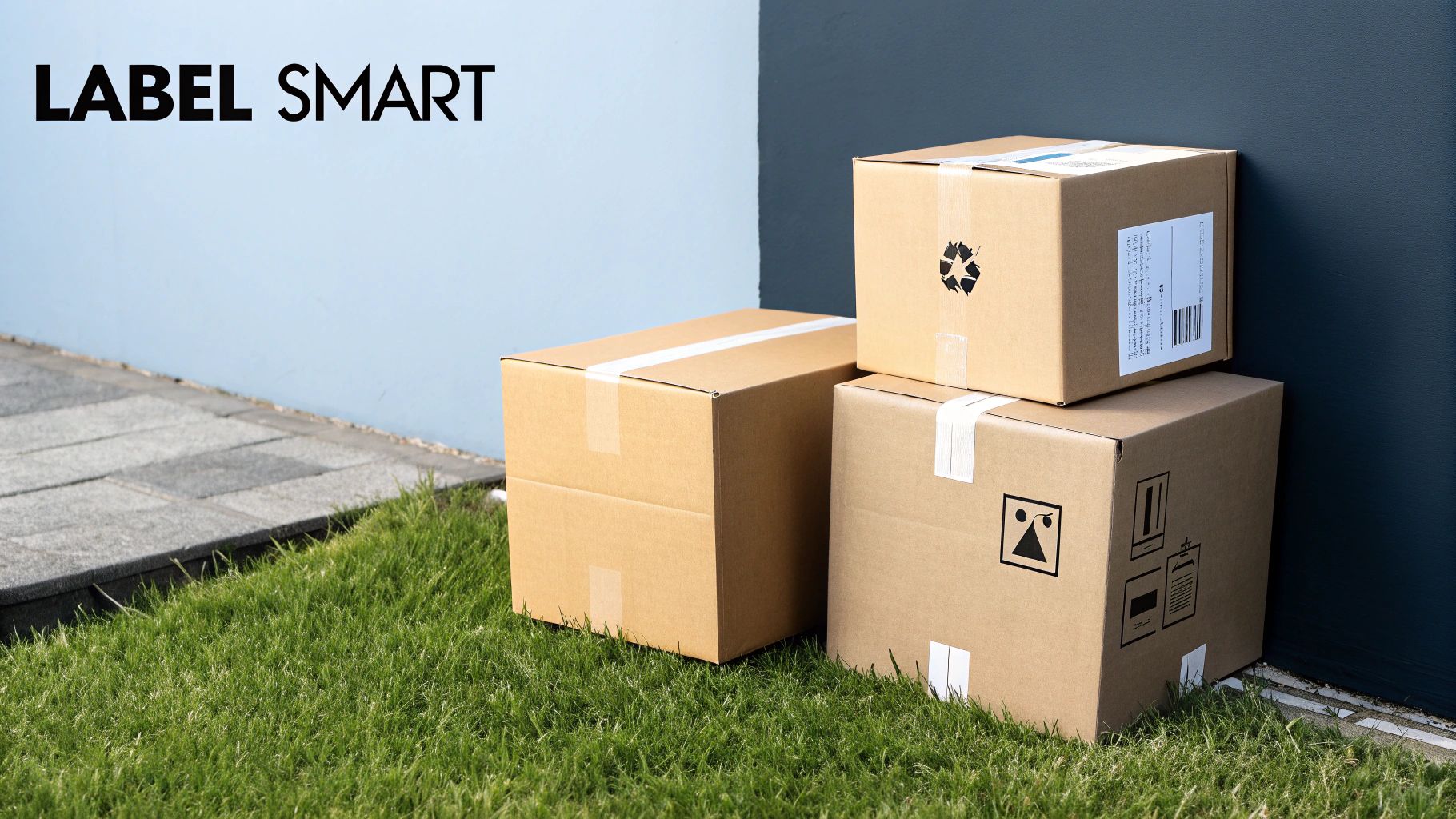
The time you put into labelling your boxes now is a massive gift to your future, post-move self. Trust me on this. A smart system goes far beyond just scrawling "Clothes" on the side; it’s what turns the chaos of unpacking into a straightforward, almost pleasant, task.
Instead of being vague, get specific. This little bit of effort will save you from that frustrating guessing game later when all you want is to find your favourite jumper. A simple but effective strategy is to create a mini-inventory right on the box.
Create a Clear Inventory on Each Box
Every time you seal a box of clothes, grab a thick permanent marker and jot down three key details on at least two sides of the box:
- Destination Room: Where does this box need to end up? Be clear: "Main Bedroom," "Chloe's Room," or "Linen Cupboard."
- Specific Contents: What’s actually inside? "Summer Dresses & Skirts" is a million times more helpful than a generic "Clothes."
- Owner: If you're moving with your family or housemates, just adding a name ("Liam's T-Shirts") stops any mix-ups before they start.
This level of detail is a crucial part of any good moving house checklist and lets you decide what to unpack first. A well-organised move is especially important now, as many Australians are making lifestyle changes that often involve moving into new spaces, requiring streamlined and efficient packing methods.
The 'Open First' Box: A Non-Negotiable Pro-Tip
Always pack one suitcase or a very clearly marked box with everything you'll need for the first 48 hours. This means a few changes of clothes, toiletries, pyjamas, phone chargers, and any other daily essentials. This single step guarantees you can settle in comfortably without desperately tearing through boxes to find a clean shirt after an exhausting day.
Getting Your Clothes to Their New Home Safely
You’ve done the hard yards with sorting, folding, and labelling. Now it's time to make sure all that effort pays off by getting your clothes to their destination in perfect condition. The first line of defence is a properly sealed box.
Don't be shy with the packing tape. A good, strong tape across the bottom and top seams is the minimum. For a bit of extra security, I always add a couple more strips across the edges. It’s a small thing, but it makes a big difference.
When it comes to loading the truck, a little bit of physics goes a long way. Your heavier boxes – think denim, jumpers, or even books – need to form a solid base. Keep the lighter boxes and especially the wardrobe boxes on top, making sure they’re wedged in securely so they can’t topple over. Nothing’s worse than opening a wardrobe box to find a crumpled heap at the bottom.
Weather-Proofing and Final Checks
The weather can turn in an instant, and a sudden downpour on moving day is the last thing you need. If rain is even a remote possibility, grab a roll of plastic cling wrap and give your cardboard boxes a quick wrap. It’s cheap, easy, and creates a surprisingly effective waterproof shield.
Moving house is a significant undertaking, and while DIY packing can save money, enlisting professional help ensures everything arrives safely and efficiently. This is especially true in the current climate, where people are increasingly focused on reducing stress and ensuring a smooth transition into their new homes.
Final Tip: As the big day gets closer, do one last sweep to make sure every box is taped up and clearly marked. A little organisation now pays off big time later. Knowing what to do the night before your movers arrive can turn a potentially stressful day into a much smoother one.
Of course, even the best-laid plans can hit a snag. As you get stuck into packing your wardrobe, a few questions are bound to pop up. Getting these sorted early on will keep things moving and give you the confidence that you’re doing it right.
Let's tackle some of the most common queries we hear from clients.
Probably the biggest question is what kind of boxes to use. While any sturdy cardboard box will work for your folded or rolled clothes, wardrobe boxes are an absolute game-changer for hanging items. For everything else, small to medium moving boxes are your best bet—this stops you from accidentally creating a box that’s too heavy to lift safely.
Another classic is what to do with the clothes you’ll need right up until the last minute. It's so easy to leave your go-to outfits until the end, but that's a recipe for a last-minute panic. The simple fix is to pack an "Open First" box or a dedicated suitcase about a week out. Fill it with enough clothes to see you through moving day and the first couple of days in your new place. Problem solved.
Should I Wash Clothes Before Packing?
Yes, absolutely. This is one step you really shouldn't skip. Packing clean clothes means you won’t have any strange odours setting into the fabrics while they’re sealed up, which is especially important if your things are going into storage for a bit.
Throwing dirty laundry into a box can also lead to mildew or even stains spreading to other clothes. That’s a headache you just don’t need when you arrive.
Washing everything beforehand is a gift to your future self. You can unpack straight into your new wardrobes and drawers, instead of being faced with a mountain of laundry after an already exhausting day.
Here's a simple rule I always follow: If you wouldn't hang it straight in your clean wardrobe right now, don't put it in a moving box. It ensures you get a truly fresh start in your new home.
How Far in Advance Should I Start Packing Clothes?
The sweet spot for starting to pack up your clothes is about two to three weeks before you move. The trick is to start with anything that’s out of season. Moving in the middle of summer? Get all your winter coats, heavy jumpers, and snow gear packed away first.
Tackling it piece by piece like this makes the whole job feel much less overwhelming. As moving day gets closer, you can start packing the clothes you don’t wear as often, leaving just your daily essentials for that "Open First" box we talked about.
Navigating the logistics of a move can be complex, but packing your clothes doesn't have to be. For a seamless moving experience from start to finish, trust the experienced team at Get n Go Removals Melbourne. Let our professional movers handle the heavy lifting so you can focus on settling into your new home. Contact us today for a free quote