Salvation Army Furniture in Melbourne: Donating and Pickup
Will the Salvos take that sofa on the morning you hand back the keys, or will the truck leave with it still in the hallway? Conventional advice treats a donation as a drop-off. On a Melbourne move, Salvation Army furniture is a logistics job. The local store decides what it can store and resell, and that answer can change from one suburb to the next.
I would sort every piece into three piles before anyone books a truck: confirmed, uncertain, and unlikely. A refused sofa on loading morning costs a second trip, blocks the path, and still needs a disposal plan. Plan the refusal before the van arrives, then load only what a store has already agreed to take.
How Salvation Army Furniture Stores Work
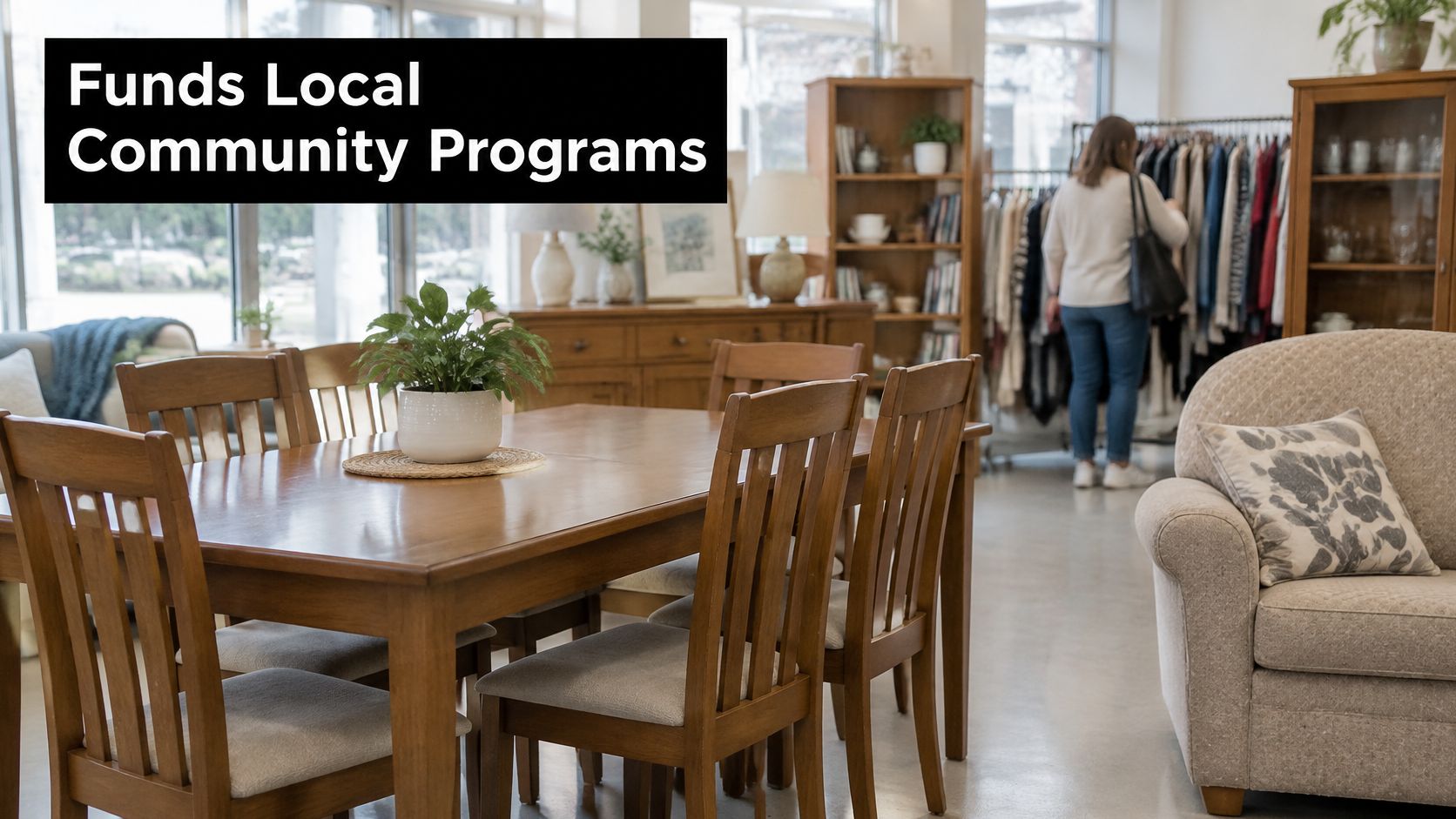
A Brunswick couple is leaving a two-bedroom rental, and the three-seater will not fit the next place. If a Salvos store takes that sofa, the path is short and practical. The piece reaches the store, staff assess its condition, a suitable item goes on the shop floor, and the sale helps fund Salvation Army community programs. Salvos Stores resell donated household goods, including furniture, and the profit from those goods supports that work.
That loop is older than the phrase circular economy. The organisation opened early recycling depots in Melbourne and Sydney in 1883, collecting, sorting, repairing and repurposing used goods while also providing employment, supplies and support, as Salvos Stores record. At The Anchorage Hostel in Abbotsford, recovered materials were repaired, fabric scraps were used to upholster furniture, and other waste was turned into mats for Melbourne businesses. Salvos stores have kept donated goods moving through that same loop for well over a century since.
What you find on the floor today
Stock reflects whatever local donors have handed over that week. A shopper might see sofas, dining sets, wardrobes, bookcases, office pieces and bed frames where the store has room to display them. Inventory turns over quickly, so a dining set on the floor on Monday can be gone by the weekend.
Two habits protect a buyer here. Ask whether the store can hold an item, and check dimensions and condition in person before you pay for a van. Buyers get a usable piece below new-retail prices, and donors keep a sound item in circulation.
It pays to understand how collected furniture is handled before assuming every donation is repaired and resold. For the Melbourne side of the process, our guide to donating furniture in Melbourne covers preparation and pickup. Each store sets its own acceptance rules item by item, which is why the answer that matters comes from the store that would receive your piece.
Which Furniture Salvos Accepts and Which It Refuses
A clean sofa can still ride home in the truck. Acceptance is decided store by store, so sort your furniture into three piles before you book anything: confirmed with a yes from the receiving store, uncertain until someone looks at it, and unlikely to be taken anywhere.
Usually in the table below means likely, not promised. The only reliable answer is a yes from the store that would receive the piece.
| Item | Usually accepted when | Often refused or restricted | Confirm before booking |
|---|---|---|---|
| Sofas and armchairs | Clean, undamaged, no strong odours or pet hair | Some stores exclude couches entirely | Whether the local store takes upholstered seating |
| Dining tables and chairs | Intact, stable, complete set | Chairs with broken joints or missing pieces | That every piece of the set is included |
| Wardrobes and bookcases | Solid, undamaged, dismantled when large | Oversized or water-damaged units | Height and width against what the store can handle |
| Bed frames and bed bases | Clean, undamaged, complete | Bed bases commonly restricted | Hygiene and safety rules before loading |
| Mattresses | Rarely accepted for resale | Restricted on hygiene and safety grounds | An alternative disposal route in case of refusal |
| Electrical goods | Working and safe, only if that store allows them | Some locations refuse electrical items | Whether electrical items are accepted at all |
| Treated outdoor timber furniture | A resaleable piece the store agrees to take | Treated timber is a controlled waste stream | How the store handles treated timber |
| Flat-pack pieces with missing parts | Accepted only when complete | Missing hardware or damaged panels | That all hardware is with the piece |
Why one sofa is taken and another is not
Australian Salvation Army stores commonly require furniture to be clean, undamaged, and suitable for resale. Restrictions can apply to mattresses, bed bases and electrical goods because of safety regulations, government requirements, repair costs, or limited resale value.
Treated timber is a different problem. Outdoor furniture and seating made from treated timber sit in a controlled waste stream under the Victorian EPA's treated timber guidance, so a refused treated-timber piece cannot go to the tip with the rest of the load.
The same sofa can pass at one shop and fail at the next because capacity is local. One Salvation Army op shop does not accept furniture or electrical items because of limited storage. Some stores refuse furniture altogether and offer no pickup, which leaves a refused item travelling back on the same truck.
Practical rule: Photograph the piece, disclose damage or treatment, and get acceptance confirmed before that item goes on a moving truck.
Confirmed pieces earn a place on the truck. Uncertain pieces get a photo and a phone call first. Anything marked unlikely or restricted stays off the donation pile entirely: mattresses, excluded couches, incomplete flat-pack, and treated outdoor timber need a sale, a repair, or a council-approved disposal path arranged before settlement, not discovered at the shop door.
Preparing Furniture for Donation or Moving Day
A store judges what it can see and carry. Preparation is what stops a sound piece from being refused for dirt, missing screws, or a fresh scuff.
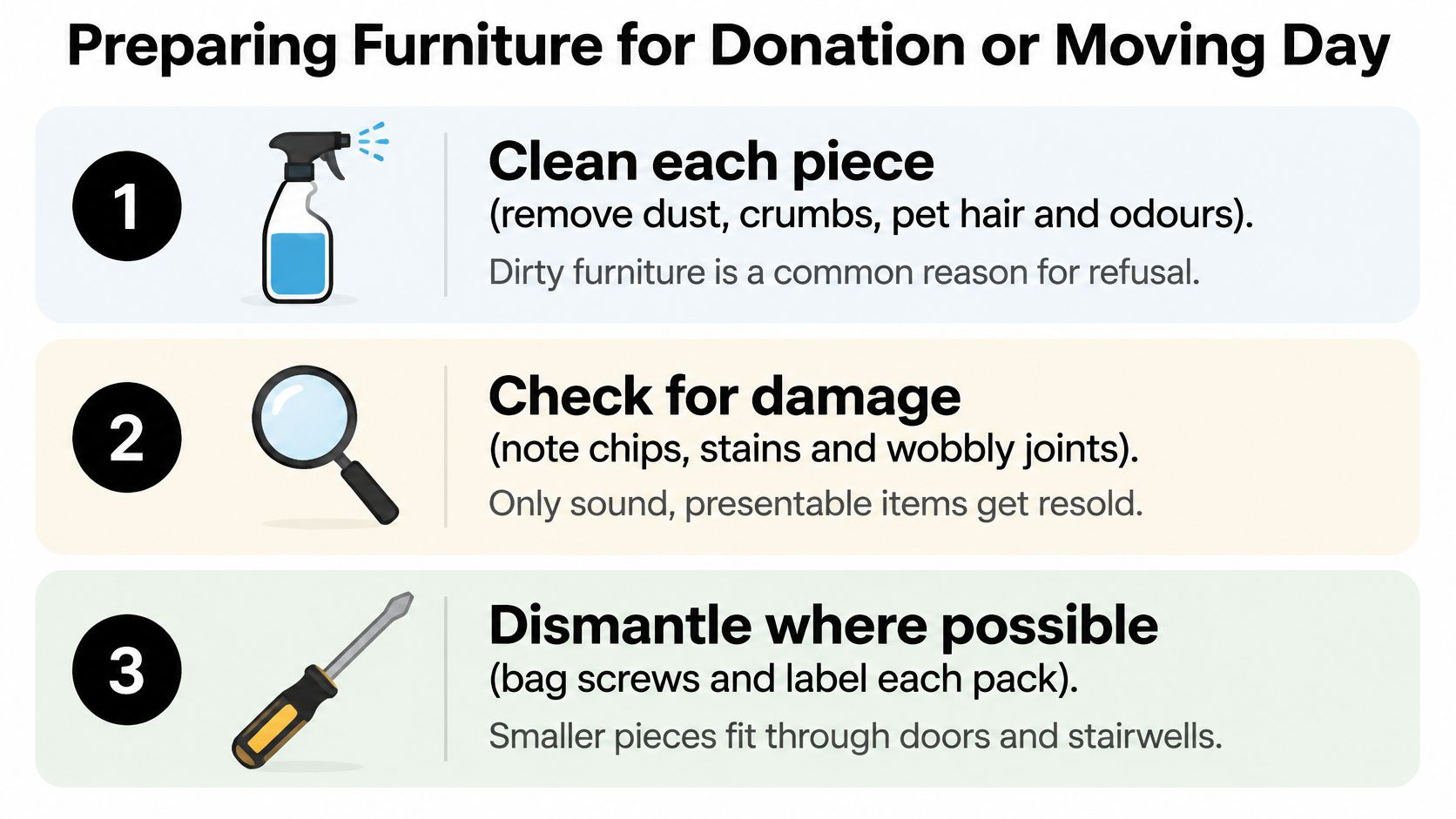
Work through these actions in order. Leave the photos and the store message for the booking steps.
- Clean each piece and remove dust, crumbs, pet hair and odours. Dirty furniture is a common reason for refusal, even when the frame is solid.
- Empty drawers, shelves and loose contents. A book left in a wardrobe becomes a trip hazard on the stairs, and the store should receive an empty piece.
- Separate treated timber from untreated timber where you reasonably can. In Victoria, treated timber is a controlled waste stream, and only untreated timber is suitable for land application as mulch or sawdust.
- Remove loose hardware, bag it, tape the bag to the piece, and label each part. A dining set or flat-pack is far more likely to be accepted when it arrives complete.
- Disassemble large wardrobes and bookcases where it's safe to do so. Smaller panels pass doorways and stairwells that a full carcass will not.
- Wrap legs, corners and mirrors in moving blankets. One deep scuff can turn a resaleable table into a refusal.
- Label anything damaged, incomplete, stained or uncertain. That label keeps it off the confirmed donation stack.
Labels that match the three piles
Use the same words on the tape that you'll use when you sort later: confirmed, uncertain, unlikely. We advise customers to declutter, label boxes, and secure valuable items before the move, and the same habit applies to furniture that might be donated. A short declutter pass, covered in our guide to decluttering before moving house, stops ornaments and paperwork riding inside a wardrobe that's meant for the shop floor.
Flat-pack needs extra care. Get n Go Removals isn't liable for damage to flat-pack furniture such as IKEA, which is fragile by nature, and we recommend disassembling it before the move. Bag every cam lock and dowel. A panel with no fixings is an unlikely donation, not a confirmed one.
If you want a quick visual of cleaning and carrying before you start, this short clip is a useful warm-up, then go back to the labels.
Send photos and damage notes with the store message in the donation steps. Don't leave that information stuck only to the furniture, where staff never see it until the truck is already at the door.
How to Donate Furniture to Salvos Step by Step
Booking without measurements is how a collection gets cancelled on the footpath. Each step below exists so the store can say yes or no before the crew is paid to lift.
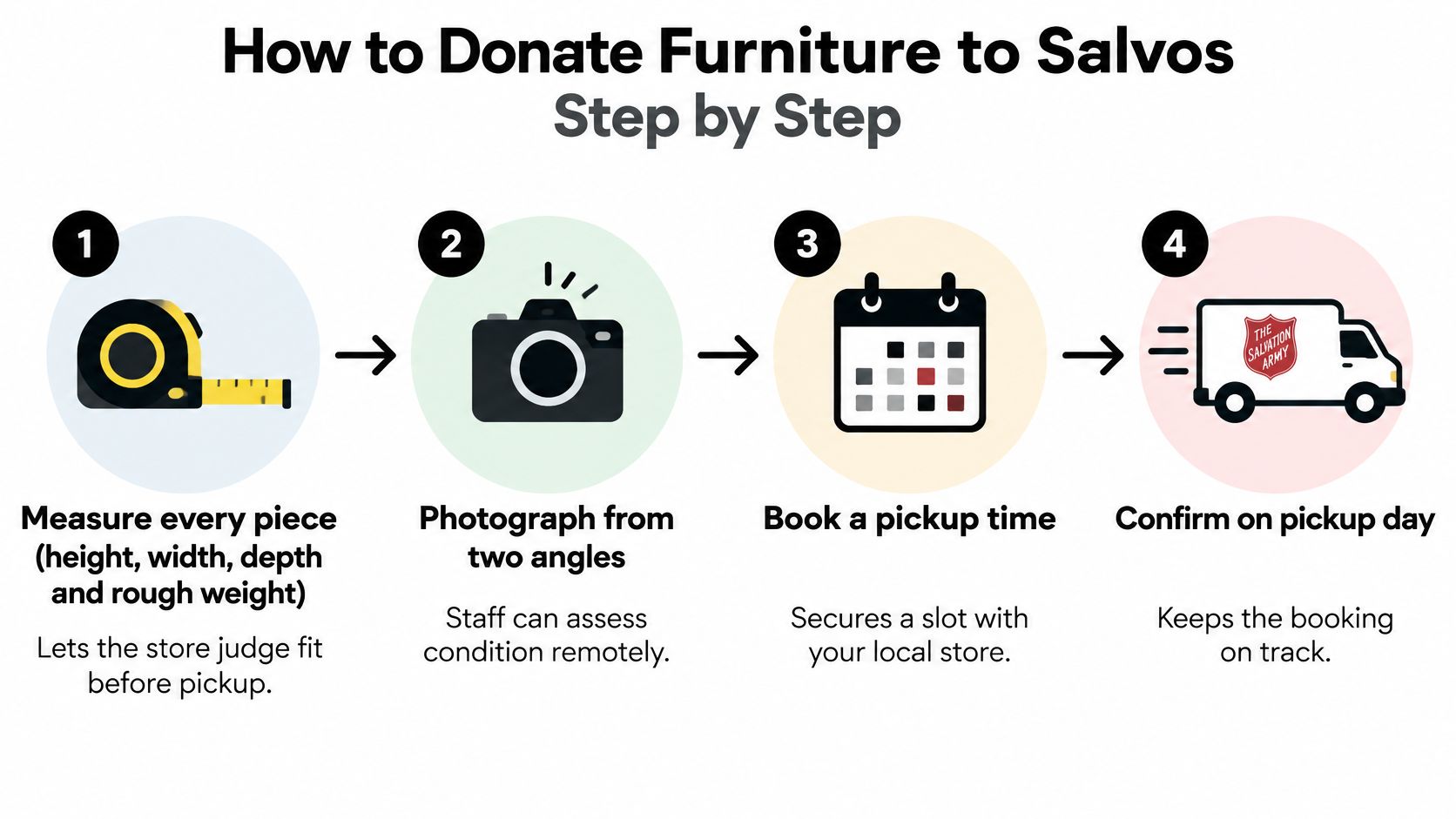
- Measure every piece. Record height, width, depth and a rough weight, and photograph it from two angles. Staff can judge fit and condition from a message instead of guessing from a name like "large couch".
- Check each piece against the acceptance picture and set aside anything damaged, stained, or restricted. You're protecting the confirmed pile from items that would be refused on sight.
- Contact the local Salvos store or Salvation Army channel with the photos and measurements. Ask whether it accepts that item and whether pickup is offered. A general hotline answer isn't the same as a yes from the shop that has the floor space.
- Describe the building. Stairs, lift access, kerbside space, and whether a crew can carry items from inside all change the job. A ground-floor dresser and a sleeper sofa on level four are different collections.
- Agree a collection or drop-off window. Note the name of the person who confirmed and the date they said it. Memory of a phone call is a weak record if the roster changes.
- On the day, match the load to the list. Only the confirmed items should leave, and keep a copy of the confirmation with you. Adding a mattress at the last minute is how a clean booking turns into a refusal.
- Ask for written documentation of what was taken. You'll need that paper if you later look at a tax claim, and you'll need it if a housemate disputes what left the flat.
Tax is a separate question
Donating furniture to The Salvation Army, or to any other organisation, doesn't automatically create a tax deduction. The Australian Taxation Office requires the recipient to have deductible gift recipient (DGR) status when the donation is made, and the transfer must be a genuine voluntary gift of money or property with no material benefit returned to the donor. Confirm the relevant entity's DGR status and keep the paperwork before you treat furniture as deductible. Property donations follow different rules by type and value, so an estimated second-hand price shouldn't be assumed to be deductible.
A refused item needs a backup decided before the truck is booked. If the store says no, the piece already has a sale, a repair, or a disposal path, and it never shares the donation stack.
Pickup and Drop-Off Options Compared
Match the route to the item only after the store has confirmed that item in writing. A route and an acceptance answer that disagree waste the lift.
| Route | How it works | Best for | Main limit |
|---|---|---|---|
| Walk-in drop-off at a Salvos store | Bring the item during opening hours; staff assess it on the spot | Small or carried items, car-sized loads | Bulky items may be refused on the day |
| Scheduled pickup from the local Salvation Army channel | Book a collection window by phone or contact form | Sofas, beds and wardrobes | Not every store offers pickup |
| Donation confirmed during a move | Items agreed in advance and set aside for the removal crew | Households moving with several confirmed pieces | Acceptance isn't guaranteed until the store confirms |
| Your own vehicle or hired van | You load, transport and unload | Sofa-sized loads close to a store | Lifting, parking and refusal risk |
| Backup disposal route | Used when a store refuses an item | Mattresses, damaged or restricted pieces | Handling and possible fees, so plan it early |
Which route fits which piece
Small, carried items suit a walk-in during opening hours, because staff assess them on the spot and you can leave with a clear yes or no. Side tables, a single dining chair, or a bookcase that fits a hatchback belong here.
Large or heavy pieces, such as sofas, beds and wardrobes, usually need a scheduled pickup, and only where that store offers one. Pickup isn't universal. A household without a vehicle may need a store that collects, or may need to donate a different item. Driving a sofa to a shop that refuses furniture wastes the trip, the lifting and the parking.
When the move and the donation share a day
A donation confirmed during a move works when the pieces are already agreed and staged apart from goods going to the new home. Your own ute or a hired van suits a short hop to a store that has already said yes, if you can lift the piece and park. If you can't, don't gamble on a walk-in with a three-seater.
The backup route is for mattresses, damaged frames and anything the store has already excluded. Budget the handling, and any fee, early. Another charity collection, such as the options on our Lifeline furniture pick-up page, is a separate booking with its own rules, not a substitute for a Salvos yes. How these routes sit together on settlement morning comes down to stairs, lifts and kerbside space.
Melbourne Pickup Logistics for Apartments and Tight Access
Access fails in three familiar ways, and each one is fixable the day before if someone owns the booking.
An inner-city apartment on an upper floor shares a lift with the whole building. The collection window and the lift booking have to be the same hour. If the truck arrives at 9 and the lift is free at 11, the crew waits or leaves.
A ground-floor house with a driveway looks easy until a refused mattress is parked in the hallway. The crew then can't reach the confirmed wardrobe because nobody separated the piles.
A walk-up flat with stairs often needs the wardrobe in pieces before anyone tries to carry it. A full carcass on a tight turn is how a donation dies at the door, even when the store said yes.
A professional mover carries, packs and unpacks. That work doesn't guarantee charity acceptance. Acceptance sits with the store's capacity, whether the piece can be resold, and safety rules. We pack furniture, appliances, art and personal items, move them, then unpack and arrange them at the other end, which is why confirmed donations can ride separately from goods for the new home.
| Access situation | What to arrange | What to confirm | Risk if skipped |
|---|---|---|---|
| Ground-floor house with driveway | Clear the path and bring items to the kerb or driveway | Collection window and vehicle size | Item stuck behind a blocked path |
| Apartment with a shared lift | Book the lift for the collection window | Lift access and building rules | Lost time waiting for the lift |
| Walk-up flat with stairs | Count the stairs and dismantle large pieces | Whether the crew handles stairs | Refusal at the door |
| Narrow inner-city street with no truck parking | Arrange kerbside space or a parking permit | Council parking rules | Fines or a missed collection |
| Donation during a move on settlement day | Stage confirmed items in one labelled room | Donation confirmed before loading starts | Donation items loaded with rubbish |
Parking before the day, not during it
If a truck or van needs kerbside space on a narrow street, check council parking rules before the morning. A loading zone that ends at 10 am will not cover an 11 am collection. Apartment buildings add body corporate rules on protection for lifts and foyers. Our notes on how to plan an apartment move cover lift bookings and tight corridors in more detail than a charity form will.
Count the flights, book the lift for the same window as the collection, and keep refused items out of that path.
Confirm the Donation Before You Book the Move
Donating isn't automatically the greener choice. The Australian Bureau of Statistics reports that Australia's circularity rate was only about 4.3% in 2024, while 66% of waste was recovered for reuse, recycling or energy in 2022–23. An item driven to a store, refused, then driven to a tip has created cost and emissions without helping a buyer or a program.
Salvation Army guidance stresses that donated goods should be clean, undamaged and suitable for resale, and several locations reject furniture because of storage or handling limits. Sort every piece into three piles before you book.
| Pile | Typical items | Next action |
|---|---|---|
| High-probability donation | Clean, intact, reasonably sized furniture | Confirm with the store, then load on moving day |
| Low-probability item | Damaged pieces, oversized sofas, mattresses, items that can't be safely handled | Sell, repair or use a council-approved disposal route |
| Uncertain item | Anything the store hasn't yet answered on | Get a written answer before booking, or store temporarily |
The rule and the next action
High-probability pieces are the ones the store has already confirmed. Low-probability pieces go to a sale, a repair, or council-approved disposal. Uncertain pieces stay put until there's a written answer. Short-term storage bridges a donation appointment that doesn't fall on settlement day, so you aren't forced to guess on the footpath.
A piece leaves on moving day only after the store has confirmed it in writing.
Next, confirm the high-probability pile, then book the move and any pickup. We disassemble and reassemble furniture as part of the removal, and storage is available for home moves as well as office and commercial moves, so a confirmed wardrobe can be taken down, held briefly, and kept off the rubbish pile. Choosing a crew that will stage those piles separately is covered in our guide to reliable furniture removalists in Melbourne.
Get n Go Removals Melbourne moves homes and offices across Melbourne and interstate, with furniture disassembly, careful packing, and short-term storage when a Salvos collection doesn't land on settlement day. If you're sorting Salvation Army furniture into confirmed and backup piles, we can carry the confirmed pieces and keep the rest out of the donation load. Visit Get n Go Removals Melbourne to line up the move around the store's answer, not the other way around.