
Friendly Moving Men: How to Hire Trustworthy Movers
You're standing in a half-packed Melbourne apartment, the lift booking is getting close, and the removalists who promised a calm, careful service haven't answered your latest message. That's when the difference between friendly moving men and a company that uses “friendly” in its advertising becomes obvious.
A professional crew is courteous, but that's only the starting point. They communicate clearly, protect floors and furniture, understand access problems, and take responsibility when something unexpected happens. A reliable mover also explains insurance, packing expectations, timing, and damage procedures before the truck arrives.
Australia's removal services industry is substantial but fragmented. IBISWorld estimates industry revenue of A$2.6 billion in 2026, with about 8,310 businesses operating nationwide. Employment reached 22,430 people in 2025, while the average business employed only 2.7 to 2.8 workers, indicating a market dominated by small operators rather than a few national chains (IBISWorld's Australian removal services industry profile). Choosing well therefore requires more than scanning a few ratings. You need to verify how a company works.
Why Friendly Moving Men Matter More Than You Think
The first warning sign usually appears before anything is damaged. A crew arrives late, asks the customer where the trolley is, discovers that the lift hasn't been booked, and starts carrying unprotected furniture through a narrow hallway. The workers may be polite, but politeness doesn't compensate for poor planning. By midday, the customer is managing access, answering repeated questions, and worrying about every scrape on the wall.
A competent crew creates a different atmosphere. The movers confirm the inventory, inspect the access route, protect vulnerable surfaces, and clarify which cartons contain fragile items. When a sofa won't fit through the stairwell, they don't argue or improvise recklessly. They explain the options, adjust the plan, and keep the customer informed.
That distinction matters because moving is a chain of small decisions. Friendliness means calm, respectful conduct under pressure, not merely a smile during the quote. It includes arriving prepared, listening properly, treating the property as carefully as the furniture, and telling the truth when a request changes the original scope.
The Melbourne context
Local moves make up a significant part of the practical removalist workload. Historical ABS data found that more than 1 million adults in Victoria, or 29% of people aged 18 and over, moved house at least once in the three years to October 1999. The same data showed that three-quarters of people relocating within Victoria moved less than 20 kilometres, and half of those local movers travelled less than 5 kilometres (Australian Bureau of Statistics mobility data).
Short distance doesn't mean simple. Apartment moves involve loading zones, lift windows, stair carries, body corporate rules, and settlement deadlines. A friendly crew reduces friction by dealing with those details professionally rather than leaving the customer to solve them on the morning of the move.
Practical rule: Judge a mover by how they handle inconvenient details before booking, not by how warmly they describe their service on the website.
For a useful preparation routine, follow this guide to reducing stress when moving home. The right process won't eliminate every surprise, but it gives the crew the information and time needed to respond without turning the day into a crisis.
Spotting Genuine Professionalism Beyond Marketing Claims
Every removalist can describe its team as friendly, careful, and professional. Those words have little value unless the business can show how its standards operate in practice. Look for evidence in the company's people, equipment, documentation, and answers.
Four trust signals worth checking
Staff screening should be clear. Ask whether the people attending your home are employees, contractors, or labour supplied by another business. Ask how staff are vetted and trained. A company that can explain its process directly inspires more confidence than one that responds with vague assurances.
Insurance must be specific. “Fully insured” is not enough. Ask for the policy types, exclusions, excesses, storage conditions, and claims procedure in writing. Public liability protects against particular liabilities involving people or property, but it doesn't automatically mean your furniture has full-value cover.
The fleet should match the work. A professional operator can explain which vehicle and crew size suit your inventory, access conditions, and route. Clean, maintained equipment, protective blankets, ramps, straps, and appropriate trolleys tell you more about operational discipline than a polished logo.
Communication should remain consistent. The person providing the quote should record the address details, stairs, lifts, parking, bulky items, packing requirements, and timing constraints. If the answers change every time you call, expect confusion on moving day.
Reviews are evidence, not proof
Reviews help when they contain detail. Look for comments about punctuality, floor protection, communication, careful handling, and how the company dealt with complications. A collection of generic praise doesn't tell you whether the crew can manage your specific move.
You should also compare the written quote with the conversation. A low hourly figure can become expensive if stairs, travel, packing, waiting time, disassembly, storage, or difficult access remain undefined. The strongest operators make the scope visible before the booking is confirmed.
Use this checklist for choosing the right removals firm to test each company against the same criteria. Consistency matters. You're not looking for the most charming salesperson. You're looking for a business whose friendly promise is supported by repeatable systems.
Questions That Reveal Company Culture and Standards
The initial phone call is an interview. Don't spend the entire conversation asking only for an hourly rate. Ask questions that force the company to explain how it handles people, property, risk, and accountability.
Start with the crew:
- Who will attend? Ask whether the movers are directly employed, regularly engaged contractors, or sourced for each job.
- How are staff prepared? Ask about induction, manual-handling procedures, furniture protection, and specialist items.
- Who is my contact on the day? You want a clear escalation path if access changes or the inventory differs from the estimate.
Then test operational knowledge. Describe the property accurately and ask the company to repeat the main constraints back to you. A useful response should mention stairs, lift access, parking, narrow entries, long carries, fragile objects, appliances, and any storage requirement that could affect the job.
Ask how they handle damage
The answer should be procedural, not emotional. Ask what happens if a table is scratched, a carton is missing, or an item arrives damaged. Find out what paperwork is completed at delivery, what photographs are needed, where a claim is lodged, and whether deadlines apply.
Consumer Affairs Victoria received more than 700 reports about removal and freight services in 2017–18, compared with around 580 in 2015–16. The most common issues involved items lost in transit, delivery delays, and damage during transit or storage (Consumer Federation of Australia guidance on moving rights). That pattern makes claims handling a booking question, not an afterthought.
Compare the scope, not just the price
A proper quote should state what the crew will do, what you'll pack yourself, how access affects the work, and whether storage or waiting time is included. If customer-packed cartons are excluded or treated differently, ask the mover to spell that out.
A company that answers clearly is showing culture through behaviour. A company that rushes you, refuses written details, or says “we'll sort it out on the day” is transferring its risk to you.
For local research, use a relevant search for movers and packers near you, then apply the same questions to every shortlisted provider. Equal comparison exposes empty marketing quickly.
Understanding Insurance and Liability Before You Book
Moving insurance is where many customers discover that their assumptions were wrong. A removalist's truck insurance, public liability policy, and cover for your household goods are separate questions. Treating them as one policy creates avoidable disputes.
In New South Wales, government guidance states that removalists aren't legally required to provide insurance for a customer's property during a move, and it recommends that customers arrange their own cover. The guidance also explains that removalists commonly insure their vehicle for accidents, while AFRA-accredited companies may offer public liability and transit insurance. Transit cover may extend to goods while packed, moved, and stored for an additional premium (NSW guidance on choosing a removalist).
Victoria requires a practical, equally careful approach. A Victorian moving-insurance explanation notes that a removalist's own insurance doesn't automatically cover a customer's goods because third-party property isn't automatically included. Cover for those items requires a policy document prepared, accepted by the insurer, and agreed to by the person taking out the policy (Victorian removalist insurance information).
Compare the main forms of protection
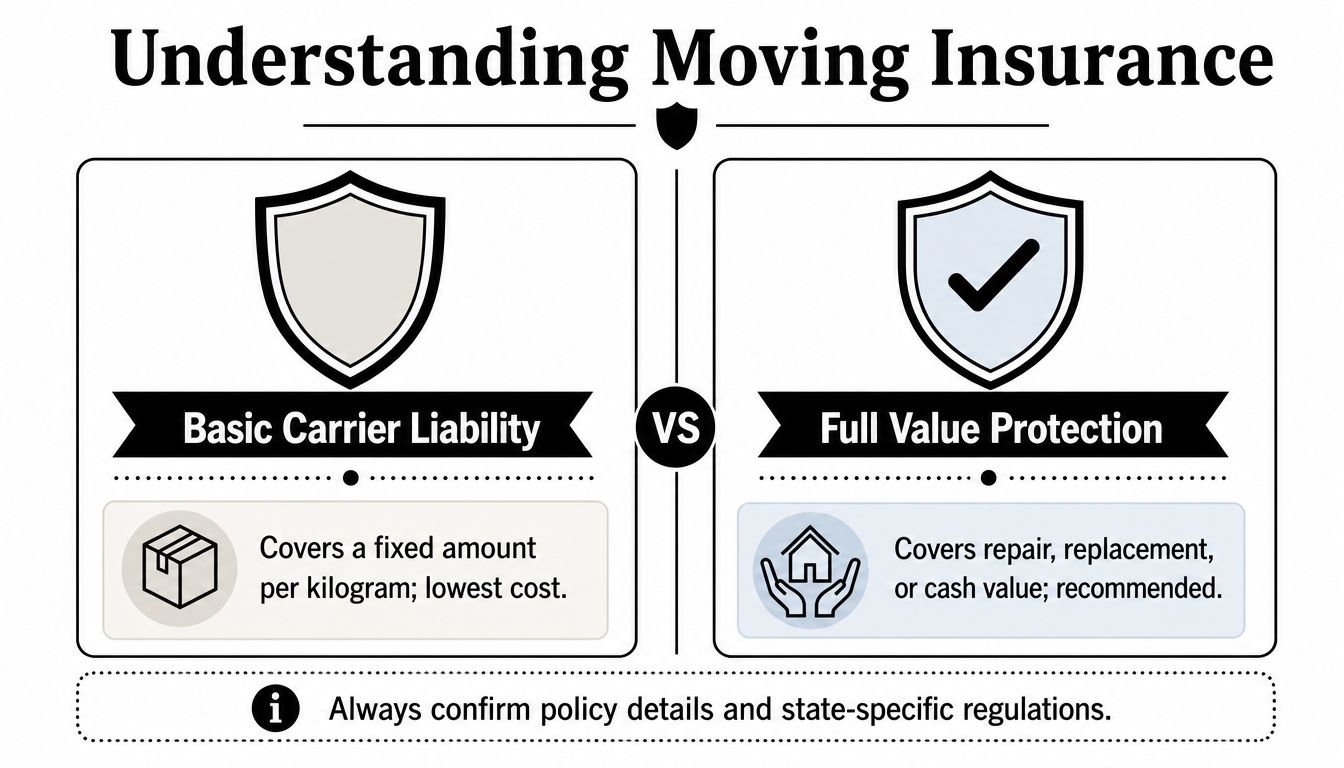
Public liability generally concerns injury or property damage for which the business may be legally responsible. It doesn't automatically compensate you for every damaged chair or chipped cabinet.
Transit insurance is designed for goods while they're being packed, transported, and sometimes stored, depending on the policy. It may require an item list, declared values, photographs, packaging standards, and prompt notification.
Your own contents or moving policy may provide protection independent of the removalist, but only if the wording covers the move, storage, exclusions, and the specific goods involved. Never assume a standard home policy applies without checking.
The complaint pattern in Victoria makes documentation essential. Before pickup, create an inventory, photograph condition at origin, identify fragile-only cartons, and sign a scope of work covering transit, storage, and access constraints. At delivery, inspect items before signing, record visible damage, retain paperwork, and lodge written claims quickly.
Australian Consumer Law requires services to be delivered with due care and skill and within a reasonable time. That baseline doesn't replace a proper insurance decision. Ask for policy documents, not verbal comfort, and use this guide to understand the cost of movers alongside the protection included in the quote.
Preparing for a Smooth Moving Day Experience
Professional movers work best when the customer removes preventable obstacles. A booked truck can't solve an unreserved lift, an inaccessible loading zone, or a carton of unlabelled glassware. Preparation isn't about doing the mover's job. It's about giving the crew accurate information and a workable site.
Build the move around access
Apartment customers should confirm the lift booking, loading bay rules, parking restrictions, concierge requirements, and permitted moving times. House customers should check gates, driveways, stairs, narrow paths, overhead branches, and any distance between the truck and front door.
Manual handling deserves particular attention. WorkSafe Victoria describes hazardous manual handling as the biggest cause of injuries in Victorian workplaces and links it to musculoskeletal injuries such as sprains, strains, fractures, and soft-tissue injuries (WorkSafe Victoria guidance on moving and lifting objects). The recommended hierarchy starts by eliminating the risky lift, then changing the layout or work system, adding mechanical aids, and relying on training only when higher-order controls aren't reasonably practicable.
That means telling the removalist about stair carries, pianos, appliances, pool tables, awkward corridors, and height changes before arrival. The crew can then select trolleys, straps, ramps, and team-lift methods rather than improvising.
Use a simple preparation timeline
- Four weeks out: Book the movers, create the inventory, and identify specialist items or access risks.
- Two weeks out: Pack non-essentials, label each carton by room, and mark fragile boxes clearly.
- Three days out: Confirm addresses, arrival windows, lift access, parking, payment arrangements, and the essentials you'll carry yourself.
- Moving day: Complete a walkthrough with the crew, confirm the scope, point out fragile items, and keep keys, documents, medication, chargers, and basic clothing separate.
Customer-packed cartons need honest descriptions. Don't label a heavy box “miscellaneous” if it contains books, and don't leave valuable or fragile contents undeclared. Clear labels help the crew plan loading order and reduce rough handling.
If you're leaving a Victorian rental, plan cleaning around the legal standard rather than an assumed requirement. Tenants Victoria explains that renters must return the property in a reasonably clean condition under section 63, but professional cleaning isn't mandatory unless the tenancy agreement requires it (Tenants Victoria guidance on moving out). For a room-by-room cleaning reference, the Canes Cleaners 48-point checklist can help you organise the final inspection without losing track of overlooked areas.
Finish the evening with this practical night-before movers checklist. Good preparation gives friendly movers the conditions to stay efficient, respectful, and focused.
How Get n Go Removals Delivers on the Friendly Promise
A company earns the “friendly” label through operational choices. Get n Go Removals Melbourne presents a clear example of the model to look for: full-time, police-checked staff, a company-owned fleet, public liability and transit insurance options, and a single point of contact from booking through completion.
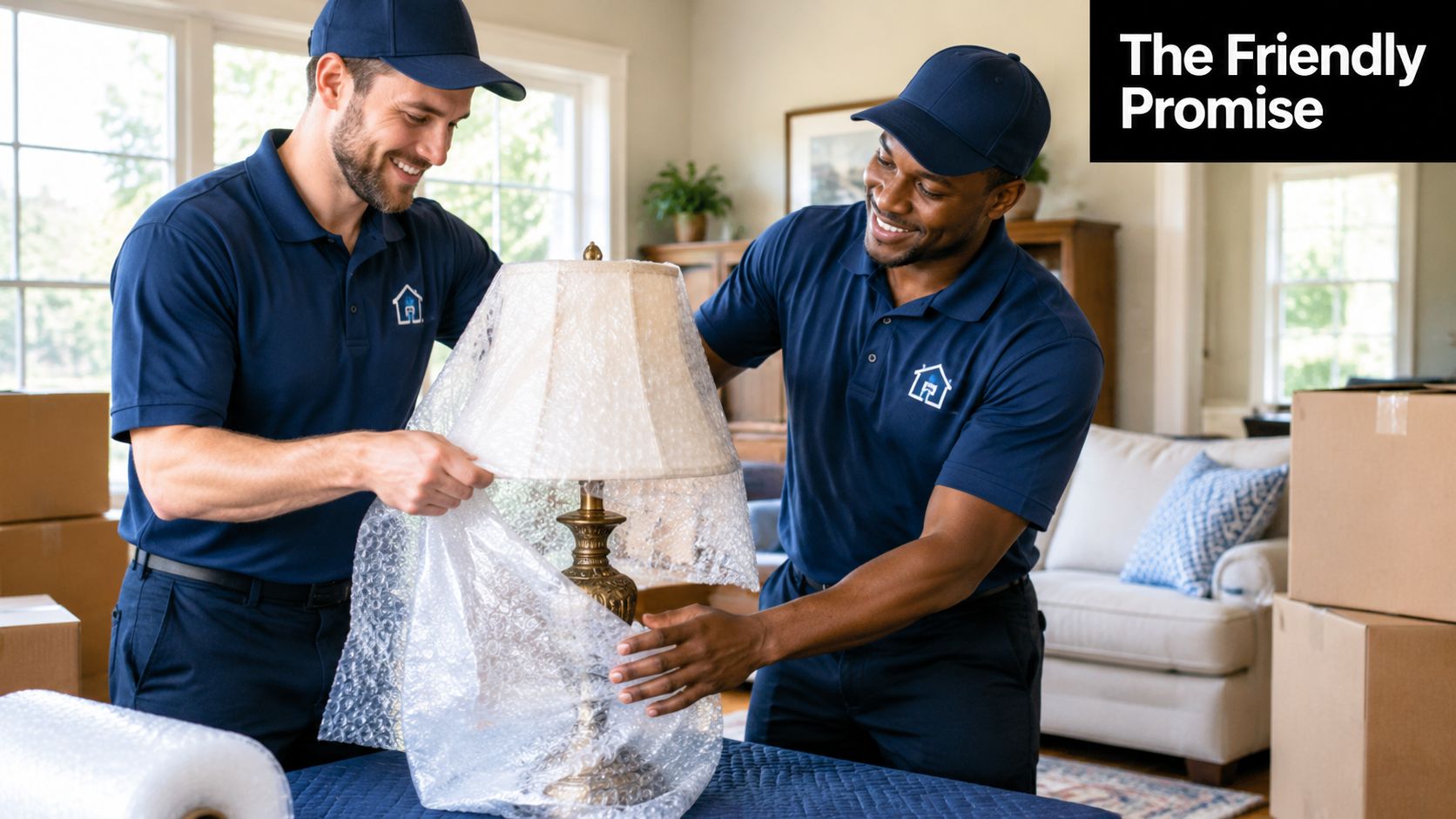
The service range also matches the practical tests outlined above. Customers can arrange house and apartment moves, office relocations, commercial and event transport, furniture disassembly and reassembly, specialist handling for pianos and pool tables, valet white-glove packing and unpacking, and short- or long-term storage. A fleet ranging from 4.5-tonne to 12-tonne trucks allows the vehicle choice to reflect the job rather than forcing every move into the same format.
Systems that reduce moving-day friction
Flexible scheduling supports settlement deadlines, lift bookings, and tight commercial timelines. Weekly direct runs connect Melbourne with Sydney, Brisbane, and key East Coast destinations, which suits customers planning an interstate relocation rather than a purely local move.
The company also supplies packing materials and protective equipment, while transparent pricing and one ongoing contact address two common customer complaints, unclear scope and repeated explanations. Those features don't remove the need to read the quote or check insurance wording. They do provide the kind of structure that separates a professional moving service from an informal labour arrangement.
This video gives customers another way to understand the handling approach before making contact:
If you're comparing friendly moving men for a Melbourne home, apartment, office, event, or interstate relocation, ask Get n Go to confirm the crew, truck, access plan, packing scope, storage needs, and available insurance in writing. Then compare that response with other quotes using the same standards.
For a careful, organised move, Get n Go Removals Melbourne offers police-checked moving crews, company-owned trucks, packing and unpacking, specialist handling, storage, and interstate relocation support. Contact the team with your inventory and access details, then request a clear quote that matches the protection and service standards your move requires.