
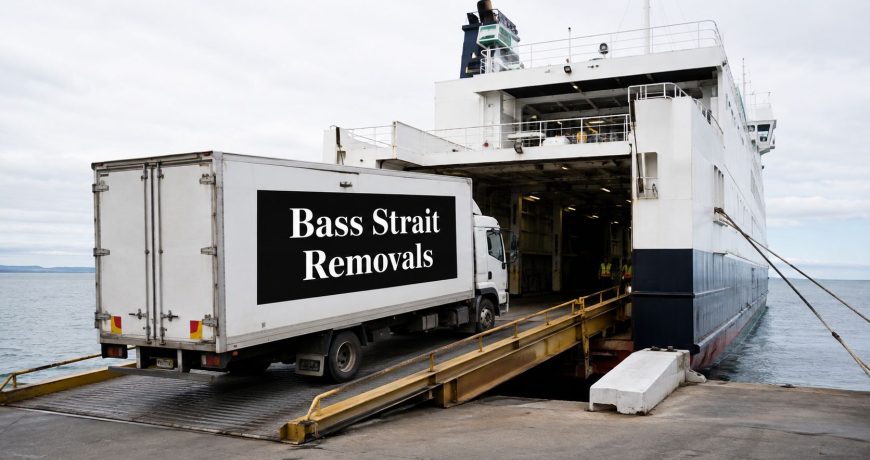
Bass Strait Removals: Complete Moving Guide 2026
You've got the keys in one hand, a box cutter in the other, and the ferry booking is starting to feel like the boss of the move. That's the moment Bass Strait removals become different from every other interstate job, because you're not just shifting furniture from one driveway to another. You're coordinating road access, sea freight, weather windows, and two sets of timing pressures that don't care how tidy your packing list looks.
Bass Strait itself was formed when rising sea levels flooded the land bridge between mainland Australia and Tasmania after the last ice age, creating the 240-kilometre water crossing modern removals have to work around, and the National Museum of Australia says the process took an estimated 6,000 years before the strait became an almost impassable barrier by about 12,000 years ago (National Museum of Australia). That geography is the reason Bass Strait removals need tighter planning, stronger packing discipline, and more realistic timing than a standard local move.
Understanding Bass Strait Removals and Why They Are Different
A standard house move usually lives or dies on stairs, parking, and how many boxes fit in the truck. A Bass Strait move adds ferry schedules, freight handovers, weather disruptions, and the simple fact that your belongings may change hands more than once before they reach the destination. That means the job is less about brute force and more about chain-of-custody, timing, and keeping every handoff clean.
Why the crossing changes the job
On the mainland, a moving truck can often leave when the crew is ready. Across Bass Strait, the truck, the vessel, and the receiving depot all need to line up, or the whole plan starts slipping. If one part of the chain runs late, the next part usually can't absorb the delay without cost.
That's why experienced teams build around ferry windows, freight cut-offs, and arrival buffers, rather than just loading date and delivery date. The weather matters too, because sea crossings don't behave like suburban roads. A calm morning can turn into a messy afternoon, and the moving plan has to survive that reality.
What works in practice
The jobs that go smoothly usually share the same traits. The inventory is clear, the pickup point is accessible, the freight method is chosen early, and the receiving address has been checked properly. The jobs that go badly usually fail on the small stuff, not the dramatic stuff.
Practical rule: If a Bass Strait move looks tight on paper, it's already too tight.
For most households, the first decision isn't which box to pack next, it's how the move will cross the water. That's where a local crew that understands interstate work, such as house relocation in Victoria, can make the plan more realistic without turning it into a guessing game.
Planning Your Timeline and Booking Transport Early
Bass Strait moves punish late decisions. A quote that arrives late, a ferry slot that disappears, or a delayed storage booking can force a whole household into a rushed chain of compromises. The safest approach is to treat the move like a staged project, not a single moving day.
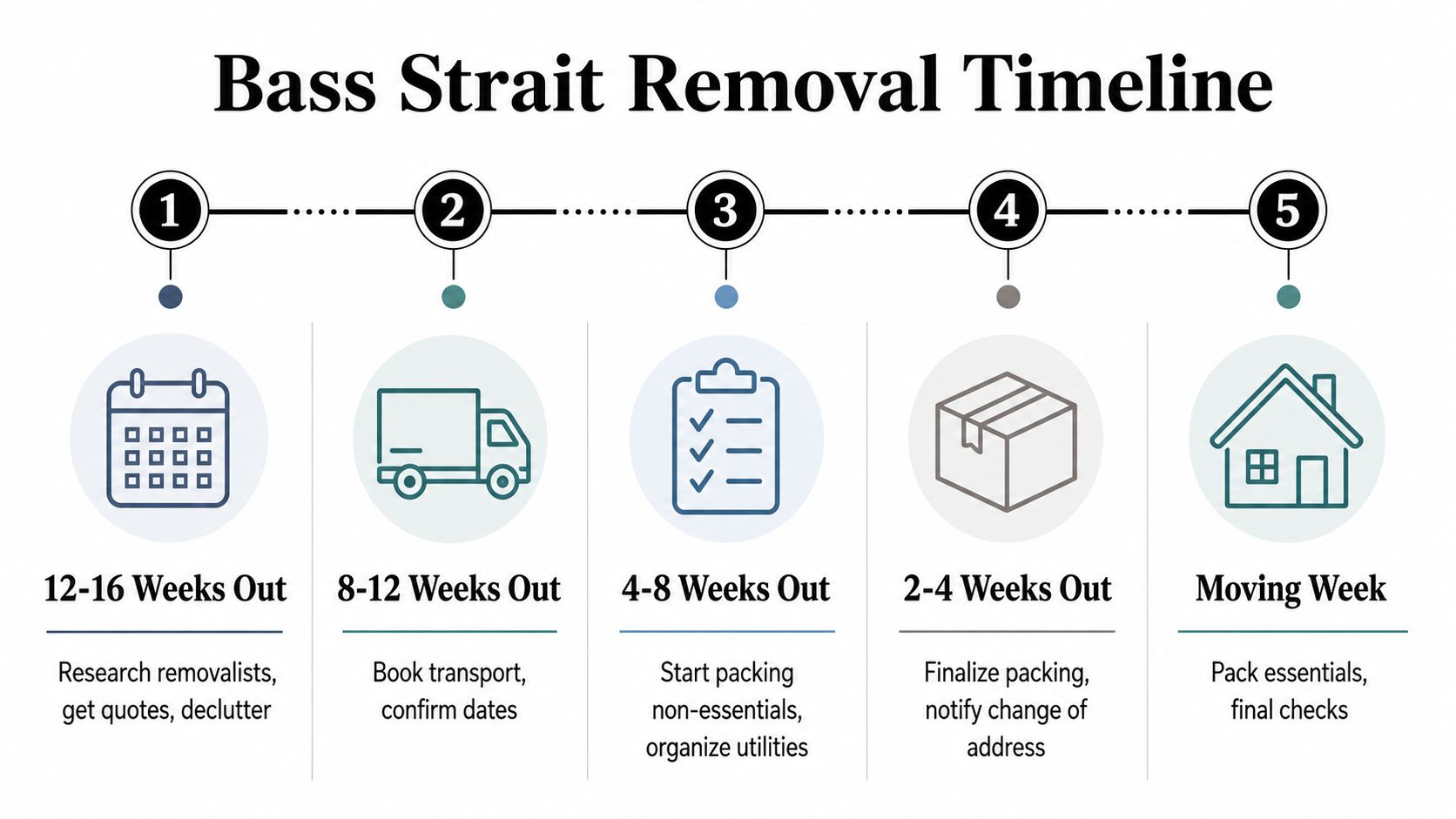
The calendar that actually helps
Start with the freight question first, because transport availability drives everything else. If you're moving a whole household, the shipment size determines whether you're booking a full run, a partial load, or splitting items across methods. Smaller moves are more flexible, but even those can get trapped by ferry timing if you leave booking until the last minute.
Use a moving checklist that covers both sides of the Strait, because the departure property and the arrival property need different attention. A practical moving house checklist Australia keeps the handover details from being forgotten when the packing starts to feel endless. For people with a gap between homes, it also makes the storage decision clearer before the pressure hits.
Build in buffer, not wishful thinking
Sea freight doesn't reward optimism. Weather changes, transport queues, and loading sequences can all shift the plan, so the move needs breathing room. If there's a gap between settlement and access, arrange storage early rather than waiting to see whether the dates magically align.
The simplest way to reduce stress is to lock in the pieces that are hardest to replace later. Those are the freight booking, the delivery window, and the temporary storage option if the dates don't match neatly. Then deal with utilities, forwarding, and address updates once the transport spine of the move is fixed.
For people who like a broader relocation framework, storage for international moves is a useful reference point, because the same principle applies here, if a move crosses a system boundary, it needs staged planning rather than last-minute improvisation.
Choosing Between Freight and Ferry Transport Options
A Bass Strait move changes the transport question straight away. Volume matters, but so does the ferry timetable, how the load is staged, and whether weather is likely to interrupt the handover. The wrong choice usually shows up later as delay, extra handling, or a delivery window that no longer matches the move date.
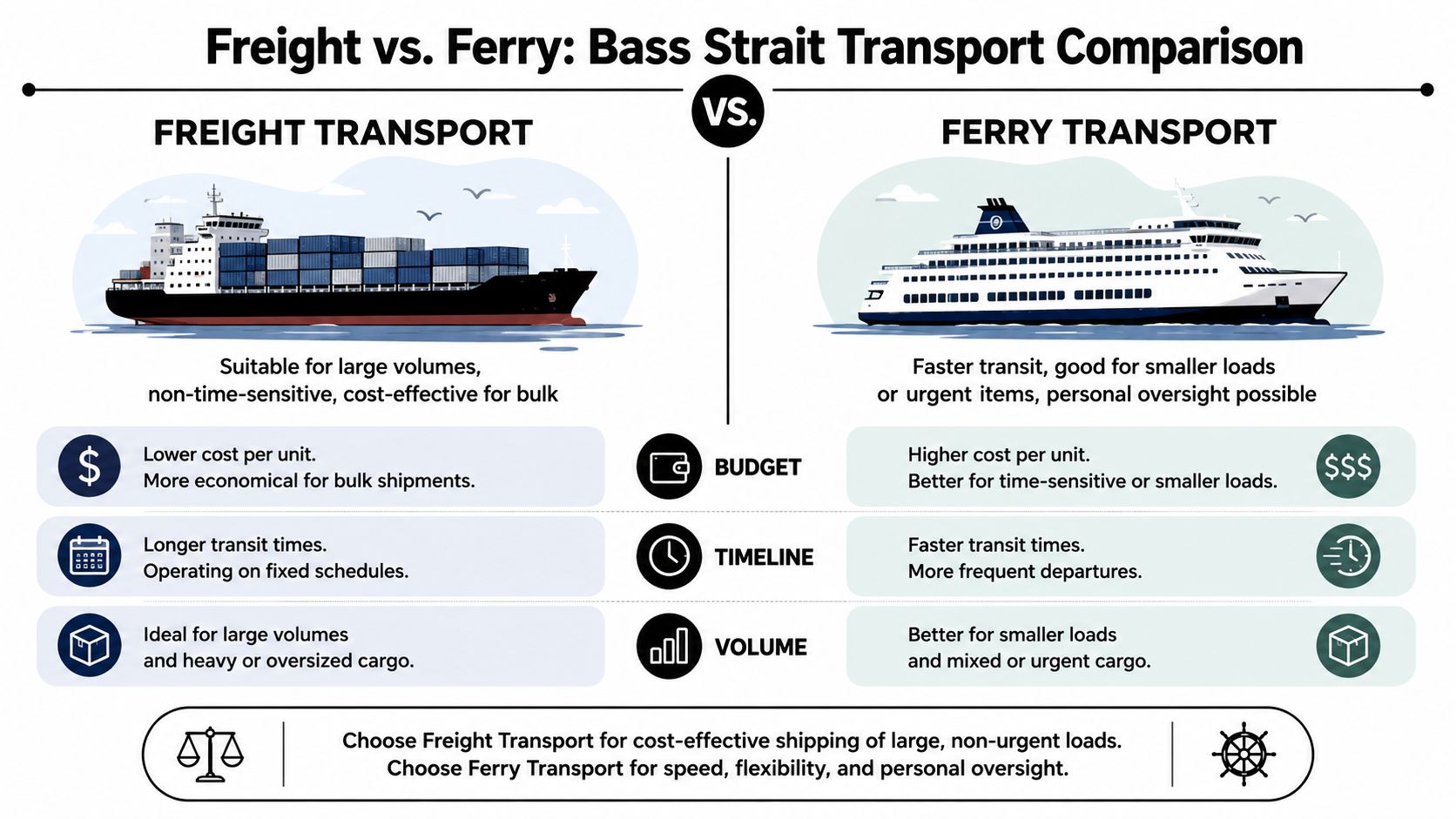
Freight suits the bulky, ferry suits the immediate
Freight is usually the better fit for larger household loads. It gives you more room to move furniture, boxes, and mixed items through one consolidated shipment, which is often easier to manage than splitting the job into several smaller trips. For a move where the main aim is to get the whole household across the Strait with less handling, freight is usually the cleaner option.
Ferry transport makes more sense when the load is smaller or when you need tighter control over a few priority items. That can suit personal effects, fragile pieces, or a partial move where access matters more than consolidating everything into one freight run. It also works better when the transport plan has to sit around your own travel schedule rather than the other way around.
Hybrid setups are often the smartest
A Bass Strait move does not have to use one method for everything. I often split loads when the timing is uneven, with freight handling the bulk of the household and a separate arrangement carrying the things that need to be close at hand. That gives you access to the items you need first, without forcing the whole move to wait on the same schedule.
Practical rule: The cheapest option on paper is not always the cheapest once you count delay risk, storage, and extra handling.
A good operator helps match transport to the load instead of forcing the load into whatever service is easiest to book. A long-distance relocation guide that covers planning, loading, and transit coordination is useful here, because the same logic applies across Bass Strait, the job needs to be staged around the transport method, not the other way around. In practice, that means weighing freight capacity, ferry access, and the chance that a weather hold or timetable shift will change what arrives first.
Packing Strategies for Sea Transit Conditions
Packing for Bass Strait is about resisting moisture, movement, and the sort of handling that can loosen weak packing in a hurry. Road-only packing habits don't always hold up once the load faces salt air, longer staging, or multiple transfer points. The standard is simple, if an item can shift, rub, or absorb moisture, it needs extra protection.
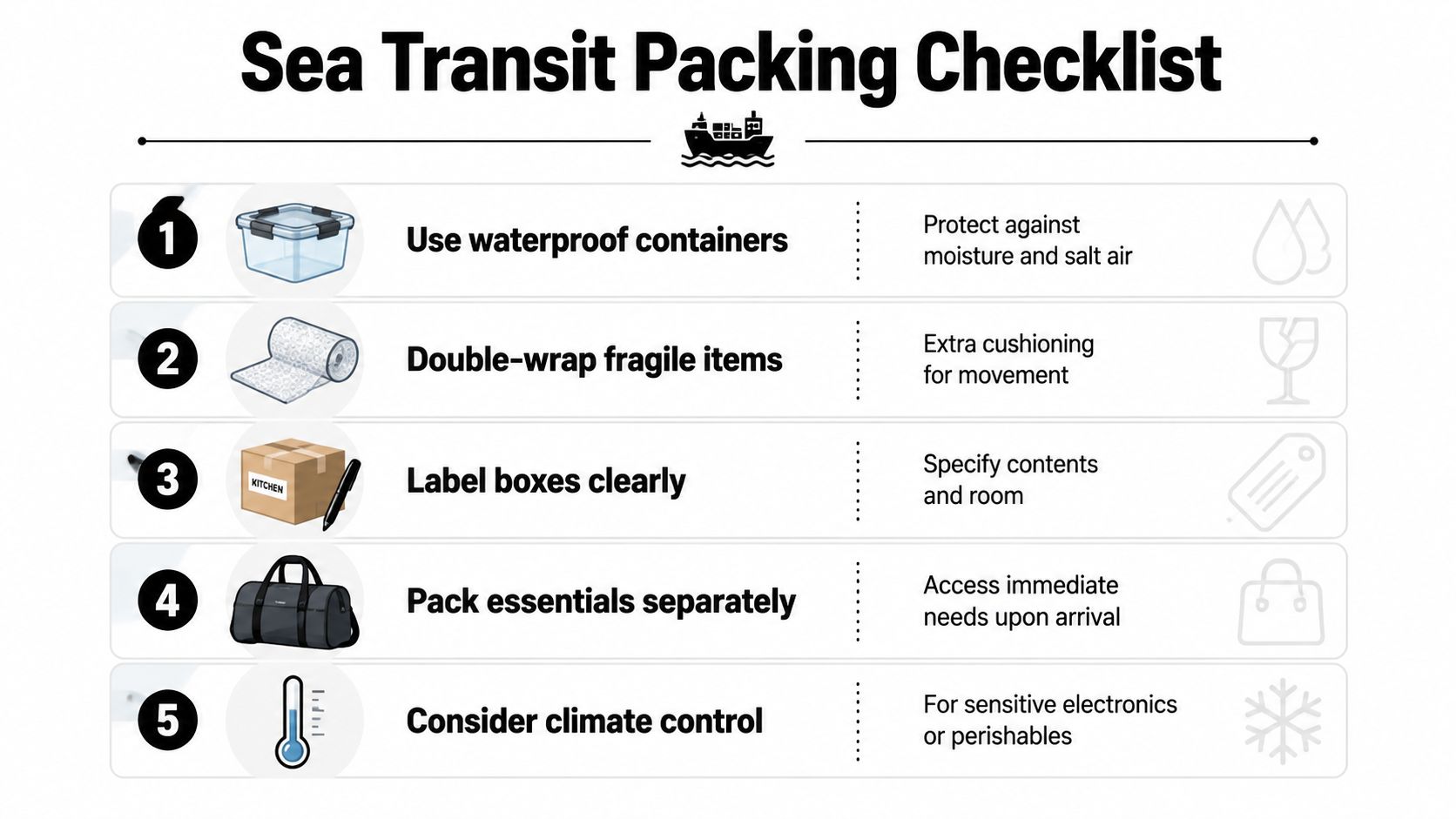
Build protection around the item, not the box
Wooden furniture needs moisture protection, not just cardboard around the corners. Metal items need corrosion awareness, especially if they'll sit in transit long enough to pick up condensation or salt exposure. Fragile items need extra cushioning because sea movement is different from road vibration, and weak internal packing shows up fast.
Appliances should be prepared before they're sealed away, not after they're already on the pallet or in the truck. The more a crew has to guess about what's inside, the more risk you're carrying through the chain. Clear labelling also matters, because unloading is much easier when every box says where it belongs and what it contains.
Know what deserves specialist handling
Pianos, pool tables, artwork, and sensitive electronics need a different approach from standard cartons. Heavy pieces should be prepared with the right lifting method, while delicate items need padding, wrapping, and handling that matches the sea transit environment. Sometimes the right answer is to move the item with specialist care, and sometimes it's to replace it rather than pay to protect something of low value.
Pack for the worst handoff, not the easiest one.
For item-specific packing, a good guide from Woodstock Furniture & Mattress Outlet can help readers think more carefully about load control before a truck even arrives. If you want a packing benchmark closer to local moving conditions, how to pack fragile items for moving is also useful for checking whether your cartons are ready for transit, not just closed.
Insurance Coverage and Understanding Your Protection
Insurance on a Bass Strait move isn't one product with one clean answer. Protection can sit across transit cover, goods-in-transit arrangements, and public liability, and the gap between them is where people get caught out. The key is to know what is covered while the load is in motion, what is covered while it's being handled, and what is not covered if the packing or declarations were weak.
What to verify before the truck leaves
Documentation matters as much as the premium. Photograph items before pickup, especially anything valuable, fragile, or already marked. Keep receipts and valuation records where they exist, because a claim is easier to support when the condition of the goods before the move is obvious.
The practical issue is not just damage, it's proof. If a carton arrives crushed, the condition of the contents and the original handling instructions will shape what happens next. Claims also become harder when the inventory is vague or high-value items were never declared properly.
Where claims usually go wrong
Inadequate packing is a common exclusion point, and it's one of the most frustrating because the damage often looks transport-related even when the packing caused the failure. Delayed reporting can also create problems, because issues need to be raised quickly while the condition of the shipment is still clear. Hazardous or special-category items should be declared before the move, not explained afterwards.
For moves that involve professional handling, choose a provider that can explain the cover in plain English and show how claims are handled if something arrives damaged. Choosing the right removals firm matters here because the paperwork, the handling standards, and the insurance conversation need to line up before anything gets loaded.
Managing Costs and Avoiding Common Moving Pitfalls
Bass Strait costs usually rise where people forget to plan for friction. Storage fees appear when dates shift, access charges show up when the pickup or delivery point is awkward, and delays create knock-on costs that weren't in the original quote. The move gets cheaper when you reduce surprises, not when you gamble on them disappearing.
The mistakes that cost real money
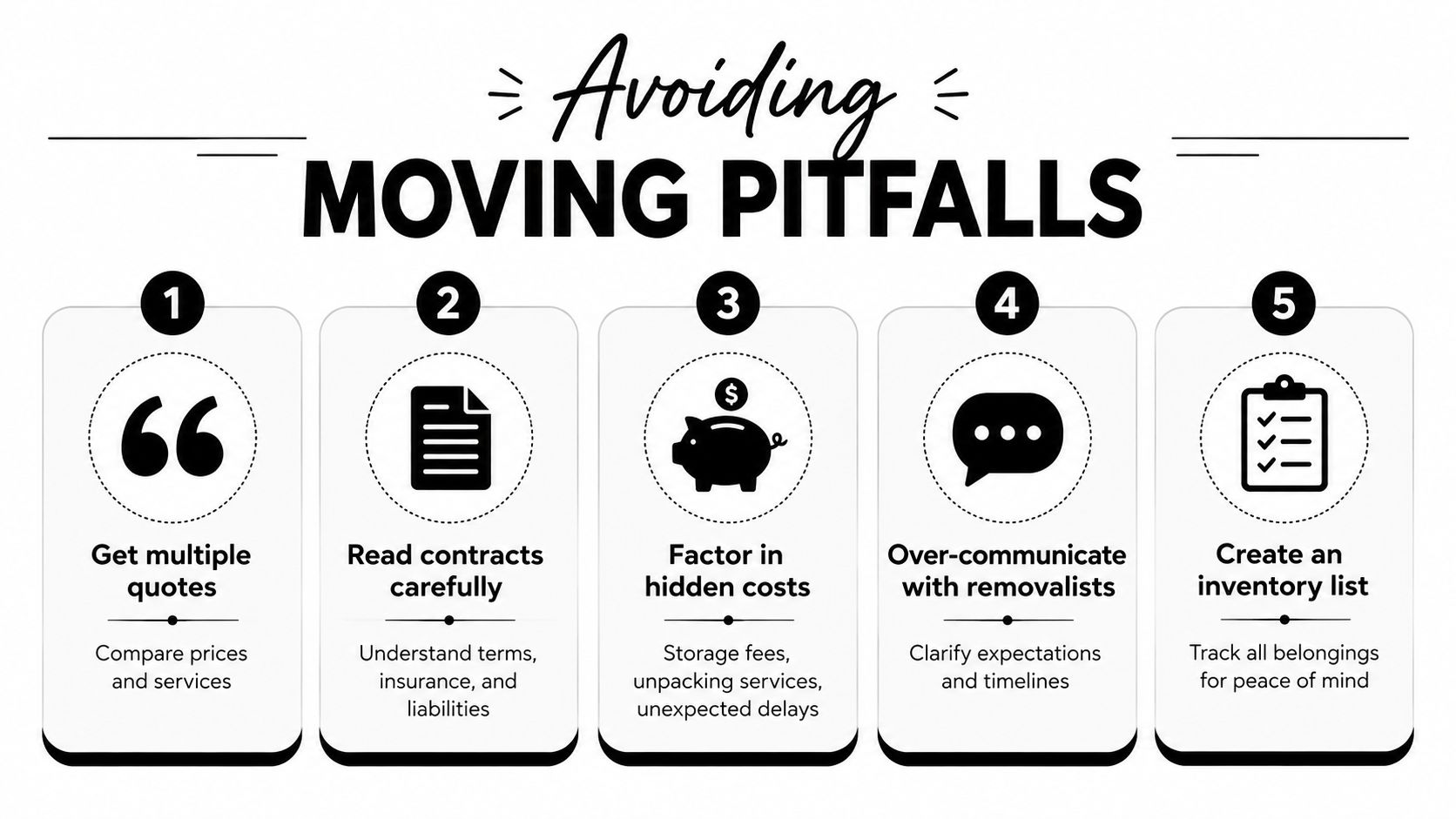
Underestimating volume is the big one. A lot of households discover too late that a “small move” needs more space, more labour, or a second run. Parking is another trap, because trucks need access at both ends, and the receiving address may be less forgiving than the sender expects.
The cleanest way to manage cost is to compare quotes carefully and ask what each quote includes. Read the terms on storage, waiting time, access issues, and insurance, because the cheapest headline number can hide the worst job structure. Over-communicate with the removals team about access, timing, and any items that need special handling.
Use the right framework before moving day
Create a simple inventory, then match it against the chosen transport method. That tells you whether you're dealing with one full load, a split shipment, or a move that needs temporary storage between stages. If the move is time-sensitive, keep the booking flexible enough to absorb weather or ferry disruption without forcing a panic.
A well-run Bass Strait move is usually the one that felt over-planned before moving day and calm on the day itself. That's not an accident. It comes from locking in the transport early, protecting the load properly, and refusing to treat a sea crossing like an ordinary suburban relocation.
If you're planning Bass Strait removals from Melbourne, Get n Go Removals Melbourne can help with interstate household moves, careful packing, and storage when dates don't line up neatly. Visit Get n Go Removals Melbourne to discuss a move plan that fits your ferry timing, freight needs, and delivery access before the schedule gets away from you.