

Moving with Pets: A Complete Guide for Aussie Families
If you're standing in a Melbourne apartment with boxes stacked by the door, a dog pacing past the hallway mirror, and a cat gone silent behind the washing machine, you already know the hard part of moving with pets isn't the transport. It's everything happening at once, the lift booking, the removalists on the way, the front door opening and shutting, and the fact that your animal has no idea why the house has turned into a loading bay.
In real moves, pets don't fit neatly into the plan unless someone makes a plan for them. That means thinking about the building rules, the timing of the truck, where the pet can wait, and how you keep doors, stress, and escape risk under control while the job gets done.
The Move Day Reality Most Pet Owners Underestimate
Move morning in an apartment is rarely calm. One person is trying to find the keys, another is stripping bed frames, the lift is booked in a tight block, and the removalists are usually only minutes away from arrival. In that kind of chaos, a dog pacing in the hallway or a cat vanishing behind whitegoods isn't a side issue, it's a live risk.
That risk is bigger in Australia than a lot of people realise because 69% of Australian households owned at least one pet in the 2022 survey, up from 61% in 2019, with about 28.7 million pets nationally, including roughly 6.4 million dogs and 5.3 million cats (Animal Medicines Australia survey summary). In practice, that means pet-safe moving decisions aren't niche. They're part of ordinary house and apartment moves.
What actually goes wrong on the day
The usual failure point isn't the crate. It's the overlap between people, pets, and access. A pet gets loose when a balcony door is left open for a minute. A cat bolts because someone props the front door while carrying boxes. A dog overheats in a parked car because “I'll just be two minutes” turns into fifteen.
Practical rule: if the property has a loading zone, lift booking, or body corporate restrictions, the pet plan has to sit inside the building plan, not beside it.
When that doesn't happen, families end up improvising with laundry rooms, bathrooms, and half-cleared bedrooms. That usually creates more stress than it solves. A better approach is to decide early whether the pet stays on-site, goes to a neighbour, or leaves for the day, then tell the removalists what to expect before the first box moves.
For broader packing and household stress reduction, this home-moving stress guide is worth a look because pet calm and house calm usually rise and fall together.
Building a Six-Week Pet Move Timeline
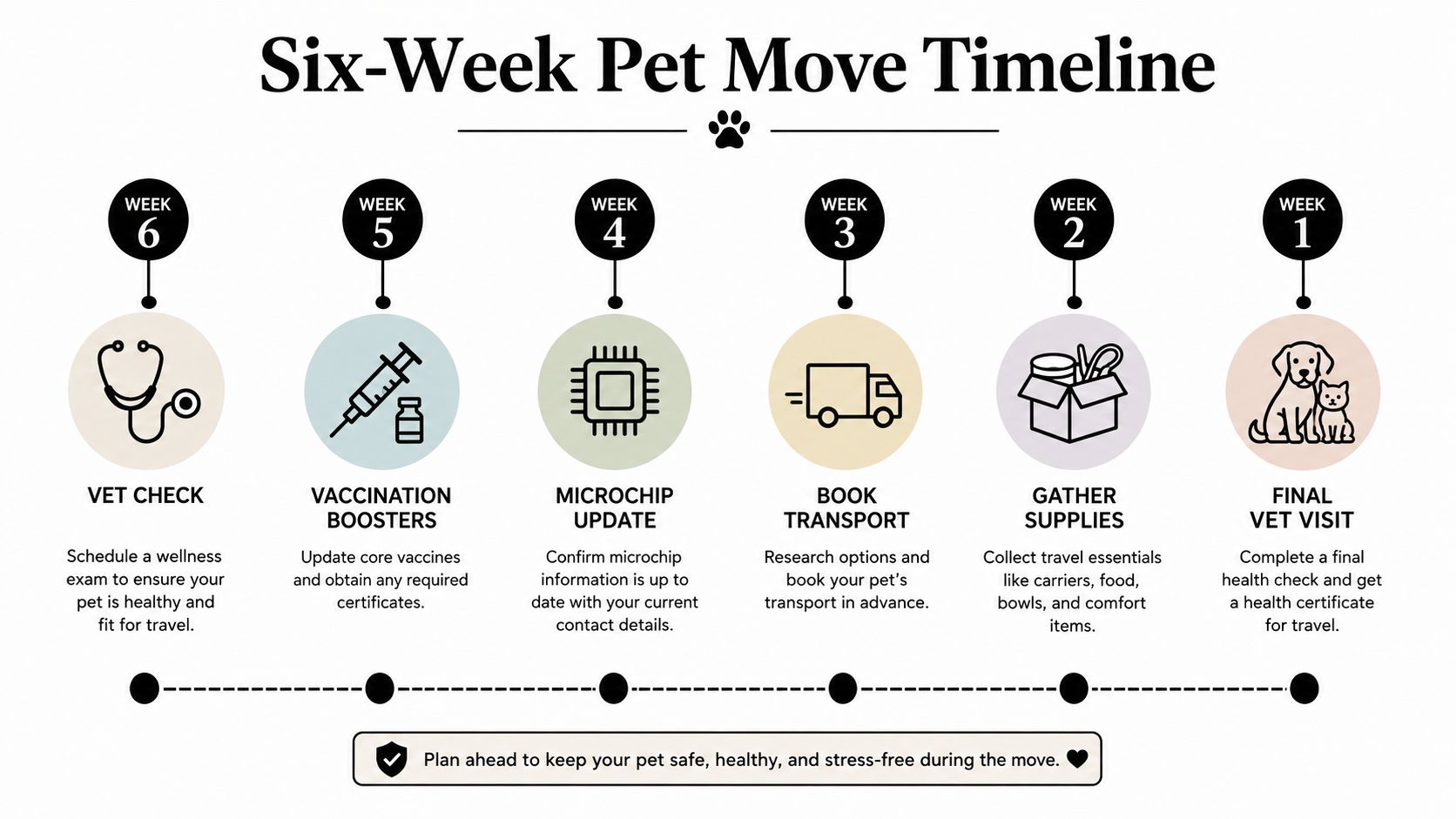
The easiest way to stop move-day panic is to work backwards. Crate-training 3–6 weeks ahead of travel is the high-reliability baseline for long-distance pet moves, and the carrier has to let the animal stand, turn, and lie down (long-haul pet moving guidance). That's not a luxury detail, it's the difference between a pet that tolerates the trip and one that fights the container the whole way.
Week-by-week prep that actually helps
Six weeks out, book the vet check. Ask for vaccination records, health paperwork, medication scripts, and a quick look at anything that could make travel harder, such as anxiety, breathing issues, or chronic medication needs. If your pet's microchip details are old, confirm them now, not the night before the move.
Five weeks out, handle any boosters or updates the vet recommends. This is also the right time to start leaving the crate or carrier out in the open so it becomes normal furniture instead of a trap.
Four weeks out, use short practice sessions. Open-door crate time, then closed-door time, then a short drive around the block. That gradual pattern matters more than a single long session, because pets learn safety through repetition.
Three weeks out, gather documents and supplies together. Keep copies of vaccination history, recent photos, health certificates if needed, and any current prescriptions in one place.
Two weeks out, pack the pet bag and the destination kit. Food, litter, lead, medication, bowls, bedding, and a familiar toy shouldn't end up buried in a removalist carton.
One week out, do a final check with the vet and confirm transport timing. If the move is interstate or the pet is medically sensitive, that last confirmation can save a lot of confusion.
A practical house-moving checklist can help keep the human side organised too, especially when pet prep sits alongside boxes, bookings, and paperwork. See the moving house checklist for Australia and mark the pet tasks against it.
Keep the pet's routine as boring as possible. Familiar food, familiar bedding, familiar timing. That's what lowers the temperature in the room.
Move Day Logistics With Pets in Australian Homes
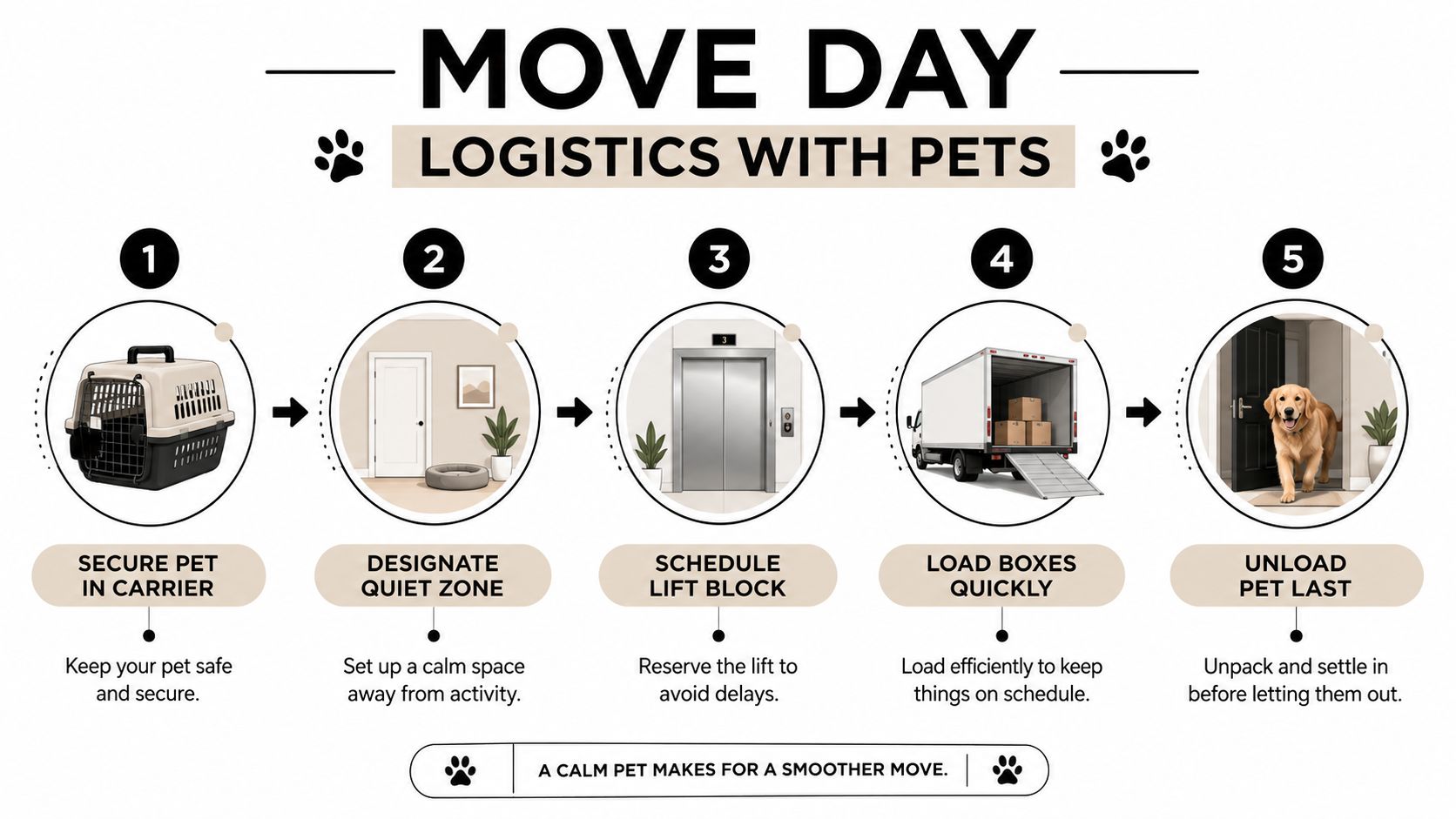
The cleanest move-day setup is a quiet room or home base that stays intact until the last loading phase. Move the pet's bed, water, food, and litter tray into one closed room first, then keep the animal there while the rest of the home is loaded. That approach matches ASPCA guidance to acclimate pets gradually to one room, and for cats, to move the litter tray slowly so the setup doesn't become a new stress trigger (ASPCA moving guidance).
The apartment version of the problem
In a Melbourne apartment, the theory often meets the wall. Sometimes there isn't a spare room. Sometimes the lift is booked in short blocks. Sometimes body corporate rules make common-area waiting awkward or outright restricted. In those cases, the answer isn't to force the pet into the busiest part of the job.
A better sequence looks like this.
- Secure the pet first. Use a crate, carrier, or a closed room before the movers start bringing items out.
- Tell the crew where the pet is. Removalists need that information before they start carrying furniture through doorways and lifts.
- Keep one pathway clear. The pet shouldn't be crossing the same route as the fridge, bed frame, or dining table.
- Use a neighbour or sitter if the layout is bad. If there's no safe room, a trusted neighbour, friend, or short-stay boarding option is often safer than improvising inside the unit.
- Load the pet last. The animal should not be part of the traffic pattern.
If the old home has a lingering smell problem from previous accidents, The Mobile Buff's odor removal guide is a useful reference for handling that before handover or final inspection.
When the job is tight, the small details matter. Lift bookings, parking windows, and handover times all affect whether a pet stays calm or gets caught in the middle. If you've got a crew arriving soon, coordinate the timing early and keep the pet plan visible, not vague. For night-before preparation, this pre-move checklist is the right companion piece.
Transport Safety for Dogs and Cats on the Road
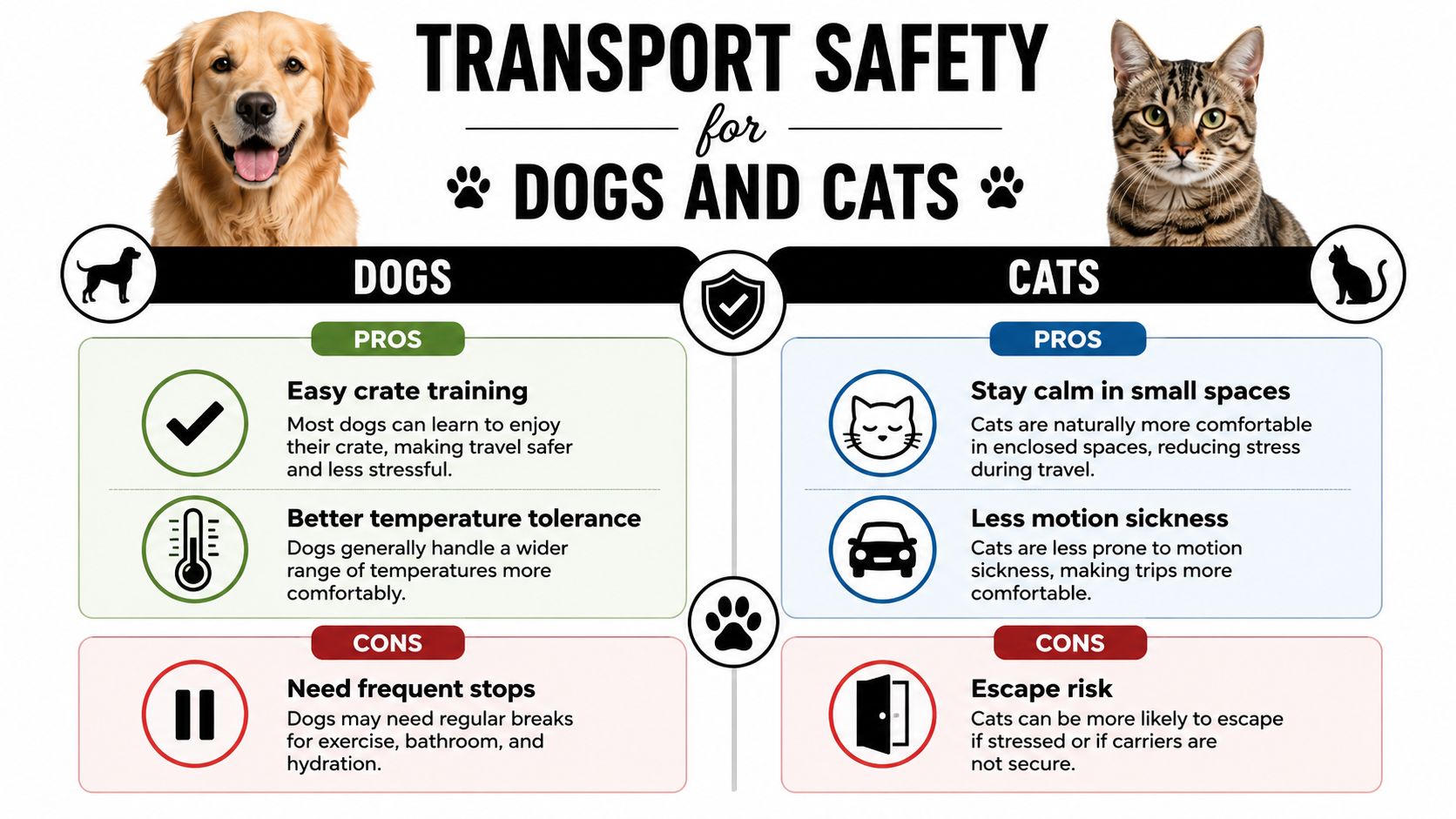
Once the pet leaves the house, the vehicle becomes the next risk point. The carrier or crate has to be species-appropriate, stable, and secure enough that it doesn't slide or tip when the driver brakes. The AVMA's relocation guidance stresses species-appropriate containers and, for air travel, carrier dimensions and ventilation standards rather than improvised household containers (AVMA transport guidance).
Heat is the part people underestimate
The safety thresholds are blunt. At 72°F (22.2°C) outside, a car can reach 116°F (46.7°C) within one hour. At 85°F (29.4°C), even with windows slightly open, the interior can reach 102°F (38.9°C) in 10 minutes. After only 30 minutes, a pet left in a hot car could be in a vehicle hot enough to cause irreversible organ damage or death (Humane World for Animals travel safety guidance).
That's why pets don't wait in parked vehicles during packing, keys handover, or a quick elevator run. Not on a warm Melbourne day, and not with the windows cracked.
What road travel should look like
On longer drives, stop every 2–3 hours for welfare checks, water, and a short reset. Keep the carrier or crate anchored so it can't shift. Don't feed a big meal right before departure, because that's how you invite car sickness into the first hour of the trip.
The biggest failures are predictable. Pets loose in the moving truck. A skipped vet pre-check. Medication or food left in the freight instead of the family car. Those mistakes are avoidable, but only if the pet bag travels with you and not with the boxes.
- Food and water: enough for the trip and the first day.
- Medication: current scripts and dosing instructions.
- Lead or harness: ready before arrival.
- Waste supplies: bags, litter, paper towels, wipes.
- Records: vaccination and health documents in one folder.
If you're comparing transport options for a long Victorian or interstate run, the long-distance removalists page is useful because pets and long-haul timing often have to be planned together.
Interstate Compliance and Biosecurity for Pet Moves
Most families think about the drive. The more serious issue is paperwork. Australia's biosecurity framework exists to prevent disease introduction, and that means pet relocation can involve veterinary certification windows, permit approvals, treatment records, and sometimes quarantine milestones. For pets entering Australia, the federal system may require quarantine at Mickleham Post Entry Quarantine Facility in Melbourne, which opened in 2018 (biosecurity and quarantine overview).
What that means for Melbourne to East Coast moves
For interstate moves between Melbourne and Sydney, Brisbane, or other East Coast cities, the practical job is to line up dates before anyone loads the truck. The removalist doesn't need your whole medical history, but they do need to know if a permit window, vet appointment, or inspection date is holding the schedule.
Use the same discipline with documents that you'd use for keys or settlement papers.
- Health certificate: keep the latest signed version accessible.
- Vaccination history: don't rely on memory or screenshots alone.
- Microchip details: confirm the registration matches the current owner and destination.
- Treatment records: keep proof of required treatments where relevant.
- Inspection bookings: note any date that can't move.
If your move involves temporary pet care, the house sitting Australia guidelines are a useful context piece because sitter arrangements often become part of the compliance and welfare picture when schedules get tight.
Compliance problems usually start with a missing date, not a missing box.
The right removalist team will ask about your hold points early. That lets them plan around late keys, booking restrictions, or a pet handover that has to happen before the truck leaves. If you're comparing operators, the best interstate removalists Australia page is a practical starting point for understanding what a coordinated interstate move looks like when time matters.
The First Week After Arrival and Settling In
The move doesn't end when the truck unloads. The first 72 hours decide whether the pet settles or stays on edge. Cats usually do best with one closed room, familiar bedding, food, water, and the litter tray kept in a stable position. Dogs usually need short, calm lead walks in the new neighbourhood before they're given full freedom inside or outside.
What the first few days should look like
If the pet is a cat, keep the original room small and predictable. Open up the rest of the home only after the animal is eating, toileting, and moving around without panic. For litter, the most specific tactic in the moving guidance is to shift the tray about 1 foot per day to reduce elimination stress and avoid aversion to the new location (ASPCA moving guidance).
Dogs need the opposite kind of control. They usually want to sniff everything at once, but that doesn't mean they should. The new street, new fences, new sounds, and new neighbours are all extra inputs, so short walks on lead beat a long free-for-all on day one.
The welfare question after the truck leaves
This is the part too many moving guides miss. A move can expose hidden access problems, not just travel stress. Some areas have limited veterinary coverage, uneven emergency access, or fewer behaviour and boarding options than owners expect. Research on animal welfare deserts in Australia points to structural unevenness in service availability, which means “find a new vet” is too thin for many households (animal welfare deserts research).
That matters most for anxious, elderly, brachycephalic, or medically complex pets. Before move-in settles, map the nearest vet, the after-hours clinic, and one backup care option. If you're a cat owner, cat stress management during a move is a useful companion resource for the settling-in period because hiding, slow intake, and territorial caution all need patience, not pressure.
Get n Go Removals Melbourne handles household and apartment moves across Victoria and interstate, with timing that works around lift bookings, settlement windows, and tight access. If you're planning a move with pets and want the furniture side handled by a crew that understands timing, packing flow, and careful loading, visit Get n Go Removals Melbourne and organise the move around the life you're living.